HomeDraw Your Favorite Animal Worksheet: Feature and Habitat Prompts Free original lessons
Draw Your Favorite Animal Worksheet: Feature and Habitat Prompts
Plan an open-ended drawing task where learners sketch a favorite animal, label key features, and describe its habitat using clear prompts and a simple checklist.
Free lesson
Four exercises
Worked answers
Object Drawing Lessons
This worksheet invites learners to draw any favorite animal rather than follow a step-by-step species construction. The goal is to observe and communicate animal features and habitat through a labeled drawing. Learners use a draw-and-label box, feature prompt lines, habitat prompt lines, and a short checklist covering body covering, limbs, and environment. Because animal shapes vary, the drawing is assessed by clarity of features and labels, not by resemblance to one universal template. Use the convention below for labels: write each label on a short line that points to the feature, and keep handwriting legible enough to read at normal viewing distance. X-height is measured from baseline to midline; letter styles may vary, so accept any consistent, readable handwriting. All numerical values in this plan are hypothetical examples for planning, not manufacturing or printer standards.
Practice materials: Printable downloads are not available for this lesson yet. Use the instructions and four exercises below.
Reference illustration
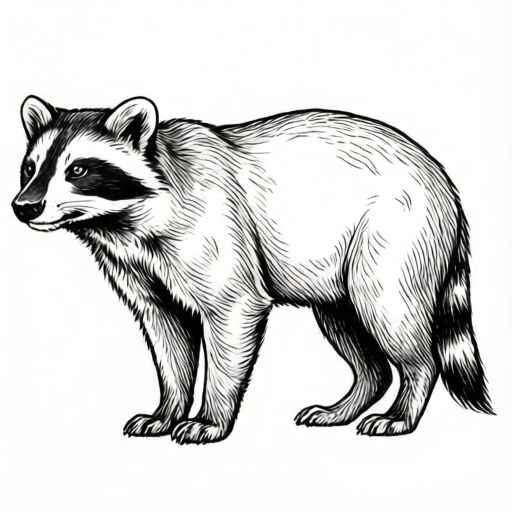
Use the stated measurements and conventions for each exercise.
Set up the draw-and-label box
Provide a blank rectangular drawing area large enough for one animal and several labels. A hypothetical example is a box about 15 cm by 10 cm on paper, but measure the actual paper and printer output before finalizing any size. Ask learners to draw the animal large enough that at least three features can be pointed to without crowding.
Labels should sit outside or beside the animal where possible. Each label line should touch or point clearly to one feature. If a line crosses another line, move the label rather than guessing which feature it names.
- Draw the animal in the center of the box, leaving space around the edges for labels.
- Choose three to five features to label, such as ears, eyes, mouth, limbs, tail, wings, fins, or body covering.
- Write each feature name on a short line and point the line to the correct part.
- Check that every label line touches only one feature.
Use feature prompt lines
Feature prompt lines help learners name what makes the animal recognizable. Prompts can ask: What body covering does it have? How many legs or other limbs are visible? What shape are its ears, tail, or mouth? Learners answer in words and also show the feature in the drawing.
Accept valid alternatives. A learner may label a flipper instead of a leg, or a shell instead of fur. The rubric checks whether the label matches the drawn feature and the animal described, not whether the animal matches a single expected picture.
- Read each feature prompt before drawing.
- Draw the feature clearly enough that a reader can find it.
- Write a short label or phrase that matches the feature.
- Re-read the label and confirm it points to the right part.
Describe the habitat
Habitat prompt lines ask where the animal lives and what surrounds it. Learners may add simple environment cues such as water, grass, sand, snow, trees, or rocks. The habitat should support the animal's features; for example, a fish-like animal with fins is usually shown with water.
Keep habitat details simple and checkable. A few clear cues are better than many crowded ones. The checklist asks for environment, body covering, and limbs, so learners should confirm all three are present or explicitly noted as not visible.
- Write one sentence naming the habitat.
- Add two or three simple environment cues in the drawing.
- Check that the habitat cues do not contradict the animal's labeled features.
- Complete the checklist for body covering, limbs, and environment.
Check before handing in
A short checklist keeps the task focused. Learners confirm that the animal has a labeled body covering, that limbs or other movement parts are shown or explained, and that the environment is indicated. If a feature is hidden, the learner can write a note such as 'legs hidden by grass' rather than inventing a feature.
Handwriting is judged by readability, not by a single style. Using the baseline-to-midline x-height convention, accept any consistent letter style that a reader can follow. The drawing is complete when the animal, labels, habitat, and checklist are all present.
- Tick body covering on the checklist.
- Tick limbs or movement parts, or write why they are not visible.
- Tick environment and confirm at least one habitat cue is drawn.
- Read all labels aloud to catch unclear pointing or spelling that changes meaning.
Worked example
A learner draws a rabbit sitting in grass. The drawing shows two long ears, a round tail, four legs, and fur. Labels point to ears, tail, legs, and fur. The habitat sentence says 'It lives in a grassy field,' and grass is drawn around the rabbit. The checklist marks body covering as fur, limbs as four legs, and environment as grass.
Worked answer
The worksheet is complete because the animal has three or more labeled features, each label line points to one feature, the habitat sentence matches the drawn grass, and the checklist covers body covering, limbs, and environment. The drawing is accepted even if the rabbit's shape is simple, because the labels and habitat are clear and consistent.
Four practice exercises
Exercise 1
A learner draws a bird with wings, a beak, two legs, and feathers, then labels only the wings and beak. The habitat sentence says 'It lives in a tree,' and a simple tree shape is drawn. The checklist marks body covering as feathers, limbs as two legs, and environment as tree. Is the worksheet complete under the rubric?
Show answer and check
No, it is not complete. Only two labeled features are present, but the rubric requires at least three. The learner should add one more label, such as legs or feathers, to meet the three-label requirement.
Why: The drawing has clear features and a matching habitat, and the checklist is filled. The only shortfall is the number of labels, which is below the required three.
Check: Count the feature labels that point to one feature each. Confirm the count is at least three, then check that the habitat sentence and checklist agree with the drawing.
Exercise 2
A learner draws a fish with fins, a tail, and scales in water. Labels point to fins, tail, and scales. The habitat sentence says 'It lives in a desert,' but blue water shapes are drawn around the fish. The checklist marks body covering as scales, limbs as fins, and environment as water. What should be fixed?
Show answer and check
The habitat sentence should be changed to match the drawn water, for example 'It lives in water.' The desert sentence contradicts the water cues and the fish features.
Why: The labels and checklist are consistent with a water habitat, but the habitat sentence names a desert. The rubric requires the habitat sentence and drawn cues not to contradict each other.
Check: Compare the habitat sentence with the drawn environment cues and the labeled features. If they disagree, revise the sentence or the cues so they match.
Exercise 3
A learner draws a dog with fur, four legs, a tail, and ears. Labels point to fur, legs, and ears. One label line for 'tail' crosses the leg label line and touches both the tail and a leg. The habitat sentence says 'It lives in a house,' and a simple house shape is drawn. The checklist is complete. What is the main problem, and how can it be fixed?
Show answer and check
The main problem is the tail label line touching two features. Move the tail label and redraw its line so it touches only the tail. The rest of the worksheet can remain as is.
Why: Each label line must point to one feature. A line touching both the tail and a leg makes the label ambiguous, even though the other parts are clear.
Check: Trace each label line from the word to the drawing. Confirm that each line ends at exactly one feature and does not cross another label line.
Exercise 4
A learner draws a turtle with a shell, four legs, and a head. Labels point to shell, legs, and head. The habitat sentence says 'It lives near a pond,' and a pond shape is drawn. The checklist marks body covering as shell, limbs as four legs, and environment as pond. The learner's handwriting is small but readable when viewed at normal distance. Is any rubric item unmet?
Show answer and check
No rubric item is unmet. The worksheet has three clear labels, a matching habitat, a complete checklist, and readable handwriting.
Why: The drawing, labels, habitat sentence, and checklist are consistent. Handwriting is judged by readability, not by a single style, so small but readable writing is acceptable.
Check: Read each label at normal viewing distance. Confirm three labels point to one feature each, the habitat sentence matches the pond cue, and all three checklist items are marked.
Common mistakes
- Drawing the animal too small to label clearly. Redraw or enlarge the animal so at least three features have space for separate label lines.
- Label lines that point to two features at once. Move the label and redraw the line so it touches only the intended feature.
- Habitat cues that contradict the labeled features. Change the habitat cue or the feature label so the drawing and words agree.
- Leaving the checklist blank because a feature is hidden. Write a short note explaining the hidden feature instead of leaving the item unchecked.
Self-check rubric
- Animal is drawn large enough for at least three separate labels.
- At least three feature labels are present and each points to one clear feature.
- Habitat sentence names an environment that does not contradict the labeled features.
- At least one habitat cue is drawn or described.
- Checklist addresses body covering, limbs or movement parts, and environment.
- Labels and notes are readable using the baseline-to-midline x-height convention; letter style may vary.
Questions and answers
Does the animal have to look realistic?
No. The drawing should make the labeled features findable and the habitat understandable. A simple or stylized animal is acceptable if the labels match the drawing.
How many features should be labeled?
Three to five labeled features are enough for this task. More labels can crowd the box, so choose the features that best explain the animal.
What if the animal's legs are hidden?
Write a short note such as 'legs hidden by grass' and still complete the limbs checklist item. The note explains why the feature is not drawn.
Is handwriting graded on style?
No. Handwriting is checked for readability using the baseline-to-midline x-height convention. Any consistent letter style is acceptable if a reader can follow the labels.