Free original lessons
Contour Line Drawing of Furniture: Chair and Table Edges
Learn to draw furniture using contour lines. Study chair and table edges, trace outlines, and practice with self-checking exercises.
Free lesson
Four exercises
Worked answers
Object Drawing Lessons
Contour drawing captures the outline and internal edges of an object without shading. This lesson focuses on chairs and tables, using simple line studies to build accuracy. You will learn a consistent convention for line weight: darker lines for outer contours and lighter lines for internal edges. All resources are planned and free; they are not yet built. The exercises are self-contained and use hypothetical measurements for clarity.
Practice materials: Printable downloads are not available for this lesson yet. Use the instructions and four exercises below.
Reference illustration
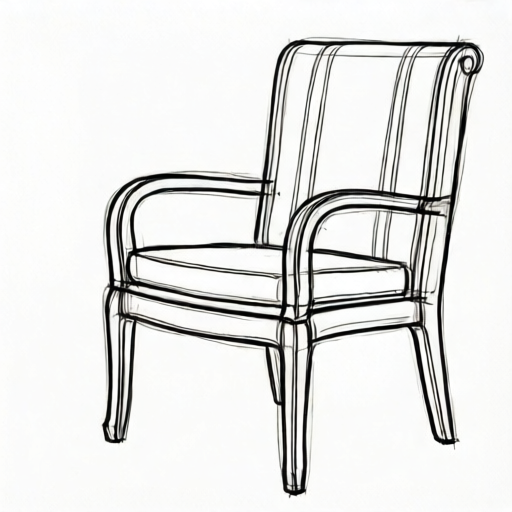
Use the stated measurements and conventions for each exercise.
Understanding Contour Lines in Furniture
A contour line defines the boundary of a form and the edges where surfaces meet. For furniture, contour lines trace the seat, backrest, legs, and tabletop edges. Unlike shading, contour drawing uses only lines to describe shape and structure.
When drawing a chair, start with the overall silhouette: the backrest, seat, and legs. Then add internal contours such as the joint between seat and back, or the curve of a armrest. For a table, outline the top and then the legs and any crossbars. Keep lines continuous where possible to show connection.
Use a consistent line weight for outer contours and a slightly lighter line for internal edges. This helps distinguish the object's boundary from surface details. Remember that contour lines are not always closed; they can stop where one form overlaps another.
- Observe the furniture and identify the main outer contour.
- Sketch the outer contour with a single continuous line if possible.
- Add internal contour lines for edges where surfaces meet.
- Check proportions by comparing distances between key points.
- Refine lines to be clean and confident, avoiding sketchy repetition.
Establishing a Line-Weight Convention for Contour Drawing
In this lesson, the drawing convention is a line-weight hierarchy: outer contours are drawn with a darker, slightly thicker line, and internal edges are drawn with a lighter, thinner line. This convention applies to every contour drawing you make, so the viewer can tell the object's boundary from surface details at a glance.
For example, when drawing a chair, the silhouette of the backrest, seat, and legs is drawn darker. The line where the backrest meets the seat, and the lines where the legs meet the seat, are drawn lighter. The same rule applies to a table: the outer edge of the tabletop and the outer edges of the legs are darker; the line showing tabletop thickness and the joints where legs meet the top are lighter.
This convention does not dictate a single correct drawing. Valid alternatives include using a softer pencil for outer lines and a harder pencil for inner lines, or using the same pencil with different pressure, as long as the outer contour is visibly darker than the internal edges.
- Identify the outer contour of the furniture piece.
- Draw the outer contour with a darker, slightly thicker line.
- Identify internal edges where surfaces meet.
- Draw internal edges with a lighter, thinner line.
- Check that the contrast between outer and inner lines is clear and consistent.
Step-by-Step Contour Drawing of a Chair
Begin by drawing the backrest as a vertical rectangle or curve. Then draw the seat as a horizontal shape attached to the backrest. Add the front legs and back legs, ensuring they align with the seat corners. Finally, add any crossbars or armrests.
Use light lines first to establish proportions. For a hypothetical example, assume the chair is 45 cm wide at the seat, 90 cm tall at the back, and legs are 45 cm long. These numbers are illustrative only; measure your actual furniture if needed.
After the basic contour, go over the outer lines with a darker pencil to define the final contour. Keep internal lines lighter. Check that the legs are vertical and the seat is level.
- Draw the backrest outline.
- Attach the seat shape to the backrest.
- Add front and back legs at the seat corners.
- Include crossbars or armrests if present.
- Refine line weights: darker for outer contour, lighter for internal edges.
Step-by-Step Contour Drawing of a Table
Start with the tabletop as a rectangle or ellipse, depending on perspective. Then draw the legs downward from the corners or edges. Add any aprons or crossbars between legs. Ensure the legs are parallel and the tabletop is level.
For a hypothetical example, a table might be 120 cm long, 80 cm wide, and 75 cm high. These are example values; measure your actual table. Use contour lines to show the thickness of the tabletop and the shape of the legs.
Check that the tabletop edges are straight and the legs are evenly spaced. Internal contours include the line where the tabletop meets the legs and any decorative edges.
- Draw the tabletop outline.
- Add legs at the corners or along the edges.
- Include aprons or crossbars if present.
- Draw internal contours for tabletop thickness and leg joints.
- Verify proportions and adjust lines as needed.
Worked example
Draw a simple chair using contour lines. Assume the chair has a rectangular backrest 40 cm wide and 50 cm tall, a seat 45 cm wide and 40 cm deep, and four legs each 45 cm long. Apply the line-weight convention: darker outer contours, lighter internal edges.
Worked answer
The drawing shows a chair with a rectangular backrest attached to a seat. The seat is a horizontal rectangle. Four legs extend downward from the seat corners. Outer contour lines are darker; internal lines where the backrest meets the seat and where legs meet the seat are lighter. The backrest is drawn 40 cm wide and 50 cm tall, the seat 45 cm wide and 40 cm deep, and each leg 45 cm long, matching the hypothetical dimensions.
Worked-example rubric:
- Outer contour is drawn with a continuous, confident, darker line.
- Internal contour lines are present and lighter than outer lines.
- Proportions are plausible and consistent with the described dimensions.
- Line weight clearly distinguishes outer and inner contours.
- Drawing is free of sketchy, repeated lines.
Four practice exercises
Exercise 1
Draw a table with a rectangular top 100 cm long and 60 cm wide, and four legs 70 cm long. Use contour lines only, with darker outer contours and lighter internal edges.
Show answer and check
A rectangular tabletop with four legs at the corners. Outer contour darker; internal lines for tabletop thickness and leg joints lighter. The top is drawn 100 cm long and 60 cm wide, and each leg 70 cm long, matching the hypothetical dimensions.
Why: The tabletop is a rectangle; legs are vertical lines from the corners. Internal contours show tabletop thickness and the joints where legs meet the top. The line-weight convention keeps outer edges darker than internal edges.
Check: Verify that the tabletop is a rectangle with the stated proportions, legs are at the corners and vertical, and outer lines are visibly darker than internal lines. Check that no shading is used.
Exercise 2
Draw a chair with a curved backrest (semi-circle) and a square seat 40 cm by 40 cm. Legs are 45 cm long. Use contour lines with darker outer contours and lighter internal edges.
Show answer and check
A chair with a semi-circular backrest attached to a square seat. Four legs from the seat corners. Outer contour darker; internal line where backrest meets seat lighter. The seat is drawn 40 cm by 40 cm and each leg 45 cm long, matching the hypothetical dimensions.
Why: The backrest is a semi-circle; the seat is a square. Legs are vertical from the corners. The internal contour at the backrest-seat joint is lighter than the outer silhouette.
Check: Check that the backrest is semi-circular, the seat is square with the stated proportions, legs are at the corners, and outer lines are darker than internal lines. Confirm no shading is used.
Exercise 3
Draw a stool with a circular top (diameter 30 cm) and three legs 50 cm long. Use contour lines with darker outer contours and lighter internal edges.
Show answer and check
A circular stool top with three legs evenly spaced. Outer contour darker; internal lines for top thickness and leg attachments lighter. The top is drawn with a 30 cm diameter and each leg 50 cm long, matching the hypothetical dimensions.
Why: The top is a circle; three legs are spaced evenly around it. Internal contours show top thickness and where legs attach. The line-weight convention keeps the outer silhouette darker.
Check: Verify the circular top with the stated diameter, three evenly spaced legs, and outer lines darker than internal lines. Check that no shading is used.
Exercise 4
Draw a desk with a rectangular top 120 cm by 60 cm, and two side panels instead of legs. Panels are 70 cm tall. Use contour lines with darker outer contours and lighter internal edges.
Show answer and check
A rectangular desk top with two vertical side panels. Outer contour darker; internal lines where top meets panels lighter. The top is drawn 120 cm by 60 cm and each panel 70 cm tall, matching the hypothetical dimensions.
Why: The top is a rectangle; the panels are vertical rectangles at the ends. Internal contours mark the joints where the top meets the panels. The line-weight convention keeps outer edges darker.
Check: Check that the top is rectangular with the stated proportions, panels are at the ends and vertical, and outer lines are darker than internal lines. Confirm no shading is used.
Common mistakes
- Drawing sketchy, repeated lines instead of a single confident contour. Practice drawing each contour with one continuous line, lifting the pencil only when necessary.
- Ignoring internal edges and only drawing the outer silhouette. Add lighter internal contour lines where surfaces meet, such as seat-to-back or tabletop-to-leg.
- Inconsistent line weight, making it hard to distinguish outer and inner contours. Use a darker line for the outer boundary and a lighter line for internal details.
- Misjudging proportions, such as legs too short or seat too narrow. Compare distances between key points and adjust before finalizing lines.
Self-check rubric
- Outer contour is drawn with a continuous, confident line.
- Internal contour lines are present and lighter than outer lines.
- Proportions are plausible and consistent with the described dimensions.
- Outer and internal contours are clearly distinguished by line weight.
- Drawing is free of sketchy, repeated lines.
Questions and answers
What is a contour line in furniture drawing?
A contour line defines the outline and internal edges of a form, such as the seat, back, and legs of a chair.
Do I need to use shading?
No, this lesson focuses on contour lines only. Shading is excluded to keep the drawing about edges and shape.
How do I apply the line-weight convention to my drawing?
Draw outer contours with a darker, slightly thicker line and internal edges with a lighter, thinner line. The contrast should be clear and consistent throughout the drawing.
Can I use these techniques for other furniture?
Yes, the same principles apply to sofas, cabinets, and other objects with clear edges.