Free original lessons
Kindergarten Coloring Drawing Worksheet
This pack teaches coloring inside thick outlines. Children look at a filled example, then color simple shapes in four separate pictures. The thick outline is a visual boundary: color goes inside it, and the outline stays visible. The example shows one finished way to color; children may choose their own colors.
Letter & A4
PDF & SVG
What this task is
A coloring plate is a picture made of simple shapes with thick outlines. The child colors inside each shape. The thick outline helps the child see where to stop, and it stays visible after coloring so the picture keeps its shape. This is a coloring task, not a tracing or writing task.
How to color inside a thick outline
Step 1: Look at the filled example and notice that each shape has one color inside it and a visible dark outline around it. Step 2: Choose a color for one shape. Step 3: Color gently inside the outline, staying a little away from the line so the outline stays clear. Step 4: Move to the next shape and repeat. Step 5: Check that every shape is colored and every outline is still visible.
Worked example
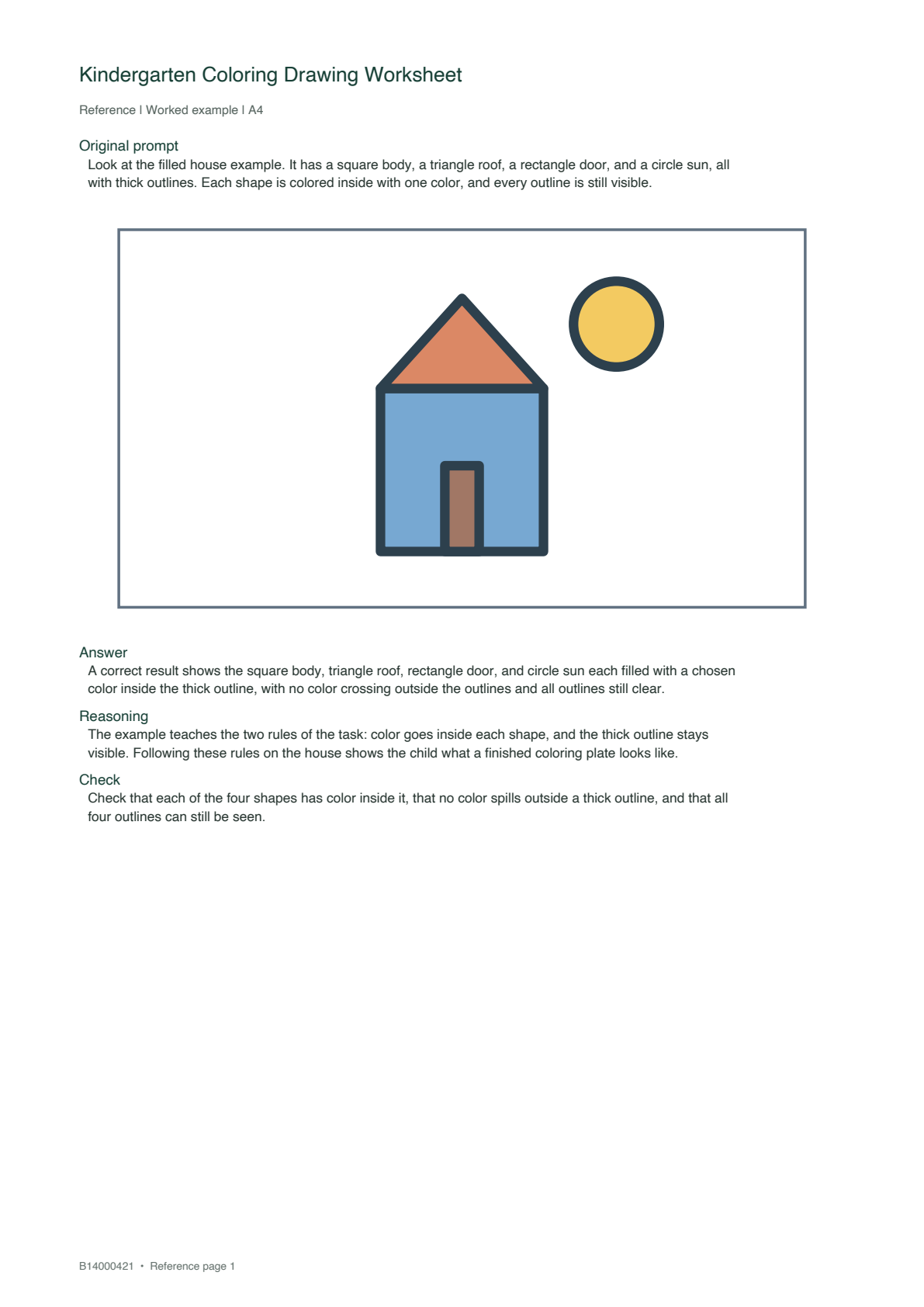
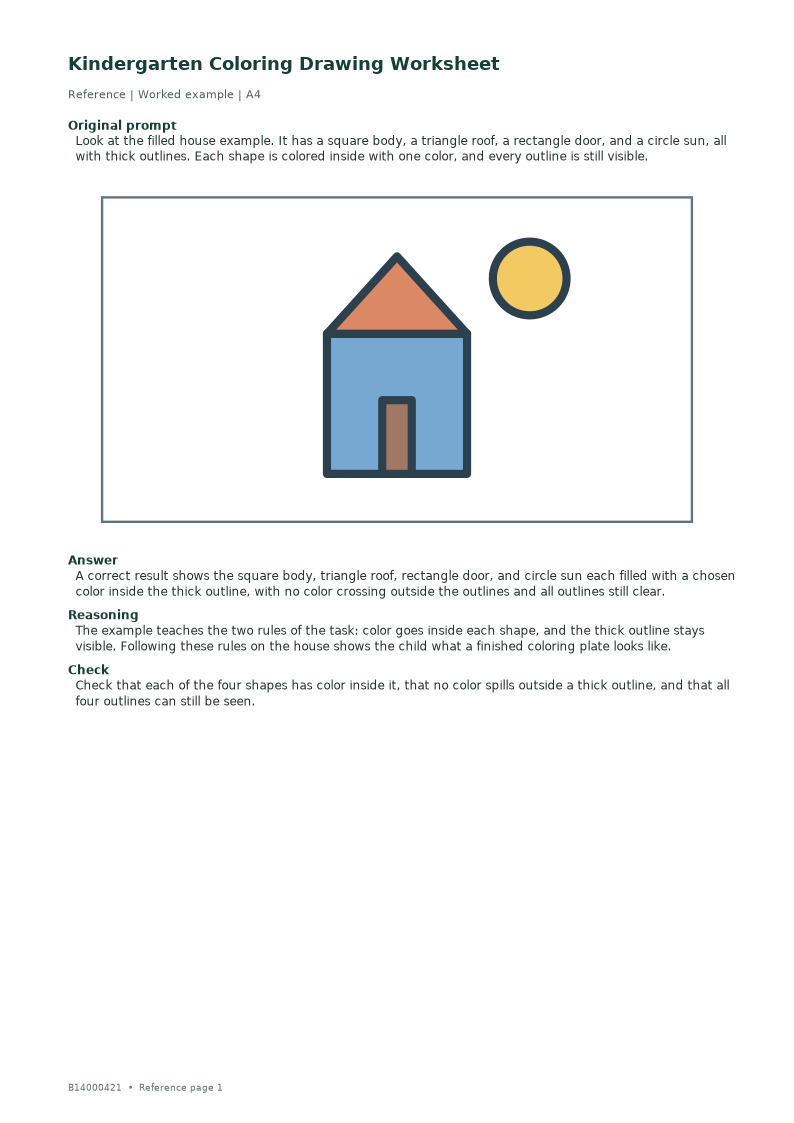
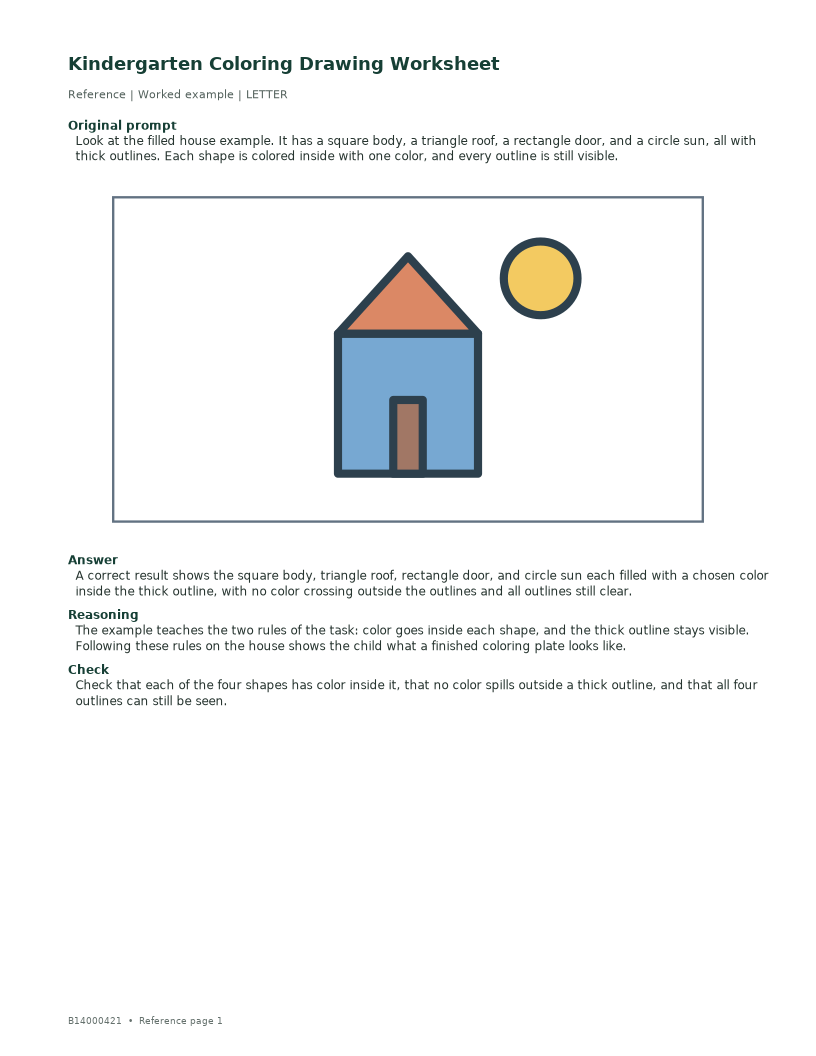
The worked example is a simple house picture with thick outlines: a square body, a triangle roof, a rectangle door, and a circle sun. In the filled example, the body is one color, the roof another, the door a third, and the sun a fourth. Each shape is fully colored inside, and every thick outline is still visible. This shows the finished look the child is aiming for: color inside, outline clear.
Practice tasks
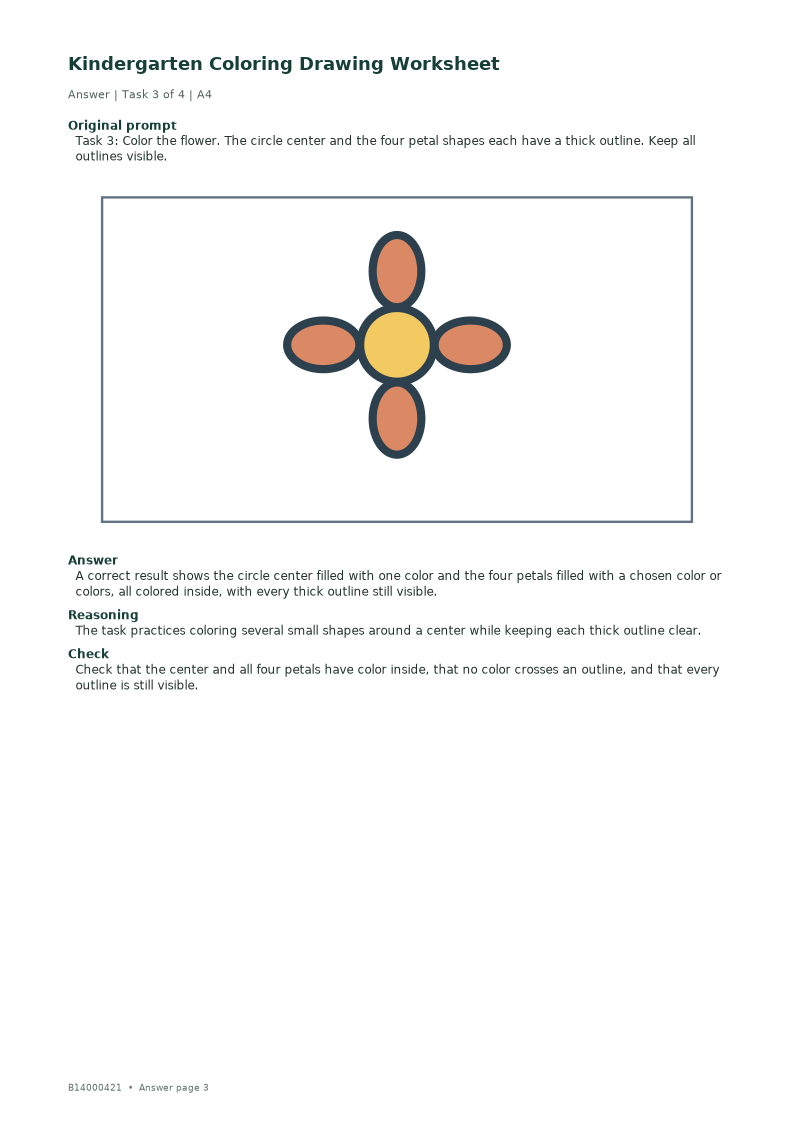
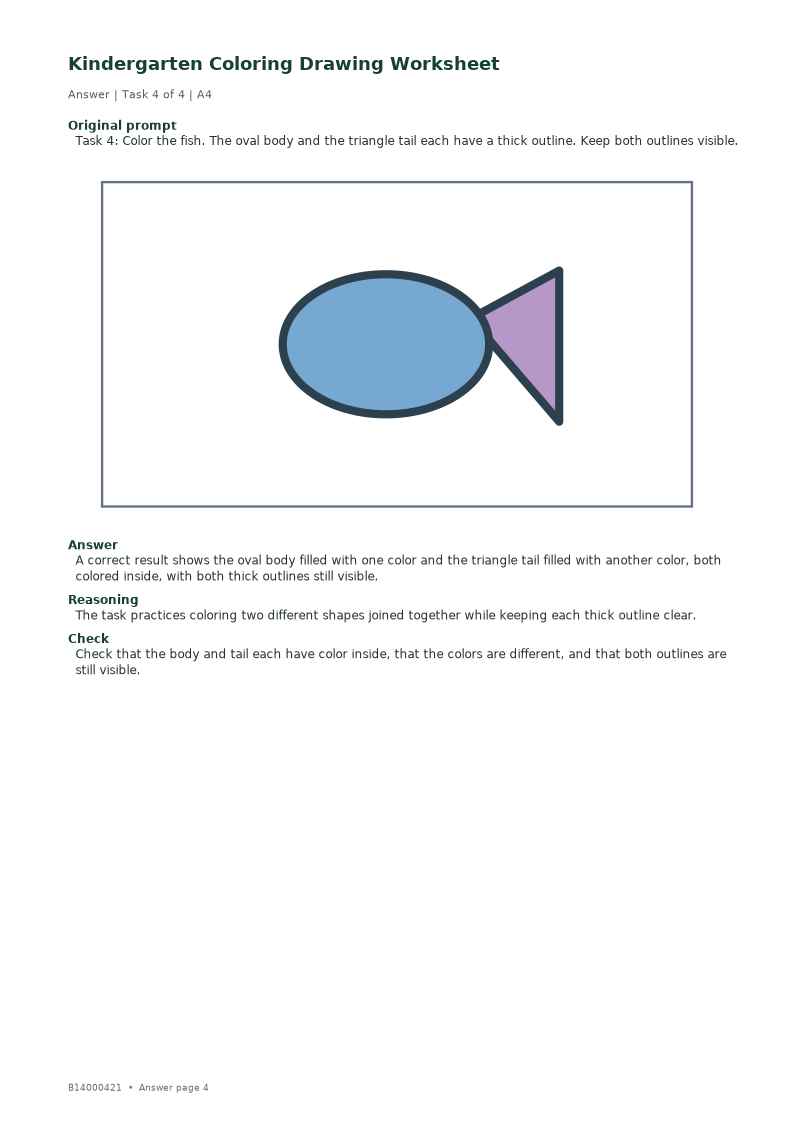
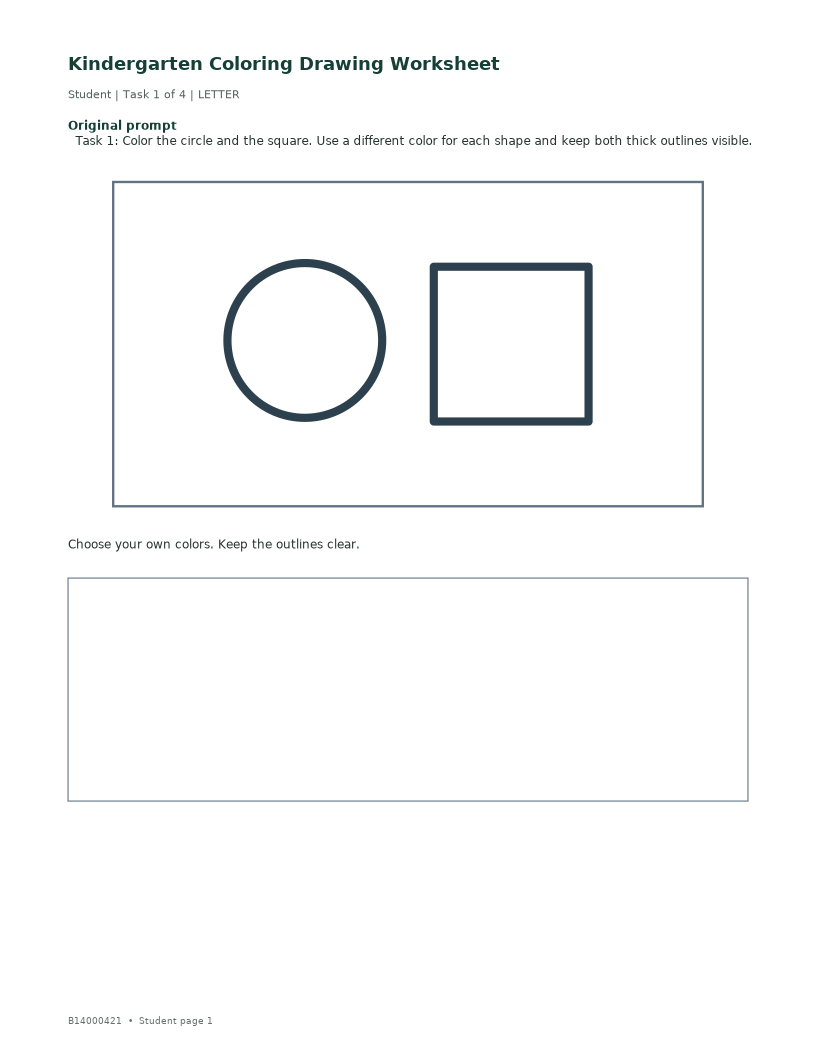
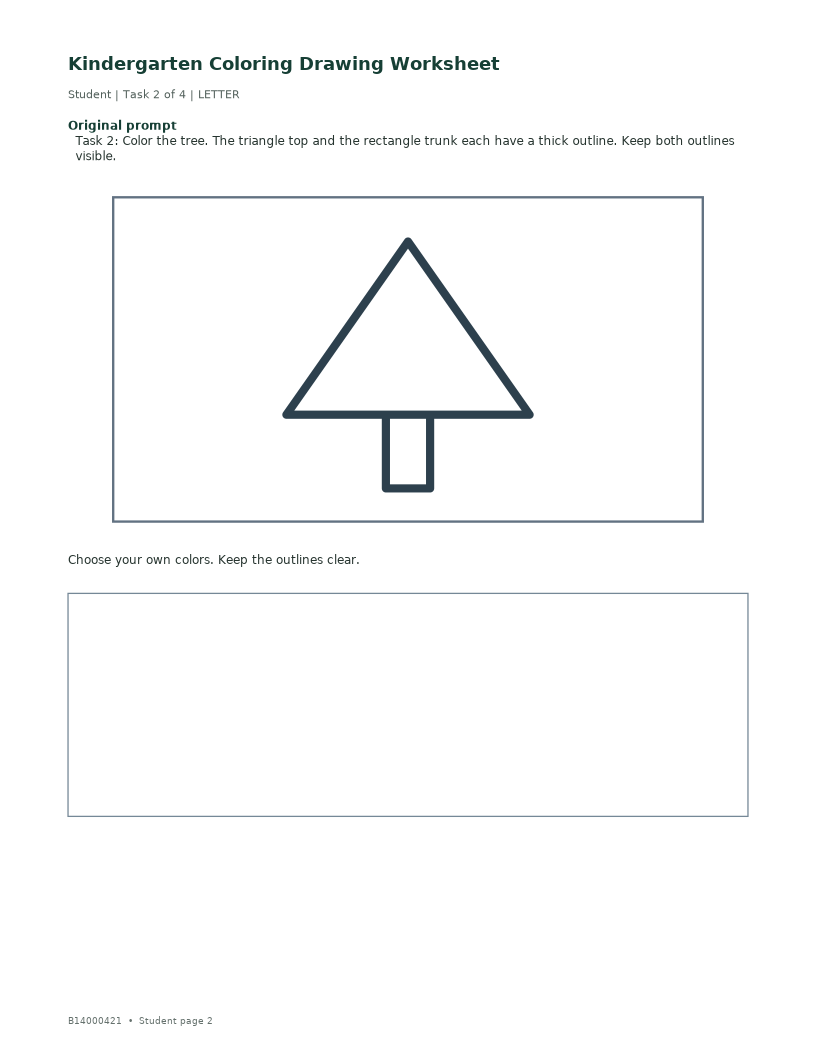
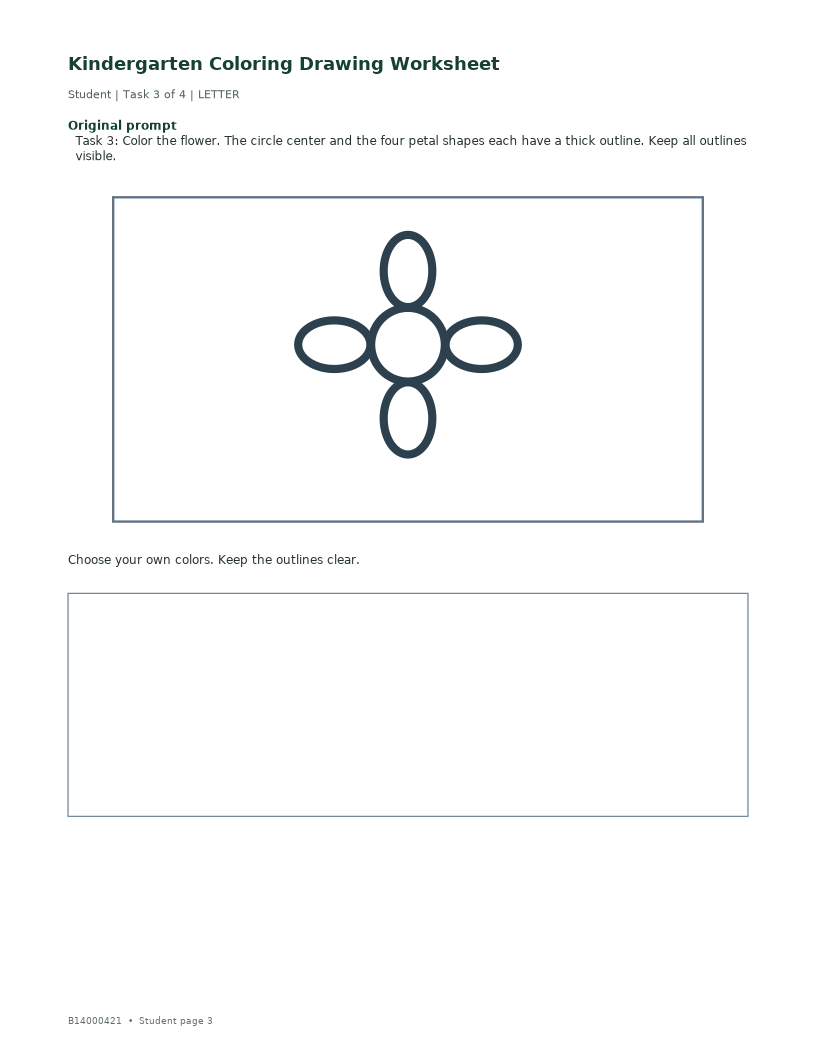
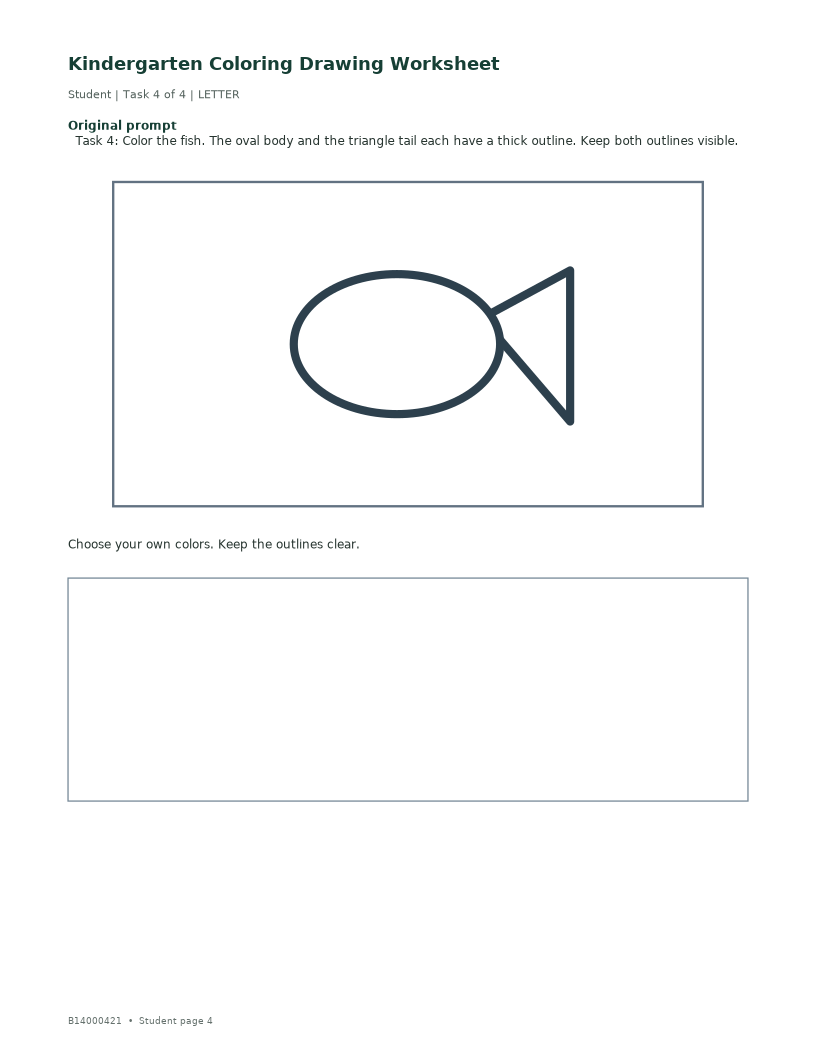
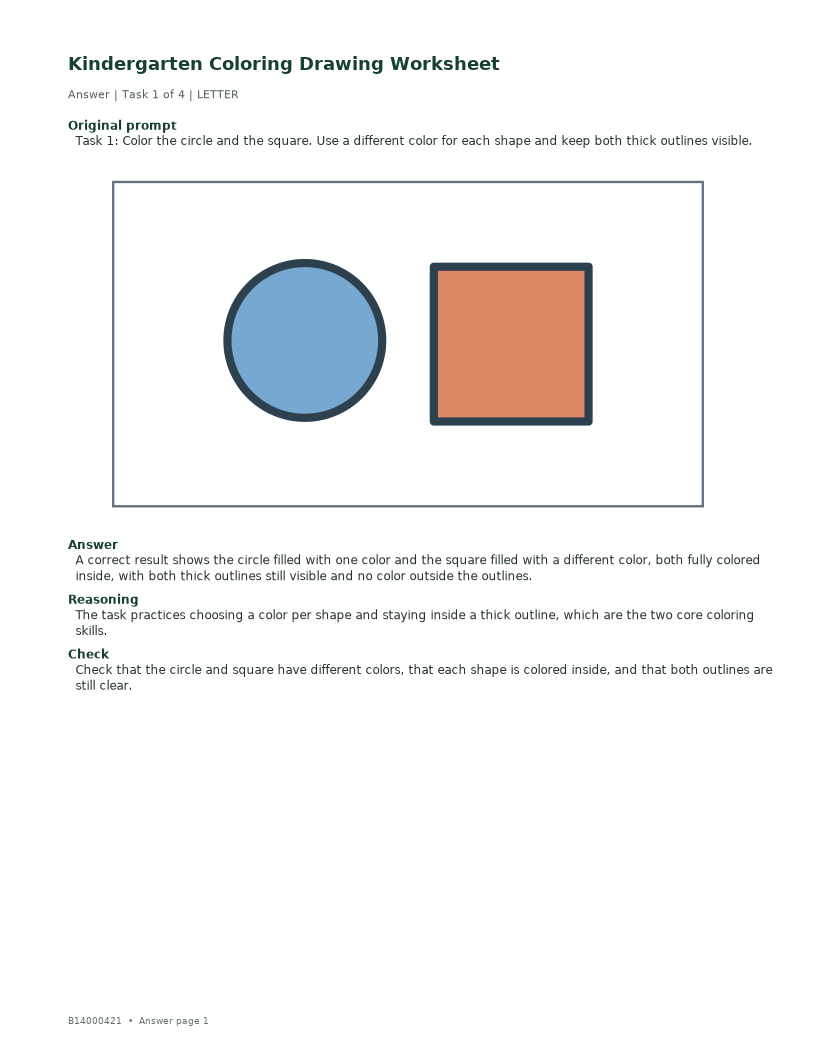
Task 1: Color a picture of one large circle and one large square, both with thick outlines. Use a different color for each shape and keep both outlines visible. Task 2: Color a picture of a simple tree: a thick-outlined triangle top and a thick-outlined rectangle trunk. Task 3: Color a picture of a simple flower: a thick-outlined circle center and four thick-outlined petal shapes around it. Task 4: Color a picture of a simple fish: a thick-outlined oval body and a thick-outlined triangle tail.
Download the complete resource pack
All individual SVG pages (18)
- A4 reference page 1
- A4 student page 1
- A4 student page 2
- A4 student page 3
- A4 student page 4
- A4 answer page 1
- A4 answer page 2
- A4 answer page 3
- A4 answer page 4
- LETTER reference page 1
- LETTER student page 1
- LETTER student page 2
- LETTER student page 3
- LETTER student page 4
- LETTER answer page 1
- LETTER answer page 2
- LETTER answer page 3
- LETTER answer page 4
Print at 100% / actual size. Use the stated scale on any schematic diagram; physical cutting templates are identified separately. A4 and US Letter are separate files. Free access, no signup; CC BY 4.0.
How to use these pages
- What this task is
- How to color inside a thick outline
- Worked example
- Practice tasks
Worked example
Example: Look at the filled house example. It has a square body, a triangle roof, a rectangle door, and a circle sun, all with thick outlines. Each shape is colored inside with one color, and every outline is still visible.
Answer: A correct result shows the square body, triangle roof, rectangle door, and circle sun each filled with a chosen color inside the thick outline, with no color crossing outside the outlines and all outlines still clear.
Reasoning: The example teaches the two rules of the task: color goes inside each shape, and the thick outline stays visible. Following these rules on the house shows the child what a finished coloring plate looks like.
Check: Check that each of the four shapes has color inside it, that no color spills outside a thick outline, and that all four outlines can still be seen.
Four practice tasks and complete answers
Task 1
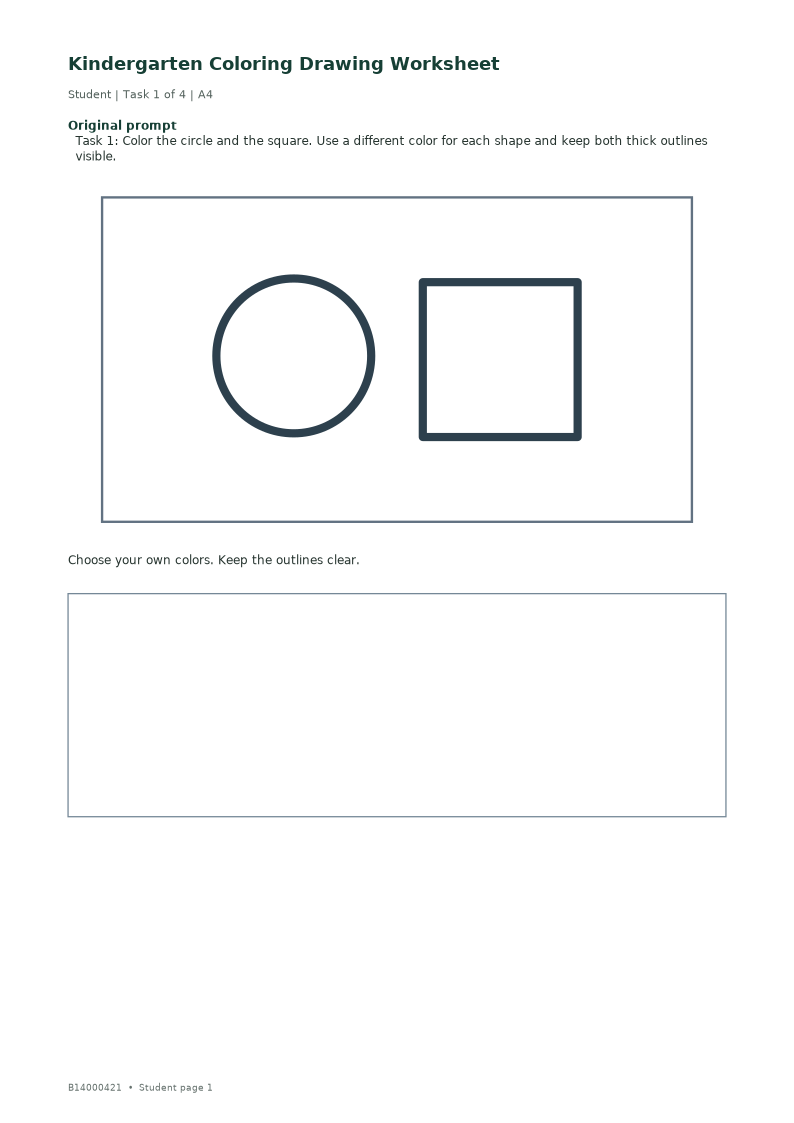
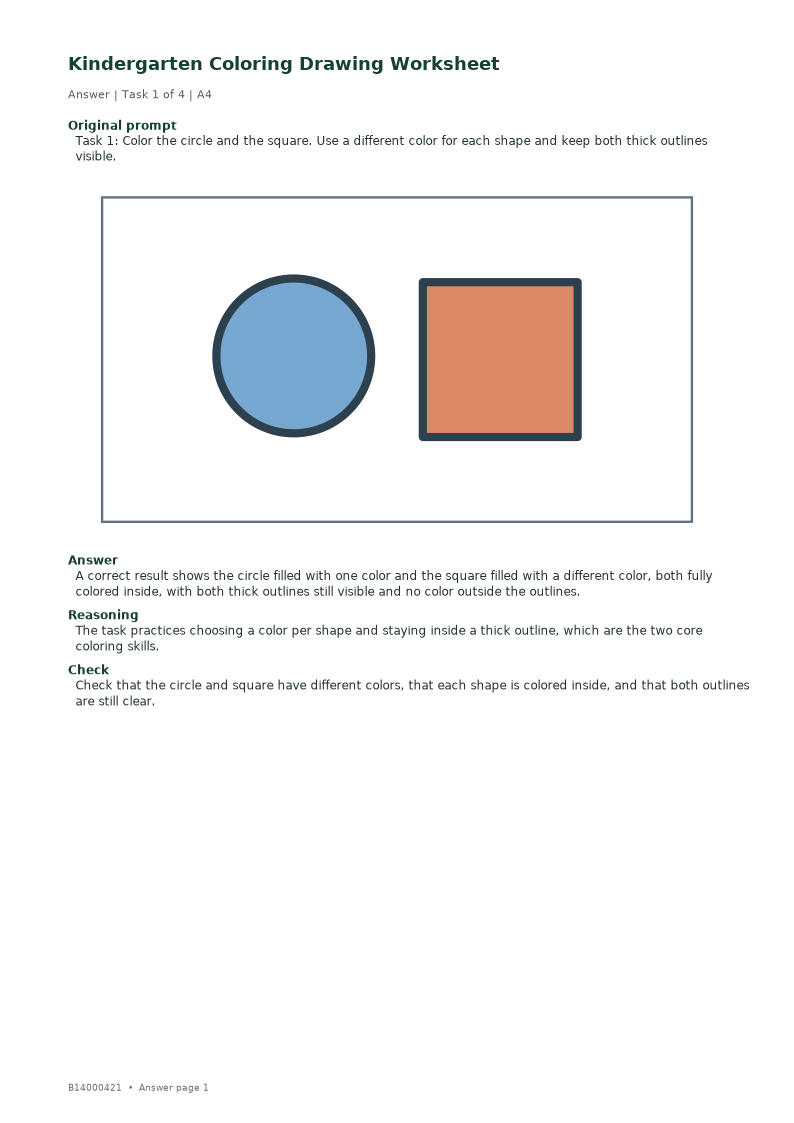
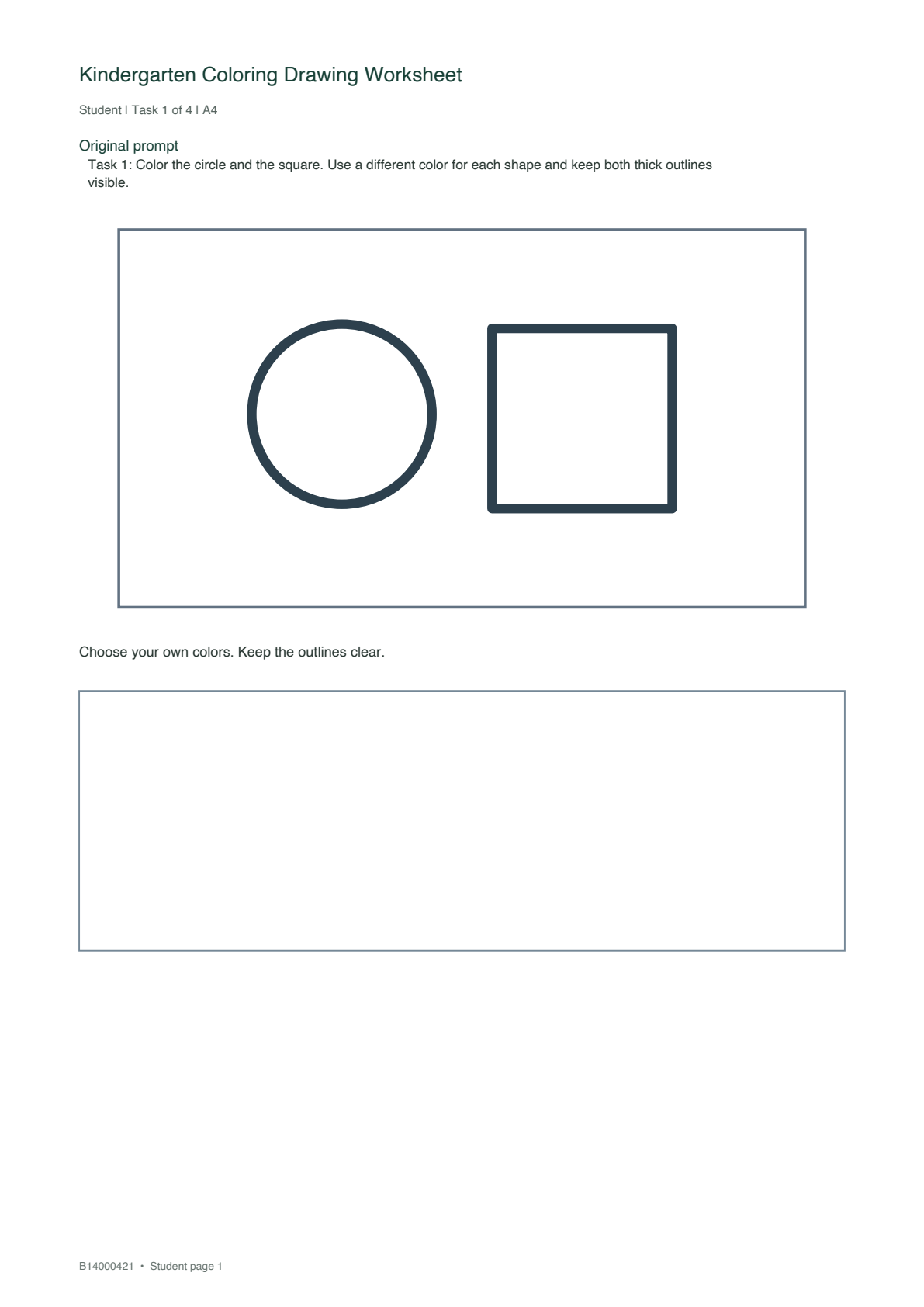
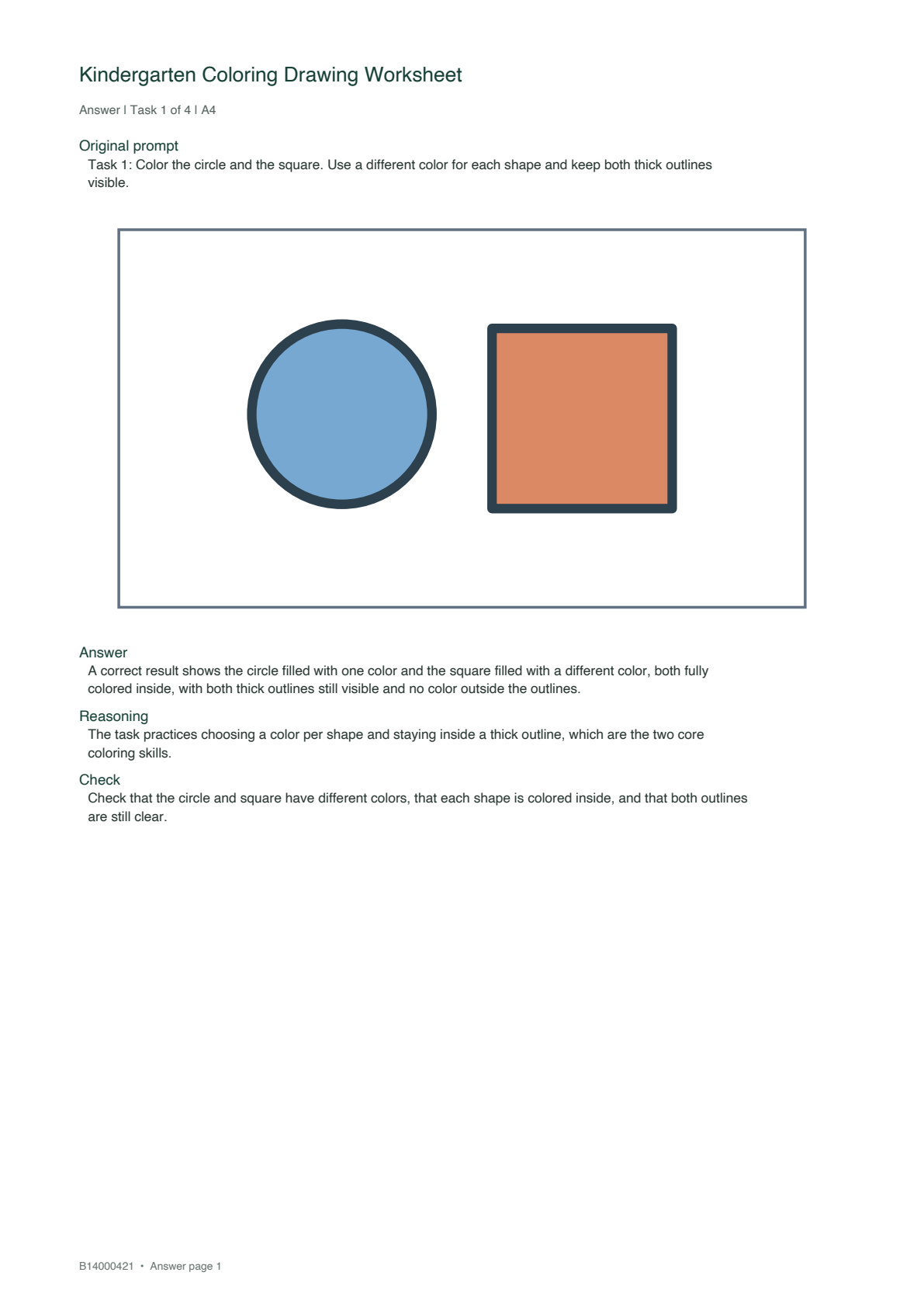
Task 1: Color the circle and the square. Use a different color for each shape and keep both thick outlines visible.
Show answer 1
A correct result shows the circle filled with one color and the square filled with a different color, both fully colored inside, with both thick outlines still visible and no color outside the outlines.
The task practices choosing a color per shape and staying inside a thick outline, which are the two core coloring skills.
Check: Check that the circle and square have different colors, that each shape is colored inside, and that both outlines are still clear.
Task 2
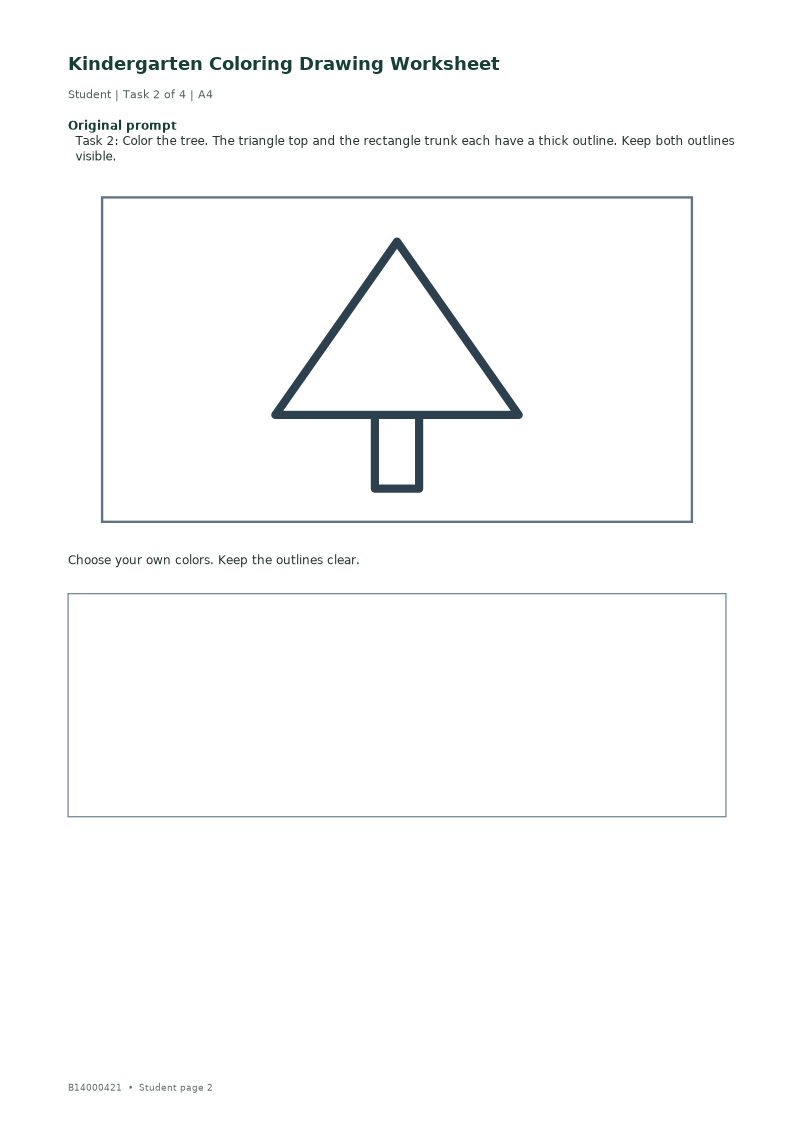
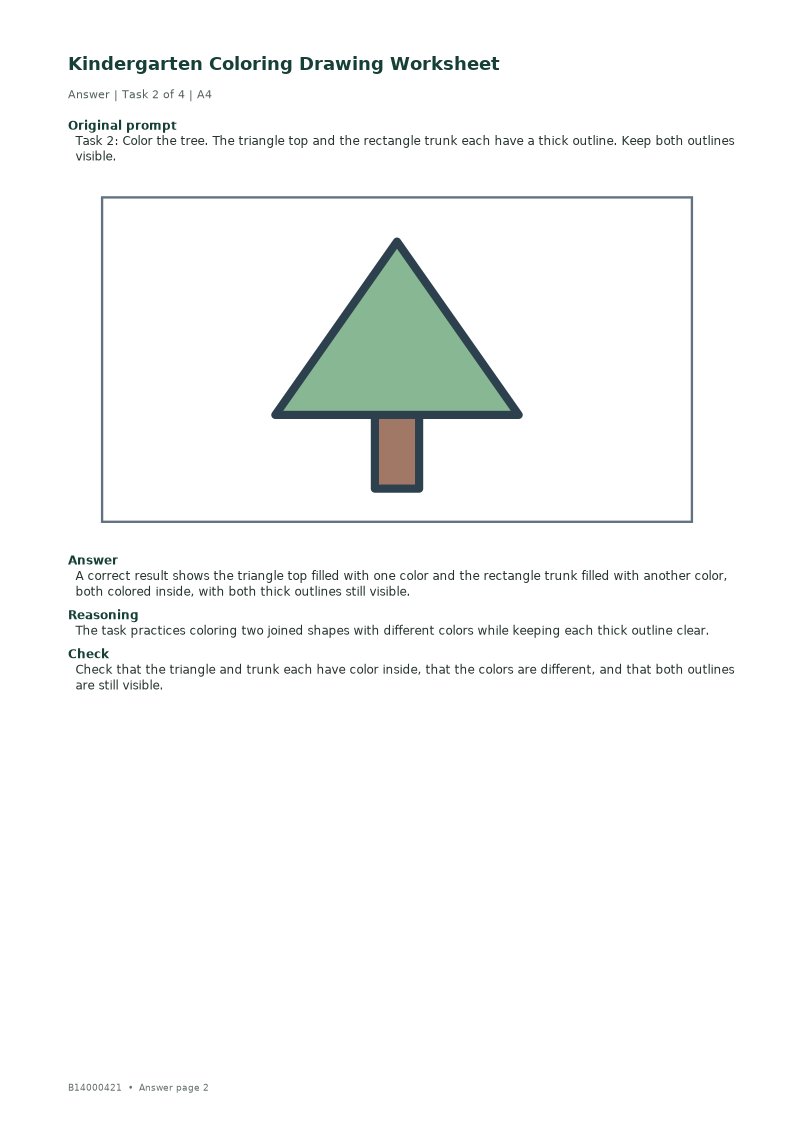
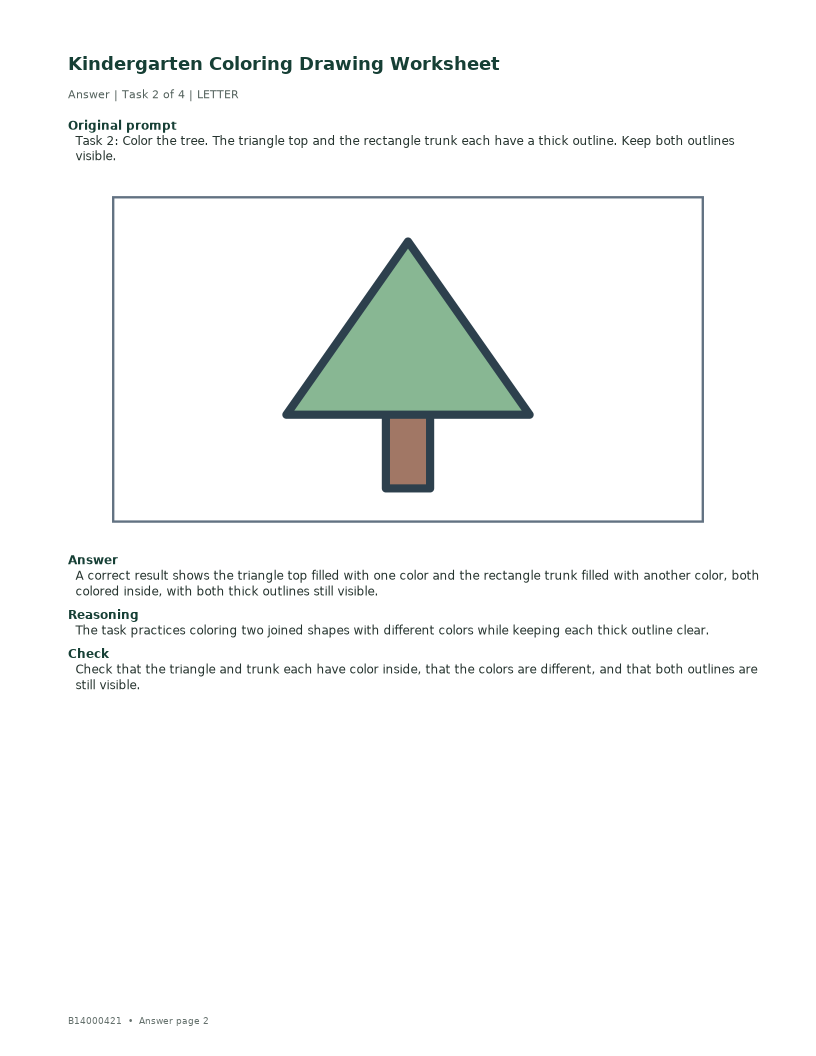
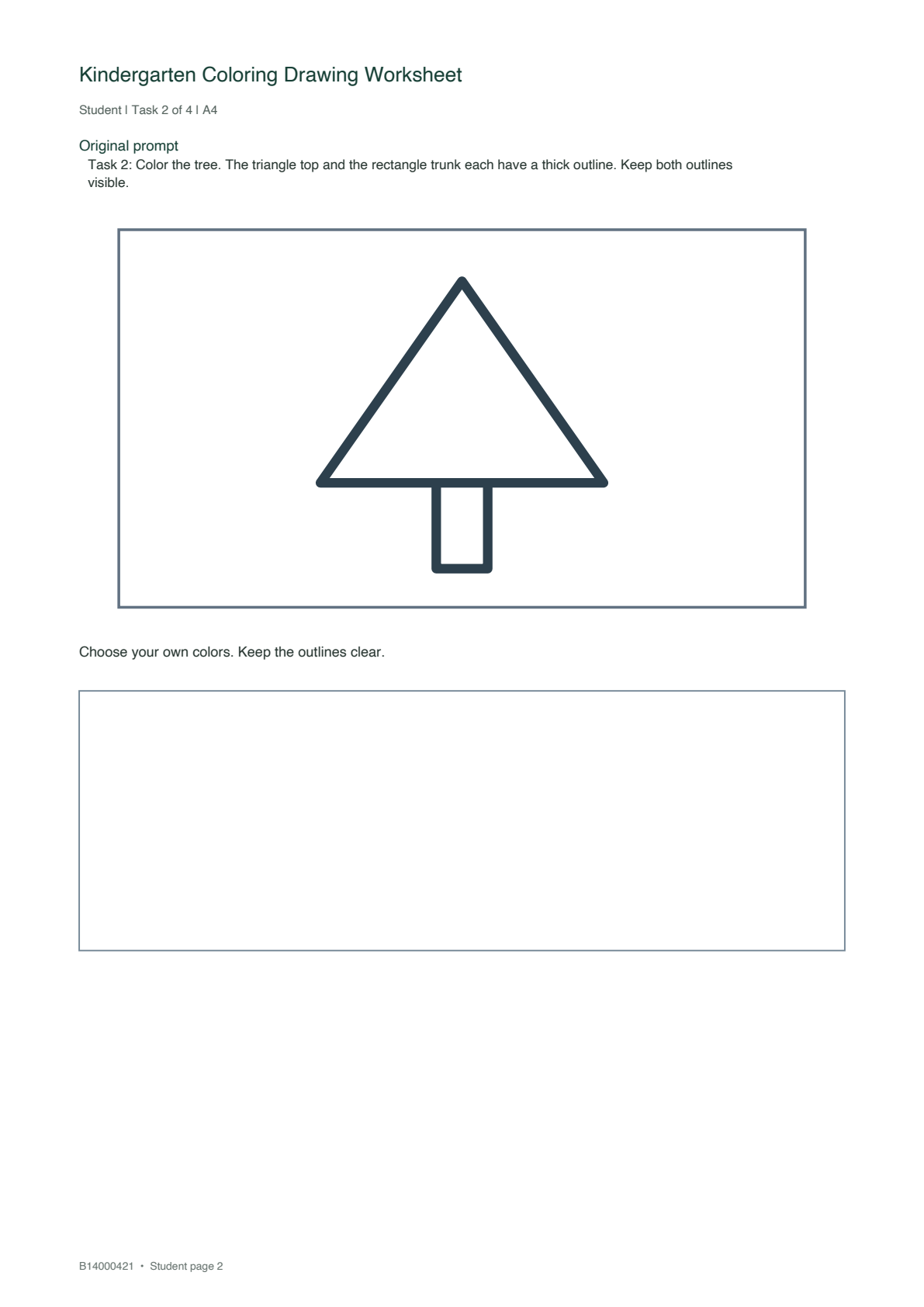
Task 2: Color the tree. The triangle top and the rectangle trunk each have a thick outline. Keep both outlines visible.
Show answer 2
A correct result shows the triangle top filled with one color and the rectangle trunk filled with another color, both colored inside, with both thick outlines still visible.
The task practices coloring two joined shapes with different colors while keeping each thick outline clear.
Check: Check that the triangle and trunk each have color inside, that the colors are different, and that both outlines are still visible.
Task 3
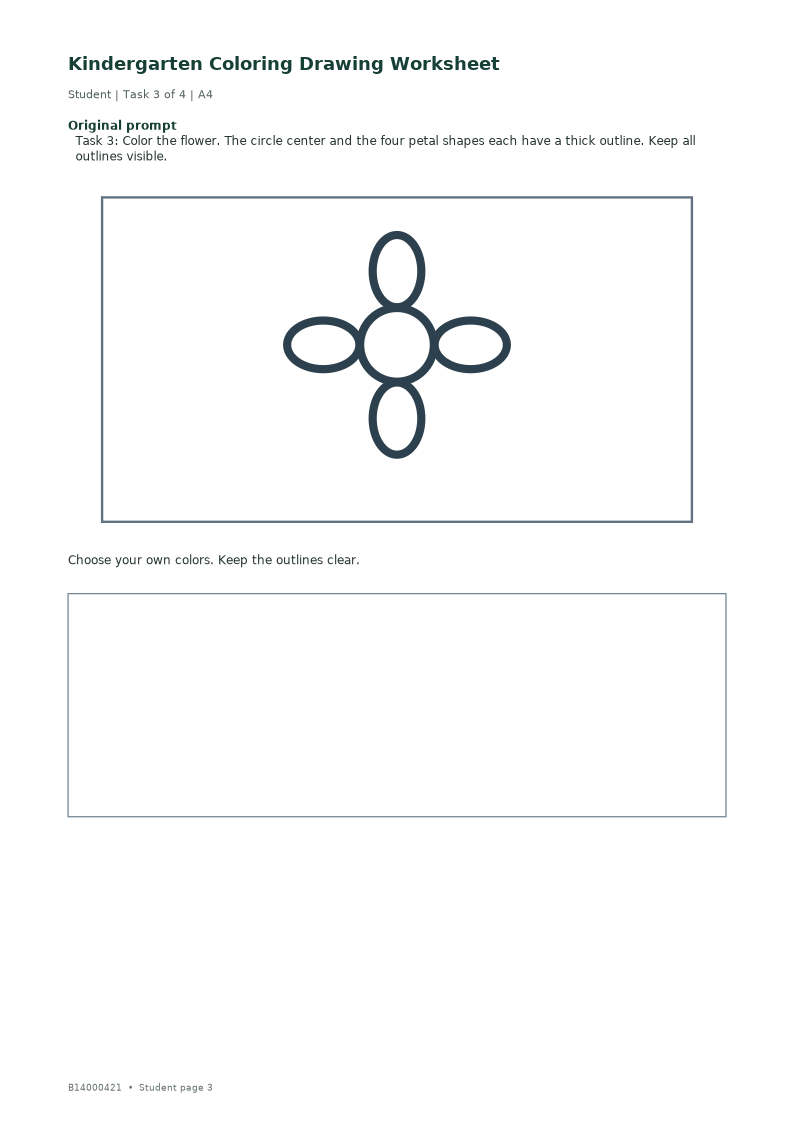
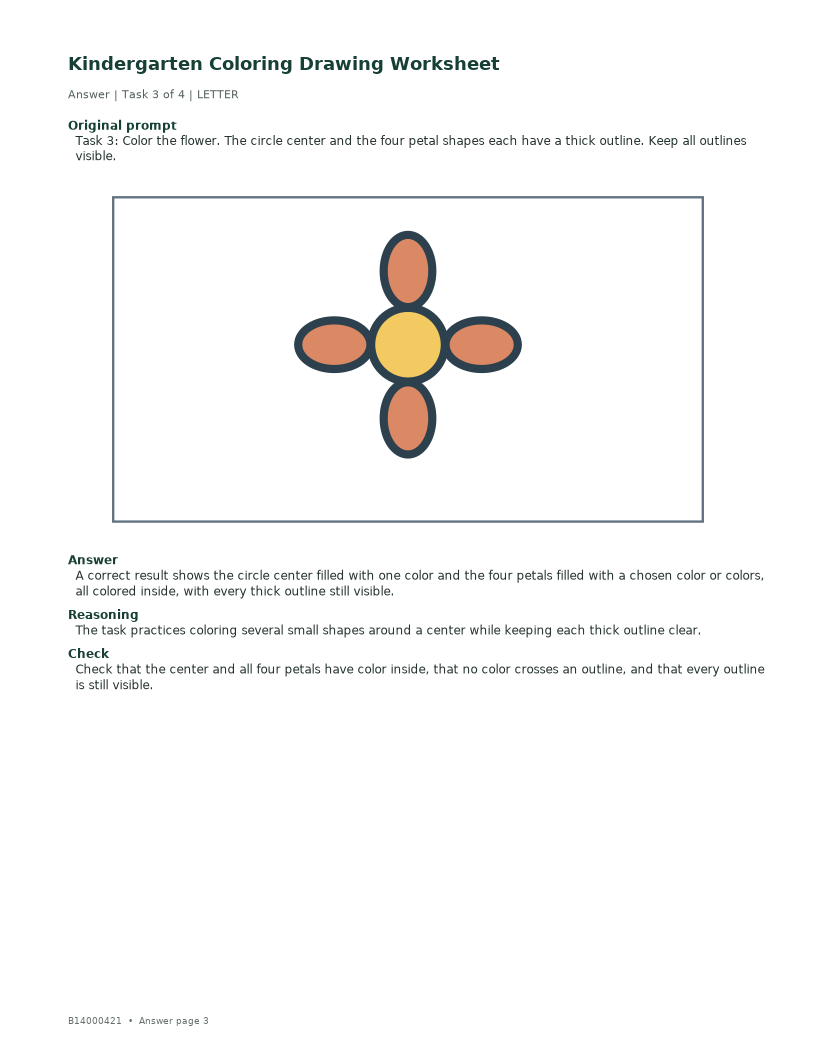
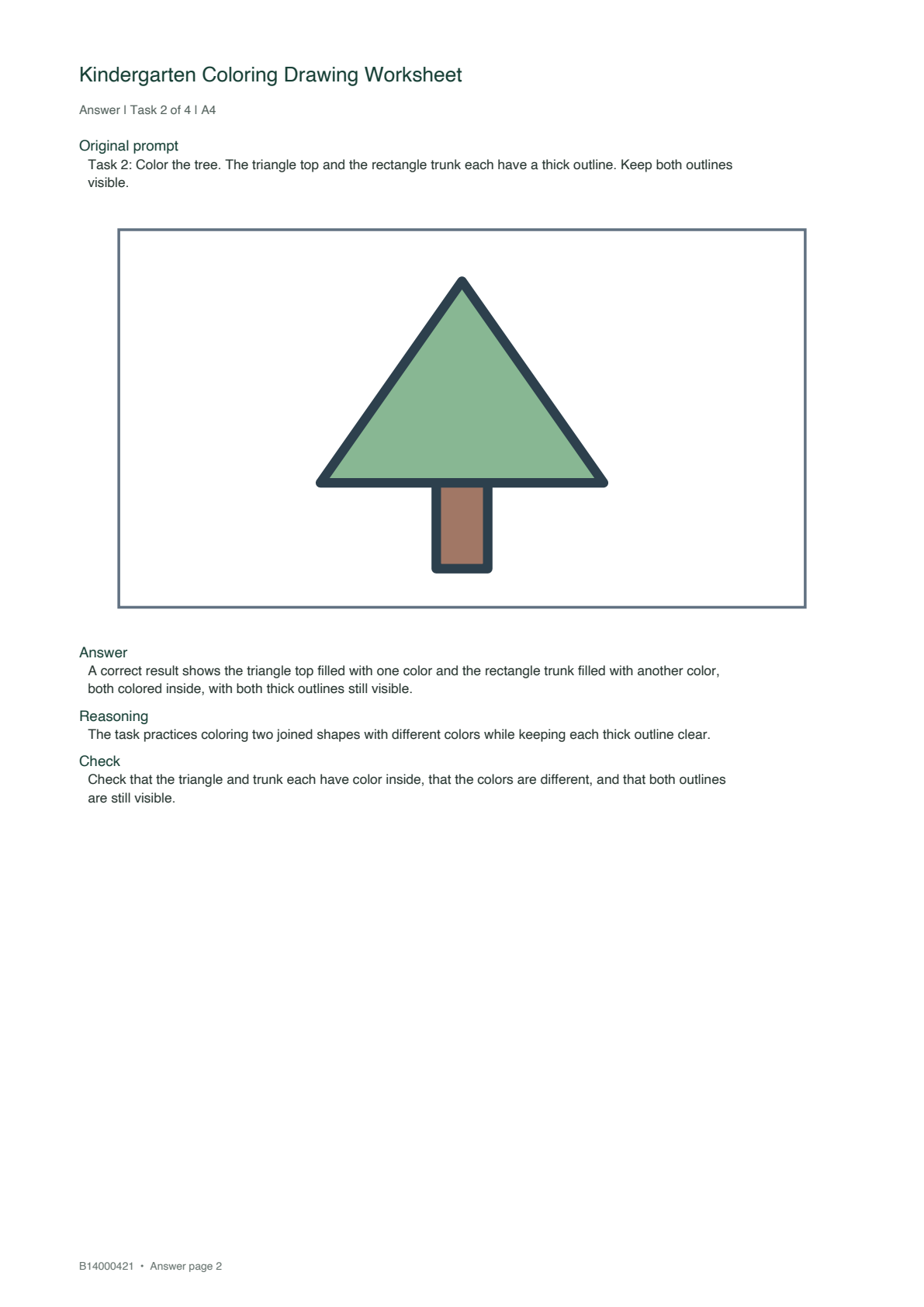
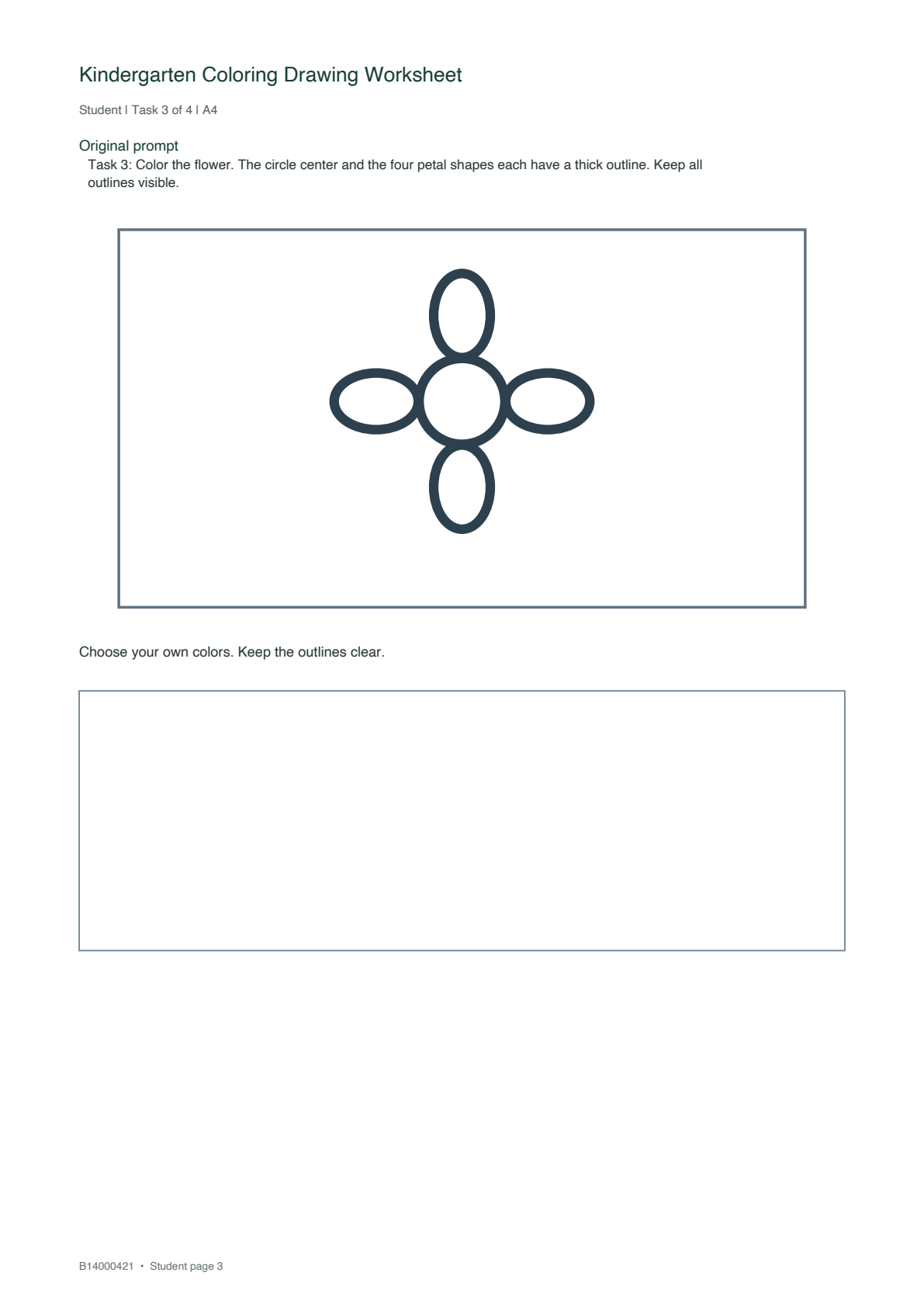
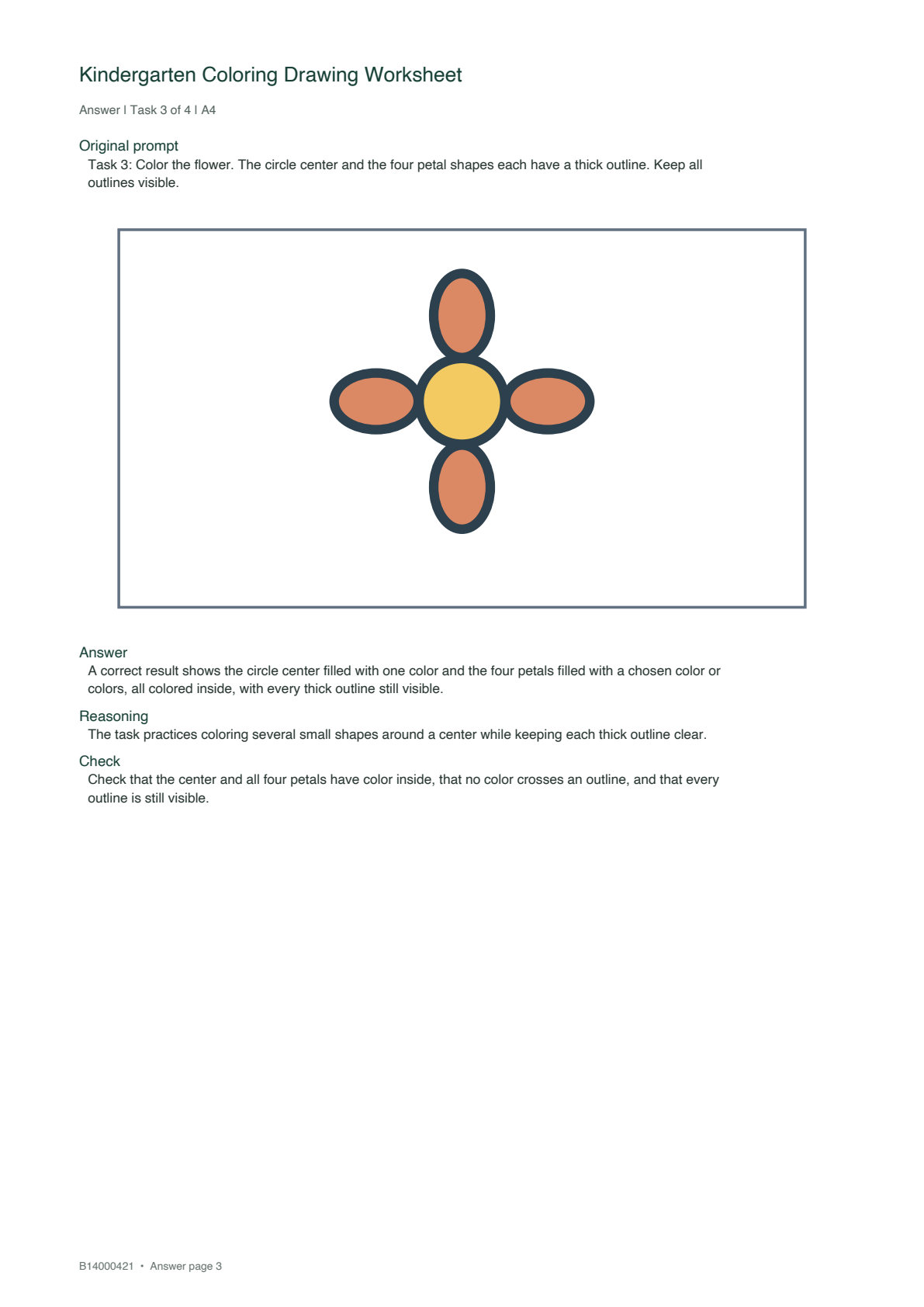
Task 3: Color the flower. The circle center and the four petal shapes each have a thick outline. Keep all outlines visible.
Show answer 3
A correct result shows the circle center filled with one color and the four petals filled with a chosen color or colors, all colored inside, with every thick outline still visible.
The task practices coloring several small shapes around a center while keeping each thick outline clear.
Check: Check that the center and all four petals have color inside, that no color crosses an outline, and that every outline is still visible.
Task 4
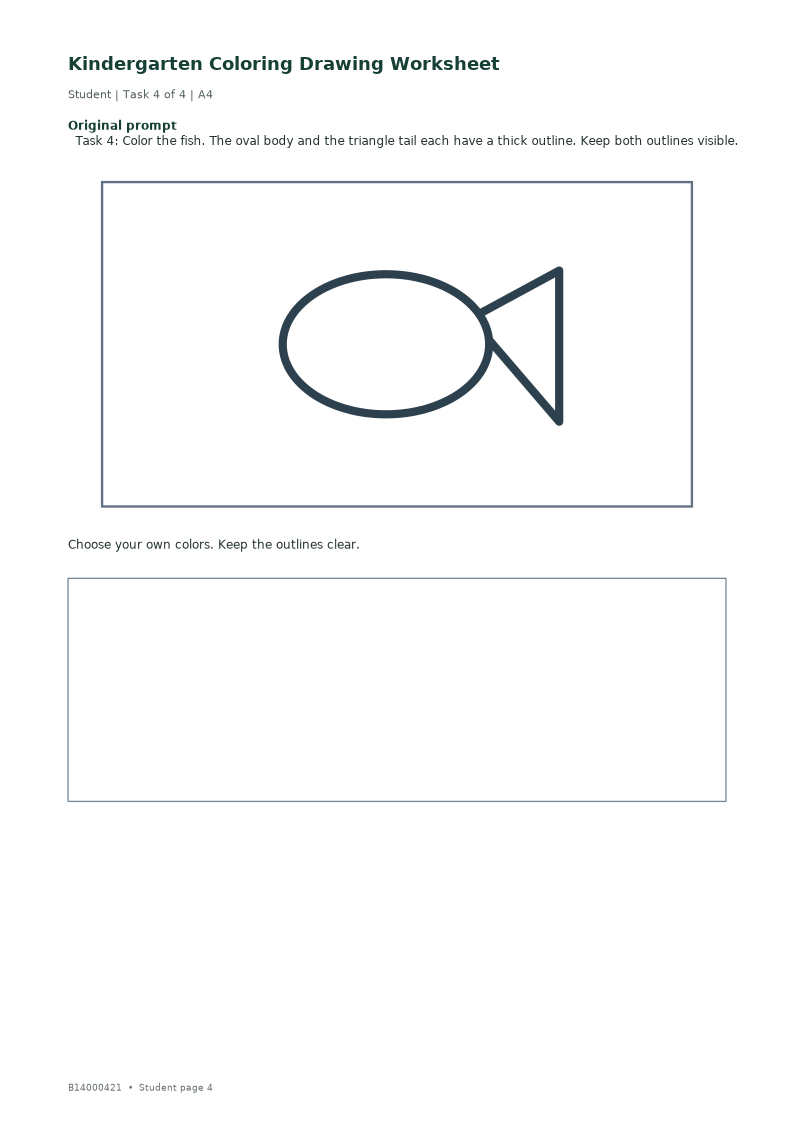
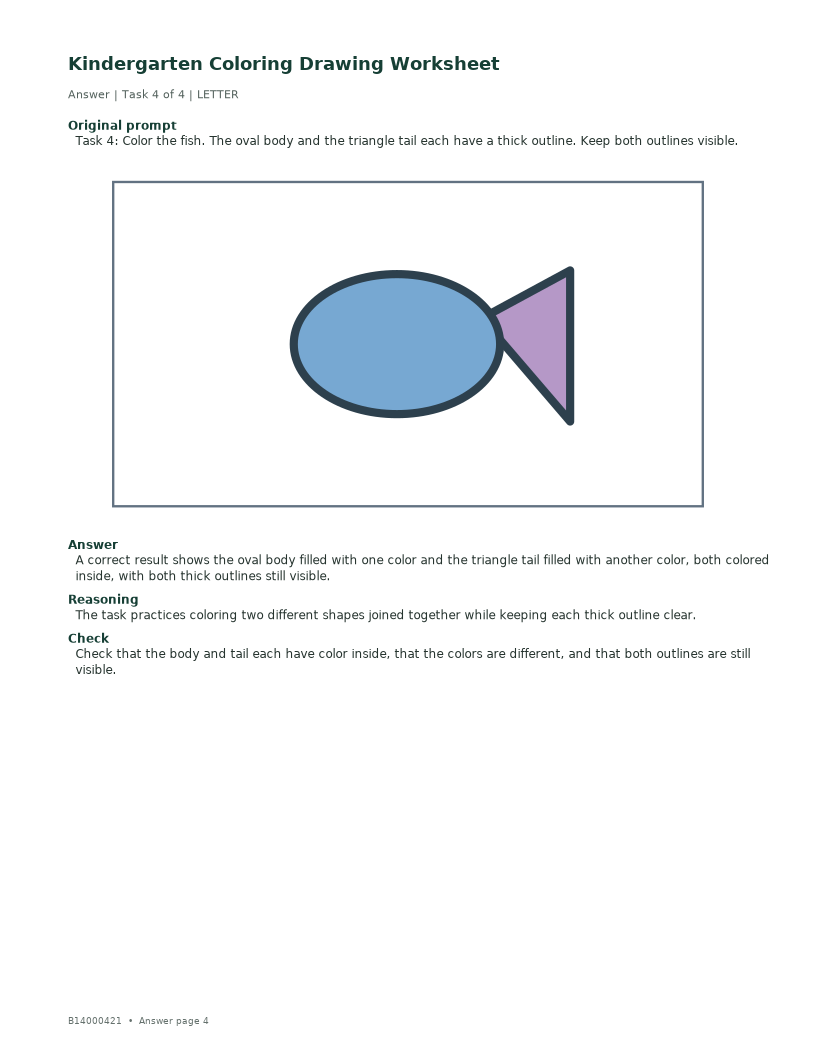
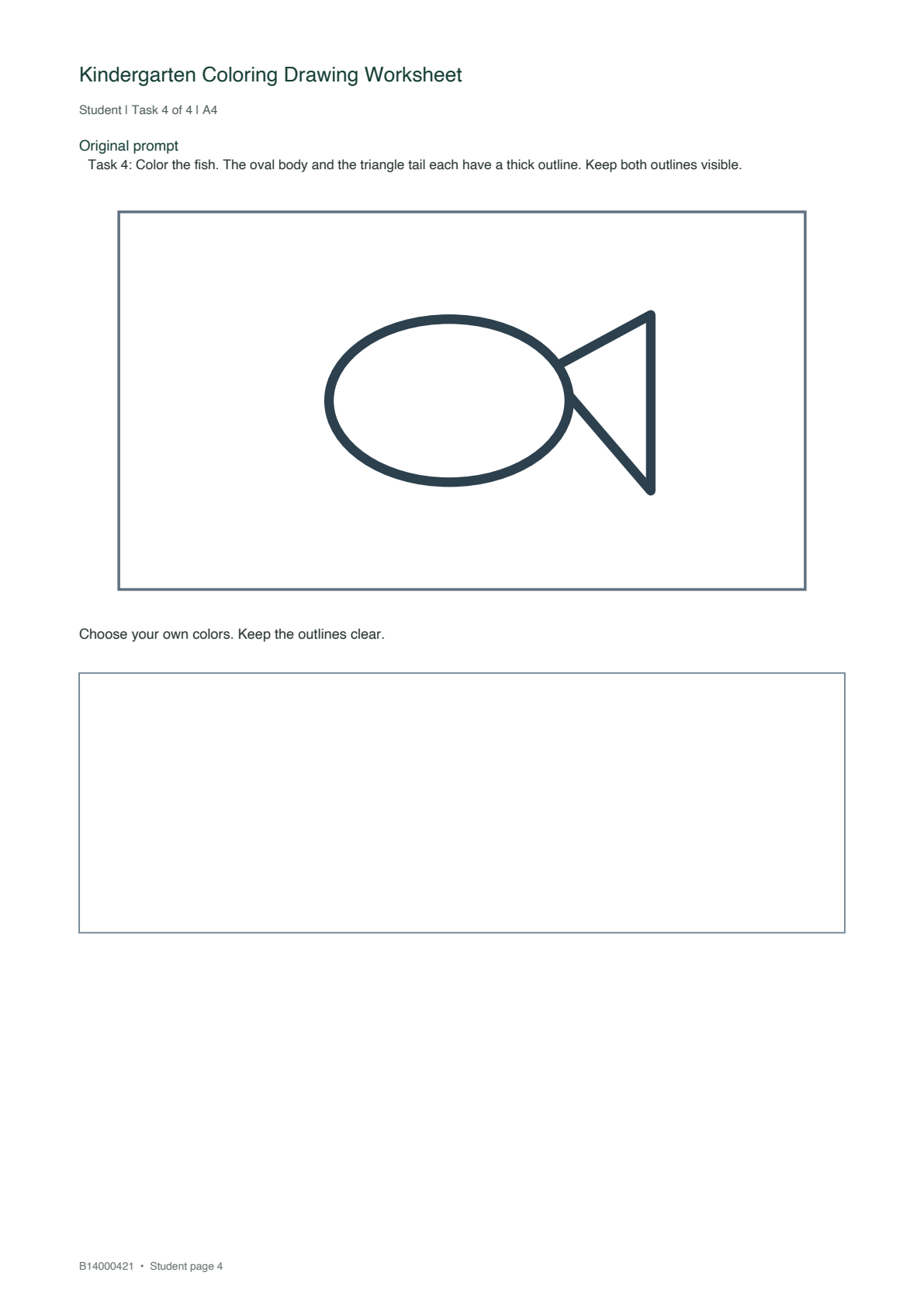
Task 4: Color the fish. The oval body and the triangle tail each have a thick outline. Keep both outlines visible.
Show answer 4
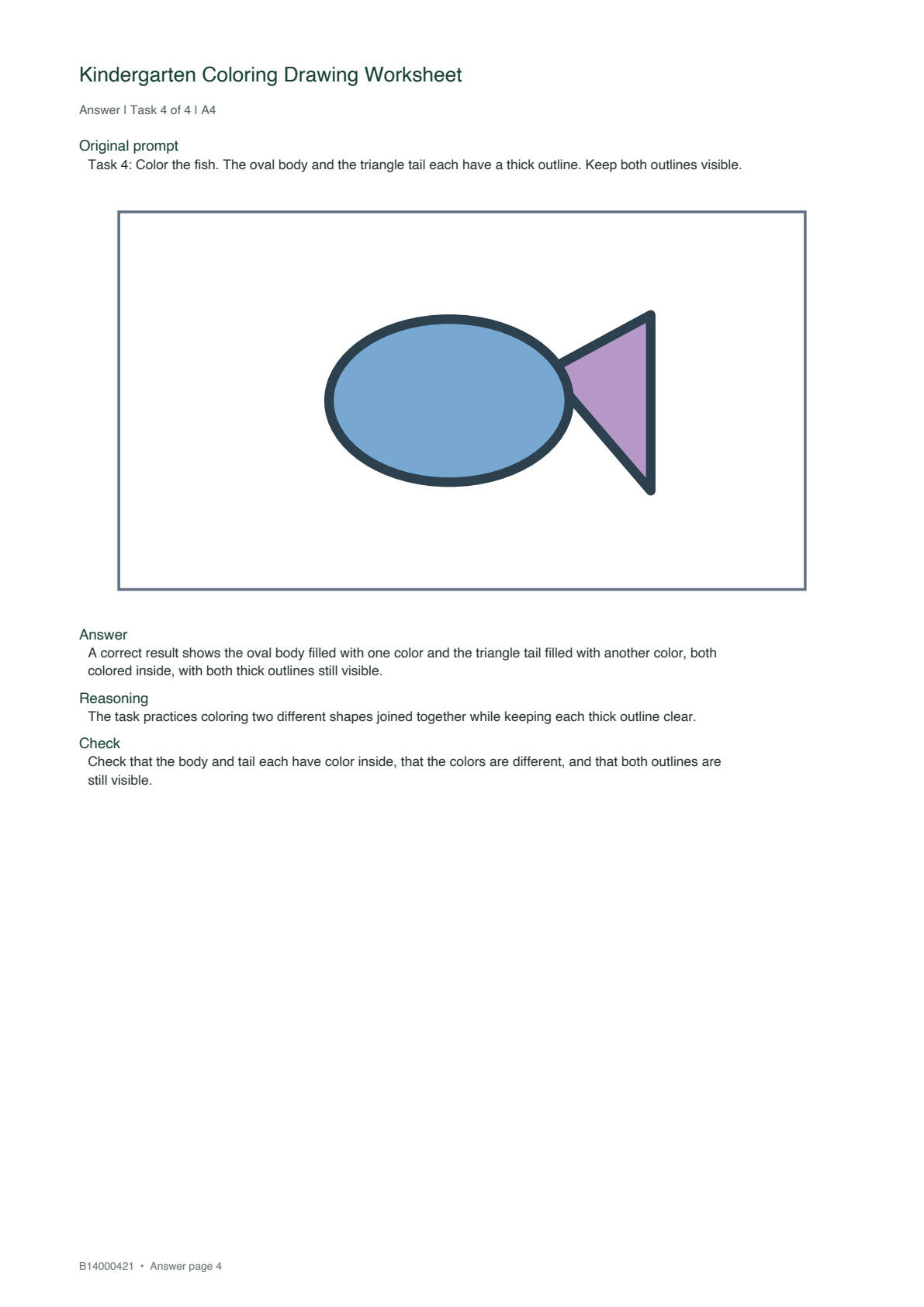
A correct result shows the oval body filled with one color and the triangle tail filled with another color, both colored inside, with both thick outlines still visible.
The task practices coloring two different shapes joined together while keeping each thick outline clear.
Check: Check that the body and tail each have color inside, that the colors are different, and that both outlines are still visible.
Useful checks
- Coloring over the thick outline so it disappears. Color a little away from the line so the outline stays visible.
- Leaving white gaps inside a shape. Fill the whole inside of the shape with color, staying inside the outline.
- Using the same color for every shape. Choose a different color for each shape so the picture is easy to see.
Questions about this resource
Does the child have to use the same colors as the example?
No. The example shows one finished way to color. Children may choose their own colors as long as they color inside the thick outlines.
What if color goes outside the outline?
That is a common beginner mistake. The child can try again on a fresh copy, coloring more gently and staying a little away from the line.