HomeGuitar Chord Grid Paper: Diagram Chords Clearly Free original lessons
Guitar Chord Grid Paper: Diagram Chords Clearly
Learn to draw guitar chords on grid paper with six strings, frets, finger dots, and blank boxes. Includes examples, checks, and practice tasks.
Free lesson
Four exercises
Worked answers
Object Drawing Lessons
Guitar chord grid paper turns a chord shape into a clear map. A standard chord diagram uses six vertical lines for strings and horizontal lines for frets. This guide explains a simple convention, shows how to place finger dots, and gives checkable practice. The convention is explicit so you can compare your drawing to the text, not to a single universal style. Letter styles and handwriting vary; the grid is what matters.
Practice materials: Printable downloads are not available for this lesson yet. Use the instructions and four exercises below.
Reference illustration
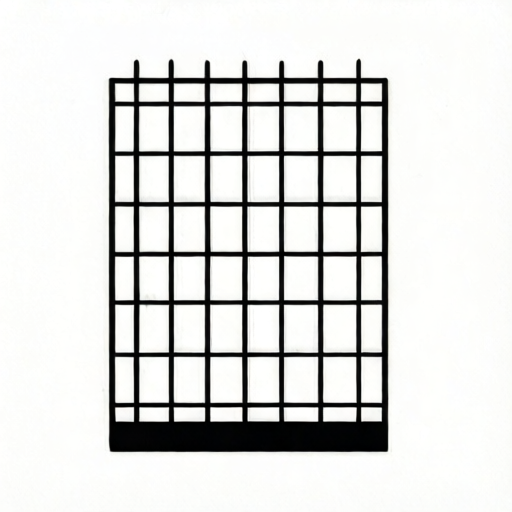
Use the stated measurements and conventions for each exercise.
Set up the grid and label strings
Draw six evenly spaced vertical lines. The leftmost line is the low E string (sixth string); the rightmost line is the high E string (first string). This left-to-right order is the convention used here. Label the strings above the grid if you wish: 6, 5, 4, 3, 2, 1 from left to right.
Draw horizontal lines for frets. The top horizontal line is the nut (fret zero). The space between the nut and the first horizontal line below it is fret 1. Continue downward for as many frets as the chord needs. Keep spacing even so finger dots sit clearly between lines.
- Draw six vertical lines with equal spacing.
- Mark the leftmost line as string 6 and the rightmost as string 1.
- Draw a thicker top horizontal line as the nut.
- Add horizontal fret lines below the nut, evenly spaced.
- Number frets 1, 2, 3 downward beside the grid if helpful.
Place finger dots and open/muted marks
A finger dot sits in the space between two vertical strings and between two horizontal fret lines. Place the dot centered in that cell. The dot represents a finger pressing that string at that fret. Use a small circle or filled dot; either is acceptable if consistent.
Above the nut, mark open strings with an O and muted strings with an X. An open string is played without fretting. A muted string is not played. These marks sit directly above the vertical line for that string. If a chord uses a barre, draw a thick horizontal line across the strings at the fret instead of separate dots.
- Decide which strings are open, muted, or fretted.
- Place O above open strings and X above muted strings.
- Put a dot in the correct string-fret cell for each fretted note.
- For a barre, draw one thick line across all affected strings at the fret.
- Check that every string has exactly one mark: O, X, dot, or barre.
Use blank chord boxes for quick reference
A blank chord box is a small rectangle with six vertical lines and four or five horizontal lines. Use it to sketch a chord quickly before drawing a full diagram. The same string order applies: leftmost is string 6. Keep the box small enough to fit beside a song title or in a notebook margin.
When transferring from a blank box to a full diagram, copy the dot positions cell by cell. Check the string number and fret number for each dot. A common error is mirroring the grid; the leftmost line must stay string 6. If you use a different convention, state it clearly beside the diagram.
- Draw a small rectangle with six vertical lines.
- Add four horizontal lines below a thicker nut line.
- Sketch dots in the cells for the chord shape.
- Label the leftmost string as 6 to avoid mirroring.
- Transfer each dot to the full diagram and recheck string order.
Worked example
Draw a chord diagram for a hypothetical shape: string 6 muted, string 5 open, string 4 fret 2, string 3 fret 2, string 2 fret 1, string 1 open. Use the leftmost-is-string-6 convention.
Worked answer
Above the nut: X over string 6, O over string 5, O over string 1. In the grid: dot in the cell for string 4 at fret 2; dot in the cell for string 3 at fret 2; dot in the cell for string 2 at fret 1. No barre. Check: six strings, each has one mark; dots sit between fret lines; string order left to right is 6,5,4,3,2,1.
Four practice exercises
Exercise 1
Draw a diagram for a hypothetical chord: string 6 open, string 5 fret 2, string 4 fret 2, string 3 fret 1, string 2 open, string 1 open. Use leftmost-is-string-6.
Show answer and check
Above nut: O over string 6, O over string 2, O over string 1. Grid: dot string 5 fret 2; dot string 4 fret 2; dot string 3 fret 1.
Why: Each fretted string gets one dot in its cell. Open strings get O above the nut. No string is muted, so no X.
Check: Count six strings and six marks. Confirm dots are between fret lines. Confirm left-to-right order is 6,5,4,3,2,1.
Exercise 2
A student draws a dot on the first horizontal fret line for string 3. Explain the error and correct it for a hypothetical chord where string 3 is fretted at fret 1.
Show answer and check
The dot should be in the cell between the nut and the first fret line, not on the line. Move the dot into that cell for string 3.
Why: Fret 1 is the space below the nut. A dot on a line does not identify a fret cell.
Check: Verify the dot is centered between two horizontal lines and directly between the vertical lines for string 3 and its neighbor.
Exercise 3
Draw a hypothetical barre chord: strings 6 through 1 all fretted at fret 3 with one barre. Show the barre and any open or muted marks.
Show answer and check
Draw a thick horizontal line across all six strings in the fret 3 cell. No O or X marks are needed because every string is fretted by the barre.
Why: A barre covers multiple strings at one fret, so one thick line replaces separate dots. Every string has a mark through the barre.
Check: Confirm the barre spans all six vertical lines and sits between the fret 2 and fret 3 lines. Count six strings covered.
Exercise 4
Using a blank chord box with six vertical lines and four horizontal lines below the nut, sketch a hypothetical chord: string 6 X, string 5 fret 3, string 4 fret 2, string 3 open, string 2 fret 1, string 1 X. Then state one check you would perform.
Show answer and check
Above nut: X over string 6, O over string 3, X over string 1. Grid: dot string 5 fret 3; dot string 4 fret 2; dot string 2 fret 1. Check: every string has exactly one mark.
Why: Muted strings get X, open gets O, fretted get dots. The blank box uses the same string order.
Check: List the six strings and their marks; confirm no string has two marks and none is missing.
Common mistakes
- Reversing string order so the leftmost line is the high E string. Use the stated convention: leftmost is string 6 (low E). Label the top of the grid to prevent reversal.
- Placing a dot on a fret line instead of between lines. A dot belongs in the cell between two fret lines. The space below the nut is fret 1.
- Forgetting to mark open or muted strings. Every string needs one mark above the nut: O for open, X for muted, or a dot/barre in the grid.
- Drawing a barre as separate dots when one finger covers several strings. Draw a thick horizontal line across the affected strings at the fret, or state clearly that separate dots represent a barre.
Self-check rubric
- Six vertical lines are present and evenly spaced.
- Leftmost line is labeled or understood as string 6; rightmost as string 1.
- A thicker nut line is at the top, with fret lines below.
- Each string has exactly one mark: O, X, dot, or barre.
- Dots sit in cells between fret lines, not on lines.
- Open and muted marks sit above the correct string line.
- Barre, if used, is drawn as a thick line across affected strings.
- Any alternative convention is stated clearly beside the diagram.
Questions and answers
Which string is on the left of a chord grid?
In this guide, the leftmost vertical line is string 6, the low E string. The rightmost is string 1, the high E string.
Where is fret 1 on the grid?
Fret 1 is the space between the nut line and the first horizontal fret line below it.
How do I show an open string?
Draw an O above the nut on that string's vertical line.
Can I use a different string order?
Yes, if you state the convention beside the diagram. The check is consistency, not one universal style.