Free original lessons
Pencils for Technical Drawing
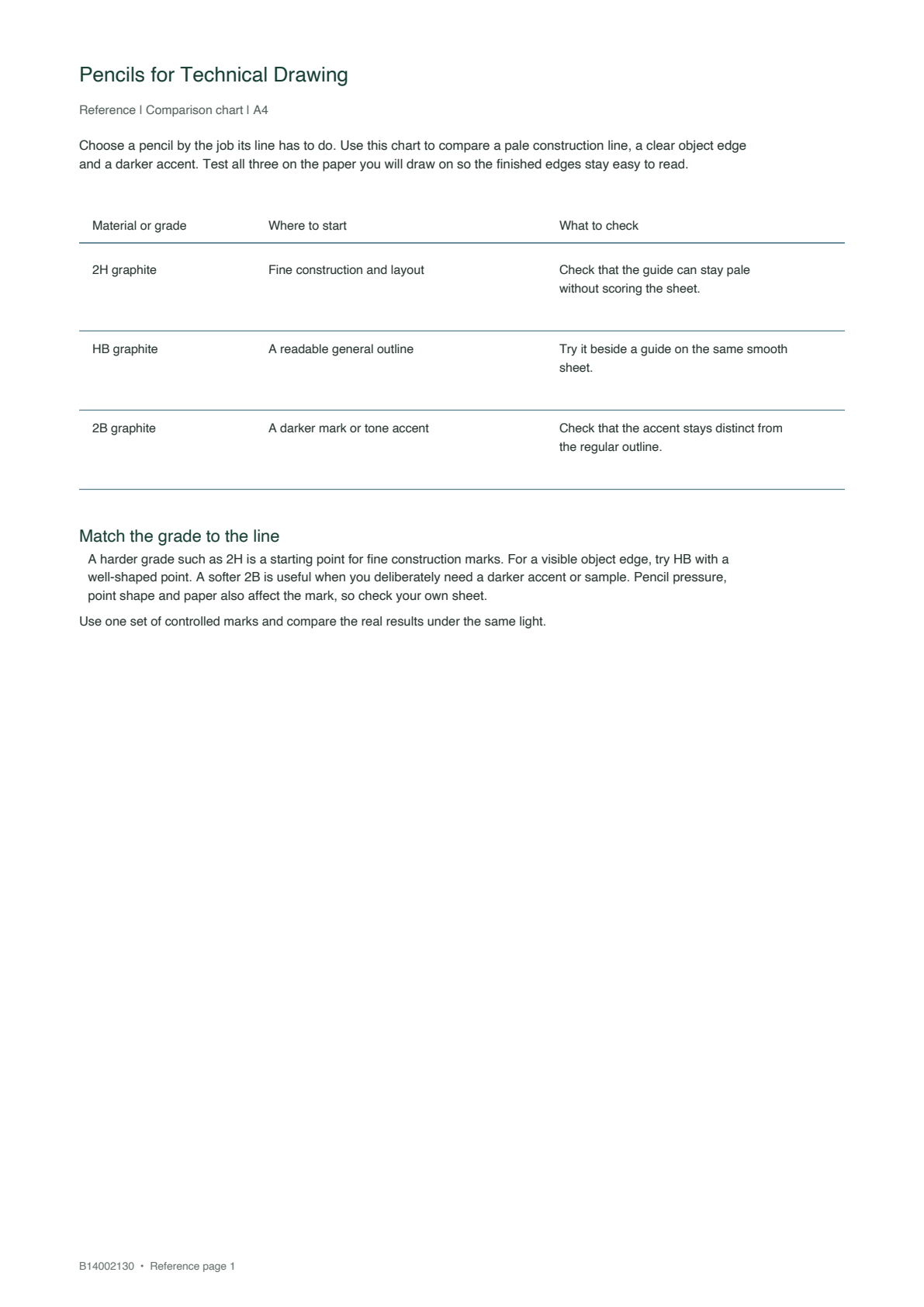
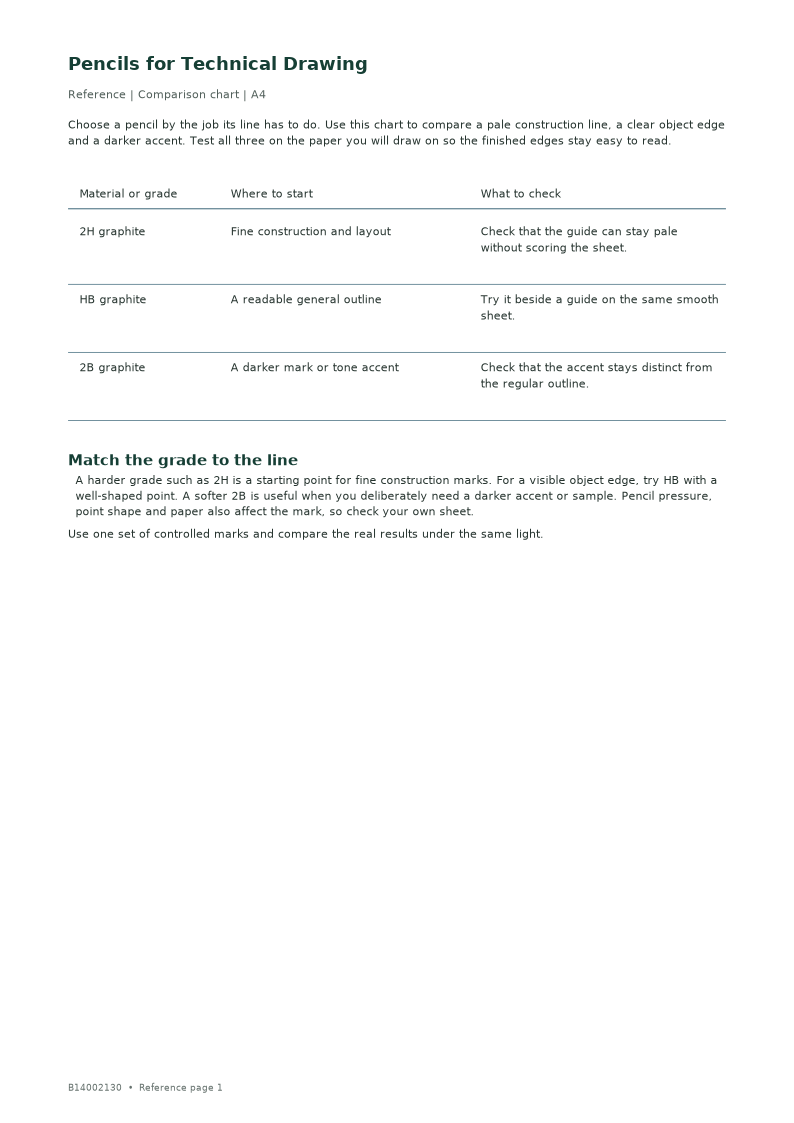
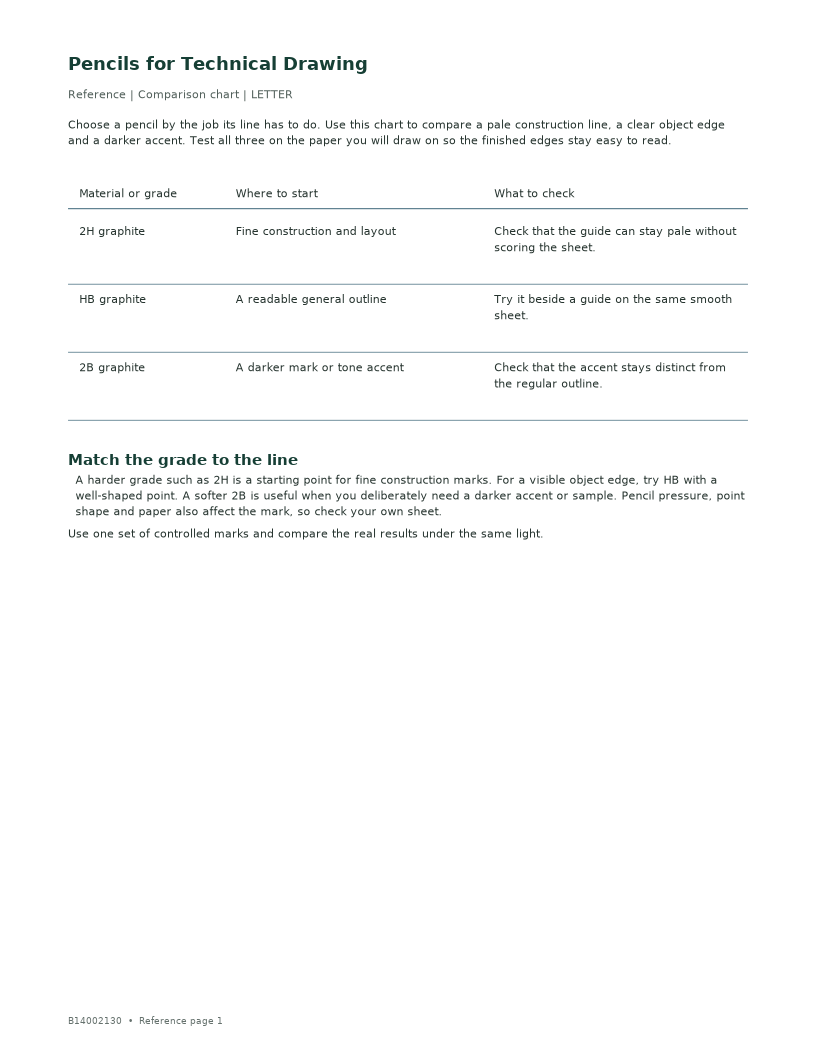
Choose a pencil by the job its line has to do. Use this chart to compare a pale construction line, a clear object edge and a darker accent. Test all three on the paper you will draw on so the finished edges stay easy to read.
Letter & A4
PDF & SVG
Match the grade to the line
A harder grade such as 2H is a starting point for fine construction marks. For a visible object edge, try HB with a well-shaped point. A softer 2B is useful when you deliberately need a darker accent or sample. Pencil pressure, point shape and paper also affect the mark, so check your own sheet.
Compare a single variable
Use one surface, equal test lengths and evenly sharpened tips. Try the three grades at the same light pressure. Write the maker and grades next to the samples. A smooth drawing paper gives you a clear place to inspect a fine line.
Keep a hierarchy
Write which line is a construction guide and which is an object edge. A useful test makes the object edge easy to find before you read the labels. Fix a heavy guide on a scrap using lighter pressure and a fresh test area before changing the finished drawing.
Download the complete resource pack
All individual SVG pages (20)
- A4 reference page 1
- A4 reference page 2
- A4 student page 1
- A4 student page 2
- A4 student page 3
- A4 student page 4
- A4 answer page 1
- A4 answer page 2
- A4 answer page 3
- A4 answer page 4
- LETTER reference page 1
- LETTER reference page 2
- LETTER student page 1
- LETTER student page 2
- LETTER student page 3
- LETTER student page 4
- LETTER answer page 1
- LETTER answer page 2
- LETTER answer page 3
- LETTER answer page 4
Print at 100% / actual size. Use the stated scale on any schematic diagram; physical cutting templates are identified separately. A4 and US Letter are separate files. Free access, no signup; CC BY 4.0.
How to use these pages
- Match the grade to the line
- Compare a single variable
- Keep a hierarchy
Worked example
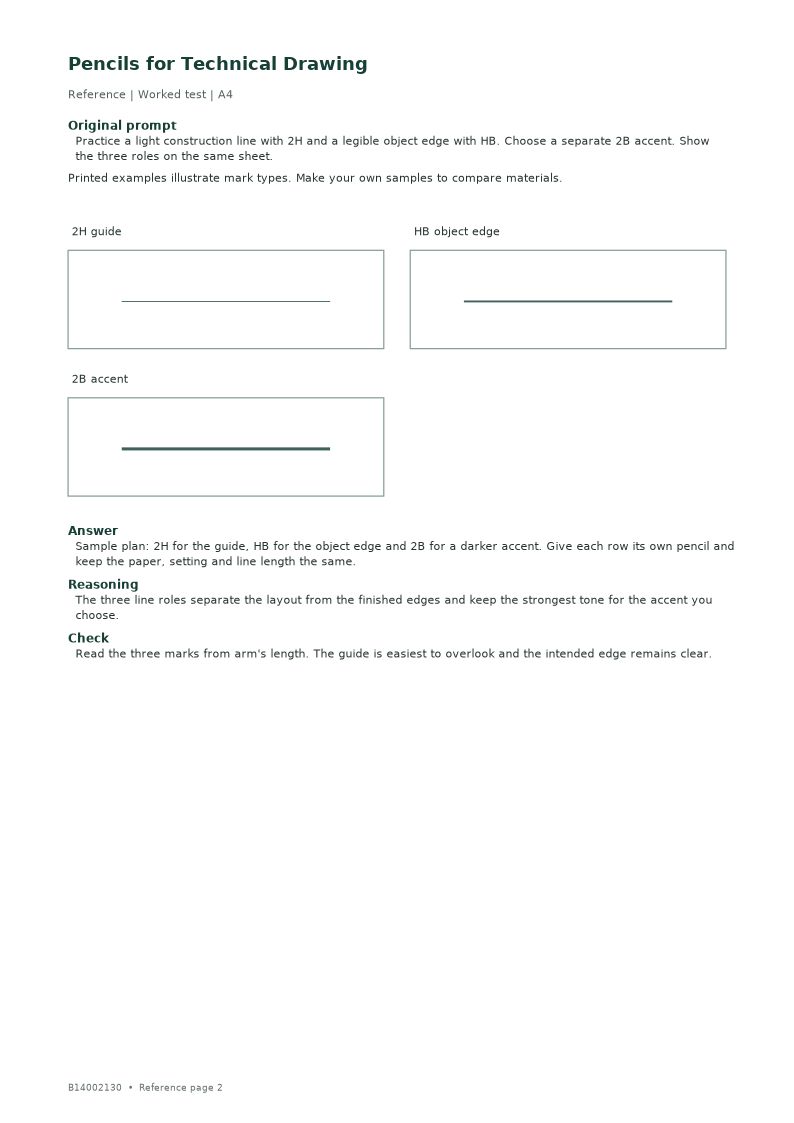
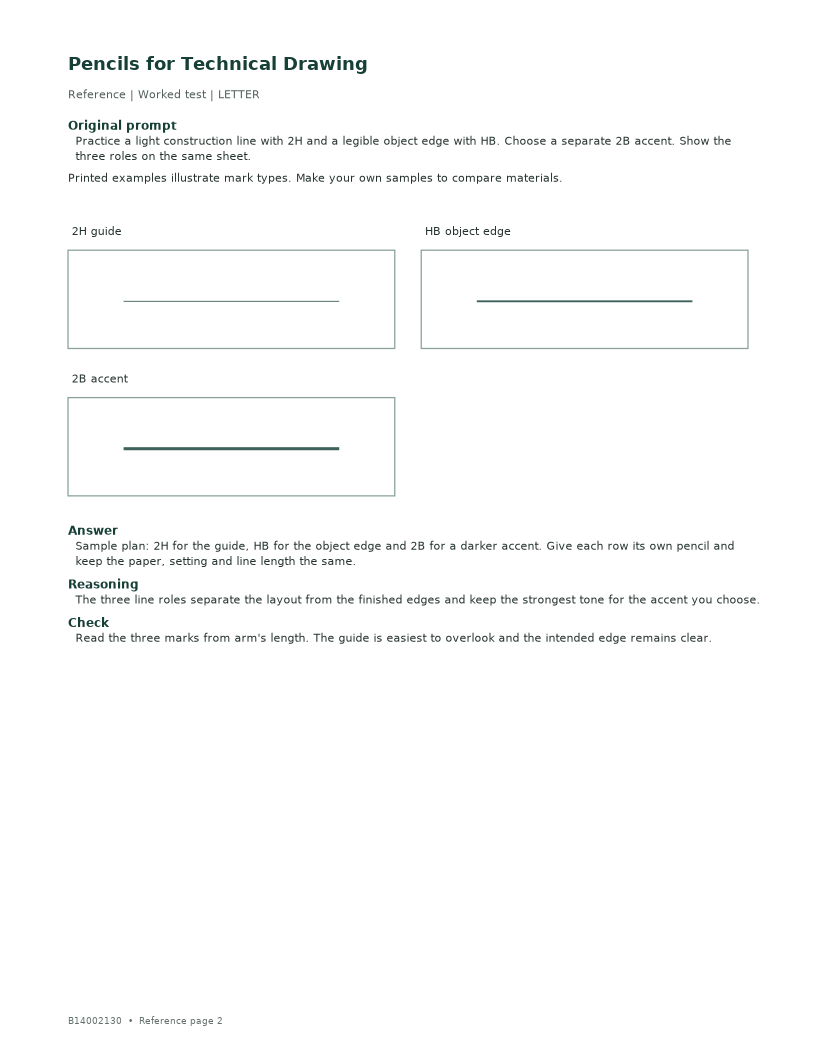
Example: Practice a light construction line with 2H and a legible object edge with HB. Choose a separate 2B accent. Show the three roles on the same sheet.
Answer: Sample plan: 2H for the guide, HB for the object edge and 2B for a darker accent. Give each row its own pencil and keep the paper, setting and line length the same.
Reasoning: The three line roles separate the layout from the finished edges and keep the strongest tone for the accent you choose.
Check: Read the three marks from arm's length. The guide is easiest to overlook and the intended edge remains clear.
Four practice tasks and complete answers
Task 1
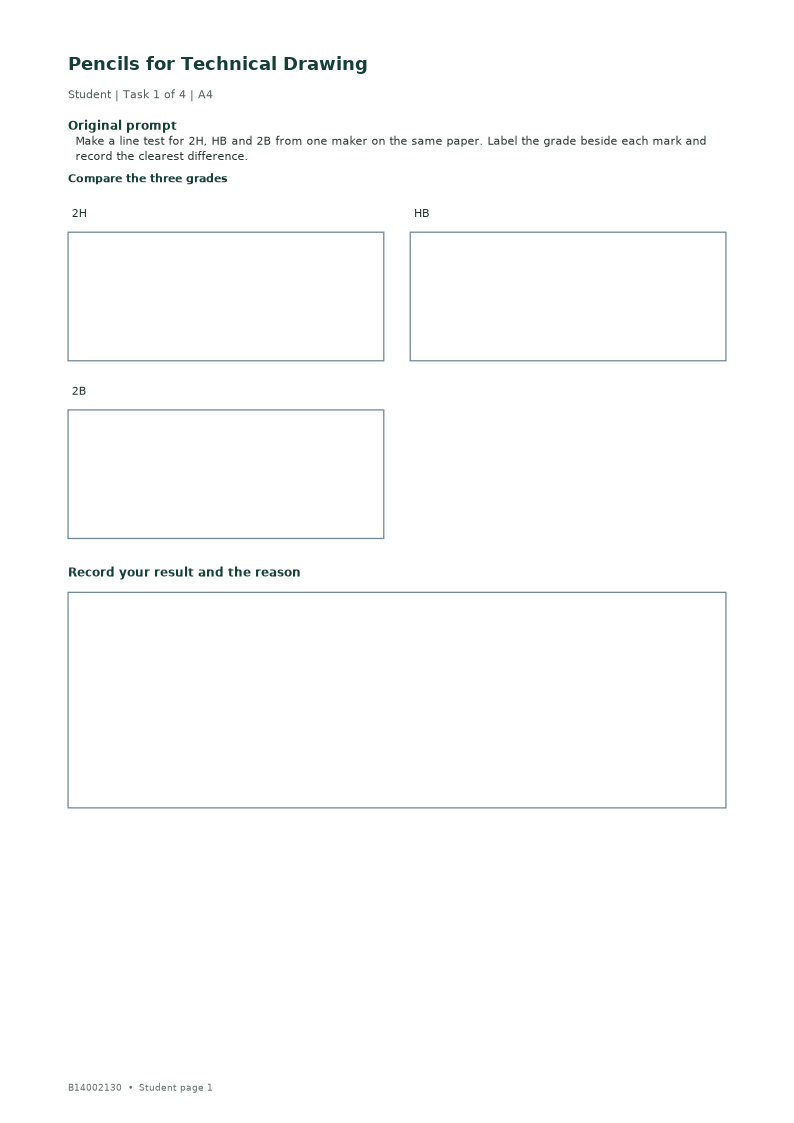
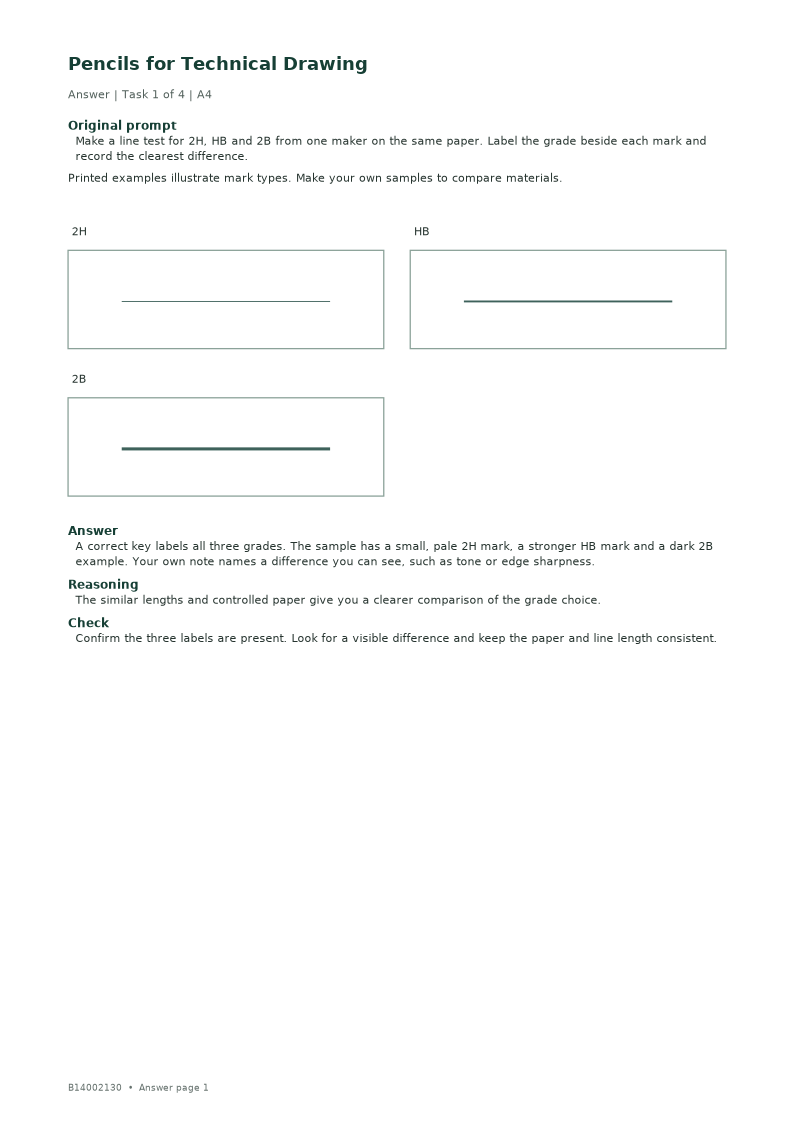
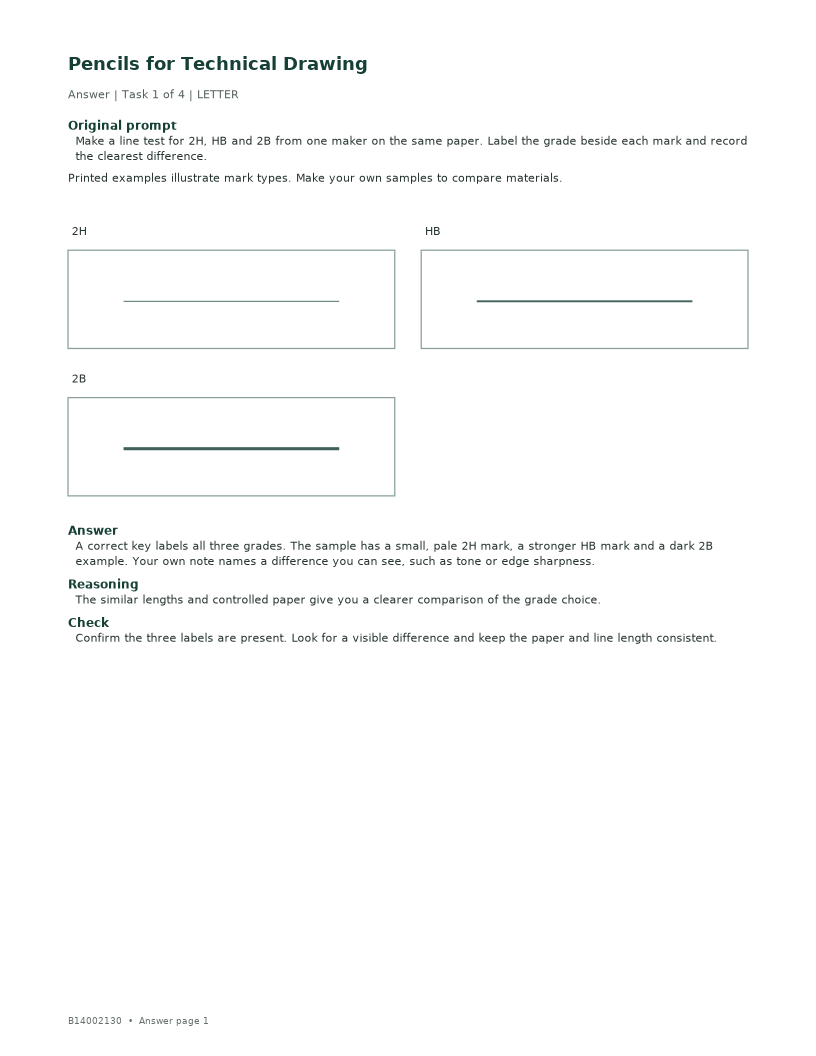
Make a line test for 2H, HB and 2B from one maker on the same paper. Label the grade beside each mark and record the clearest difference.
Show answer 1
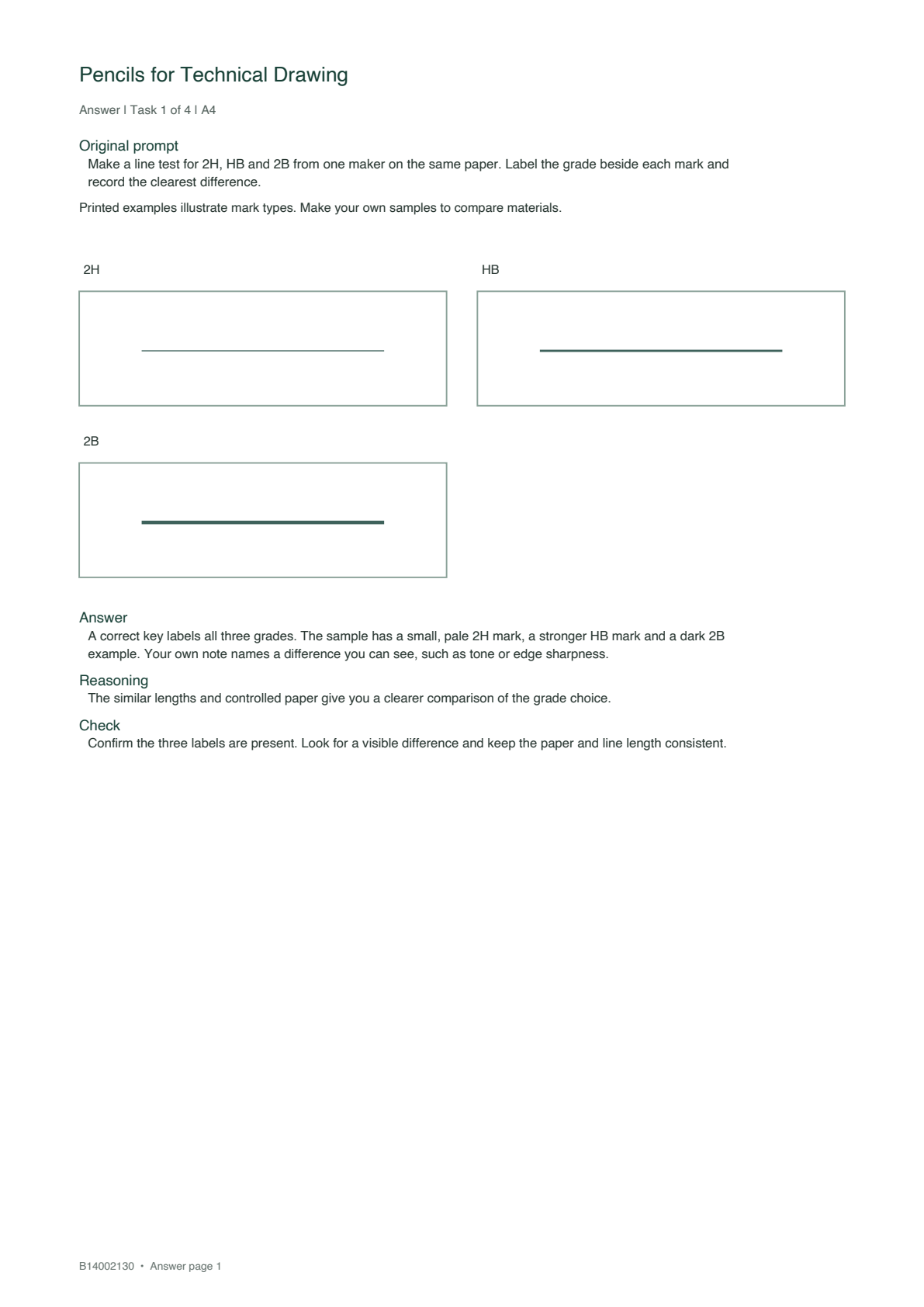
A correct key labels all three grades. The sample has a small, pale 2H mark, a stronger HB mark and a dark 2B example. Your own note names a difference you can see, such as tone or edge sharpness.
The similar lengths and controlled paper give you a clearer comparison of the grade choice.
Check: Confirm the three labels are present. Look for a visible difference and keep the paper and line length consistent.
Task 2
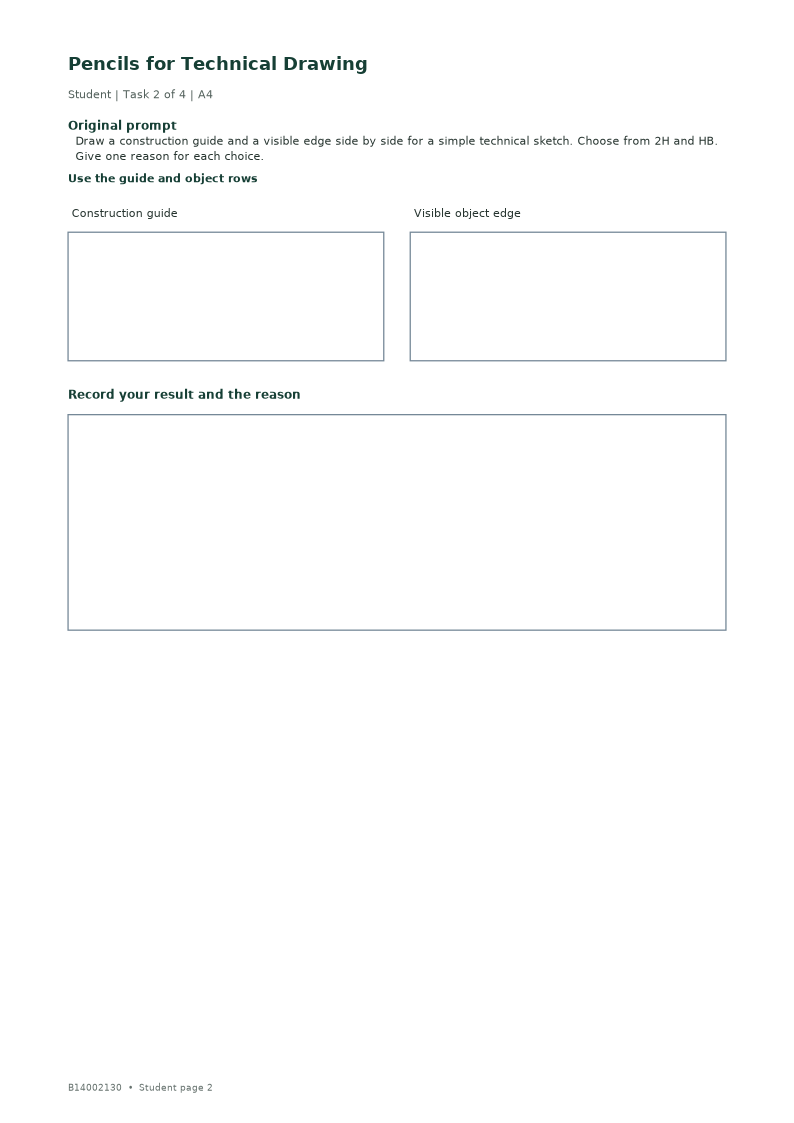
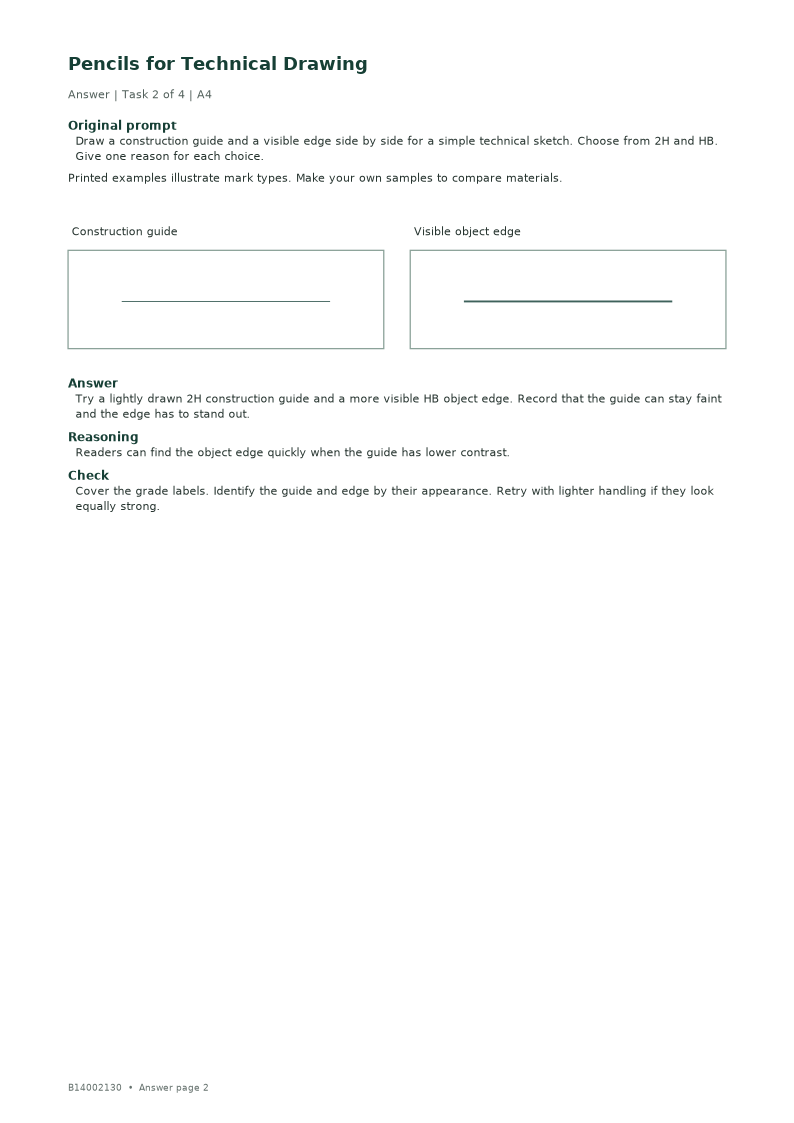
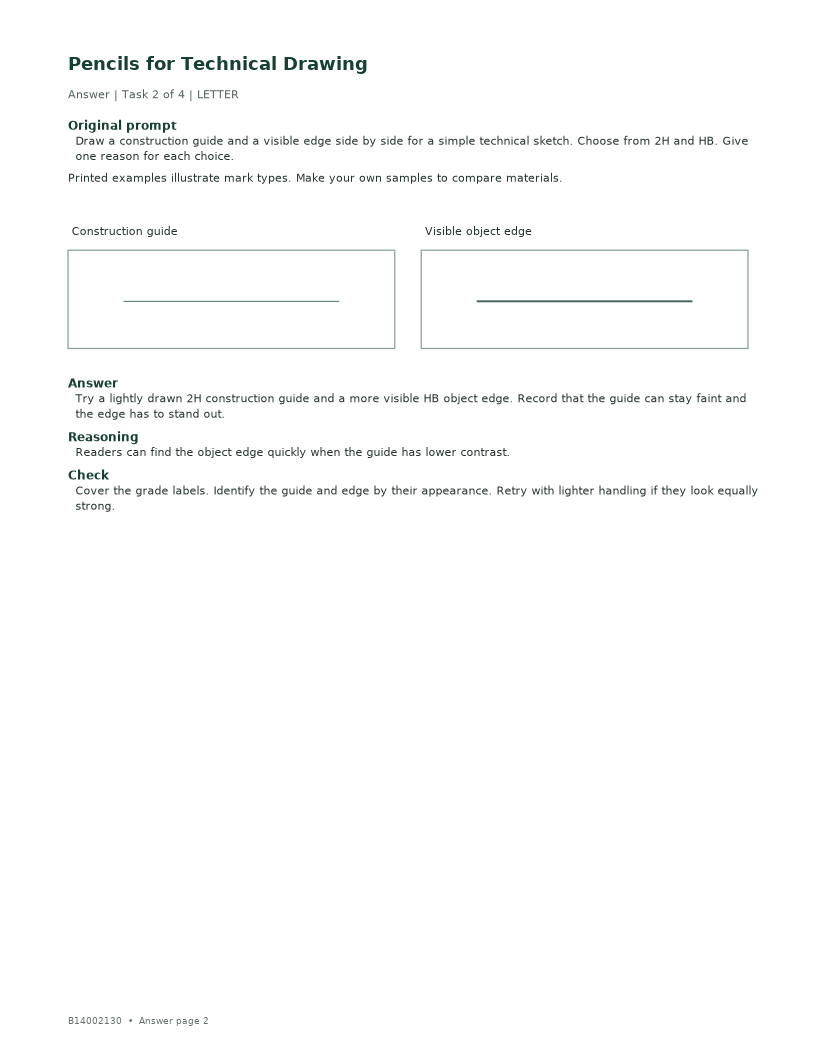
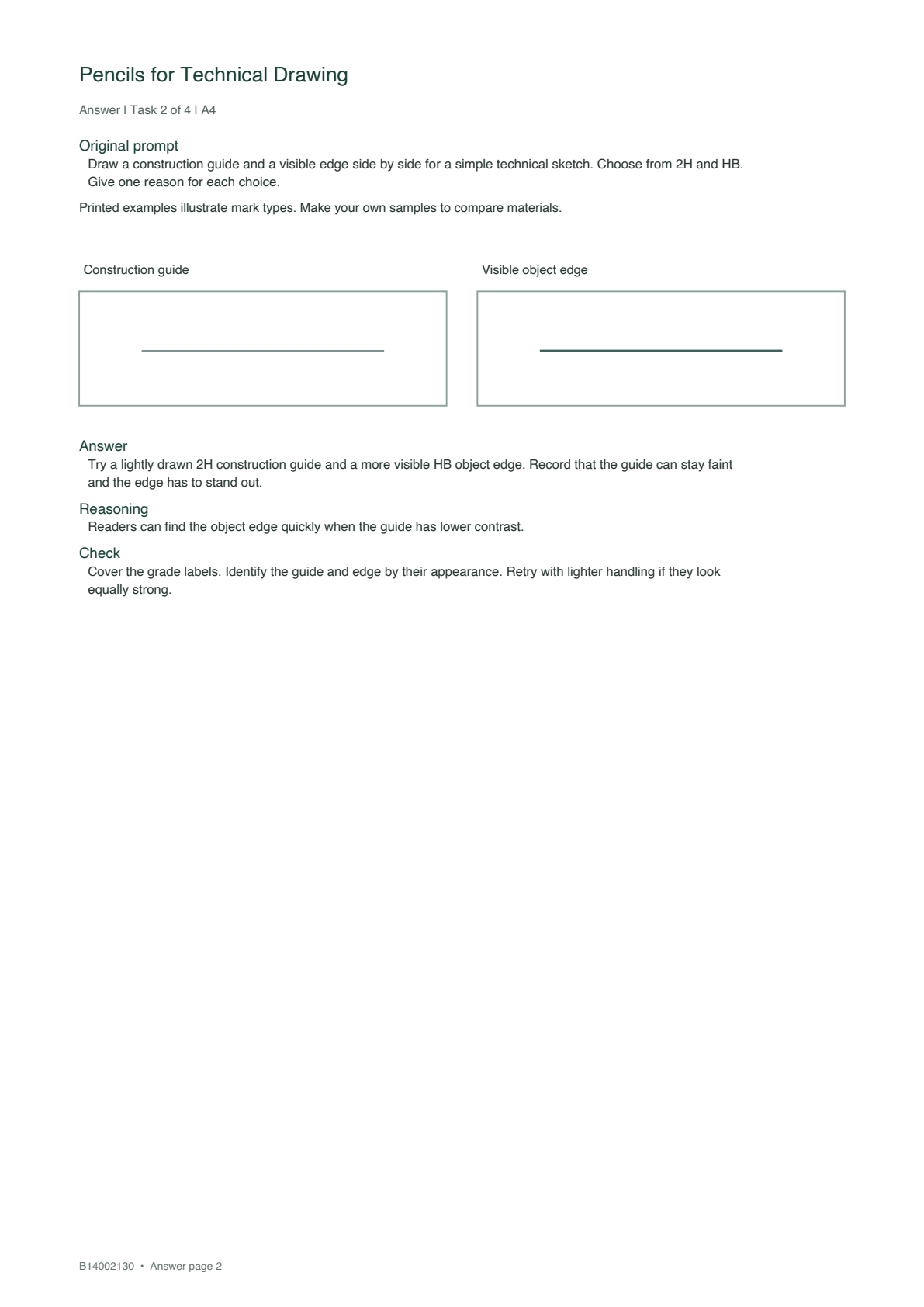
Draw a construction guide and a visible edge side by side for a simple technical sketch. Choose from 2H and HB. Give one reason for each choice.
Show answer 2
Try a lightly drawn 2H construction guide and a more visible HB object edge. Record that the guide can stay faint and the edge has to stand out.
Readers can find the object edge quickly when the guide has lower contrast.
Check: Cover the grade labels. Identify the guide and edge by their appearance. Retry with lighter handling if they look equally strong.
Task 3
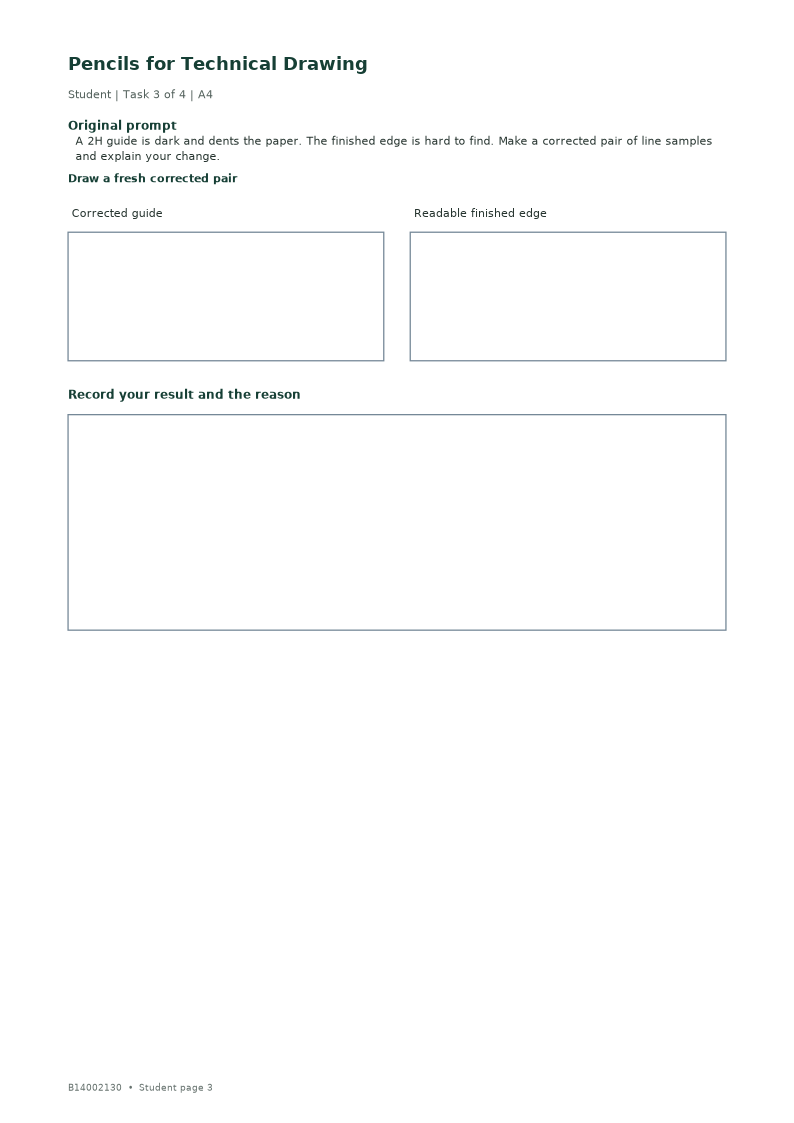
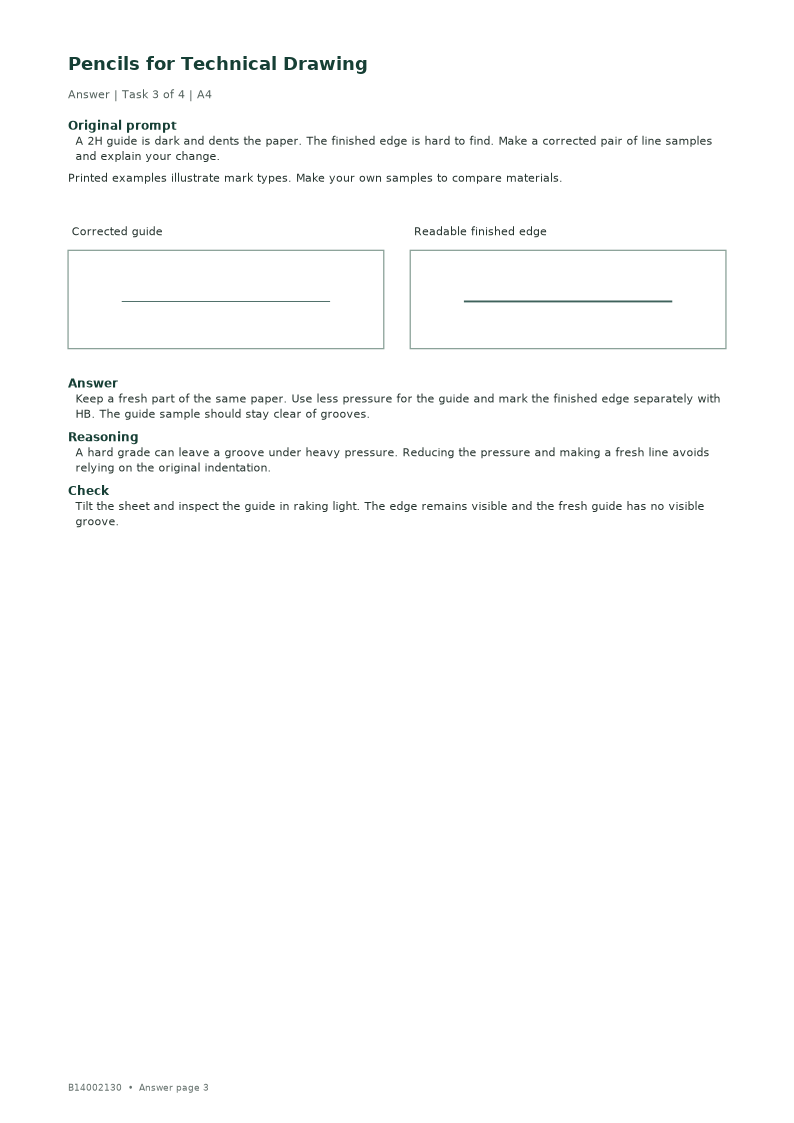
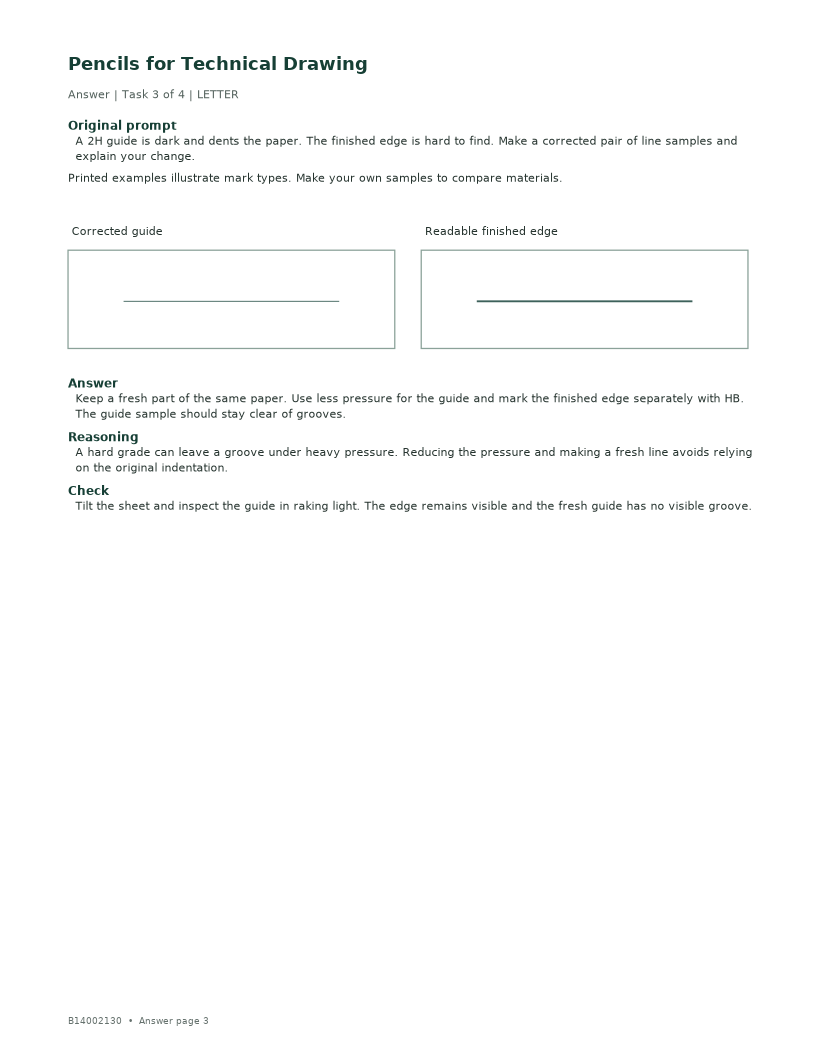
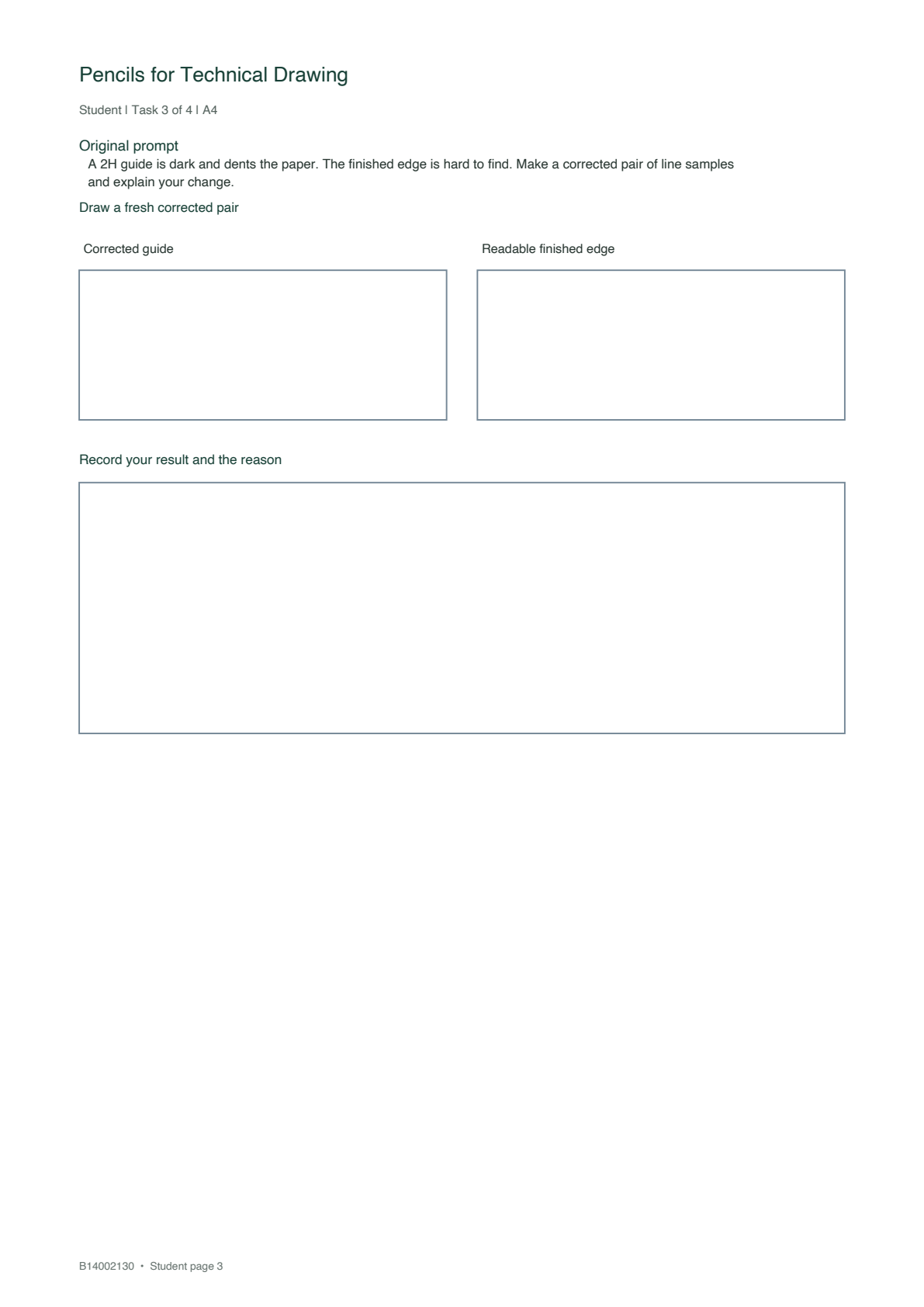
A 2H guide is dark and dents the paper. The finished edge is hard to find. Make a corrected pair of line samples and explain your change.
Show answer 3
Keep a fresh part of the same paper. Use less pressure for the guide and mark the finished edge separately with HB. The guide sample should stay clear of grooves.
A hard grade can leave a groove under heavy pressure. Reducing the pressure and making a fresh line avoids relying on the original indentation.
Check: Tilt the sheet and inspect the guide in raking light. The edge remains visible and the fresh guide has no visible groove.
Task 4
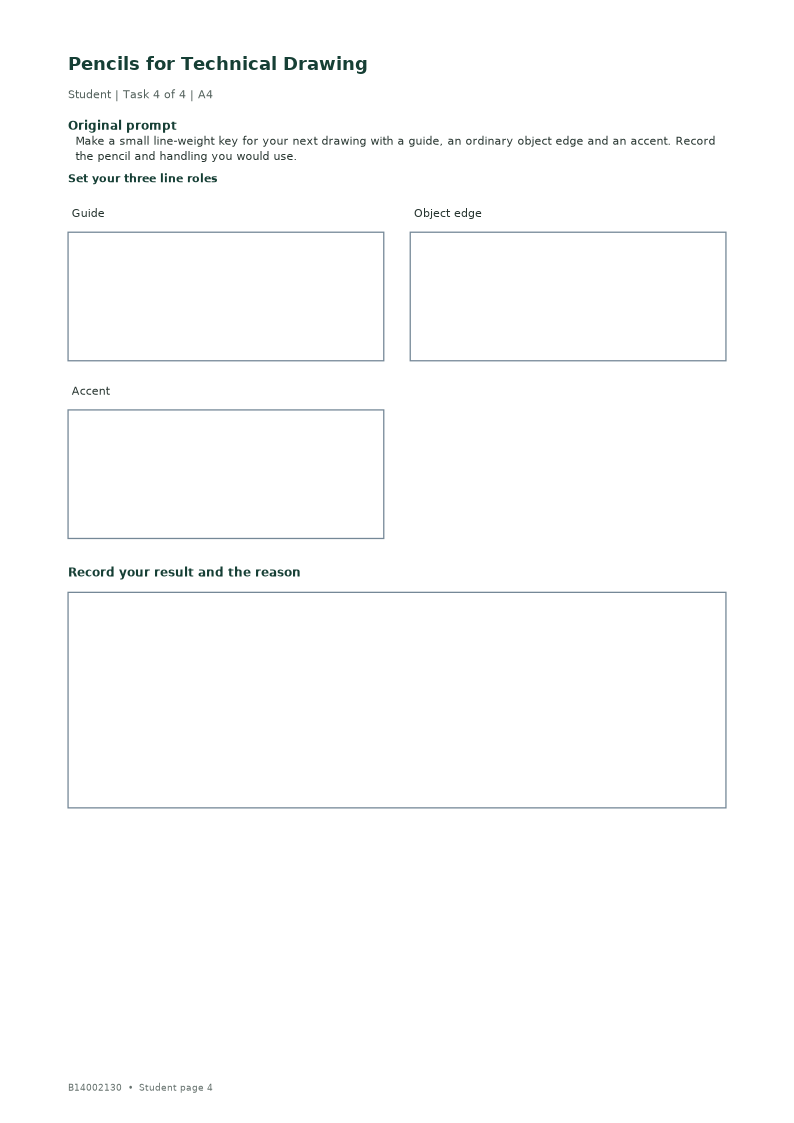
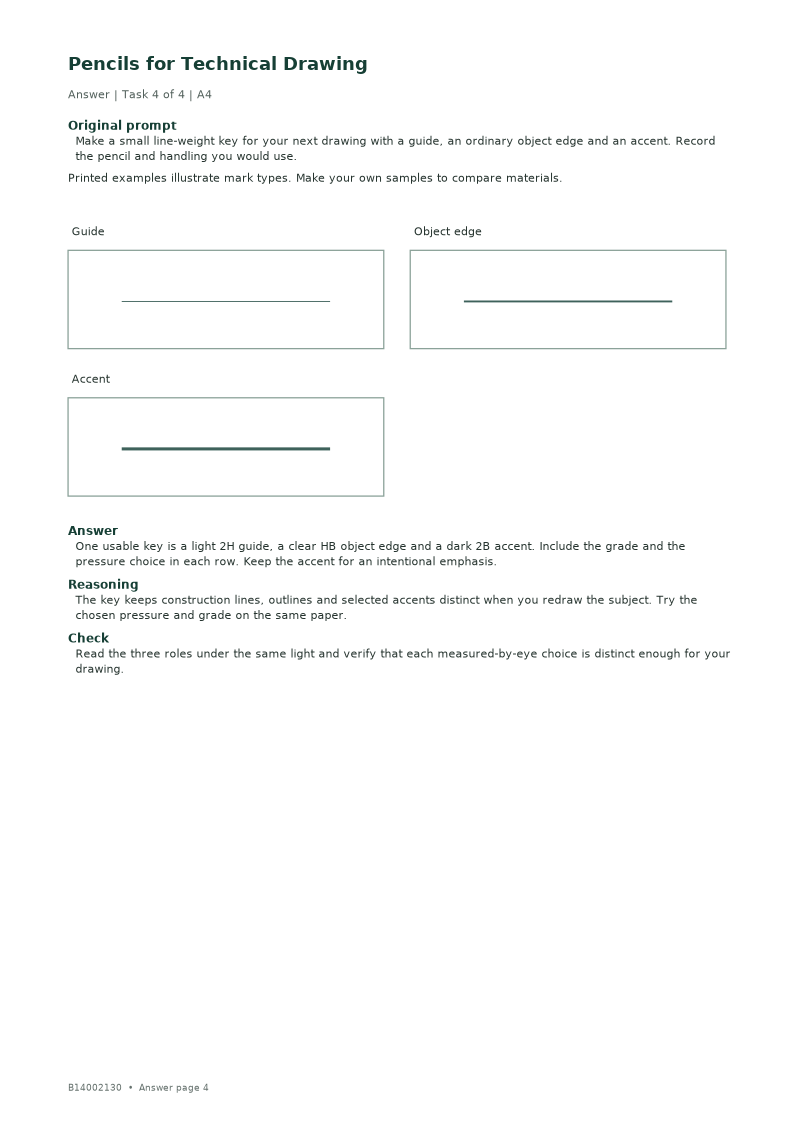
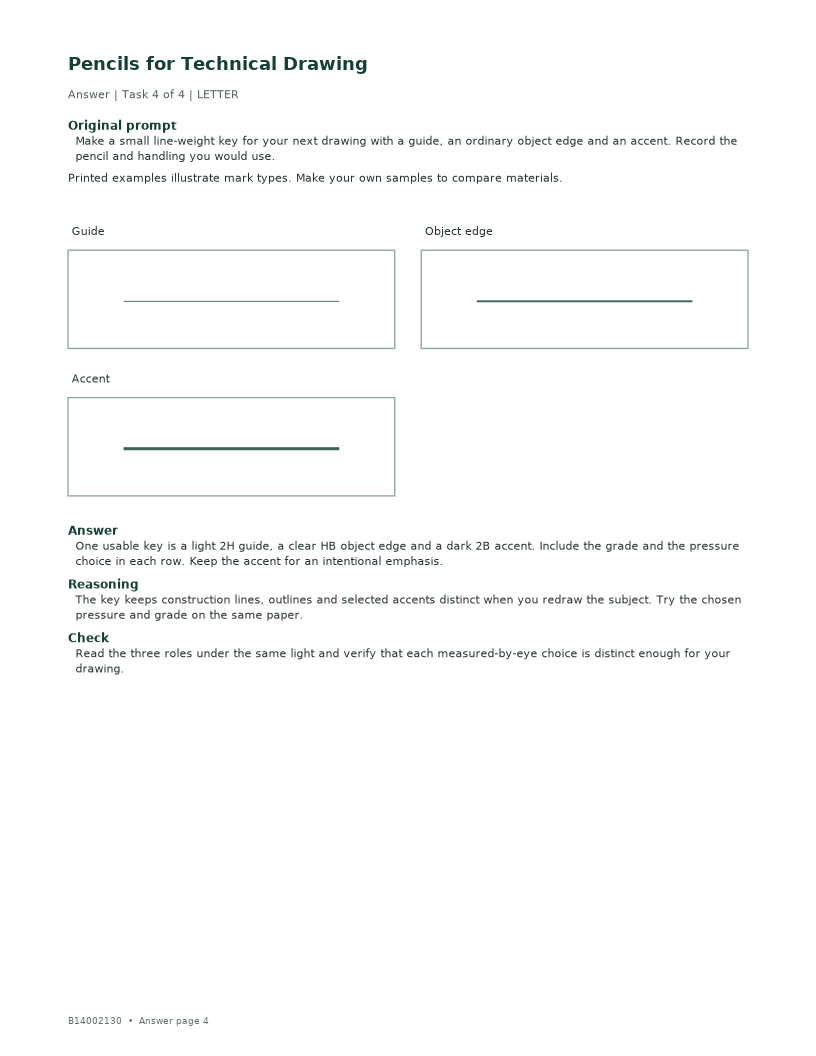
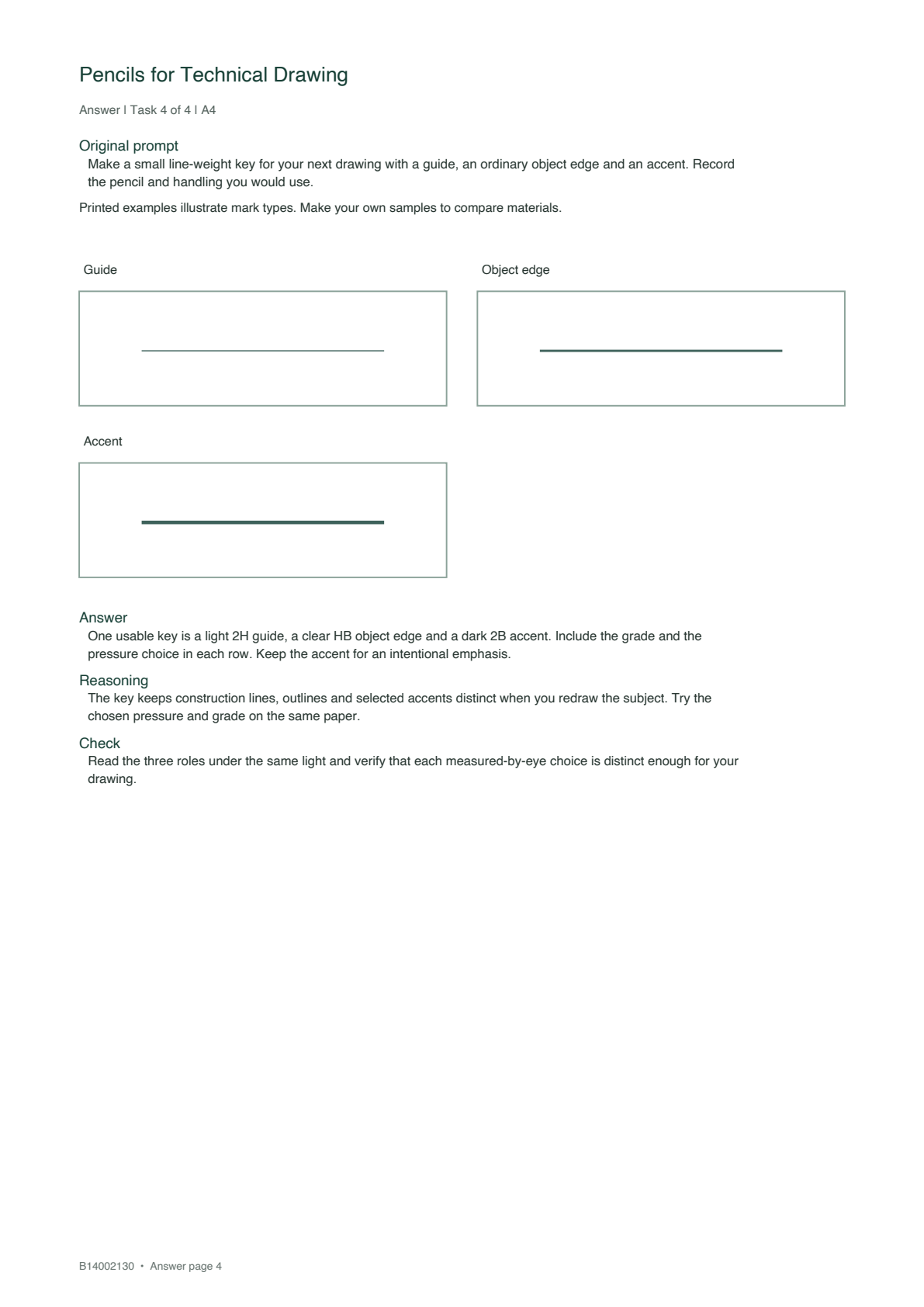
Make a small line-weight key for your next drawing with a guide, an ordinary object edge and an accent. Record the pencil and handling you would use.
Show answer 4
One usable key is a light 2H guide, a clear HB object edge and a dark 2B accent. Include the grade and the pressure choice in each row. Keep the accent for an intentional emphasis.
The key keeps construction lines, outlines and selected accents distinct when you redraw the subject. Try the chosen pressure and grade on the same paper.
Check: Read the three roles under the same light and verify that each measured-by-eye choice is distinct enough for your drawing.
Useful checks
- Pressing hard to make a hard pencil draw darker. Use a lighter hand for guides and test the chosen edge pencil separately.
- Comparing grades on different surfaces at once. Use the same surface and make a second test if you want to study paper.
Questions about this resource
Do these samples specify an industry line width?
They are drawing examples. If a course specifies a drafting convention, use its own line-width instructions.
Can two brands use the same label?
Yes. Compare the actual marks made by your tools because the grade label can vary between makers.