Free printable resources · Original practice

Dot grid paper.
A lighter framework.

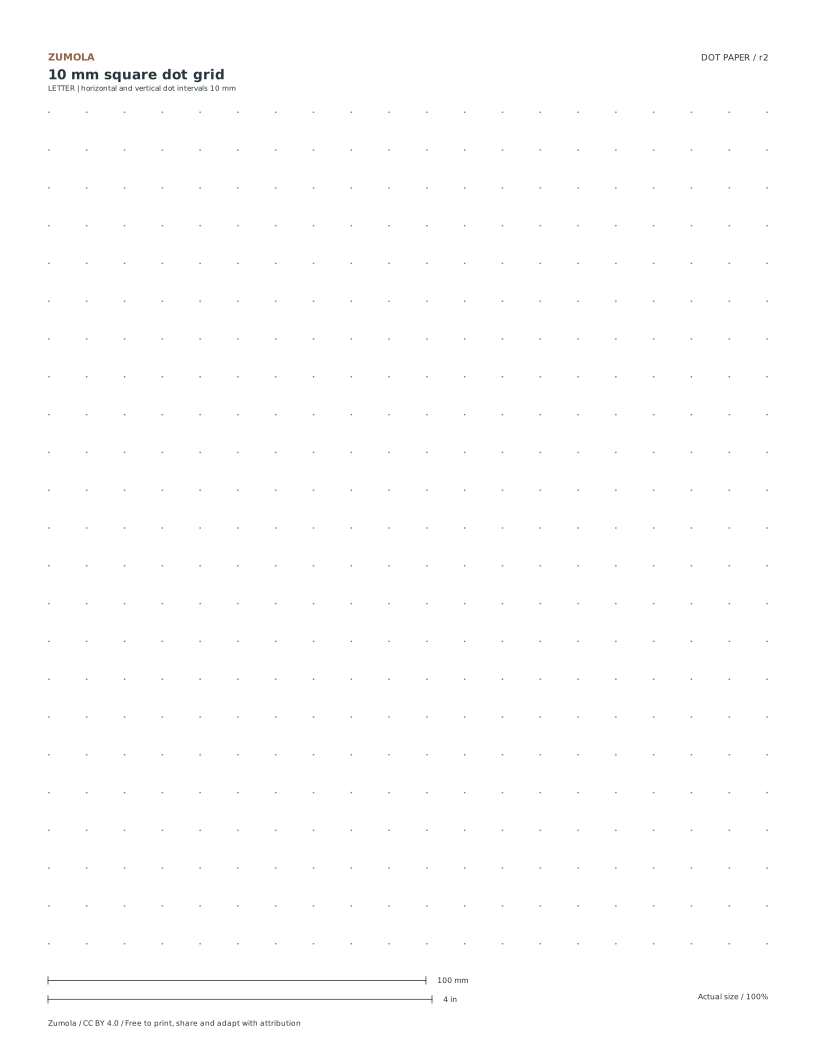
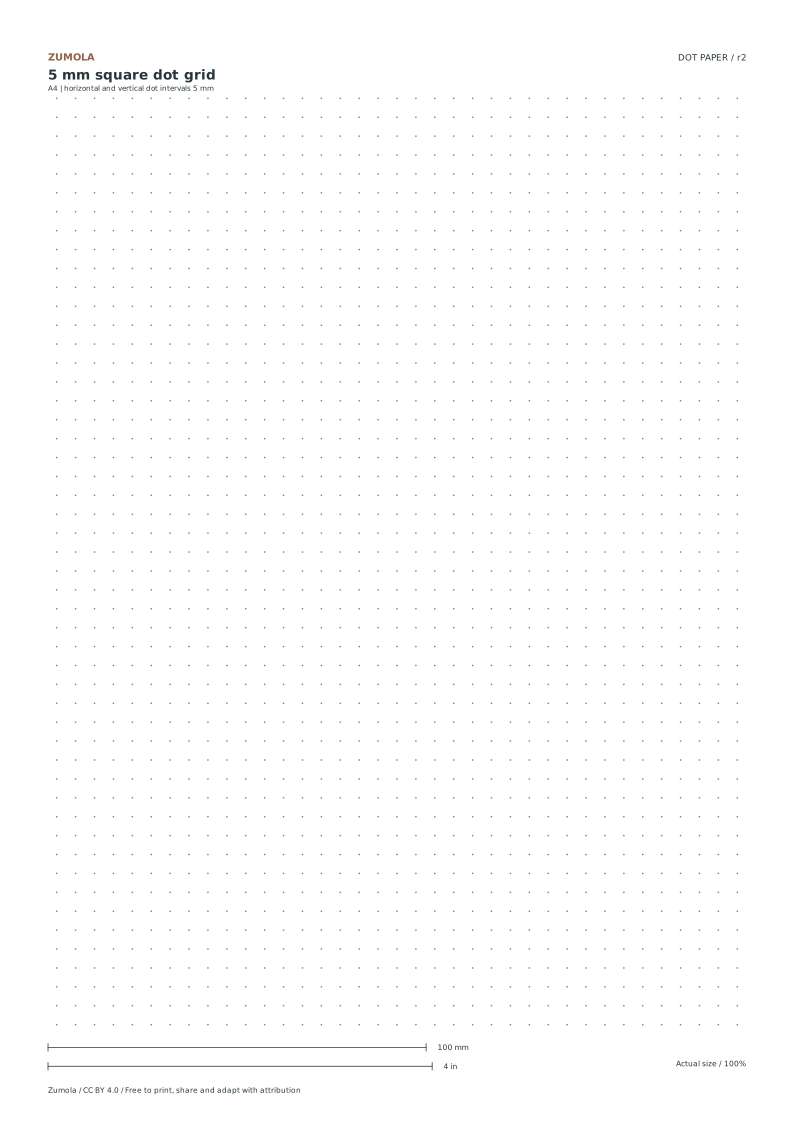
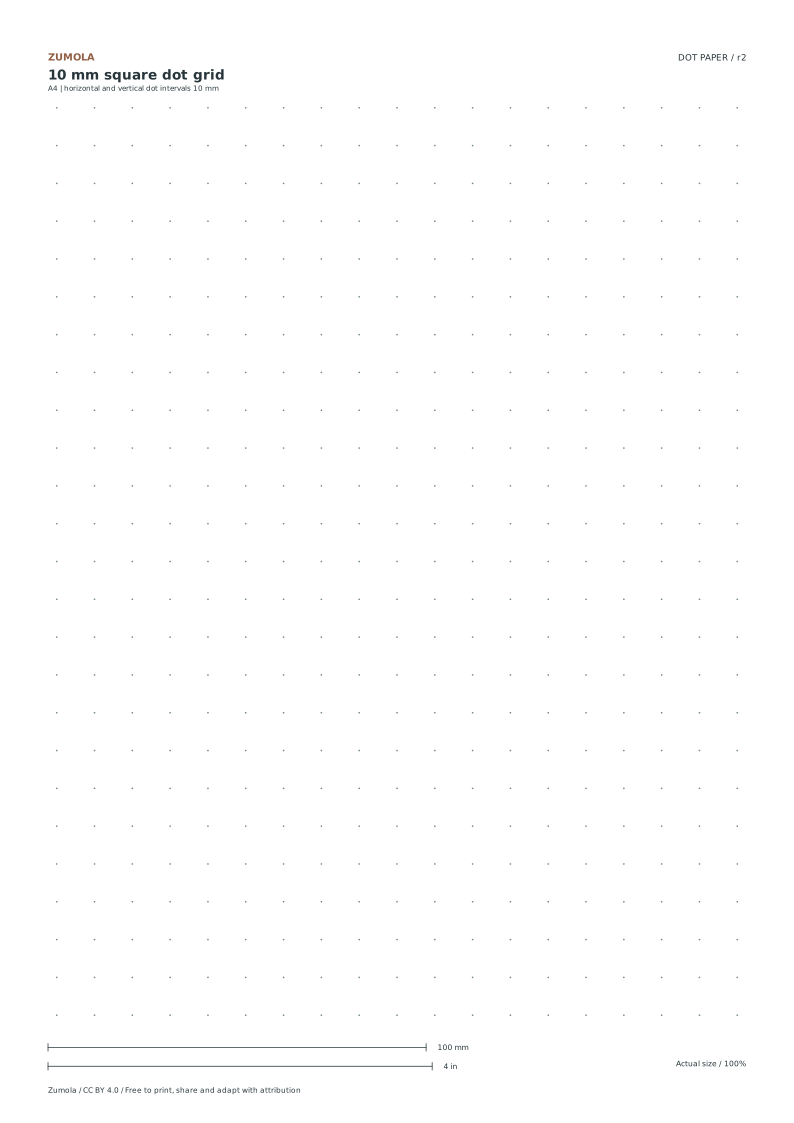
Choose 5 mm or 10 mm square dots. Keep the structure of a grid without full lines, then compare the same original outline at two sizes.

Square dot arrangement.
5 mm & 10 mm intervals.
Two-size drawing exercise.

Choose your paper and download

Download paper size

Every worksheet and answer is free. No signup.

Same coordinates, two physical sizes

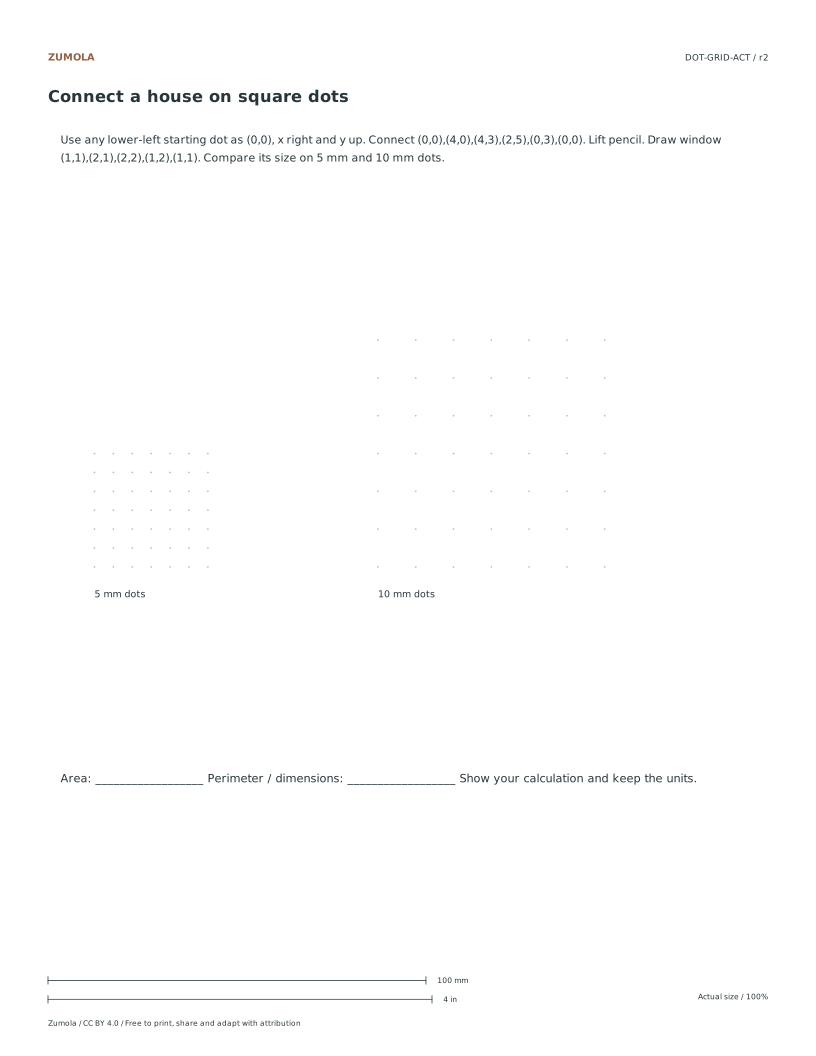
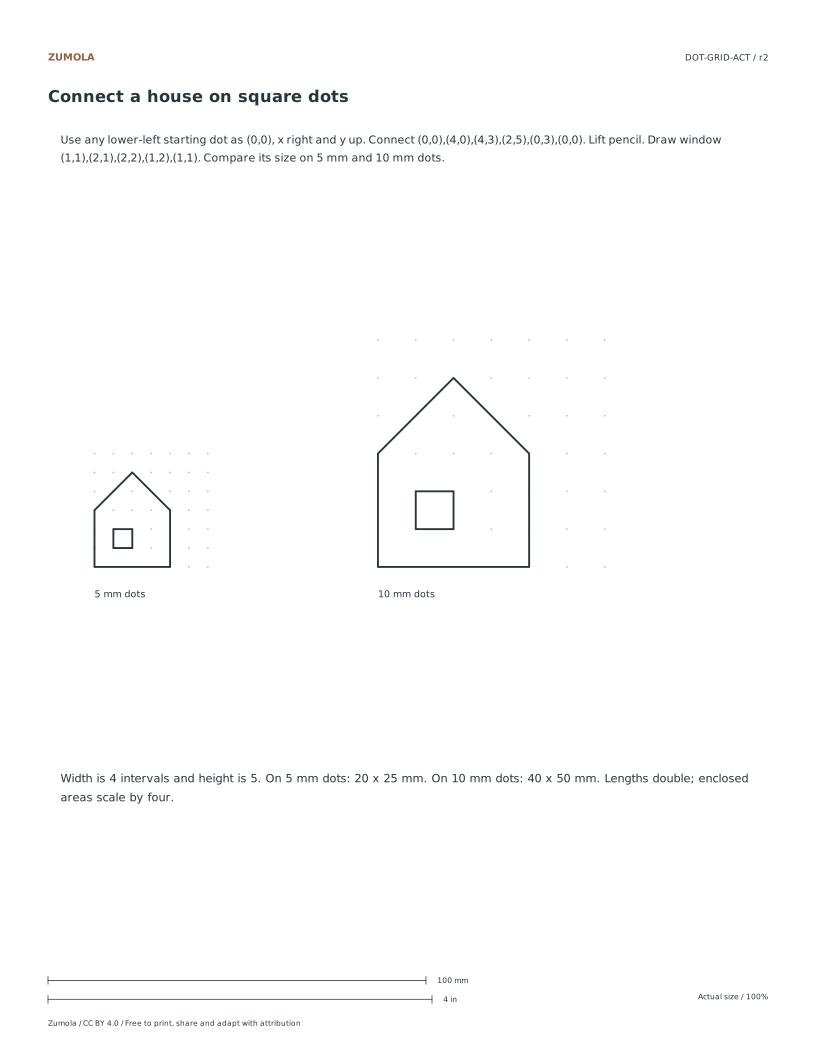
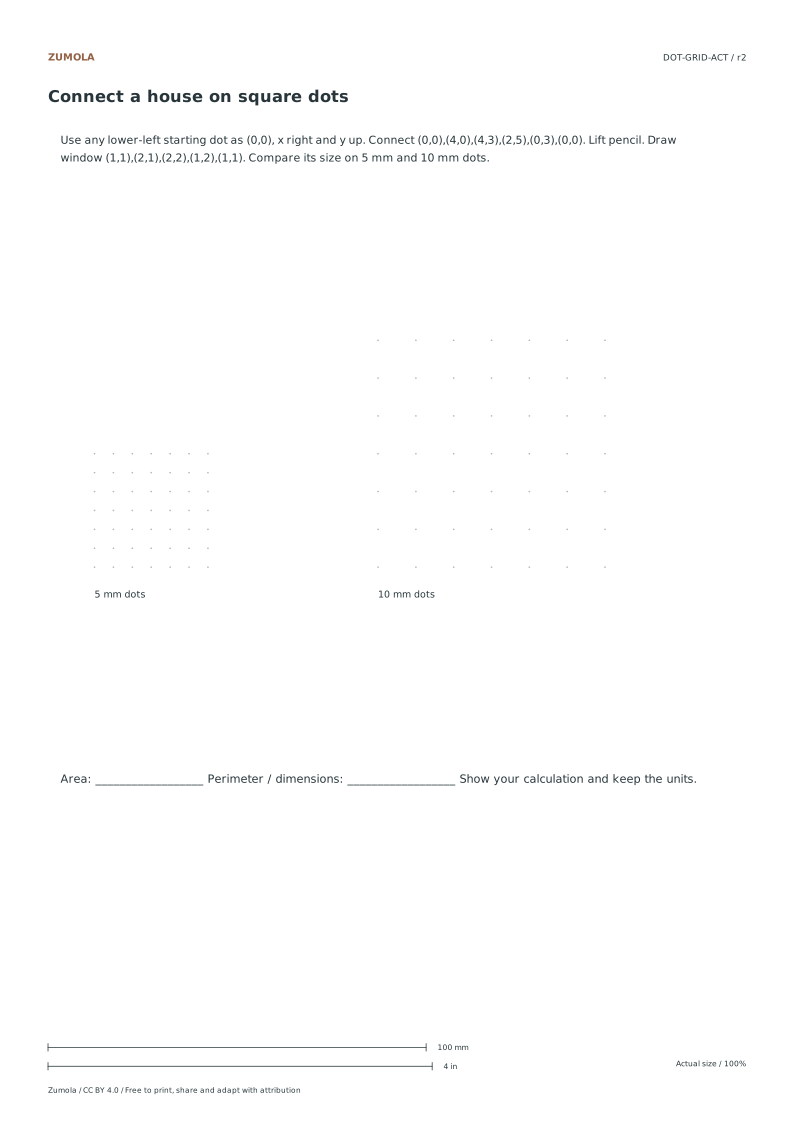
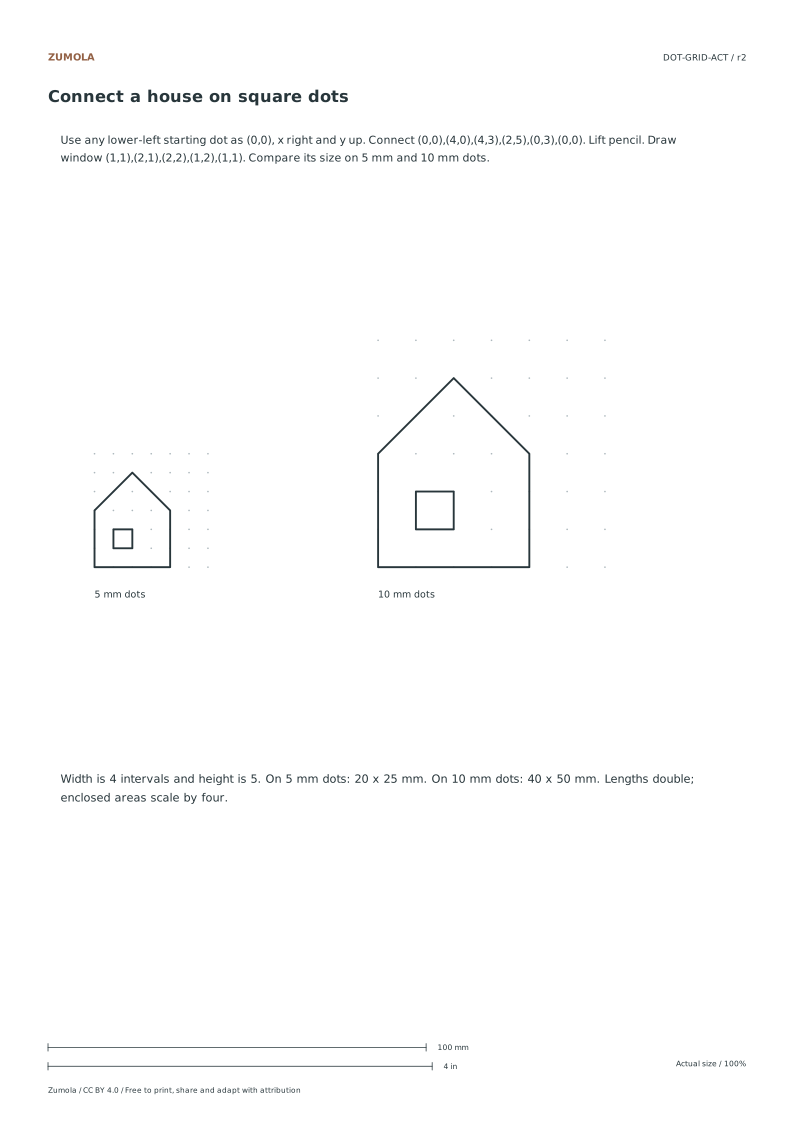
Use any lower-left starting dot as (0,0), x right and y up. Connect (0,0),(4,0),(4,3),(2,5),(0,3),(0,0). Lift pencil. Draw window (1,1),(2,1),(2,2),(1,2),(1,1). Compare its size on 5 mm and 10 mm dots.

Width is 4 intervals and height is 5. On 5 mm dots: 20 x 25 mm. On 10 mm dots: 40 x 50 mm. Lengths double; enclosed areas scale by four.

This is a square arrangement: vertical and horizontal intervals match. A diagonal neighbor is √2 times farther away. For three-axis cube sketches, use isometric paper instead.

Work through the page

  1. Setting Up Your Coordinate System

    Begin by identifying the lower-left dot on your square dot grid paper as the origin point zero zero. This specific starting location ensures consistent orientation for all subsequent plotting tasks. Remember that the vertical axis extends upward from this base point while the horizontal axis moves to the right. The grid provides nearest-neighbor spacings of either five millimeters or ten millimeters depending on your chosen sheet. Diagonal neighbors are farther away by the square root of two, so rely strictly on horizontal and vertical movements for accurate coordinate placement. This foundational setup prevents confusion between isometric dot paper and standard square grids, ensuring your plotted points align correctly with the intended geometric structure and maintaining precision throughout the drawing process.

  2. Plotting the Main Outline

    Using the established origin, plot the first vertex at zero zero. Move four units right to mark four zero, then three units up to four three. Continue to two five, then zero three, and finally return to zero zero to close the shape. On five millimeter paper, this creates a width of twenty millimeters and height of twenty-five millimeters. On ten millimeter paper, dimensions double to forty millimeters width and fifty millimeters height. Count intervals between dots: a run of four intervals has five dots including its ends. A ruler can separately check physical size. Connect these points with straight lines to form the complete polygon outline, ensuring each segment follows the specified coordinate sequence without deviation or estimation errors.

  3. Adding the Window Feature

    Once the main outline is complete, locate the internal window coordinates. Start at one one and move one unit right to two one, then one unit up to two two, and finally left to one two before closing back to one one. This small square sits within the larger polygon. Ensure you use the same dot interval scale as the main shape to maintain proportional accuracy. The window spans one unit in both directions, creating a distinct rectangular feature inside the boundary. Verify that the window does not intersect the outer lines incorrectly. This step adds detail to the basic shape, transforming a simple polygon into a structured diagram with internal components clearly defined by the grid.

Small checks that catch common errors

Watch forCheck instead
Confusing square dot grid with isometric dot paperVerify the grid has horizontal and vertical nearest-neighbor spacings of five or ten millimeters, not triangular arrangements typical of isometric paper.
Counting five dots as five intervals.Five dots along a row contain four spaces. Use interval counts for coordinates and a ruler to check the printed millimeters.
Starting the plot from the upper-left cornerAlways begin at the lower-left dot as the origin zero zero, with the y-axis extending upward for correct coordinate orientation.

Before you begin

Useful answers

What are the physical dimensions on five millimeter paper?

The main outline measures twenty millimeters in width and twenty-five millimeters in height when plotted on five millimeter grid paper.

How large is the shape on ten millimeter paper?

Using ten millimeter paper results in a width of forty millimeters and a height of fifty millimeters for the plotted outline.

Why are diagonal neighbors considered farther away?

Diagonal neighbors are farther away by the square root of two compared to horizontal or vertical nearest-neighbor spacings on the grid.

Are the answers and editable files free too?

Yes. Every linked PDF, SVG, worksheet and answer is free without signup. The original resources use CC BY 4.0: credit Zumola, link the license and indicate changes. Analytics consent is not required to download or use the resources.

Keep practicing

Worksheet preview

Full printable sheet preview

Fit-to-screen preview. Download the PDF to print at actual size.