Free worksheets with worked answers

Scale drawing.
Show your working.

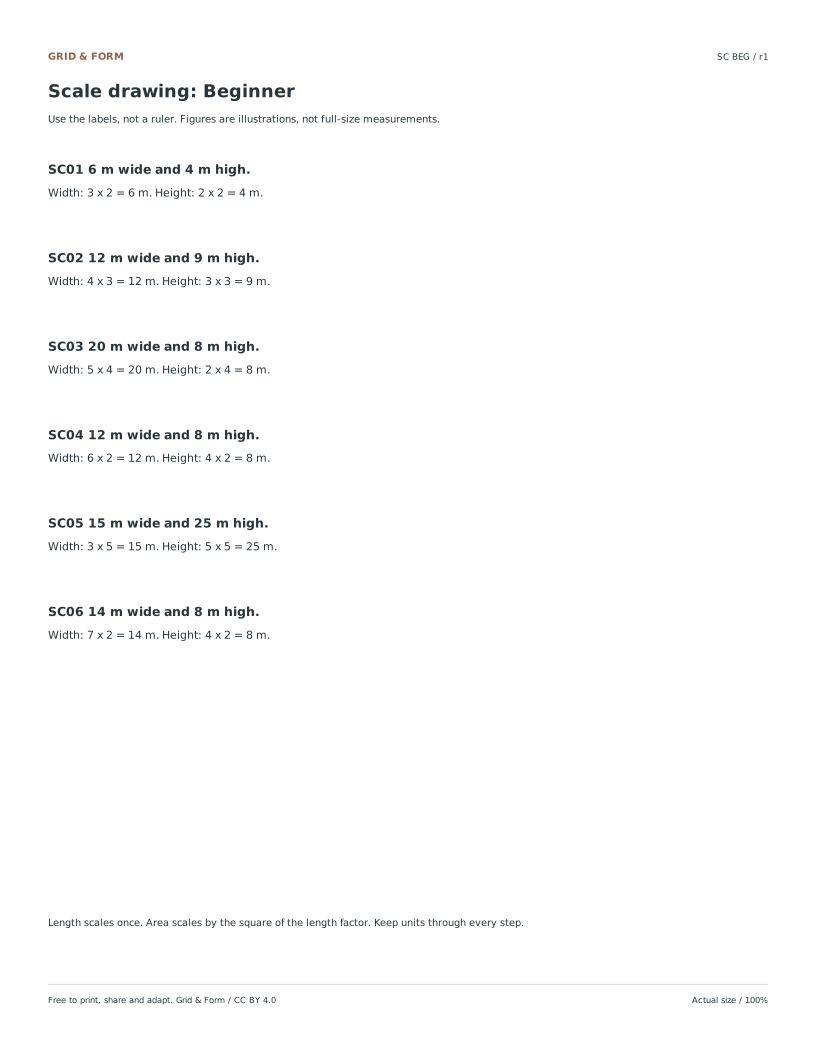
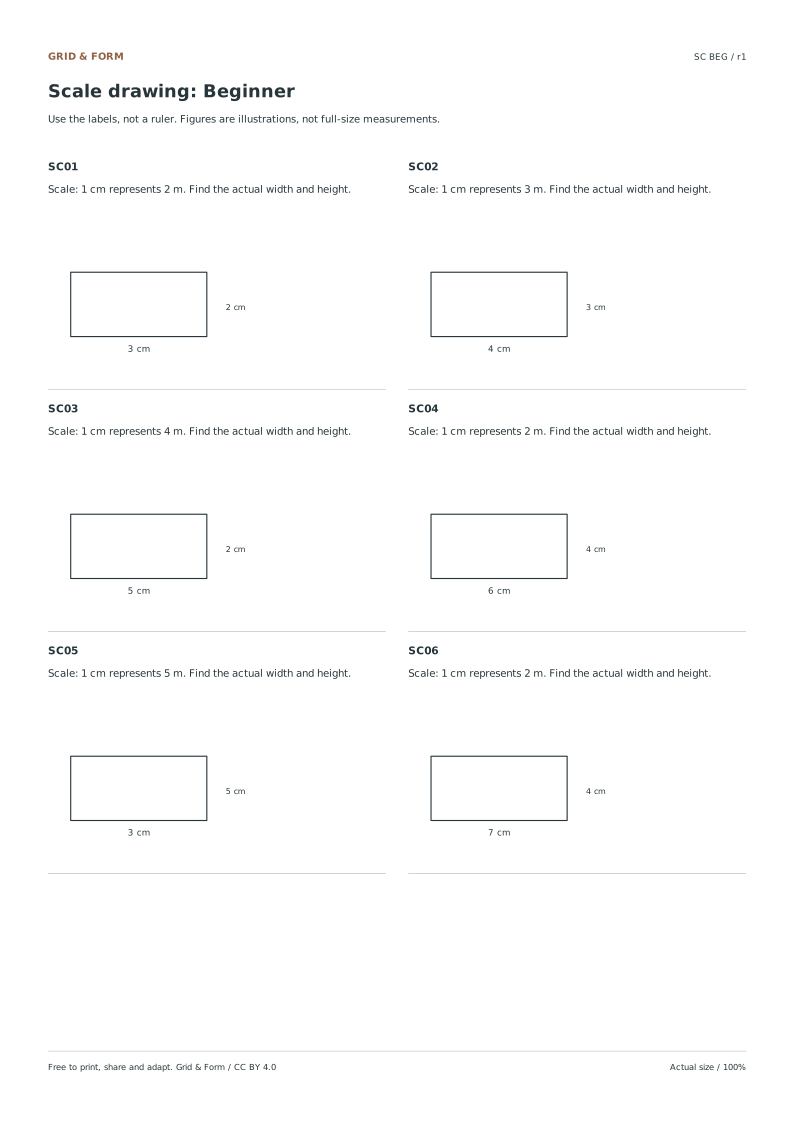
Eighteen original problems move from simple scale statements to unit conversion, changing scale and area. Every question includes explicit labels; every answer shows the calculation.

3 levels · 6 problems each.
Metric & imperial examples.
Use labels, not a ruler.

Pick a level. Keep the answer separate.

Choose a level
Download paper size

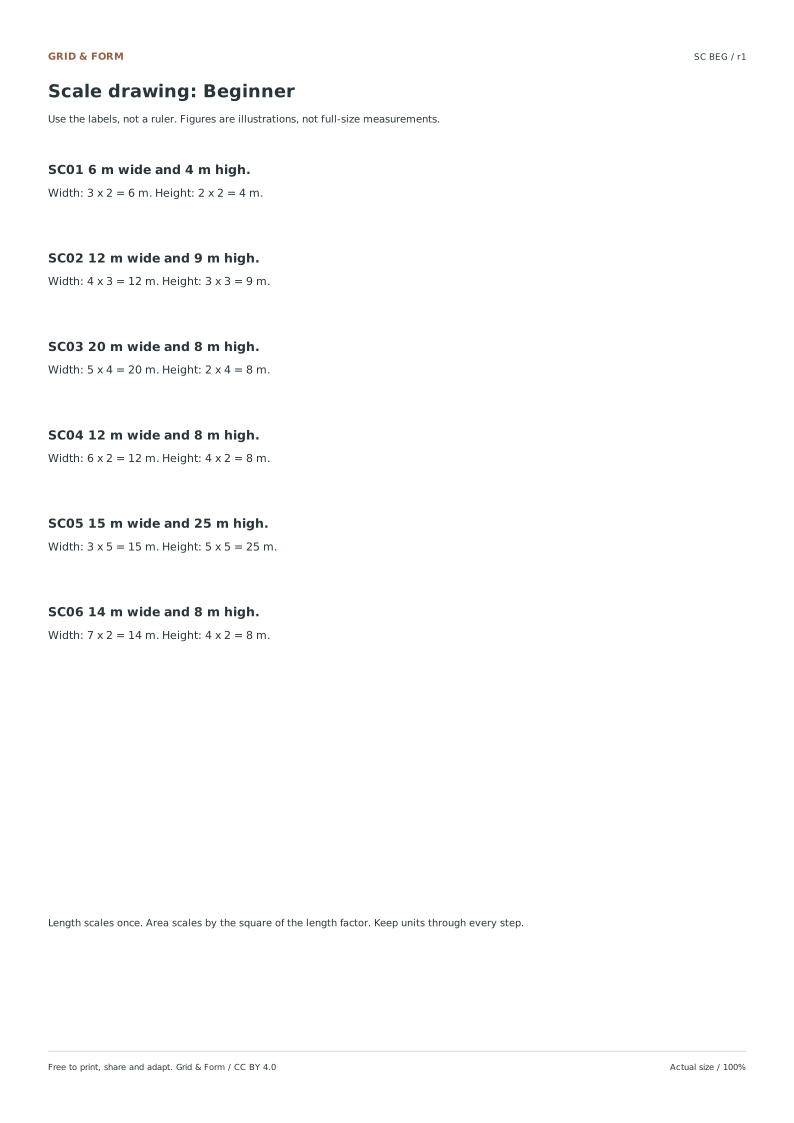
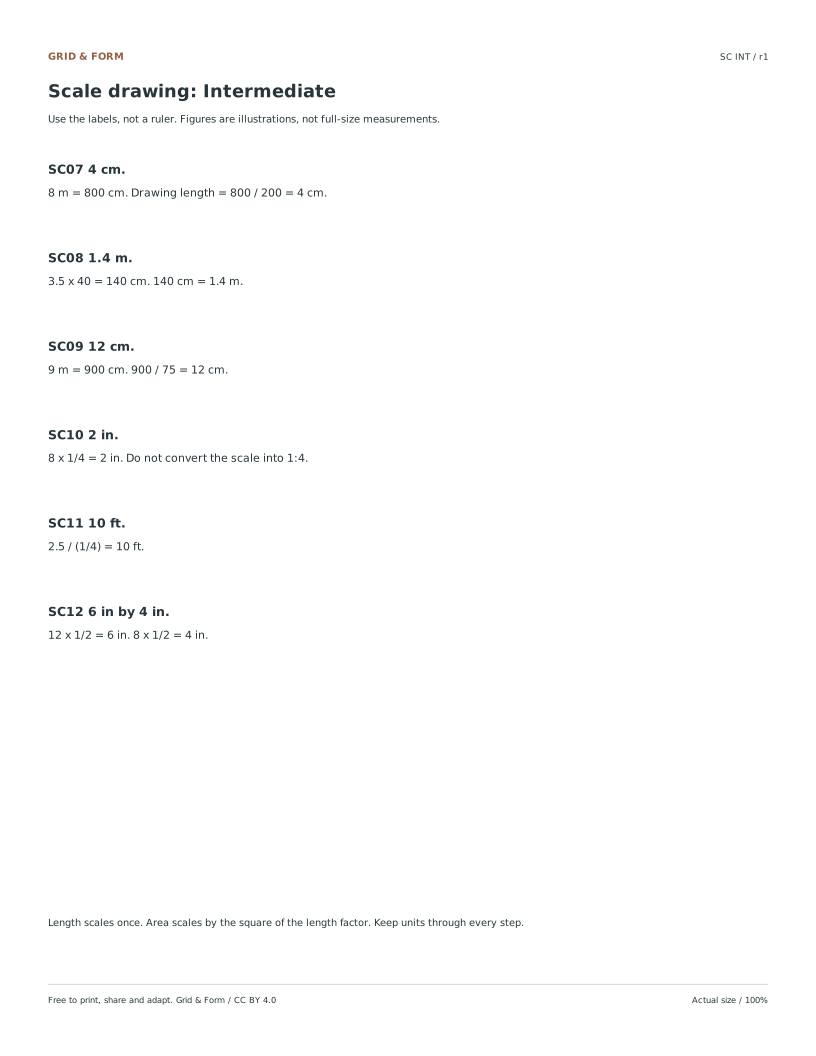
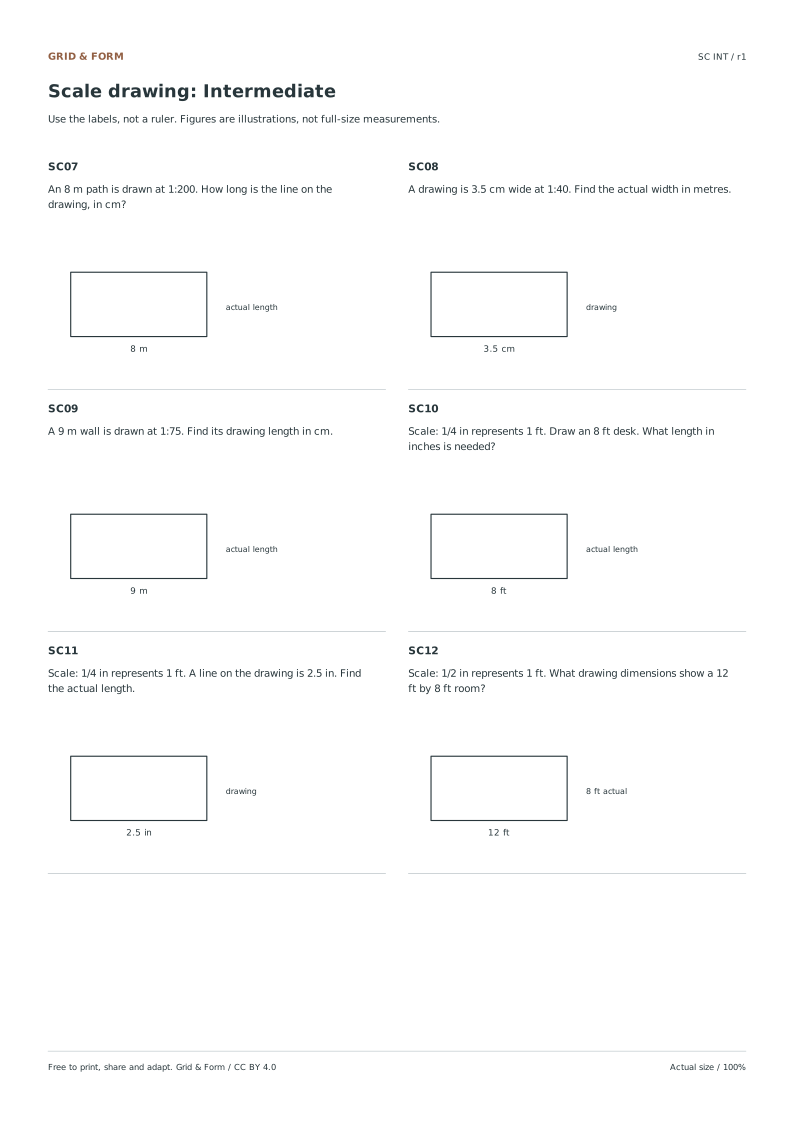
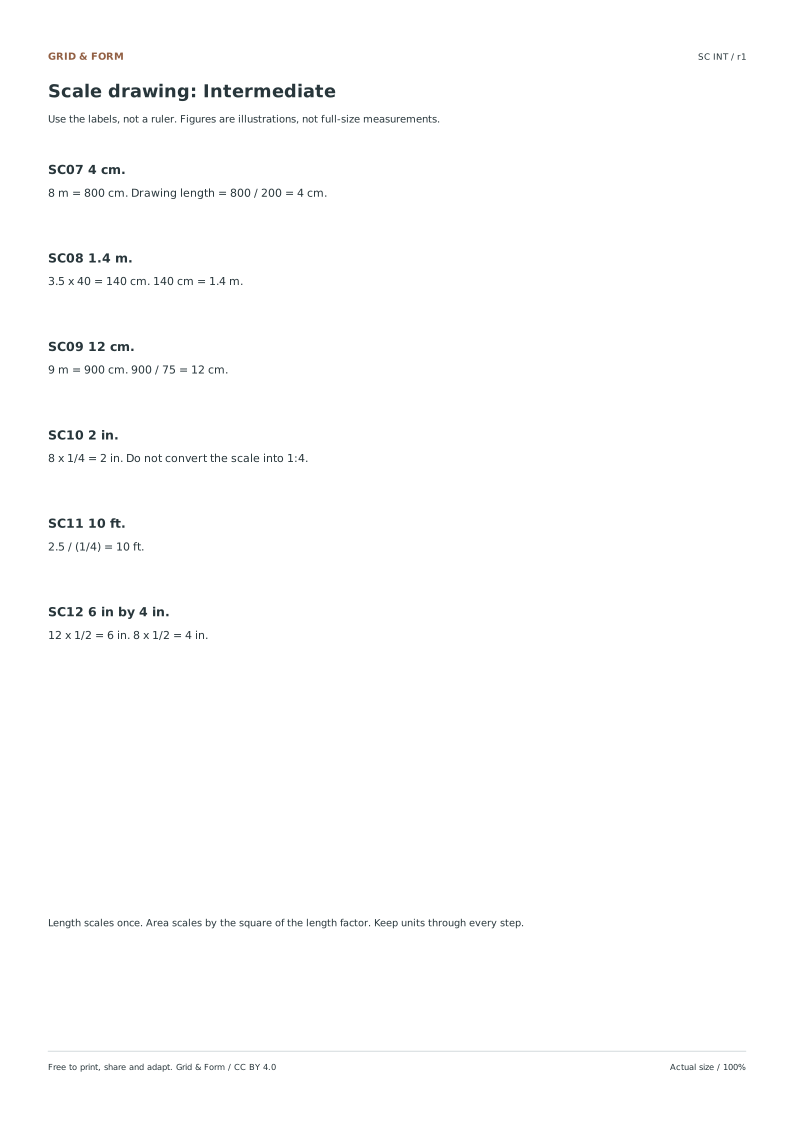
All 18 problems, in order.

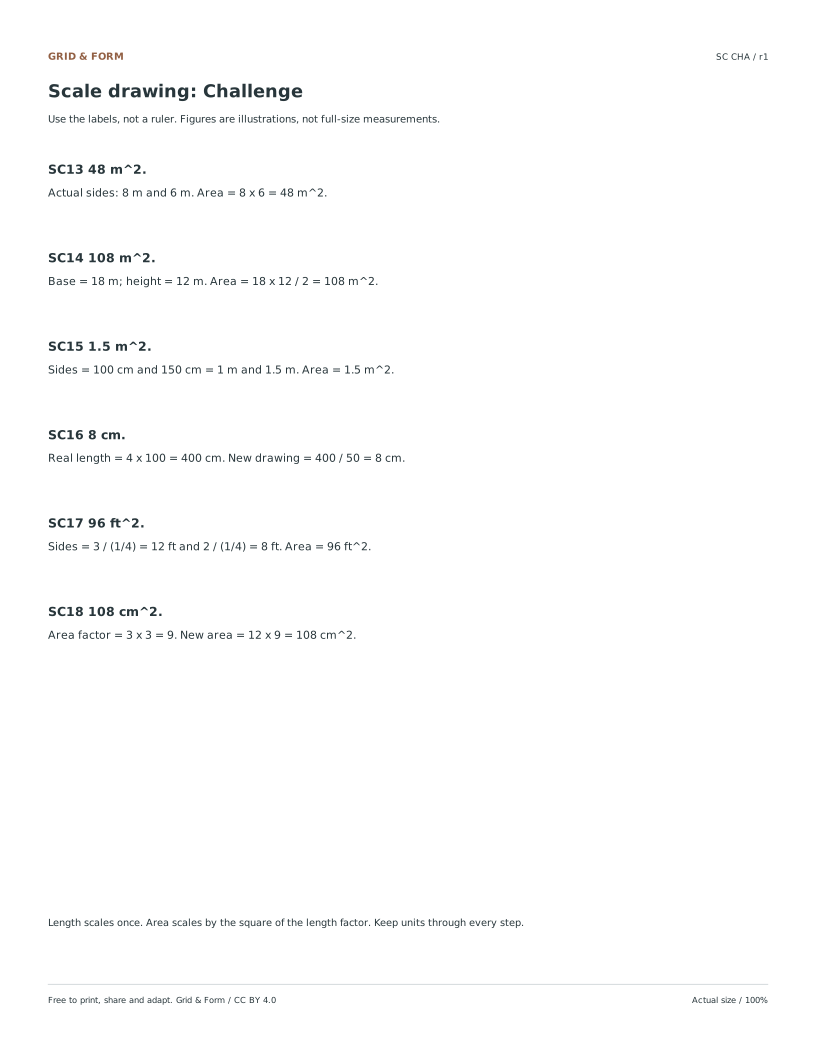
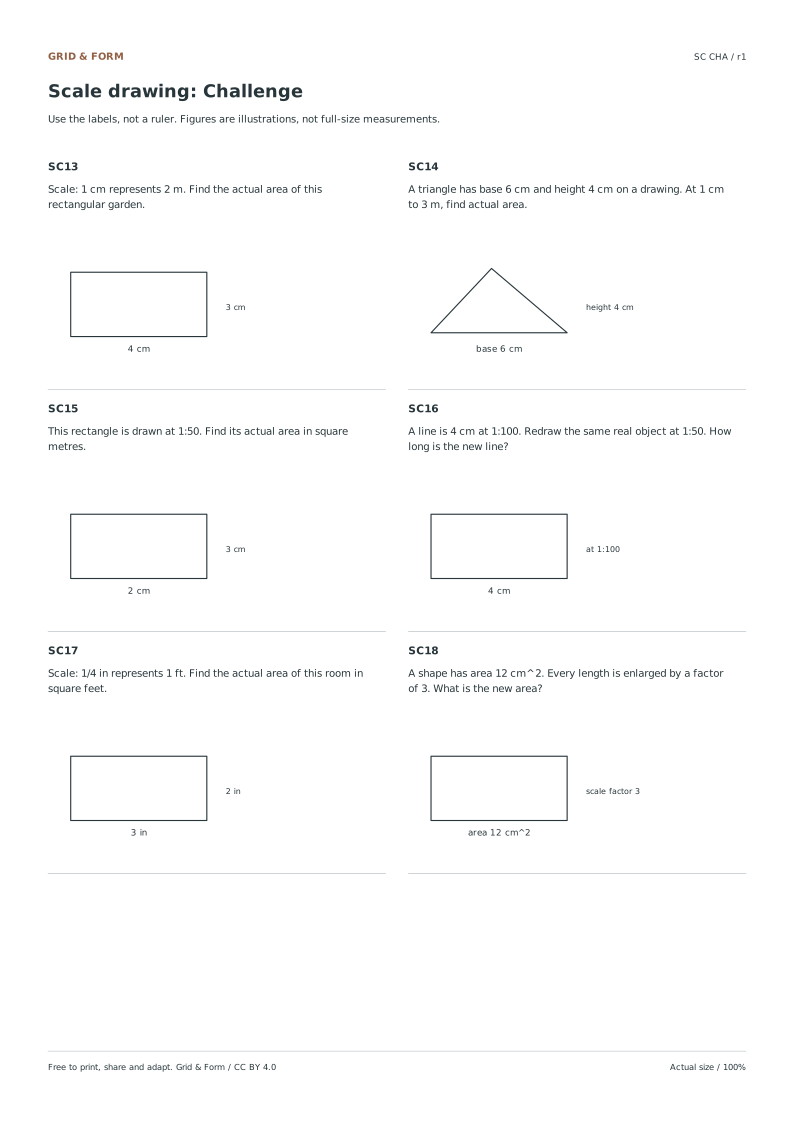
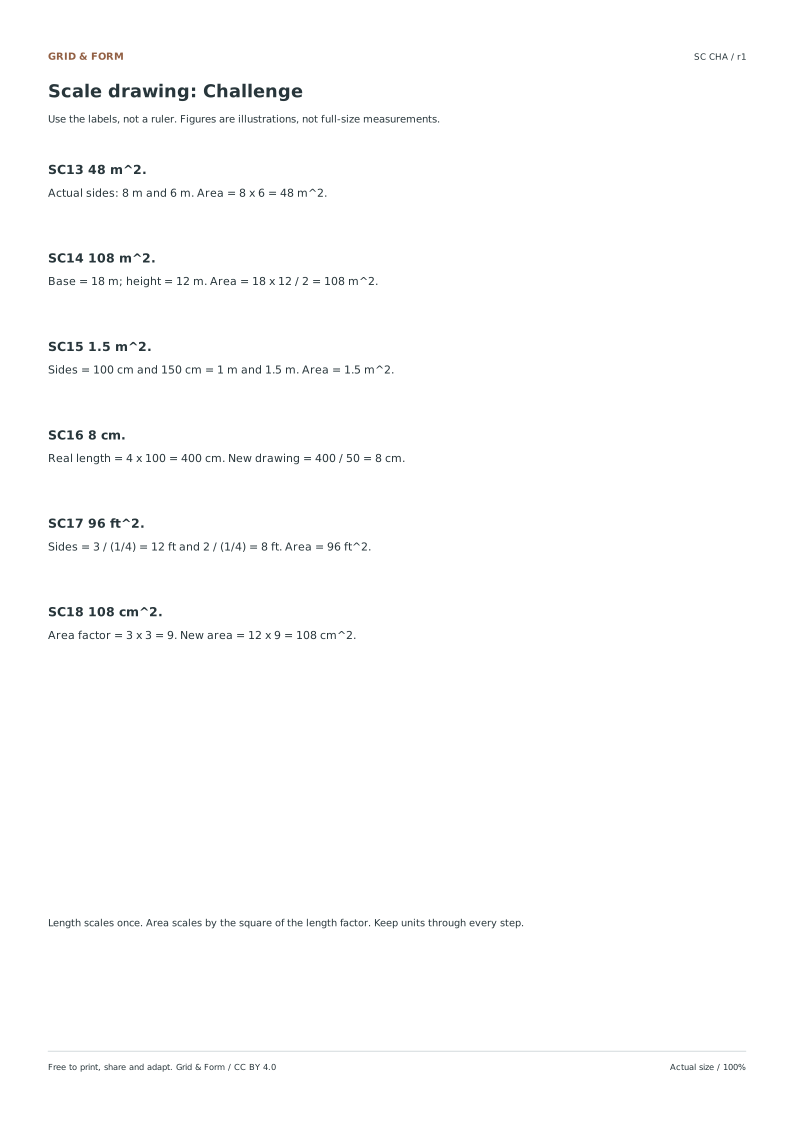
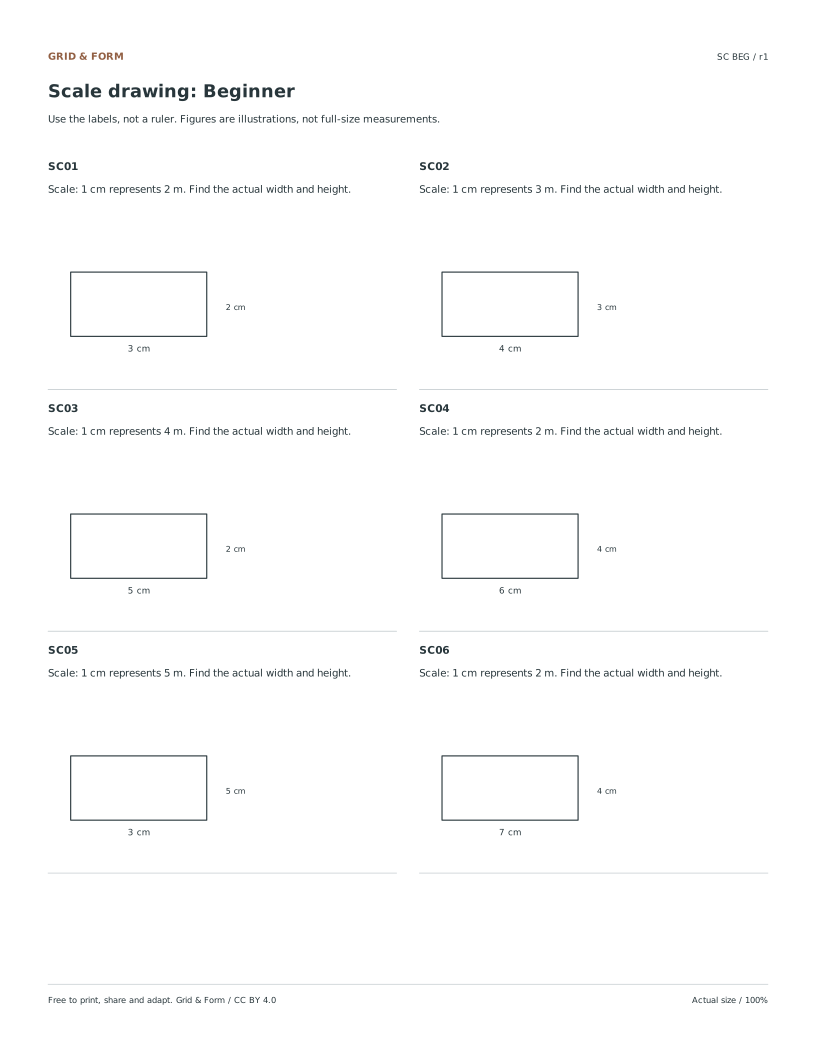
A three-page student pack and a separate three-page worked-answer pack. Download only the student file first if you want to solve without seeing the answers.

3 pages per file · free · CC BY 4.0

All paper sizes & editable formats
US Letter
A4
Print the file, then check the scale. Open the PDF, choose the matching paper size and set Actual size / 100%. Measure a calibration bar with a real ruler. Printing guide →

Three ideas behind the answers.

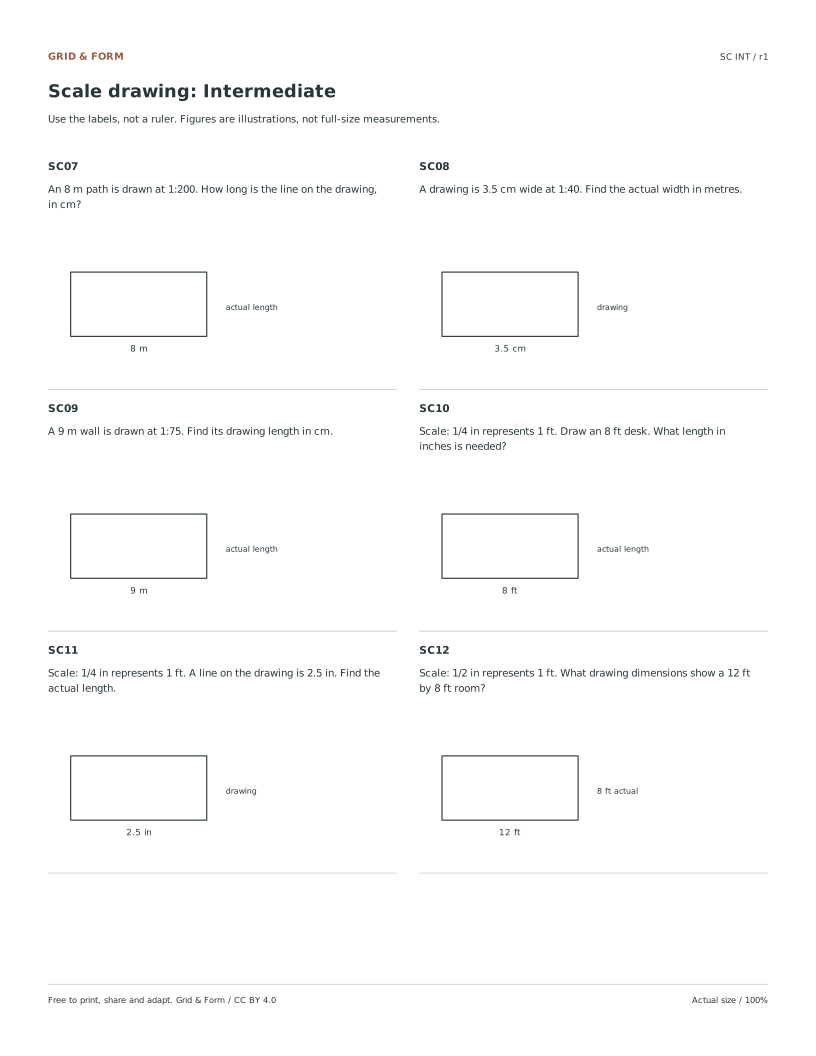
SC07 / Drawing length

An 8 m path
at 1:200.

Convert to one unit before applying the ratio.

8 m = 800 cm
800 ÷ 200 = 4 cm

The drawing line is 4 cm. Reversing the check gives 4 × 200 = 800 cm, the original actual length.

SC11 / Inch-to-foot scale

2.5 in on paper.
How many feet?

At 1/4 inch to 1 foot, divide the drawing length by the number of inches used for one foot.

2.5 ÷ 0.25 = 10 ft

The statement is not 1:4. In matching units, 0.25 in : 12 in simplifies to 1:48.

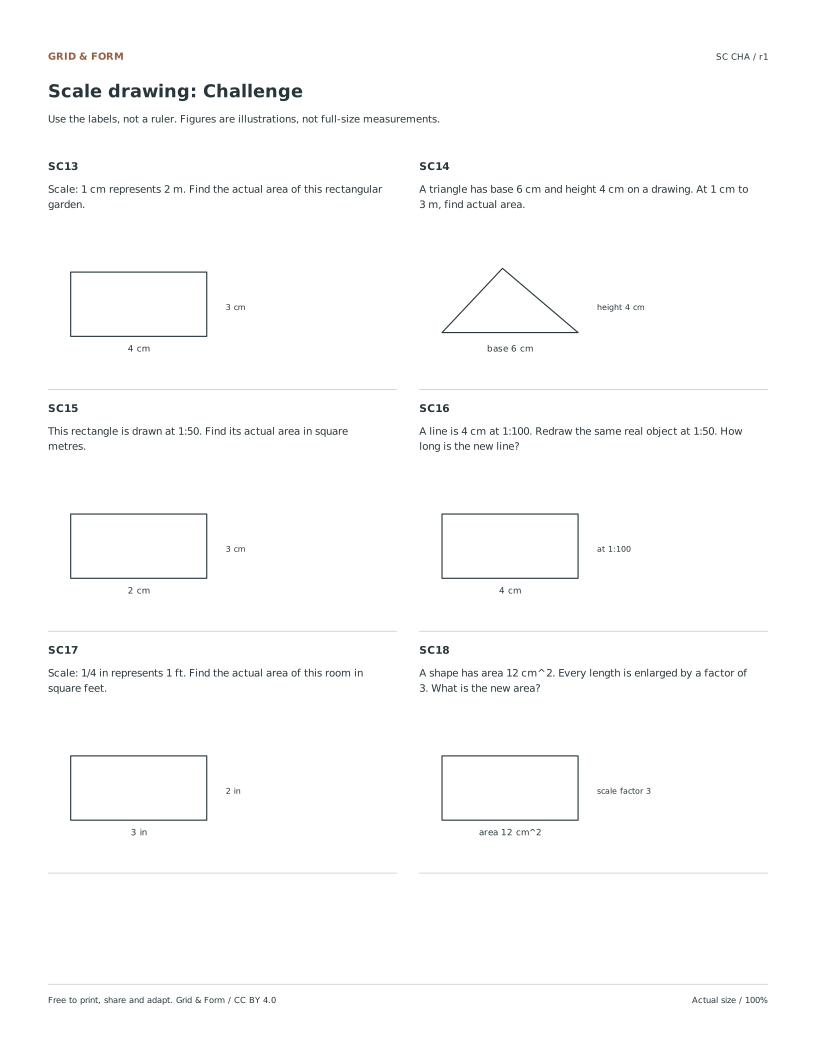
SC18 / Area factor

Three times longer.
Nine times the area.

Two independent lengths grow by the same factor.

3² = 9
12 cm² × 9 = 108 cm²

Multiplying the area by 3 would apply the length factor only once. The new area is 108 cm².

A method you can check.

  1. Write what the scale means.

    For a ratio such as 1:75, one drawing unit represents 75 of the same real-world unit. For an inch-to-foot statement, retain the units on both sides.

  2. Decide the direction.

    Actual to drawing: divide by the ratio denominator. Drawing to actual: multiply. For a stated number of inches per foot, multiply feet to get drawing inches, or divide drawing inches to get feet.

  3. Keep the units through the steps.

    A result in centimetres is not yet a result in metres. Convert explicitly so the final unit matches the question.

  4. Check the kind of quantity.

    Length uses a linear factor. Area uses its square. A triangle still needs half the base times height after the side lengths are converted.

These diagrams are not measuring tests.

Use the numbers printed beside each figure. The illustrations are intentionally compact and do not reproduce the stated drawing dimensions. This keeps the task focused on scale reasoning and avoids turning an uncalibrated print into the answer.

For a physical layout exercise with real grid dimensions, use the quarter-inch room worksheet. Its 12 ft × 8 ft room is actually drawn at 1/4 inch to 1 foot in the file.

For a teacher or parent: keep the student and answer files separate. Check both the final number and the unit, then ask the learner to explain whether the drawing is smaller or larger than the real object.

Three mistakes worth catching.

MistakeWhat goes wrongA useful check
Mixing units inside a ratioWriting 1/4 inch : 1 foot as 1:4Convert the foot to 12 inches; the ratio becomes 1:48.
Multiplying when you should divideA reduced drawing becomes larger than the actual object.At 1:200, a drawing length must be 200 times smaller in matching units.
Scaling an area onceA factor of 3 in length is treated as a factor of 3 in area.Both dimensions change: 3 × 3 = 9.

A few useful answers

Before you begin

Are these worksheets tied to a specific school grade?

No. The levels describe the calculations in this collection. Beginner uses direct scale statements, intermediate introduces conversions, and challenge adds area and changing scale. Choose by the learner’s current knowledge.

Should I measure the diagrams with a ruler?

No. Every problem says to use the labels. These diagrams are illustrations, not full-size measuring figures. A separate graph-paper exercise is available for physical measurement.

Are answers included in the student pack?

No. The student pack has three question pages. The separate answer pack has three pages of worked solutions, with matching problem IDs SC01 through SC18.

Can the files be edited for a lesson?

Yes. Single-page SVGs are included. Keep attribution, link to CC BY 4.0 and say what you changed. If you change the numbers, recalculate the answer before sharing.

Worksheet preview

Full printable sheet preview

Fit-to-screen preview. Download the PDF to print at actual size.