Free original lessons
Drawing a Bride: Dress, Veil, and Bouquet Construction
Learn to draw a bride figure with a clear dress silhouette, draped veil, and placed bouquet using simple shapes, proportion checks, and a practice strip.
Free lesson
Four exercises
Worked answers
Object Drawing Lessons
This lesson teaches a repeatable method for drawing a bride in a standing pose. You will build the figure from a simple proportion skeleton, shape the dress silhouette, drape the veil, and place the bouquet so it reads clearly. The approach uses basic shapes and checkable measurements rather than a single fixed style. Letter styles and facial features vary, so the rubric rewards consistent construction and clear choices, not one universal answer. All measurements are hypothetical examples; measure your own paper and tools before drawing.
Practice materials: Printable downloads are not available for this lesson yet. Use the instructions and four exercises below.
Reference illustration
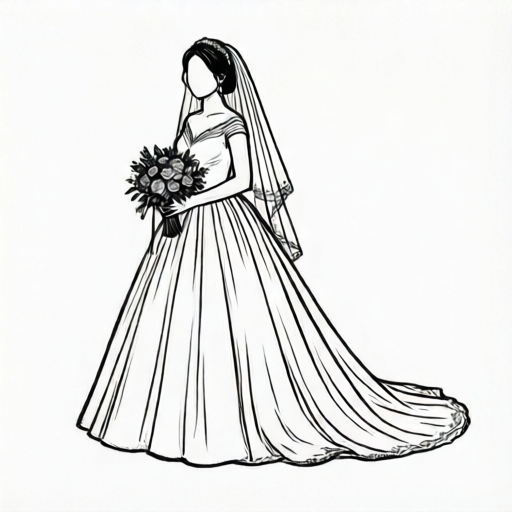
Use the stated measurements and conventions for each exercise.
Build the standing proportion skeleton
Start with a vertical center line and mark eight equal head units from the top of the head to the floor. For a standing bride, the eye line sits near the middle of the head, the shoulders fall about one and a half head units below the top, and the waist sits near the fourth head unit. These are hypothetical proportions for practice; adjust them to your chosen figure style.
Lightly sketch the head as an oval, the torso as a tapered box, and the legs as two long cylinders. Keep the pose symmetrical unless you deliberately shift weight. Check that the center line passes through the nose, sternum, and midpoint between the feet.
- Draw a vertical center line about 18 cm long on your paper.
- Mark eight equal segments along the line to represent head units.
- Place the head oval in the top segment and the shoulder line at about 1.5 units down.
- Mark the waist near the fourth unit and the knee near the sixth unit.
- Sketch the torso, arms, and legs lightly, then check symmetry against the center line.
Shape the dress silhouette
The dress silhouette begins at the waist and expands to the hem. Choose a silhouette such as A-line, ball gown, or column, then draw it as a simple geometric outline before adding folds. For an A-line example, the hem width might be about two head units across; for a ball gown, about three. These numbers are hypothetical and should be scaled to your figure.
Draw the bodice first, then the skirt outline, then the hem curve. Add only a few fold lines that follow the skirt shape. Check that the hem sits at the floor line and that the skirt width is consistent on both sides of the center line.
- Mark the waist point on the center line.
- Draw the bodice outline from shoulders to waist.
- Sketch the skirt outline from waist to hem using a simple shape.
- Draw the hem curve and check it against the floor line.
- Add three to five fold lines that follow the skirt direction.
Drape the veil
A veil reads clearly when it has an attachment point, a drape path, and a hem. Attach the veil at the crown or back of the head, then draw two or three curved lines that fall behind the shoulders. The veil hem can be straight, scalloped, or rounded; choose one and keep it consistent.
Use a light hand for veil lines so they sit behind the dress. Check that the veil does not cross the face unless you intend it to, and that the drape lines connect logically from the attachment point to the hem.
- Mark the veil attachment point at the crown or back of the head.
- Draw the outer veil outline falling behind the shoulders.
- Add two or three inner drape lines from the attachment point to the hem.
- Choose a hem style and draw it consistently.
- Erase any veil lines that incorrectly cross the face or bodice.
Place the bouquet
The bouquet is a compact shape held in front of the body, usually near the waist or slightly below. Draw it as a rounded or triangular cluster, then add a stem wrap and a few leaf shapes. Place the bouquet so it overlaps the dress slightly, which helps it read as held rather than floating.
Check that the hands meet the bouquet stem and that the bouquet size is proportional to the torso. A bouquet about one head unit wide is a useful hypothetical starting point.
- Mark the bouquet center near the waist or slightly below.
- Draw a rounded or triangular cluster outline about one head unit wide.
- Add a stem wrap below the cluster.
- Draw two or three leaf shapes around the cluster.
- Check that the hands touch the stem wrap and that the bouquet overlaps the dress.
Worked example
Draw a standing bride with an A-line dress, a veil attached at the crown, and a bouquet held at the waist. Use eight head units, a hem about two head units wide, and a bouquet about one head unit wide. Check symmetry and floor line.
Worked answer
A completed line drawing shows a vertical center line with eight equal head units. The head oval sits in the top unit, shoulders at about 1.5 units down, waist near the fourth unit, and hem at the floor line. The A-line skirt expands from the waist to a hem about two head units wide, with three fold lines following the skirt. The veil attaches at the crown, falls behind the shoulders with two inner drape lines, and has a rounded hem. The bouquet sits at the waist, about one head unit wide, with a stem wrap and two leaves; the hands meet the stem wrap. The center line passes through the nose, sternum, and midpoint between the feet.
Four practice exercises
Exercise 1
Draw a standing bride with a column dress. Use eight head units, a hem about one and a half head units wide, a veil attached at the back of the head, and a bouquet at the waist about one head unit wide. Check the floor line and center line.
Show answer and check
A line drawing shows a narrow column skirt from waist to floor, a veil falling behind the shoulders from the back of the head, and a bouquet at the waist overlapping the dress. The center line passes through the nose, sternum, and midpoint between the feet; the hem meets the floor line.
Why: The column silhouette keeps the skirt close to the body, so the hem width is smaller than an A-line. The veil attachment at the back of the head changes the drape path but still requires logical lines to the hem. The bouquet placement and size are checked against the waist and head unit.
Check: Measure the hem width against one and a half head units, confirm the hem touches the floor line, and trace the center line through the three check points. Confirm the bouquet overlaps the dress and the hands meet the stem wrap.
Exercise 2
Draw a standing bride with a ball gown. Use eight head units, a hem about three head units wide, a veil attached at the crown with a scalloped hem, and a bouquet slightly below the waist about one head unit wide. Check symmetry and that the veil does not cross the face.
Show answer and check
A line drawing shows a wide ball gown skirt expanding from the waist to a hem about three head units wide, a crown-attached veil with a scalloped hem falling behind the shoulders, and a bouquet below the waist overlapping the dress. The veil lines stay behind the face; the center line is symmetrical.
Why: The ball gown requires a wider hem, so the skirt outline expands more than an A-line. The scalloped veil hem is a valid alternative if drawn consistently. The bouquet below the waist still connects to the hands and overlaps the dress.
Check: Measure the hem width against three head units and check symmetry on both sides of the center line. Confirm no veil line crosses the face and that the scalloped hem is consistent. Check the bouquet size and hand connection.
Exercise 3
Draw a standing bride with an A-line dress and a veil attached at the crown with a straight hem. Place the bouquet at the waist but shift the figure's weight slightly to one side. Use eight head units and a hem about two head units wide. Check that the weight shift is deliberate and the bouquet still connects to the hands.
Show answer and check
A line drawing shows an A-line skirt with a hem about two head units wide, a crown-attached veil with a straight hem, and a bouquet at the waist. The weight shift is shown by a slight hip offset while the center line through the nose and sternum remains consistent; the bouquet connects to the hands.
Why: A deliberate weight shift changes the symmetry check: the midpoint between the feet may not align with the sternum, but the upper body center line should still read clearly. The veil and bouquet construction remain the same.
Check: Confirm the hip offset is intentional and the upper center line is clear. Measure the hem width against two head units and check the straight veil hem. Confirm the bouquet overlaps the dress and the hands meet the stem wrap.
Exercise 4
Draw a standing bride with a column dress and a veil attached at the back of the head with a rounded hem. Place the bouquet at the waist about one head unit wide. Use eight head units and a hem about one and a half head units wide. Check that the veil drape lines connect logically from attachment to hem and that the bouquet does not float.
Show answer and check
A line drawing shows a column skirt with a hem about one and a half head units wide, a back-attached veil with a rounded hem and two inner drape lines connecting to the hem, and a bouquet at the waist overlapping the dress. The hands meet the stem wrap; the bouquet does not float.
Why: The back attachment changes the veil drape path, so the inner lines must connect from the attachment point to the hem without crossing the face. The column dress keeps the hem narrow, and the bouquet placement is checked against the waist and hands.
Check: Trace each veil drape line from attachment to hem and confirm no face crossing. Measure the hem width against one and a half head units and check the floor line. Confirm the bouquet overlaps the dress and the hands meet the stem wrap.
Common mistakes
- The dress hem is drawn above or below the floor line. Mark the floor line first and check the hem against it before adding folds.
- The veil lines cross the face or bodice incorrectly. Draw veil lines lightly and erase any that cross the face unless intended; keep the veil behind the shoulders.
- The bouquet floats away from the hands. Place the bouquet center near the waist and draw the hands meeting the stem wrap.
- The figure is asymmetrical without a weight shift. Check the center line through the nose, sternum, and midpoint between the feet; correct drift before adding details.
Self-check rubric
- Proportion skeleton uses a consistent head-unit system and a clear center line.
- Dress silhouette is drawn from waist to hem with a consistent shape and a hem checked against the floor line.
- Veil has a clear attachment point, logical drape lines, and a consistent hem style.
- Bouquet is placed near the waist, overlaps the dress, and connects to the hands at the stem wrap.
- Symmetry is checked against the center line unless a weight shift is deliberately shown.
- Valid alternatives are accepted: different dress silhouettes, veil hem styles, and bouquet shapes are allowed if construction checks pass.
Questions and answers
Do I need to draw a face to complete the bride figure?
No. The lesson focuses on dress silhouette, veil drape, and bouquet placement. You can leave the face simple or add features later; the rubric checks construction, not facial detail.
How wide should the dress hem be?
Choose a silhouette first. For an A-line example, a hem about two head units wide is a hypothetical starting point; for a ball gown, about three. Scale to your figure and check symmetry.
Where should the bouquet sit?
Place it near the waist or slightly below, overlapping the dress. Check that the hands meet the stem wrap and that the bouquet is about one head unit wide as a hypothetical example.
Can I use a different veil hem style?
Yes. Straight, scalloped, and rounded hems are all valid if drawn consistently. The rubric rewards a clear attachment point and logical drape, not one fixed hem shape.