Free original lessons
Cute Snack Drawing: Simple Food Shapes Method
Learn to draw a cute snack using basic food forms, a clear shape convention, and a checkable rubric that welcomes valid style variations.
Free lesson
Four exercises
Worked answers
Object Drawing Lessons
This lesson teaches a repeatable method for turning simple food shapes into a cute snack drawing. You will use a defined shape convention, build from large forms to small details, and check your work with arithmetic and visual tests. The method works for many snacks and does not require branded products or full still-life shading. All resources described here are planned and free; none are built yet.
Practice materials: Printable downloads are not available for this lesson yet. Use the instructions and four exercises below.
Reference illustration
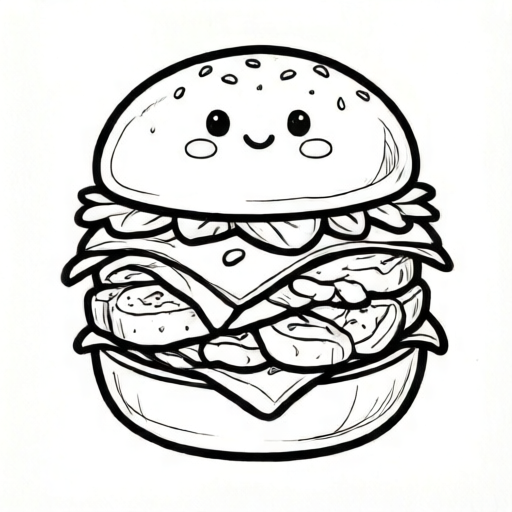
Use the stated measurements and conventions for each exercise.
Define the shape convention
Use a simple convention: draw each food form as a closed outline made of circles, ovals, rounded rectangles, or triangles. Keep outlines clean and single-weight. Cuteness comes from proportion and placement, not from complex shading.
X-height is the distance from baseline to midline for any lettering you add. Letter styles vary, so choose one style and keep it consistent. For faces, place eyes on the midline of the main form unless your chosen style says otherwise.
- Draw a light bounding box for the whole snack.
- Place the largest food form first as a simple outline.
- Add one or two smaller forms that touch or overlap the main form.
- Mark the midline and place facial features.
- Add one accent detail such as a sprinkle, crumb, or wrapper fold.
Build the snack from large to small
Start with the largest shape because it controls the overall silhouette. A rounded rectangle often works for a sandwich or bar; an oval suits a bun or fruit; a triangle suits a chip or slice. Overlap smaller shapes so the snack reads as one object.
Keep gaps between forms small and intentional. If two forms should touch, let their outlines meet cleanly. If they should separate, leave a clear gap of at least one pencil width so the gap is visible.
- Draw the main form and check its width-to-height ratio.
- Add a secondary form and check that it overlaps by a small, deliberate amount.
- Add a third form only if it improves recognition.
- Erase construction lines lightly before adding details.
Add cuteness with proportion and placement
Cute drawings often use a larger head or main form, smaller limbs or accents, and features placed low or centered. Choose one proportion rule and apply it consistently. For example, make the main form about two-thirds of the total height and keep accents in the remaining third.
Faces should be simple: two dots or short ovals for eyes and a small curve for a mouth. Place eyes at the midline or slightly below it. Avoid adding too many details; three to five accent marks are usually enough.
- Mark the midline of the main form.
- Place eyes symmetrically about the midline.
- Add a mouth curve that stays within the main form.
- Add no more than five accent marks total.
Check and refine
Use simple checks: measure the main form's width and height with a ruler and confirm the ratio you intended. Count the number of accent marks and confirm it is between three and five. Check that every outline is closed and that no construction line remains darker than a final outline.
Valid alternatives are allowed. A snack may be drawn with a rounder or squarer main form, and lettering may use any consistent style. The rubric rewards clear form, consistent convention, and readable cuteness rather than a single correct drawing.
- Measure the main form and record width and height in the same unit.
- Count accent marks and record the number.
- Check that eyes sit at or near the midline.
- Confirm all outlines are closed and clean.
Worked example
Draw a cute round cracker with two small square toppings and a simple face. Use one outline weight and three accent marks.
Worked answer
A closed circle for the cracker, two small squares overlapping the circle edge, two dot eyes at the midline, a short mouth curve, and three small crumb marks. The main form is about two-thirds of the total height. All outlines are single-weight and closed.
Why: The circle is the largest form and controls the silhouette. The squares are secondary forms that overlap slightly. Eyes at the midline and a small mouth create a simple face. Three crumb marks stay within the accent limit.
Check: Measure the circle's width and height; confirm the ratio is close to 1:1. Count accent marks and confirm three. Check that both squares overlap the circle and that all outlines are closed.
Four practice exercises
Exercise 1
Draw a cute triangular chip with one small oval dip cup beside it. Use one outline weight and exactly four accent marks. Describe your drawing in words if you cannot draw it.
Show answer and check
A closed triangle for the chip, a small oval for the dip cup with a clear gap of one pencil width, two dot eyes at the chip's midline, a short mouth curve, and four small crumb marks on the chip.
Why: The triangle is the main form. The oval is secondary and separated by a clear gap. Eyes at the midline and a simple mouth create the face. Four accents stay within the limit.
Check: Confirm the triangle is closed and single-weight. Measure the gap between triangle and oval and confirm it is at least one pencil width. Count accents and confirm four.
Exercise 2
Draw a cute rounded-rectangle sandwich with one small circle olive on top. Use a main form height of 6 cm and width of 4 cm as a hypothetical example. Add three accent marks.
Show answer and check
A closed rounded rectangle 6 cm tall and 4 cm wide, a small circle olive overlapping the top edge, two dot eyes at the midline, a short mouth curve, and three small seed marks.
Why: The rounded rectangle is the main form and its measured size sets the proportion. The olive is a secondary form that overlaps slightly. Three seed marks meet the accent limit.
Check: Measure height and width with a ruler and confirm 6 cm and 4 cm. Confirm the olive overlaps the top edge. Count accents and confirm three.
Exercise 3
Draw a cute oval bun with a small triangle cheese slice peeking out. Place eyes slightly below the midline and state your style rule. Use five accent marks.
Show answer and check
A closed oval bun, a small triangle overlapping the lower edge, two dot eyes placed slightly below the midline with the rule 'eyes sit one pencil width below midline for a sleepy look', a short mouth curve, and five small crumb marks.
Why: The oval is the main form. The triangle is secondary and overlaps the lower edge. The stated style rule justifies the eye placement. Five accents meet the upper limit.
Check: Confirm the style rule is written. Measure eye placement relative to the midline and confirm about one pencil width below. Count accents and confirm five.
Exercise 4
Draw a cute square bar with a small circle fruit on top. Use a main form width of 5 cm and height of 5 cm as a hypothetical example. Add lettering 'snack' in a consistent style with x-height from baseline to midline.
Show answer and check
A closed square bar 5 cm by 5 cm, a small circle fruit overlapping the top edge, two dot eyes at the midline, a short mouth curve, three accent marks, and the word 'snack' in one consistent letter style with x-height measured from baseline to midline.
Why: The square is the main form and its equal width and height set a stable proportion. The fruit is secondary and overlaps. Lettering follows the x-height convention and one style.
Check: Measure width and height and confirm 5 cm each. Confirm the fruit overlaps the top edge. Check that lettering uses one style and that x-height is measured from baseline to midline. Count accents and confirm three.
Common mistakes
- Starting with small details before the main form. Draw the largest form first, then add smaller forms and details in order.
- Using many different outline weights. Choose one outline weight and keep it consistent across the drawing.
- Placing eyes far above or below the midline without a stated style reason. Mark the midline first and place eyes at or near it, or state your style rule clearly.
- Adding too many accent marks so the snack looks cluttered. Limit accents to three to five marks and remove extras.
Self-check rubric
- Main form is the largest shape and clearly controls the silhouette.
- All outlines are closed and use one consistent weight.
- Secondary forms overlap or touch intentionally with small, clear gaps where separation is intended.
- Eyes are placed at or near the midline, or a consistent style rule is stated.
- Accent marks number between three and five.
- Lettering, if present, uses a consistent style with x-height from baseline to midline.
- Drawing is recognizable as a generic snack and avoids branded products.
- Valid alternatives are accepted when the convention and checks are met.
Questions and answers
Do I need to shade the snack?
No. This method uses clean outlines and simple accents. Full still-life shading is outside this lesson.
Can I draw a branded snack?
No. Use generic food forms such as a bun, bar, or slice. Branded snacks are excluded.
What if my lettering style is different?
Any consistent lettering style is valid. Keep the x-height convention clear: baseline to midline.
How do I know my drawing is cute enough?
Use the rubric: clear main form, consistent convention, simple face, and three to five accents. Cuteness is judged by these checkable features, not by one universal look.