Free original lessons
Draw a Dog Side-Eye: Eye Direction, Brow Tilt, and Head Angle
Learn to draw a convincing dog side-eye by controlling eye direction, brow tilt, and head angle. Includes a convention, rubric, and four practice tasks.
Free lesson
Four exercises
Worked answers
Object Drawing Lessons
A side-eye expression reads as skeptical, sly, or annoyed because the eyes look sideways while the head stays mostly forward or tilts slightly. This lesson isolates that expression from full-body drawing and breed anatomy. You will use a simple convention: the eye is an almond shape with a pupil that shifts toward the inner or outer corner, the brow on the looking side lowers or lifts, and the head tilts a few degrees to support the glance. All measurements are hypothetical examples; measure your own paper and tools. The goal is a clear, repeatable expression, not a single correct drawing.
Practice materials: Printable downloads are not available for this lesson yet. Use the instructions and four exercises below.
Reference illustration
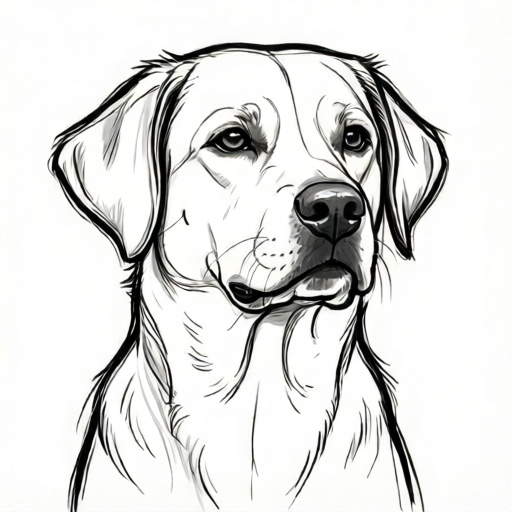
Use the stated measurements and conventions for each exercise.
Set a simple eye-direction convention
Draw two almond-shaped eyes on a horizontal midline. Mark the center of each almond. For a side-eye, move the pupil from center toward the corner nearest the direction of the glance. Use a three-step scale: center (neutral), half-shift (mild side-eye), and full-shift (strong side-eye). Keep the pupil inside the almond; if it touches the edge, the eye looks strained rather than sly.
The upper lid can lower slightly on the looking side to suggest a skeptical squint. The lower lid stays mostly flat. This convention is a teaching aid, not a universal rule; valid alternatives include a rounder eye or a narrower almond, as long as the pupil shift and lid change remain readable.
- Draw two almonds about 3 cm wide and 1.5 cm tall on a horizontal midline (hypothetical example).
- Mark the center of each almond with a light dot.
- Choose a glance direction, left or right, and shift both pupils halfway toward that side.
- Lower the upper lid on the looking side by about 1 mm (hypothetical example) to add skepticism.
- Check that both pupils point the same way and remain inside the almonds.
Coordinate brow tilt with the glance
The brow on the looking side does most of the emotional work. A slight downward tilt toward the nose suggests annoyance; a slight upward tilt suggests amusement or doubt. Keep the opposite brow neutral or slightly raised to create asymmetry. Draw brows as short, soft arcs rather than thick blocks so the expression stays flexible.
Use a brow-tilt panel: three small boxes labeled neutral, down-tilt, and up-tilt. In each box, draw the same eye pair with the same pupil shift, then change only the looking-side brow. This isolates the brow variable and makes the effect easy to compare.
- Draw three boxes side by side, each about 5 cm wide (hypothetical example).
- In each box, draw the same two eyes with a half-shift pupil toward the right.
- In box one, keep both brows neutral.
- In box two, tilt the right brow down toward the nose by about 10 degrees (hypothetical example).
- In box three, tilt the right brow up by about 10 degrees and compare the three expressions.
Use head angle to support, not replace, the glance
A small head tilt can make the side-eye feel natural. Tilt the head toward the glance by 5 to 10 degrees (hypothetical example), or away from it for a more suspicious look. Avoid large tilts that turn the side-eye into a full head turn; the expression depends on the eyes doing most of the work while the head stays mostly forward.
Draw three head-angle variants: forward, slight tilt toward the glance, and slight tilt away. Keep the eye direction and brow tilt identical in all three. This shows how head angle changes the mood without changing the core expression.
- Draw a simple head outline: a rounded rectangle about 8 cm wide and 6 cm tall (hypothetical example).
- Place the eye midline about one-third down from the top.
- Draw the same side-eye expression in three copies of the head.
- Tilt copy two toward the glance by 8 degrees and copy three away by 8 degrees (hypothetical examples).
- Compare which version best matches your intended mood.
Practice strip for intensity control
A practice strip helps you vary intensity without losing readability. Divide a strip of paper into four squares. In each square, draw the same head and eye pair, but increase the pupil shift and brow tilt step by step: neutral, mild, medium, strong. Keep the head angle constant so only intensity changes.
Label each square with the intensity level. This strip becomes a reference for choosing how strong a side-eye to use in a final drawing. Valid alternatives include changing the lid height instead of the brow tilt, as long as the progression is clear and consistent.
- Cut or draw a strip with four squares, each about 4 cm wide (hypothetical example).
- Draw the same head outline in all four squares.
- In square one, use center pupils and neutral brows.
- In square two, shift pupils one-third toward the glance and tilt the brow slightly.
- In square three, shift pupils two-thirds and tilt the brow more.
- In square four, shift pupils fully and tilt the brow strongly, then check that all four remain readable.
Worked example
Draw a dog head with a mild side-eye glancing to the left. Use a forward head, half-shift pupils, and a slight down-tilt on the left brow.
Worked answer
Draw a rounded rectangle head about 8 cm wide and 6 cm tall (hypothetical example). Place the eye midline one-third down. Draw two almonds about 3 cm wide and 1.5 cm tall. Shift both pupils halfway toward the left corner. Lower the left upper lid by about 1 mm (hypothetical example). Tilt the left brow down toward the nose by about 10 degrees (hypothetical example) and keep the right brow neutral. Check that both pupils point left, remain inside the almonds, and the head stays forward.
Four practice exercises
Exercise 1
Draw a forward-facing dog head with a strong side-eye glancing right. Use full-shift pupils and a down-tilt on the right brow. Keep the head forward.
Show answer and check
A forward head outline with two almonds; both pupils shifted fully toward the right corner but still inside the almonds; right upper lid slightly lowered; right brow tilted down about 10 degrees (hypothetical example); left brow neutral.
Why: Full pupil shift and a down-tilted brow on the looking side create a strong skeptical side-eye while the forward head keeps the expression focused on the eyes.
Check: Verify that both pupils point right, neither touches the eye edge, the right brow tilts down, and the head outline is not rotated.
Exercise 2
Draw three small head outlines in a row. Use the same half-shift left glance in all three, but change only the left brow: neutral, down-tilt, up-tilt. Label each.
Show answer and check
Three identical heads with the same leftward half-shift pupils; first head has neutral brows; second has left brow tilted down about 10 degrees (hypothetical example); third has left brow tilted up about 10 degrees.
Why: Changing only the brow isolates its effect on the expression, showing how down-tilt reads as annoyance and up-tilt reads as doubt or amusement.
Check: Confirm that the eyes and head are identical across all three and that only the left brow differs; check labels match the brow tilt.
Exercise 3
Draw a practice strip with four squares. Start with a neutral expression and increase side-eye intensity step by step toward the left. Keep the head angle constant.
Show answer and check
Four squares with the same head outline; square one has center pupils and neutral brows; square two has one-third left shift and slight brow tilt; square three has two-thirds shift and moderate tilt; square four has full shift and strong tilt.
Why: A graded strip builds control over intensity and shows that readability depends on consistent pupil shift and brow tilt rather than extreme changes.
Check: Check that each square increases pupil shift and brow tilt in order, that pupils stay inside the eyes, and that the head angle is the same in all four.
Exercise 4
Draw two head outlines side by side with the same mild rightward side-eye. Tilt one head toward the glance by 8 degrees and the other away by 8 degrees (hypothetical examples). Describe how the mood changes.
Show answer and check
Two heads with identical half-shift right pupils and slight right brow down-tilt; first head tilted right by 8 degrees; second head tilted left by 8 degrees. The toward-tilt reads more engaged or sly; the away-tilt reads more suspicious or aloof.
Why: Head angle modifies the emotional tone without changing the core eye direction and brow tilt, demonstrating that small tilts can shift mood.
Check: Verify that the eyes and brows are identical in both heads, that the tilts are about 8 degrees in opposite directions, and that the written description matches the visual difference.
Common mistakes
- Moving only one pupil while the other stays centered. Shift both pupils in the same direction; the side-eye reads as a coordinated glance, not a stray eye.
- Tilting the head so much that it becomes a full turn. Keep the head tilt small, about 5 to 10 degrees (hypothetical example), and let the eyes carry the expression.
- Making the brow tilt too extreme, which reads as anger rather than skepticism. Use a slight tilt and keep the opposite brow neutral or slightly raised for contrast.
- Letting the pupil touch the eye edge, which looks strained. Keep a small margin between pupil and edge; a full-shift pupil should still sit inside the almond.
Self-check rubric
- Eye direction: both pupils shift consistently toward the intended glance.
- Pupil placement: pupils remain inside the eye shape with a visible margin.
- Brow tilt: the looking-side brow changes slightly and the opposite brow stays neutral or slightly raised.
- Head angle: the head tilt is small and supports the glance without becoming a full turn.
- Readability: the expression reads as side-eye at a glance.
- Consistency: the same convention is used across variants and practice squares.
- Valid alternatives: rounder or narrower eyes, different lid heights, or opposite brow choices are acceptable if the expression remains clear.
Questions and answers
Do I need to draw a full dog body?
No. This lesson isolates the side-eye expression using a simple head outline and eye pair. Full-body drawing is outside the boundary.
Can I use a round eye instead of an almond?
Yes. The convention is a teaching aid. A round eye works if the pupil shift and lid change remain readable.
How do I know if my side-eye is too strong?
If the pupil touches the eye edge or the brow tilt looks angry, reduce the shift or tilt by about half and compare.
What if my head tilt changes the expression too much?
Return to a forward head and adjust only the eyes and brows. Add head tilt last, in small increments.