Free original lessons
Draw a Haughty Expression: Chin Lift, Lidded Eyes, and Subtle Cues
Learn to draw a haughty face by raising the chin, half-lidding the eyes, and adjusting brow and mouth. Includes a convention, rubric, and four practice tasks.
Free lesson
Four exercises
Worked answers
Object Drawing Lessons
Haughtiness reads through restraint: the chin lifts, the eyelids lower, and the mouth tightens rather than sneers. This lesson defines a simple drawing convention so you can build the expression deliberately and check it. You will compare a neutral face to a haughty variant, label the four key changes, then apply them to blank face outlines. All measurements are hypothetical examples; measure your own paper and tools. The convention is not a single correct style: valid alternatives are allowed when the checklist is met.
Practice materials: Printable downloads are not available for this lesson yet. Use the instructions and four exercises below.
Reference illustration
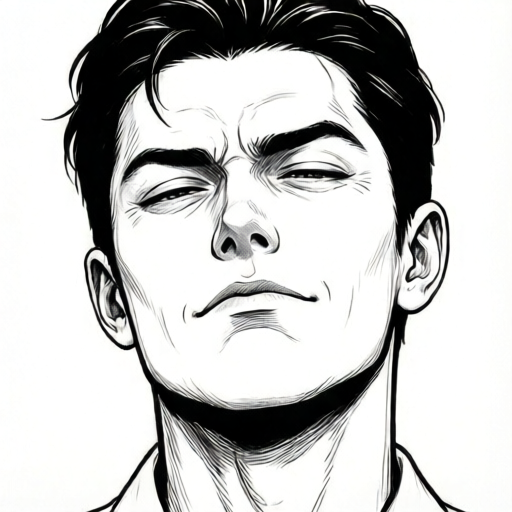
Use the stated measurements and conventions for each exercise.
Define the convention and the four cues
Use a face plate with two heads side by side: a neutral face on the left and a haughty variant on the right. Draw both at the same size on the same baseline. The convention: the chin lifts by one quarter of the face height, the upper eyelids cover about half the iris, the inner brow lowers slightly while the outer brow stays level, and the mouth corners curl up by a small amount with the lower lip pressed forward. These are hypothetical values for practice, not standards.
Label each change directly on the plate: chin angle, eyelid droop, brow position, and mouth curl. Keep labels short and place them outside the face outline so they do not clutter the drawing. The plate is a reference, not a tracing template; students should redraw the cues freehand on the practice row.
- Draw a neutral face outline and mark the baseline and midline.
- Draw the haughty variant beside it at the same scale.
- Raise the chin line by one quarter of the face height and redraw the jaw.
- Lower the upper eyelids to cover about half the iris.
- Lower the inner brow slightly and keep the outer brow level.
- Curl the mouth corners up slightly and press the lower lip forward.
- Label the four cues outside the face.
Apply the cues on blank face outlines
The practice row contains four blank face outlines at the same size. Apply the haughty cues to each, varying only the strength: mild, moderate, strong, and exaggerated. Keep the chin lift, eyelid droop, brow shift, and mouth curl proportional so the expression stays readable. Use a comparison checklist beside the row: chin lifted, eyes half-lidded, inner brow lowered, mouth curled, and overall restraint.
Work in pencil first. Check the eyelid line against the iris: if the iris is fully hidden, the expression becomes sleepy rather than haughty. If the chin lifts too far, the neck stretches and the face looks surprised. Adjust by small increments and compare each attempt to the labeled plate.
- Draw four blank face outlines at equal size.
- Apply mild cues to the first outline and check the checklist.
- Increase the chin lift and eyelid droop for the second outline.
- Use a stronger brow shift and mouth curl for the third.
- Exaggerate all four cues for the fourth and note where readability breaks.
- Circle the best attempt and write one sentence explaining why.
Check with the comparison checklist and rubric
The comparison checklist has five yes-or-no items: chin lifted, eyes half-lidded, inner brow lowered, mouth curled, and expression restrained. A drawing passes when at least four items are yes and no item is exaggerated beyond readability. The rubric allows valid alternatives: a sharper chin lift with a subtler mouth curl can pass, as can a softer chin lift with a stronger eyelid droop, provided the overall effect reads as haughty.
Measure your own paper and pencil before starting. If you choose a chin lift of two centimeters on a ten-centimeter face, label it as a hypothetical example. Keep units consistent and avoid claiming printer tolerances or hardware standards.
- Mark each checklist item yes or no.
- Count the yes items and note any exaggeration.
- Compare the drawing to the labeled plate at arm's length.
- Write one adjustment that would improve the next attempt.
Worked example
A student draws a face with the chin lifted by two centimeters on a ten-centimeter face, eyelids covering half the iris, inner brow lowered slightly, outer brow level, and mouth corners curled up by three millimeters. Check the drawing against the five-item checklist.
Worked answer
The drawing passes all five items: chin lifted, eyes half-lidded, inner brow lowered, mouth curled, and expression restrained. The chin lift is a hypothetical example and is consistent with the convention. No exaggeration is present, so the drawing is valid.
Four practice exercises
Exercise 1
Draw a mild haughty face on a blank outline. Use a chin lift of one centimeter on an eight-centimeter face, eyelids covering half the iris, inner brow lowered slightly, and mouth corners curled up by two millimeters. Label the four cues.
Show answer and check
A face with a small chin lift, half-lidded eyes, slight inner brow lowering, and a small mouth curl, with four labels outside the outline.
Why: The cues are proportional and restrained, so the expression reads as haughty without exaggeration.
Check: Use the five-item checklist: chin lifted, eyes half-lidded, inner brow lowered, mouth curled, expression restrained. Count yes items; four or more with no exaggeration passes.
Exercise 2
Draw a moderate haughty face on a blank outline. Use a chin lift of two centimeters on a ten-centimeter face, eyelids covering half the iris, inner brow lowered, outer brow level, and mouth corners curled up by three millimeters. Then write one sentence explaining how the brow and mouth keep the expression from looking sleepy.
Show answer and check
A face with a clear chin lift, half-lidded eyes, lowered inner brow, level outer brow, and a small mouth curl, plus a sentence noting that the brow and mouth add tension that sleepiness lacks.
Why: The eyelid droop alone could read as sleepy; the brow and mouth cues restore the haughty quality.
Check: Check the five items and confirm the sentence mentions both brow and mouth. Four or more yes items with no exaggeration passes.
Exercise 3
Draw a strong haughty face on a blank outline. Use a chin lift of three centimeters on a twelve-centimeter face, eyelids covering half the iris, inner brow lowered more noticeably, and mouth corners curled up by four millimeters. Check that the neck does not stretch unnaturally and adjust if needed.
Show answer and check
A face with a strong but readable chin lift, half-lidded eyes, a noticeable inner brow lowering, and a small mouth curl, with the neck redrawn smoothly.
Why: Strong cues must stay proportional; the neck check prevents a surprised look.
Check: Use the checklist and inspect the neck line. If the neck stretches, reduce the chin lift by one centimeter and recheck.
Exercise 4
Draw two haughty faces on blank outlines using valid alternatives: one with a sharper chin lift and subtler mouth curl, and one with a softer chin lift and stronger eyelid droop. Label each and mark the checklist for both.
Show answer and check
Two faces that both pass the checklist through different cue combinations, each labeled and checked.
Why: The rubric allows valid alternatives when the overall expression remains restrained and readable.
Check: Confirm each face has at least four yes items and no exaggeration. Compare the two to ensure both read as haughty despite different cue strengths.
Common mistakes
- Lowering the eyelids so far that the iris is fully hidden. Keep about half the iris visible; check the eyelid line against the iris.
- Lifting the chin so much that the neck stretches and the face looks surprised. Raise the chin by one quarter of the face height and redraw the jaw smoothly.
- Curling the mouth into a full smile instead of a restrained curl. Curl only the corners and press the lower lip forward slightly.
- Lowering both brows equally, which reads as anger. Lower the inner brow slightly and keep the outer brow level.
Self-check rubric
- Chin is lifted by a visible but restrained amount.
- Upper eyelids cover about half the iris.
- Inner brow is lowered slightly while the outer brow stays level.
- Mouth corners curl up slightly and the lower lip presses forward.
- Overall expression reads as restrained rather than angry, sleepy, or surprised.
- Labels and checklist are completed and legible.
- Valid alternatives are accepted when at least four checklist items are yes and no item is exaggerated.
Questions and answers
Do I need to copy the exact chin angle from the plate?
No. The plate shows a hypothetical example. Use the checklist to confirm the chin is lifted and the expression stays restrained.
Can I use a different eyelid shape?
Yes. Any eyelid shape that covers about half the iris and keeps the expression restrained is valid.
How do I know the expression is haughty rather than sleepy?
Check the brow and mouth: a slight inner brow lowering and a small mouth curl distinguish haughtiness from sleepiness.
What if my drawing passes only four checklist items?
That is acceptable if no item is exaggerated. Note the missing item and adjust it in the next attempt.