Free original lessons
Charcoal Drawing Pencils
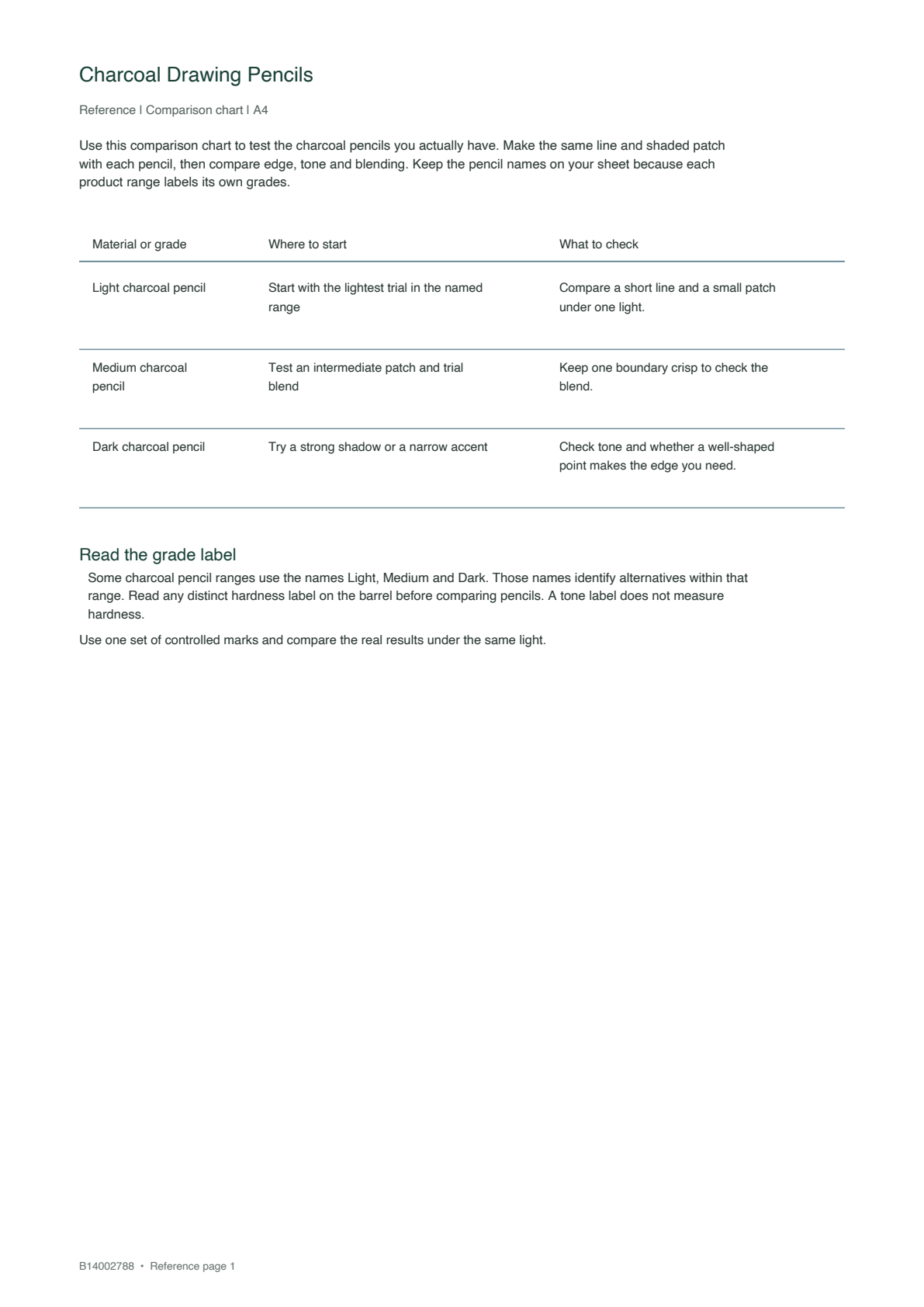
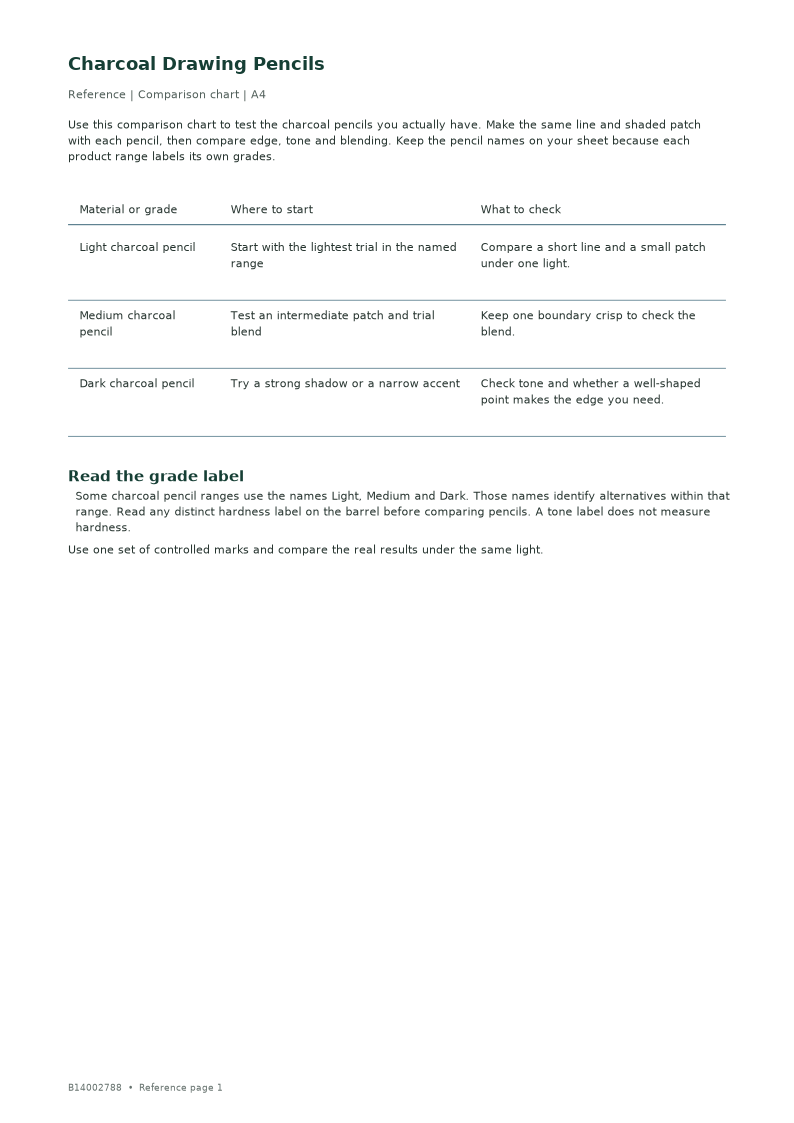
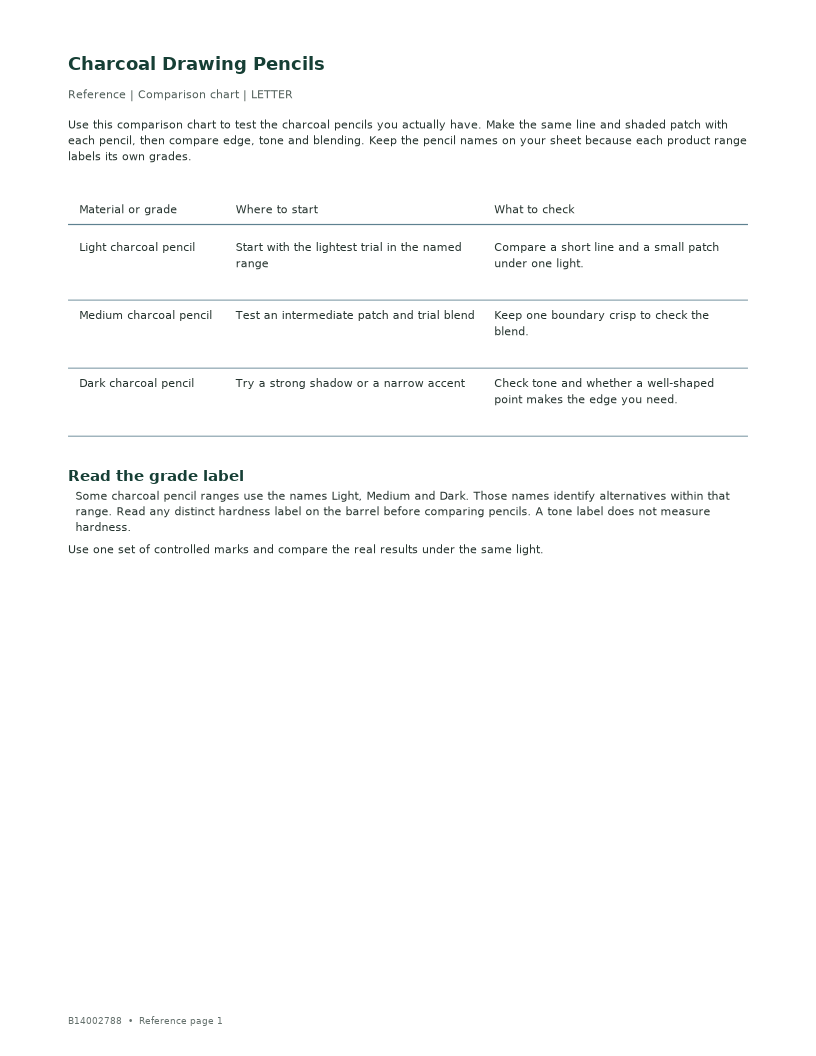
Use this comparison chart to test the charcoal pencils you actually have. Make the same line and shaded patch with each pencil, then compare edge, tone and blending. Keep the pencil names on your sheet because each product range labels its own grades.
Letter & A4
PDF & SVG
Read the grade label
Some charcoal pencil ranges use the names Light, Medium and Dark. Those names identify alternatives within that range. Read any distinct hardness label on the barrel before comparing pencils. A tone label does not measure hardness.
Keep the trial fair
Use one sheet of medium-surface drawing paper, similarly pointed tips and the same test length. Make a controlled line and a small shaded patch for each sample. Try the pencil marks with roughly the same touch before deciding where to use each grade.
Blend just one half
Choose one grade and make two copies of a patch. Keep one edge crisp. Draw a clean paper stump gently across the other edge, then compare the original and blended boundaries in the same light.
Download the complete resource pack
All individual SVG pages (20)
- A4 reference page 1
- A4 reference page 2
- A4 student page 1
- A4 student page 2
- A4 student page 3
- A4 student page 4
- A4 answer page 1
- A4 answer page 2
- A4 answer page 3
- A4 answer page 4
- LETTER reference page 1
- LETTER reference page 2
- LETTER student page 1
- LETTER student page 2
- LETTER student page 3
- LETTER student page 4
- LETTER answer page 1
- LETTER answer page 2
- LETTER answer page 3
- LETTER answer page 4
Print at 100% / actual size. Use the stated scale on any schematic diagram; physical cutting templates are identified separately. A4 and US Letter are separate files. Free access, no signup; CC BY 4.0.
How to use these pages
- Read the grade label
- Keep the trial fair
- Blend just one half
Worked example
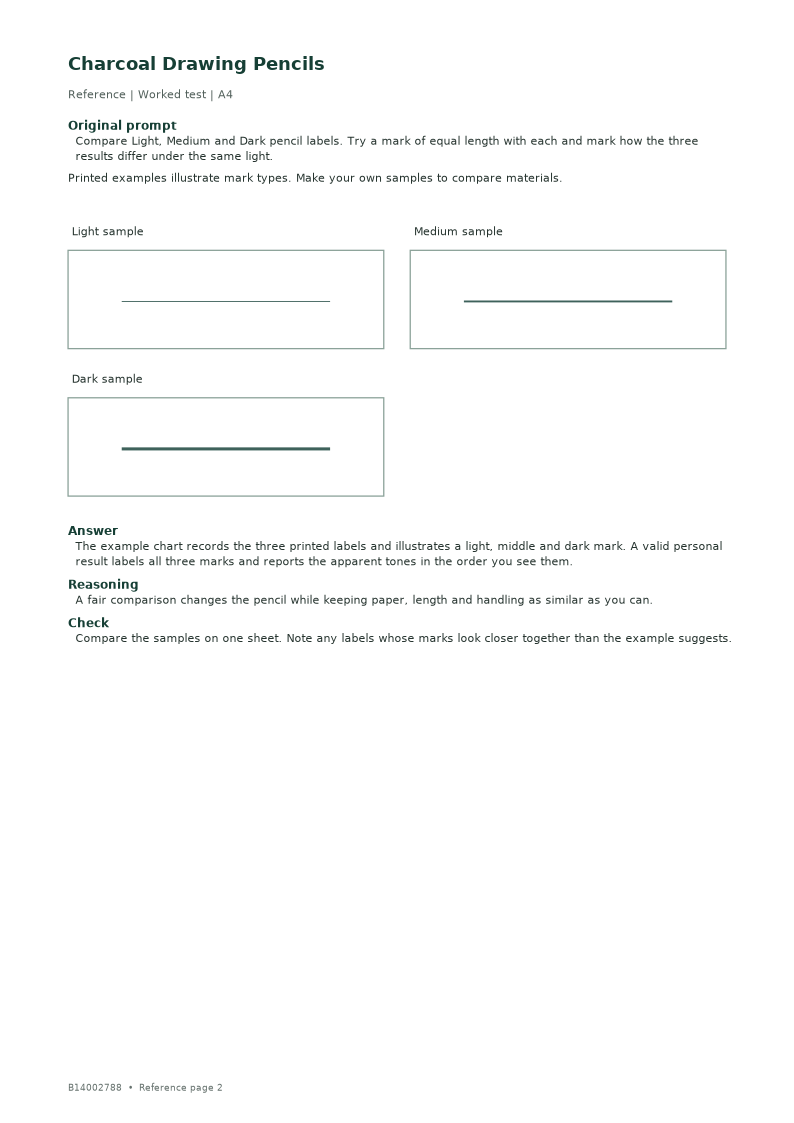
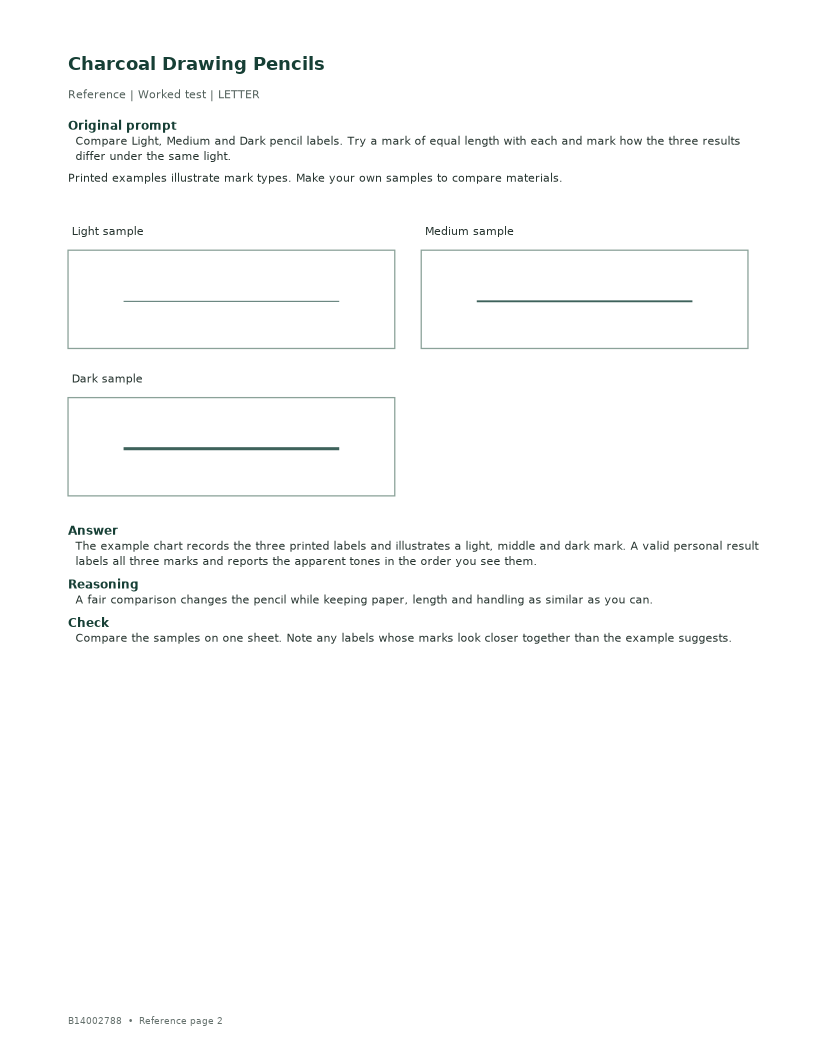
Example: Compare Light, Medium and Dark pencil labels. Try a mark of equal length with each and mark how the three results differ under the same light.
Answer: The example chart records the three printed labels and illustrates a light, middle and dark mark. A valid personal result labels all three marks and reports the apparent tones in the order you see them.
Reasoning: A fair comparison changes the pencil while keeping paper, length and handling as similar as you can.
Check: Compare the samples on one sheet. Note any labels whose marks look closer together than the example suggests.
Four practice tasks and complete answers
Task 1
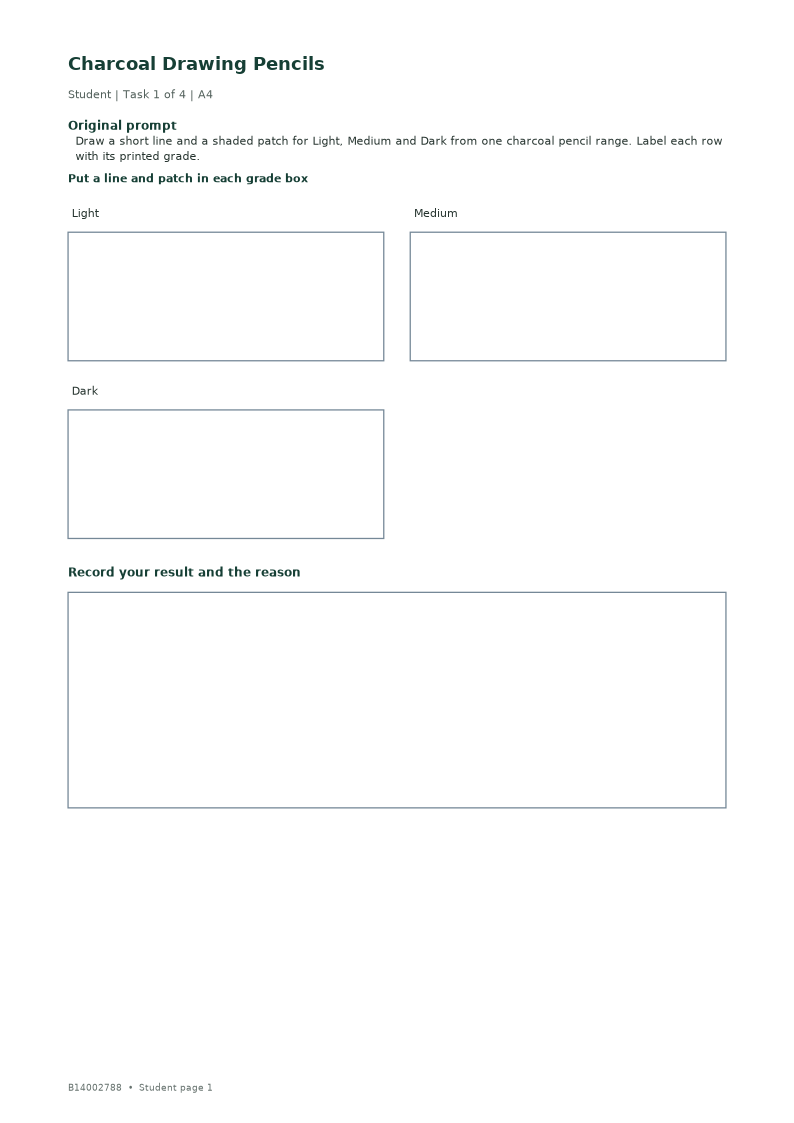
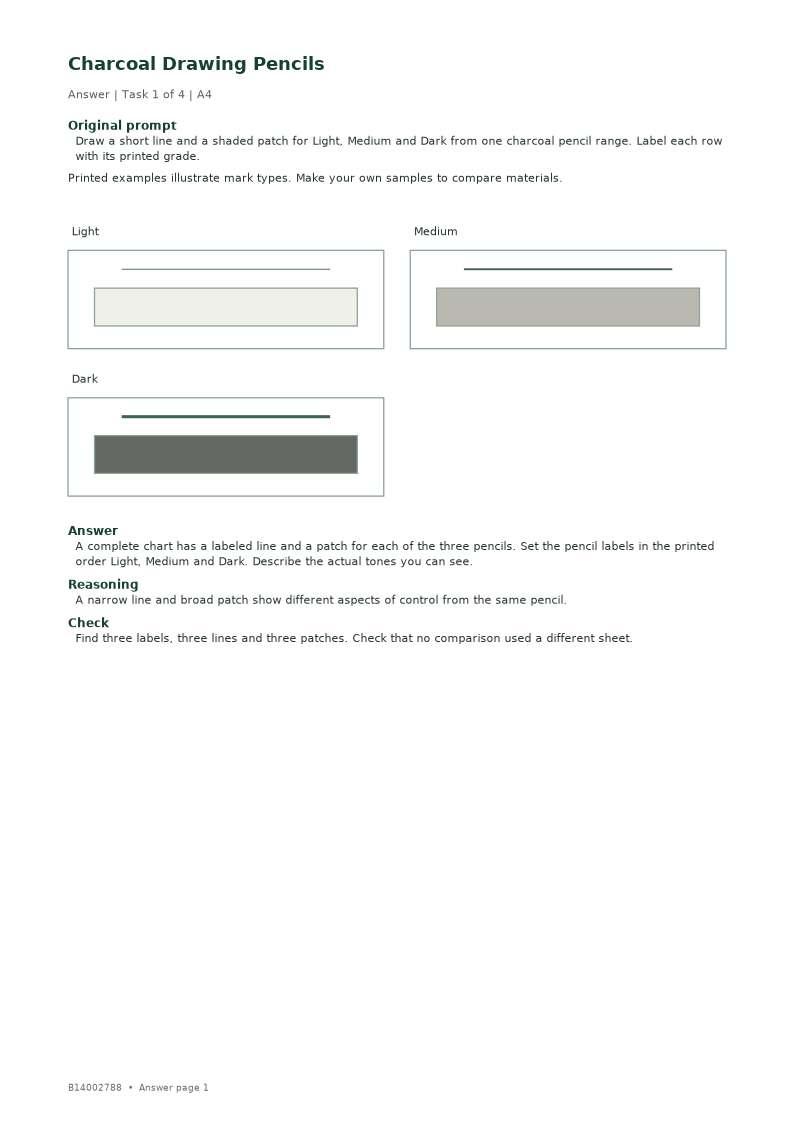
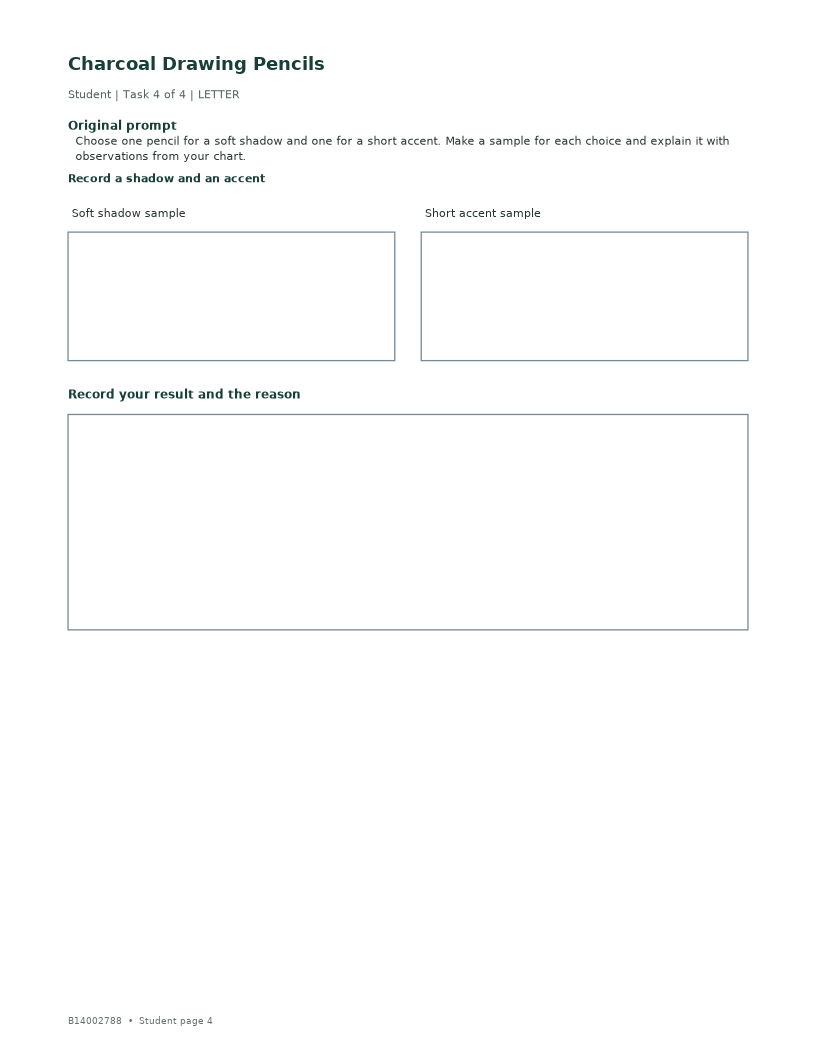
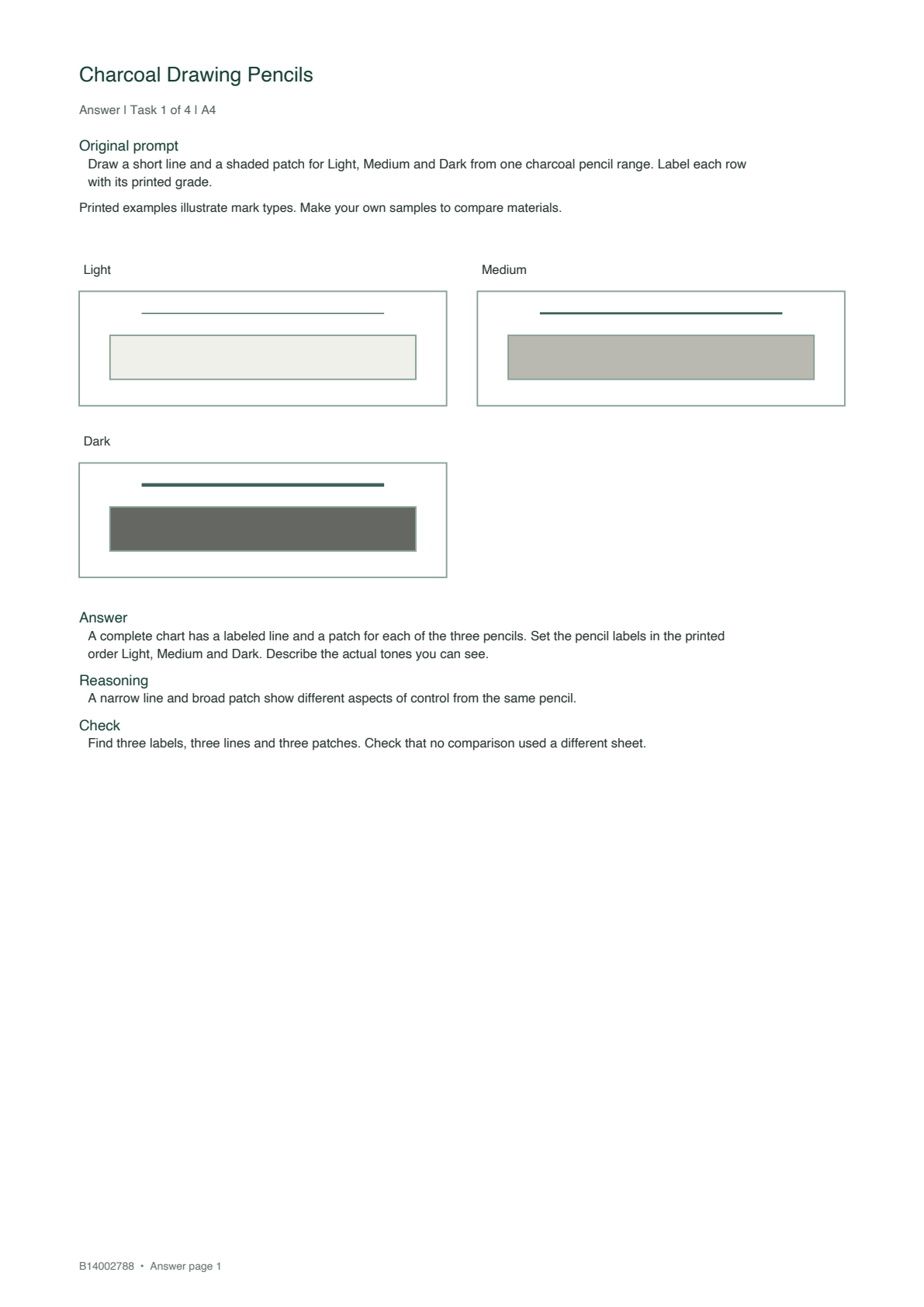
Draw a short line and a shaded patch for Light, Medium and Dark from one charcoal pencil range. Label each row with its printed grade.
Show answer 1
A complete chart has a labeled line and a patch for each of the three pencils. Set the pencil labels in the printed order Light, Medium and Dark. Describe the actual tones you can see.
A narrow line and broad patch show different aspects of control from the same pencil.
Check: Find three labels, three lines and three patches. Check that no comparison used a different sheet.
Task 2
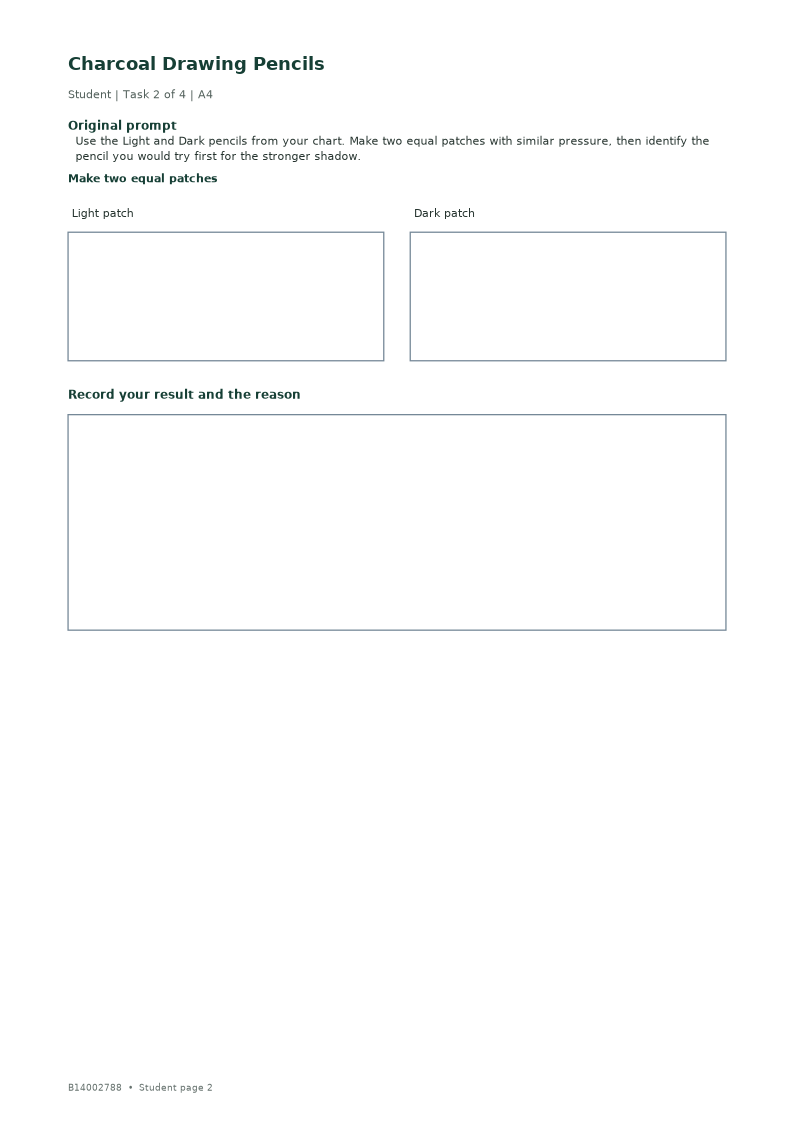
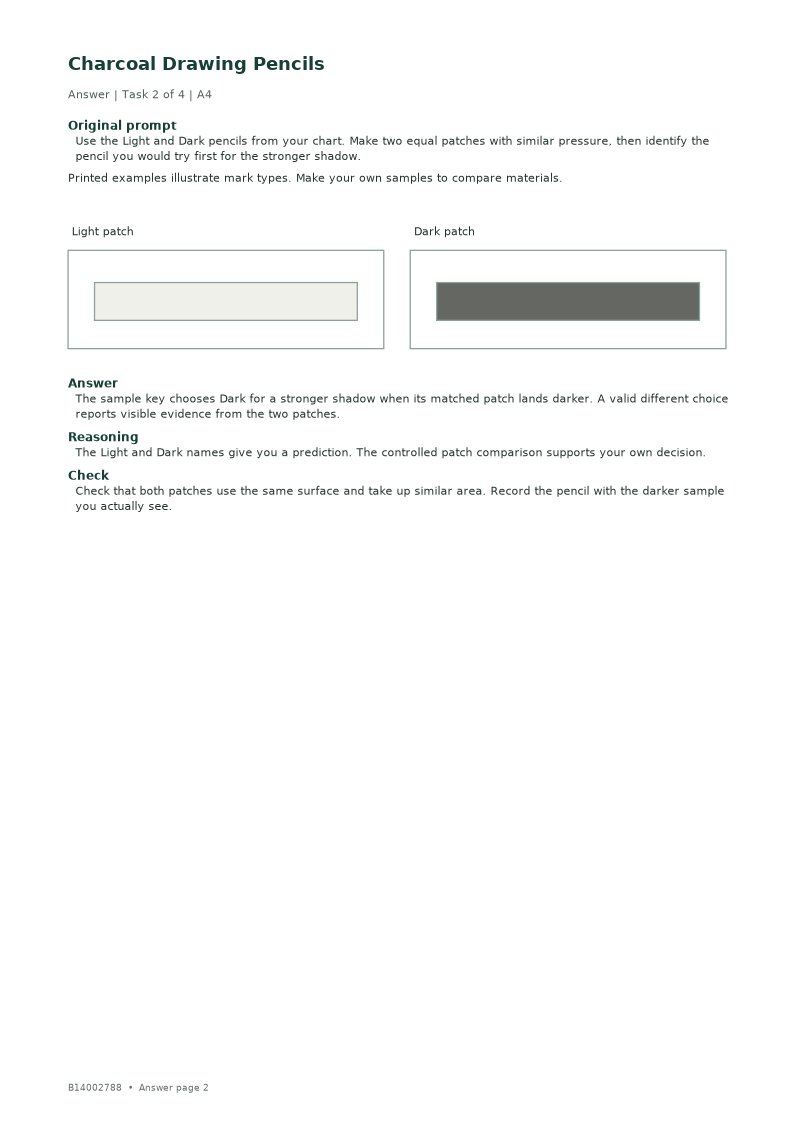
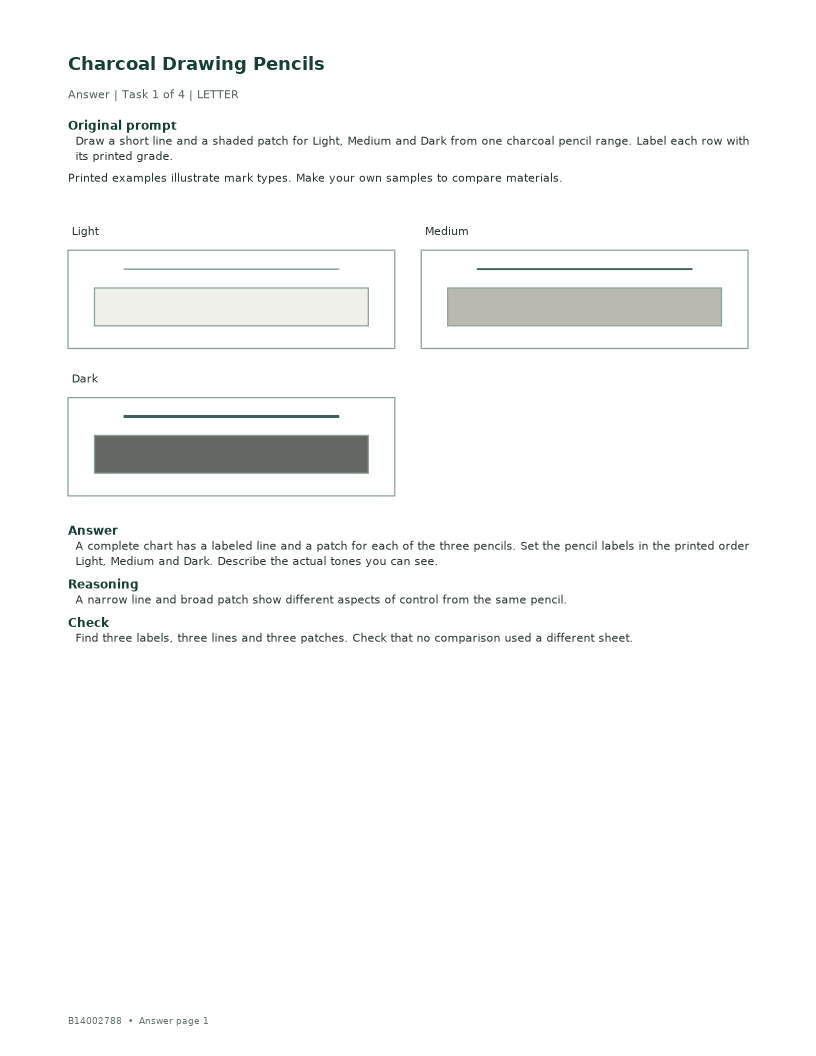
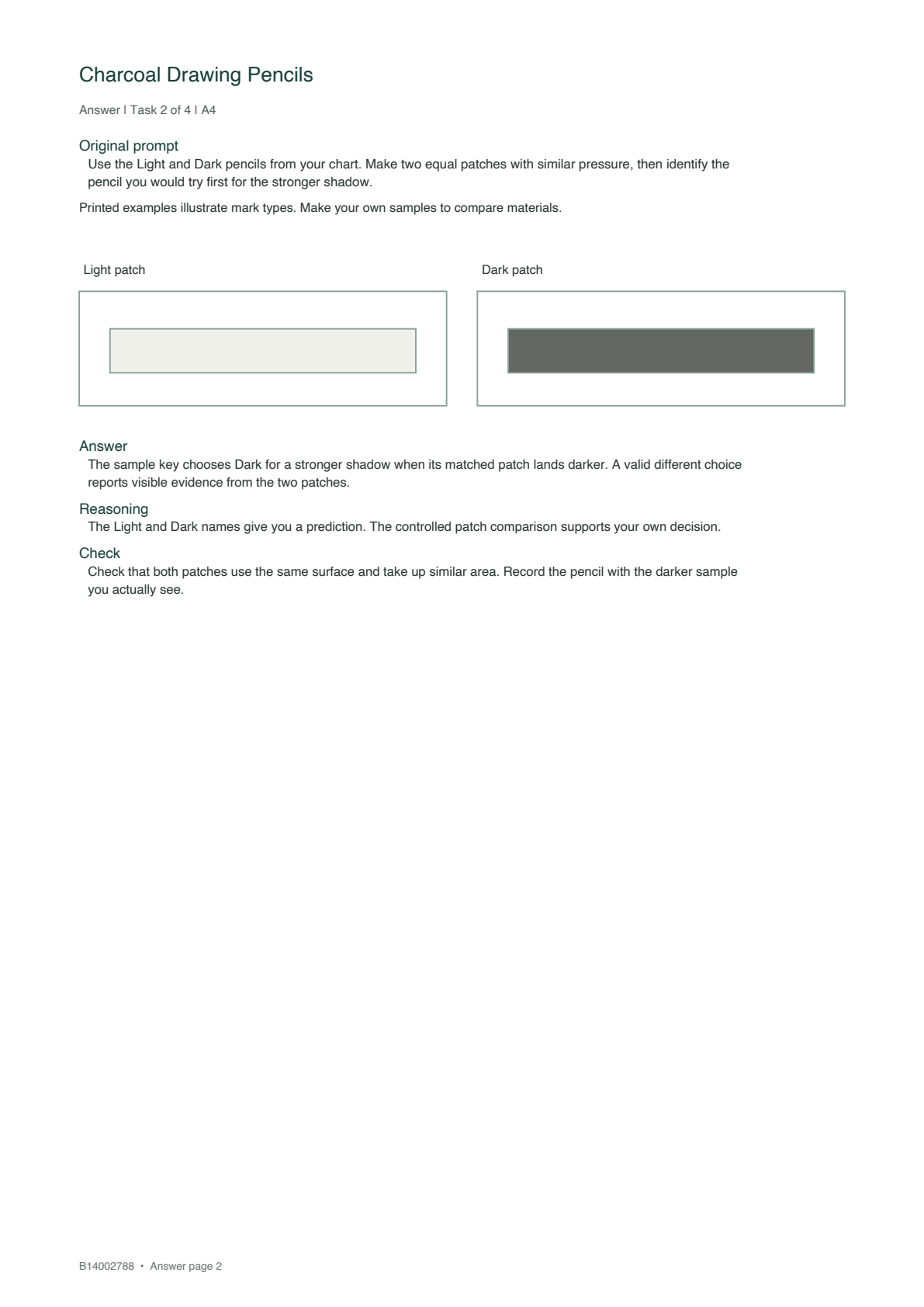
Use the Light and Dark pencils from your chart. Make two equal patches with similar pressure, then identify the pencil you would try first for the stronger shadow.
Show answer 2
The sample key chooses Dark for a stronger shadow when its matched patch lands darker. A valid different choice reports visible evidence from the two patches.
The Light and Dark names give you a prediction. The controlled patch comparison supports your own decision.
Check: Check that both patches use the same surface and take up similar area. Record the pencil with the darker sample you actually see.
Task 3
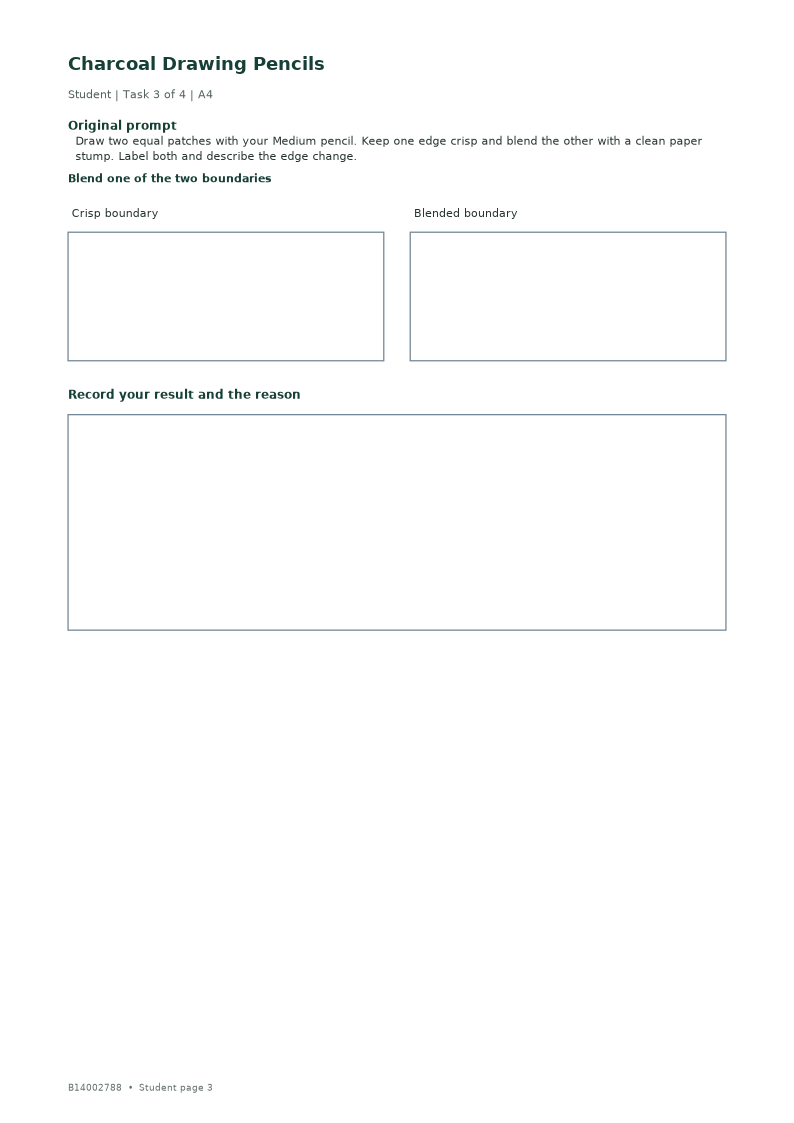
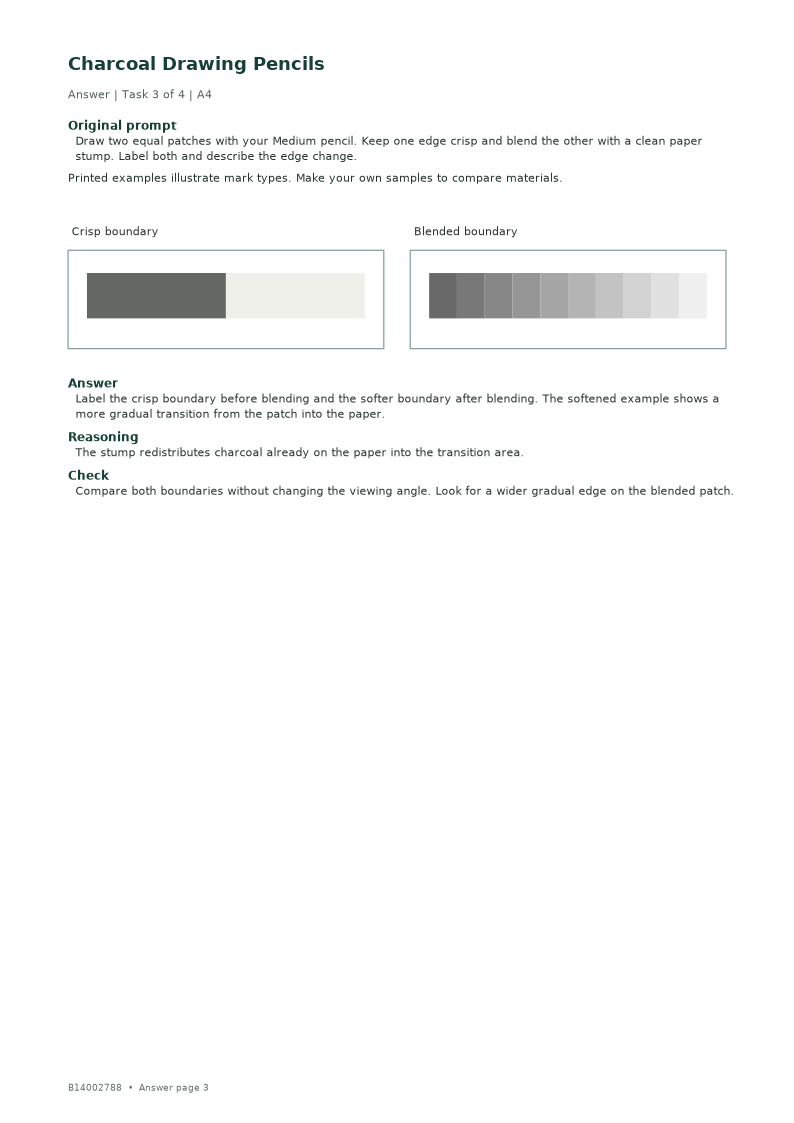
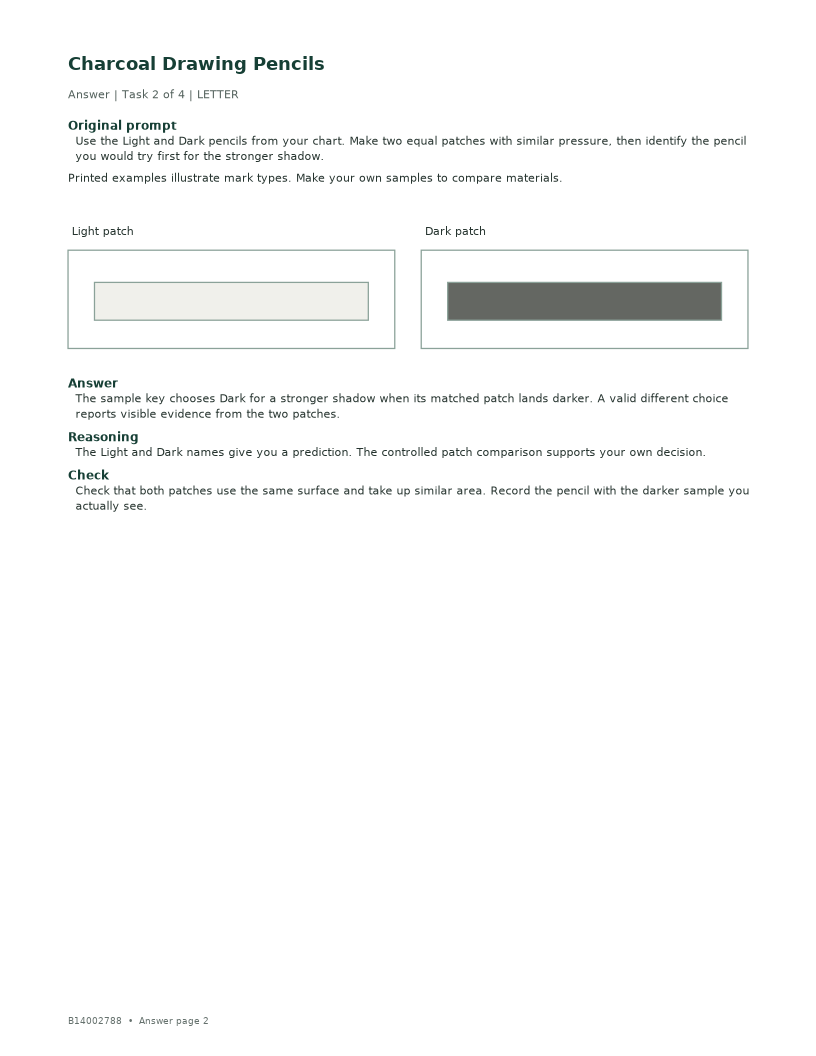
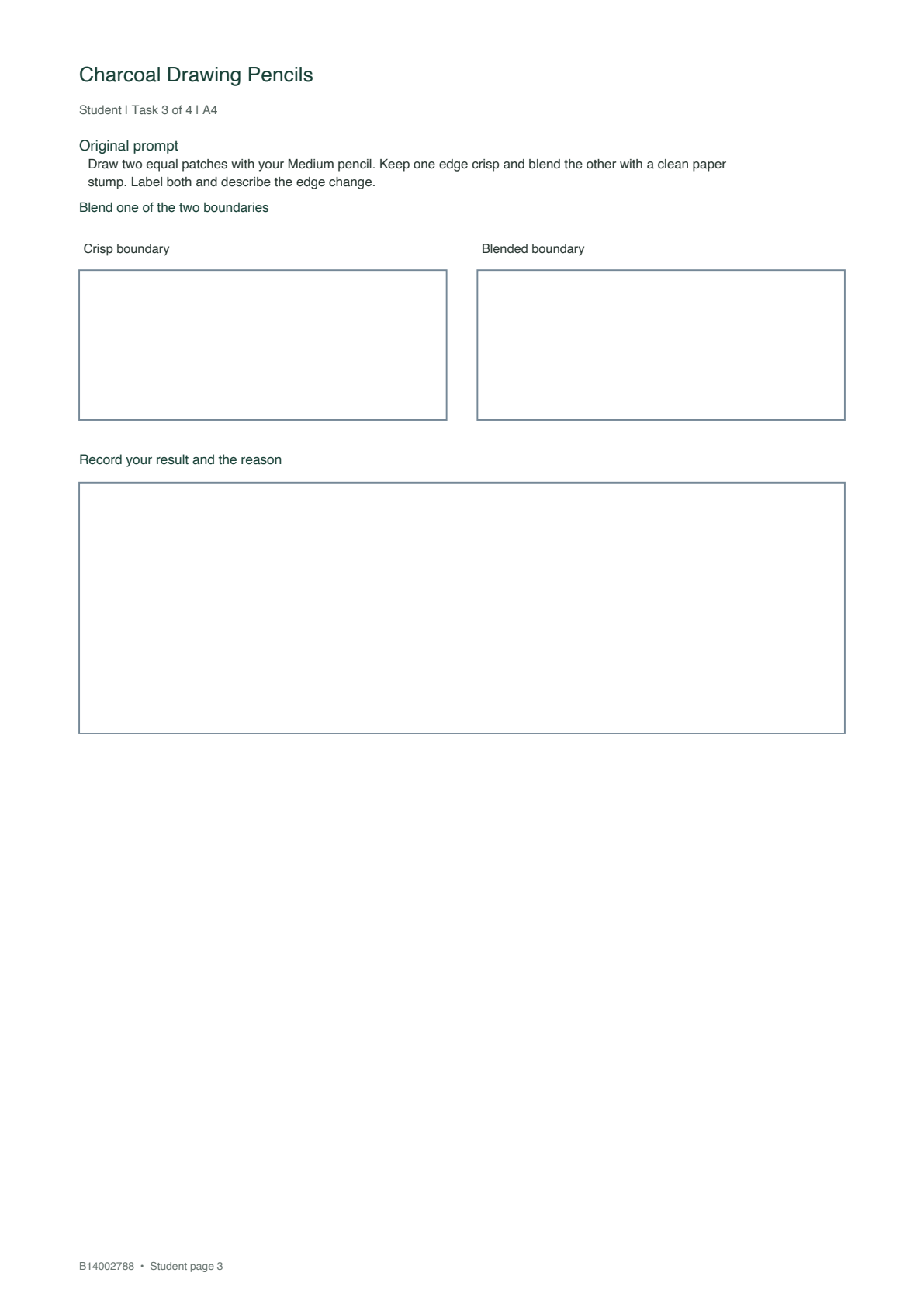
Draw two equal patches with your Medium pencil. Keep one edge crisp and blend the other with a clean paper stump. Label both and describe the edge change.
Show answer 3
Label the crisp boundary before blending and the softer boundary after blending. The softened example shows a more gradual transition from the patch into the paper.
The stump redistributes charcoal already on the paper into the transition area.
Check: Compare both boundaries without changing the viewing angle. Look for a wider gradual edge on the blended patch.
Task 4
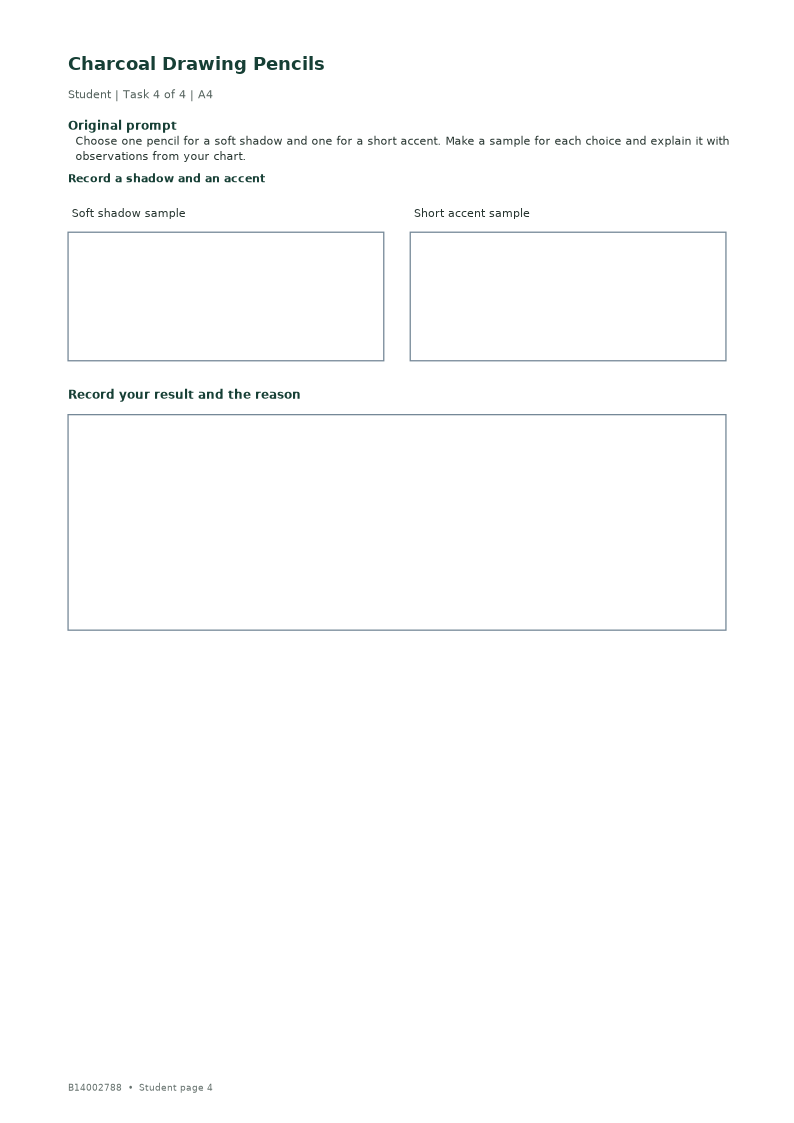
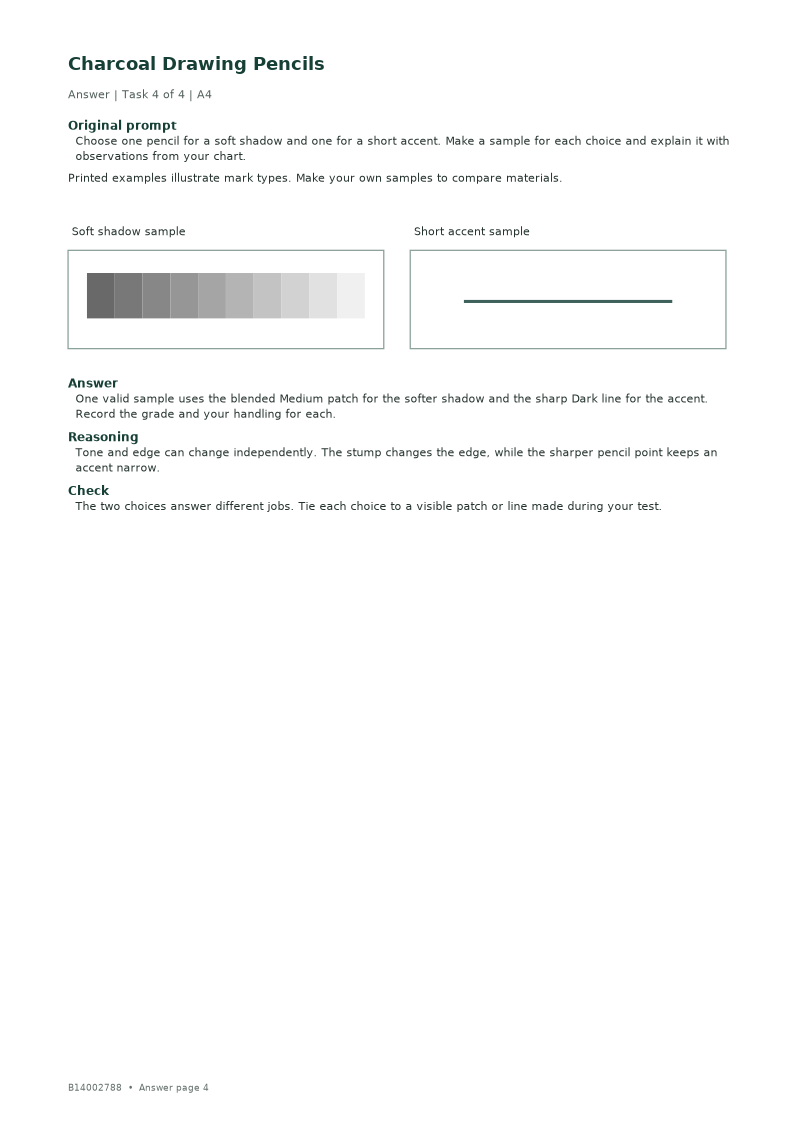
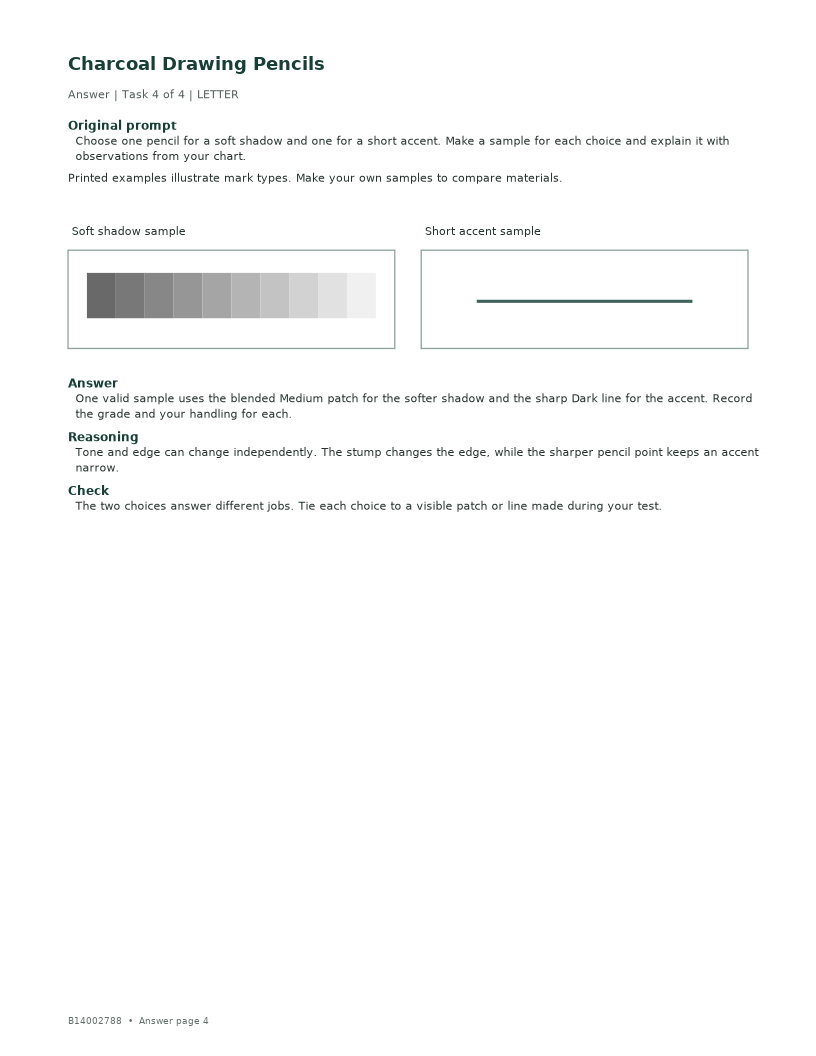
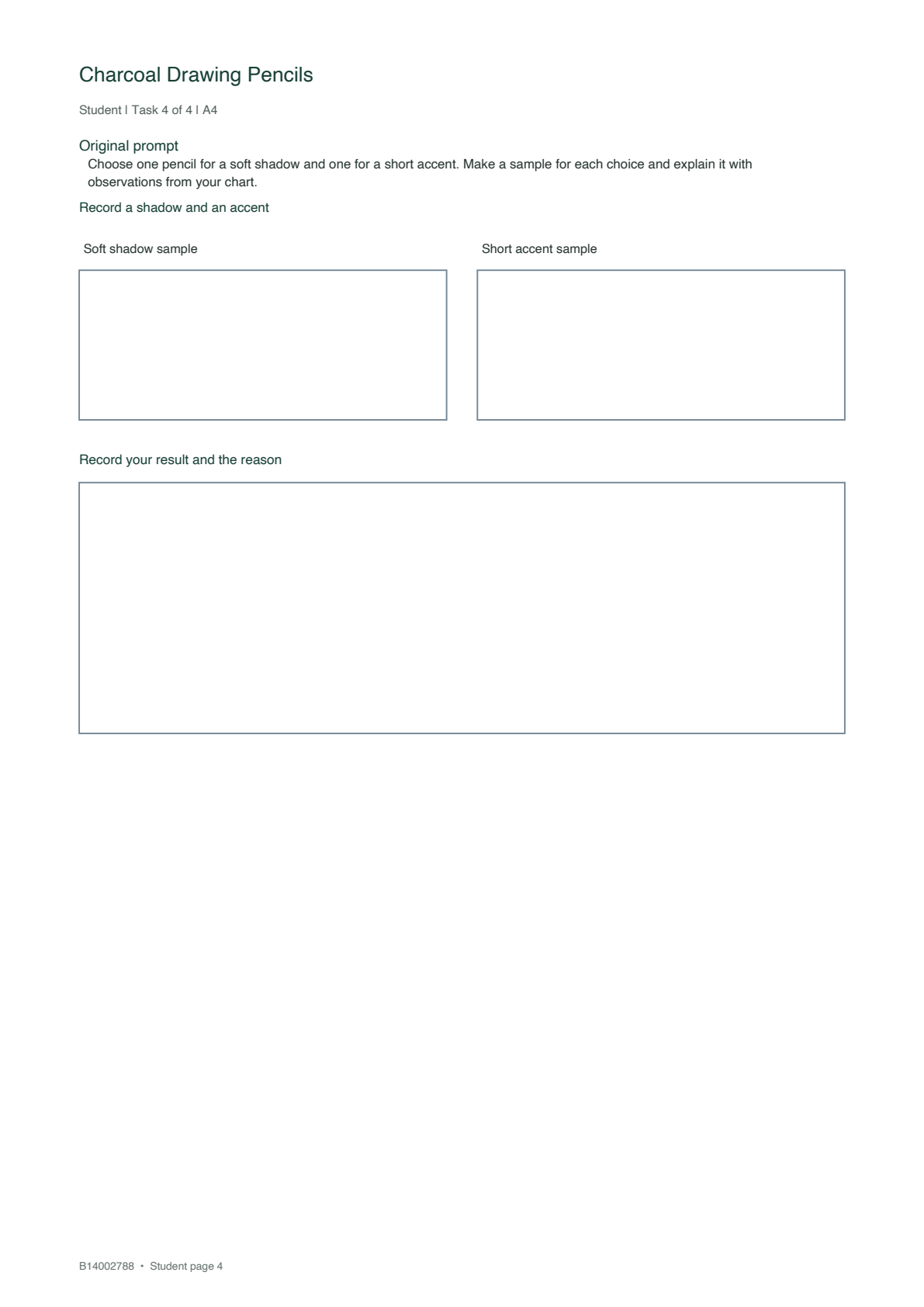
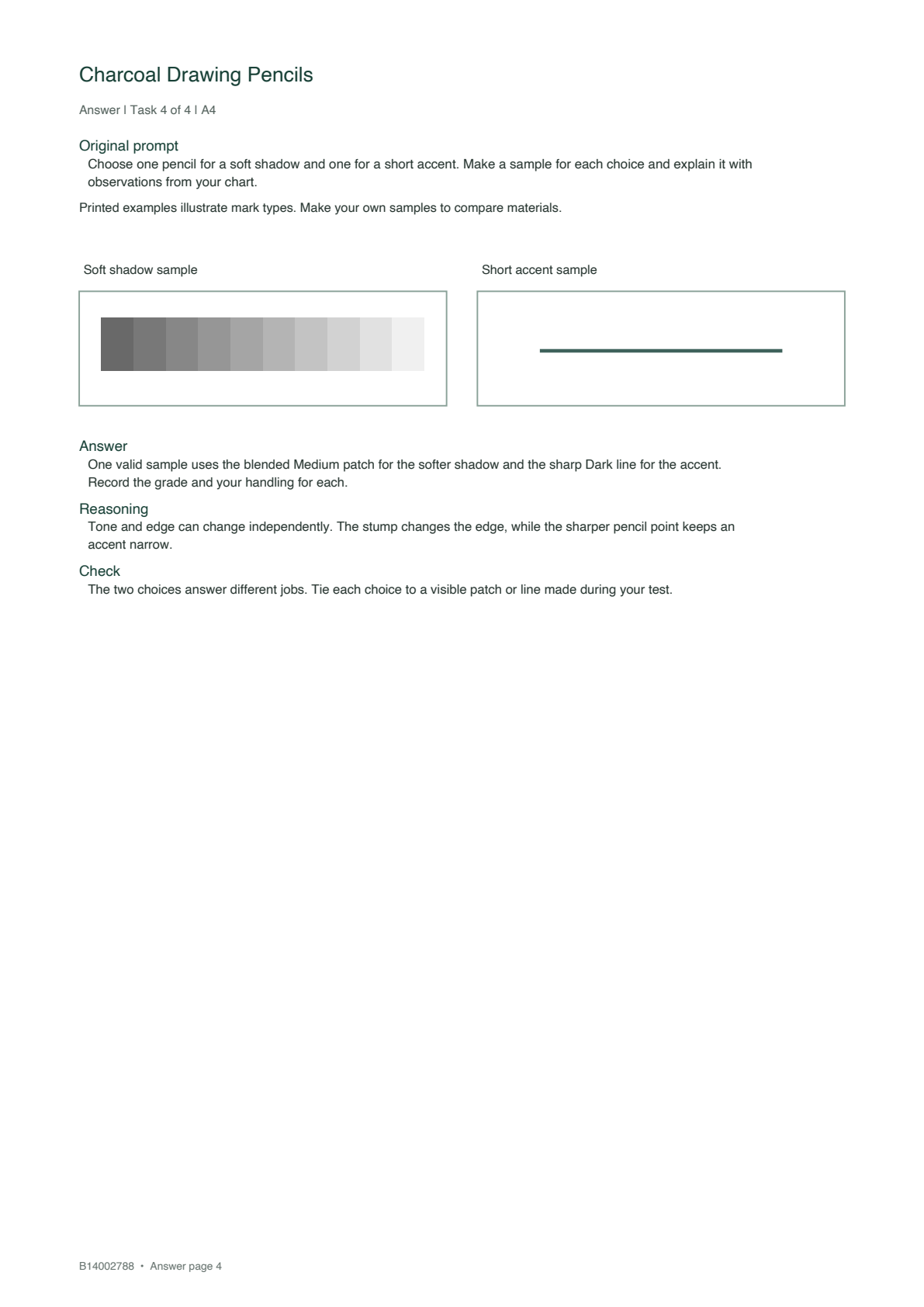
Choose one pencil for a soft shadow and one for a short accent. Make a sample for each choice and explain it with observations from your chart.
Show answer 4
One valid sample uses the blended Medium patch for the softer shadow and the sharp Dark line for the accent. Record the grade and your handling for each.
Tone and edge can change independently. The stump changes the edge, while the sharper pencil point keeps an accent narrow.
Check: The two choices answer different jobs. Tie each choice to a visible patch or line made during your test.
Useful checks
- Using the product labels to compare precise hardness across makers. Record the maker and test the tools next to one another on the same sheet.
- Blending both patches before comparing. Keep one patch as an unblended reference.
Questions about this resource
Does Dark mean a particular graphite grade?
The charcoal name labels a charcoal range. Use each pencil's own marks when choosing a shade.
Which paper should I start with?
Try a medium-surface drawing sheet that the paper maker lists for charcoal. Record that surface on your test.