Free original lessons
Draw Tens and Ones Worksheet
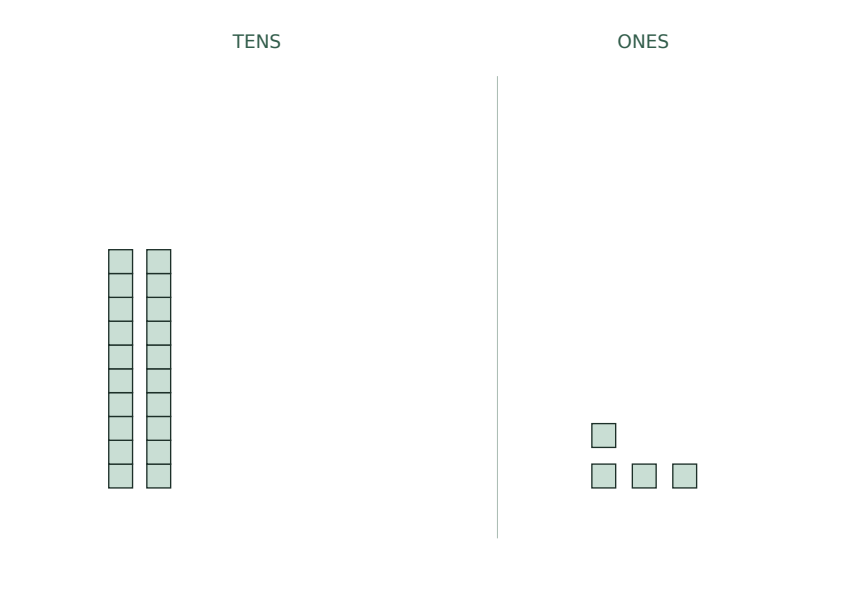
This free printable pack gives students structured practice drawing ten-rods and single unit squares to represent two-digit numbers. Each rod contains ten equal unit squares, so the drawings show place value directly: the tens column holds rods, and the ones column holds fewer than ten single squares. The pack is a static printable set, not a digital tool, and every file is free.
Letter & A4
PDF & SVG
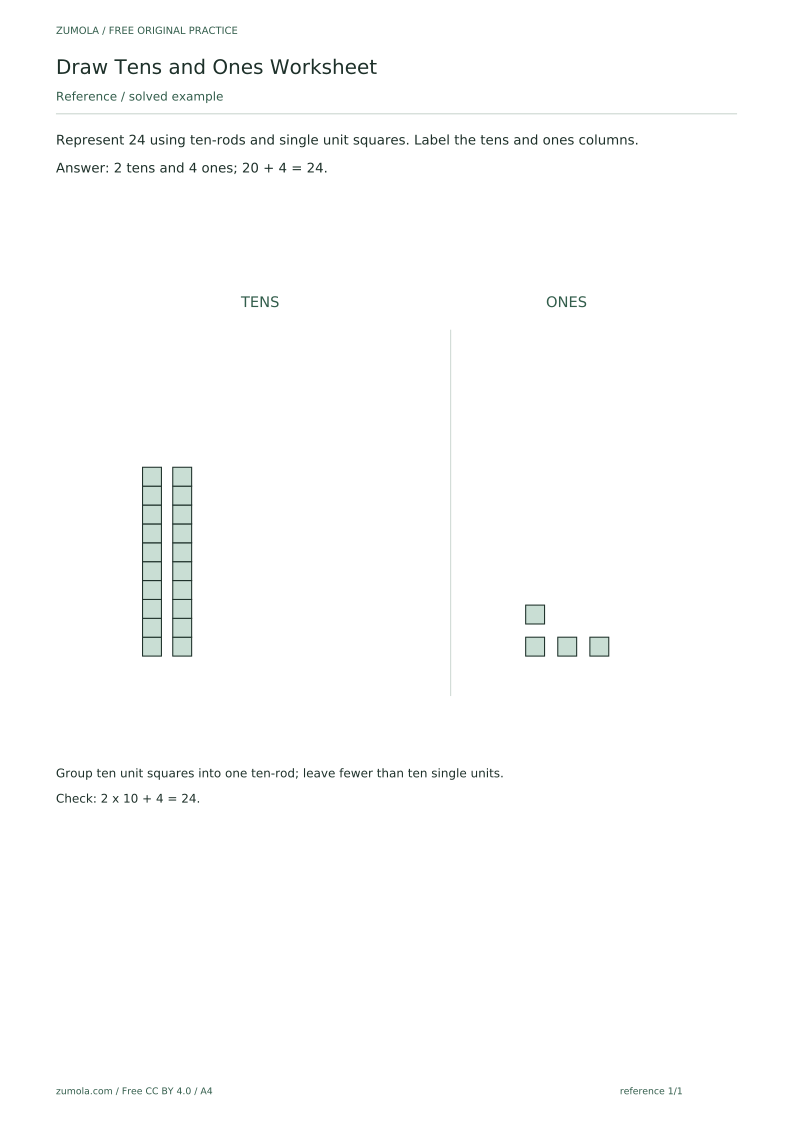
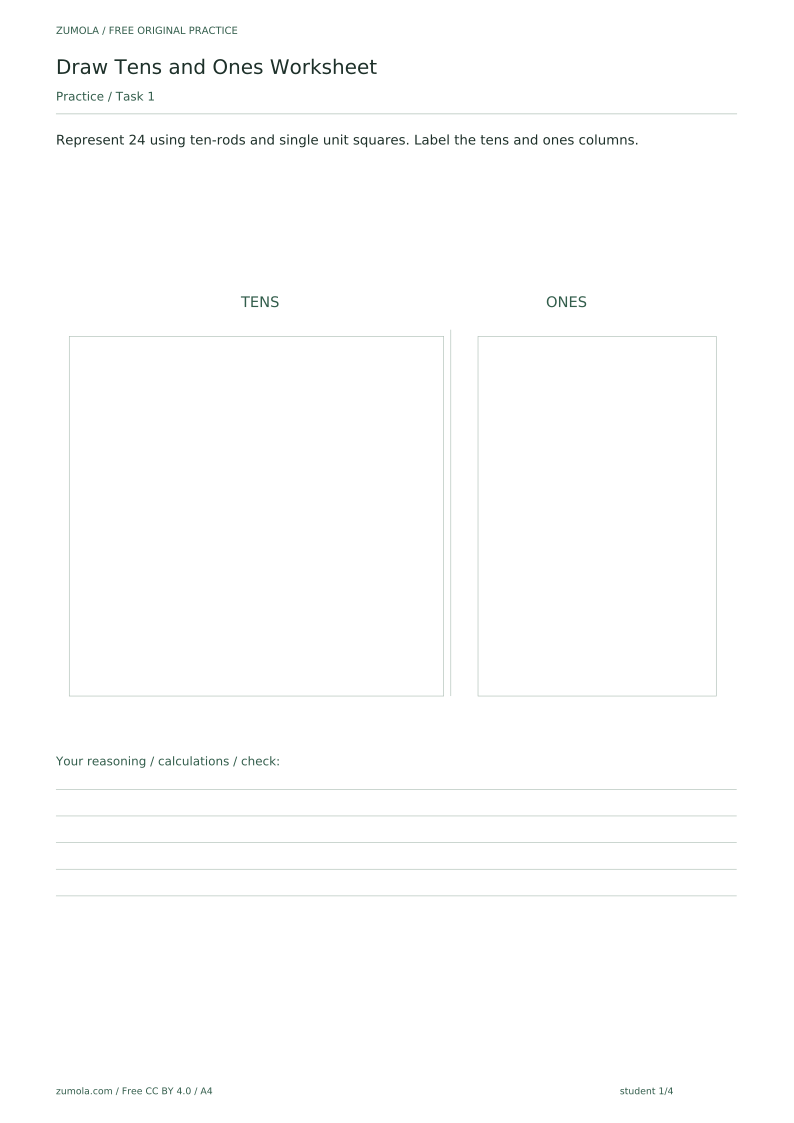
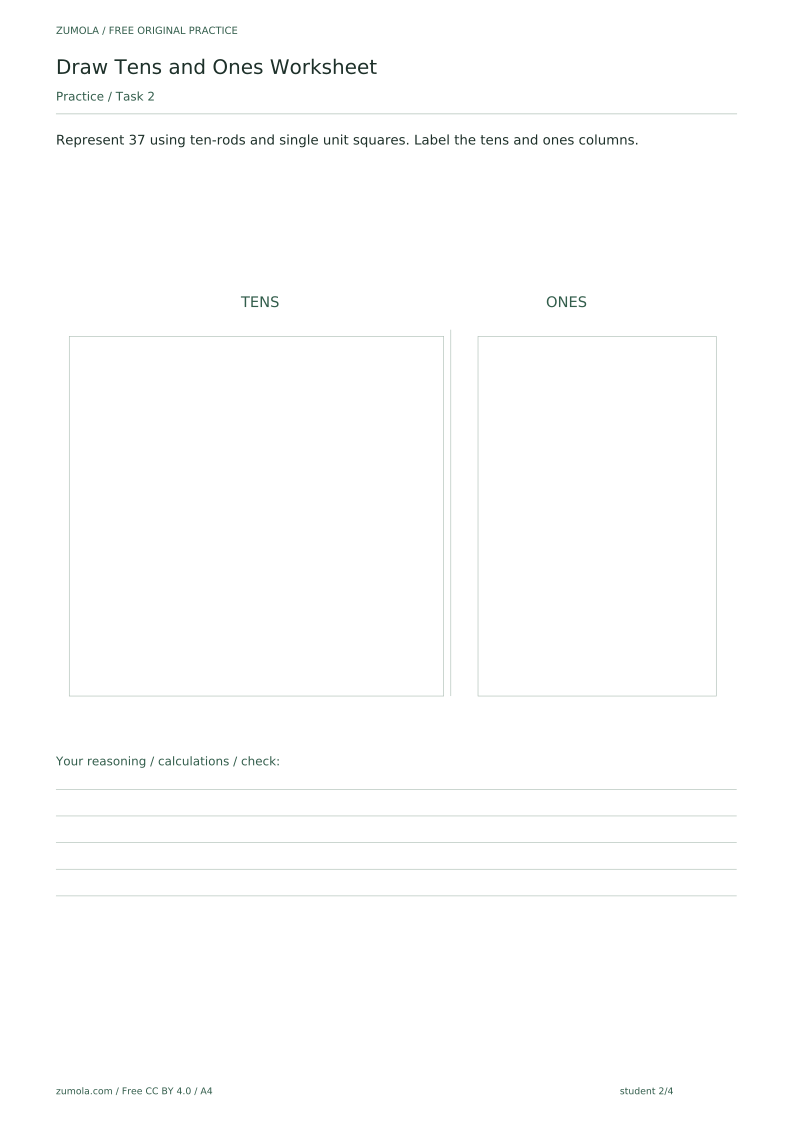
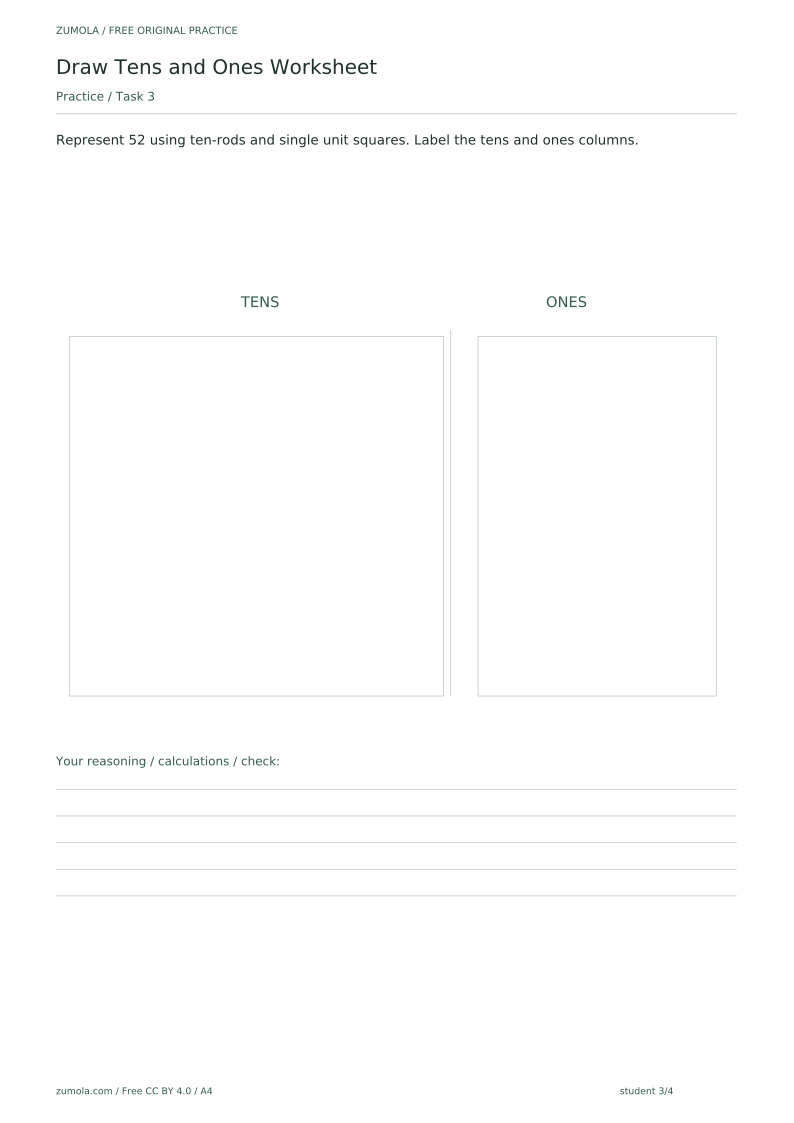
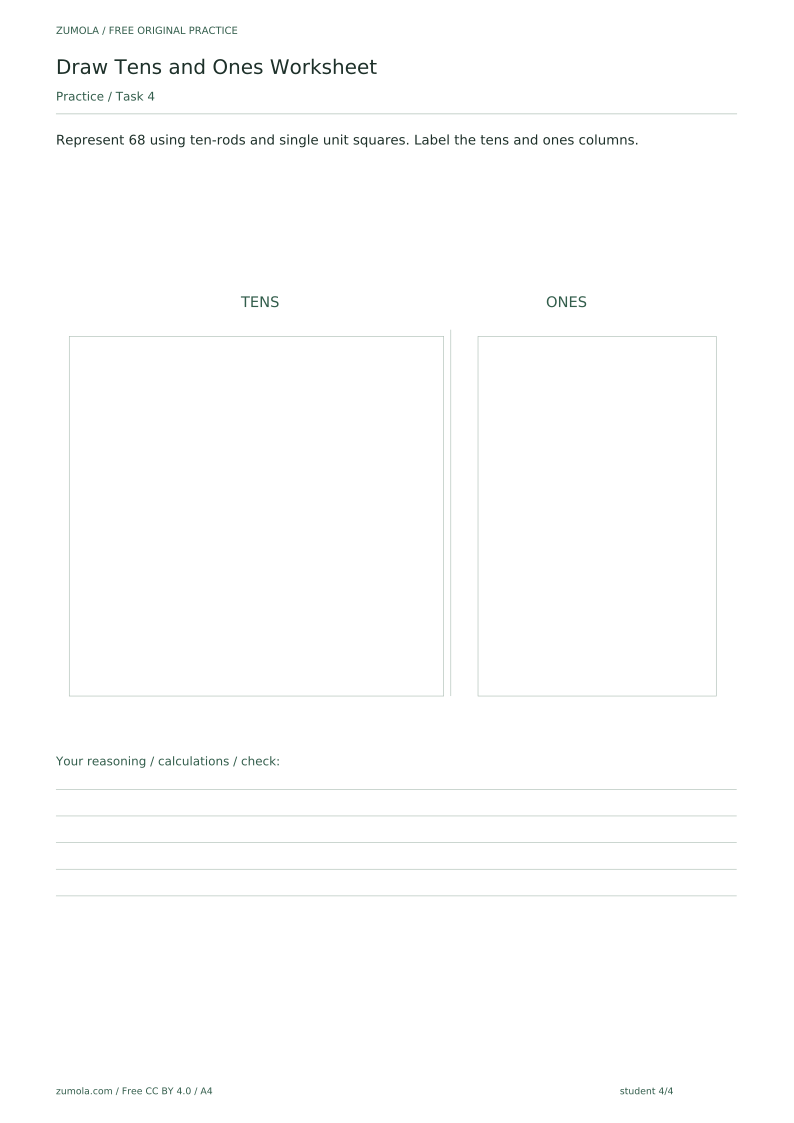
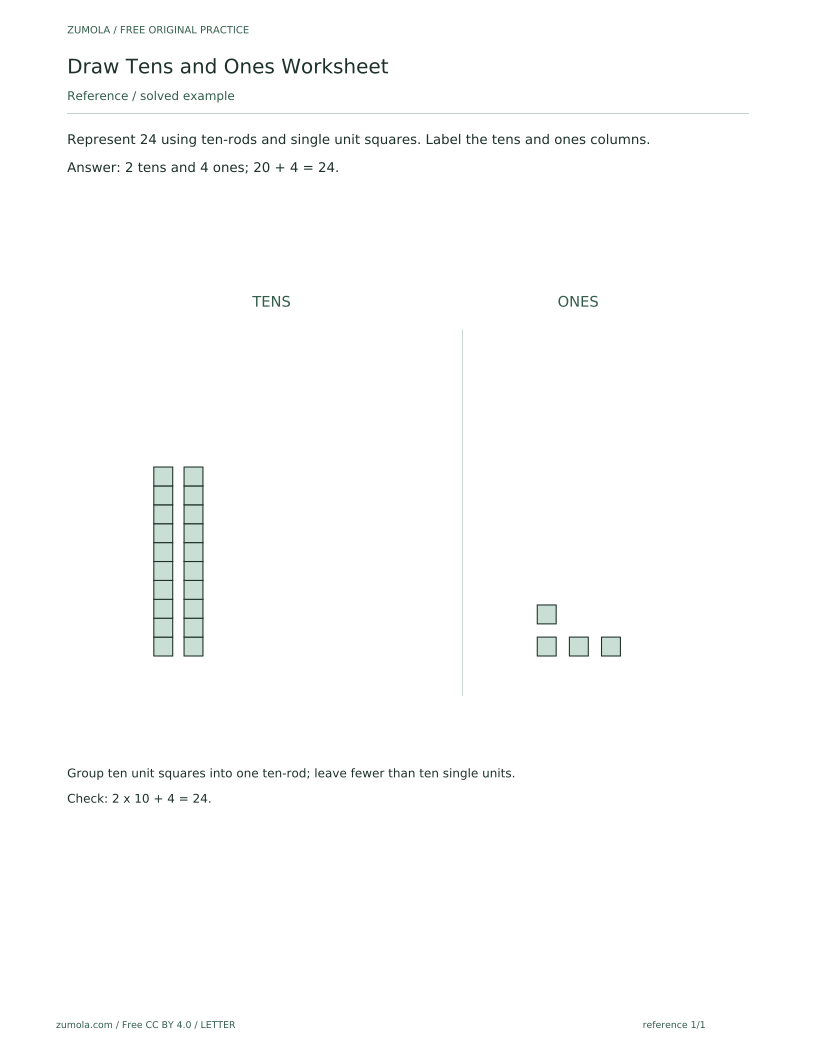
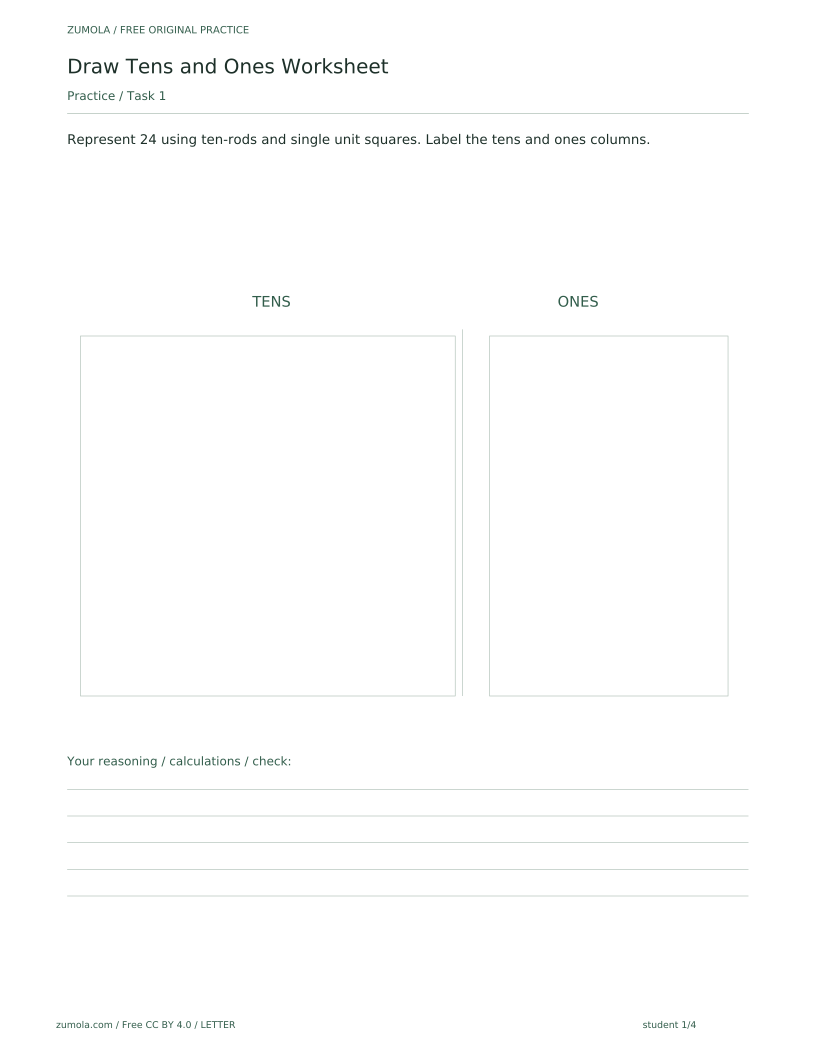
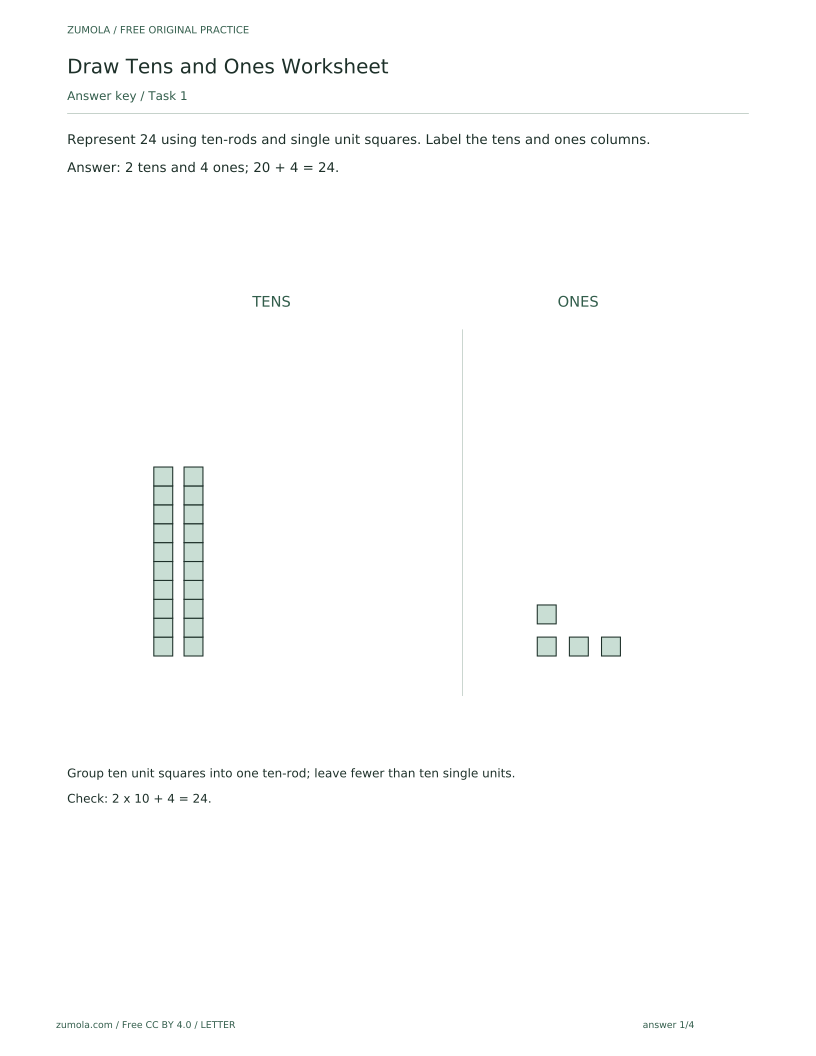
The pack separates three roles across two paper sizes. For each of A4 and US Letter there is a reference PDF, a student PDF and an answer PDF, plus per-page SVGs, giving six PDFs and eighteen PDF pages in total, with eighteen SVG pages. The reference version solves the first task as a guided example: it shows 24 drawn as 2 ten-rods and 4 single unit squares, with the tens and ones columns labelled and the check 2 x 10 + 4 = 24. The student version leaves a blank attempt area on purpose so learners do the drawing themselves rather than tracing a finished model. The answer PDF shows the completed drawings for checking. The remaining tasks ask students to represent 37, 52 and 68 the same way, labelling both columns and confirming each total with a tens-plus-ones check. These are place-value drawings; they do not claim a particular manipulative size.
Download the complete resource pack
All individual editable SVG pages (18)
- A4 reference page 1
- A4 student page 1
- A4 student page 2
- A4 student page 3
- A4 student page 4
- A4 answer page 1
- A4 answer page 2
- A4 answer page 3
- A4 answer page 4
- LETTER reference page 1
- LETTER student page 1
- LETTER student page 2
- LETTER student page 3
- LETTER student page 4
- LETTER answer page 1
- LETTER answer page 2
- LETTER answer page 3
- LETTER answer page 4
Print at 100% / actual size. Use the stated scale on any schematic diagram; physical cutting templates are identified separately. A4 and US Letter are separate files. Free access, no signup; CC BY 4.0.
How to use these pages
- Choose the A4 or US Letter set, then open the reference PDF and read the worked example for 24 with the student.
- Print the student PDF and point out the labelled tens and ones columns and the deliberate blank attempt area.
- For each number, have the student draw one rod per ten and single unit squares for the ones, keeping the ones count below ten.
- Ask the student to write the check, such as 3 x 10 + 7 = 37, beside each drawing.
- Use the answer PDF to compare drawings and totals, and the SVG pages if a single page needs to be displayed or reprinted.
Four practice tasks and complete answers
Task 1
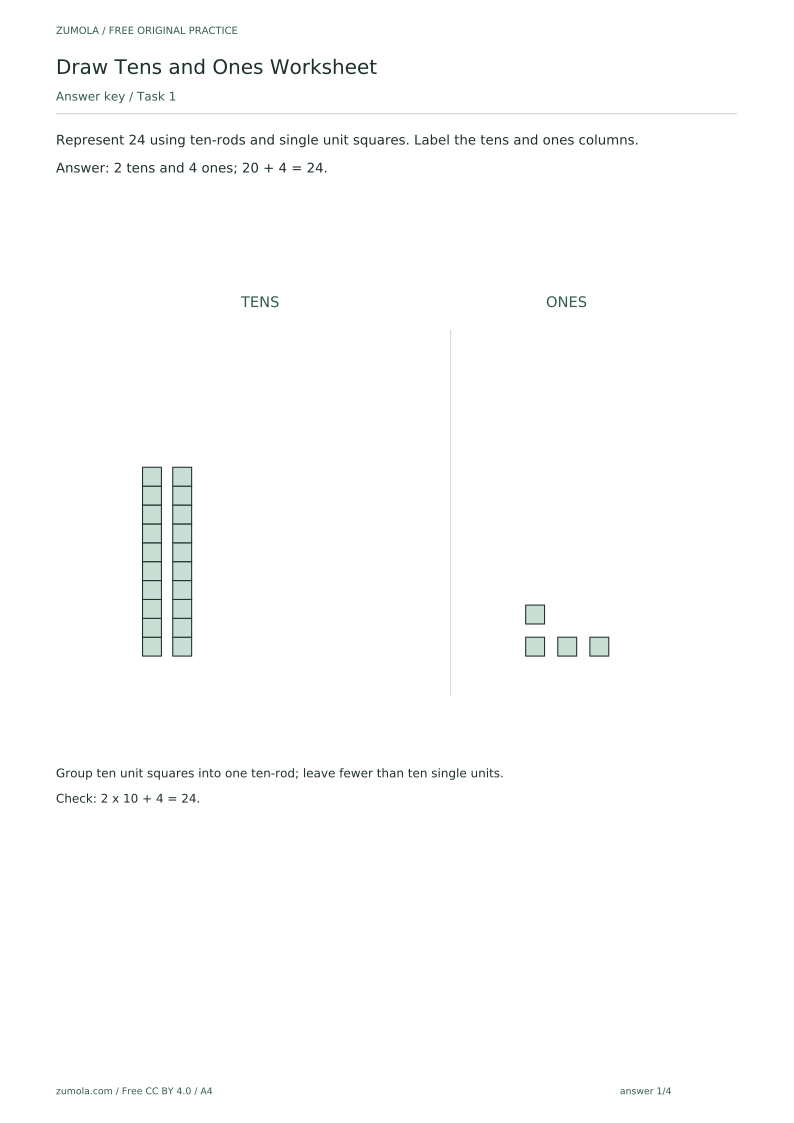
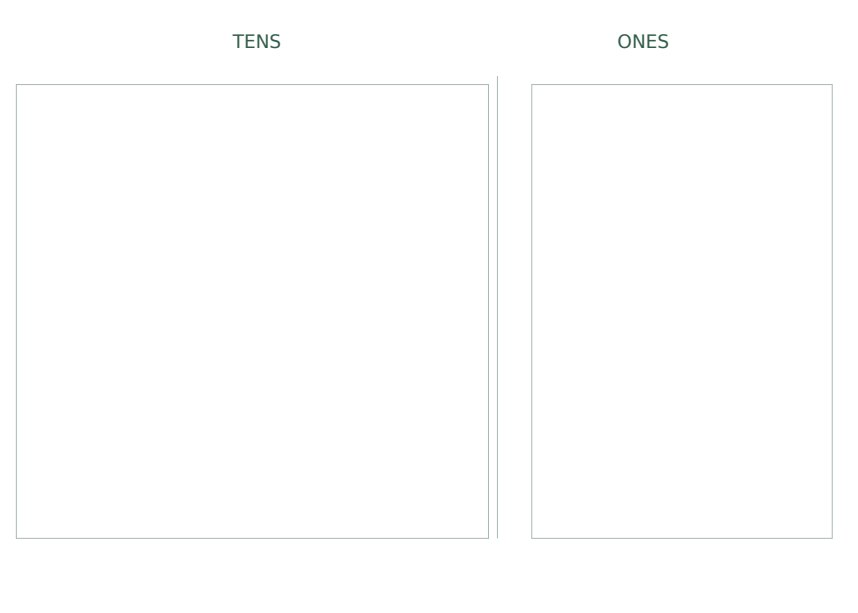
Represent 24 using ten-rods and single unit squares. Label the tens and ones columns.
Show answer 1
2 tens and 4 ones; 20 + 4 = 24.
Group ten unit squares into one ten-rod; leave fewer than ten single units.
Check: 2 x 10 + 4 = 24.
Task 2
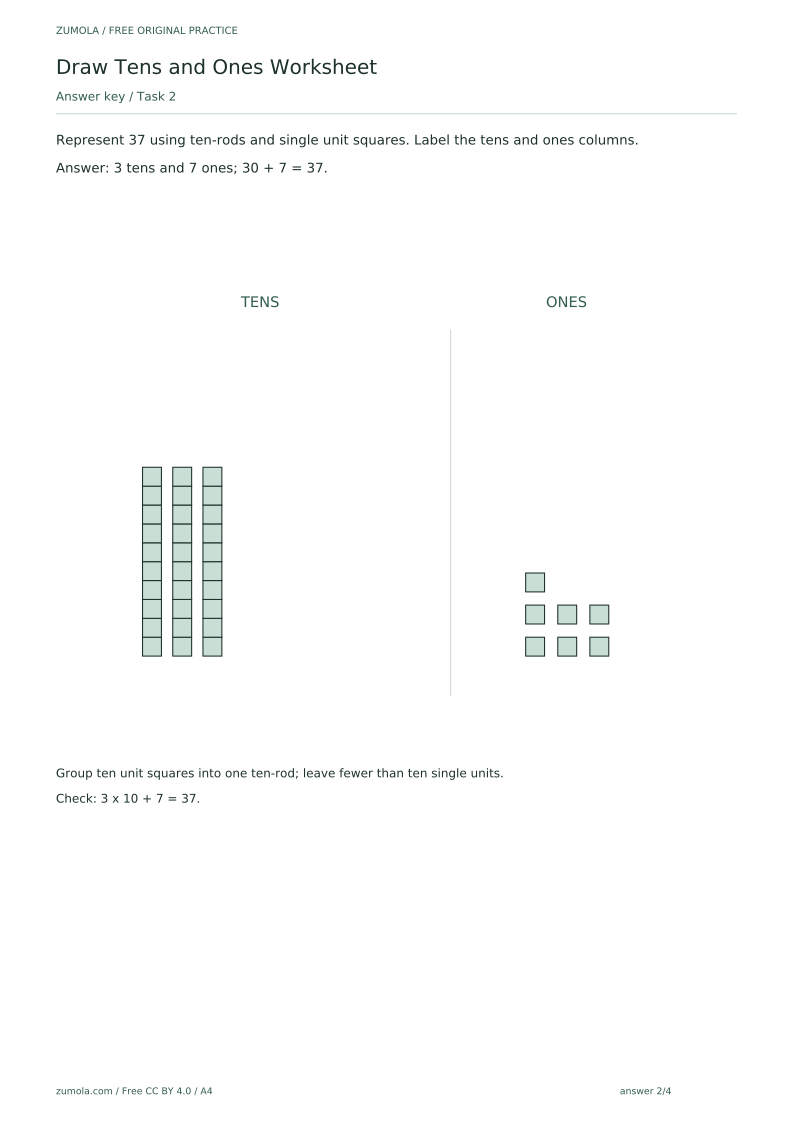
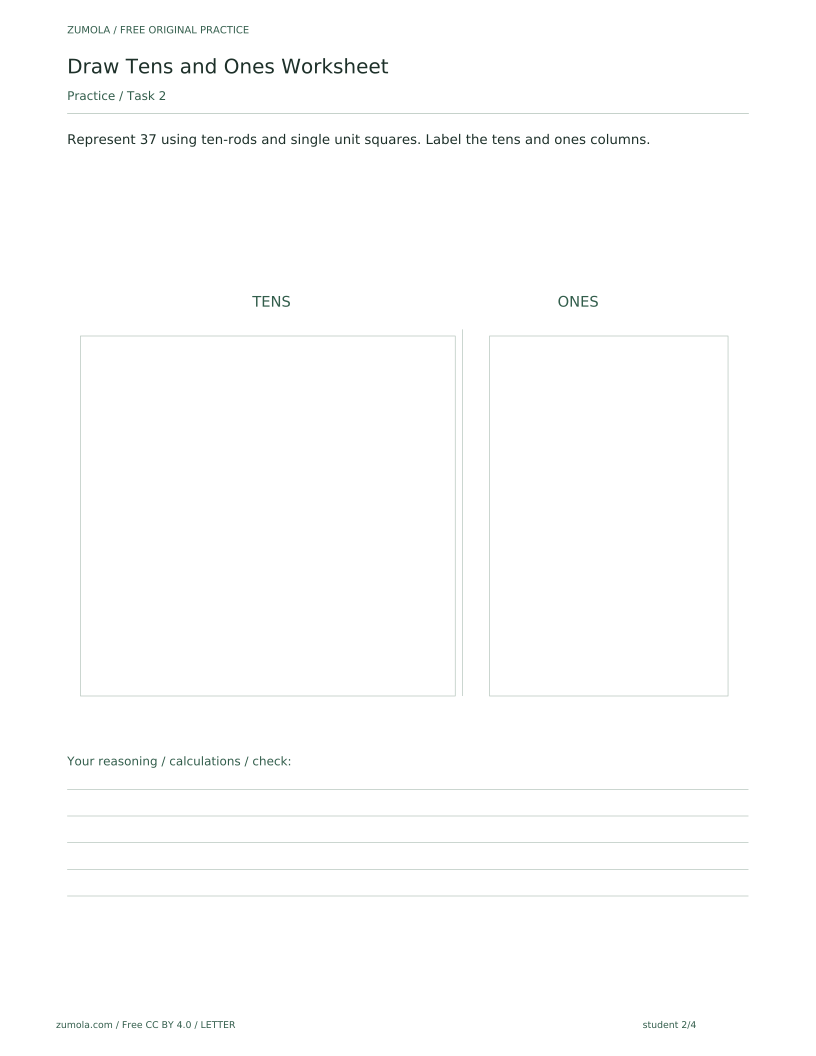
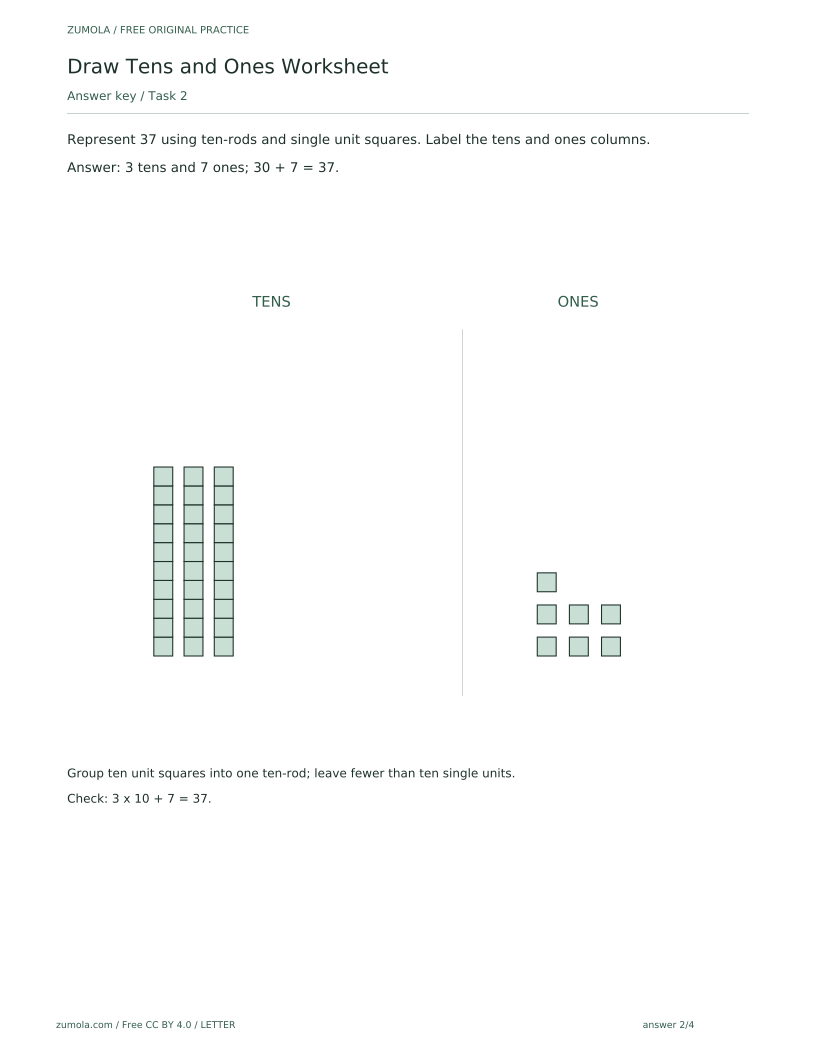
Represent 37 using ten-rods and single unit squares. Label the tens and ones columns.
Show answer 2
3 tens and 7 ones; 30 + 7 = 37.
Group ten unit squares into one ten-rod; leave fewer than ten single units.
Check: 3 x 10 + 7 = 37.
Task 3
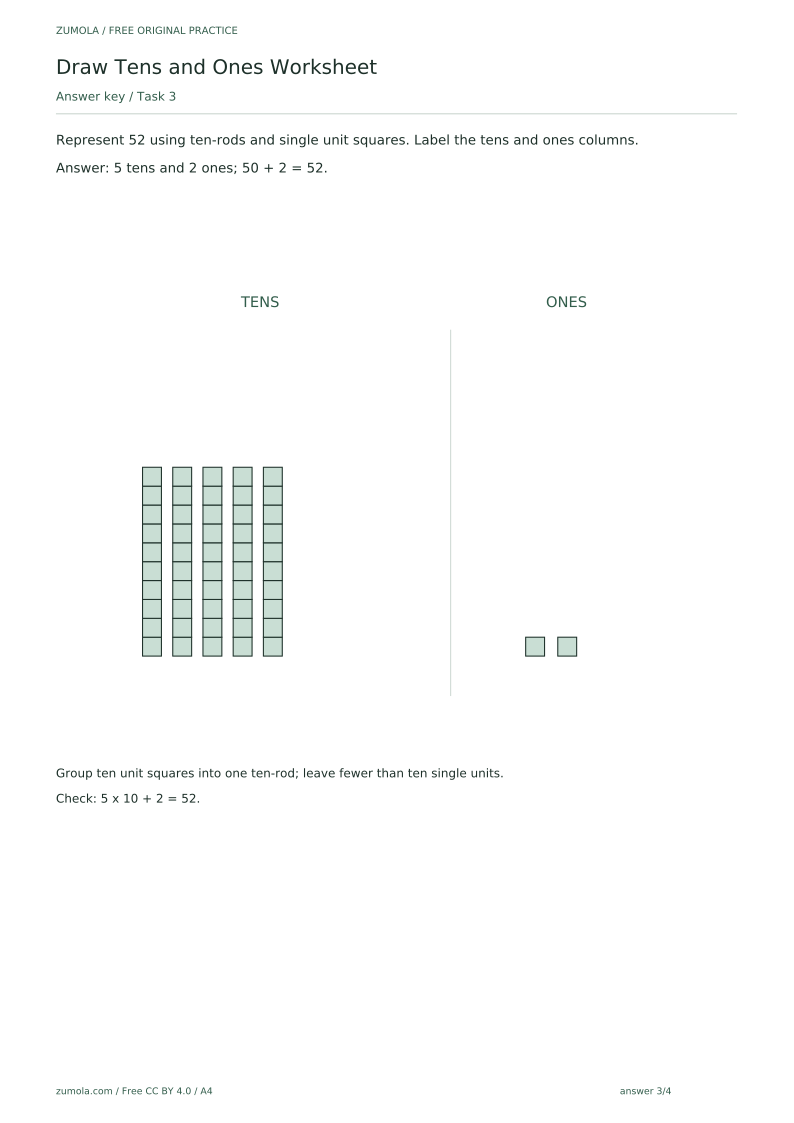
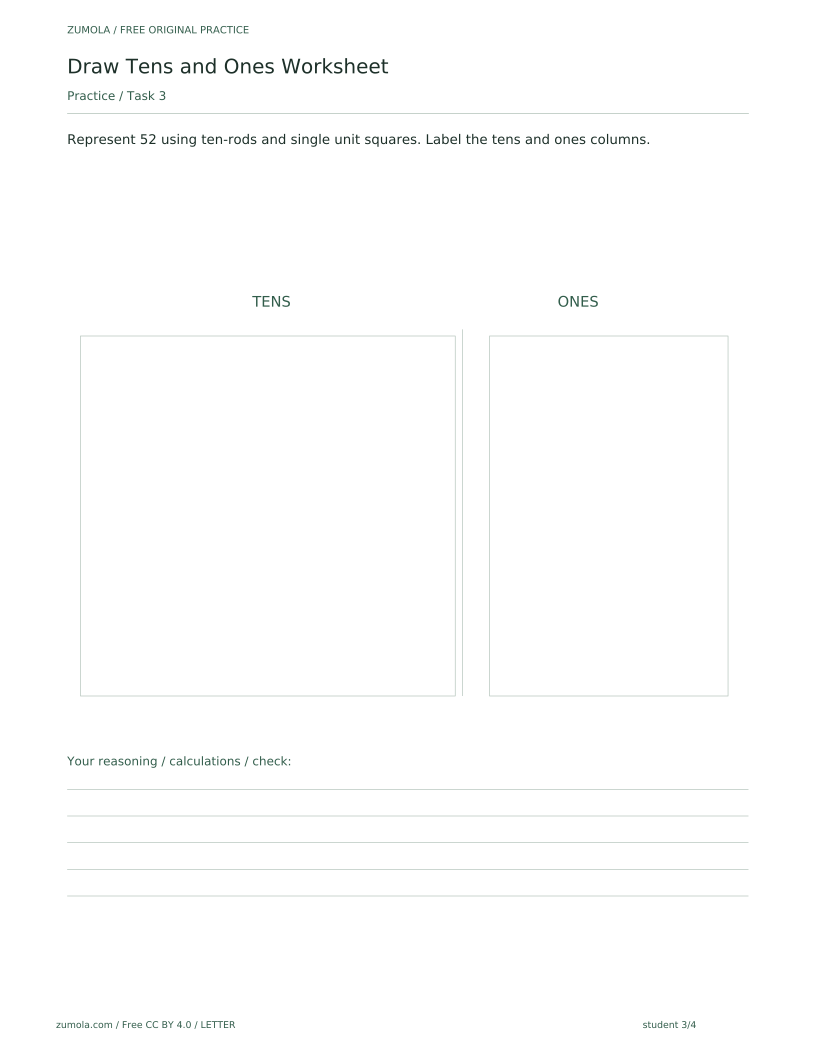
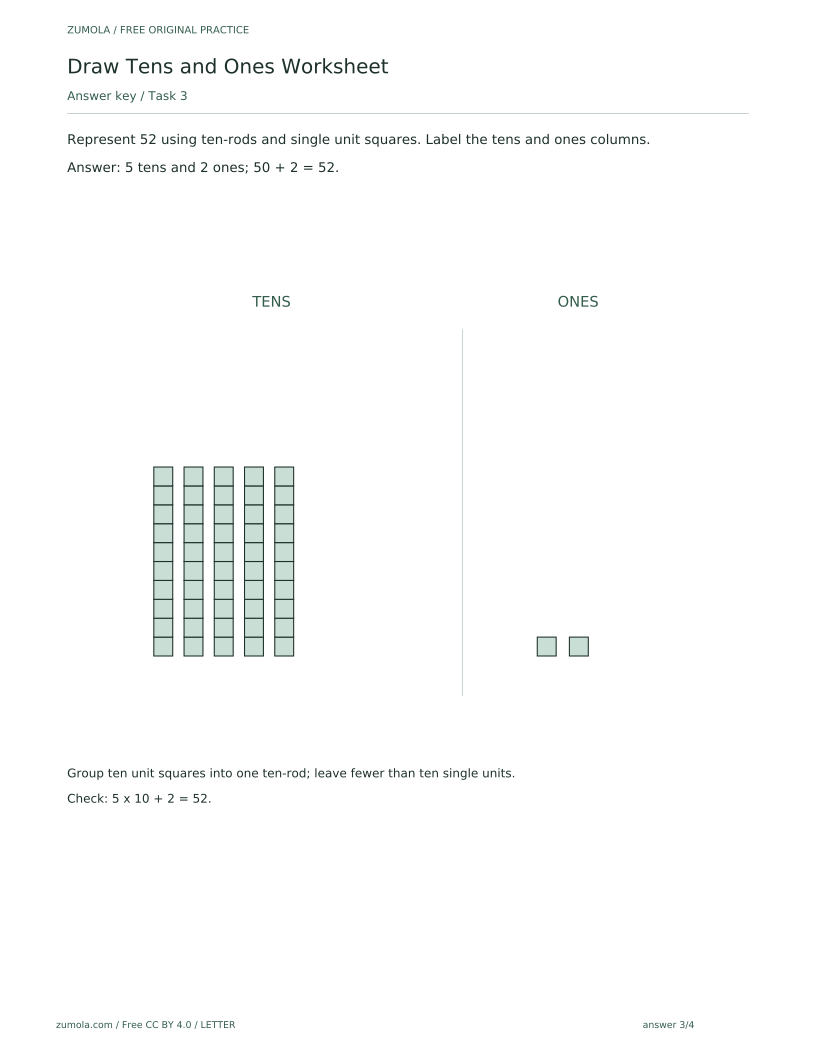
Represent 52 using ten-rods and single unit squares. Label the tens and ones columns.
Show answer 3
5 tens and 2 ones; 50 + 2 = 52.
Group ten unit squares into one ten-rod; leave fewer than ten single units.
Check: 5 x 10 + 2 = 52.
Task 4
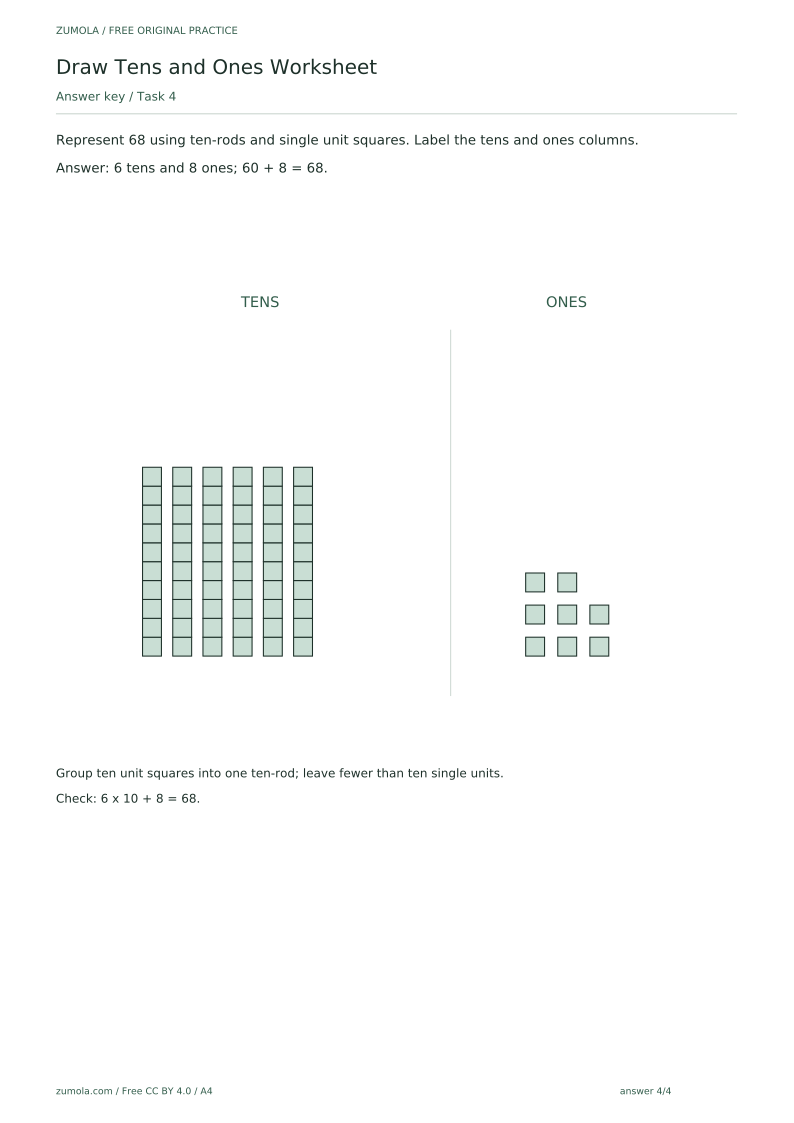
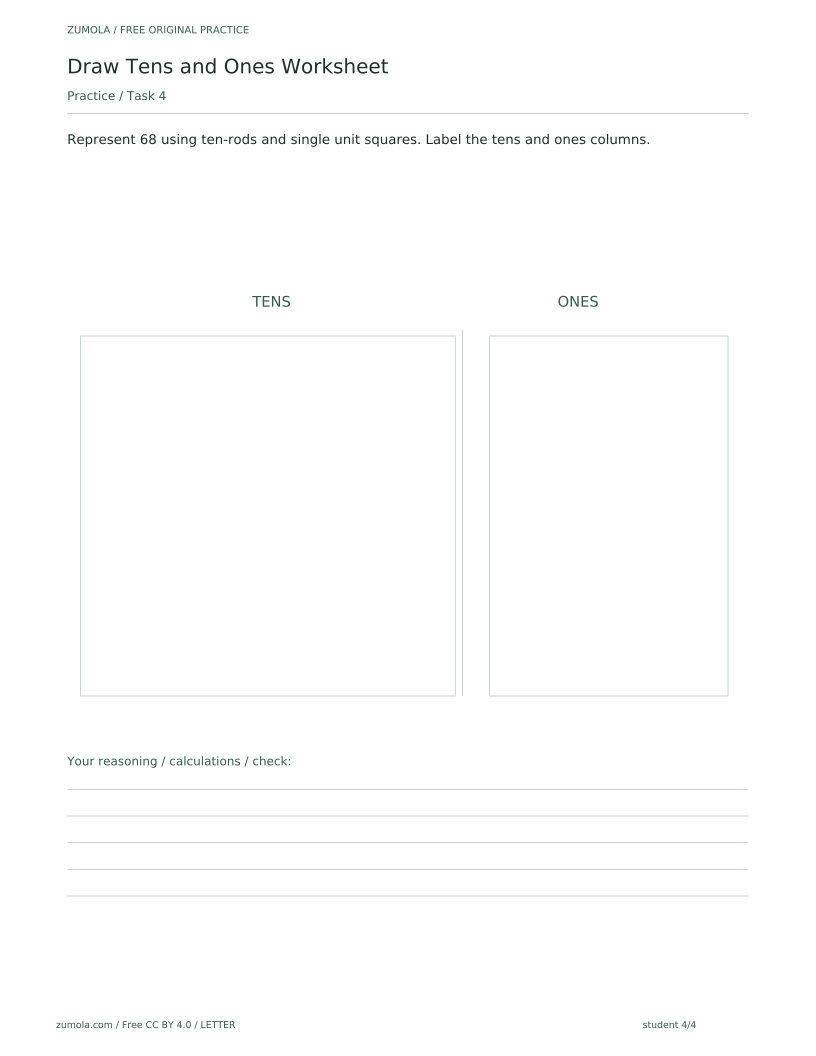
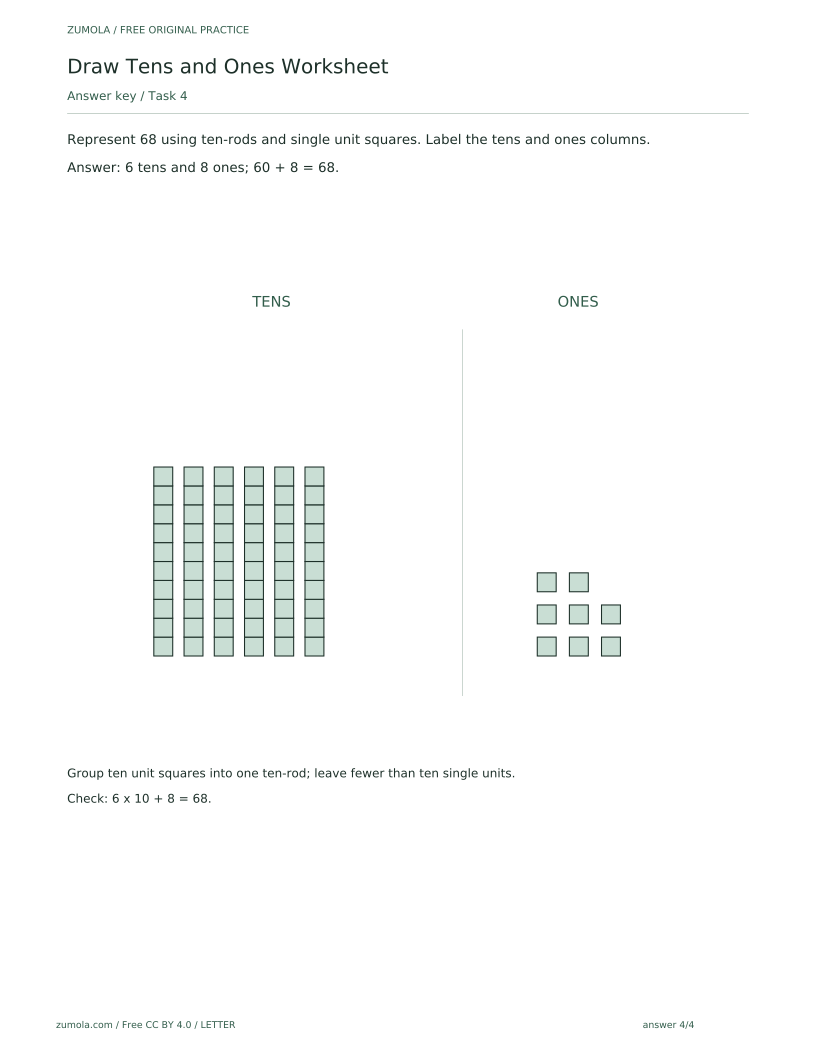
Represent 68 using ten-rods and single unit squares. Label the tens and ones columns.
Show answer 4
6 tens and 8 ones; 60 + 8 = 68.
Group ten unit squares into one ten-rod; leave fewer than ten single units.
Check: 6 x 10 + 8 = 68.
Useful checks
- Drawing ten separate unit squares in the tens column instead of grouping them into one rod.
- Putting ten or more single squares in the ones column instead of regrouping them into a rod.
- Skipping the written check, which is what confirms the drawing matches the given number.
Questions about this resource
Is the blank space in the student PDF a mistake?
No. The blank attempt area is deliberate so students draw the rods and unit squares themselves; the reference PDF shows the guided example instead.
Do the drawings match a specific physical manipulative?
No. A rod contains ten equal unit squares, and the sheets are place-value drawings rather than a claim about any particular manipulative size.