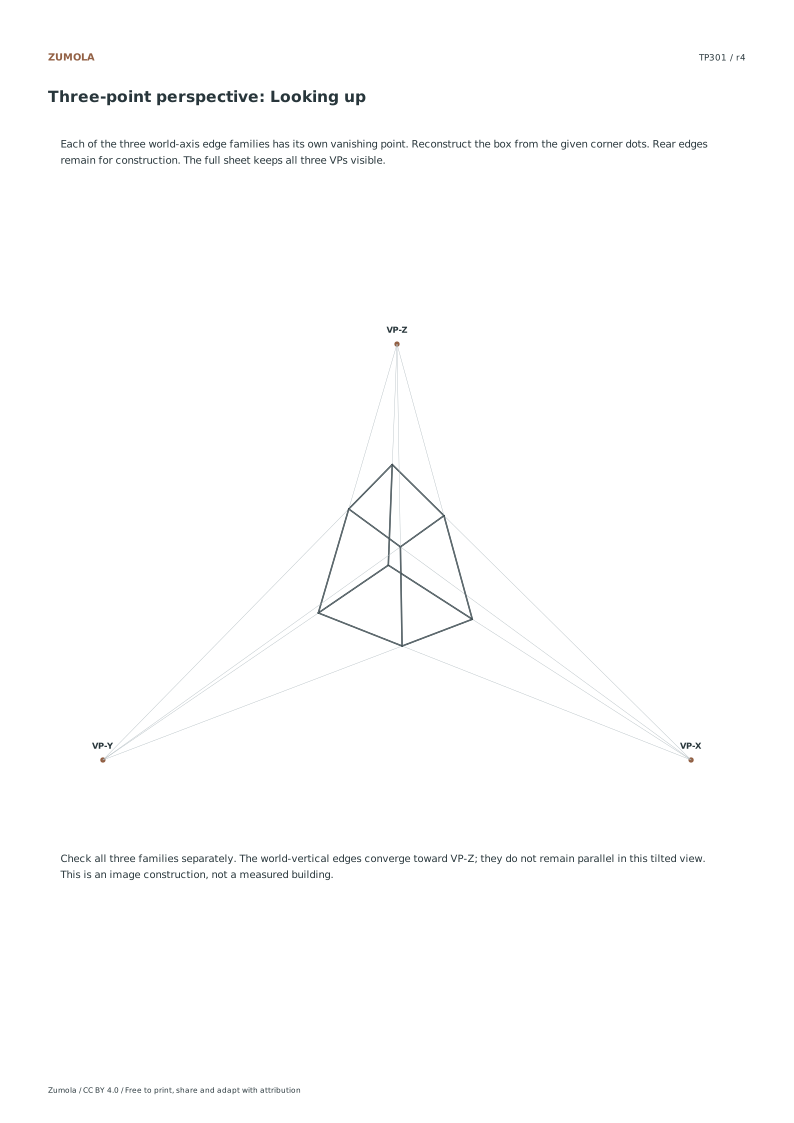
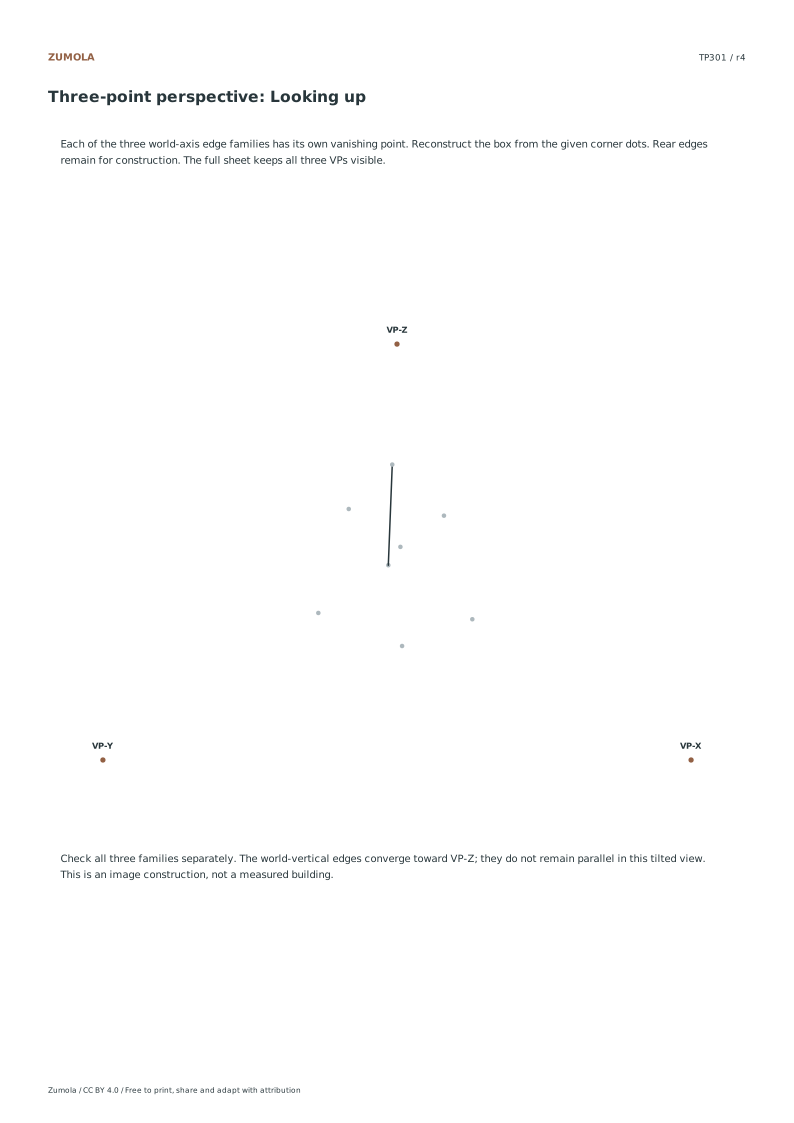
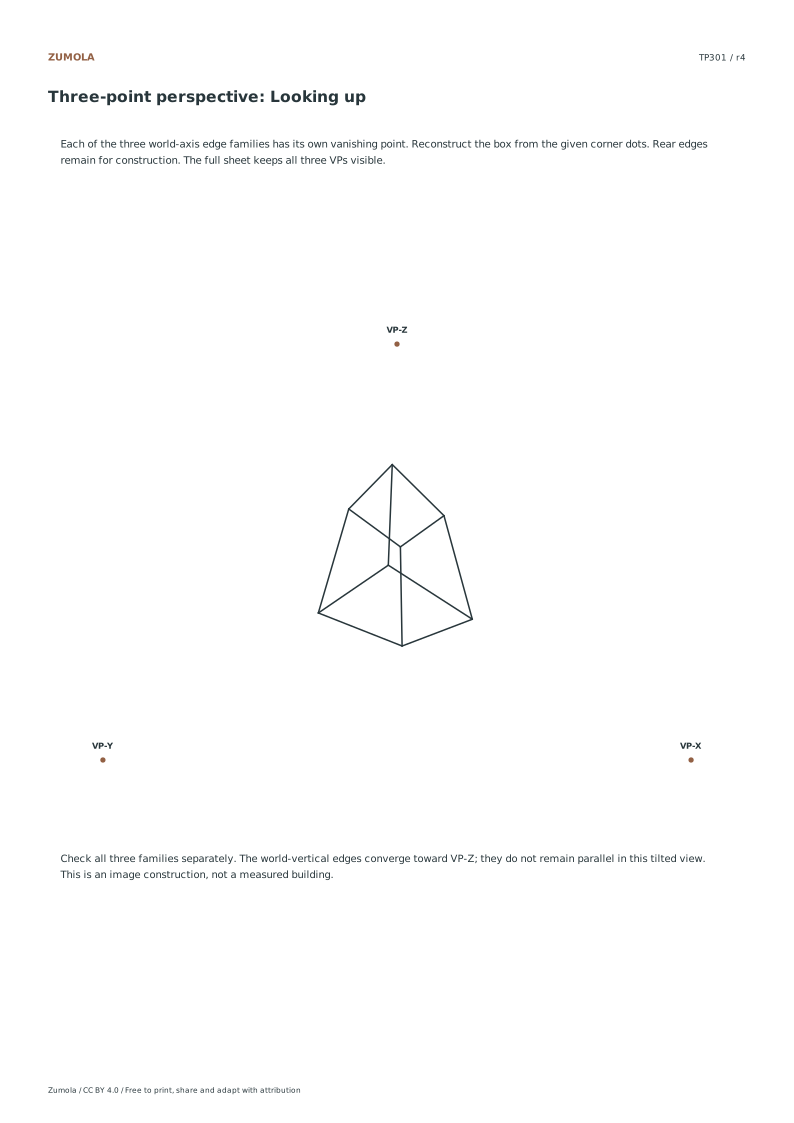
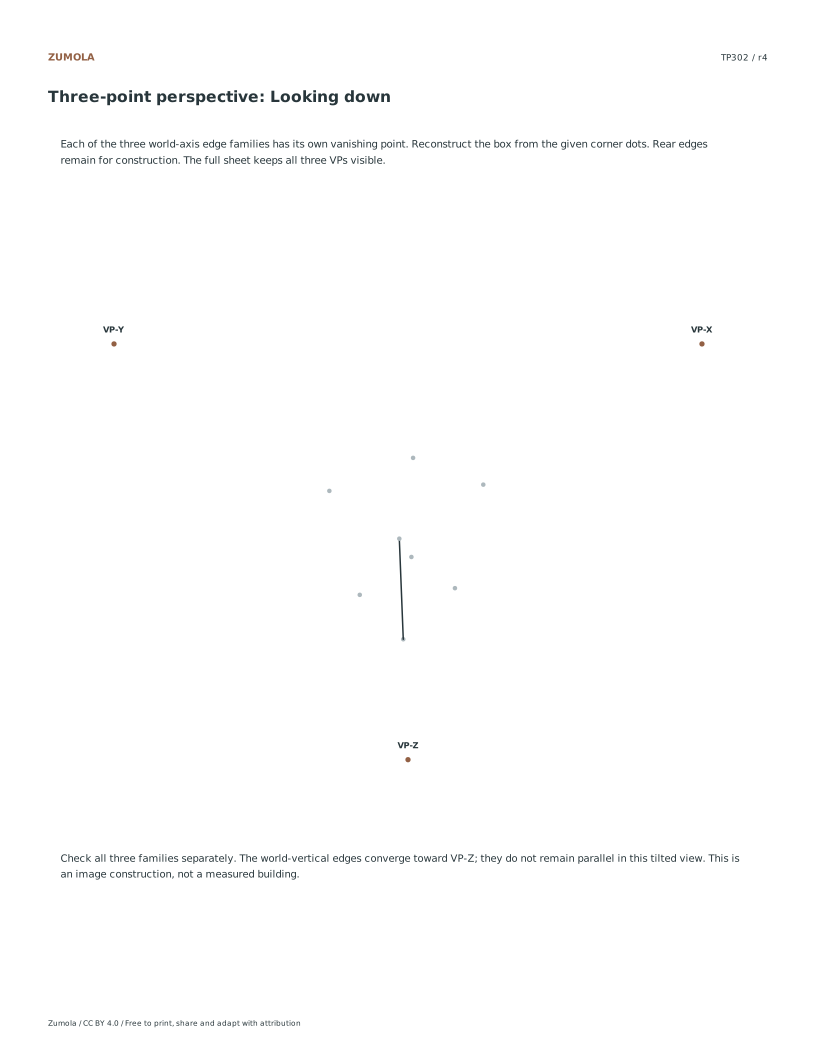
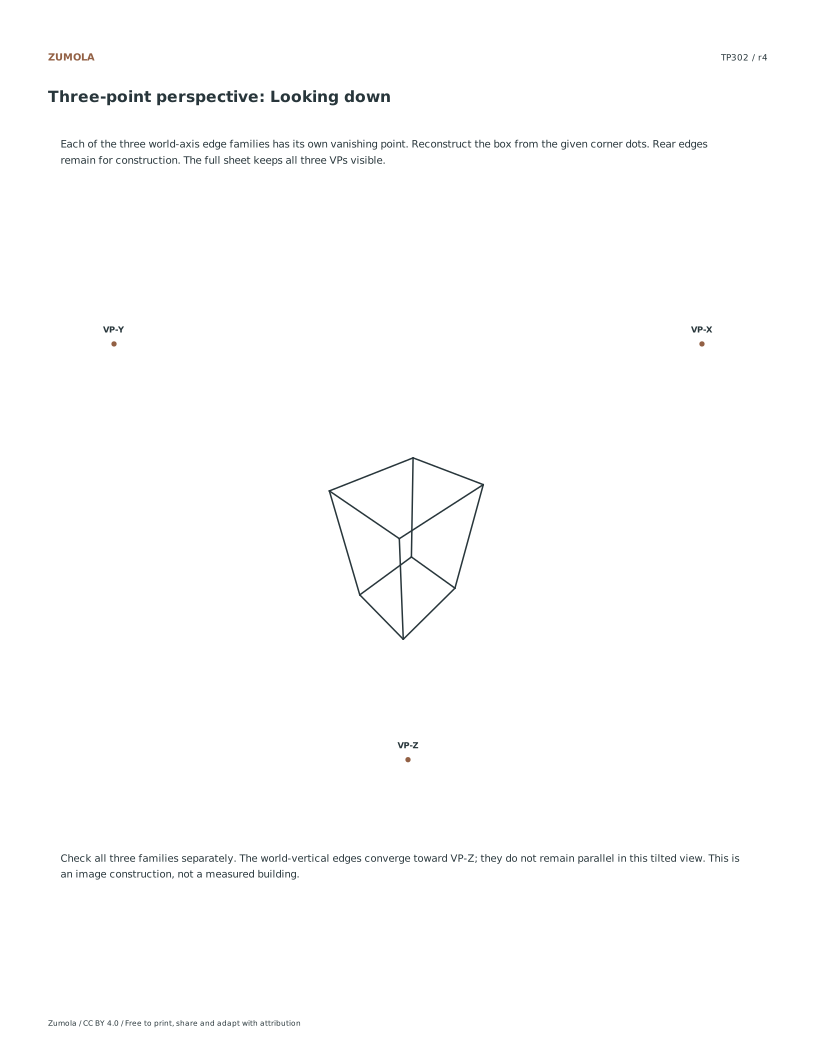
Tilt the view and follow three converging edge families. Reconstruct two original box studies from fixed corners and vanishing points.
Choose US Letter or A4, then use the PDF for printing or SVG for editing. Student worksheets and answer or reference files stay separate. Every linked file is free without signup.
Choose your paper and download
Download paper size
Every worksheet and answer is free. No signup.
The complete collection
Keep practice and answers separate.
Use the student pack first, then compare the reference or answer. Packs are PDFs; individual sheets below also include editable SVG files. The paper choice applies to every download.
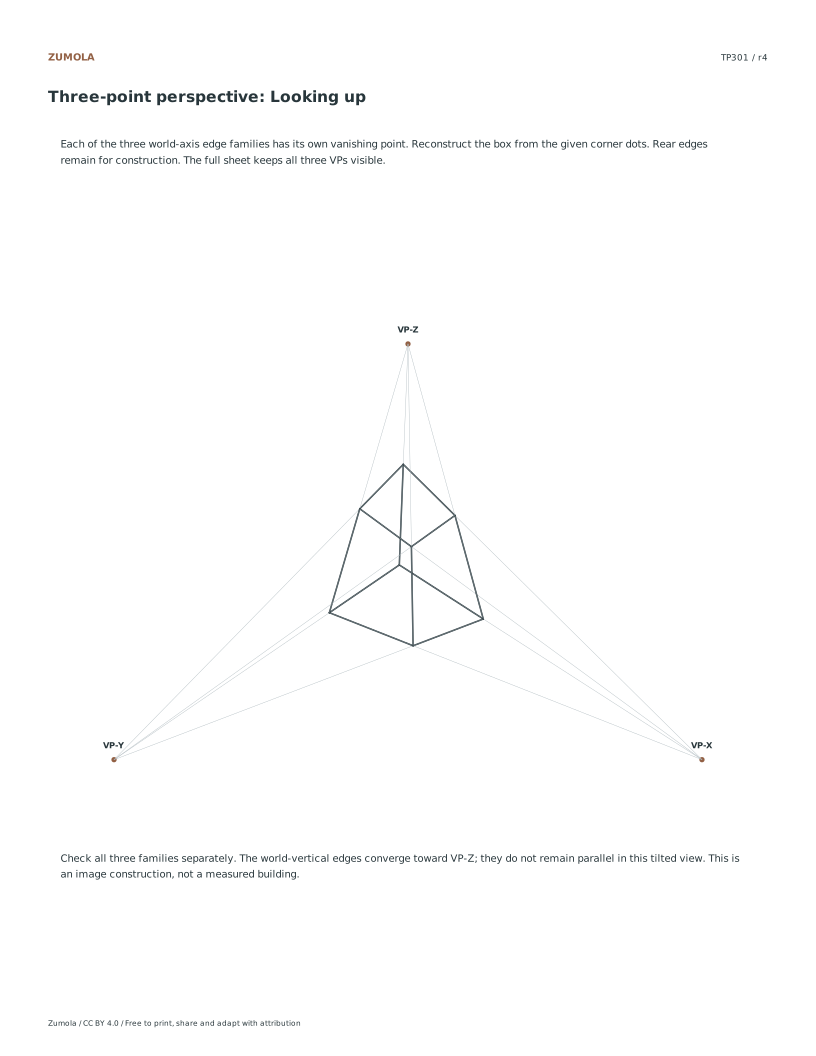
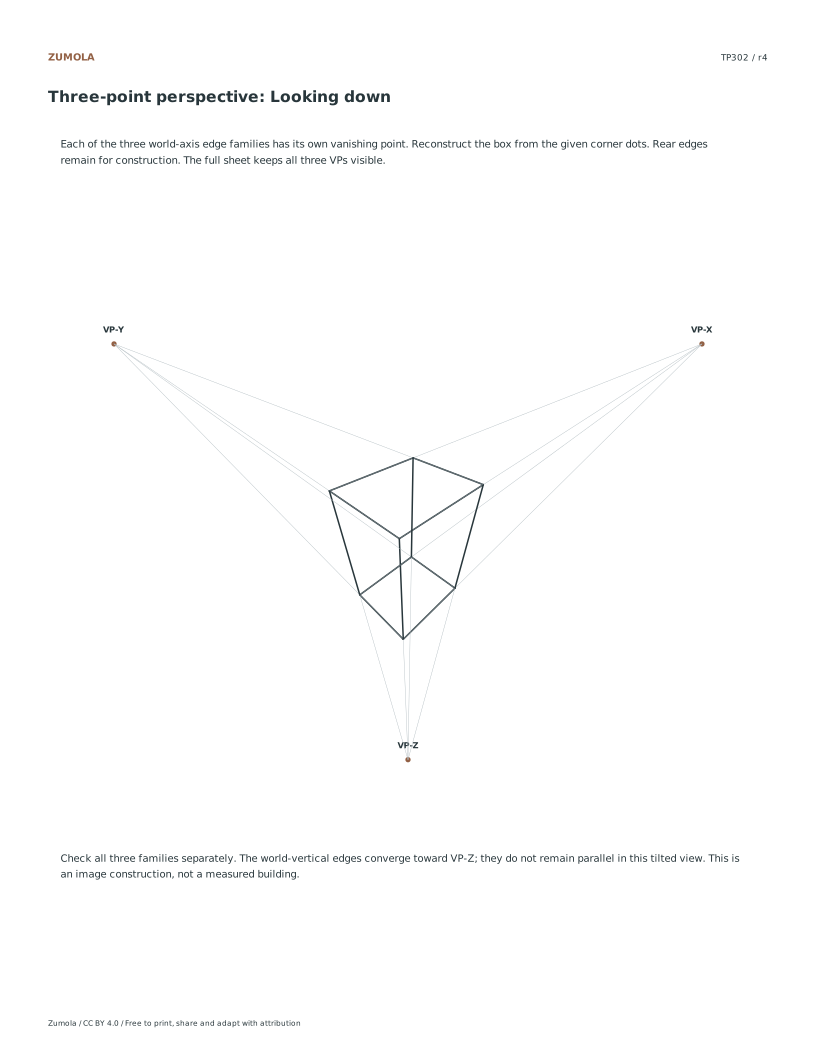
Both examples use a 45° corner-facing yaw, a camera distance of 3 model units, focal scale 55 mm and a block 1.3 × 1.1 × 2 model units. Model units describe the synthetic construction; they are not measurements of a real building. The drawing center is on the page centerline at y = 146 mm. Each model axis has a vanishing point computed from that same camera basis.
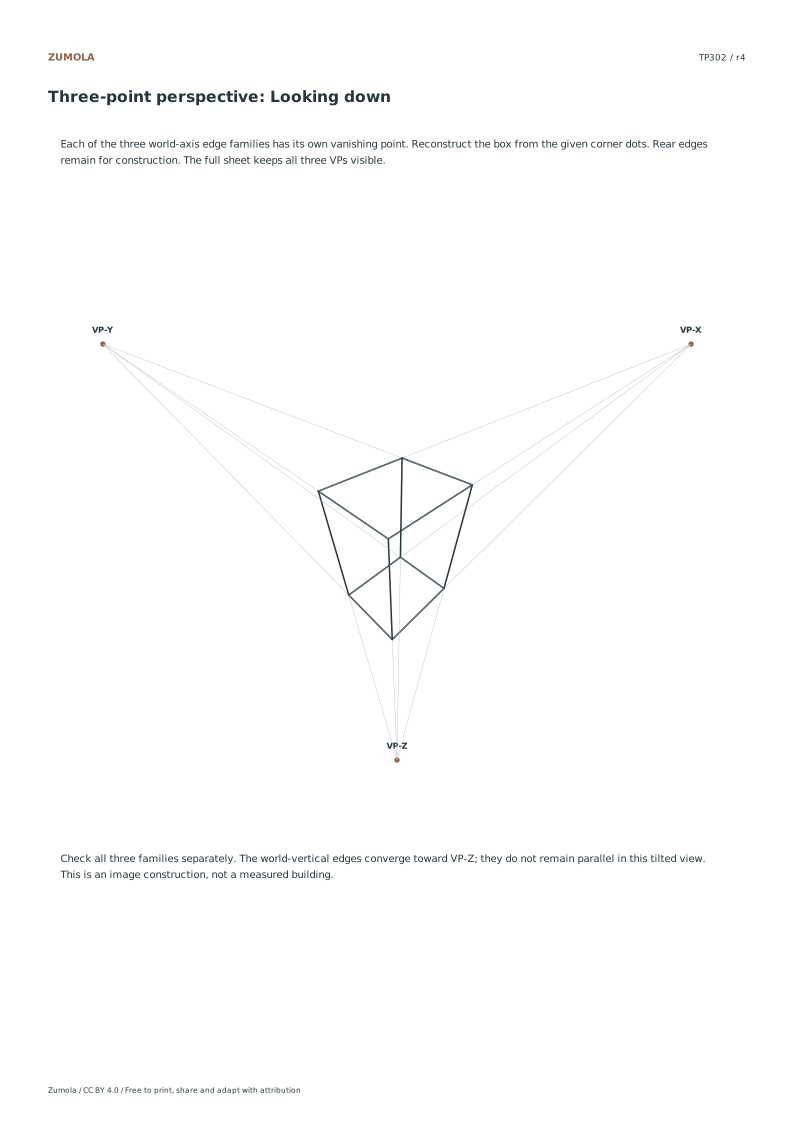
The horizontal-family VPs share the horizon of the level ground plane. Tilting the camera moves that horizon relative to the image center. The separate VP-Z then governs the world-vertical edges. Extending any one family should therefore reach its own fixed point, rather than the midpoint between the other two points.
Work through the page
Locate the Vertical Vanishing Point
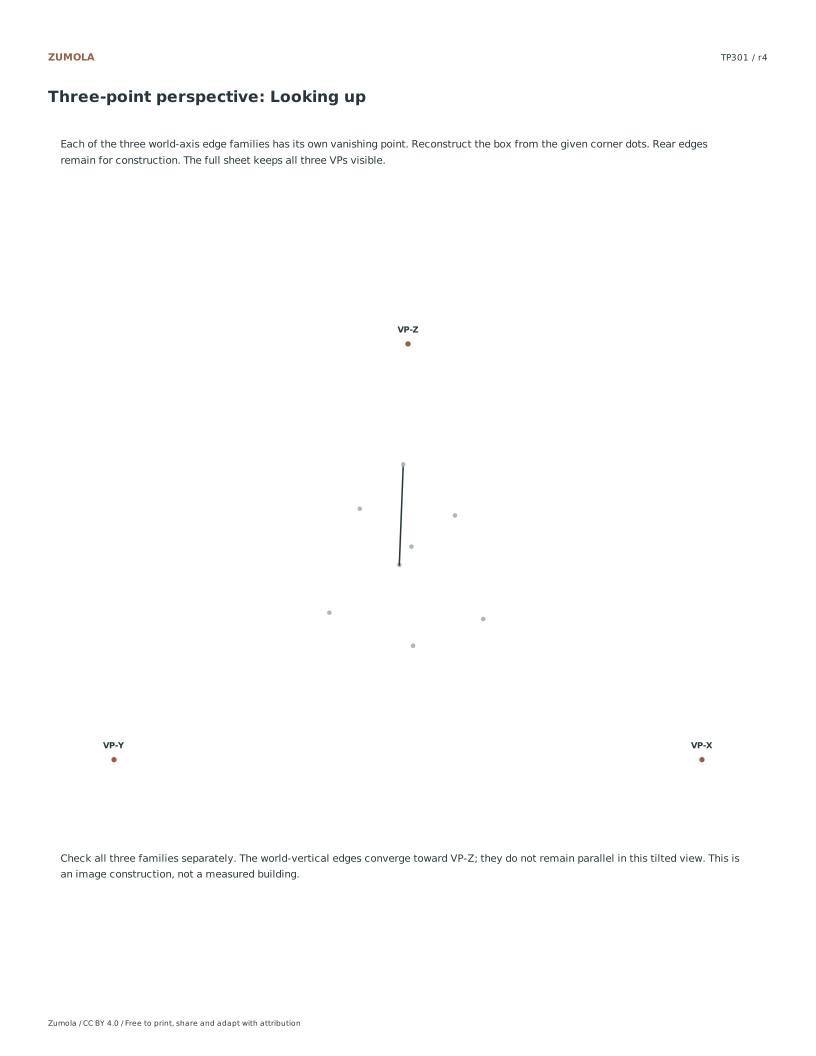
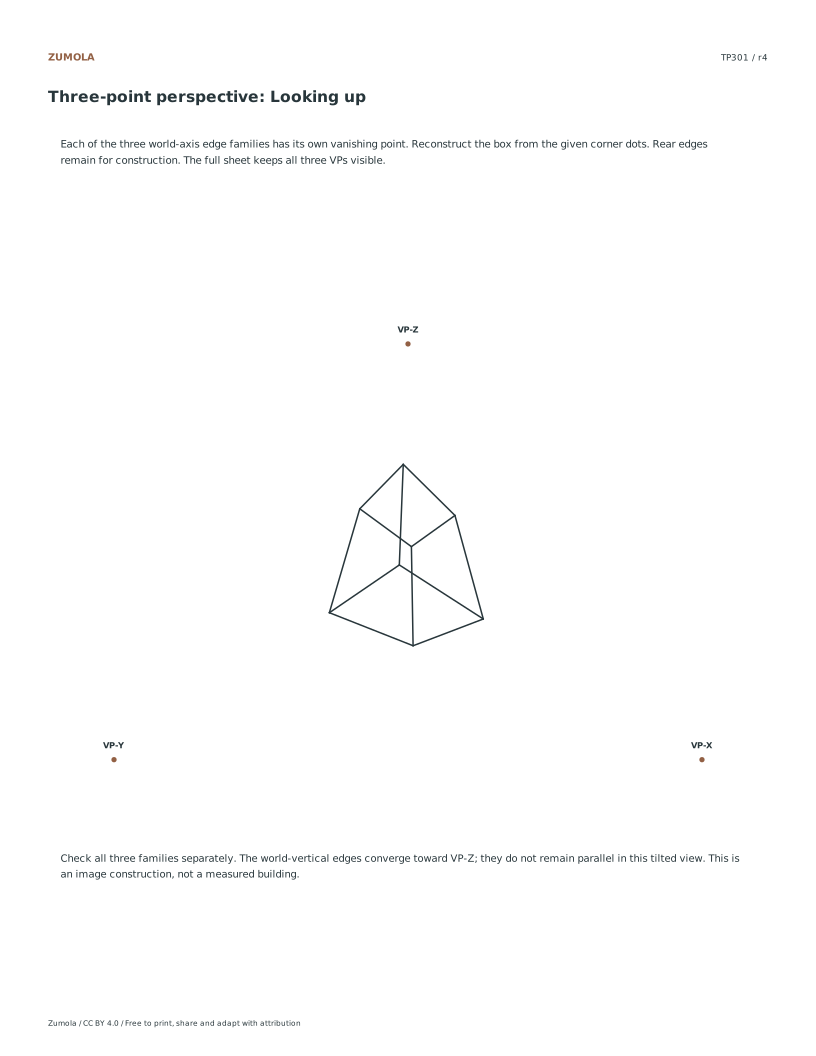
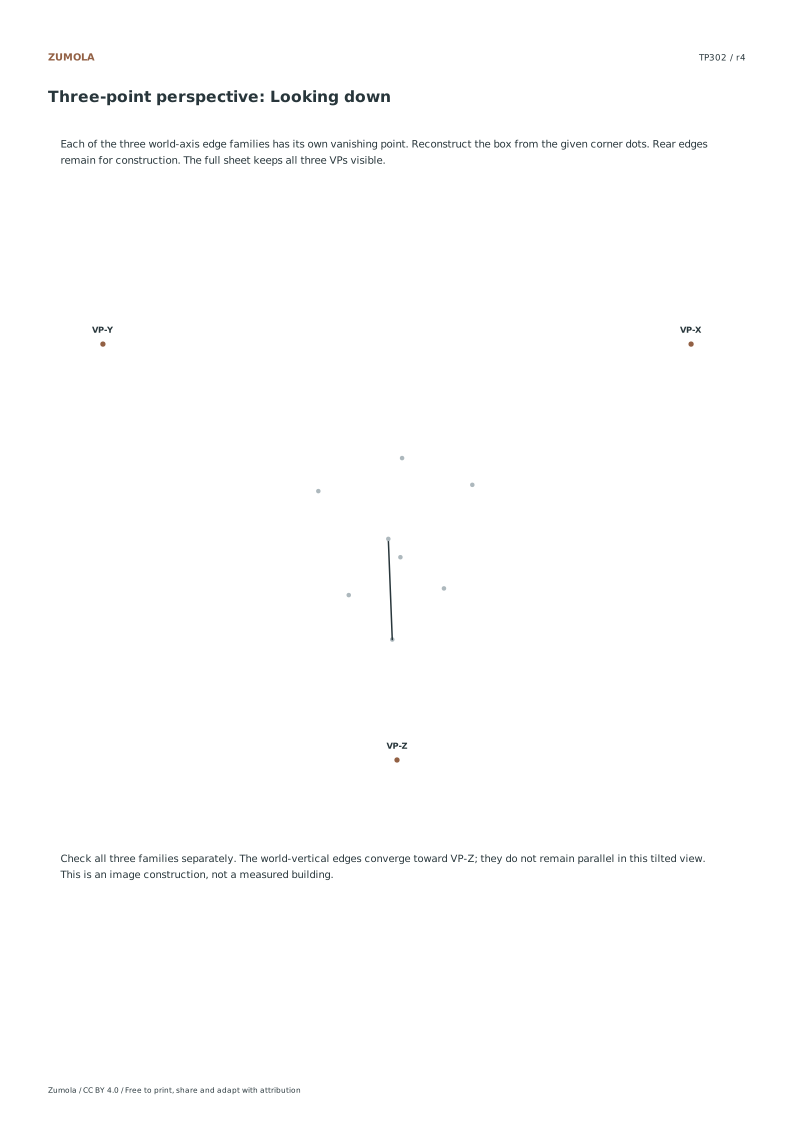
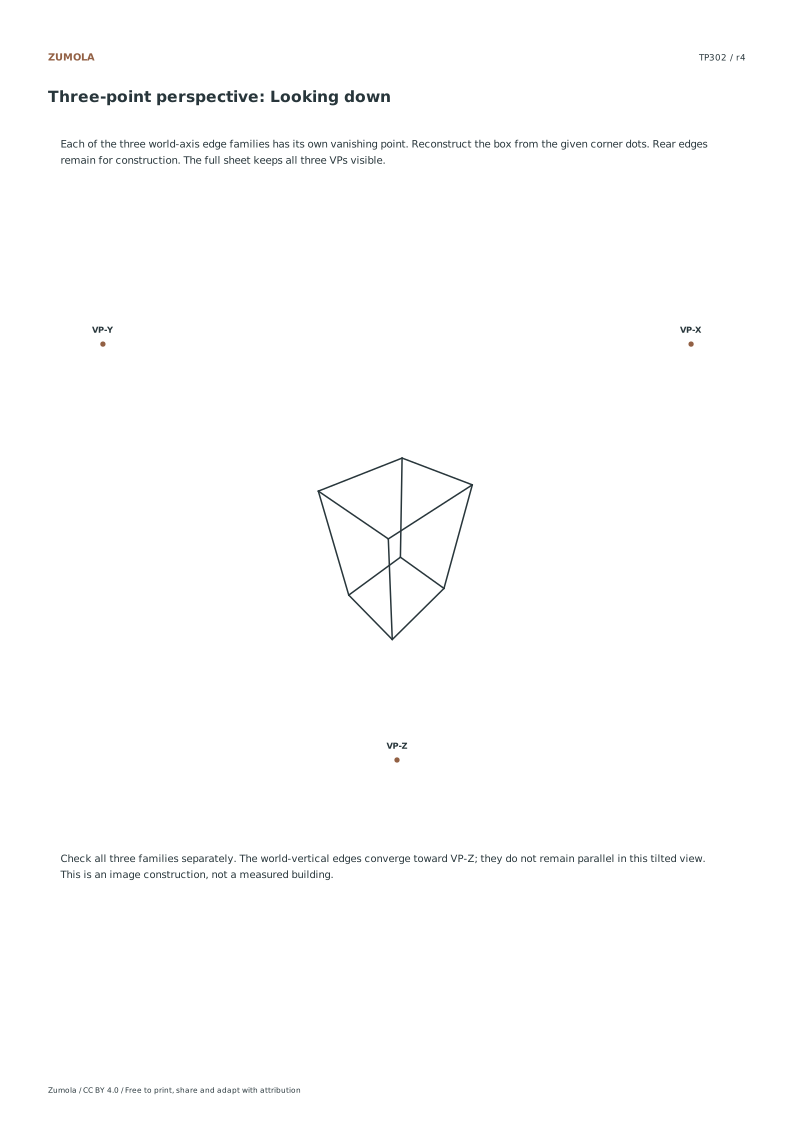
Locate VP-Z, the destination for the world-vertical family. In the looking-up sheet it is above the box; in the looking-down sheet it is below. VP-X and VP-Y serve the other two model directions. The references were projected from one consistent 3D camera per sheet, and the student corners use that same geometry. Keep the given points for the first attempt. Each family must meet its own VP, including the edges that would stay upright in the earlier level two-point exercises. The construction does not supply real building dimensions.
Trace the Complete Construction Wireframe
Use the guided reference to identify which edges belong together. Then join the pale corner dots in the student version, beginning with the supplied edge. Rear edges are retained to make the wireframe construction visible; they are not an instruction that every finished opaque object should show hidden edges. A close crop around the box could exclude its VPs, so practice on the full sheet first. Check one family at a time and use light construction extensions rather than darkening every ray through the whole image.
Verify Edge Convergence Consistency
Extend the box edges, rather than labels or unrelated page lines, toward their assigned vanishing points. Each of the three families should agree with one target. A corner that matches two adjacent rays but misses the third may have been placed on the wrong given dot. Compare the completed wireframe with its answer, then remove unnecessary guide extensions in a separate finished sketch if desired. The references show consistent image geometry; your review should separate a convergence error from normal variation in a hand-drawn line.
Checks that catch common errors
Watch for
Check instead
Keeping vertical lines parallel instead of converging them toward the vertical vanishing point.
Ensure all formerly vertical world edges converge toward the specific vertical vanishing point located above or below the box.
Omitting rear edges from the construction wireframe during the tracing process.
Include all rear edges in your wireframe to maintain structural accuracy and match the provided guided reference.
Manually guessing corner geometry rather than using the fixed vanishing points.
Rely on the three fixed vanishing points for consistent three-dimensional camera projection instead of estimating corner positions.
Print a test sheet before the full pack
Choose the file matching the paper in your printer. Print the PDF at Actual size / 100%, turning off Fit, Shrink and browser headers. An SVG editor or browser can change its scale even though the file uses millimeter dimensions. Use the supplied calibration bars where present when a task depends on physical size; a screen preview alone does not establish printed size.
The packs contain the same individual pages in collection order. They are a convenient download, not extra different exercises. On coordinate plots, uniform scaling preserves the numerical positions relative to the axes. On image-copy tasks, keep the specified proportions and any stated source-to-target enlargement. Color is optional: labels, line positions and relative lightness also explain the references.
Useful answers
Do the vanishing points always appear within the visible drawing area?
No, vanishing points can lie outside a close crop. The full exercise sheet retains them to guide accurate convergence for all edge families.
Are these exercises based on precise architectural measurements?
No, the references are image constructions. They focus on consistent three-dimensional camera projection rather than exact architectural dimensions.
Should vertical lines remain parallel in these specific box studies?
No, do not keep verticals parallel. In these particular three-point tasks, formerly vertical world edges must converge toward the vertical vanishing point.
Are the answers and editable files free too?
Yes. Every linked worksheet, PDF, SVG and answer is free without signup. Original Zumola resources use CC BY 4.0: credit Zumola, link the license and indicate changes. Analytics consent is not required to download or use them.
Optional Google Analytics helps us understand which free resources are useful. It is off until you allow it. Drawing tools and downloads work with either choice. Privacy details