- Dilating a Polygon About the Origin
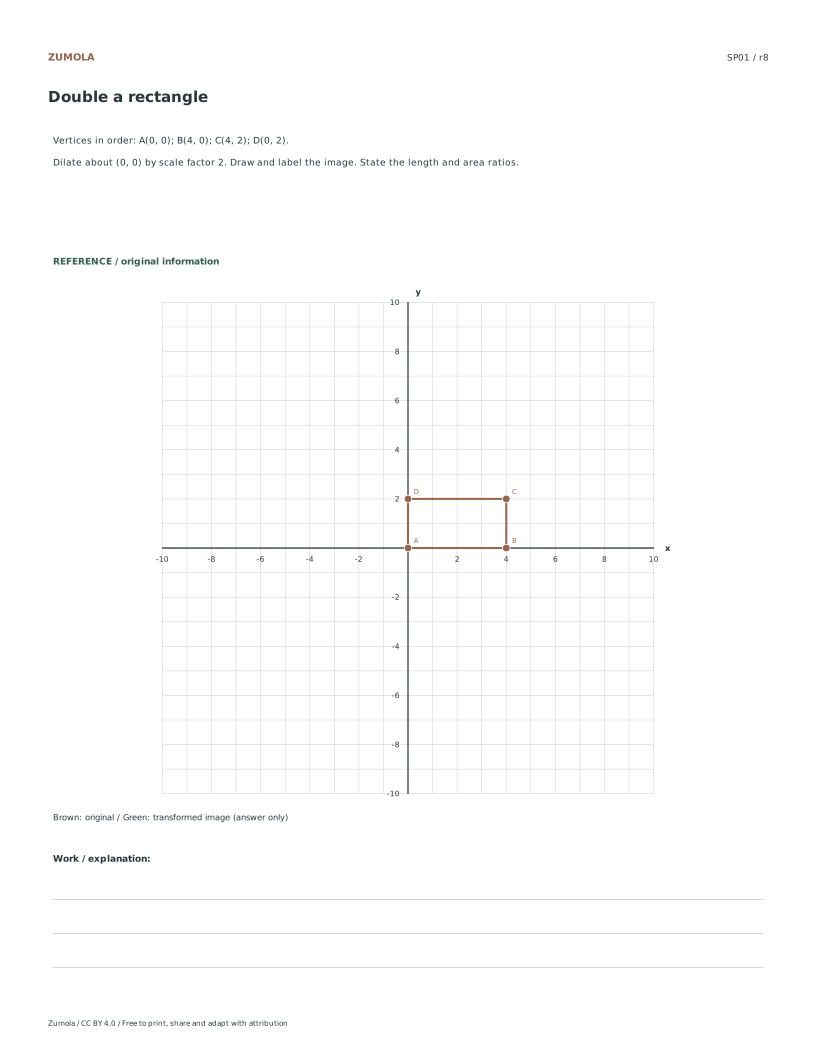
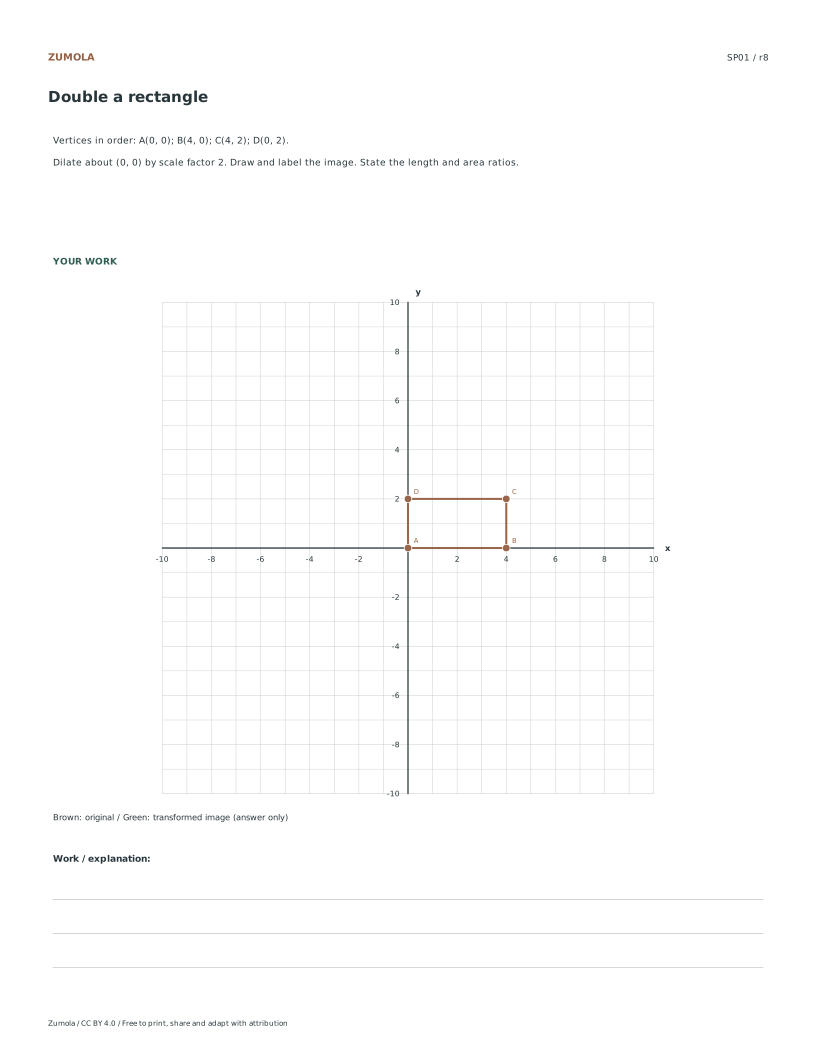
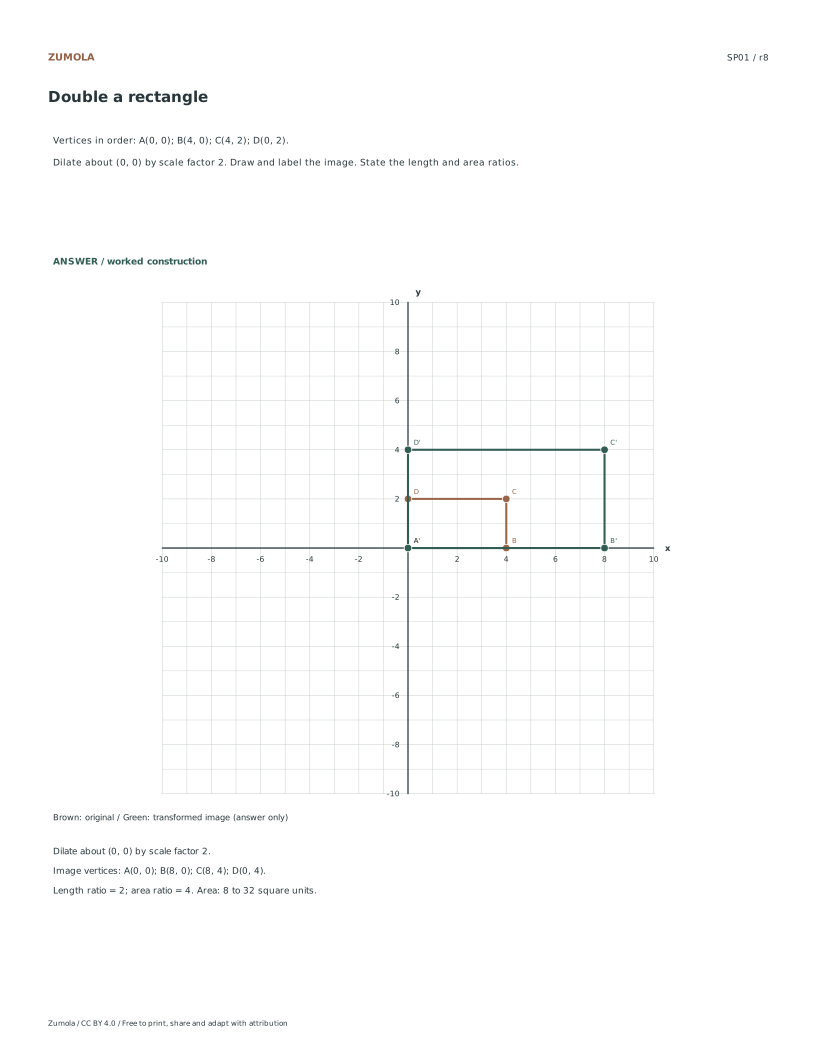
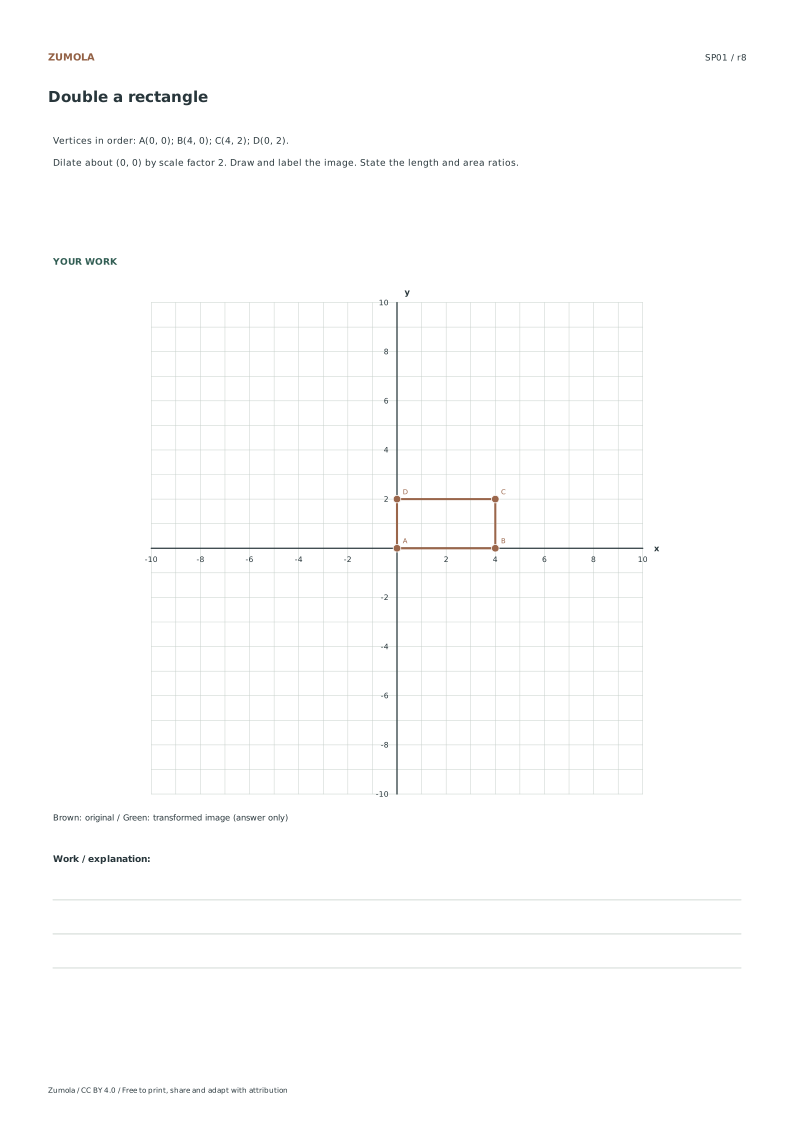
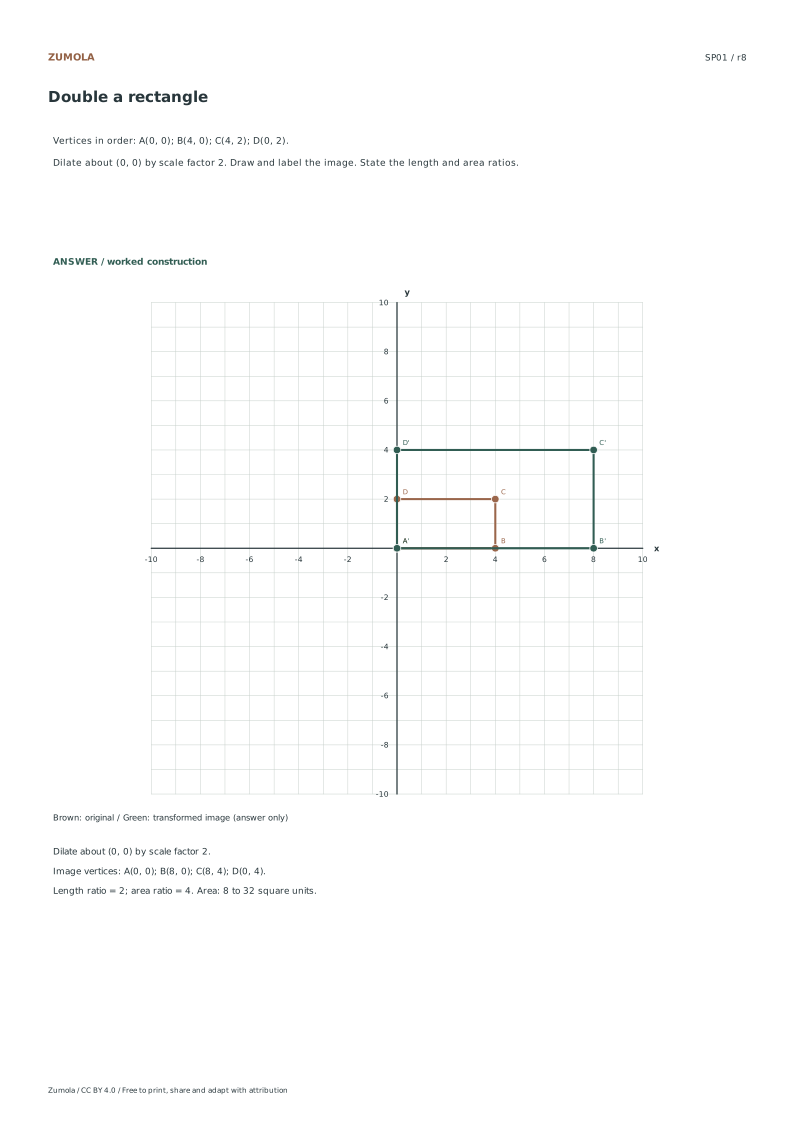
To draw a scaled copy, multiply each vertex coordinate by the scale factor. For the rectangle A(0,0), B(4,0), C(4,2), D(0,2) with factor 2, the image is A(0,0), B(8,0), C(8,4), D(0,4). Connect the vertices in the same order. The length ratio equals the scale factor: 2. The area ratio is the square of the scale factor: 4. The original area is 8 square units, and the image area is 32 square units. Check that corresponding sides are parallel and proportional.
- Using Fractional Scale Factors
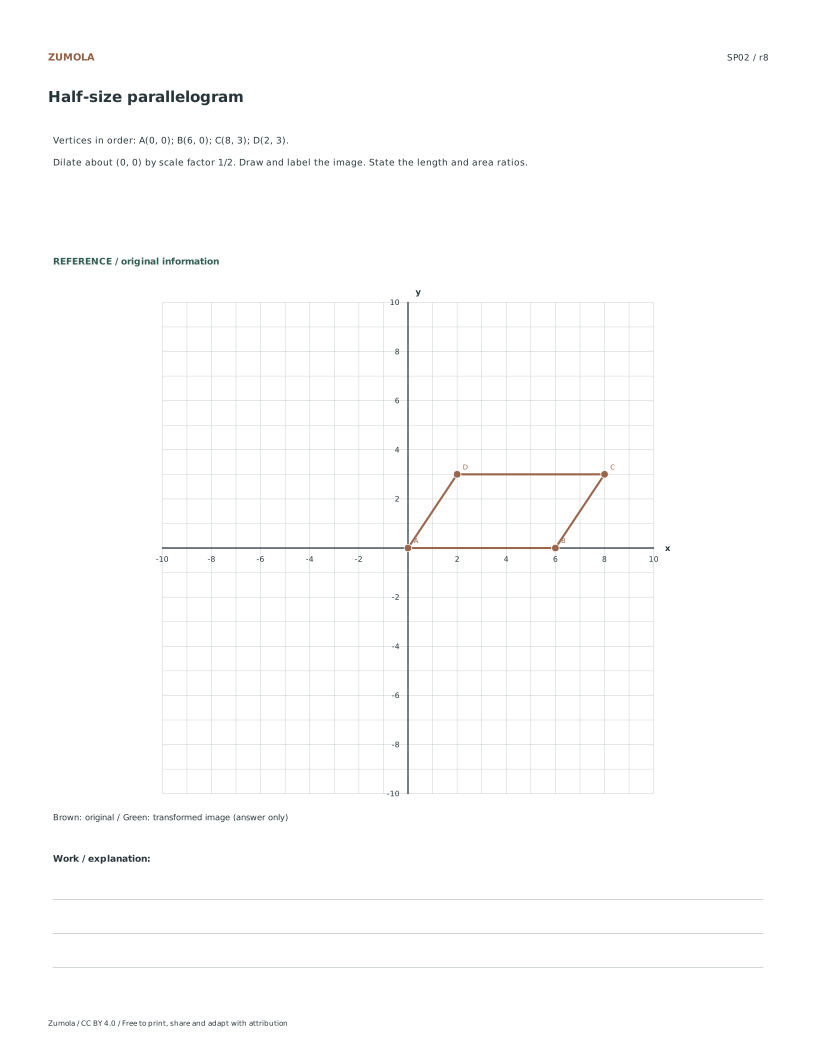
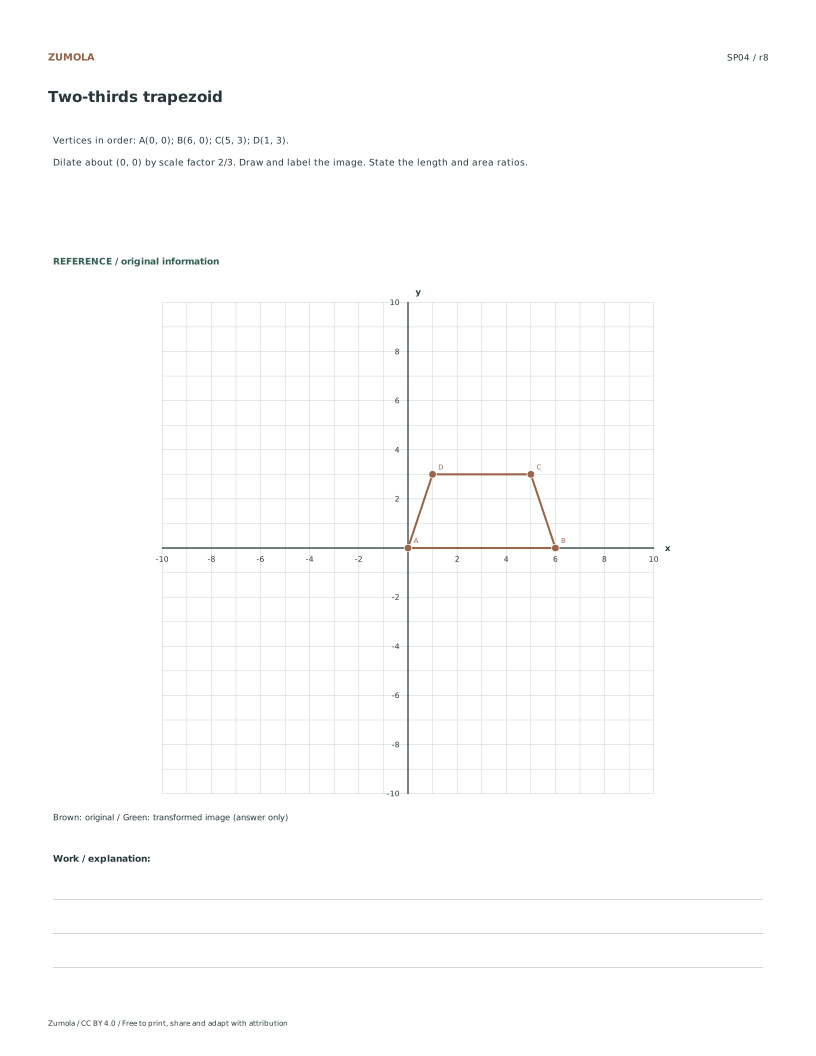
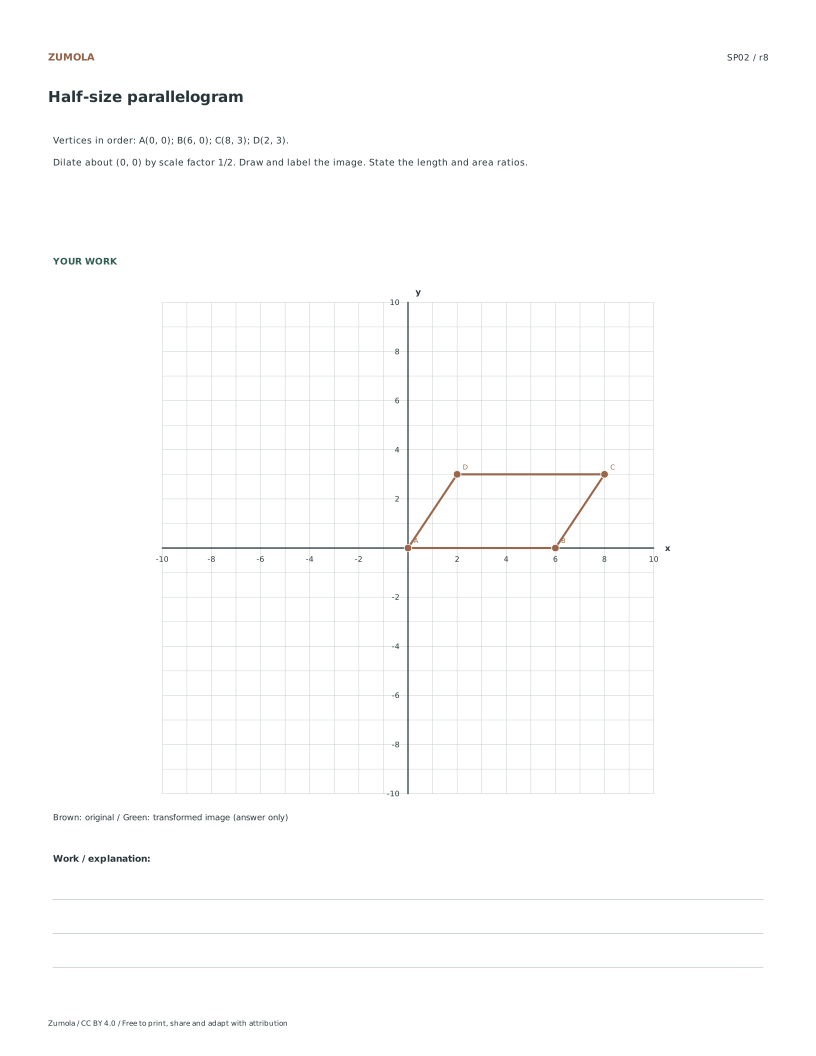
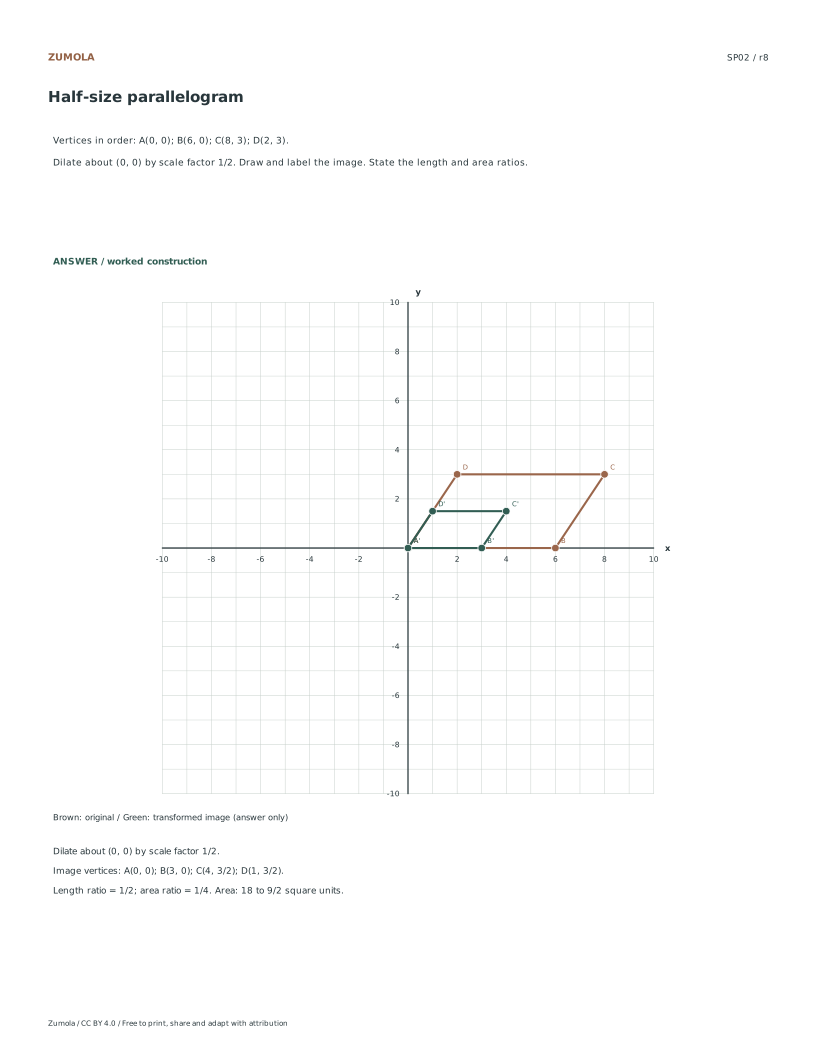
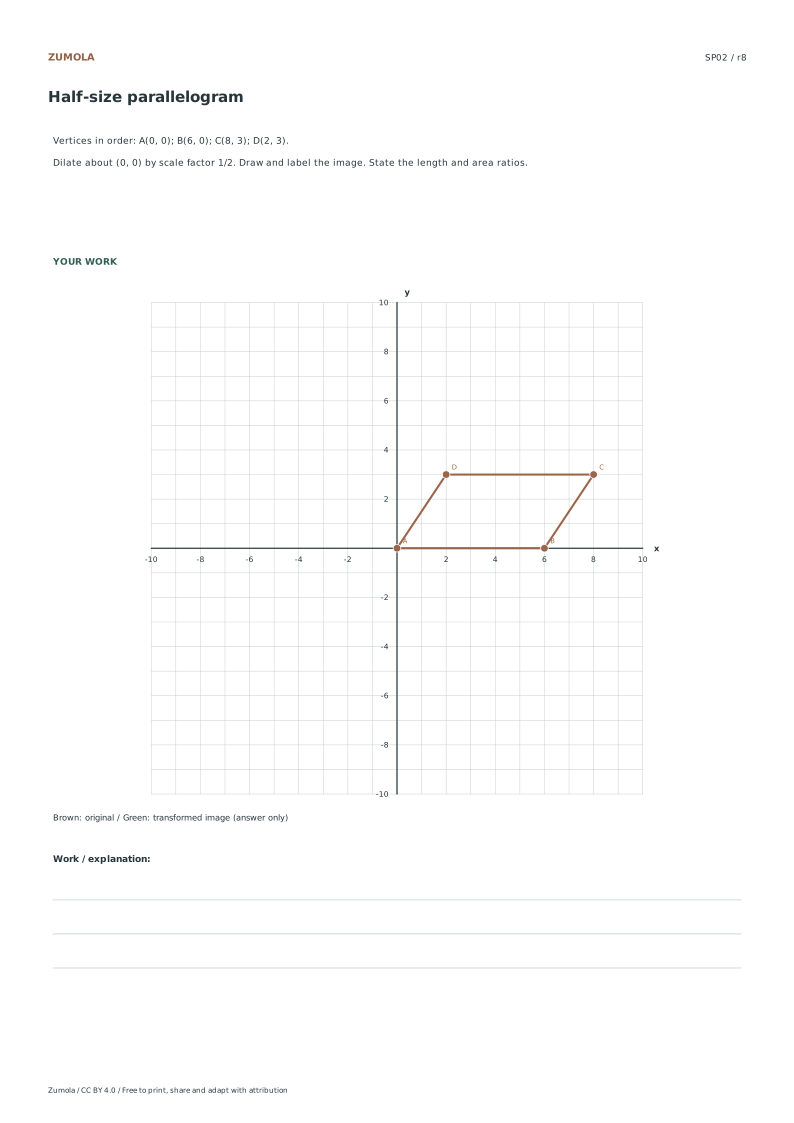
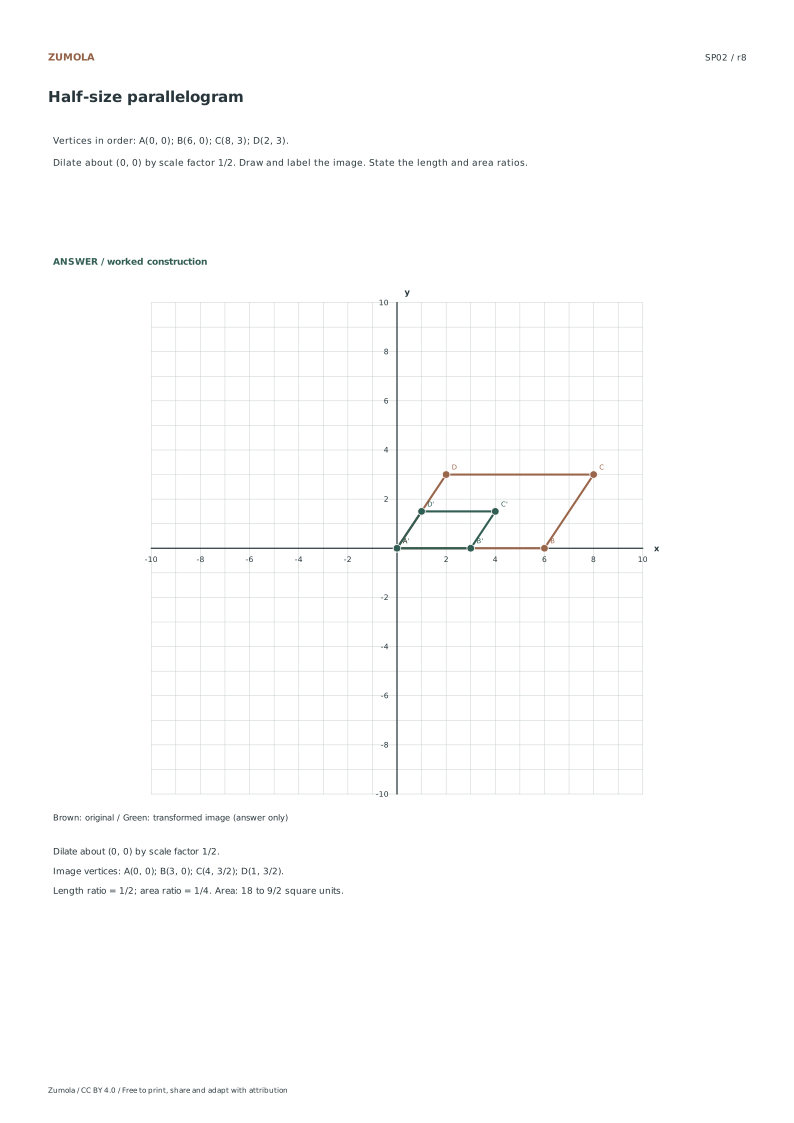
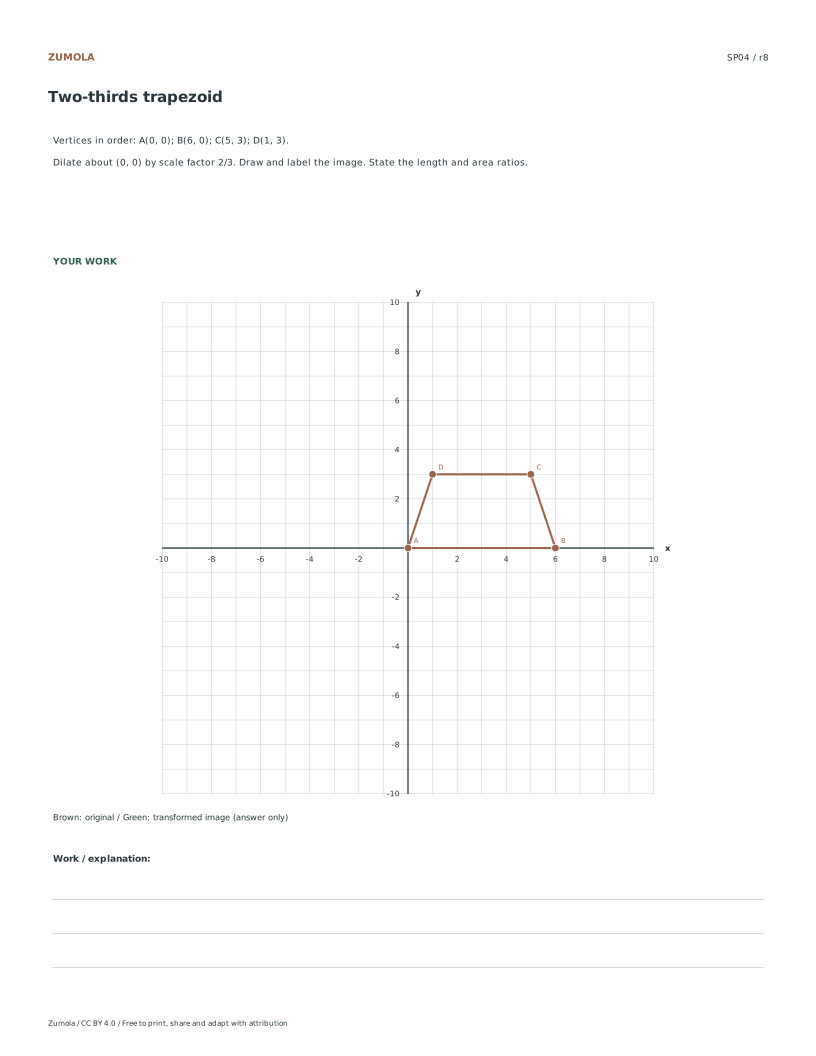
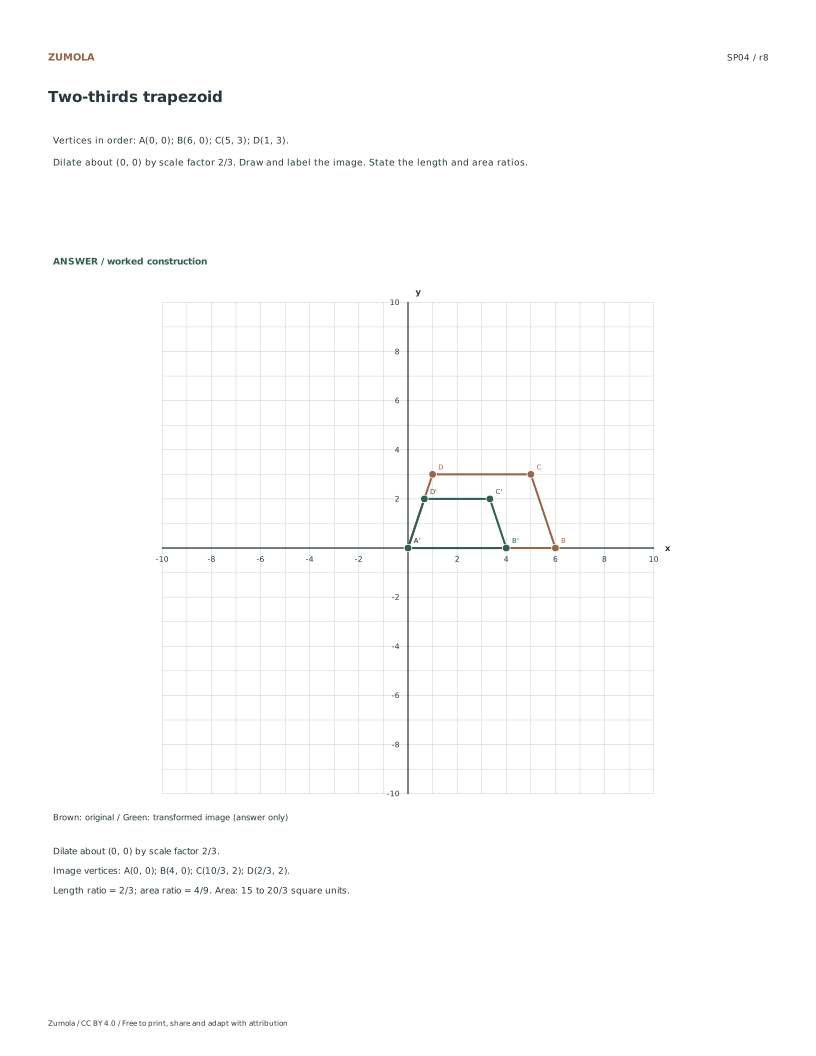
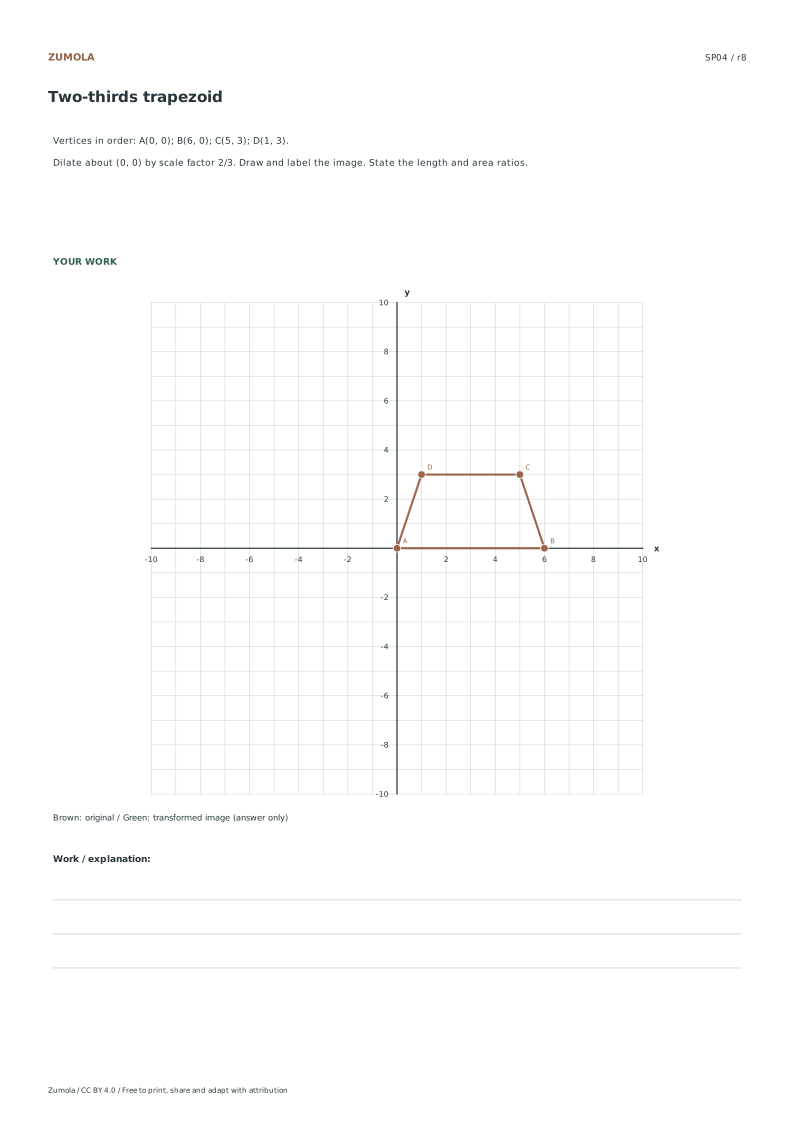
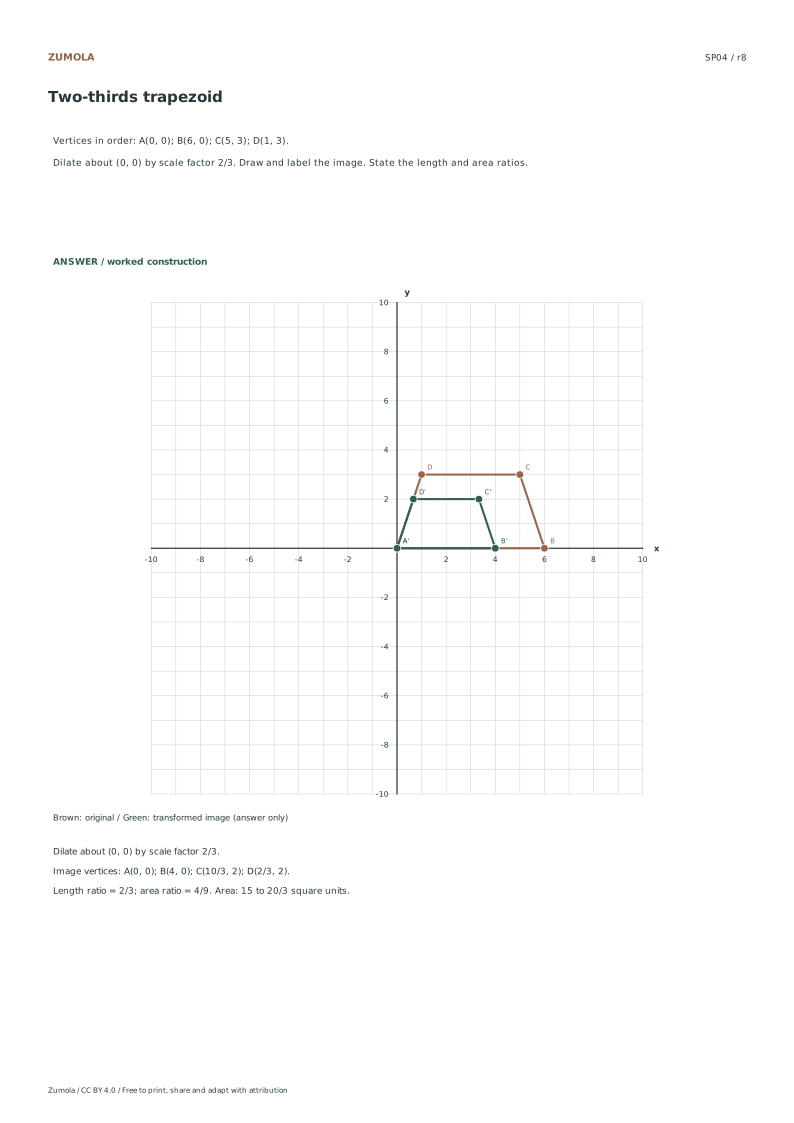
For a scale factor of 1/2 on A(0,0), B(6,0), C(8,3), D(2,3), multiply each coordinate by 1/2 to get A(0,0), B(3,0), C(4,3/2), D(1,3/2). The length ratio is 1/2, and the area ratio is (1/2)^2 = 1/4. The original area is 18 square units, and the image area is 9/2 square units. For a factor of 2/3 on A(0,0), B(6,0), C(5,3), D(1,3), the image vertices are A(0,0), B(4,0), C(10/3,2), D(2/3,2). The length ratio is 2/3, and the area ratio is 4/9. The original area is 15, and the image area is 20/3.
- Checking Length and Area Ratios
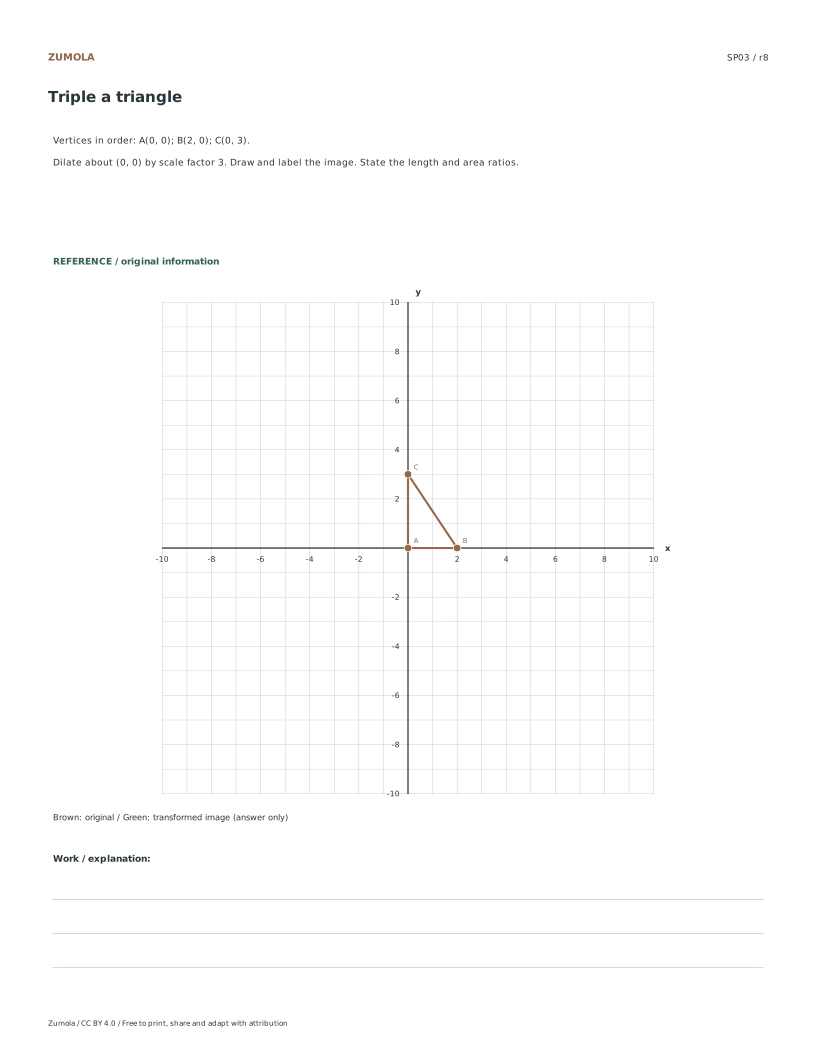
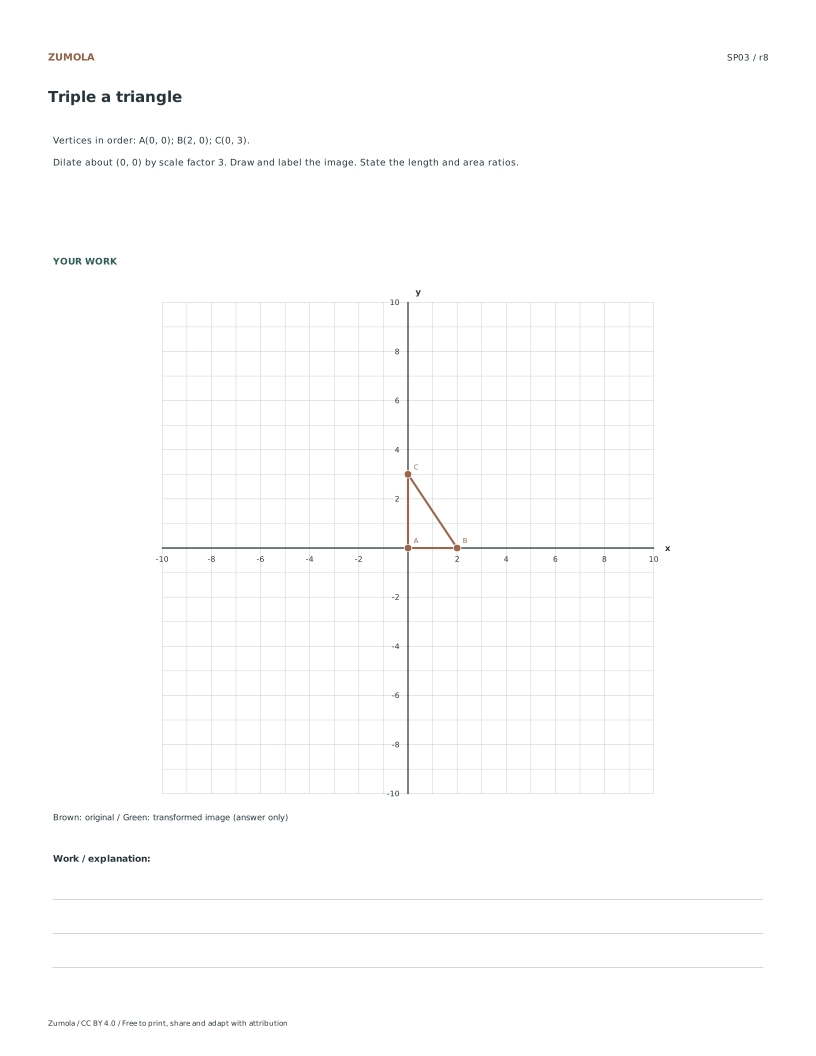
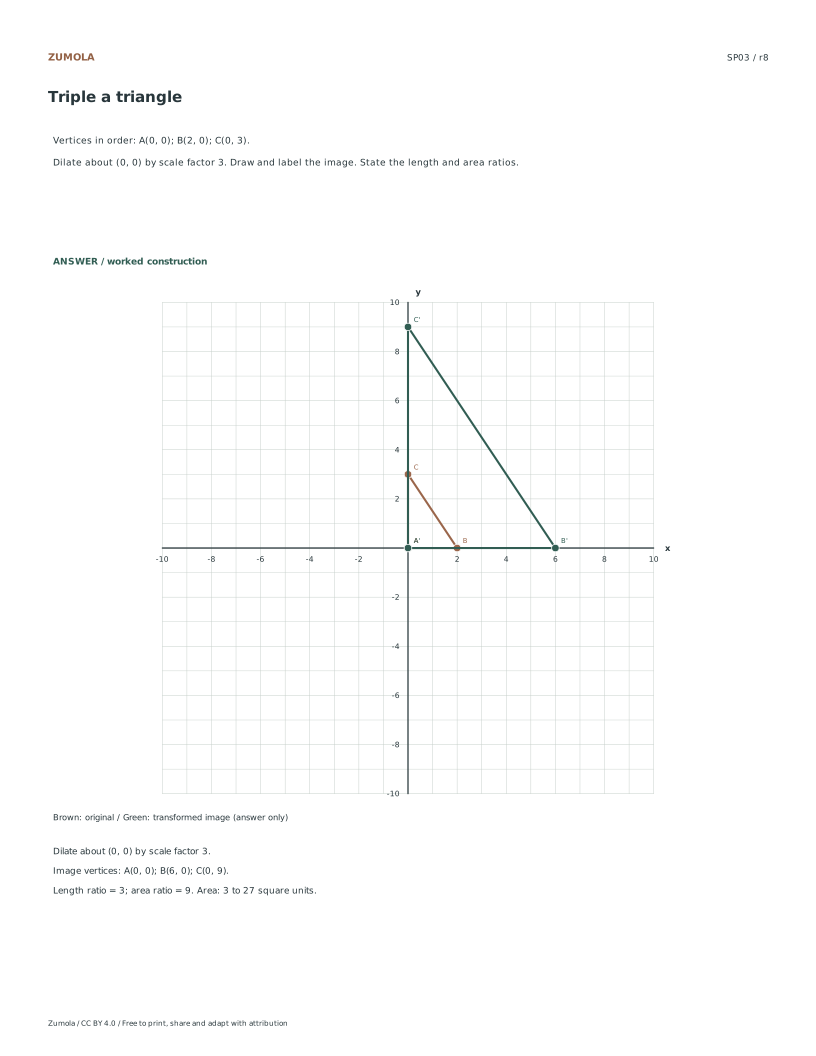
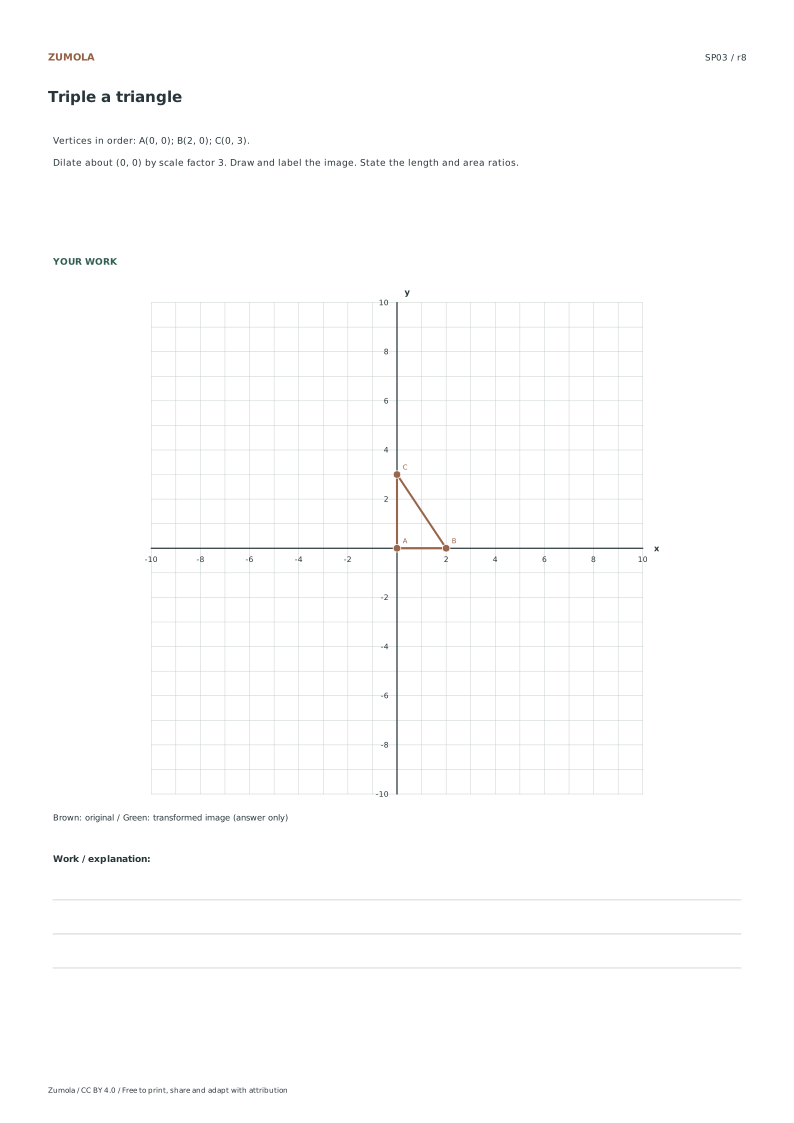
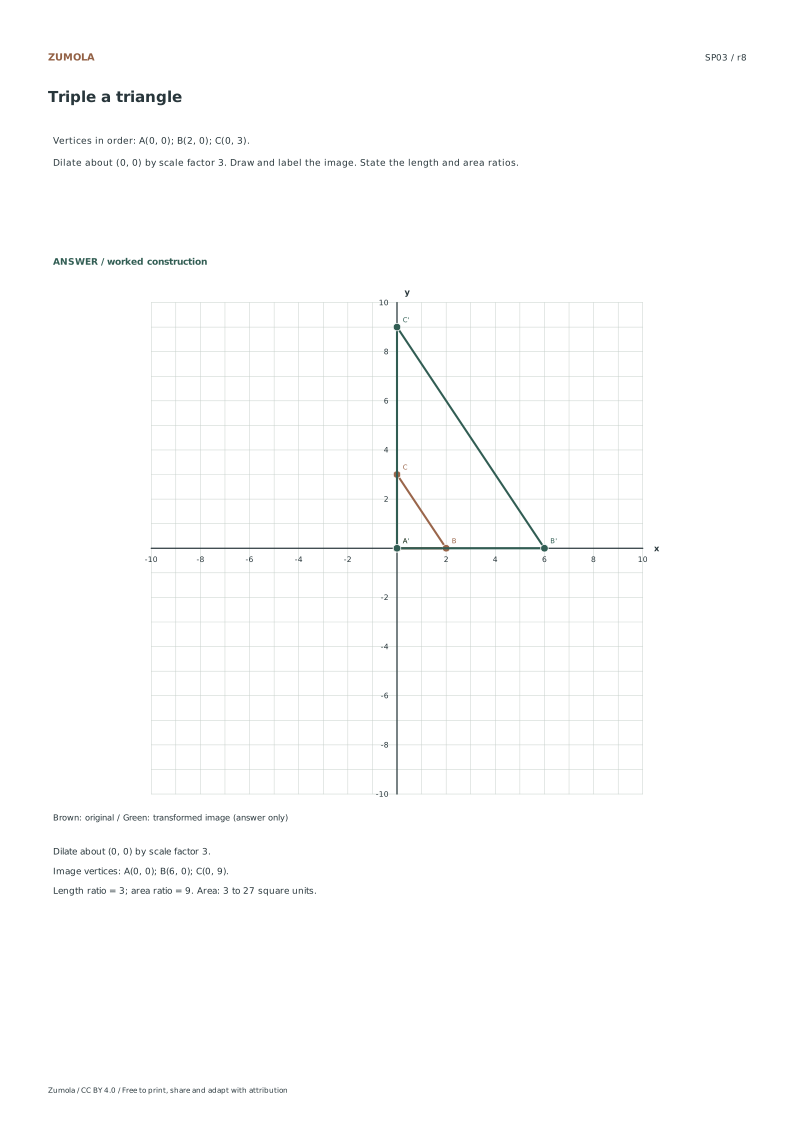
After dilating, verify that every side length is multiplied by the scale factor. For the triangle A(0,0), B(2,0), C(0,3) with factor 3, the image is A(0,0), B(6,0), C(0,9). The original area is 3 square units, and the image area is 27 square units. The length ratio is 3, and the area ratio is 9. Use the area ratio to confirm: (scale factor)^2 = area ratio. For factor 2, area ratio is 4; for 1/2, area ratio is 1/4; for 3, area ratio is 9; for 2/3, area ratio is 4/9. Always state both ratios clearly.