- Plotting Points and Forming Triangles
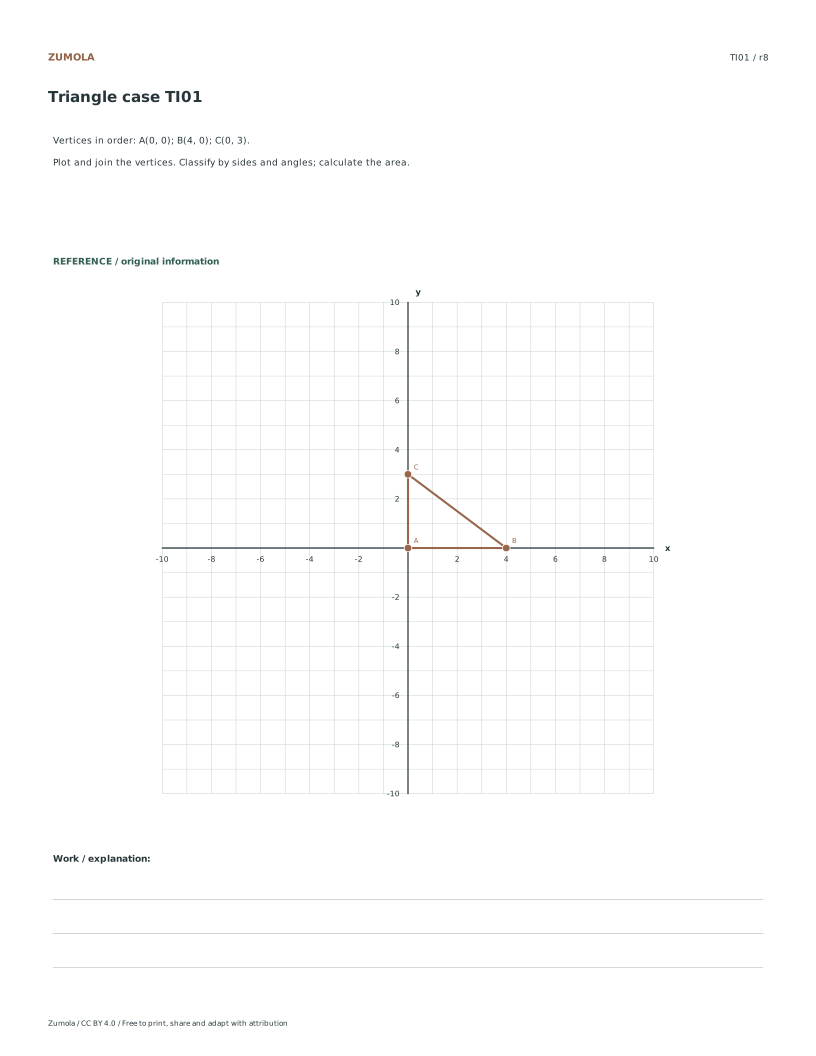
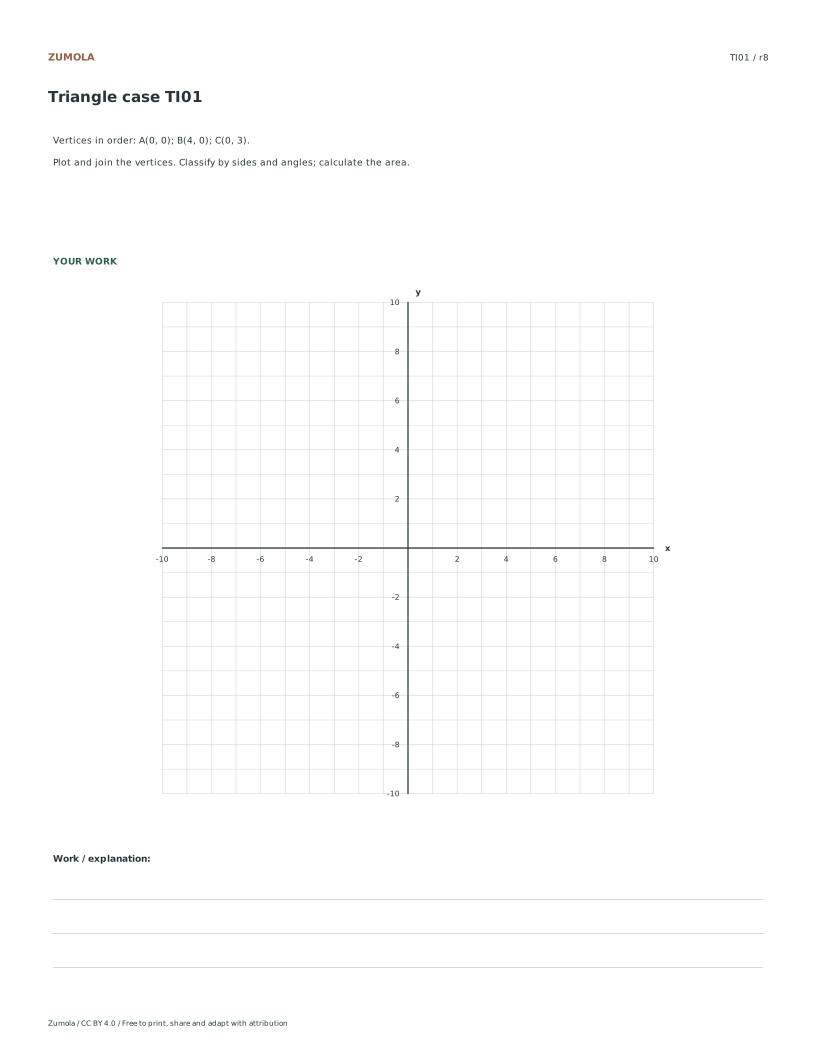
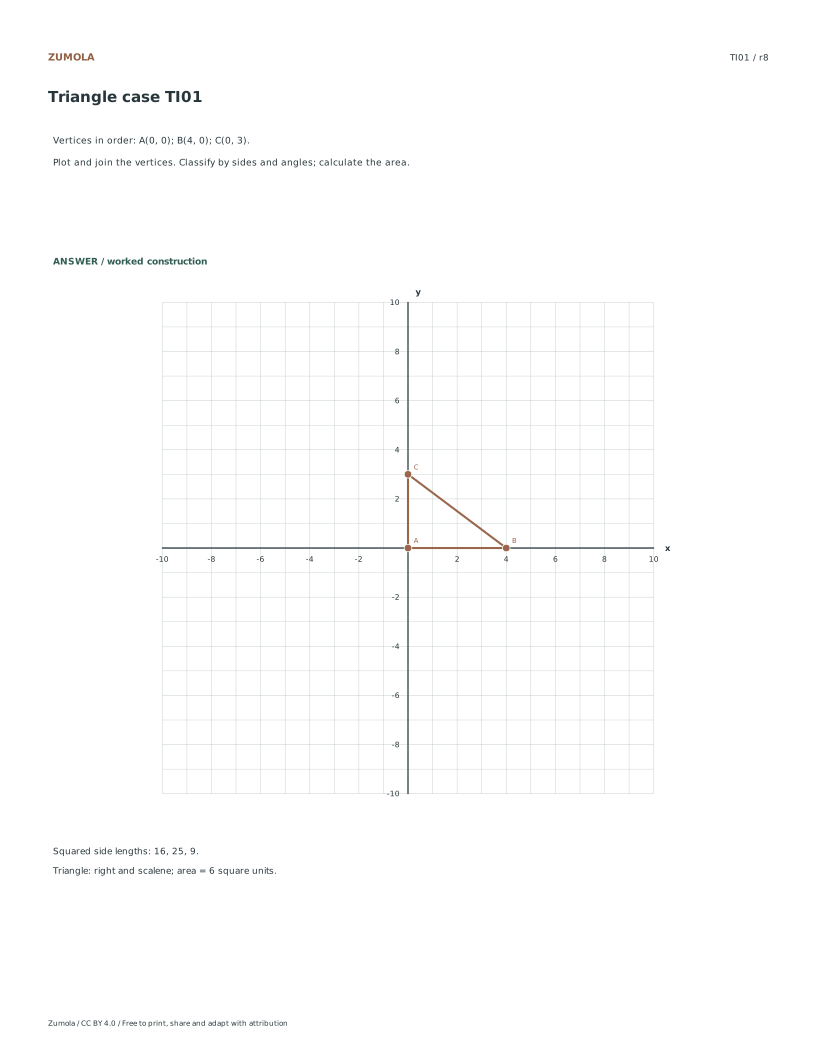
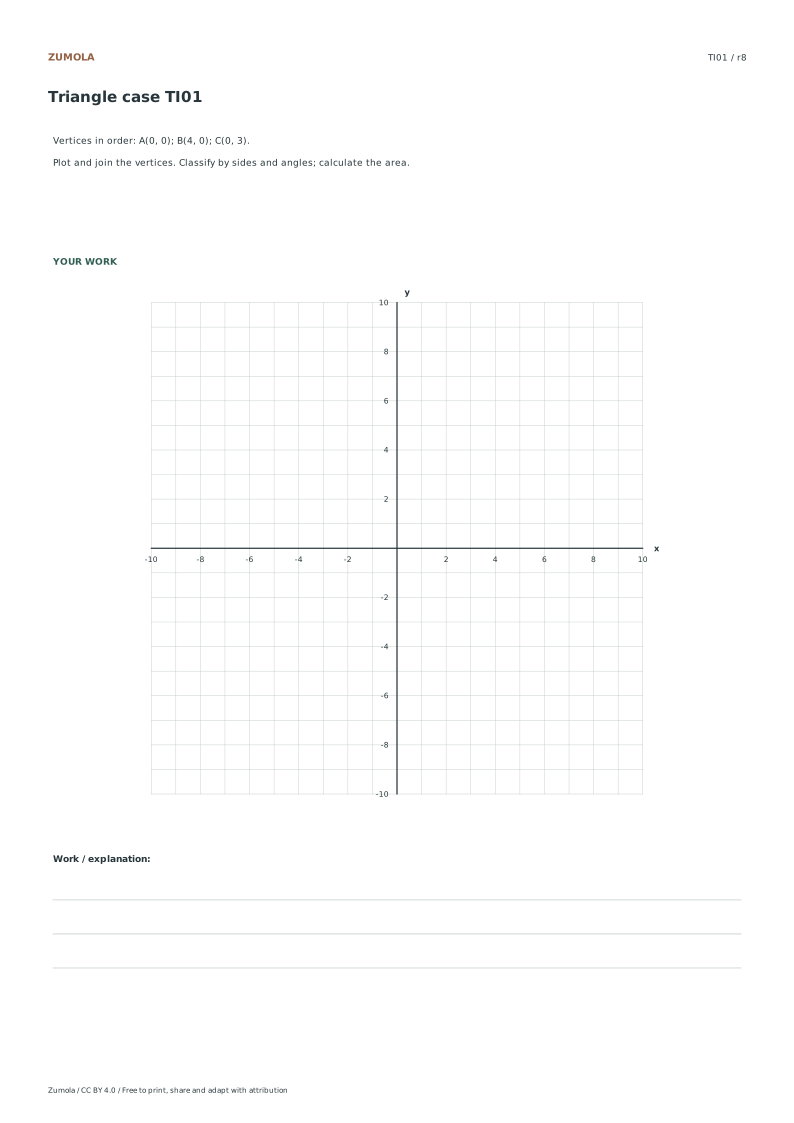
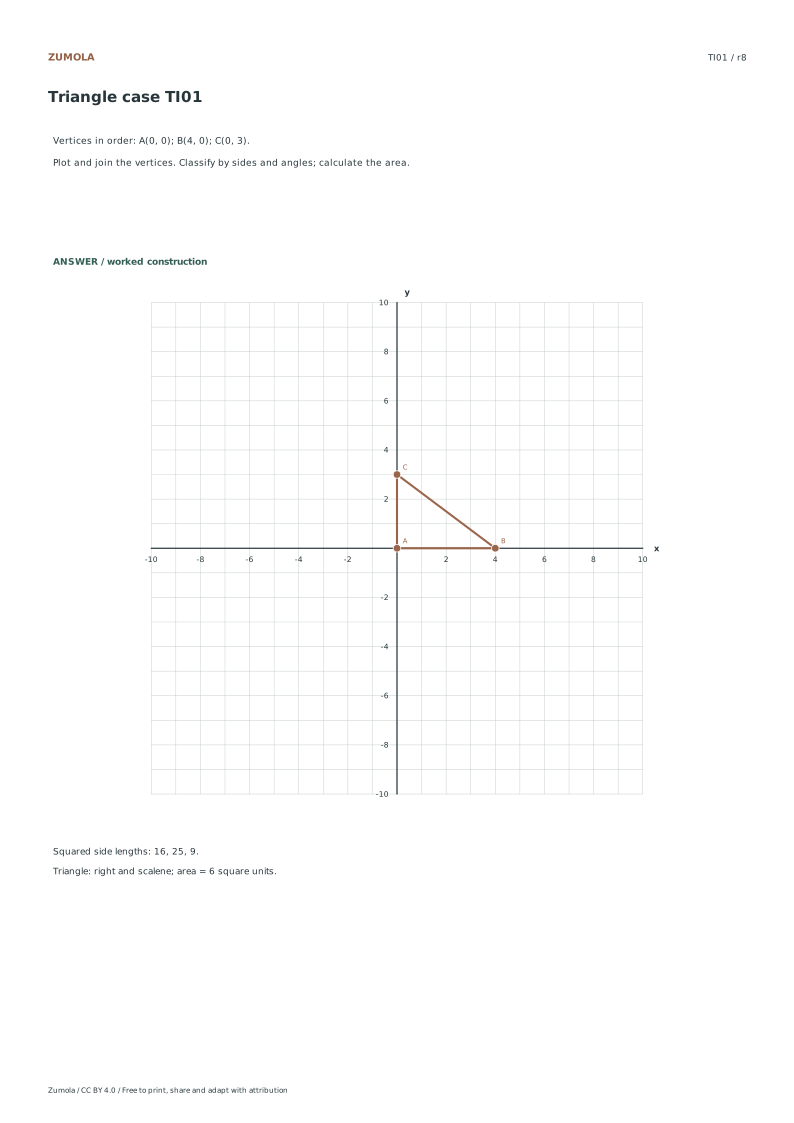
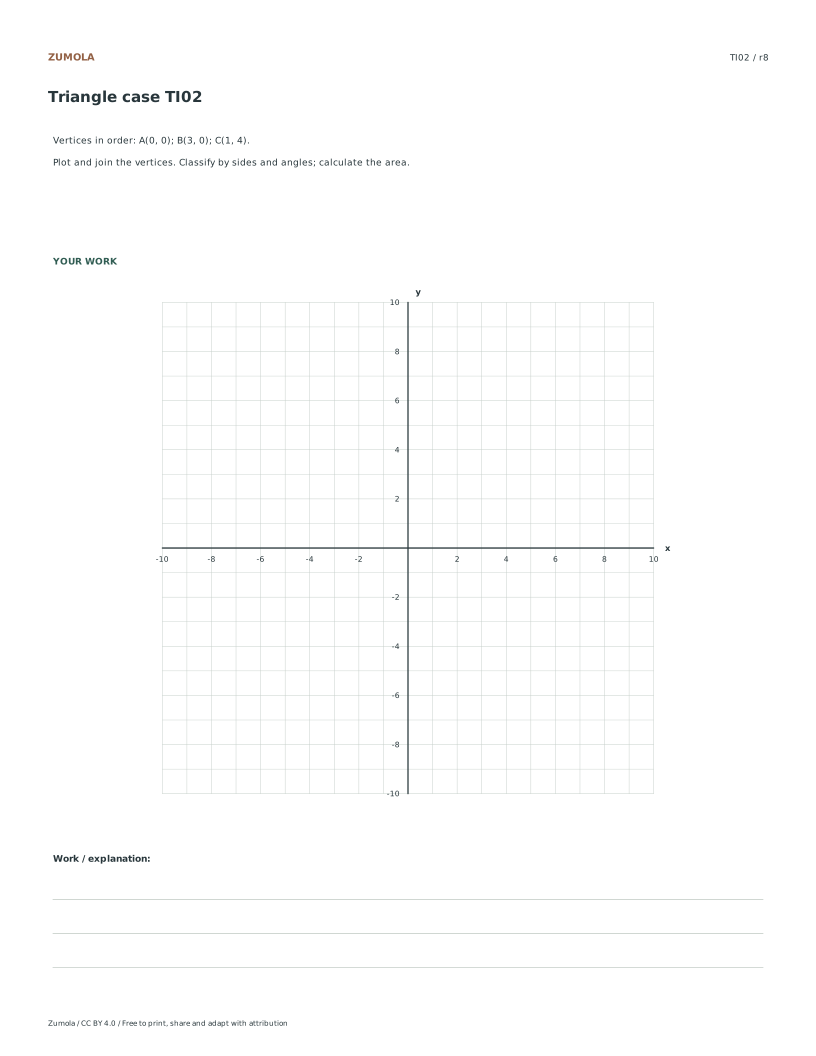
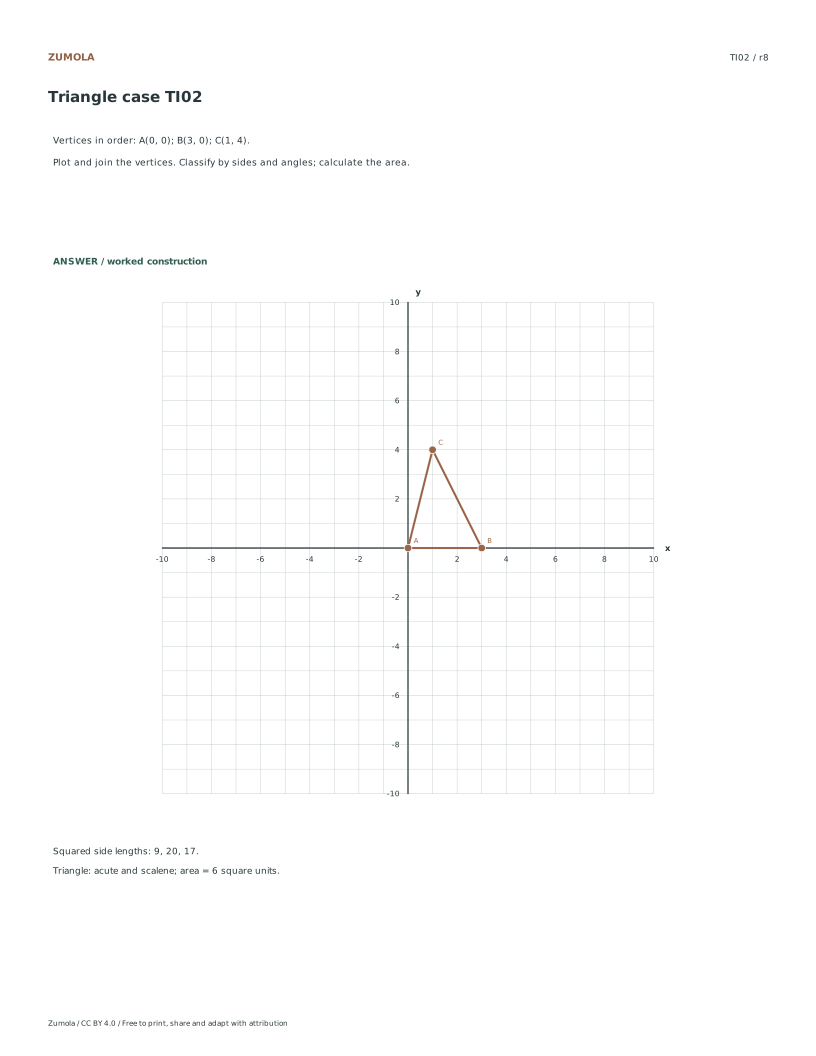
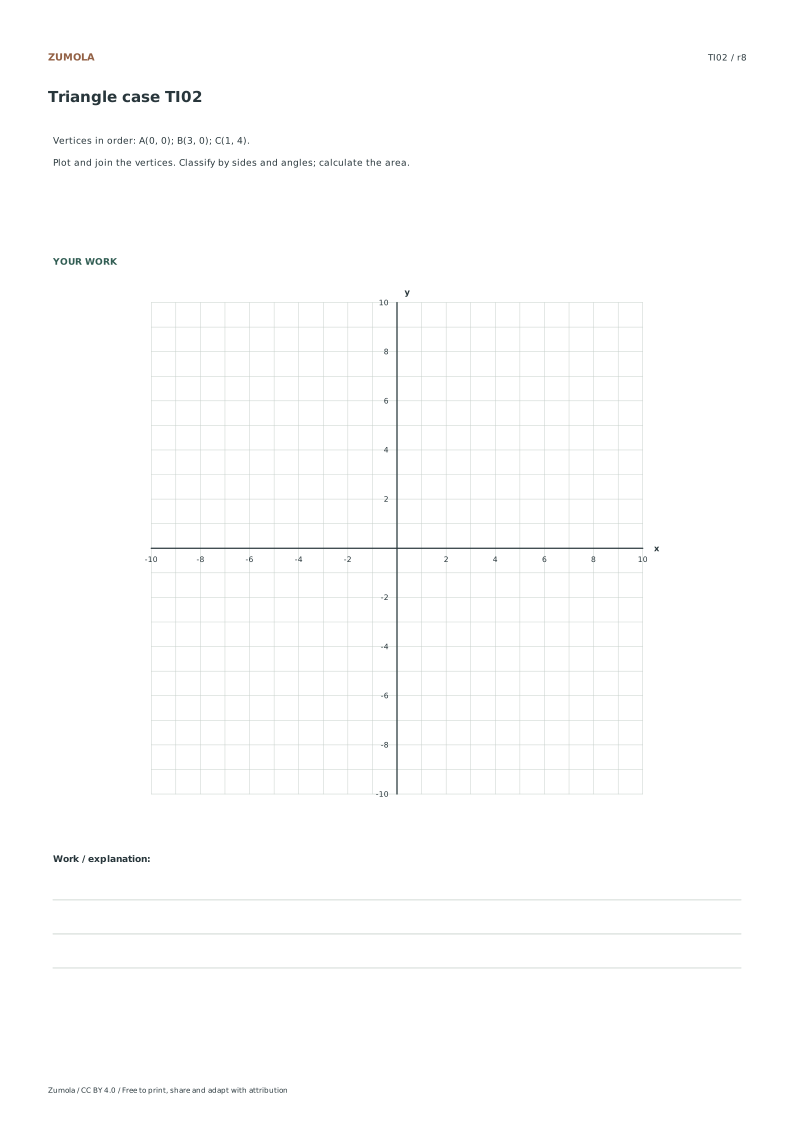
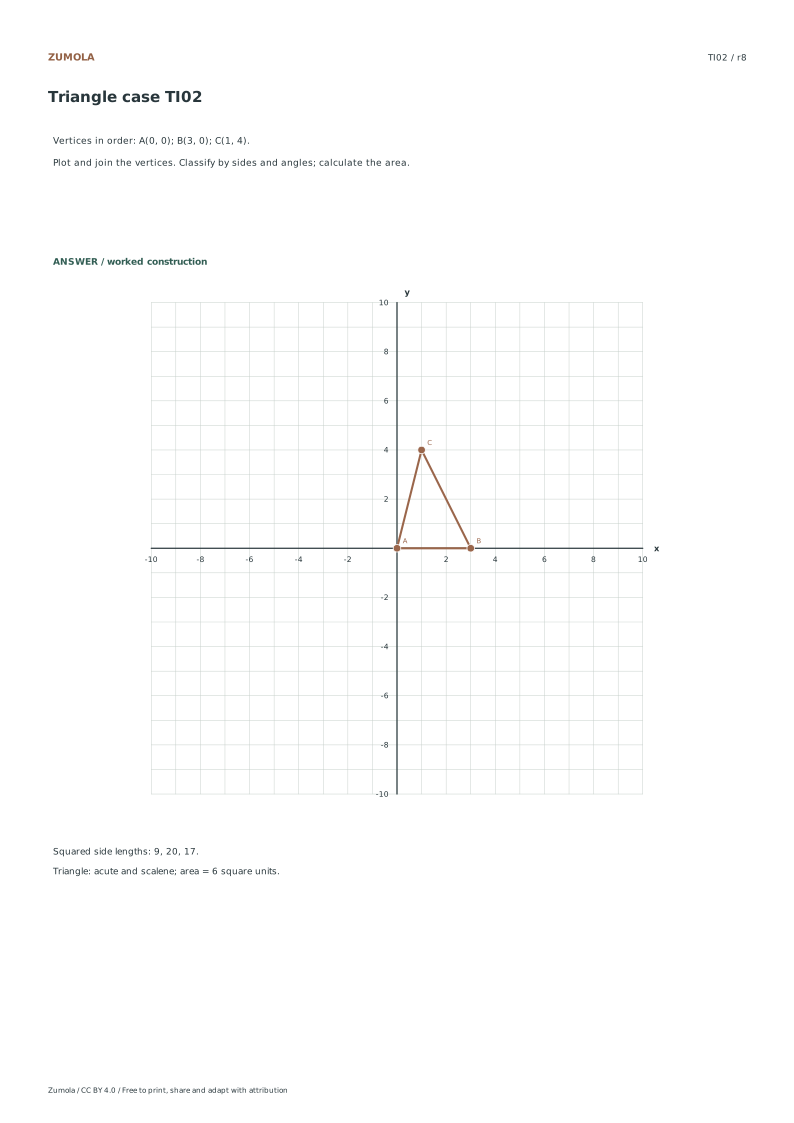
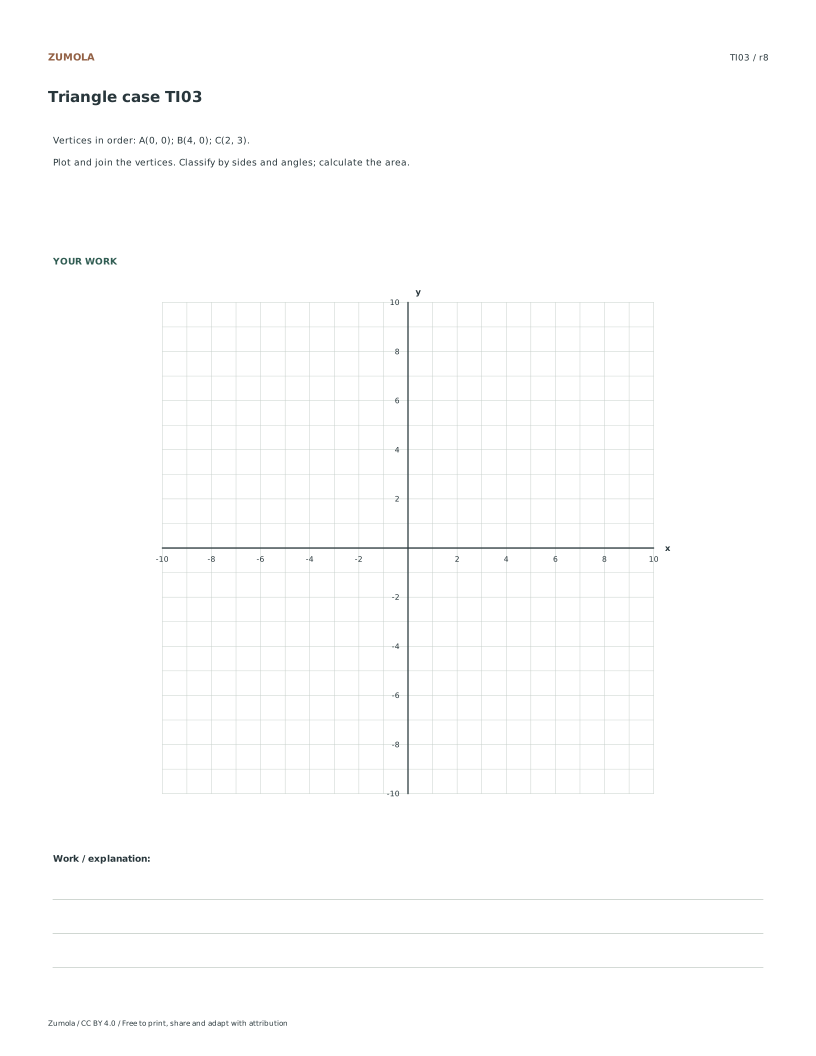
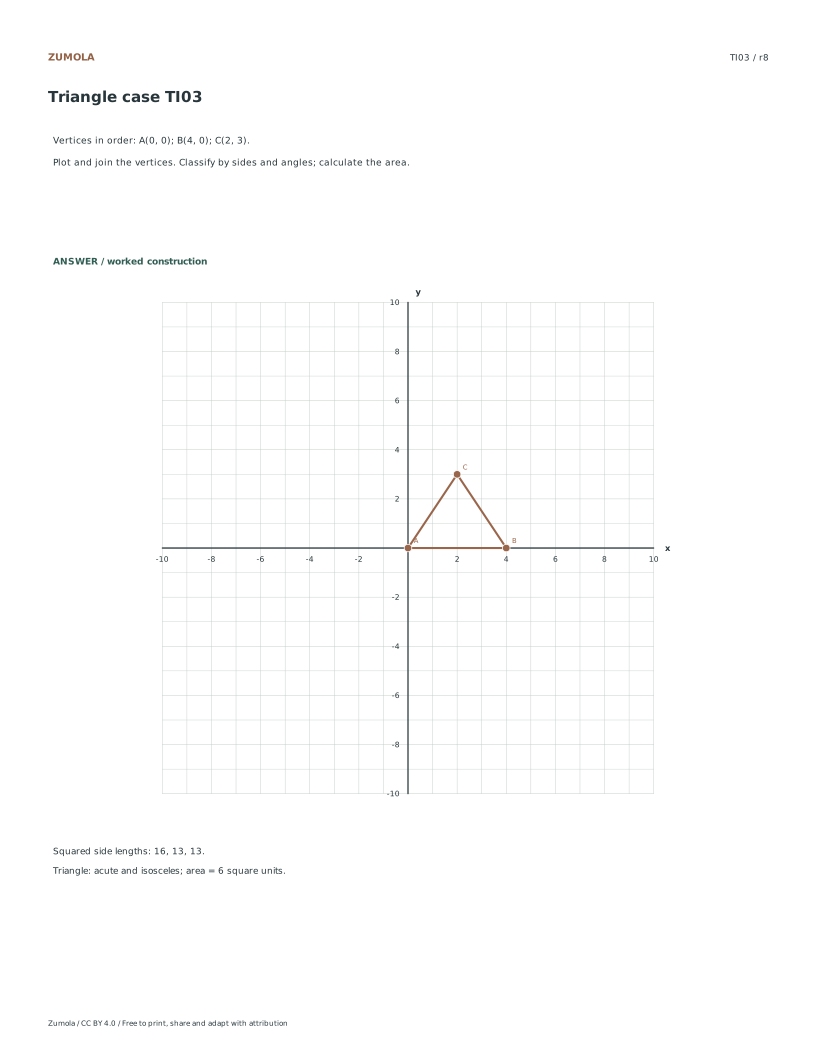
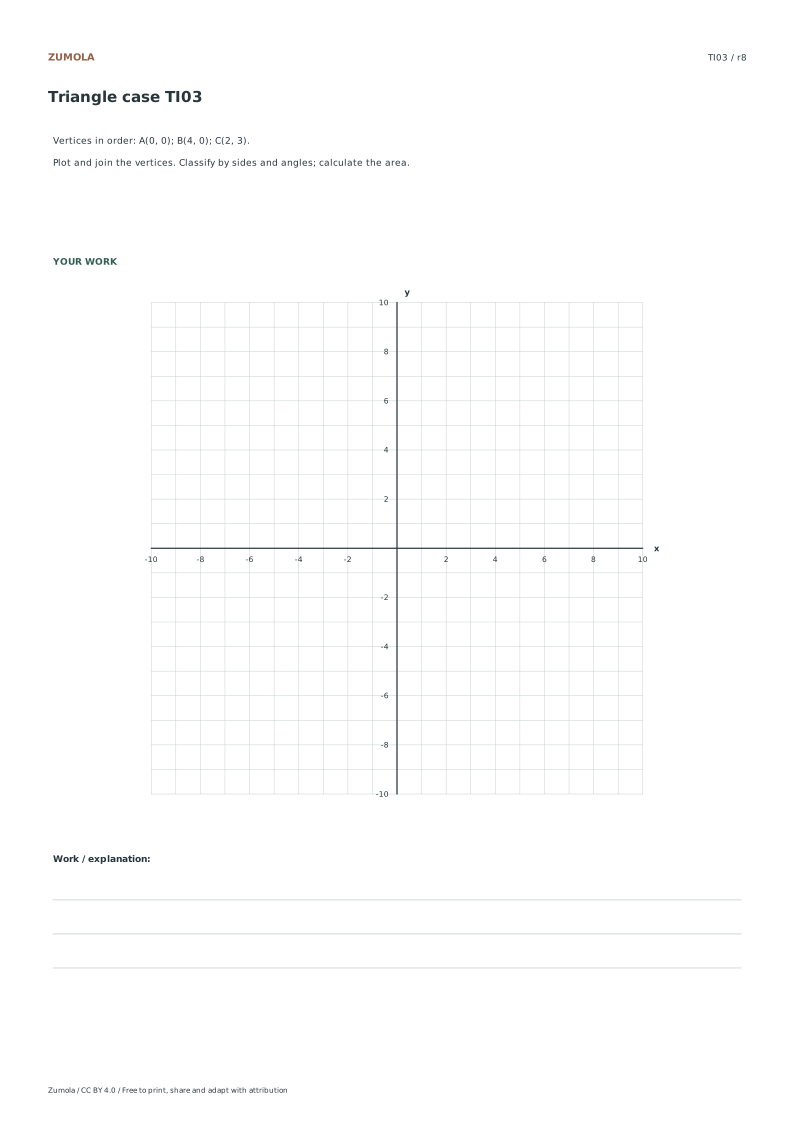
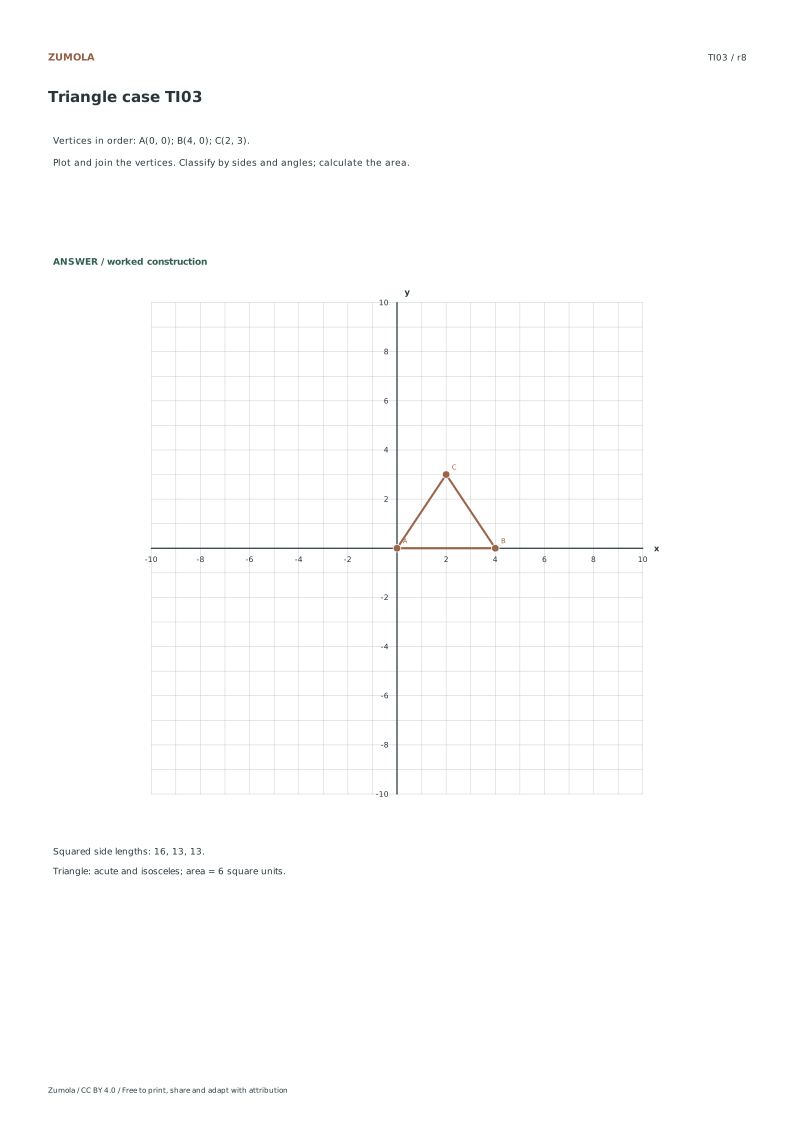
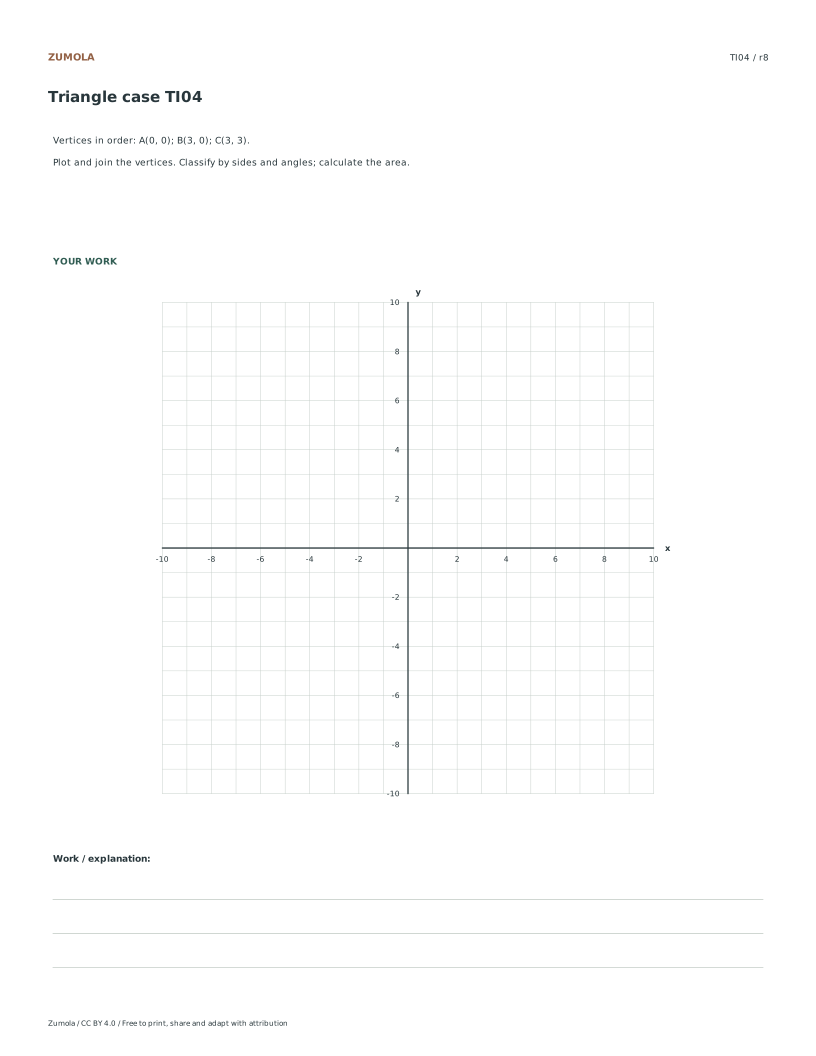
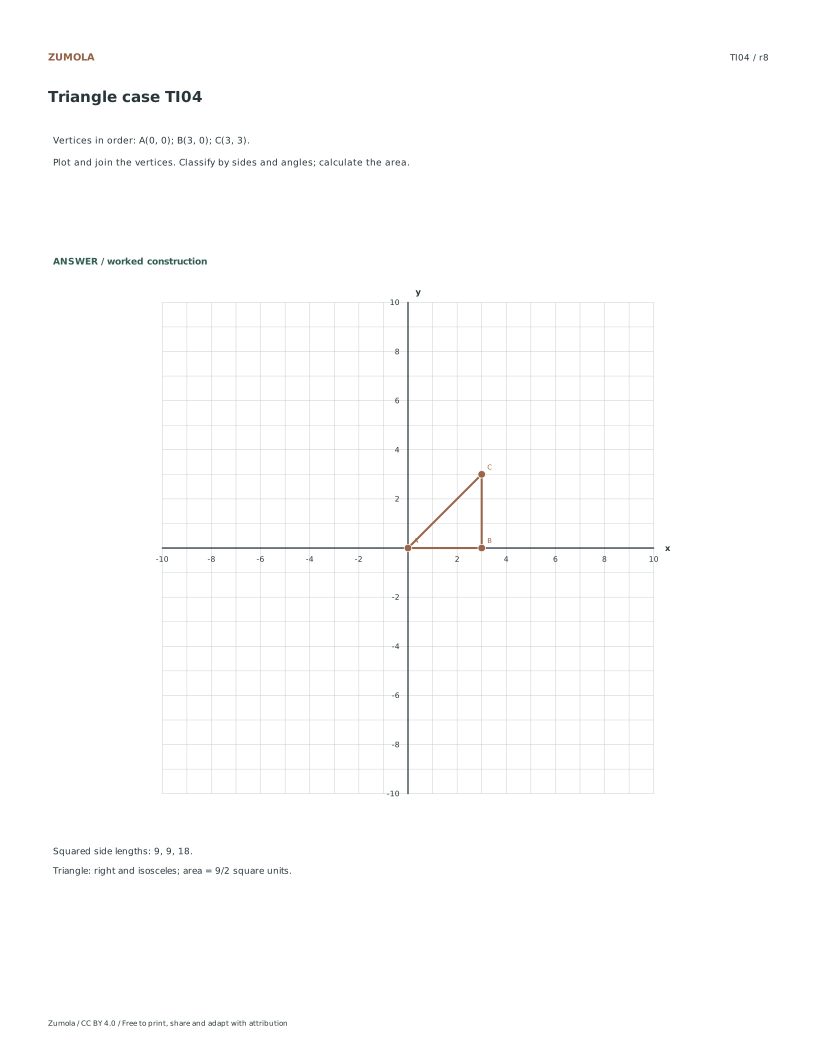
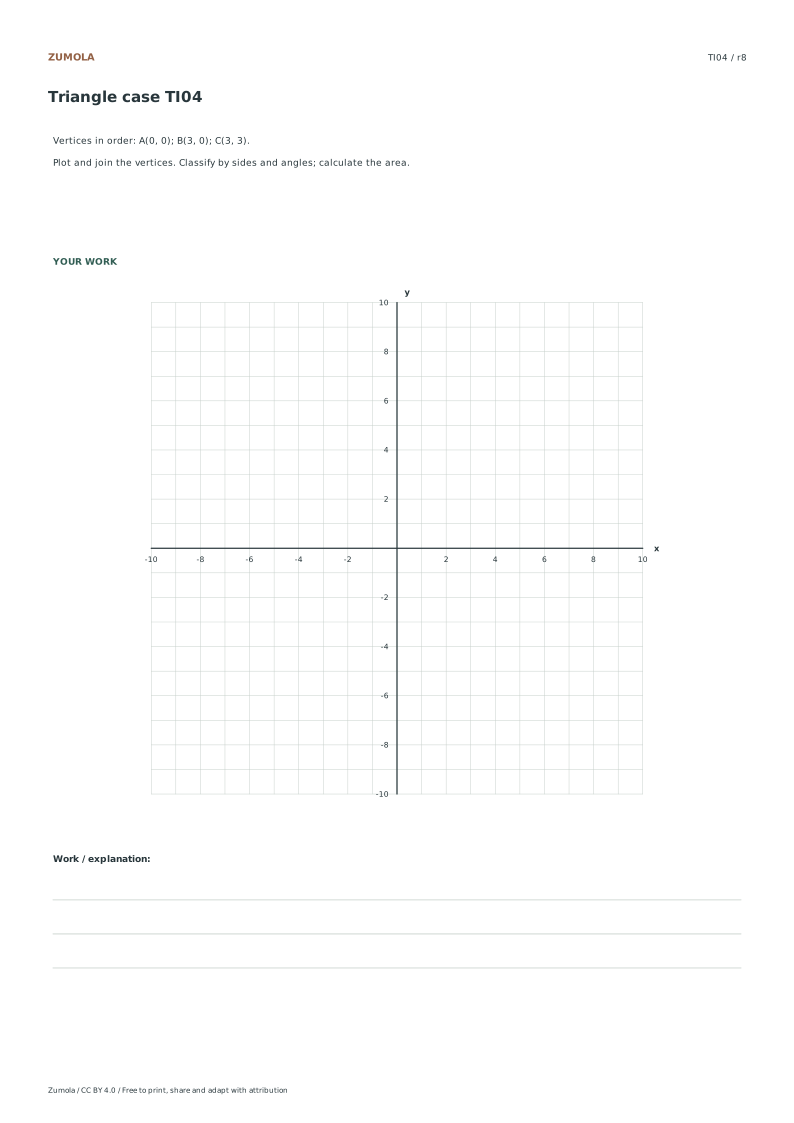
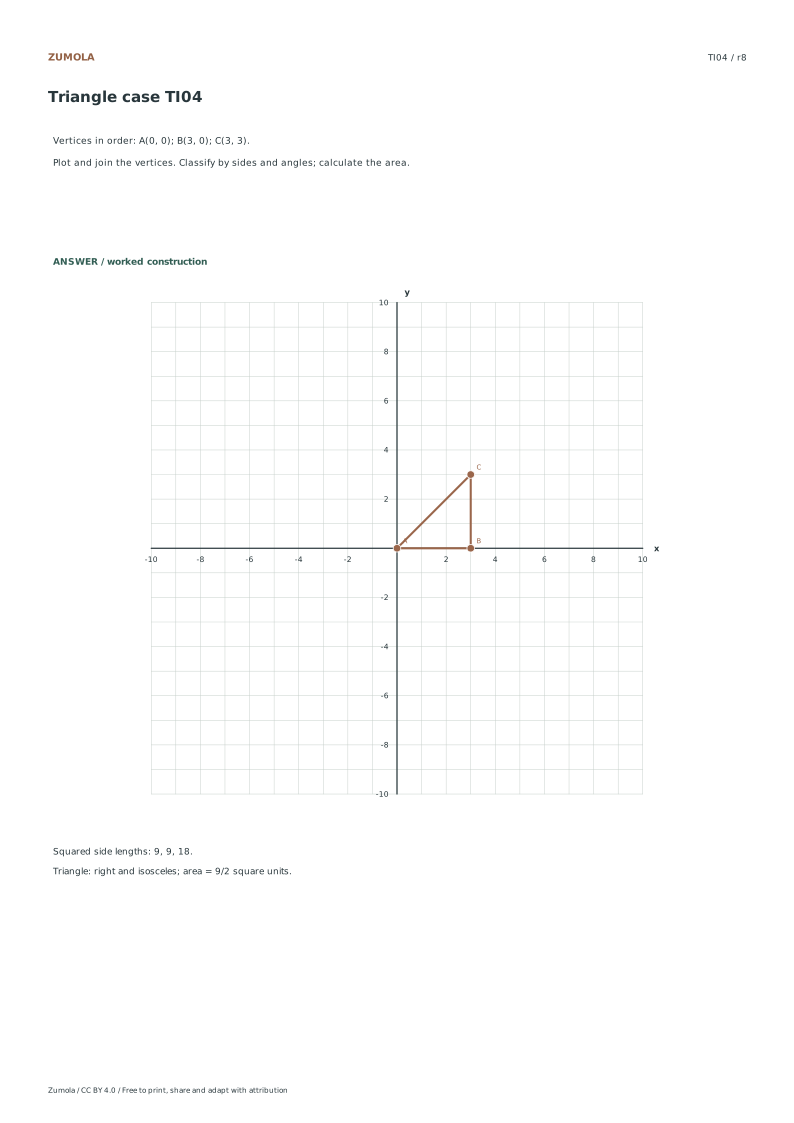
Start by plotting each vertex on the grid using its coordinates. For example, with A(0, 0), B(4, 0), and C(0, 3), mark these points precisely. Then join the points in order to form the triangle. This step ensures you see the shape before calculating. Next, find the squared side lengths using the distance formula or by counting grid squares when sides are horizontal or vertical. For the example, the squared lengths are 16, 25, and 9. These values help classify the triangle and compute the area.
- Classifying Triangles by Sides and Angles
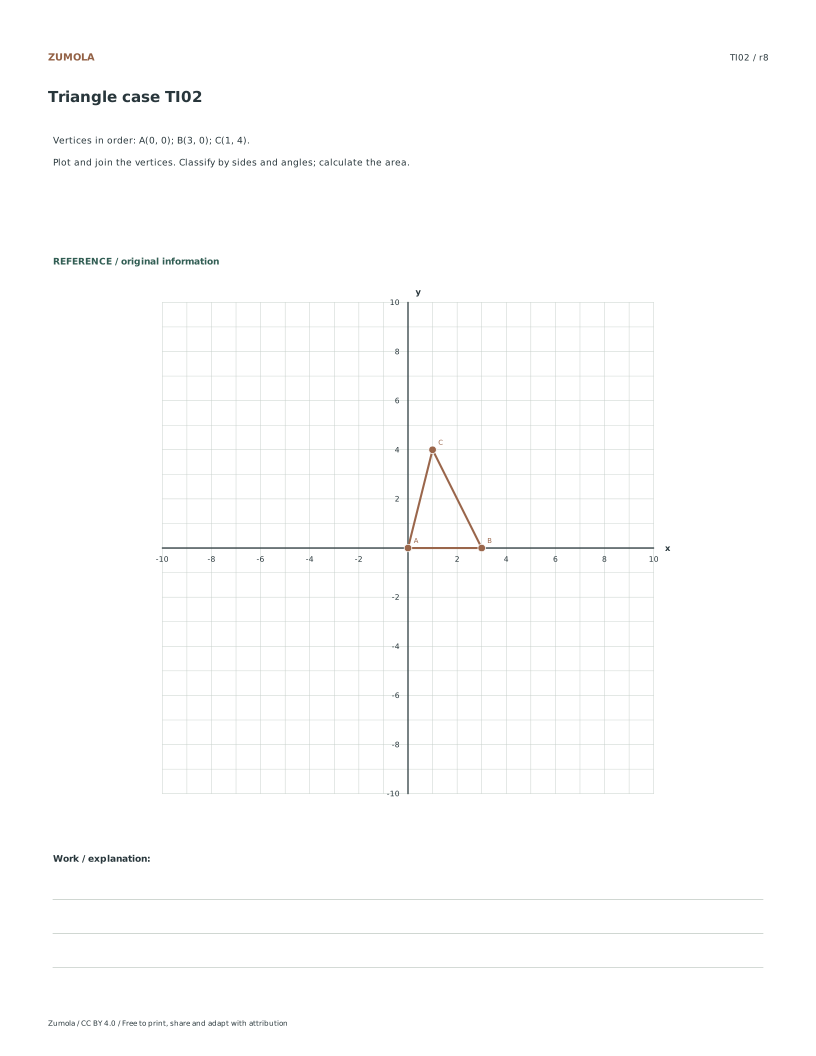
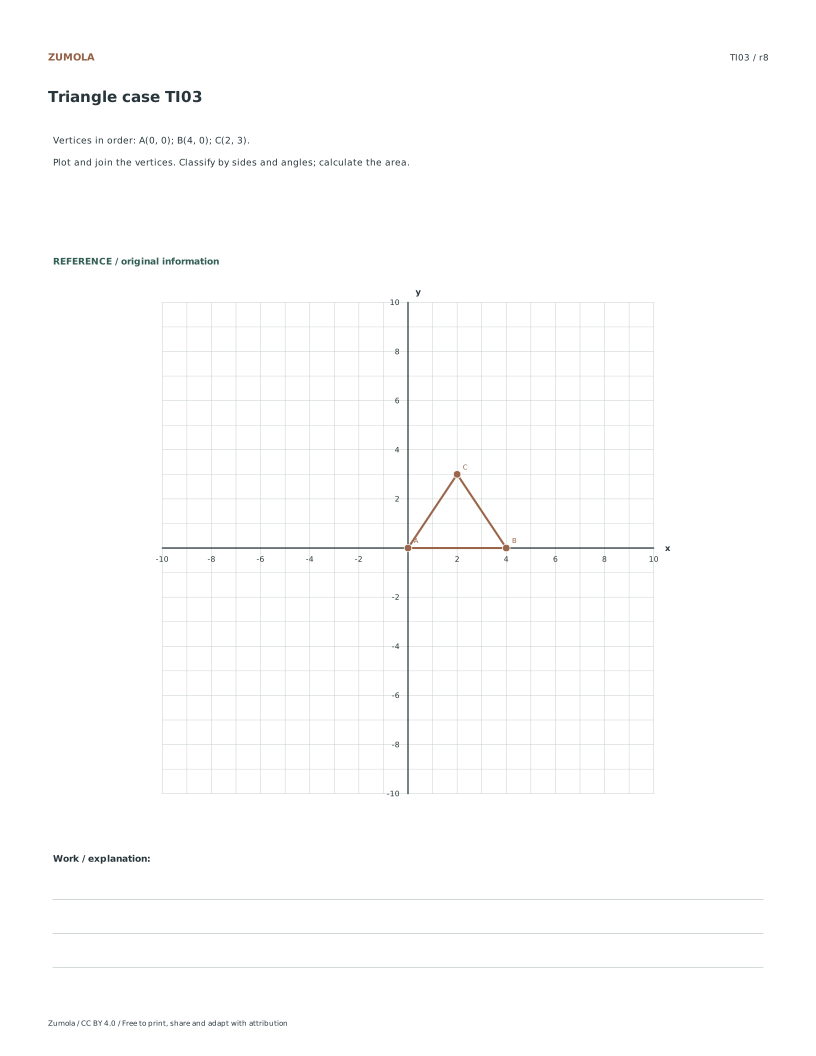
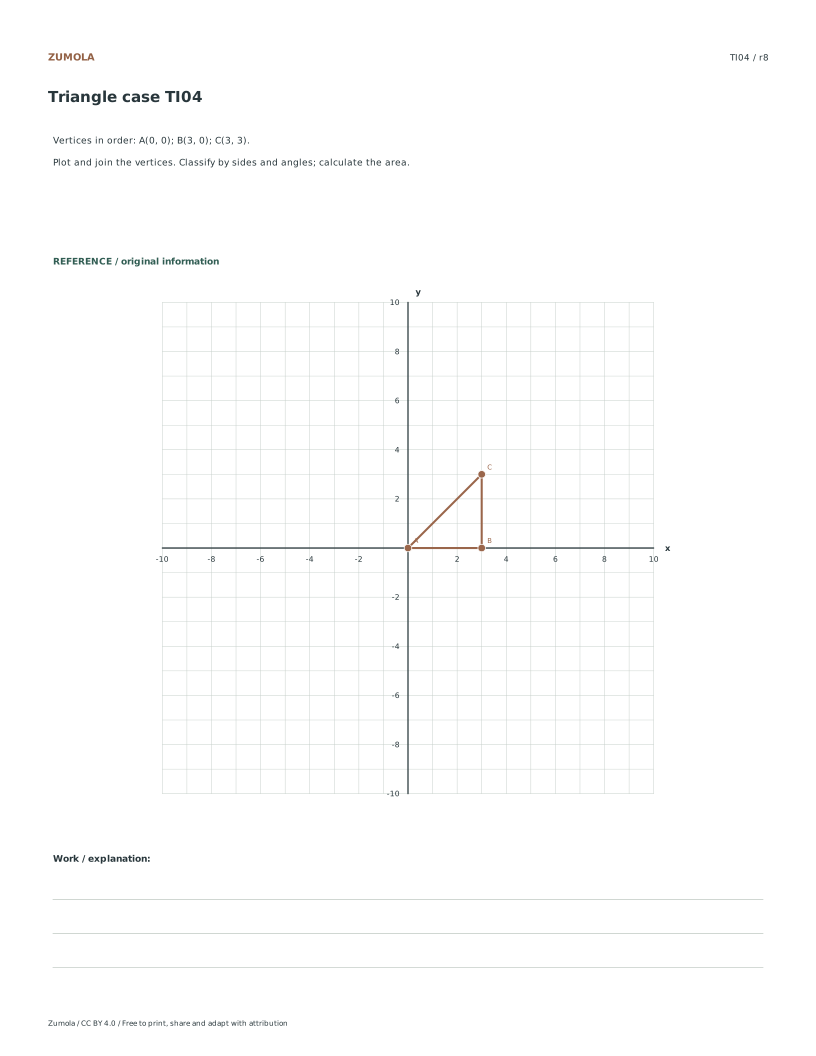
Compare the squared side lengths to classify the triangle. If all three squared lengths are different, the triangle is scalene. If two are equal, it is isosceles. For angles, check the relationship between the squares: if the sum of the two smaller squares equals the largest, it is right; if greater, acute; if less, obtuse. For instance, squared lengths 16, 25, 9 give 16+9=25, so it is right. Lengths 9, 20, 17 give 9+17=26>20, so acute. Lengths 16, 13, 13 give 13+13=26>16, so acute. Lengths 9, 9, 18 give 9+9=18, so right.
- Calculating Area on a Grid
For triangles with a horizontal or vertical base, use the base-height formula: area = 1/2 × base × height. Identify the base length by counting squares along the horizontal or vertical side, and the height as the perpendicular distance from the opposite vertex to the base line. For A(0,0), B(4,0), C(0,3), base AB=4, height from C to AB is 3, so area=1/2×4×3=6. For A(0,0), B(3,0), C(1,4), base AB=3, height=4, area=6. For A(0,0), B(4,0), C(2,3), base=4, height=3, area=6. For A(0,0), B(3,0), C(3,3), base=3, height=3, area=9/2.