Free original lessons
Draw Contrast
A contrast drawing plate places paired drawings side by side so their differences are easy to see. This lesson compares lightness and surface texture. Study the illustrated cup pairs before drawing your own, then check that the differences remain clear from a short distance.
Letter & A4
PDF & SVG
What a contrast plate is
A contrast plate groups drawings in pairs. Each pair holds the outline steady and changes one visual feature. Here that feature is value or texture. A study plate makes the differences easy to compare.
Light-dark contrast
Light-dark contrast is the difference in value between two areas. Value means how light or dark an area appears. A strong light-dark pair has one clearly light area and one clearly dark area placed close together so the eye can compare them. You do not need exact measurements; you need a clear difference a viewer can see at a glance.
Texture contrast
Texture contrast is the difference in surface quality between two areas. One area may look smooth and even; the other may look rough, broken, or uneven. Draw texture with repeated marks, varied line direction, or small shapes. The goal is that the two textures look clearly different when placed side by side.
Building the plate
Choose a simple subject for each pair, such as a cup, a stone, a leaf, or a piece of cloth. Draw the two versions of the subject in two boxes side by side. In the light-dark pair, make one version mostly light and the other mostly dark. In the texture pair, make one version smooth and the other rough. Keep the subject the same in both boxes so the contrast is the only major difference.
Download the complete resource pack
All individual SVG pages (18)
- A4 reference page 1
- A4 student page 1
- A4 student page 2
- A4 student page 3
- A4 student page 4
- A4 answer page 1
- A4 answer page 2
- A4 answer page 3
- A4 answer page 4
- LETTER reference page 1
- LETTER student page 1
- LETTER student page 2
- LETTER student page 3
- LETTER student page 4
- LETTER answer page 1
- LETTER answer page 2
- LETTER answer page 3
- LETTER answer page 4
Print at 100% / actual size. Use the stated scale on any schematic diagram; physical cutting templates are identified separately. A4 and US Letter are separate files. Free access, no signup; CC BY 4.0.
How to use these pages
- What a contrast plate is
- Light-dark contrast
- Texture contrast
- Building the plate
Worked example
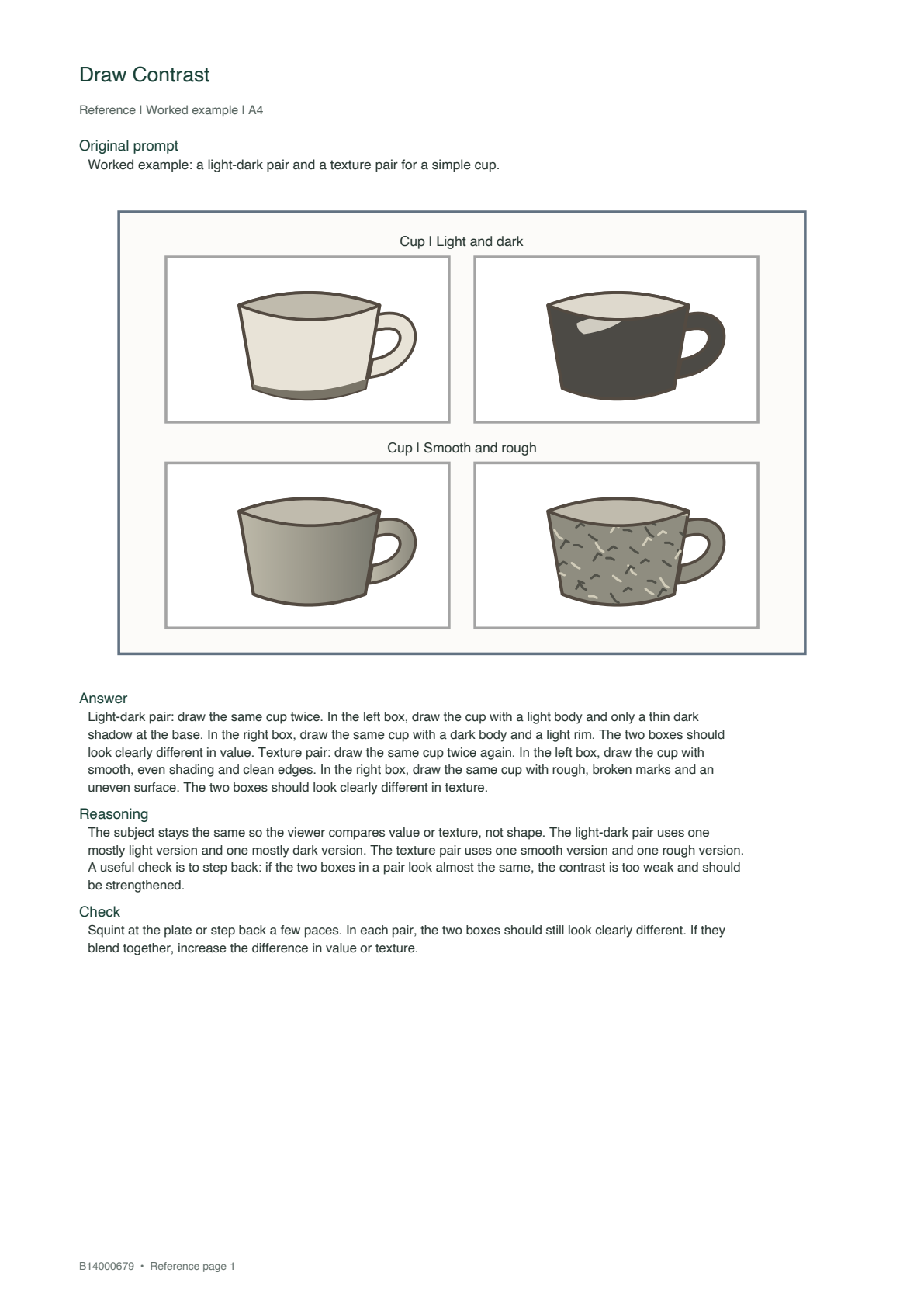
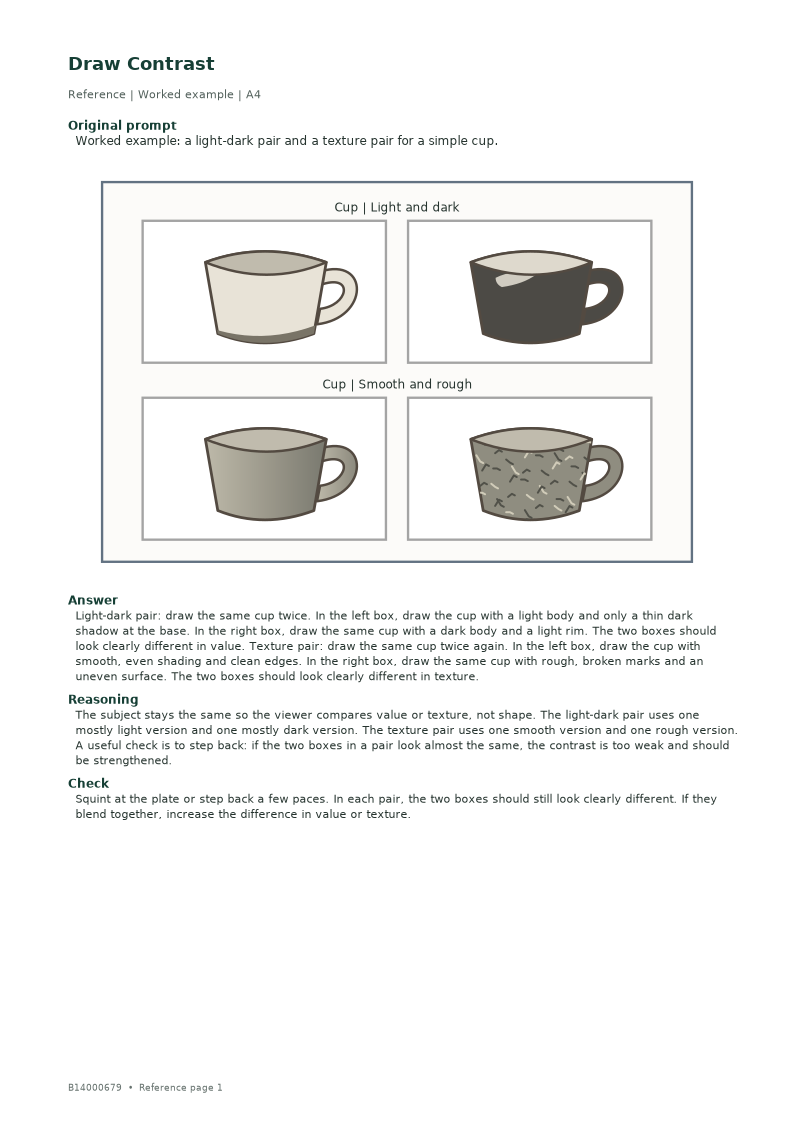
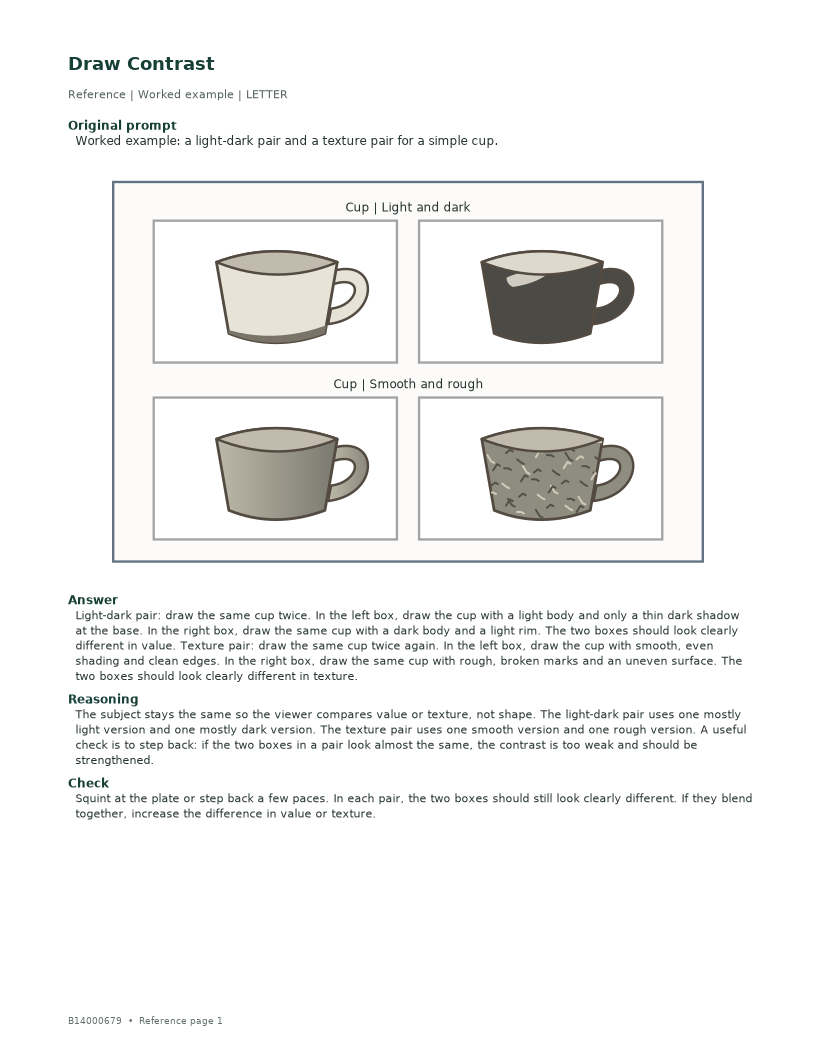
Example: Worked example: a light-dark pair and a texture pair for a simple cup.
Answer: Light-dark pair: draw the same cup twice. In the left box, draw the cup with a light body and only a thin dark shadow at the base. In the right box, draw the same cup with a dark body and a light rim. The two boxes should look clearly different in value. Texture pair: draw the same cup twice again. In the left box, draw the cup with smooth, even shading and clean edges. In the right box, draw the same cup with rough, broken marks and an uneven surface. The two boxes should look clearly different in texture.
Reasoning: The subject stays the same so the viewer compares value or texture, not shape. The light-dark pair uses one mostly light version and one mostly dark version. The texture pair uses one smooth version and one rough version. A useful check is to step back: if the two boxes in a pair look almost the same, the contrast is too weak and should be strengthened.
Check: Squint at the plate or step back a few paces. In each pair, the two boxes should still look clearly different. If they blend together, increase the difference in value or texture.
Four practice tasks and complete answers
Task 1
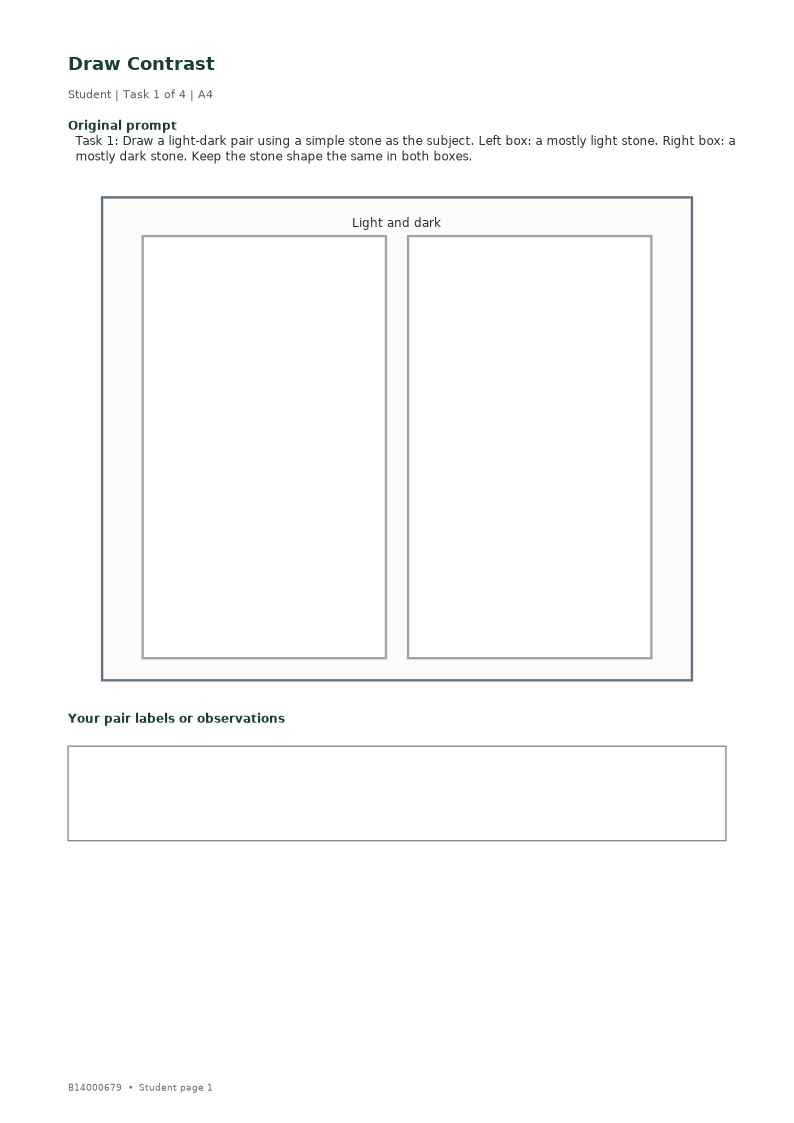
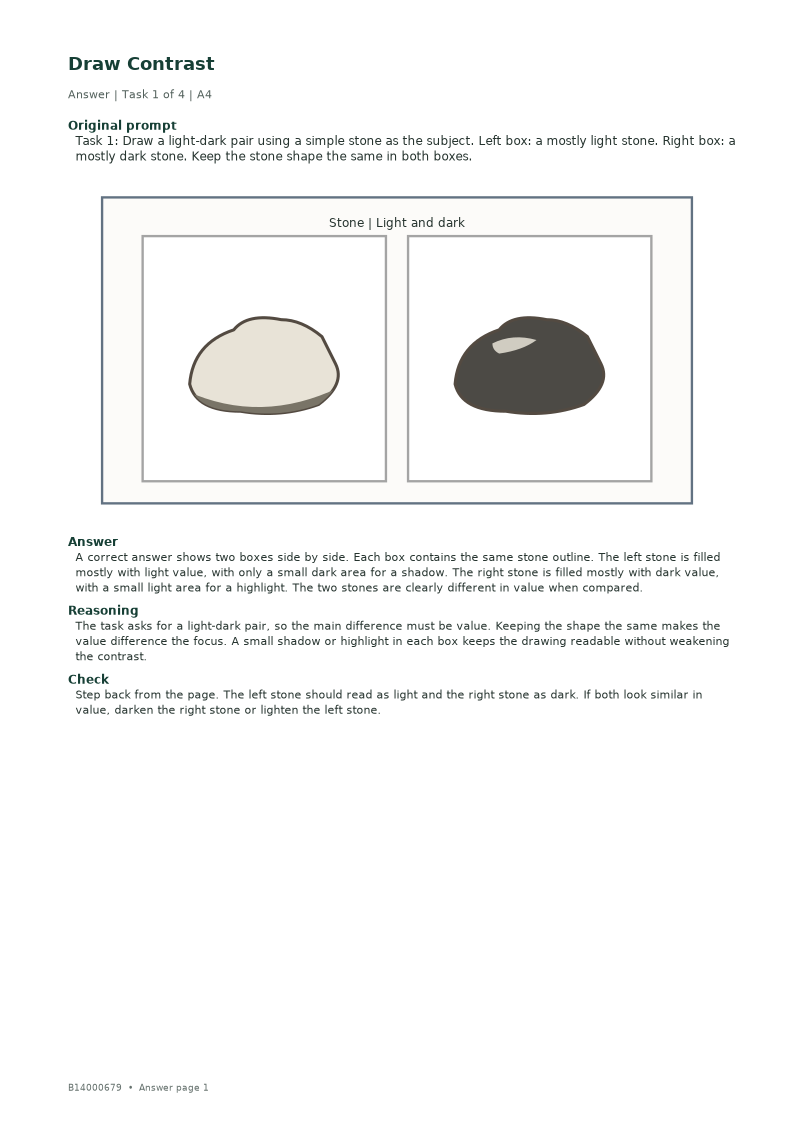
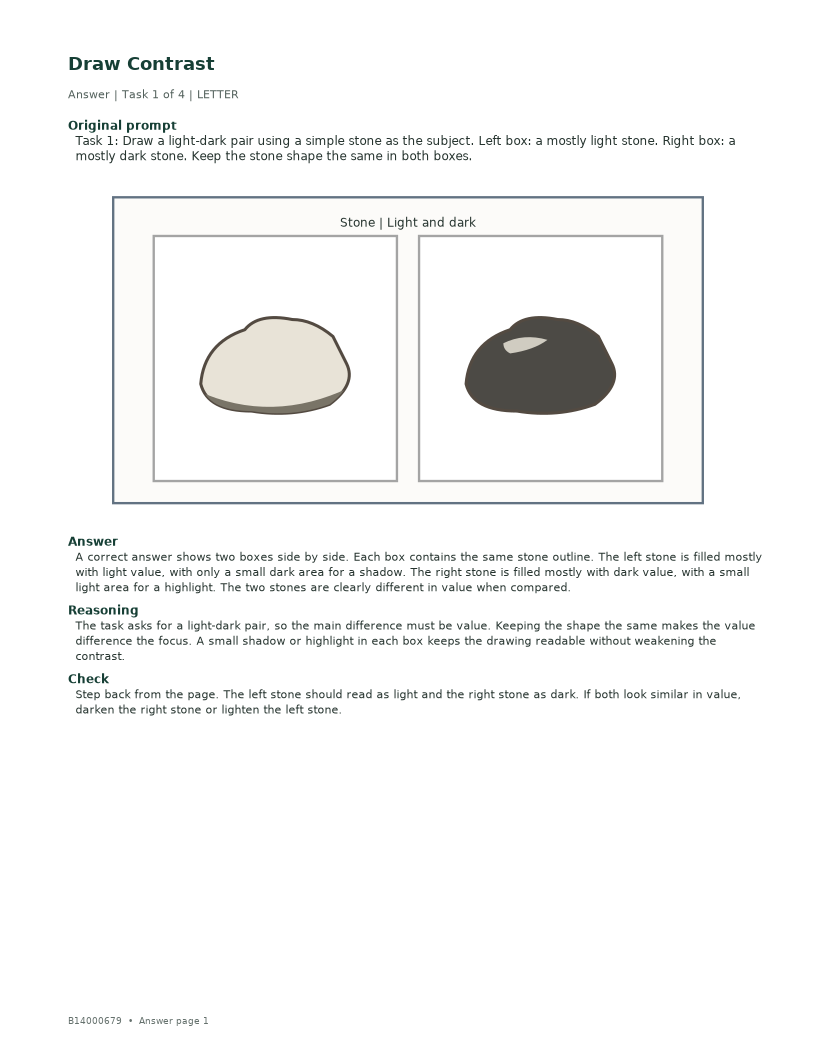
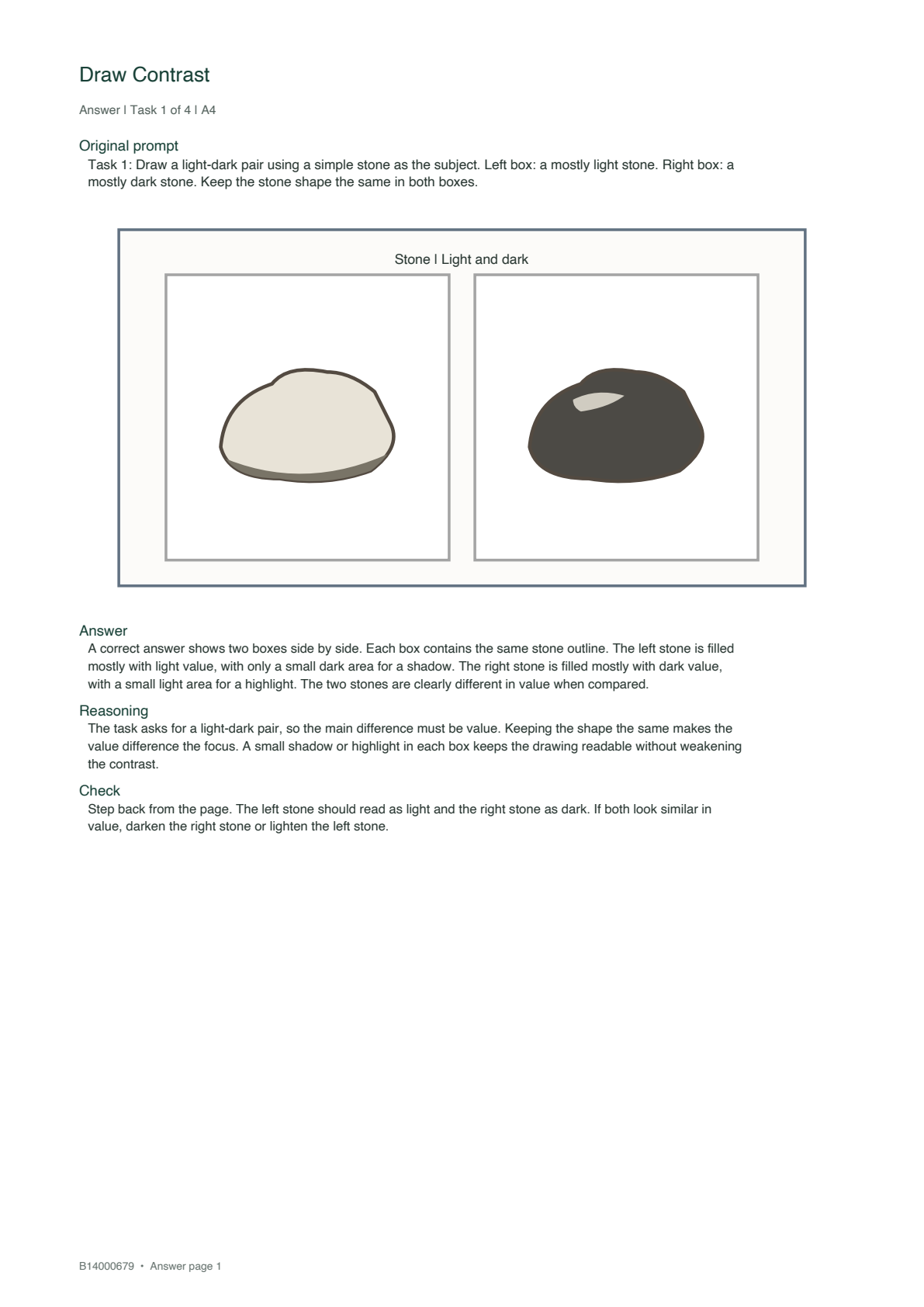
Task 1: Draw a light-dark pair using a simple stone as the subject. Left box: a mostly light stone. Right box: a mostly dark stone. Keep the stone shape the same in both boxes.
Show answer 1
A correct answer shows two boxes side by side. Each box contains the same stone outline. The left stone is filled mostly with light value, with only a small dark area for a shadow. The right stone is filled mostly with dark value, with a small light area for a highlight. The two stones are clearly different in value when compared.
The task asks for a light-dark pair, so the main difference must be value. Keeping the shape the same makes the value difference the focus. A small shadow or highlight in each box keeps the drawing readable without weakening the contrast.
Check: Step back from the page. The left stone should read as light and the right stone as dark. If both look similar in value, darken the right stone or lighten the left stone.
Task 2
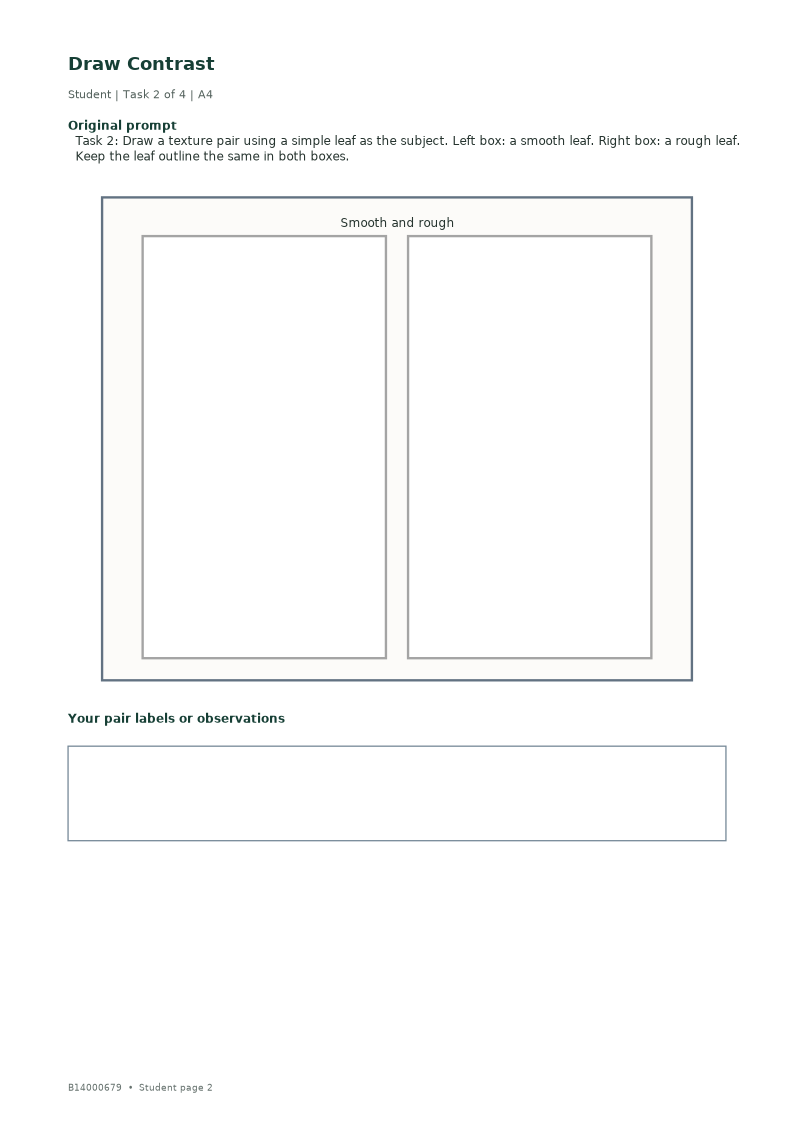
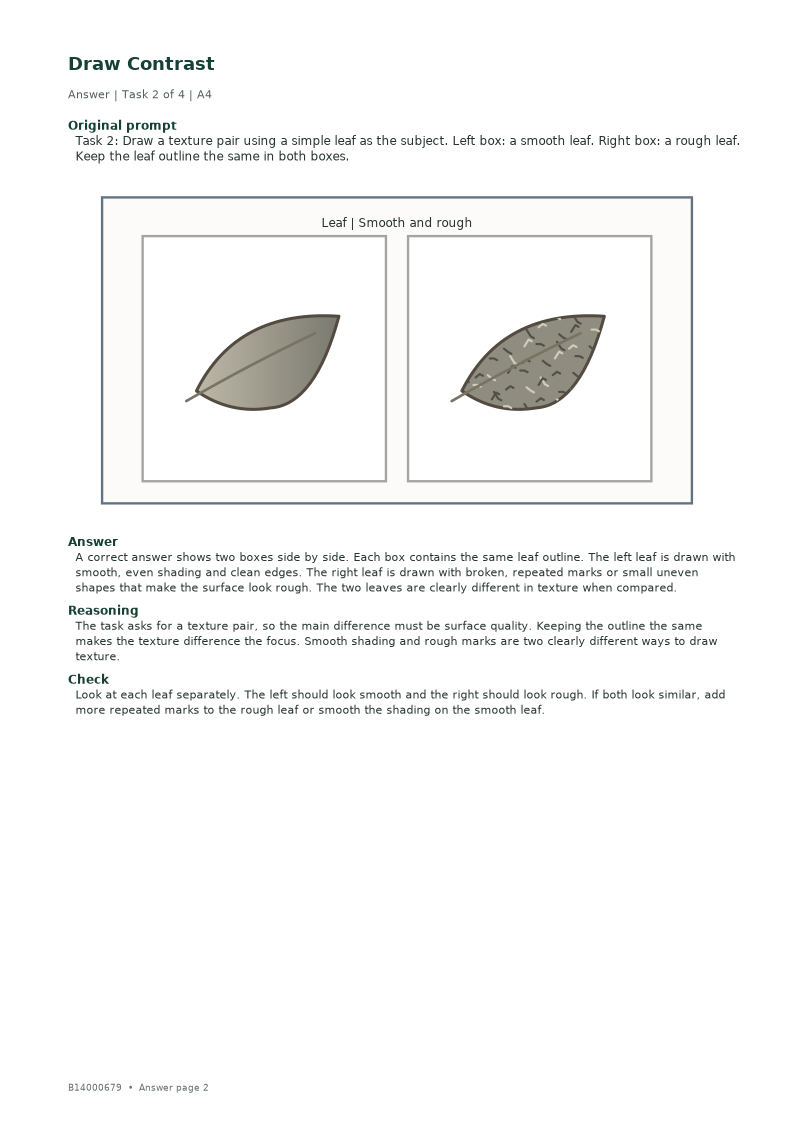
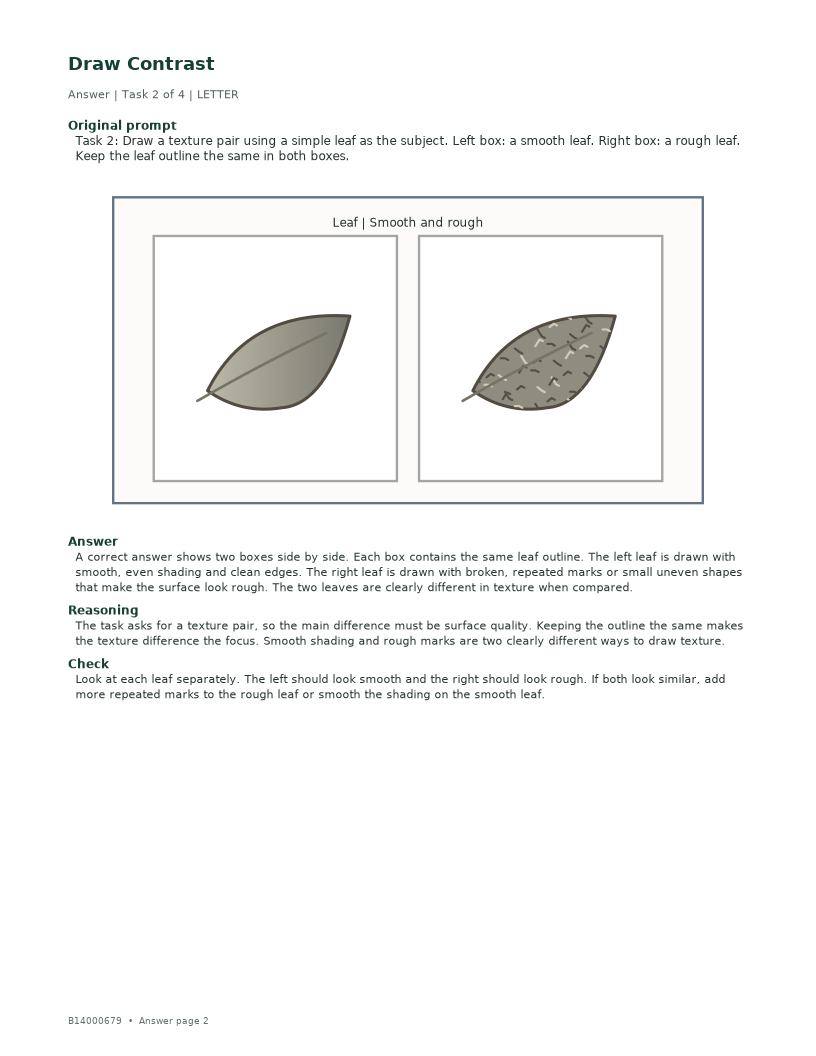
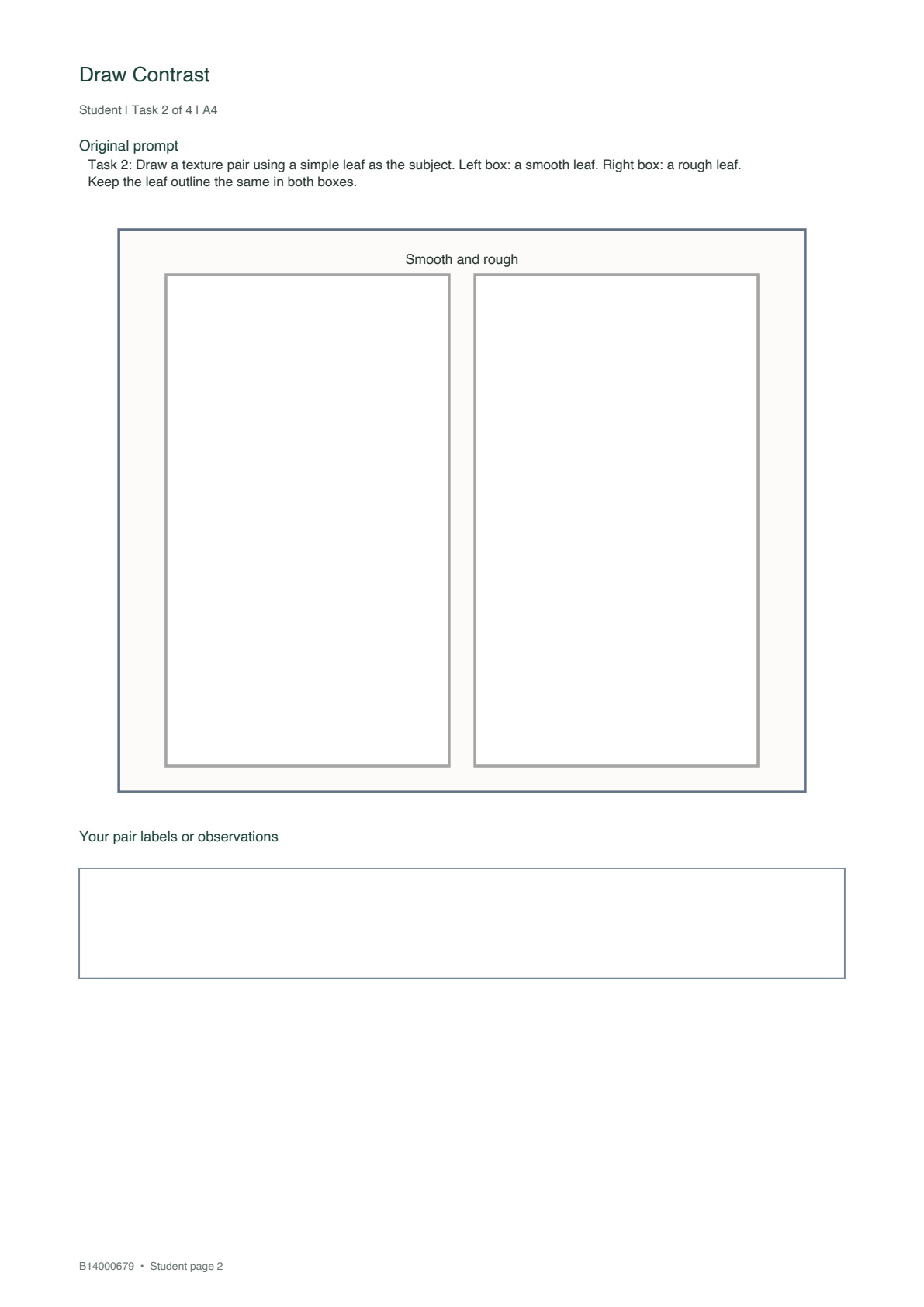
Task 2: Draw a texture pair using a simple leaf as the subject. Left box: a smooth leaf. Right box: a rough leaf. Keep the leaf outline the same in both boxes.
Show answer 2
A correct answer shows two boxes side by side. Each box contains the same leaf outline. The left leaf is drawn with smooth, even shading and clean edges. The right leaf is drawn with broken, repeated marks or small uneven shapes that make the surface look rough. The two leaves are clearly different in texture when compared.
The task asks for a texture pair, so the main difference must be surface quality. Keeping the outline the same makes the texture difference the focus. Smooth shading and rough marks are two clearly different ways to draw texture.
Check: Look at each leaf separately. The left should look smooth and the right should look rough. If both look similar, add more repeated marks to the rough leaf or smooth the shading on the smooth leaf.
Task 3
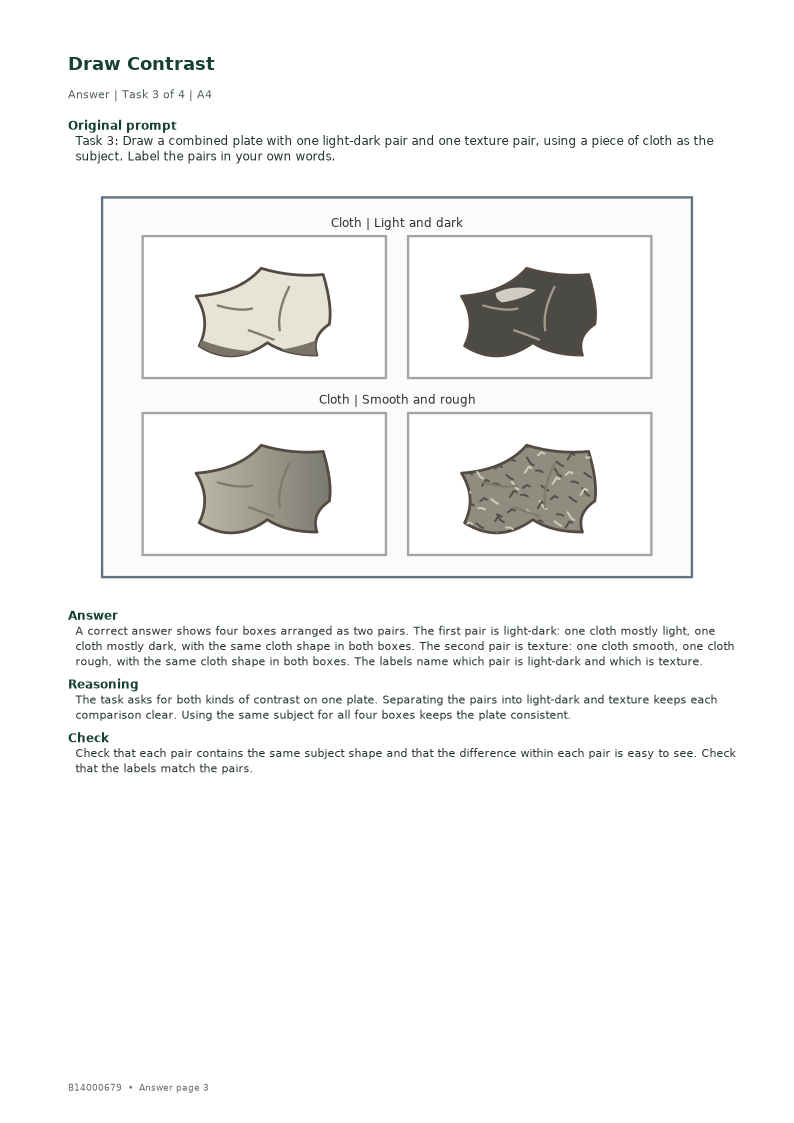
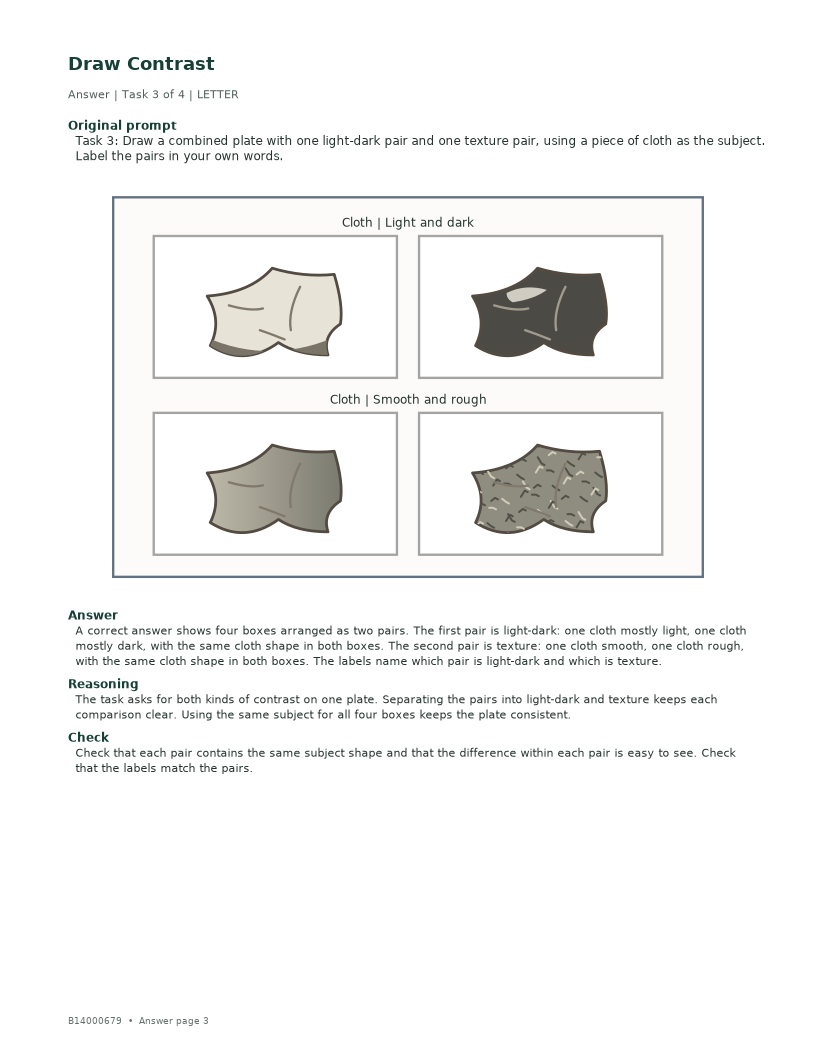
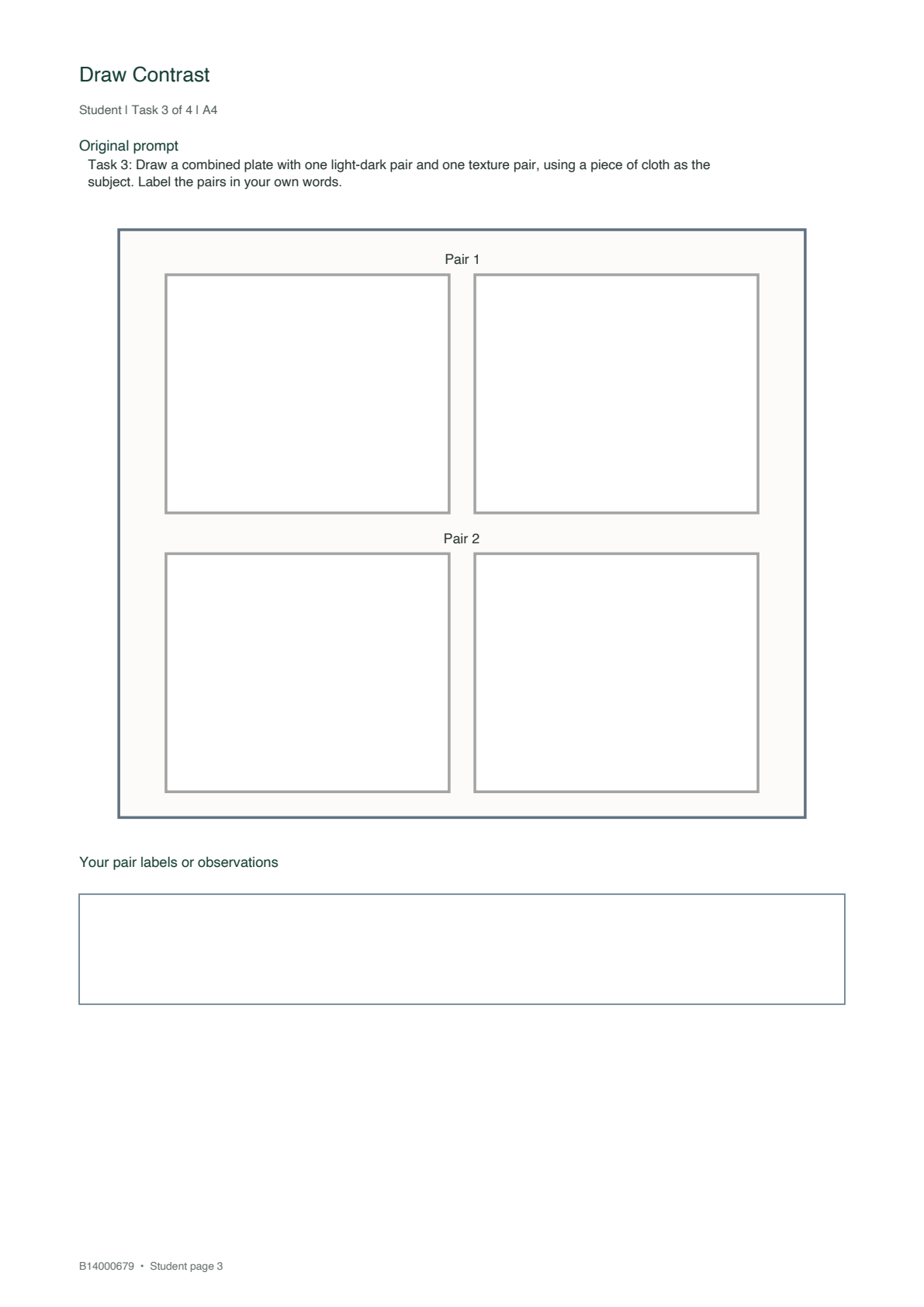
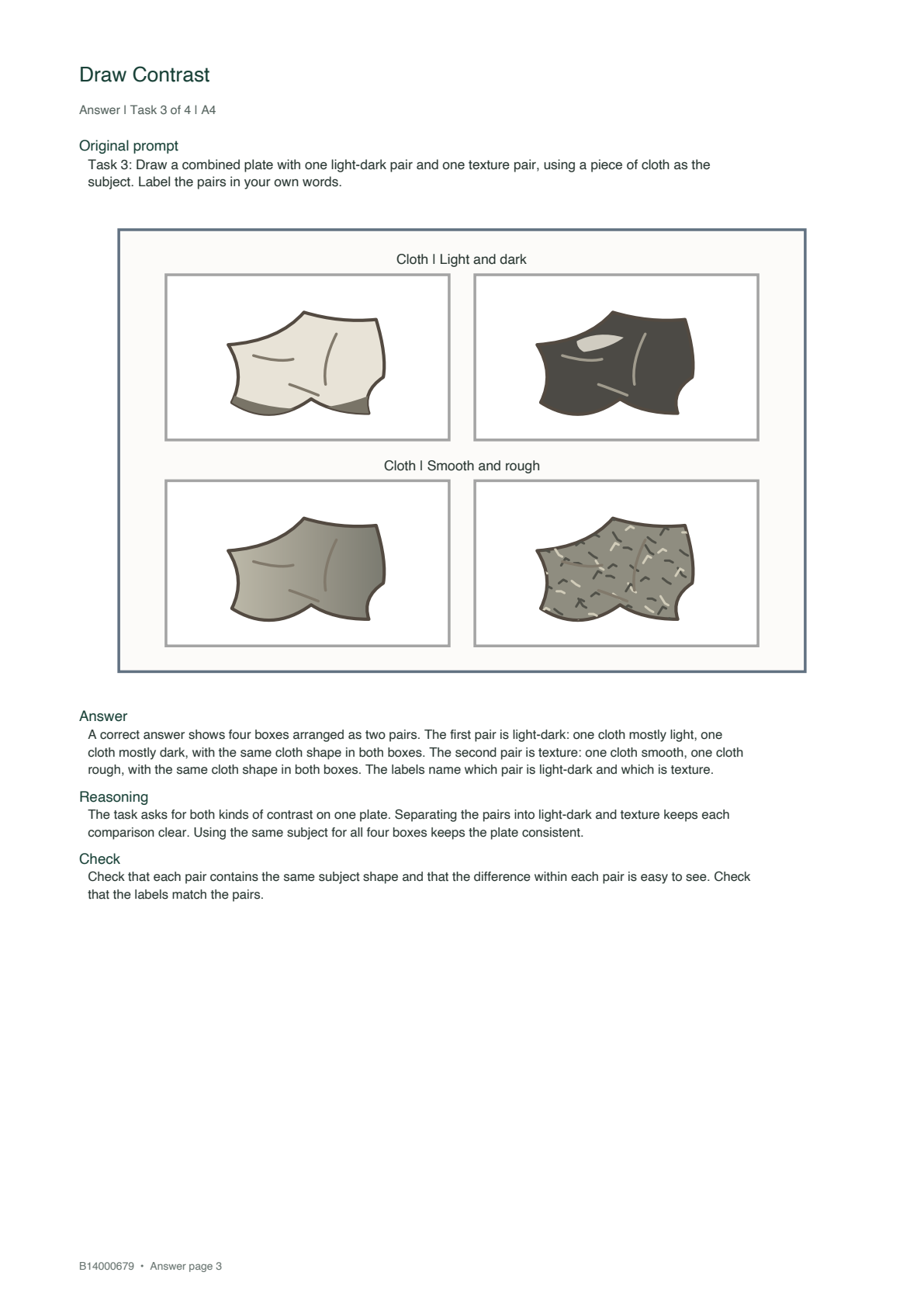
Task 3: Draw a combined plate with one light-dark pair and one texture pair, using a piece of cloth as the subject. Label the pairs in your own words.
Show answer 3
A correct answer shows four boxes arranged as two pairs. The first pair is light-dark: one cloth mostly light, one cloth mostly dark, with the same cloth shape in both boxes. The second pair is texture: one cloth smooth, one cloth rough, with the same cloth shape in both boxes. The labels name which pair is light-dark and which is texture.
The task asks for both kinds of contrast on one plate. Separating the pairs into light-dark and texture keeps each comparison clear. Using the same subject for all four boxes keeps the plate consistent.
Check: Check that each pair contains the same subject shape and that the difference within each pair is easy to see. Check that the labels match the pairs.
Task 4
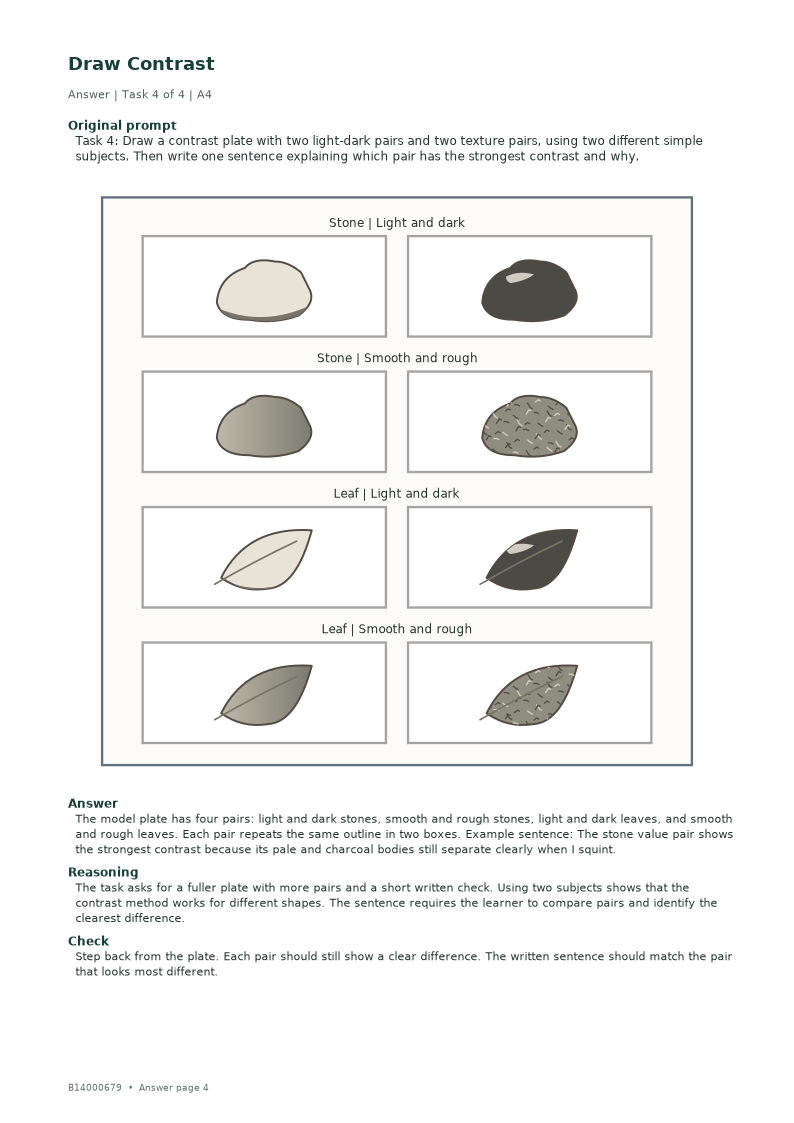
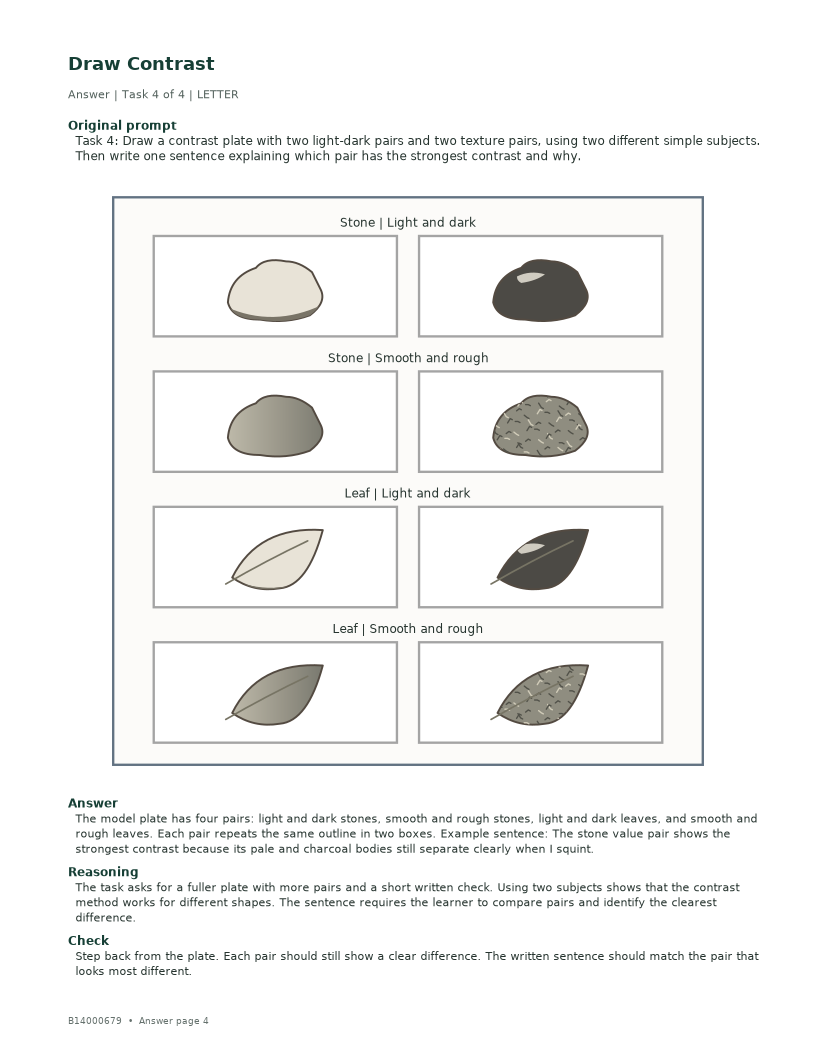
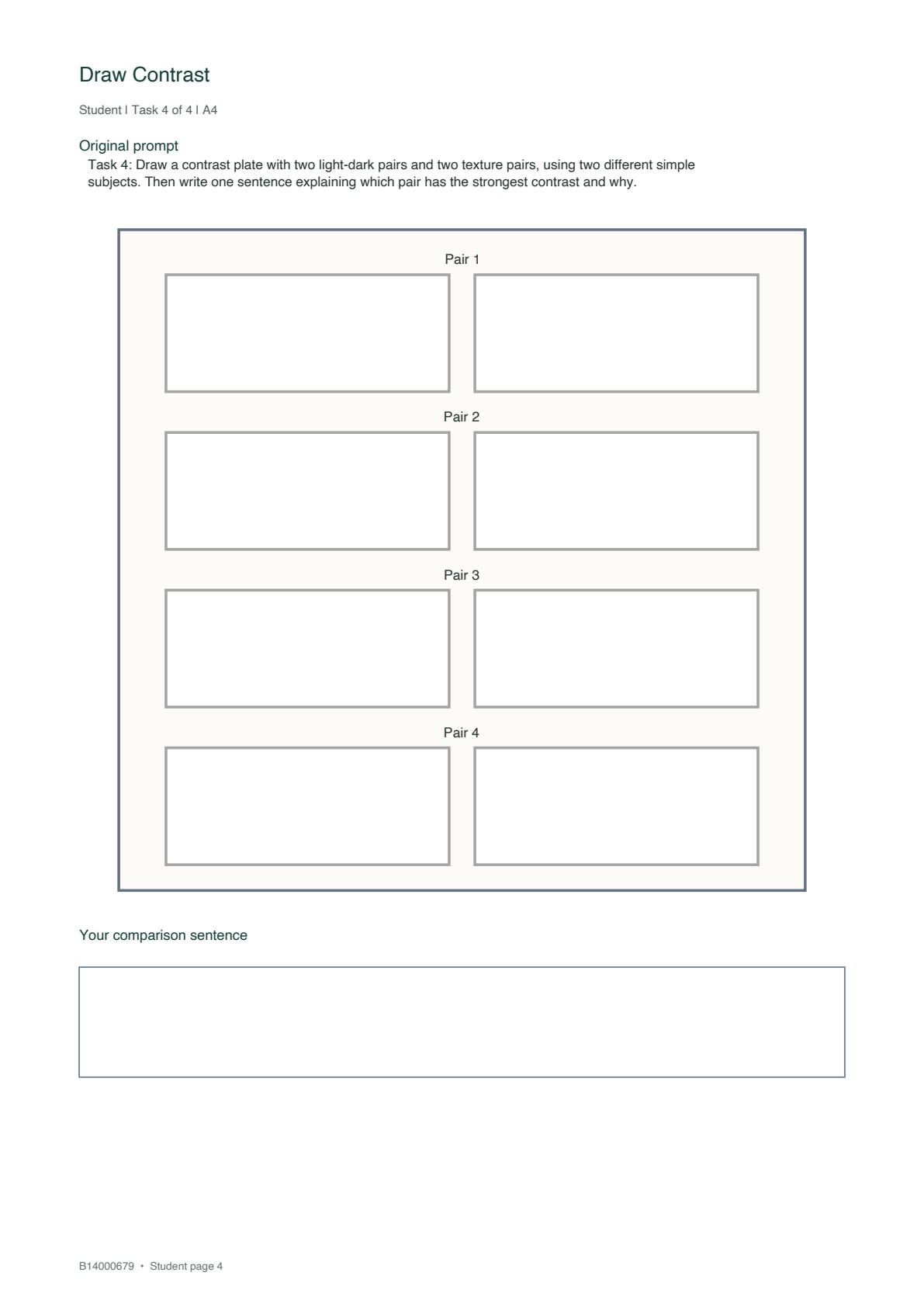
Task 4: Draw a contrast plate with two light-dark pairs and two texture pairs, using two different simple subjects. Then write one sentence explaining which pair has the strongest contrast and why.
Show answer 4
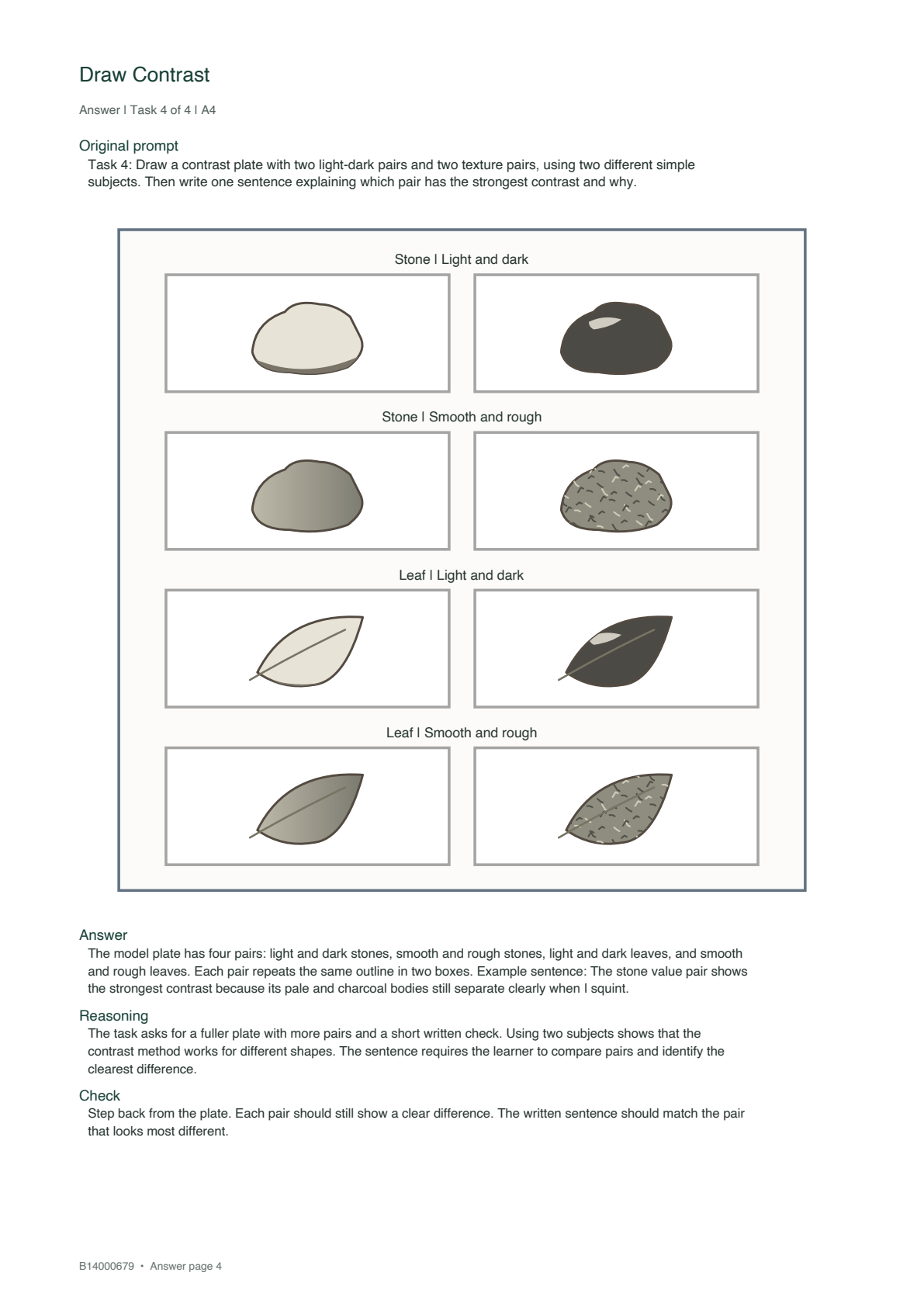
The model plate has four pairs: light and dark stones, smooth and rough stones, light and dark leaves, and smooth and rough leaves. Each pair repeats the same outline in two boxes. Example sentence: The stone value pair shows the strongest contrast because its pale and charcoal bodies still separate clearly when I squint.
The task asks for a fuller plate with more pairs and a short written check. Using two subjects shows that the contrast method works for different shapes. The sentence requires the learner to compare pairs and identify the clearest difference.
Check: Step back from the plate. Each pair should still show a clear difference. The written sentence should match the pair that looks most different.
Useful checks
- Making both boxes in a pair look almost the same. Increase the difference: make the light version lighter or the dark version darker, or make the smooth version smoother or the rough version rougher.
- Changing the subject shape between the two boxes in a pair. Keep the same outline in both boxes so the contrast in value or texture is the main difference.
- Using many small details that hide the contrast. Simplify the drawing and focus on one clear difference per pair.
Questions about this resource
Do I need exact measurements?
No. This is a qualitative drawing task. The goal is a clear visible difference, not precise dimensions.
Can I use any subject?
Yes, as long as the same subject shape is used in both boxes of a pair so the contrast is easy to compare.