Free original lessons
Color Trace and Draw Worksheet
This worksheet teaches a three-stage routine. First read the color key to learn which color belongs to each part. Then trace the given outline exactly, keeping the pencil on the line. Then redraw the same subject freehand in the blank draw box, using the color key again. The tracing stage builds the shape; the draw stage tests whether you can rebuild that shape without the guide.
Letter & A4
PDF & SVG
How the three stages work
Read the key for the parts and colors of the current subject. The trace and redraw use the same assignments. Match the labeled swatch to each part.
Trace stage: a light outline of the subject sits in a trace box. Trace over every line with a pencil, then color each part according to the key. The traced line should sit on top of the printed line, not beside it, and the coloring should stay inside the traced outline.
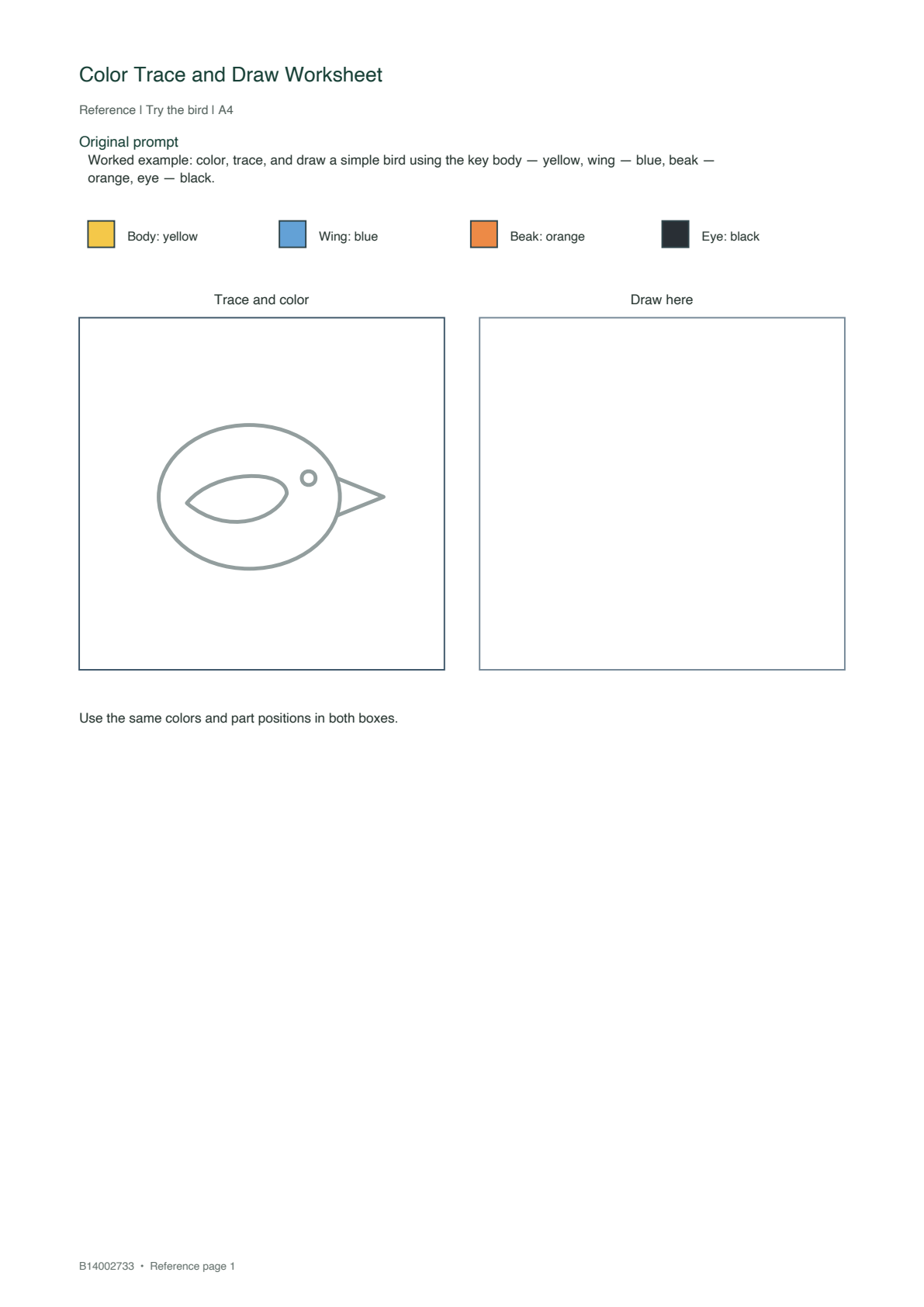
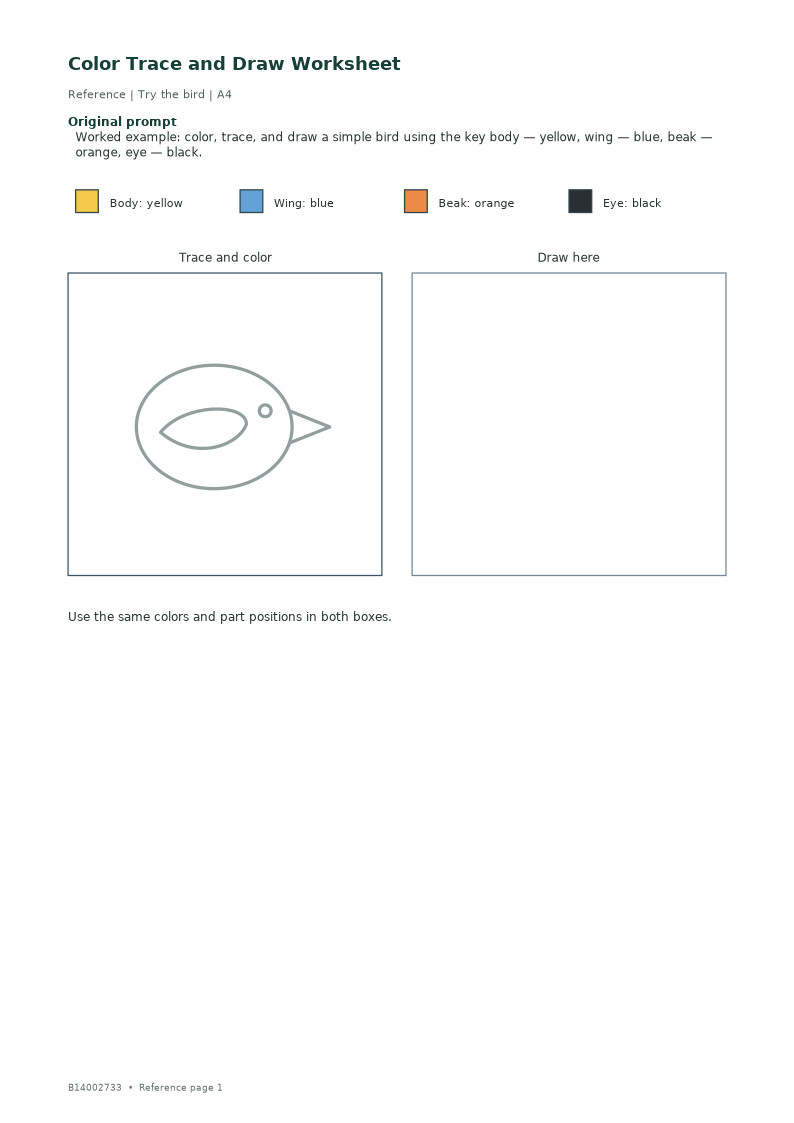
Worked example: a simple bird
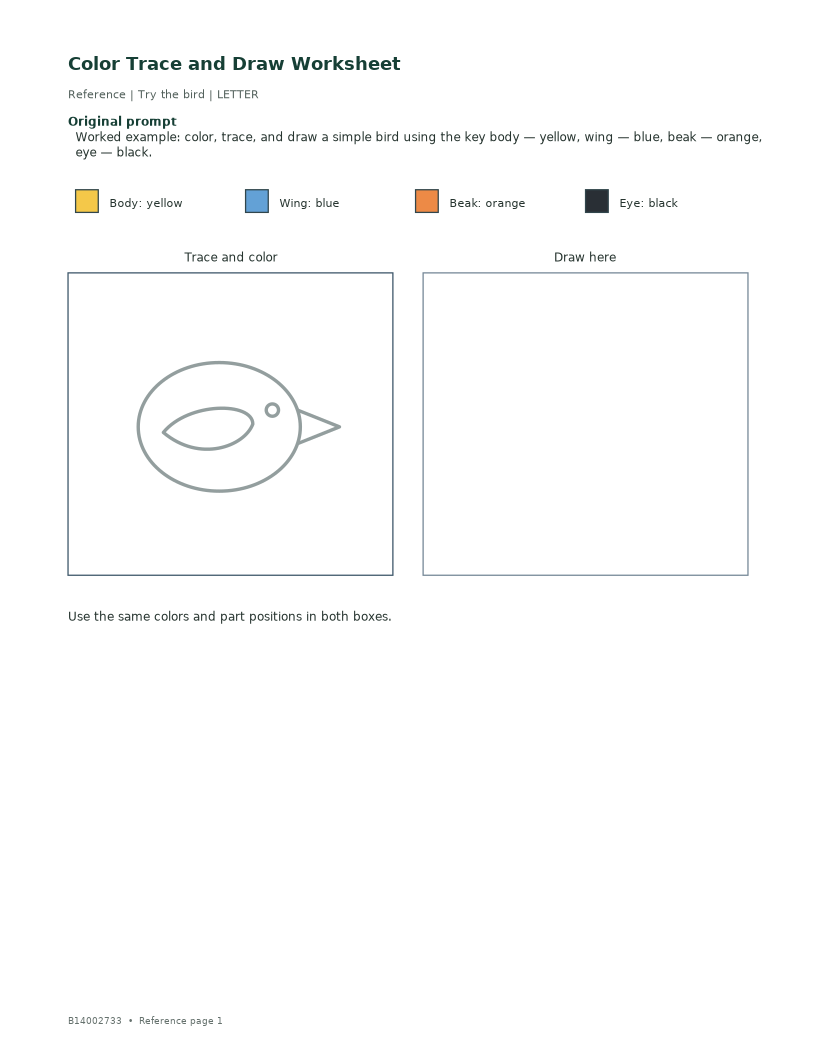
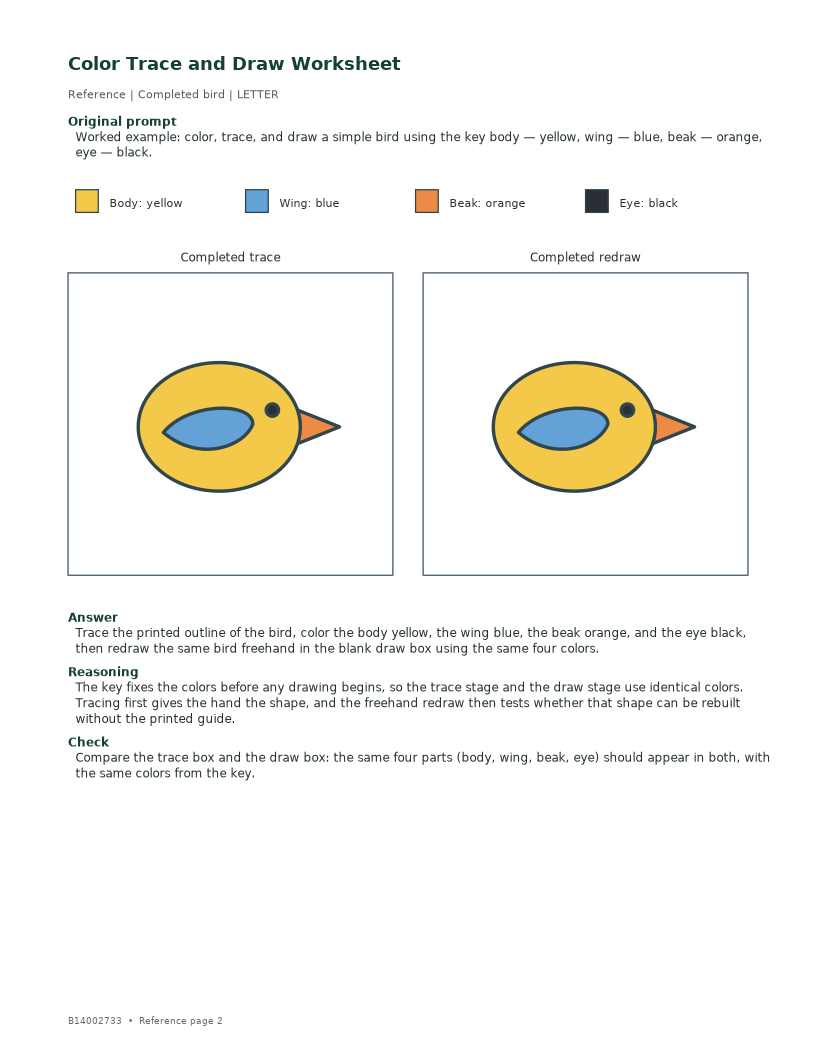
Color key for the example: body — yellow, wing — blue, beak — orange, eye — black.
Trace stage: the printed outline shows a rounded body, one wing shape inside the body, a small triangle beak at the front, and a dot for the eye. Trace each line, then color the body yellow, the wing blue, the beak orange, and the eye black. The traced lines should cover the printed lines and the colors should match the key exactly.
Checking your worksheet
Check one: does every colored part match the color key? Check two: in the trace box, does your pencil line sit on the printed outline rather than floating away from it? Check three: in the draw box, does your freehand redraw keep the same parts in the same arrangement as the traced version? A useful final check is to lay the trace box and draw box side by side and confirm the same parts appear in both.
Download the complete resource pack
All individual SVG pages (20)
- A4 reference page 1
- A4 reference page 2
- A4 student page 1
- A4 student page 2
- A4 student page 3
- A4 student page 4
- A4 answer page 1
- A4 answer page 2
- A4 answer page 3
- A4 answer page 4
- LETTER reference page 1
- LETTER reference page 2
- LETTER student page 1
- LETTER student page 2
- LETTER student page 3
- LETTER student page 4
- LETTER answer page 1
- LETTER answer page 2
- LETTER answer page 3
- LETTER answer page 4
Print at 100% / actual size. Use the stated scale on any schematic diagram; physical cutting templates are identified separately. A4 and US Letter are separate files. Free access, no signup; CC BY 4.0.
How to use these pages
- How the three stages work
- Worked example: a simple bird
- Checking your worksheet
Worked example
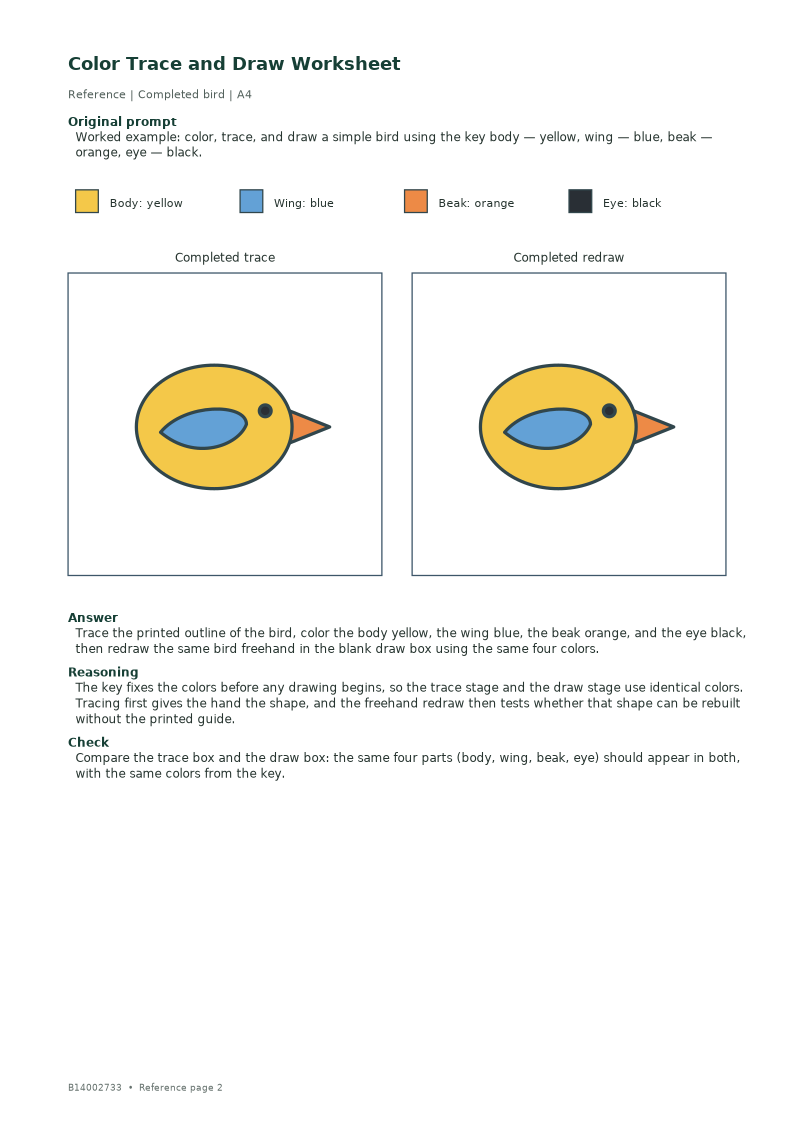
Example: Worked example: color, trace, and draw a simple bird using the key body — yellow, wing — blue, beak — orange, eye — black.
Answer: Trace the printed outline of the bird, color the body yellow, the wing blue, the beak orange, and the eye black, then redraw the same bird freehand in the blank draw box using the same four colors.
Reasoning: The key fixes the colors before any drawing begins, so the trace stage and the draw stage use identical colors. Tracing first gives the hand the shape, and the freehand redraw then tests whether that shape can be rebuilt without the printed guide.
Check: Compare the trace box and the draw box: the same four parts (body, wing, beak, eye) should appear in both, with the same colors from the key.
Four practice tasks and complete answers
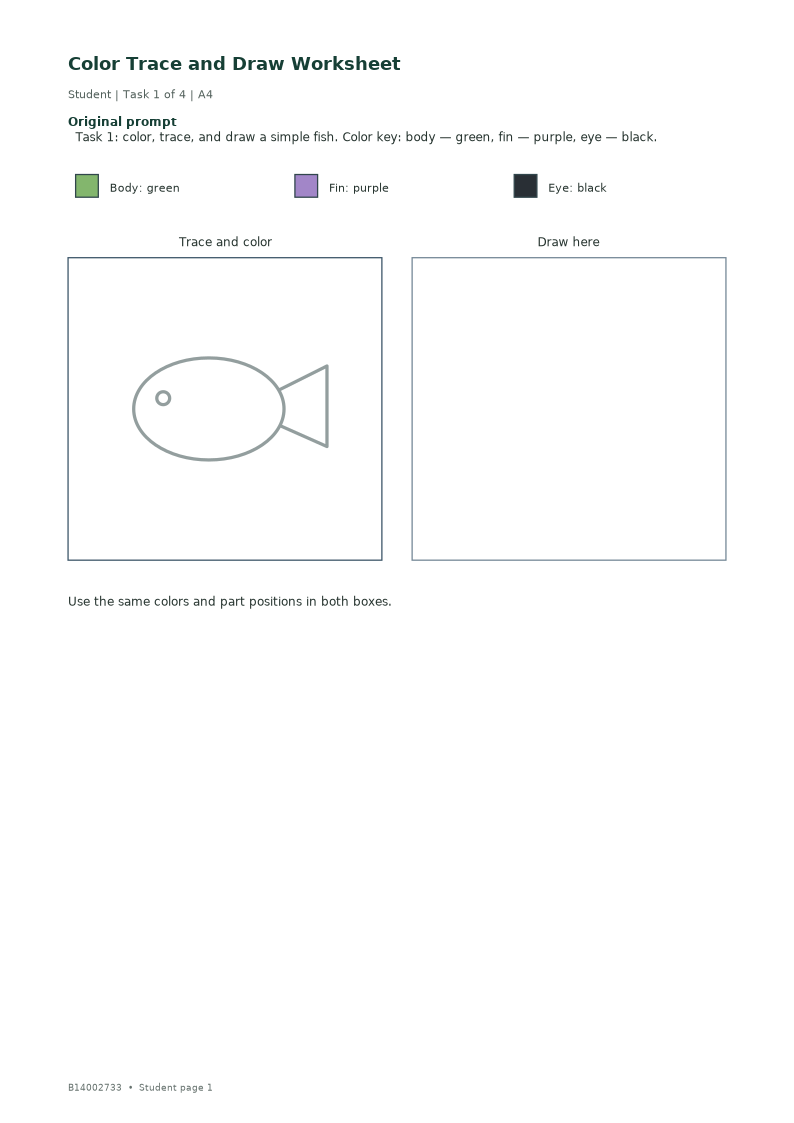
Task 1
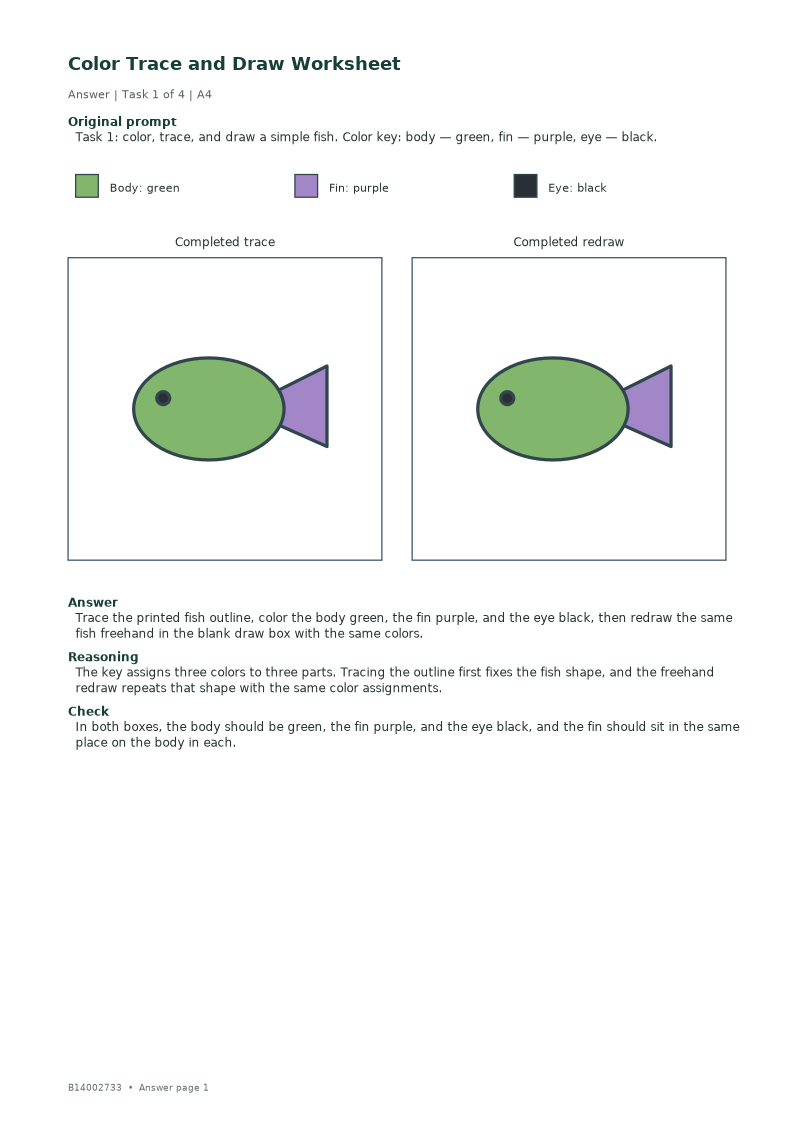
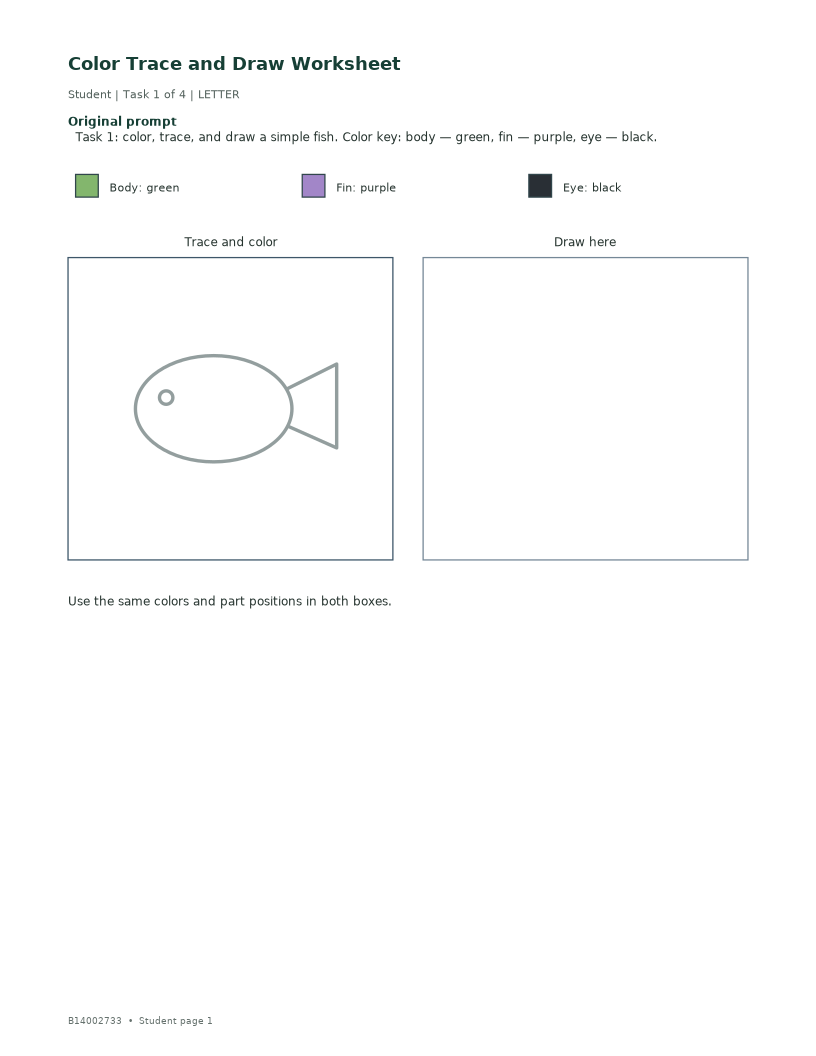
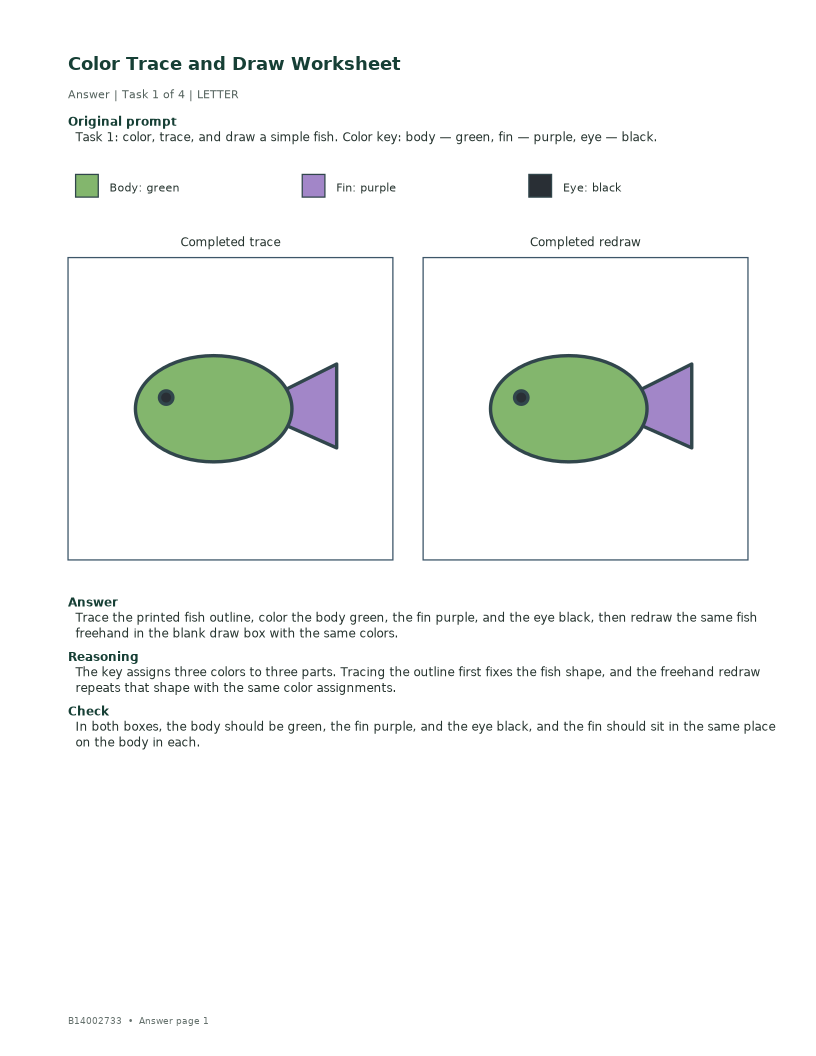
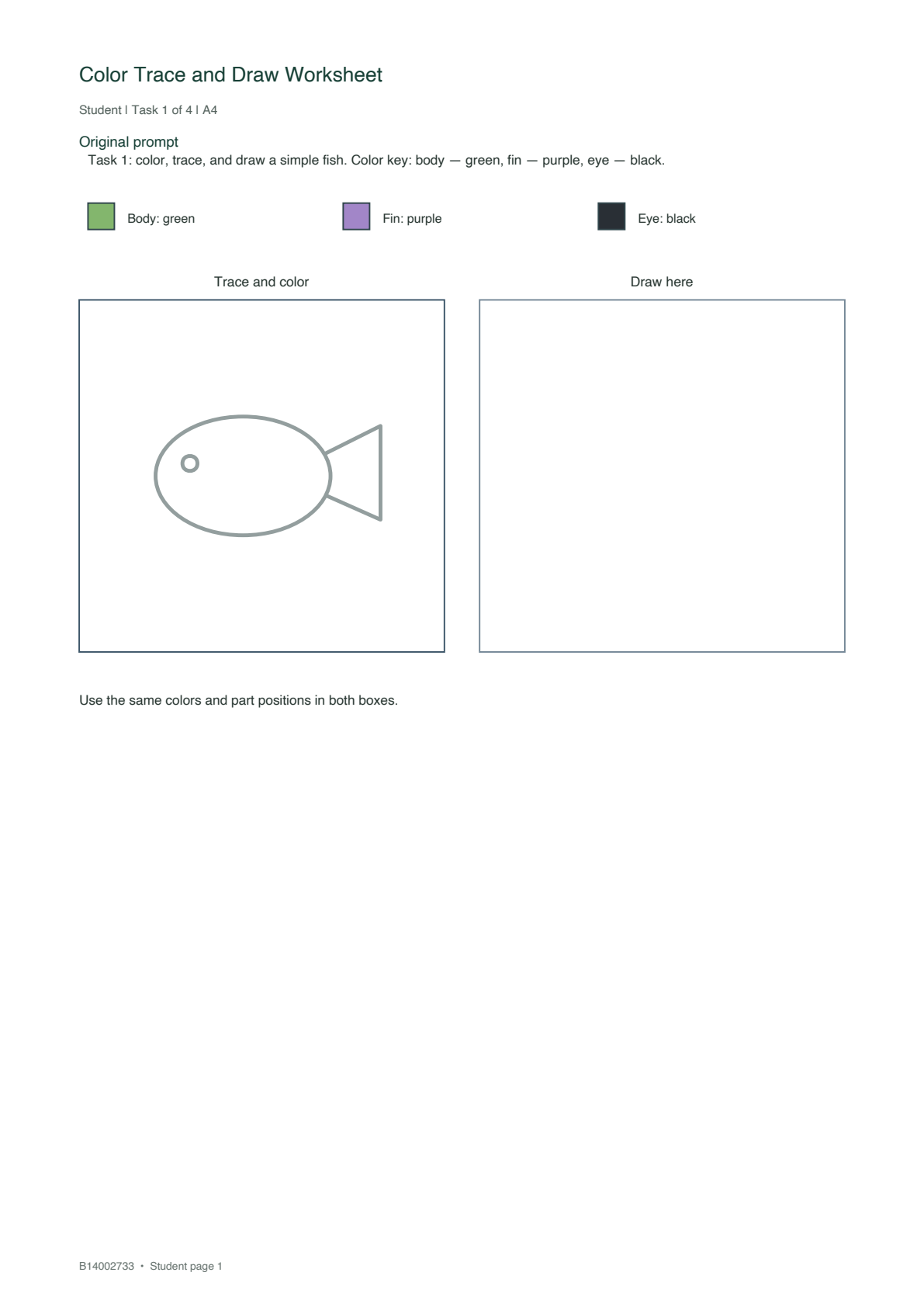
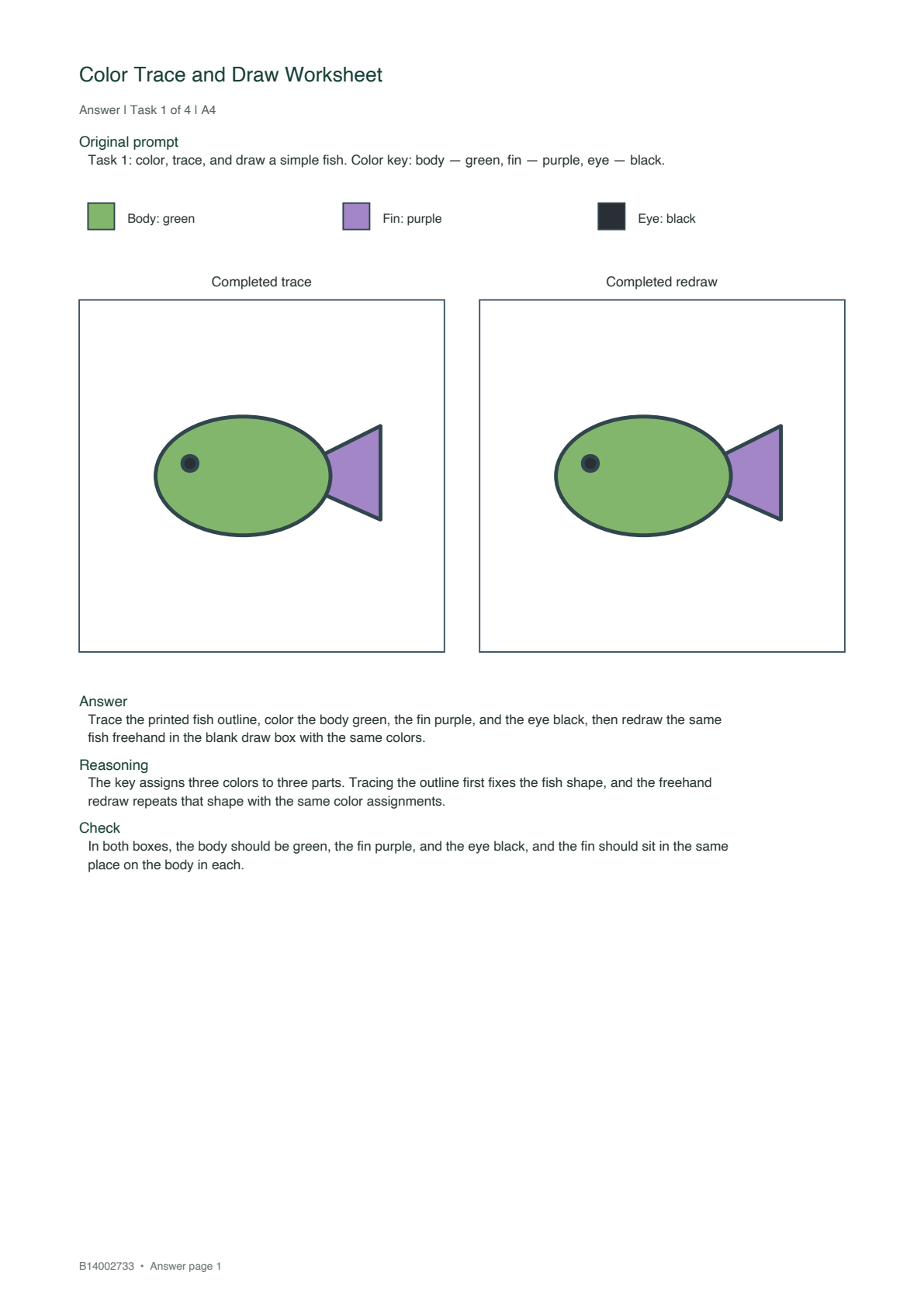
Task 1: color, trace, and draw a simple fish. Color key: body — green, fin — purple, eye — black.
Show answer 1
Trace the printed fish outline, color the body green, the fin purple, and the eye black, then redraw the same fish freehand in the blank draw box with the same colors.
The key assigns three colors to three parts. Tracing the outline first fixes the fish shape, and the freehand redraw repeats that shape with the same color assignments.
Check: In both boxes, the body should be green, the fin purple, and the eye black, and the fin should sit in the same place on the body in each.
Task 2
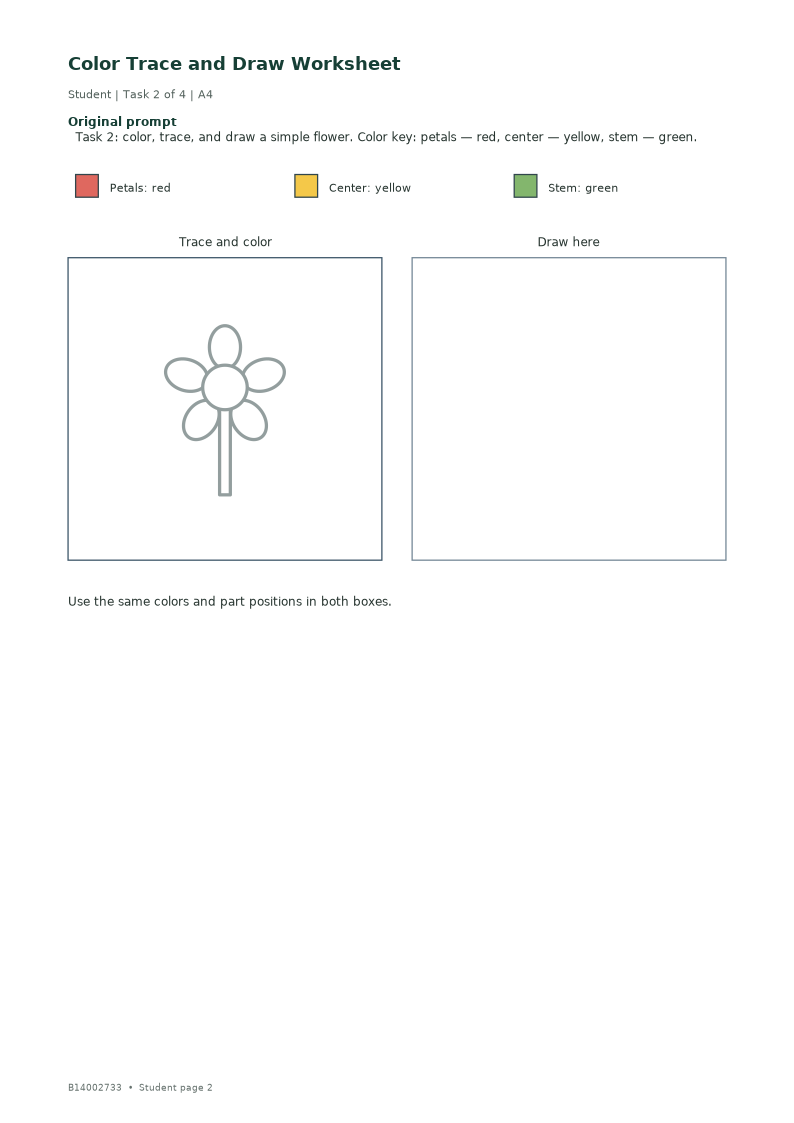
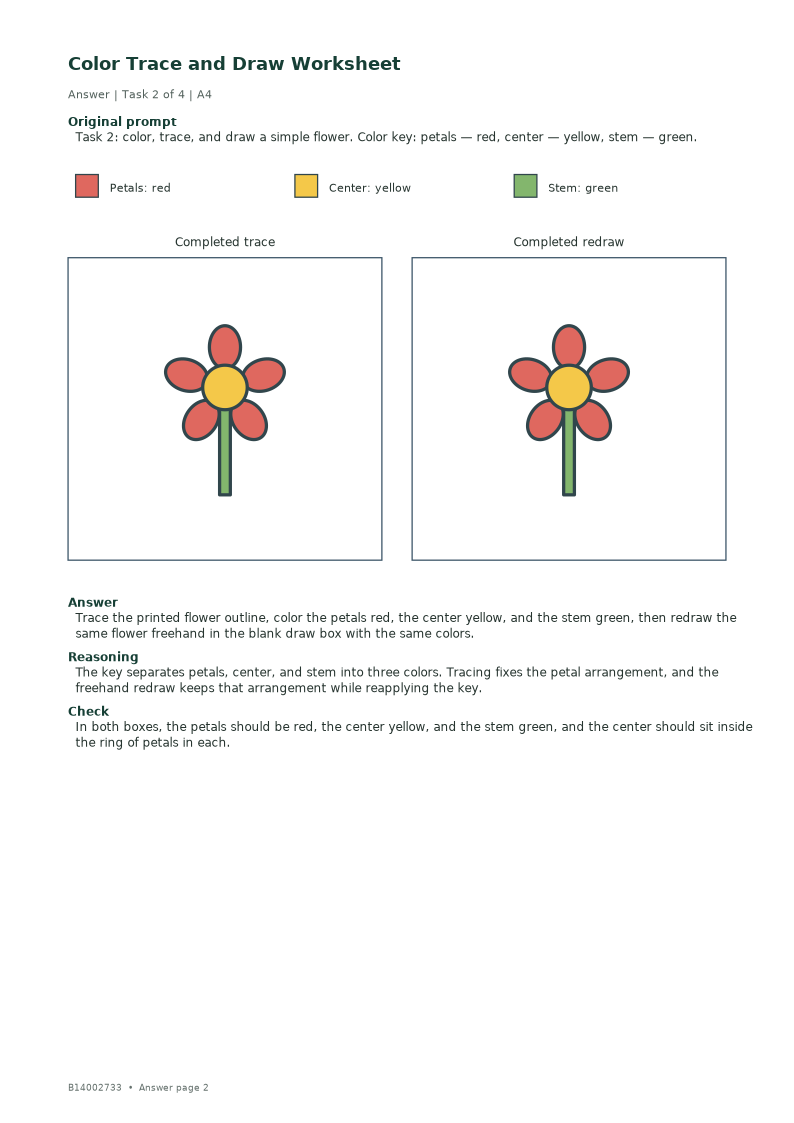
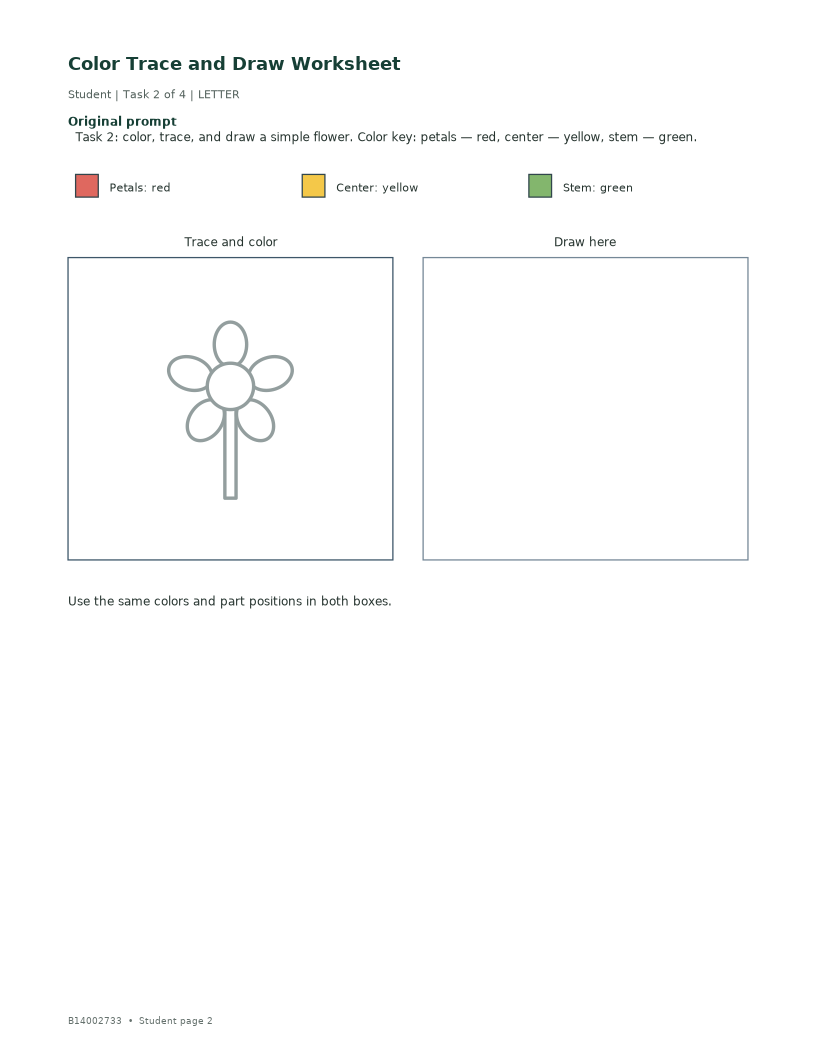
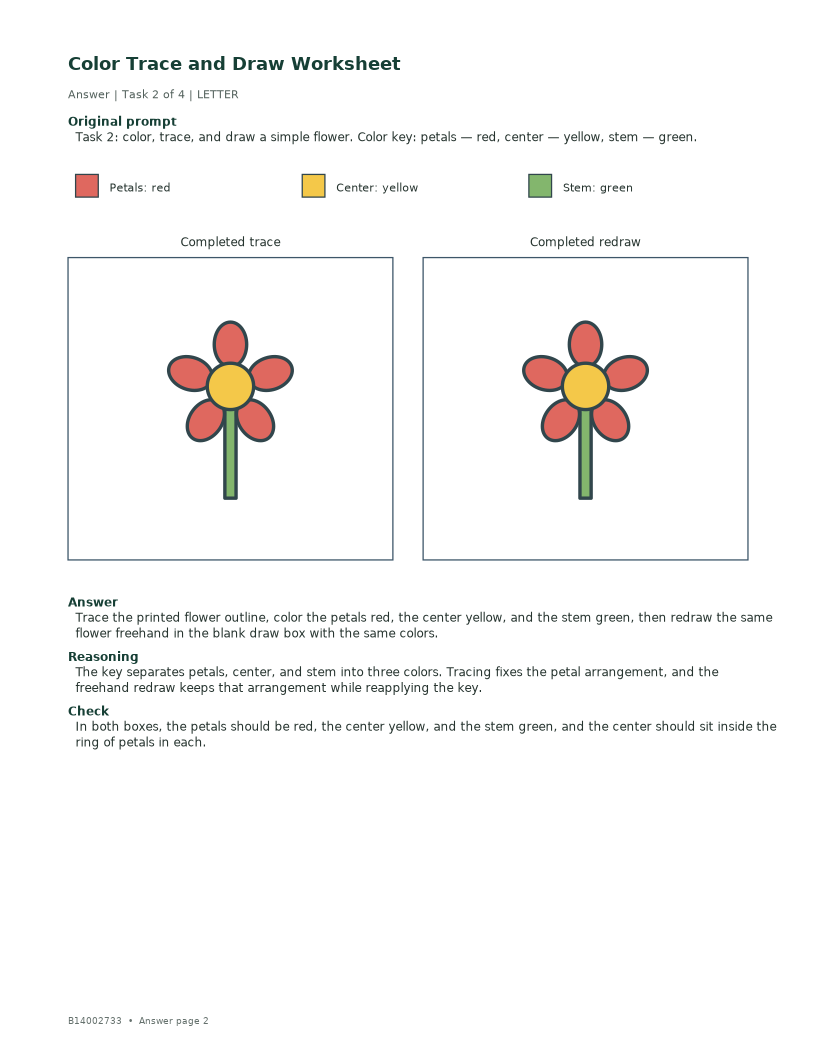
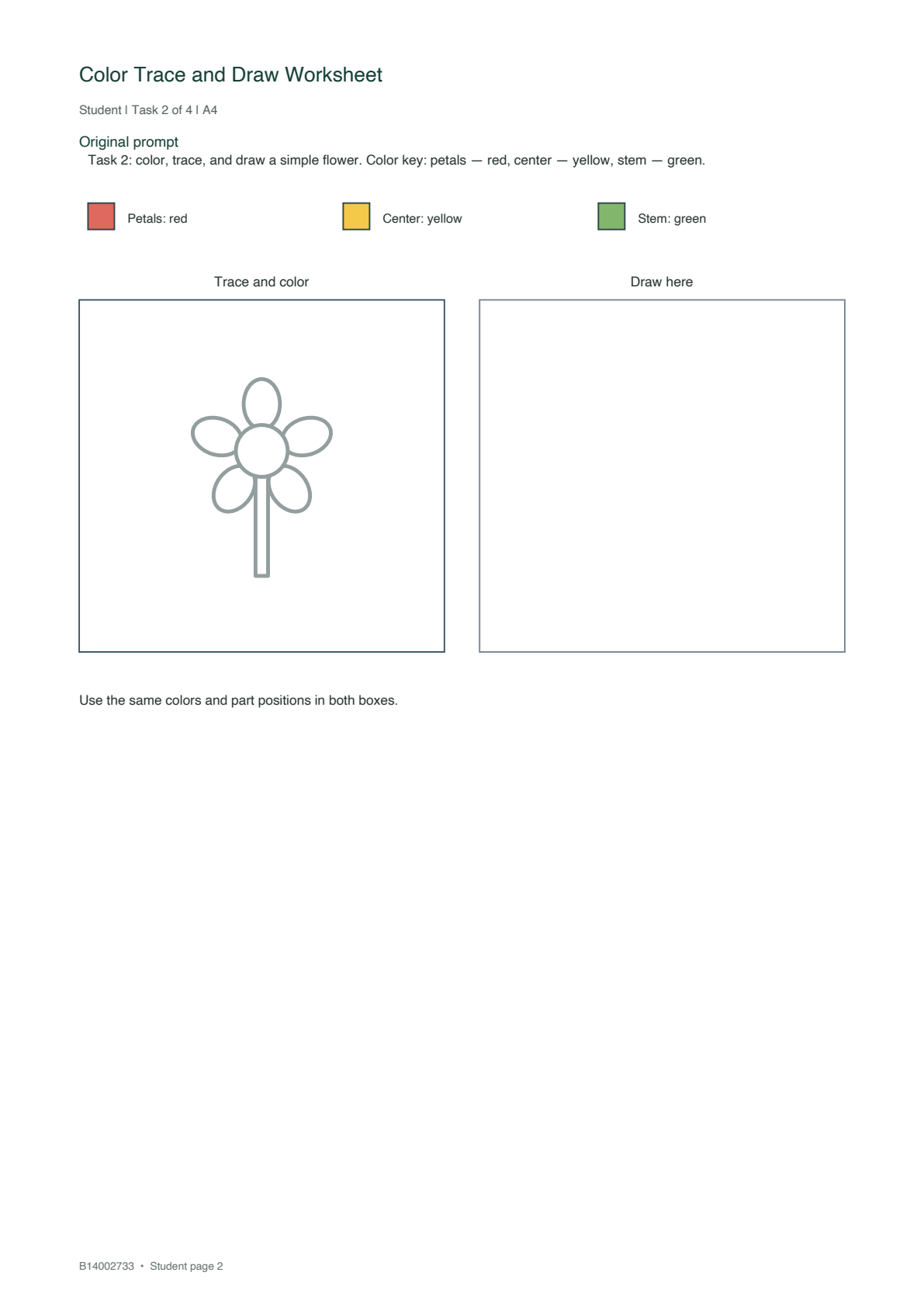
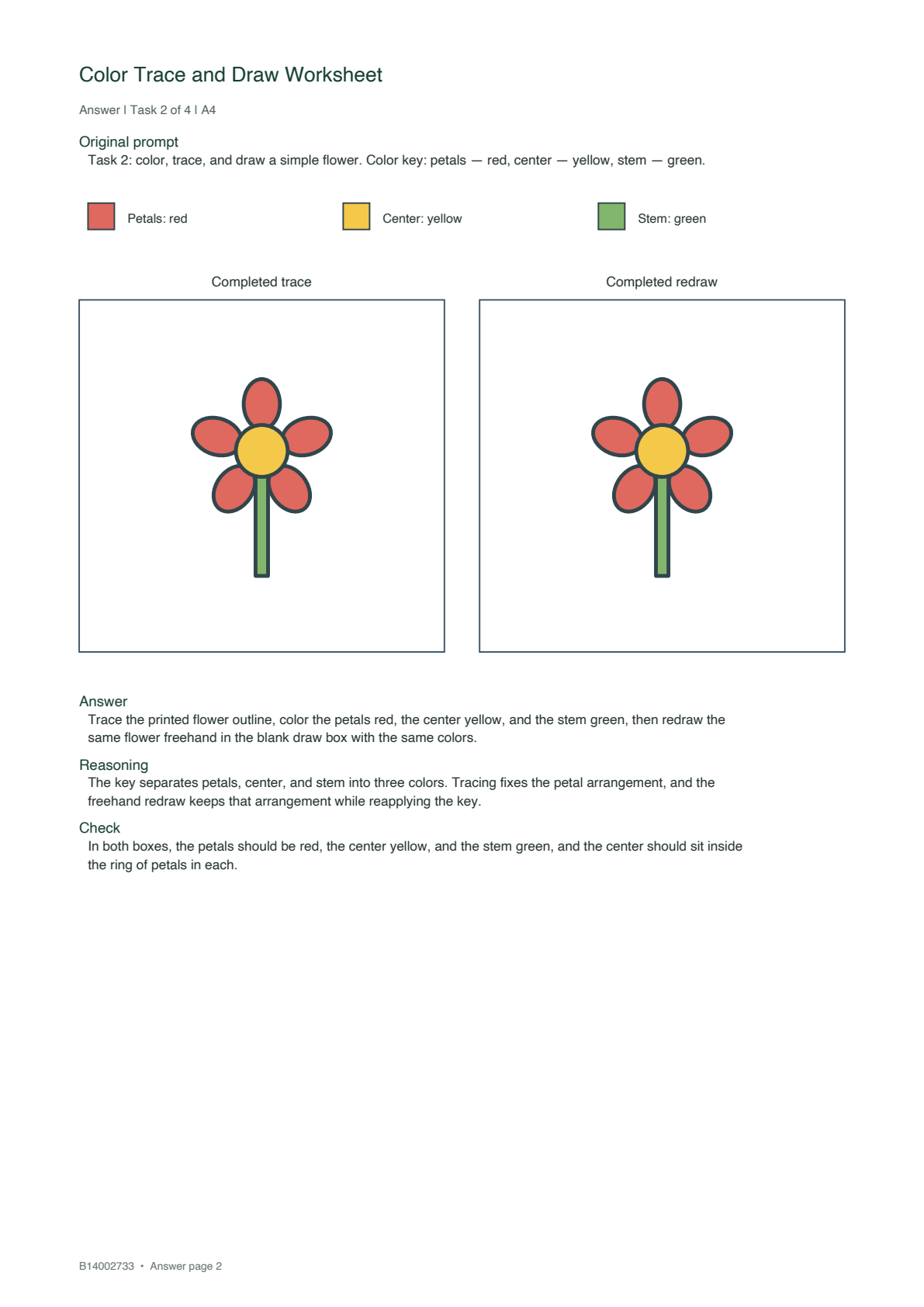
Task 2: color, trace, and draw a simple flower. Color key: petals — red, center — yellow, stem — green.
Show answer 2
Trace the printed flower outline, color the petals red, the center yellow, and the stem green, then redraw the same flower freehand in the blank draw box with the same colors.
The key separates petals, center, and stem into three colors. Tracing fixes the petal arrangement, and the freehand redraw keeps that arrangement while reapplying the key.
Check: In both boxes, the petals should be red, the center yellow, and the stem green, and the center should sit inside the ring of petals in each.
Task 3
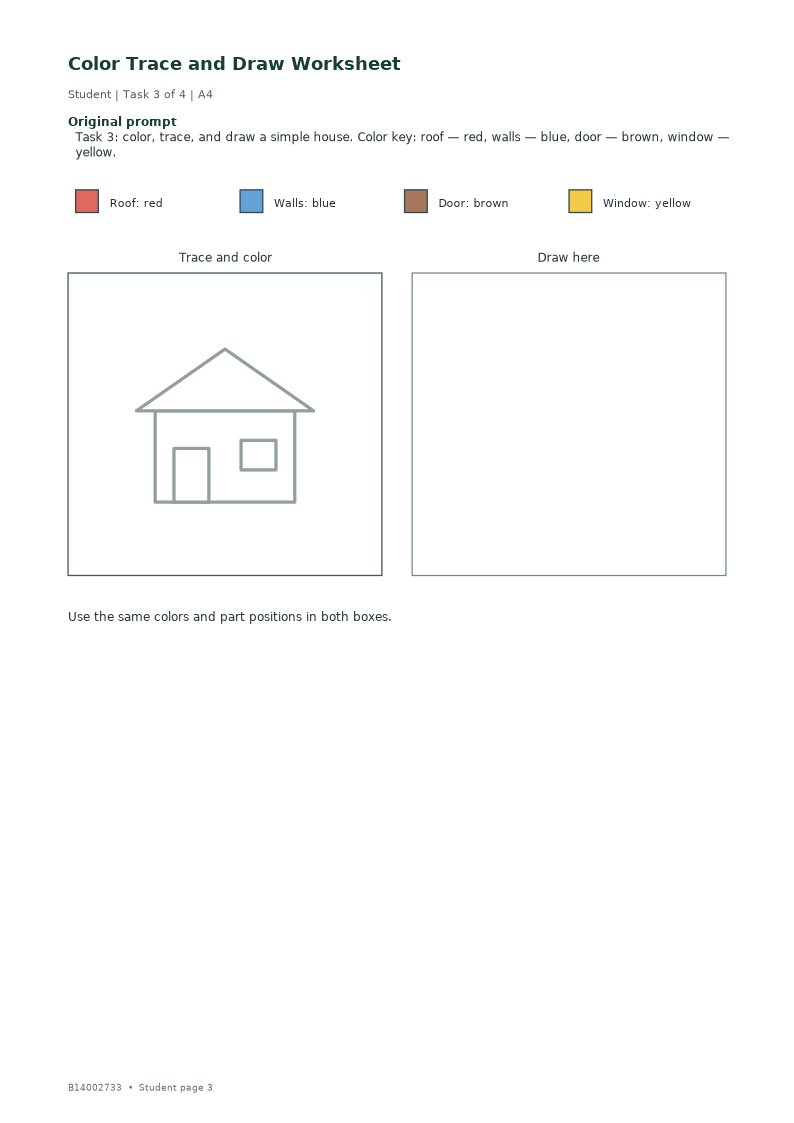
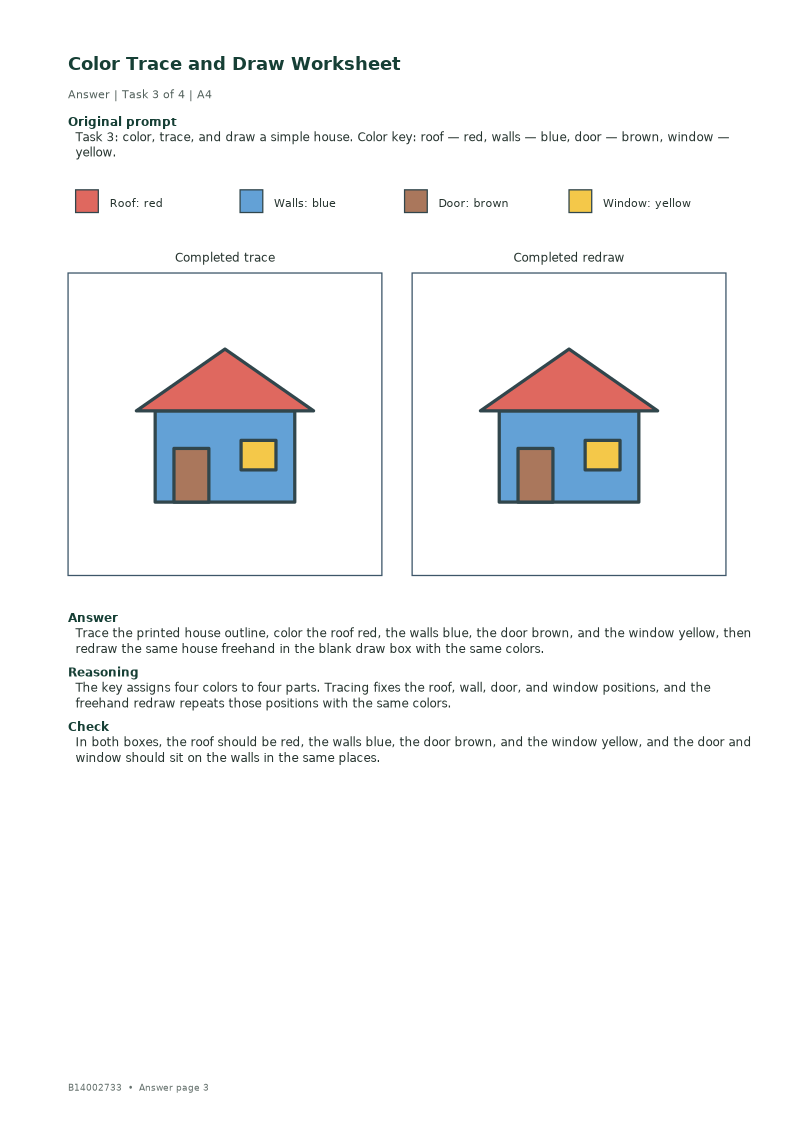
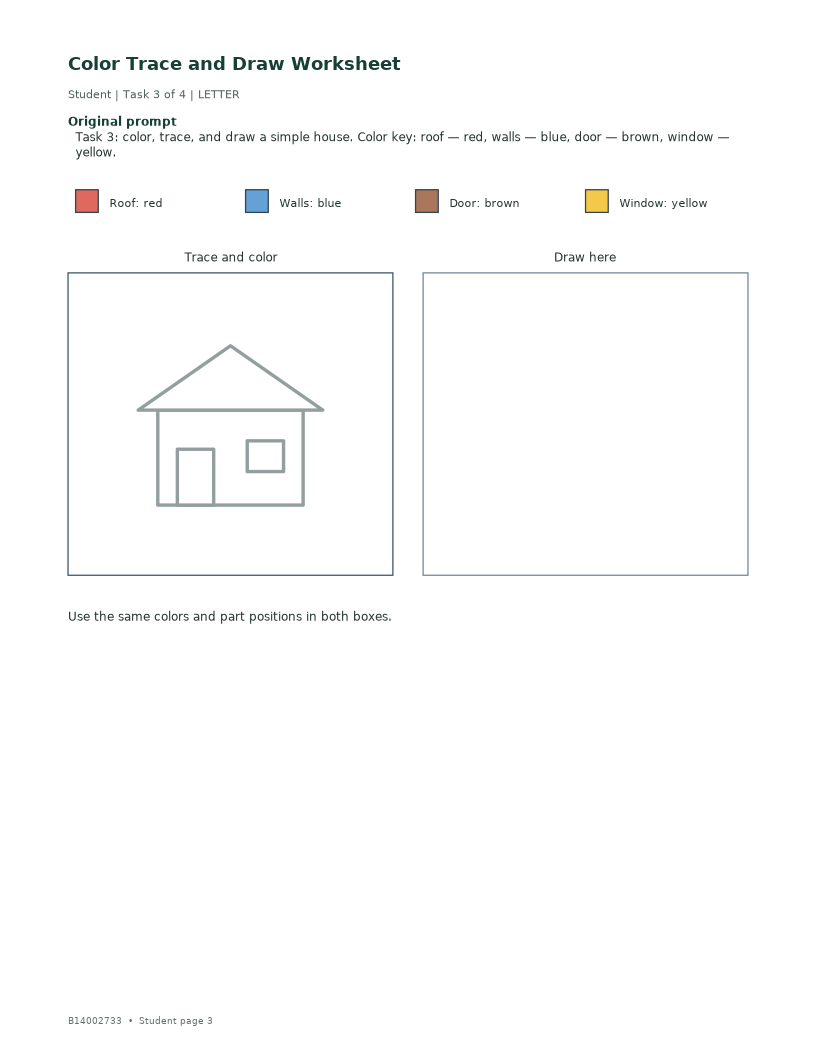
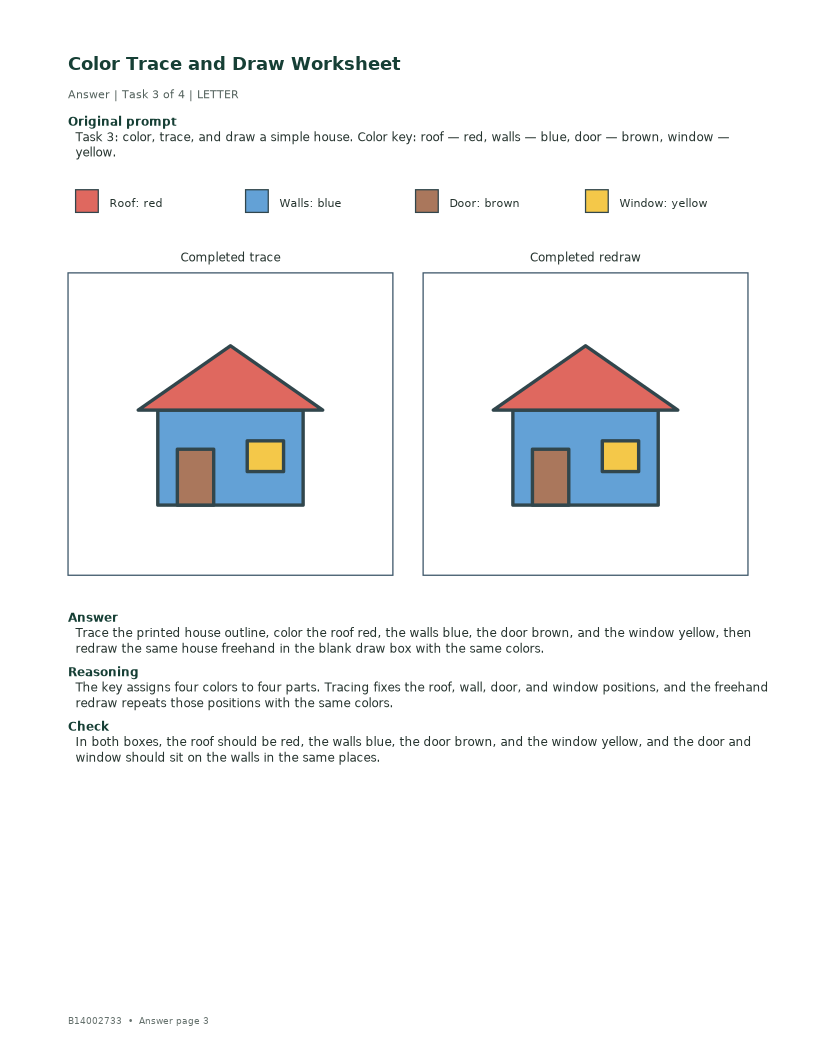
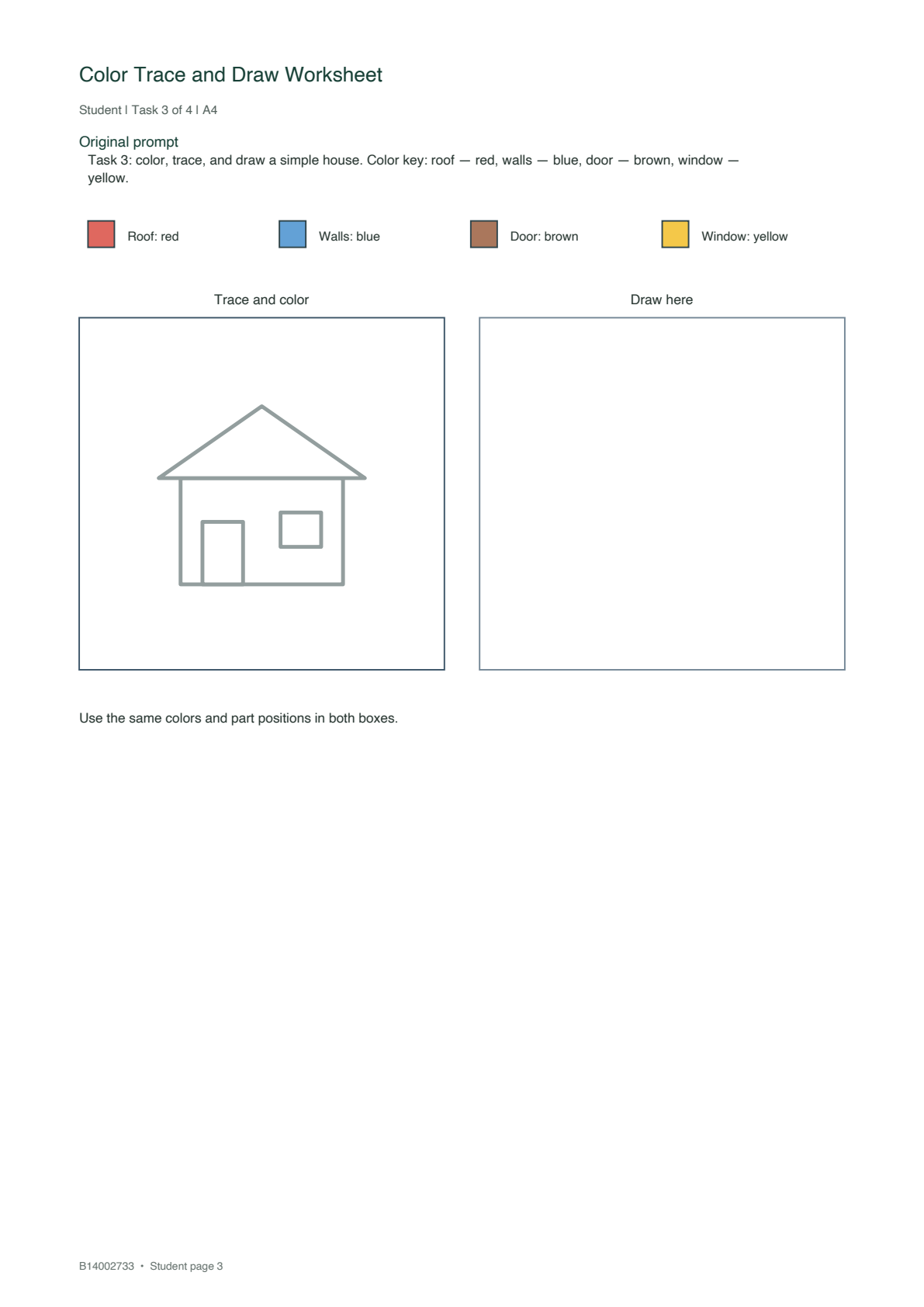
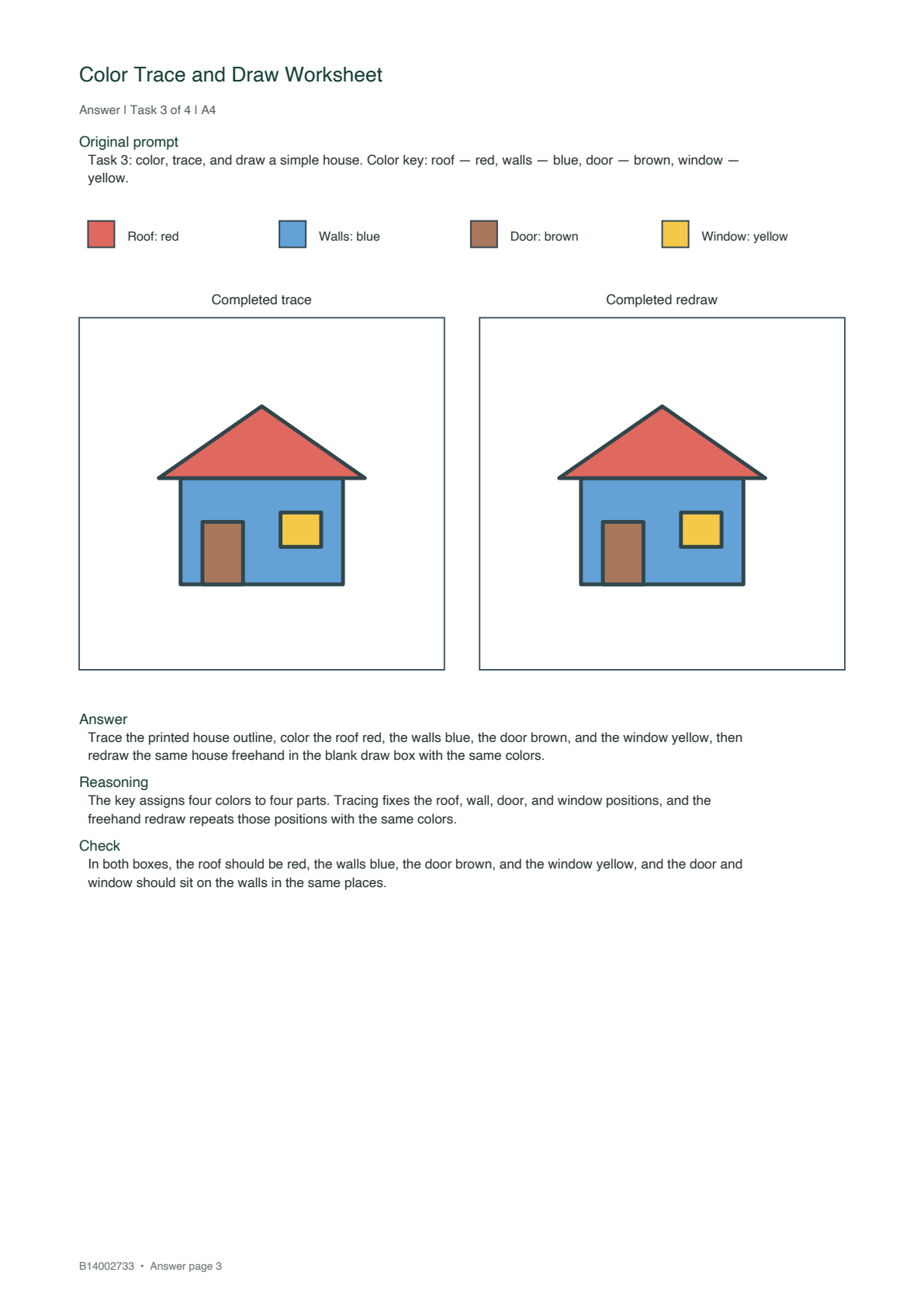
Task 3: color, trace, and draw a simple house. Color key: roof — red, walls — blue, door — brown, window — yellow.
Show answer 3
Trace the printed house outline, color the roof red, the walls blue, the door brown, and the window yellow, then redraw the same house freehand in the blank draw box with the same colors.
The key assigns four colors to four parts. Tracing fixes the roof, wall, door, and window positions, and the freehand redraw repeats those positions with the same colors.
Check: In both boxes, the roof should be red, the walls blue, the door brown, and the window yellow, and the door and window should sit on the walls in the same places.
Task 4
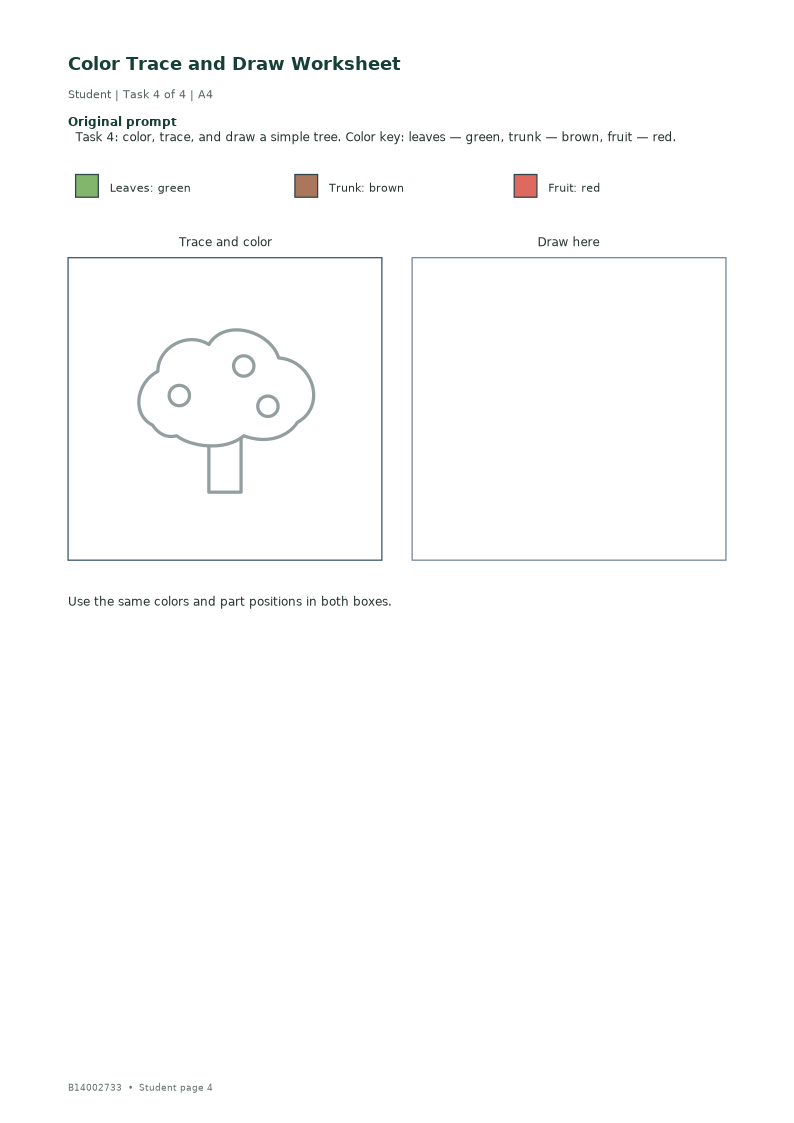
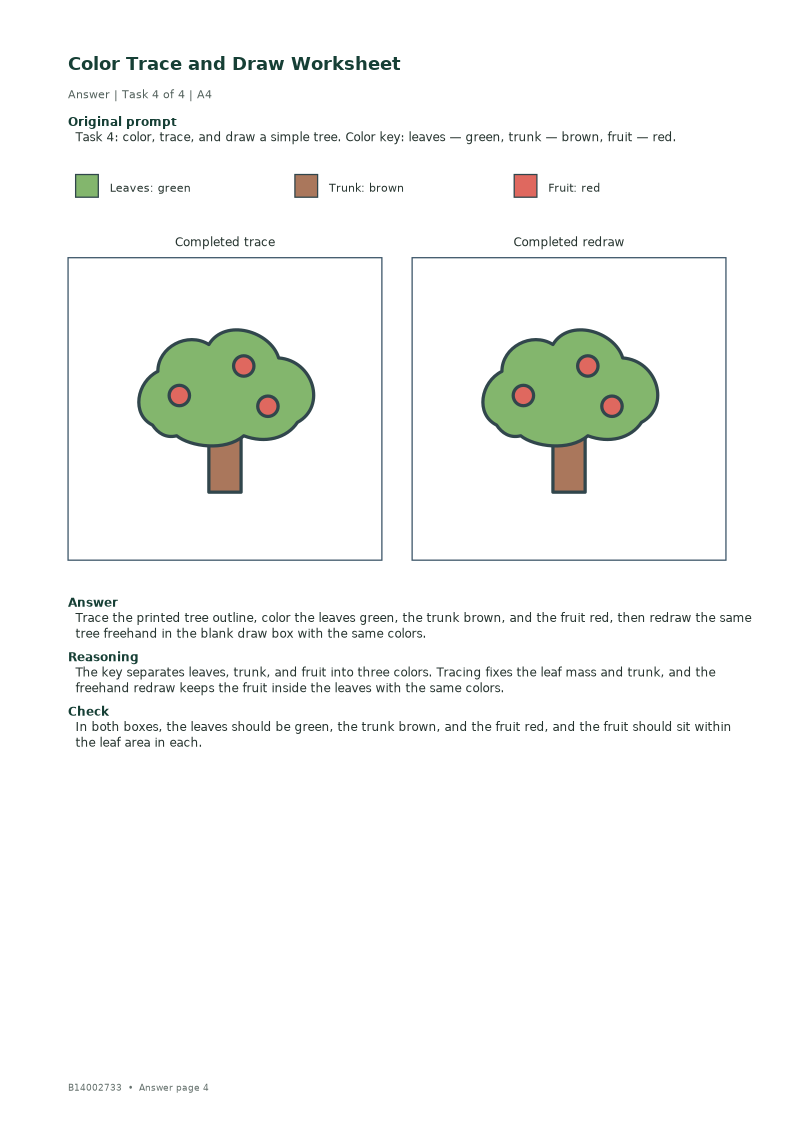
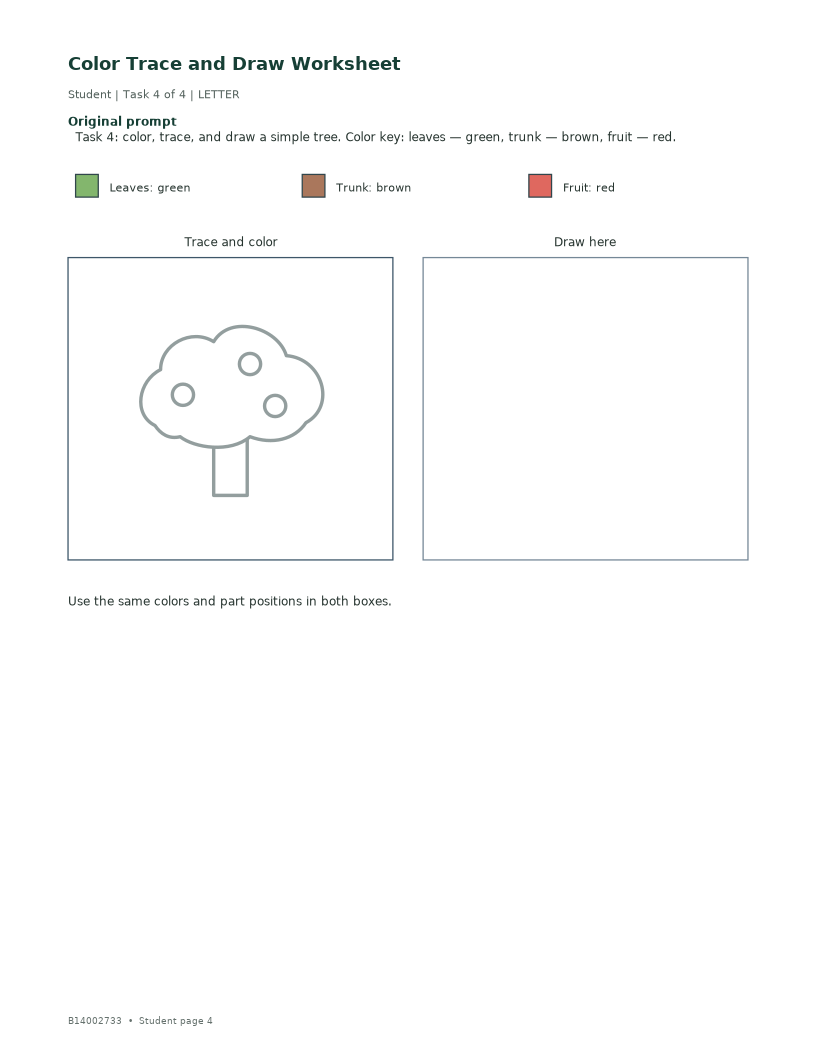
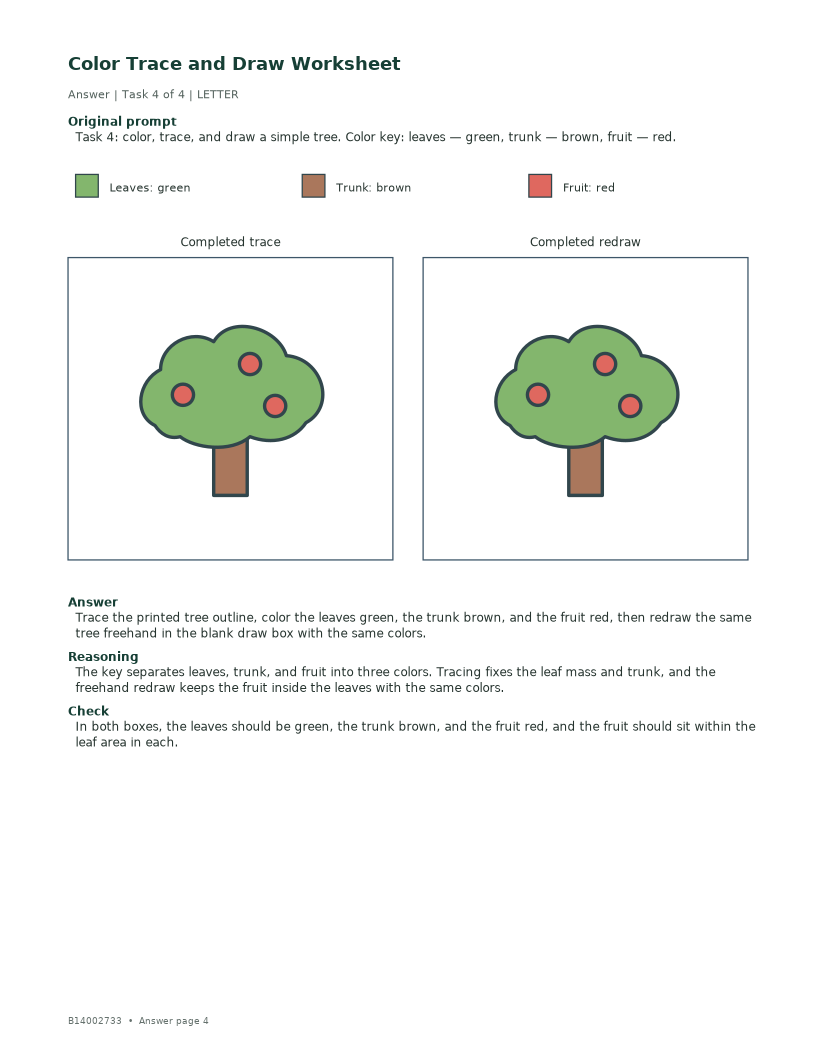
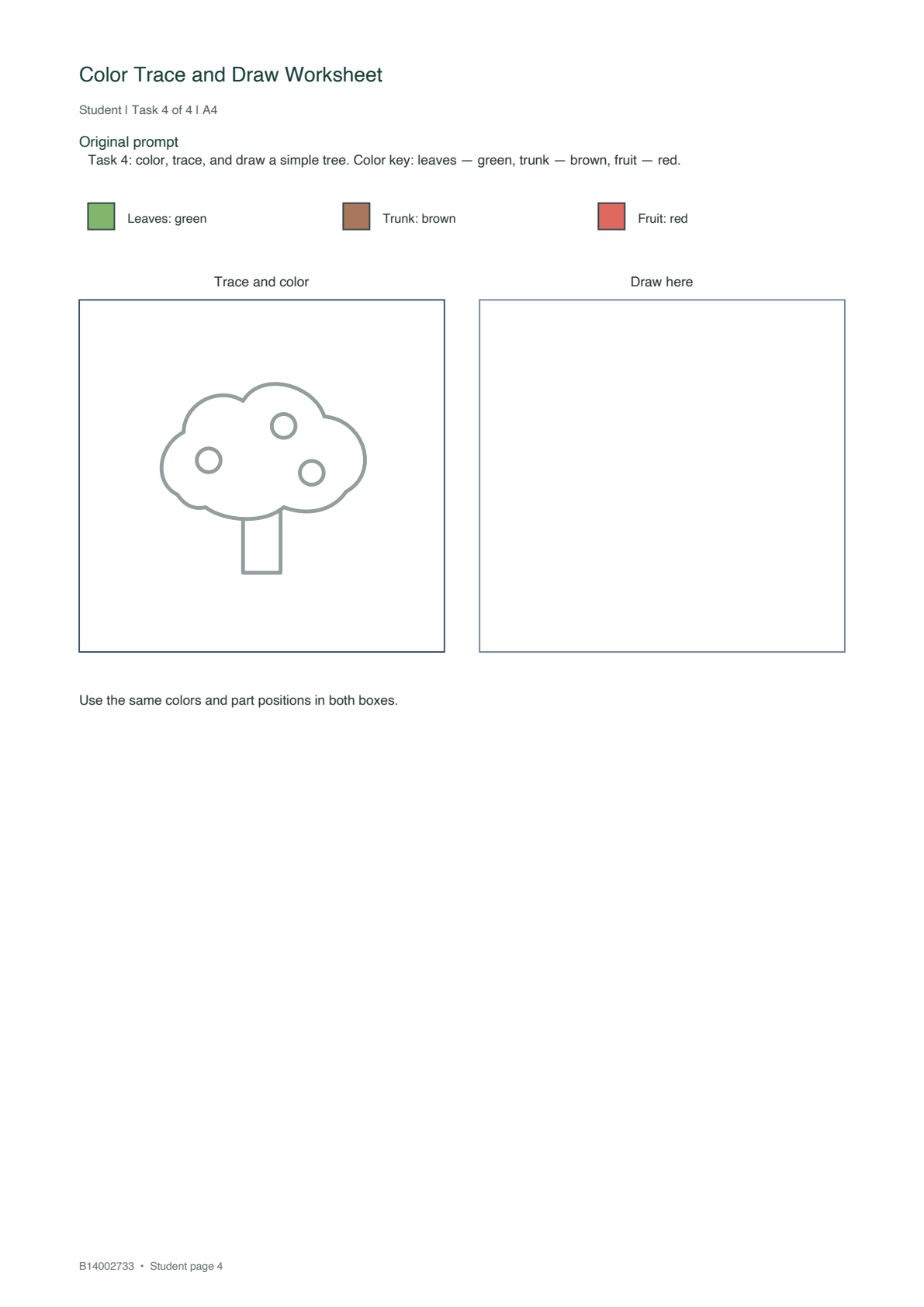
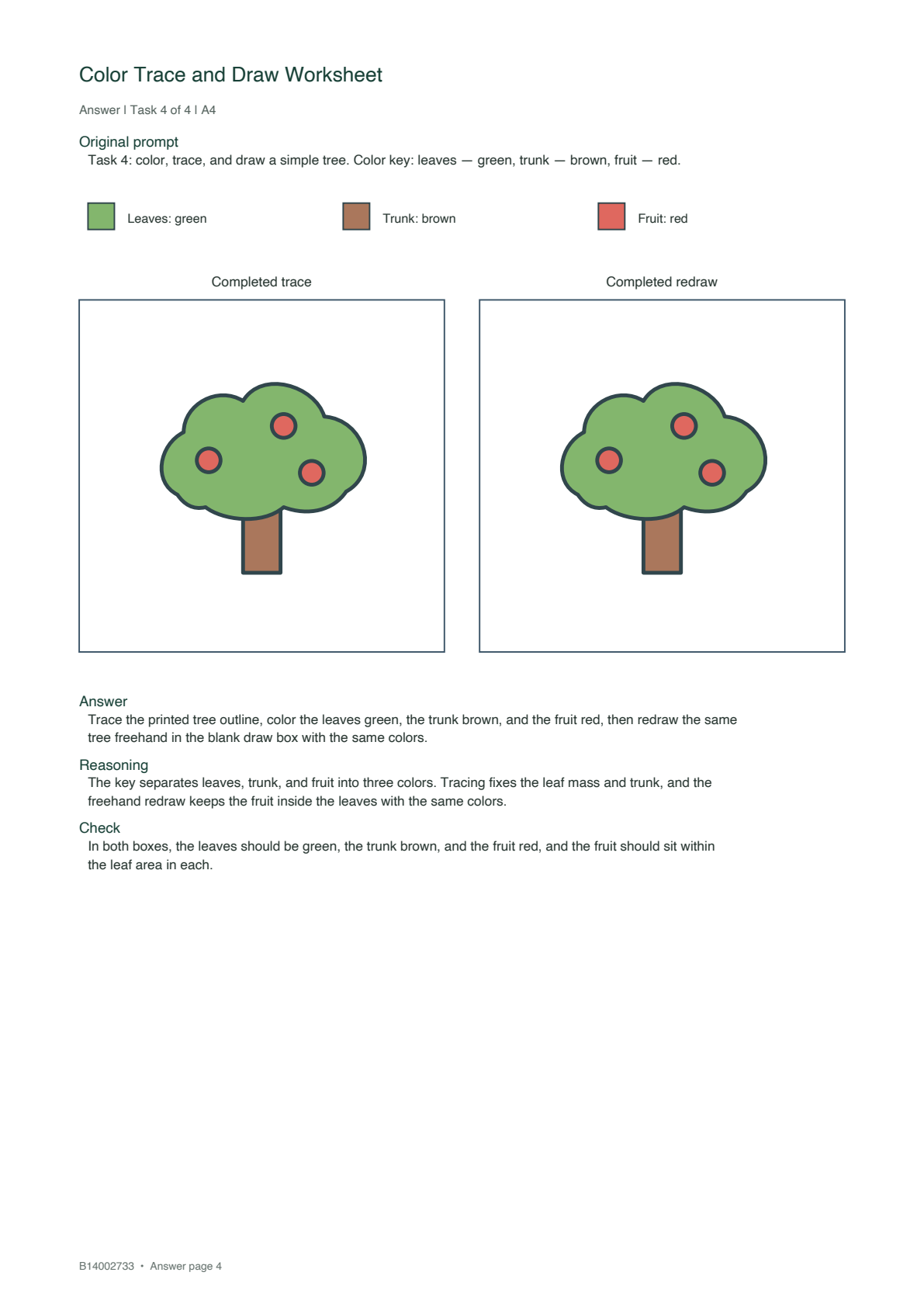
Task 4: color, trace, and draw a simple tree. Color key: leaves — green, trunk — brown, fruit — red.
Show answer 4
Trace the printed tree outline, color the leaves green, the trunk brown, and the fruit red, then redraw the same tree freehand in the blank draw box with the same colors.
The key separates leaves, trunk, and fruit into three colors. Tracing fixes the leaf mass and trunk, and the freehand redraw keeps the fruit inside the leaves with the same colors.
Check: In both boxes, the leaves should be green, the trunk brown, and the fruit red, and the fruit should sit within the leaf area in each.
Useful checks
- Coloring a part with a color that is not in the key, or swapping two colors from the key. Re-read the key before coloring each part, and check the finished part against the key before moving on.
- Tracing beside the printed line instead of on it, so the traced shape is larger or smaller than the guide. Slow down and keep the pencil tip on the printed line; the traced line should cover the printed line.
- In the draw box, changing the arrangement of parts, such as moving the wing or the door to a new place. Look at the traced version before drawing, and place each part in the same position it had in the trace box.
Questions about this resource
Do I have to use the exact colors in the key?
Yes. The key is the instruction for the whole worksheet, so the trace stage and the draw stage both use the same colors from the key.
Can I draw first and trace later?
No. The order is color key, then trace, then draw, because tracing first gives the hand the shape that the freehand draw then repeats.