Free original lessons
Grid Drawing Lion
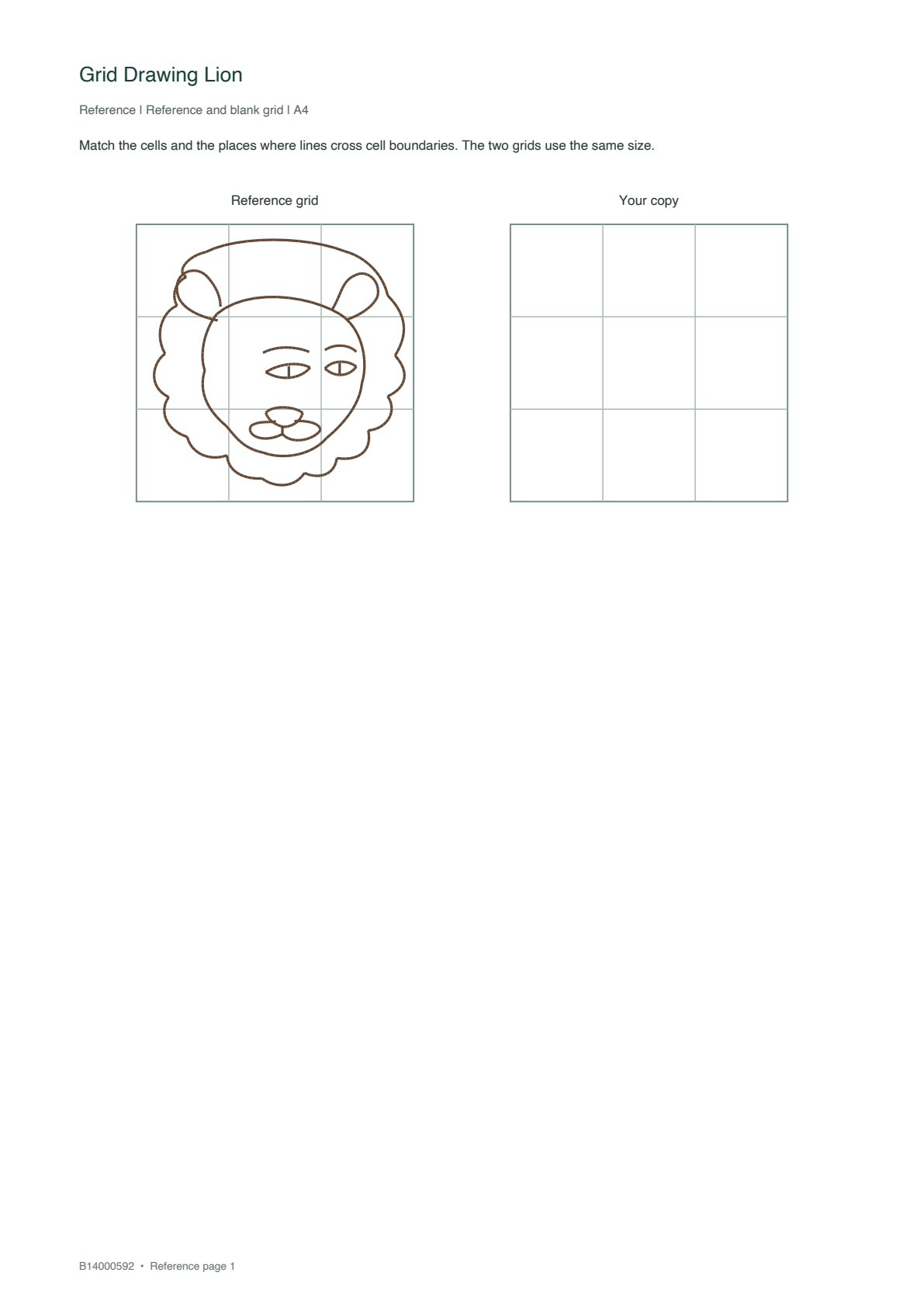
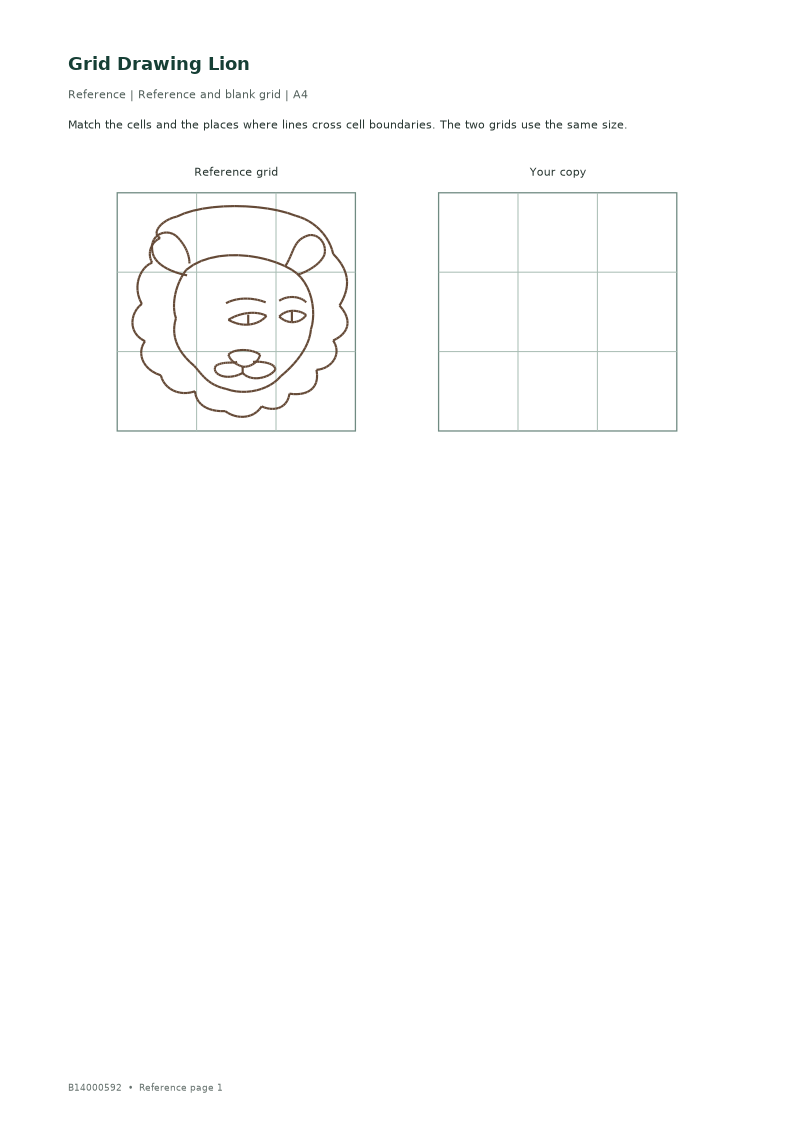
Copy a lion from the full 3×3 reference grid into a separate empty matching 3×3 grid, one square at a time. The reference and copy grids are distinct panels; each task also pairs one exact reference square with its own empty matching square. Keep the full reference visible for side-by-side comparison. Rows and columns are counted from the top-left, starting at 1.
Letter & A4
PDF & SVG
What grid drawing is
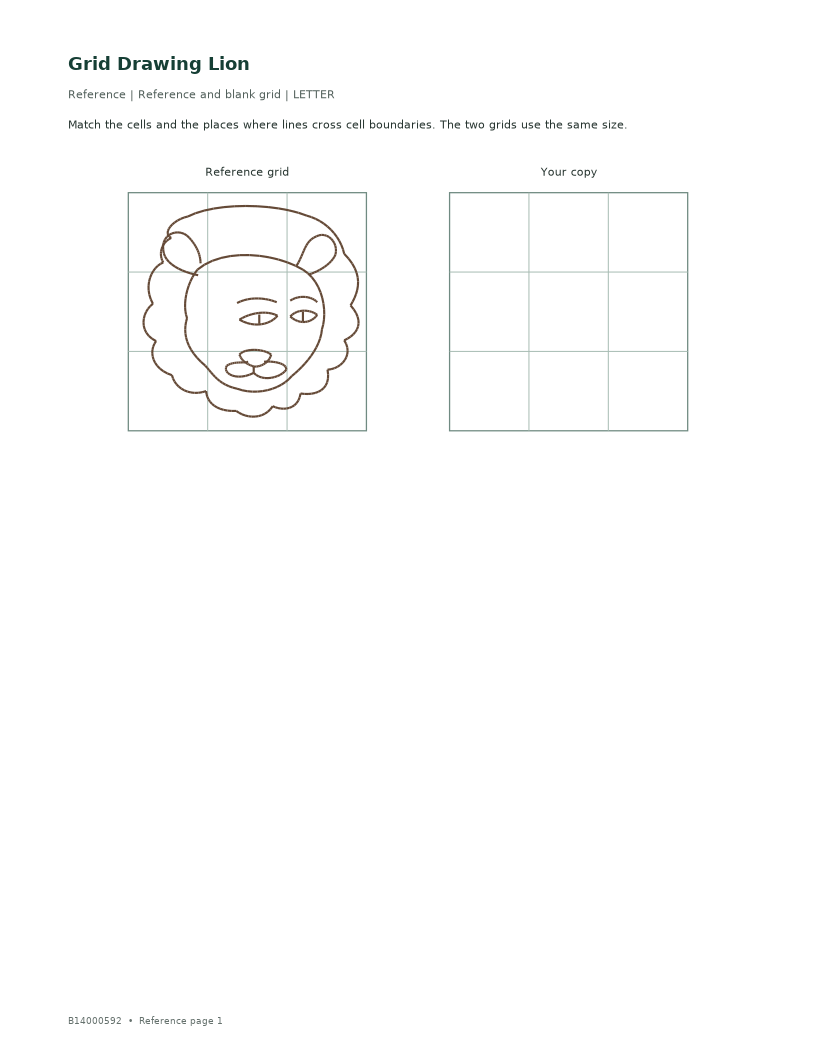
Grid drawing means copying each feature from a reference grid into the same cell of a separate blank grid. This worksheet provides a full 3×3 lion reference and a distinct empty 3×3 copy grid, with equal cell sizes.
The grid turns a large, complex shape into small, manageable pieces. By matching each square's contents, the finished drawing keeps the lion's proportions and placement.
How to use the full reference and matching blank grid
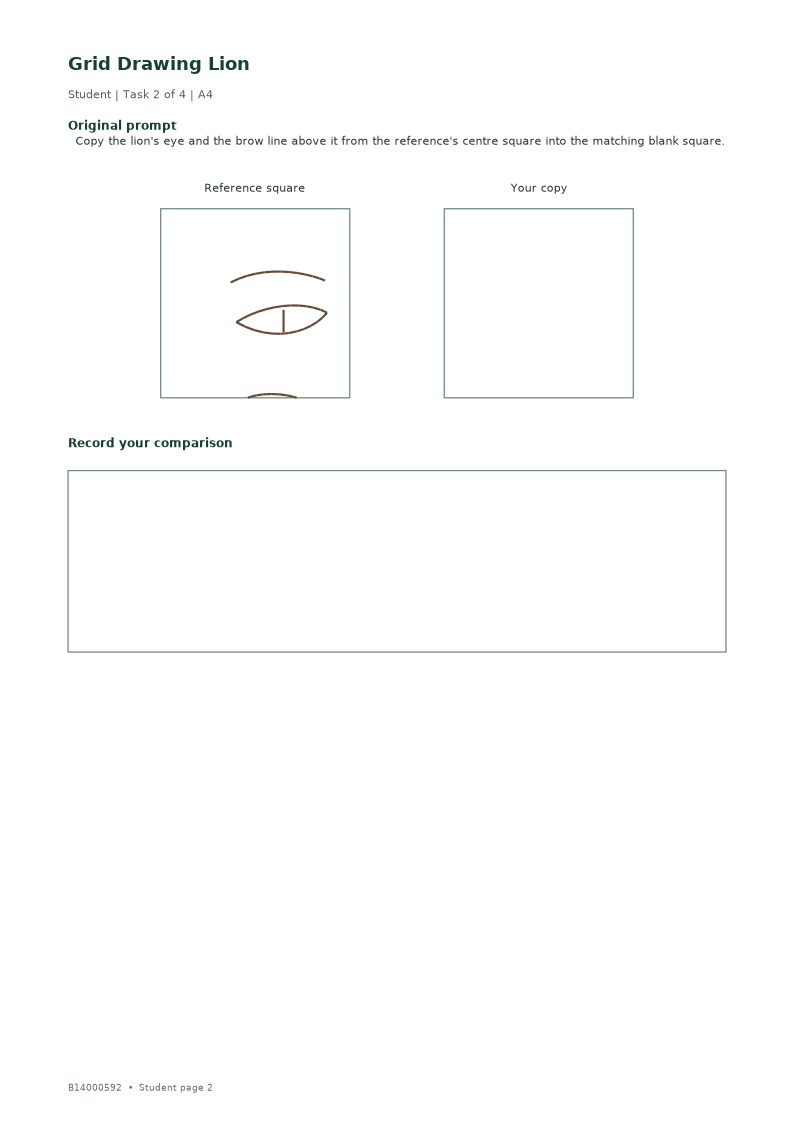
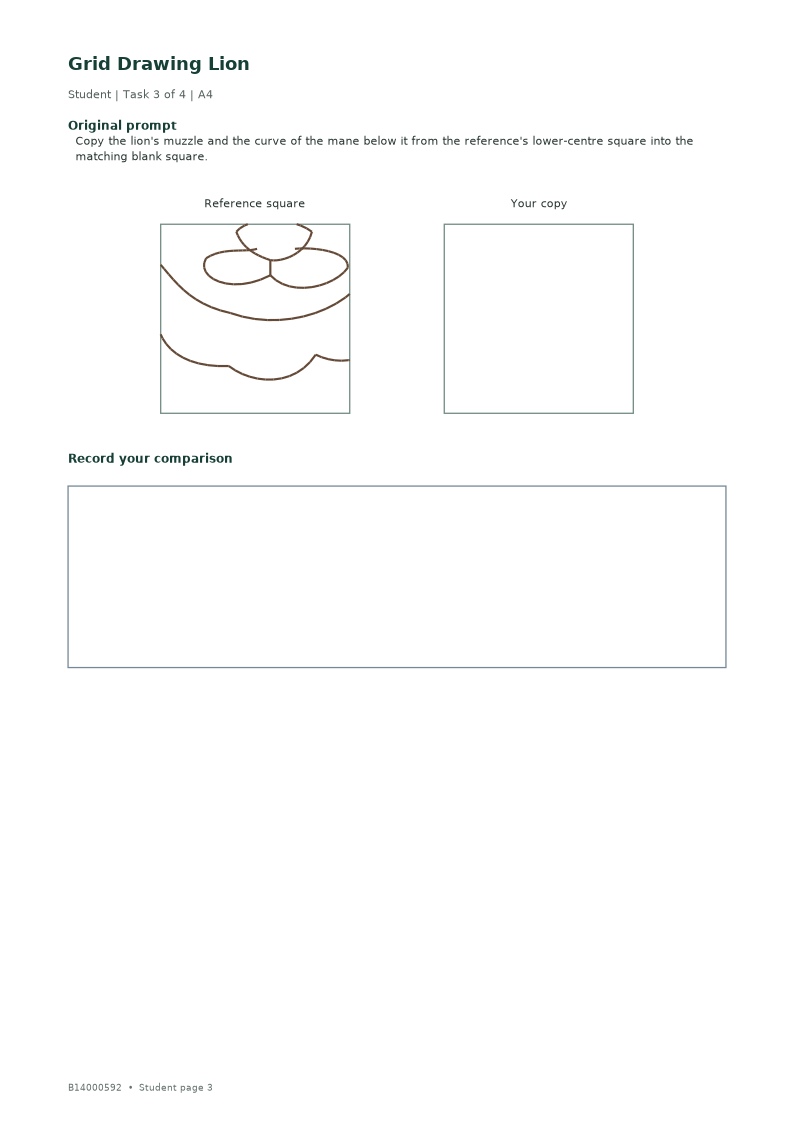
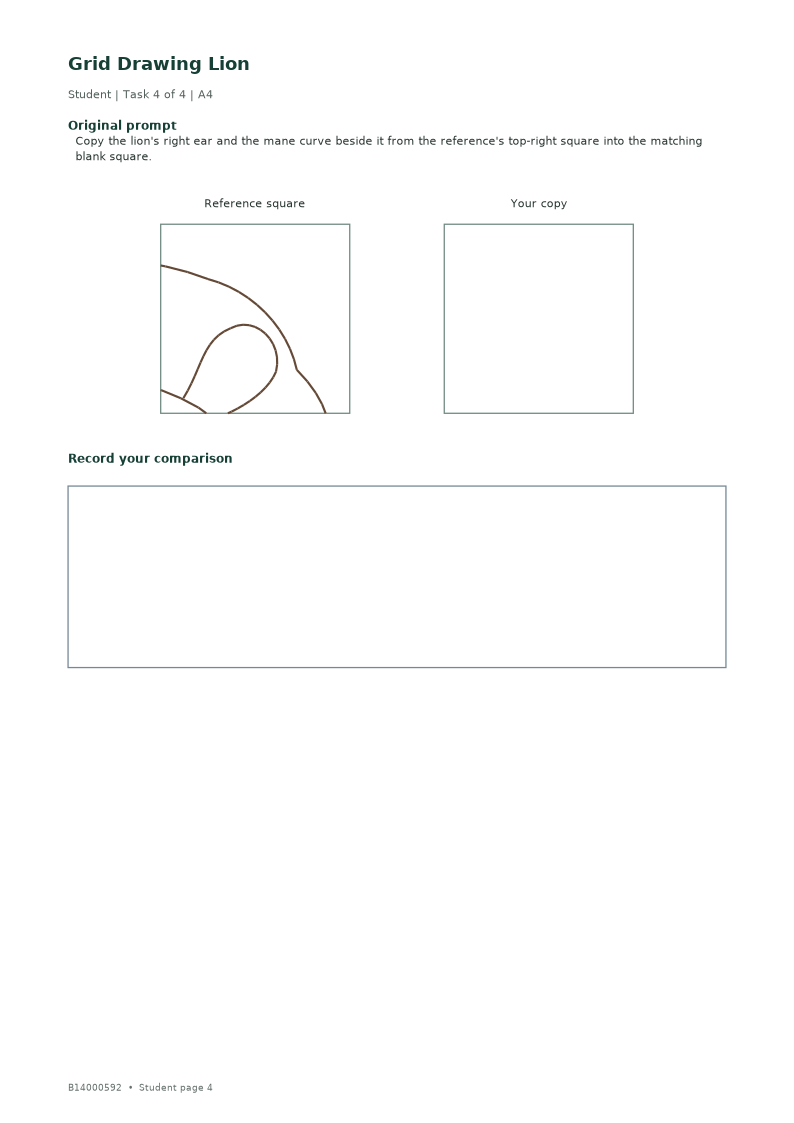
The full reference shows a three-quarter-view lion head and main mane in a 3×3 grid, with two ears. The left-ear arc passes through the top-left square, and the right-ear arc passes through the top-right square; neither reaches the page’s top edge. The eye and brow are wholly inside the center square. A small nose trace touches the bottom of that reference square. The muzzle lies above the lower mane curve in the lower-center square; the mane crosses its left and right boundaries between the corners.
Keep that full reference visible beside a separate empty matching 3×3 grid. Each task names a reference square and provides a distinct blank copy square; copy only the requested features, then compare the two squares side by side.
Worked example
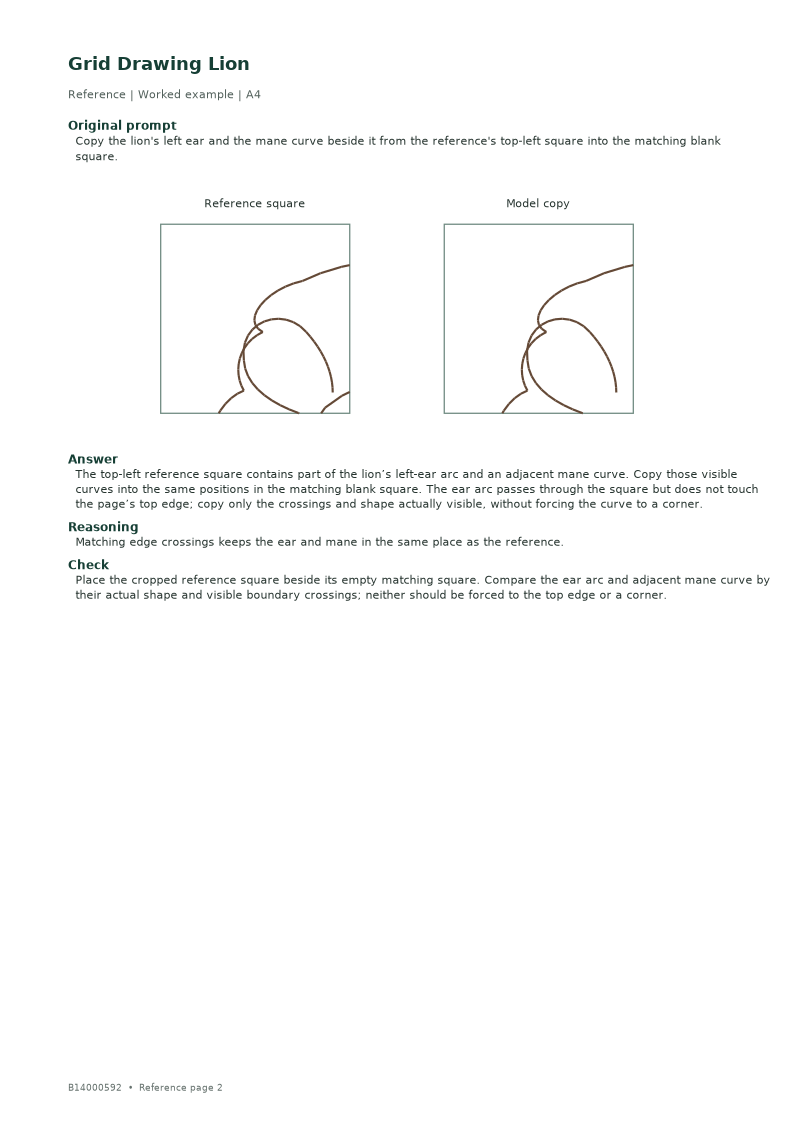
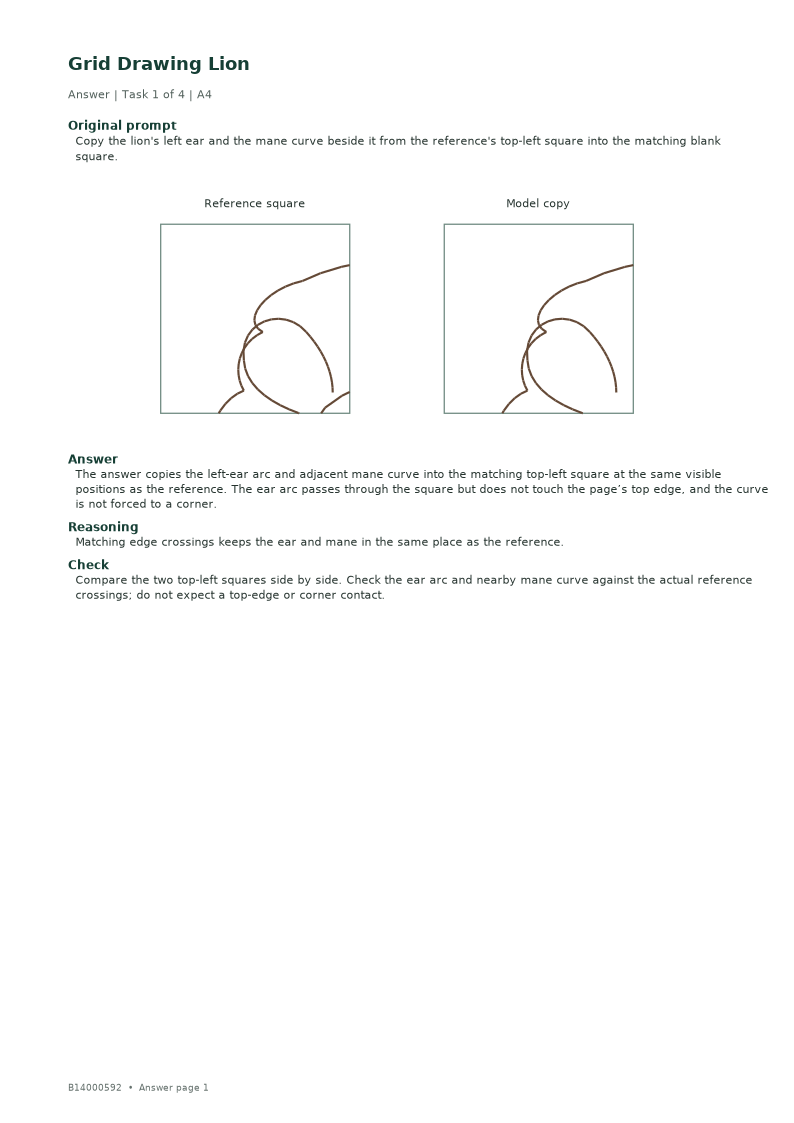
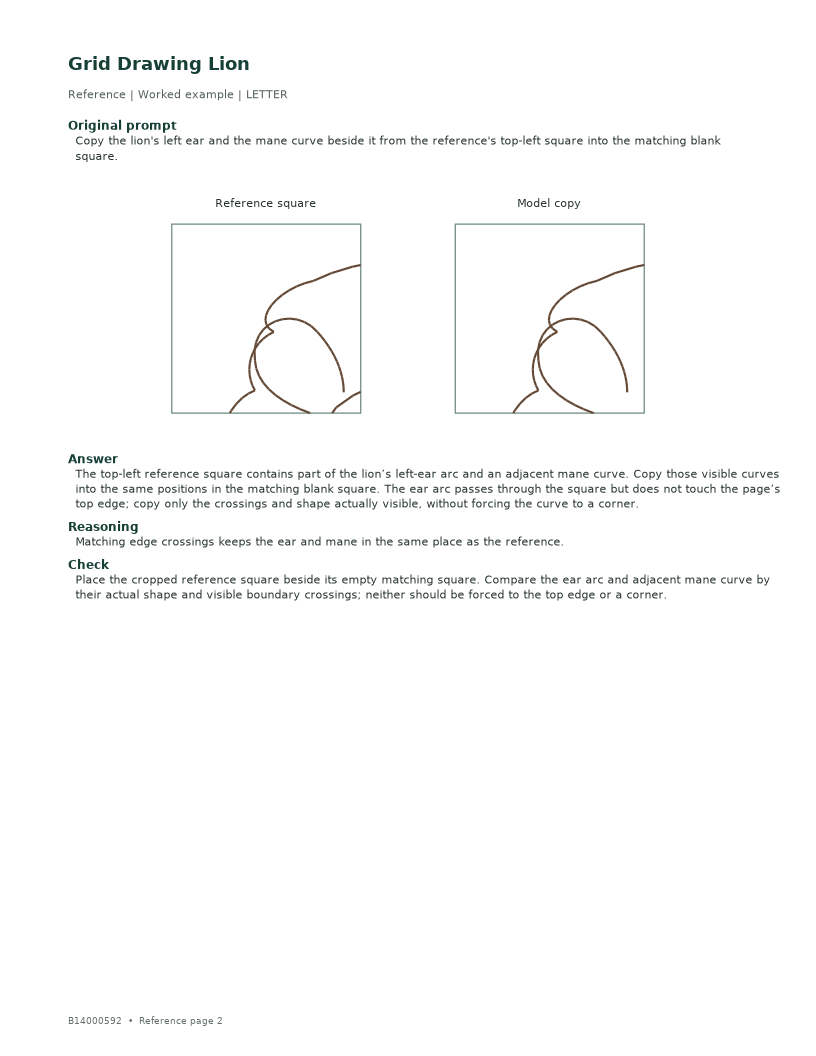
In the worked example, the top-left square shows part of the left-ear arc and an adjacent mane curve. Copy the visible shapes into the same positions in the matching blank square. The arc passes through the square but does not touch the page’s top edge; use the actual boundary crossings and do not invent a corner contact.
Check the two squares side by side. The arc and mane curve should match the reference’s visible shape and crossings. The target is the observed content of this square, not a guessed top-edge or corner position.
Practice tasks
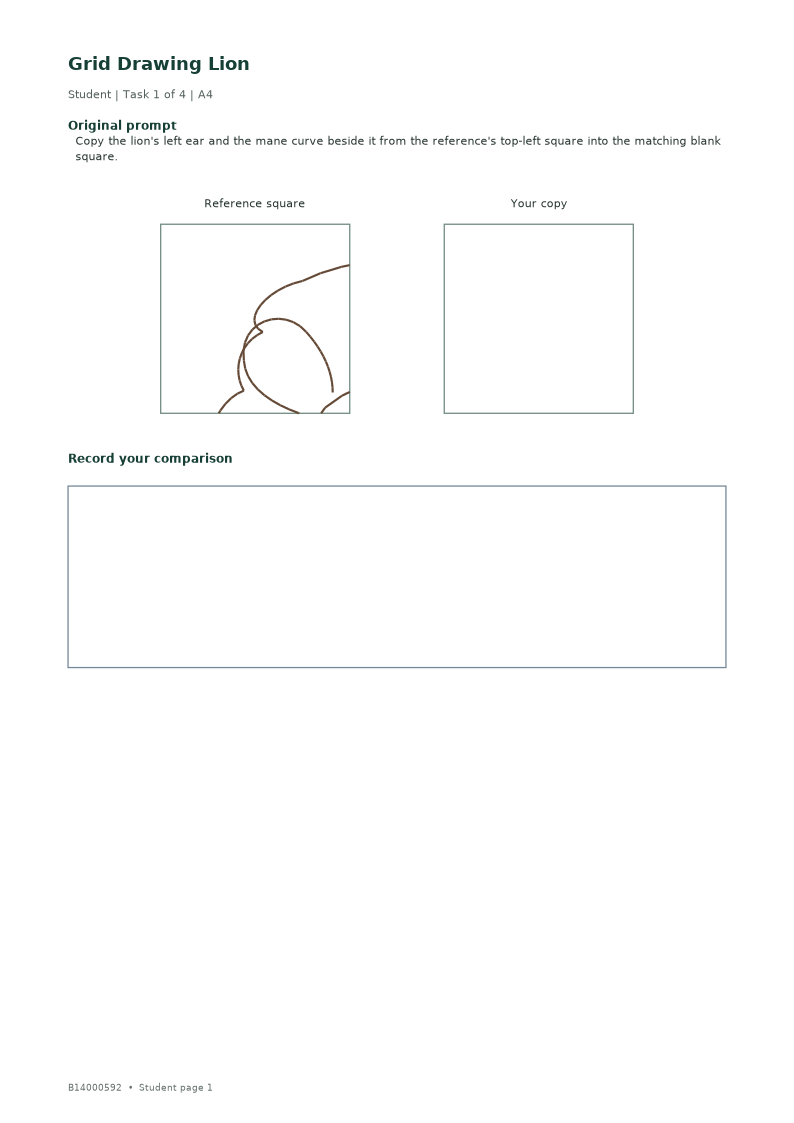
Each of the four task cards names one reference square and pairs it with a separate empty matching square. Copy only the named features into that blank square; the answer key then shows those features transferred.
Keep the full lion reference visible beside the separate blank 3×3 grid. Compare each cropped reference square with its matching copy square, using the actual shape, within-cell position, and visible boundary crossings.
Download the complete resource pack
All individual SVG pages (20)
- A4 reference page 1
- A4 reference page 2
- A4 student page 1
- A4 student page 2
- A4 student page 3
- A4 student page 4
- A4 answer page 1
- A4 answer page 2
- A4 answer page 3
- A4 answer page 4
- LETTER reference page 1
- LETTER reference page 2
- LETTER student page 1
- LETTER student page 2
- LETTER student page 3
- LETTER student page 4
- LETTER answer page 1
- LETTER answer page 2
- LETTER answer page 3
- LETTER answer page 4
Print at 100% / actual size. Use the stated scale on any schematic diagram; physical cutting templates are identified separately. A4 and US Letter are separate files. Free access, no signup; CC BY 4.0.
How to use these pages
- What grid drawing is
- How to use the full reference and matching blank grid
- Worked example
- Practice tasks
Worked example
Example: Copy the lion's left ear and the mane curve beside it from the reference's top-left square into the matching blank square.
Answer: The top-left reference square contains part of the lion’s left-ear arc and an adjacent mane curve. Copy those visible curves into the same positions in the matching blank square. The ear arc passes through the square but does not touch the page’s top edge; copy only the crossings and shape actually visible, without forcing the curve to a corner.
Reasoning: Matching edge crossings keeps the ear and mane in the same place as the reference.
Check: Place the cropped reference square beside its empty matching square. Compare the ear arc and adjacent mane curve by their actual shape and visible boundary crossings; neither should be forced to the top edge or a corner.
Four practice tasks and complete answers
Task 1
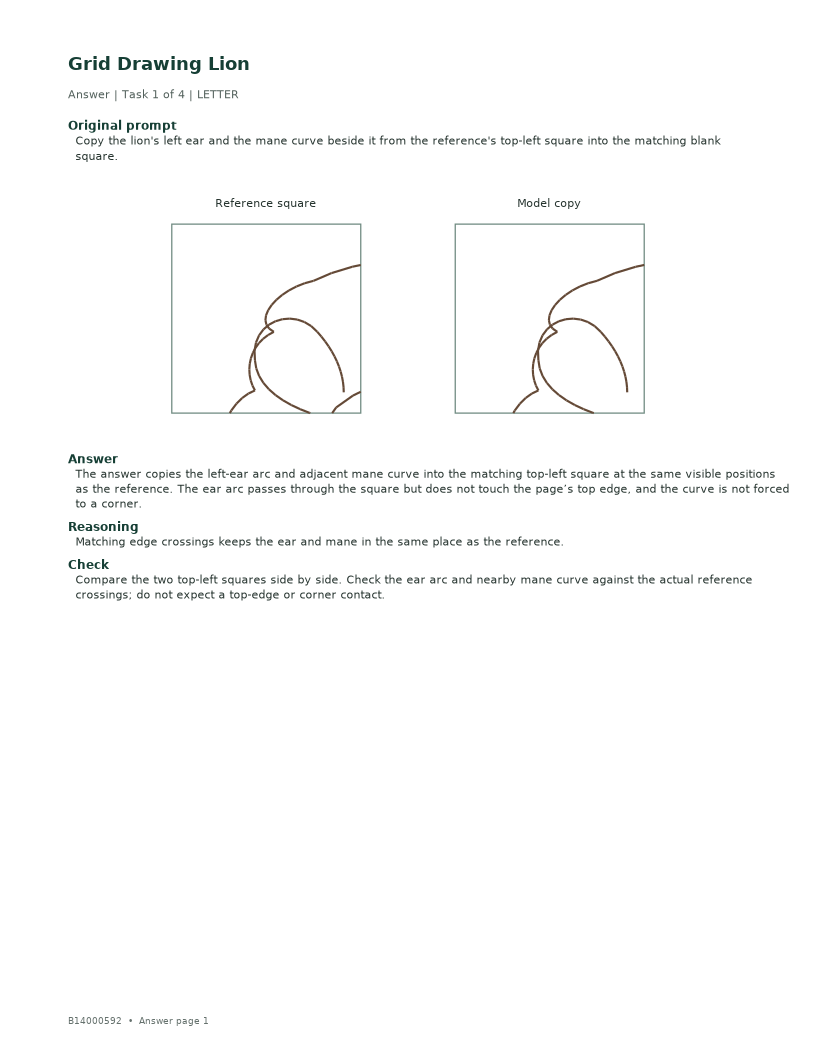
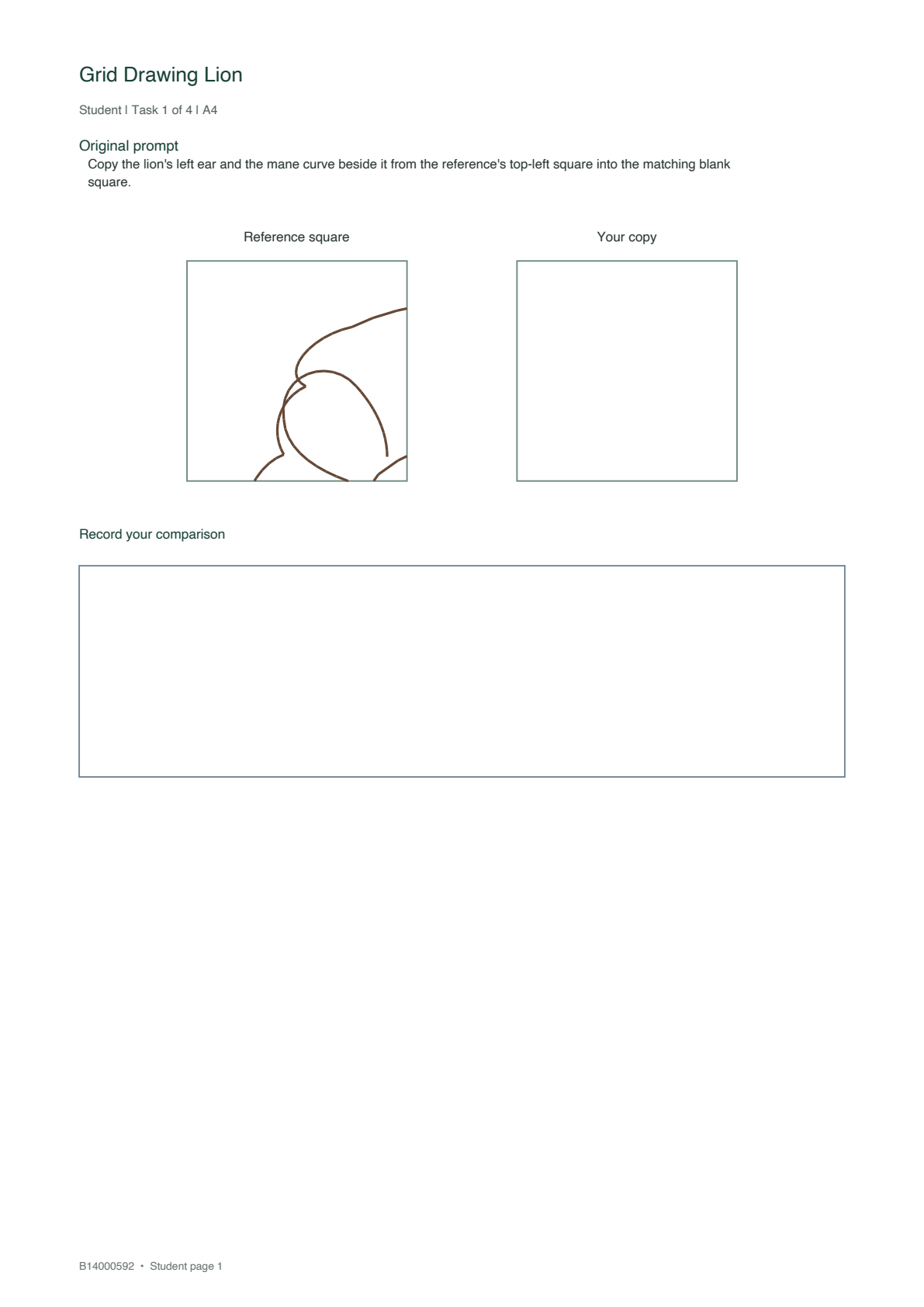
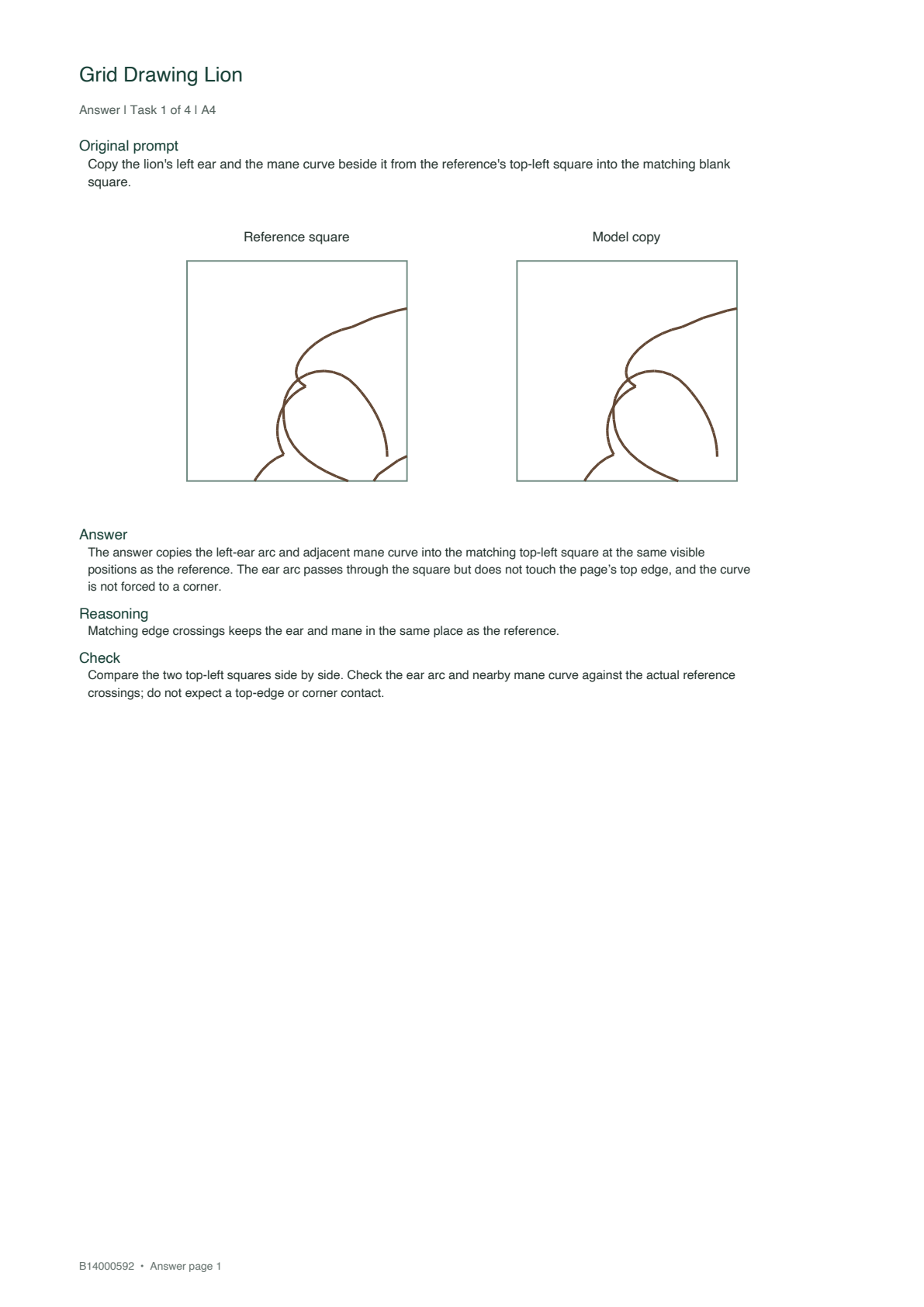
Copy the lion's left ear and the mane curve beside it from the reference's top-left square into the matching blank square.
Show answer 1
The answer copies the left-ear arc and adjacent mane curve into the matching top-left square at the same visible positions as the reference. The ear arc passes through the square but does not touch the page’s top edge, and the curve is not forced to a corner.
Matching edge crossings keeps the ear and mane in the same place as the reference.
Check: Compare the two top-left squares side by side. Check the ear arc and nearby mane curve against the actual reference crossings; do not expect a top-edge or corner contact.
Task 2
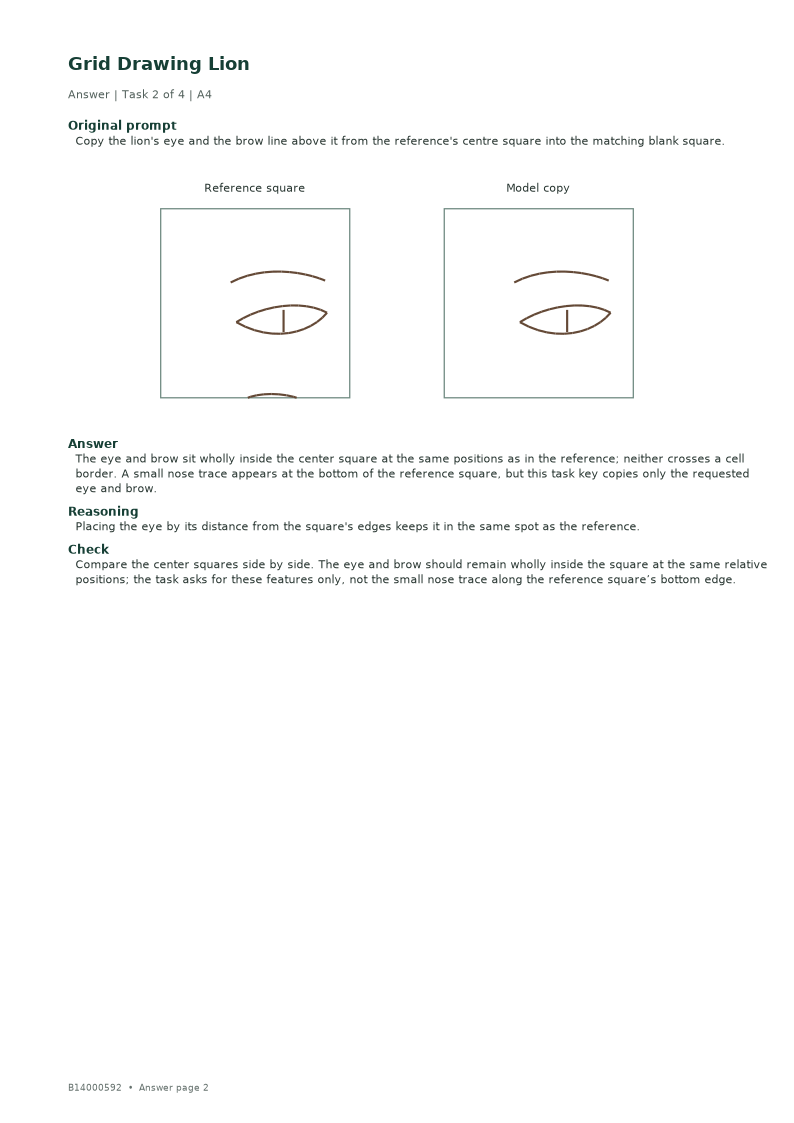
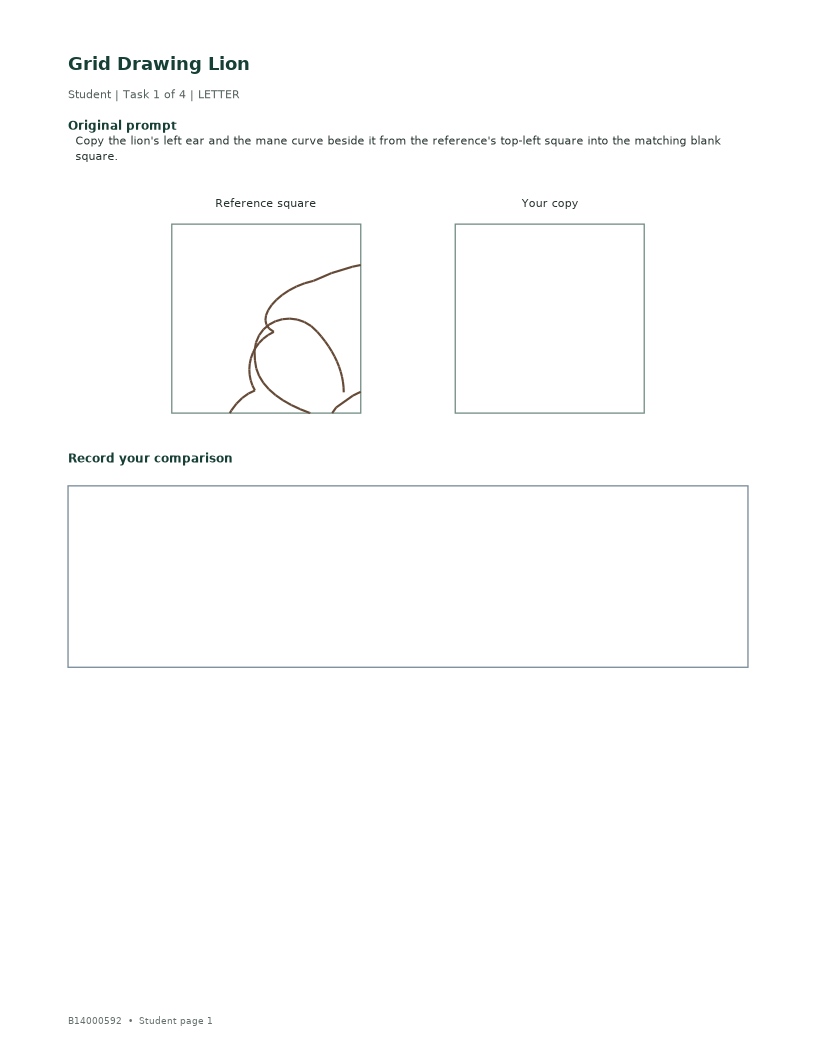
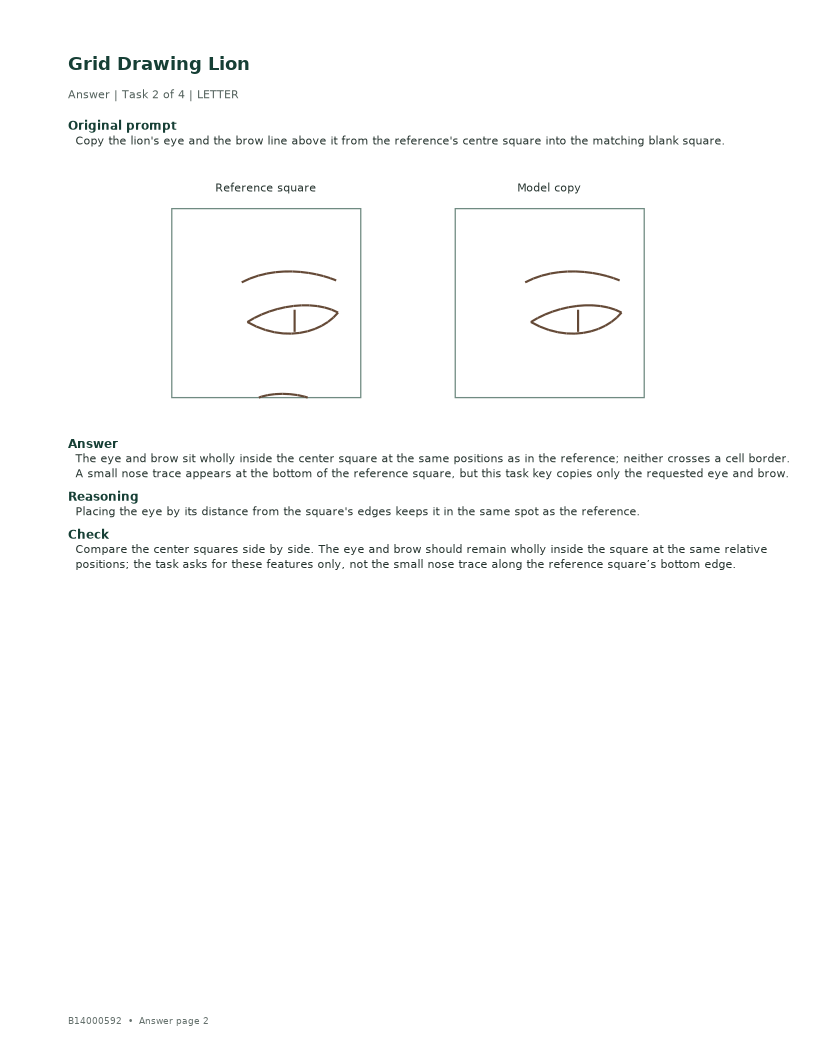
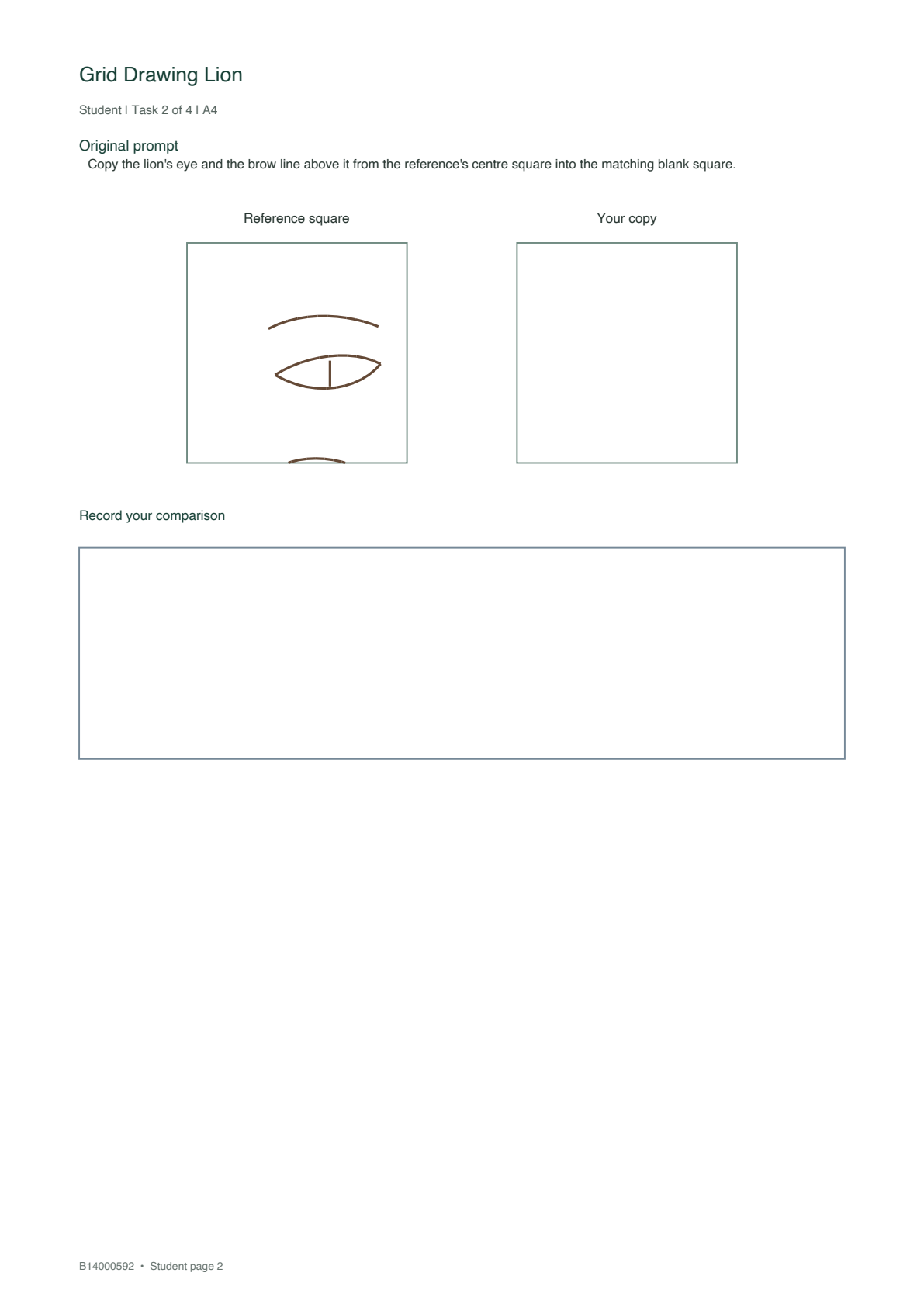
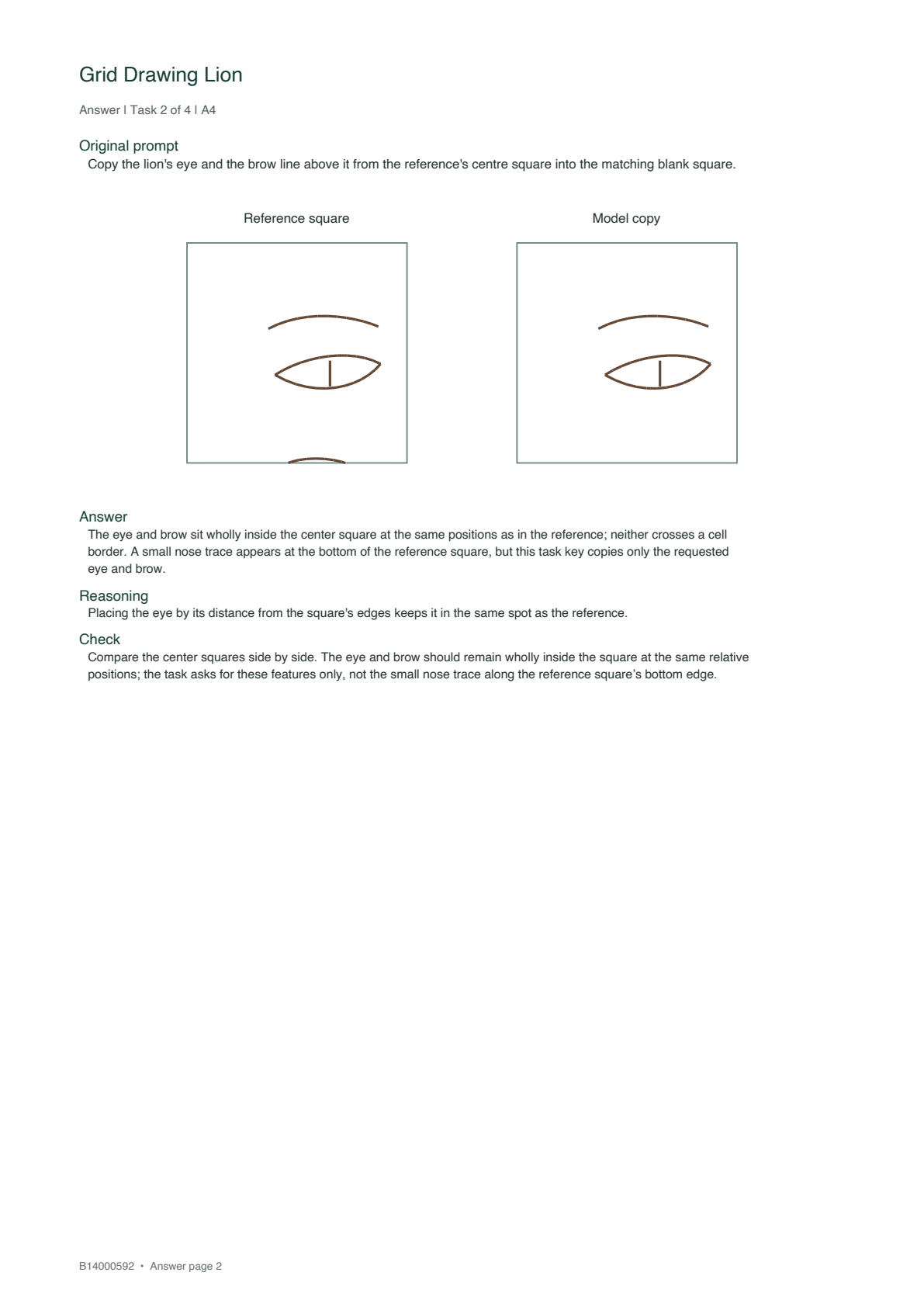
Copy the lion's eye and the brow line above it from the reference's centre square into the matching blank square.
Show answer 2
The eye and brow sit wholly inside the center square at the same positions as in the reference; neither crosses a cell border. A small nose trace appears at the bottom of the reference square, but this task key copies only the requested eye and brow.
Placing the eye by its distance from the square's edges keeps it in the same spot as the reference.
Check: Compare the center squares side by side. The eye and brow should remain wholly inside the square at the same relative positions; the task asks for these features only, not the small nose trace along the reference square’s bottom edge.
Task 3
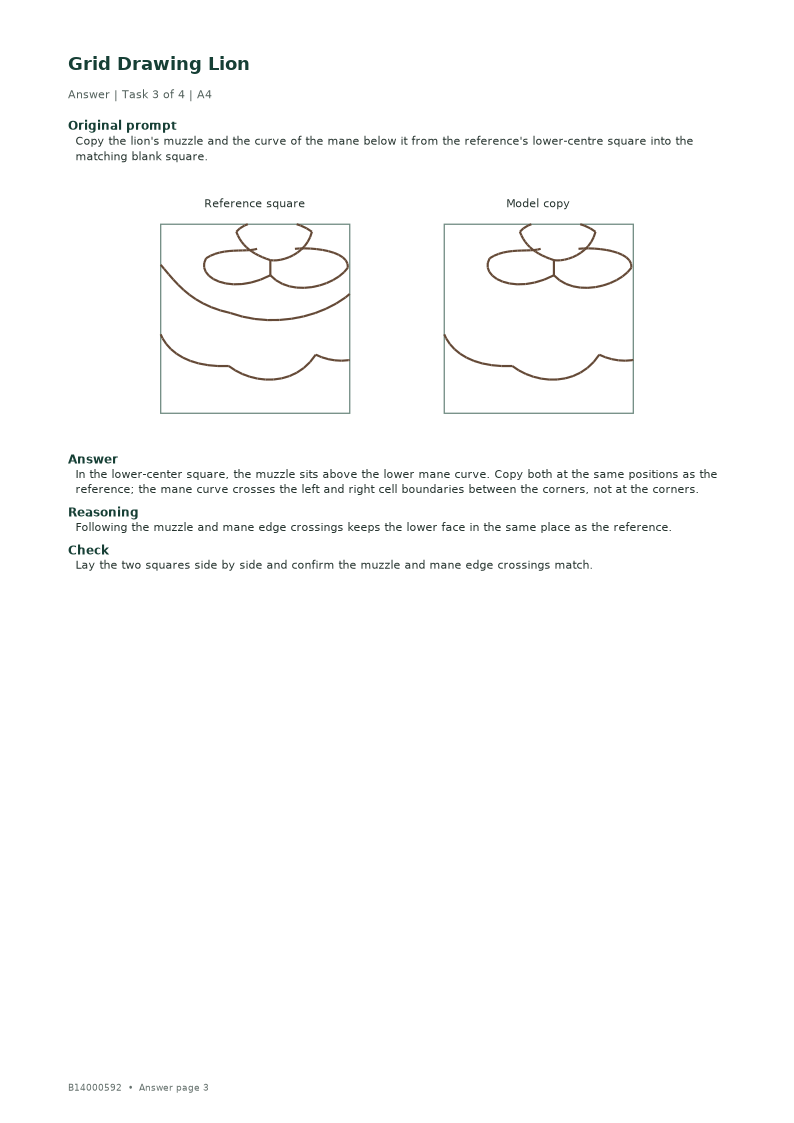
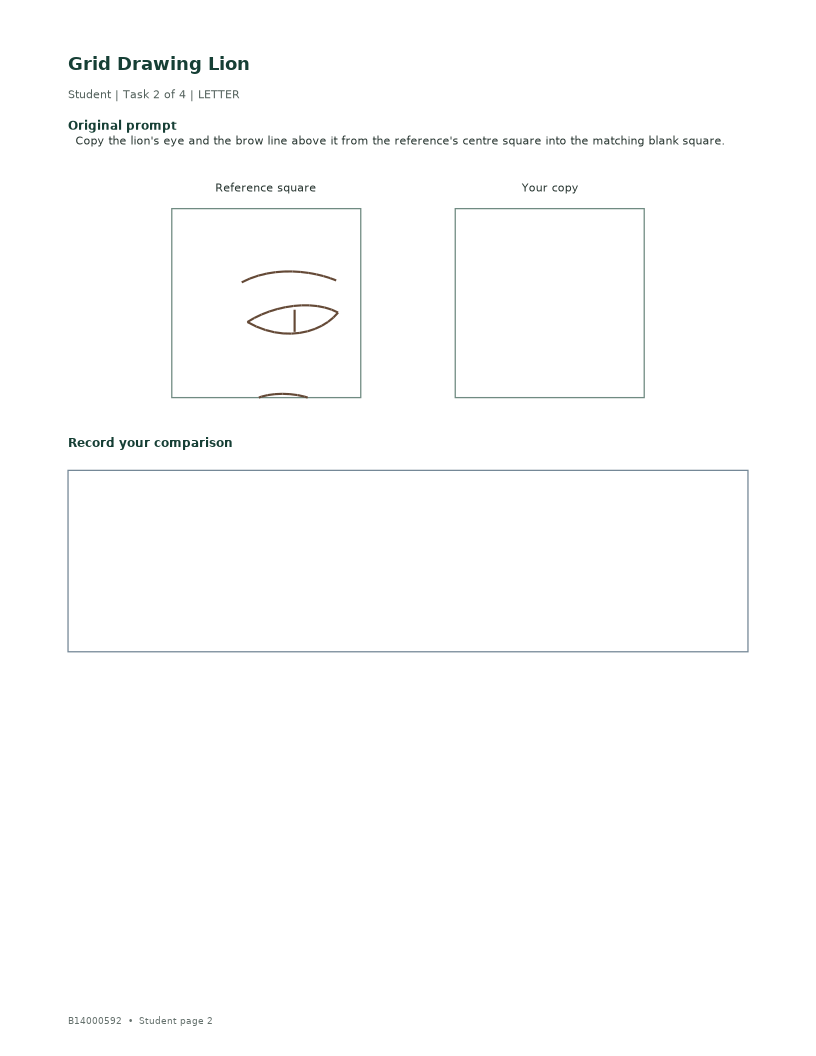
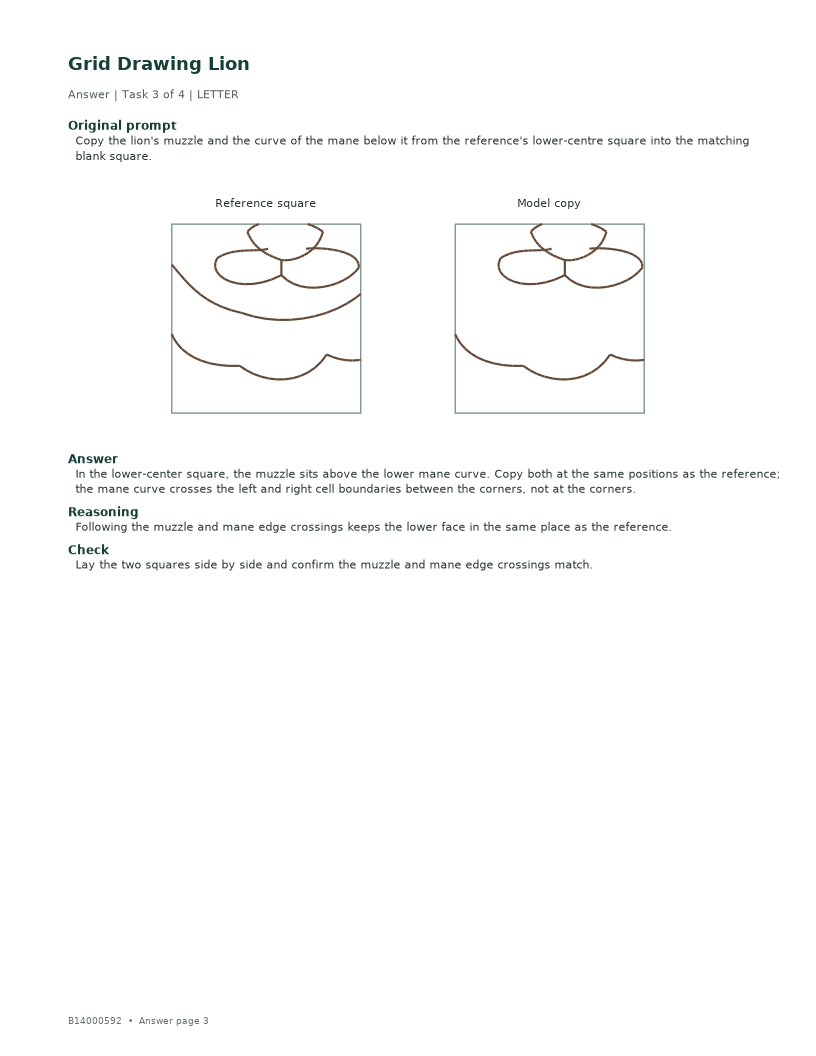
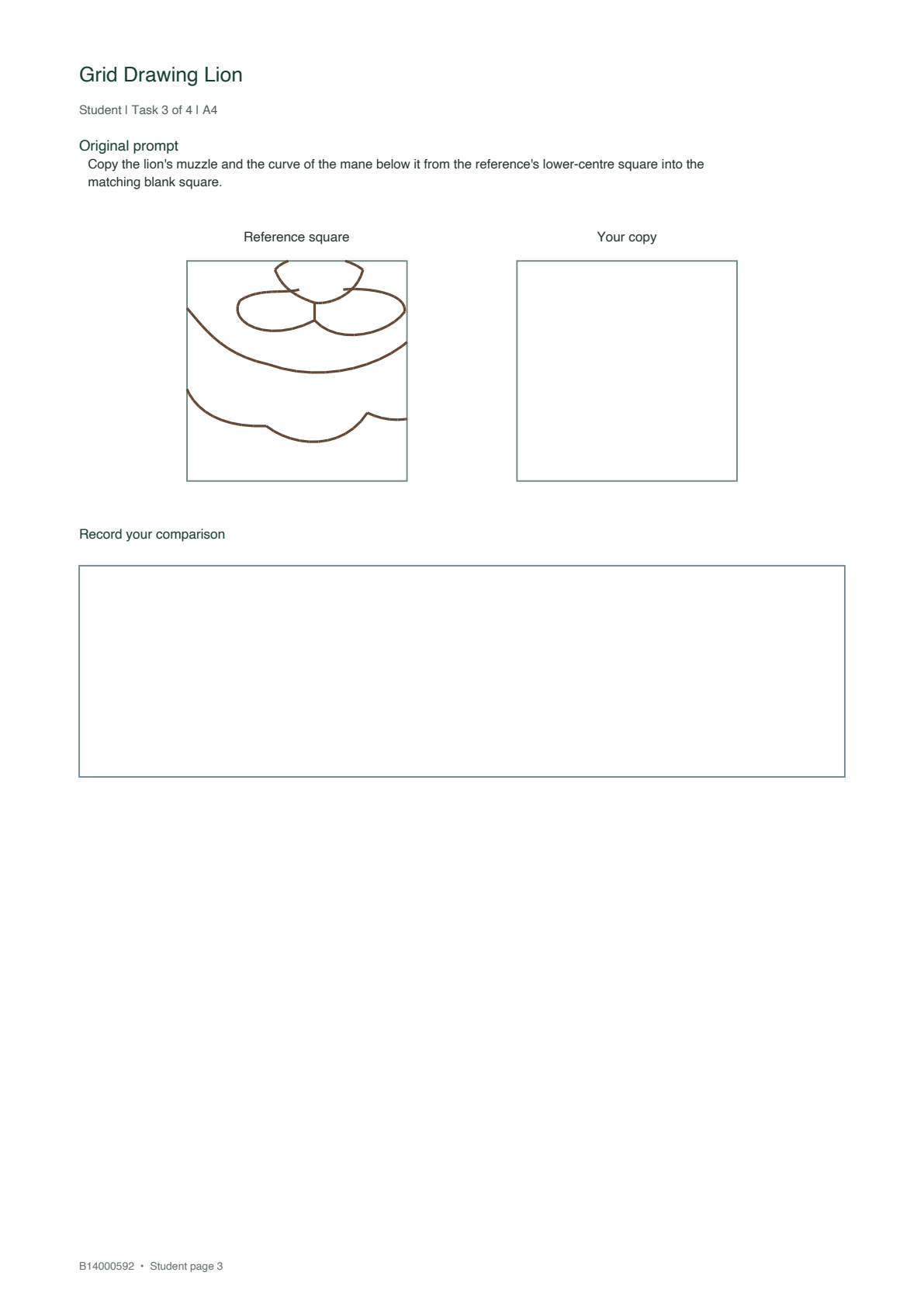
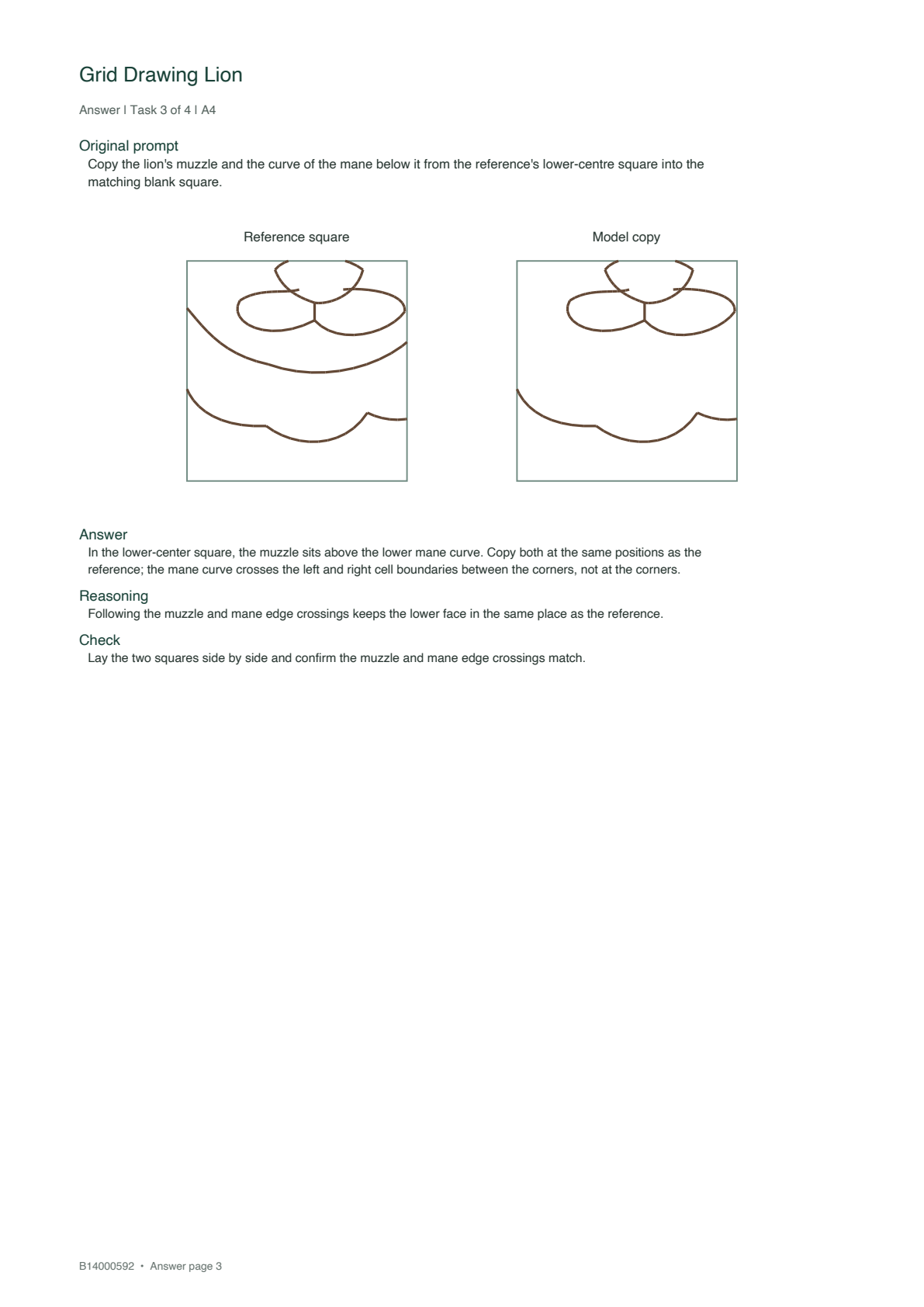
Copy the lion's muzzle and the curve of the mane below it from the reference's lower-centre square into the matching blank square.
Show answer 3
In the lower-center square, the muzzle sits above the lower mane curve. Copy both at the same positions as the reference; the mane curve crosses the left and right cell boundaries between the corners, not at the corners.
Following the muzzle and mane edge crossings keeps the lower face in the same place as the reference.
Check: Lay the two squares side by side and confirm the muzzle and mane edge crossings match.
Task 4
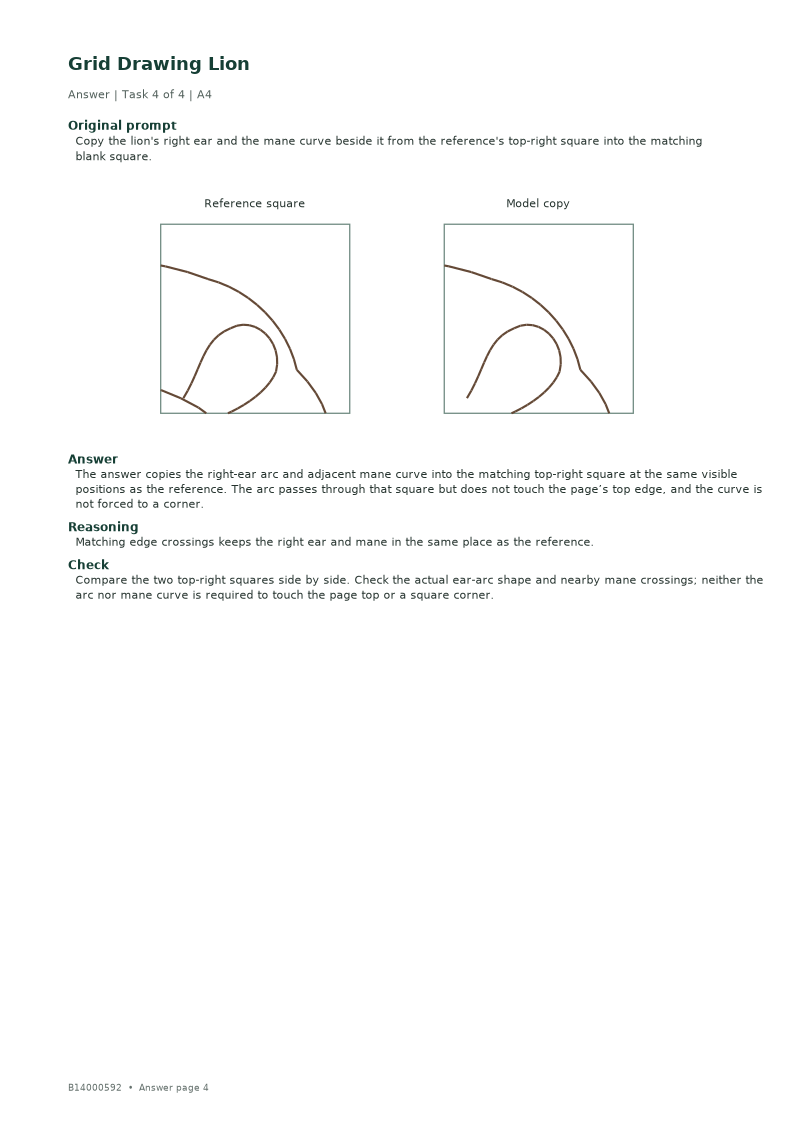
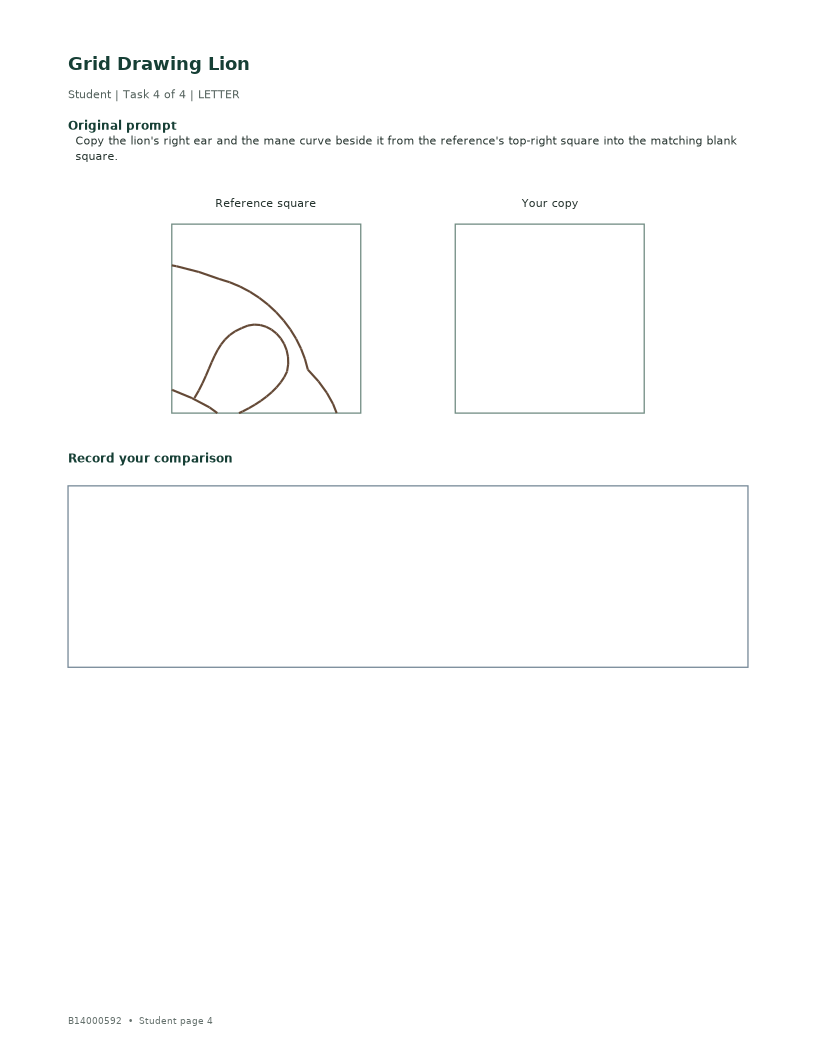
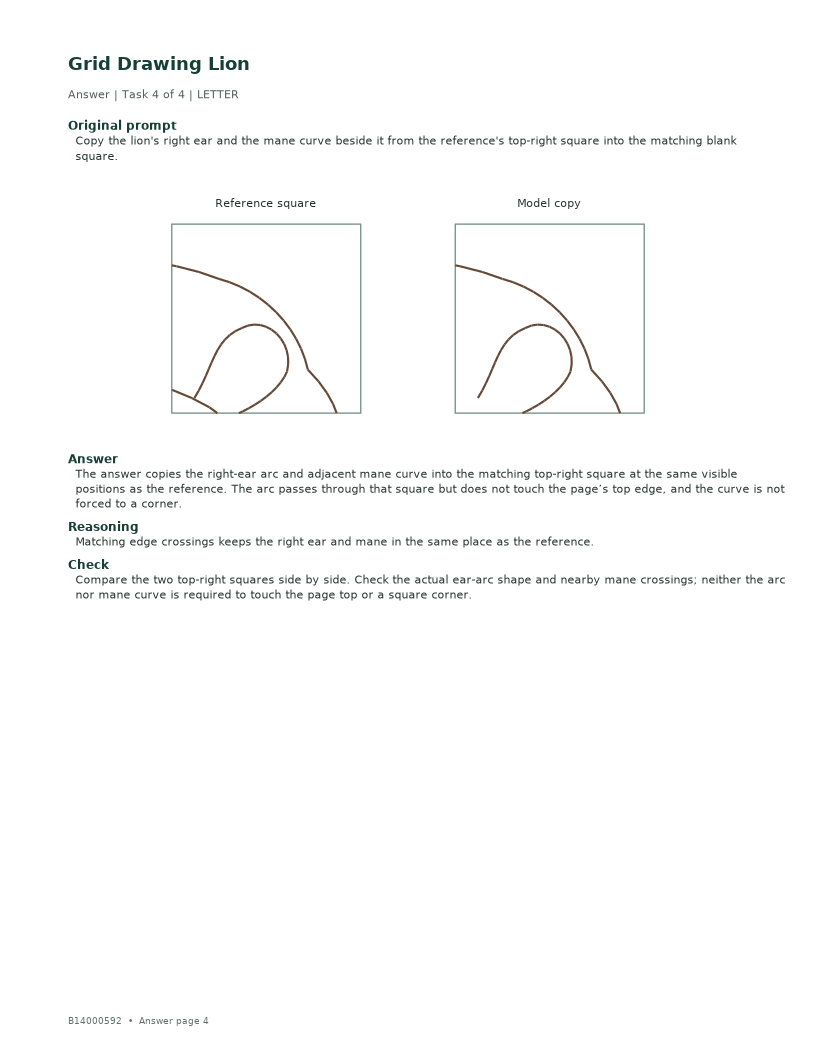
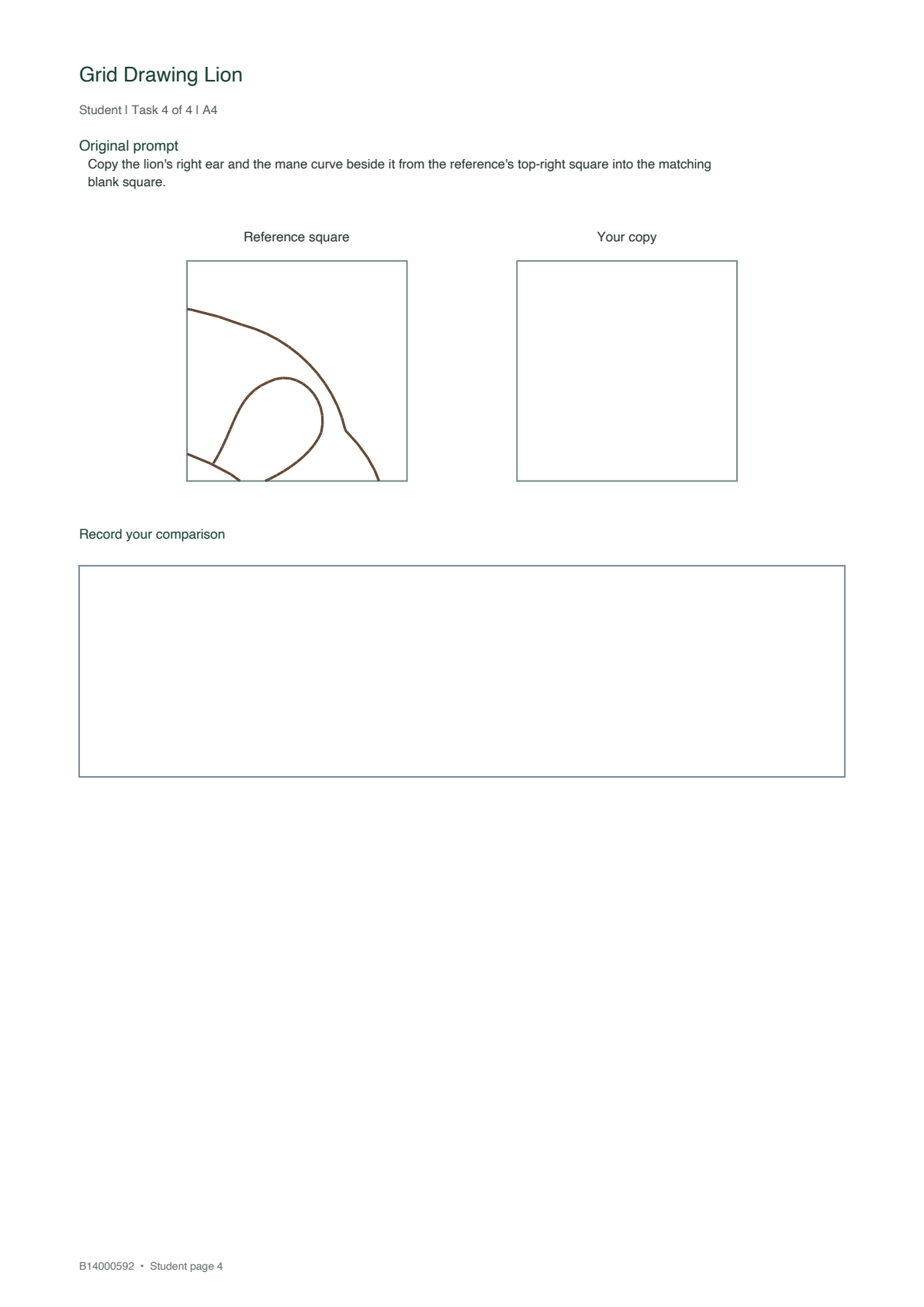
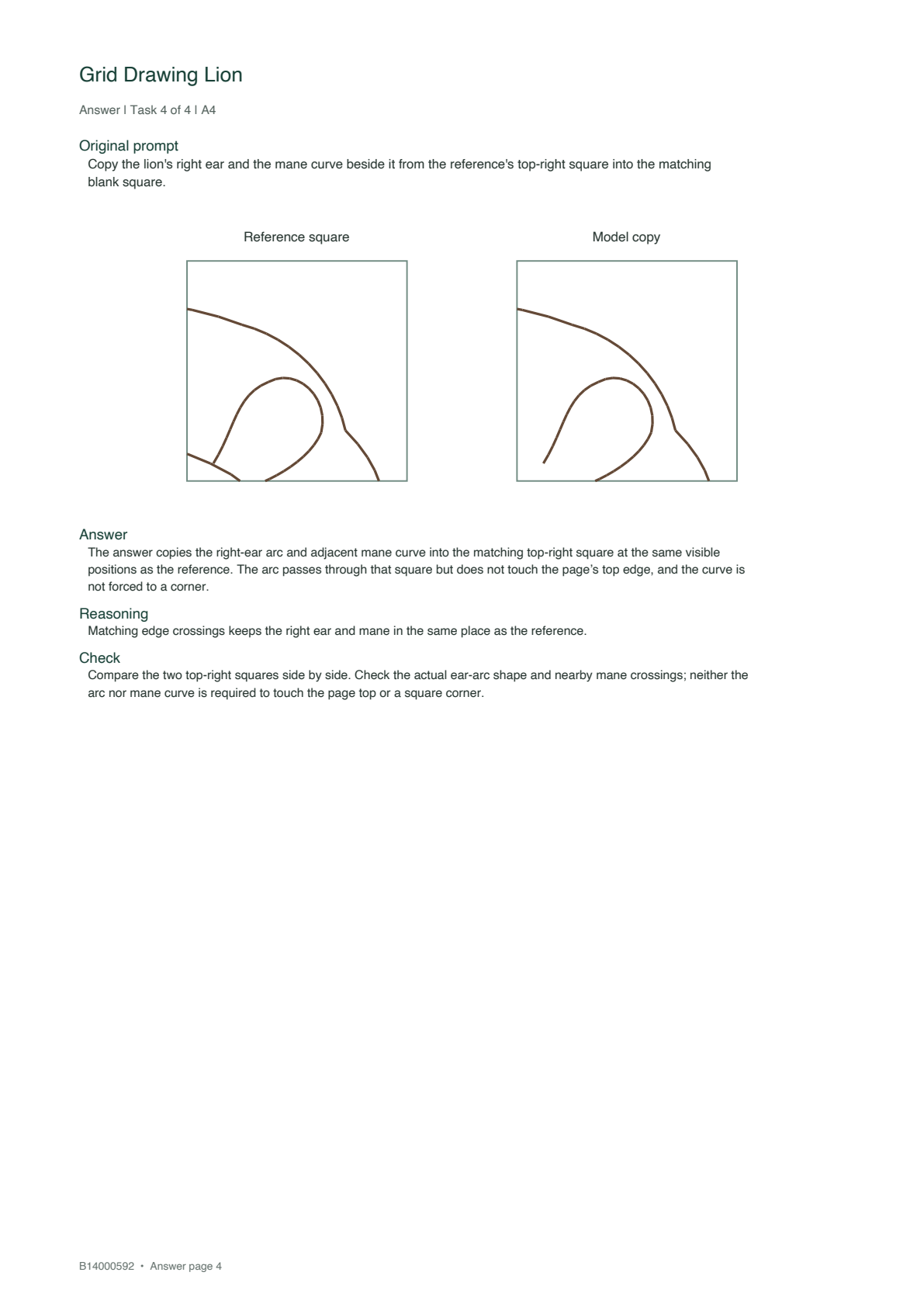
Copy the lion's right ear and the mane curve beside it from the reference's top-right square into the matching blank square.
Show answer 4
The answer copies the right-ear arc and adjacent mane curve into the matching top-right square at the same visible positions as the reference. The arc passes through that square but does not touch the page’s top edge, and the curve is not forced to a corner.
Matching edge crossings keeps the right ear and mane in the same place as the reference.
Check: Compare the two top-right squares side by side. Check the actual ear-arc shape and nearby mane crossings; neither the arc nor mane curve is required to touch the page top or a square corner.
Useful checks
- Drawing the whole lion before placing the squares. Work one square at a time and check each square against the reference before moving on.
- Ignoring where lines cross the square edges. Mark each edge crossing first, then connect them inside the square.
Questions about this resource
Do I need to measure in centimetres?
No. Grid drawing uses visual comparison of positions within squares, not numerical measurements.
What if my square does not match?
Erase lightly and recheck the edge crossings against the reference square before redrawing.