180° + 360° templates. 3 exercises + worked answers.
A reference, a task and a way to check it
Align the center and baseline, then follow the scale beginning at zero on your starting ray. Practice acute, obtuse and reflex angle checks.
Choose US Letter or A4 for prepared downloads. Original PDF and SVG files, worksheets and reference answers are free without signup. Collection packs contain the same individual pages in order.
Choose your paper and download
Download paper size
Every worksheet and answer is free. No signup.
Free original resource
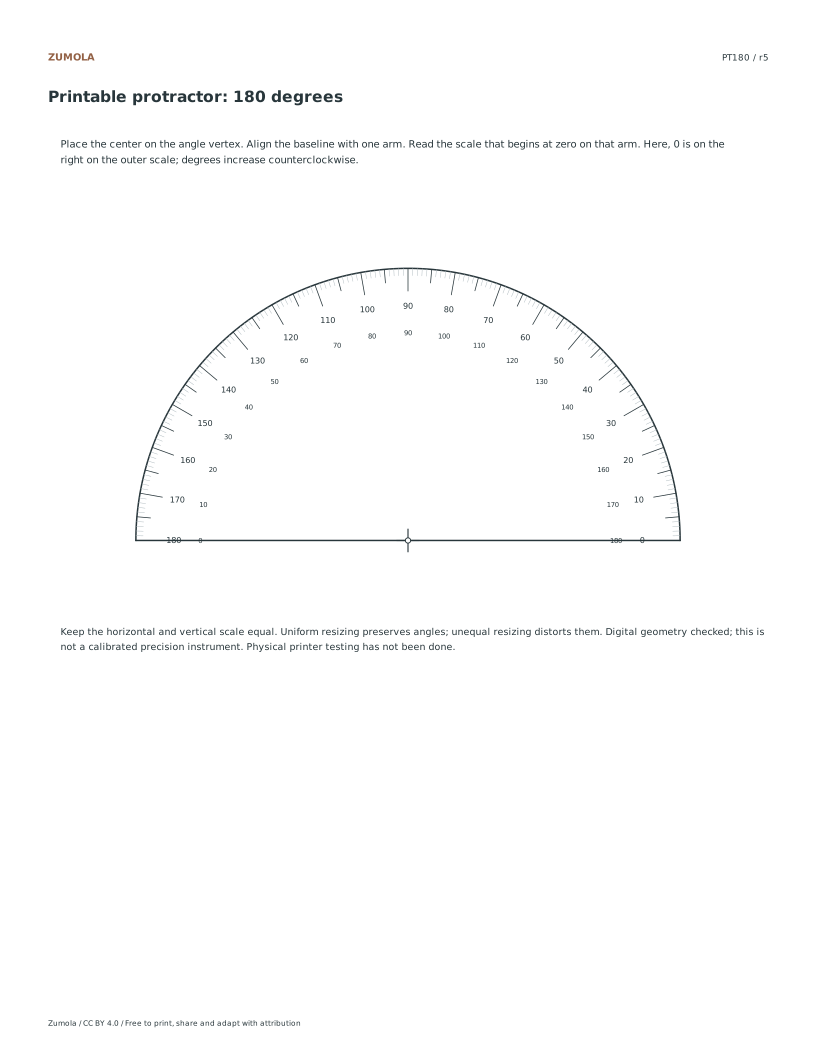
half-180 protractor reference
Original task with a separate reference answer. Letter or A4.
Use the student pack first, then compare the reference or answer. Packs are PDFs; individual sheets below also include editable SVG files. The paper choice applies to every download.
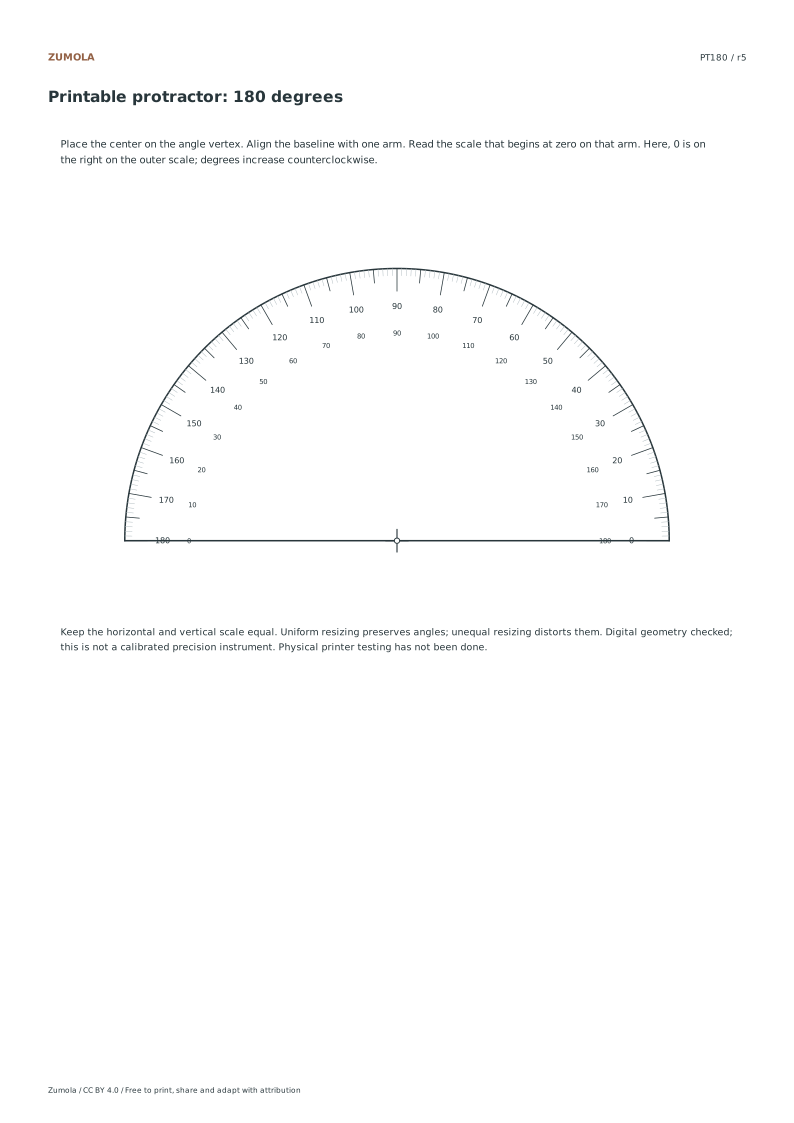
The 180° file has 1° ticks, longer 5° and 10° marks, and two opposing label rows. On our template the outer row begins at 0° on the right. Other protractors can label their rows differently, so use the row that starts at zero on your chosen ray instead of memorizing a universal inner-versus-outer rule.
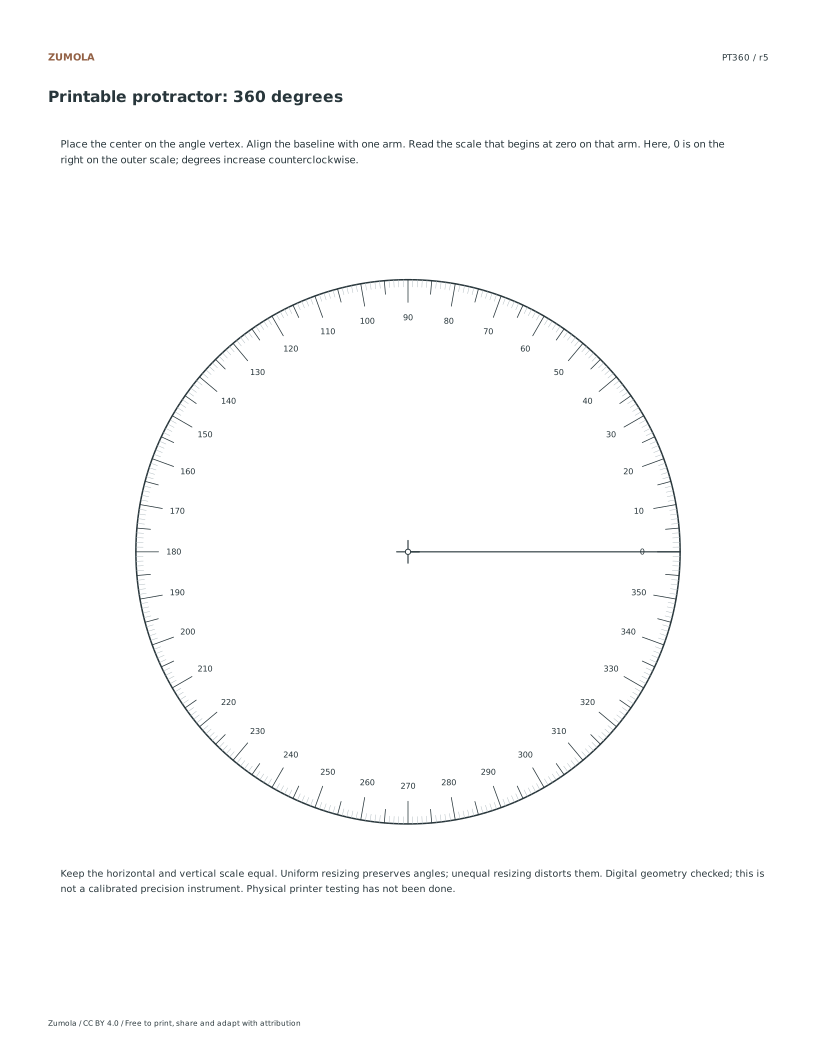
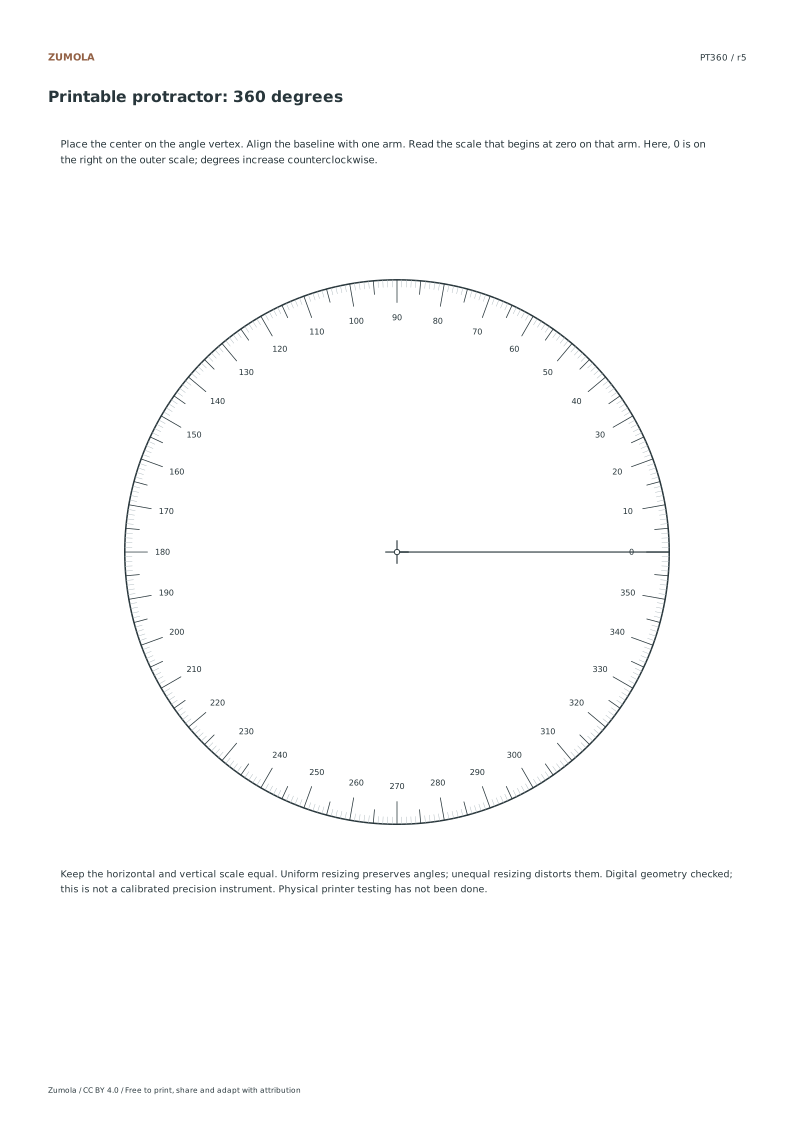
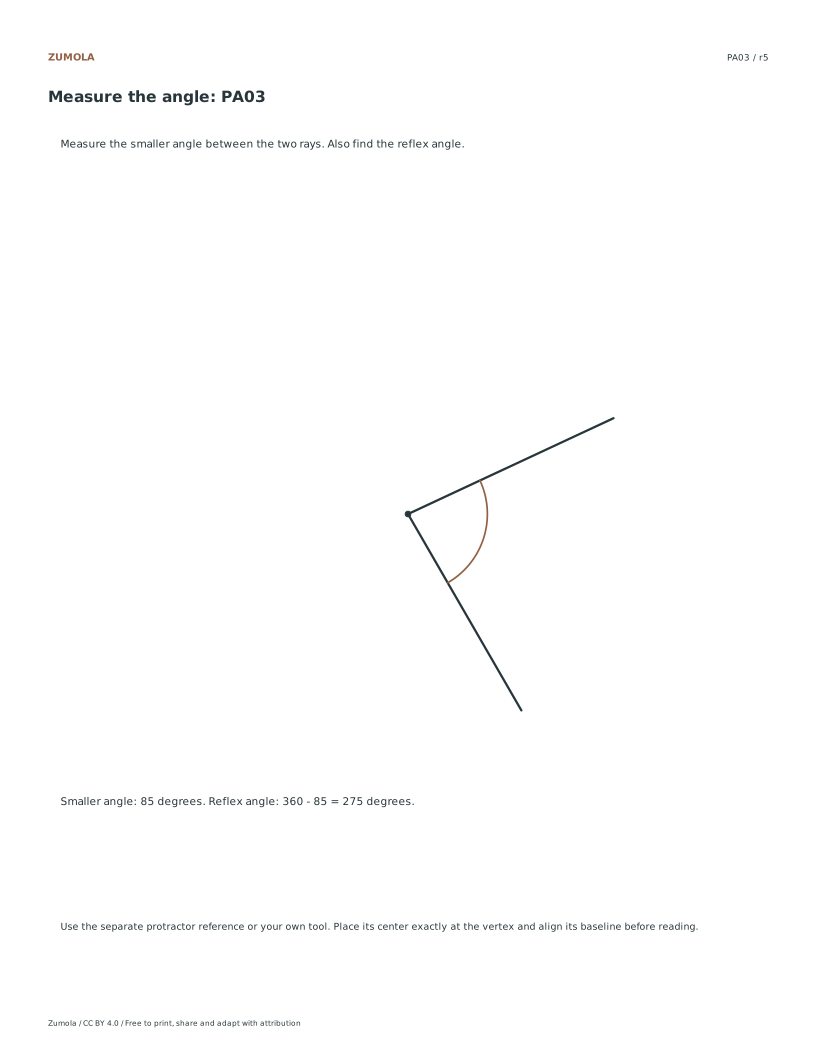
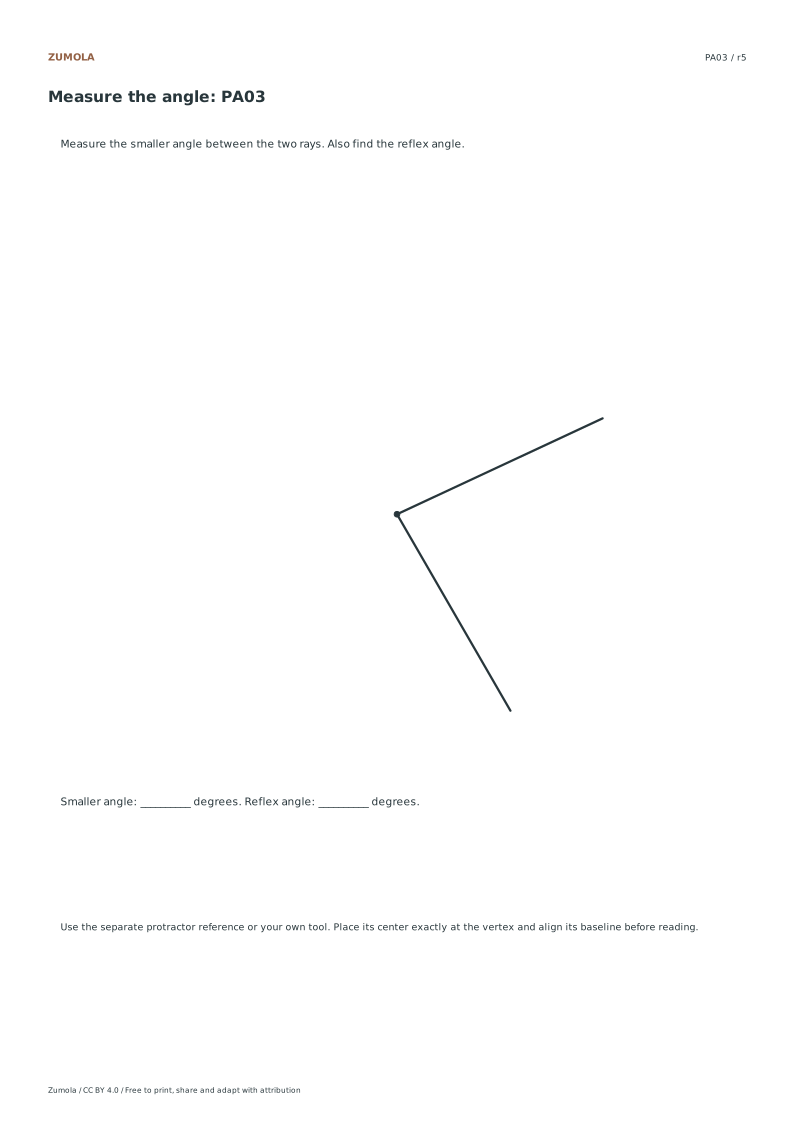
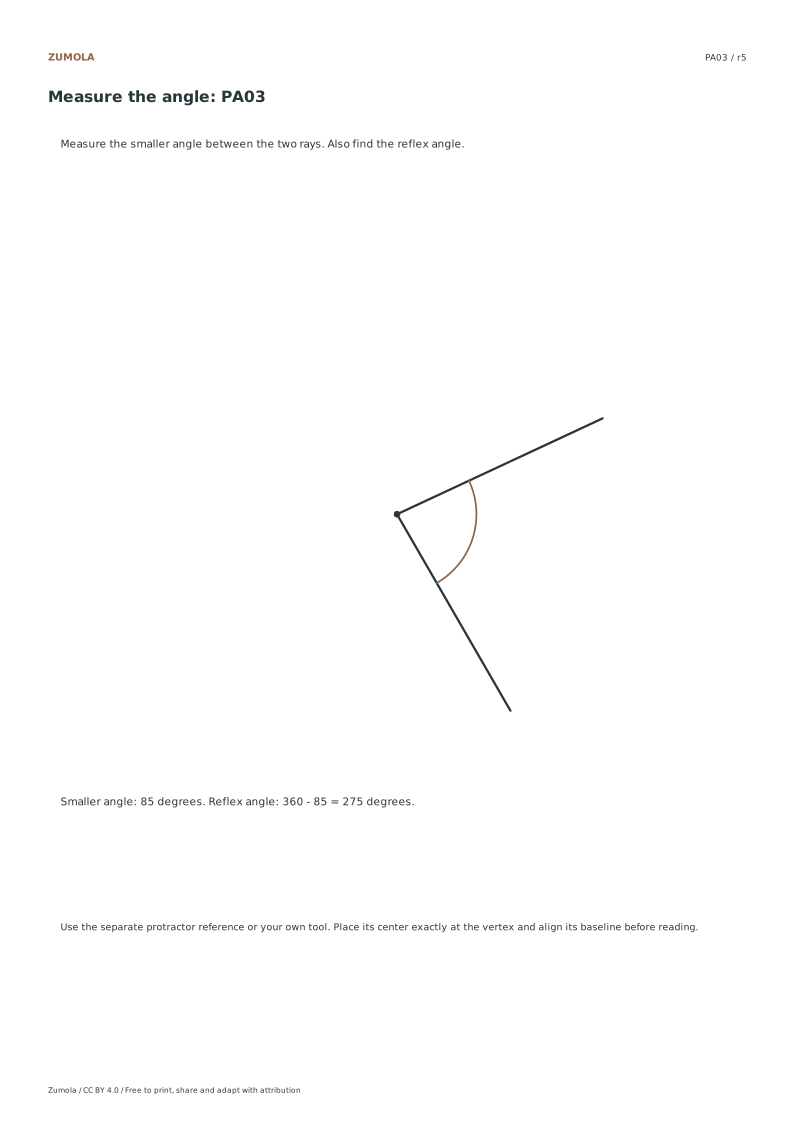
The 360° file marks 0° right, 90° up, 180° left and 270° down, increasing counterclockwise. To compare 300° with 25°, cross the zero direction: 60° + 25° = 85°. The reflex complement is 275°. Uniform resizing preserves angle geometry, but unequal stretching can change it. These templates have digital geometry checks and no physical calibration or precision-instrument certification.
Work through the page
Aligning the Baseline Correctly Place the center cross on the angle vertex. Align the zero direction with one of the rays before following the other ray to the degree ticks. The 180° template has a straight baseline; the 360° template marks a zero ray from the center toward the right. Keep the center fixed when rotating a protractor to match an angle. A shift in the center and a wrong choice of zero are different errors, so check them separately. If the print is stretched differently horizontally and vertically, the apparent angular distances can change even when its labels still look evenly ordered.
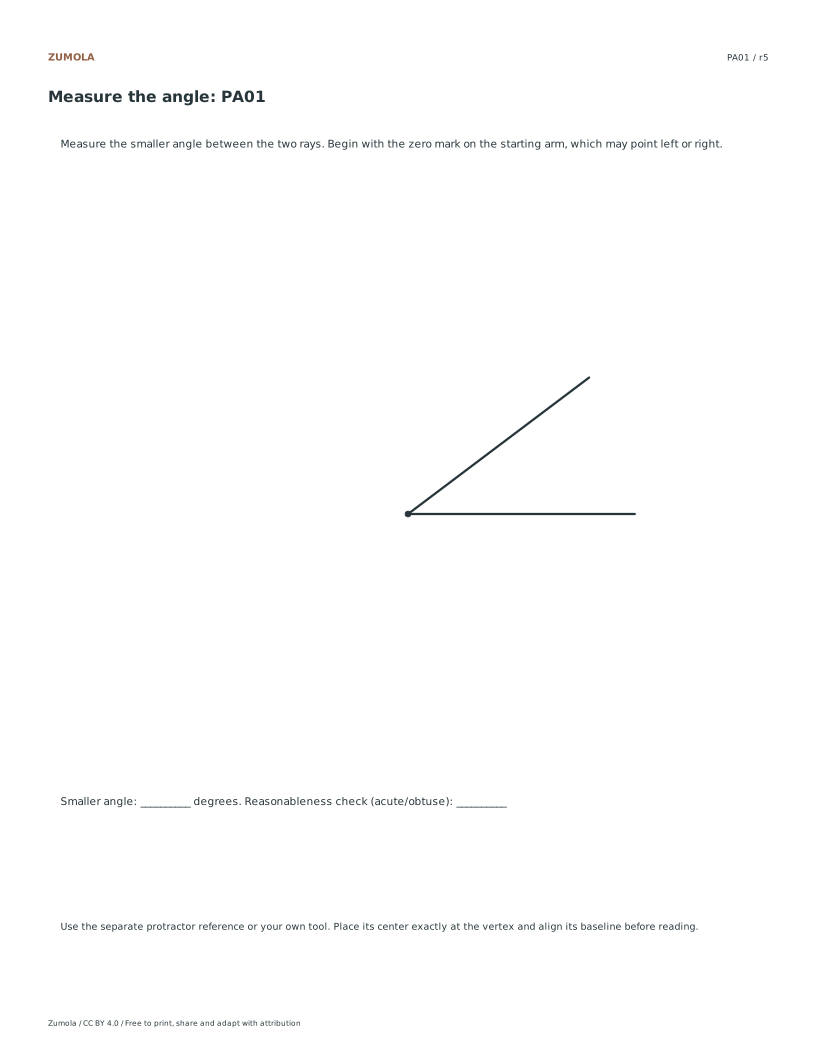
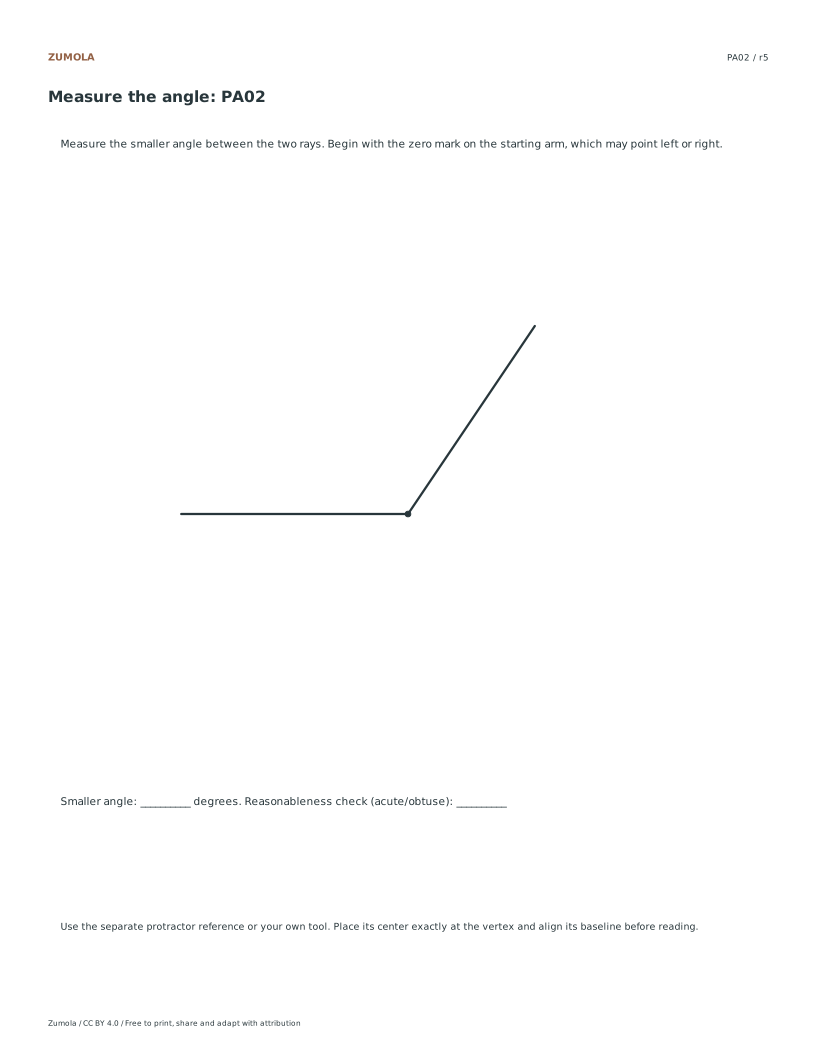
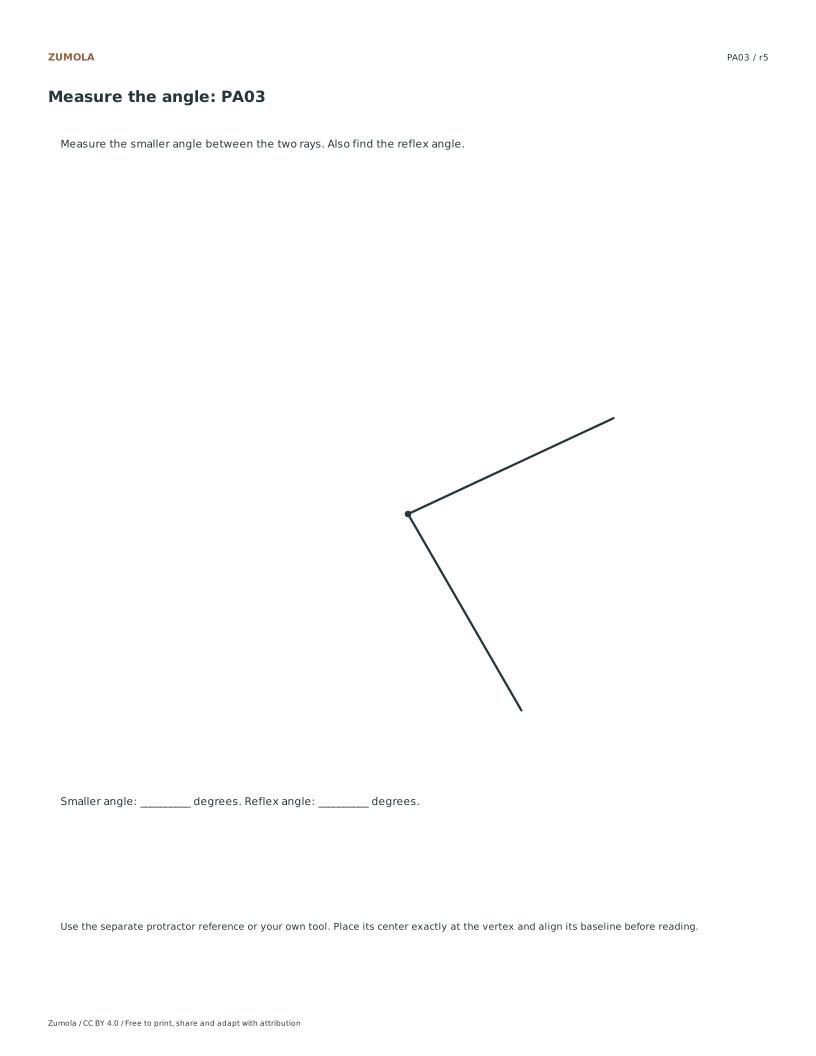
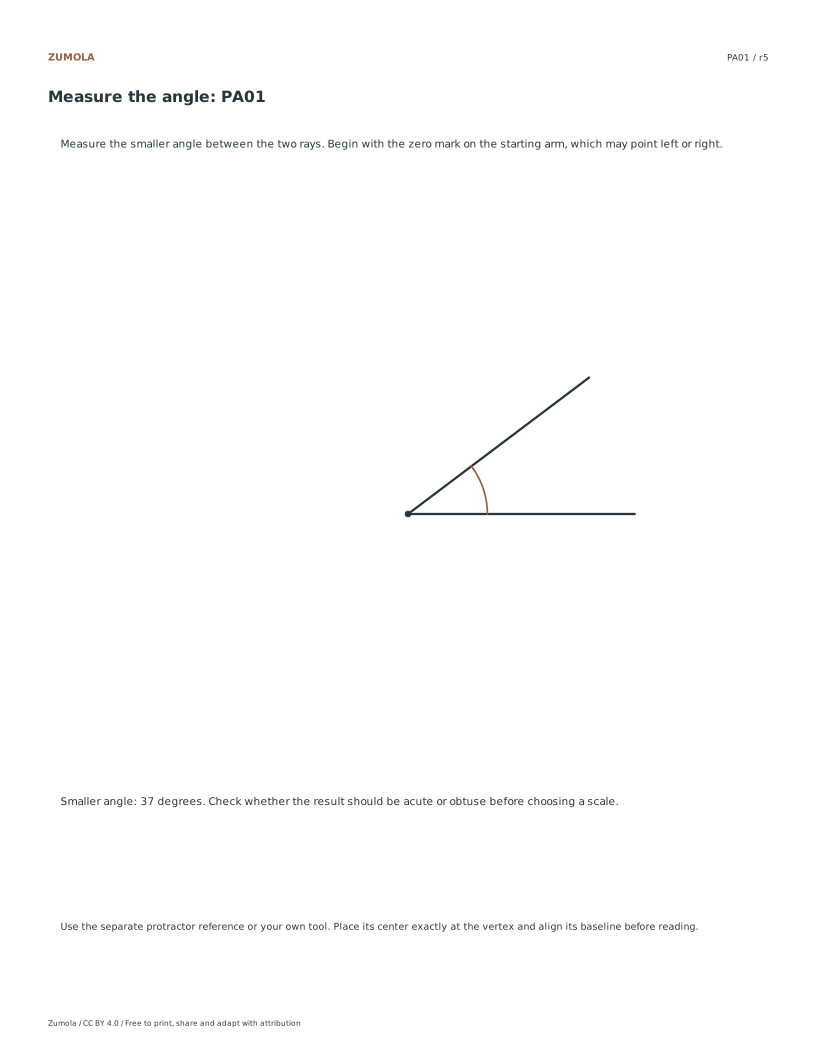
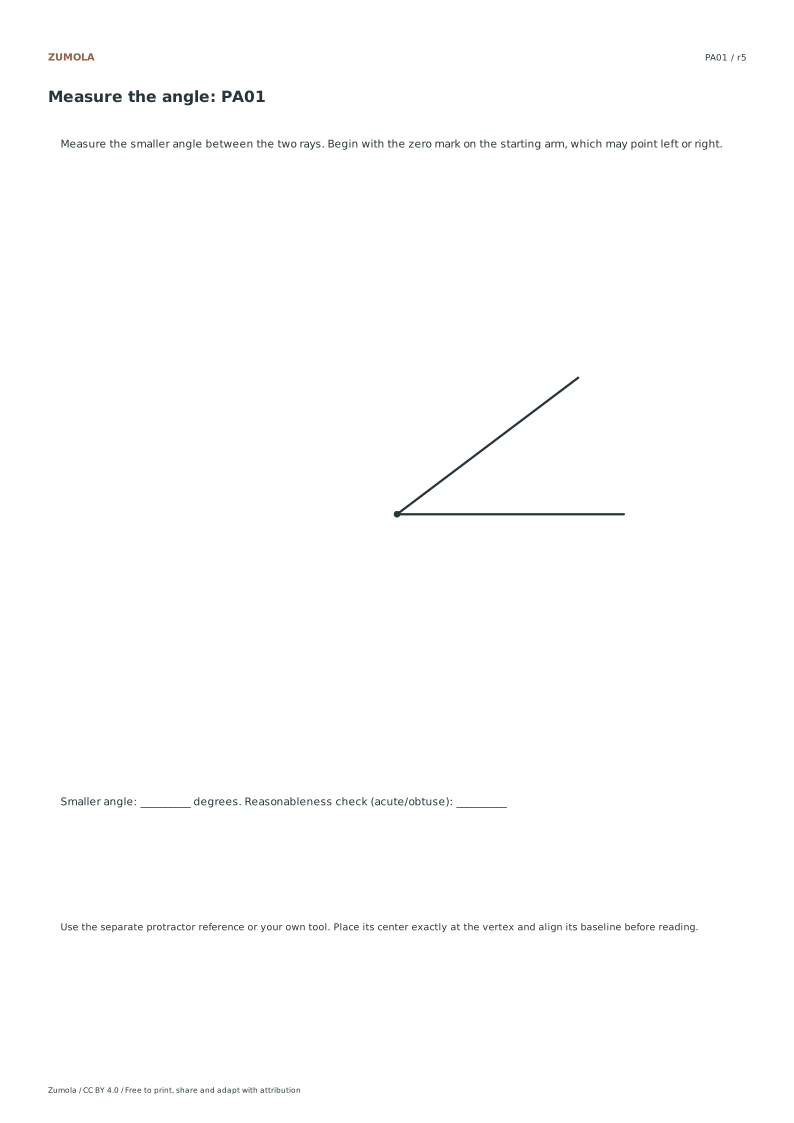
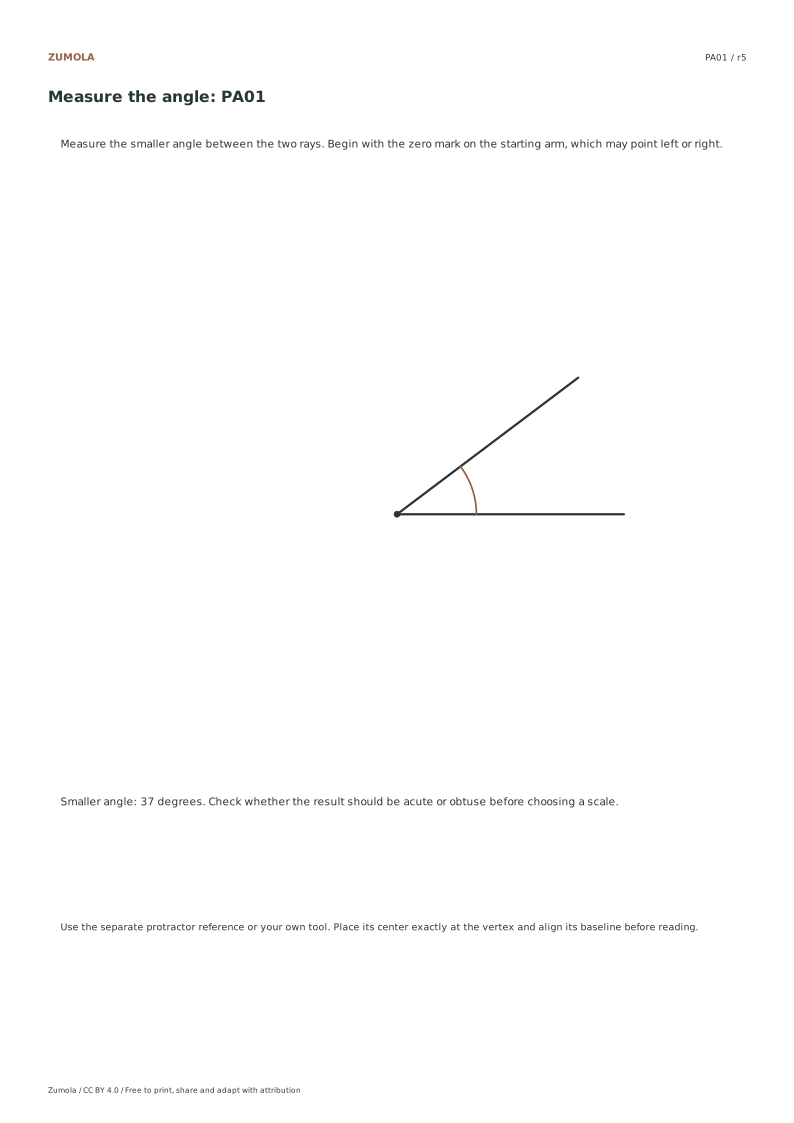
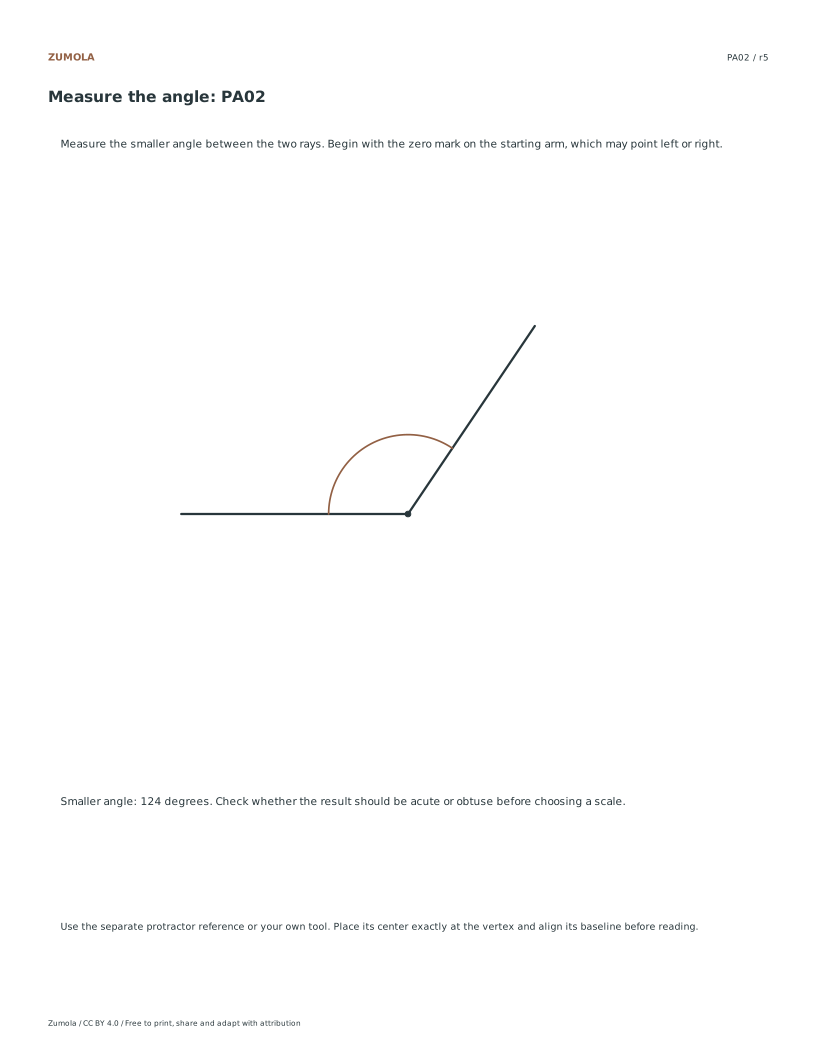
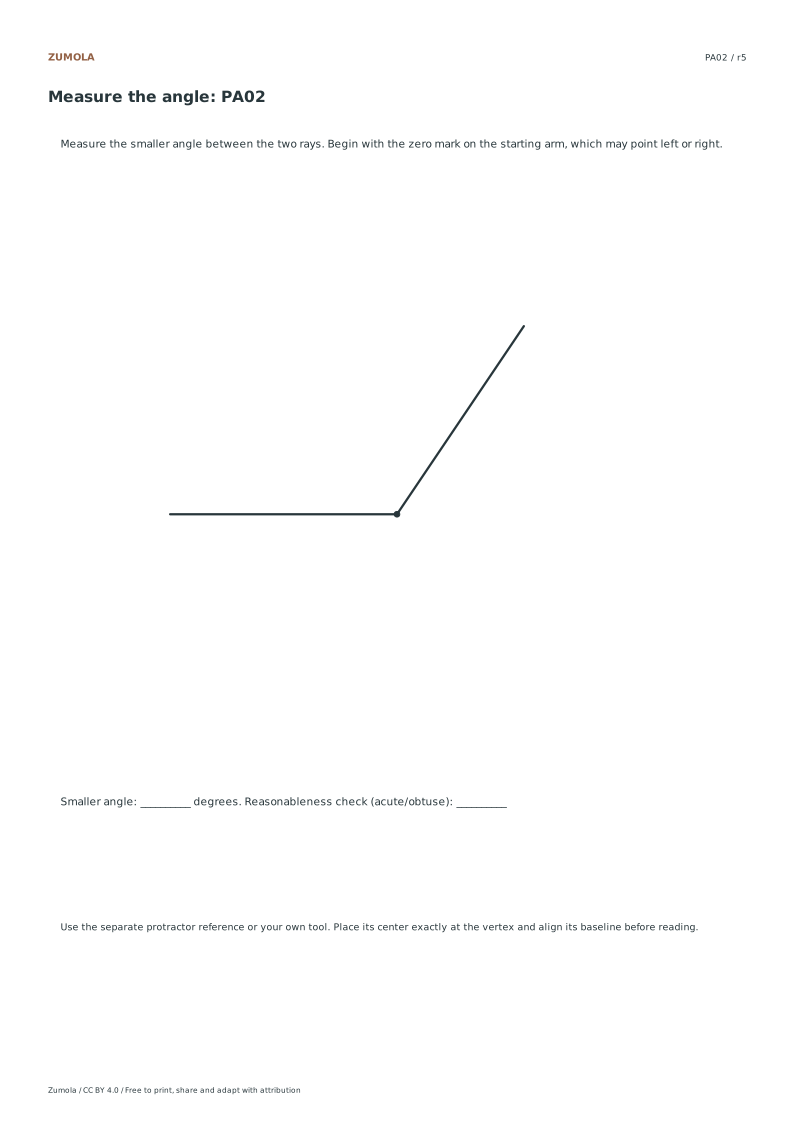
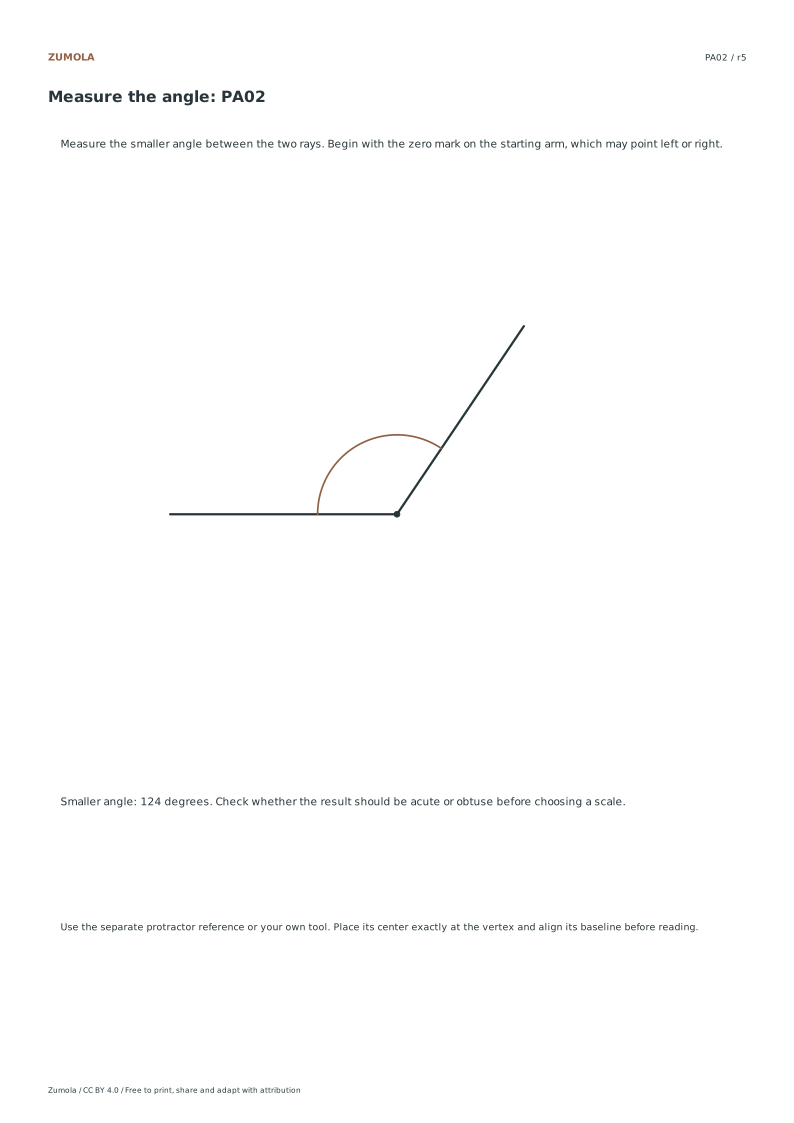
Reading the Correct Scale The semicircular template has two opposed scales. On this particular file, the outer scale reads 0° on the right and 180° on the left; the inner scale reverses that order. Those labels are not a universal rule for every commercial protractor. Follow whichever scale starts at zero on your chosen starting ray. PA01 starts on the right and ends at 37°, so it is acute. PA02 begins on the left and its other ray is at 56° measured from the right, giving 180° − 56° = 124°, an obtuse angle.
Verifying Print Accuracy Print the resource at one hundred percent scale to maintain geometric integrity. Uniform scaling preserves the accuracy of angles, but nonuniform horizontal or vertical distortion will alter the measured values. Use a standard paper size and avoid stretching the image during printing. Since the file is vector based, one degree ticks and ten degree labels remain sharp. Note that digital verification of tick and angle geometry has been completed, but physical printer tests have not been performed. Check that the center and baseline marks are clearly visible and correctly positioned relative to the scale numbers after printing.
Checks that catch common errors
Watch for
Check instead
Reading the outer scale when the baseline ray points to the left.
Use the inner scale which begins at zero on the left side for left-pointing baselines.
Assuming the outer scale always starts at zero on the right.
Check which scale begins at zero on the side where your baseline ray is aligned.
Printing with nonuniform horizontal or vertical scaling.
Print at one hundred percent to ensure uniform scaling preserves the correct angle geometry.
Match the file before printing
Print the PDF matching the paper in your printer at Actual size / 100% if you want to retain the millimeter dimensions defined in the file. Turn off Fit and Shrink when those dimensions matter. Uniform resizing preserves relative image proportions and angles but changes physical lengths. Unequal resizing can distort both. SVG editors and browser print dialogs can also change scale, so measure a physical calibration span when the task relies on size.
These files have digital geometry and layout checks. Physical printer testing has not been completed. Complete a student page before comparing the worked answer or reference illustration. A geometric or counting result can be exact, while a hand drawing can vary in its marks and interpretation. The original resources use CC BY 4.0: credit Zumola, link the license and indicate changes.
Useful answers
What happens with rays at 300° and 25°?
Move across 0°: 300° to 360° is 60°, then another 25° gives the smaller 85° angle. The reflex angle is 360° − 85° = 275°. The two ray directions are 300° and 25°, not one direction of 325°.
What is the reading for a right baseline to thirty seven degrees?
The reading is thirty seven degrees when the baseline is on the right and the ray points to thirty seven.
How do I read a left baseline to fifty six degrees from the right?
The reading is one hundred twenty four degrees when the baseline is on the left and the ray is at fifty six from the right.
Are the answers and editable files free too?
Yes. Every linked original worksheet, answer, PDF and SVG is free without signup. Individual SVG sheets stay editable; collection packs are PDF files. Analytics consent is not required to use the resources.
Optional Google Analytics helps us understand which free resources are useful. It is off until you allow it. Drawing tools and downloads work with either choice. Privacy details