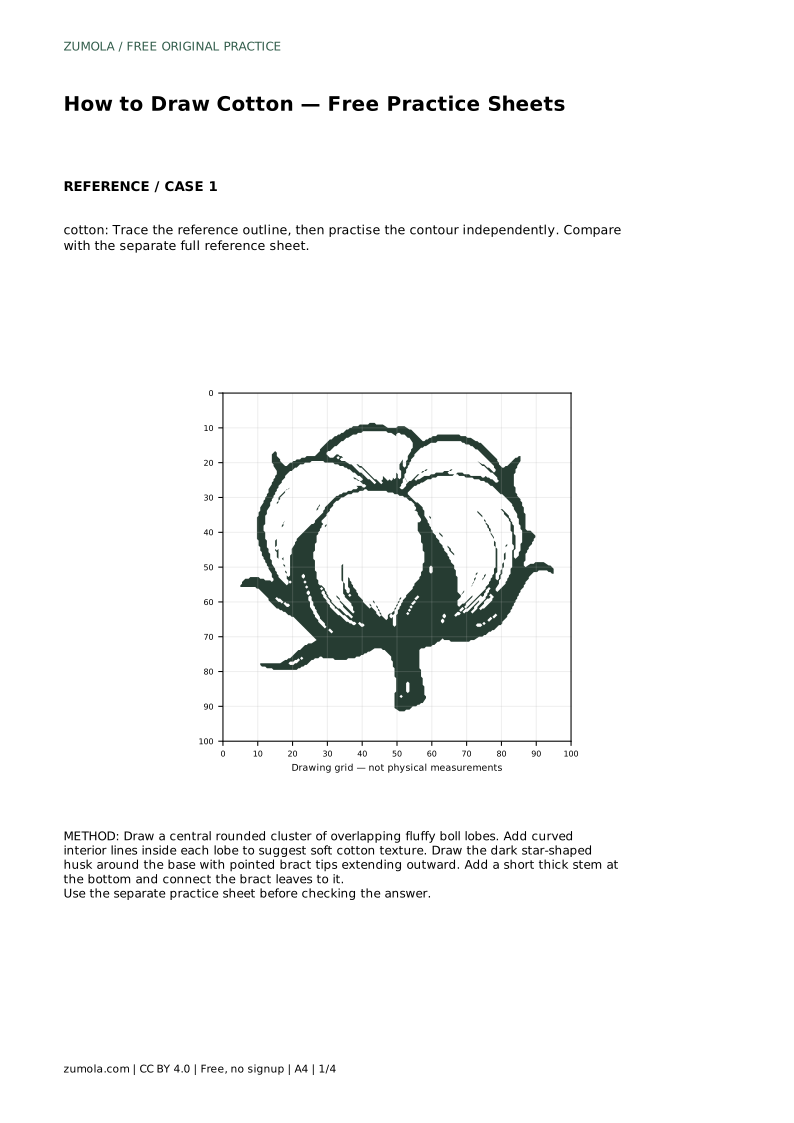
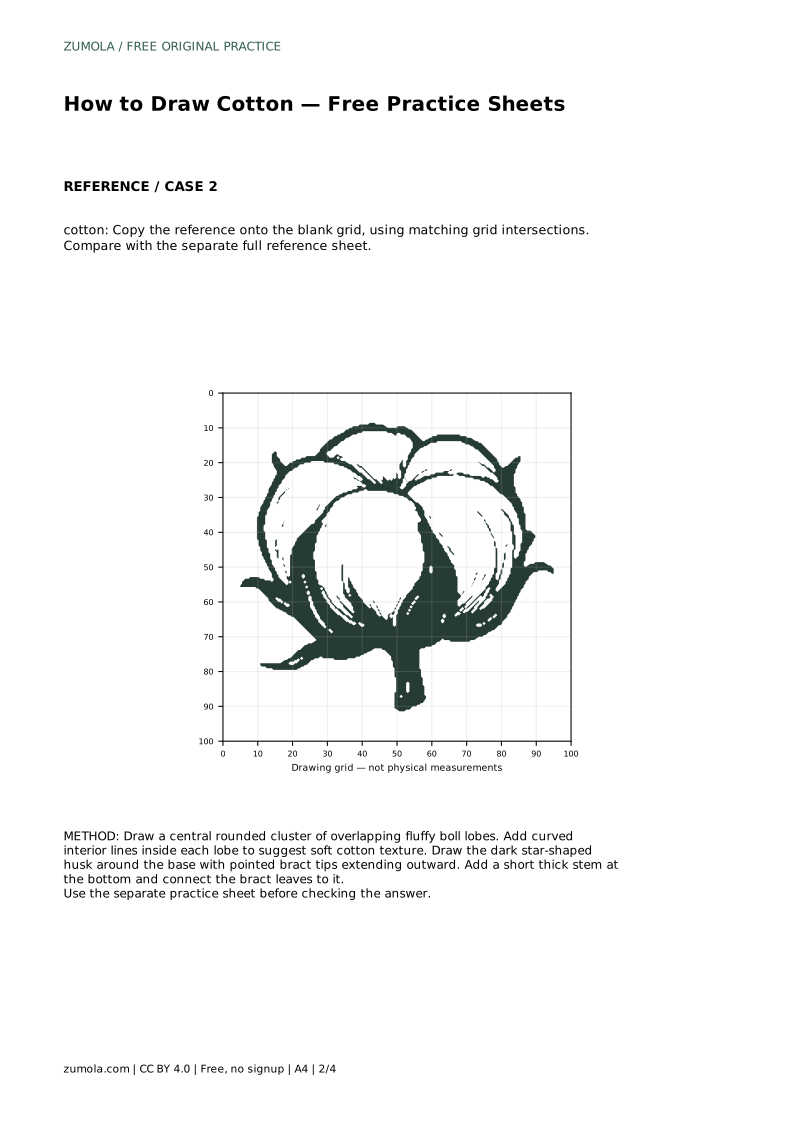
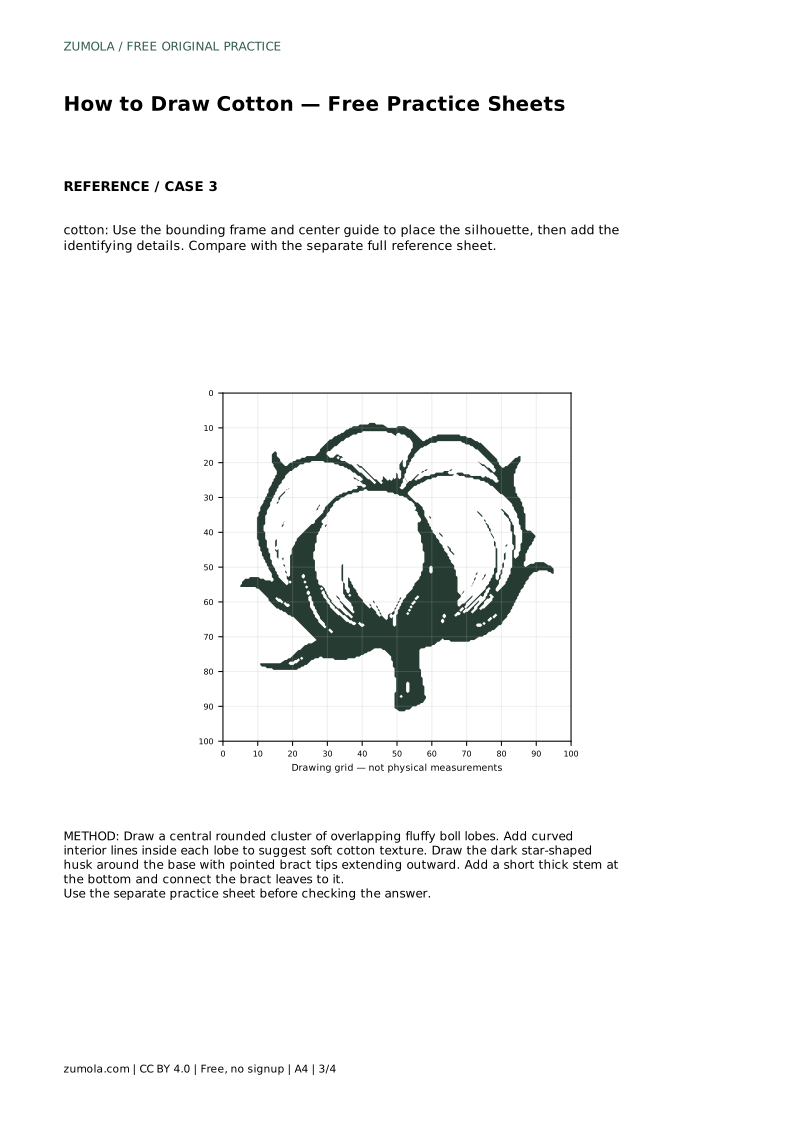
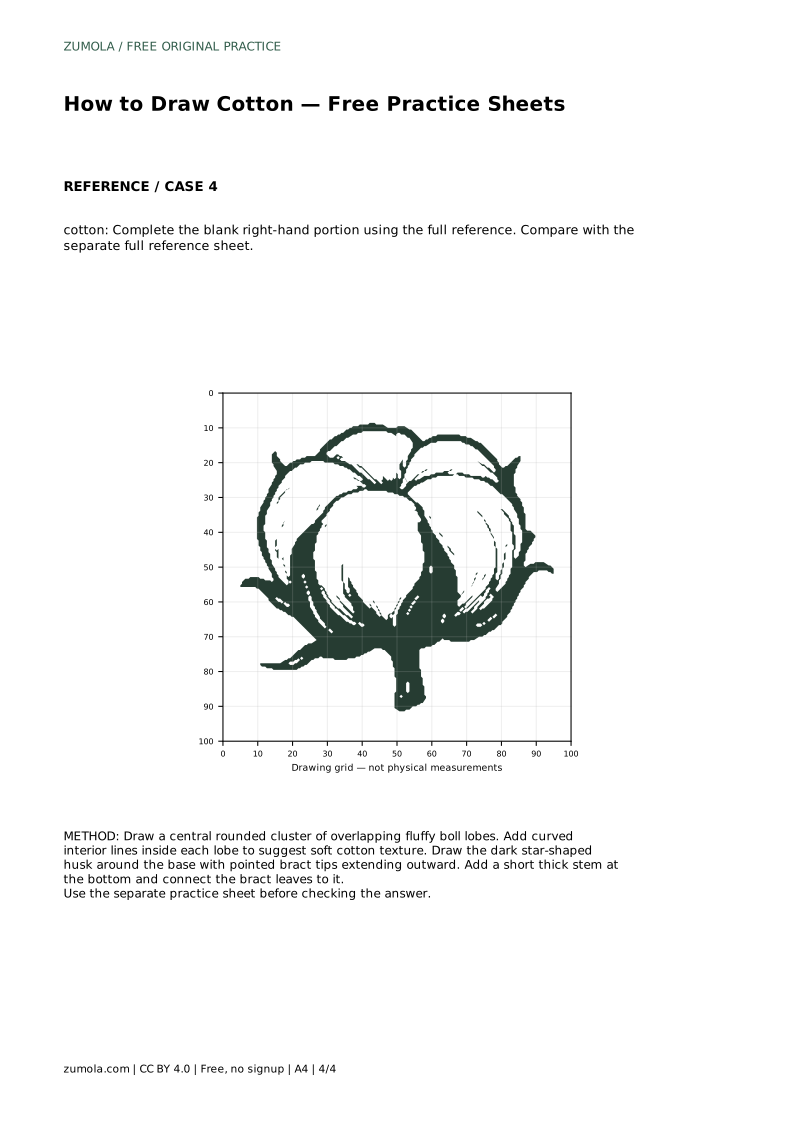
Reference diagrams
LETTER · Download PDF
A4 · Download PDF
Free original resources
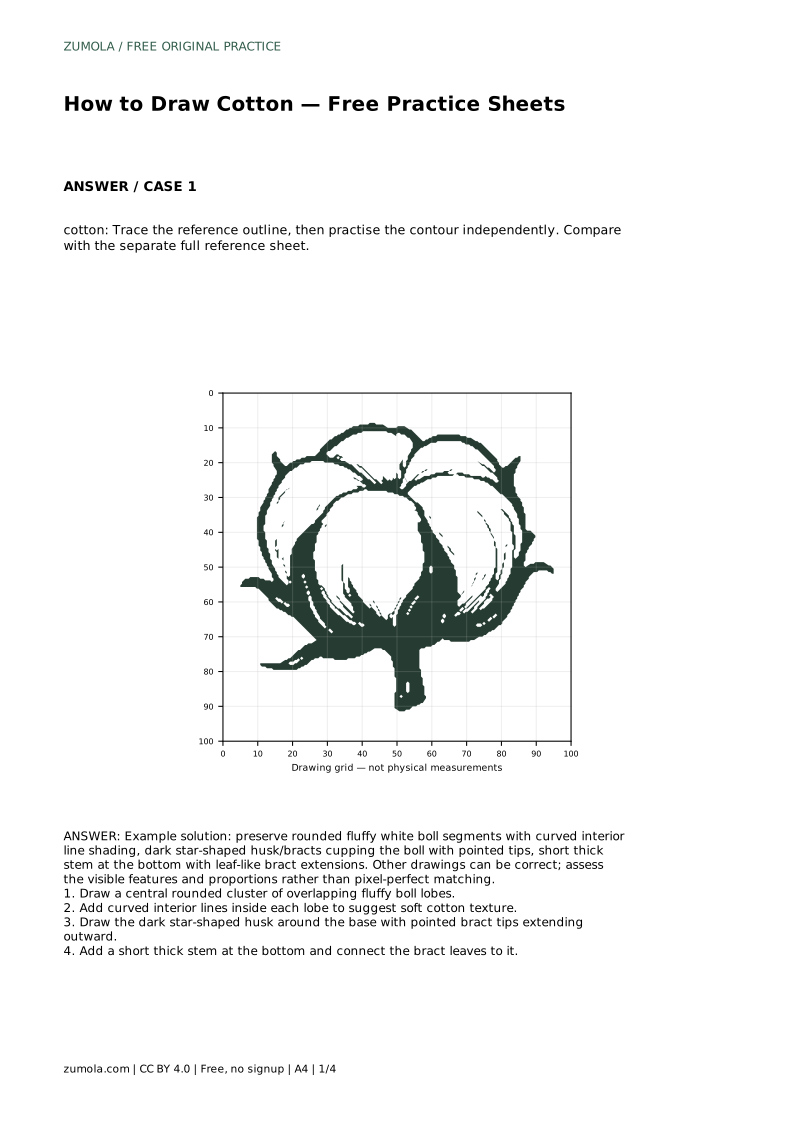
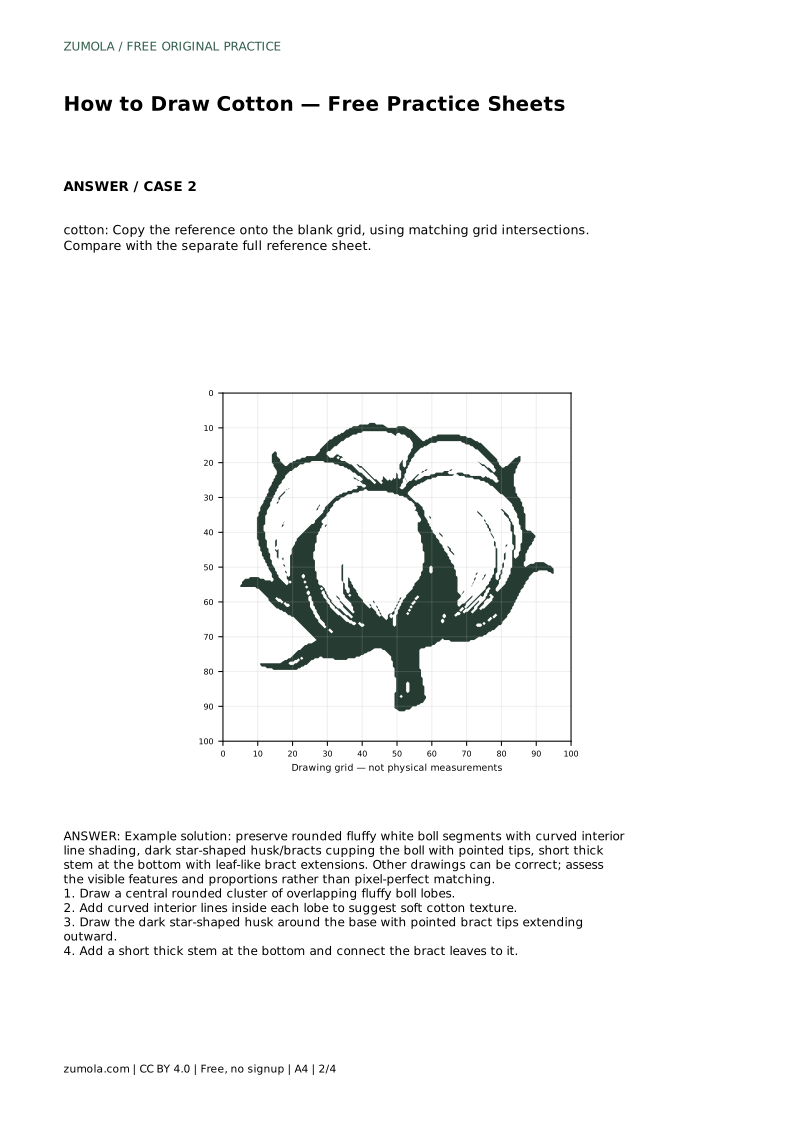
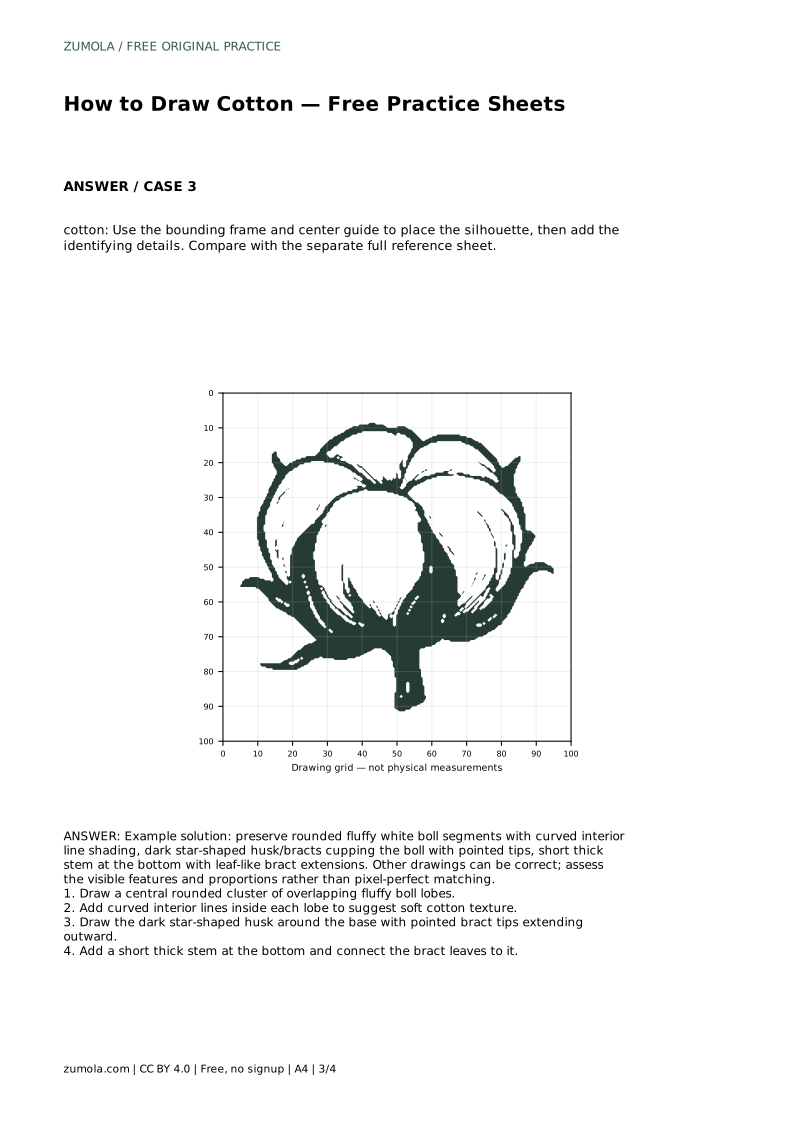
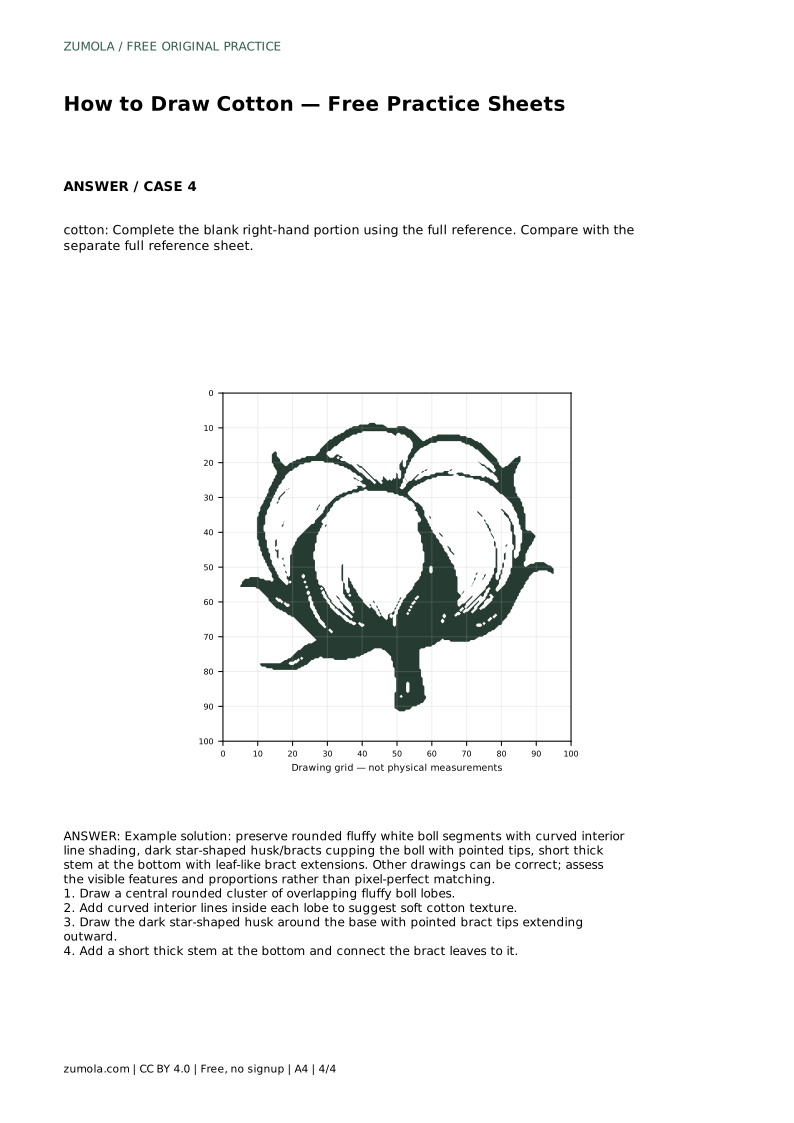
Learn to draw a cotton boll with rounded fluffy lobes, a star-shaped husk, and a short stem. Use the free practice sheets to trace, grid, and complete the drawing.
Four original cases, with reference diagrams, practice sheets and worked answers. Everything is free; no signup required.
LETTER · Download PDF
A4 · Download PDF
LETTER · Download PDF
A4 · Download PDF
LETTER · Download PDF
A4 · Download PDF
Use A4 or US Letter to match your printer. Use the stated values and conditions to solve each exercise; diagrams are not physical measuring rulers.
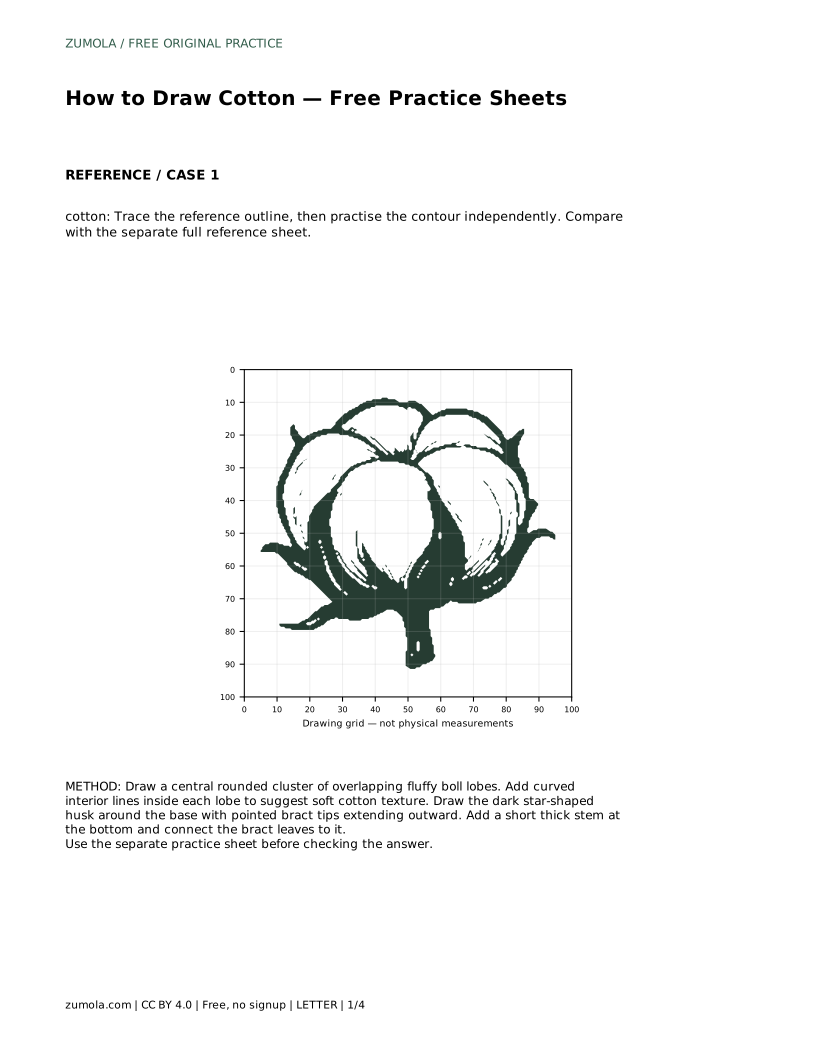
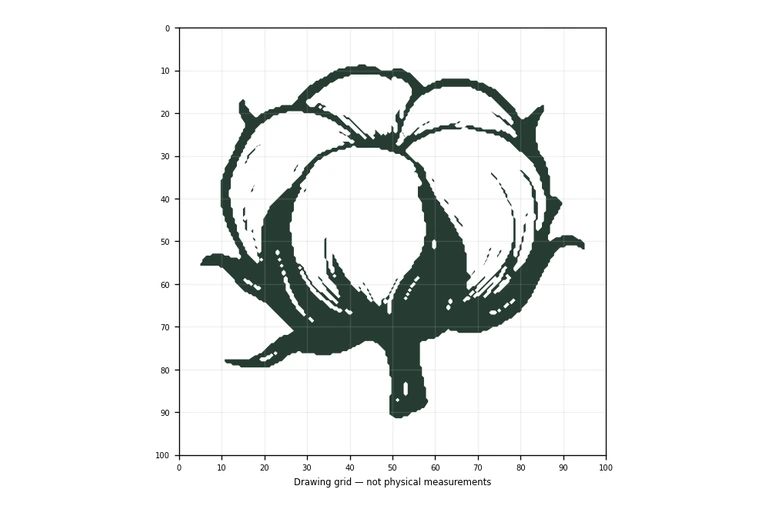
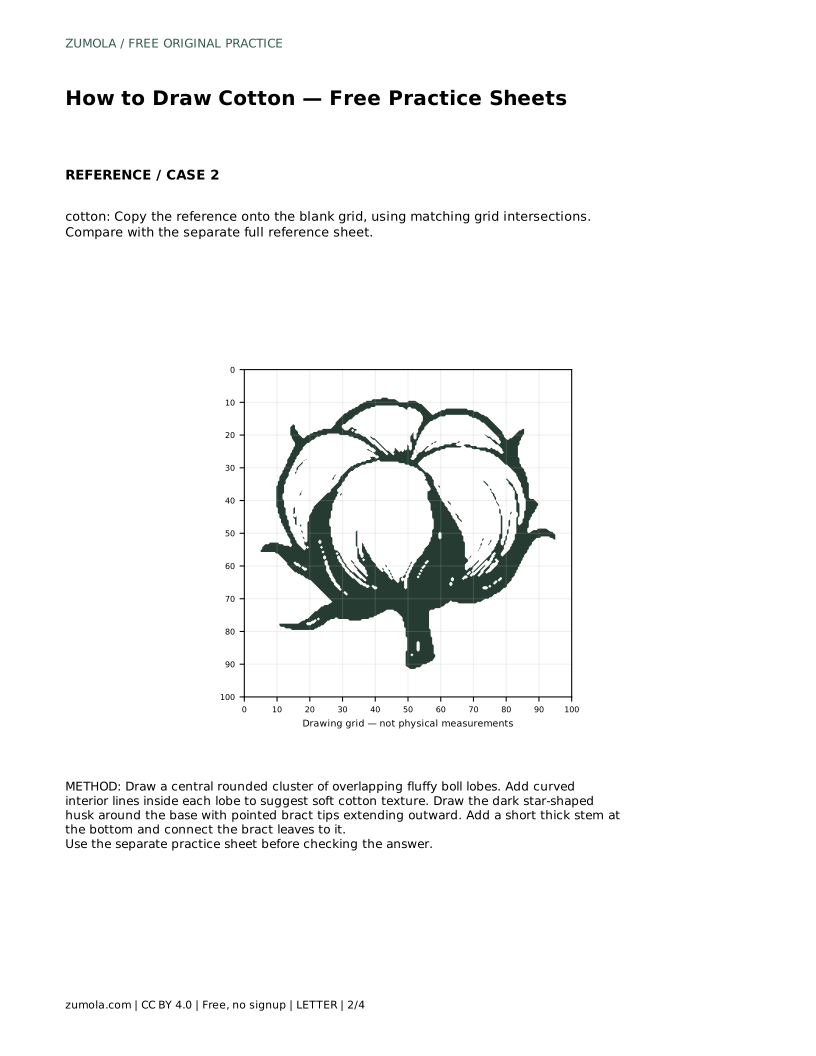
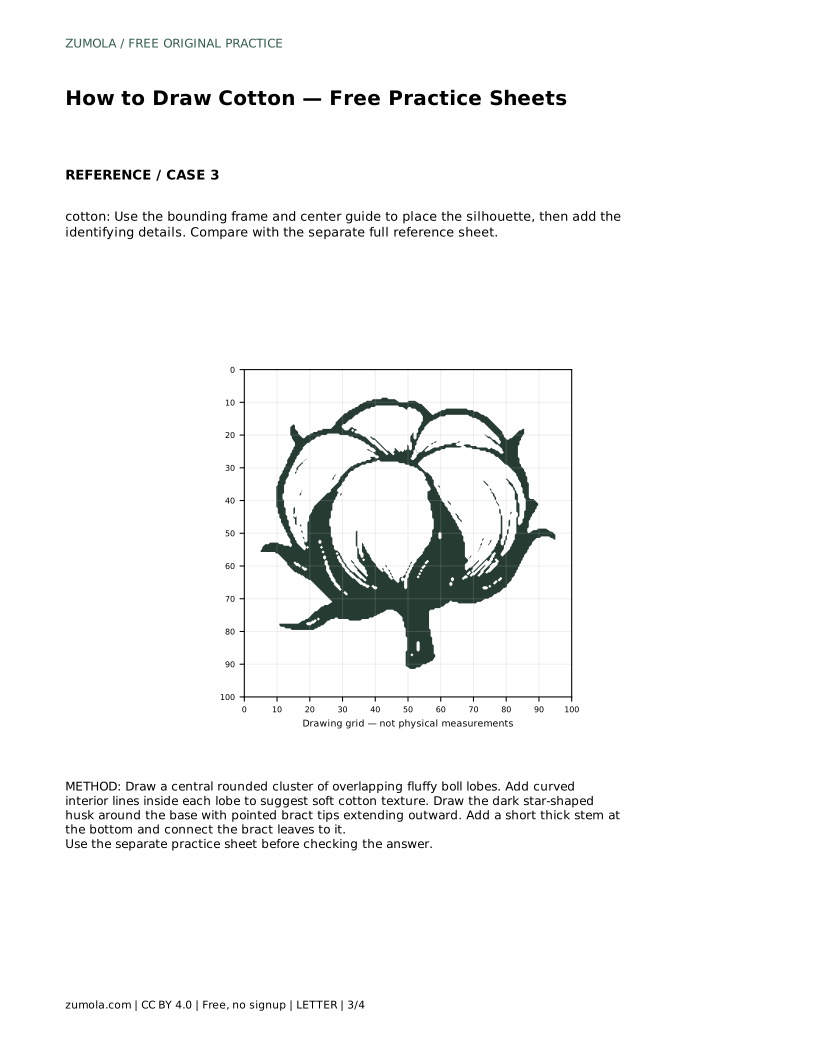
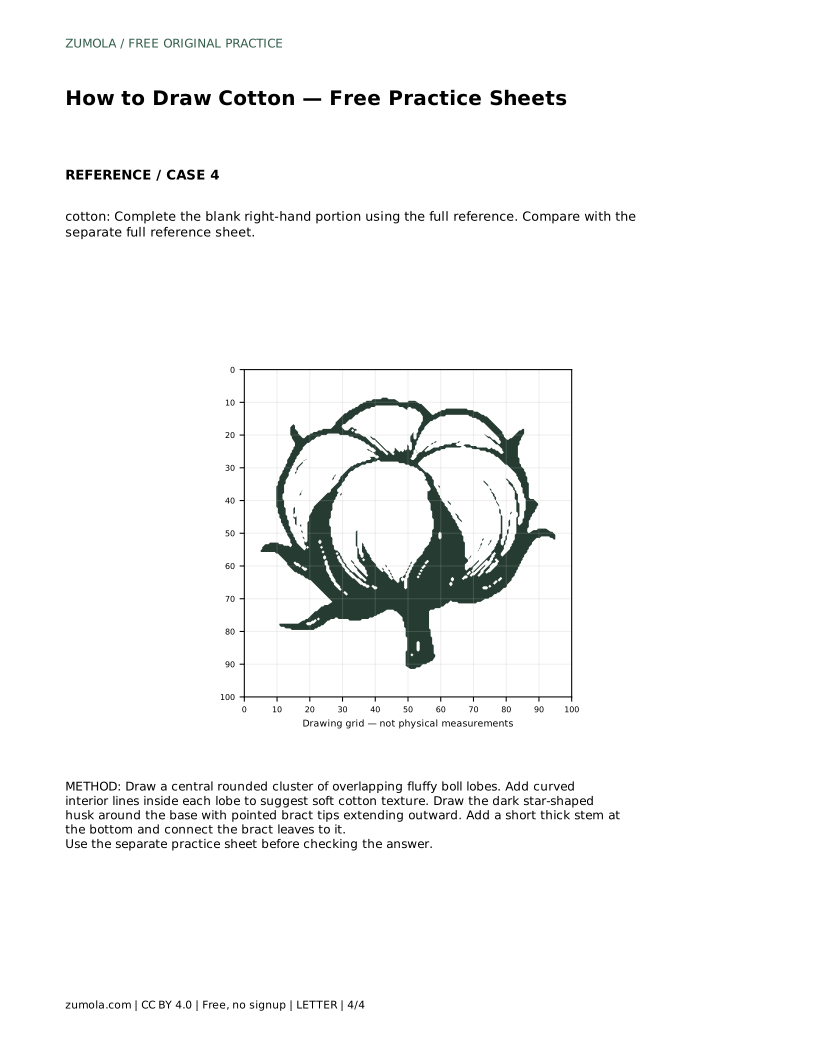
Cotton is a rewarding subject because its shape is built from a few clear parts: a soft cluster of white lobes, a dark husk that cups the base, and a short stem. This page explains how to draw those parts in order, then how to use the free practice sheets to trace the outline, copy it onto a grid, place it with a center guide, or complete a partially blank drawing. The goal is recognizable structure, not a pixel-perfect copy.
Begin with the white cotton itself. Draw a central rounded cluster made of overlapping lobes rather than one smooth circle. Each lobe should read as a soft puff, with a curved outer edge and a slight overlap where it meets its neighbor. Keep the lobes uneven in size so the cluster looks natural.
Inside each lobe, add a few curved interior lines. These lines suggest soft texture and folds without turning the cotton into a hard, geometric shape. Keep them light and follow the curve of the lobe. Avoid straight lines or heavy crosshatching, which make cotton look stiff.
The dark star-shaped husk is what makes a cotton boll recognizable. Draw it around the base of the white cluster, cupping the cotton from below. Give the husk pointed bract tips that extend outward, and vary their length slightly so the star shape feels organic rather than symmetrical.
Finish with a short, thick stem at the bottom. Connect the bract leaves to the stem so the husk and stem read as one structure. The stem should be noticeably shorter and thicker than a flower stem, which helps distinguish cotton from other round, fluffy subjects.
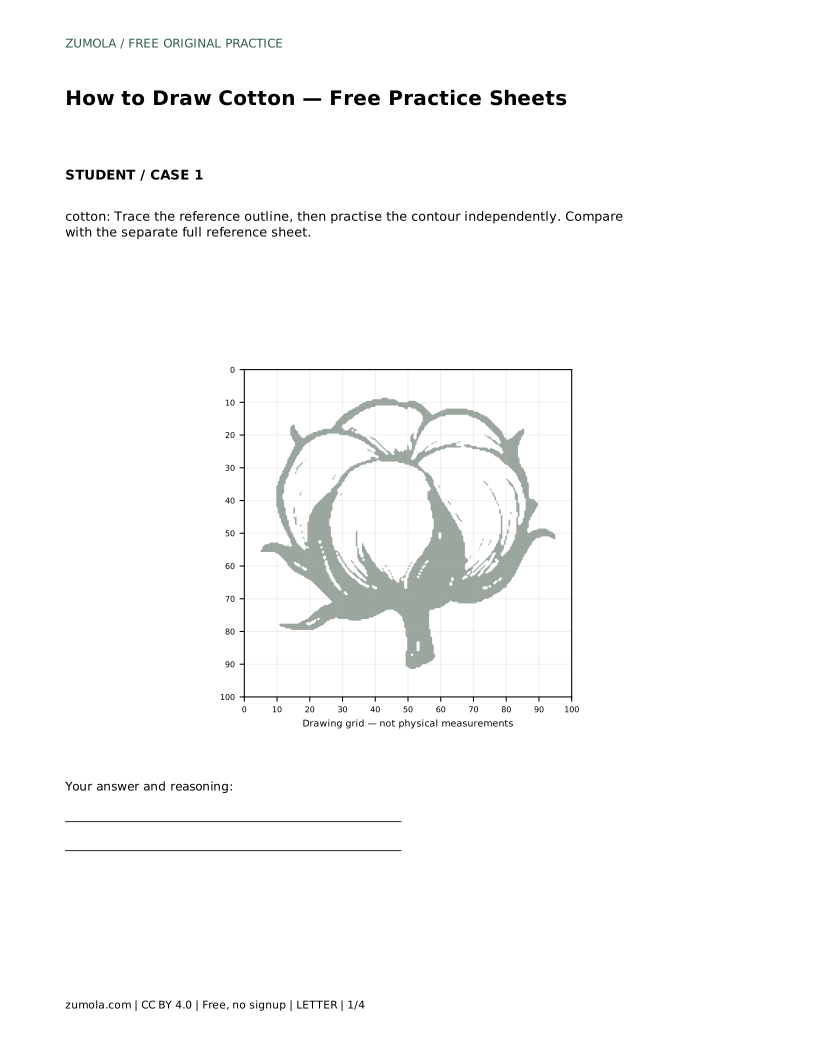
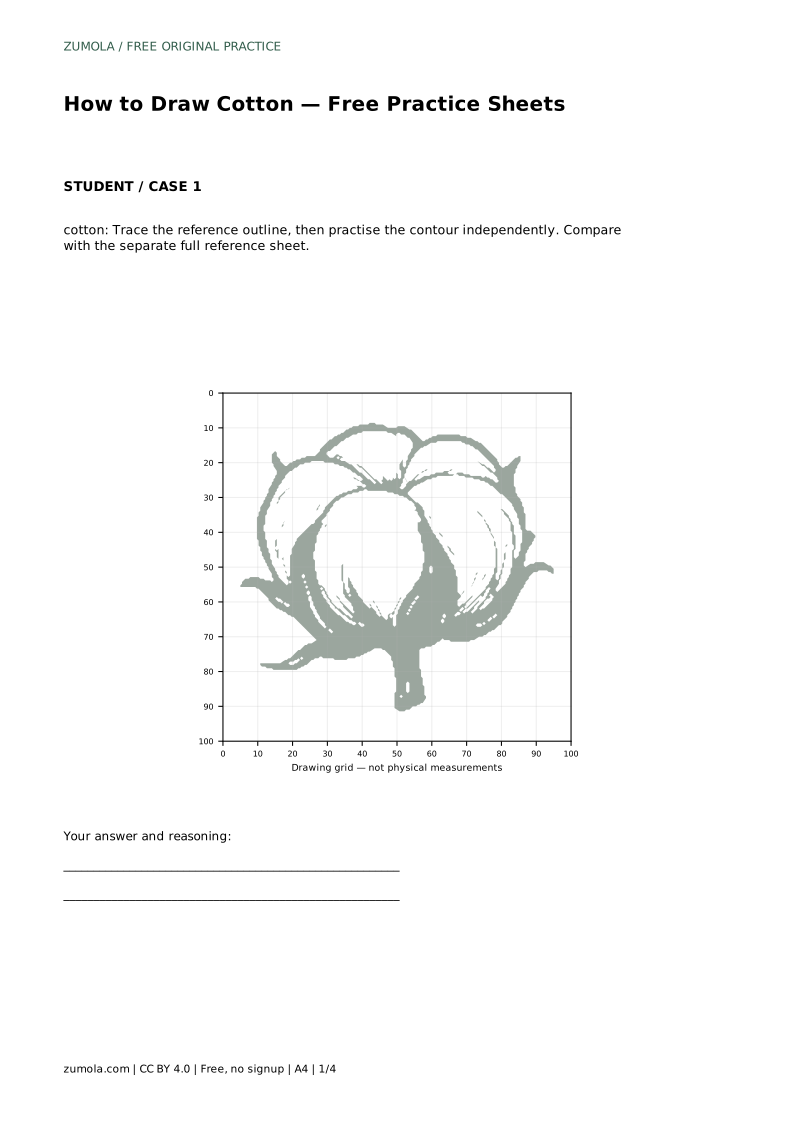
The trace sheet asks you to follow the reference outline first, then practise the contour independently. Compare your freehand attempt with the separate full reference sheet rather than expecting an exact match.
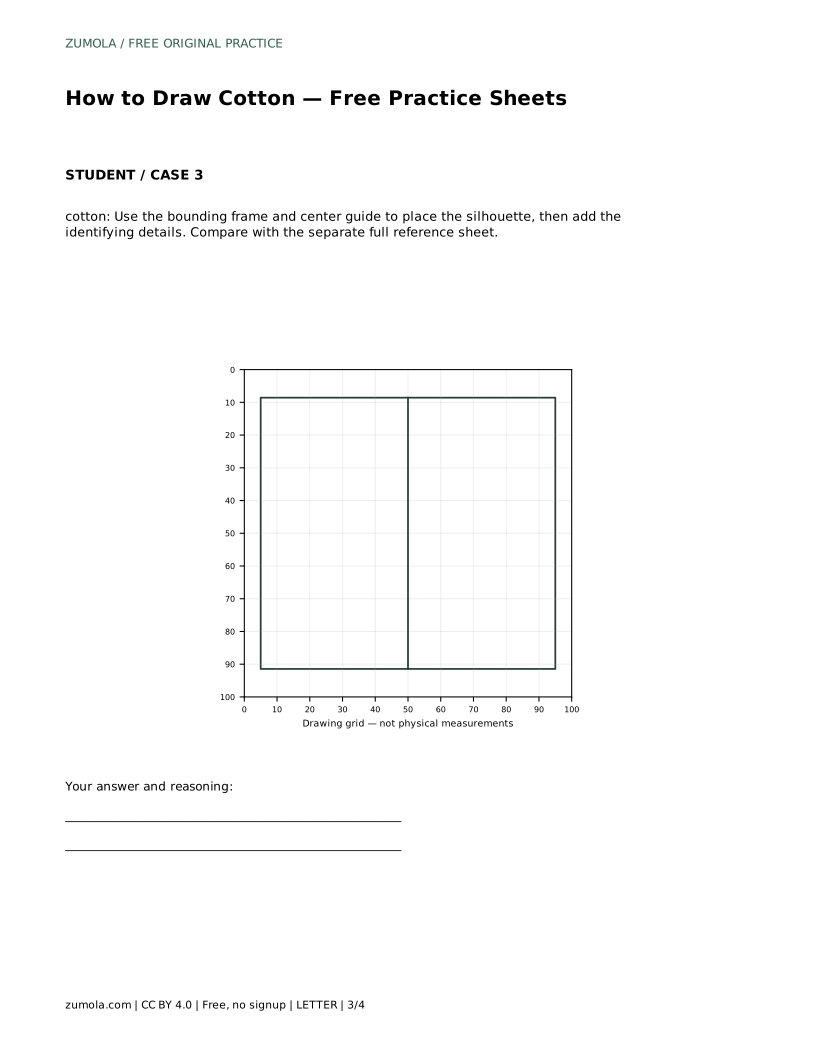
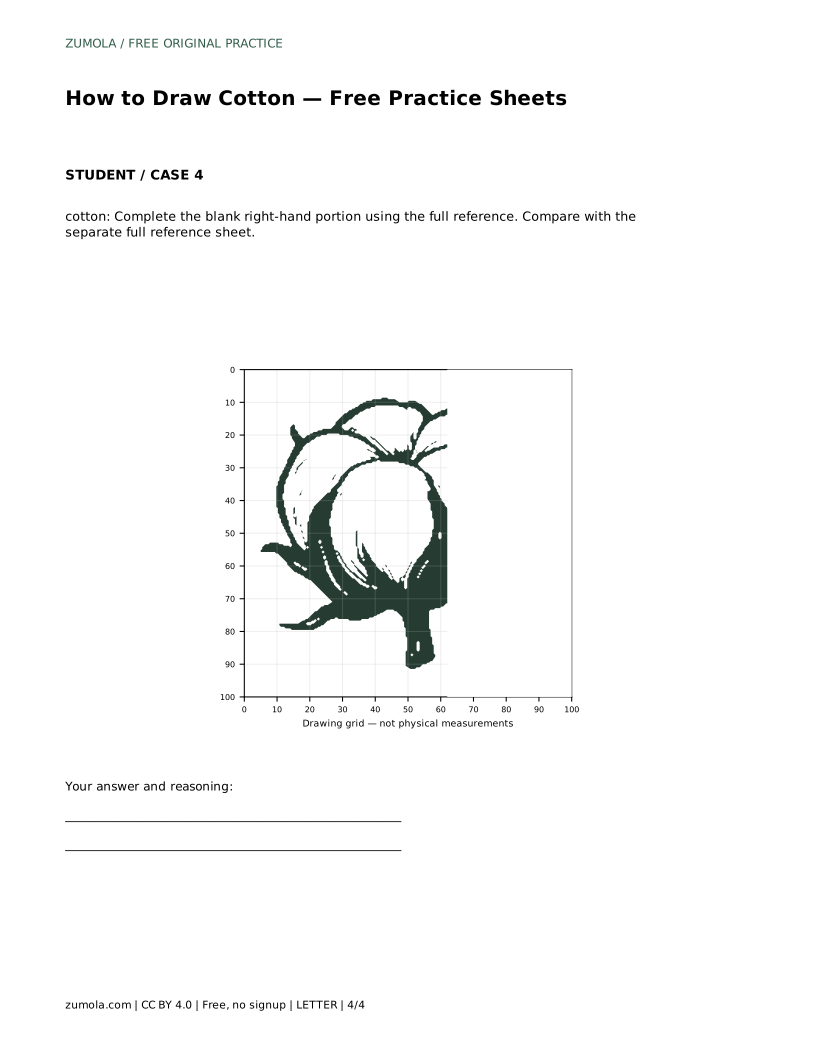
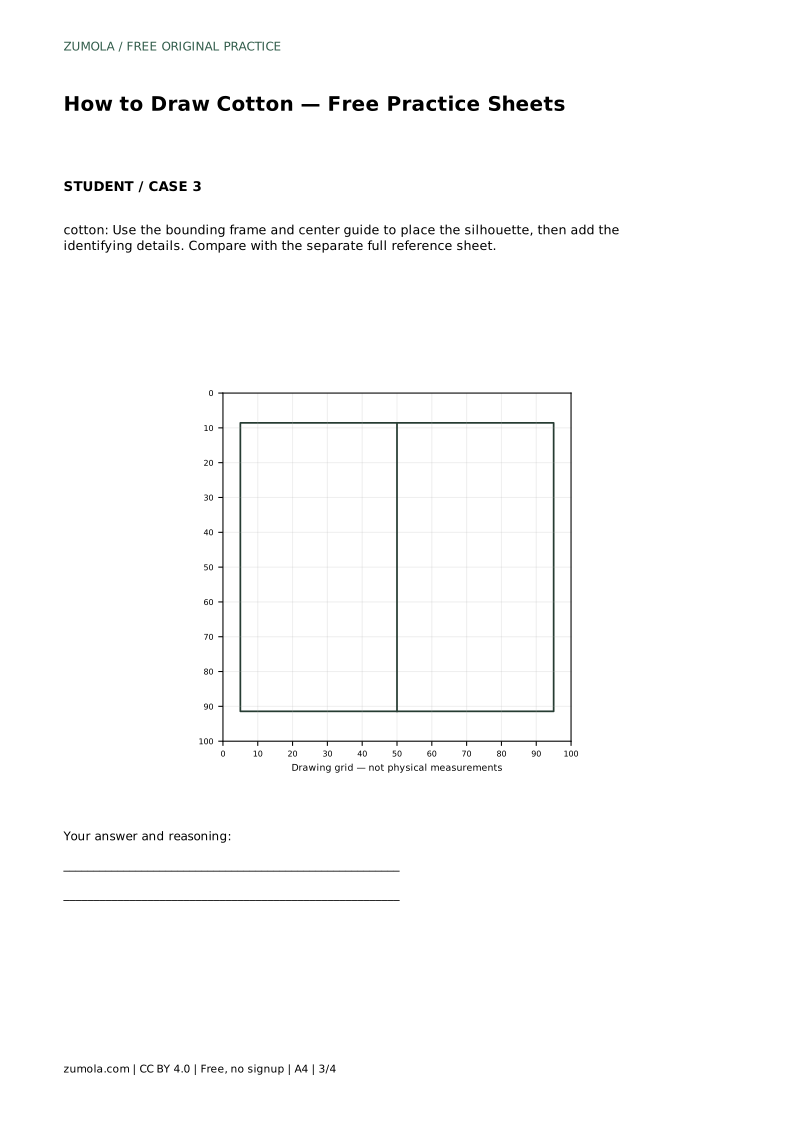
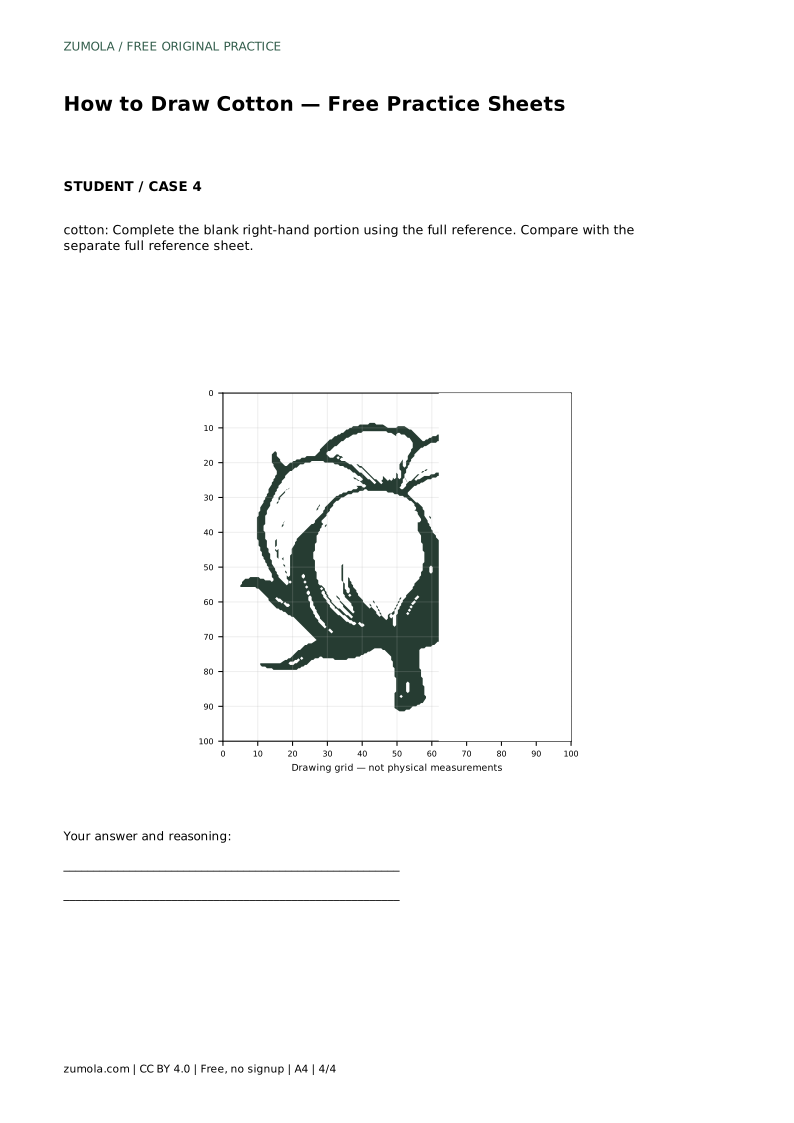
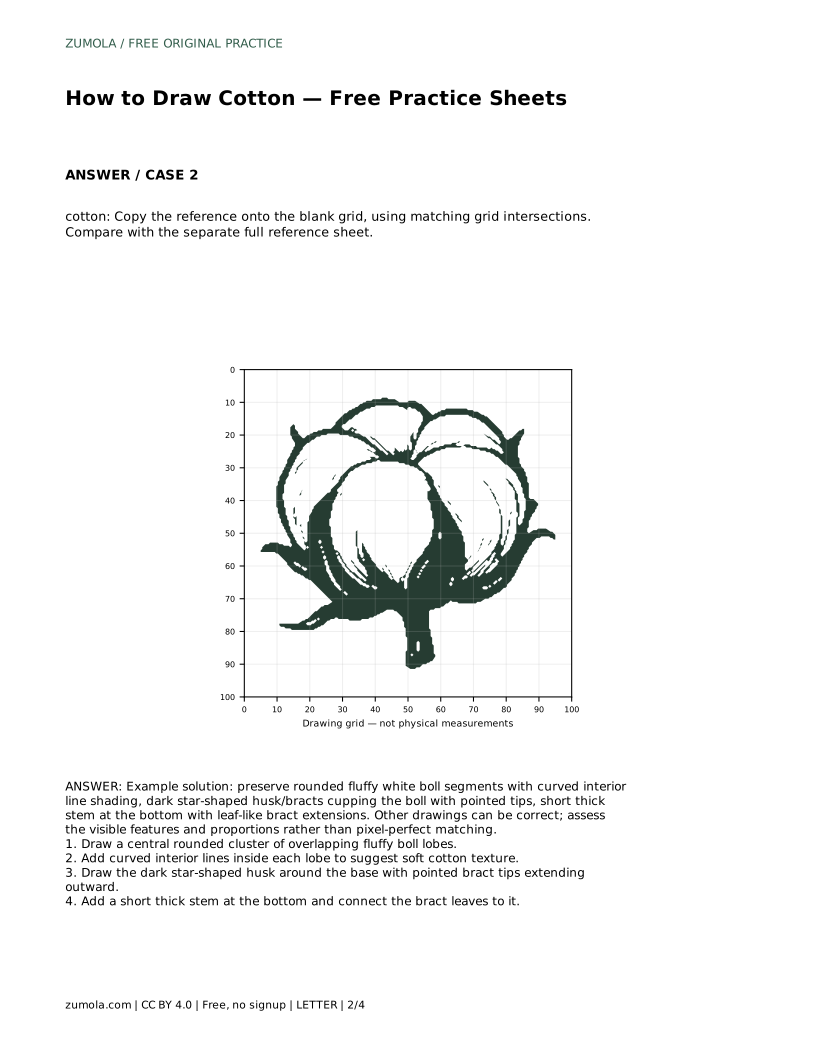
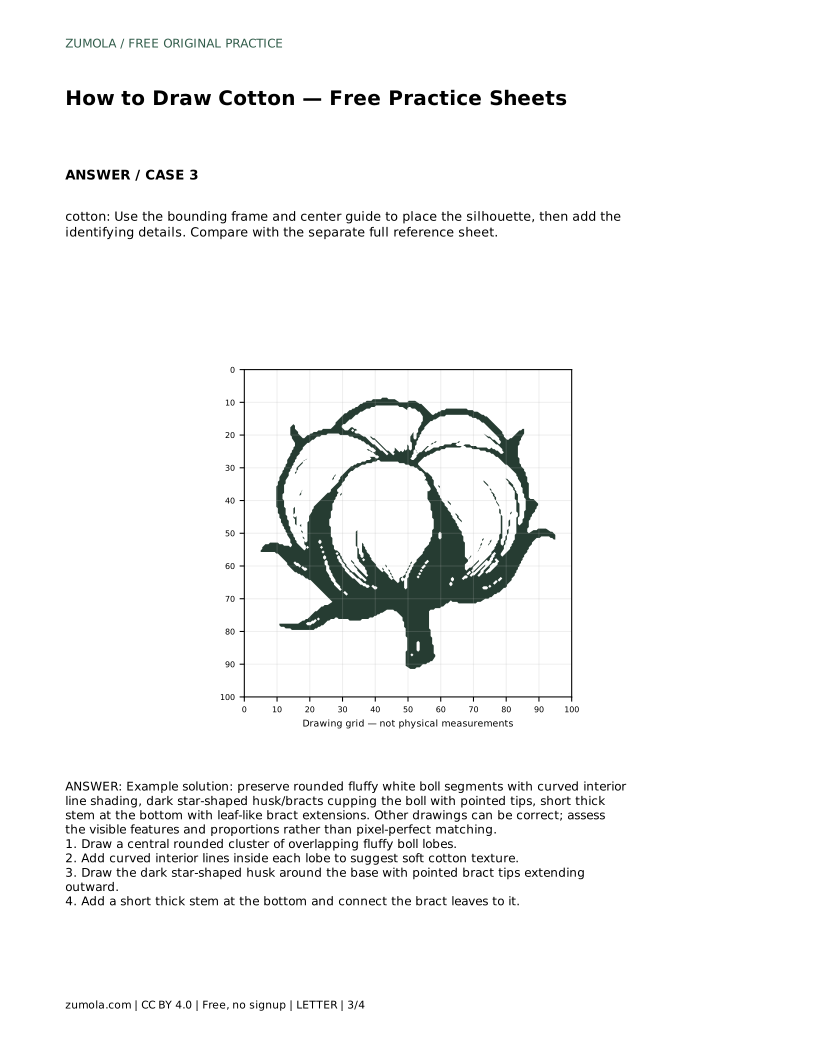
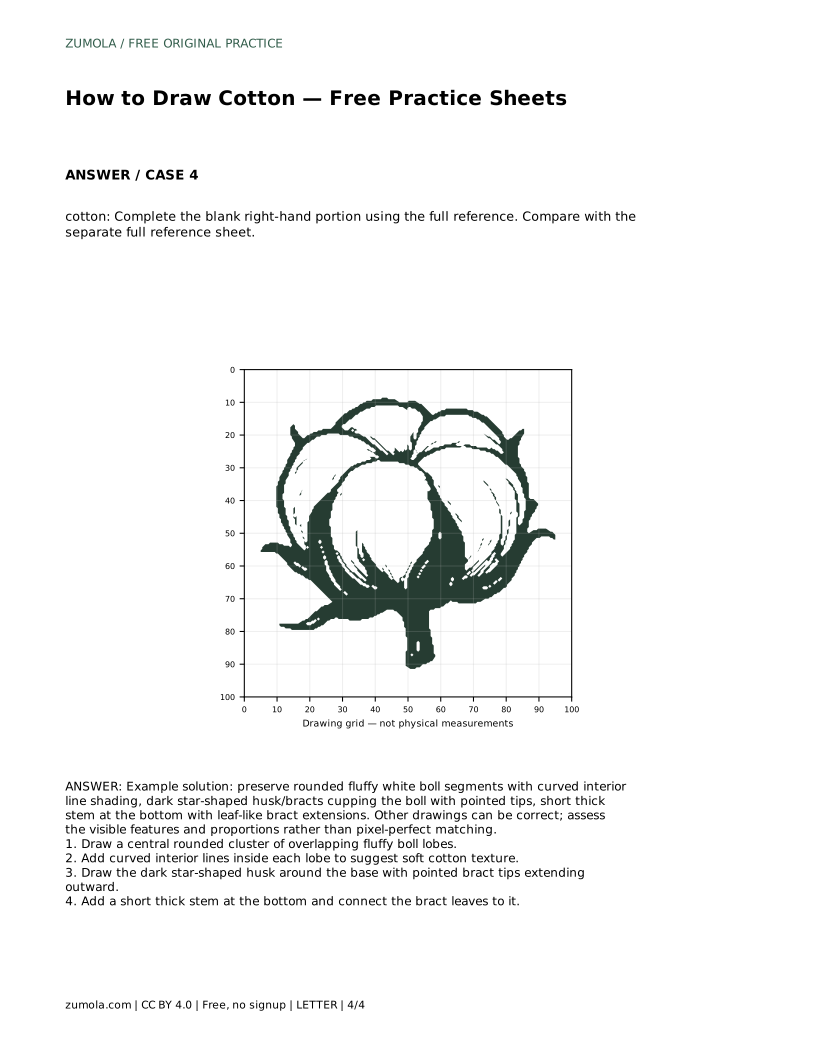
The grid sheet asks you to copy the reference onto the blank grid using matching grid intersections. This helps you judge proportion and placement. The center-guide sheet asks you to place the silhouette using the bounding frame and center guide before adding identifying details. The partial sheet asks you to complete the blank right-hand portion using the full reference.
In every case, check the visible features: rounded lobes, curved interior shading, a star-shaped husk with pointed tips, and a short thick stem with bract extensions. Other drawings can be correct, so assess features and proportions rather than pixel-perfect matching.
A useful check is to step back and ask whether the cotton reads as soft and the husk reads as firm. If the lobes look like one solid ball, add overlap and interior curves. If the husk disappears into the cotton, darken its outline and extend the pointed tips. If the stem looks too long or thin, shorten and thicken it.
Use the rubric below to guide revision. It focuses on structure and proportion, which are the parts most worth correcting.
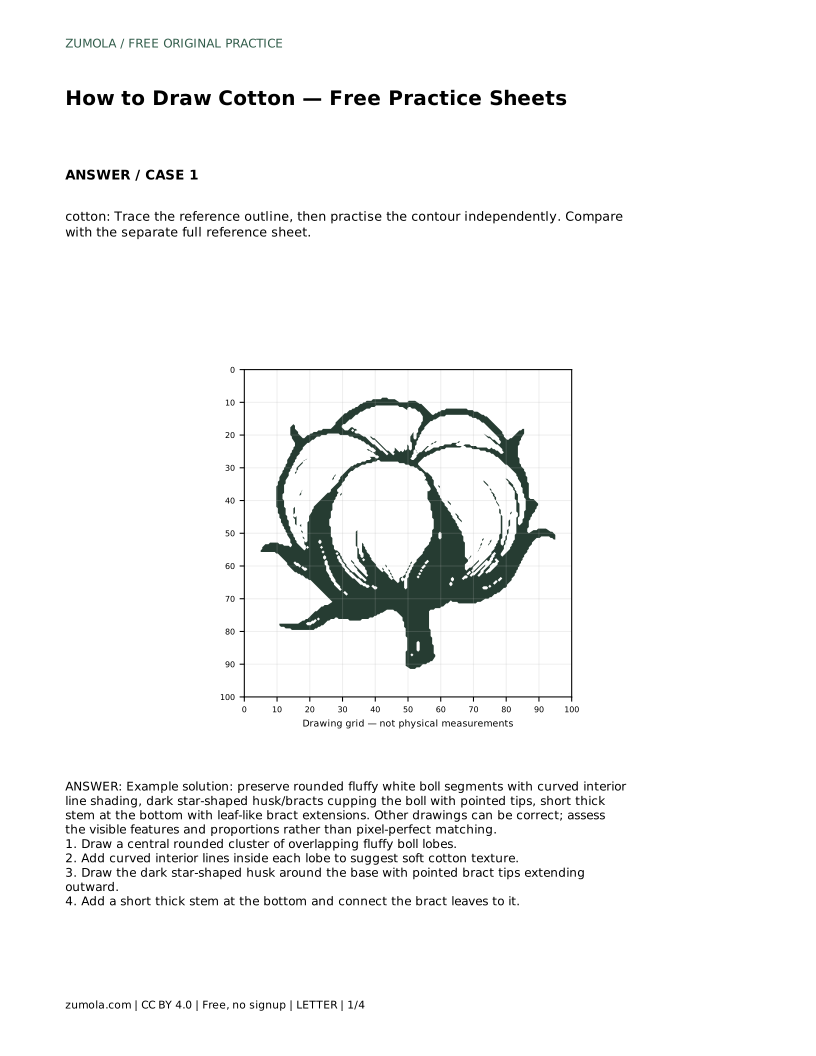
Prompt: cotton: Trace the reference outline, then practise the contour independently. Compare with the separate full reference sheet.
Example solution: preserve rounded fluffy white boll segments with curved interior line shading, dark star-shaped husk/bracts cupping the boll with pointed tips, short thick stem at the bottom with leaf-like bract extensions. Other drawings can be correct; assess the visible features and proportions rather than pixel-perfect matching.
cotton: Trace the reference outline, then practise the contour independently. Compare with the separate full reference sheet.
Example solution: preserve rounded fluffy white boll segments with curved interior line shading, dark star-shaped husk/bracts cupping the boll with pointed tips, short thick stem at the bottom with leaf-like bract extensions. Other drawings can be correct; assess the visible features and proportions rather than pixel-perfect matching. Draw a central rounded cluster of overlapping fluffy boll lobes. Add curved interior lines inside each lobe to suggest soft cotton texture. Draw the dark star-shaped husk around the base with pointed bract tips extending outward. Add a short thick stem at the bottom and connect the bract leaves to it.
No. Cotton drawings can vary. Check that the rounded lobes, curved interior shading, star-shaped husk with pointed tips, and short thick stem are present and proportionate.
Start with the trace sheet to learn the outline, then move to the grid or center-guide sheet to practise placement without tracing.
Use overlapping rounded lobes and light curved interior lines that follow each lobe. Avoid straight lines and heavy shading.
All drawing practice · Free coordinate paper
Original resources · CC BY 4.0 · Free for personal and classroom use with attribution.