Free original lessons
Draw on Toned Paper
Toned paper is a sheet that already sits at a middle value, so you do not build the whole drawing from white. You draw the lights with a pale medium and the darks with a dark medium, and the paper itself supplies the middle tone. This pack teaches that workflow: choose a mid-tone sheet, plan where the light and dark passes go, apply them, and check that the paper still reads as the middle value.
Letter & A4
PDF & SVG
The toned-paper workflow
On white paper you usually build value from light to dark. On toned paper the sheet is already the middle value, so you work in two directions: add a light pass for the lit areas and a dark pass for the shadow areas, leaving bare paper for the mid-tones. The paper is not background you fill in; it is a working value in the drawing.
Choosing and preparing the sheet
Pick a sheet whose tone is clearly mid-value, not near-white and not near-black, so both a light and a dark pass can read against it. A light medium (white chalk, pale pastel, or a light pencil) and a dark medium (charcoal, dark pastel, or a soft dark pencil) are the two working tools. Keep the bare paper visible in the mid-value zones; do not cover the whole sheet.
Planning the light and dark passes
Before drawing, decide which areas are lighter than the paper and which are darker. Light areas get the light pass; shadow areas get the dark pass; areas close to the paper's own tone stay bare. This planning step is what keeps the drawing readable, because the paper tone must remain the anchor between the two passes.
Applying the passes
Apply the light pass first in the lit zones, keeping edges soft where the form turns. Then apply the dark pass in the shadow zones, building gradually so the darks do not overwhelm the paper tone. Leave the mid-value zones untouched so the sheet still reads as the middle value between your light and dark.
Download the complete resource pack
All individual SVG pages (18)
- A4 reference page 1
- A4 student page 1
- A4 student page 2
- A4 student page 3
- A4 student page 4
- A4 answer page 1
- A4 answer page 2
- A4 answer page 3
- A4 answer page 4
- LETTER reference page 1
- LETTER student page 1
- LETTER student page 2
- LETTER student page 3
- LETTER student page 4
- LETTER answer page 1
- LETTER answer page 2
- LETTER answer page 3
- LETTER answer page 4
Print at 100% / actual size. Use the stated scale on any schematic diagram; physical cutting templates are identified separately. A4 and US Letter are separate files. Free access, no signup; CC BY 4.0.
How to use these pages
- The toned-paper workflow
- Choosing and preparing the sheet
- Planning the light and dark passes
- Applying the passes
Worked example
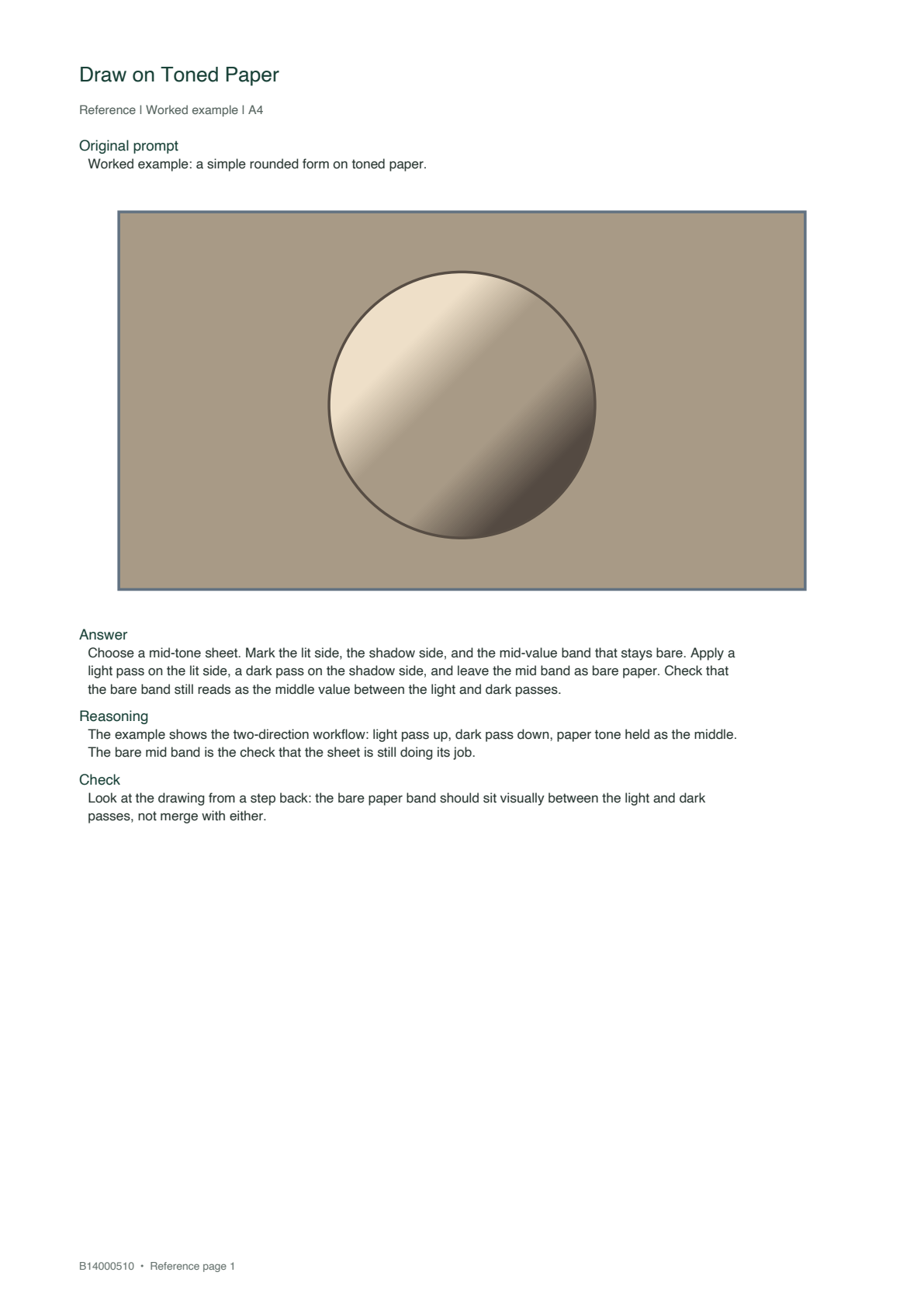
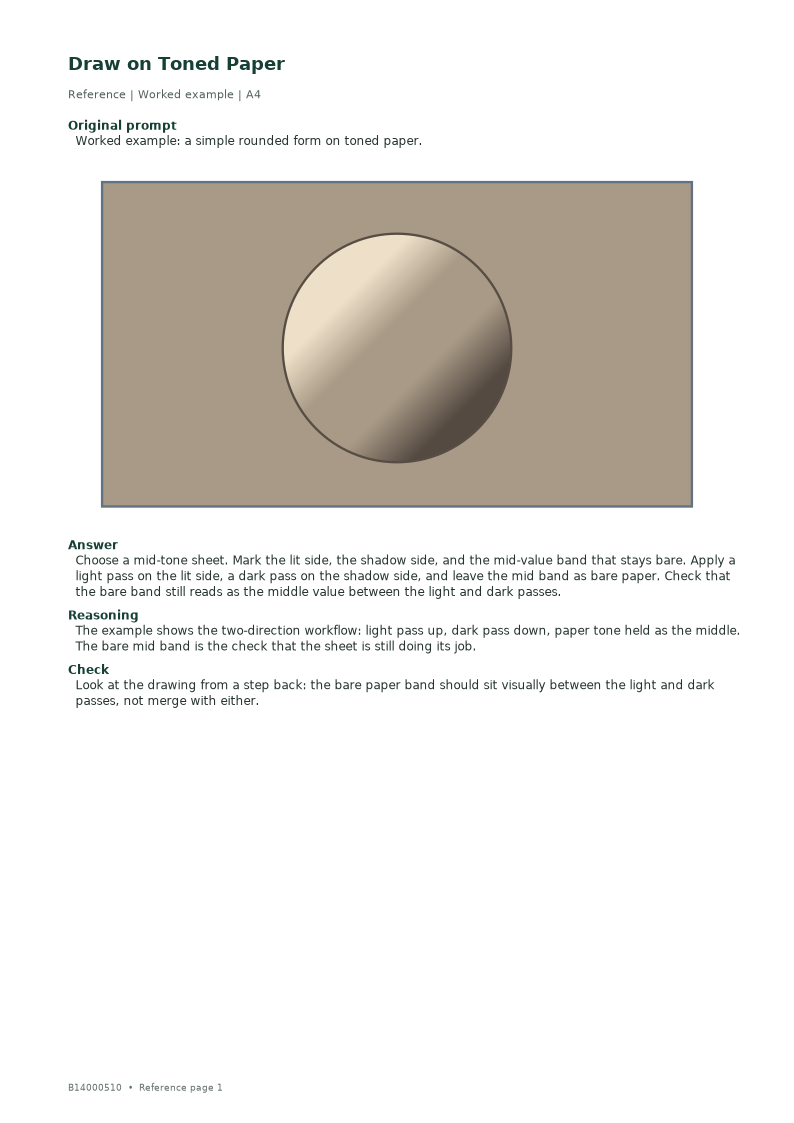
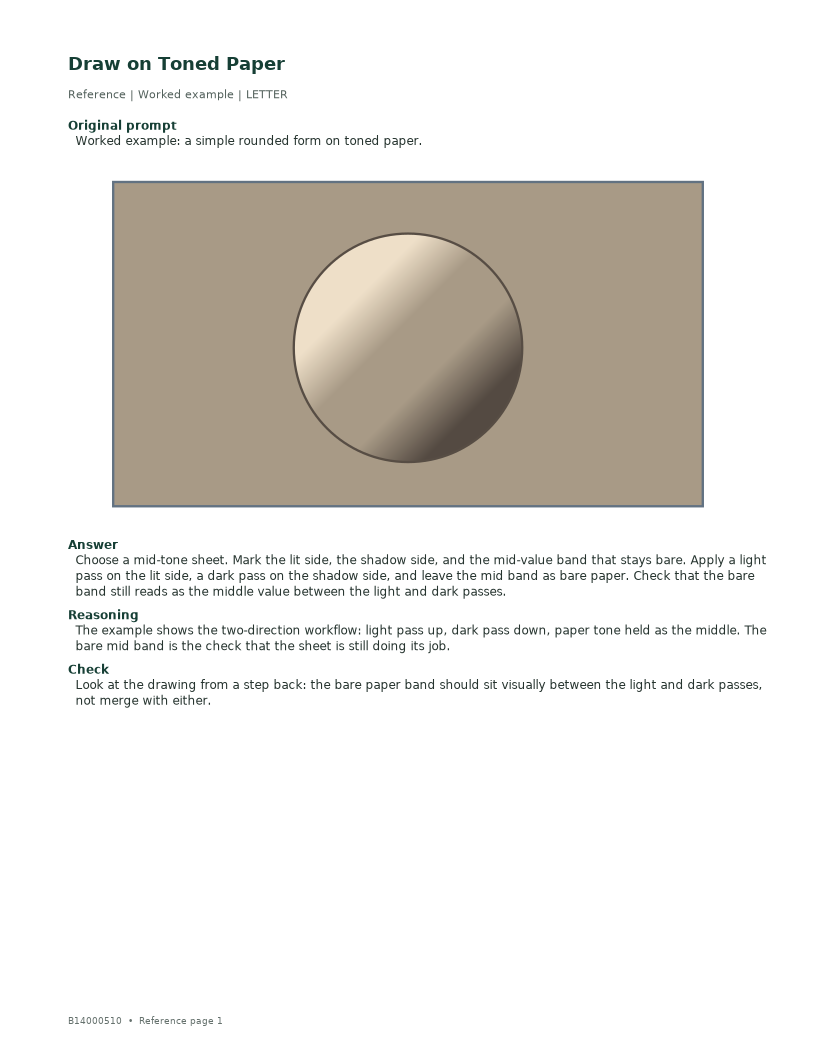
Example: Worked example: a simple rounded form on toned paper.
Answer: Choose a mid-tone sheet. Mark the lit side, the shadow side, and the mid-value band that stays bare. Apply a light pass on the lit side, a dark pass on the shadow side, and leave the mid band as bare paper. Check that the bare band still reads as the middle value between the light and dark passes.
Reasoning: The example shows the two-direction workflow: light pass up, dark pass down, paper tone held as the middle. The bare mid band is the check that the sheet is still doing its job.
Check: Look at the drawing from a step back: the bare paper band should sit visually between the light and dark passes, not merge with either.
Four practice tasks and complete answers
Task 1
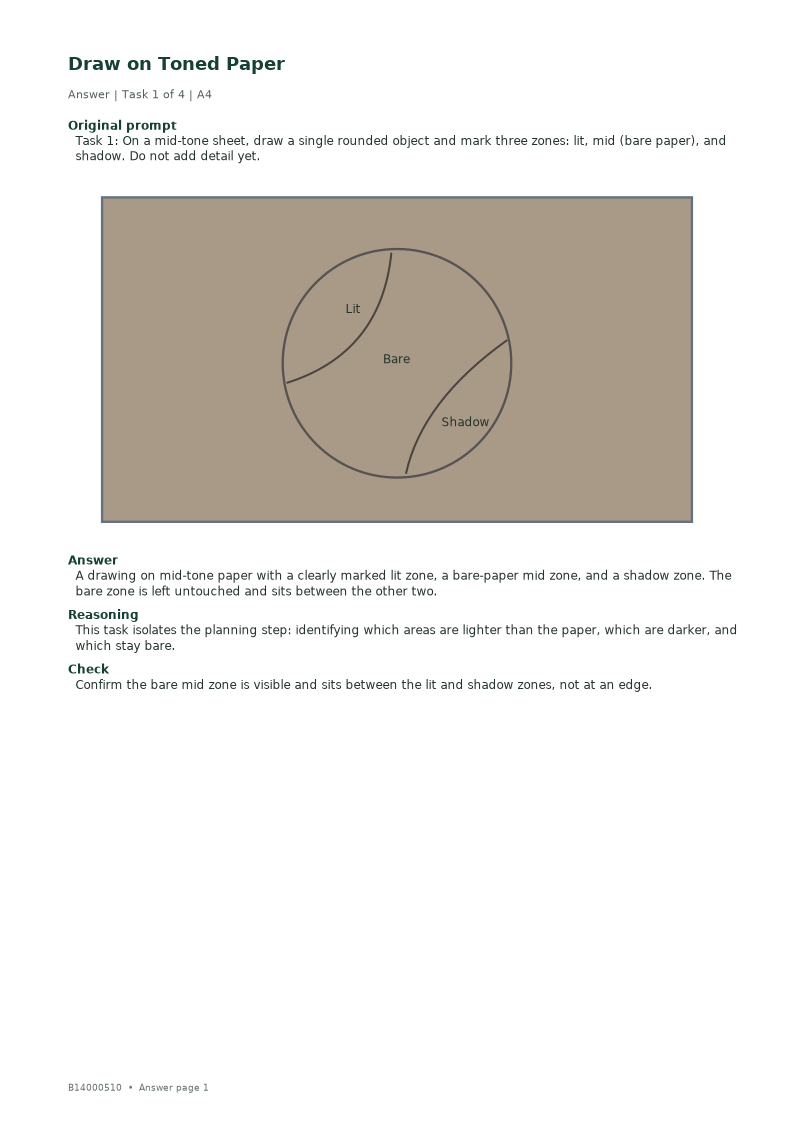
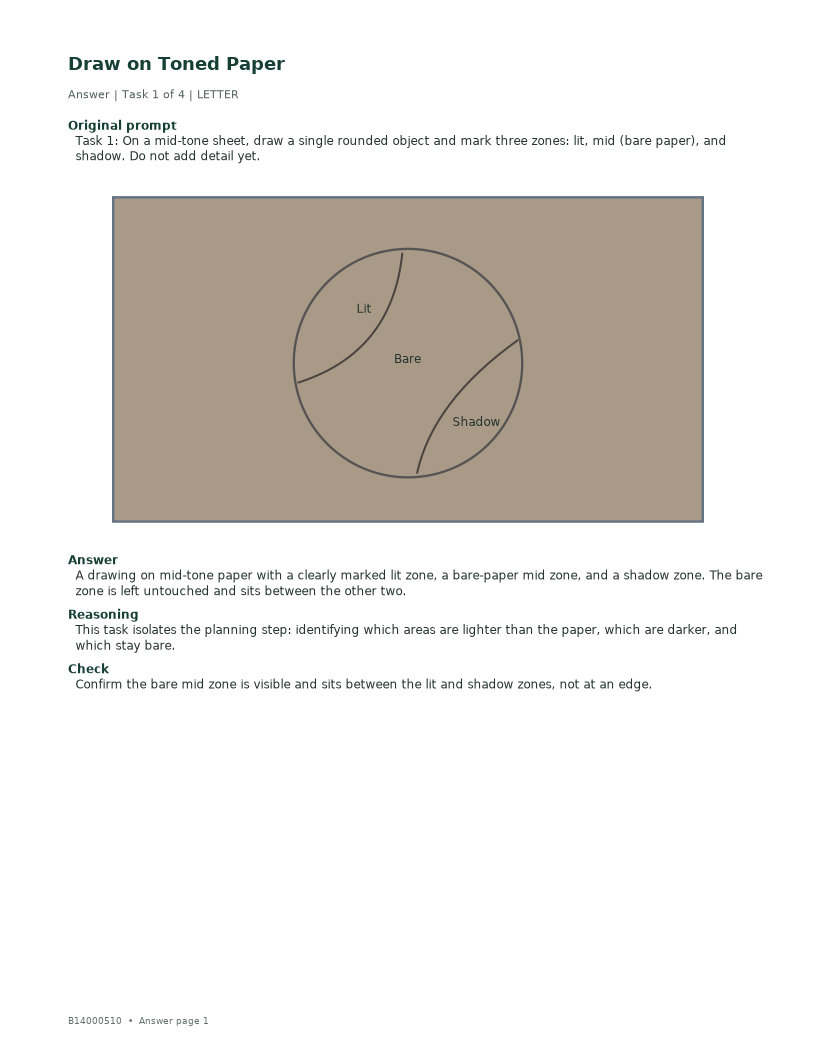
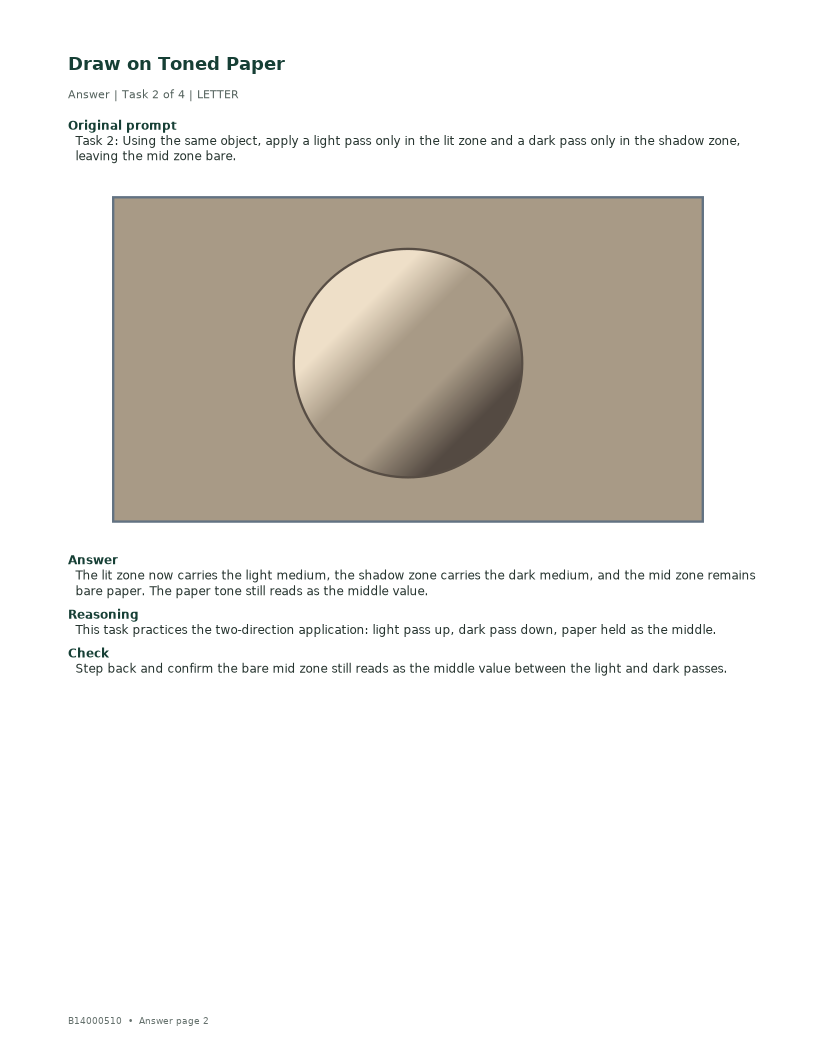
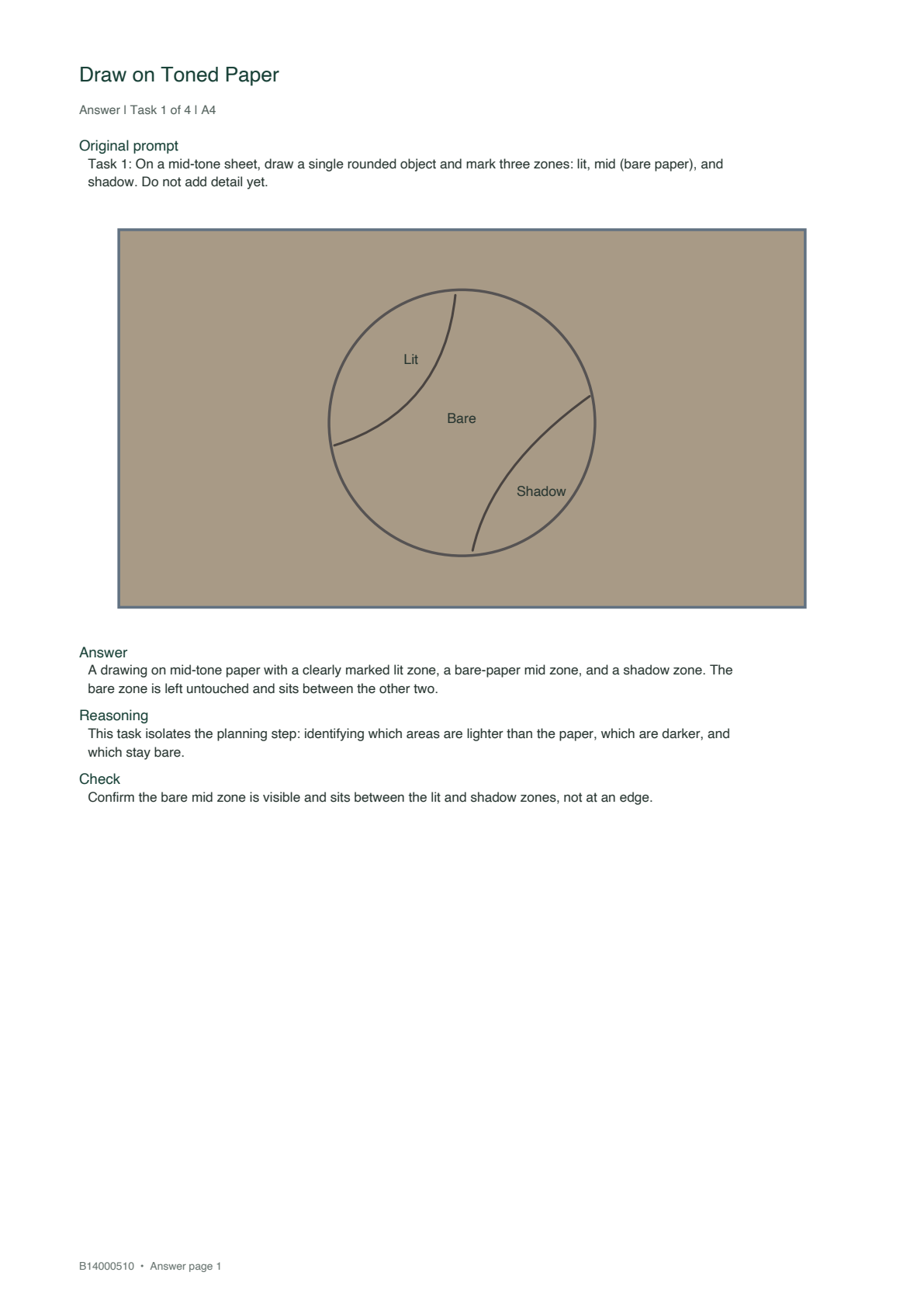
Task 1: On a mid-tone sheet, draw a single rounded object and mark three zones: lit, mid (bare paper), and shadow. Do not add detail yet.
Show answer 1
A drawing on mid-tone paper with a clearly marked lit zone, a bare-paper mid zone, and a shadow zone. The bare zone is left untouched and sits between the other two.
This task isolates the planning step: identifying which areas are lighter than the paper, which are darker, and which stay bare.
Check: Confirm the bare mid zone is visible and sits between the lit and shadow zones, not at an edge.
Task 2
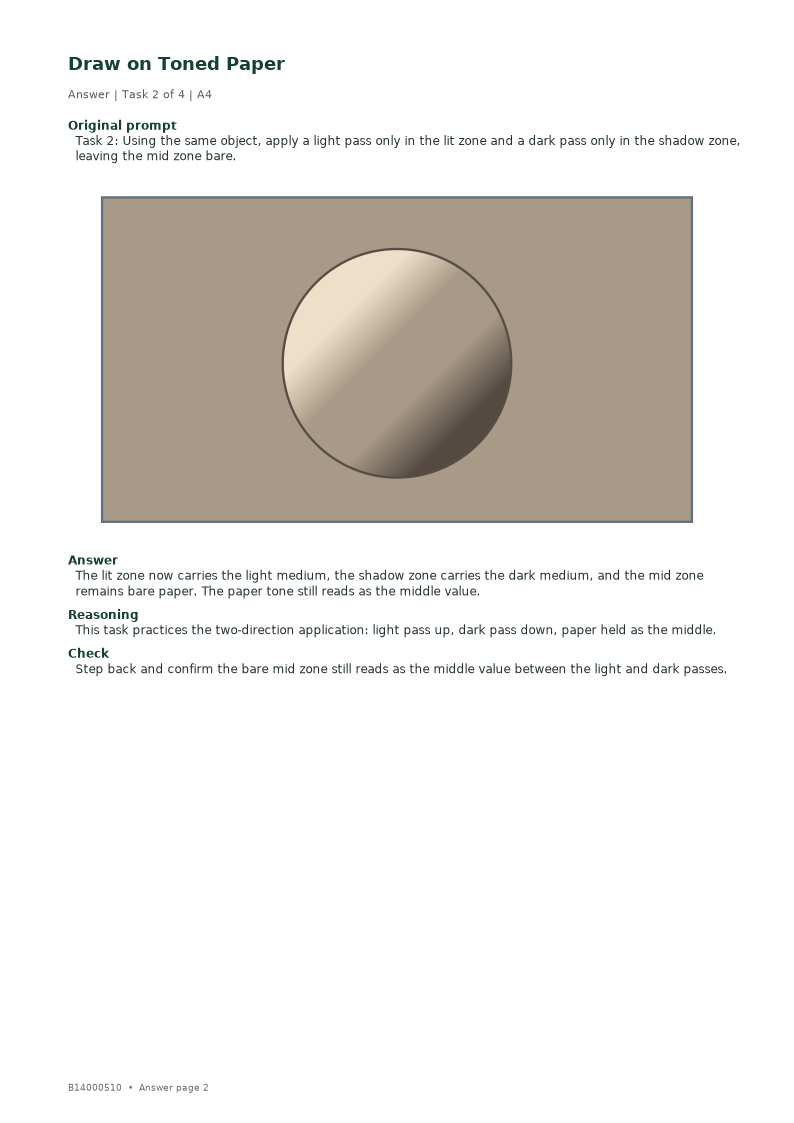
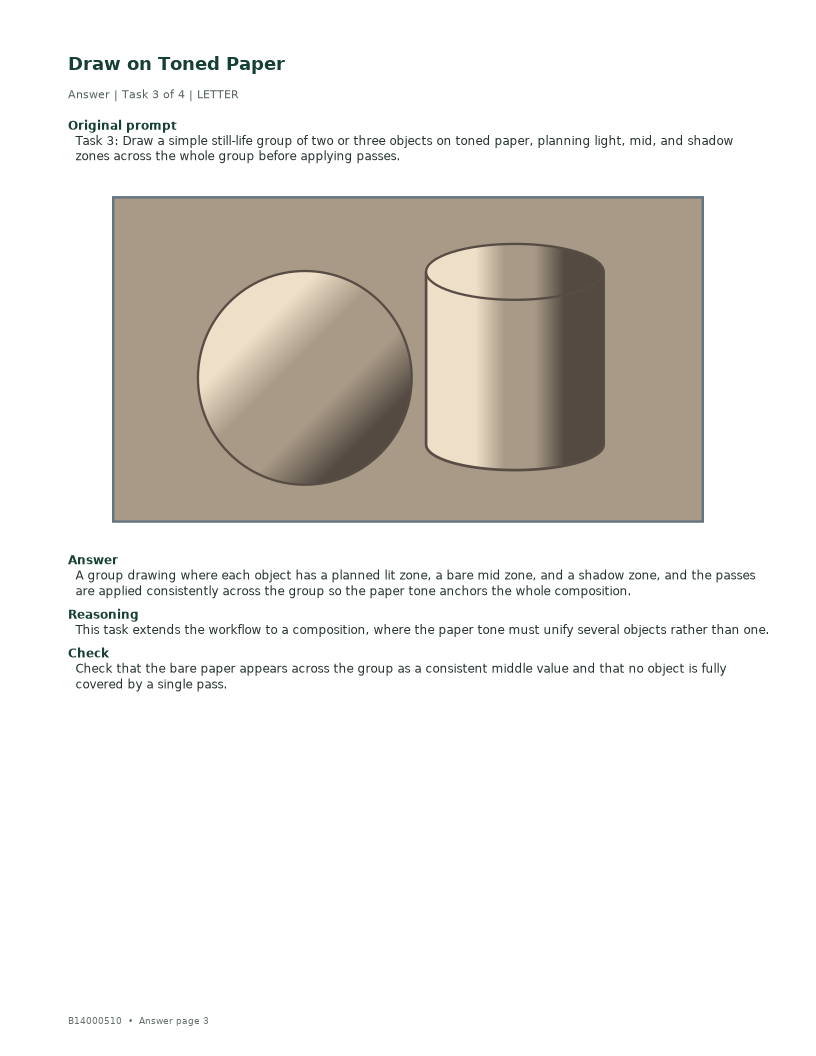
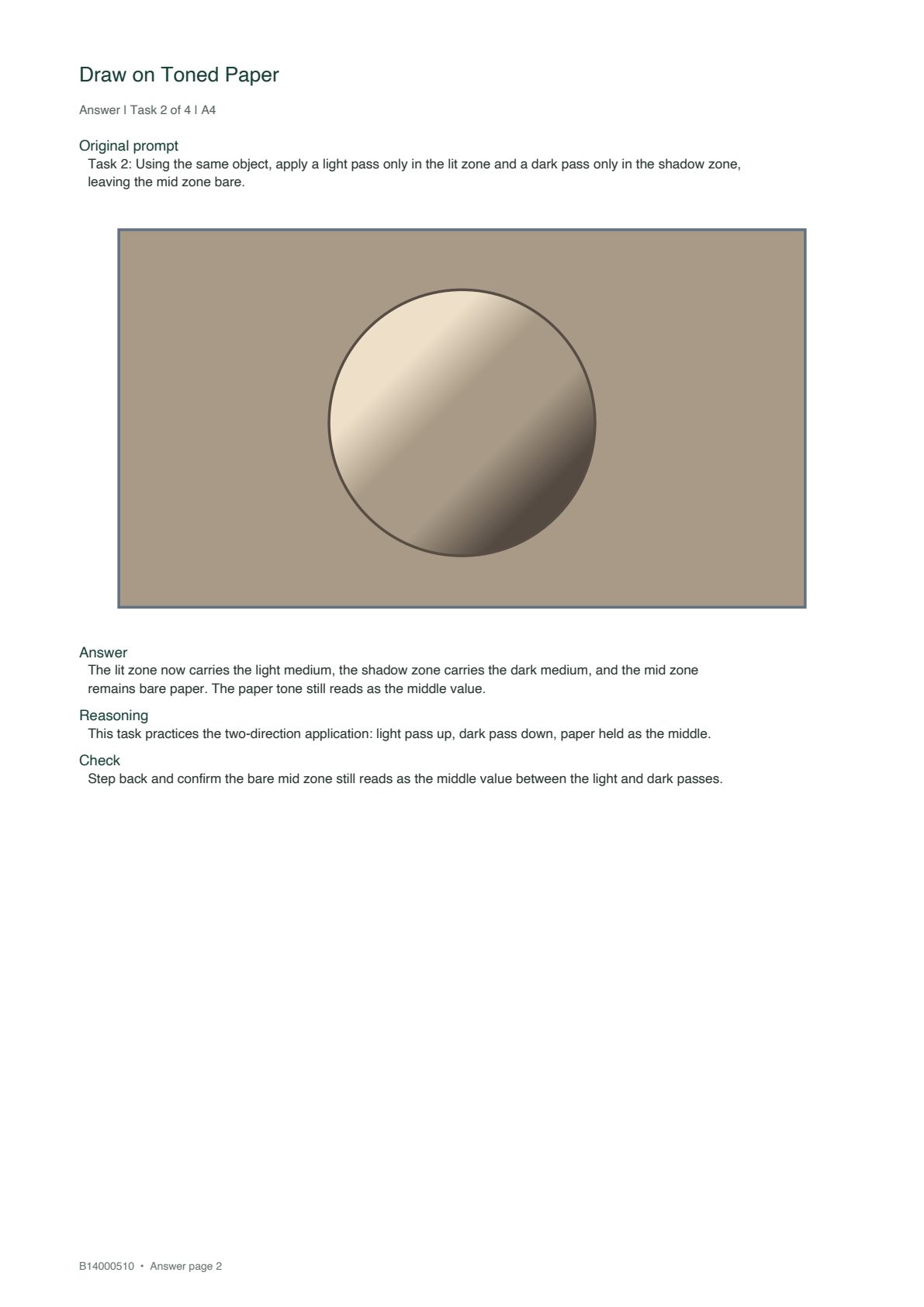
Task 2: Using the same object, apply a light pass only in the lit zone and a dark pass only in the shadow zone, leaving the mid zone bare.
Show answer 2
The lit zone now carries the light medium, the shadow zone carries the dark medium, and the mid zone remains bare paper. The paper tone still reads as the middle value.
This task practices the two-direction application: light pass up, dark pass down, paper held as the middle.
Check: Step back and confirm the bare mid zone still reads as the middle value between the light and dark passes.
Task 3
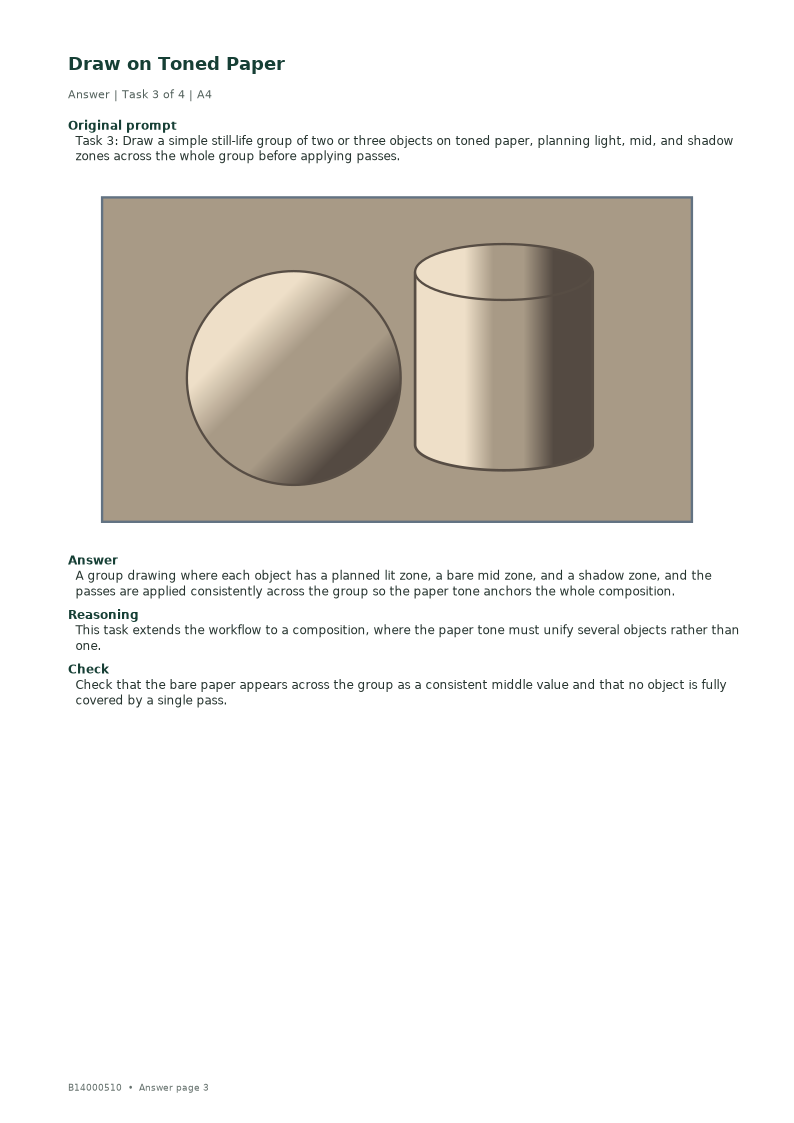
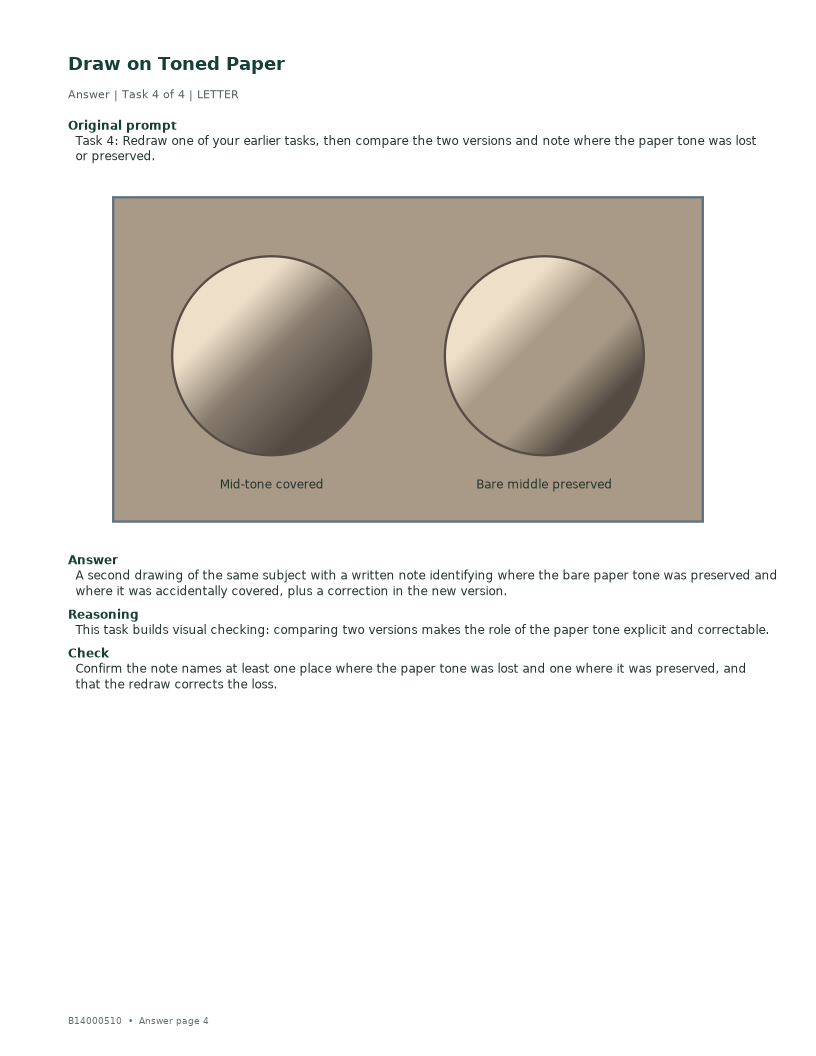
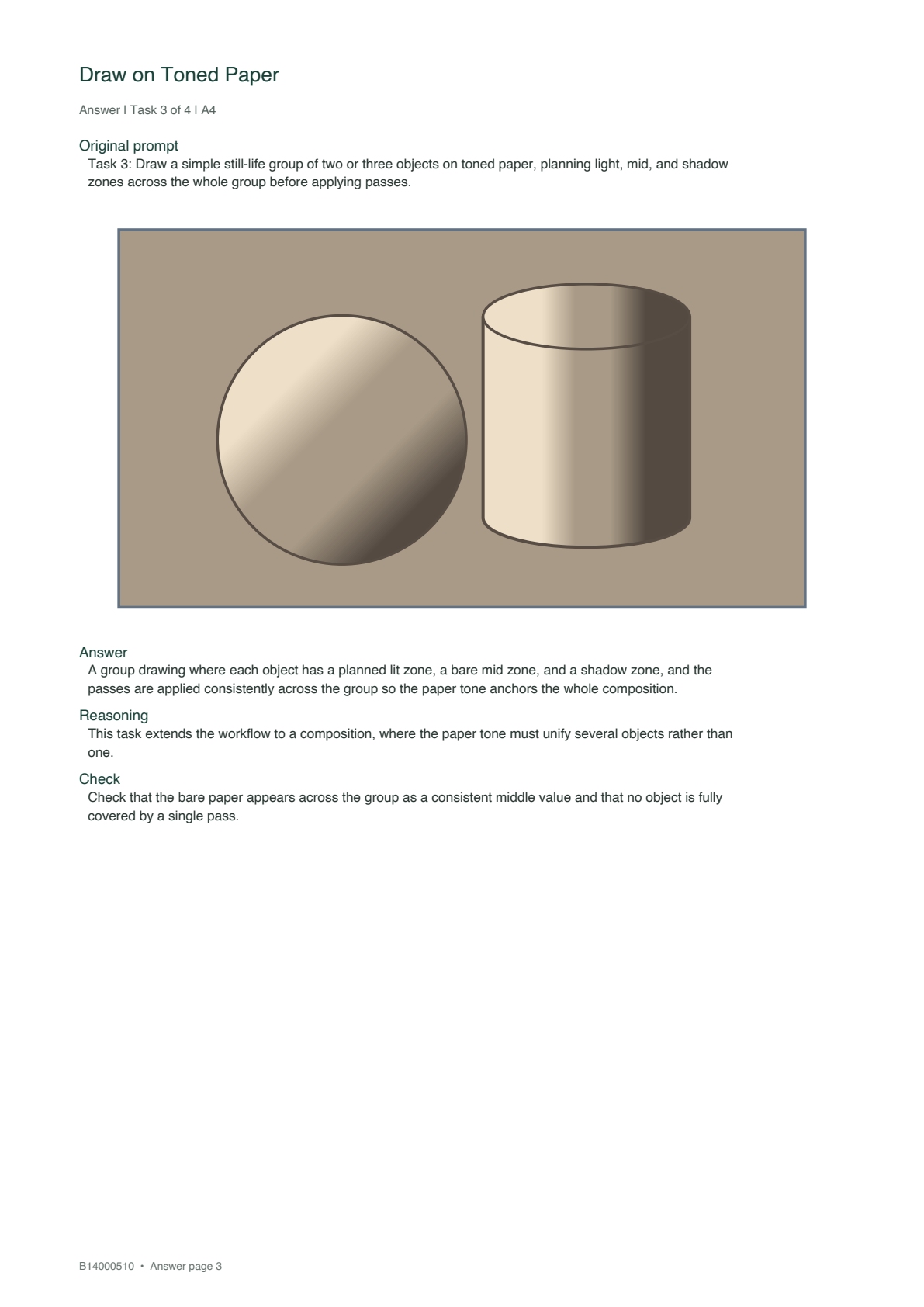
Task 3: Draw a simple still-life group of two or three objects on toned paper, planning light, mid, and shadow zones across the whole group before applying passes.
Show answer 3
A group drawing where each object has a planned lit zone, a bare mid zone, and a shadow zone, and the passes are applied consistently across the group so the paper tone anchors the whole composition.
This task extends the workflow to a composition, where the paper tone must unify several objects rather than one.
Check: Check that the bare paper appears across the group as a consistent middle value and that no object is fully covered by a single pass.
Task 4
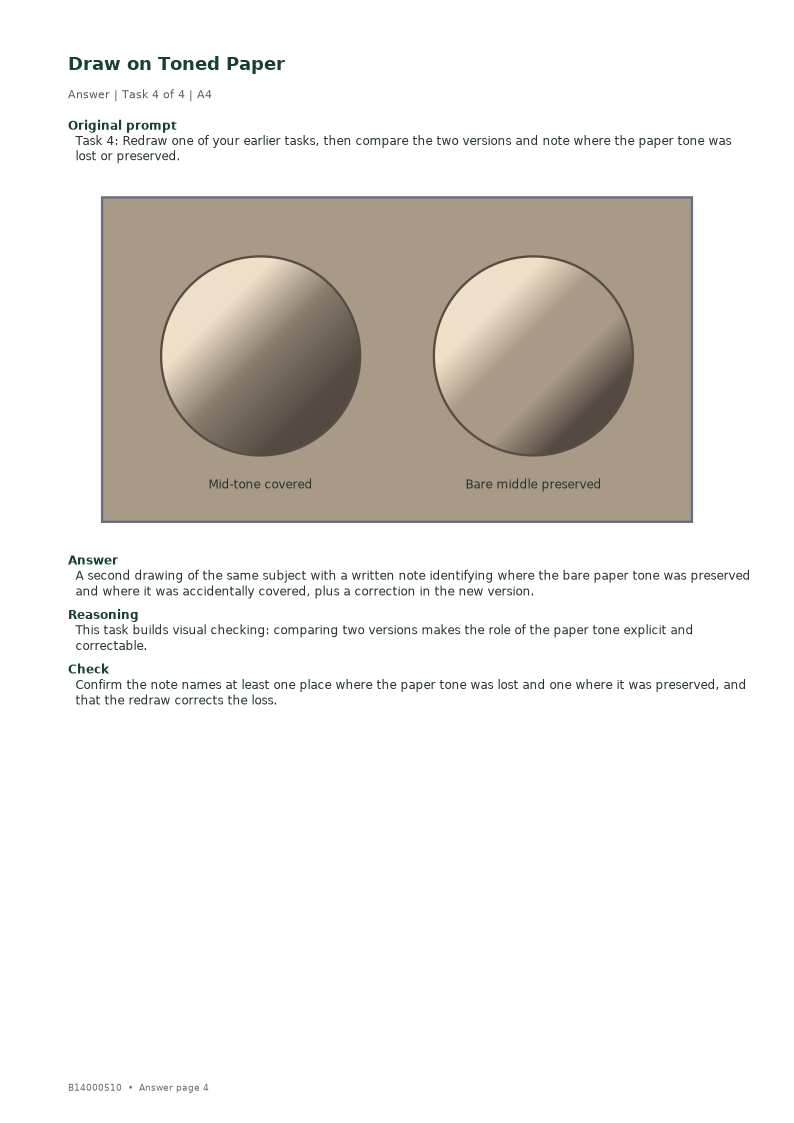
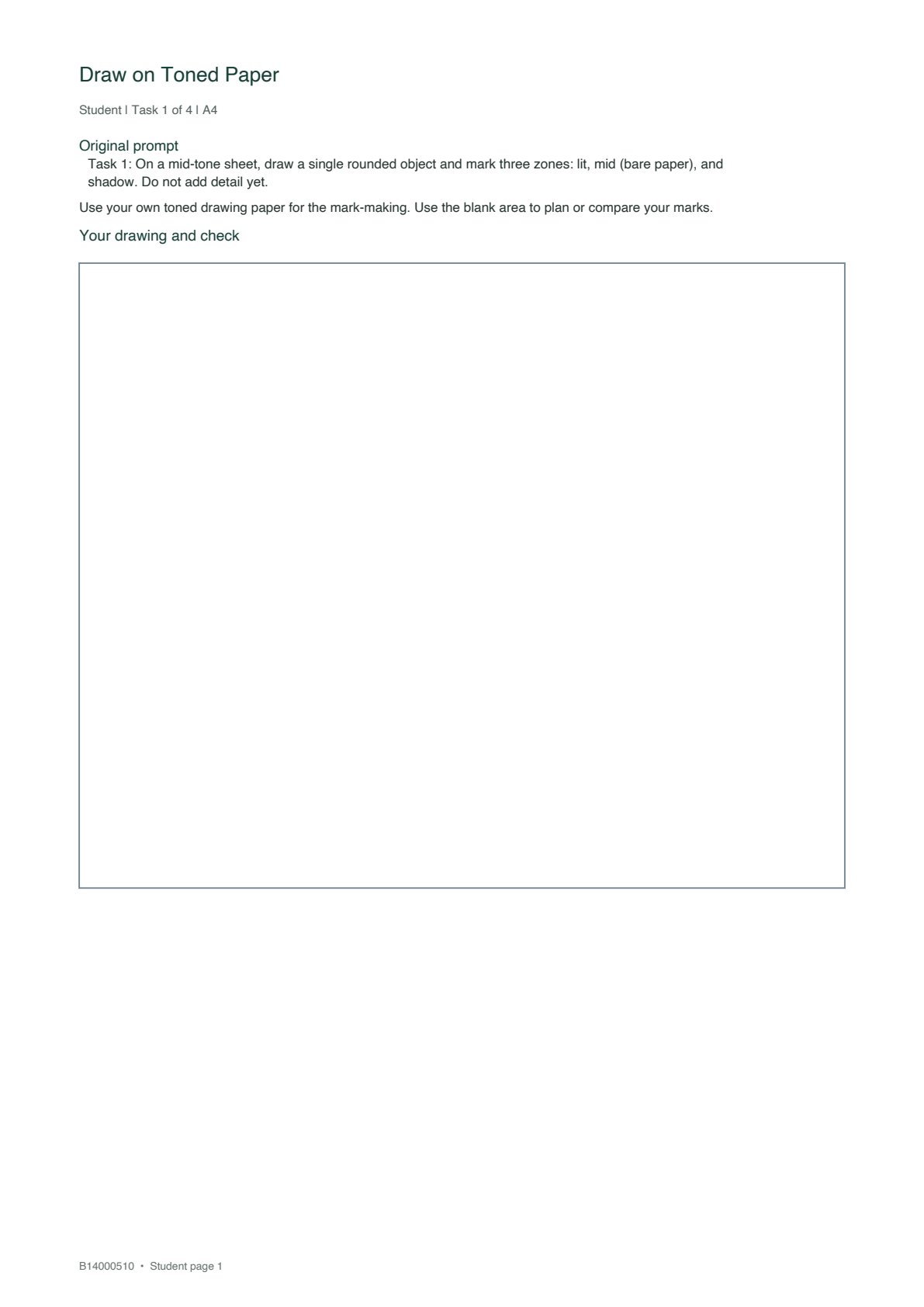
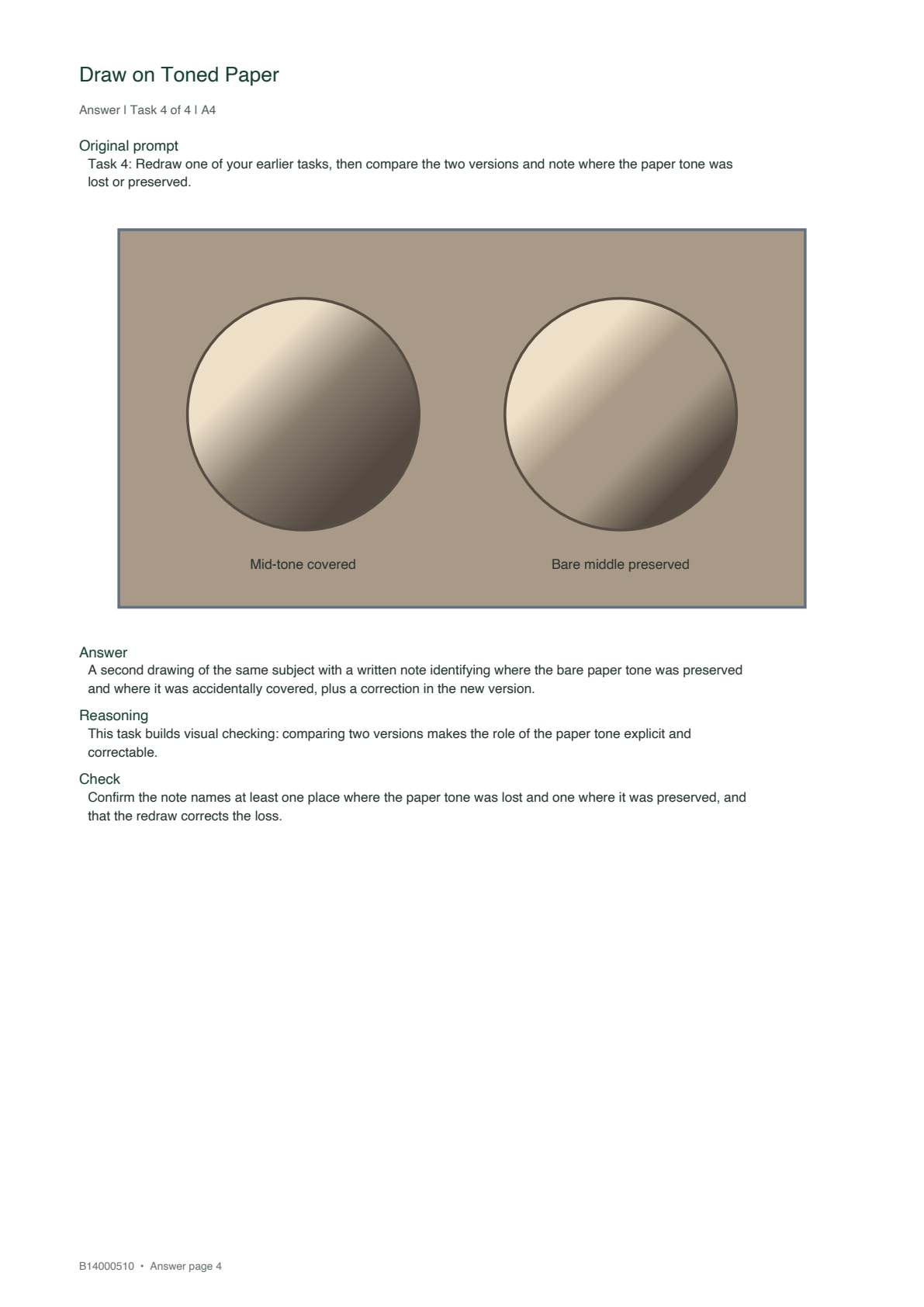
Task 4: Redraw one of your earlier tasks, then compare the two versions and note where the paper tone was lost or preserved.
Show answer 4
A second drawing of the same subject with a written note identifying where the bare paper tone was preserved and where it was accidentally covered, plus a correction in the new version.
This task builds visual checking: comparing two versions makes the role of the paper tone explicit and correctable.
Check: Confirm the note names at least one place where the paper tone was lost and one where it was preserved, and that the redraw corrects the loss.
Useful checks
- Covering the whole sheet with light or dark medium. Leave the mid-value zones bare so the paper tone still reads as the middle value.
- Treating the toned sheet as background to be filled in. Use the paper tone as a working value and keep it visible in the mid zones.
- Applying the dark pass first and overwhelming the paper tone. Apply the light pass first, then build the dark pass gradually so the paper tone stays readable.
Questions about this resource
Why not just draw on white paper?
On white paper you build from light to dark; on toned paper the sheet supplies the middle value, so you work in two directions and the paper tone anchors the drawing.
What counts as a mid-tone sheet?
A sheet clearly between near-white and near-black, so both a light and a dark pass can read against it.