Reference diagrams
LETTER · Download PDF
A4 · Download PDF
Free original resources
Learn to draw a weasel by building its long slender body, small rounded head, short legs and curved bushy tail, then check your work against a reference sheet.
Four original cases, with reference diagrams, practice sheets and worked answers. Everything is free; no signup required.
LETTER · Download PDF
A4 · Download PDF
LETTER · Download PDF
A4 · Download PDF
LETTER · Download PDF
A4 · Download PDF
Use A4 or US Letter to match your printer. Use the stated values and conditions to solve each exercise; diagrams are not physical measuring rulers.
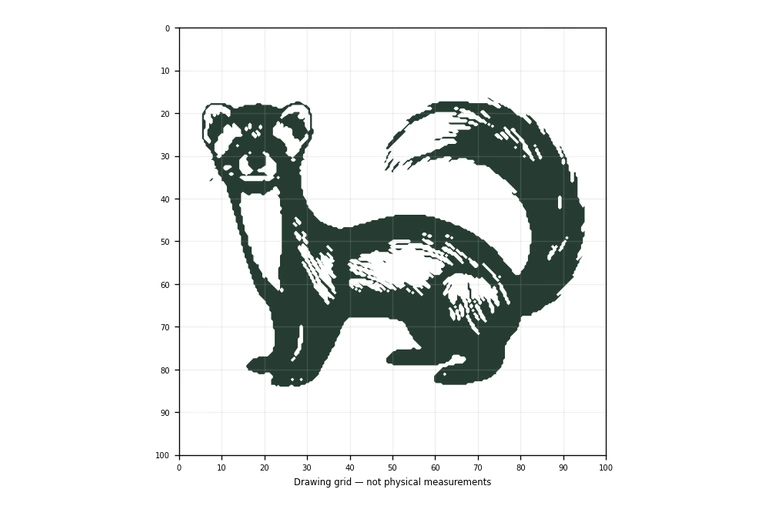
A weasel is easy to recognise but surprisingly easy to draw too stiffly. Its character comes from contrast: a long, low body against a small head, very short legs, and a tail that sweeps up with a soft curve. This page walks through a simple construction order you can practise on the printable sheets, then explains how to judge your drawing by visible features and proportions rather than exact line matching.
Begin with an elongated oval for the body. Tilt it slightly if you want a sense of movement, but keep it long and low. Taper the oval toward the head end and toward the tail base so the shape reads as a slender animal rather than a capsule.
Place the head next as a small rounded form at the front, clearly smaller than the body. Add a pointed snout and two short rounded ears. Whisker lines come later, once the head shape sits where you want it.
Only after the body and head are placed should you attach the four short legs beneath the body, ending in simple paw shapes. Short legs are part of the weasel's silhouette, so resist making them long.
The tail is where a weasel drawing gains energy. Draw a large curved tail sweeping upward from the rear, using flowing lines to suggest fur. Keep the curve continuous rather than kinked, and let the tail widen slightly before it tapers.
If the tail droops straight down, the drawing loses its liveliness. If it curls too tightly, it can look like a different animal. A single confident upward sweep is usually enough.
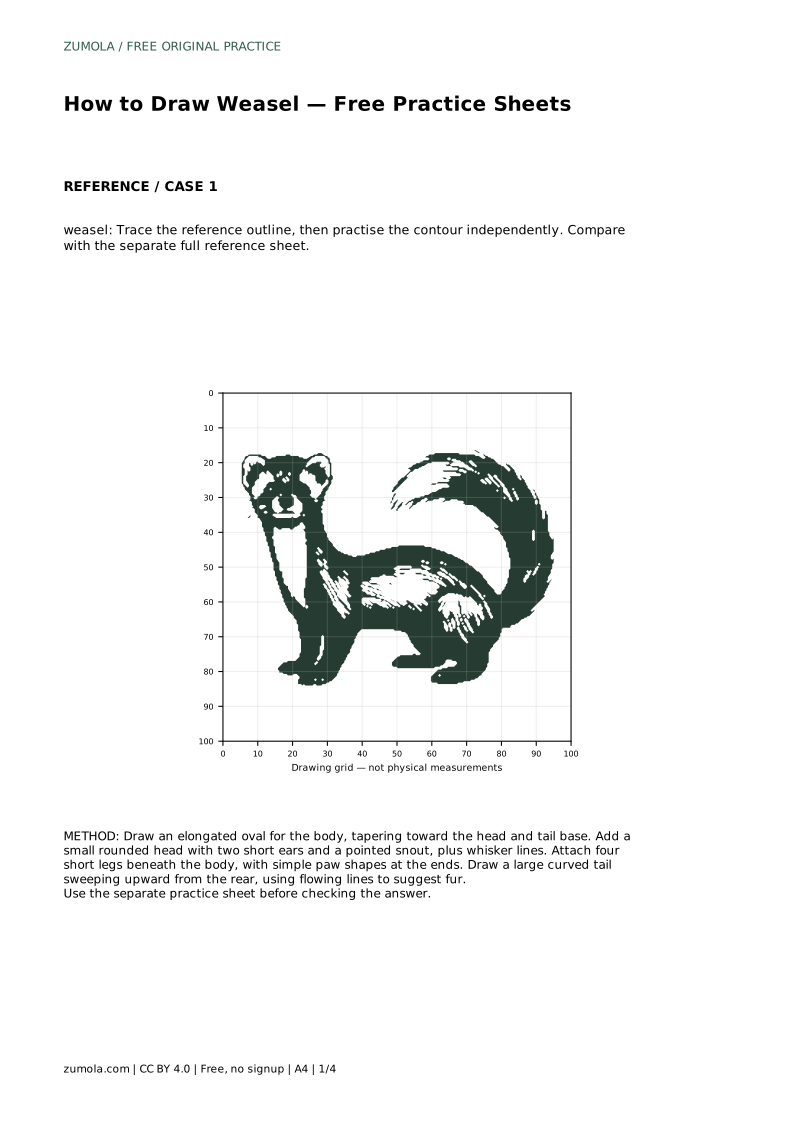
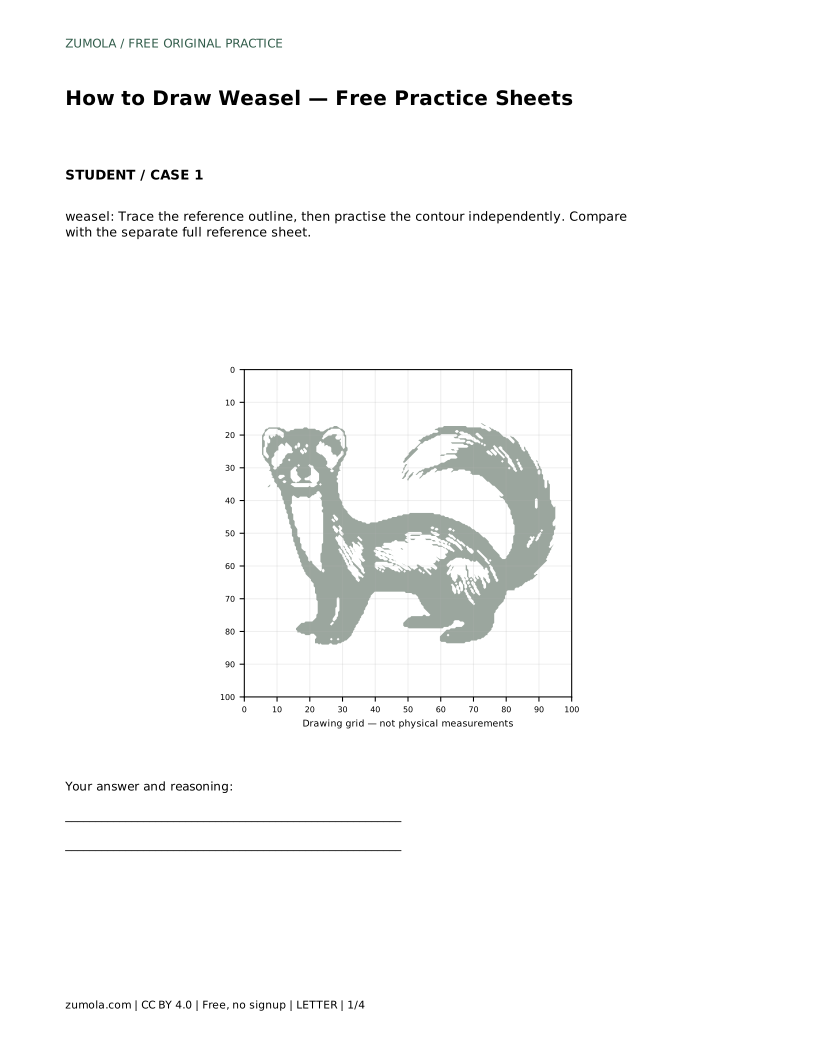
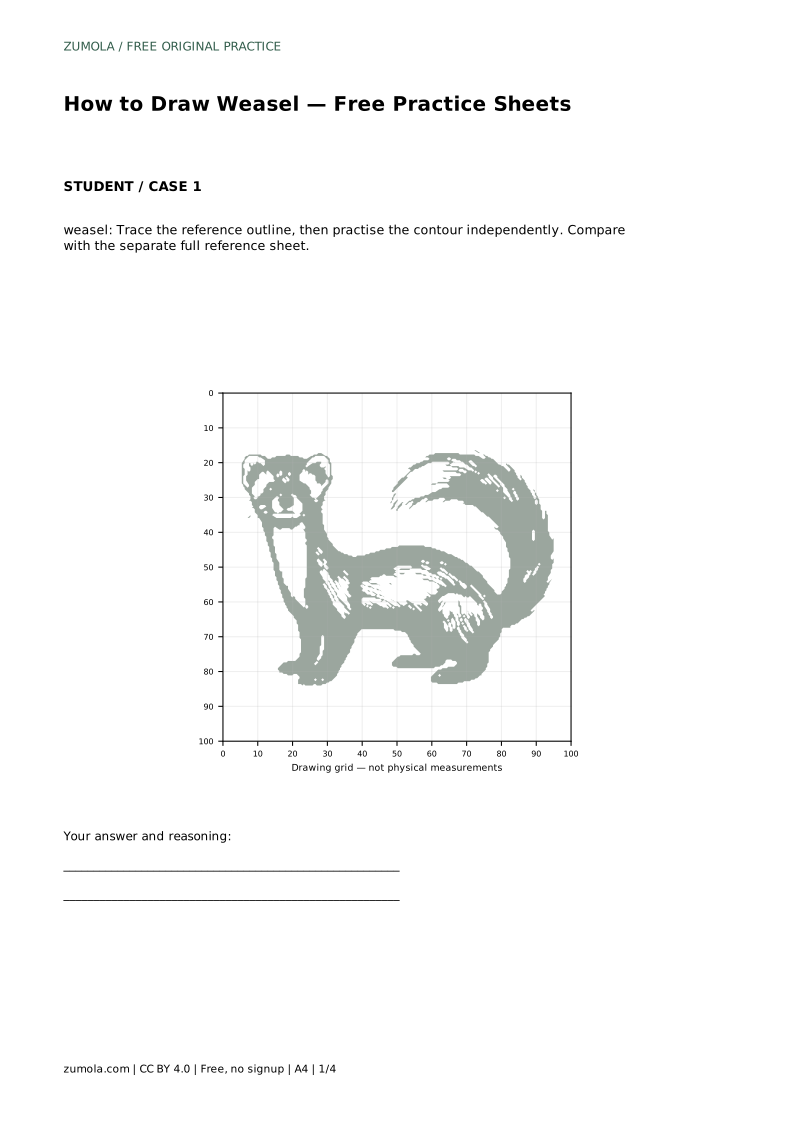
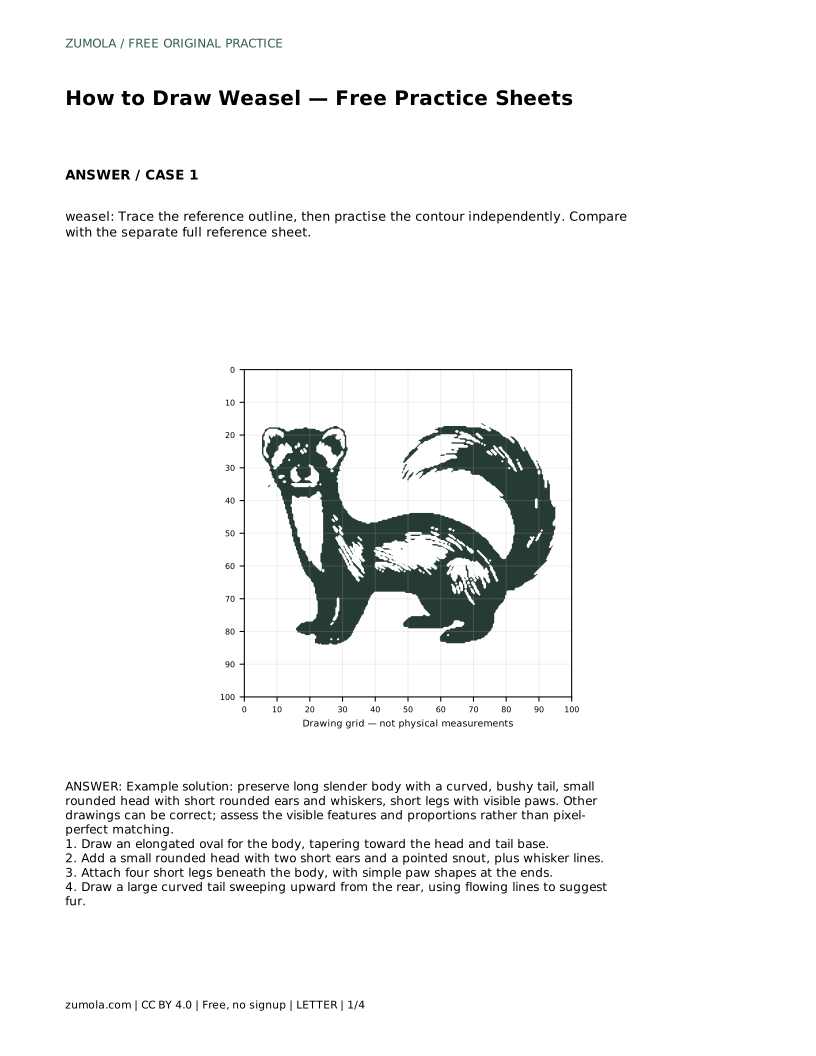
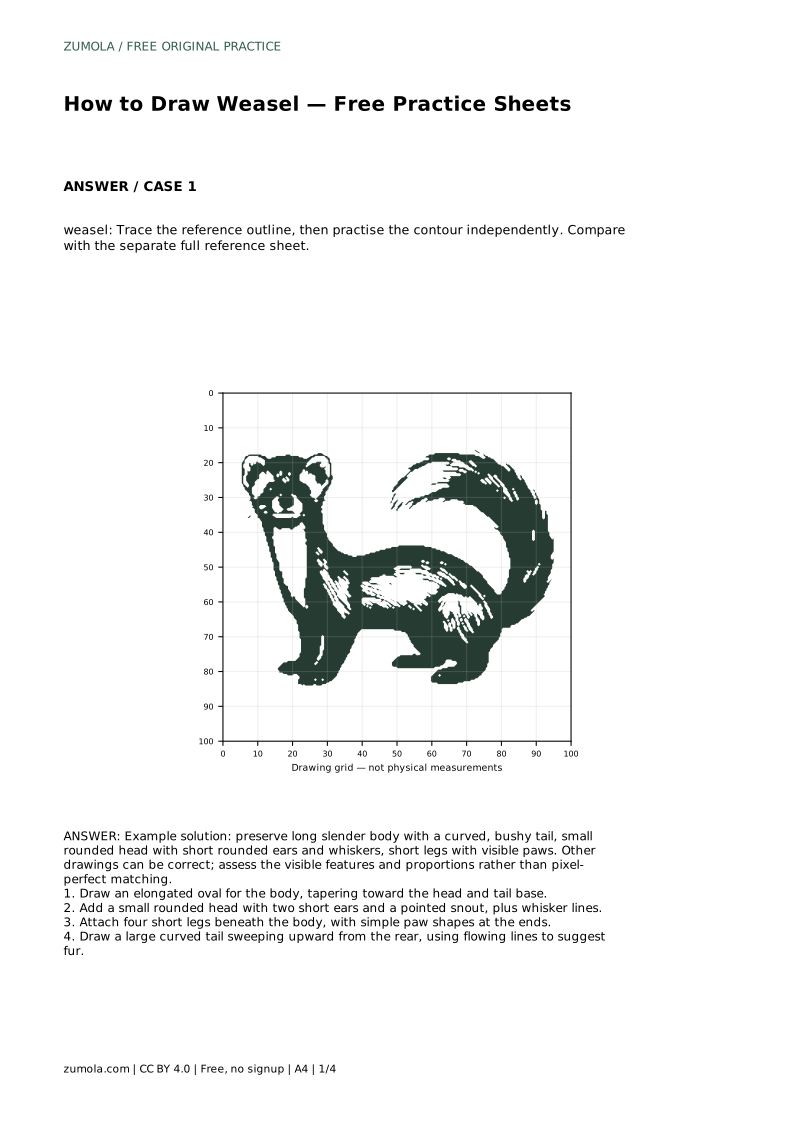
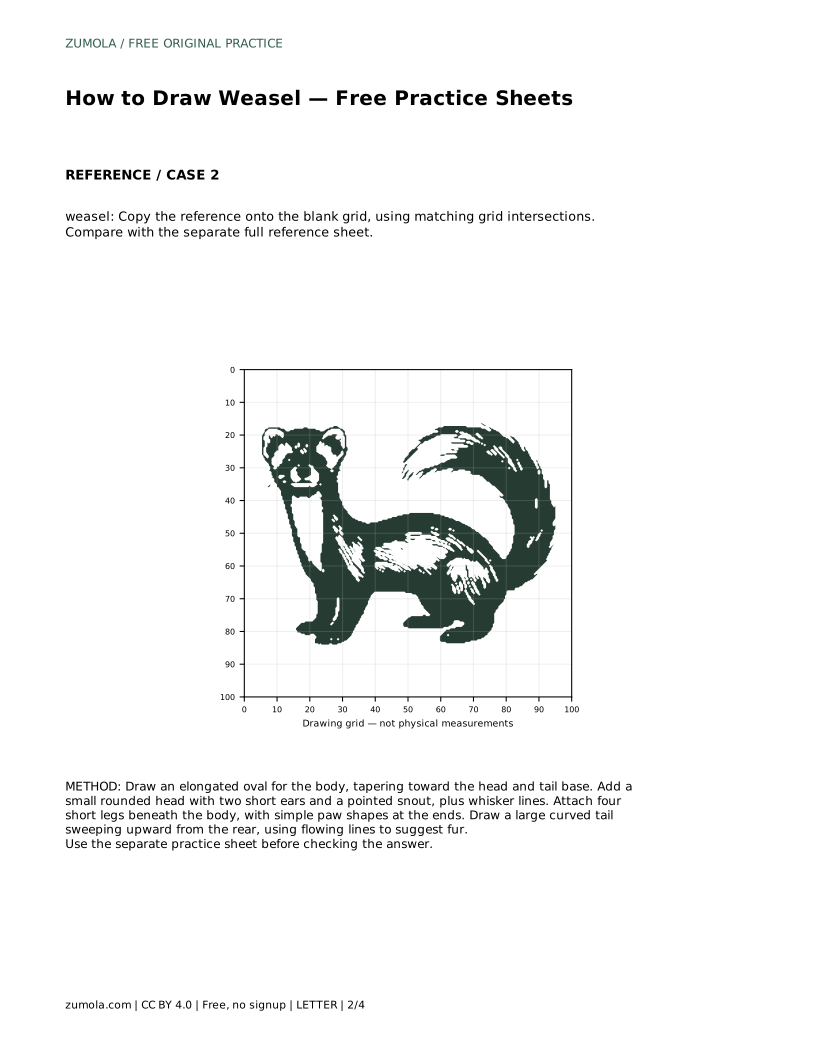
The trace sheet asks you to follow the reference outline, then practise the contour independently. Tracing builds the sequence of shapes; the independent pass tests whether you can reproduce that sequence without help.
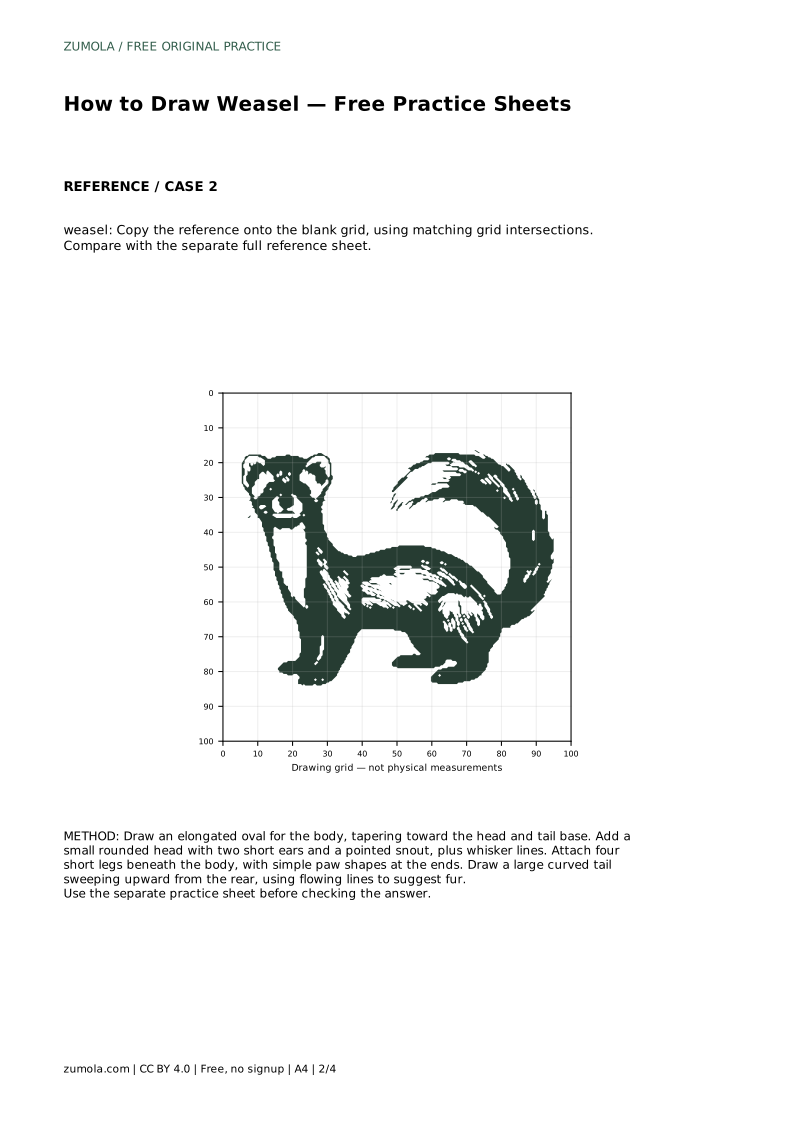
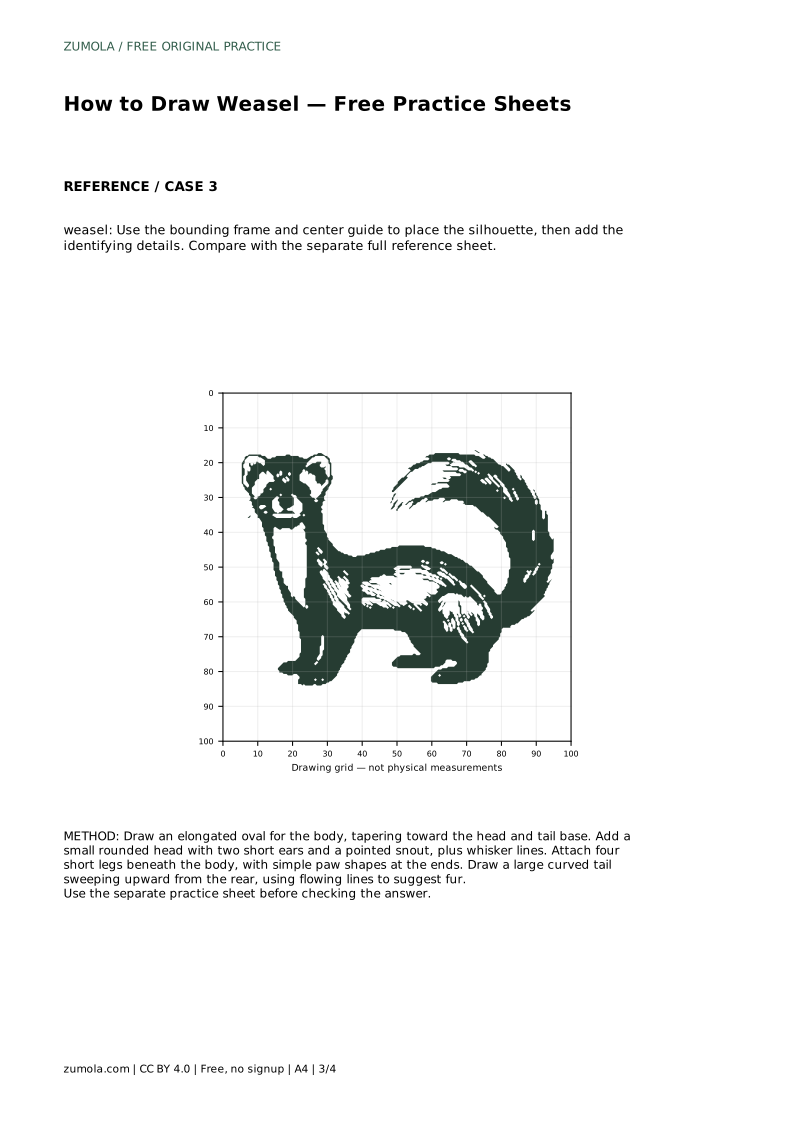
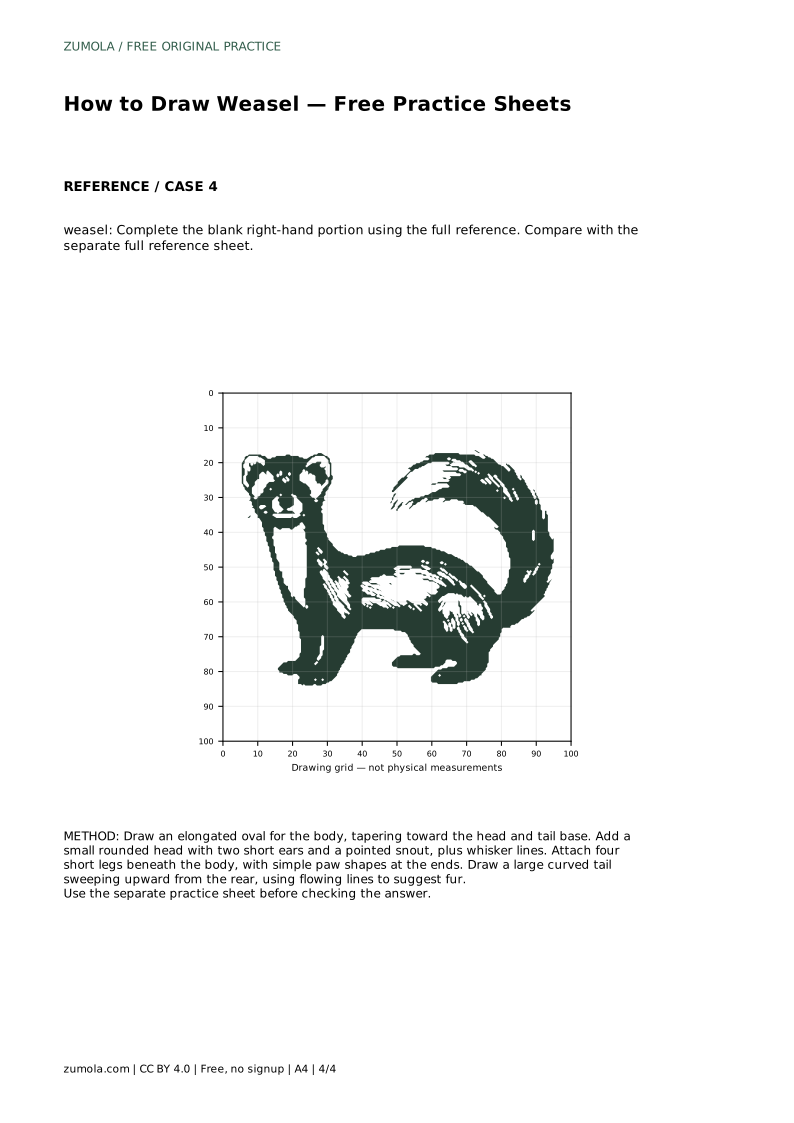
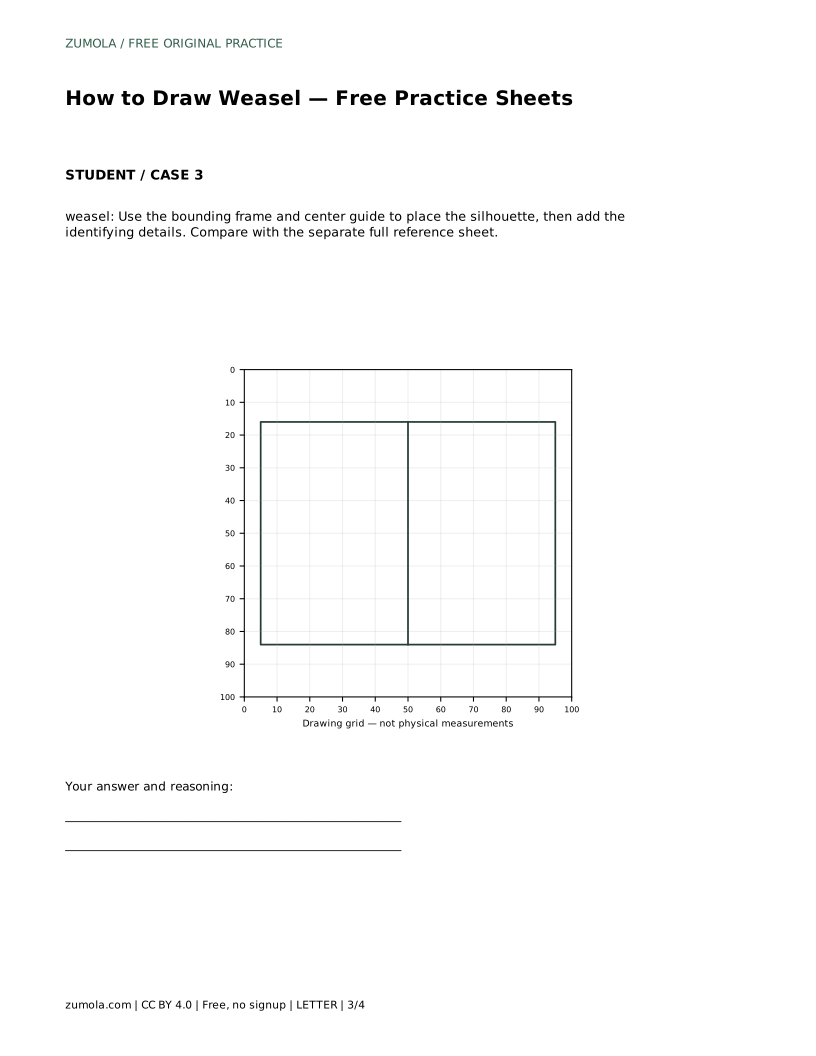
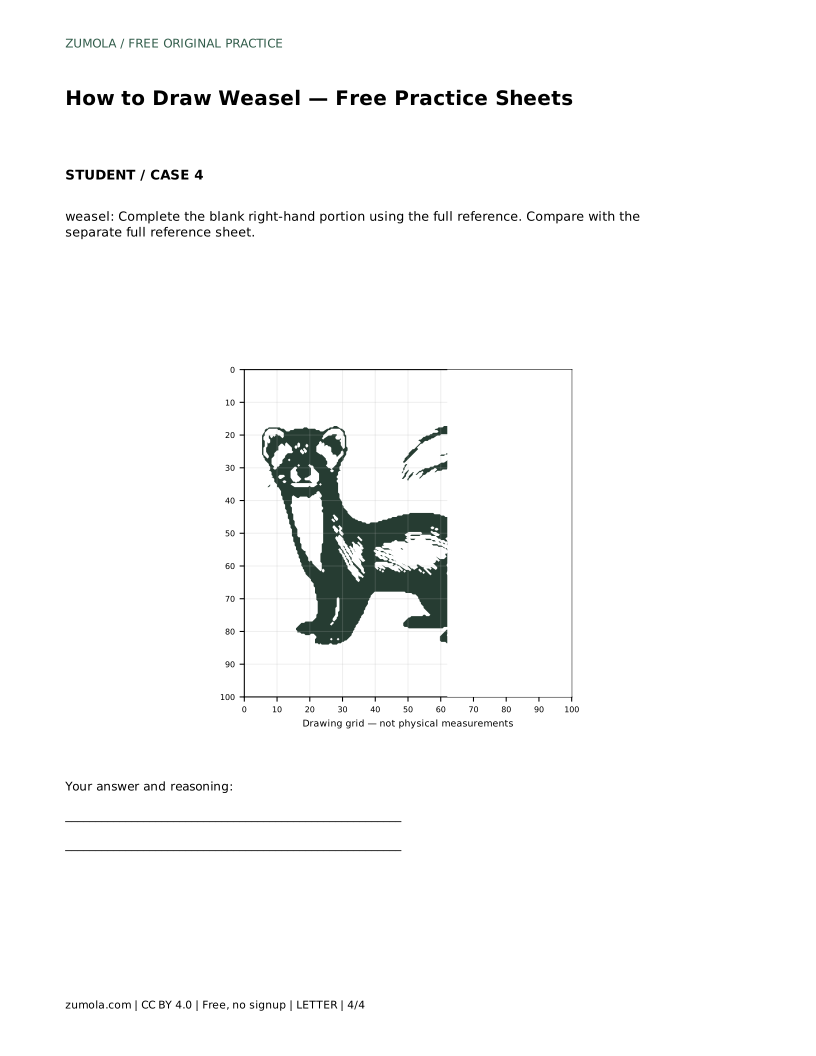
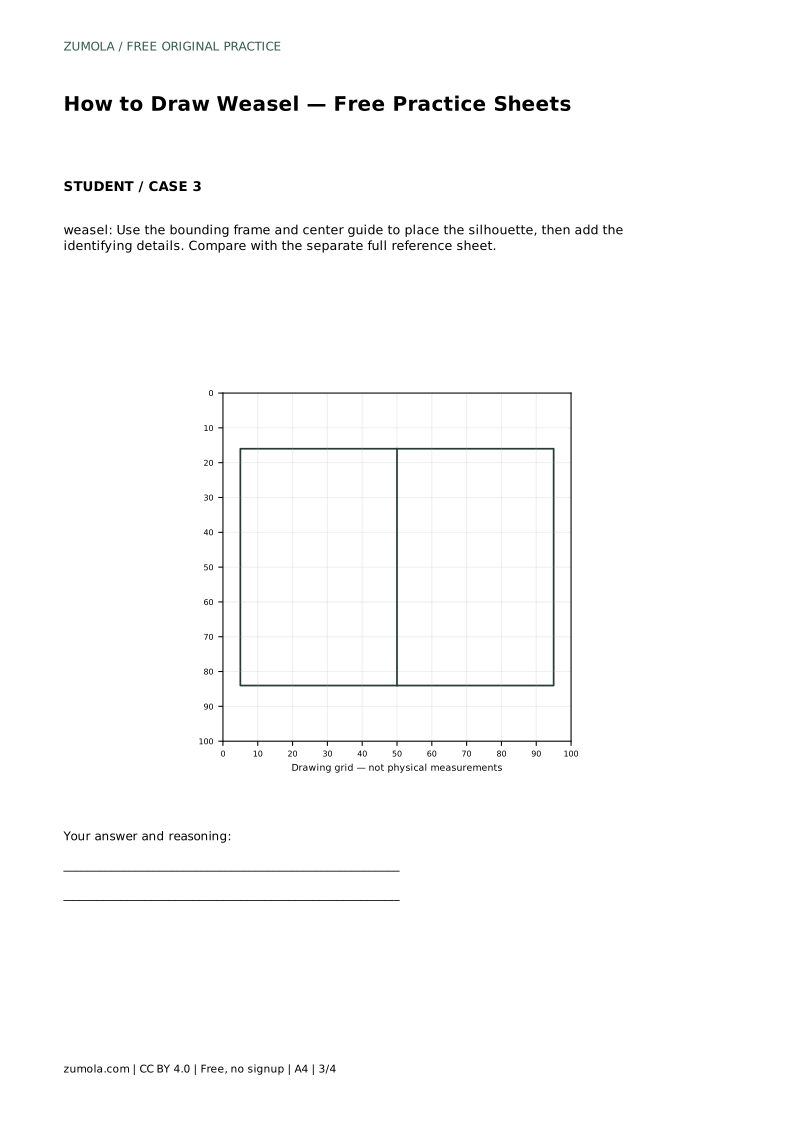
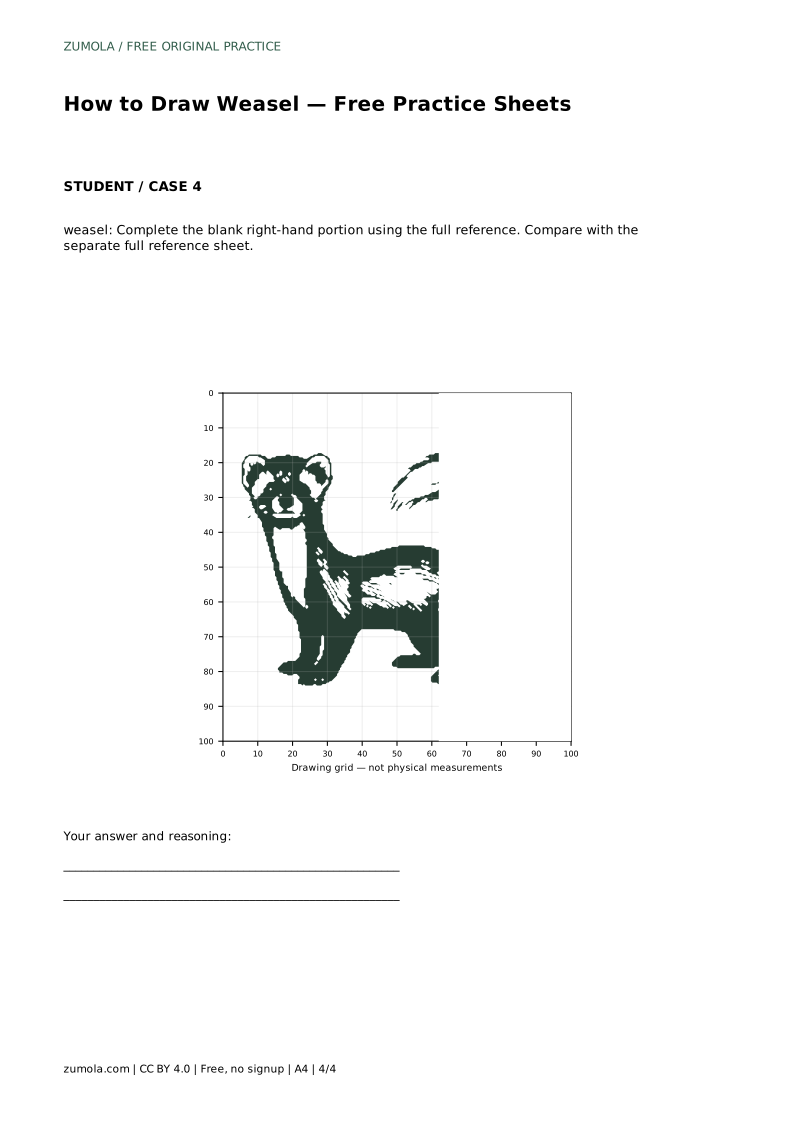
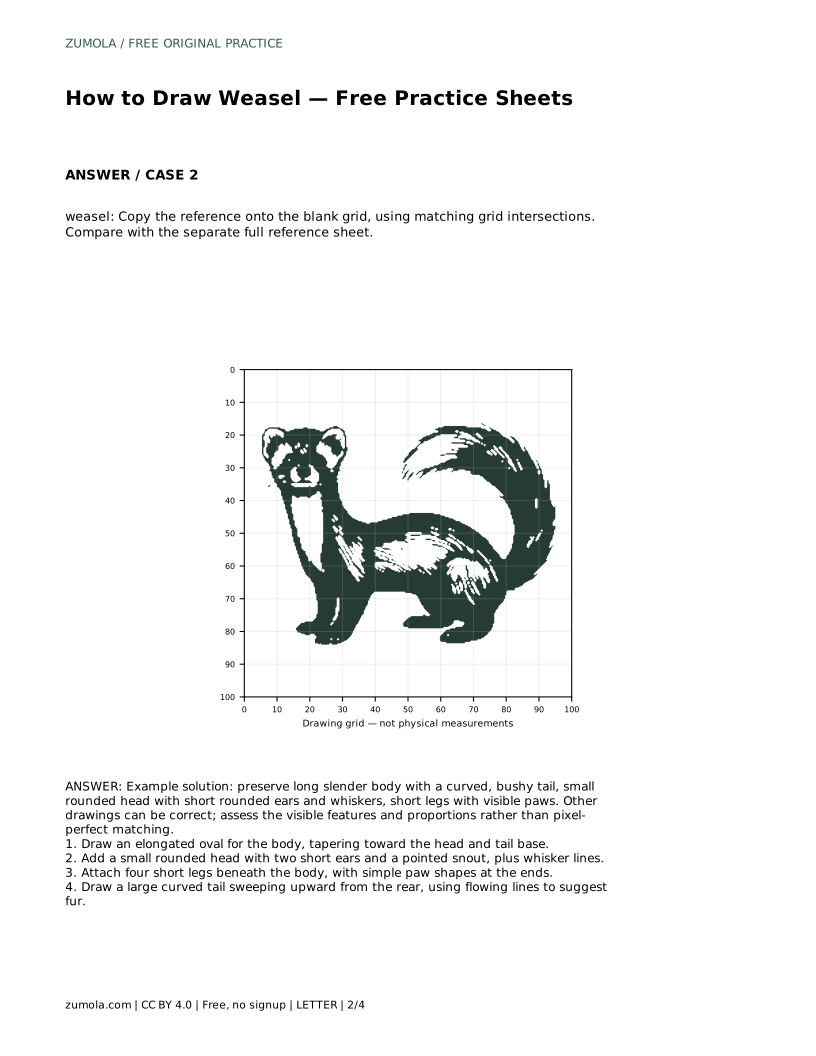
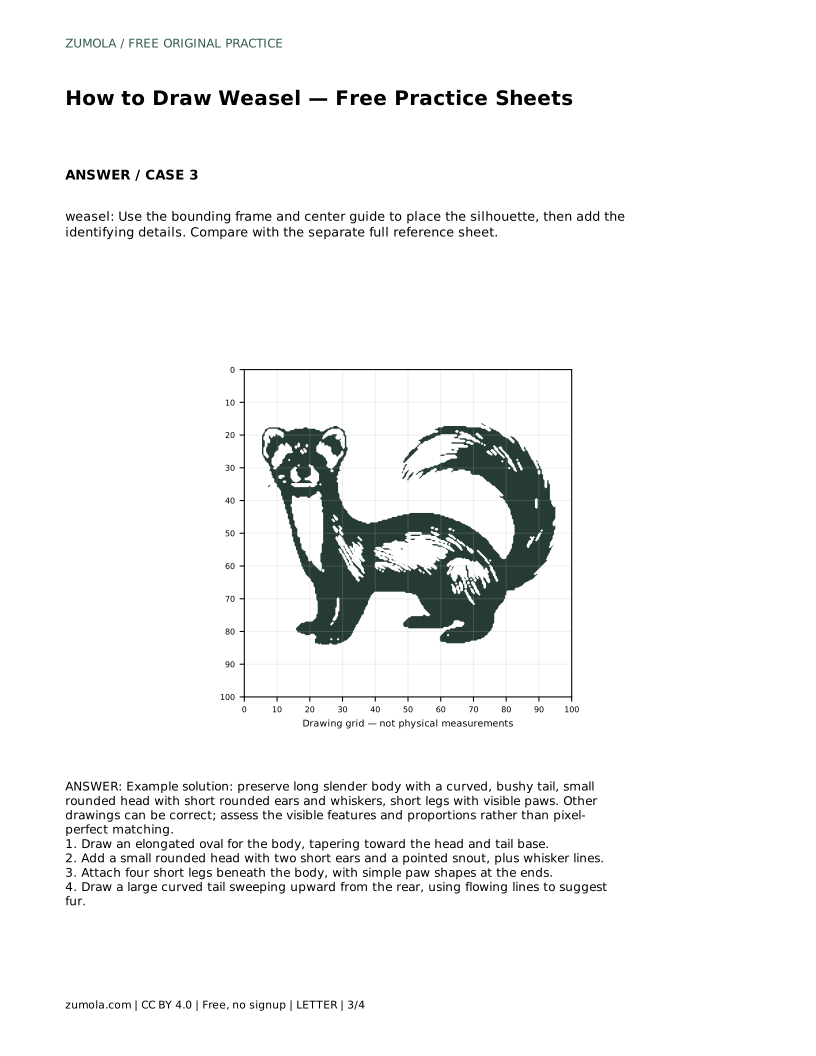
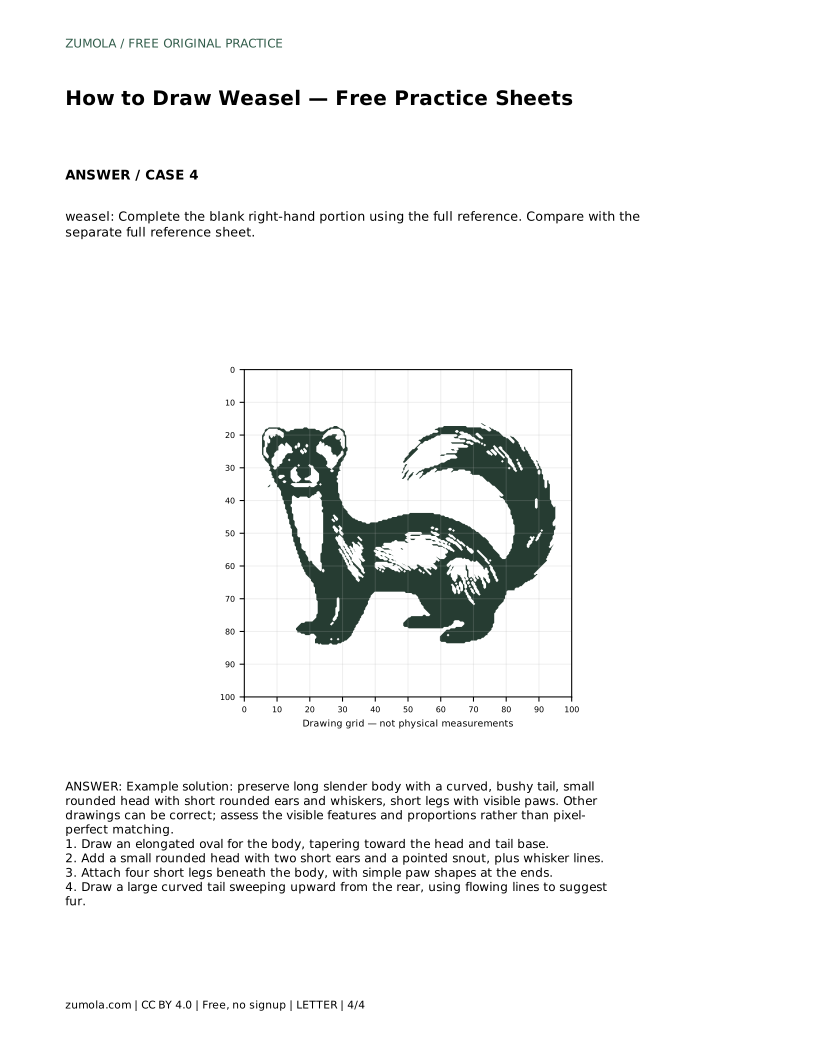
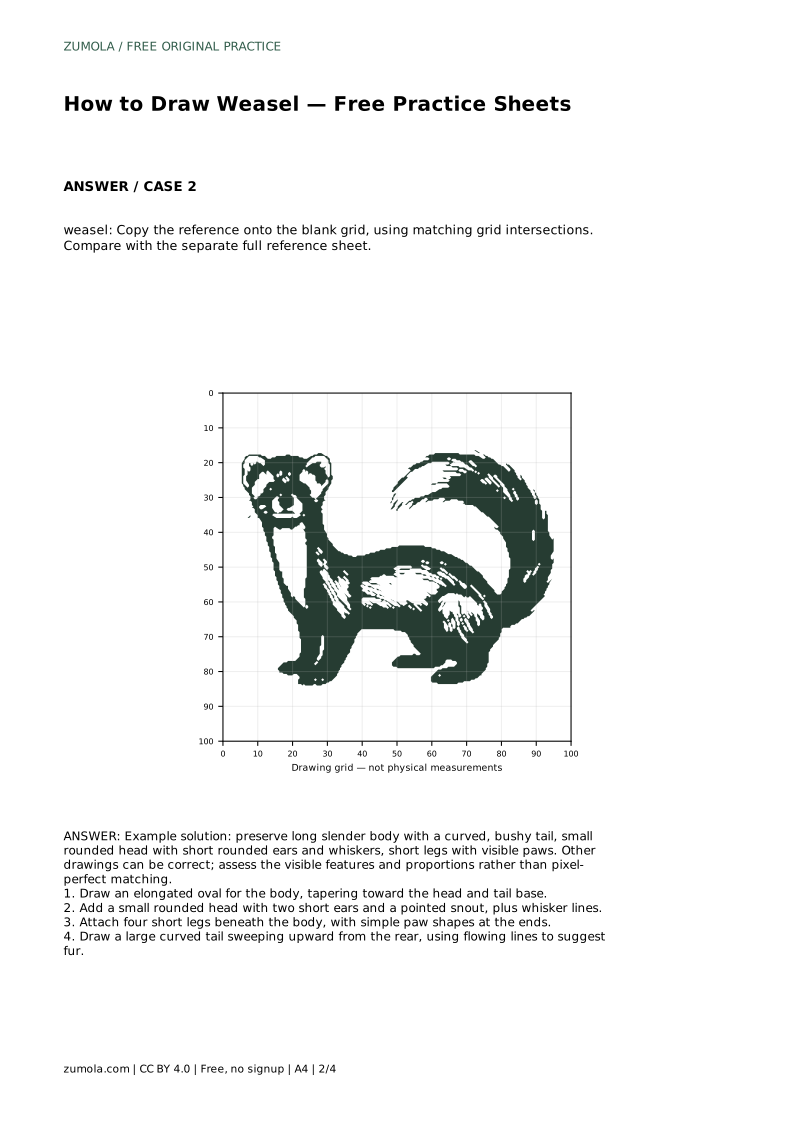
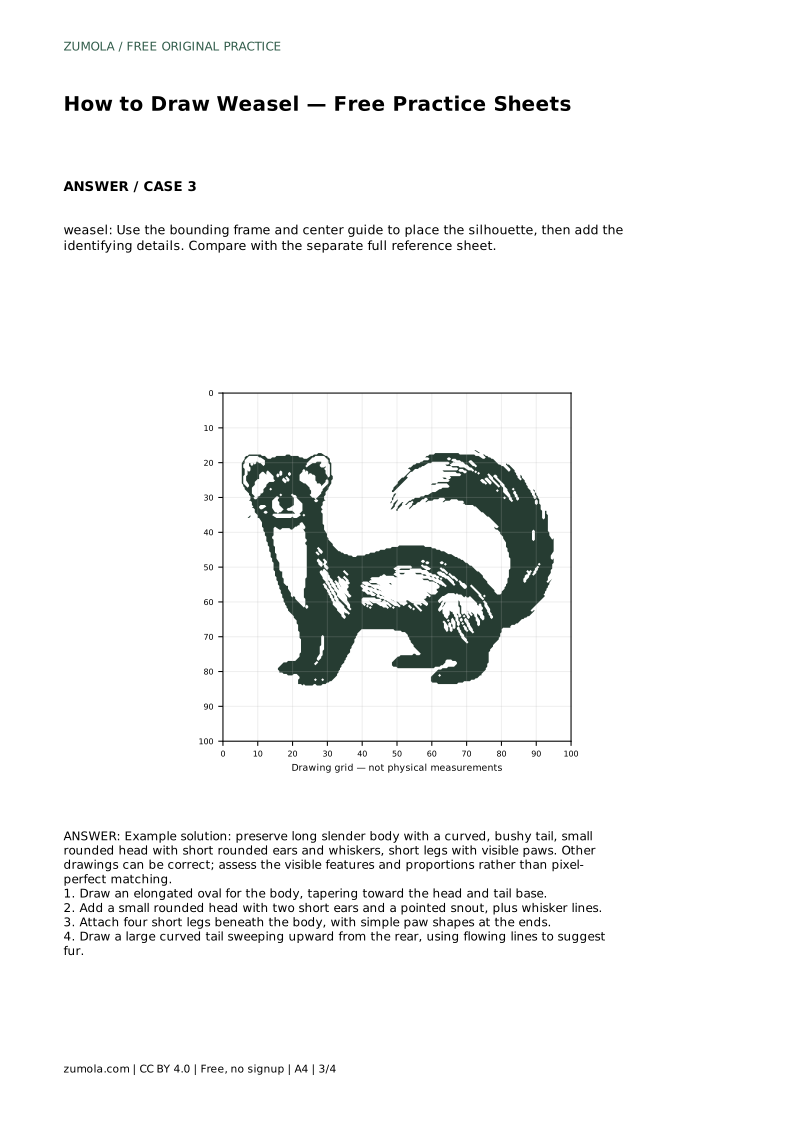
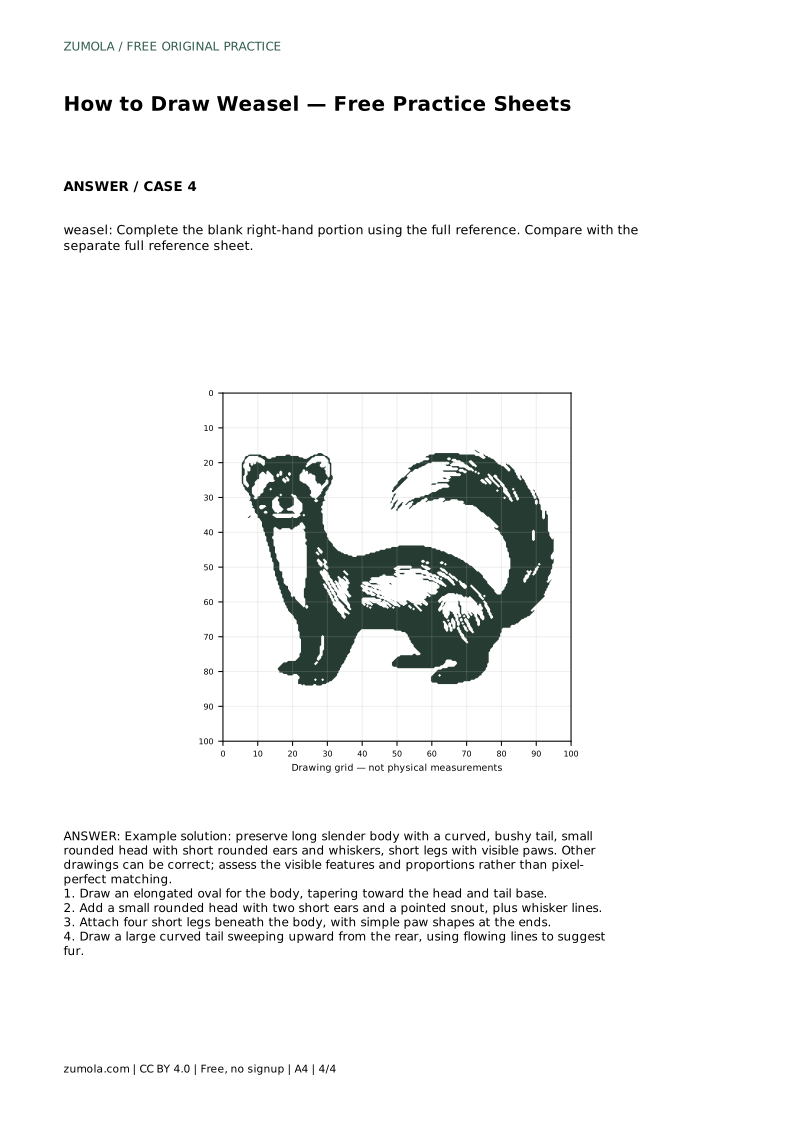
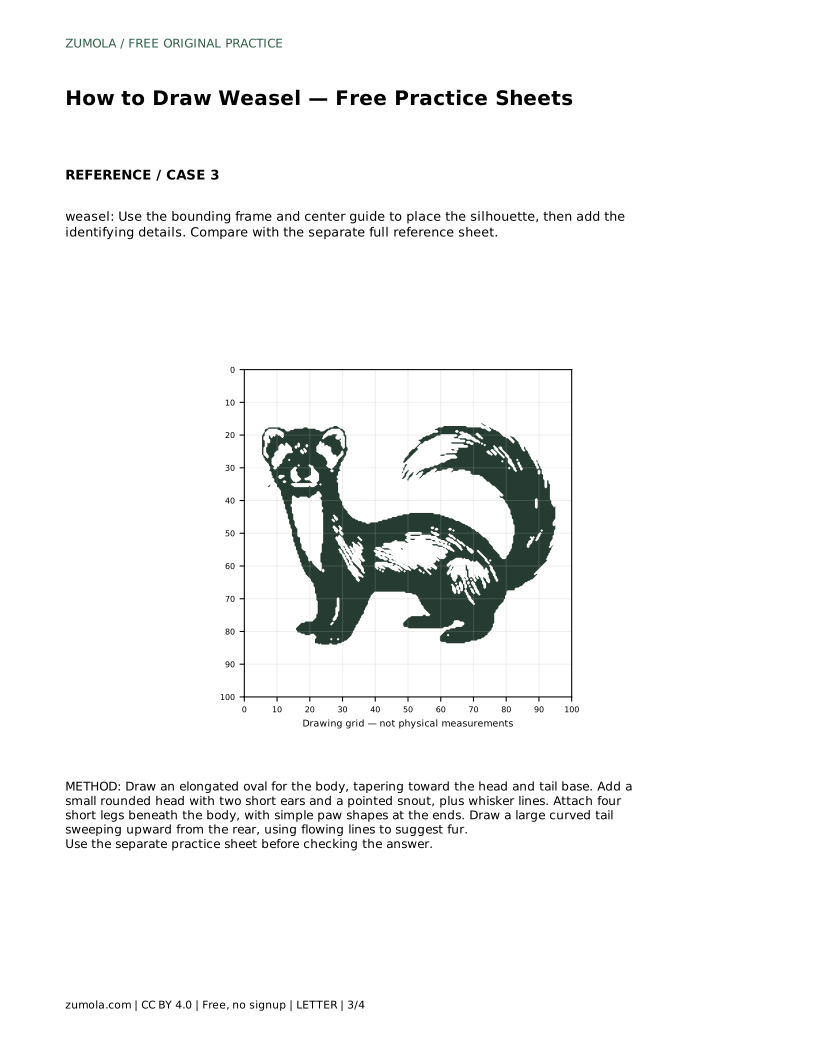
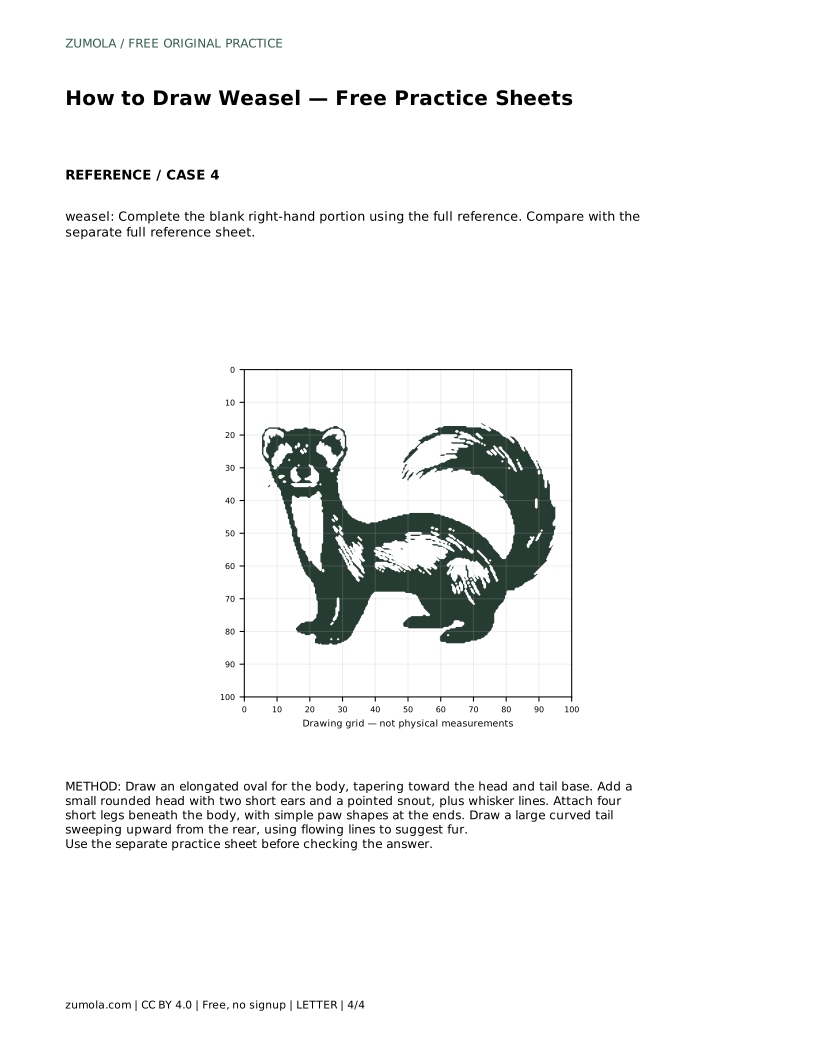
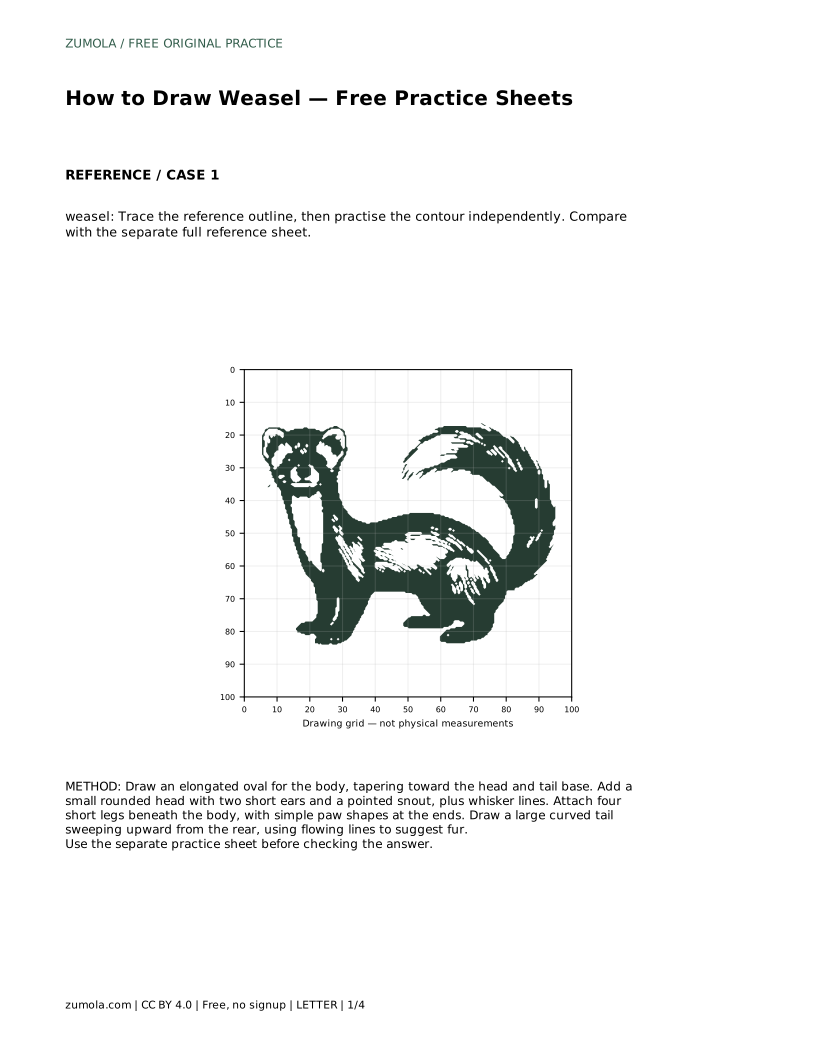
The grid sheet asks you to copy the reference onto the blank grid using matching grid intersections. Work one square at a time and check where the outline crosses each intersection. The bounding-frame sheet asks you to place the silhouette using the frame and centre guide before adding identifying details. The partial sheet asks you to complete the blank right-hand portion from the full reference.
In every format, compare your finished drawing with the separate full reference sheet. The reference is a guide to features and proportions, not a target for pixel-perfect matching.
A correct weasel drawing keeps the long slender body, the curved bushy tail, the small rounded head with short rounded ears and whiskers, and the short legs with visible paws. Different line styles, tail angles and head tilts can all be valid.
Use the rubric below to review your own sheet. If a feature is missing or a proportion is off, redraw just that part rather than starting over.
weasel: Trace the reference outline, then practise the contour independently. Compare with the separate full reference sheet.
Example solution: preserve long slender body with a curved, bushy tail, small rounded head with short rounded ears and whiskers, short legs with visible paws. Other drawings can be correct; assess the visible features and proportions rather than pixel-perfect matching. Draw an elongated oval for the body, tapering toward the head and tail base. Add a small rounded head with two short ears and a pointed snout, plus whisker lines. Attach four short legs beneath the body, with simple paw shapes at the ends. Draw a large curved tail sweeping upward from the rear, using flowing lines to suggest fur.
No. Other drawings can be correct. Assess the visible features and proportions rather than pixel-perfect matching.
Start with the trace sheet to learn the order of shapes, then move to the grid, bounding-frame or partial sheet to test yourself without tracing.
Focus on the combination: a long slender body, a small rounded head with short rounded ears, short legs with visible paws, and a curved bushy tail sweeping upward.
All drawing practice · Free coordinate paper
Original resources · CC BY 4.0 · Free for personal and classroom use with attribution.