Free original lessons
Draw Wood Texture
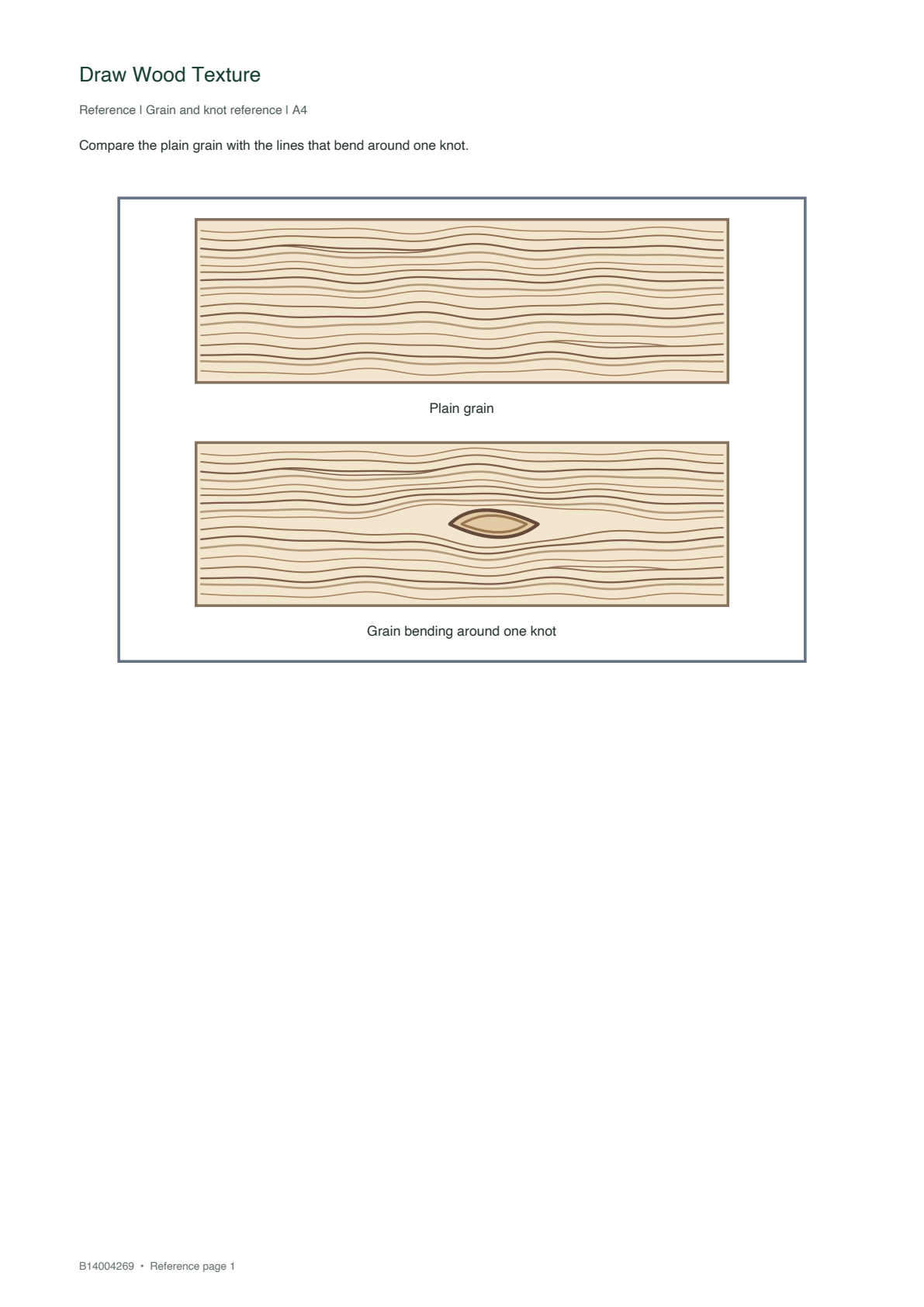
Start the wood study with long, gently wavering grain lines. The first exercise keeps the board plain. In the later studies, add a knot, bend the surrounding grain, and shade the core to make the surface read as wood.
Letter & A4
PDF & SVG
What makes a surface read as wood
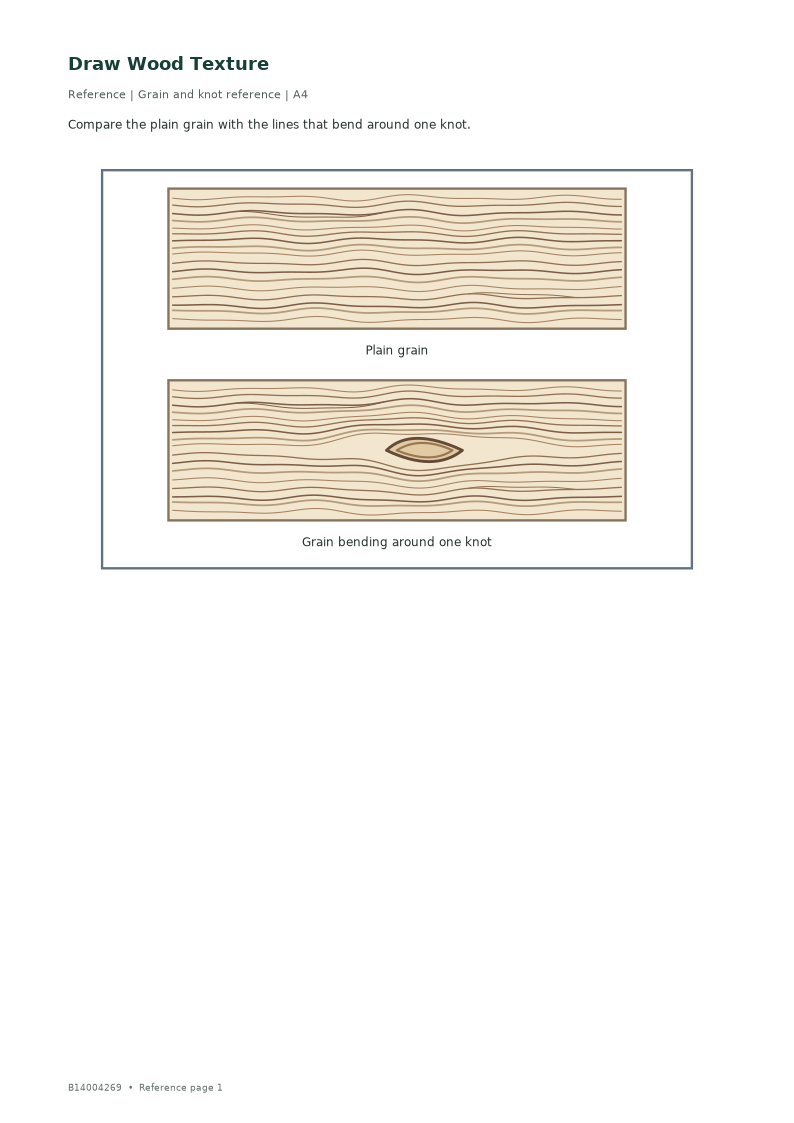
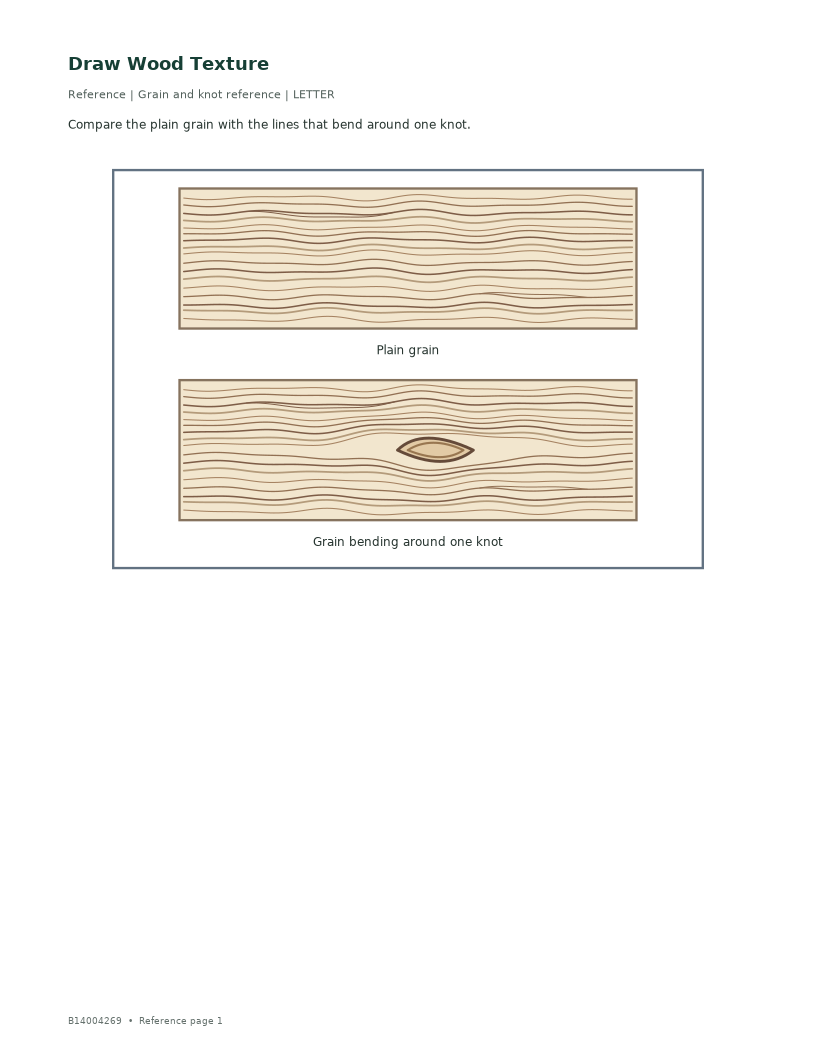
On this drawn board, long grain lines follow the board's length. Give the lines a gentle wave and vary the spaces between them. Let a few lines split or merge so the board does not read as a striped pattern.
Step 1: Lay in the grain direction
Choose the direction the board runs and draw a few long guide lines along it, keeping them loose and slightly curved. Then add shorter grain lines between them, letting spacing vary so the surface does not look mechanical.
Step 2: Place a knot
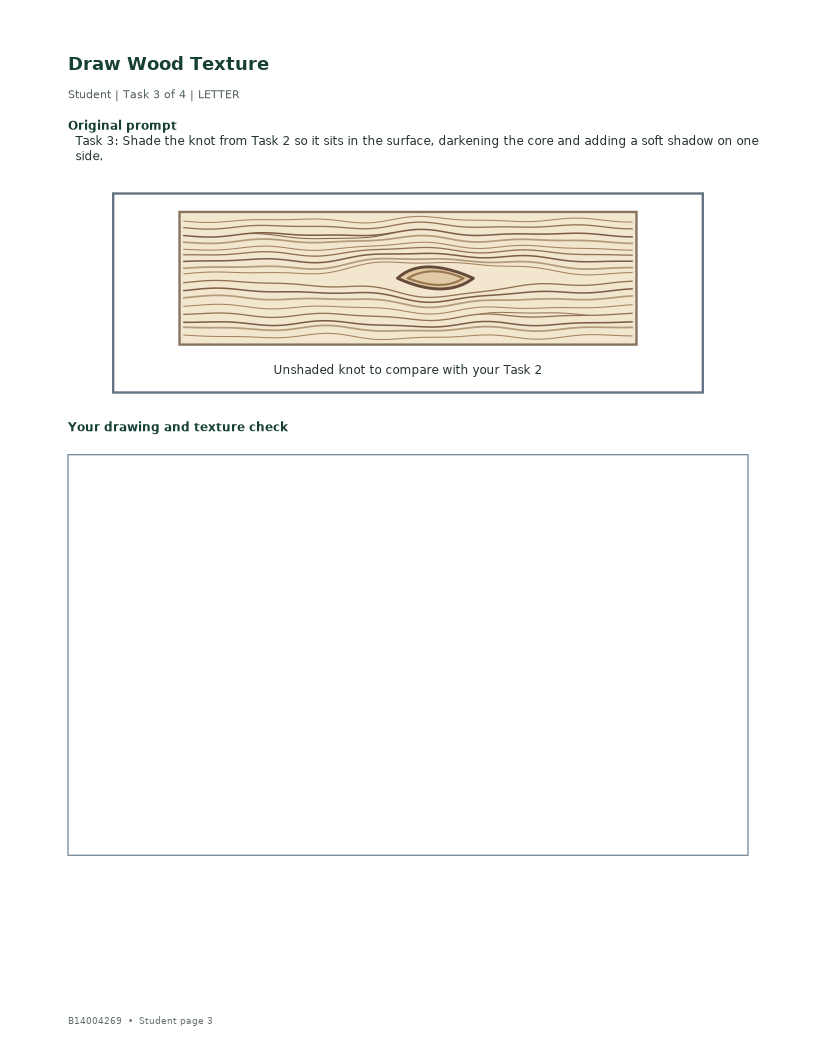
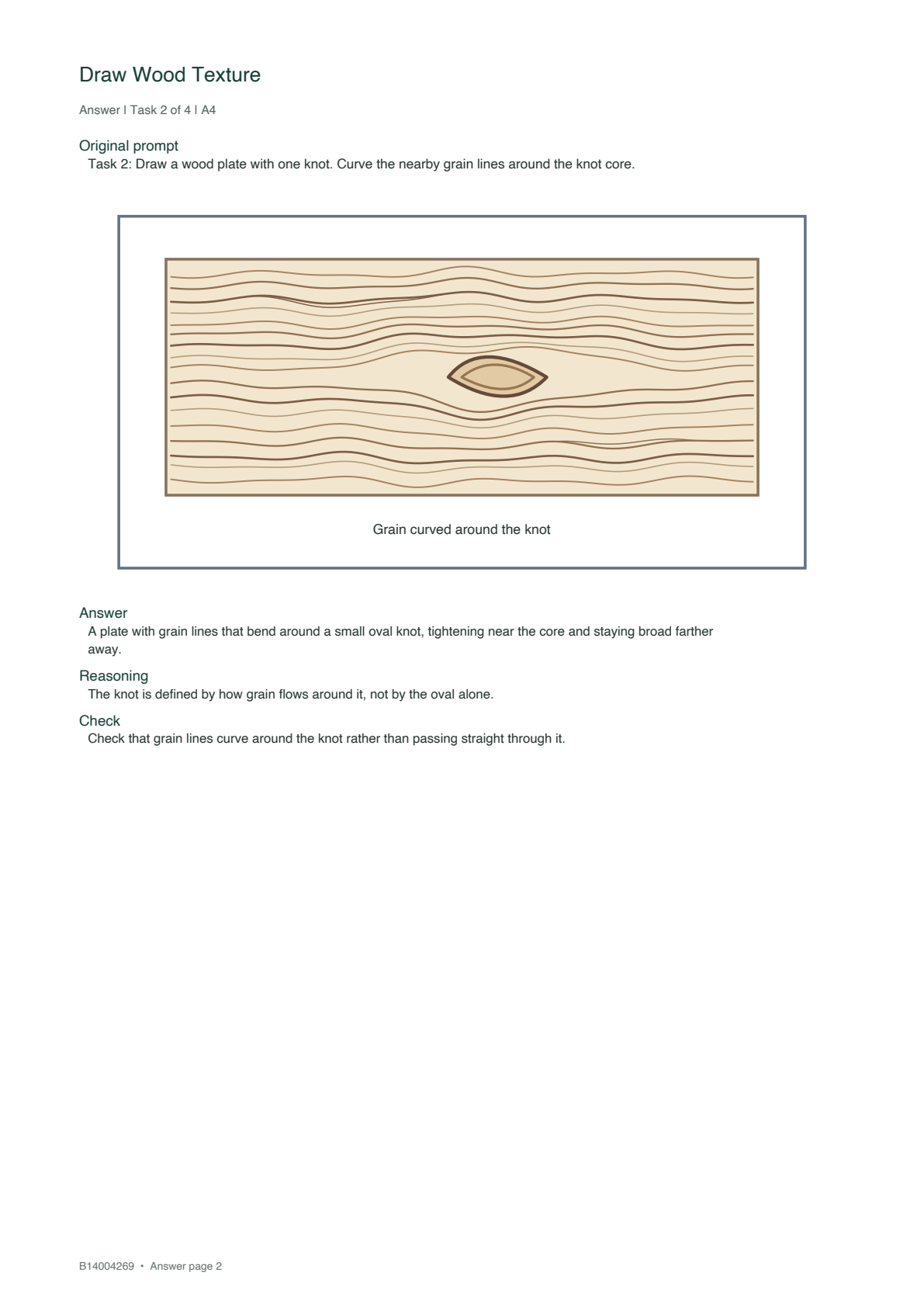
The model knot has a small oval core, with nearby grain lines bending around it. Draw the oval first, then curve nearby grain lines to either side of it. Keep the curves closest to the core tighter and let the lines farther away make broader turns.
Step 3: Shade the knot and grain
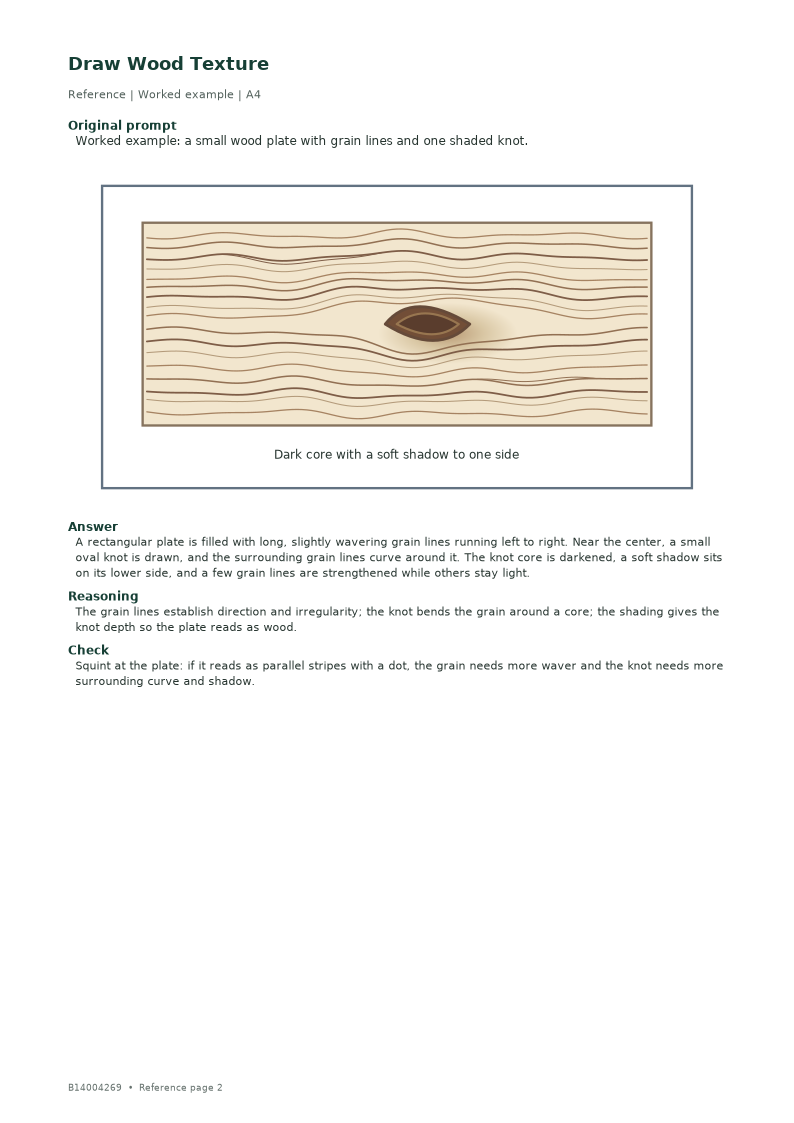
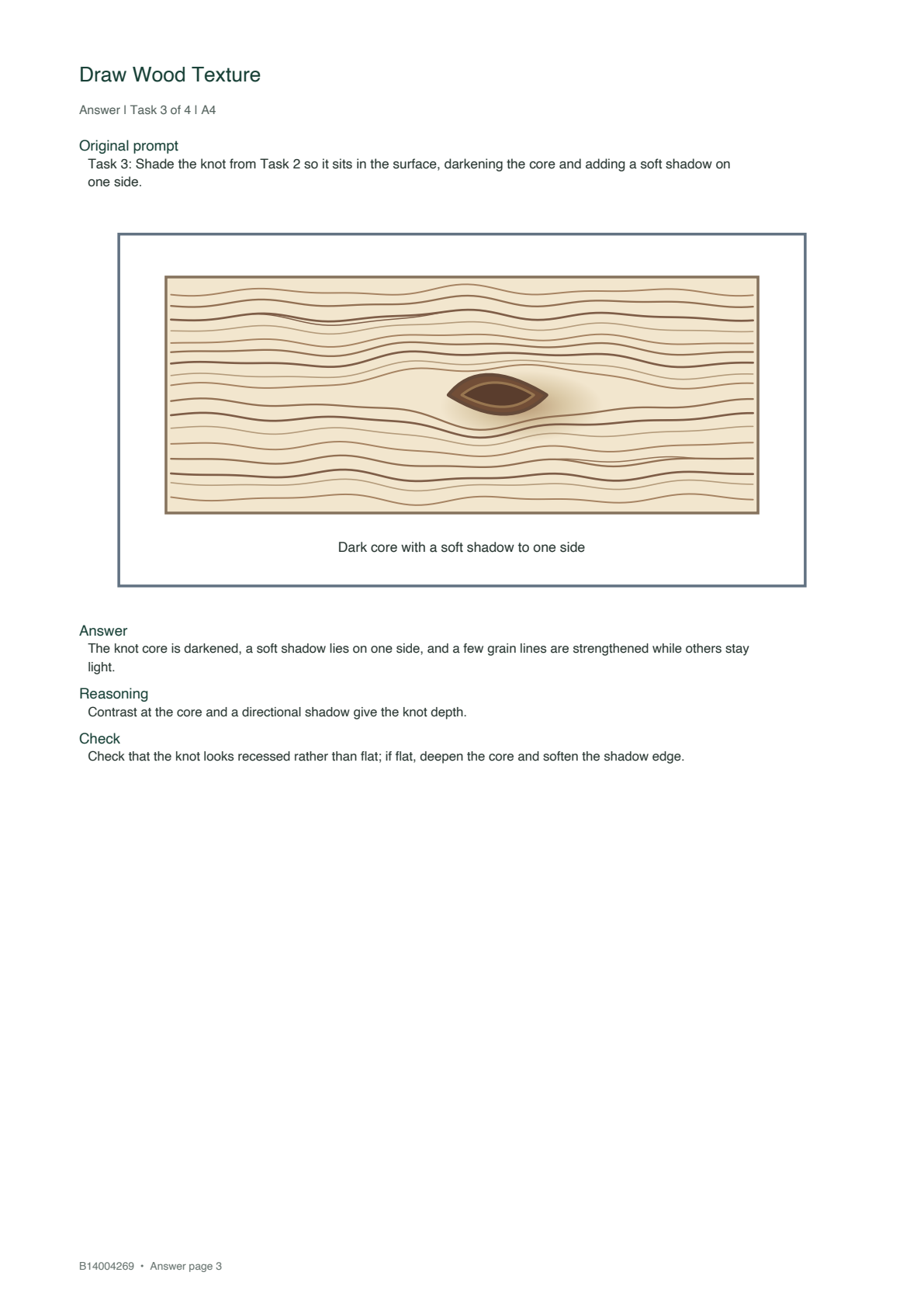
Darken the knot core, then add a soft shadow on one side of the knot so it sits in the surface. Strengthen a few grain lines and leave others light, so the plate has depth instead of uniform tone.
Download the complete resource pack
All individual SVG pages (20)
- A4 reference page 1
- A4 reference page 2
- A4 student page 1
- A4 student page 2
- A4 student page 3
- A4 student page 4
- A4 answer page 1
- A4 answer page 2
- A4 answer page 3
- A4 answer page 4
- LETTER reference page 1
- LETTER reference page 2
- LETTER student page 1
- LETTER student page 2
- LETTER student page 3
- LETTER student page 4
- LETTER answer page 1
- LETTER answer page 2
- LETTER answer page 3
- LETTER answer page 4
Print at 100% / actual size. Use the stated scale on any schematic diagram; physical cutting templates are identified separately. A4 and US Letter are separate files. Free access, no signup; CC BY 4.0.
How to use these pages
- What makes a surface read as wood
- Step 1: Lay in the grain direction
- Step 2: Place a knot
- Step 3: Shade the knot and grain
Worked example
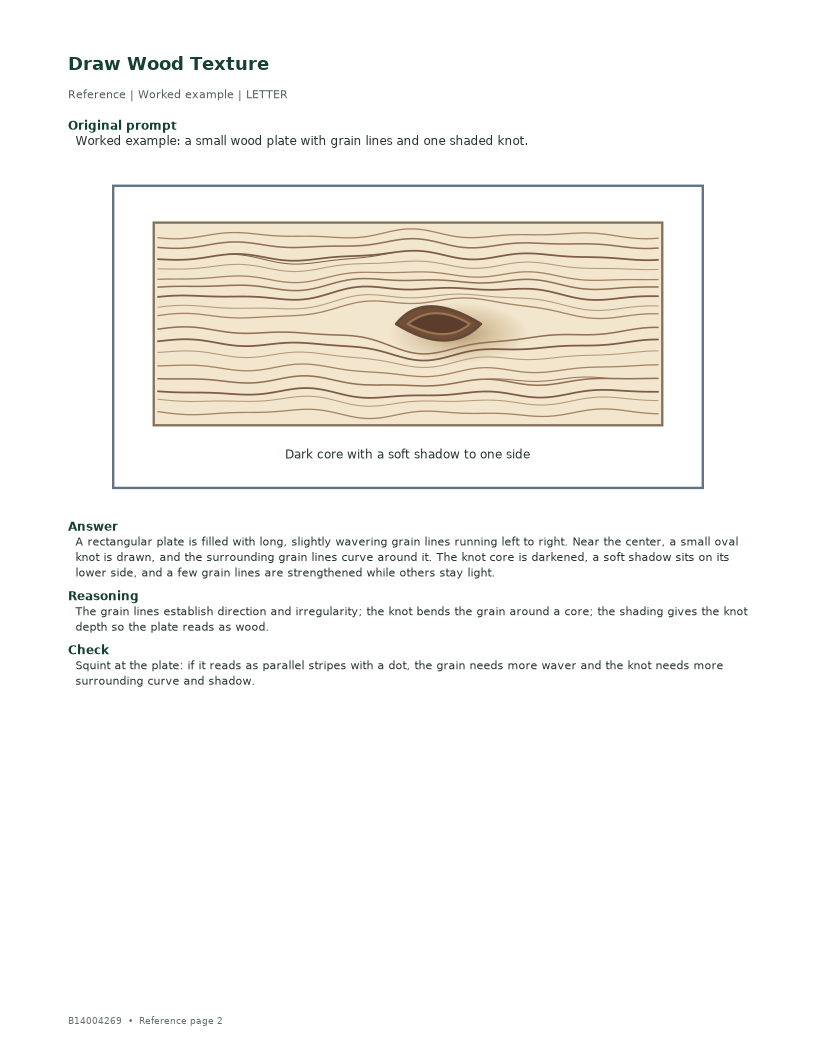
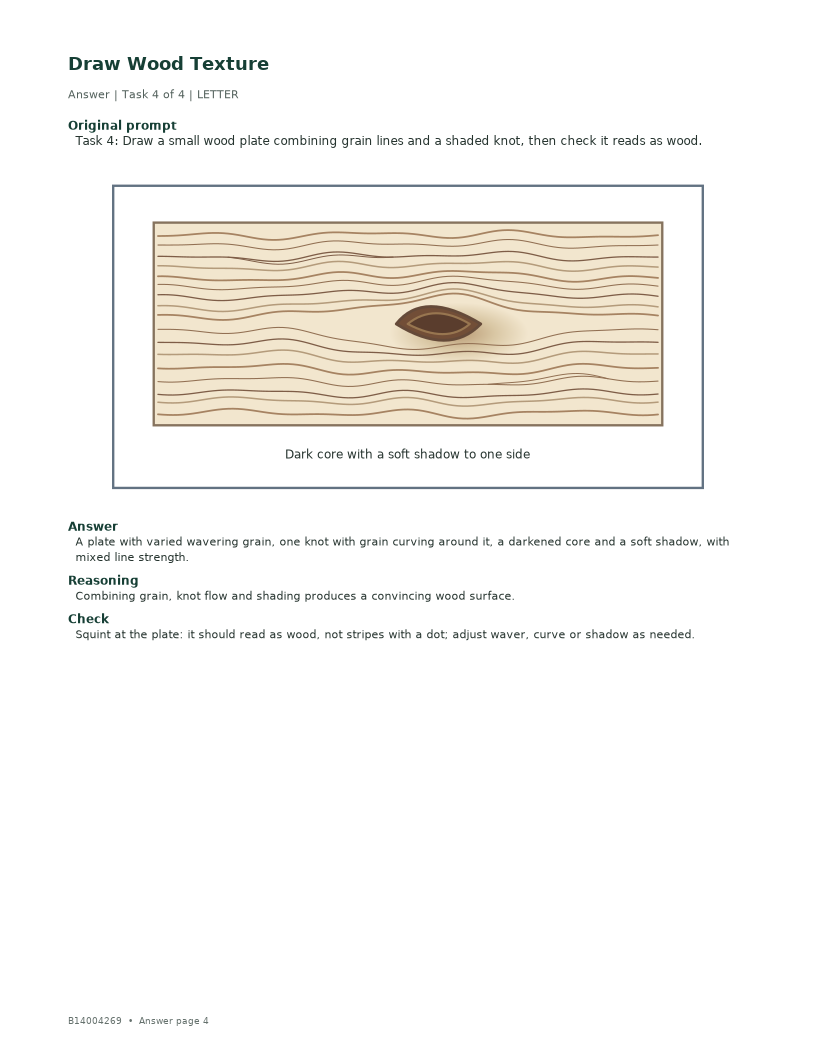
Example: Worked example: a small wood plate with grain lines and one shaded knot.
Answer: A rectangular plate is filled with long, slightly wavering grain lines running left to right. Near the center, a small oval knot is drawn, and the surrounding grain lines curve around it. The knot core is darkened, a soft shadow sits on its lower side, and a few grain lines are strengthened while others stay light.
Reasoning: The grain lines establish direction and irregularity; the knot bends the grain around a core; the shading gives the knot depth so the plate reads as wood.
Check: Squint at the plate: if it reads as parallel stripes with a dot, the grain needs more waver and the knot needs more surrounding curve and shadow.
Four practice tasks and complete answers
Task 1
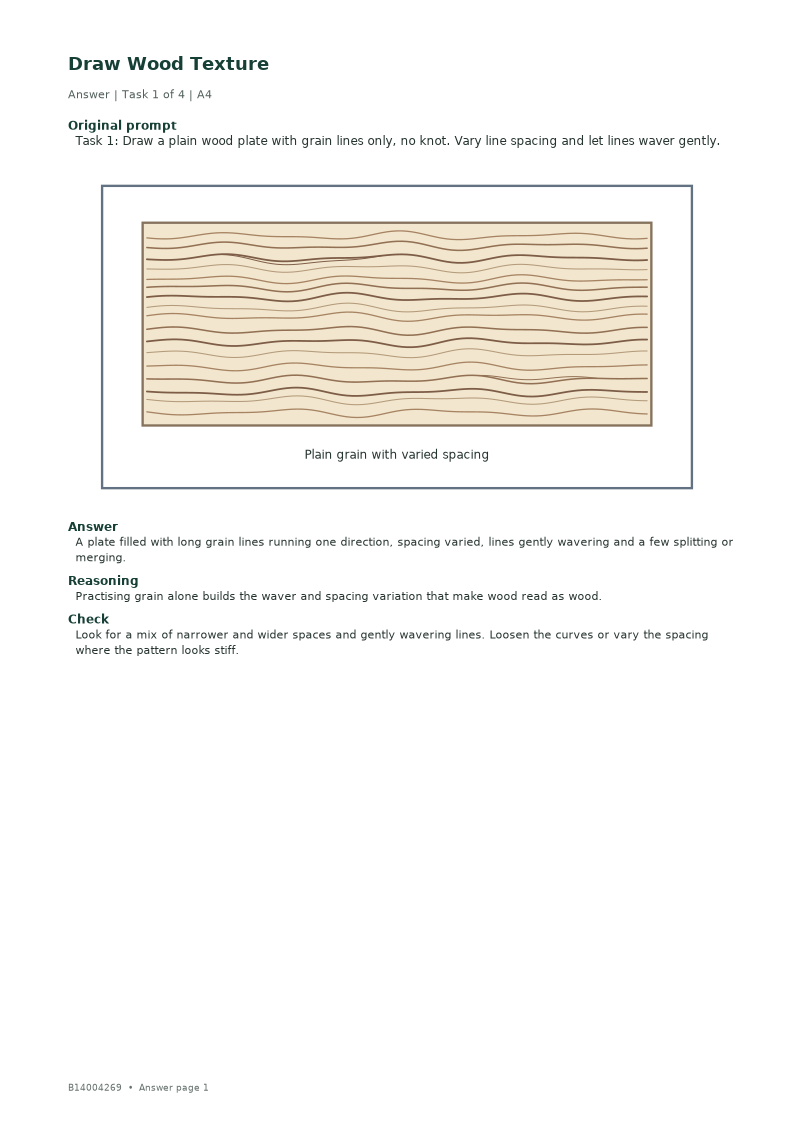
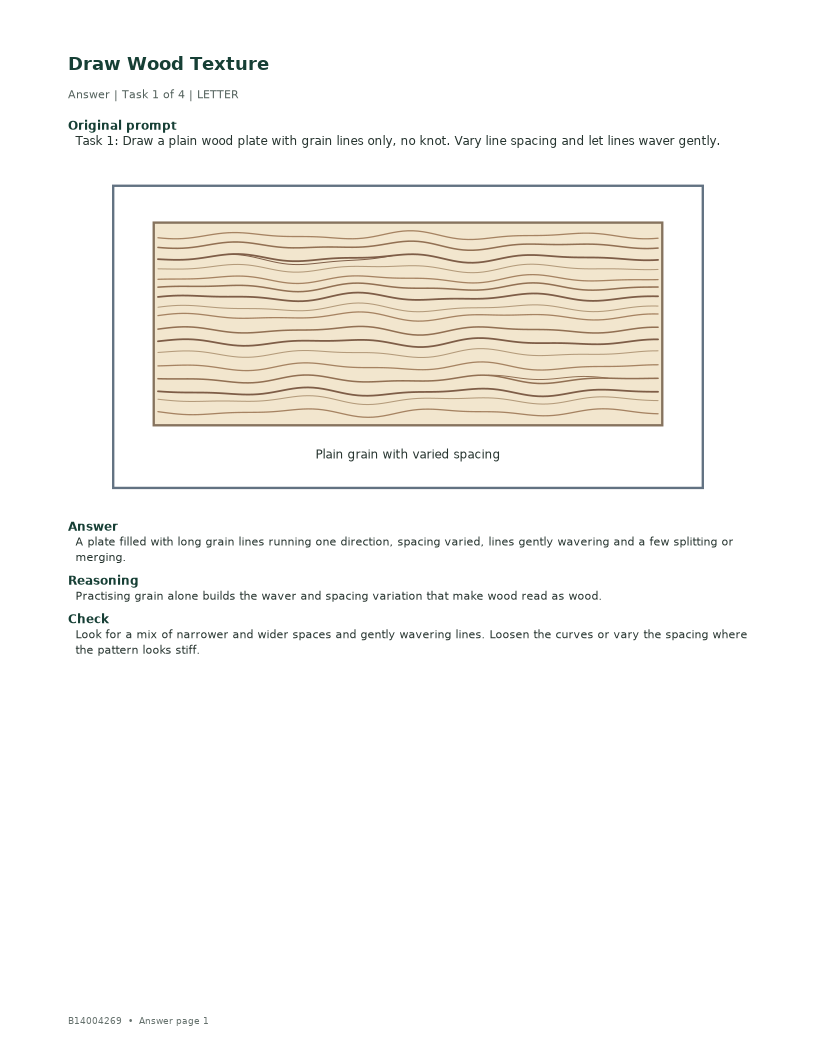
Task 1: Draw a plain wood plate with grain lines only, no knot. Vary line spacing and let lines waver gently.
Show answer 1
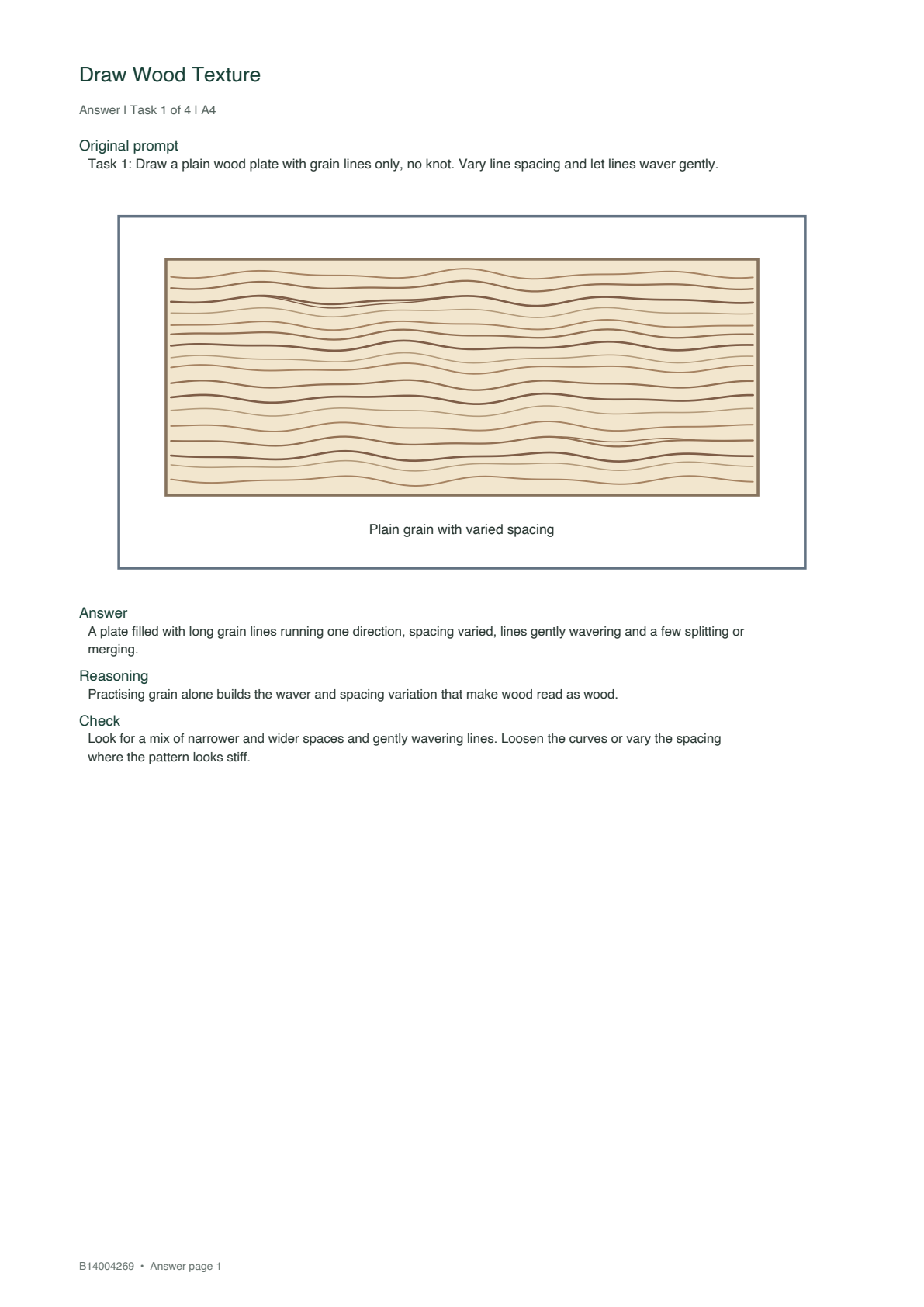
A plate filled with long grain lines running one direction, spacing varied, lines gently wavering and a few splitting or merging.
Practising grain alone builds the waver and spacing variation that make wood read as wood.
Check: Look for a mix of narrower and wider spaces and gently wavering lines. Loosen the curves or vary the spacing where the pattern looks stiff.
Task 2
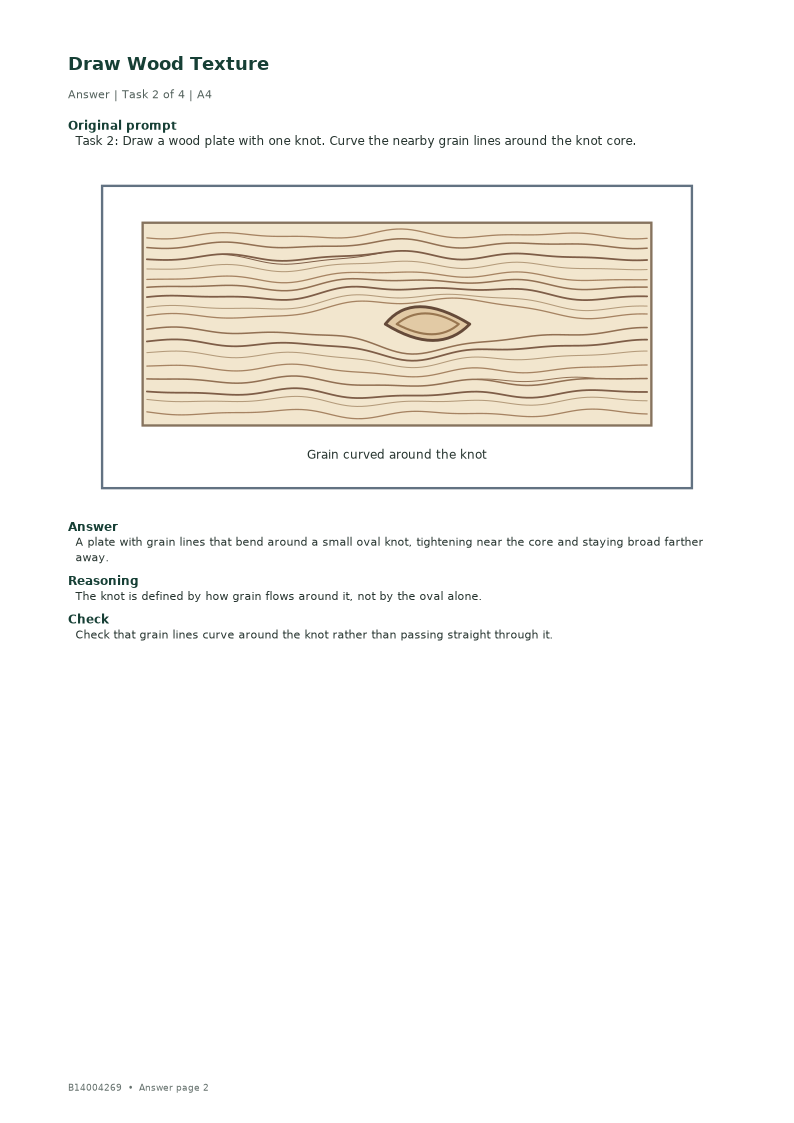
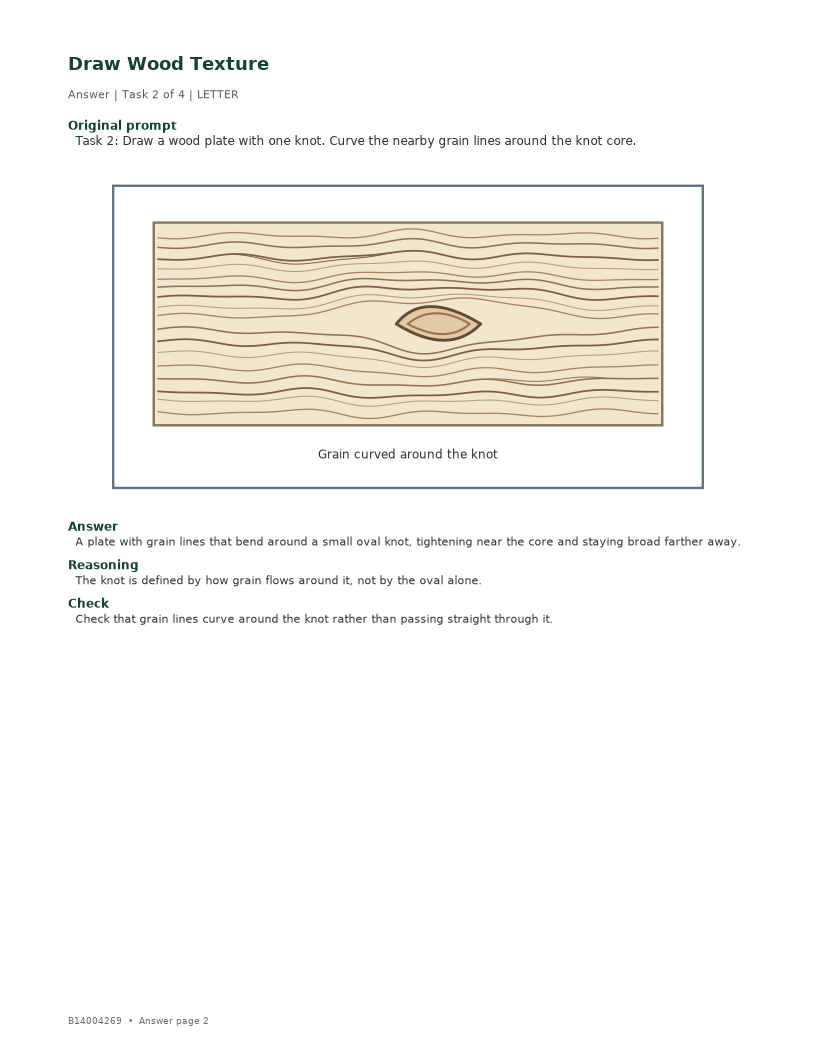
Task 2: Draw a wood plate with one knot. Curve the nearby grain lines around the knot core.
Show answer 2
A plate with grain lines that bend around a small oval knot, tightening near the core and staying broad farther away.
The knot is defined by how grain flows around it, not by the oval alone.
Check: Check that grain lines curve around the knot rather than passing straight through it.
Task 3
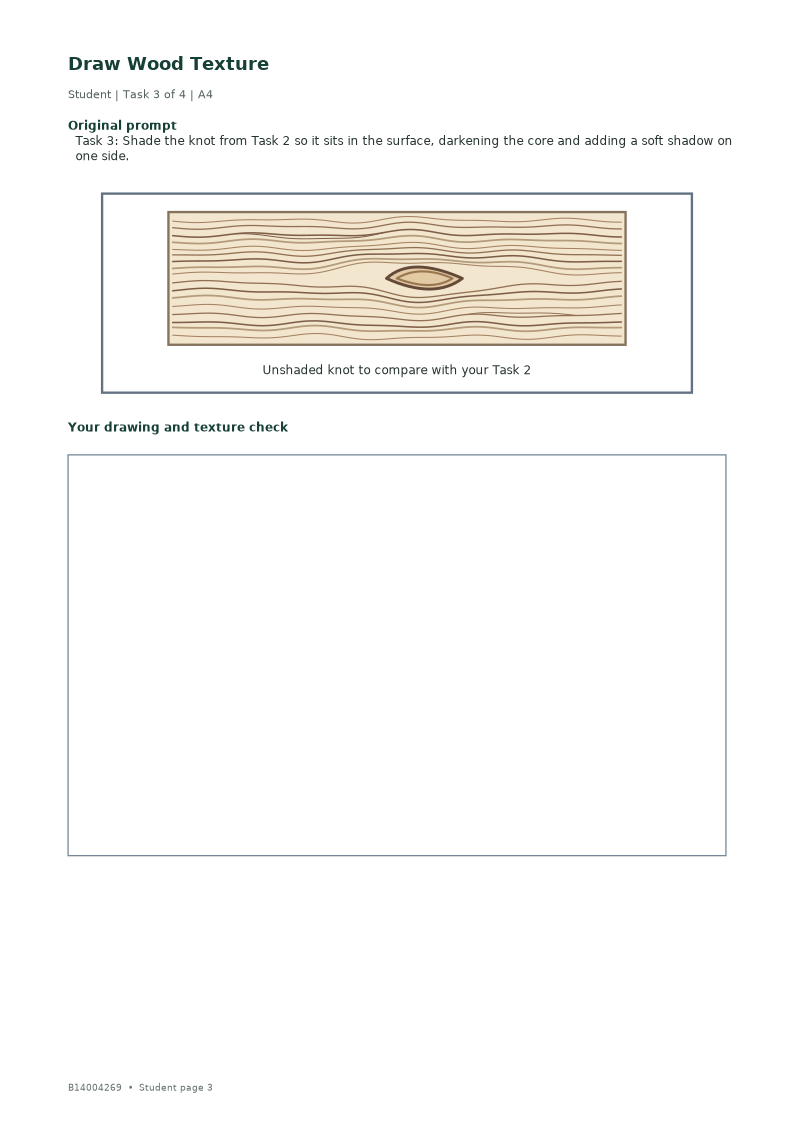
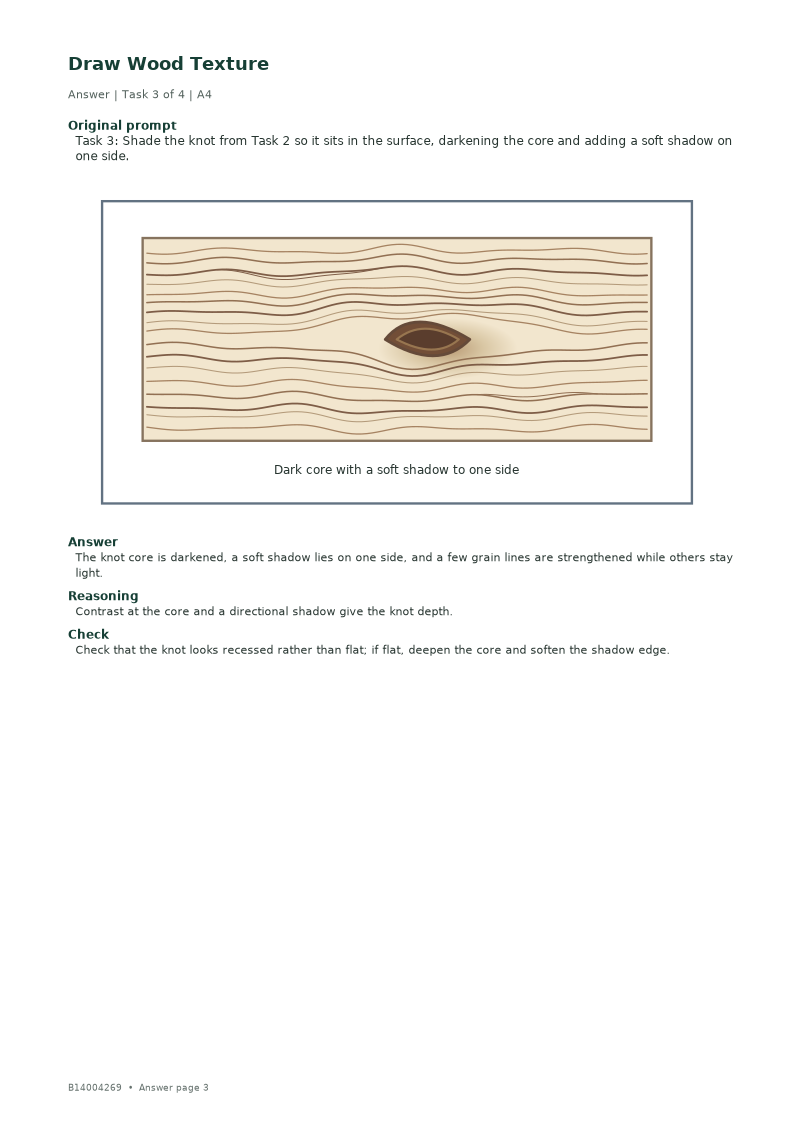
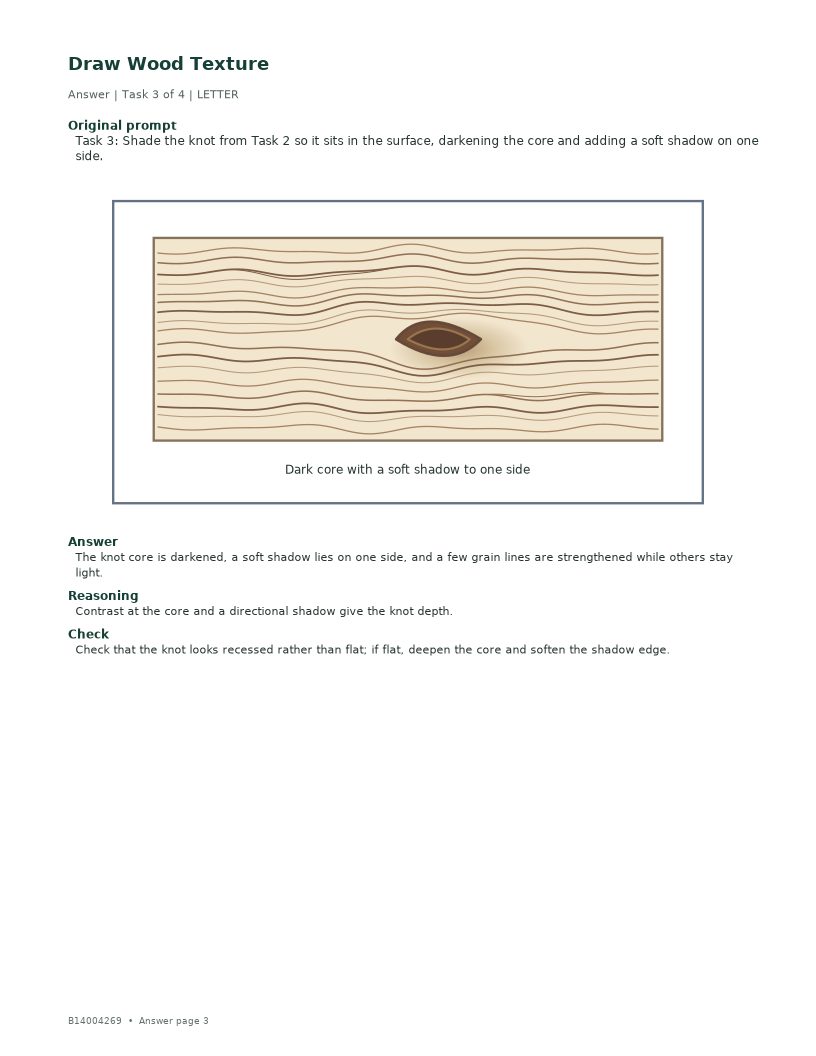
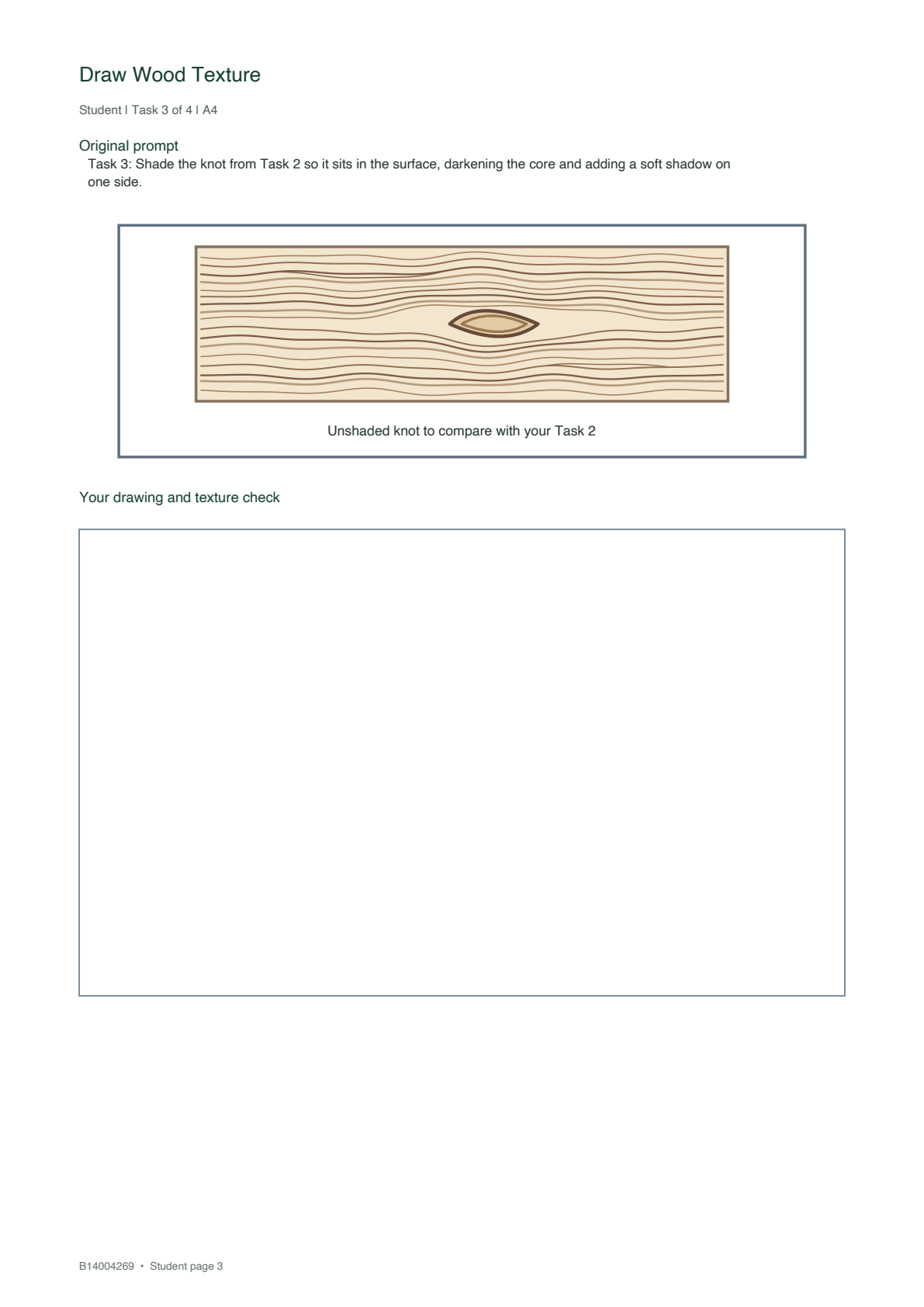
Task 3: Shade the knot from Task 2 so it sits in the surface, darkening the core and adding a soft shadow on one side.
Show answer 3
The knot core is darkened, a soft shadow lies on one side, and a few grain lines are strengthened while others stay light.
Contrast at the core and a directional shadow give the knot depth.
Check: Check that the knot looks recessed rather than flat; if flat, deepen the core and soften the shadow edge.
Task 4
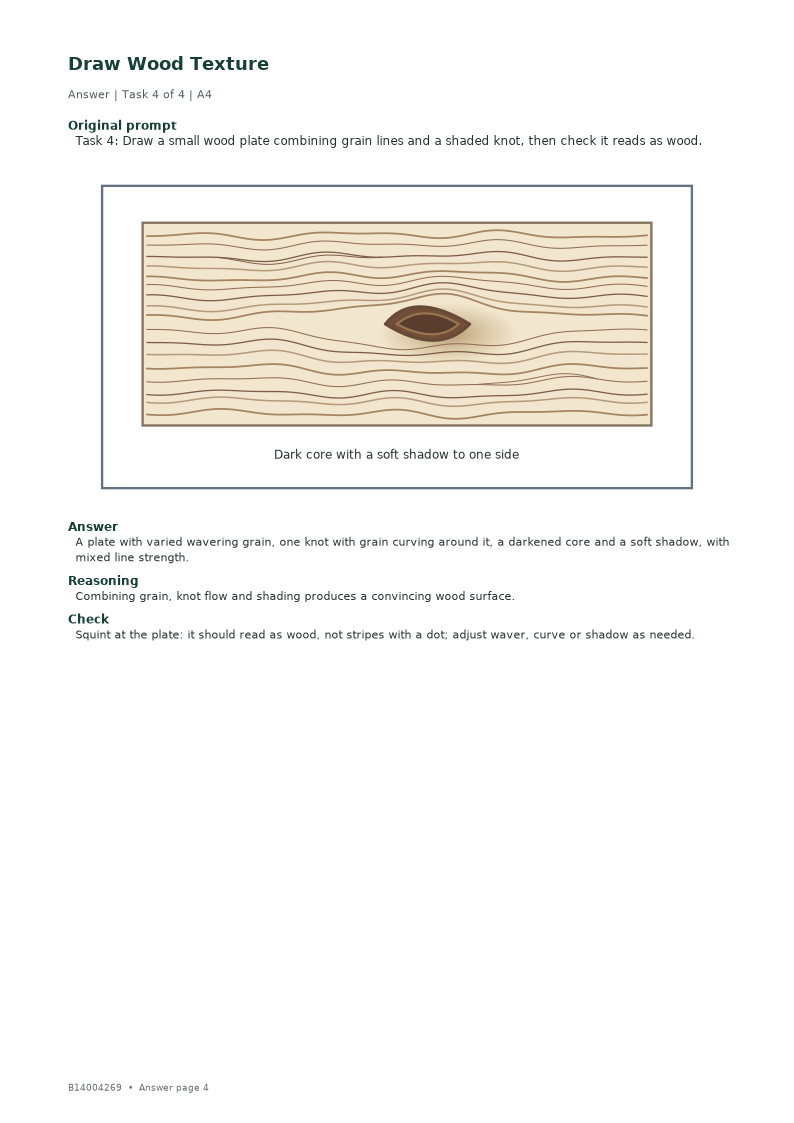
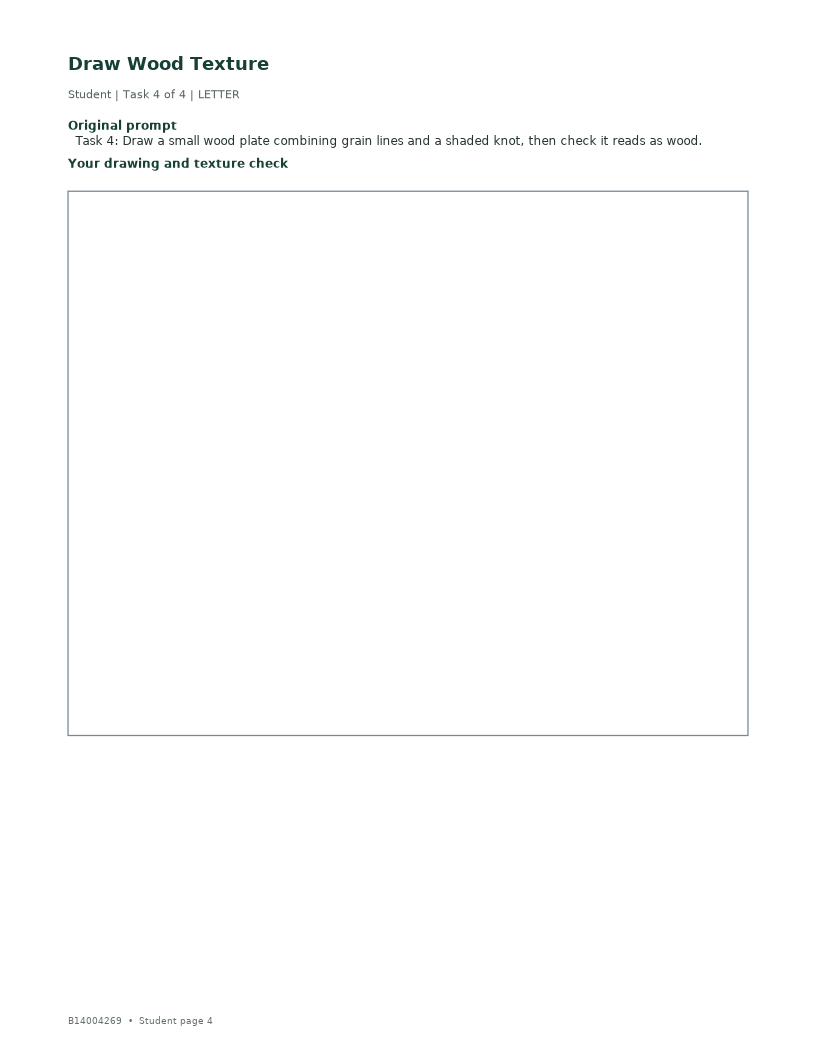
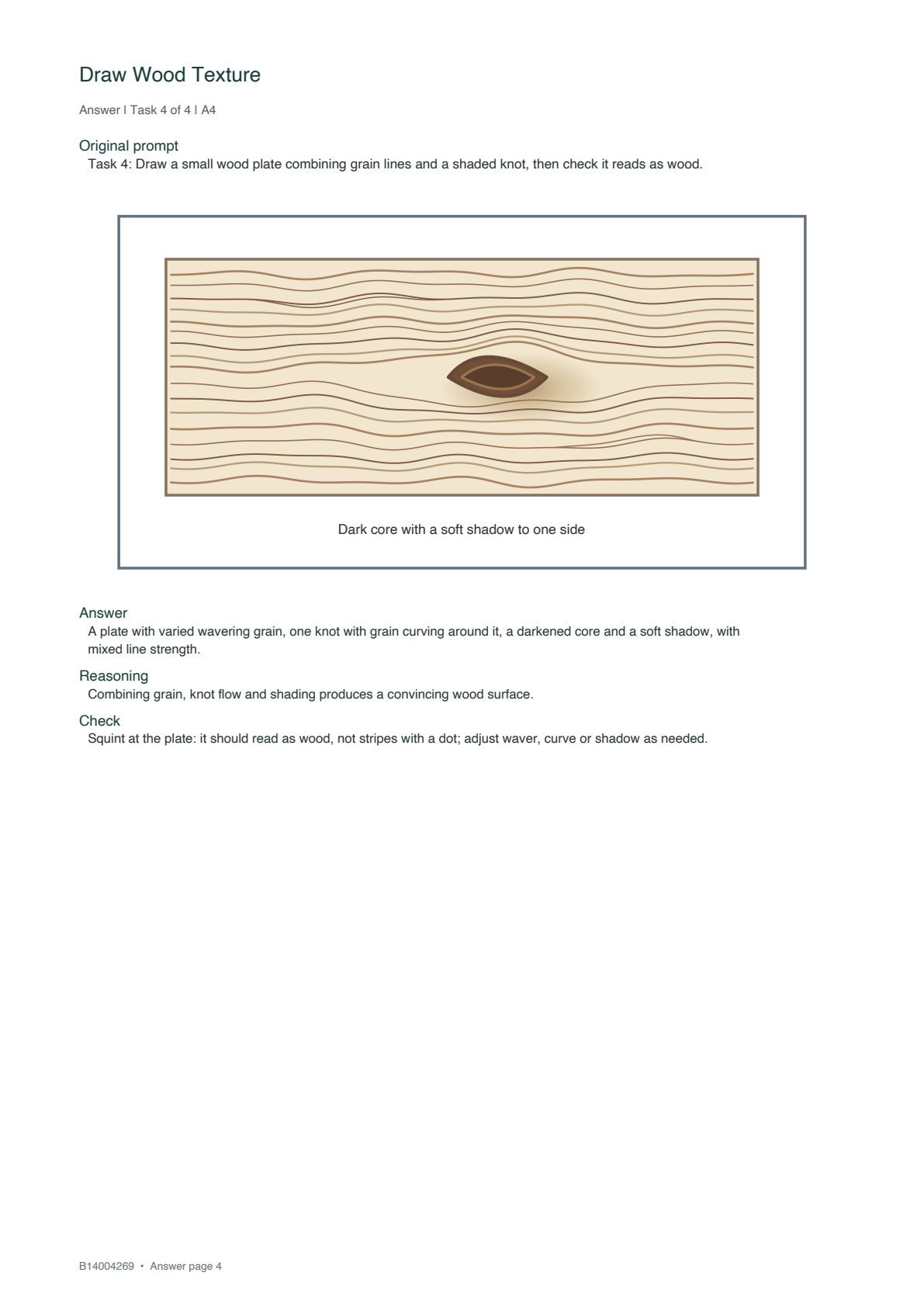
Task 4: Draw a small wood plate combining grain lines and a shaded knot, then check it reads as wood.
Show answer 4
A plate with varied wavering grain, one knot with grain curving around it, a darkened core and a soft shadow, with mixed line strength.
Combining grain, knot flow and shading produces a convincing wood surface.
Check: Squint at the plate: it should read as wood, not stripes with a dot; adjust waver, curve or shadow as needed.
Useful checks
- Drawing grain lines perfectly straight and evenly spaced. Loosen the lines, vary spacing, and let a few split or merge.
- Drawing a knot as a dot with grain passing straight through. Curve the nearby grain lines around the knot core.
- Shading the knot evenly with no shadow. Darken the core and add a soft shadow on one side.
Questions about this resource
Do I need exact measurements?
No. This is a qualitative drawing task; spacing and curve are chosen by eye, not measured.
How many knots should a plate have?
One is enough to learn the construction; more can be added once the flow and shading read correctly.