Reference diagrams
LETTER · Download PDF
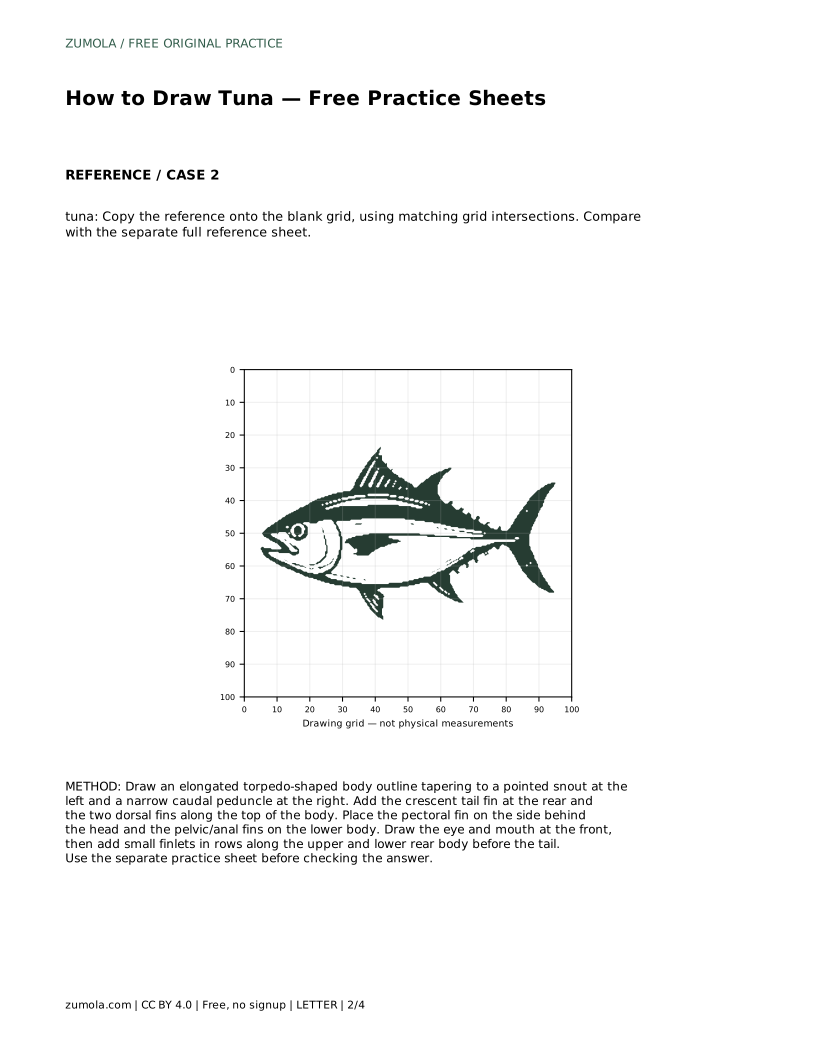
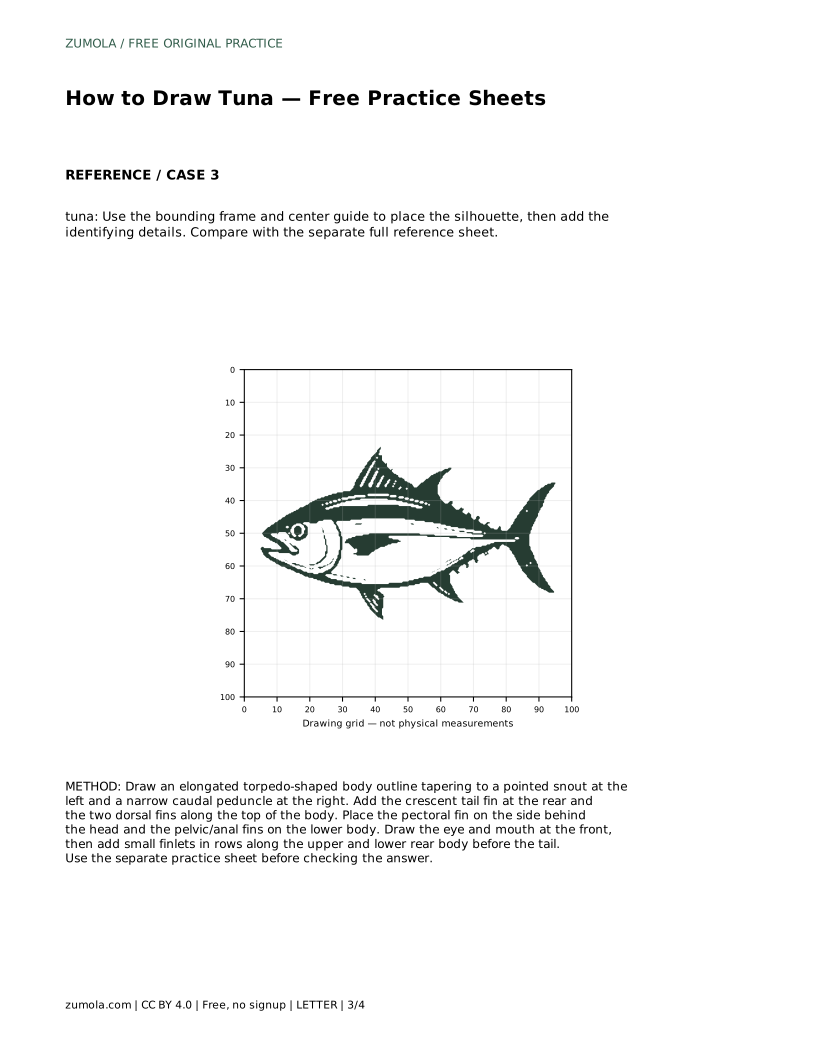
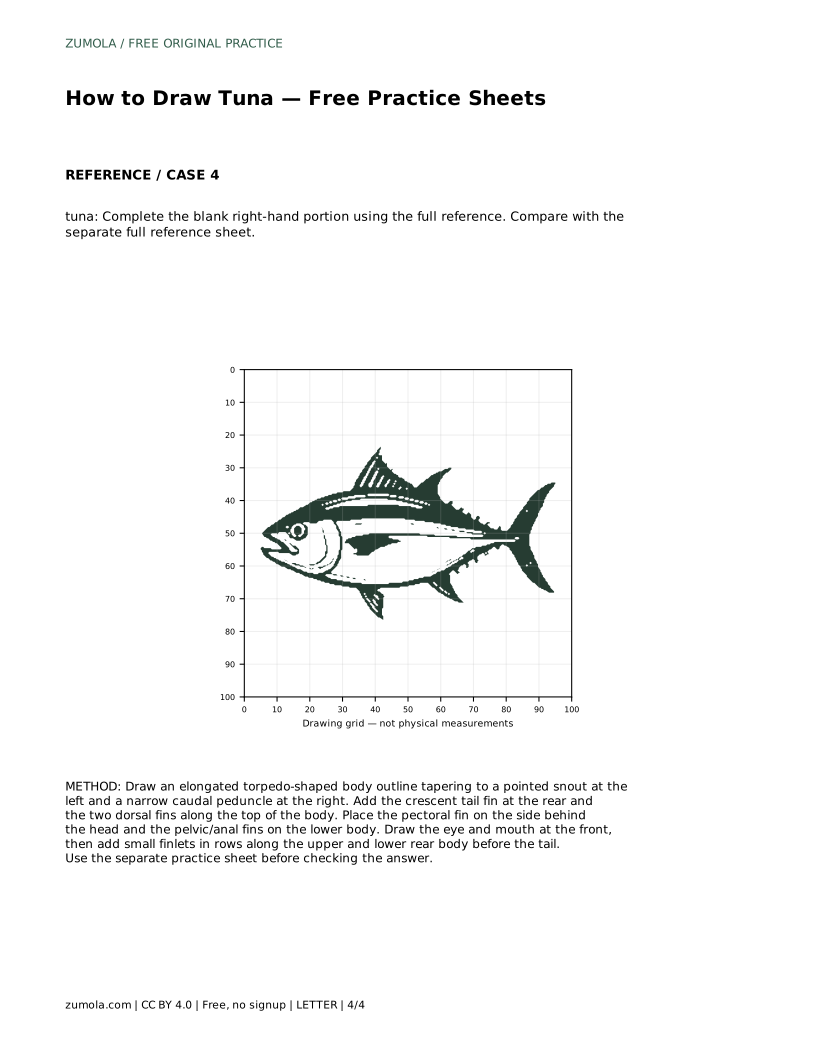
A4 · Download PDF
Free original resources
Learn to draw a tuna by building its torpedo body, crescent tail, fins, and finlets. Trace, grid, or complete a partial drawing, then check with a rubric.
Four original cases, with reference diagrams, practice sheets and worked answers. Everything is free; no signup required.
LETTER · Download PDF
A4 · Download PDF
LETTER · Download PDF
A4 · Download PDF
LETTER · Download PDF
A4 · Download PDF
Use A4 or US Letter to match your printer. Use the stated values and conditions to solve each exercise; diagrams are not physical measuring rulers.
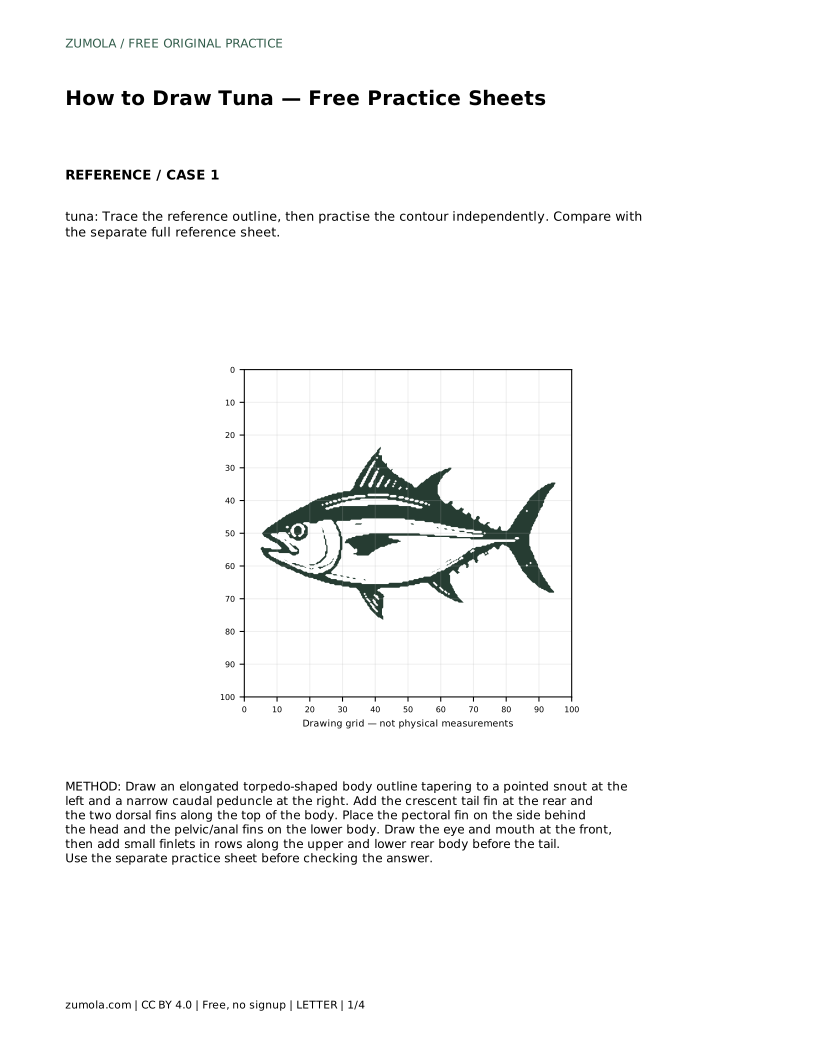
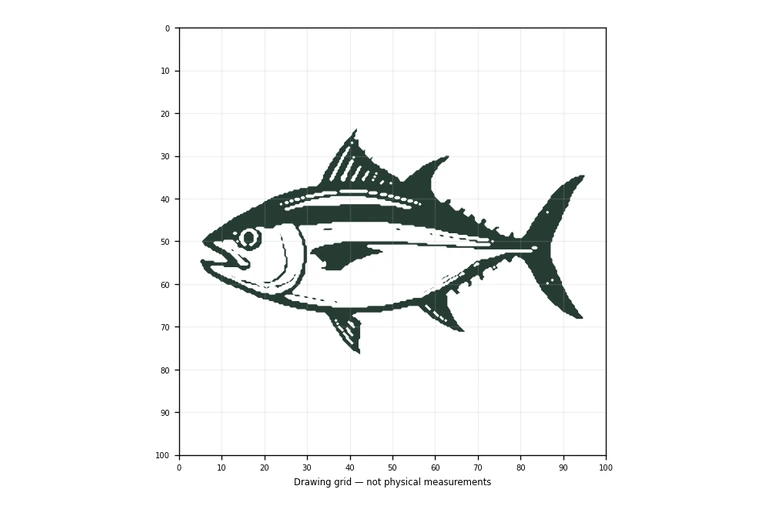
Drawing a tuna is mostly a problem of proportion and placement. The body is long and tapered, the tail is crescent-shaped, and small finlets line the rear body. This page explains how to construct those features in order, then how to practise them with tracing, grid, and partial-outline sheets. Because drawings can be correct in more than one way, you will assess visible features and proportions rather than demand a pixel-perfect match.
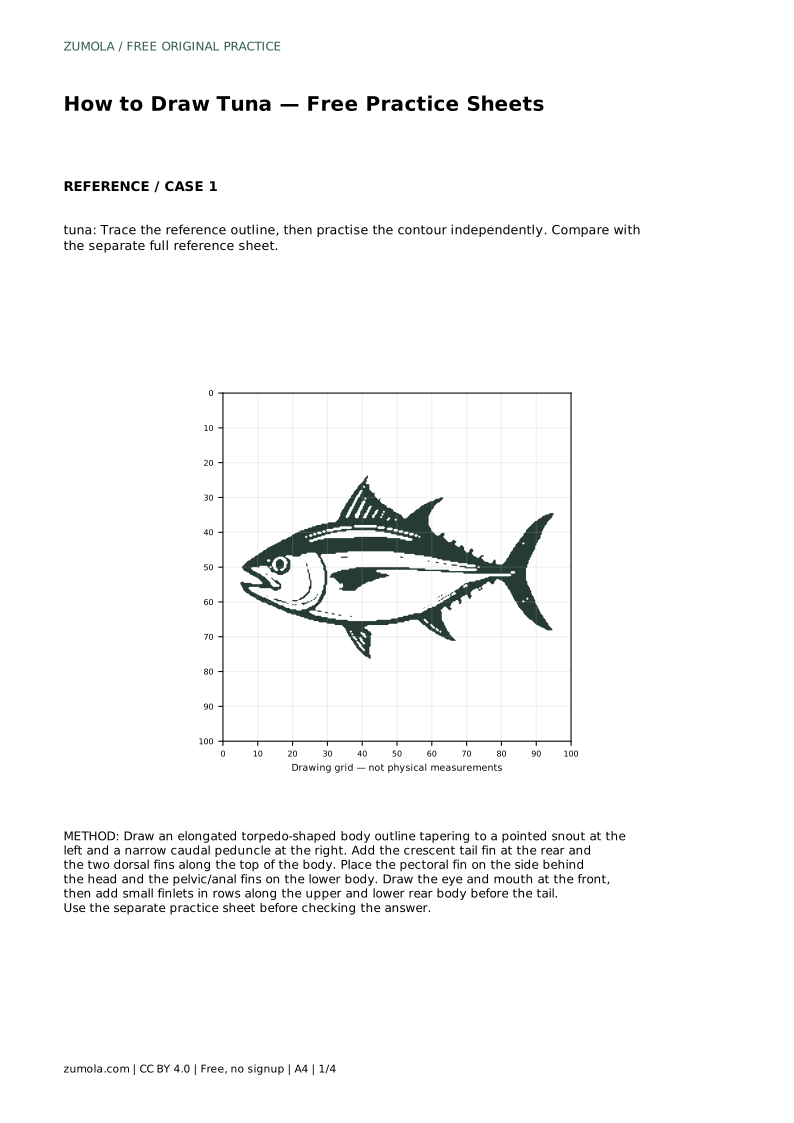
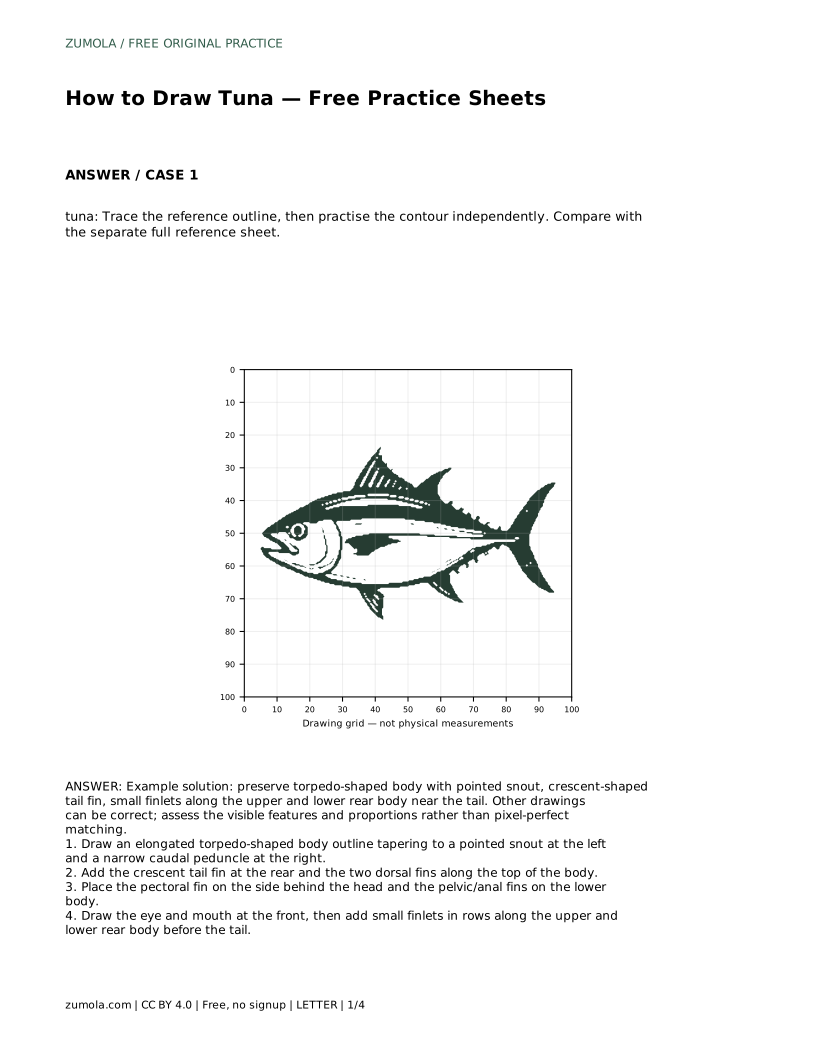
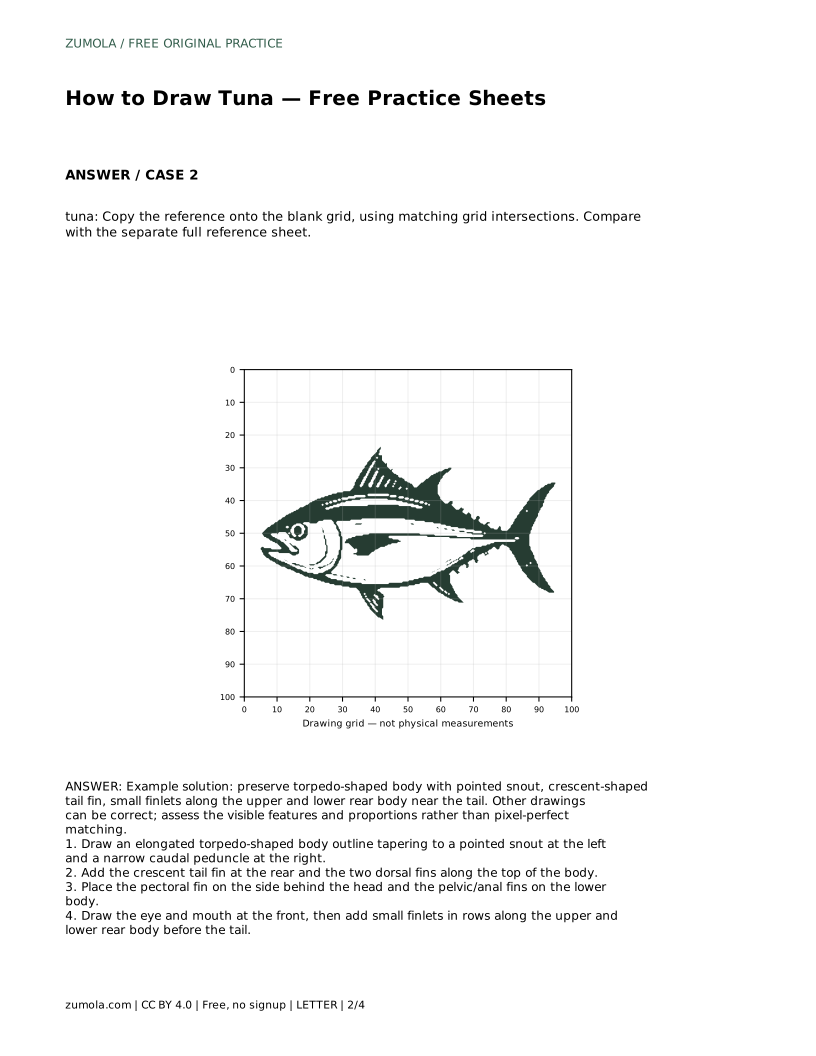
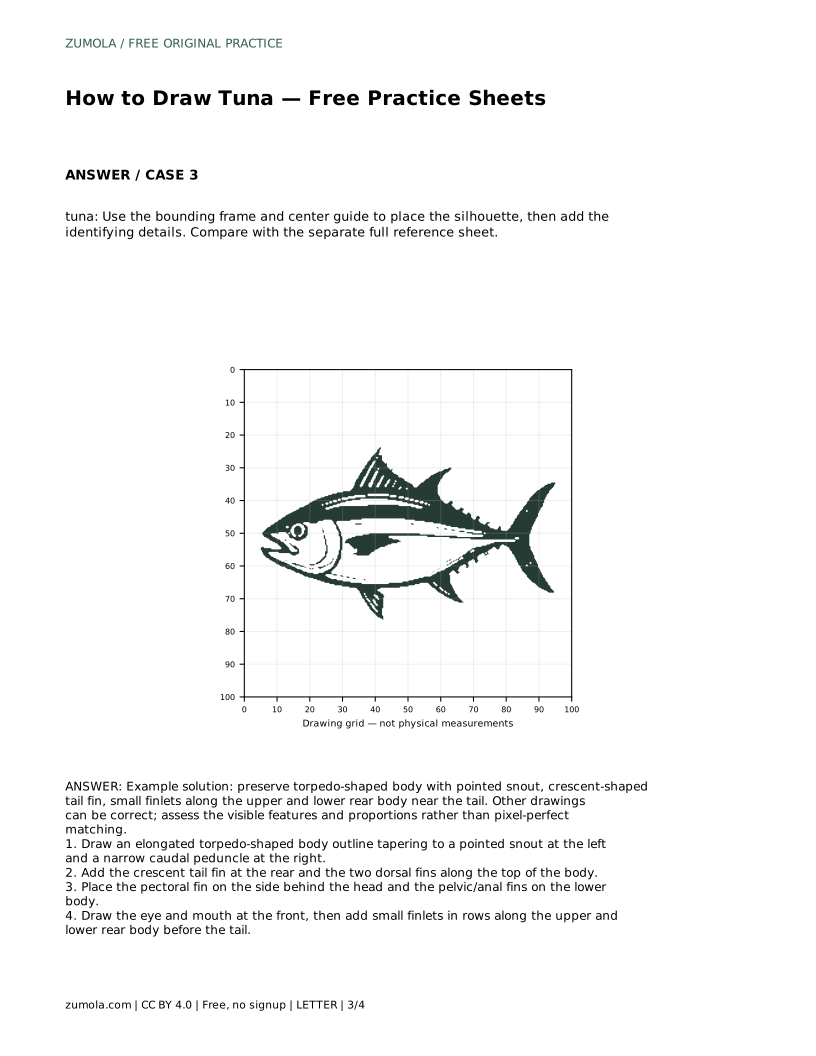
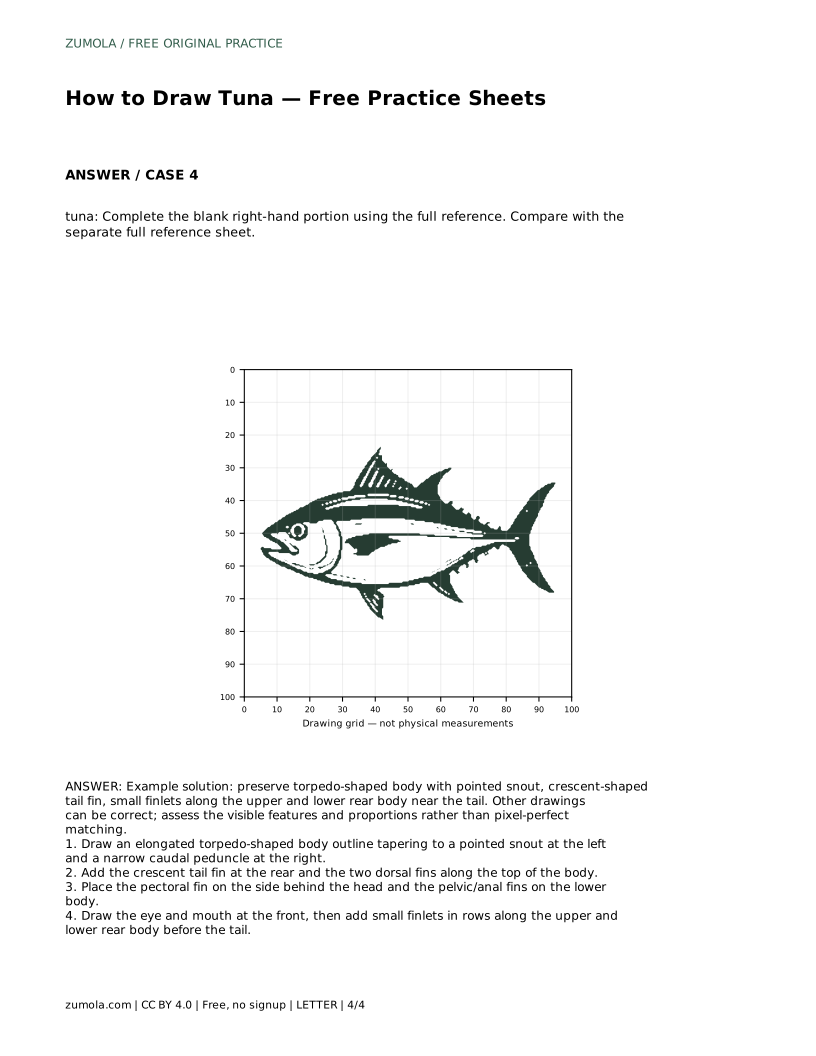
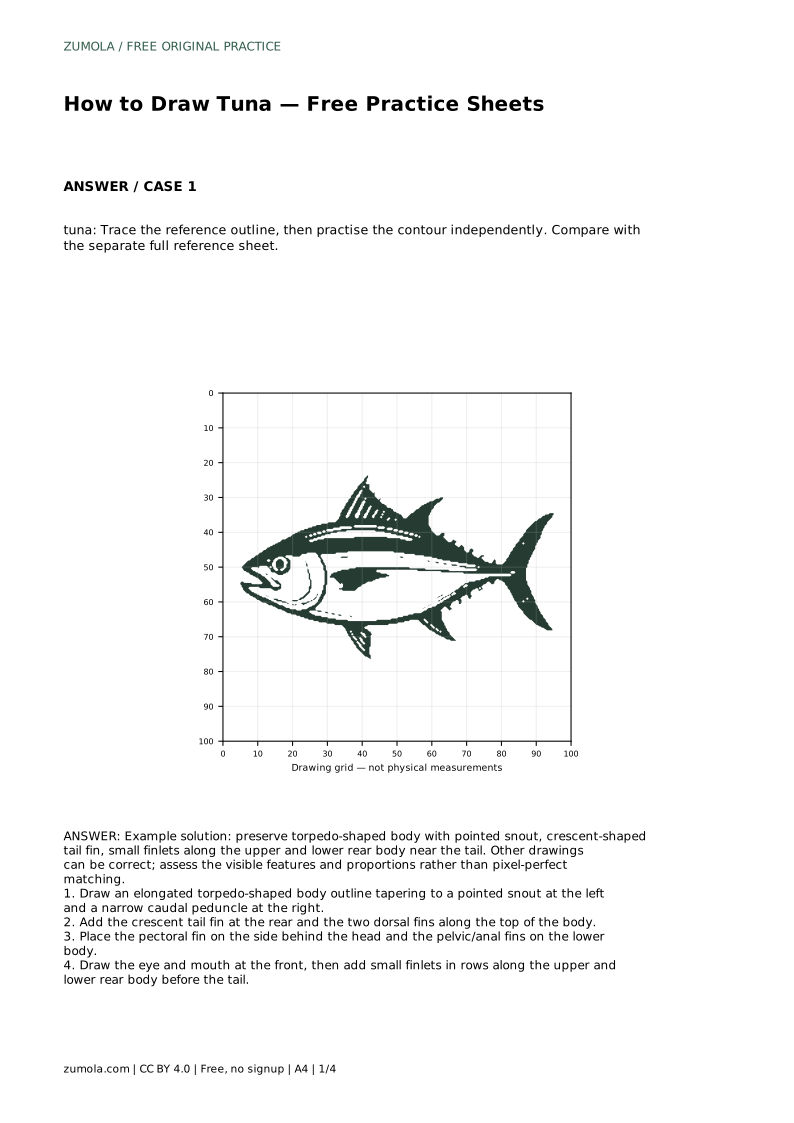
Start with the overall silhouette. A tuna has an elongated, torpedo-shaped body that tapers to a pointed snout at the front and narrows at the rear into a slim caudal peduncle, the section just before the tail fin. Draw that body outline first, keeping the snout at one end and the peduncle at the other. Check that the body is longer than it is tall and that the taper is gradual rather than sudden.
Only after the body reads correctly should you add the tail and fins. The tail fin is crescent-shaped, with two curved lobes and a notch in the middle. The two dorsal fins sit along the top of the body, and the pectoral fin sits on the side just behind the head. The pelvic and anal fins belong on the lower body. Place each fin where it attaches to the body, not floating beside it.
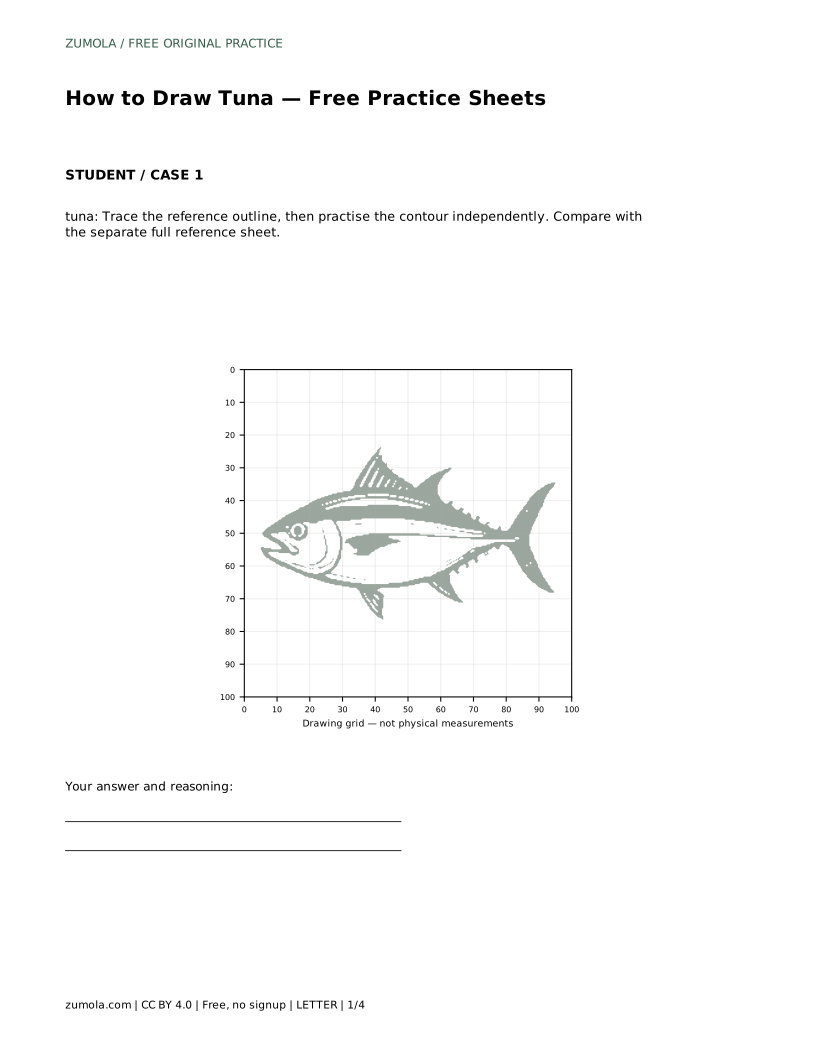
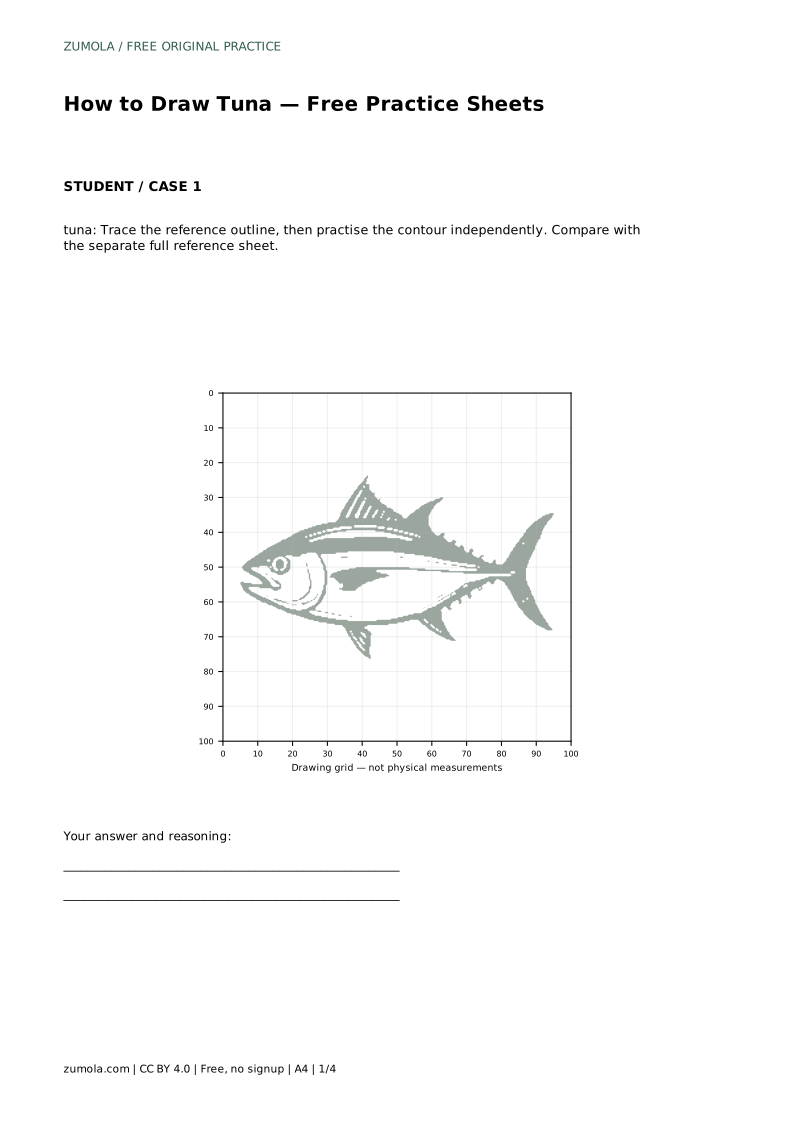
Tracing helps you feel the contour of the body and the curve of the tail. Trace the reference outline once, then put the tracing aside and draw the same contour independently on blank paper. Compare your free drawing with the separate full reference sheet, not with your tracing, so you can see where the shape drifted.
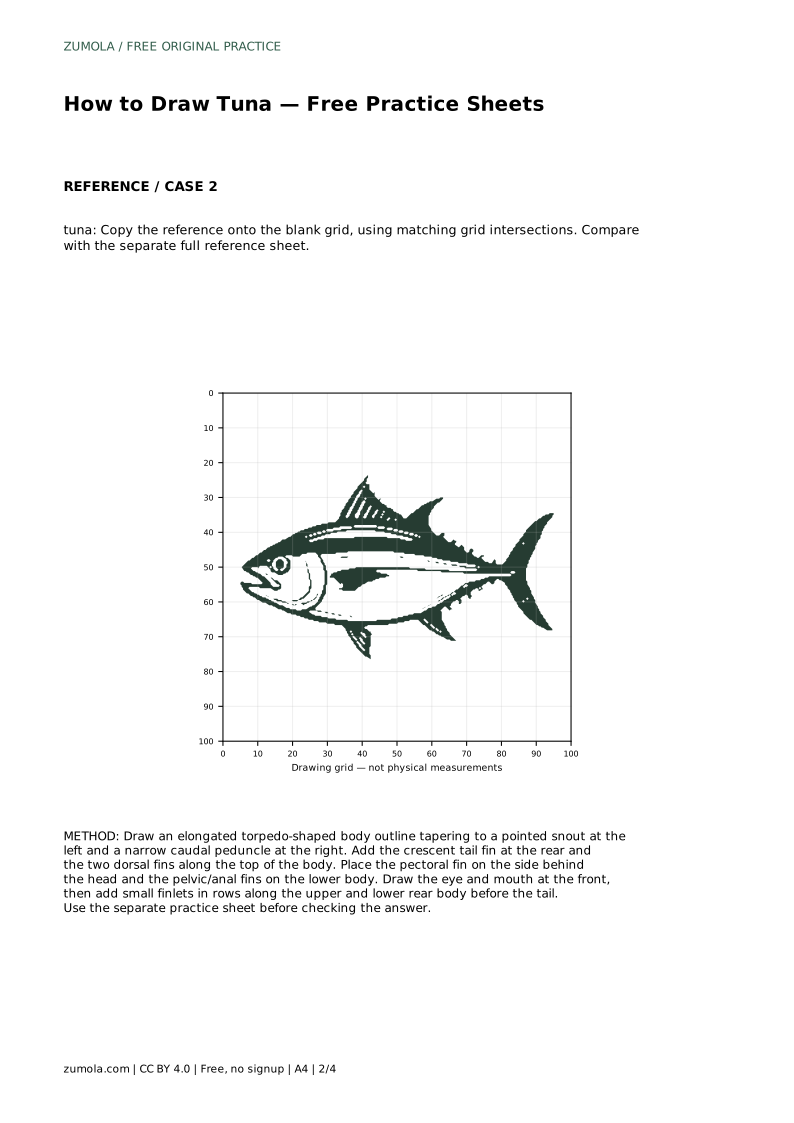
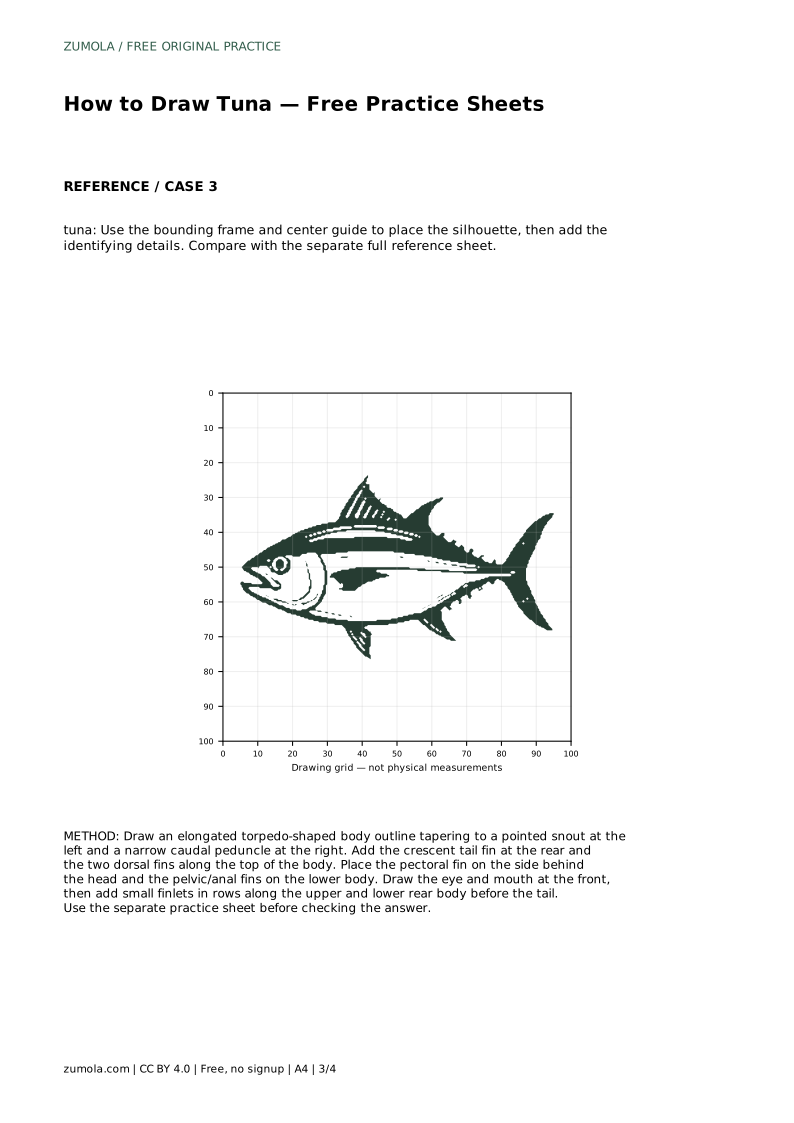
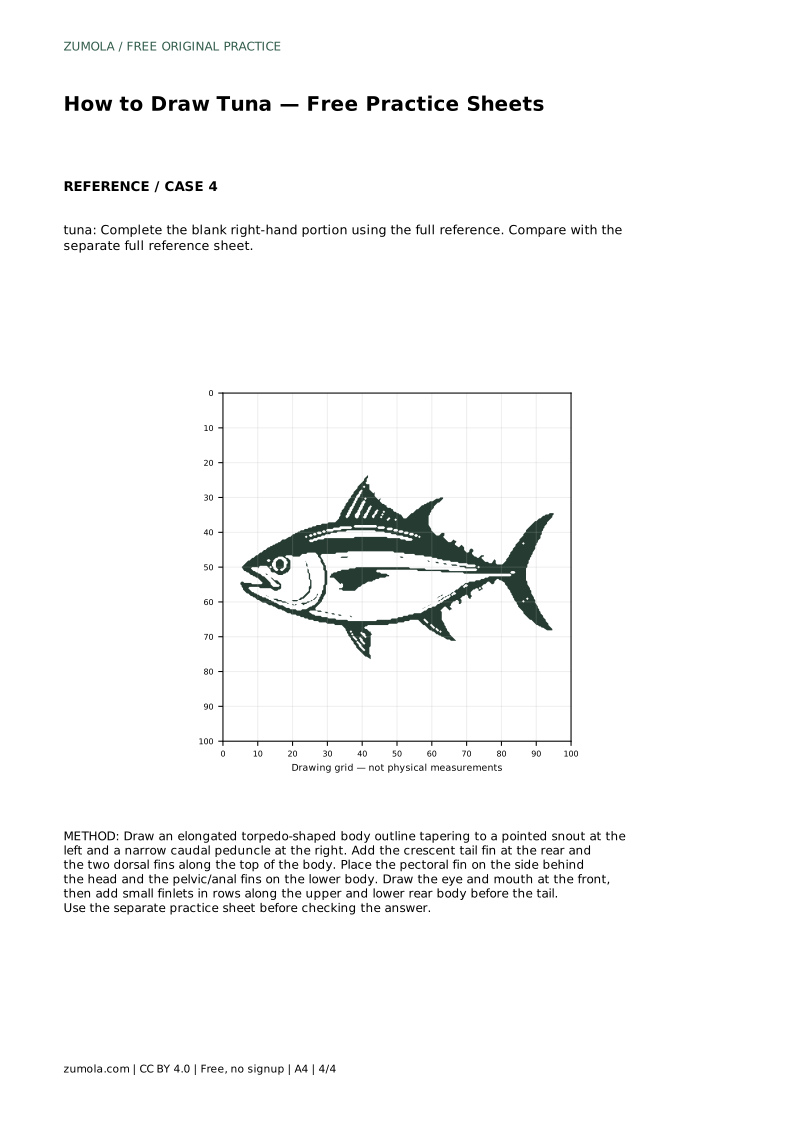
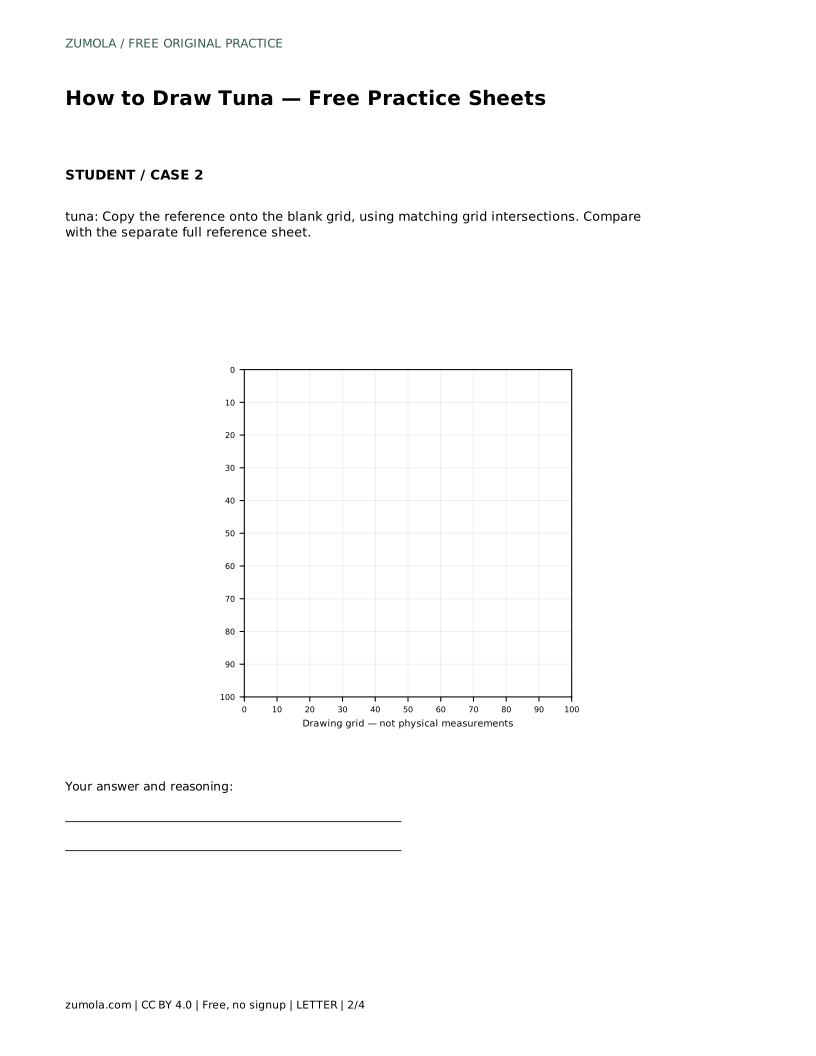
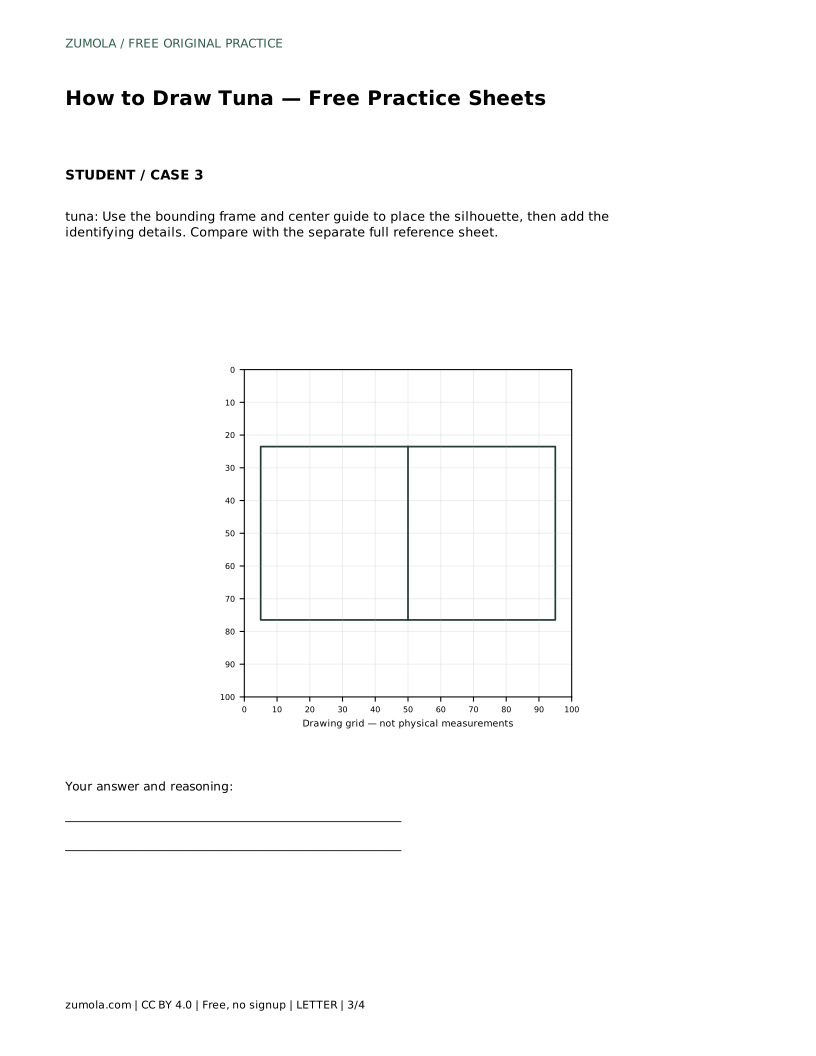
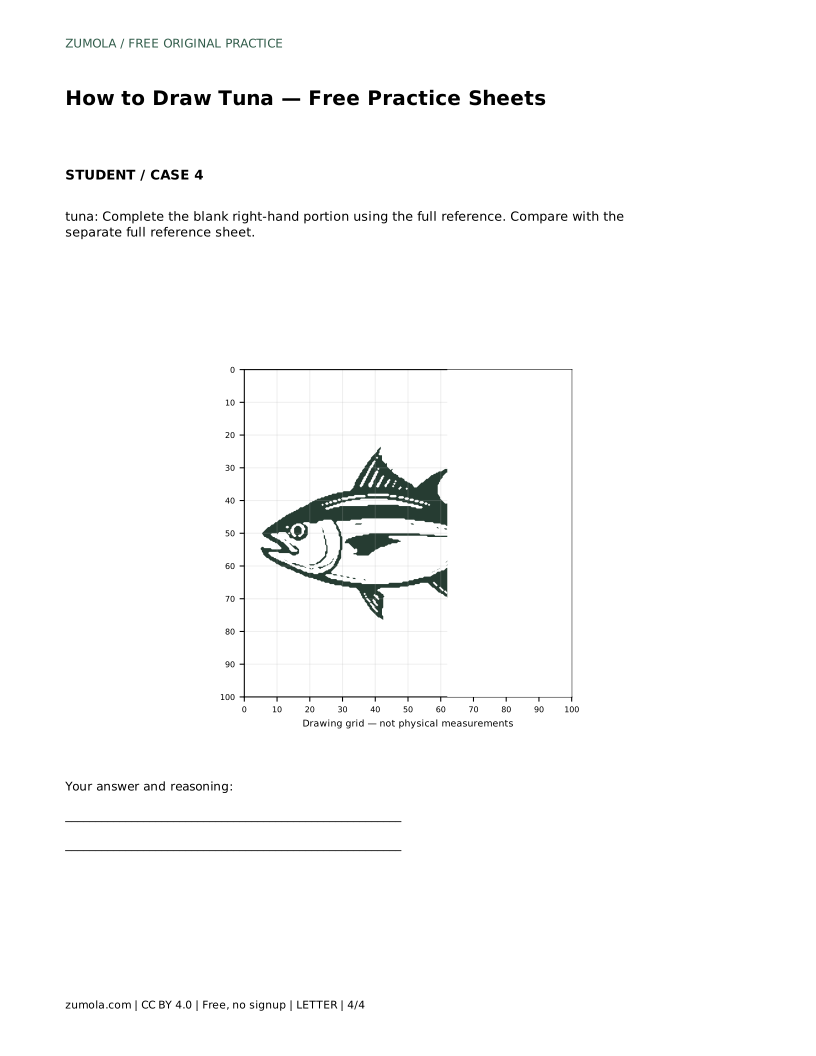
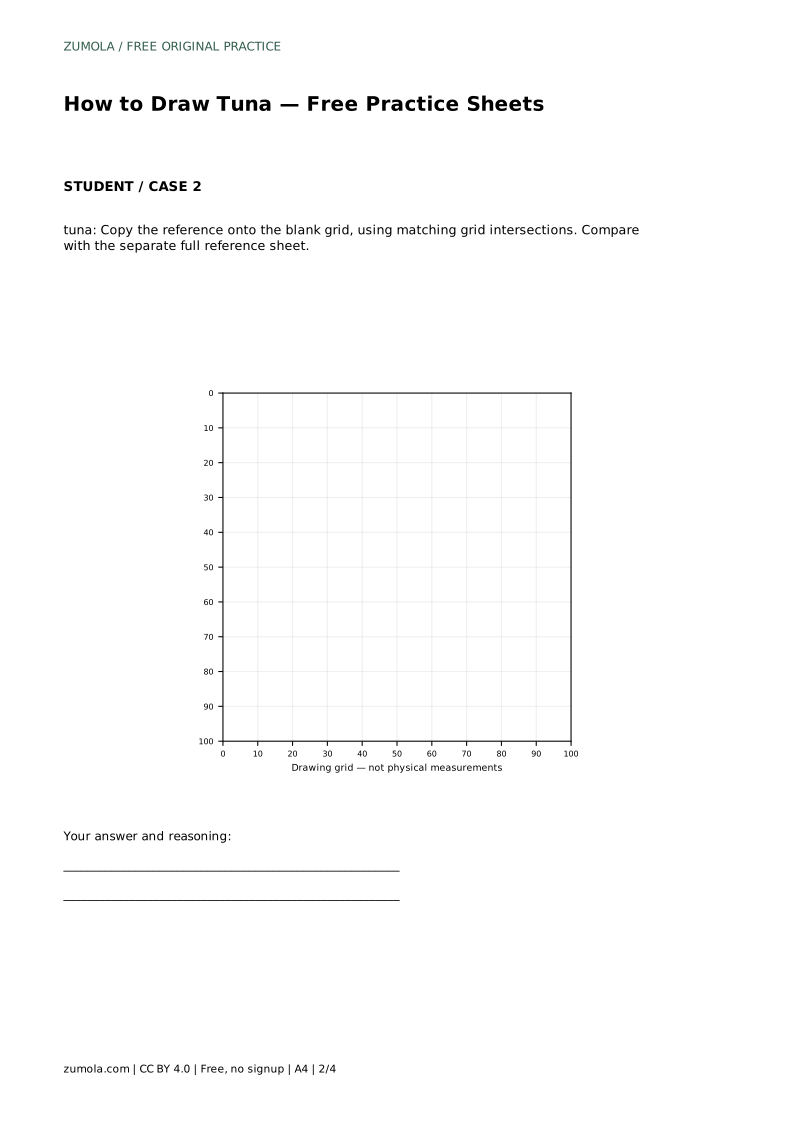
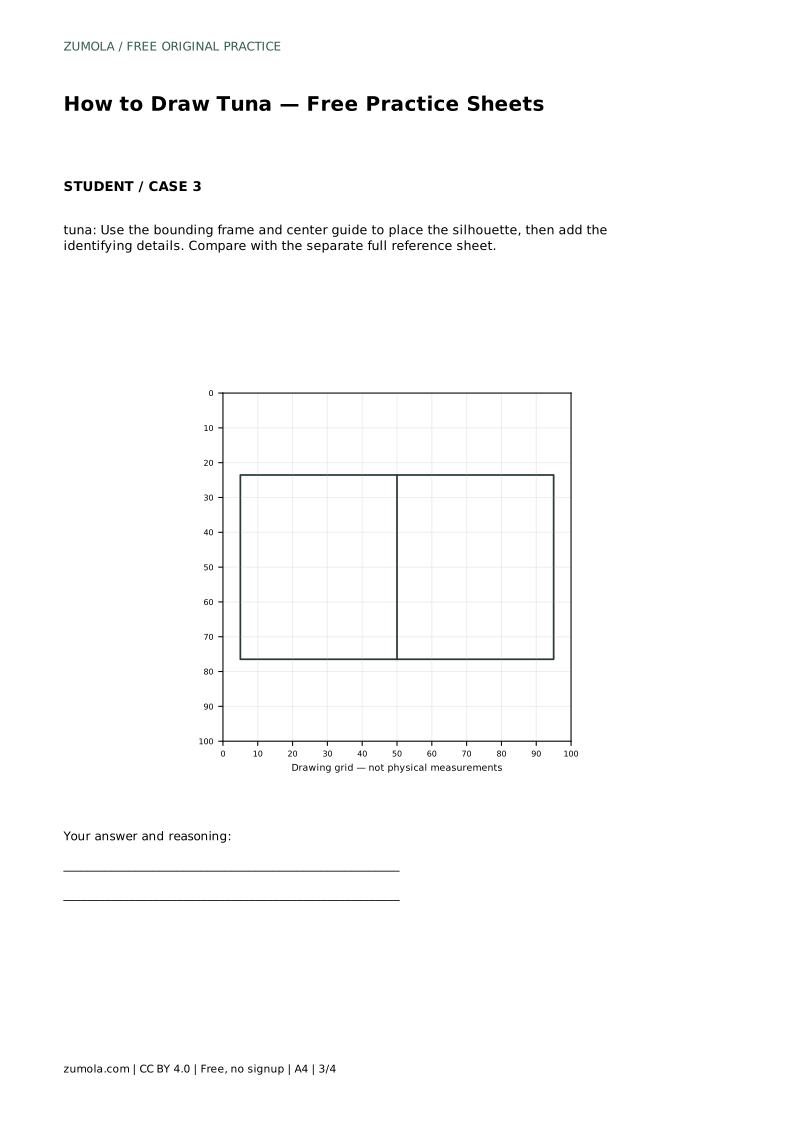
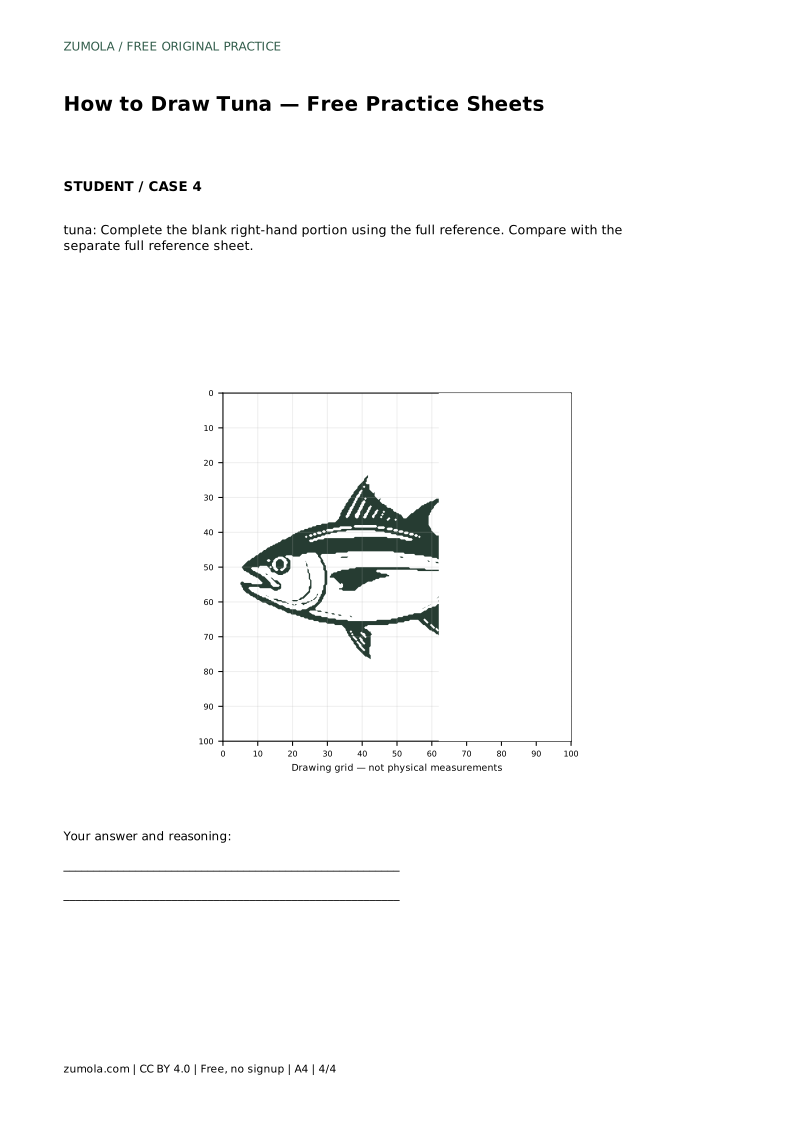
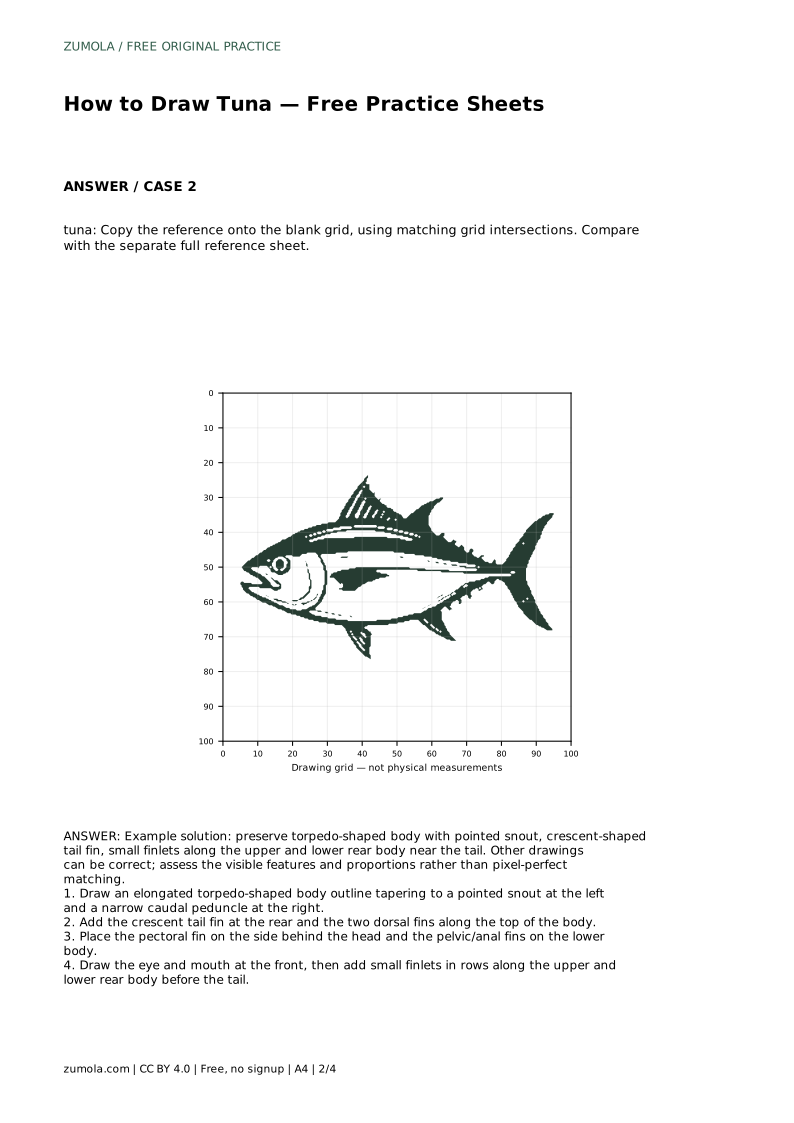
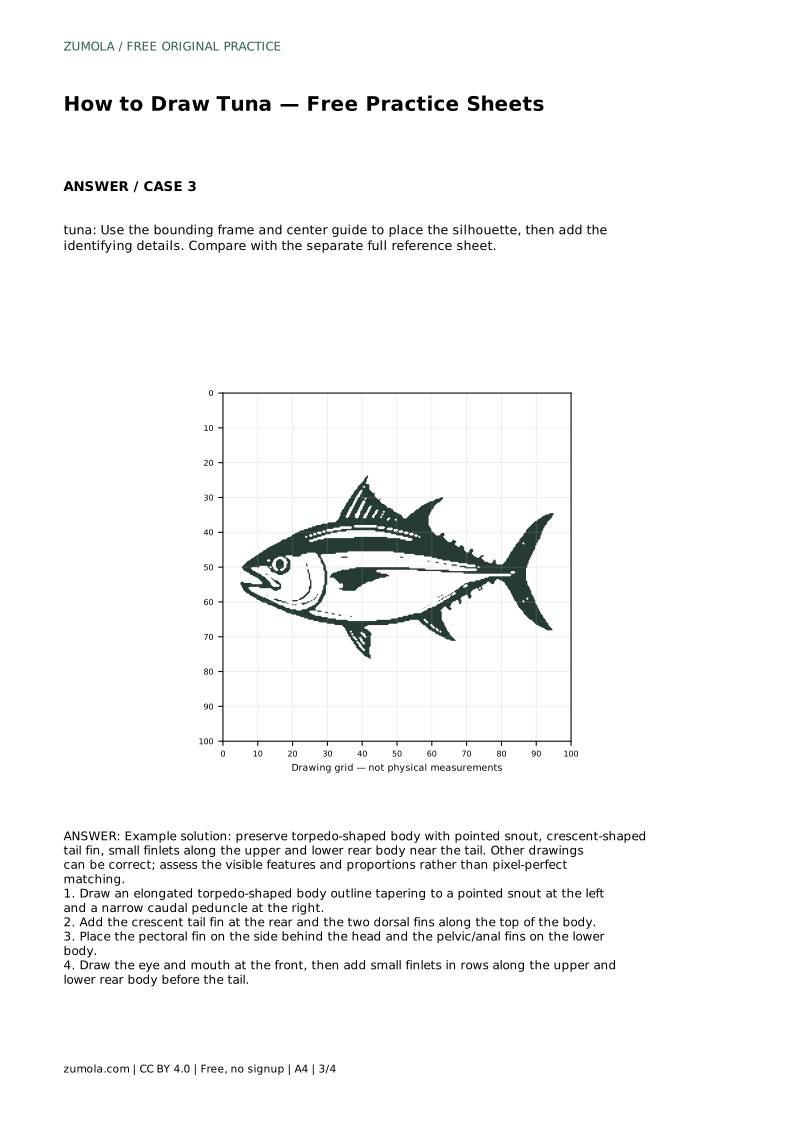
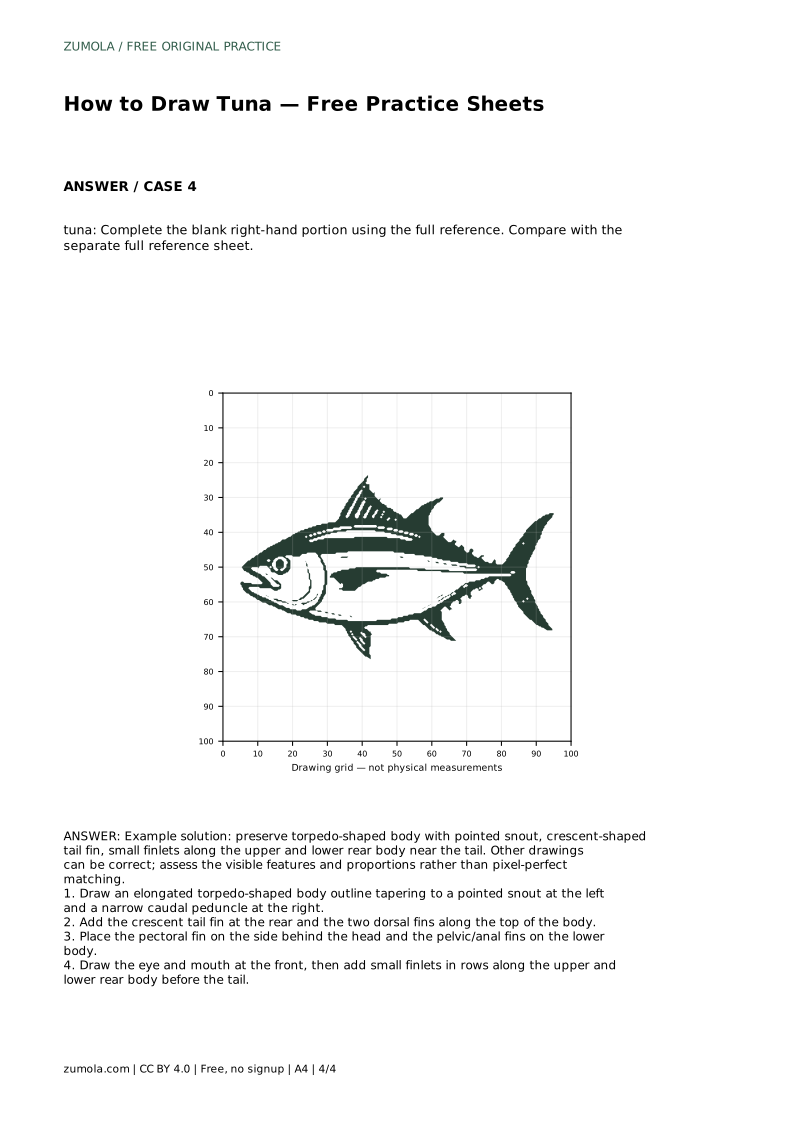
A grid sheet supports proportion. Copy the reference onto the blank grid by matching grid intersections: if the snout crosses a certain intersection on the reference, it should cross the corresponding one on your blank grid. A bounding frame with a center guide helps you place the silhouette before adding details. A partial sheet, where the right-hand portion is blank, asks you to complete the missing rear body, tail, and finlets from the full reference.
Two correct tuna drawings can differ in line weight, fin angle, and body curve. What should stay consistent is the set of identifying features: a torpedo-shaped body, a pointed snout, a crescent tail fin, two dorsal fins, a pectoral fin behind the head, lower pelvic and anal fins, and rows of small finlets along the upper and lower rear body near the tail. Use the rubric below to assess those features and their proportions.
Keep the anatomy descriptive rather than clinical. You are drawing a fish shape for practice, not producing a biological specimen. If a fin looks attached and proportional, that is enough for this exercise.
tuna: Trace the reference outline, then practise the contour independently. Compare with the separate full reference sheet.
Example solution: preserve torpedo-shaped body with pointed snout, crescent-shaped tail fin, small finlets along the upper and lower rear body near the tail. Other drawings can be correct; assess the visible features and proportions rather than pixel-perfect matching. Draw an elongated torpedo-shaped body outline tapering to a pointed snout at the left and a narrow caudal peduncle at the right. Add the crescent tail fin at the rear and the two dorsal fins along the top of the body. Place the pectoral fin on the side behind the head and the pelvic/anal fins on the lower body. Draw the eye and mouth at the front, then add small finlets in rows along the upper and lower rear body before the tail.
No. Other drawings can be correct. Assess the visible features and proportions rather than pixel-perfect matching.
Start with the trace-and-redraw sheet to learn the contour, then move to the grid or bounding-frame sheet to practise proportion.
Check the body shape and the tail fin first, since those set the overall silhouette. Then check fin placement and the finlet rows.
All drawing practice · Free coordinate paper
Original resources · CC BY 4.0 · Free for personal and classroom use with attribution.