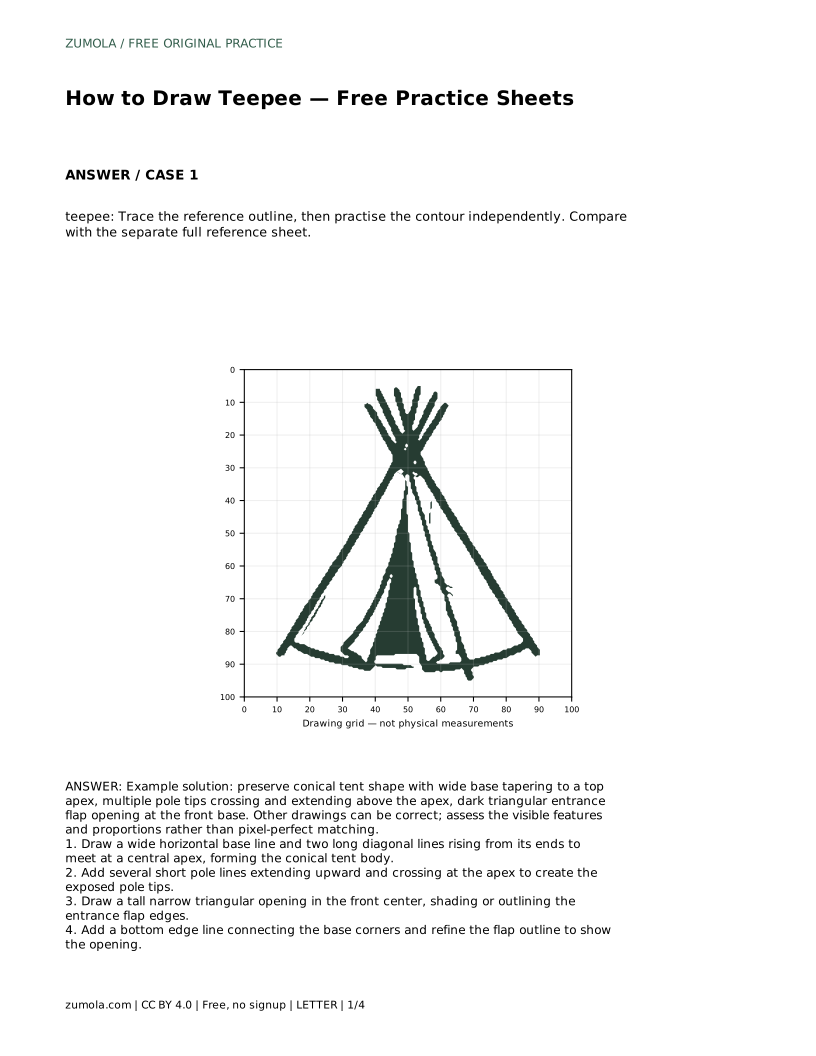
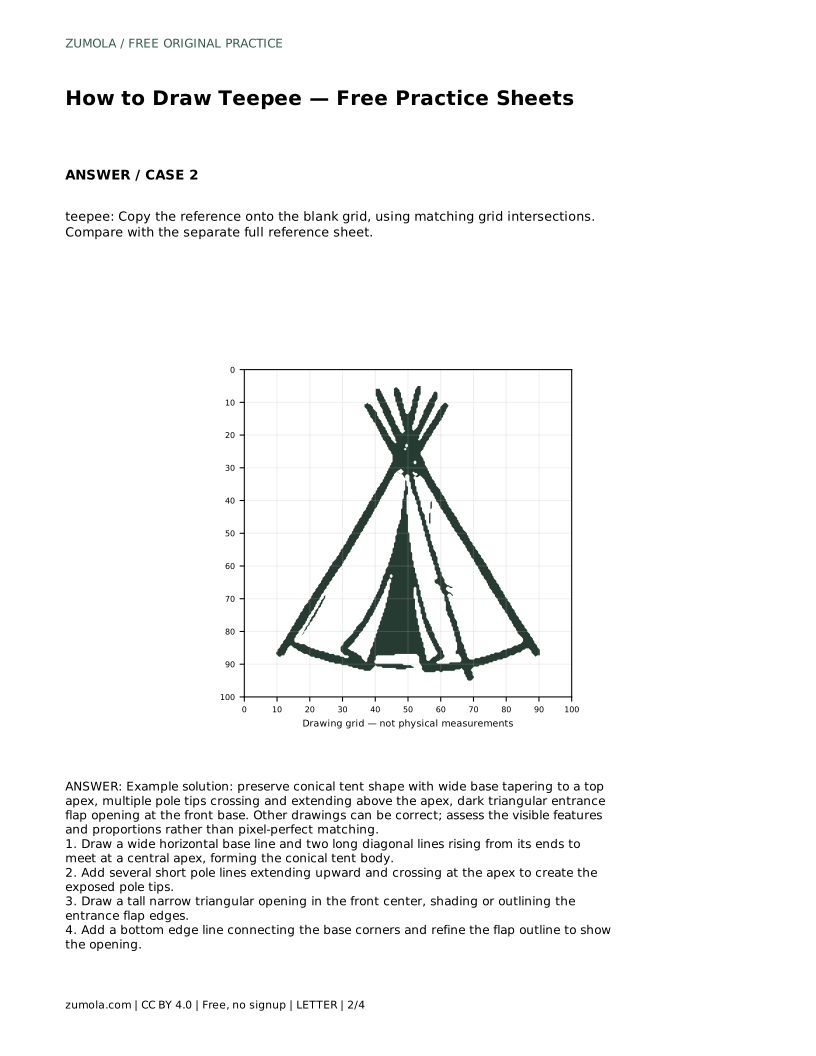
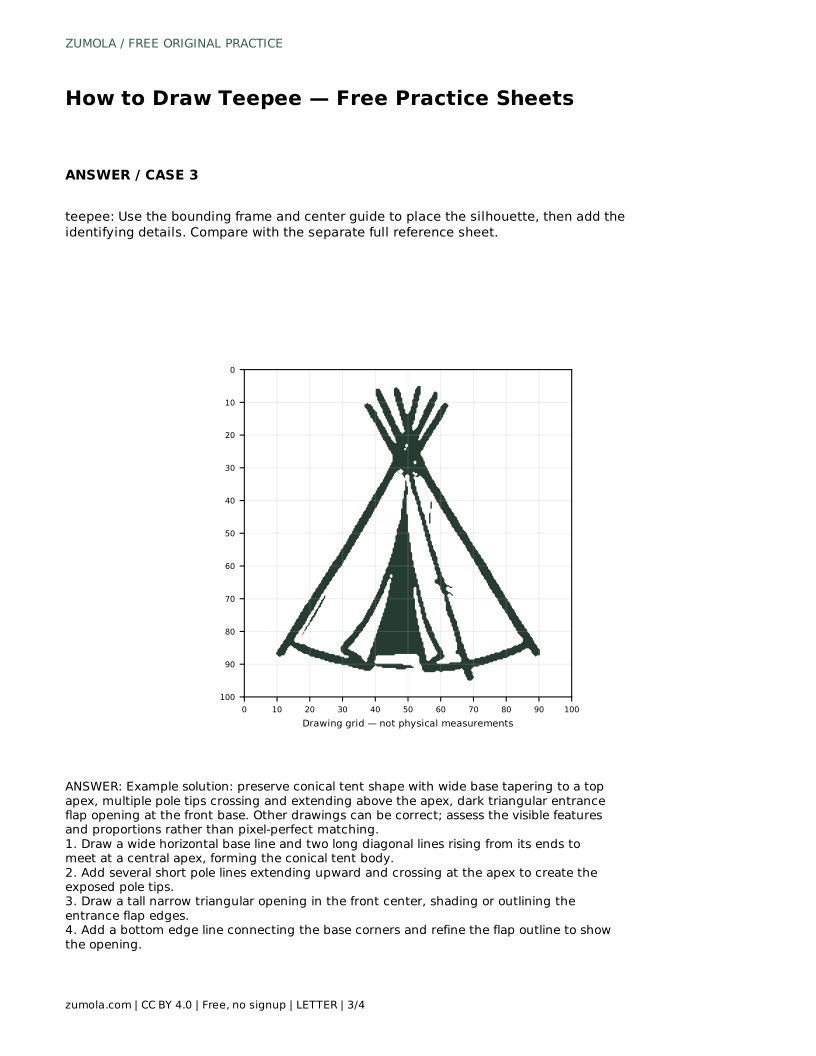
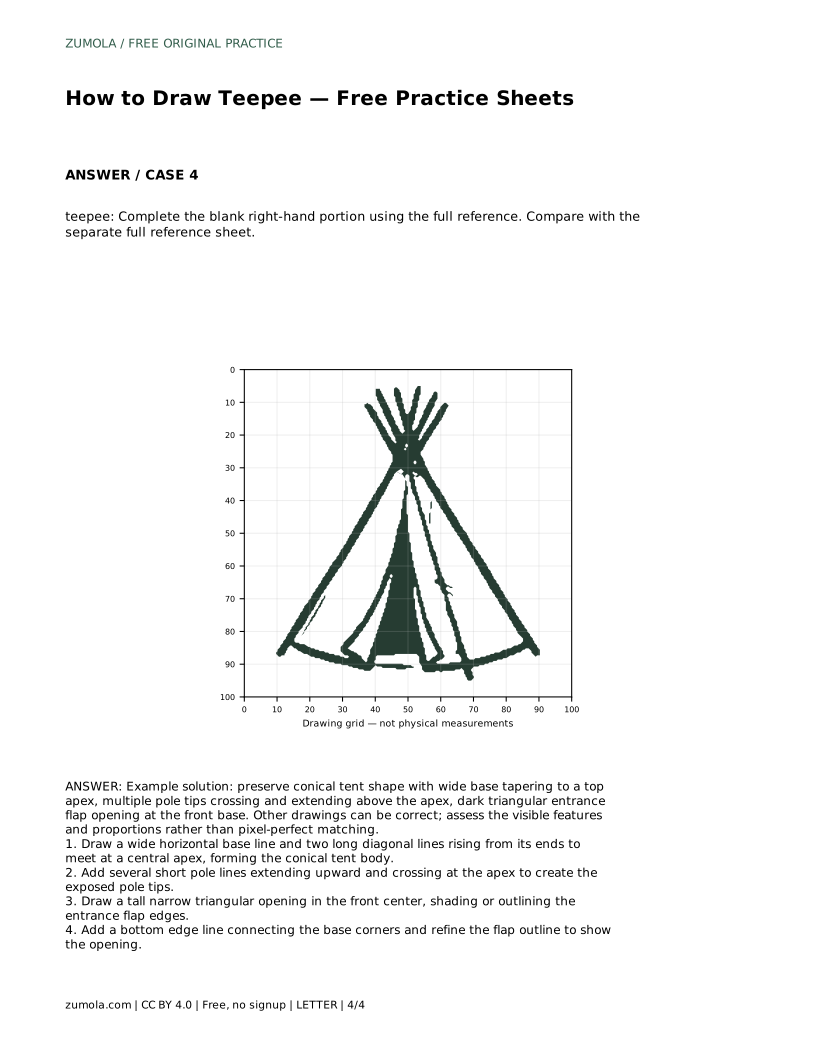
Reference diagrams
LETTER · Download PDF
A4 · Download PDF
Free original resources
Learn to draw a teepee by building a wide base, tapering conical body, crossed pole tips and a triangular entrance flap. Includes a worked example and rubric.
Four original cases, with reference diagrams, practice sheets and worked answers. Everything is free; no signup required.
LETTER · Download PDF
A4 · Download PDF
LETTER · Download PDF
A4 · Download PDF
LETTER · Download PDF
A4 · Download PDF
Use A4 or US Letter to match your printer. Use the stated values and conditions to solve each exercise; diagrams are not physical measuring rulers.
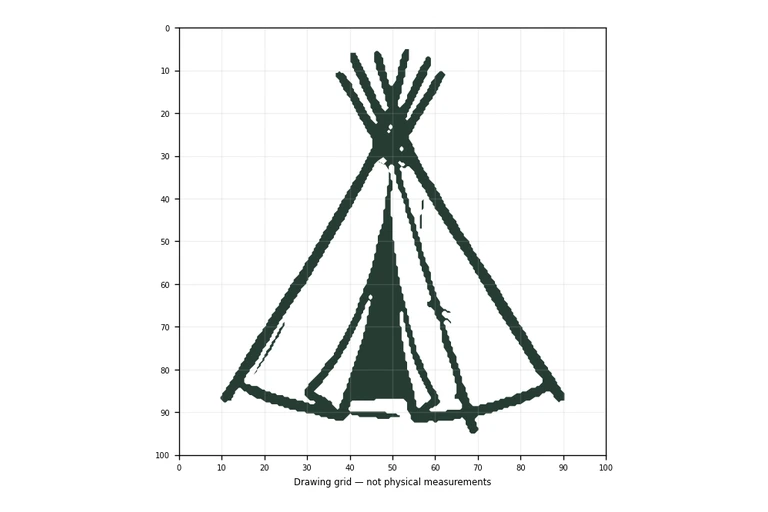
A teepee drawing is mostly a study in one strong shape: a wide base narrowing to a single apex. Once that cone is placed, the details that make the structure readable are the pole tips crossing above the apex and the dark triangular entrance flap at the front base. This page explains how to build those parts in order, how to practise from a reference outline, and how to judge your own drawing fairly when several outcomes can all be correct.
Start with the tent body, because every other feature is positioned relative to it. Draw a wide horizontal base line, then run two long diagonal lines from its ends so they meet at one central apex. Keep the base noticeably wider than the height is tall only if your reference shows that proportion; otherwise match the reference. The two diagonals should be straight and should meet at a single point rather than crossing past each other.
Treat the cone as a simple triangular silhouette at this stage. Resist adding poles or a doorway until the body reads clearly as a wide-based tent tapering upward. If the apex sits off-centre, the whole drawing will lean, so check that the apex is roughly above the middle of the base unless the reference deliberately shows a tilt.
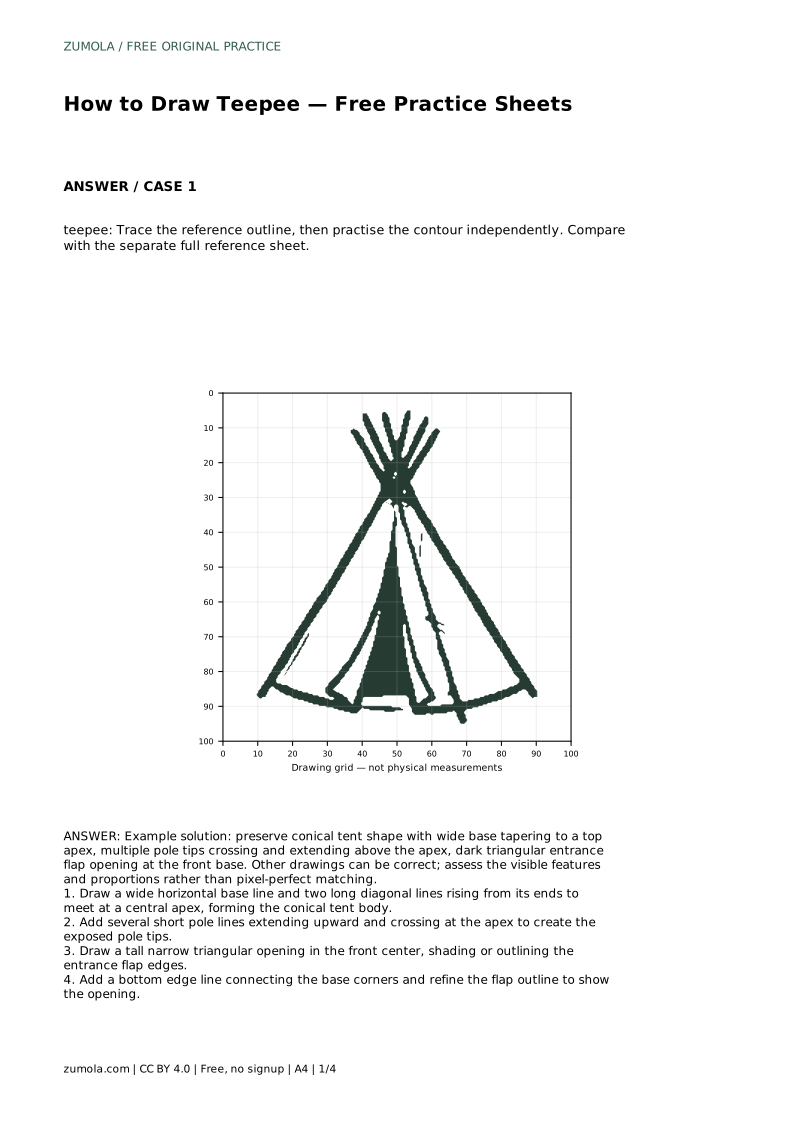
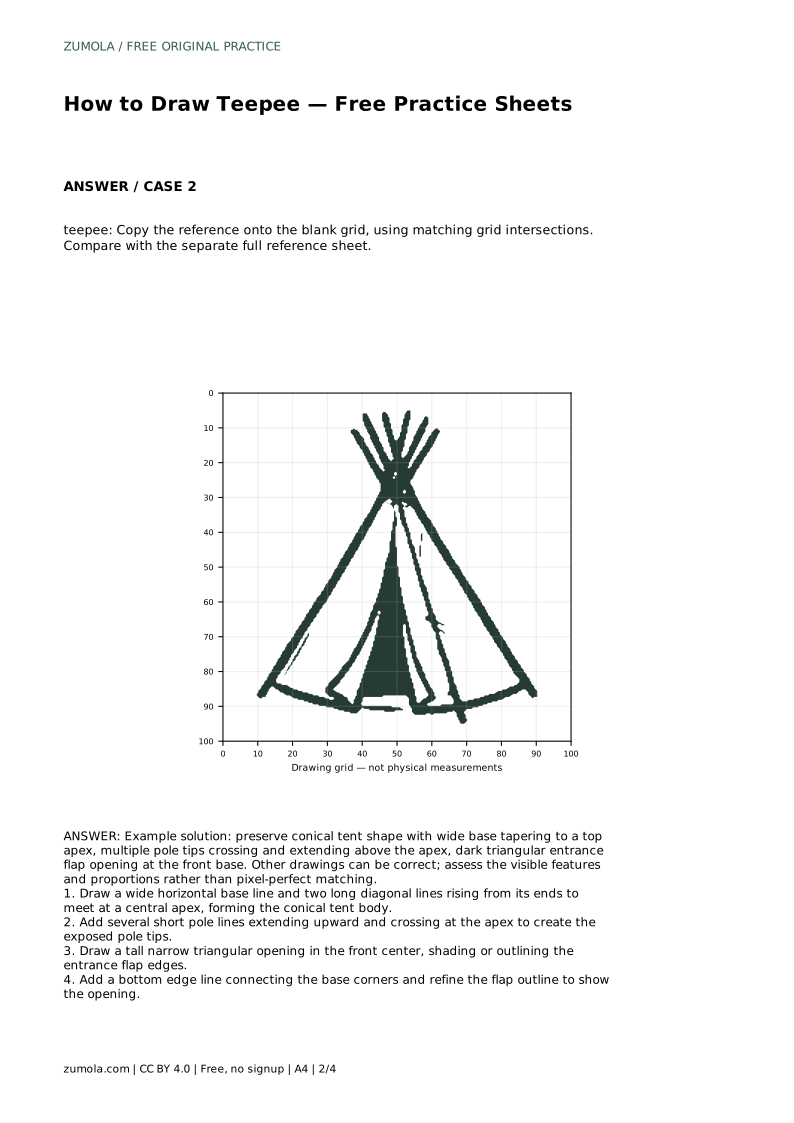
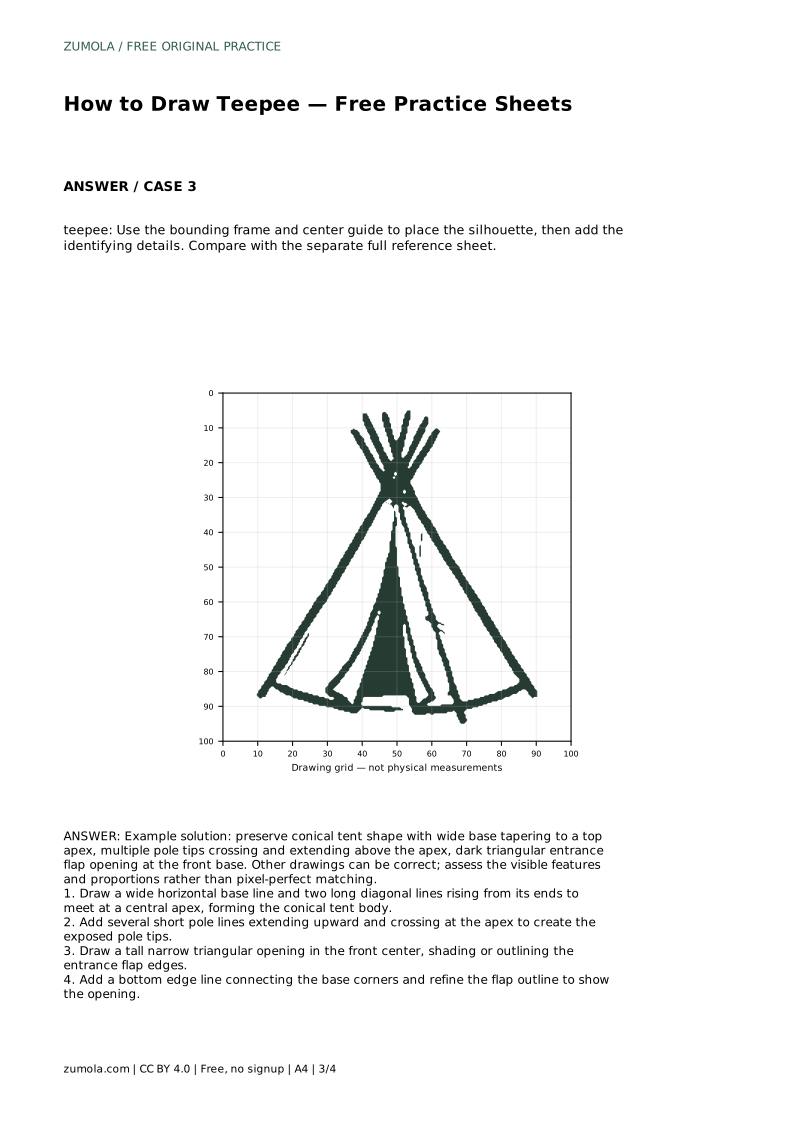
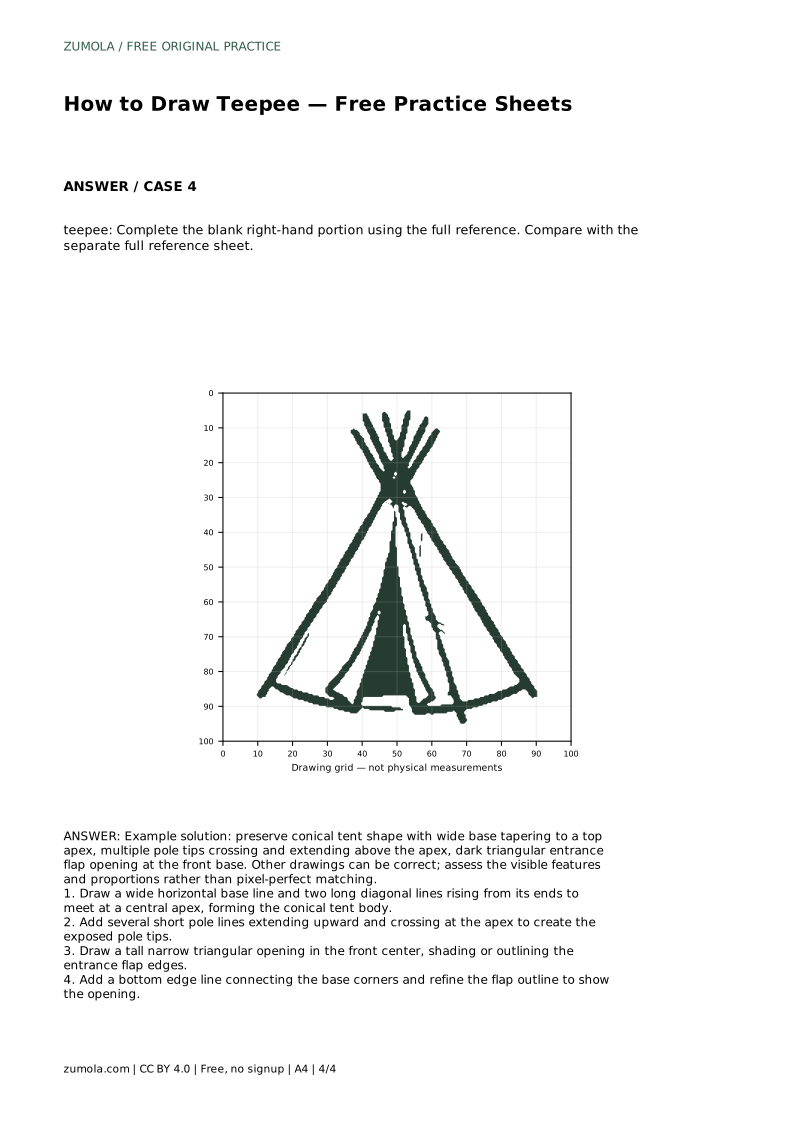
The exposed poles are short lines that extend upward from the apex and cross one another. Draw several of them, letting each pass slightly beyond the crossing point so the tips remain visible. Their number and angle can vary; what matters is that they sit at the top, cross near the apex, and extend above the tent body rather than stopping flush with it.
The entrance is a tall, narrow triangular opening centred at the front base. Outline its edges and shade or darken the flap so the opening reads as a gap rather than a flat triangle painted on the surface. Finish by drawing the bottom edge line connecting the base corners, then refine the flap outline so the opening is clearly visible against the tent body.
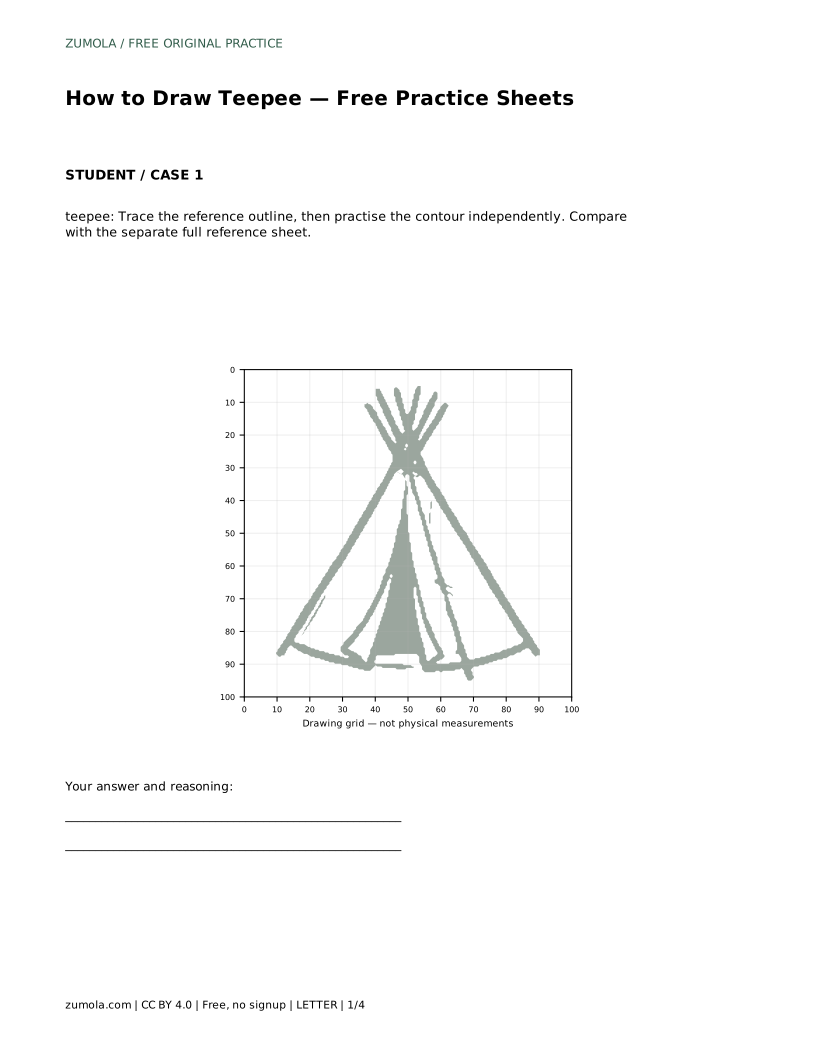
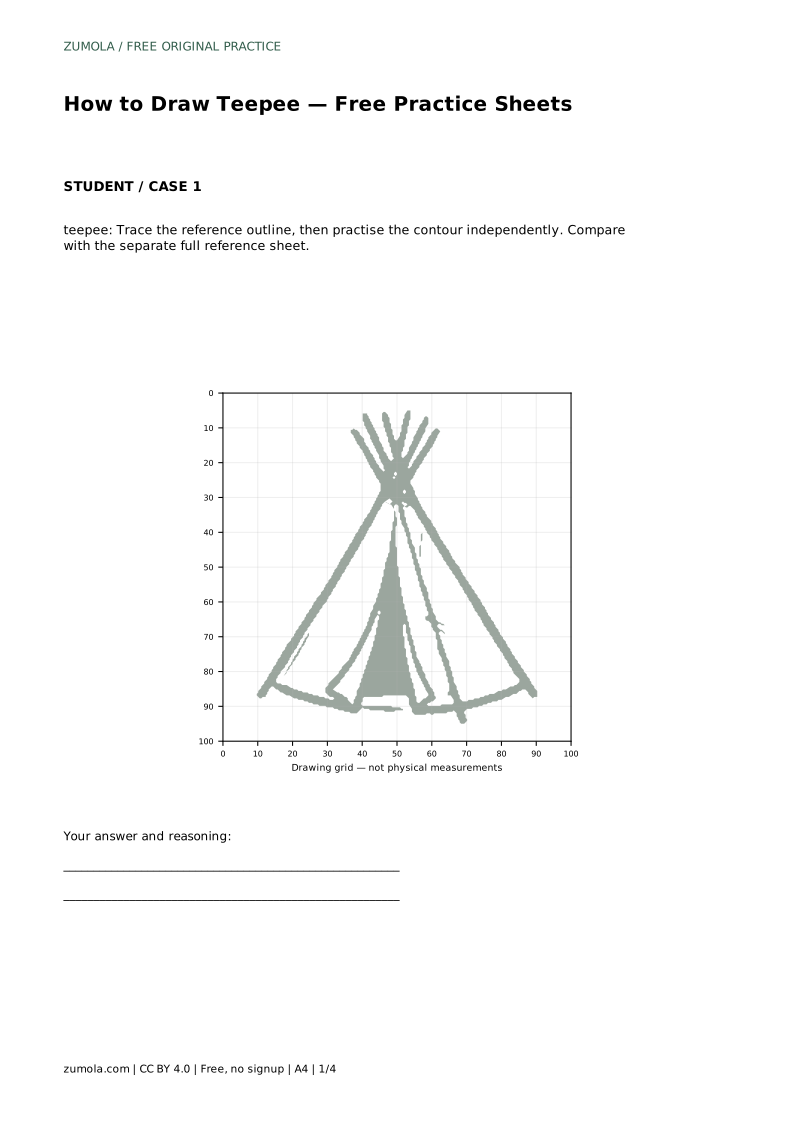
When you trace a reference outline, your first pass is guided, so treat it as a warm-up rather than proof of skill. Follow the contour closely, then put the tracing aside and draw the same teepee independently on blank paper. Compare your free drawing with the separate full reference sheet, not with your traced copy, so you are judging your own placement and proportions.
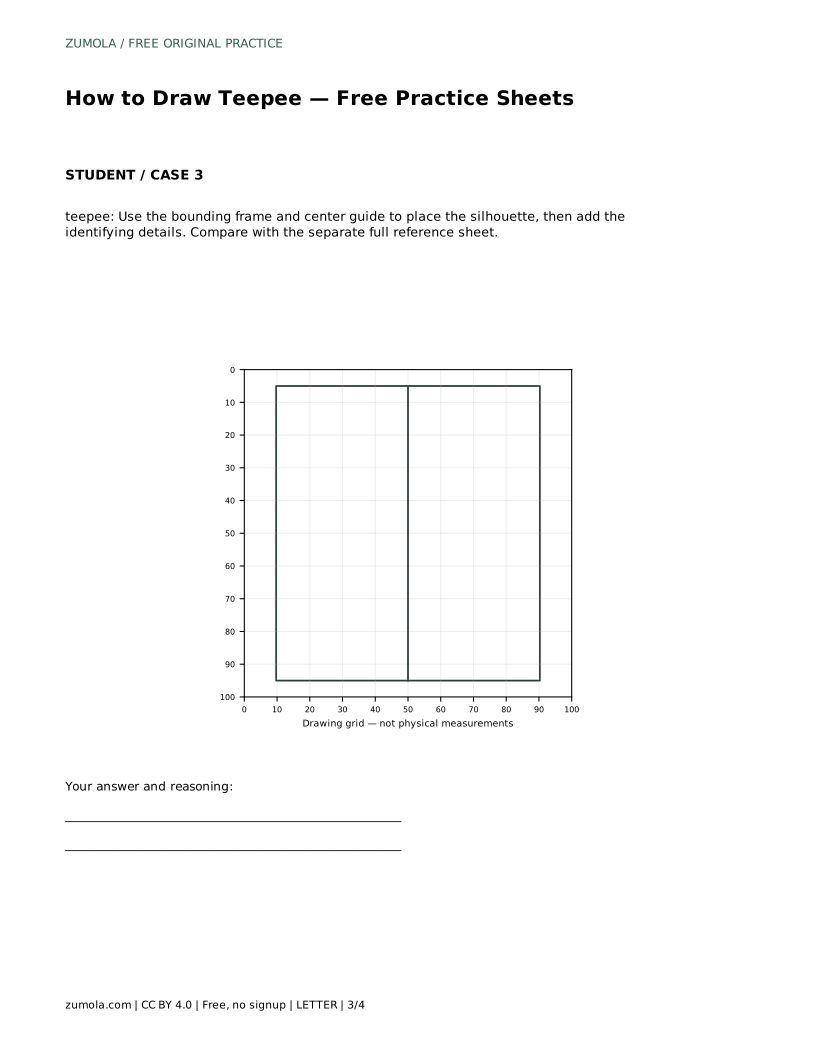
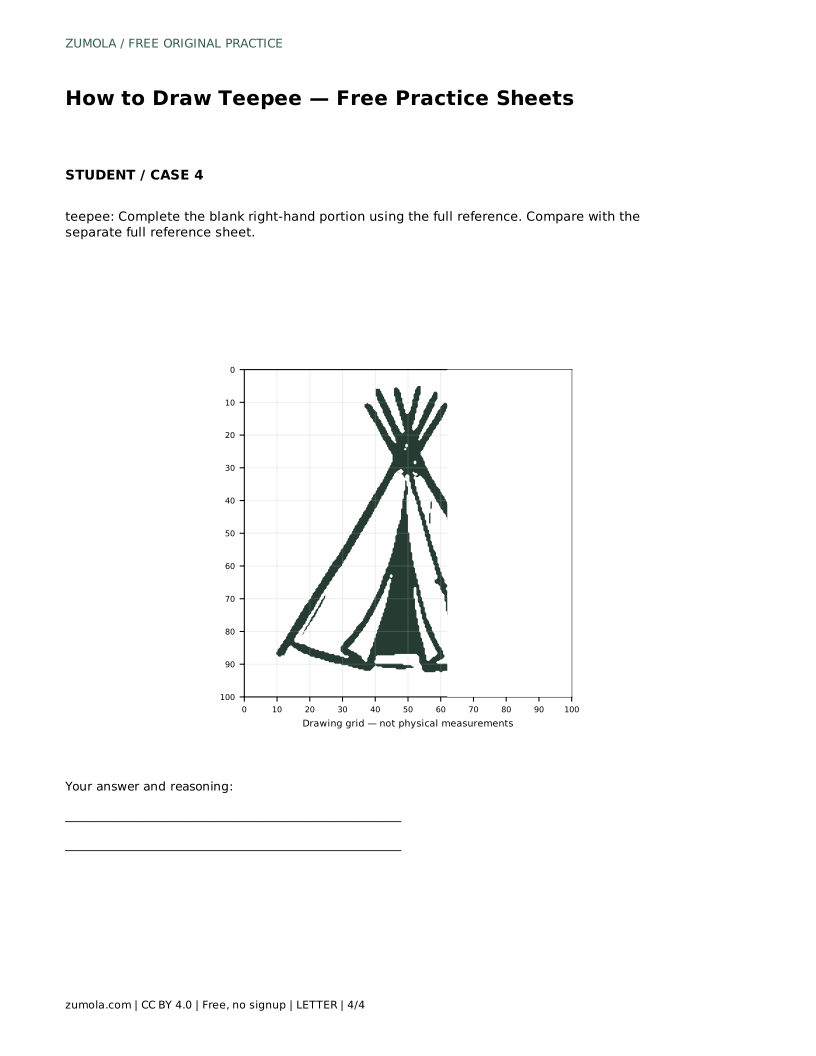
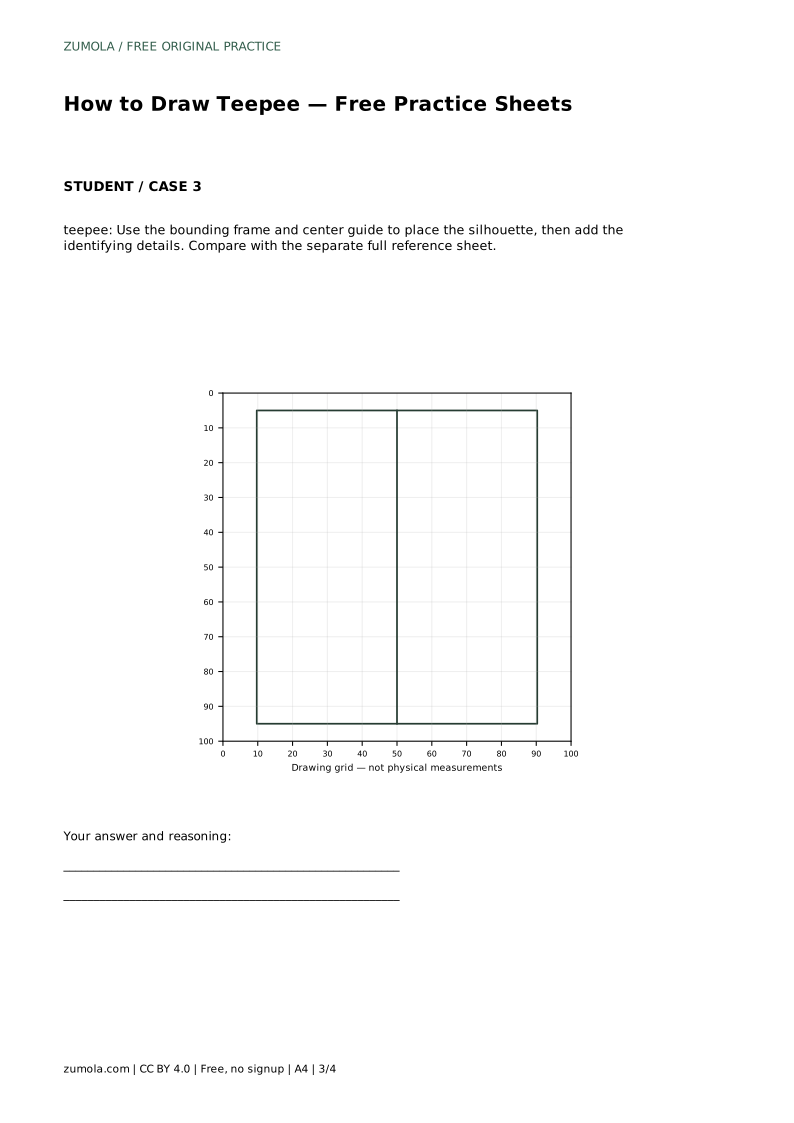
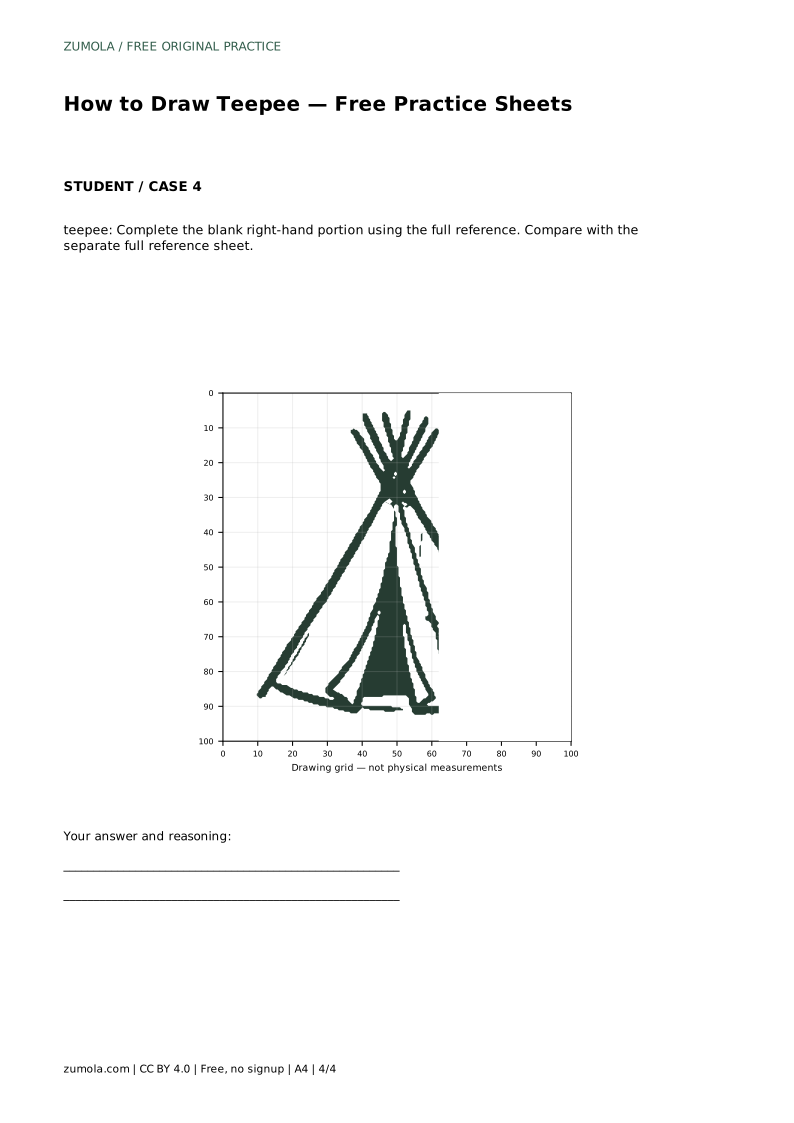
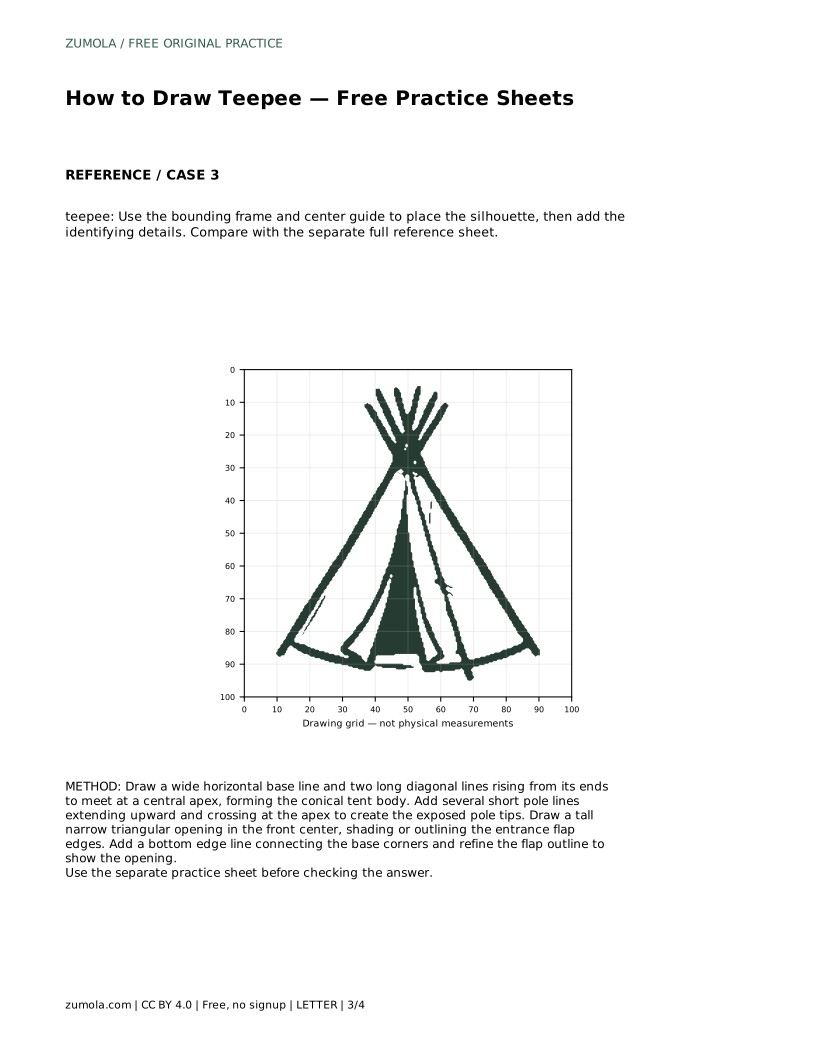
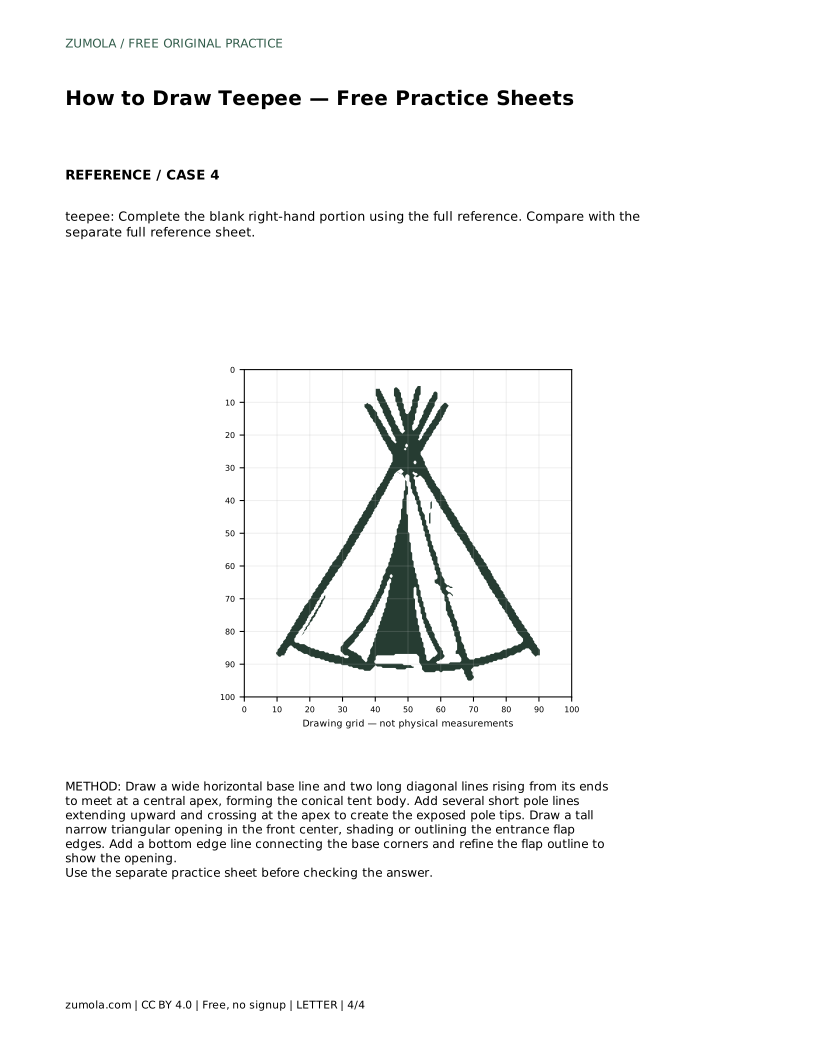
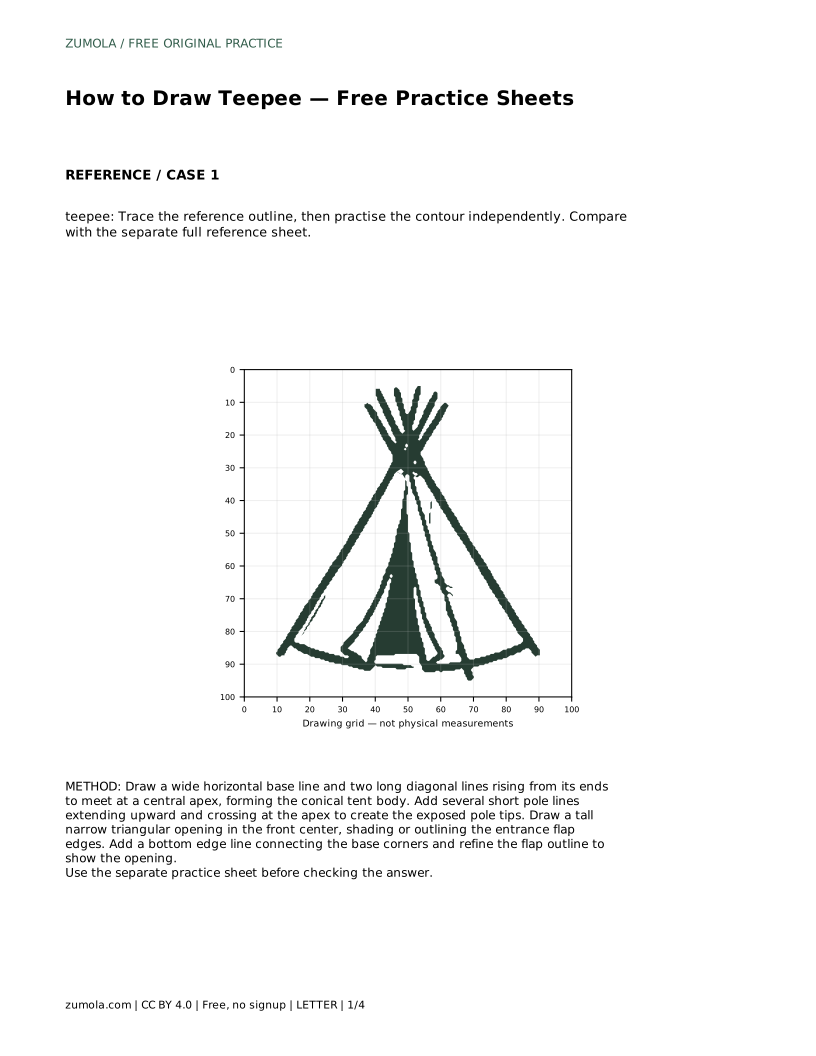
Grid and frame guides work the same way: they help you locate the silhouette and centre the apex, but the goal is to internalise the order of construction. A half-completed sheet asks you to finish the missing portion using the full reference, which tests whether you can continue an existing cone and match its pole tips and flap position.
There is no single correct teepee drawing. Two sketches can differ in pole count, flap width and base angle and both still read correctly. Assess the visible features instead: a conical body with a wide base tapering to an apex, pole tips crossing and extending above that apex, and a triangular entrance flap opening at the front base. Proportions should be close to the reference, but pixel-perfect matching is not the target.
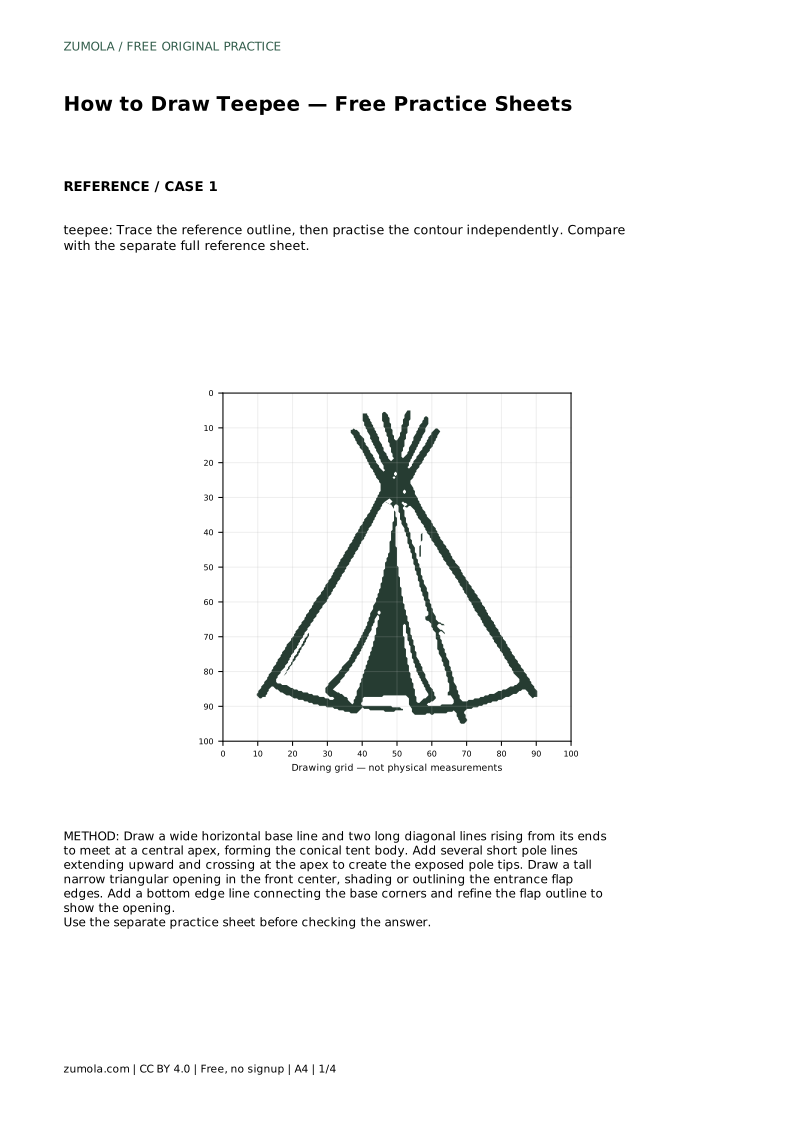
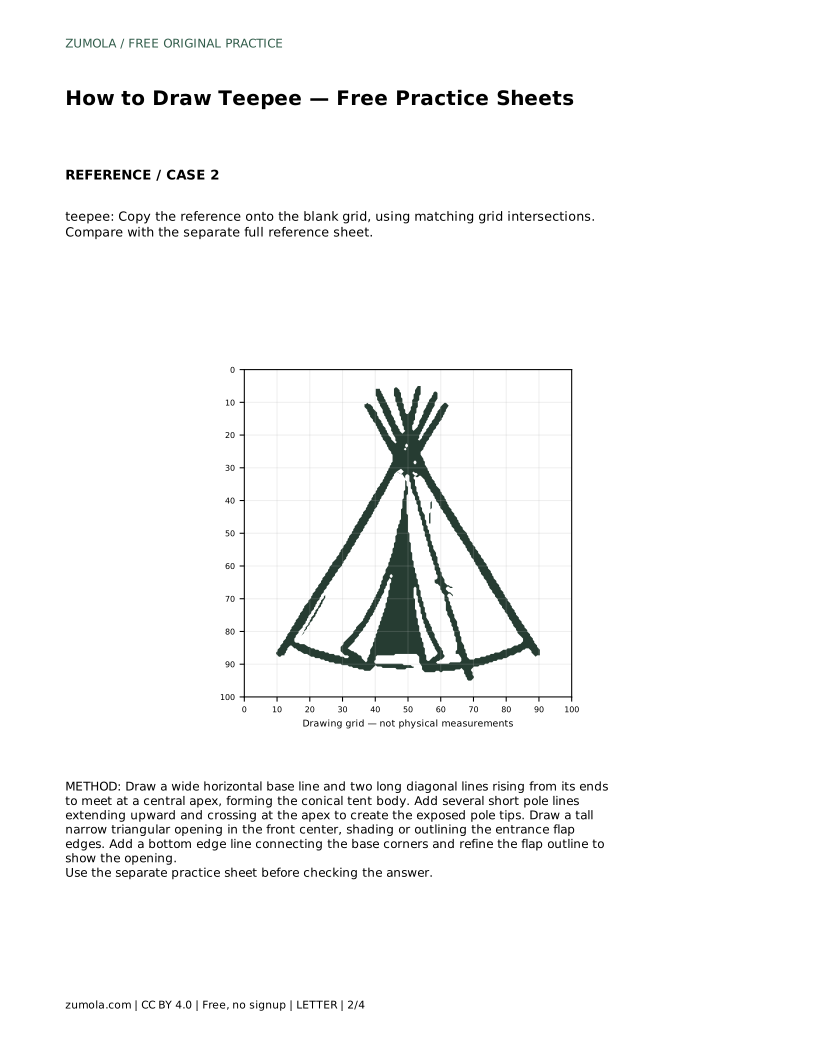
teepee: Trace the reference outline, then practise the contour independently. Compare with the separate full reference sheet.
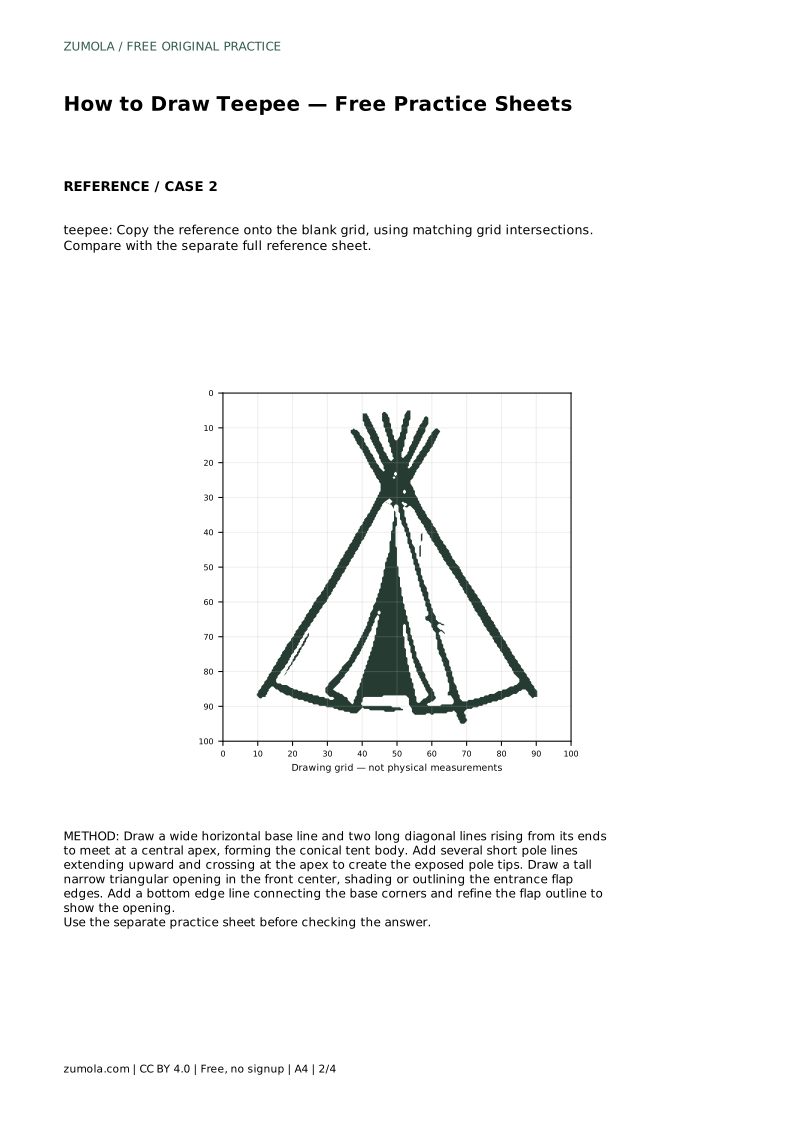
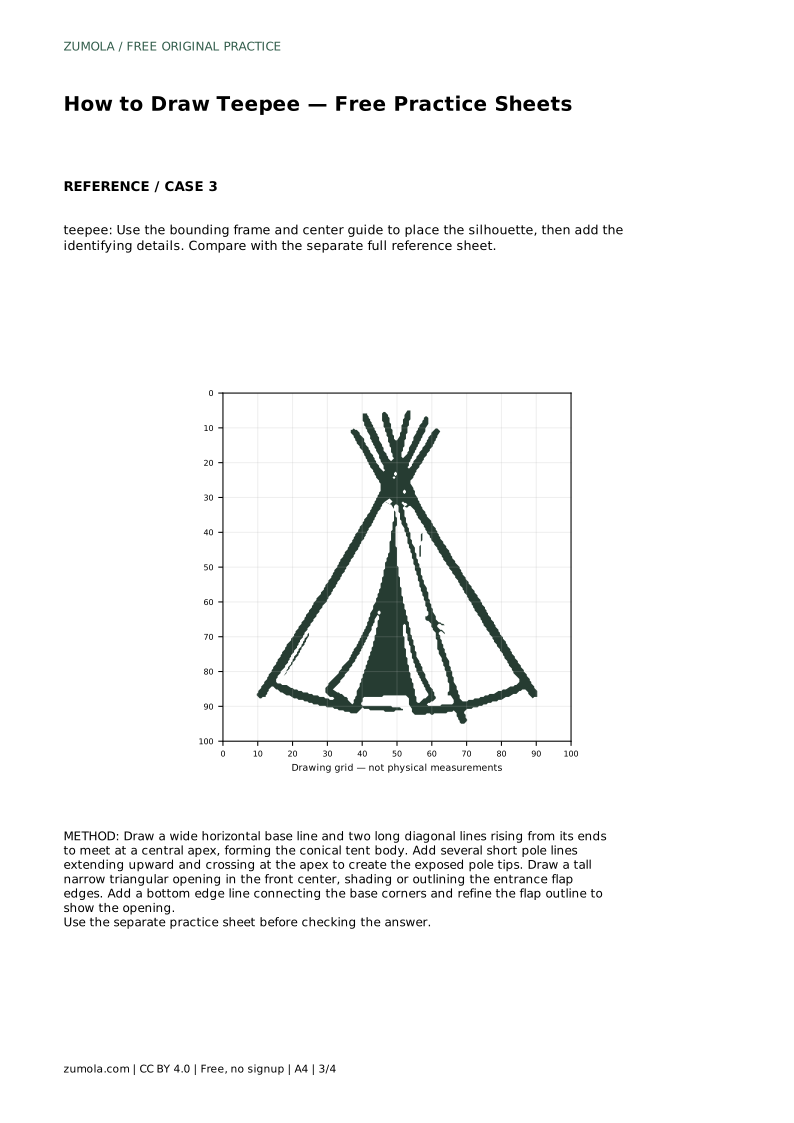
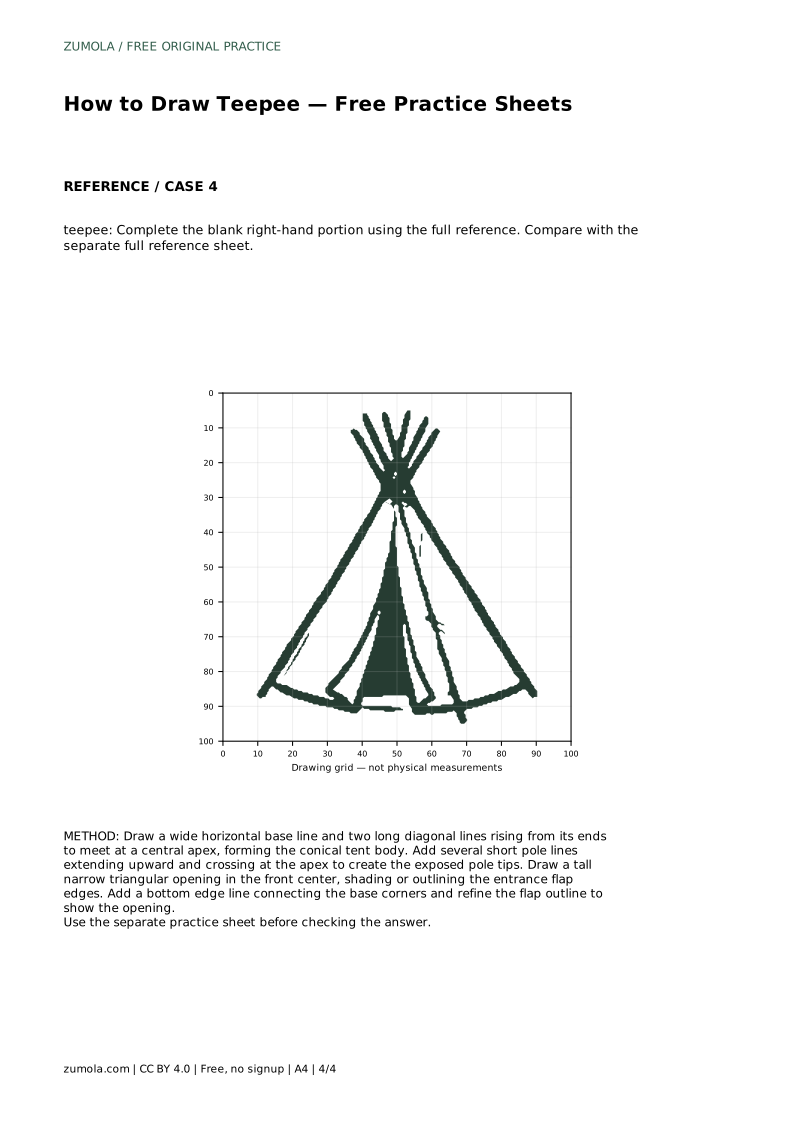
Example solution: preserve conical tent shape with wide base tapering to a top apex, multiple pole tips crossing and extending above the apex, dark triangular entrance flap opening at the front base. Other drawings can be correct; assess the visible features and proportions rather than pixel-perfect matching. Draw a wide horizontal base line and two long diagonal lines rising from its ends to meet at a central apex, forming the conical tent body. Add several short pole lines extending upward and crossing at the apex to create the exposed pole tips. Draw a tall narrow triangular opening in the front center, shading or outlining the entrance flap edges. Add a bottom edge line connecting the base corners and refine the flap outline to show the opening.
There is no fixed number. Draw several short lines crossing at the apex and extending above it; the count can vary as long as the crossed tips are visible.
Usually yes, so the cone looks balanced. Follow your reference if it shows a deliberate lean, but keep the two diagonals meeting at a single point.
Yes. Pole count, flap width and base angle can vary. Judge the conical body, crossed pole tips and triangular entrance rather than exact matching.
All drawing practice · Free coordinate paper
Original resources · CC BY 4.0 · Free for personal and classroom use with attribution.