Reference diagrams
LETTER · Download PDF
A4 · Download PDF
Free original resources
Learn to draw a mosque by building a central dome, flanking minarets, and arched openings. Use tracing, grid, and frame practice sheets to compare against a reference.
Four original cases, with reference diagrams, practice sheets and worked answers. Everything is free; no signup required.
LETTER · Download PDF
A4 · Download PDF
LETTER · Download PDF
A4 · Download PDF
LETTER · Download PDF
A4 · Download PDF
Use A4 or US Letter to match your printer. Use the stated values and conditions to solve each exercise; diagrams are not physical measuring rulers.
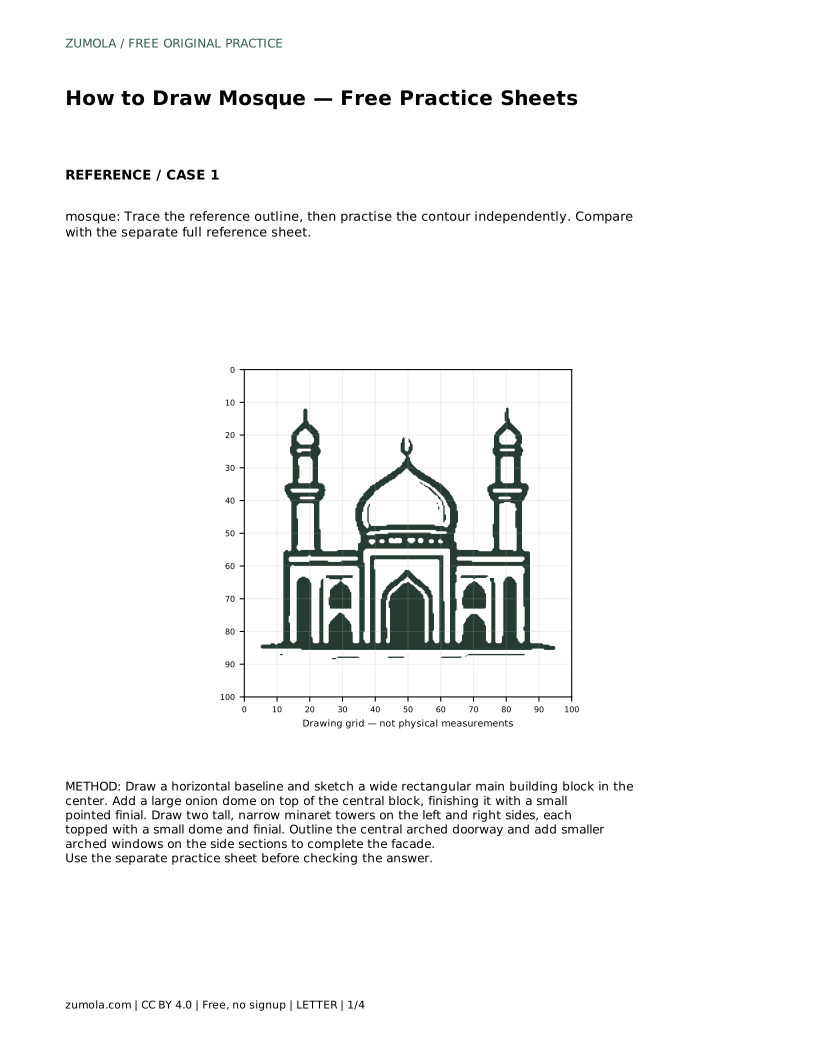
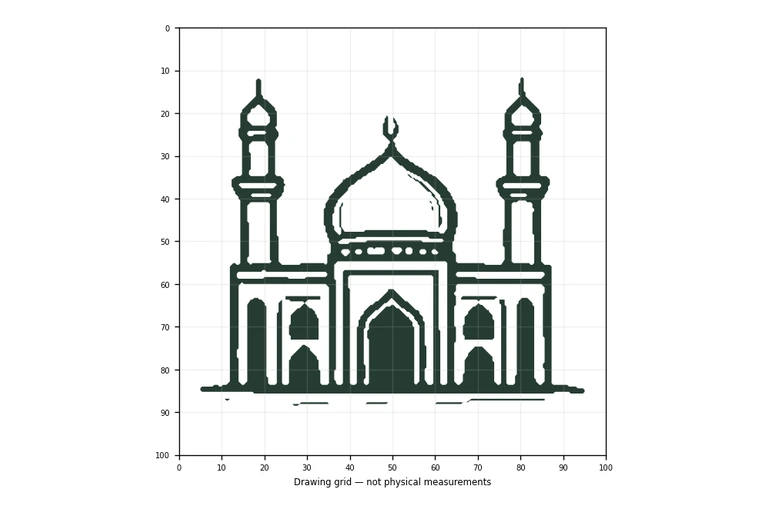
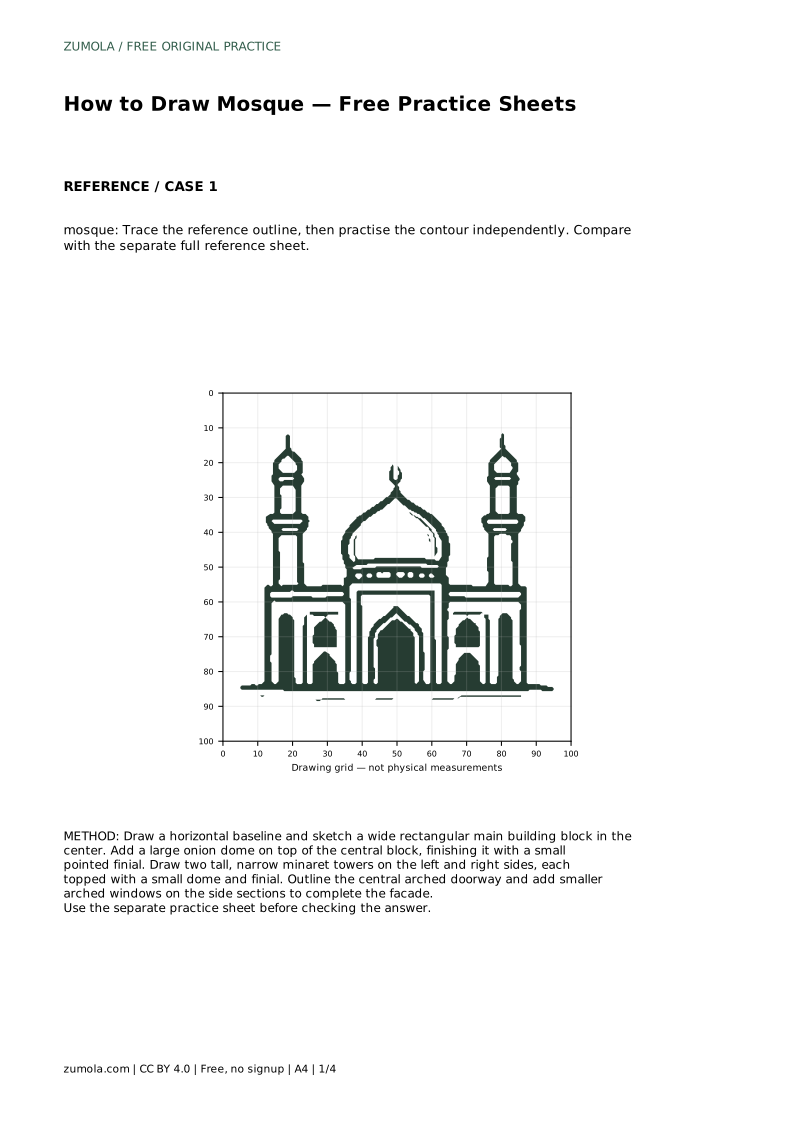
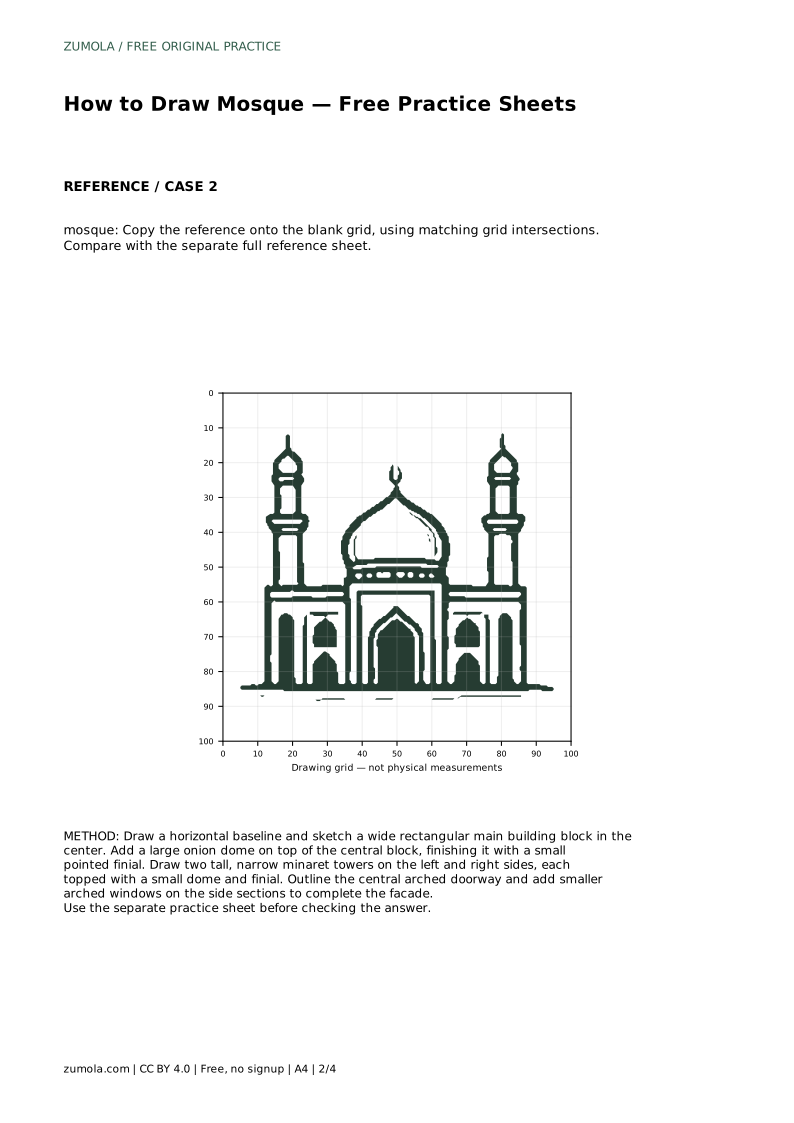
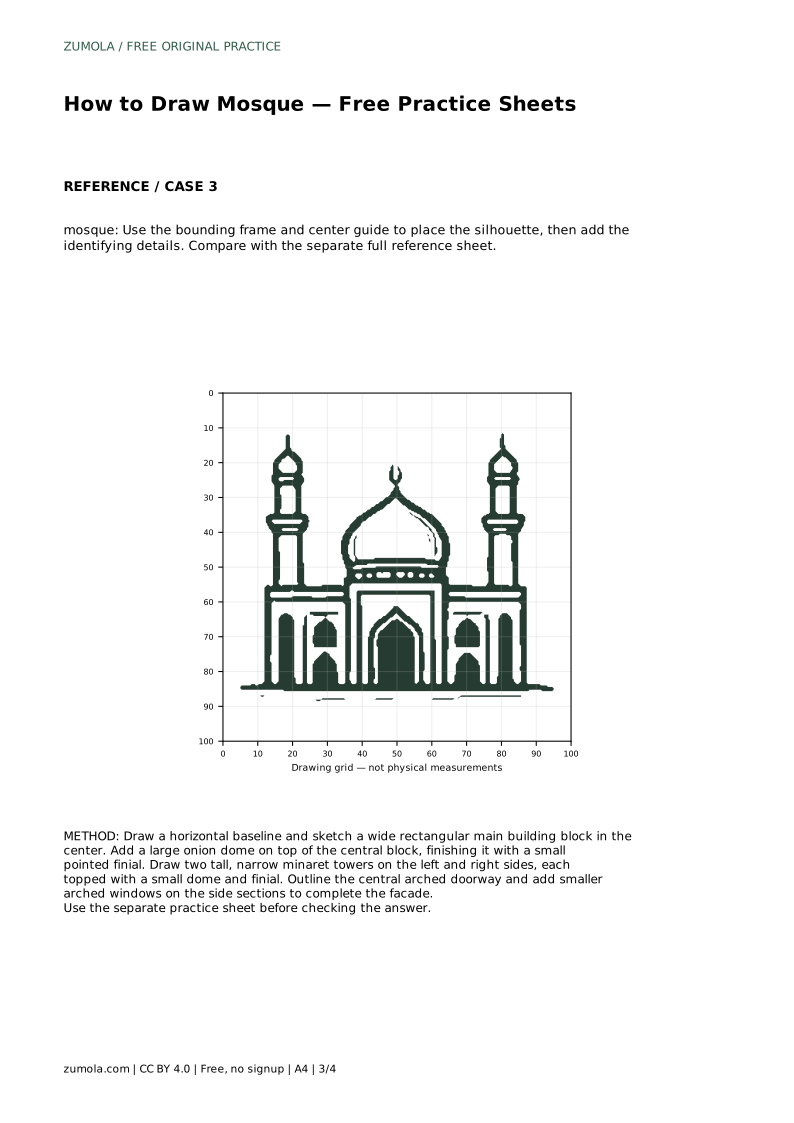
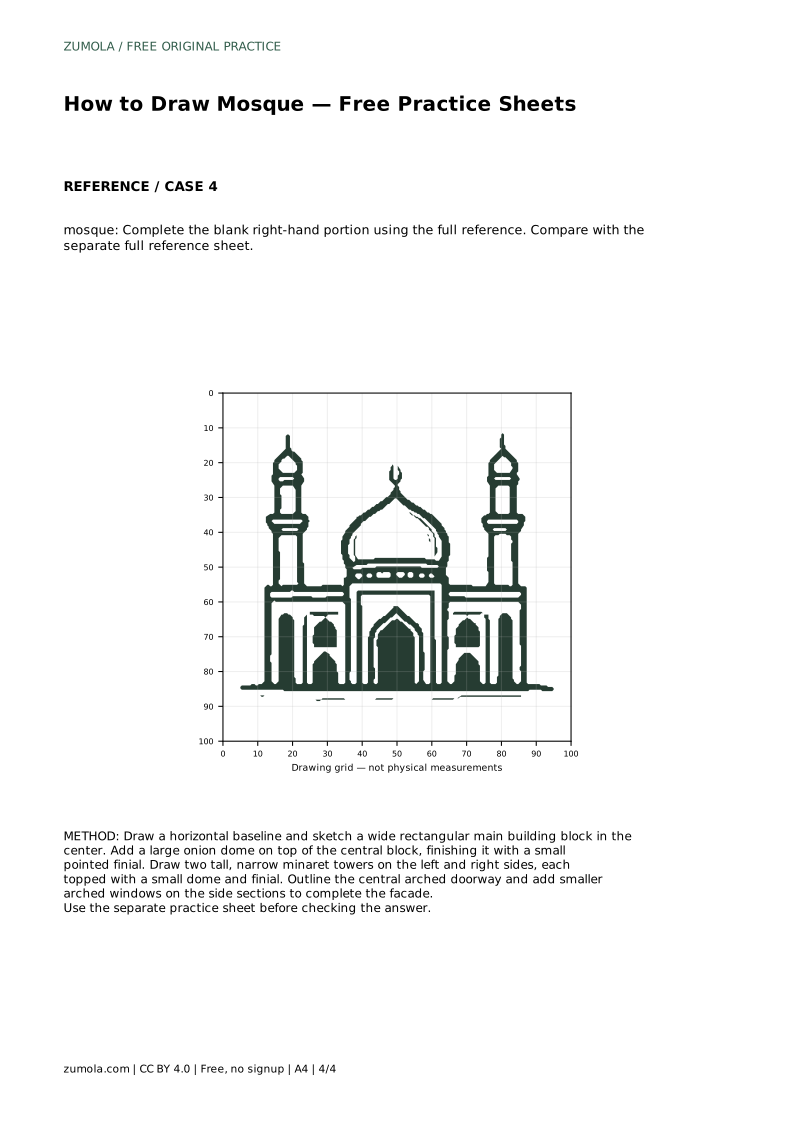
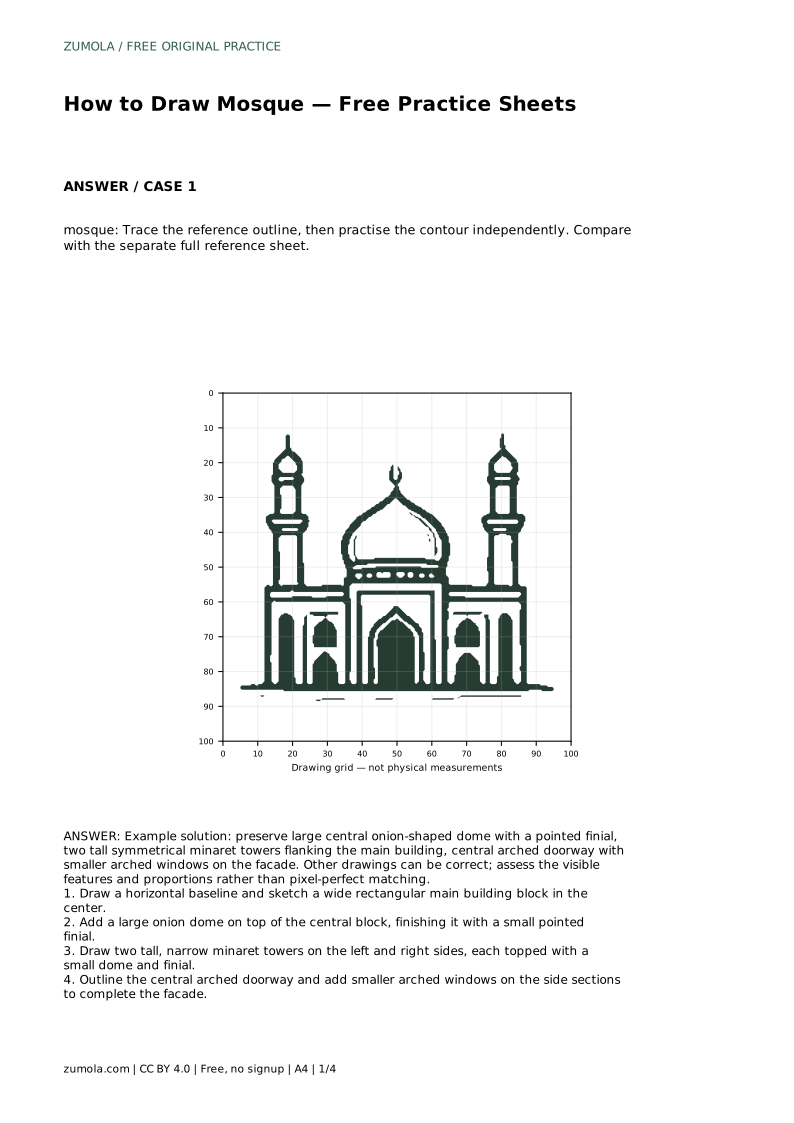
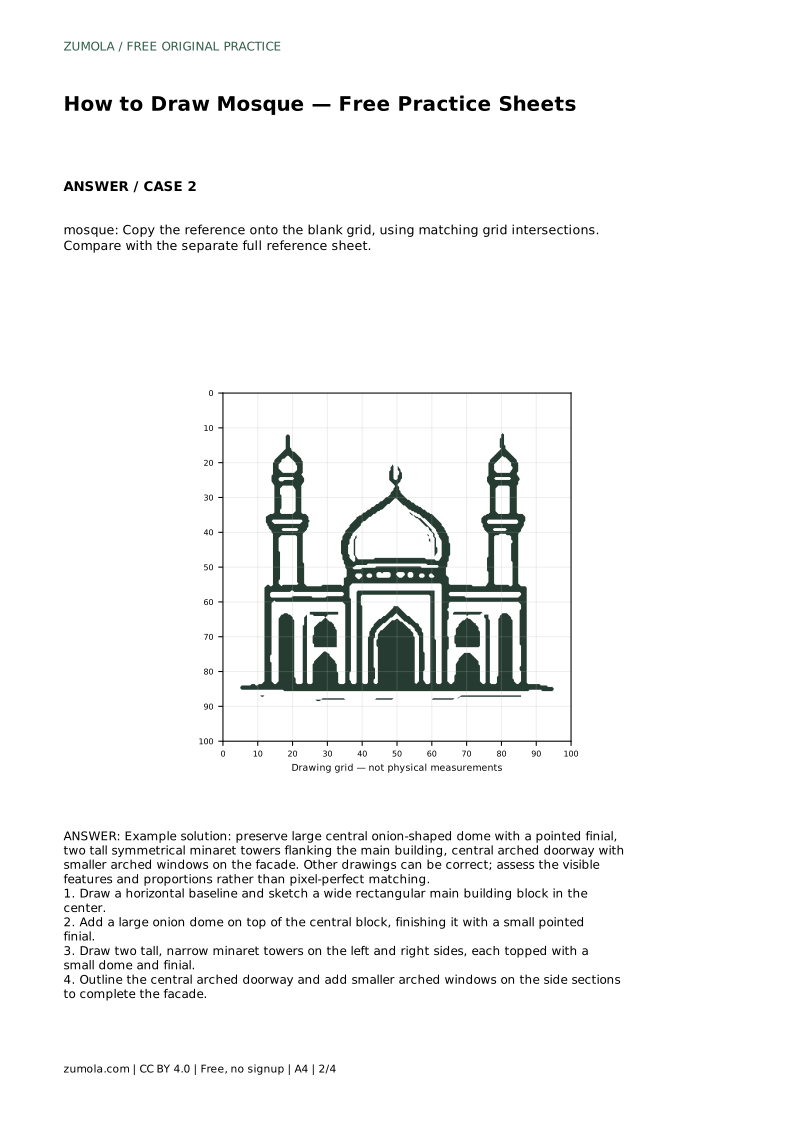
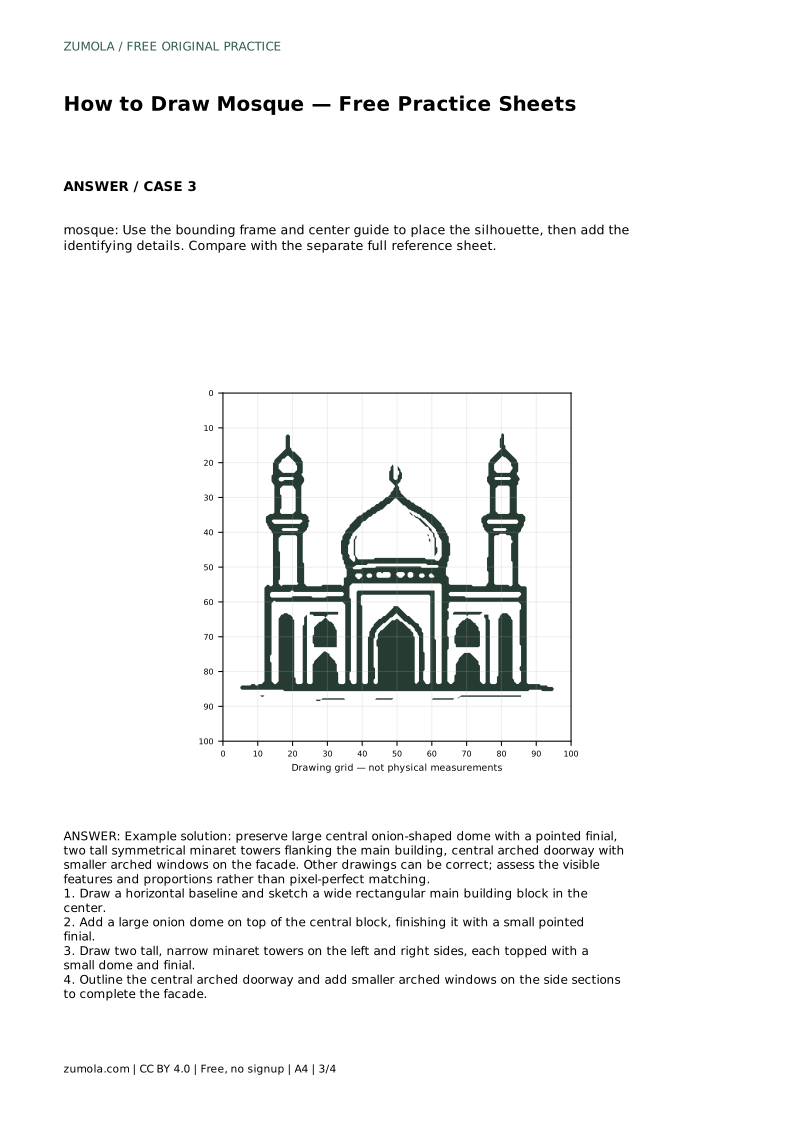
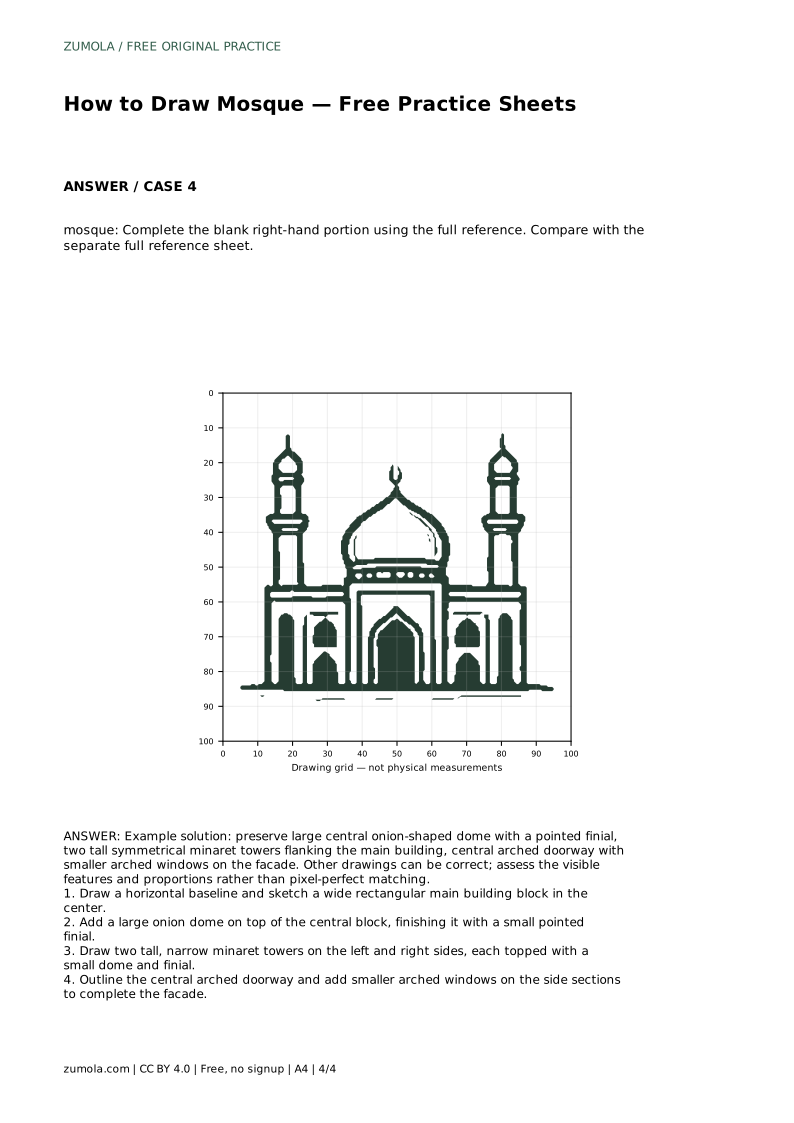
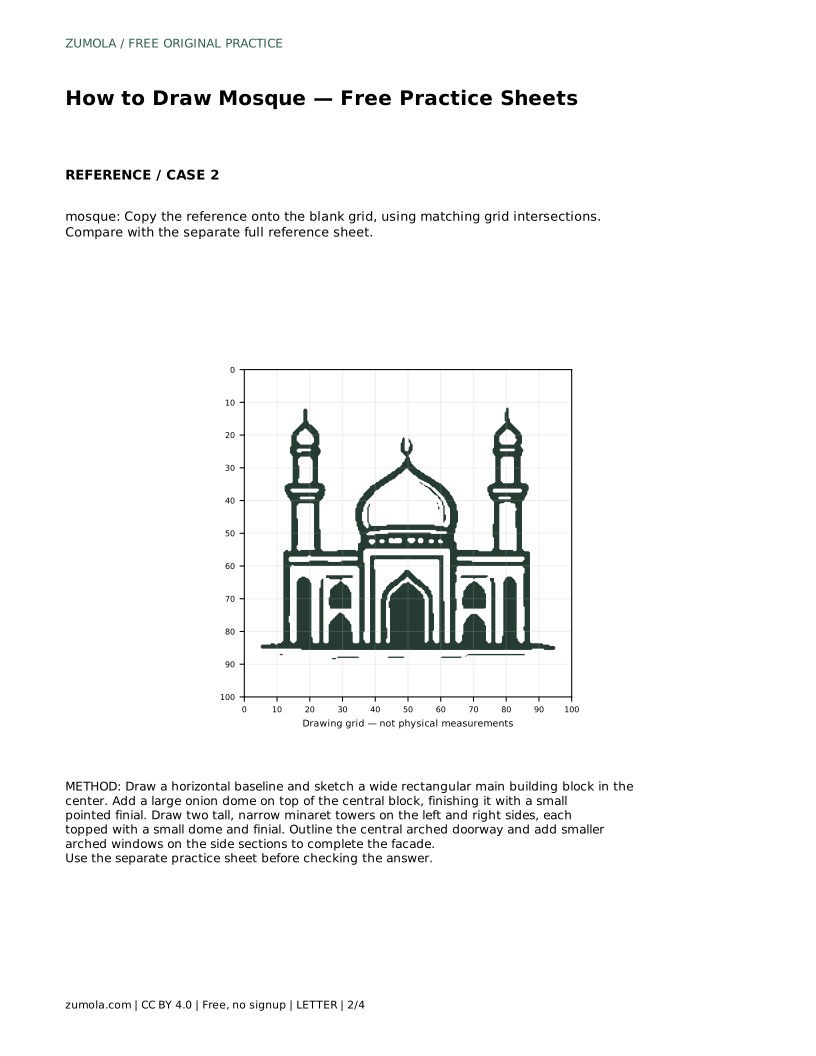
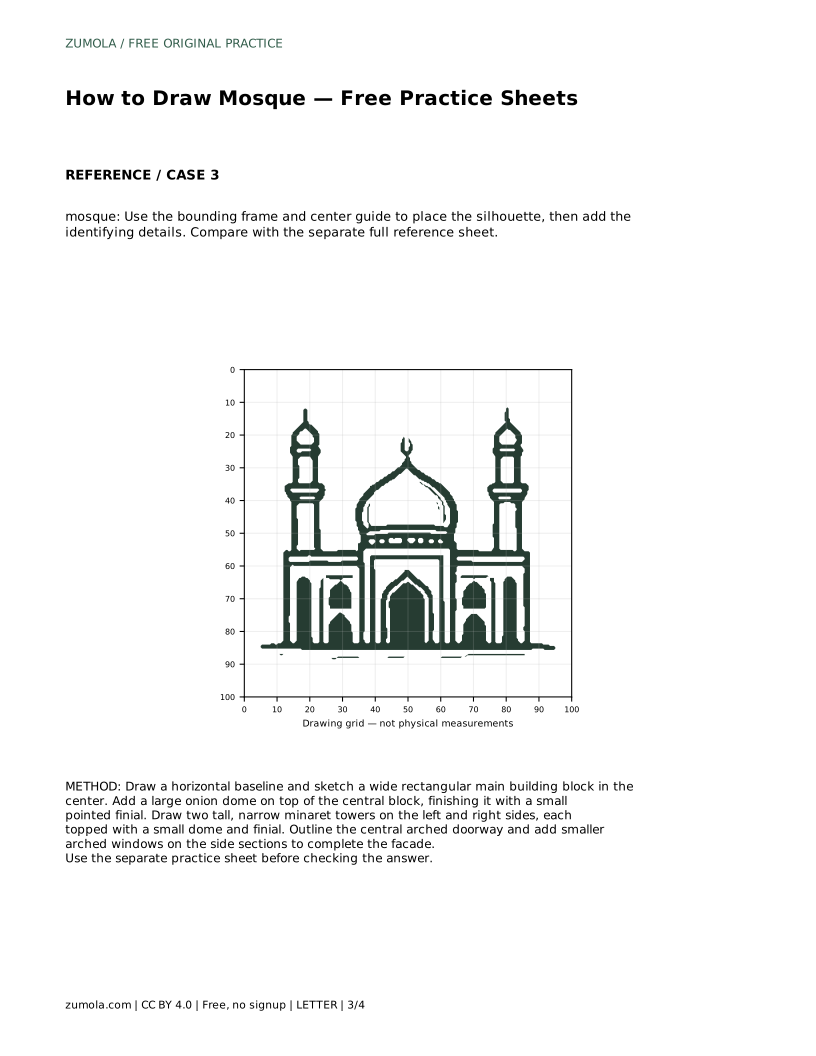
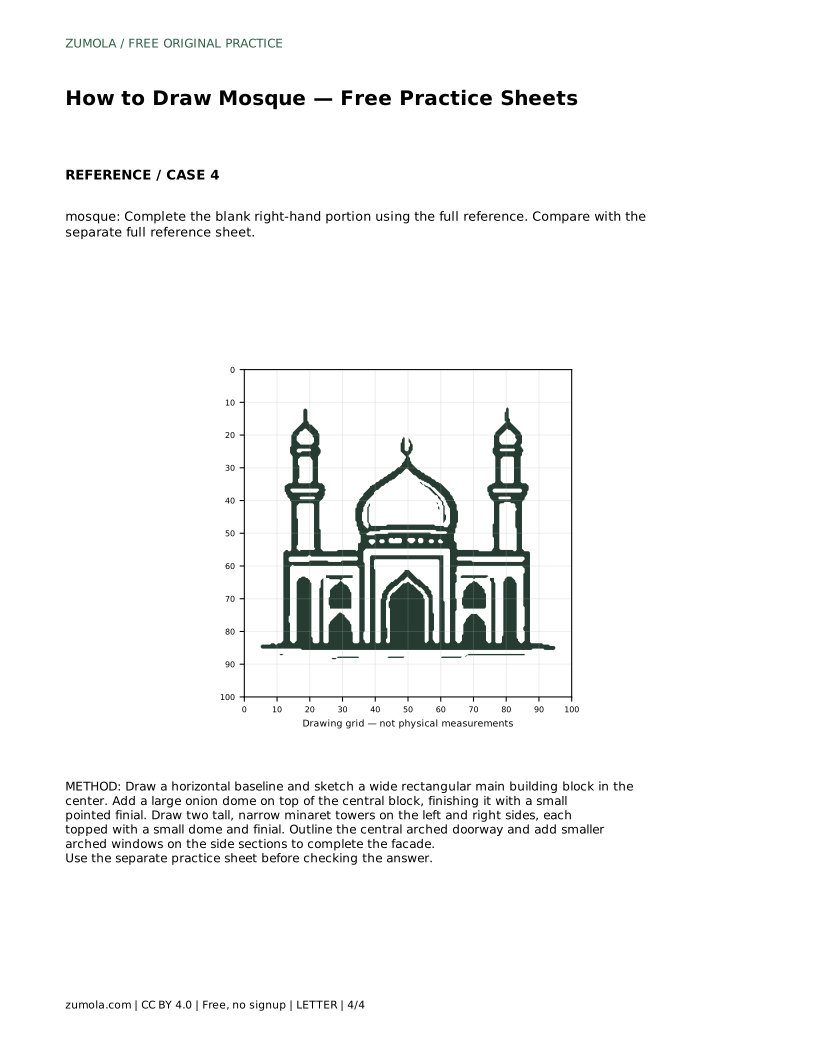
A mosque drawing becomes recognizable through a few strong shapes: a wide central building, a large onion dome with a pointed finial, and two tall minarets placed symmetrically on either side. This guide walks through those shapes in order, then explains how to use tracing, grid, and bounding-frame practice sheets to check your proportions. The goal is not a pixel-perfect copy but a clear, balanced silhouette with the identifying features in sensible places.
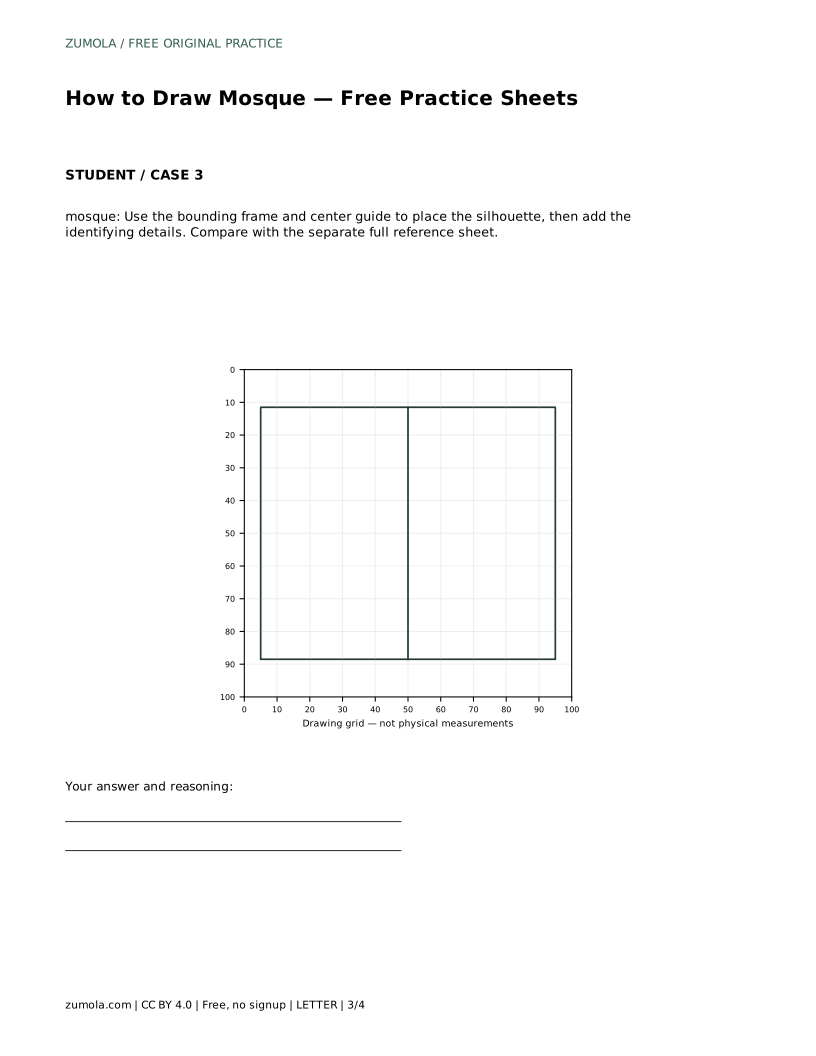
Begin with a horizontal baseline. This line represents the ground the building sits on and keeps the structure from floating. Above it, sketch a wide rectangle for the main building. Keep this block wider than it is tall; a mosque facade usually reads as broad and grounded rather than narrow and tower-like. Lightly mark a vertical center line through the rectangle so the dome and doorway can be placed on the same axis.
Work lightly at this stage. The rectangle is a placeholder, not a final wall. If the block feels too tall, lower its top edge before adding anything above it, because the dome and minarets will add considerable height.
Center the dome on top of the rectangle. An onion dome bulges outward before narrowing to a point, so draw it as a rounded shape that widens near its base and curves inward toward the top. Keep the widest part roughly above the rectangle's edges rather than spilling far beyond them. Finish with a small pointed finial, a short vertical spike at the dome's peak.
Check the dome's height against the building block. A dome that is taller than the rectangle can look top-heavy; a dome that is too shallow loses the onion silhouette. Adjust the curve rather than the width if the shape feels off.
Draw two tall, narrow towers on the left and right sides of the main building. They should mirror each other in height and width. Each minaret gets a small dome and finial at its top, echoing the central dome at a smaller scale. Keep the towers close enough to the building to read as part of one structure, but leave a little space so their outlines stay distinct.
Symmetry is the main check here. Measure the gap between each minaret and the central block; the two gaps should look similar. If one tower is noticeably taller, shorten or lengthen it before adding detail.
Outline a central arched doorway on the building block, aligned with the center line and the dome above it. Add smaller arched windows on the side sections of the facade. Arches should curve smoothly from the sides to a rounded top; keep their widths consistent with one another.
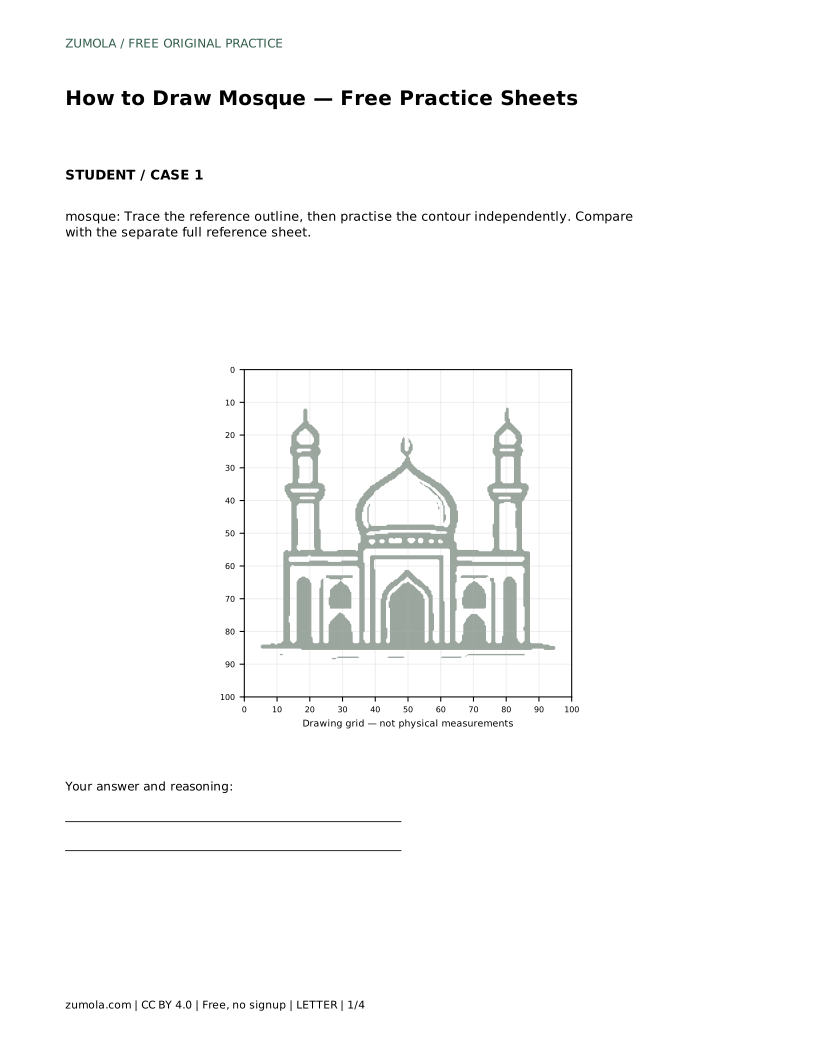
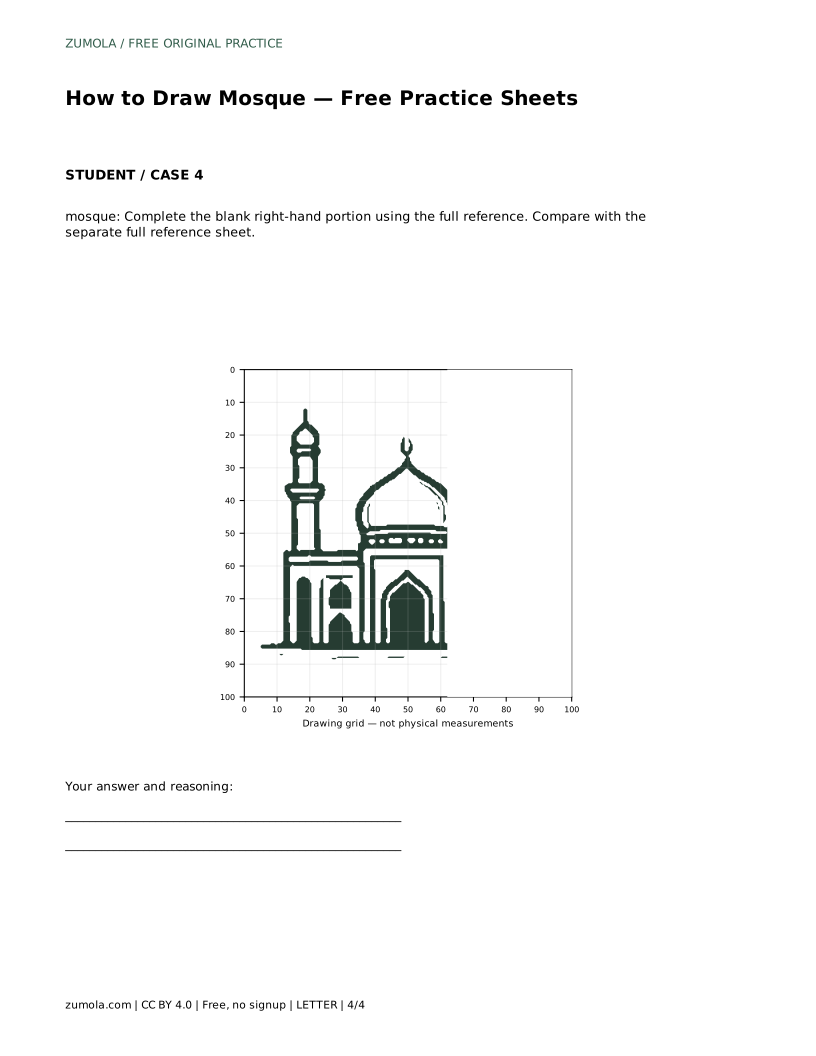
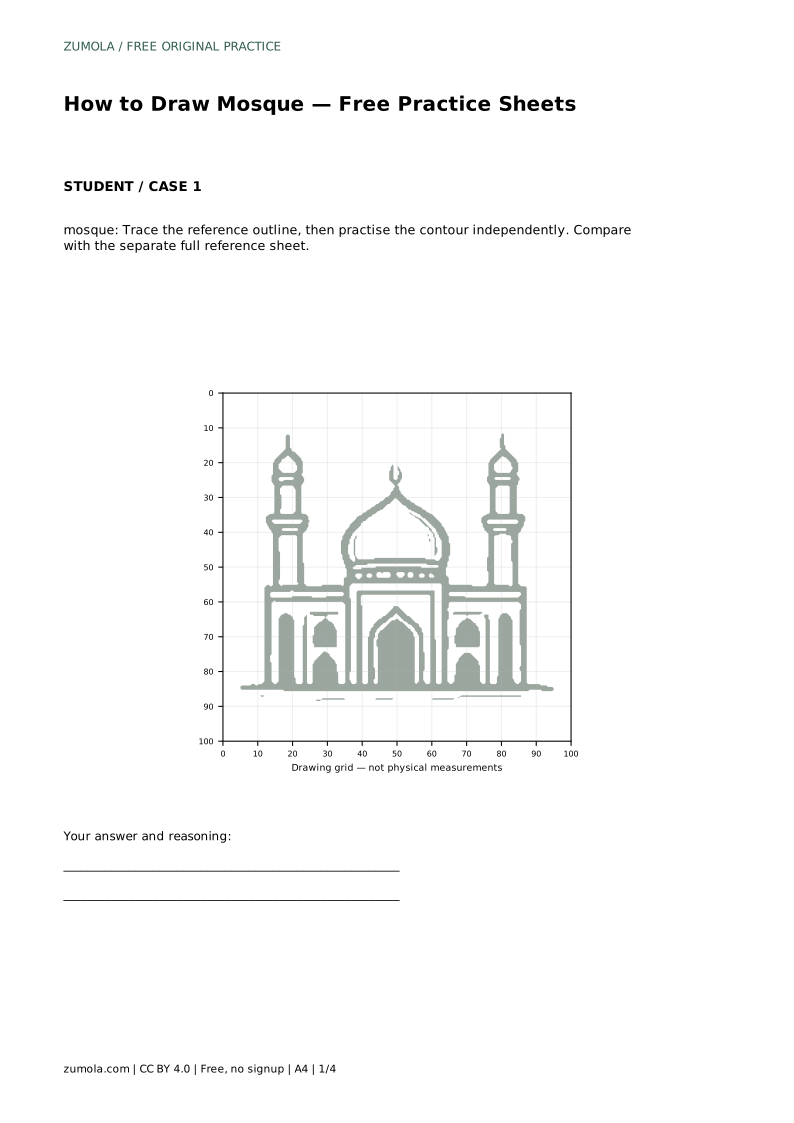
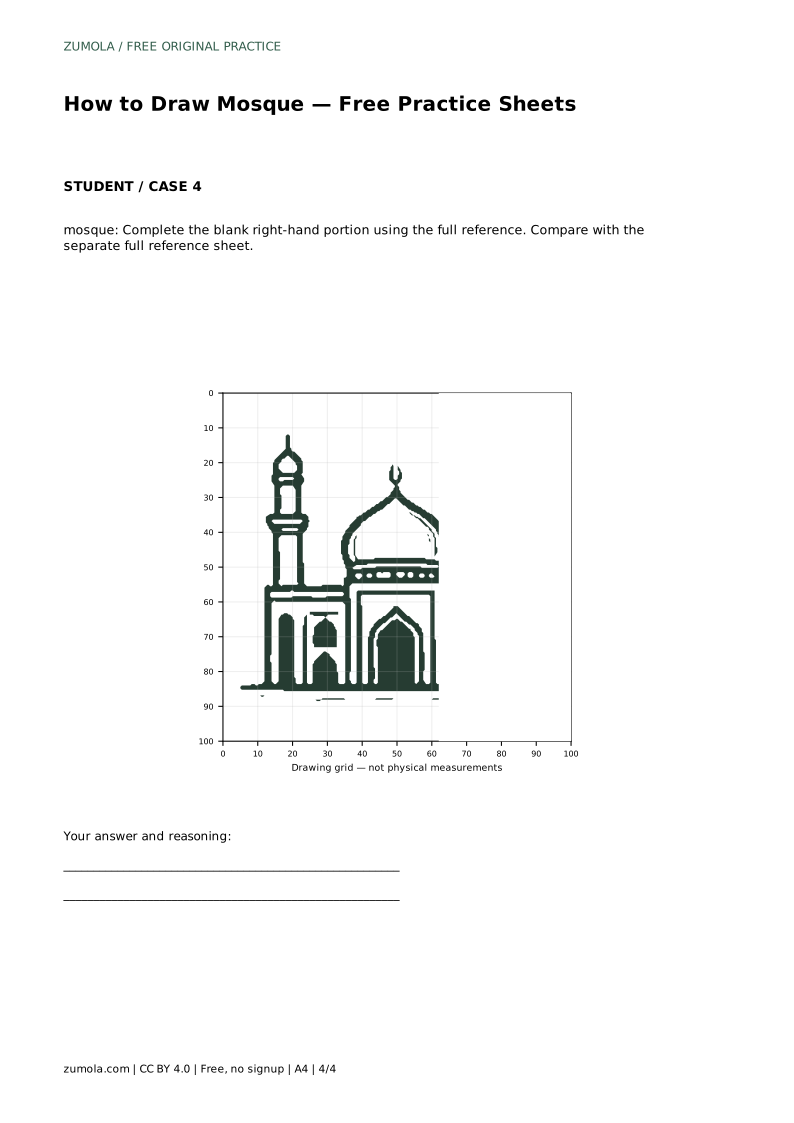
When the drawing is complete, compare it with the separate full reference sheet. Look at the large features first: dome shape, minaret placement, doorway position. Then check smaller details. Tracing sheets help you feel the contour; grid sheets help you match positions at intersections; bounding-frame sheets help you place the silhouette before adding detail. Each method supports the same underlying skill, so use whichever sheet matches the practice you need.
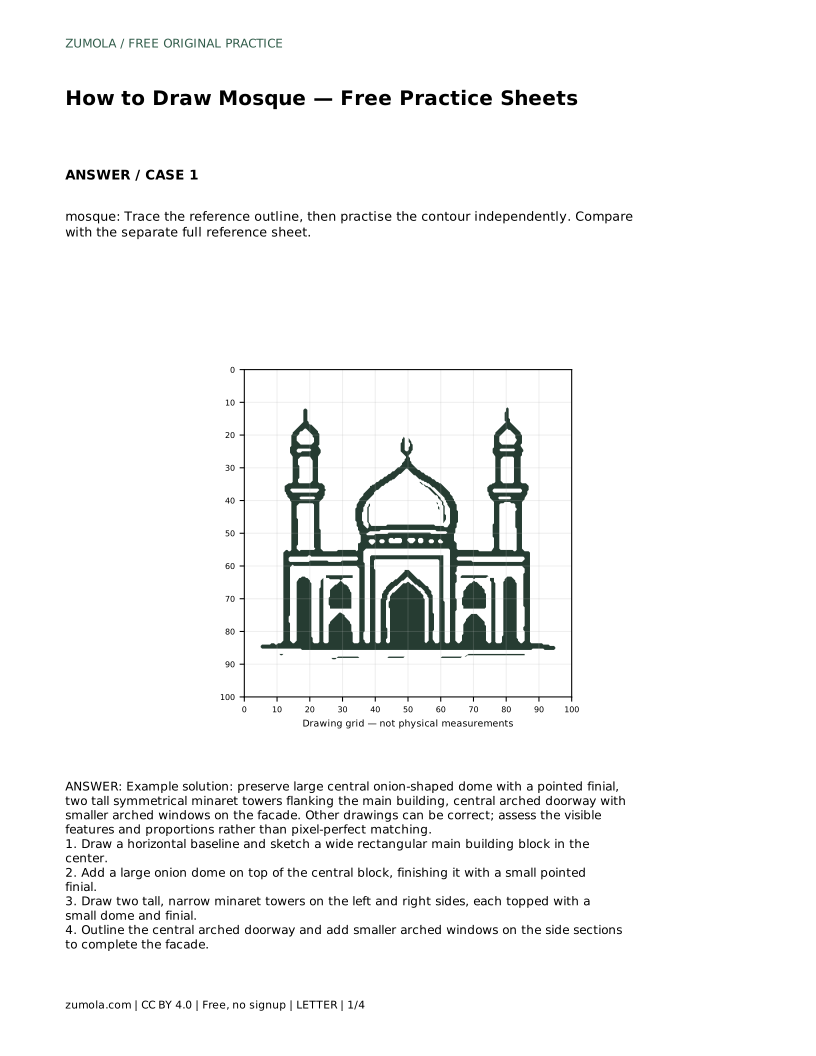
mosque: Trace the reference outline, then practise the contour independently. Compare with the separate full reference sheet.
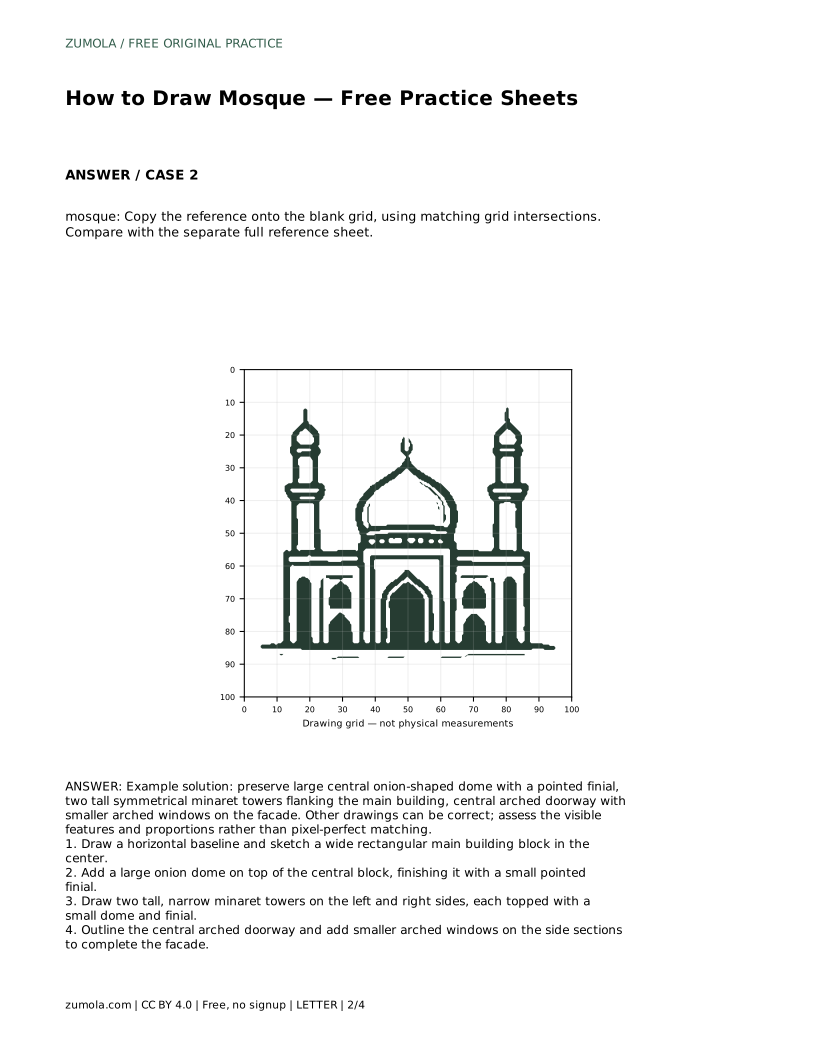
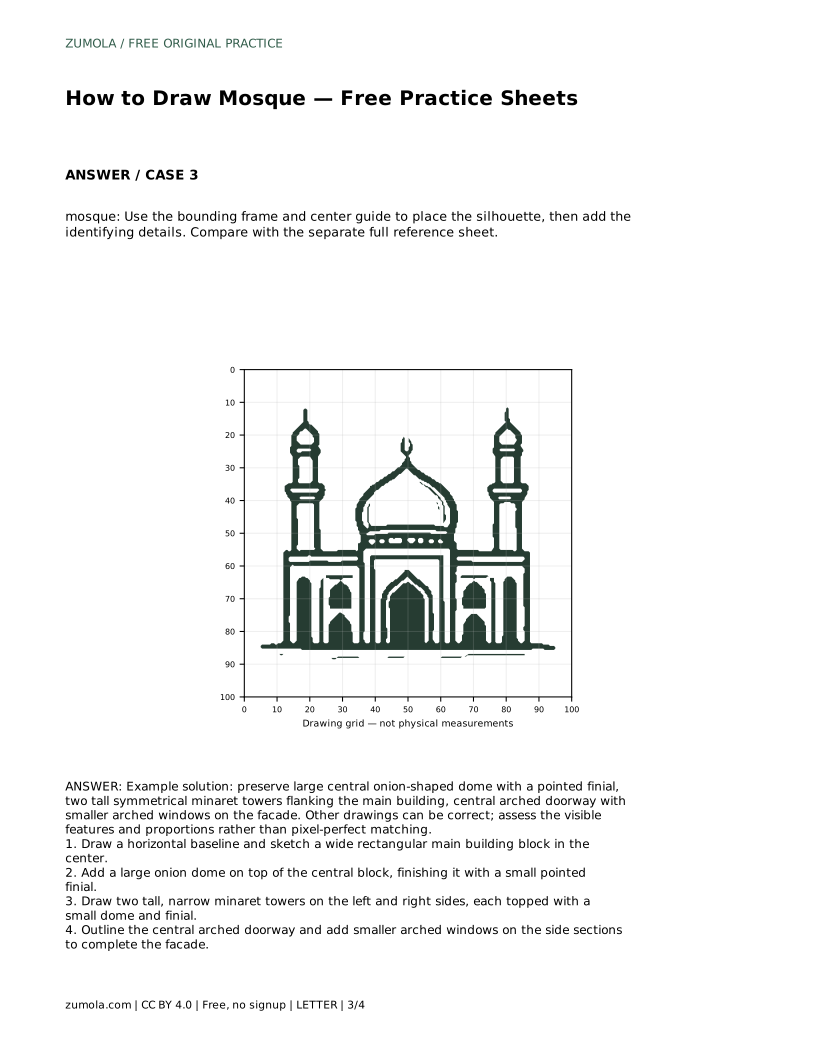
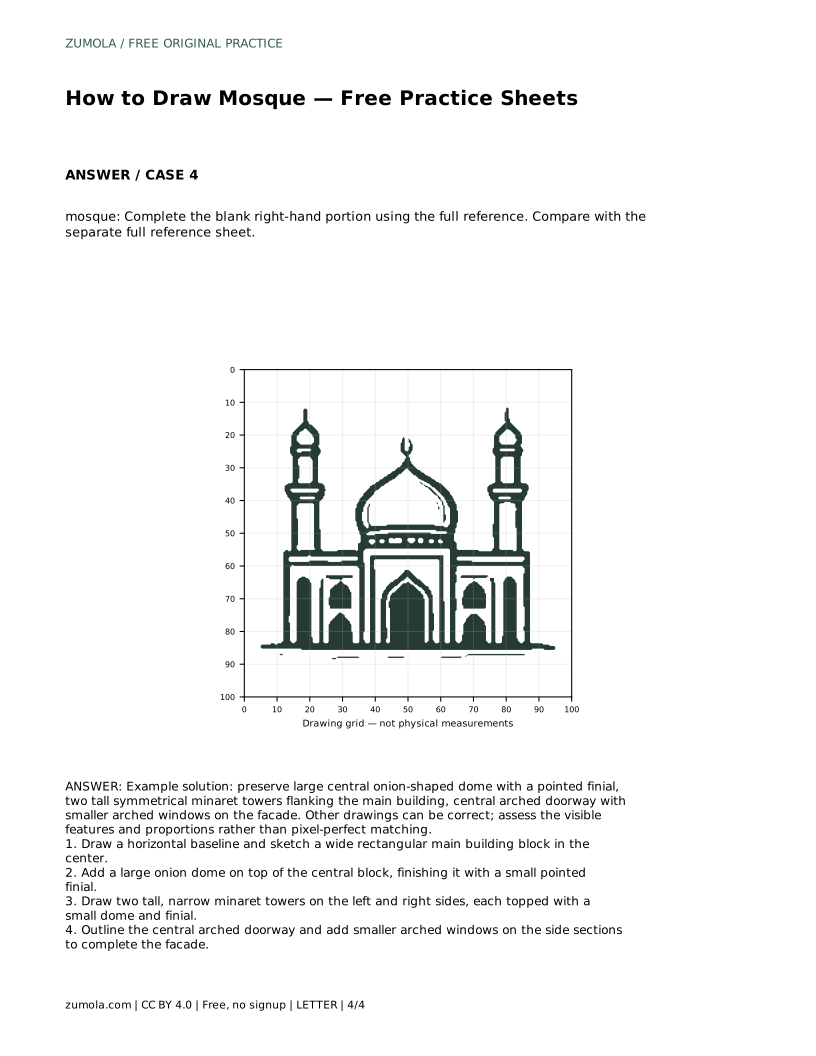
Example solution: preserve large central onion-shaped dome with a pointed finial, two tall symmetrical minaret towers flanking the main building, central arched doorway with smaller arched windows on the facade. Other drawings can be correct; assess the visible features and proportions rather than pixel-perfect matching. Draw a horizontal baseline and sketch a wide rectangular main building block in the center. Add a large onion dome on top of the central block, finishing it with a small pointed finial. Draw two tall, narrow minaret towers on the left and right sides, each topped with a small dome and finial. Outline the central arched doorway and add smaller arched windows on the side sections to complete the facade.
No. Several drawings can be correct. Assess whether the large central dome, two symmetrical minarets, central arched doorway, and smaller arched windows are present and reasonably proportioned.
Start with tracing if you are learning the contour, use the grid to practice placement at intersections, and use the bounding frame to plan the silhouette before adding details.
There is no single rule, but the minarets usually rise above the main building block and often near or above the dome's base. Keep both towers equal in height so the facade stays balanced.
All drawing practice · Free coordinate paper
Original resources · CC BY 4.0 · Free for personal and classroom use with attribution.