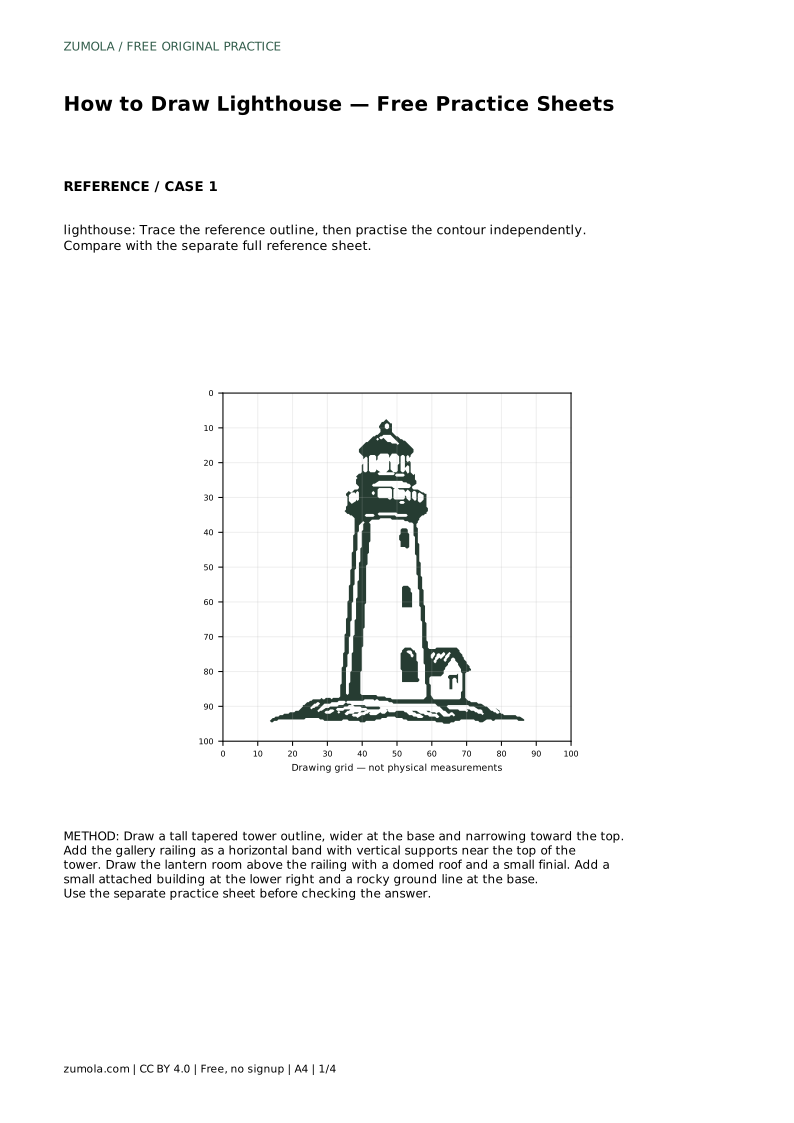
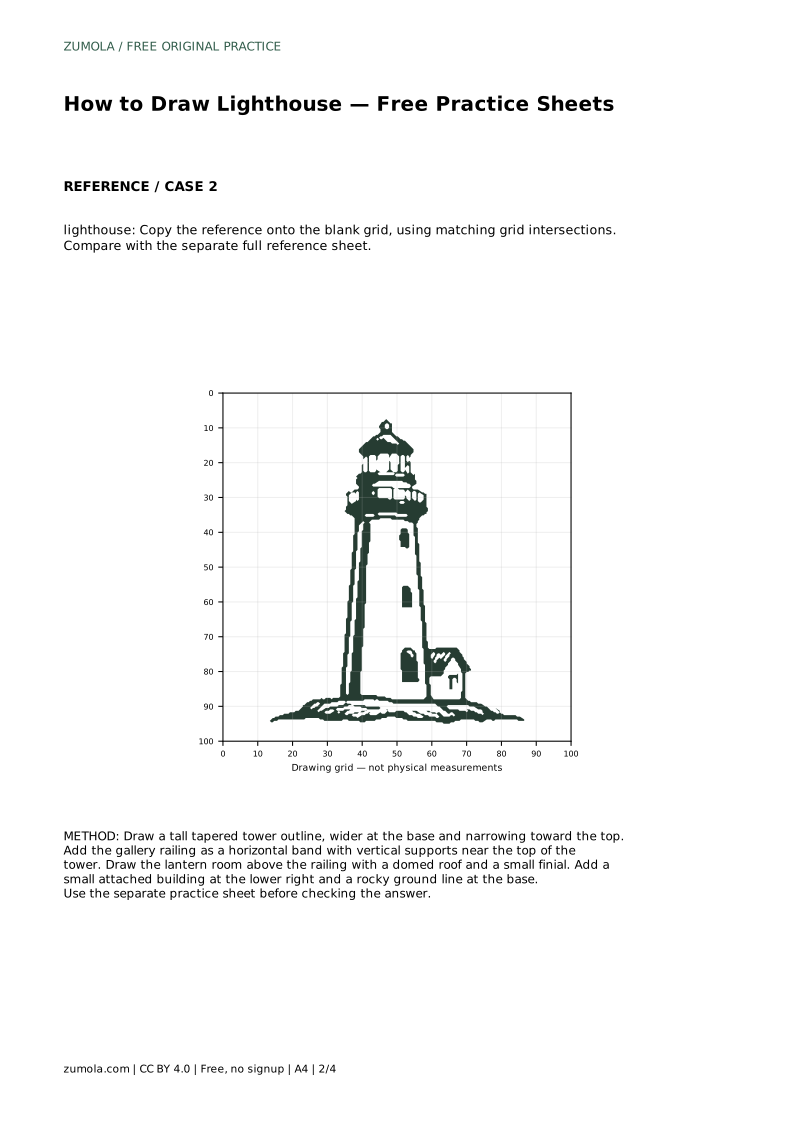
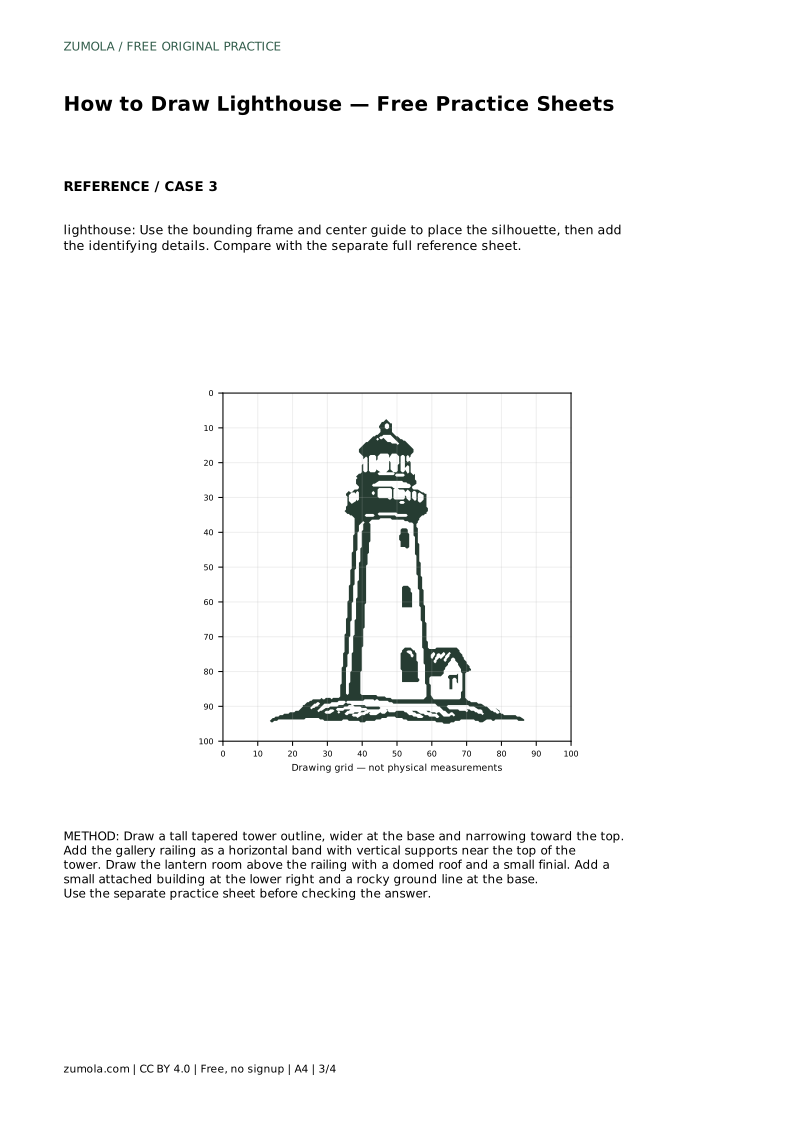
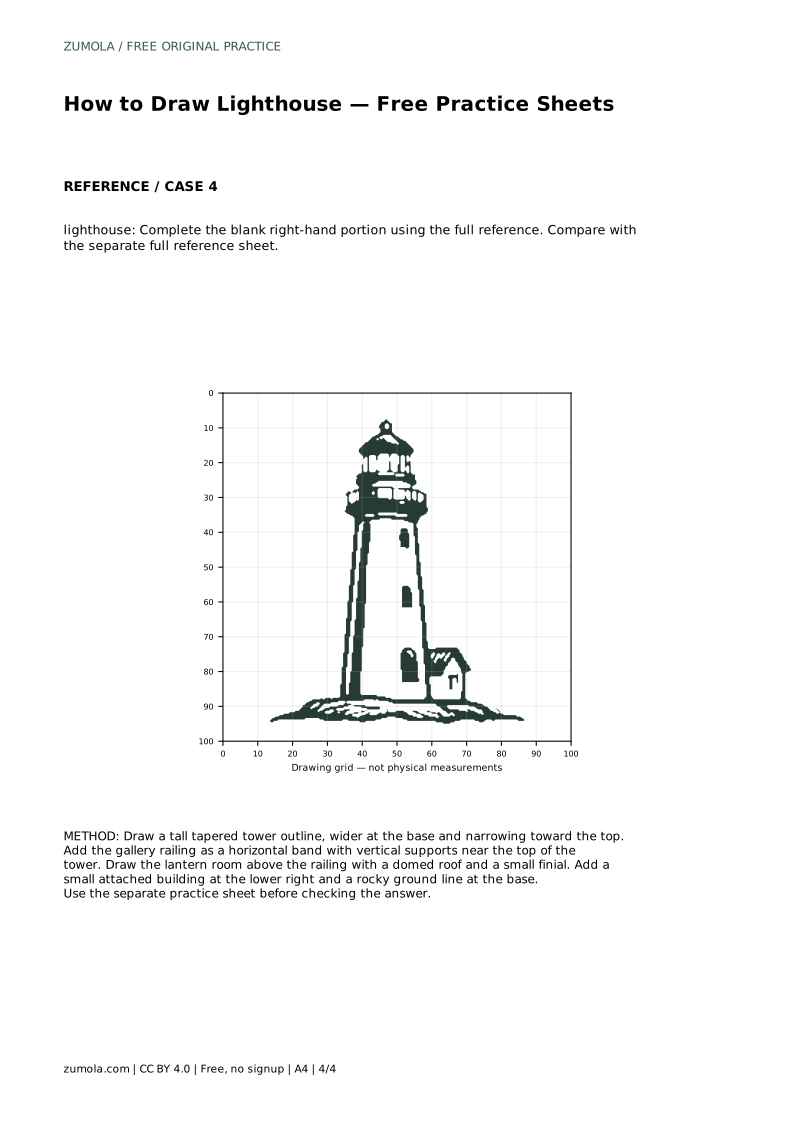
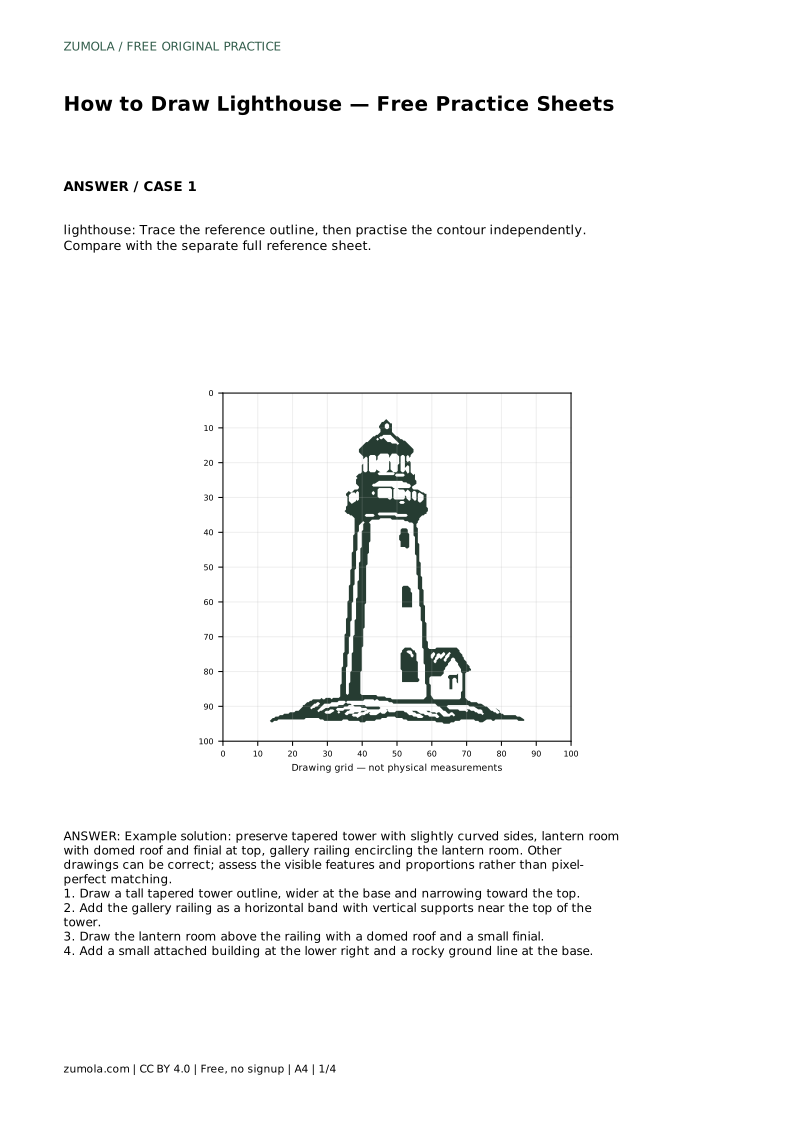
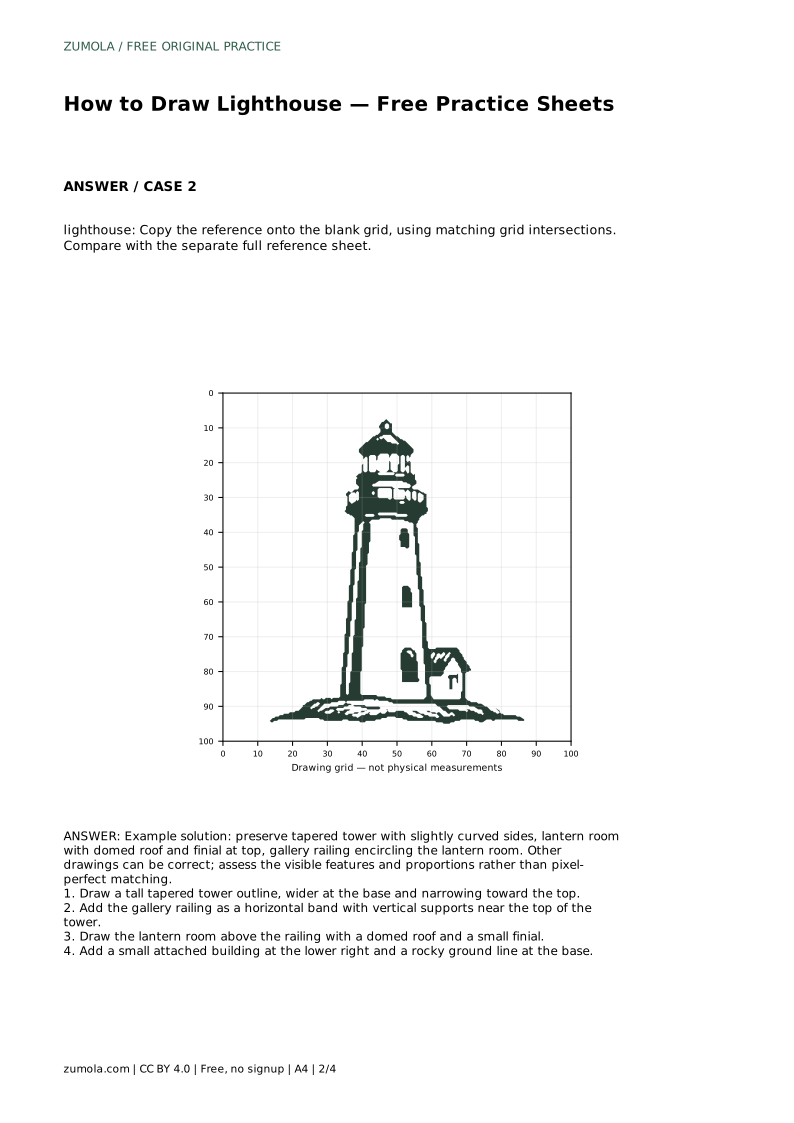
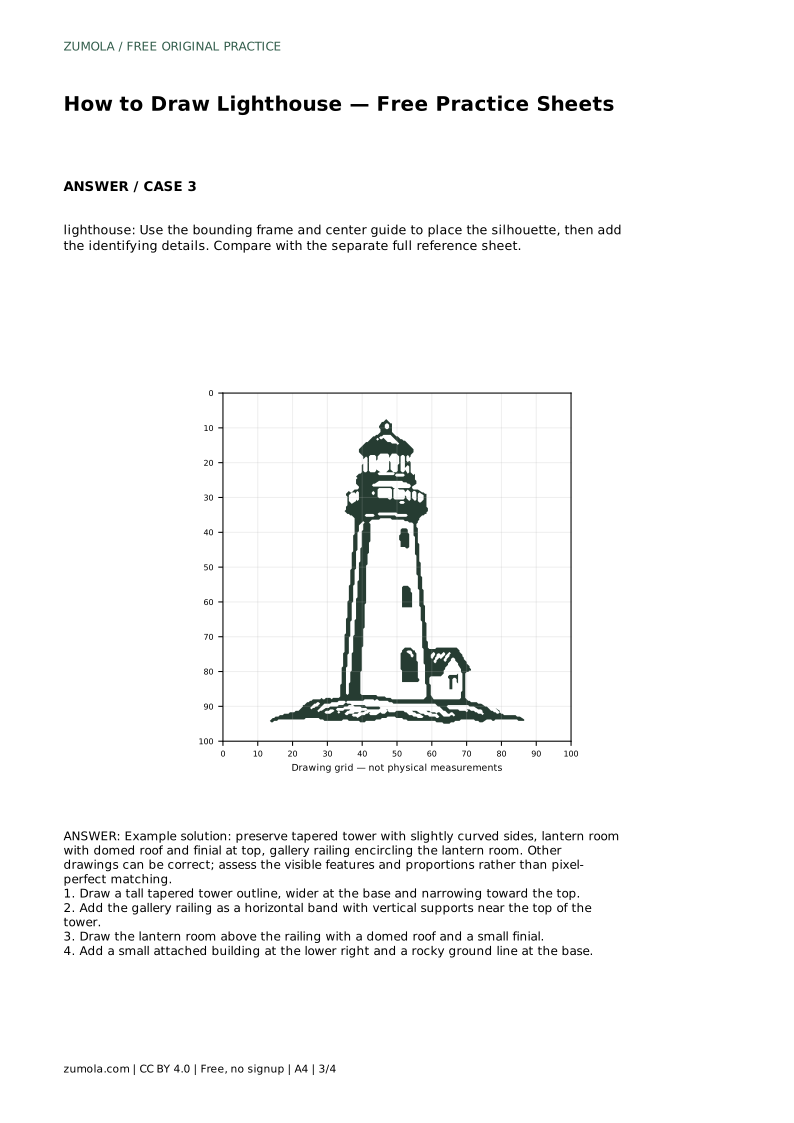
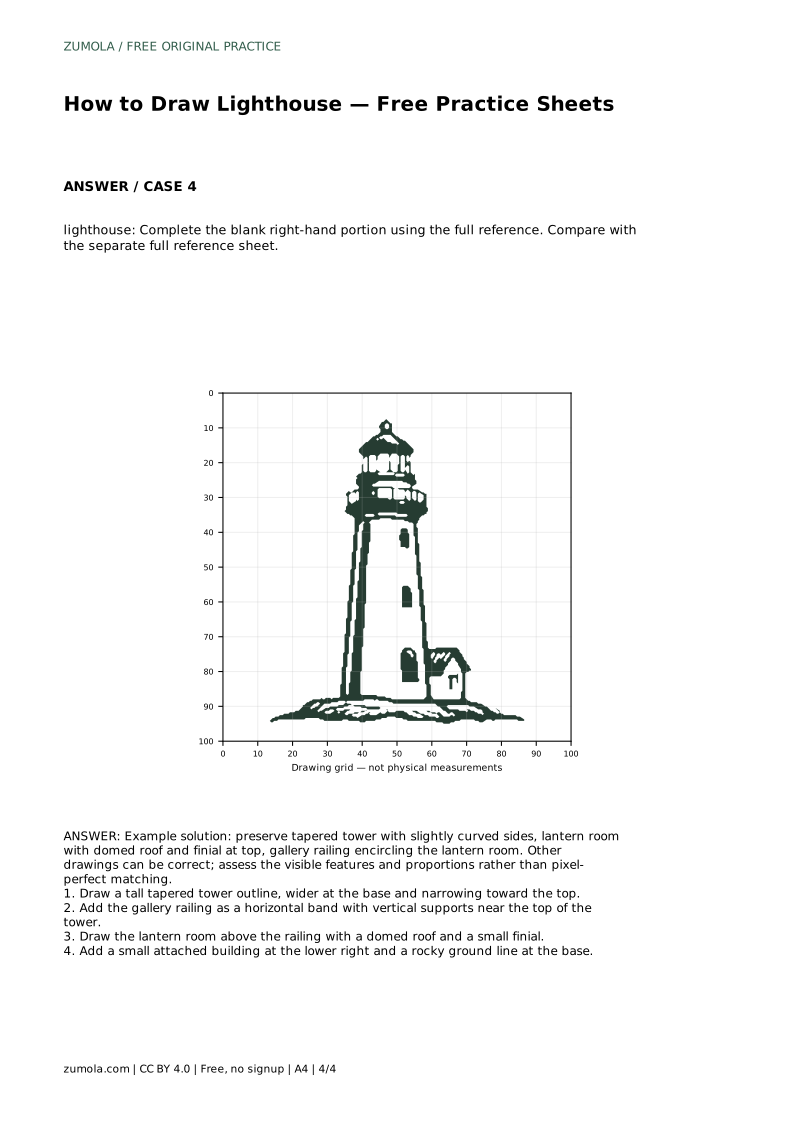
Reference diagrams
LETTER · Download PDF
A4 · Download PDF
Free original resources
Learn to draw a lighthouse by building a tapered tower, gallery railing, domed lantern room and rocky base, then check proportions with a clear rubric.
Four original cases, with reference diagrams, practice sheets and worked answers. Everything is free; no signup required.
LETTER · Download PDF
A4 · Download PDF
LETTER · Download PDF
A4 · Download PDF
LETTER · Download PDF
A4 · Download PDF
Use A4 or US Letter to match your printer. Use the stated values and conditions to solve each exercise; diagrams are not physical measuring rulers.
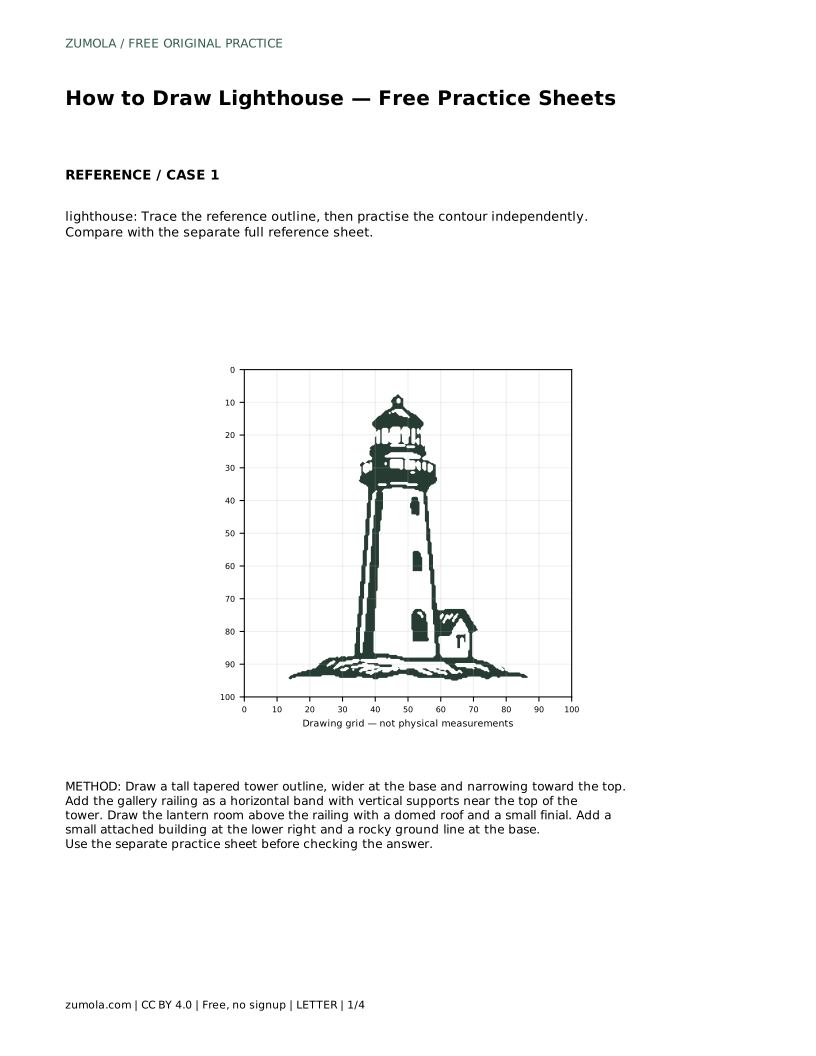
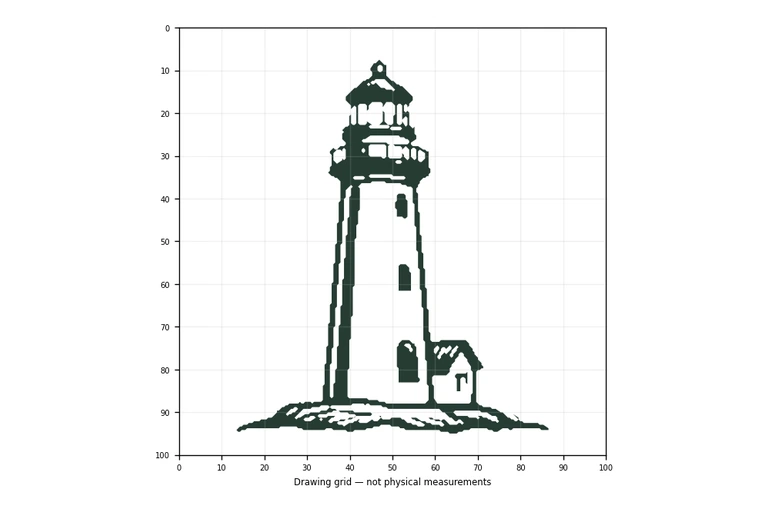
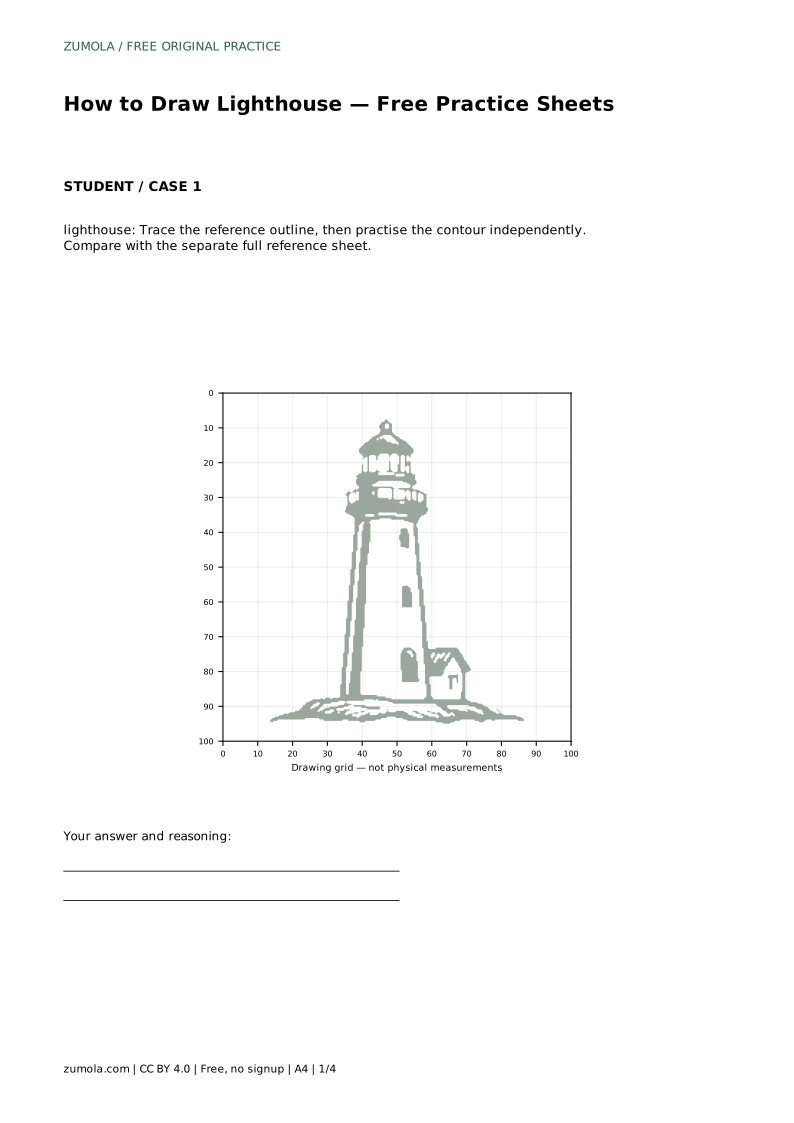
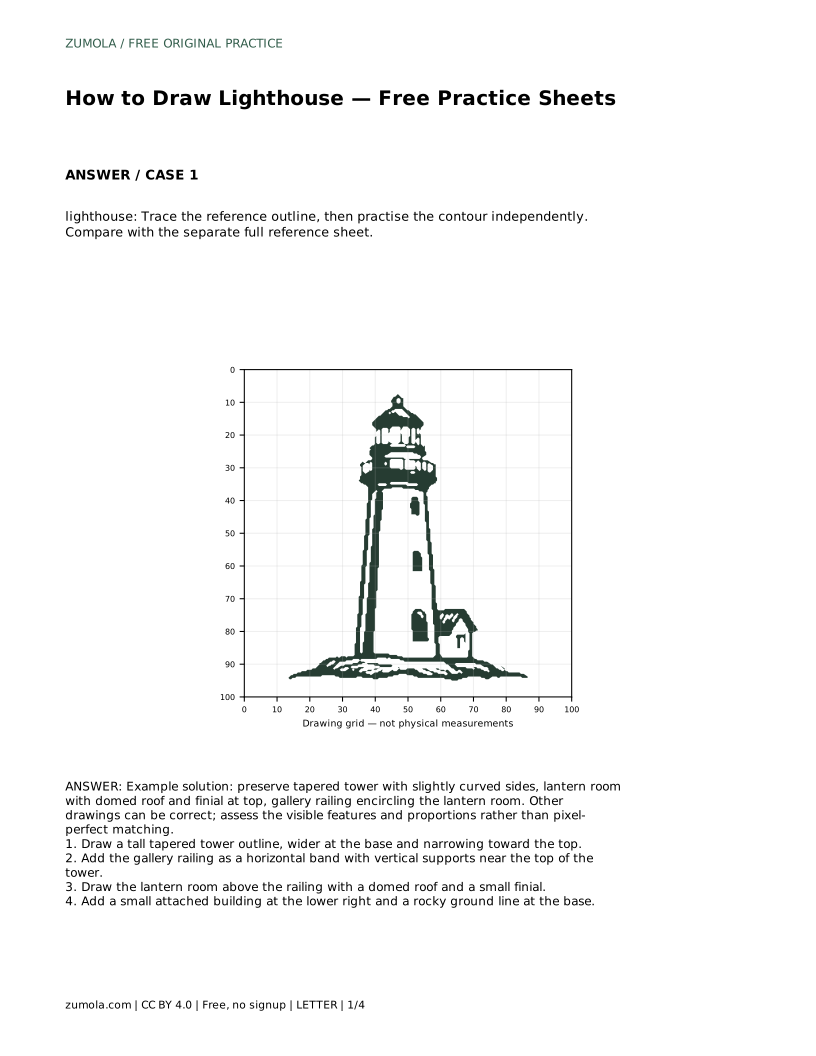
A lighthouse is easy to recognise because of its shape: a tall tower that narrows toward the top, a railing around the light, and a domed lantern room with a finial. This page shows how to build those parts in order, from the large silhouette to the small identifying details. You can trace a reference outline first, then practise the same contour on your own. Other drawings can be correct, so judge visible features and proportions rather than pixel-perfect matching.
Begin with the largest shape, not the windows or the light. Draw a tall tapered tower outline, wider at the base and narrowing toward the top. Keep the two side edges gently curved rather than perfectly straight; a slight curve gives the tower a believable profile. Check that the base is clearly wider than the top before adding anything else.
Use a light line for this first outline so you can adjust it. If the tower looks like a rectangle, redraw the sides so they converge toward the top. If it looks too narrow at the base, widen the bottom rather than shrinking the top.
The gallery is the horizontal band near the top of the tower. Add the gallery railing as a horizontal band with vertical supports near the top of the tower. The railing should sit just below the lantern room and extend slightly beyond the tower sides, so it reads as a platform rather than a painted stripe.
Above the railing, draw the lantern room with a domed roof and a small finial. The lantern room is usually narrower than the gallery, and the dome should curve smoothly to a point at the top. Keep the finial small; it marks the highest point without dominating the drawing.
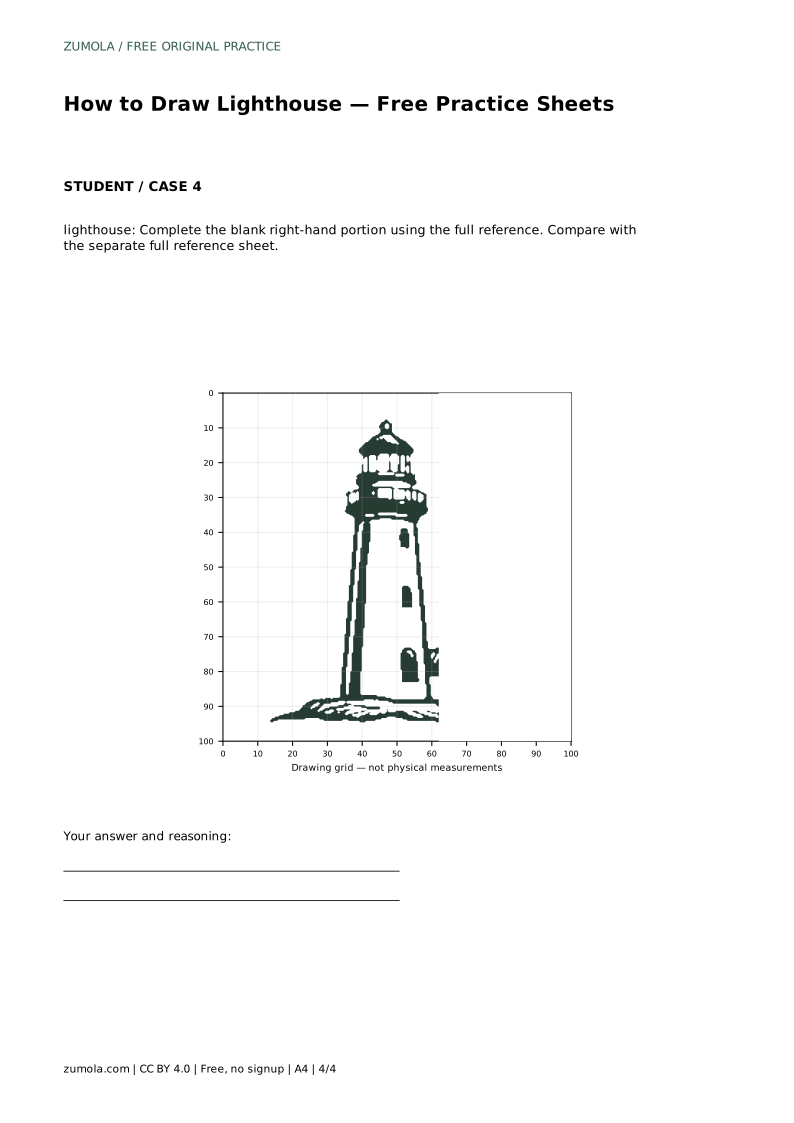
Finish the setting before judging the whole drawing. Add a small attached building at the lower right and a rocky ground line at the base. The building should touch the tower so it reads as attached, and the ground line should sit below the base rather than crossing it.
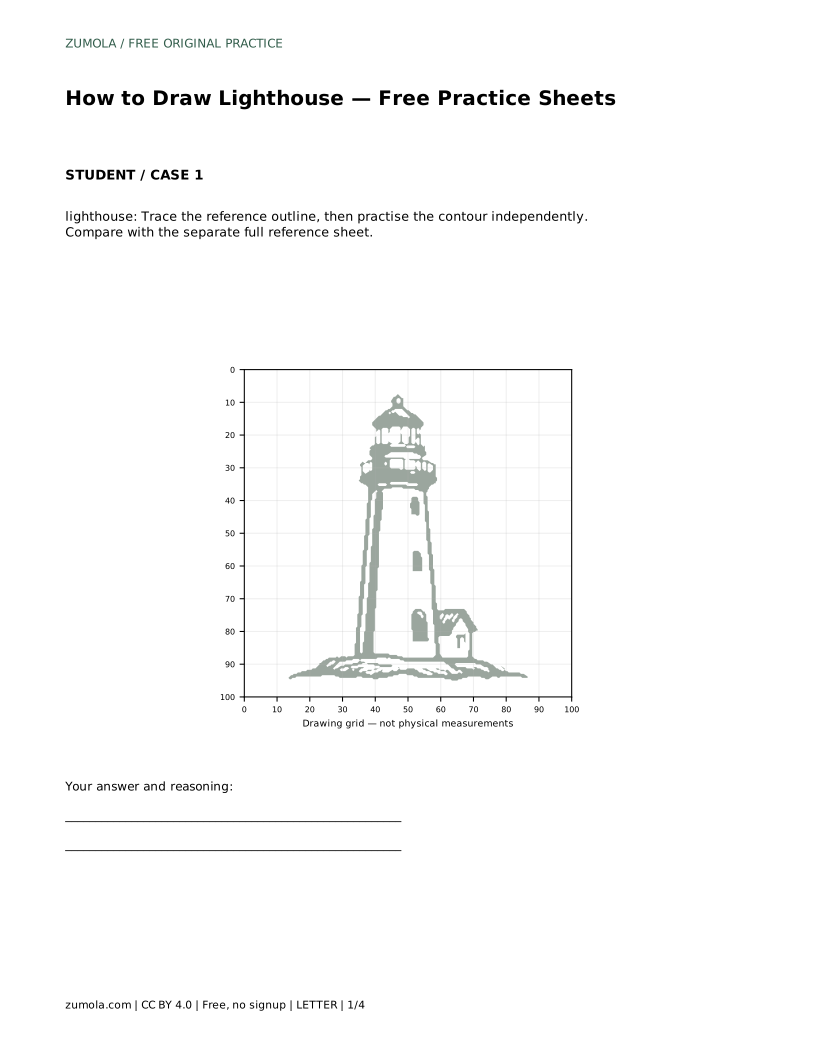
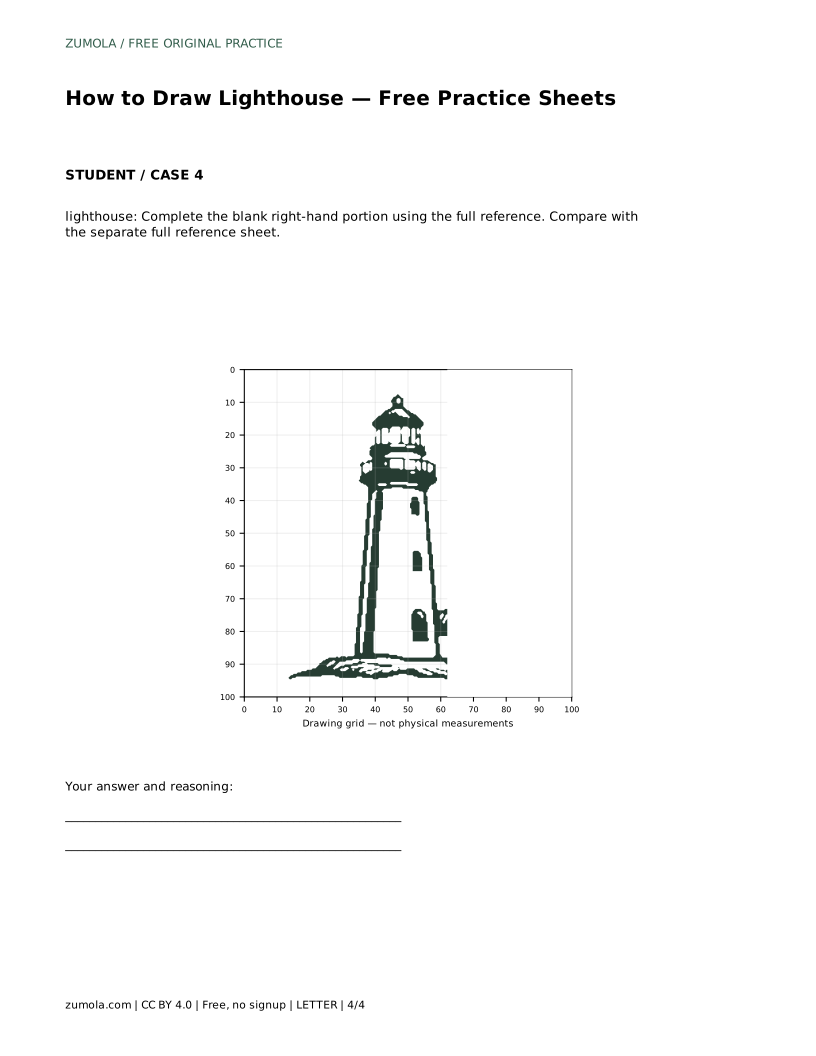
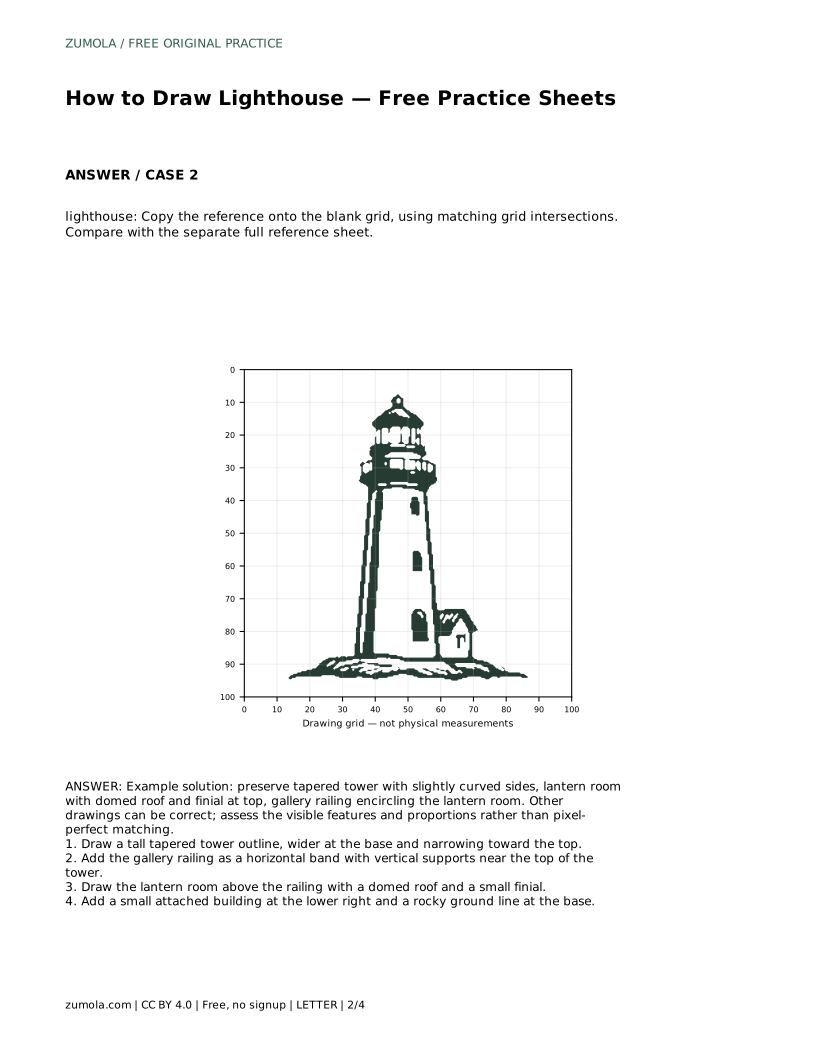
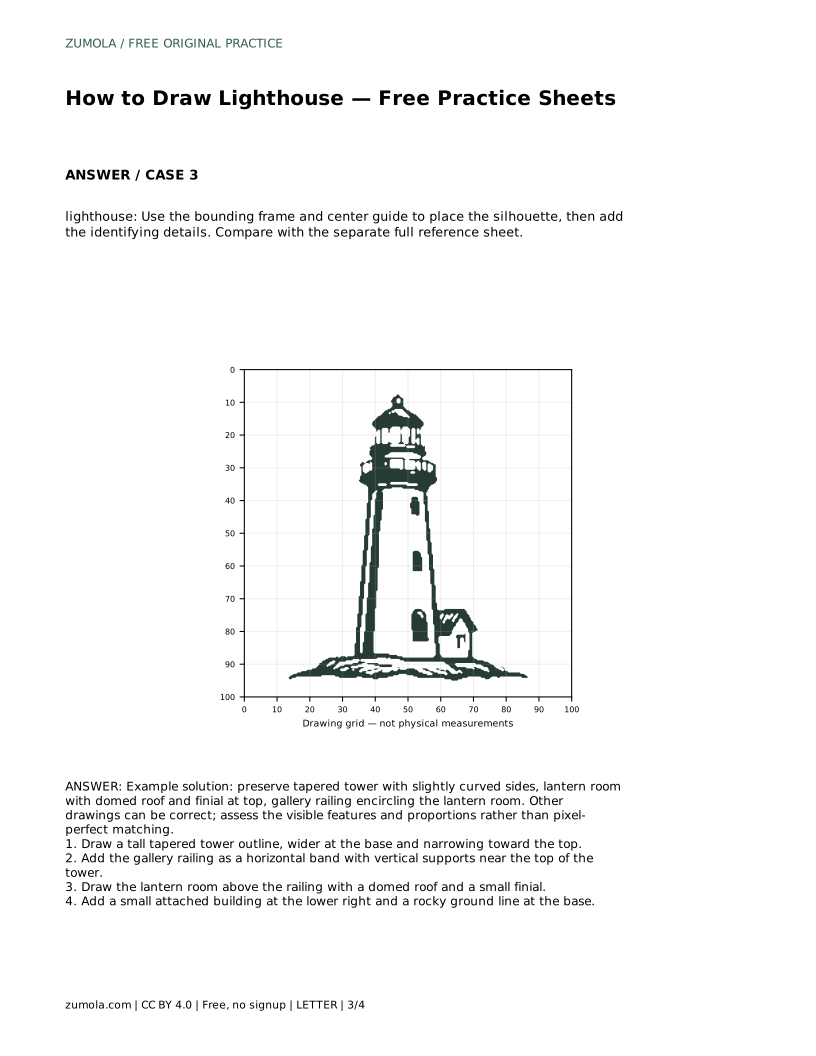
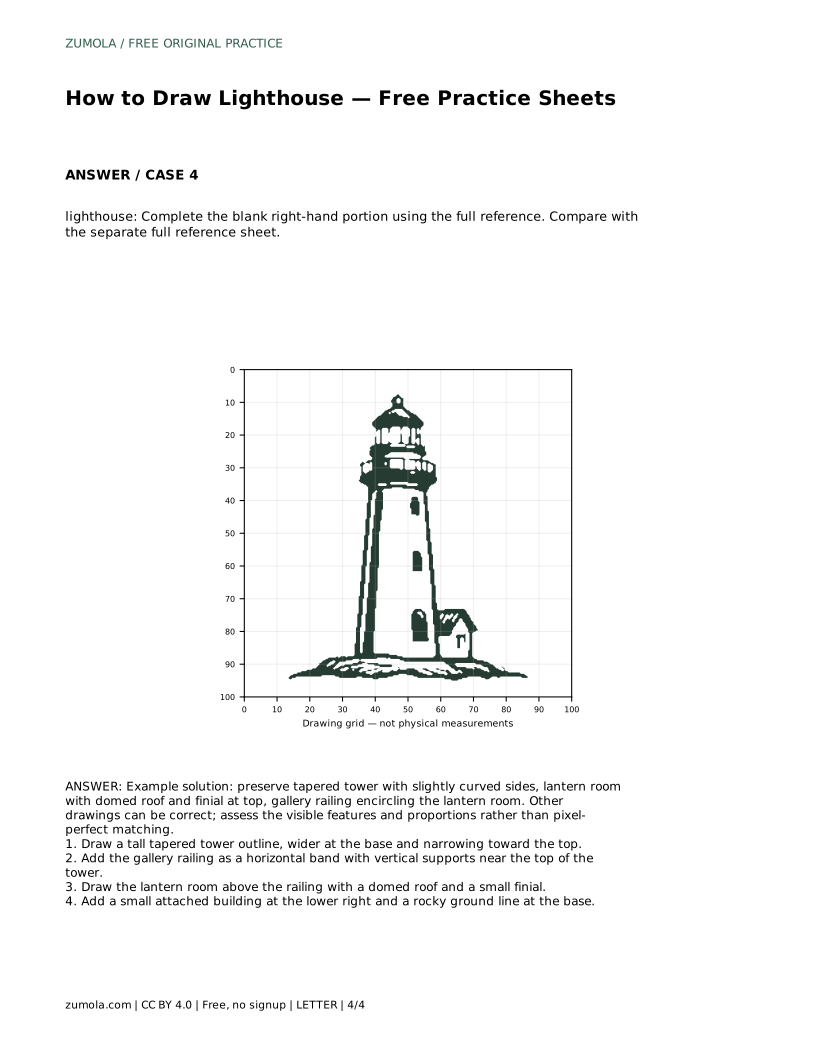
Compare your drawing with the separate full reference sheet. Look for the tapered tower, the gallery railing, the domed lantern room with finial, the attached building and the rocky ground line. If one feature is missing or misplaced, correct that part rather than redrawing everything.
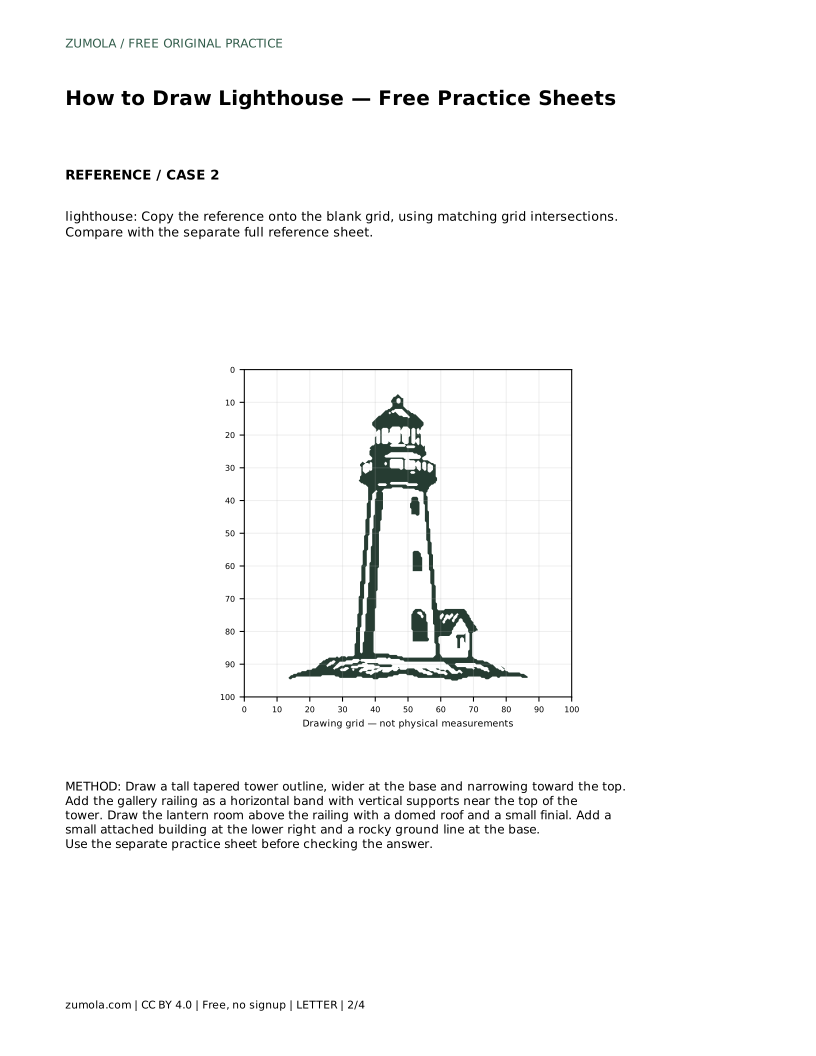
lighthouse: Trace the reference outline, then practise the contour independently. Compare with the separate full reference sheet.
Example solution: preserve tapered tower with slightly curved sides, lantern room with domed roof and finial at top, gallery railing encircling the lantern room. Other drawings can be correct; assess the visible features and proportions rather than pixel-perfect matching. Draw a tall tapered tower outline, wider at the base and narrowing toward the top. Add the gallery railing as a horizontal band with vertical supports near the top of the tower. Draw the lantern room above the railing with a domed roof and a small finial. Add a small attached building at the lower right and a rocky ground line at the base.
No. Slightly curved sides that taper from a wide base to a narrower top usually read better than rigid straight lines.
Place it at the lower right, touching the tower so it reads as attached, and keep it smaller than the tower.
Check the visible features and proportions: tapered tower, gallery railing, domed lantern room with finial, attached building and rocky ground line. Other drawings can be correct.
All drawing practice · Free coordinate paper
Original resources · CC BY 4.0 · Free for personal and classroom use with attribution.