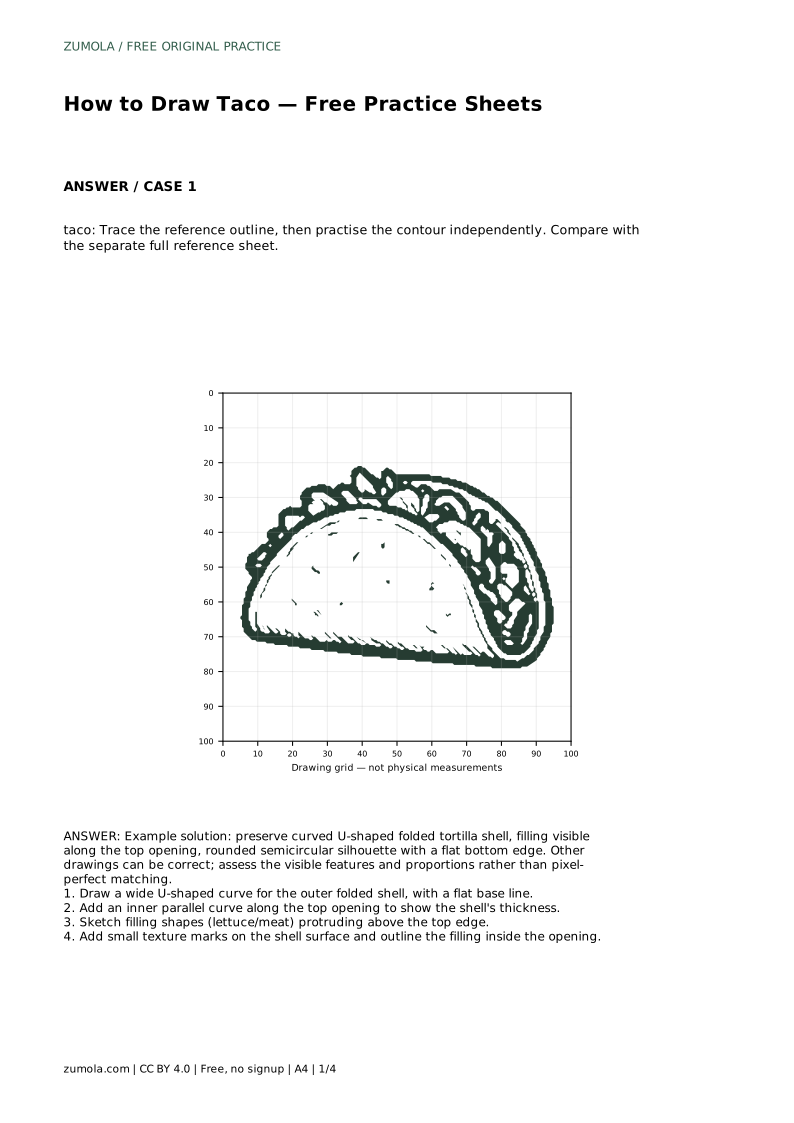
Reference diagrams
LETTER · Download PDF
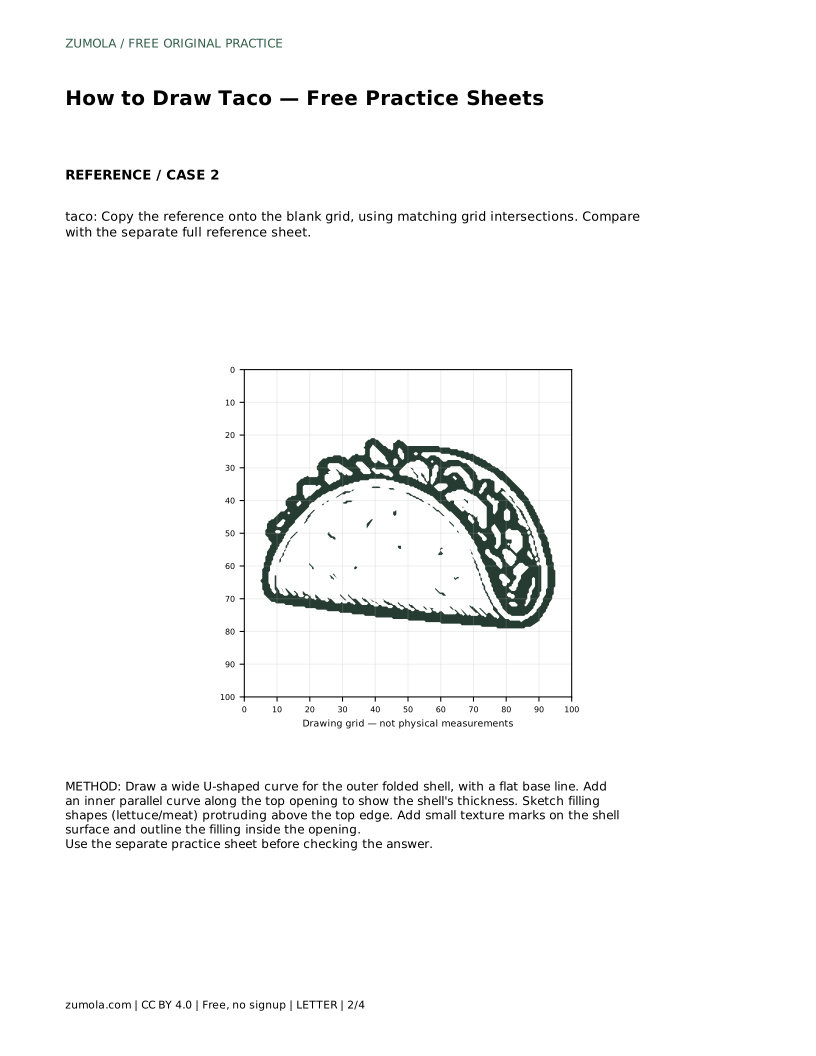
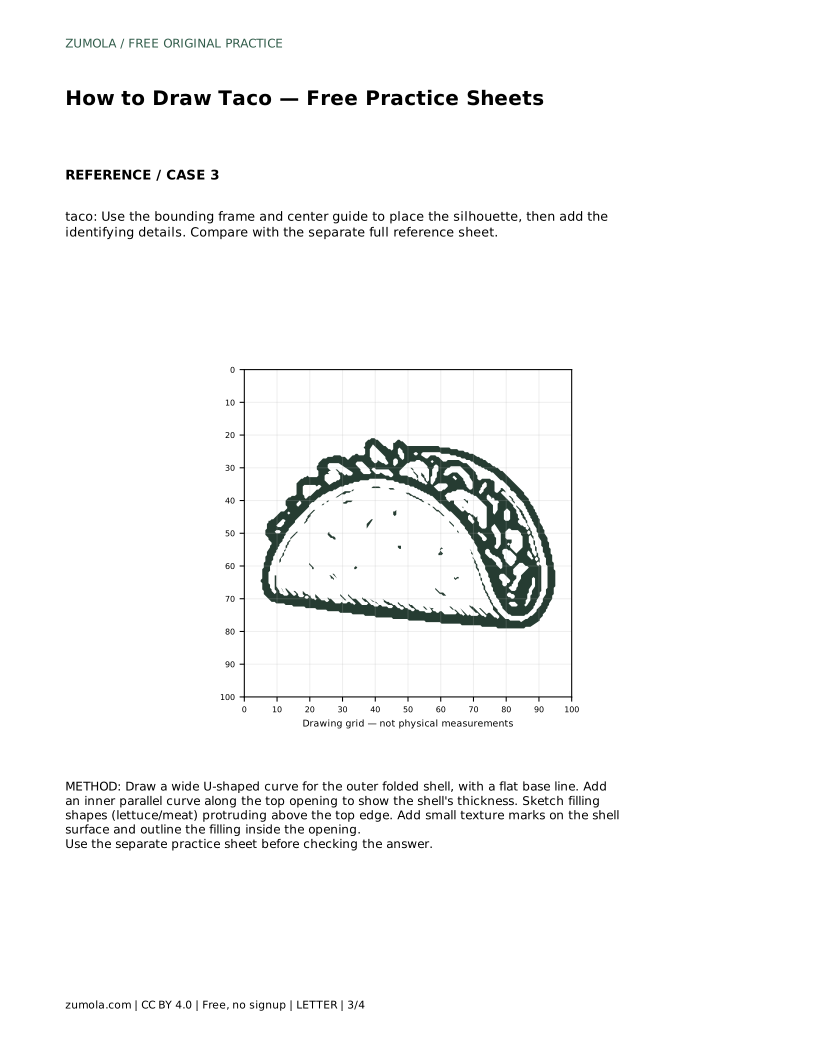
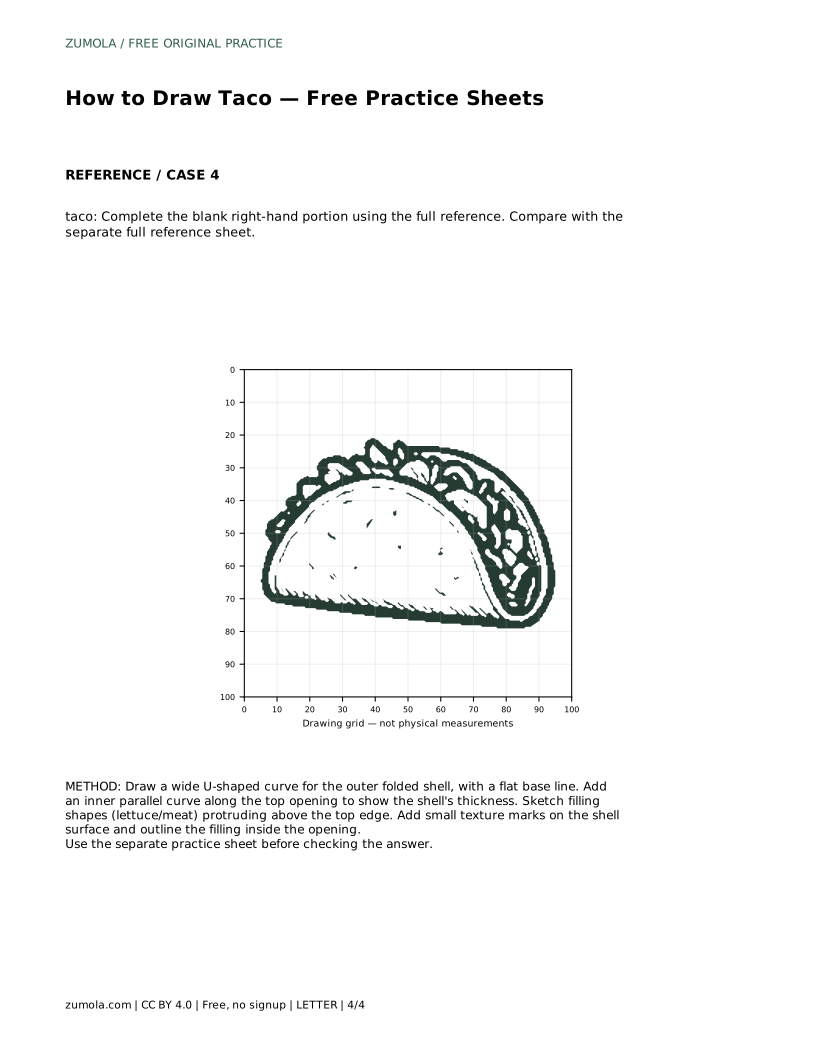
A4 · Download PDF
Free original resources
Learn to draw a cute taco with a folded shell, visible filling, and rounded silhouette. Use free practice sheets to trace, grid, and complete the drawing.
Four original cases, with reference diagrams, practice sheets and worked answers. Everything is free; no signup required.
LETTER · Download PDF
A4 · Download PDF
LETTER · Download PDF
A4 · Download PDF
LETTER · Download PDF
A4 · Download PDF
Use A4 or US Letter to match your printer. Use the stated values and conditions to solve each exercise; diagrams are not physical measuring rulers.
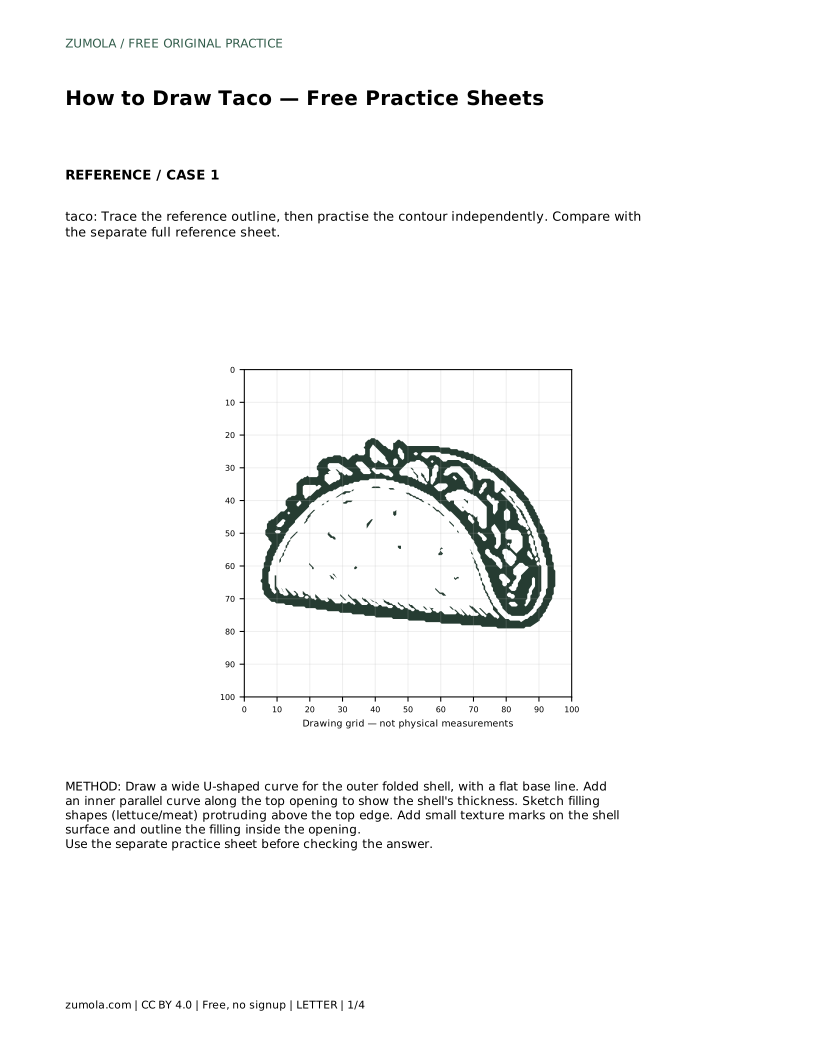
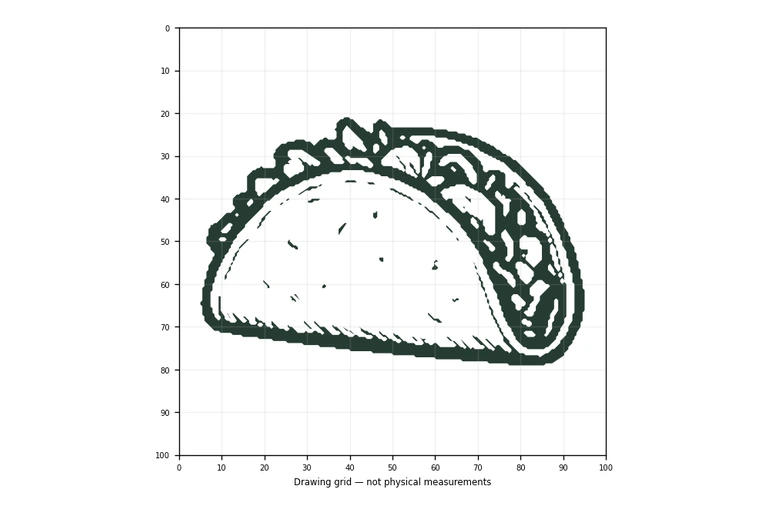
Drawing a cute taco starts with a simple folded shape: a wide U-curve with a flat base, an inner line for the shell’s thickness, and filling that peeks above the opening. This guide explains the key features and offers practice methods—tracing, grid copying, and partial completion—so you can build confidence. Remember, art has many valid outcomes; use the rubric to assess visible features and proportions rather than exact matching.
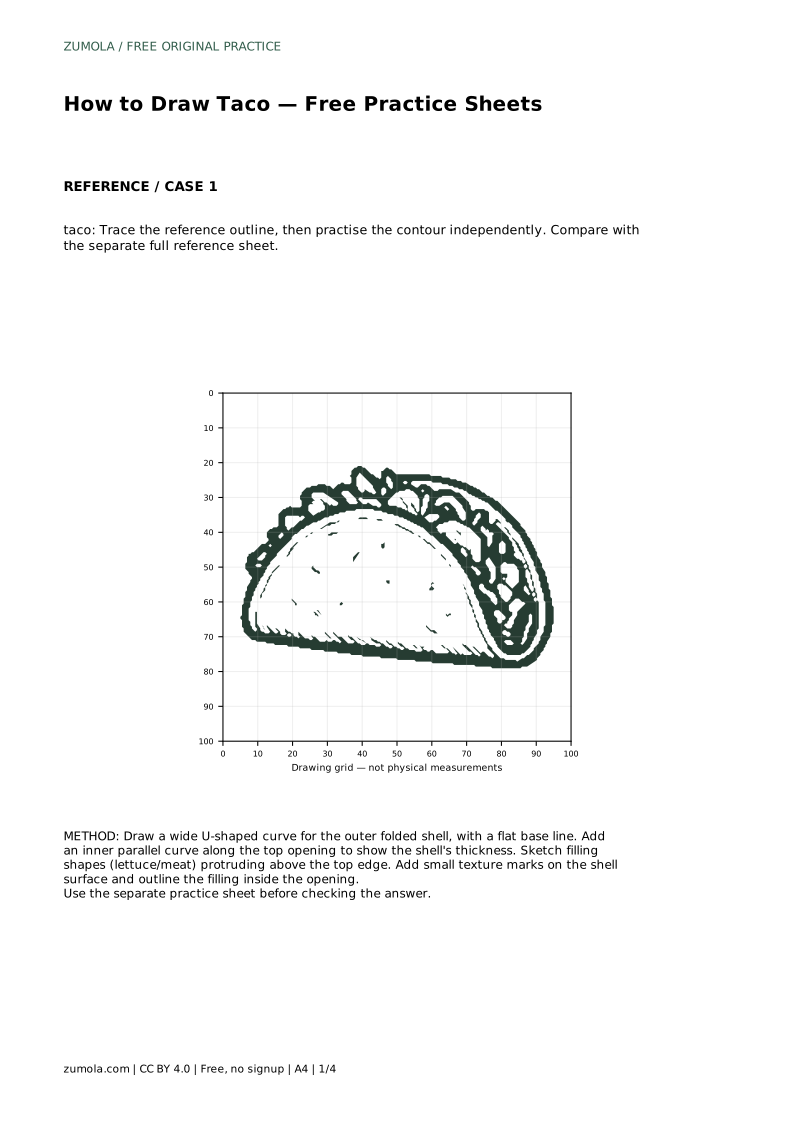
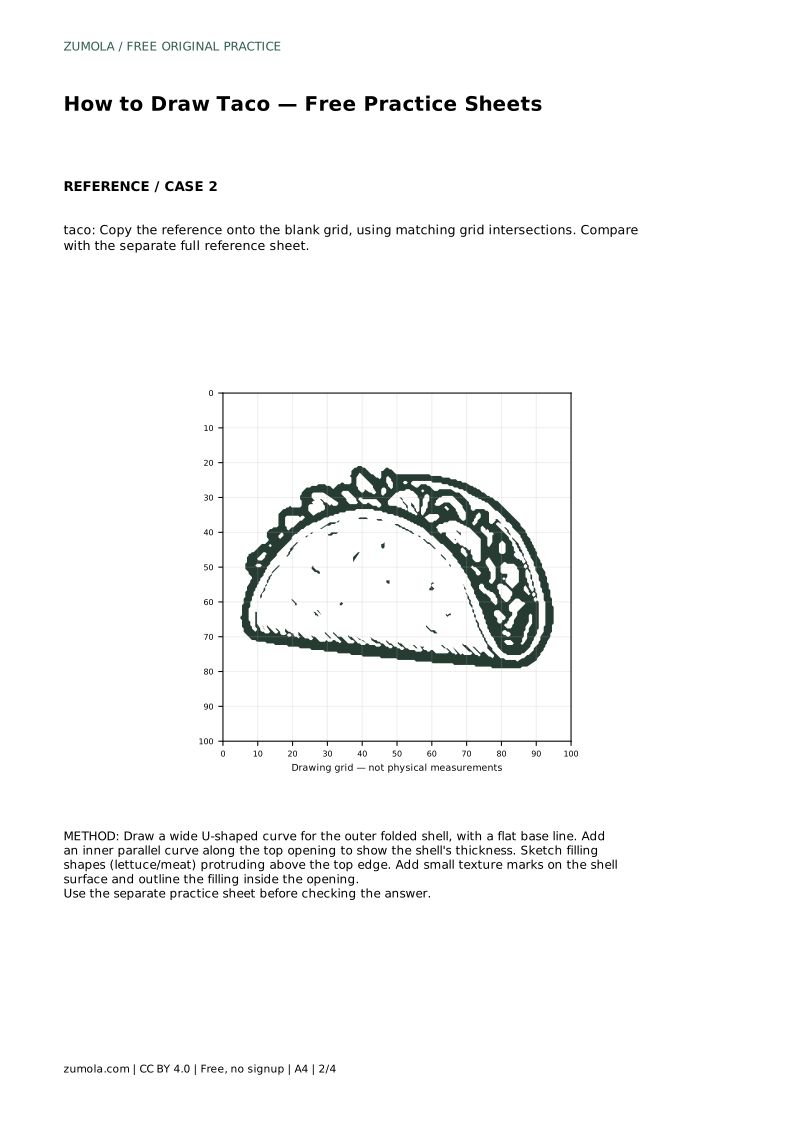
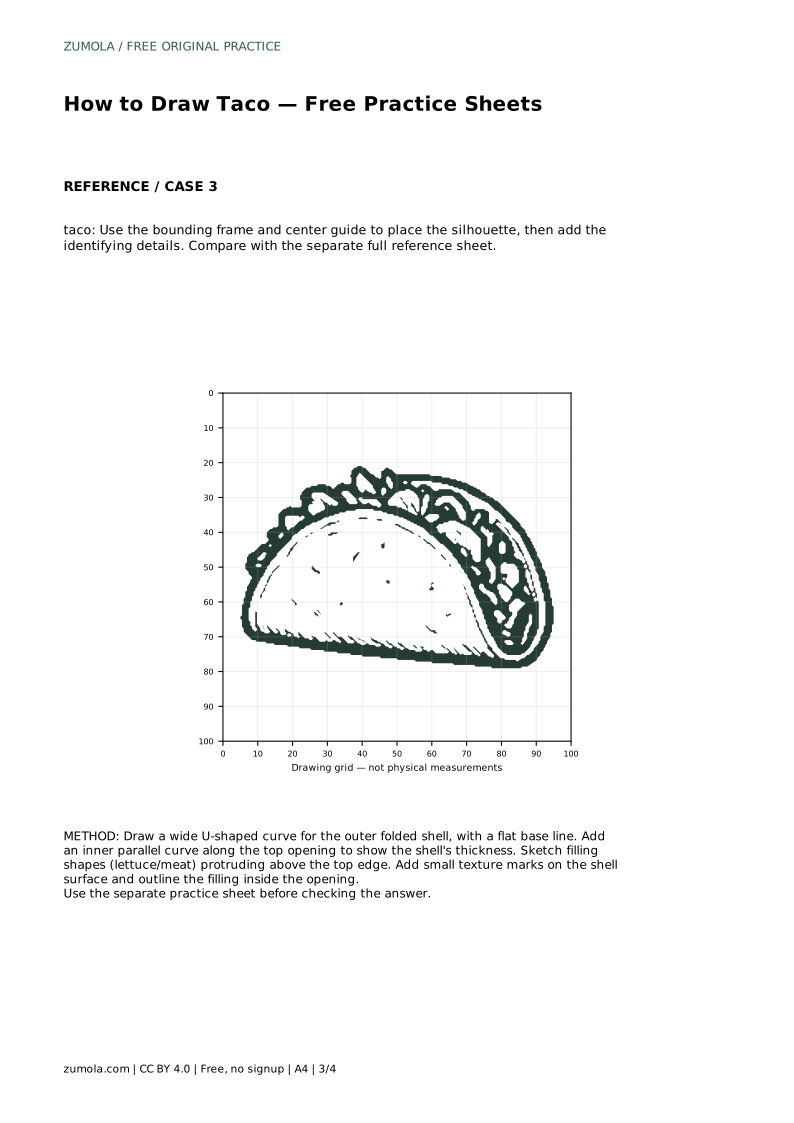
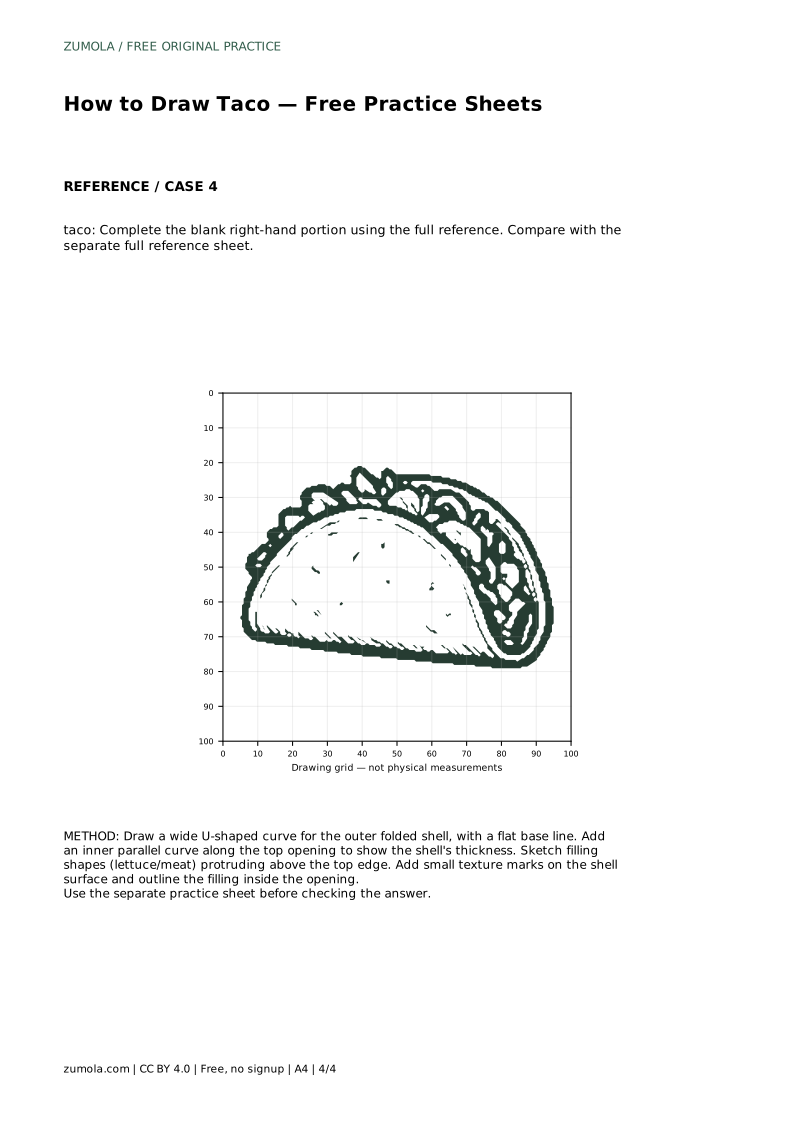
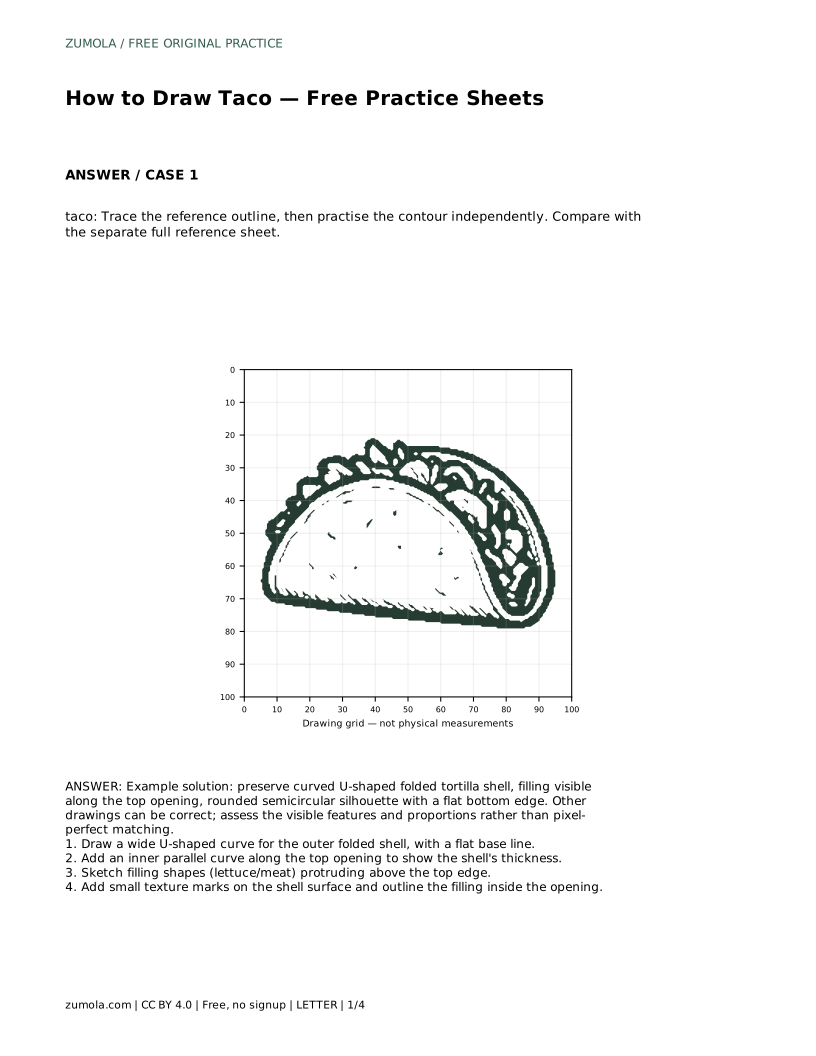
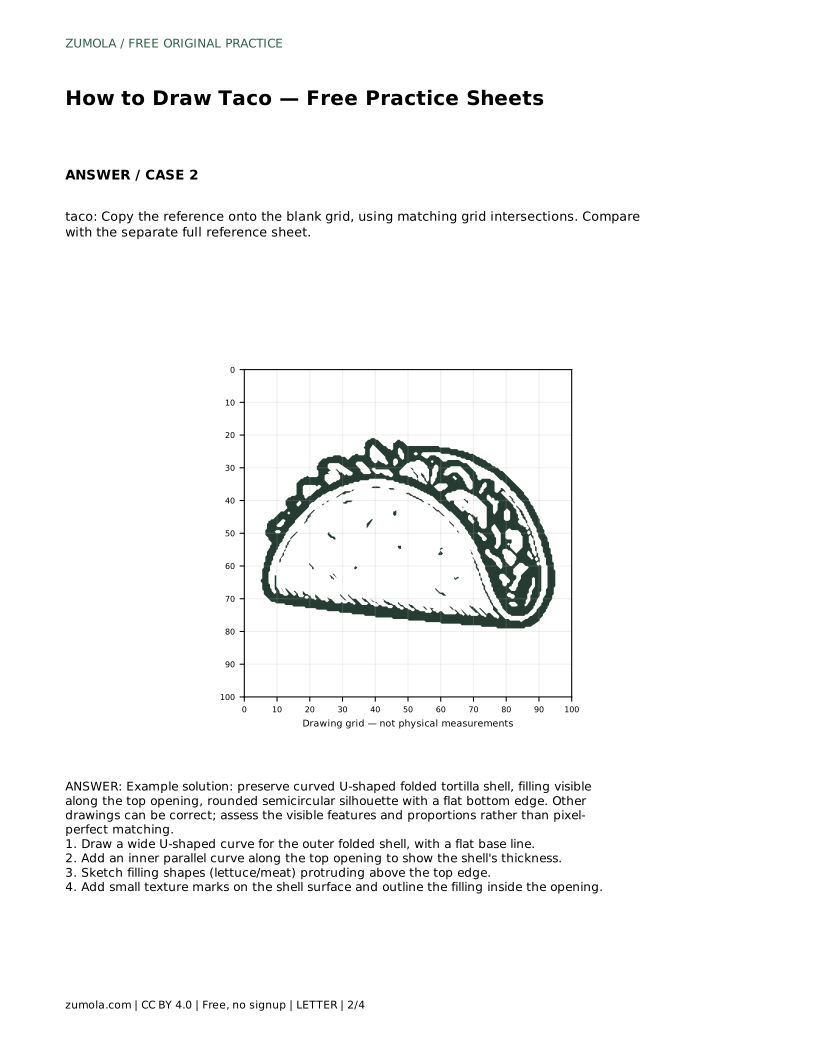
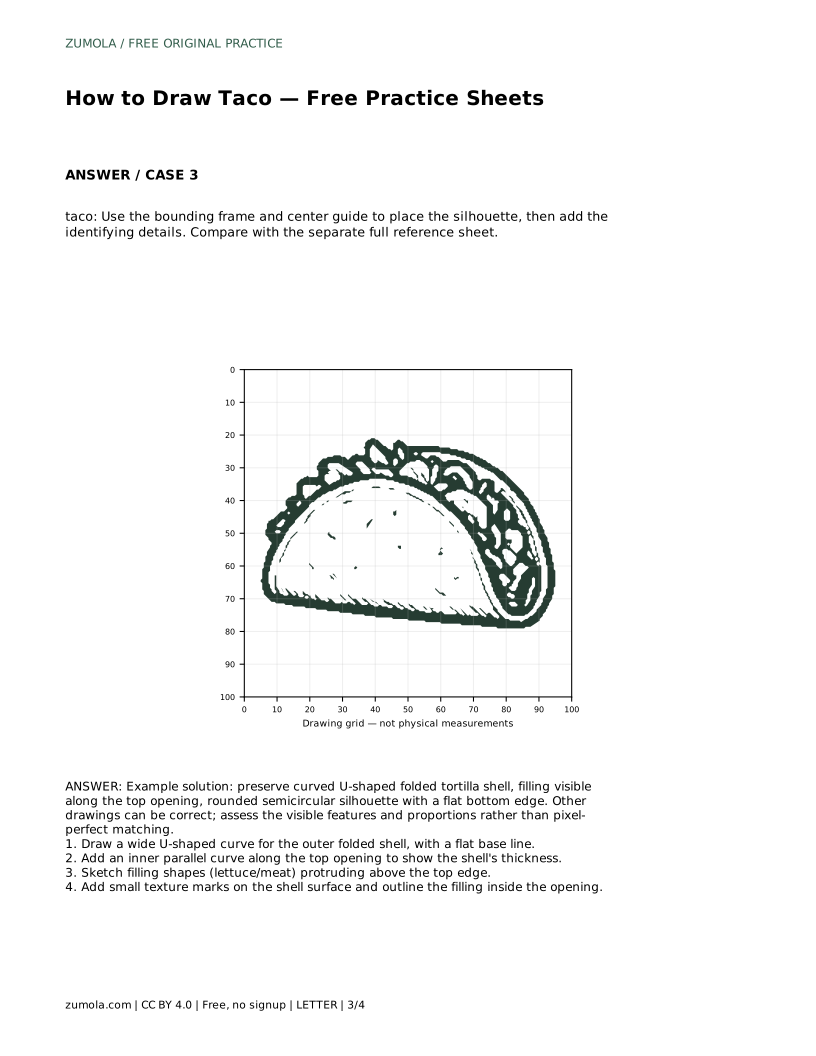
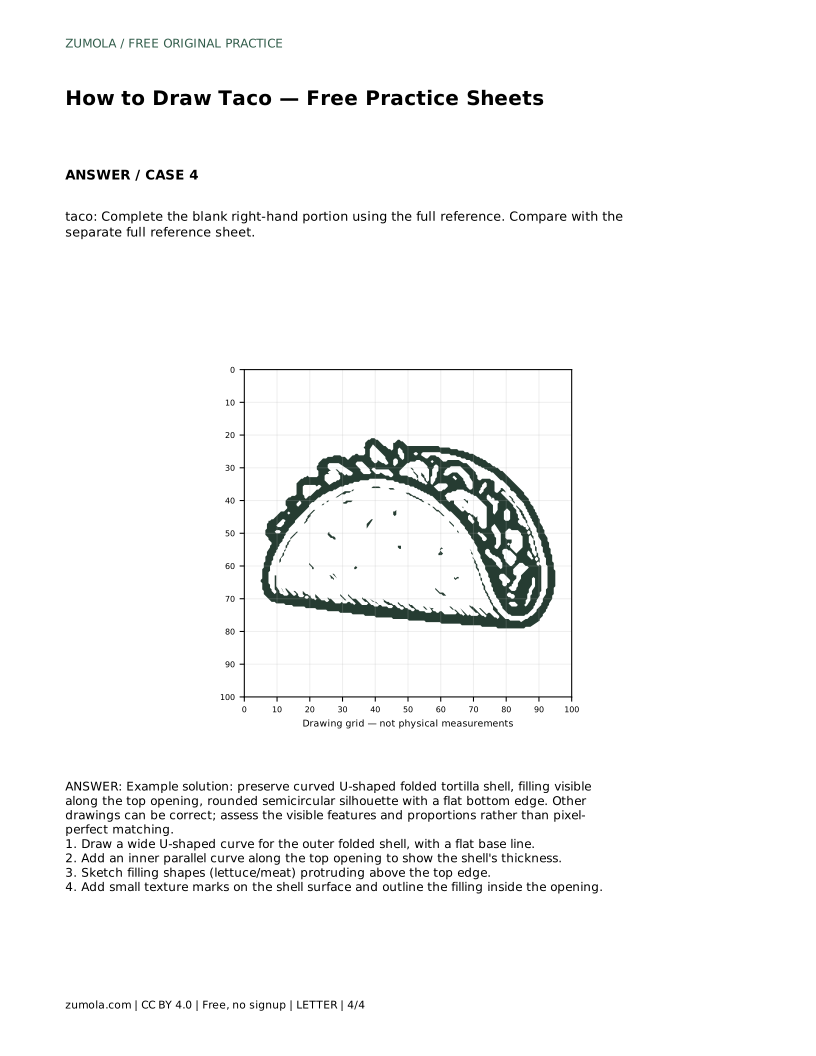
A taco drawing is built from three main parts: the outer folded tortilla shell, the inner edge that shows thickness, and the filling that protrudes from the top opening. The shell is typically a wide U-shape with a flat bottom edge, giving a rounded, semicircular silhouette. The filling—lettuce, meat, or other ingredients—adds texture and color above the shell’s rim. Keep the overall shape simple and rounded to achieve a cute look.
Before adding details, sketch the outer contour lightly. The flat base helps the taco sit naturally on the page. The inner curve should run parallel to the top opening, not the entire shell, to suggest the folded edge. Filling shapes can be loose and overlapping, but they should stay within the top opening’s width to keep the silhouette readable.
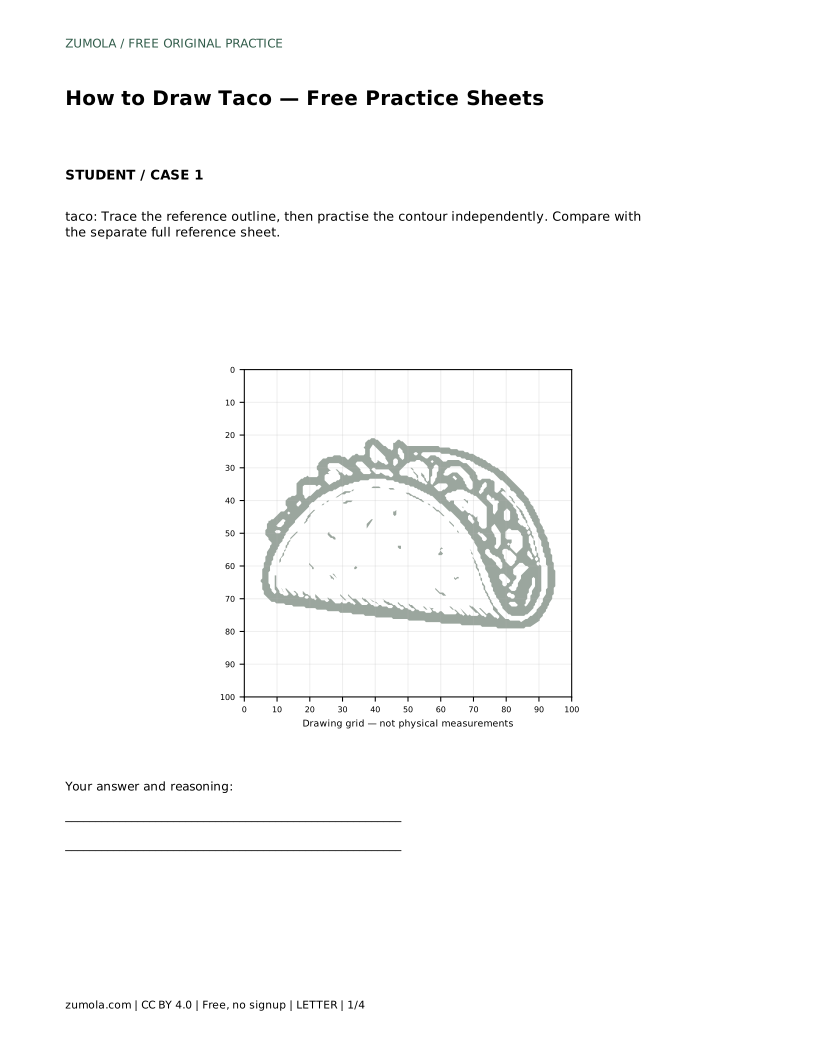
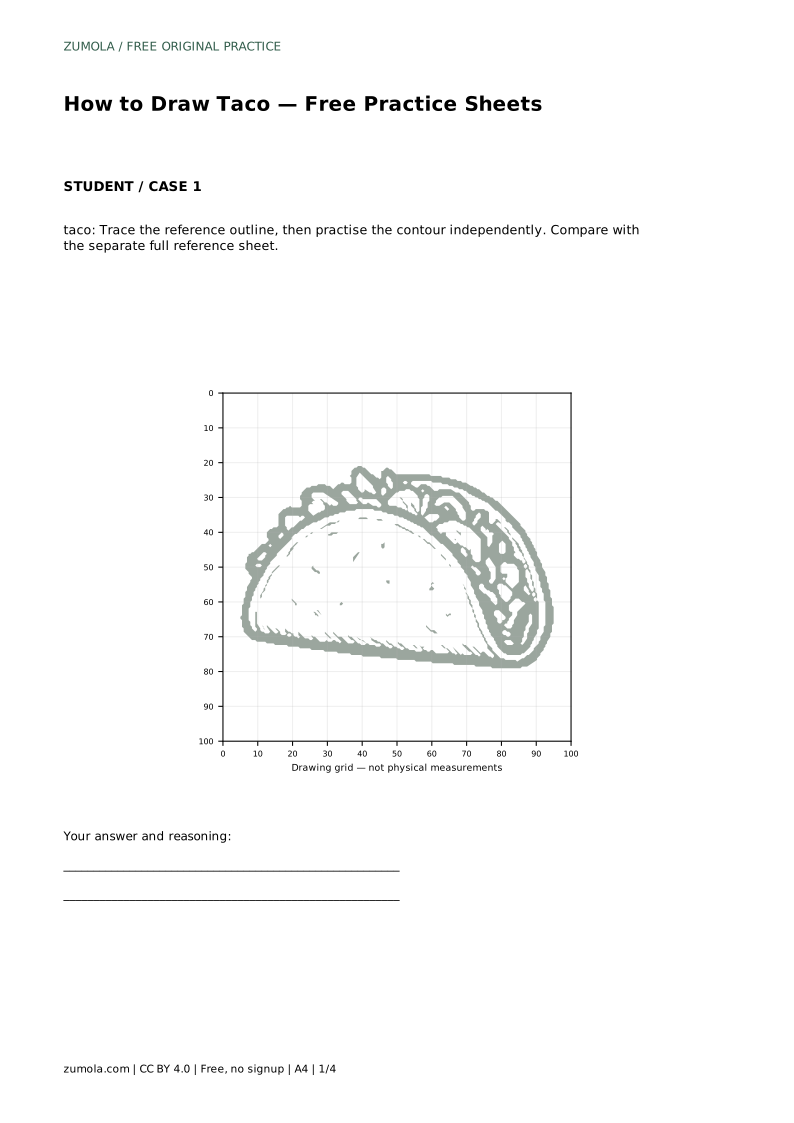
Tracing helps you learn the contour by following an existing outline. Start by tracing the reference outline, then try drawing the same shape independently on blank paper. Compare your independent drawing with the full reference sheet to see where proportions differ. This method trains your hand to recognize the taco’s key curves.
Grid copying builds spatial awareness. Place a grid over the reference and a matching blank grid on your paper. Copy the taco by matching where the outline crosses grid intersections. Focus on the overall silhouette first, then add filling details. The grid method encourages you to see relationships between parts rather than copying line by line.
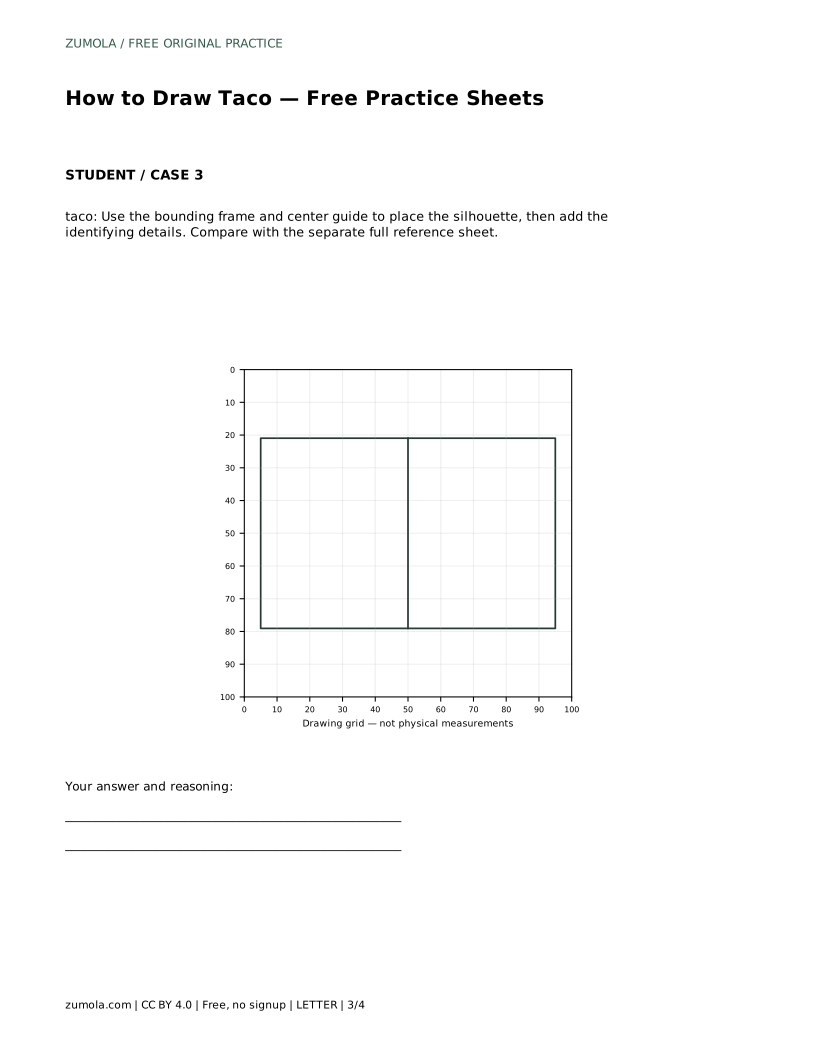
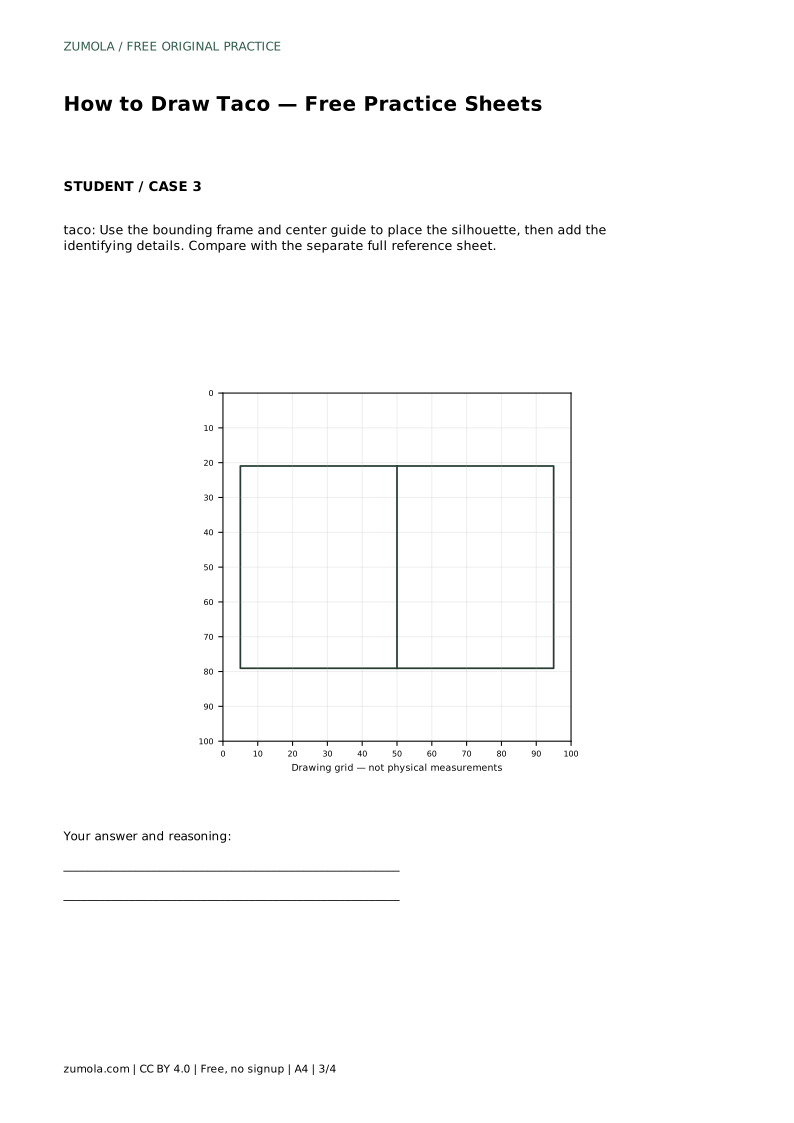
A bounding frame and center guide help you place the taco’s silhouette accurately on the page. Draw a light rectangle around where the taco will go, then mark the center. Use these guides to position the flat base and the top opening. This method is especially useful when you want the taco to fill a specific area.
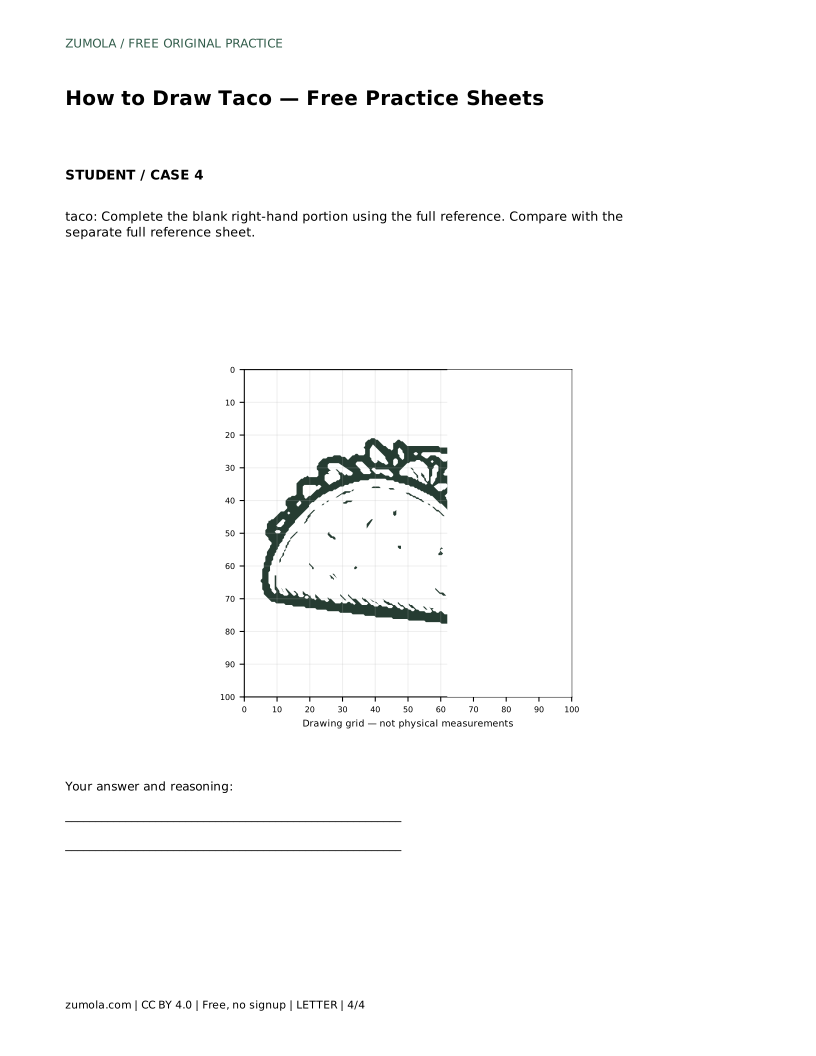
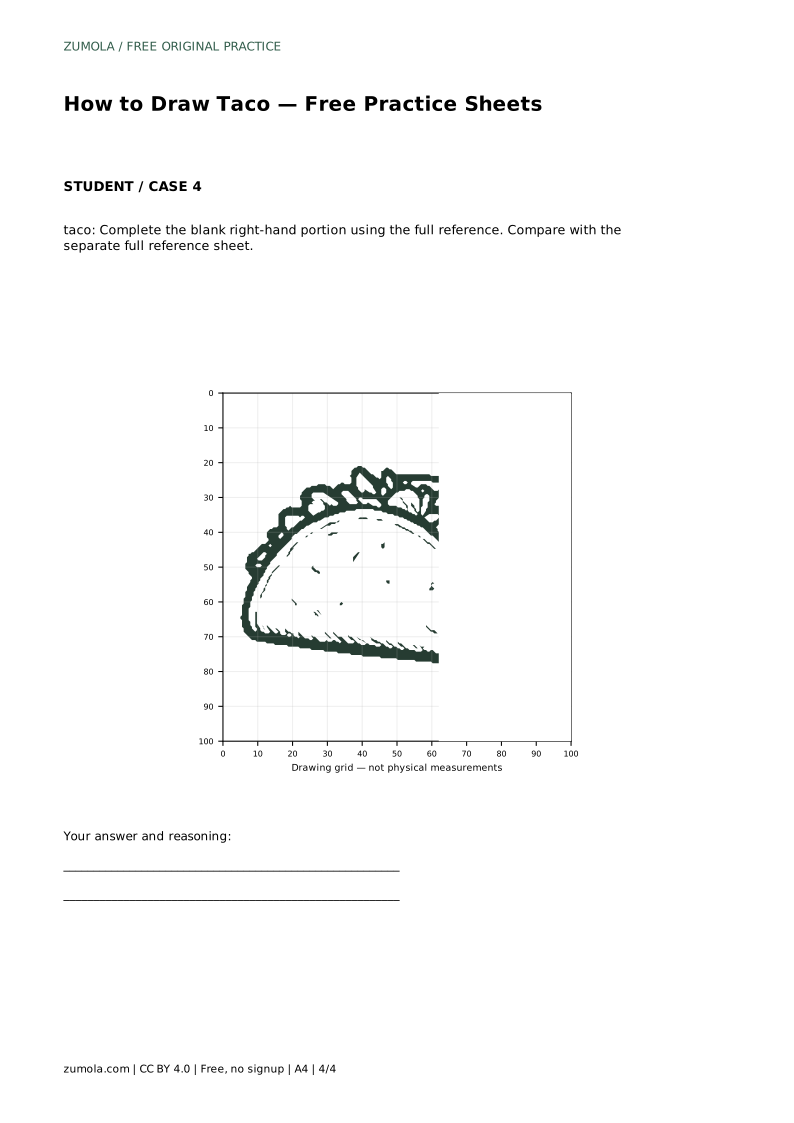
Partial completion exercises give you half of the reference and ask you to draw the missing portion. This tests your understanding of symmetry and proportion. Start by identifying the flat base and the U-curve’s peak, then extend the filling shapes to match the visible side. Compare your completed drawing with the full reference to check alignment.
taco: Trace the reference outline, then practise the contour independently. Compare with the separate full reference sheet.
Example solution: preserve curved U-shaped folded tortilla shell, filling visible along the top opening, rounded semicircular silhouette with a flat bottom edge. Other drawings can be correct; assess the visible features and proportions rather than pixel-perfect matching. Draw a wide U-shaped curve for the outer folded shell, with a flat base line. Add an inner parallel curve along the top opening to show the shell's thickness. Sketch filling shapes (lettuce/meat) protruding above the top edge. Add small texture marks on the shell surface and outline the filling inside the opening.
No. Art has multiple valid outcomes. Use the rubric to check that the folded shell, visible filling, and rounded silhouette are present and proportionate.
Adjust the U-curve’s height. A cute taco usually has a gentle curve, not a deep bowl or a flat line. Keep the base flat and the sides rounded.
Yes, the tracing, grid, and partial completion methods work for many simple objects. Focus on identifying the key features and proportions first.
All drawing practice · Free coordinate paper
Original resources · CC BY 4.0 · Free for personal and classroom use with attribution.