Reference diagrams
LETTER · Download PDF
A4 · Download PDF
Free original resources
Learn to draw a stove by building its body, cooktop, burners, control panel, oven door, and feet. Practice with tracing, grid, and partial-reference sheets.
Four original cases, with reference diagrams, practice sheets and worked answers. Everything is free; no signup required.
LETTER · Download PDF
A4 · Download PDF
LETTER · Download PDF
A4 · Download PDF
LETTER · Download PDF
A4 · Download PDF
Use A4 or US Letter to match your printer. Use the stated values and conditions to solve each exercise; diagrams are not physical measuring rulers.
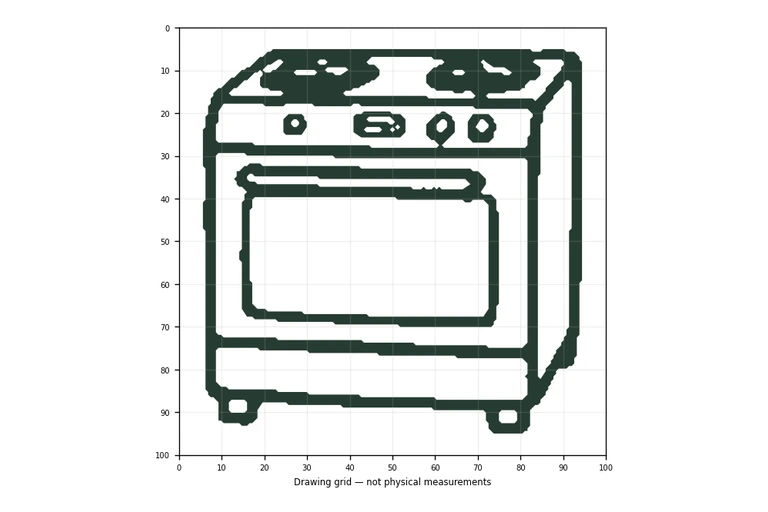
A stove is a good subject for learning to combine simple geometric shapes with clear functional details. The drawing works when the body reads as a solid box, the cooktop looks flat, the burners sit on that surface, and the oven door and controls are placed in believable proportions. This guide explains a reliable order for constructing a stove drawing and describes how to use tracing, grid, and partial-reference practice sheets. Because drawings can vary, judge your result by visible features and proportions rather than an exact match.
Start with the overall body rather than individual knobs or burners. A stove is essentially a tall rectangular box, often drawn in slight perspective so the top surface is visible. Keep the front face mostly vertical and the cooktop shallow; if the top looks too deep, the stove will appear tipped backward. Establish the body's height and width first, then divide the front into a cooktop area, a control strip, and a large oven door.
Only after the main proportions are set should you add the identifying details. Place two circular burners on the cooktop, keeping them evenly spaced and clearly on the flat surface. Draw a horizontal control panel below the cooktop and add small knobs along it. Give the oven door a horizontal handle and add short feet at the bottom so the stove sits convincingly on the floor.
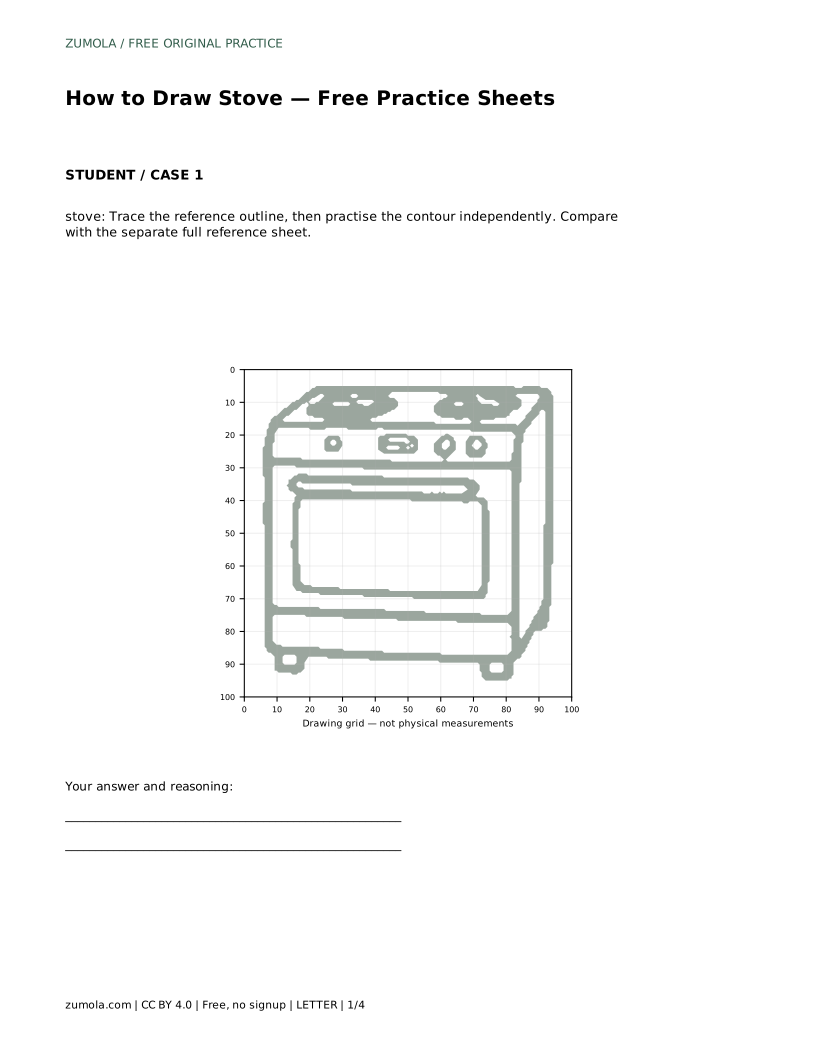
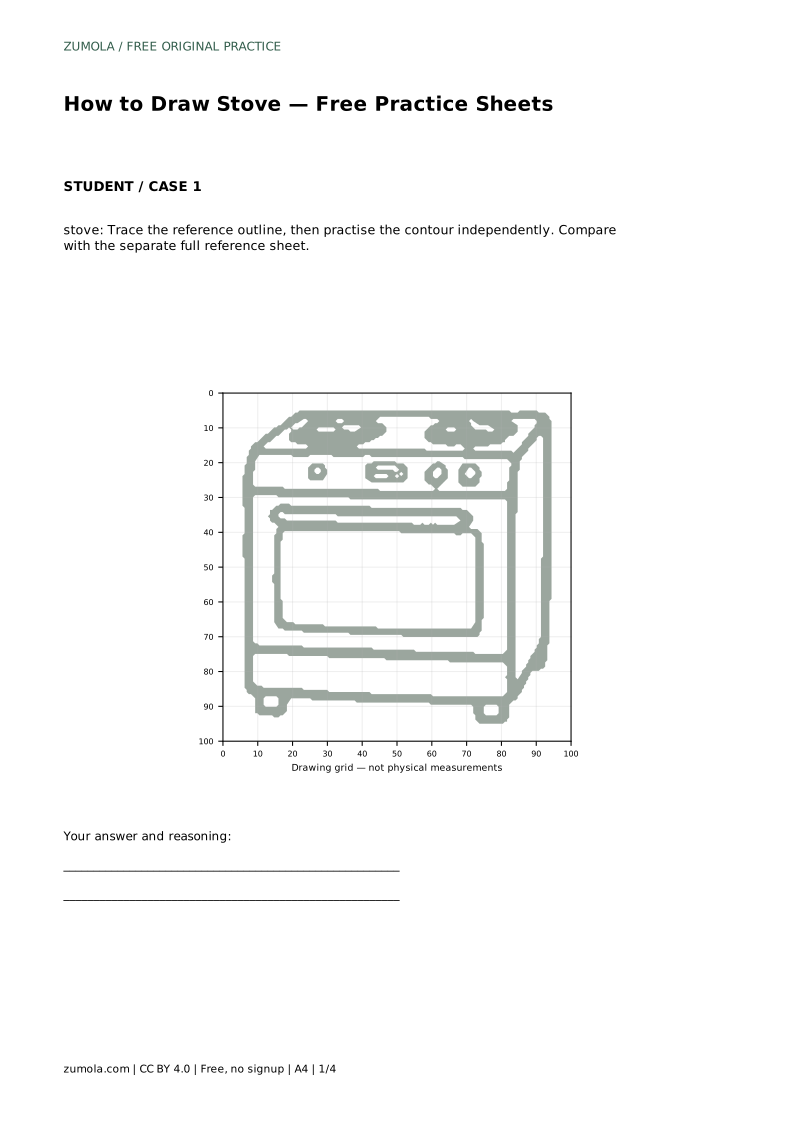
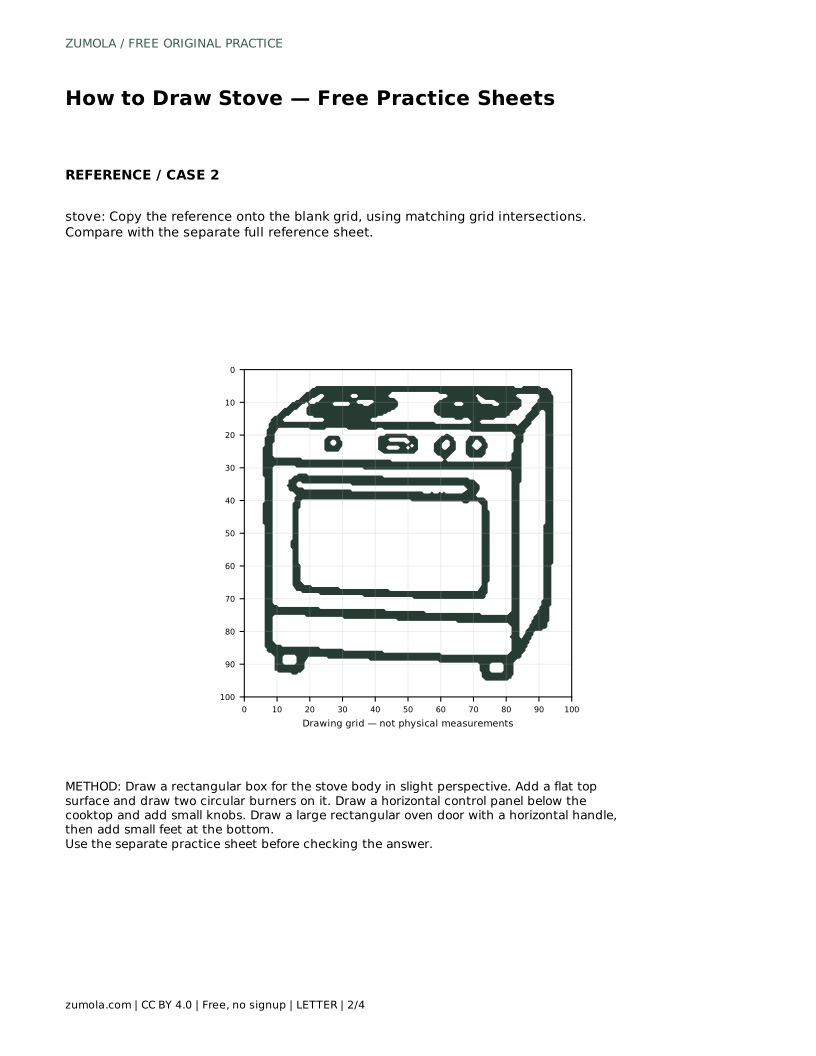
Tracing helps you feel the order of the contour, but it should not be the only practice. After tracing the reference outline, put the tracing aside and draw the stove independently, then compare your result with the separate full reference sheet. This separates copying from recalling the structure.
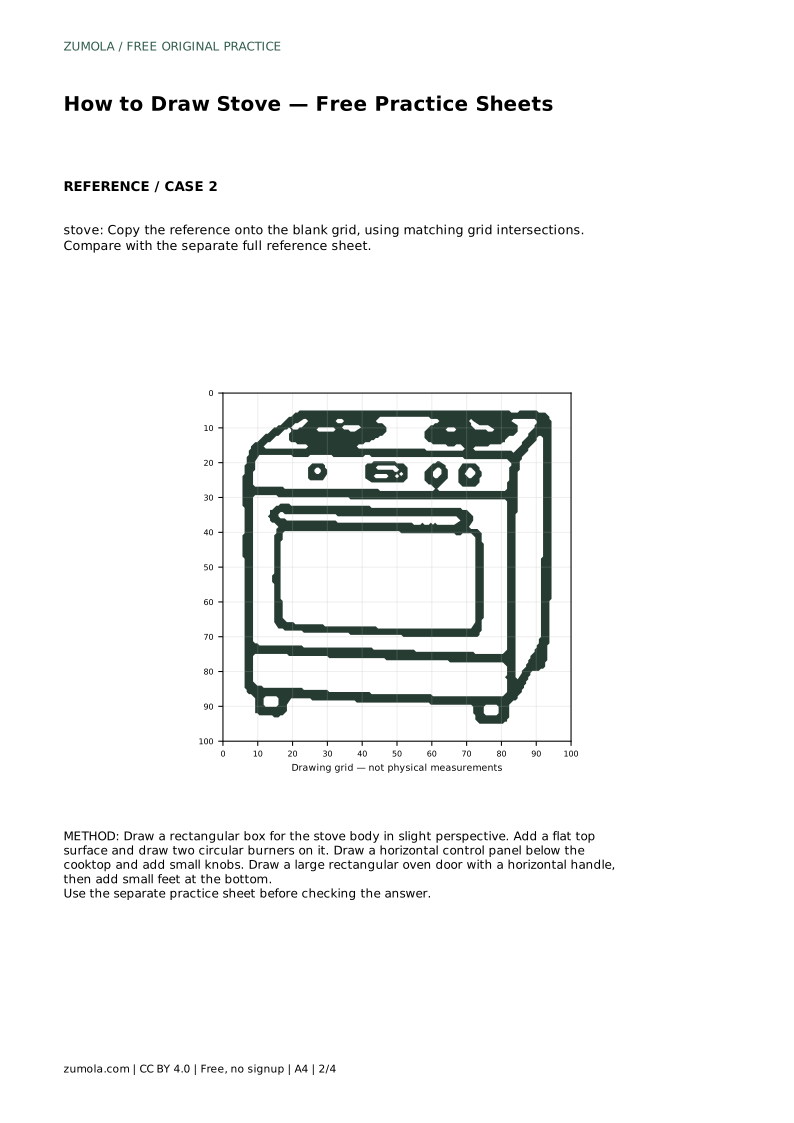
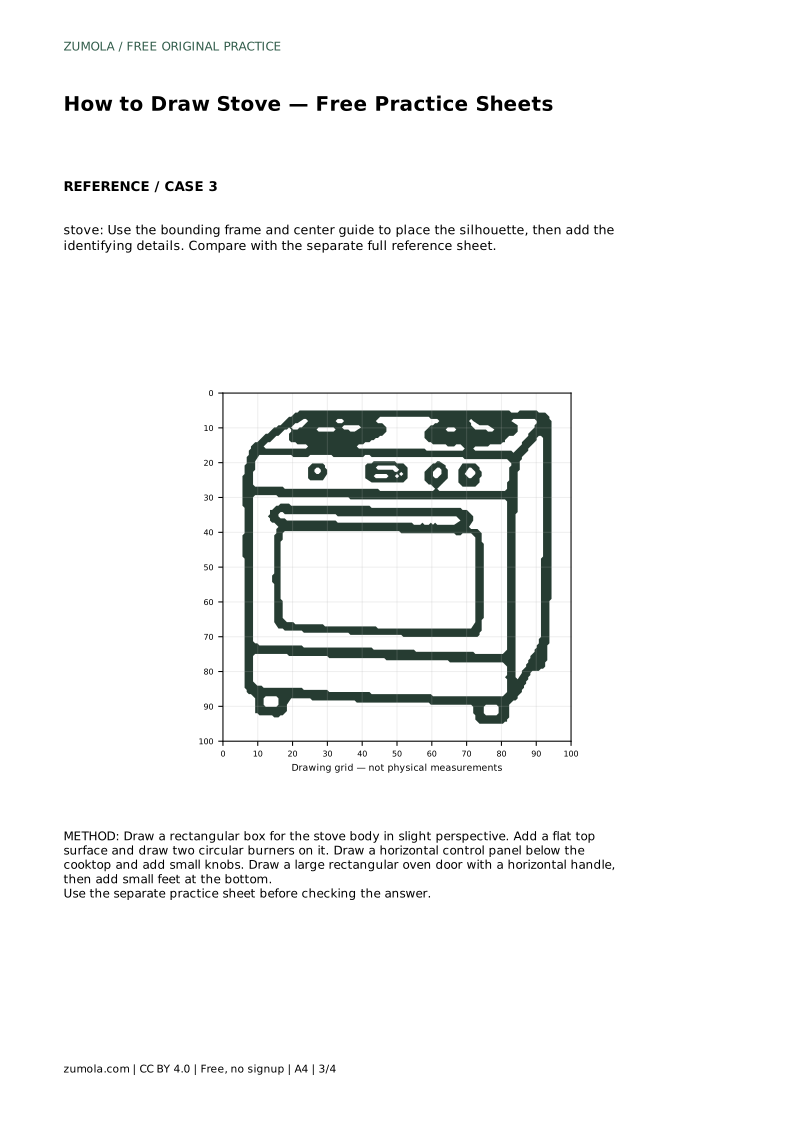
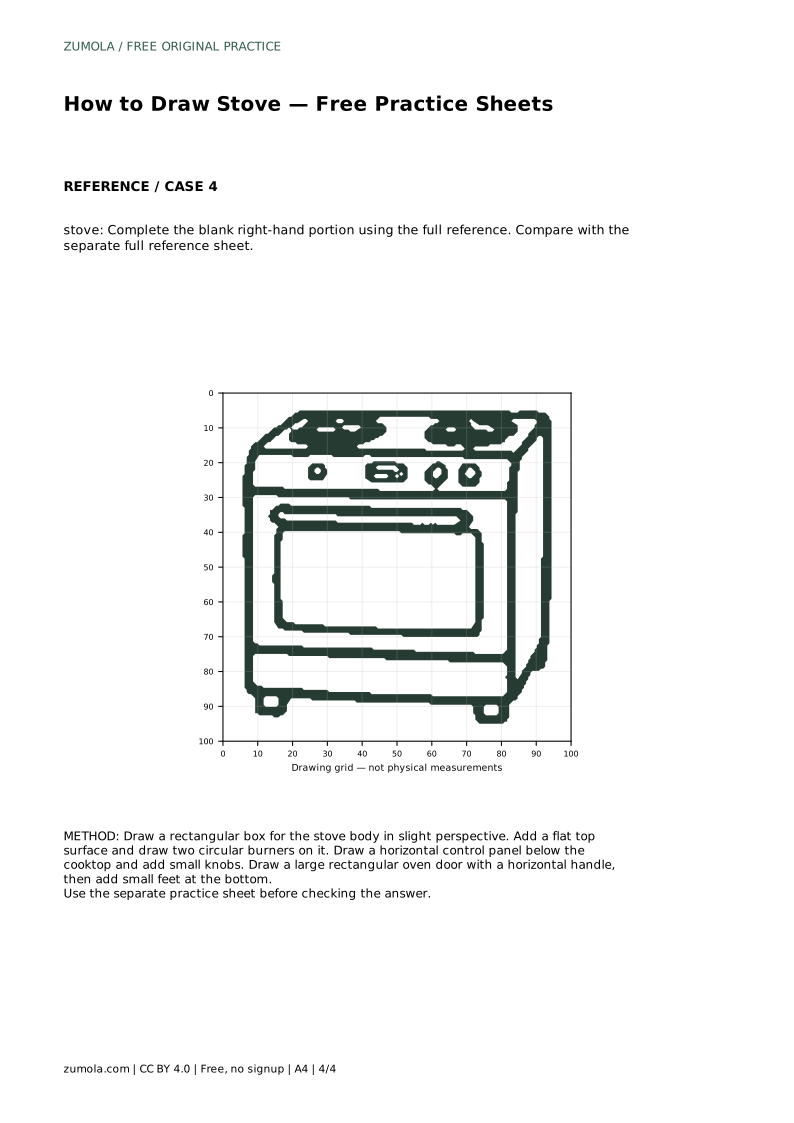
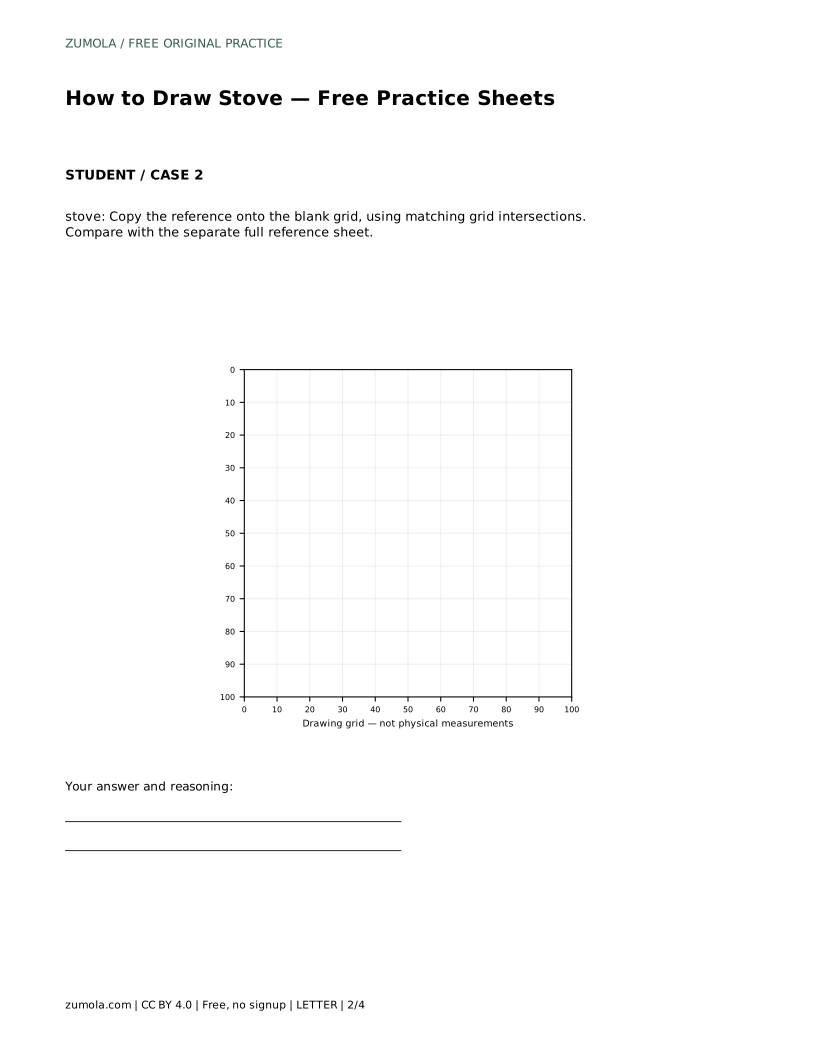
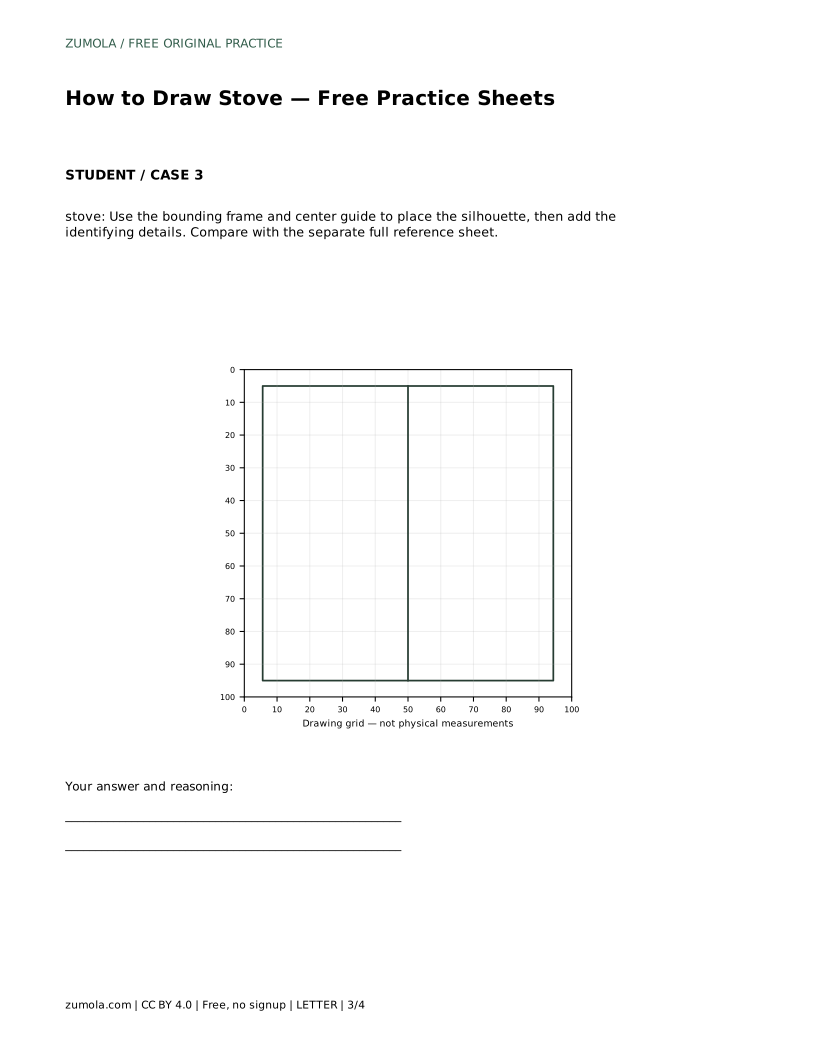
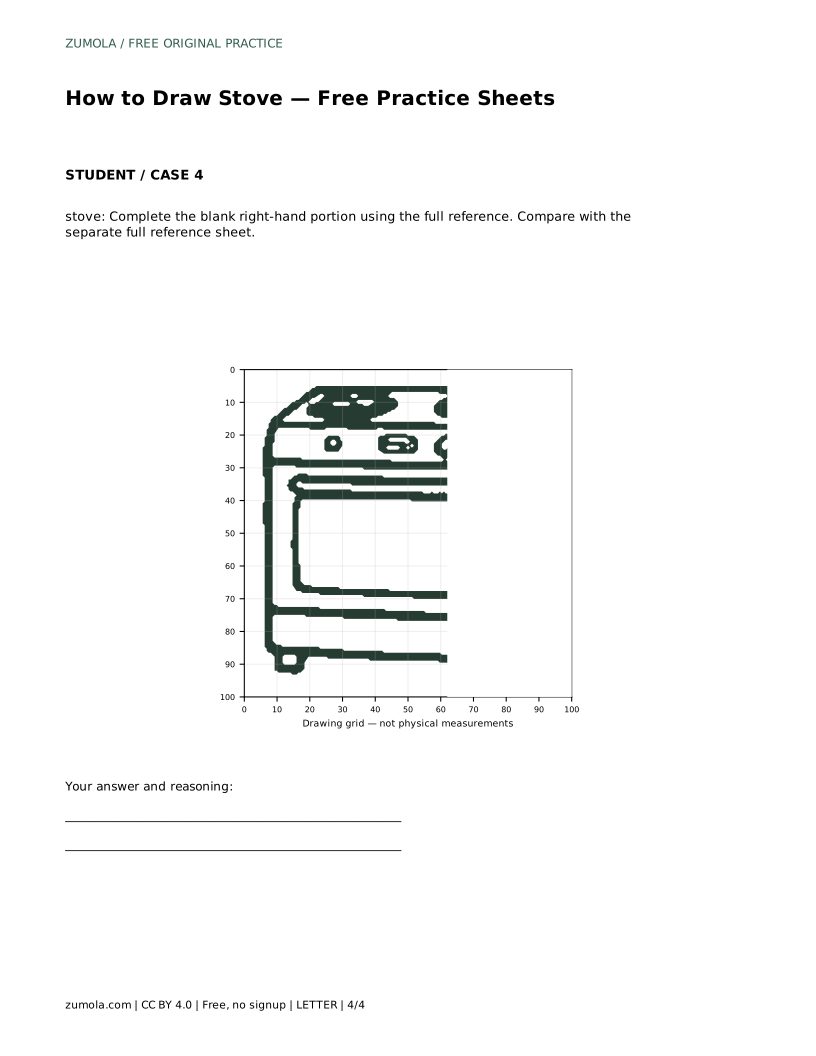
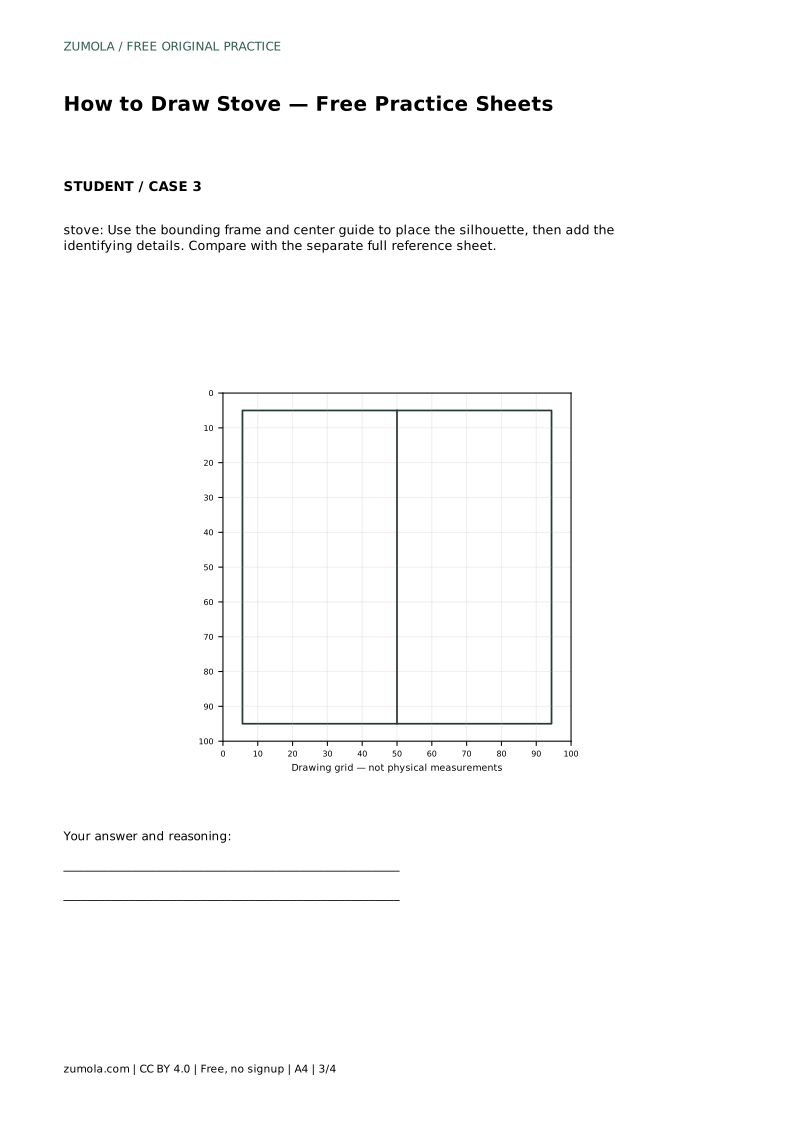
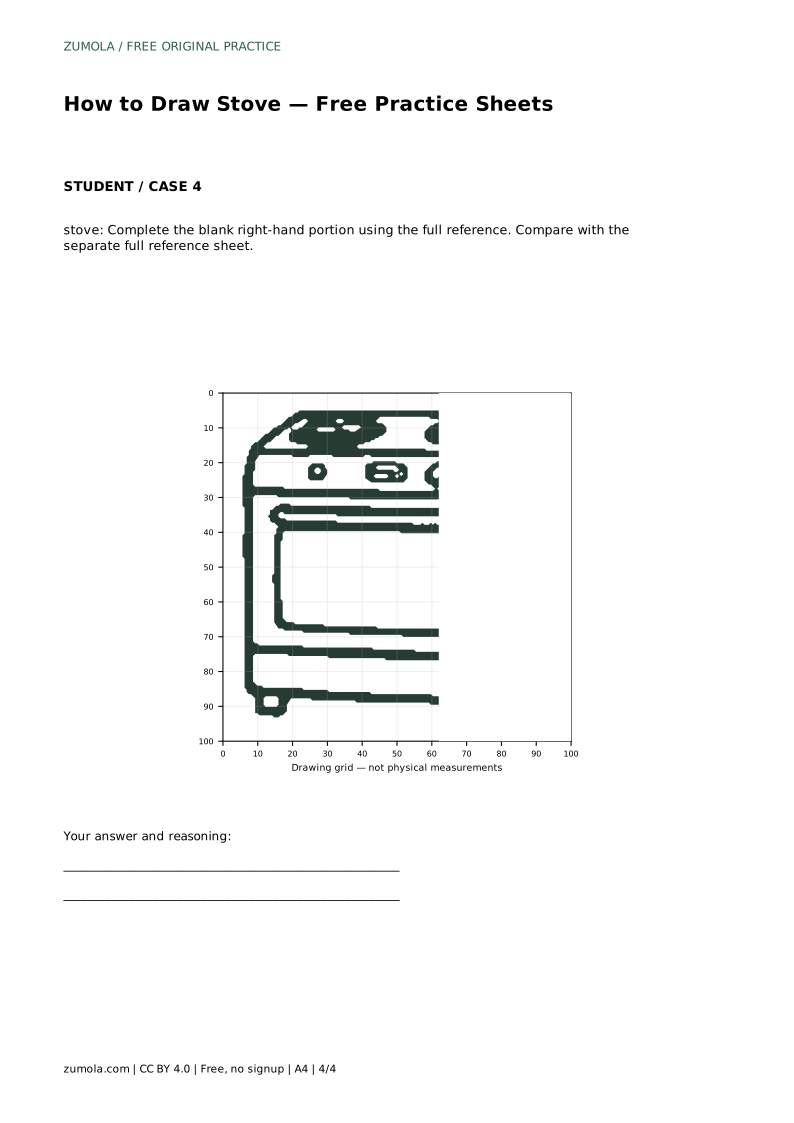
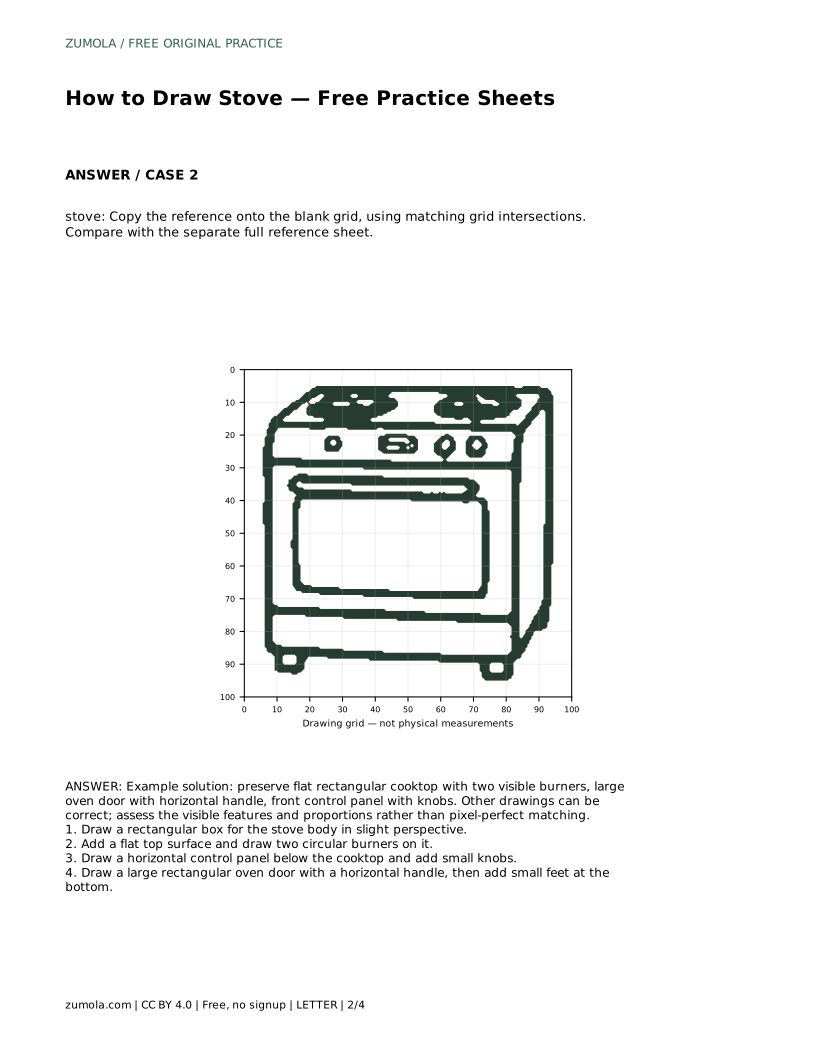
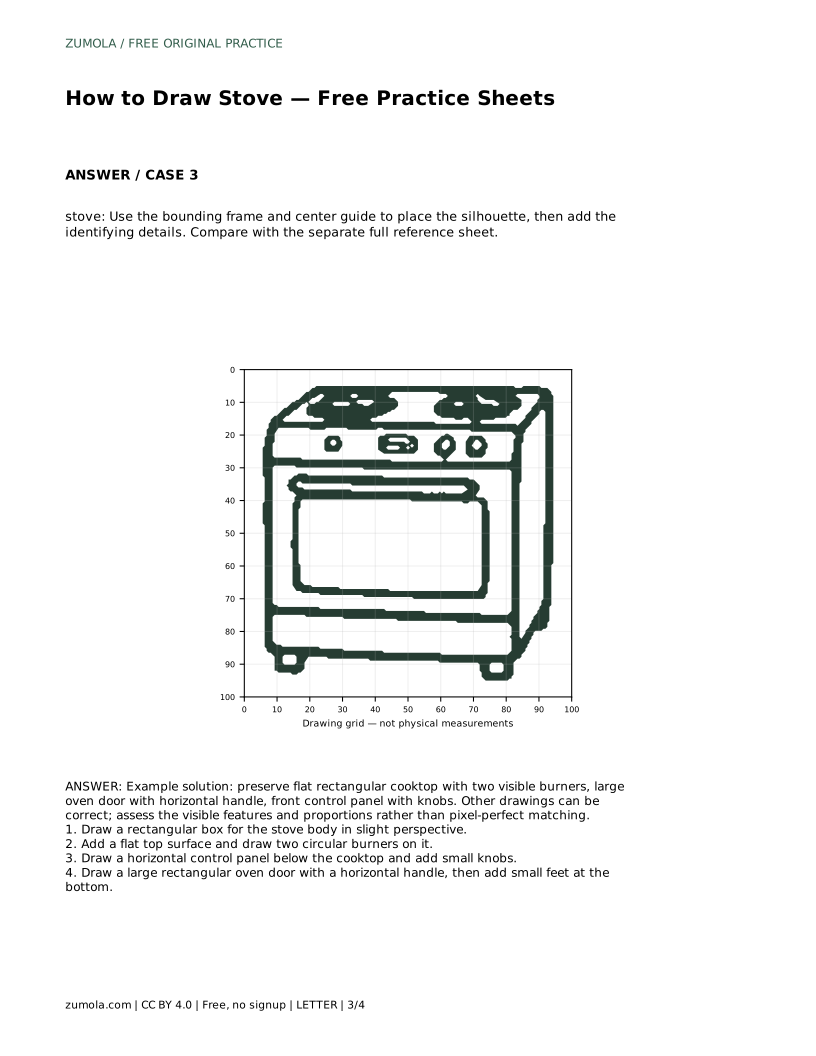
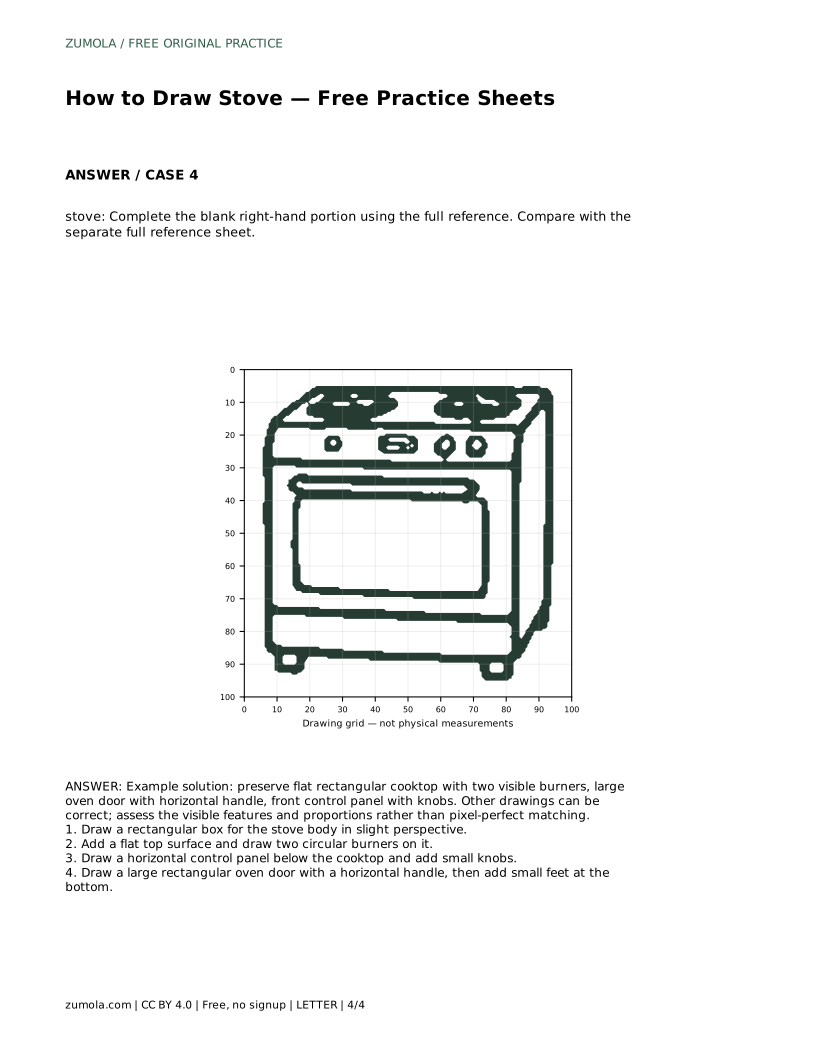
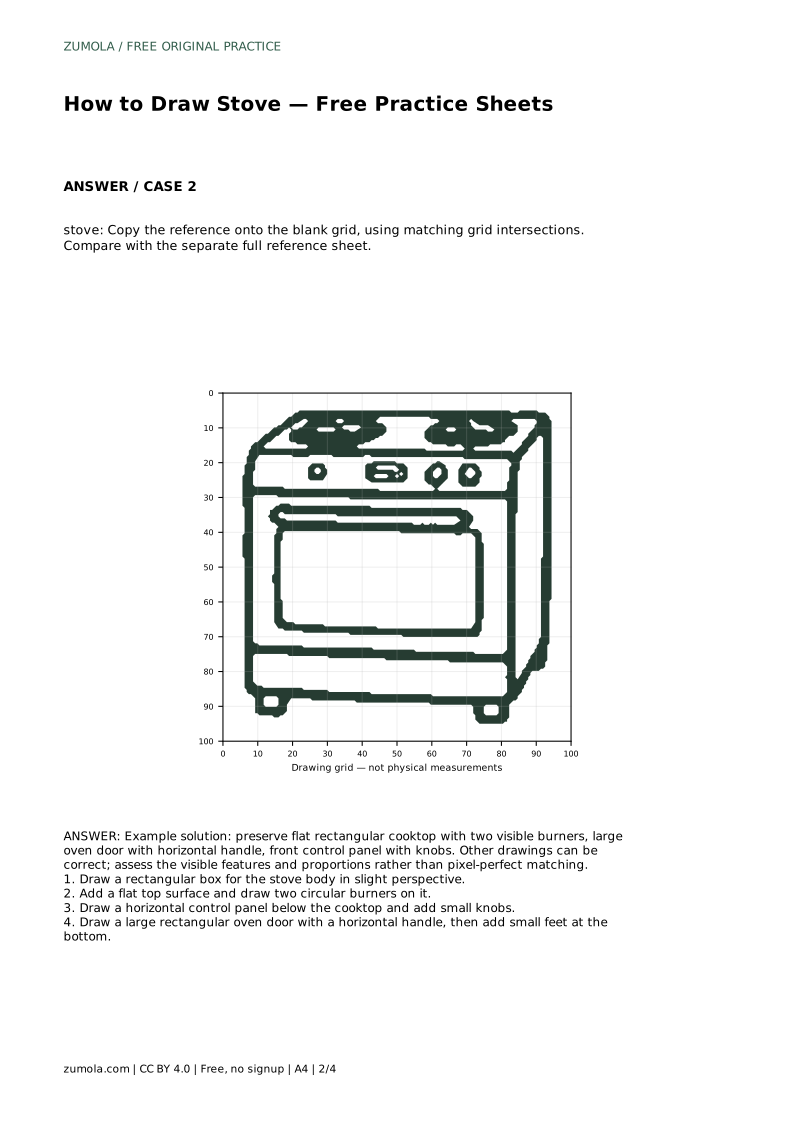
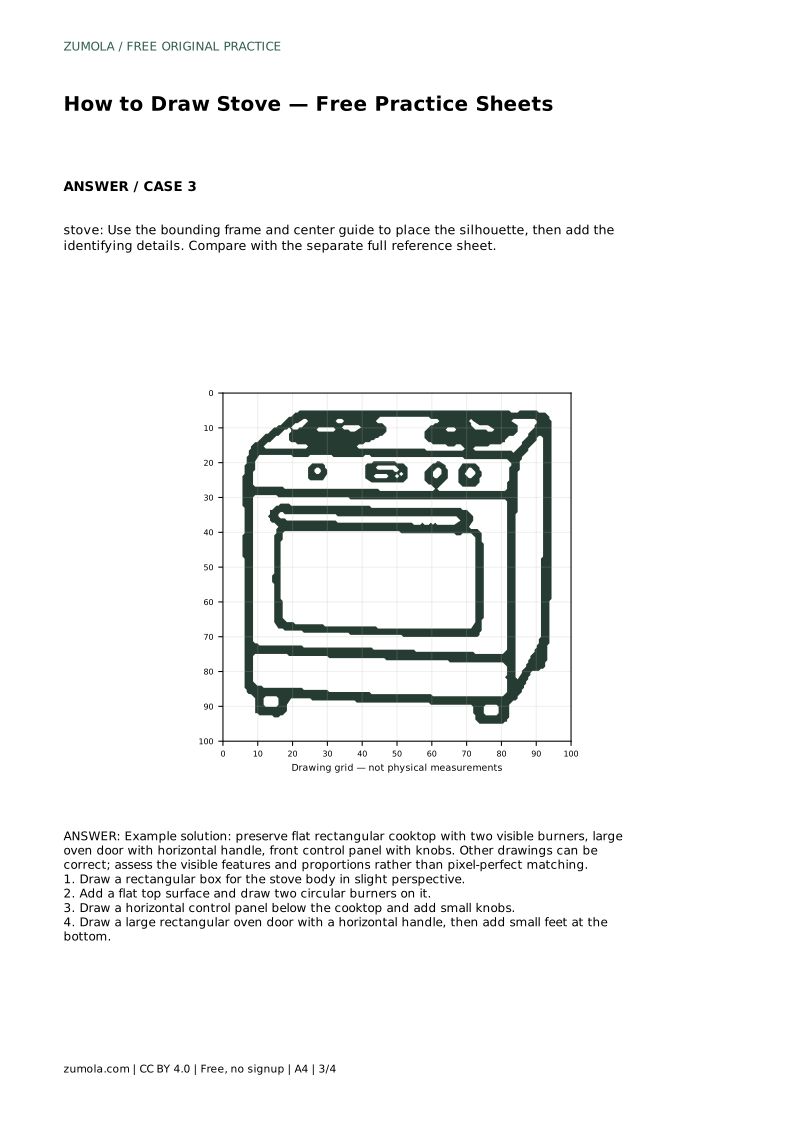
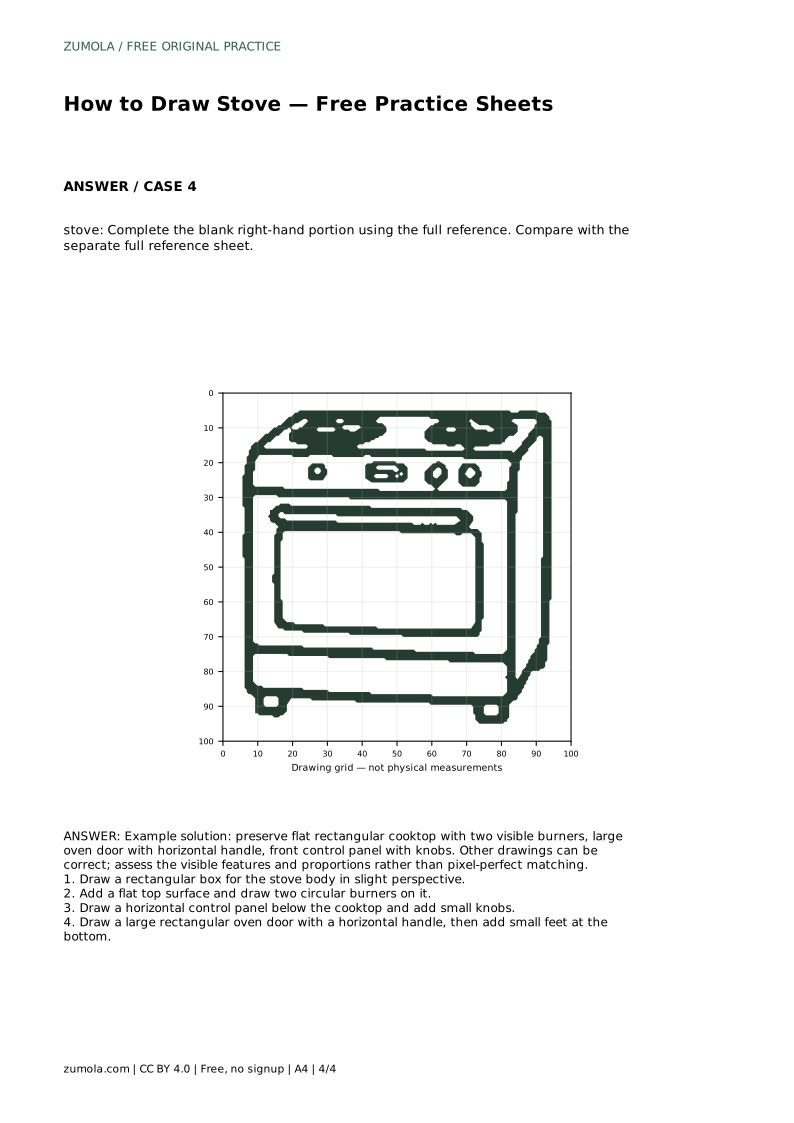
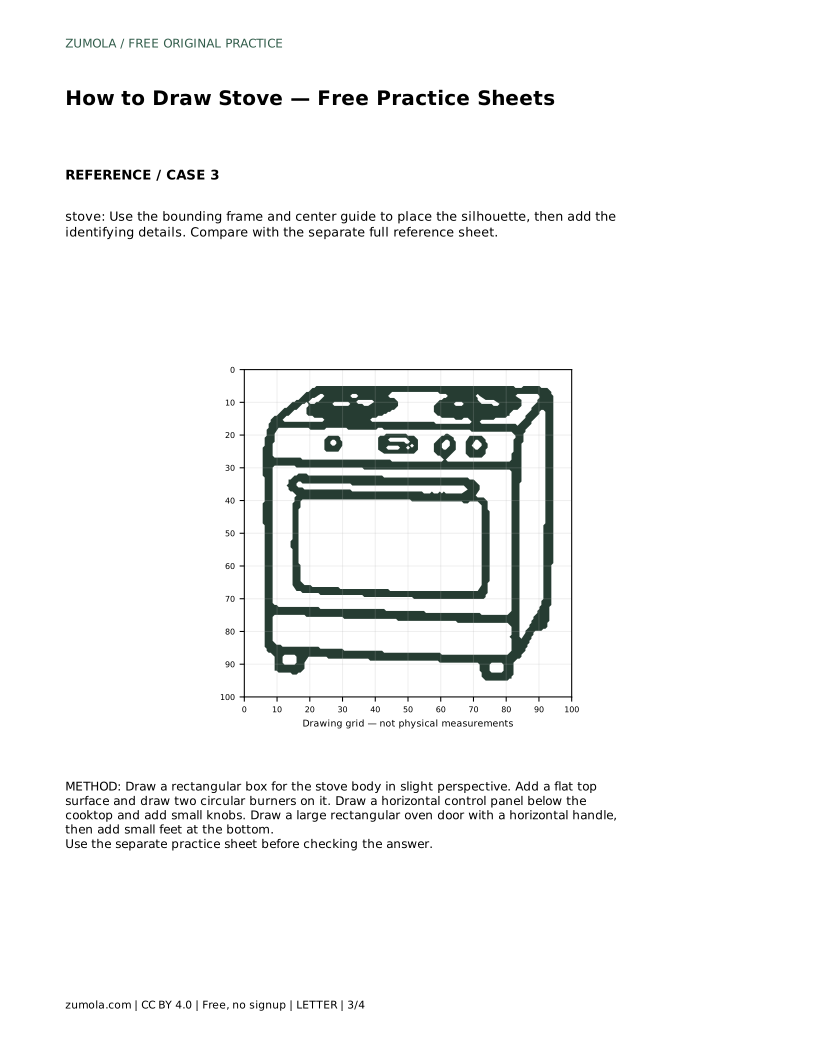
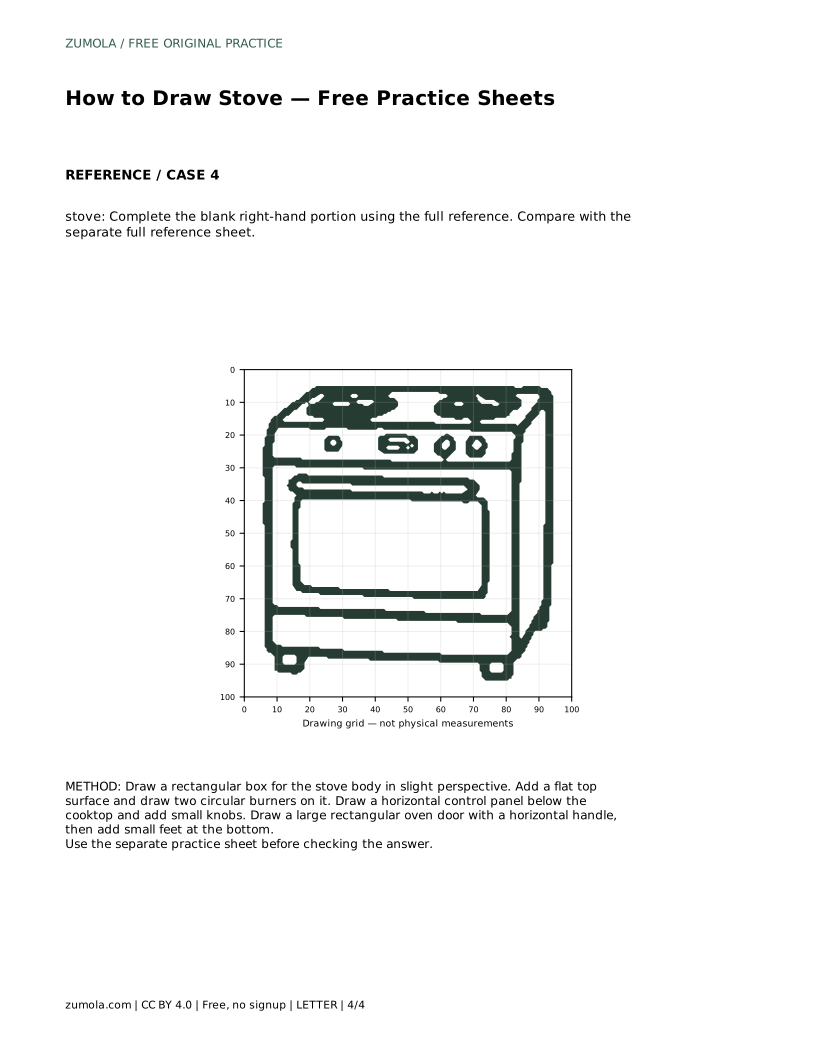
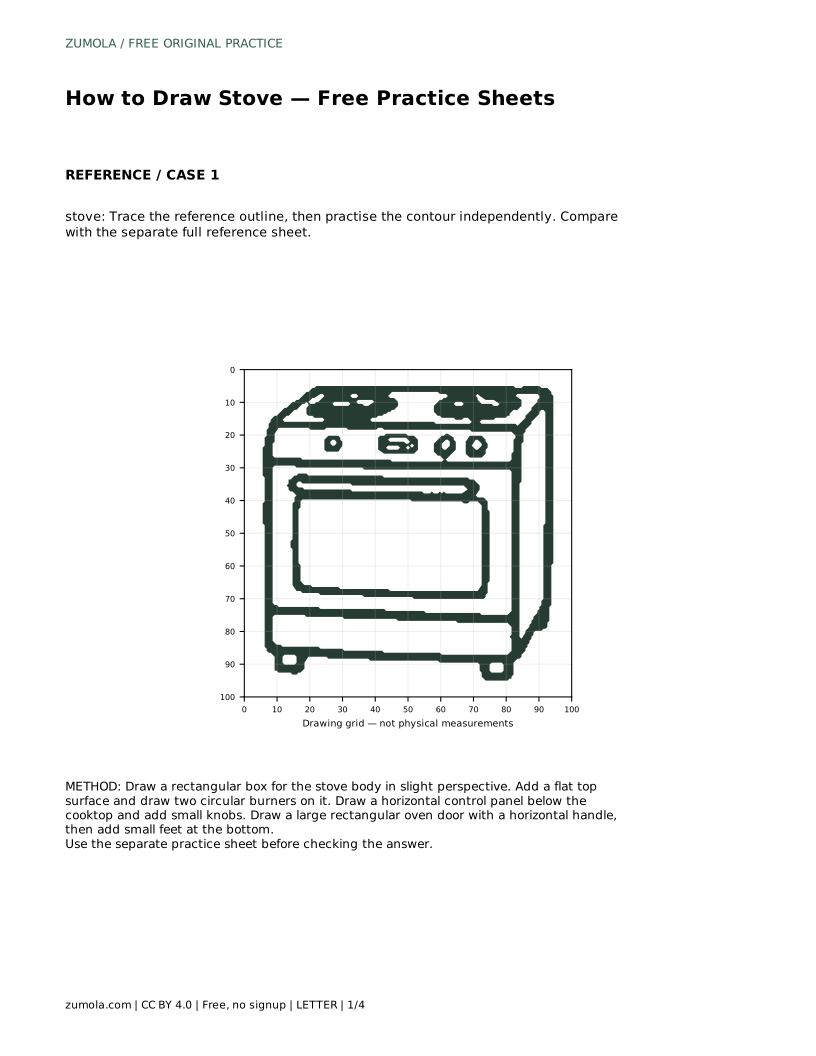
Grid practice develops proportion. Copy the reference onto the blank grid by matching where key lines cross grid intersections: the outer body edges, the cooktop line, the control panel line, and the oven door edges. The bounding frame and center guide help you place the silhouette before adding details. On a partial-reference sheet, complete the blank right-hand portion using the full reference, checking that the body width, burner spacing, and door size continue consistently across the missing area.
A convincing stove preserves a flat rectangular cooktop with two visible burners, a large oven door with a horizontal handle, a front control panel with knobs, and small feet. Check that the oven door occupies most of the lower front and that the control panel is a narrow strip rather than a second door. Burners should be circular and sit within the cooktop edges, not hang over them.
Perspective is the most common source of distortion. Keep the front face's vertical lines parallel, and make the top surface shallower than the front height. If the stove looks unstable, widen the feet spacing slightly. Small variations in knob count, handle shape, or burner size are acceptable; the drawing should still read clearly as a stove.
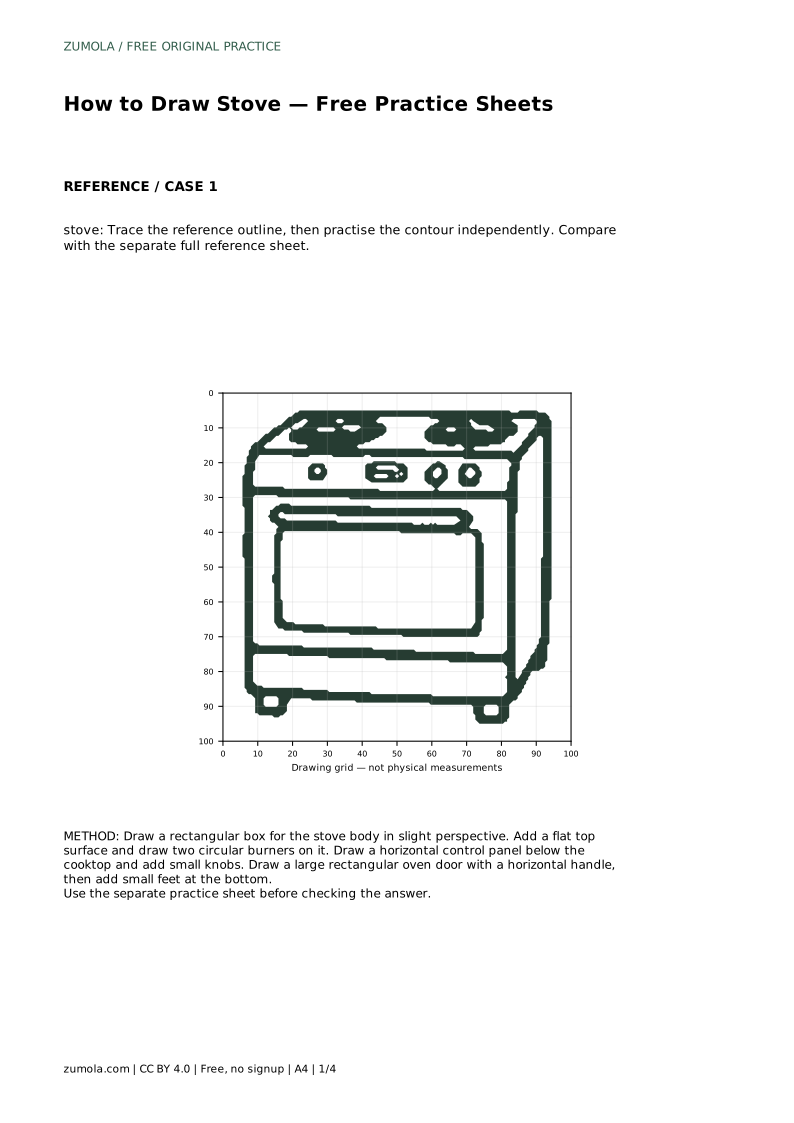
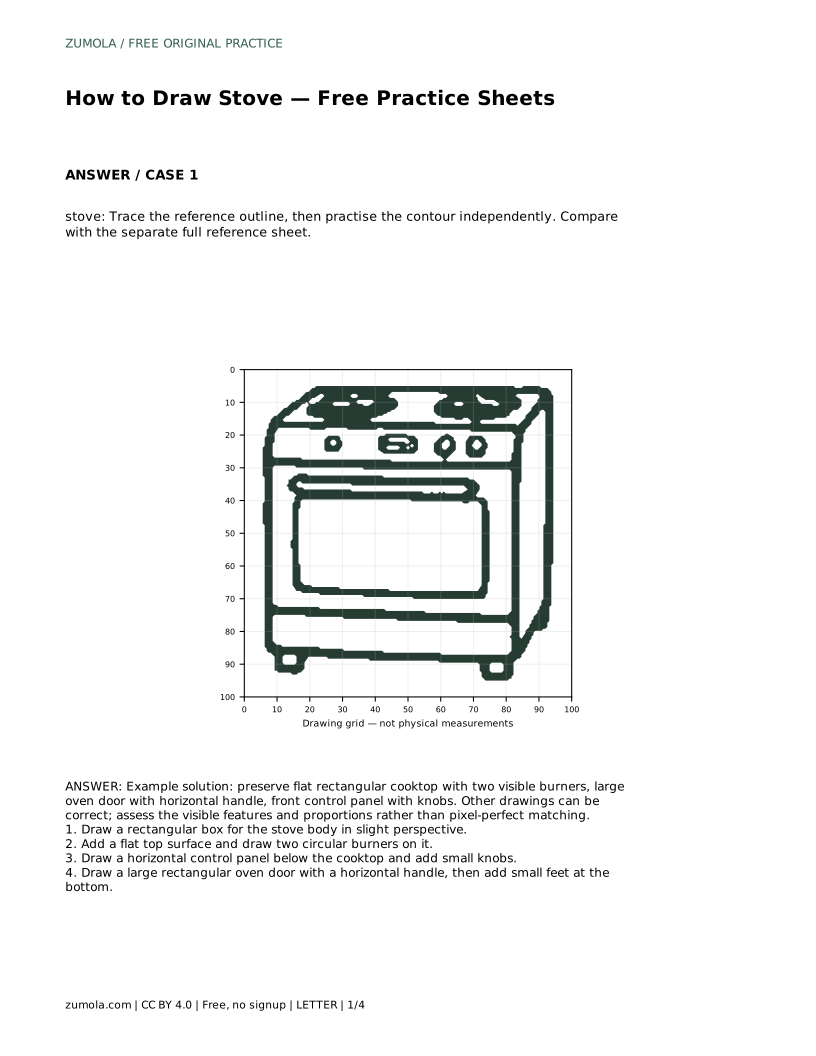
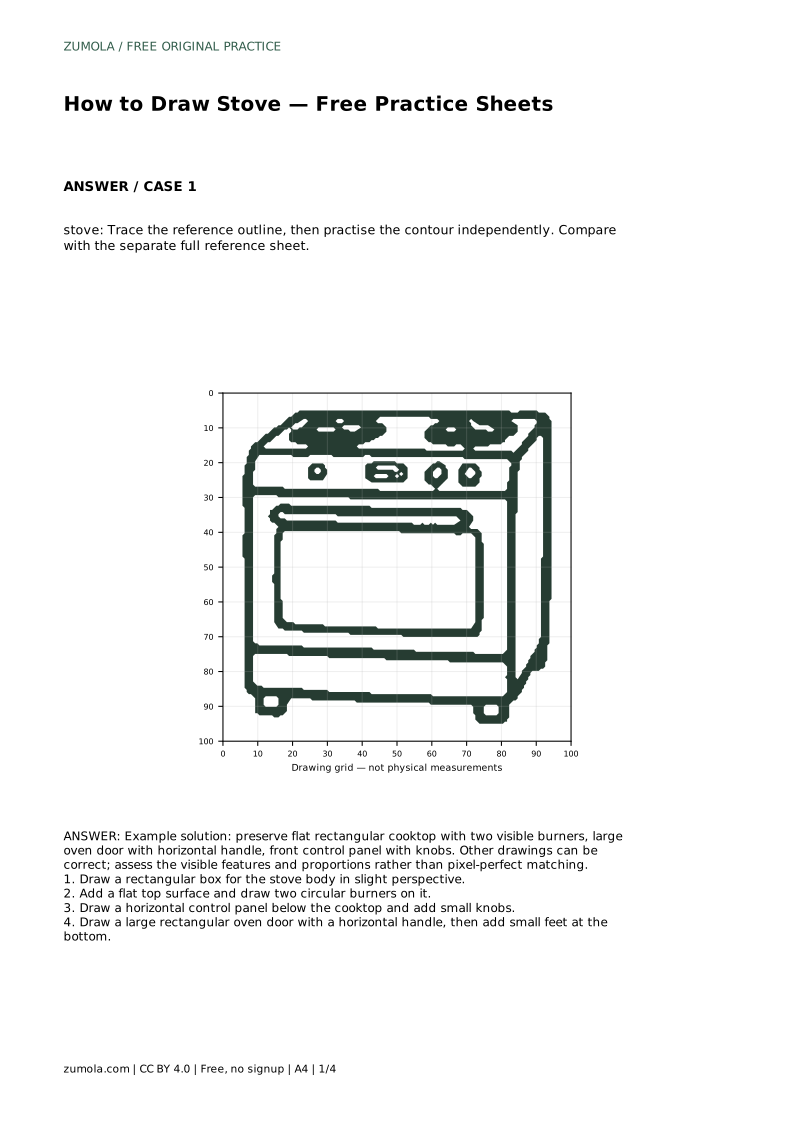
stove: Trace the reference outline, then practise the contour independently. Compare with the separate full reference sheet.
Example solution: preserve flat rectangular cooktop with two visible burners, large oven door with horizontal handle, front control panel with knobs. Other drawings can be correct; assess the visible features and proportions rather than pixel-perfect matching. Draw a rectangular box for the stove body in slight perspective. Add a flat top surface and draw two circular burners on it. Draw a horizontal control panel below the cooktop and add small knobs. Draw a large rectangular oven door with a horizontal handle, then add small feet at the bottom.
No. A flat front view is valid. Slight perspective simply shows the cooktop surface, but keep it shallow so the body still looks upright.
The reference uses two visible burners. You may show more if your sheet's reference does, but keep them circular and inside the cooktop.
Check for the rectangular body, flat cooktop, visible burners, control panel with knobs, large oven door with a horizontal handle, and small feet. Proportions matter more than an exact match.
All drawing practice · Free coordinate paper
Original resources · CC BY 4.0 · Free for personal and classroom use with attribution.