Reference diagrams
LETTER · Download PDF
A4 · Download PDF
Free original resources
Learn to draw an ice skate with a tall boot, crisscross laces, and a curved blade. Free printable practice sheets help you trace, grid, and complete the drawing.
Four original cases, with reference diagrams, practice sheets and worked answers. Everything is free; no signup required.
LETTER · Download PDF
A4 · Download PDF
LETTER · Download PDF
A4 · Download PDF
LETTER · Download PDF
A4 · Download PDF
Use A4 or US Letter to match your printer. Use the stated values and conditions to solve each exercise; diagrams are not physical measuring rulers.
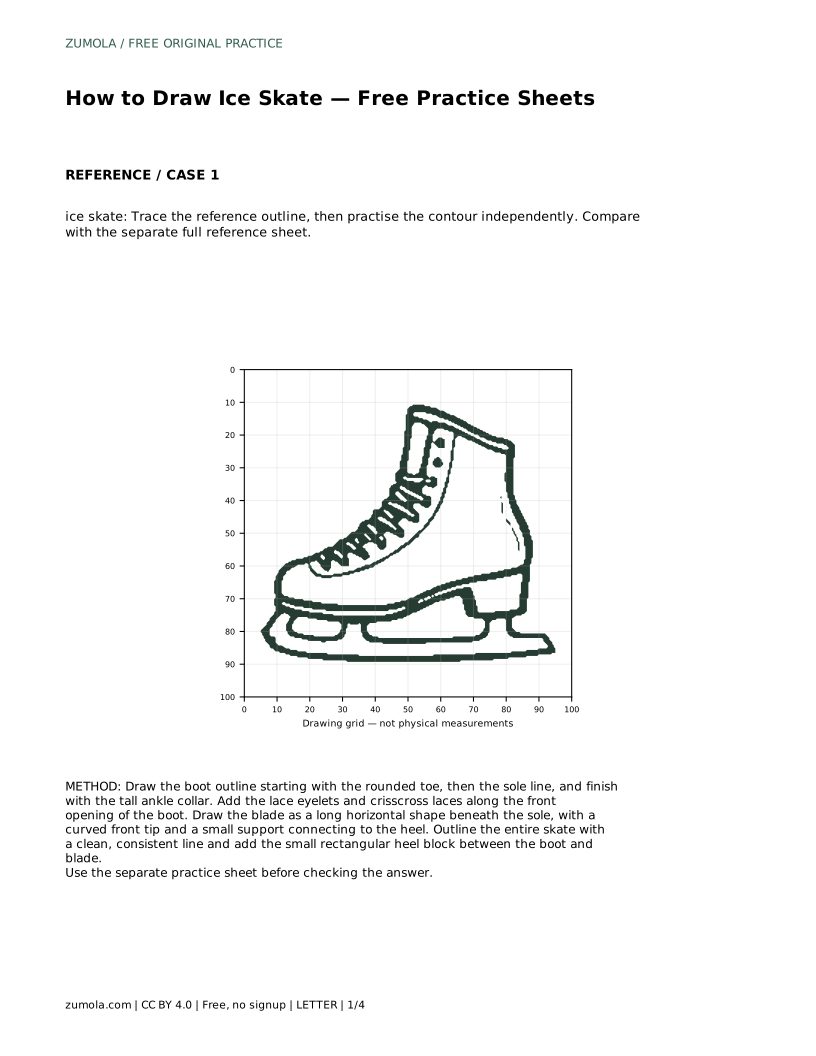
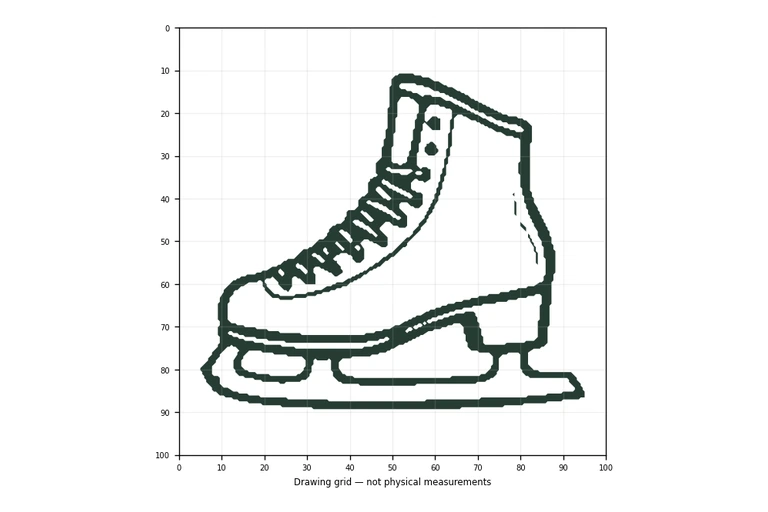
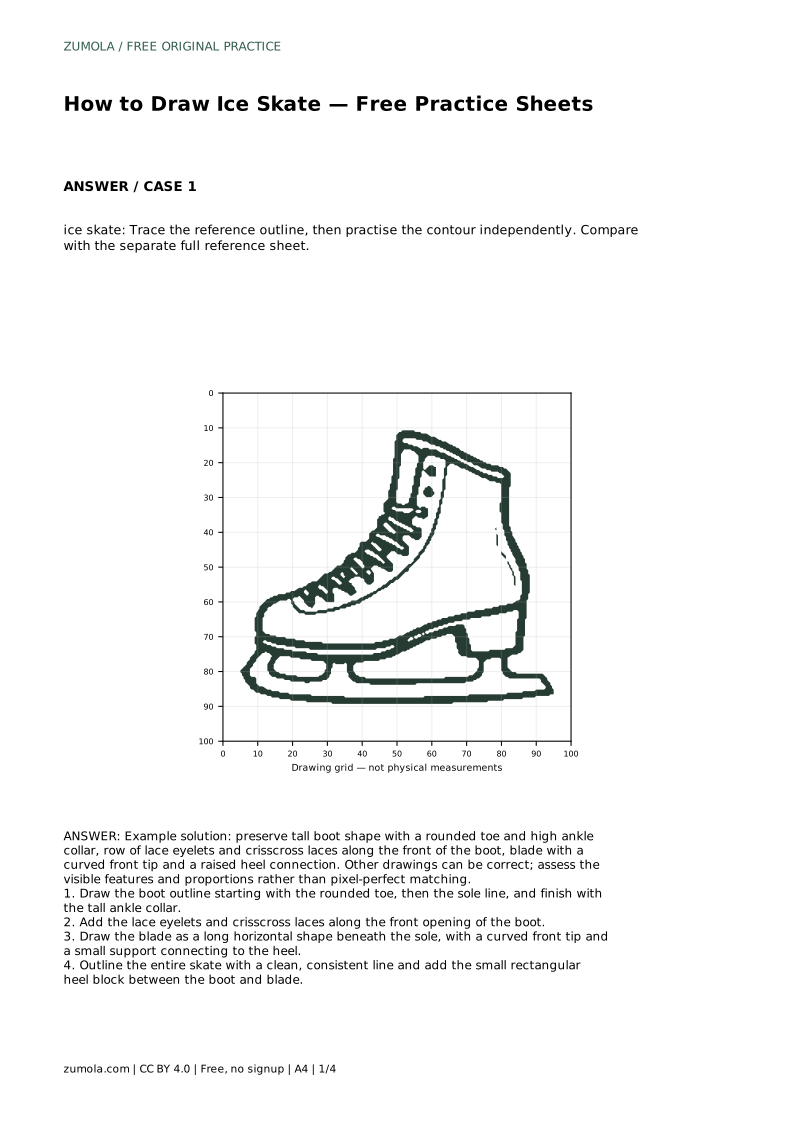
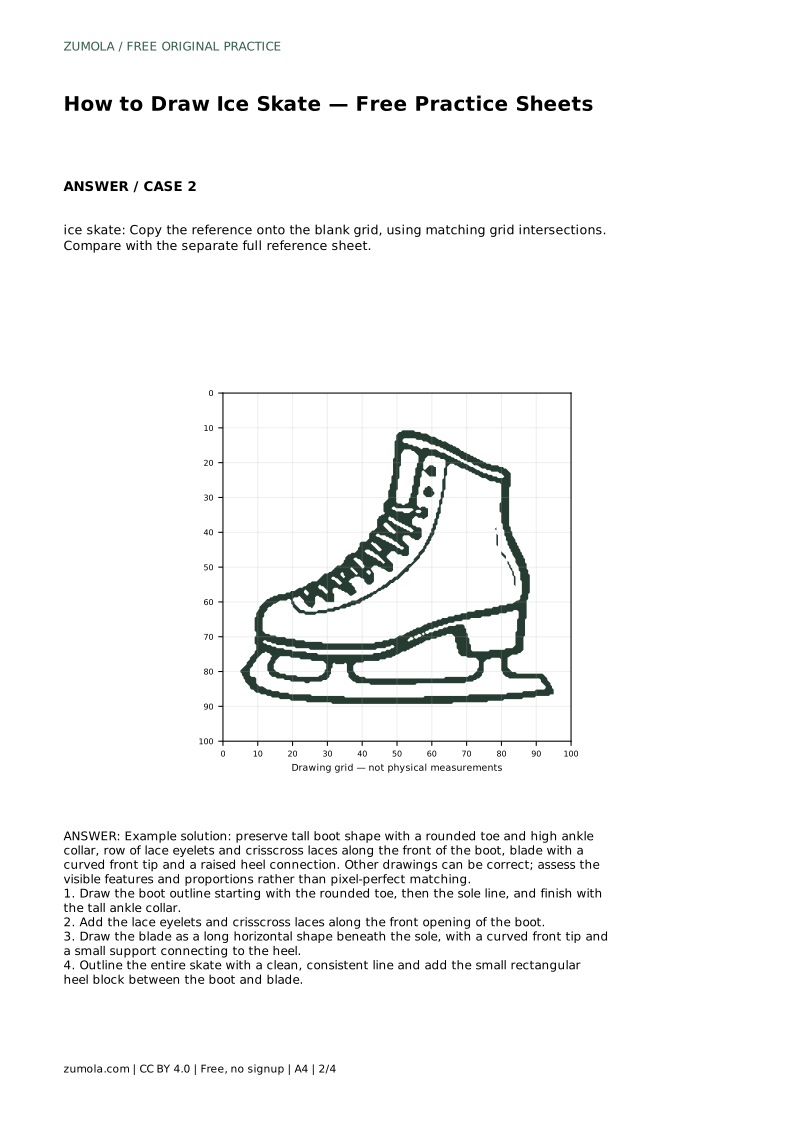
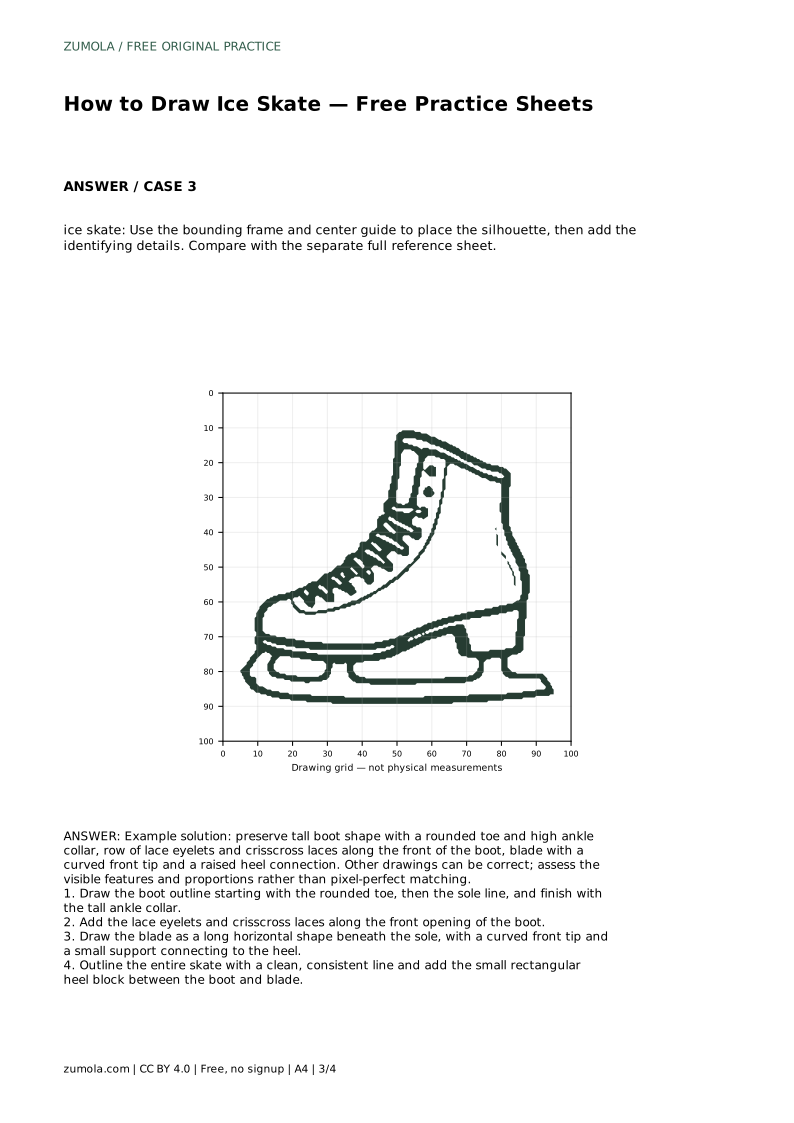
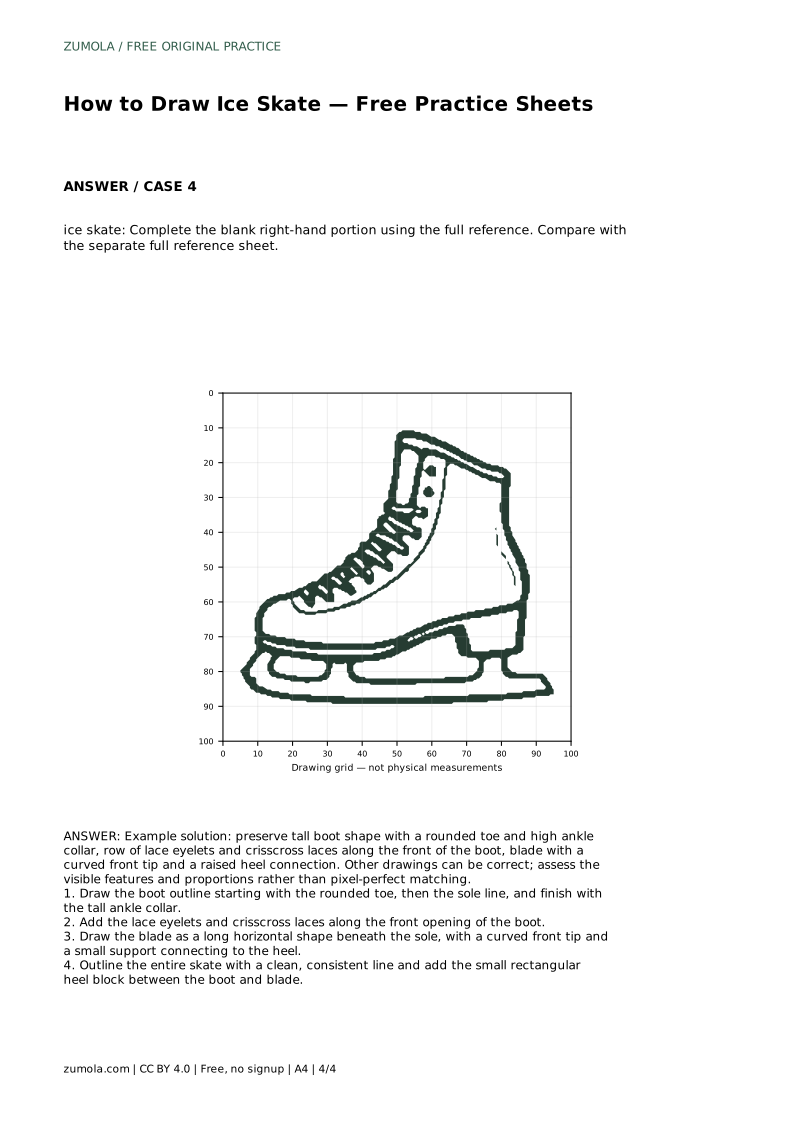
Drawing an ice skate is a great way to practice combining a structured boot with a simple mechanical part: the blade. This guide breaks the skate into clear shapes—a rounded toe, a tall ankle collar, a row of lace eyelets, and a blade with a curved front tip. You can use the free practice sheets to trace the outline, copy it onto a grid, or complete a partially drawn version. The goal is to capture the skate's identifying features and proportions, not to match every pixel.
Begin by drawing the boot as a tall, slightly tapered shape. The toe should be rounded, not pointed, and the sole line should run fairly straight from the toe to the heel. The ankle collar sits high at the back, giving the skate its characteristic upright look. Keep the front opening slightly curved so the laces have a natural place to sit.
Work lightly at first. A soft outline lets you adjust the toe curve or collar height before committing to darker lines. The boot is the largest part of the skate, so getting its overall height and width in proportion makes the rest of the drawing easier.
The laces are one of the most recognizable features of an ice skate. Draw a row of small eyelets along both sides of the front opening, then connect them with crisscross lines. Keep the eyelets evenly spaced and the crosses simple—two diagonal lines per pair of eyelets is enough.
If the eyelets look uneven, check that they follow the curve of the boot's front opening. The laces should sit on the surface of the boot, not float above it. A few extra crosses near the top can suggest the laces wrapping around the ankle collar.
The blade runs beneath the sole as a long, thin horizontal shape. Its front tip curves upward slightly, and the back connects to the boot through a small support at the heel. Between the boot and blade, add a small rectangular heel block—this is the raised connection that gives the skate its height.
Keep the blade parallel to the sole line. If the blade looks too thick, thin it down; a skate blade is narrow compared to the boot. The curved front tip should point forward, and the heel support should sit directly under the back of the boot.
Once the main parts are in place, outline the entire skate with a clean, consistent line. Erase any light construction marks. Check that the boot is taller than it is wide, the blade is narrower than the boot, and the laces sit within the front opening.
Remember that drawings can be correct in different ways. Use the rubric below to assess whether the key features are present and proportional, rather than comparing every line to the reference.
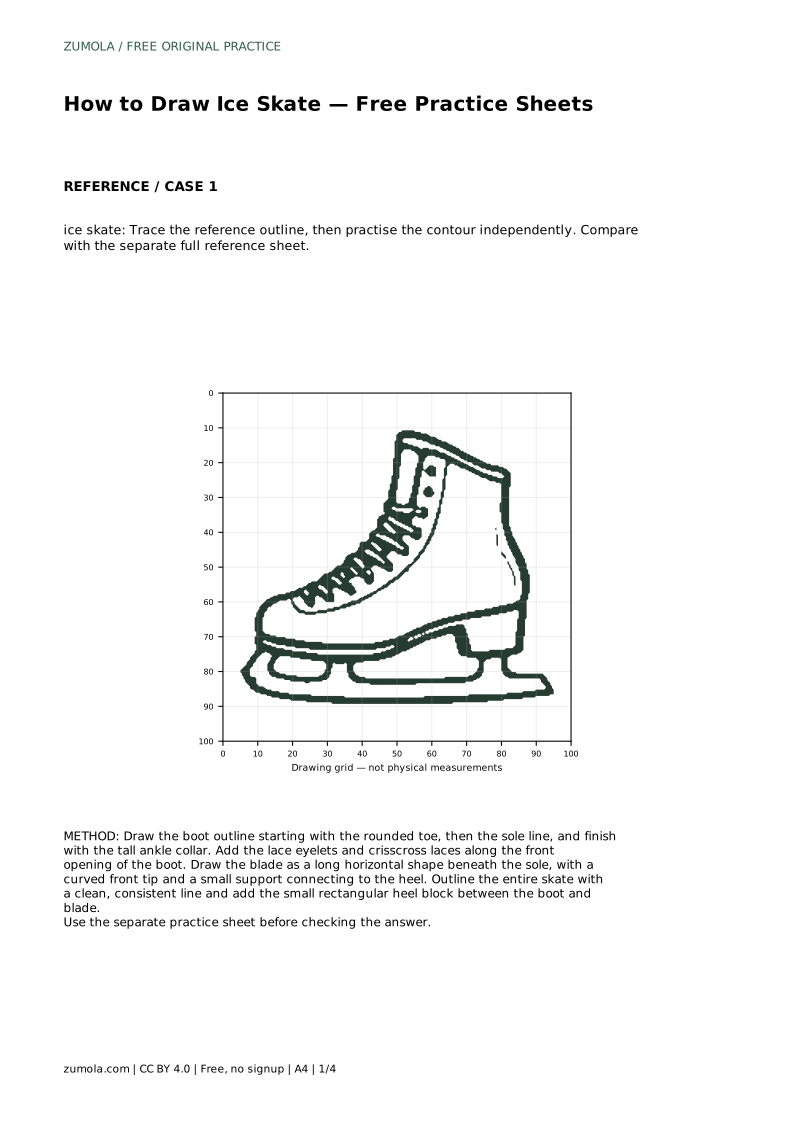
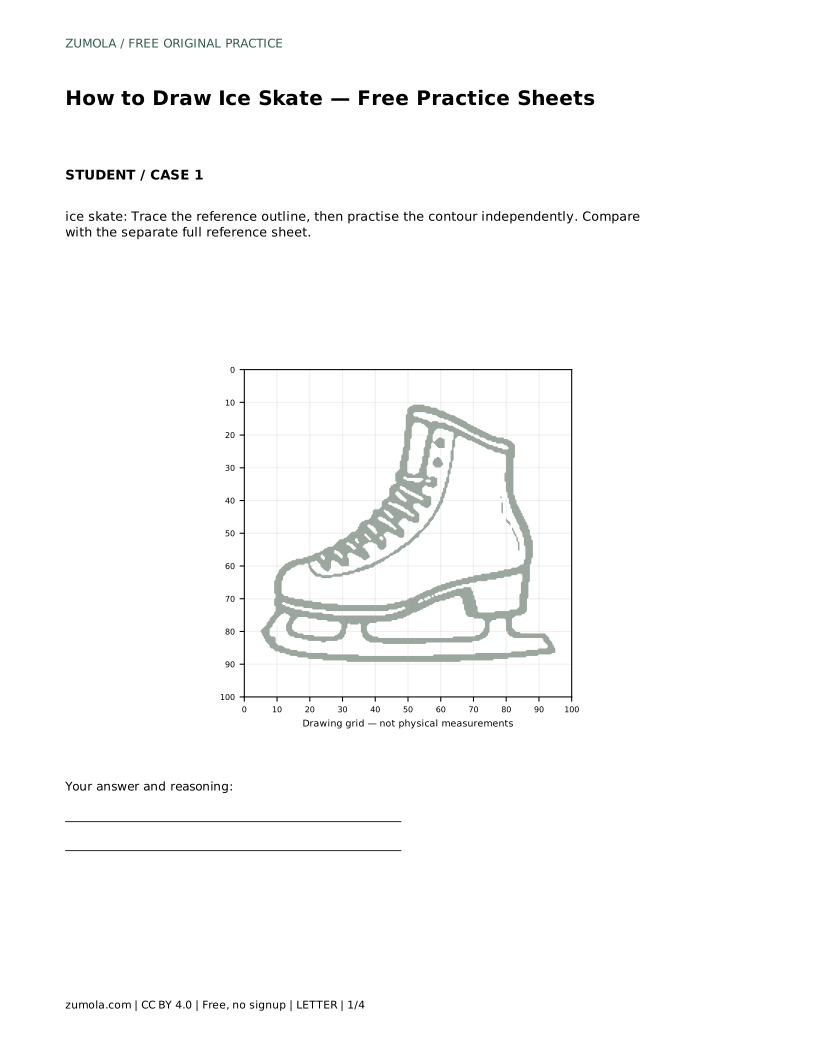
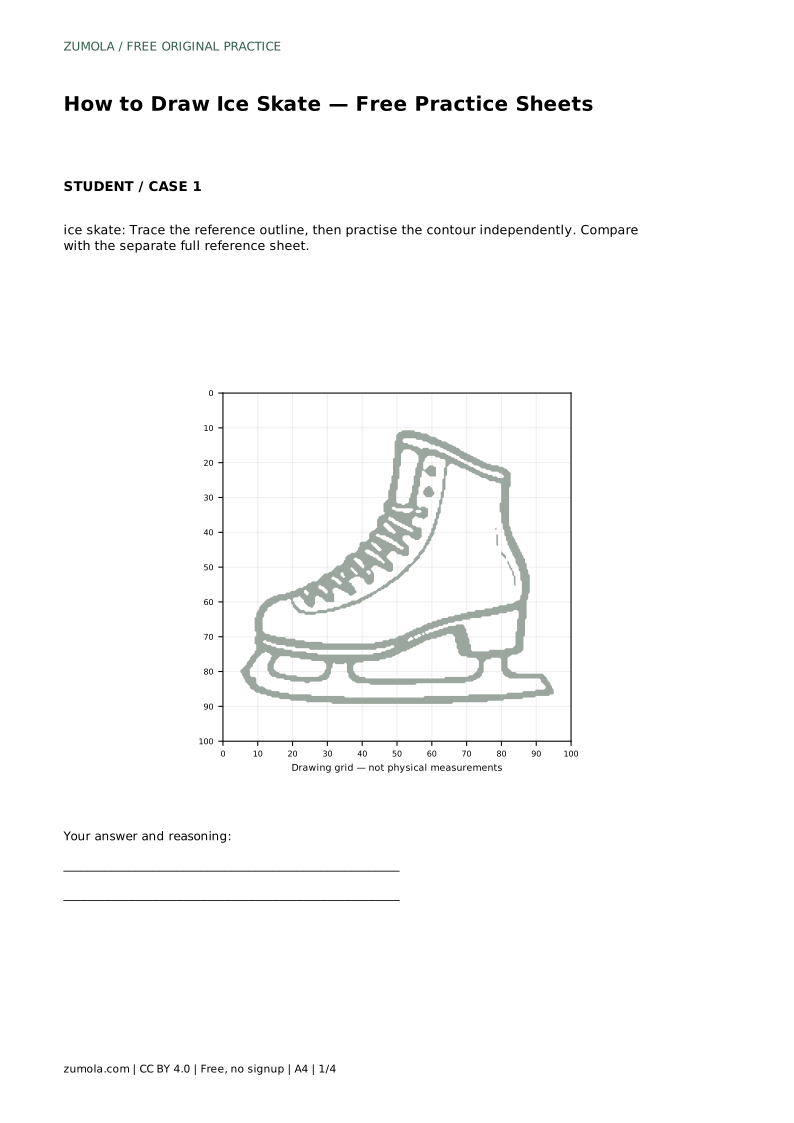
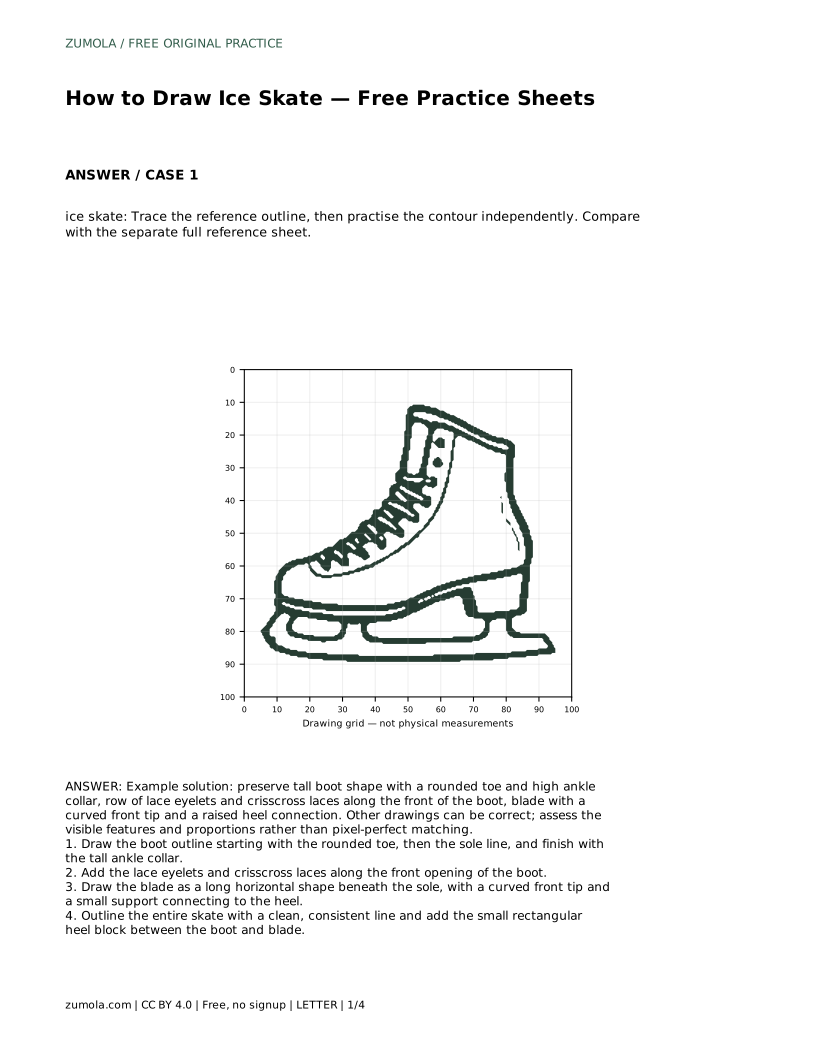
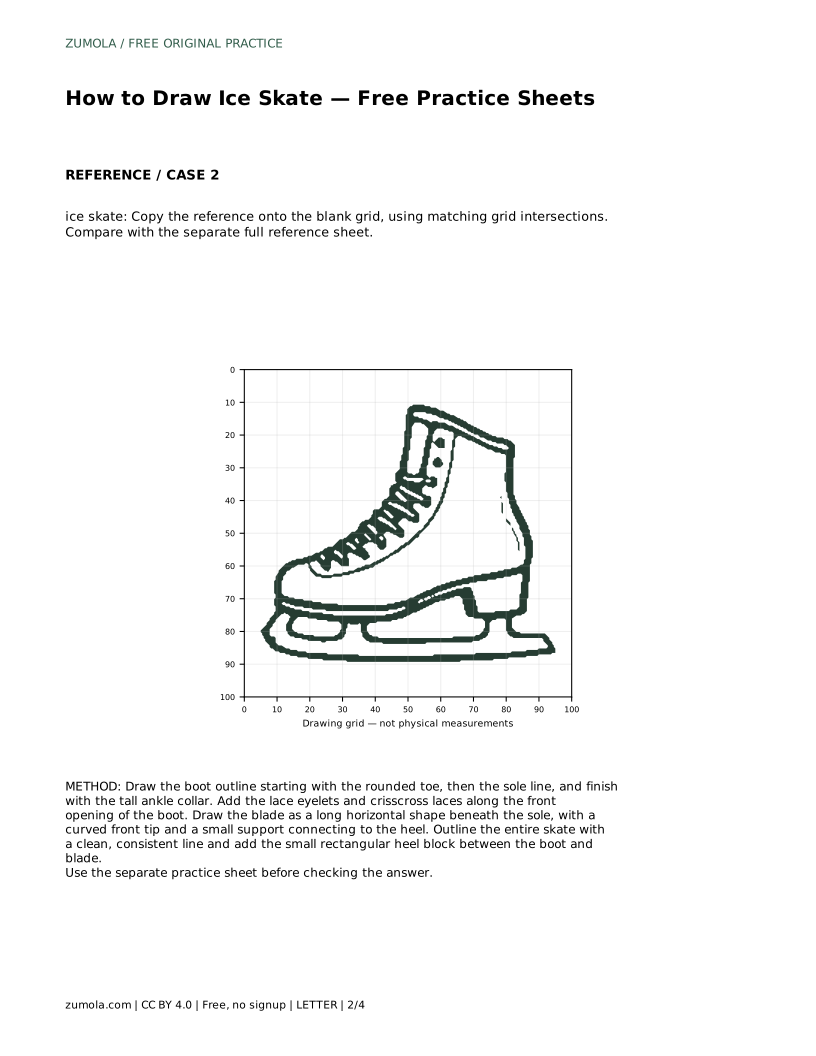
ice skate: Trace the reference outline, then practise the contour independently. Compare with the separate full reference sheet.
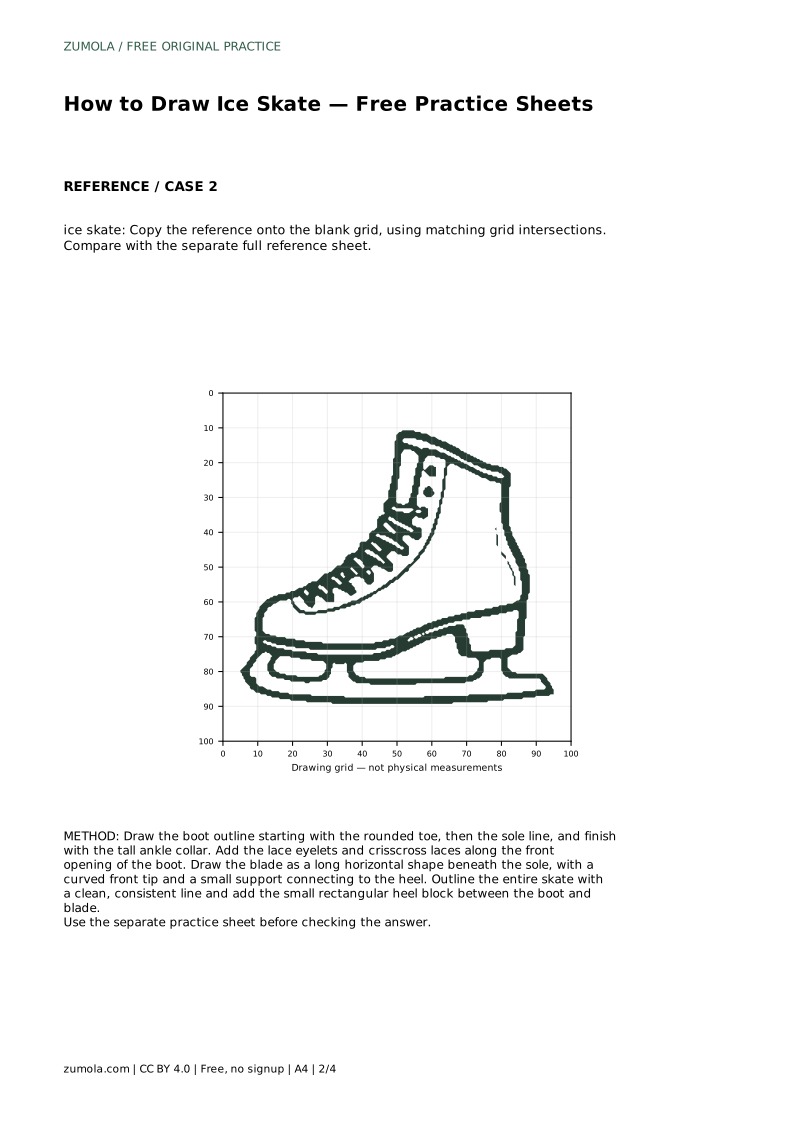
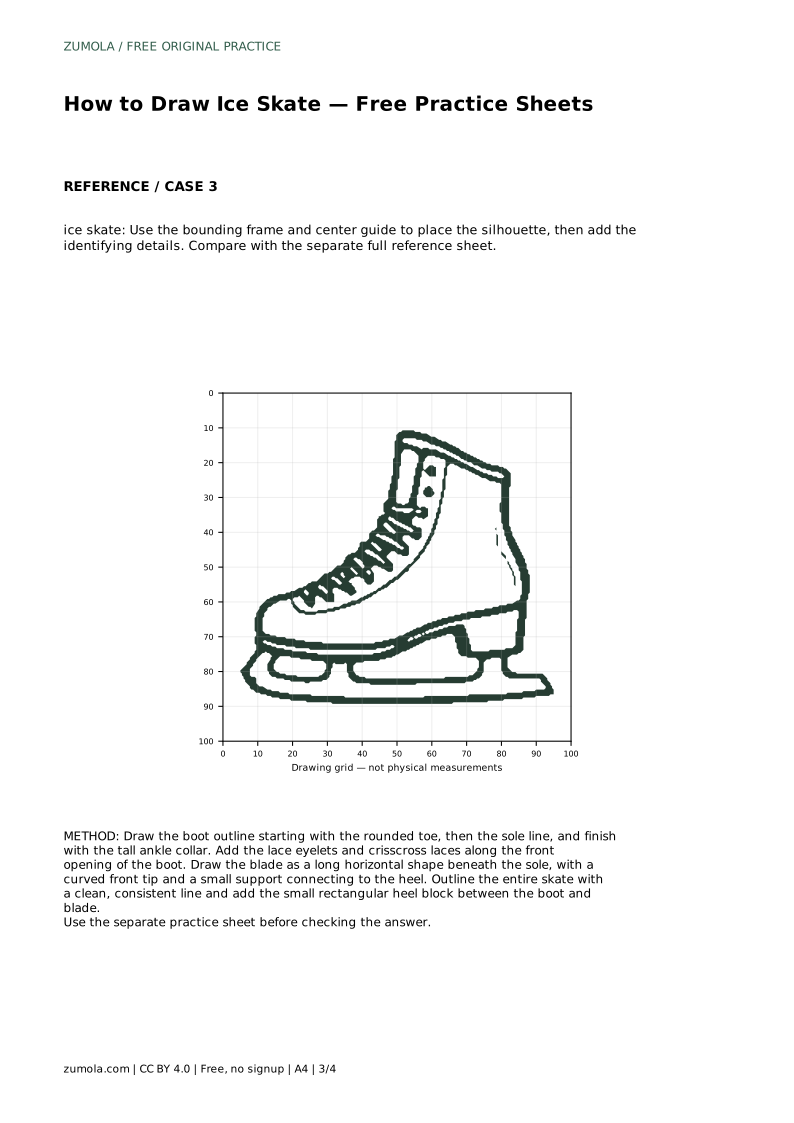
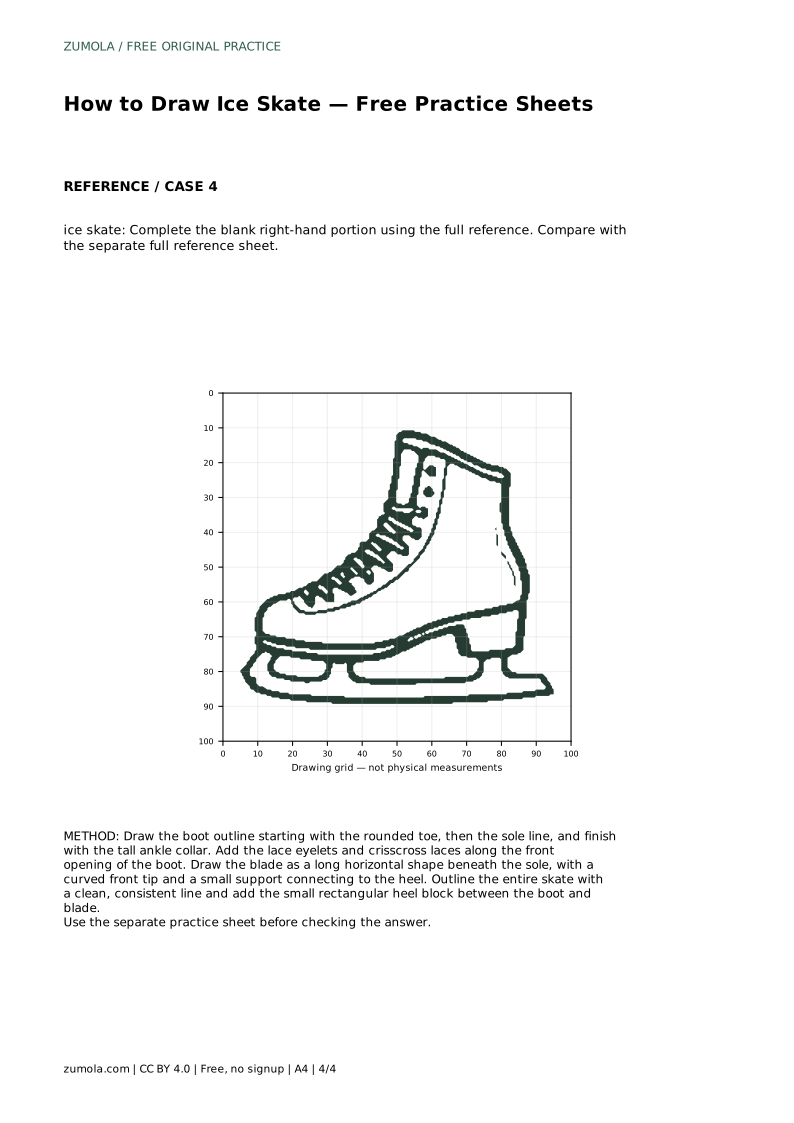
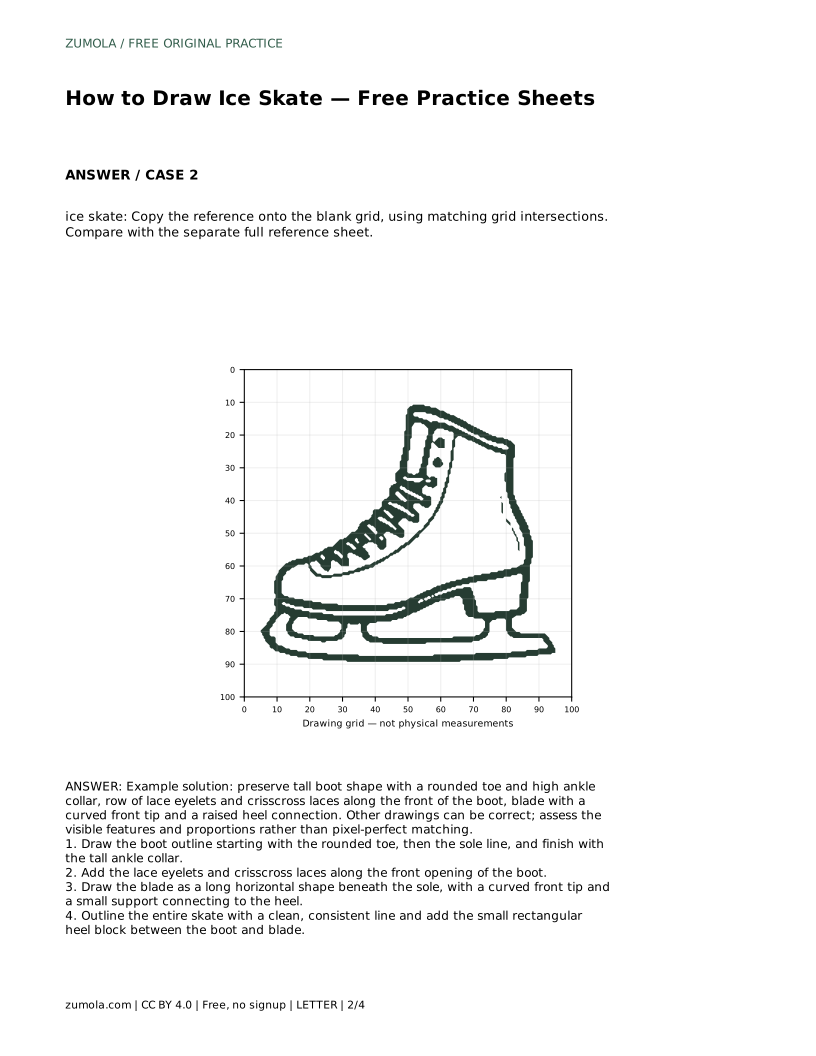
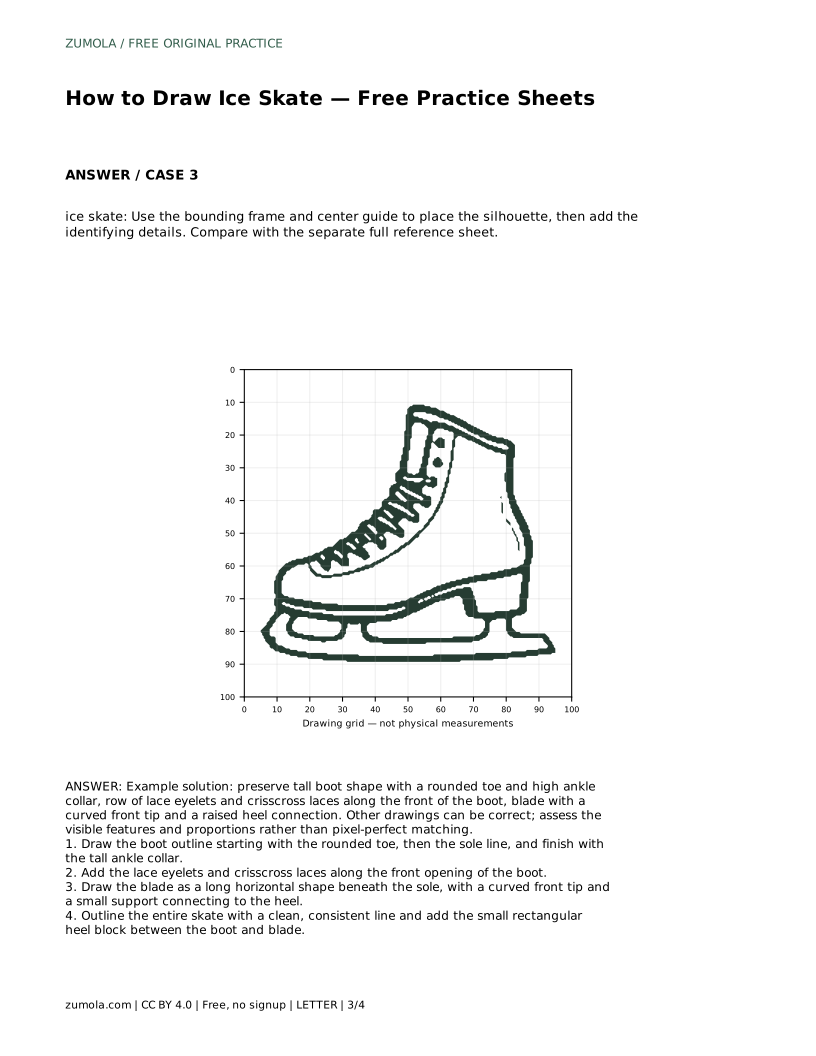
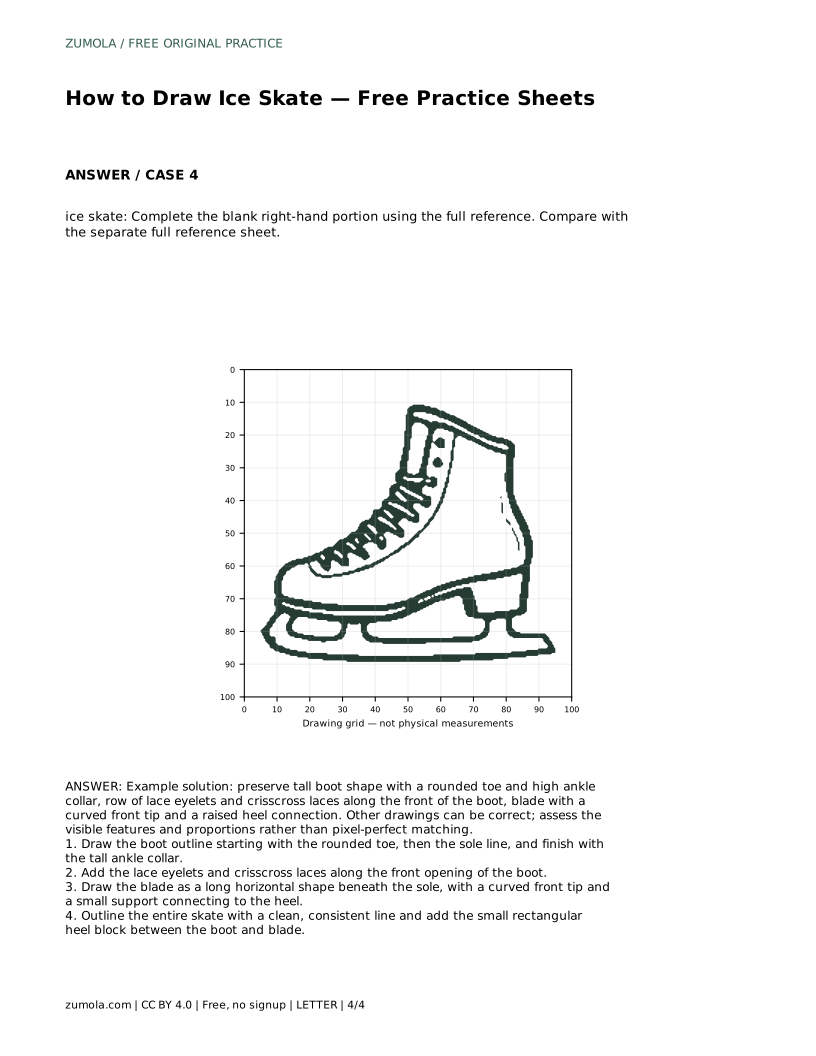
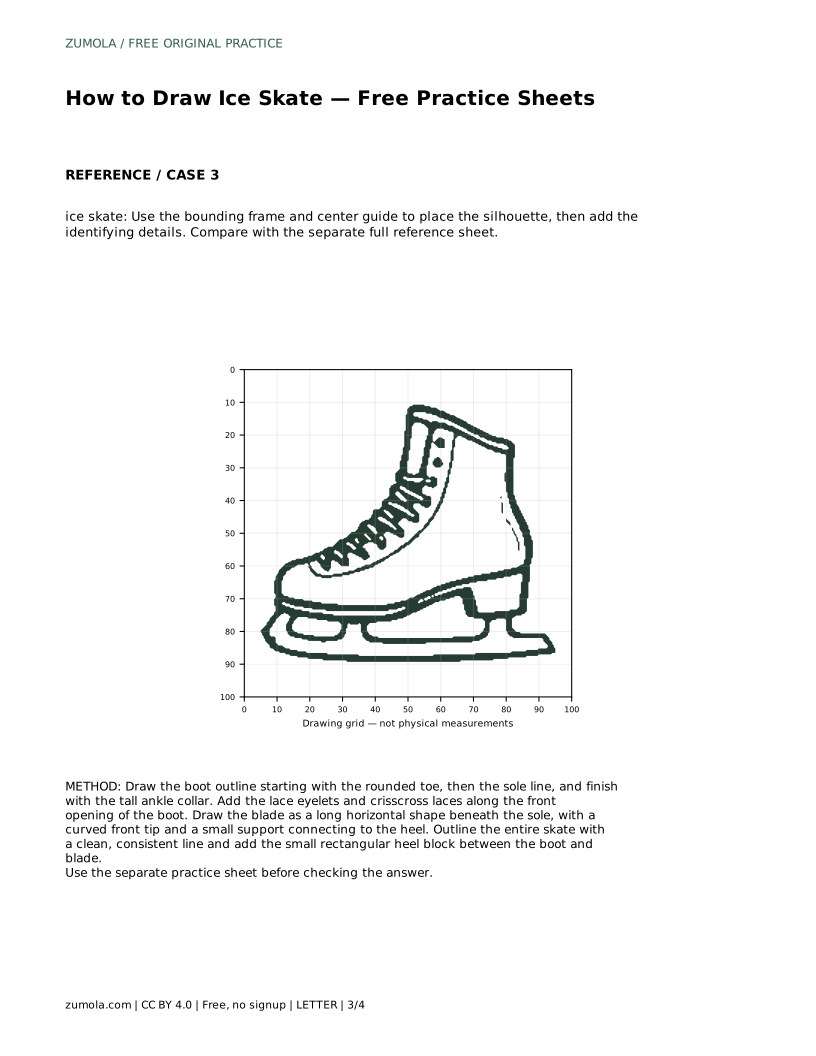
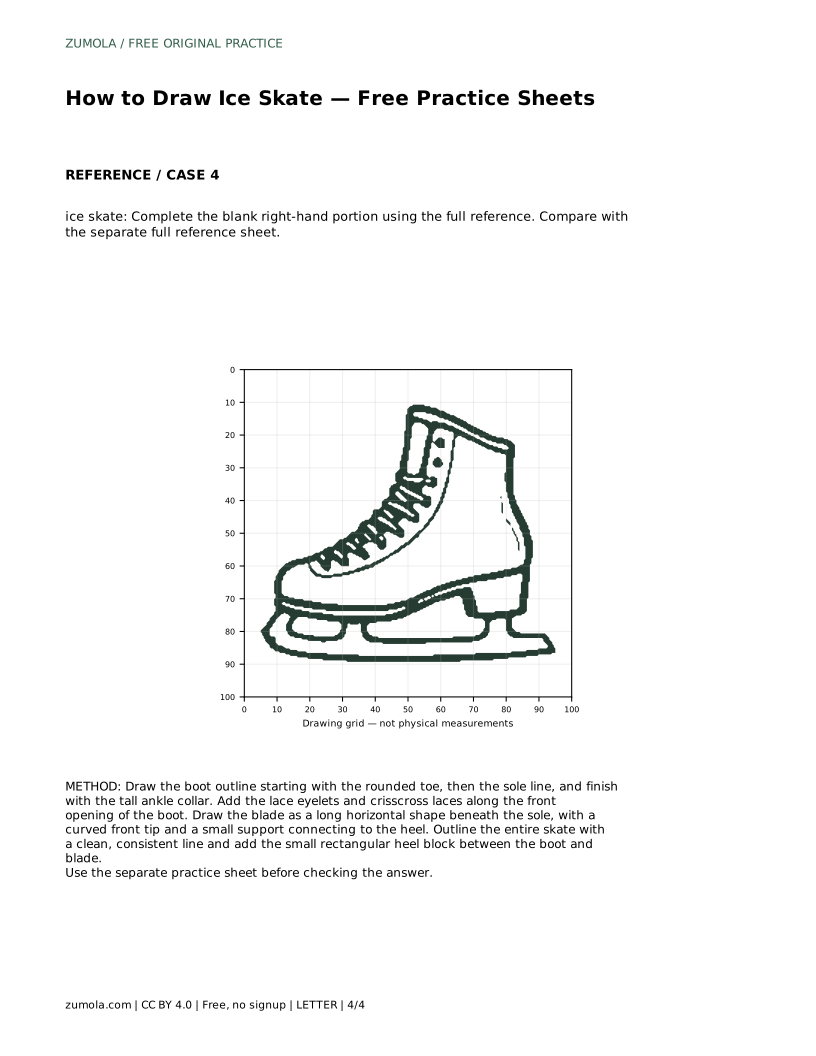
Example solution: preserve tall boot shape with a rounded toe and high ankle collar, row of lace eyelets and crisscross laces along the front of the boot, blade with a curved front tip and a raised heel connection. Other drawings can be correct; assess the visible features and proportions rather than pixel-perfect matching. Draw the boot outline starting with the rounded toe, then the sole line, and finish with the tall ankle collar. Add the lace eyelets and crisscross laces along the front opening of the boot. Draw the blade as a long horizontal shape beneath the sole, with a curved front tip and a small support connecting to the heel. Outline the entire skate with a clean, consistent line and add the small rectangular heel block between the boot and blade.
No. The important part is that the laces form a crisscross pattern along the front opening. The number of crosses can vary.
The boot is the main body of the skate and should be noticeably taller than the blade is thick. The blade is a narrow strip beneath the sole.
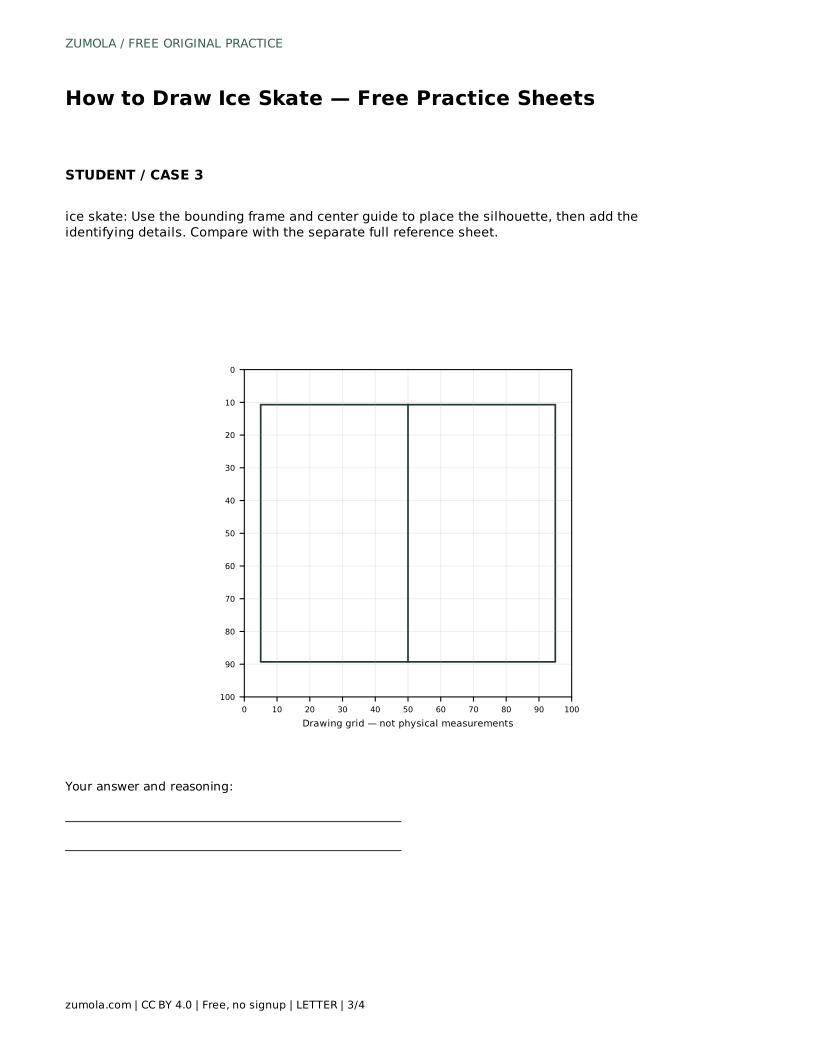
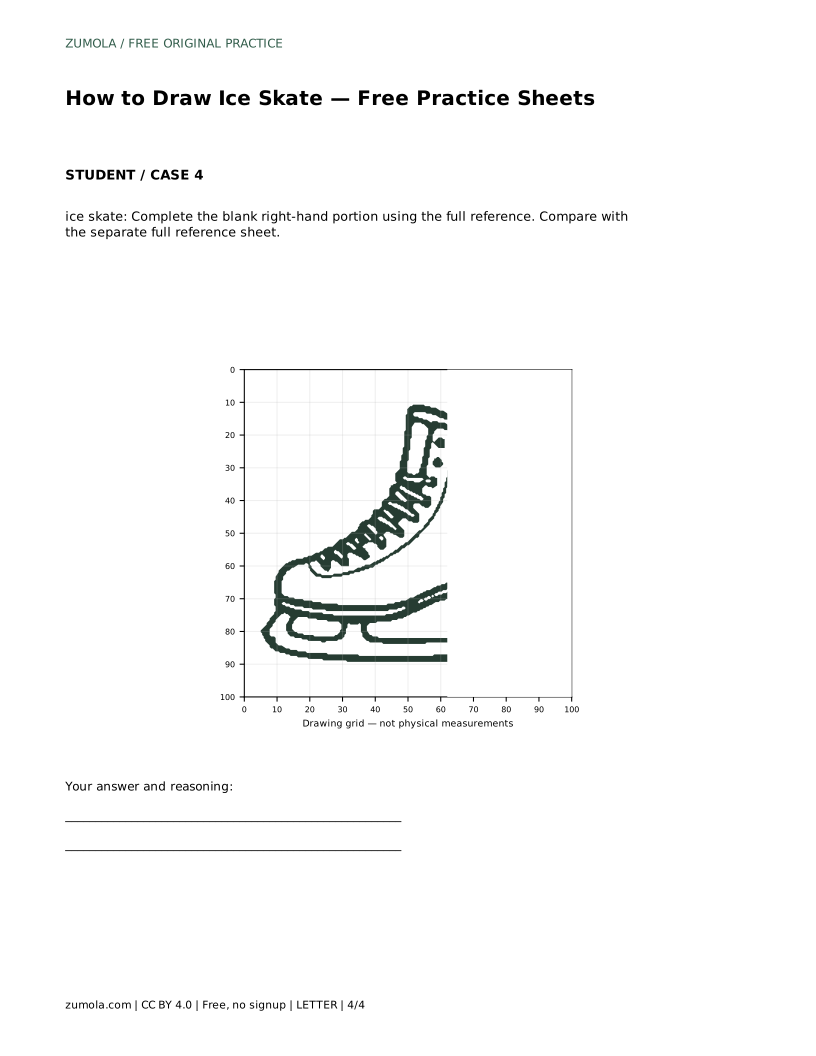
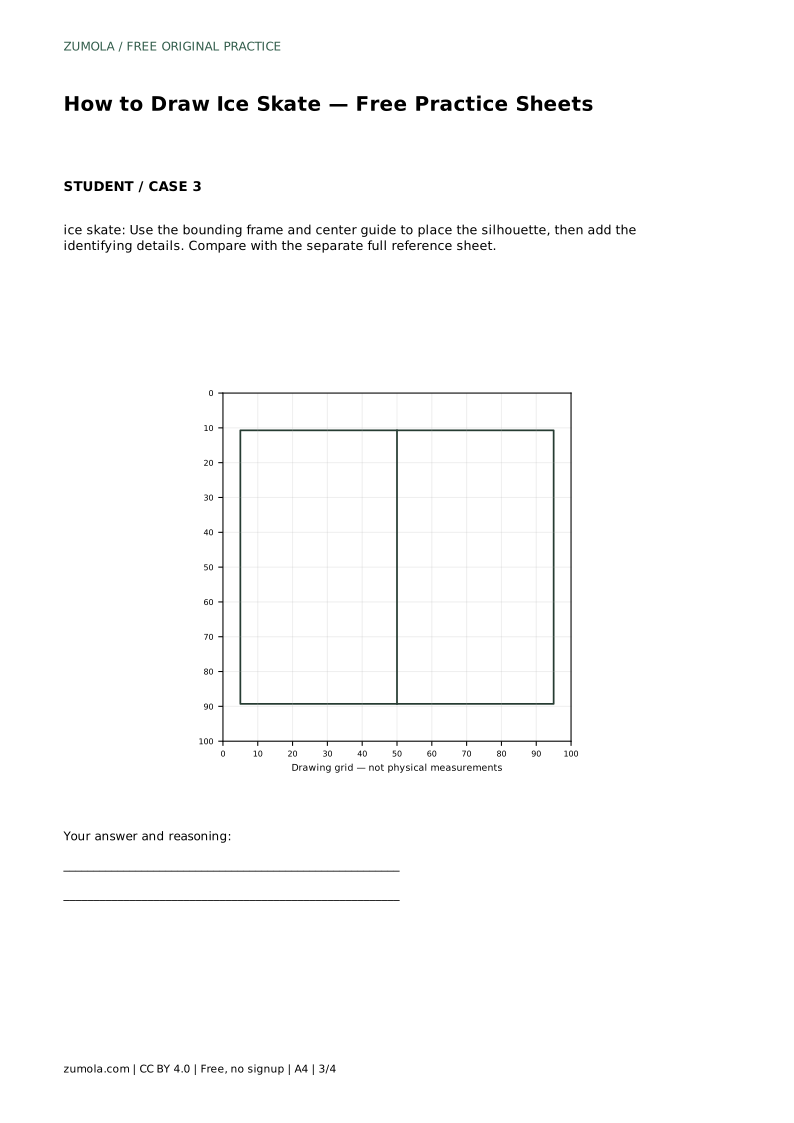
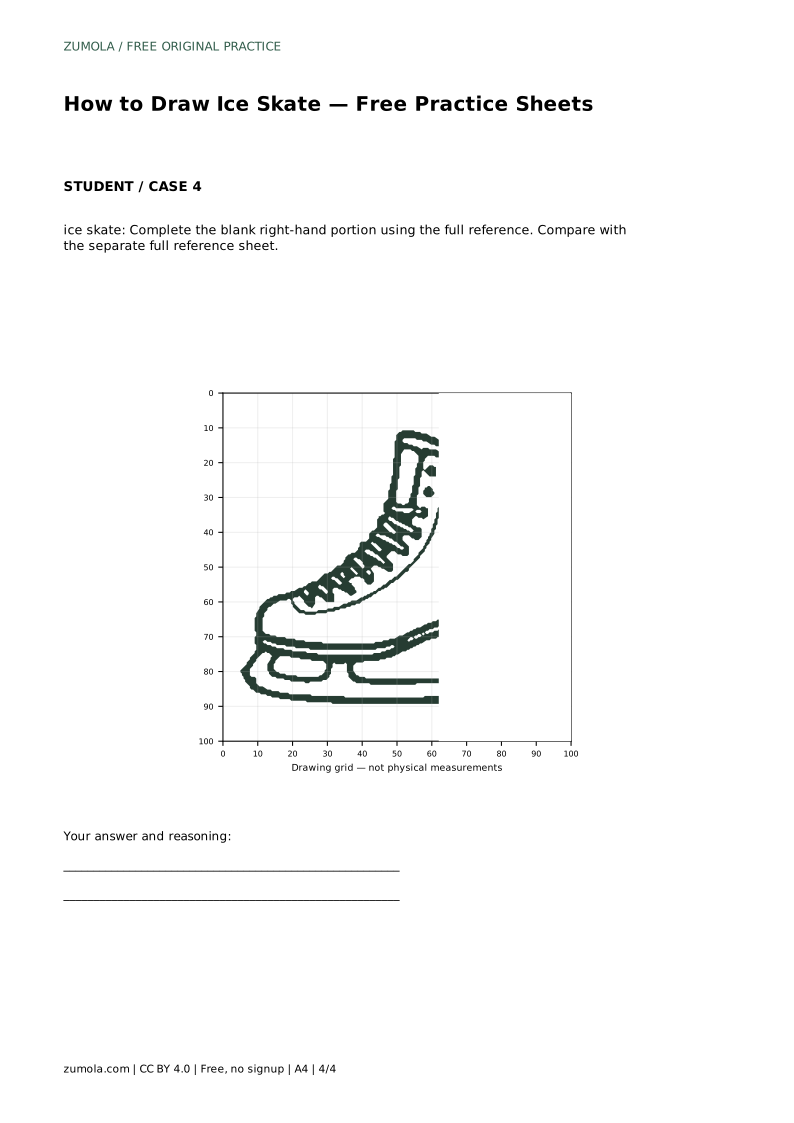
Yes. You can copy the reference onto a blank grid, use the bounding frame to place the silhouette, or complete the blank portion of a partially drawn skate.
All drawing practice · Free coordinate paper
Original resources · CC BY 4.0 · Free for personal and classroom use with attribution.