Reference diagrams
LETTER · Download PDF
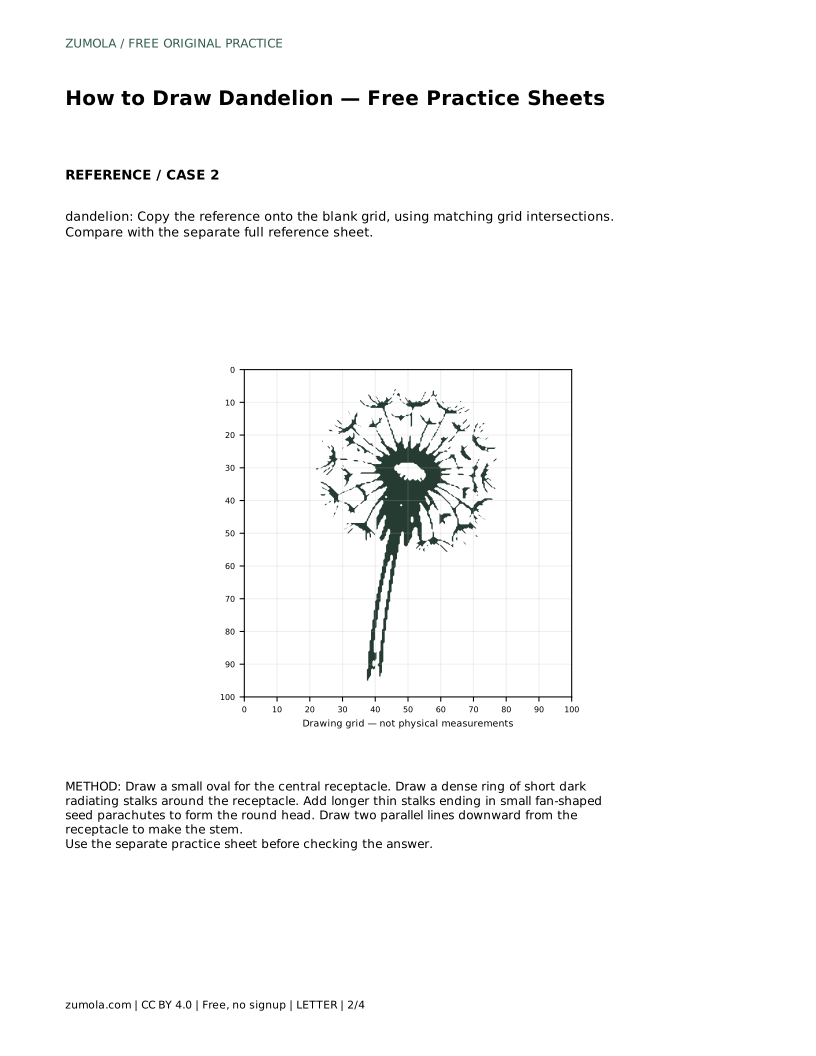
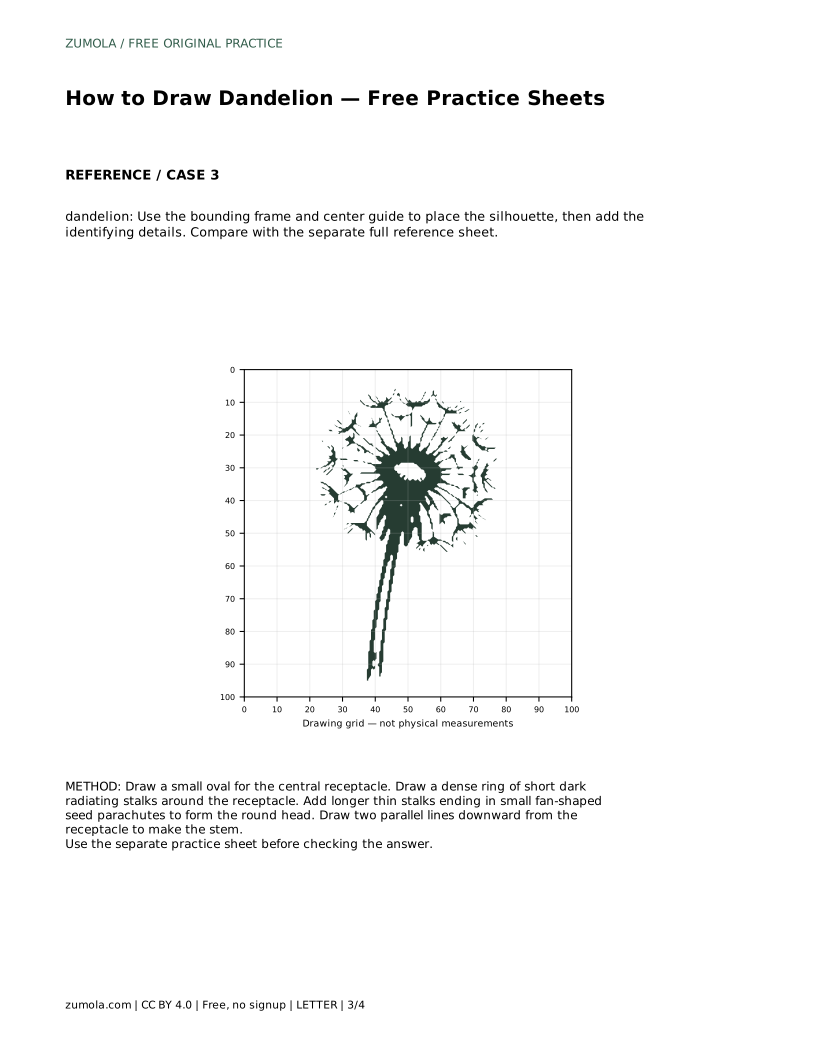
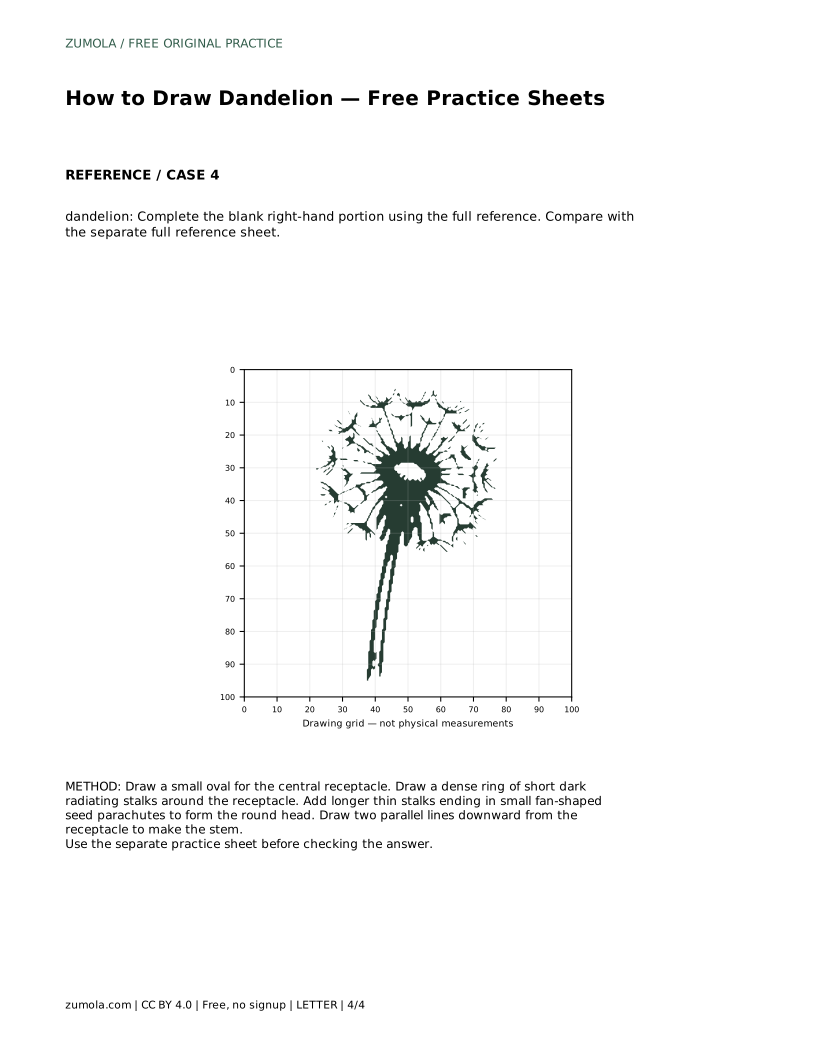
A4 · Download PDF
Free original resources
Learn to draw a dandelion seed head with a central receptacle, radiating stalks, parachute seeds, and a double-line stem. Free practice sheets support tracing, grids, and guided placement.
Four original cases, with reference diagrams, practice sheets and worked answers. Everything is free; no signup required.
LETTER · Download PDF
A4 · Download PDF
LETTER · Download PDF
A4 · Download PDF
LETTER · Download PDF
A4 · Download PDF
Use A4 or US Letter to match your printer. Use the stated values and conditions to solve each exercise; diagrams are not physical measuring rulers.
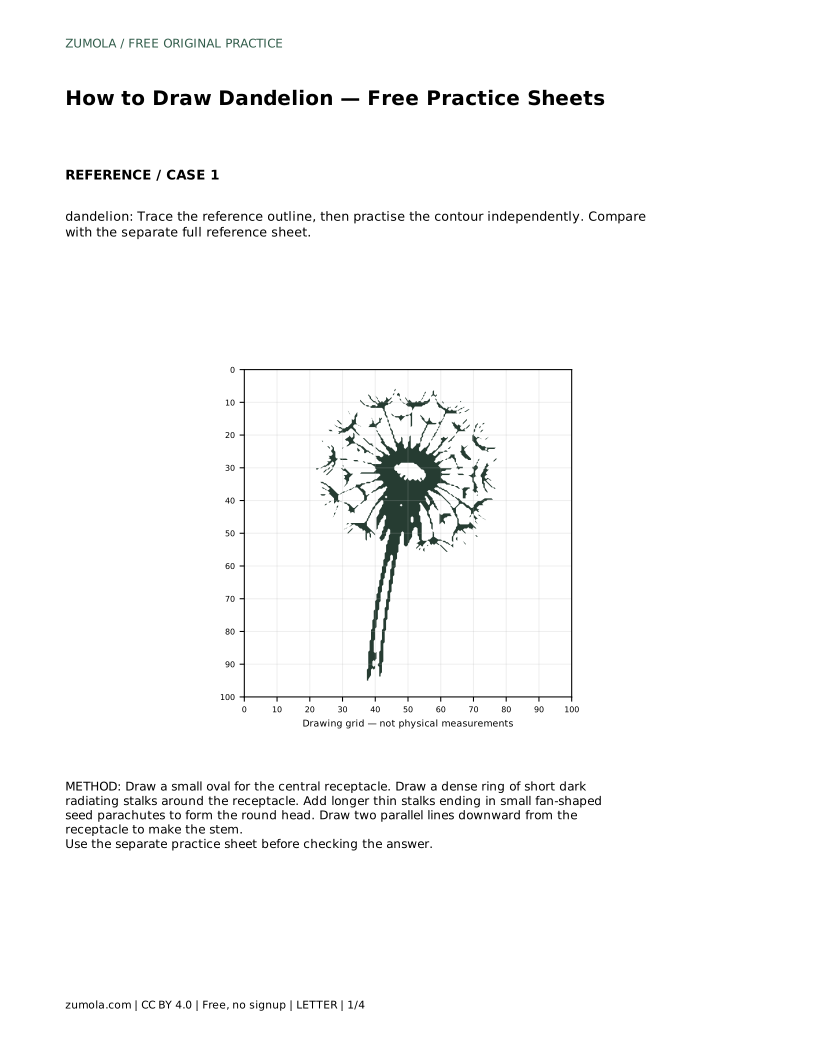
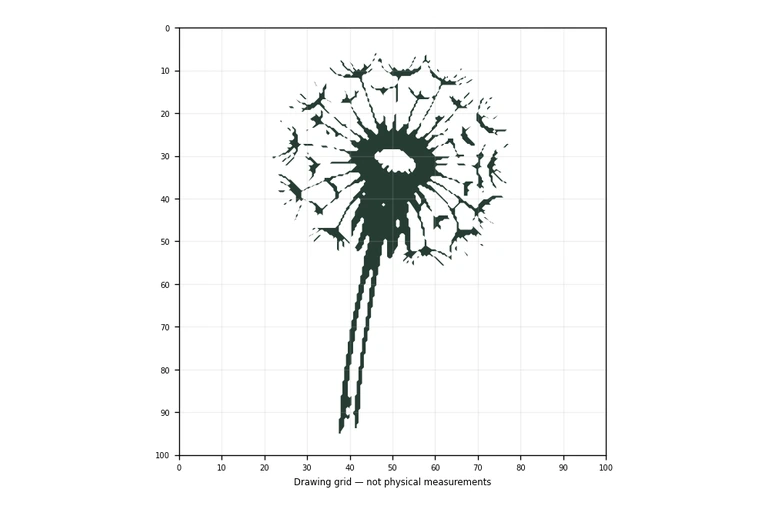
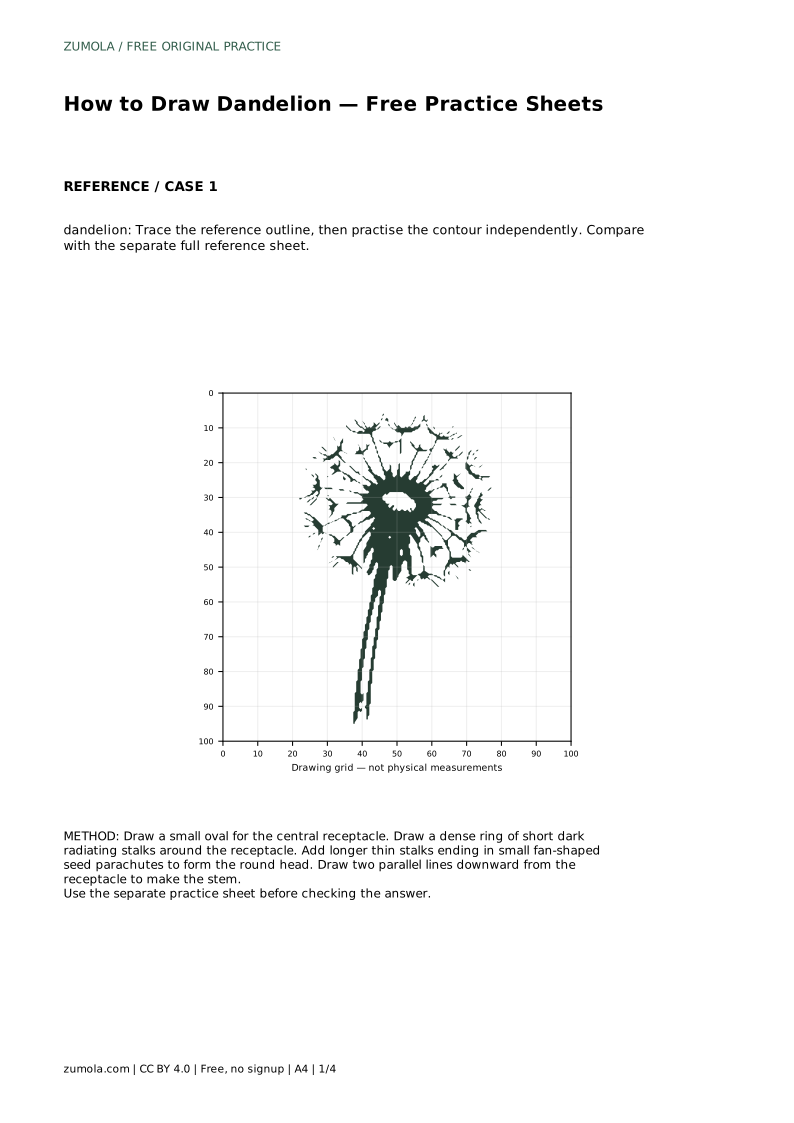
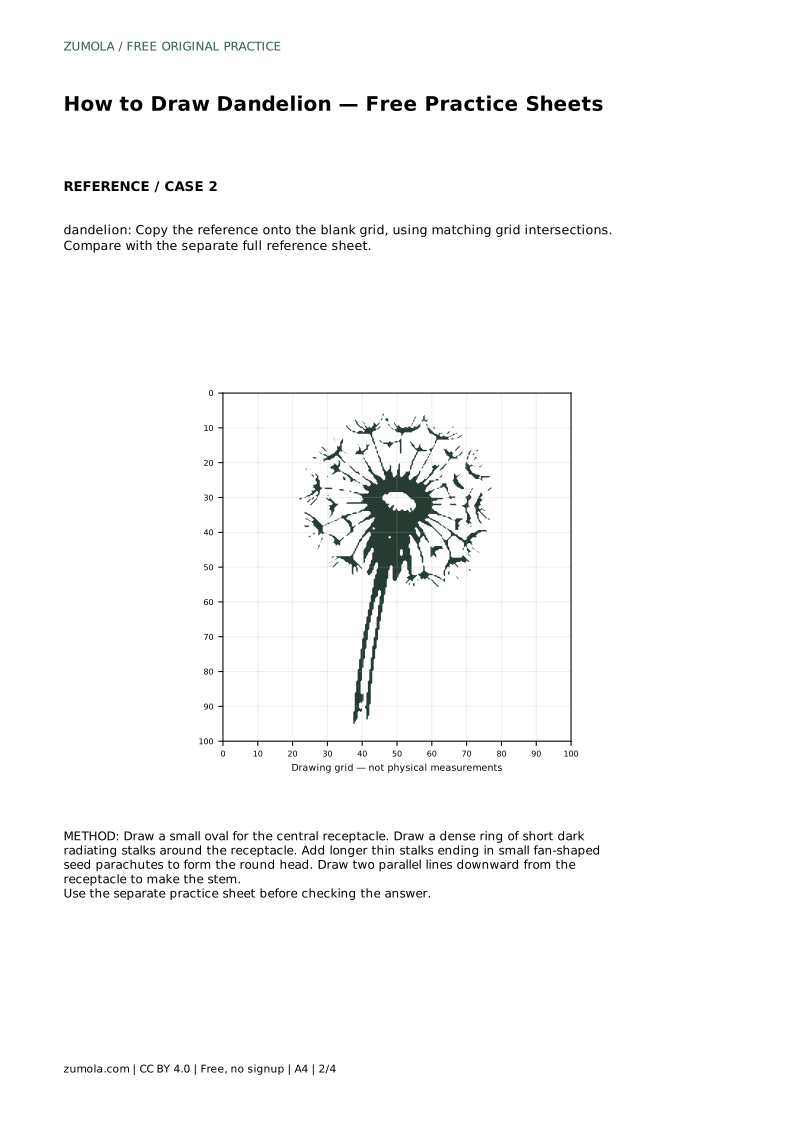
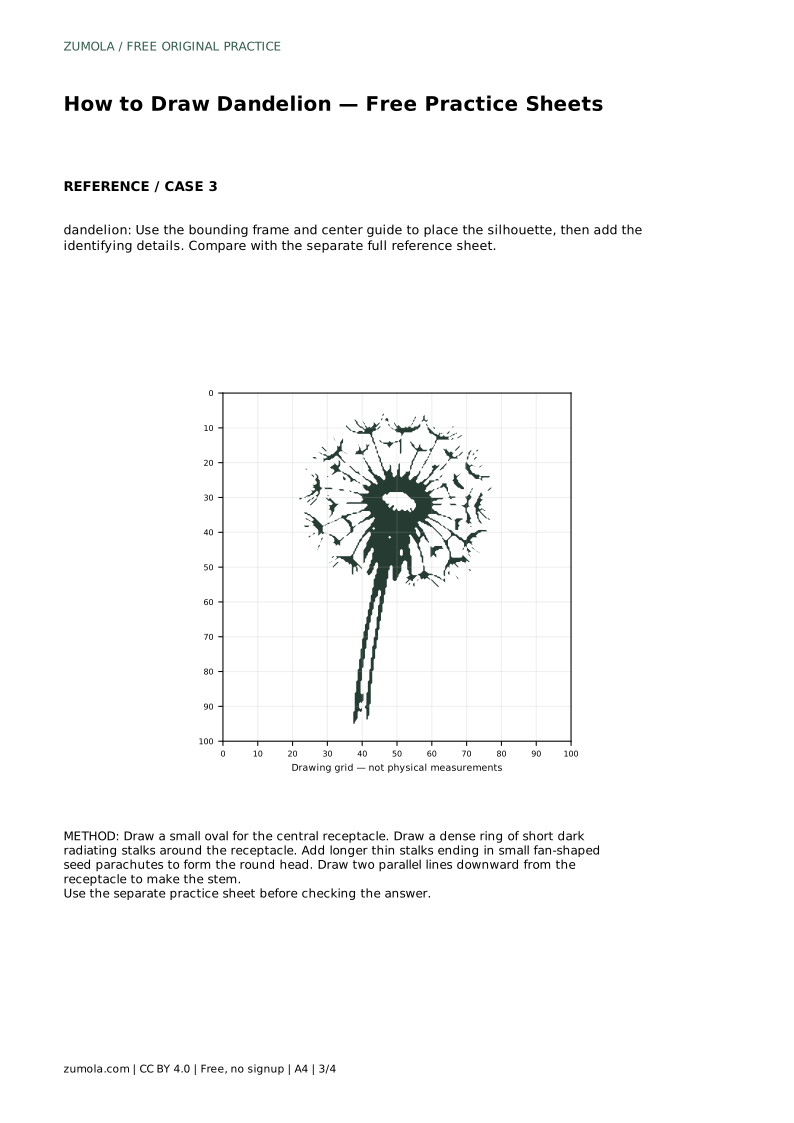
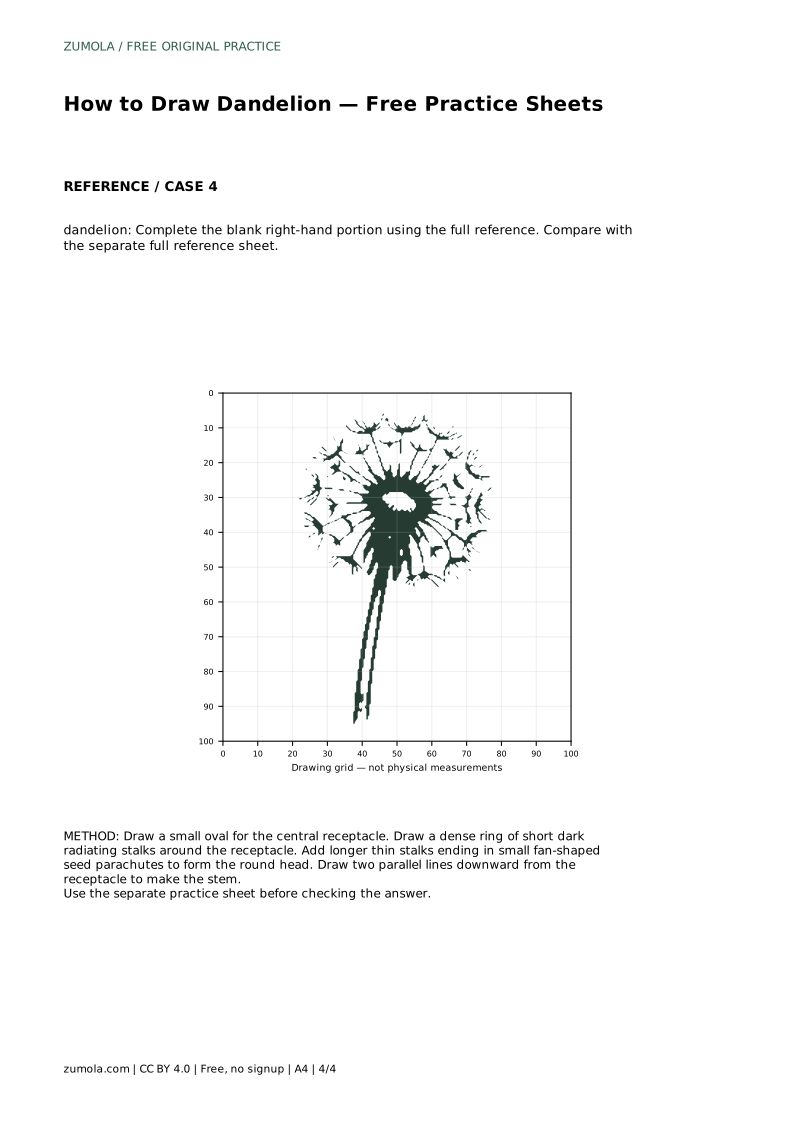
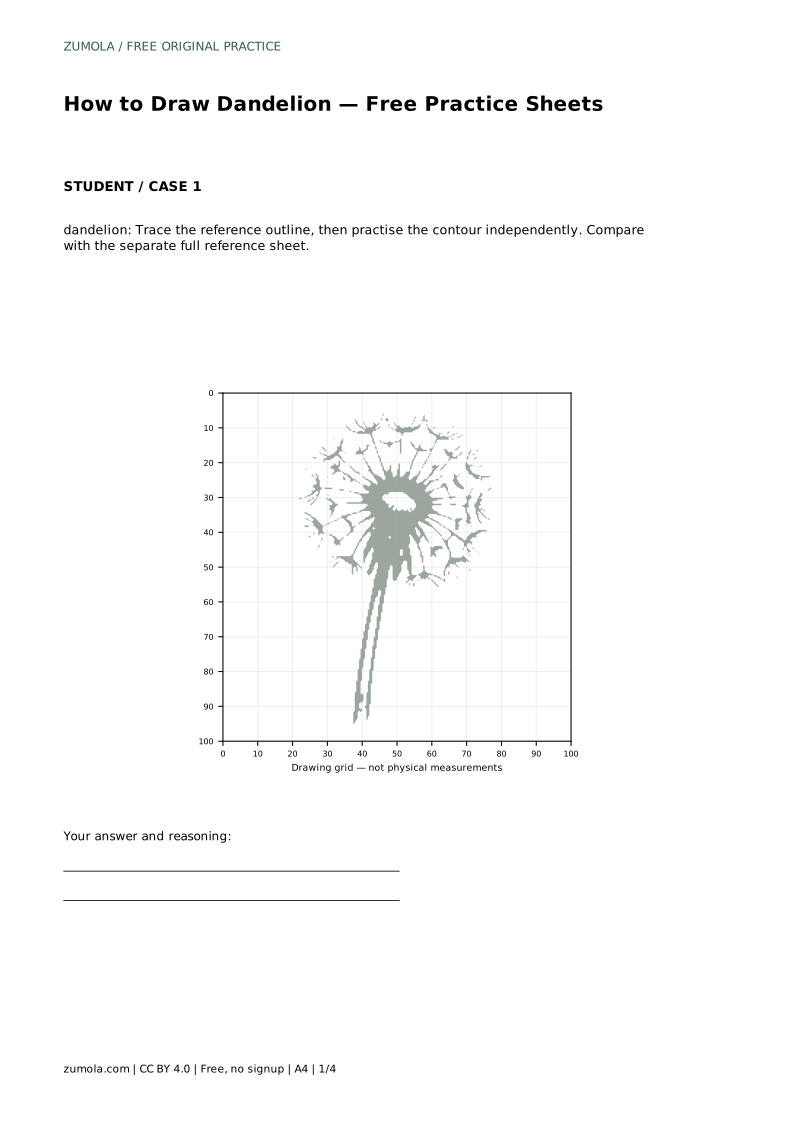
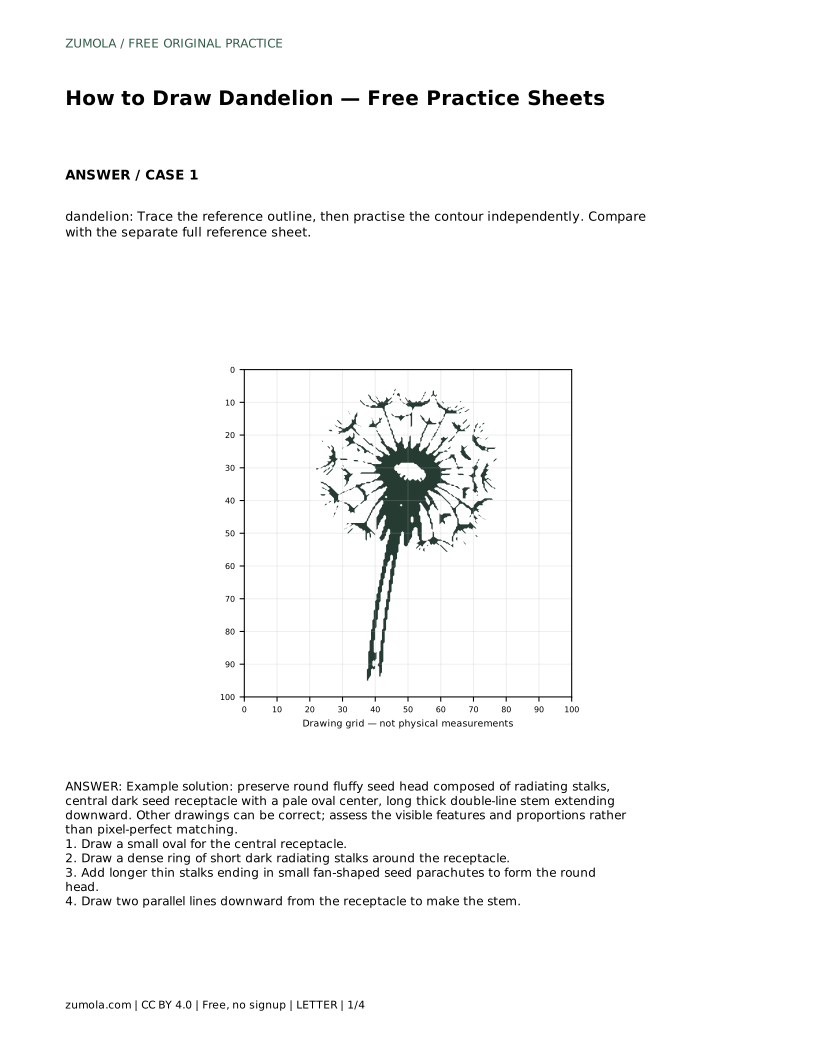
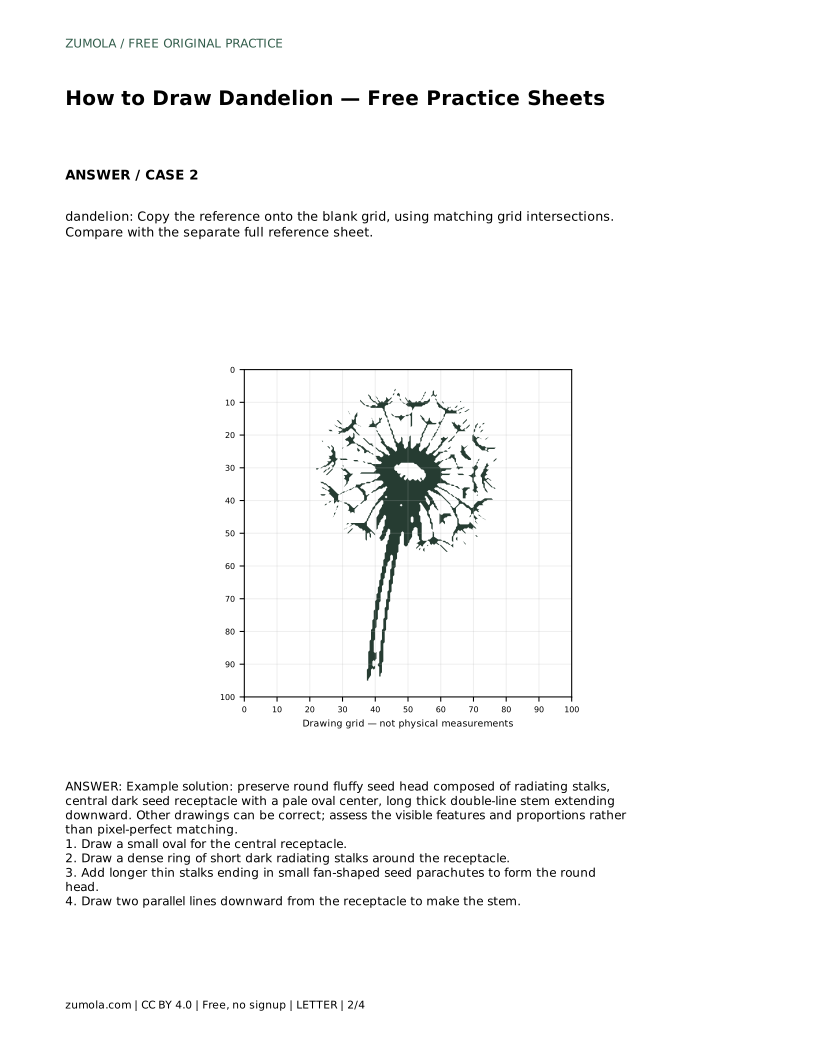
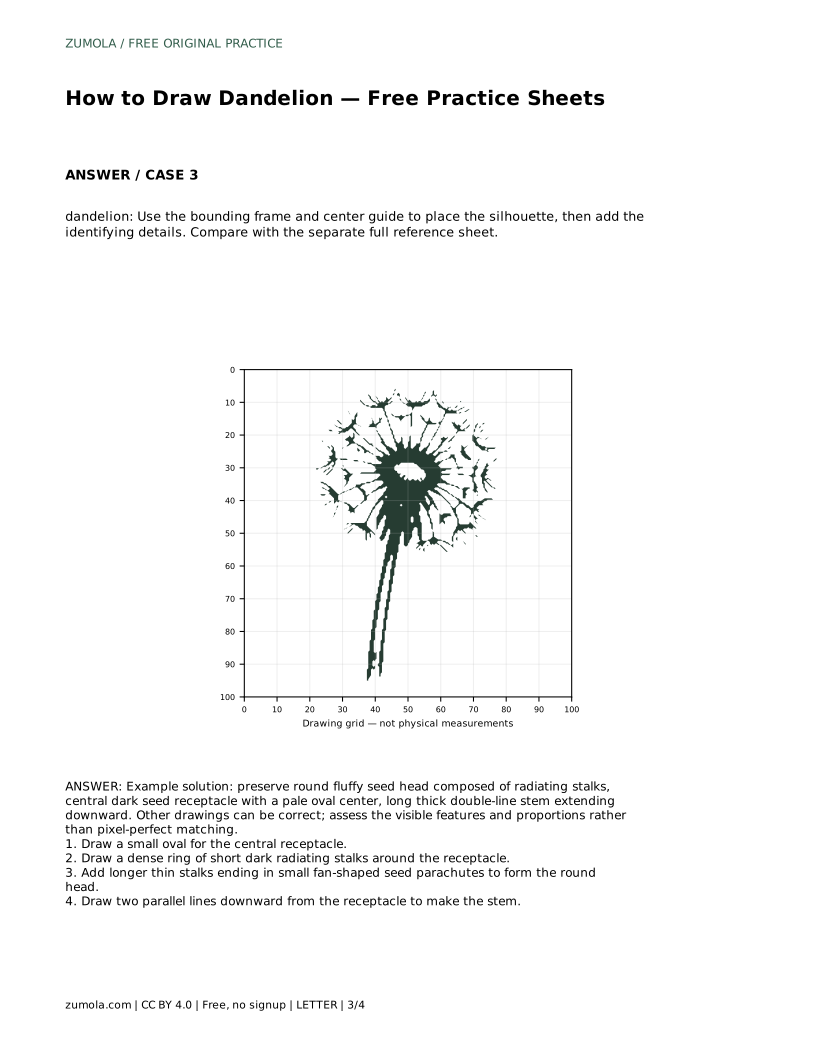
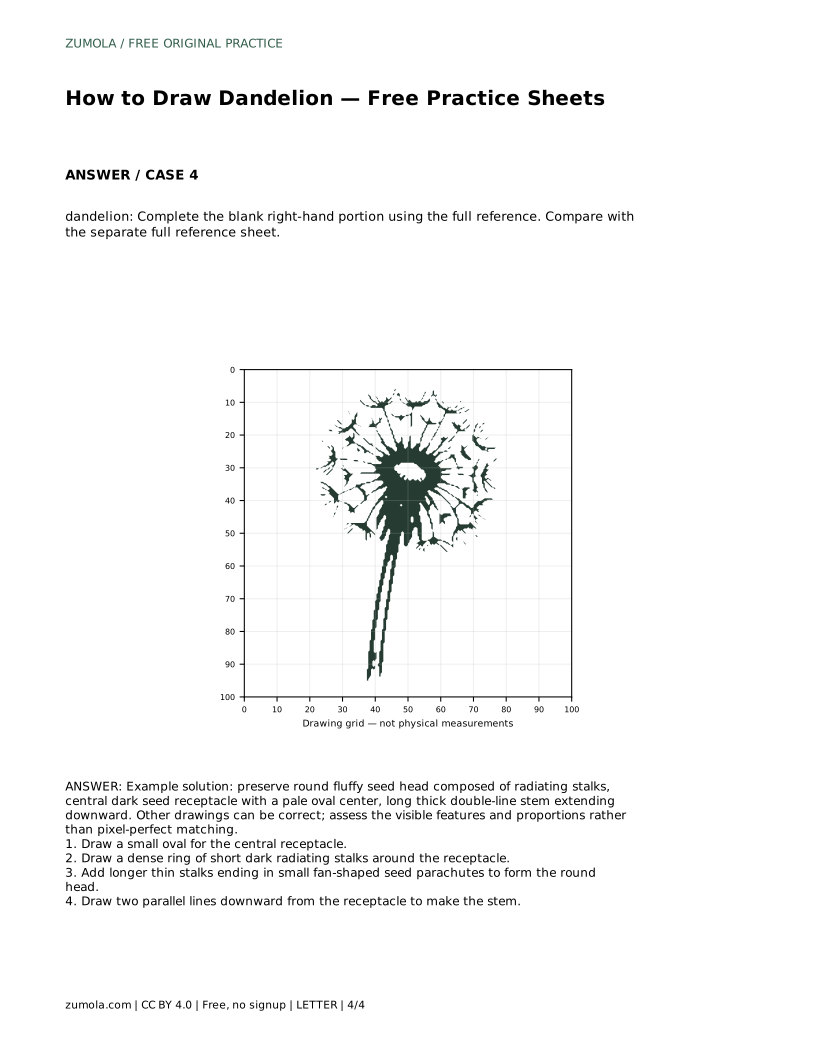
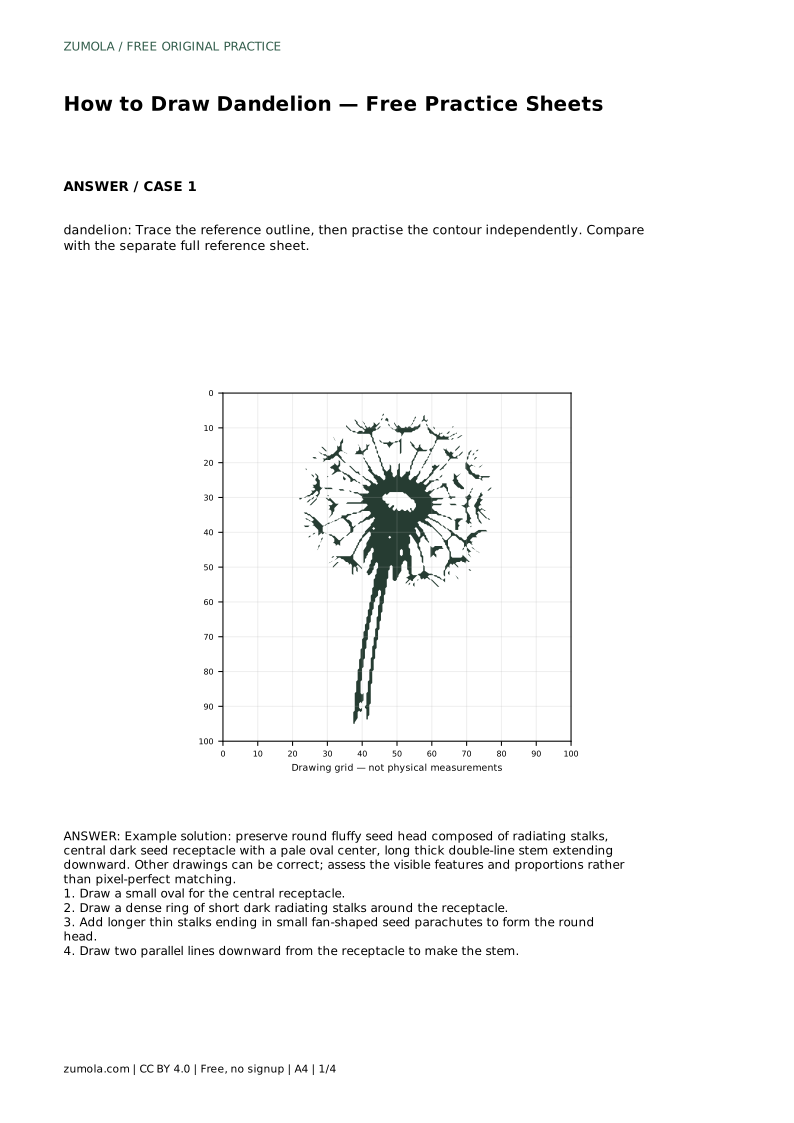
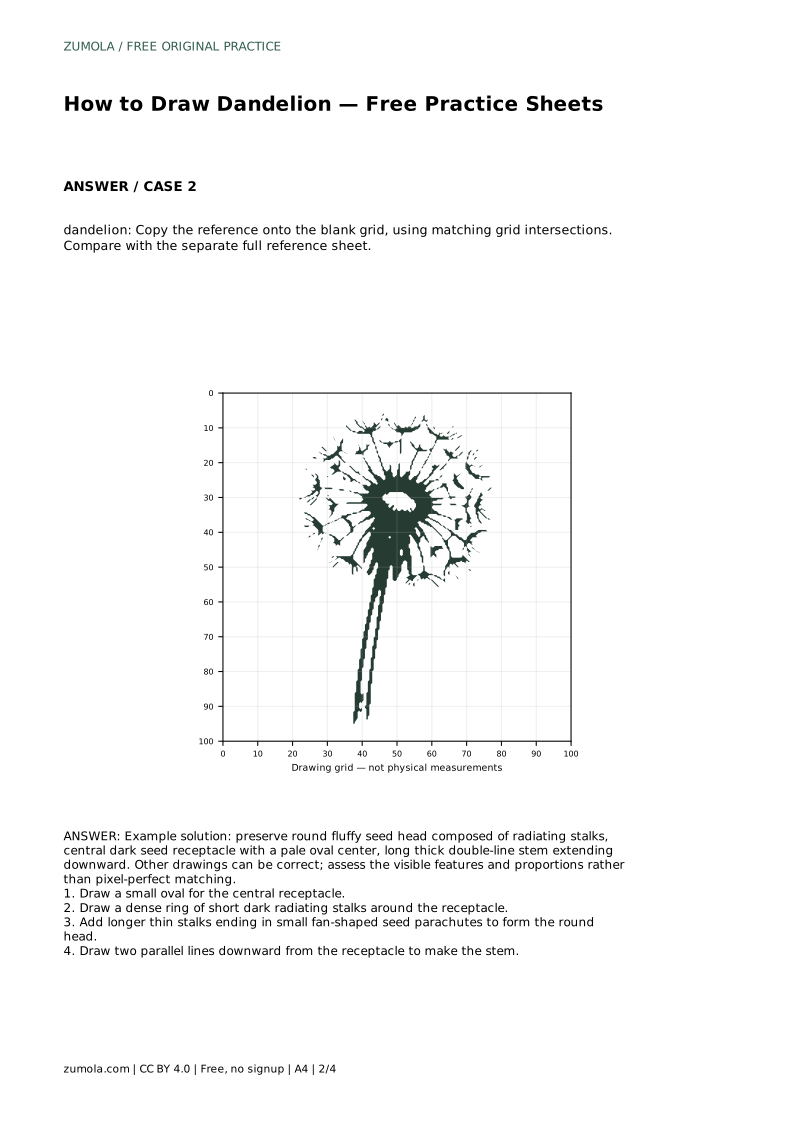
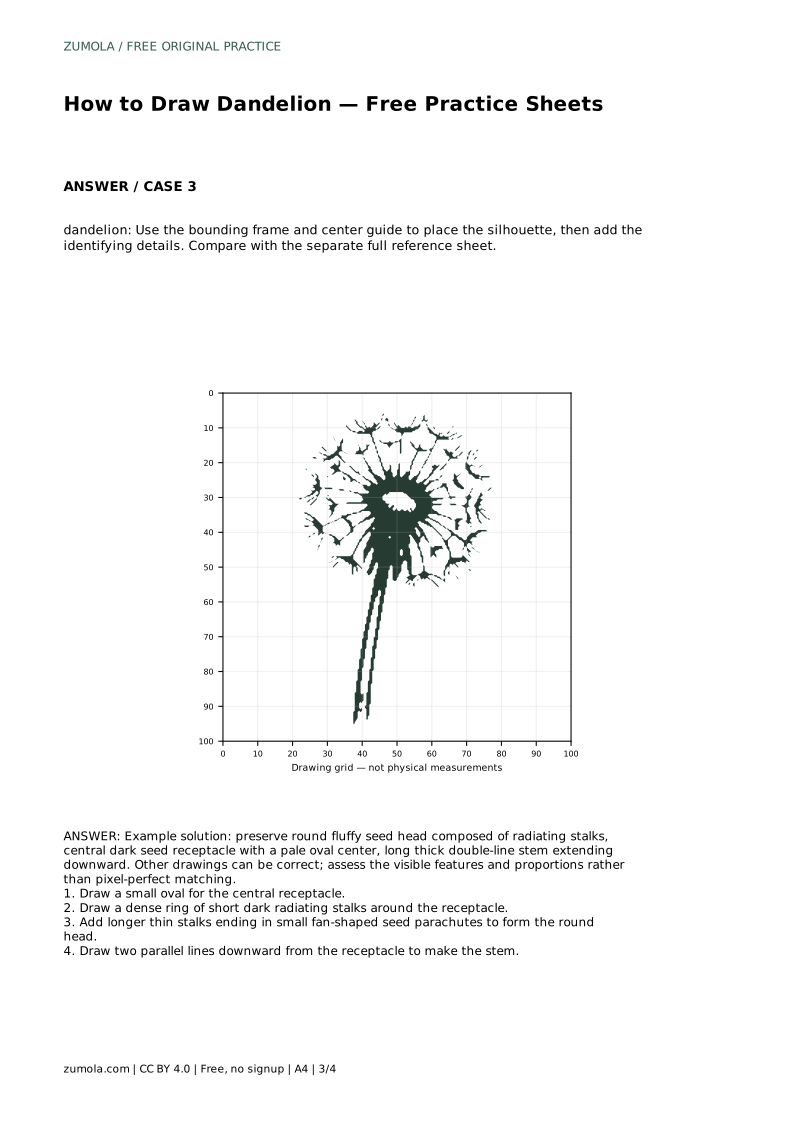
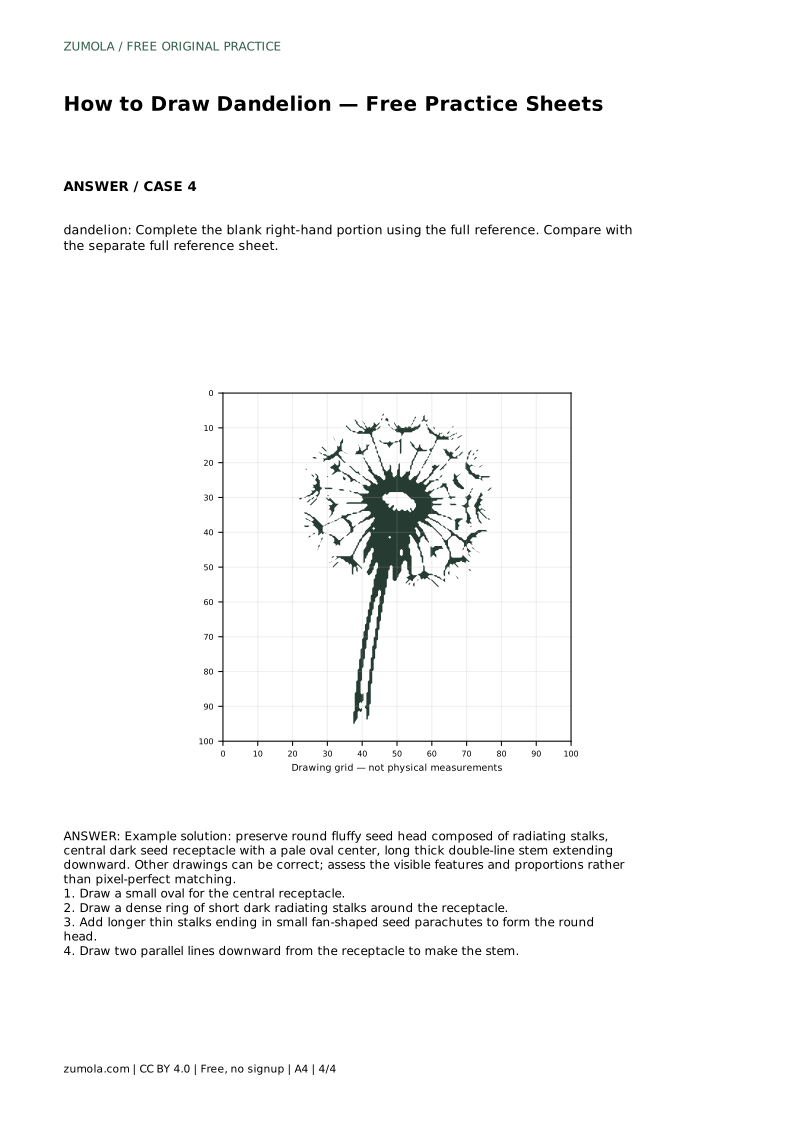
A dandelion seed head is mostly a pattern of radiating lines around a small center, so it rewards careful looking more than fast sketching. This guide breaks the drawing into four visible parts: the pale oval receptacle, the dark ring of short stalks, the longer stalks tipped with fan-shaped parachutes, and the thick double-line stem. Use the free practice sheets to trace, copy onto a grid, or complete a partial drawing, then compare your work with the full reference sheet.
Before drawing, study the reference and name what you see. The seed head is round and fluffy, built from many thin stalks that radiate outward from a small central area. At the middle sits a dark seed receptacle with a pale oval center. Below it, a long thick stem runs downward, drawn as two parallel lines rather than one stroke.
Treat the round head as a circle first, then fill it with radiating lines. The stalks are not perfectly even; some are shorter, some lean, and the parachutes at their tips form small fan shapes. Keeping the overall circle intact matters more than matching every stalk.
The stem is a separate shape, not a continuation of the fluffy head. Its two parallel lines give it thickness and make the drawing read as a dandelion rather than a generic puff.
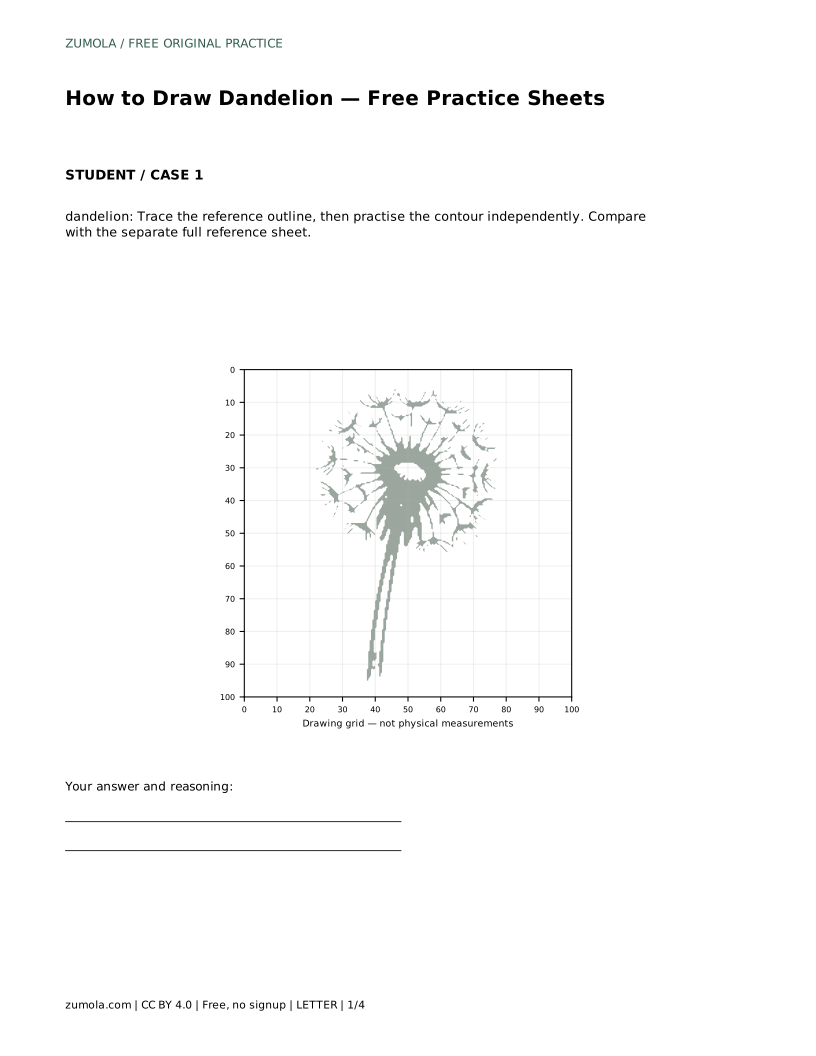
The tracing sheet asks you to follow the reference outline first, then practise the contour independently on the space beside it. Tracing builds the hand's memory of the round head and the double stem; the independent pass tests whether you can reproduce those shapes without the guide.
The grid sheet asks you to copy the reference onto a blank grid using matching intersections. Find where the head's circle crosses grid lines, where the receptacle sits, and where the stem begins and ends. Copy those anchor points before adding stalks.
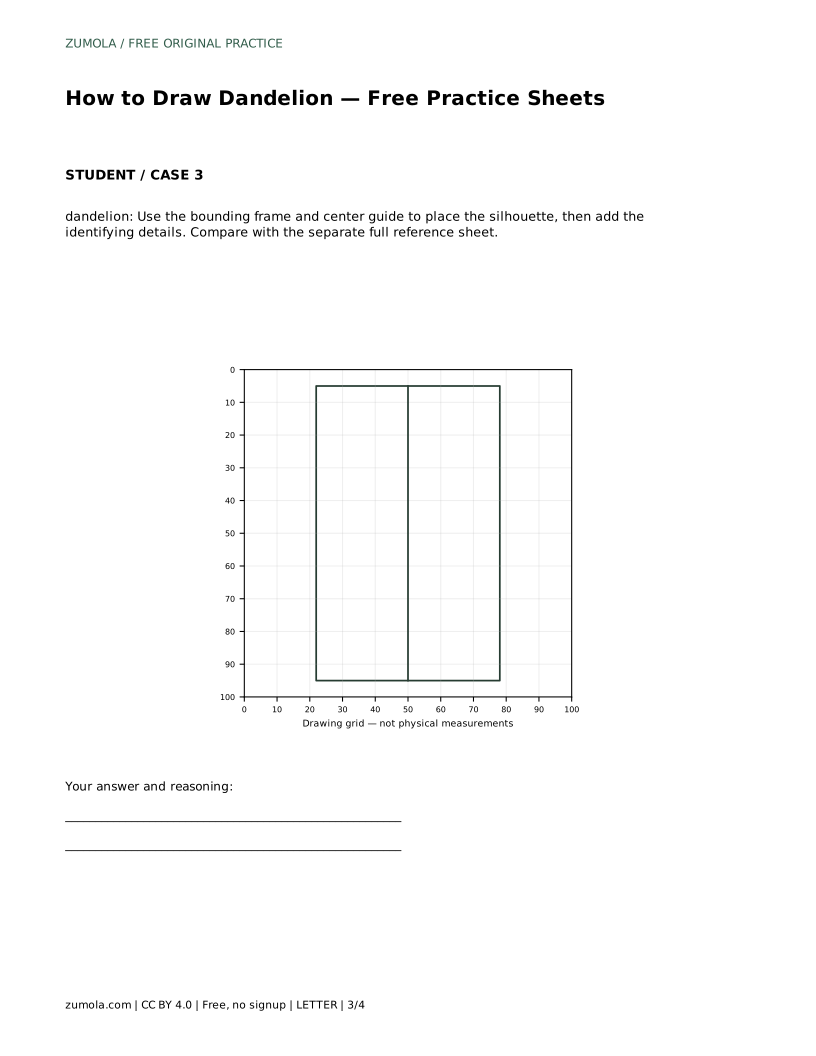
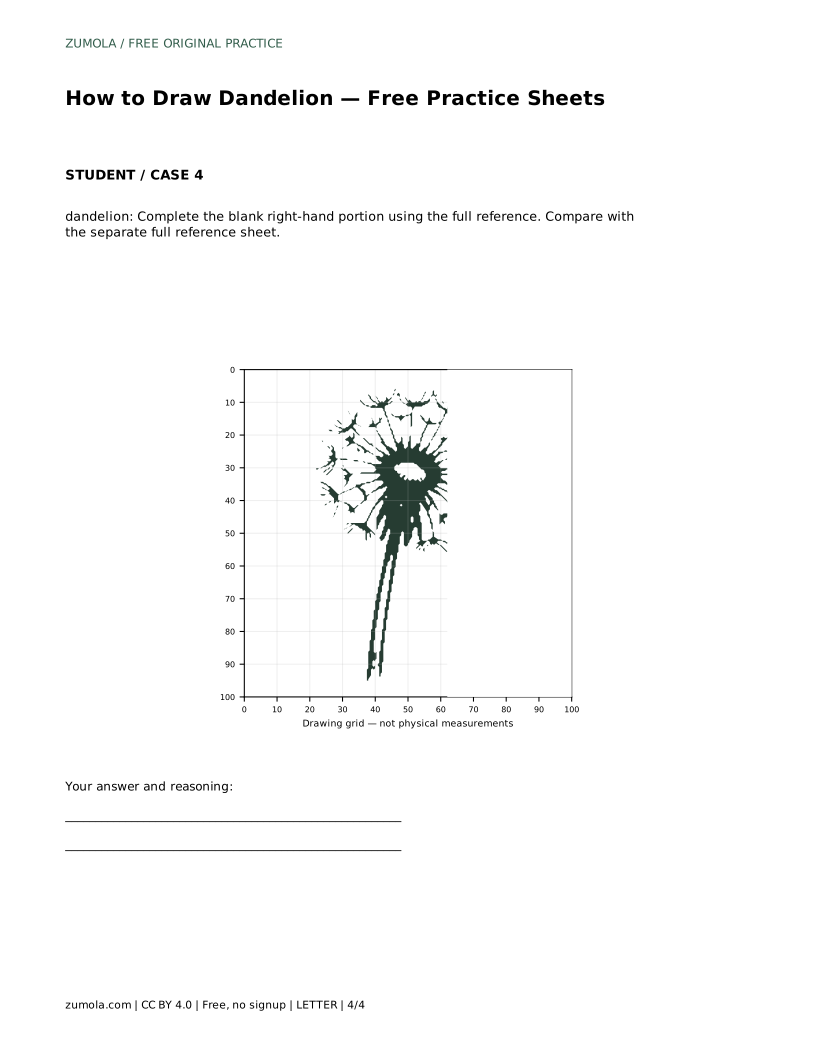
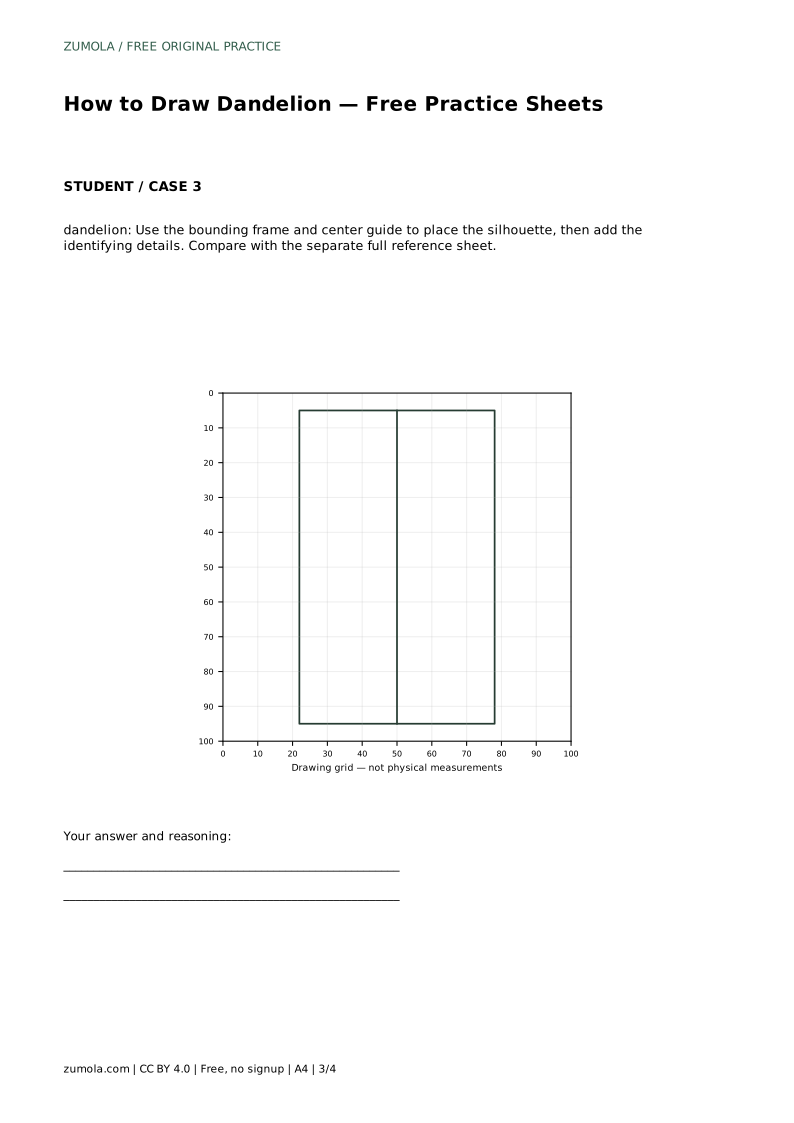
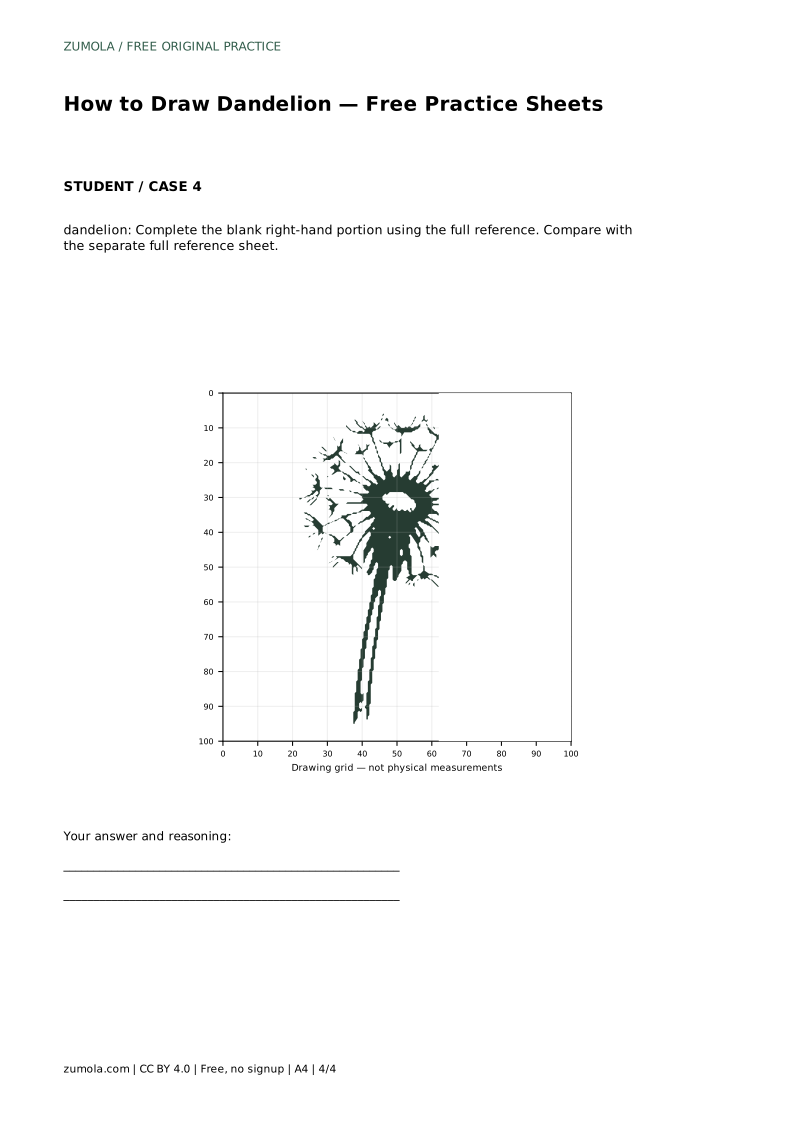
The bounding-frame sheet gives you a center guide and an outer frame. Place the silhouette inside the frame first, then add the identifying details. The partial sheet leaves the right-hand portion blank; complete it using the full reference, checking that the head stays round and the stem lines stay parallel.
A common problem is a head that grows too large for its stem, or a stem that drifts sideways. Compare the width of the round head with the length of the stem in the reference. If the head looks oversized, redraw the circle smaller before adding more stalks.
Keep the receptacle centered inside the fluffy ring. If it drifts to one edge, the radiating stalks will bunch on one side and the drawing will look lopsided.
Parachutes should sit at the outer edge of the circle, not float far beyond it. Small fan shapes work best; large ones turn the dandelion into a different plant.
Dandelion drawings have many valid outcomes, so judge visible features and proportions rather than pixel-perfect matching. A correct drawing shows a round fluffy head, a centered dark receptacle with a pale oval center, radiating stalks with fan-shaped parachutes, and a long thick stem drawn with two parallel lines.
Use the rubric below to review your own sheet or a class set. Note which features are present and which need adjustment, then redraw only the weak part rather than starting over.
dandelion: Trace the reference outline, then practise the contour independently. Compare with the separate full reference sheet.
Example solution: preserve round fluffy seed head composed of radiating stalks, central dark seed receptacle with a pale oval center, long thick double-line stem extending downward. Other drawings can be correct; assess the visible features and proportions rather than pixel-perfect matching. Draw a small oval for the central receptacle. Draw a dense ring of short dark radiating stalks around the receptacle. Add longer thin stalks ending in small fan-shaped seed parachutes to form the round head. Draw two parallel lines downward from the receptacle to make the stem.
No. Dandelion drawings have multiple valid outcomes. Assess the visible features and proportions, such as the round head, centered receptacle, radiating stalks, and double-line stem, rather than pixel-perfect matching.
Start with the tracing sheet to learn the contour, then move to the grid or frame sheet to practise placement without tracing. Finish with the partial sheet to test independent completion.
Thick enough that the two parallel lines read clearly as one stem. Compare its width with the reference and keep the gap between the lines even along its length.
All drawing practice · Free coordinate paper
Original resources · CC BY 4.0 · Free for personal and classroom use with attribution.