Reference diagrams
LETTER · Download PDF
A4 · Download PDF
Free original resources
Learn to draw a cartoon fire truck by tracing, gridding, and completing a reference. Build the boxy body, cab, wheels, and diagonal ladder step by step.
Four original cases, with reference diagrams, practice sheets and worked answers. Everything is free; no signup required.
LETTER · Download PDF
A4 · Download PDF
LETTER · Download PDF
A4 · Download PDF
LETTER · Download PDF
A4 · Download PDF
Use A4 or US Letter to match your printer. Use the stated values and conditions to solve each exercise; diagrams are not physical measuring rulers.
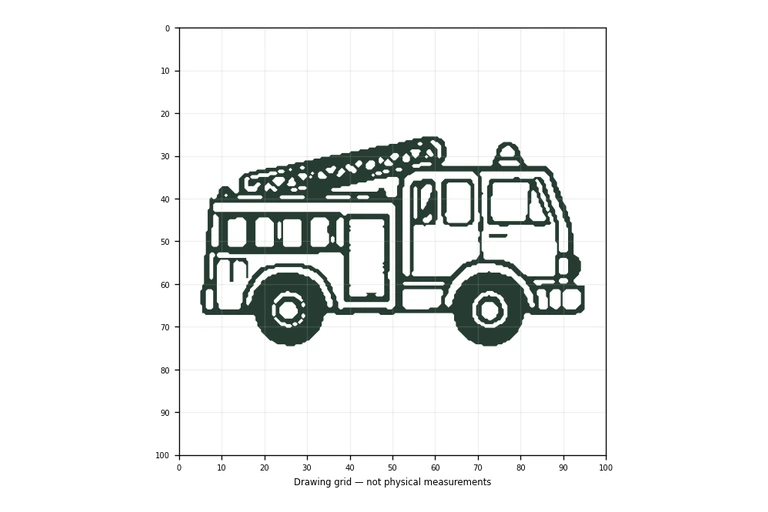
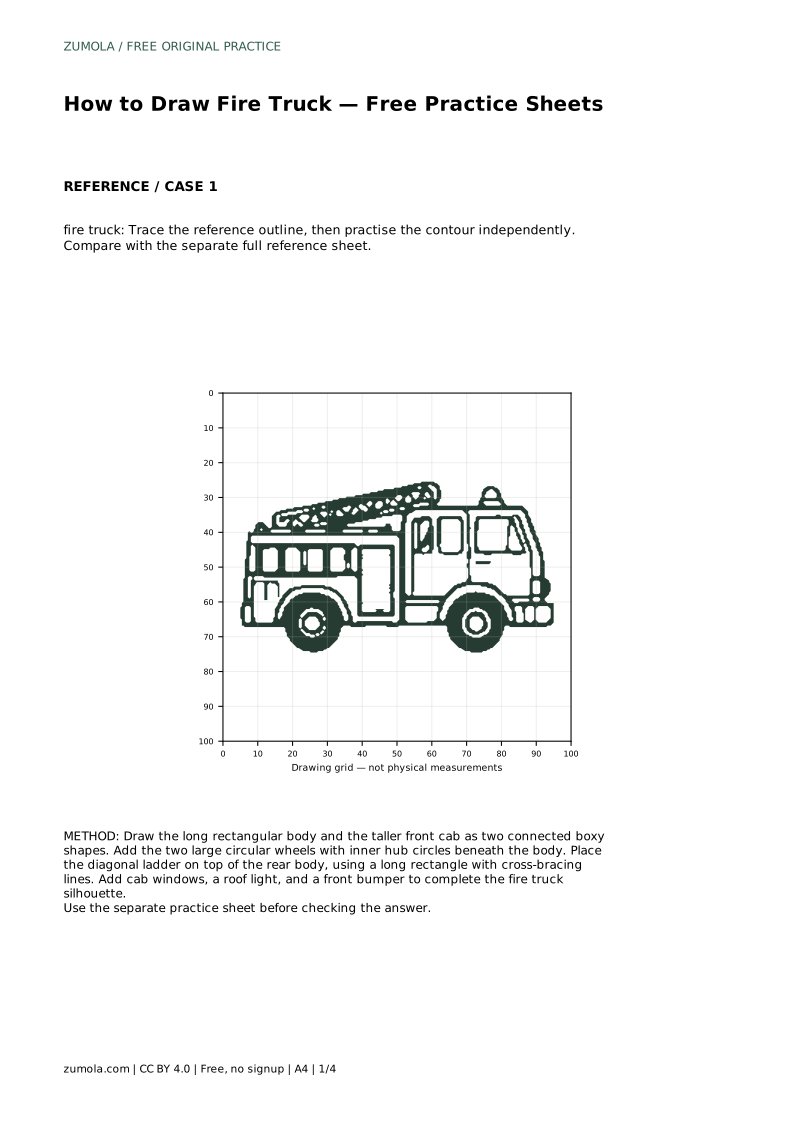
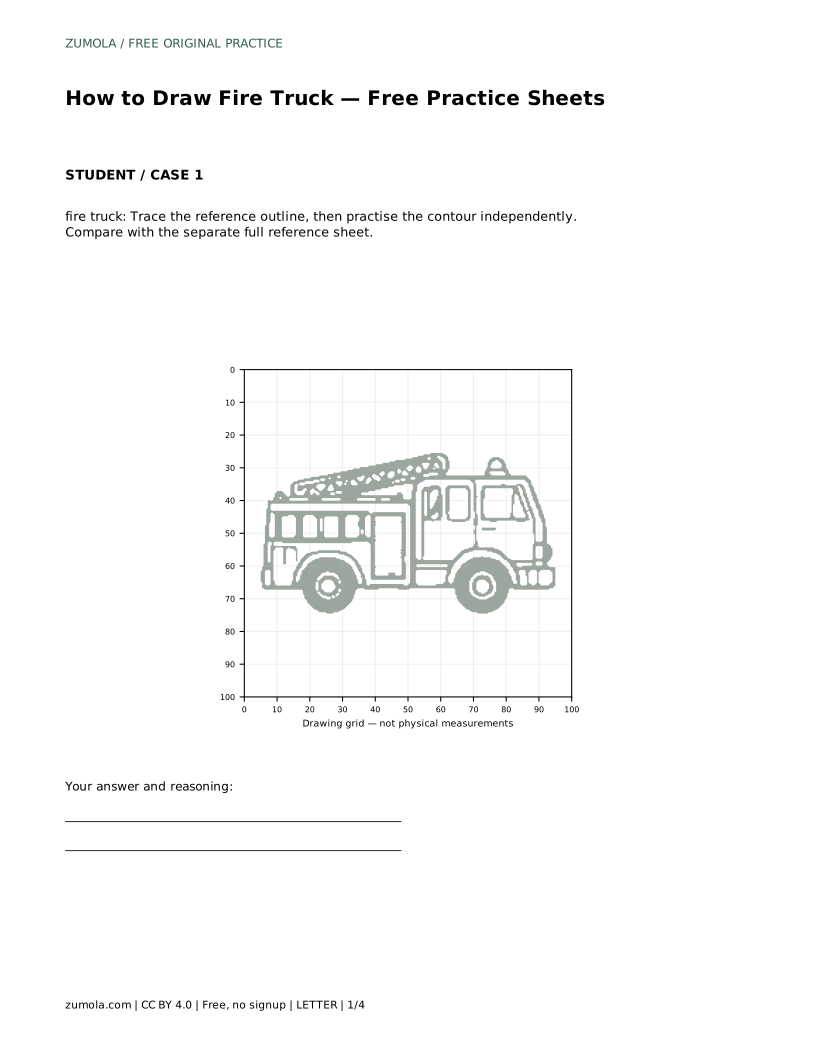
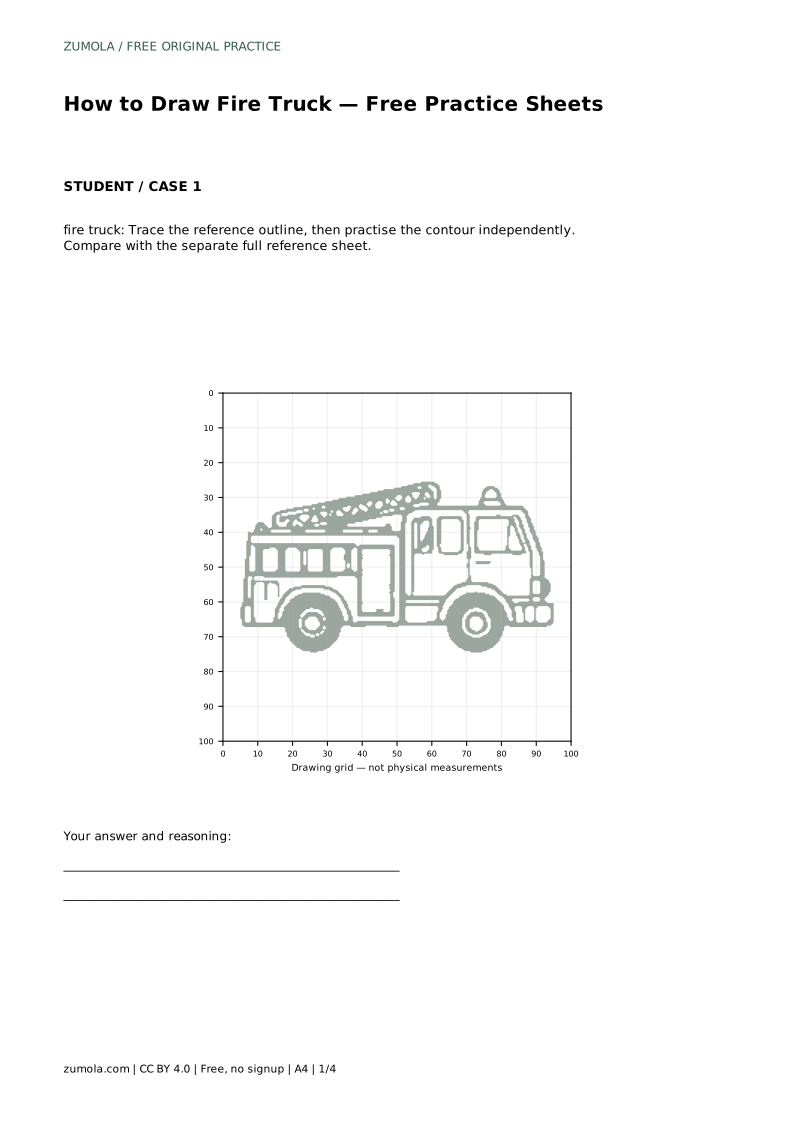
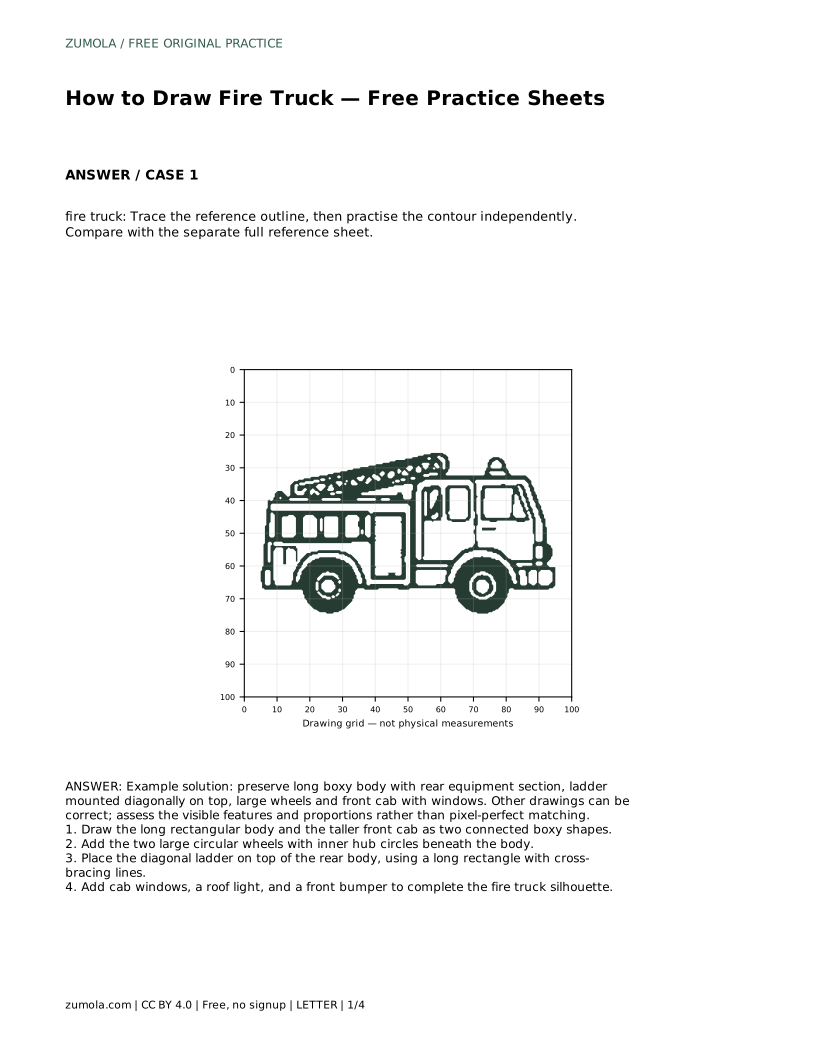
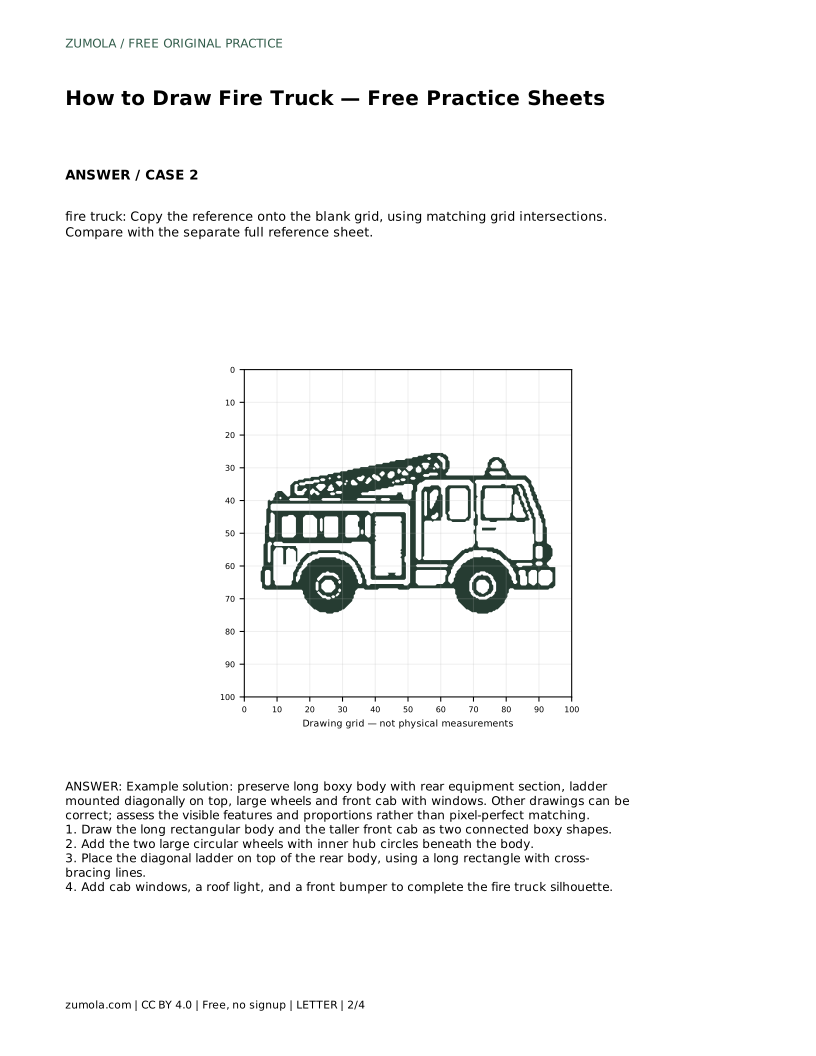
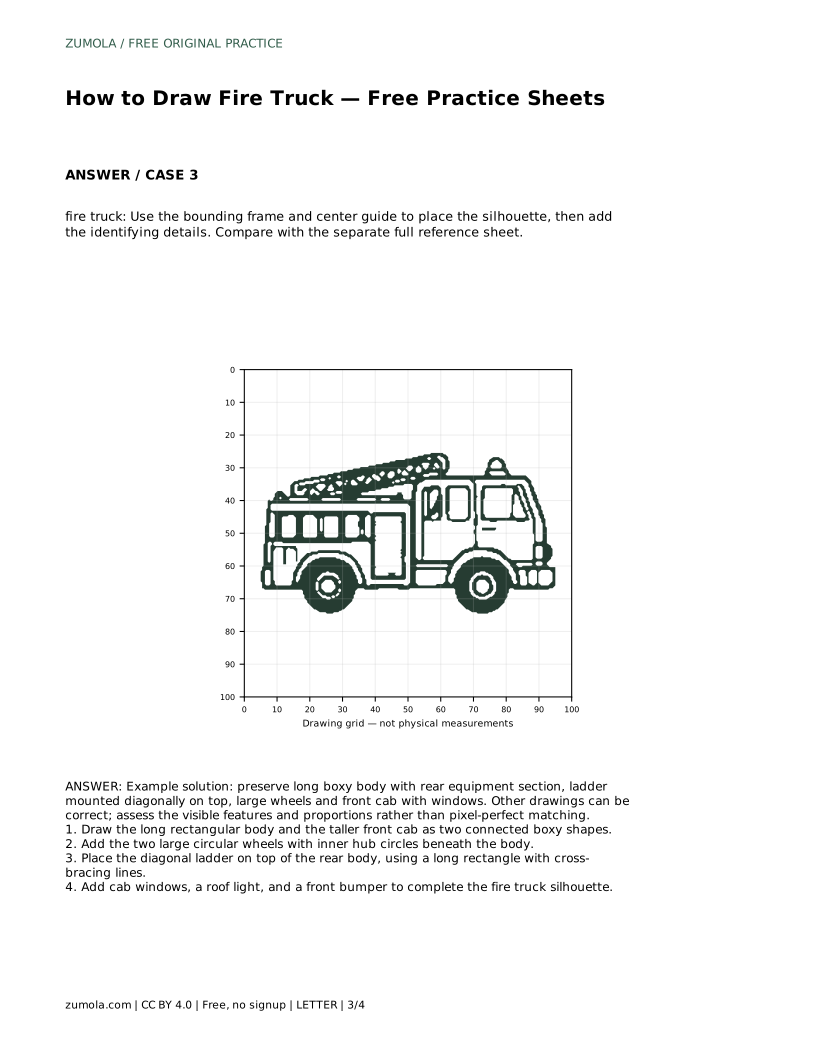
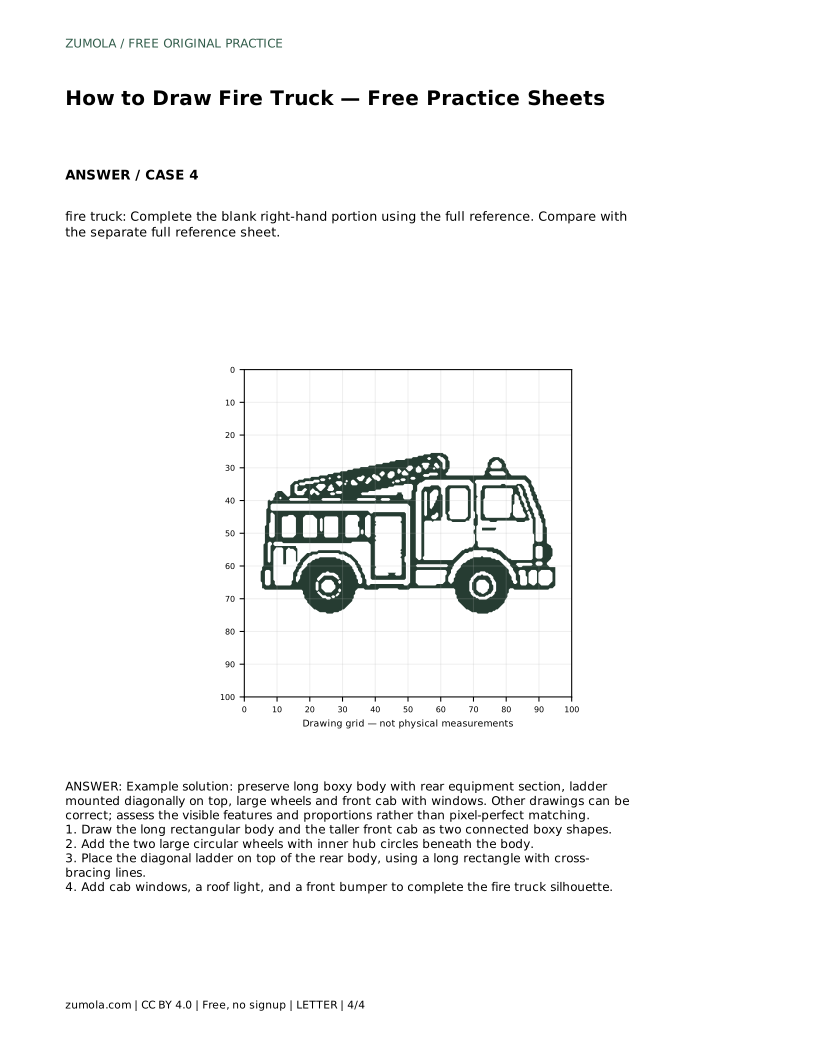
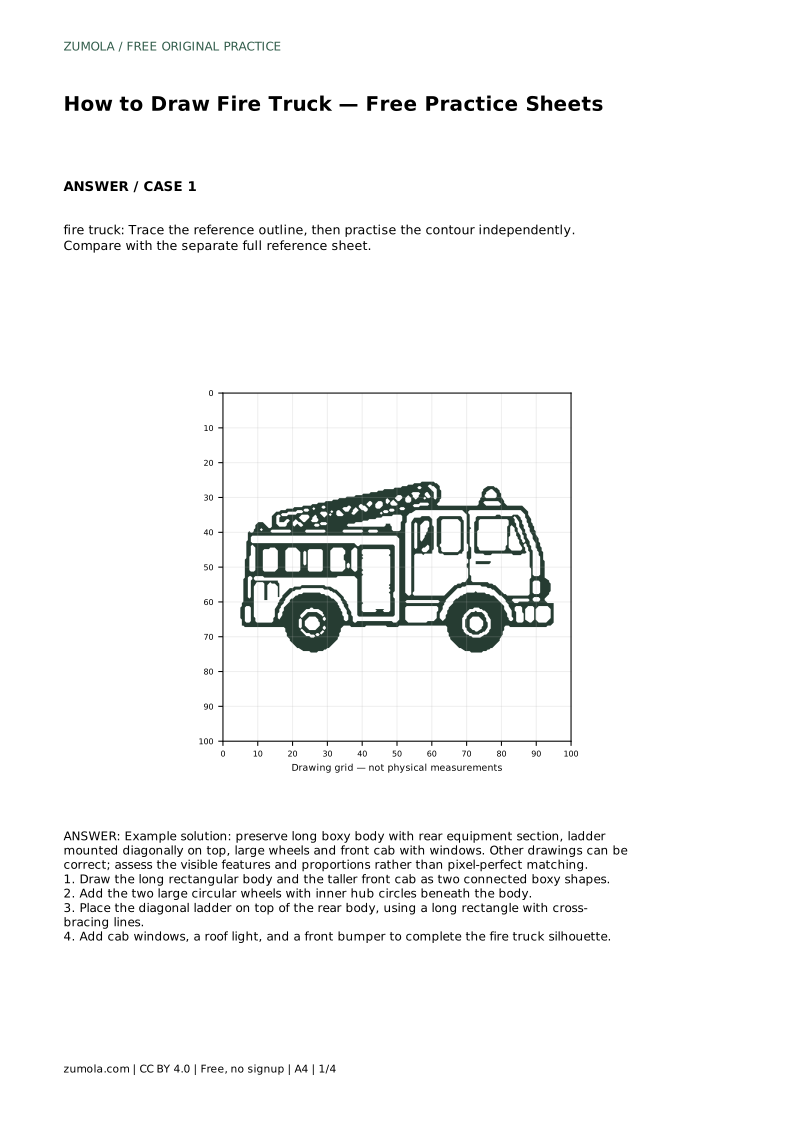
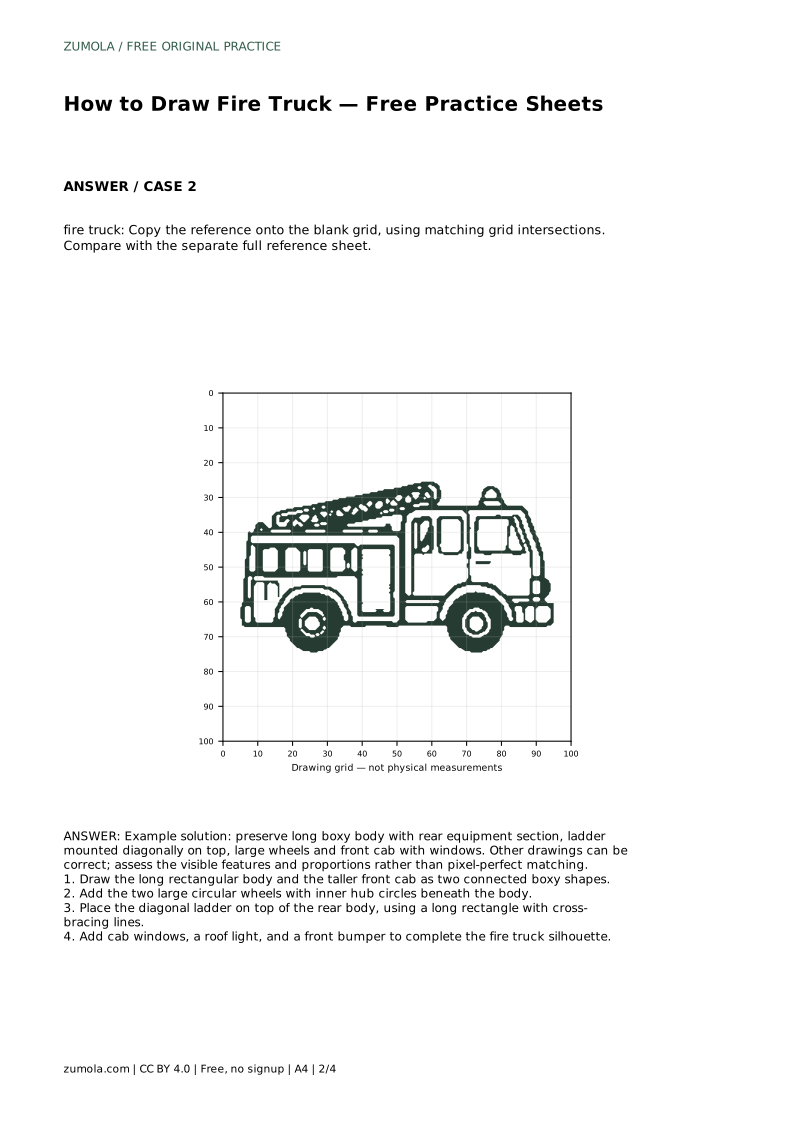
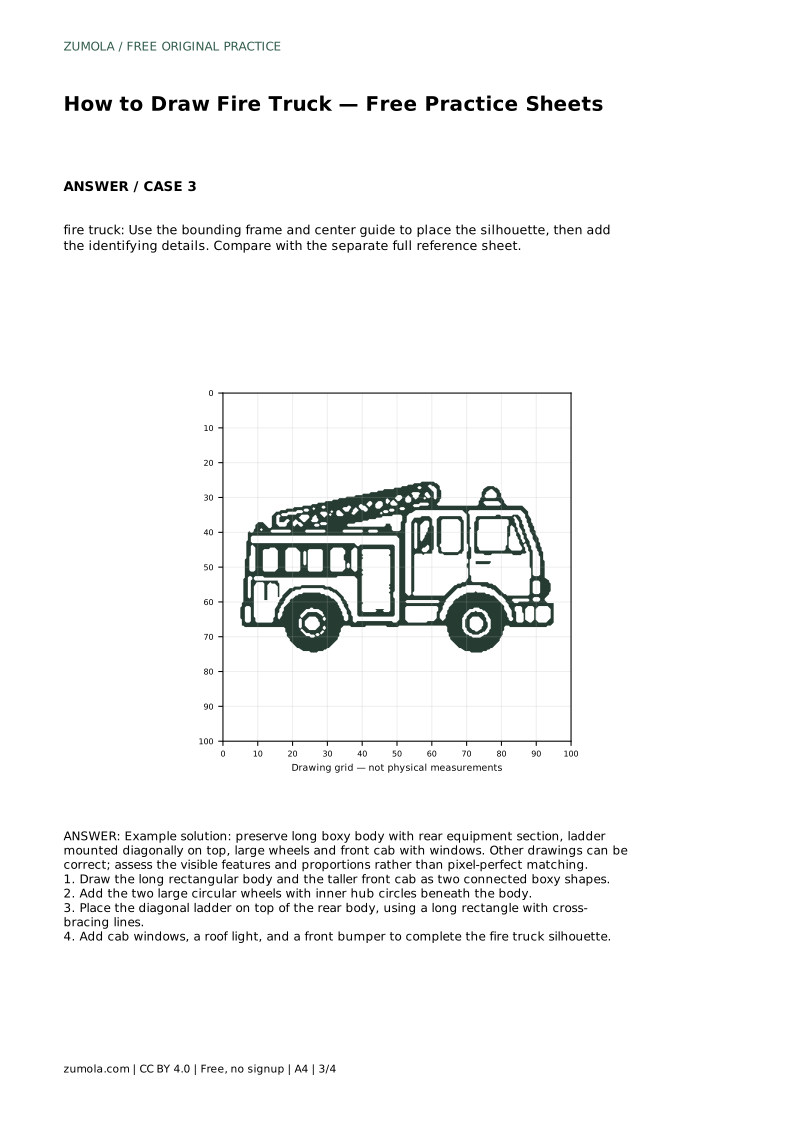
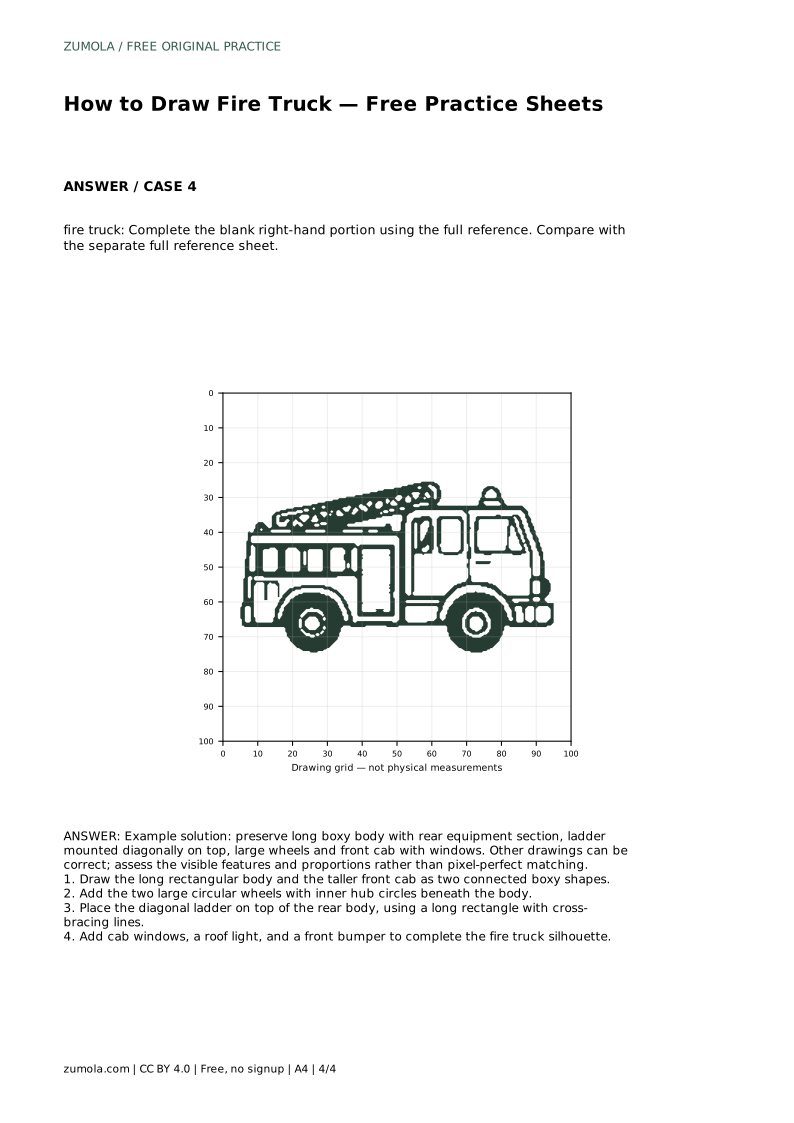
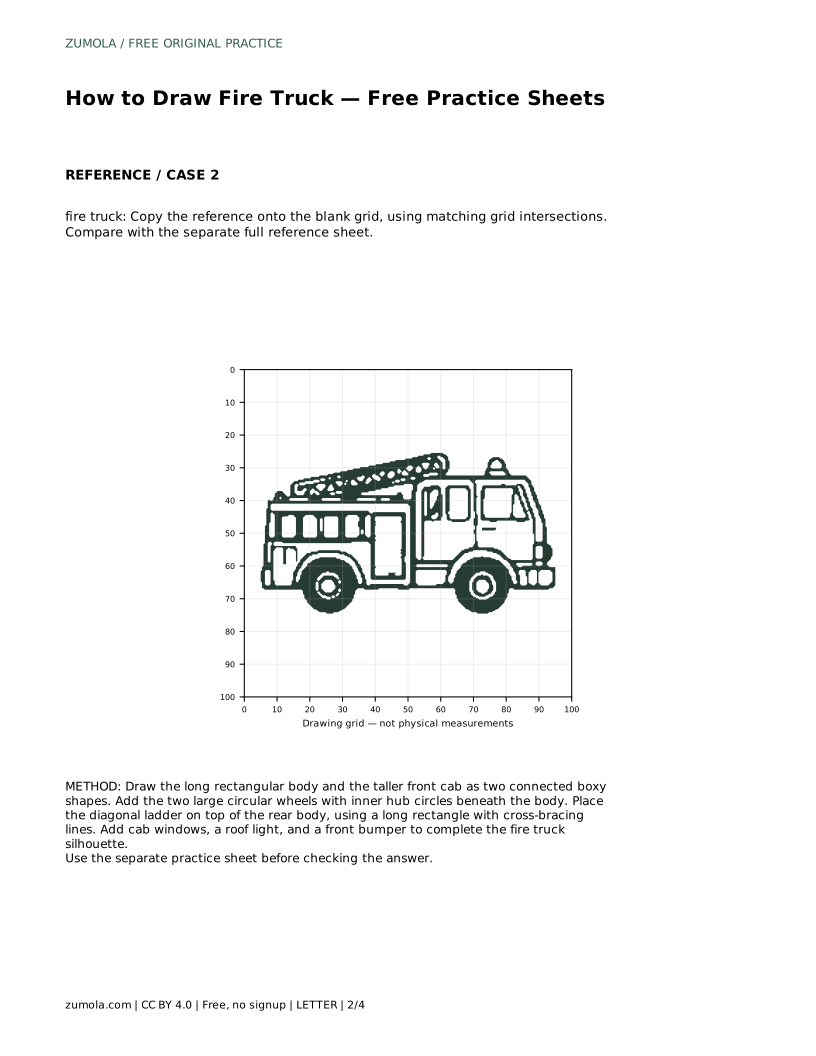
A cartoon fire truck is mostly boxes and circles arranged in a clear order. This page shows how to build the long body, the taller front cab, two large wheels, and the diagonal ladder that makes the truck recognizable. You can trace the reference outline first, then practise the contour independently and compare your drawing with the separate full reference sheet. The goal is a readable fire truck silhouette, not a pixel-perfect copy.
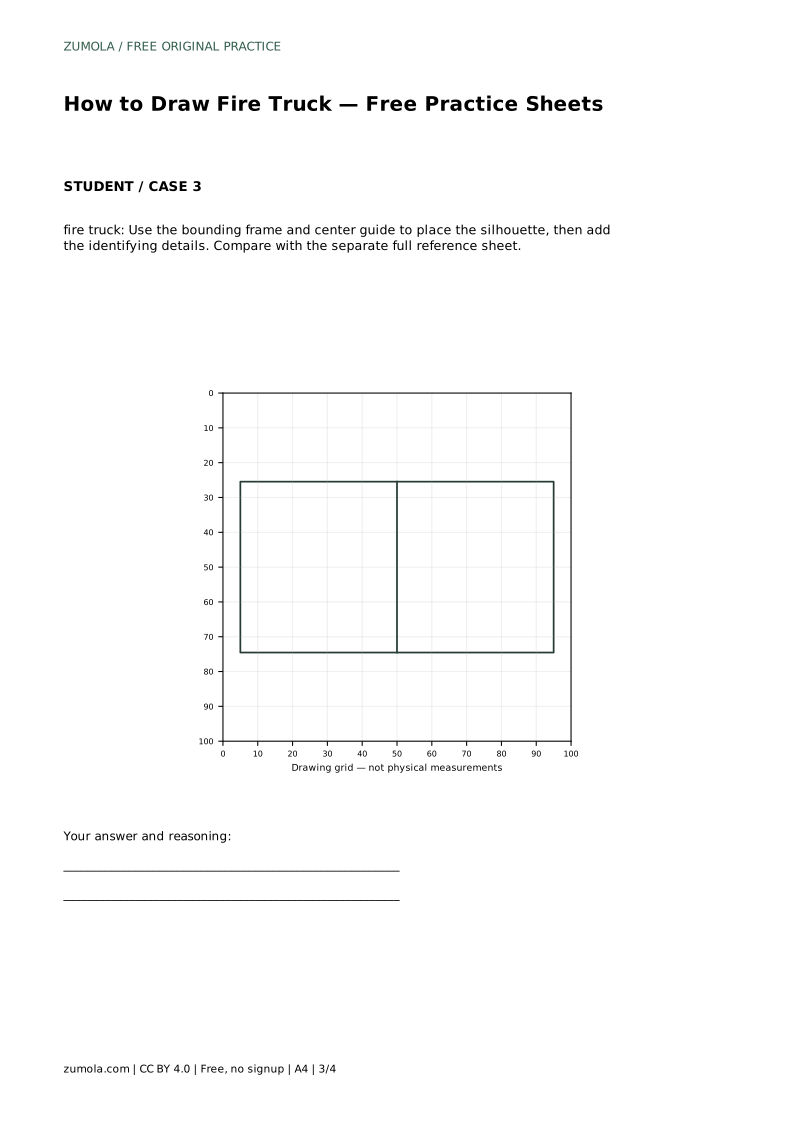
Begin with the largest shapes before any detail. Draw a long rectangle for the rear equipment section, then attach a taller rectangle at the front for the cab. Keep the cab clearly higher than the rear body so the truck reads as a vehicle facing one direction. The two shapes should share a connecting edge rather than float apart.
Check the proportions before continuing. The rear body is usually longer than the cab is tall, and the cab sits at one end. Lightly sketch these boxes so you can adjust them without heavy erasing.
Place two large circles under the body, one near the front and one near the rear. Add a smaller inner circle to each for the hub. The wheels should sit below the lower edge of the body, not overlap the cab windows.
Large wheels are a key cartoon cue, so keep them bold and roughly equal in size. If one wheel looks much smaller, redraw it before adding details.
The ladder is the strongest identifying feature. Draw a long rectangle resting diagonally on top of the rear body, angled toward the cab or away from it consistently. Add cross-bracing lines inside the ladder to suggest rungs.
Keep the ladder within the truck's overall width so the silhouette stays balanced. A ladder that floats above the body or crosses the cab windows looks disconnected.
Add cab windows as simple rectangles or squares inside the taller front shape. Place a small roof light on top of the cab and a front bumper at the lower front edge. These details confirm which end is the front.
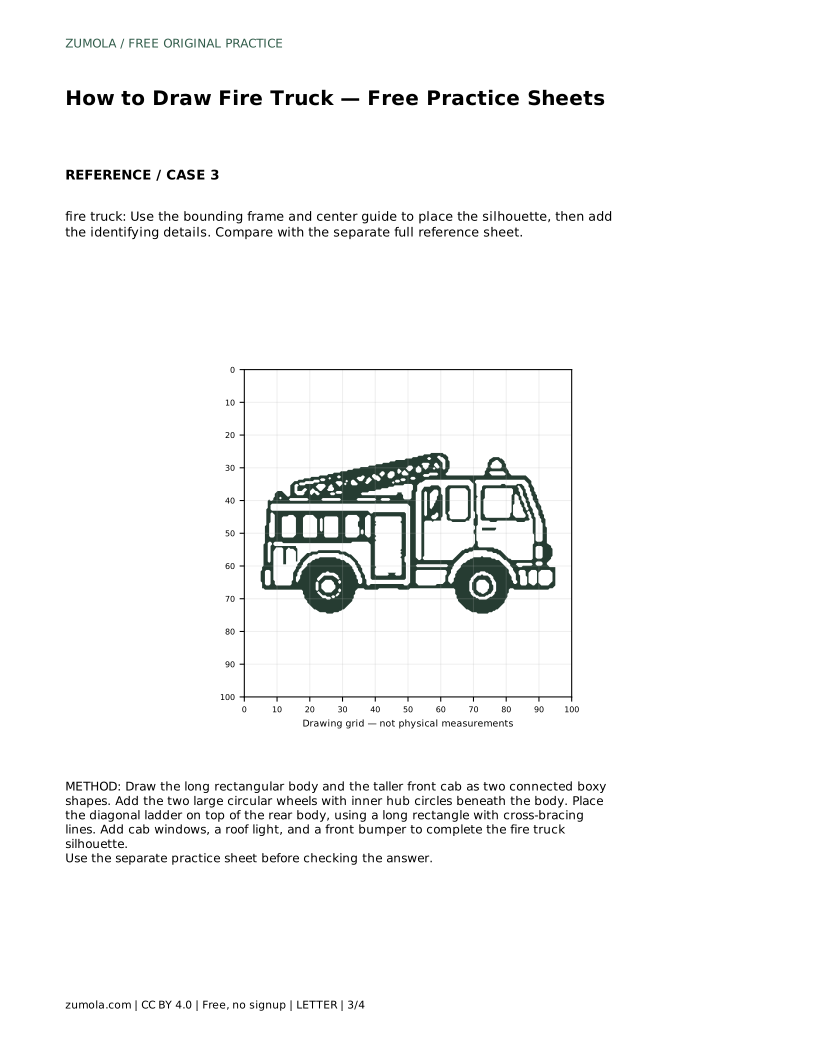
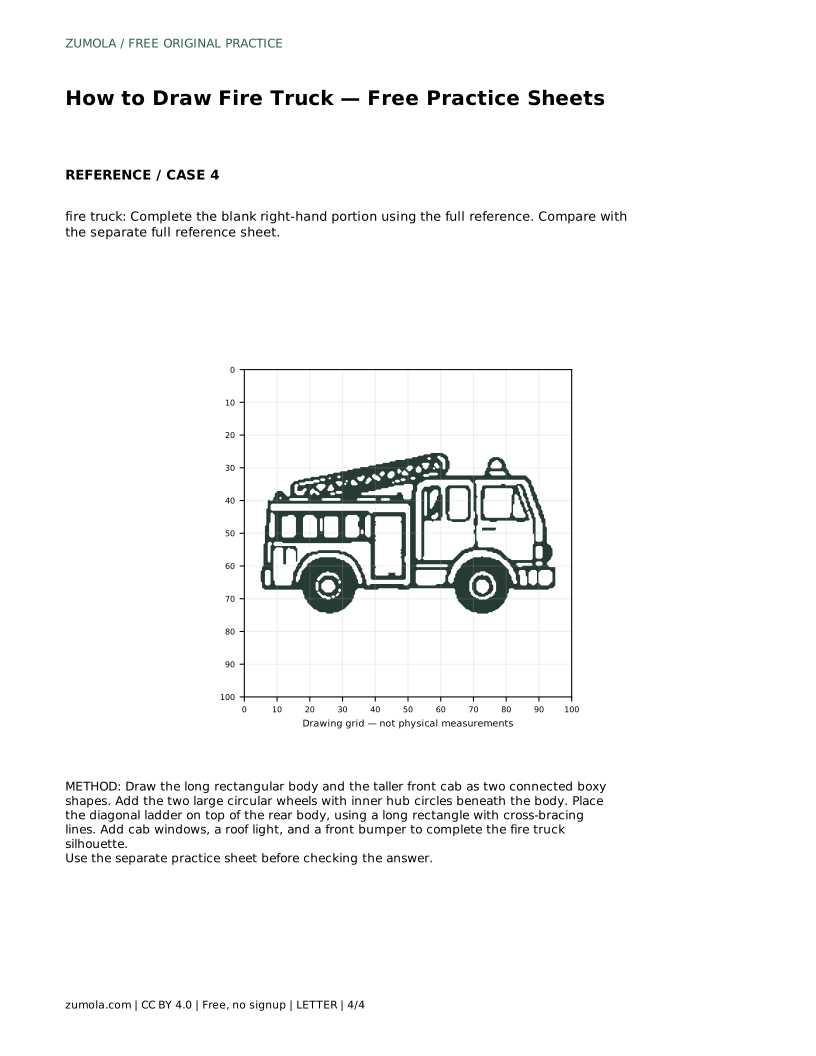
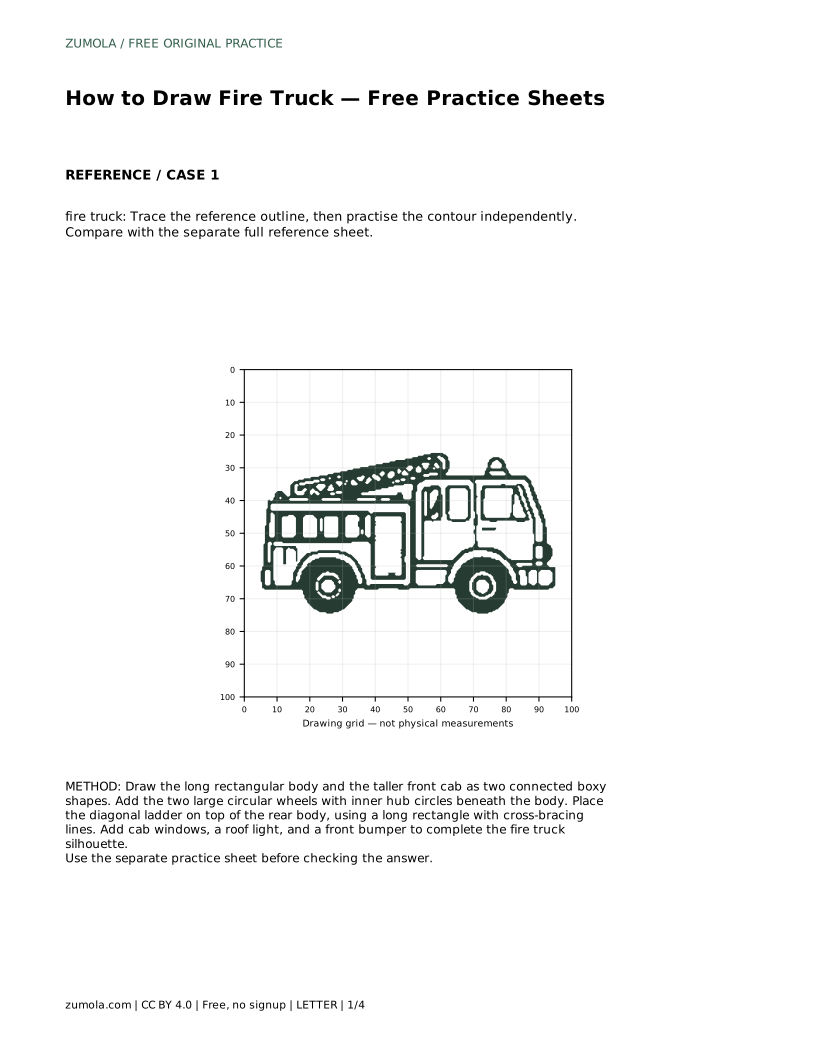
When you compare with the separate full reference sheet, judge the visible features and proportions rather than exact line placement. Other drawings can be correct if the body, cab, wheels, ladder, windows, light, and bumper are all present and clearly arranged.
fire truck: Trace the reference outline, then practise the contour independently. Compare with the separate full reference sheet.
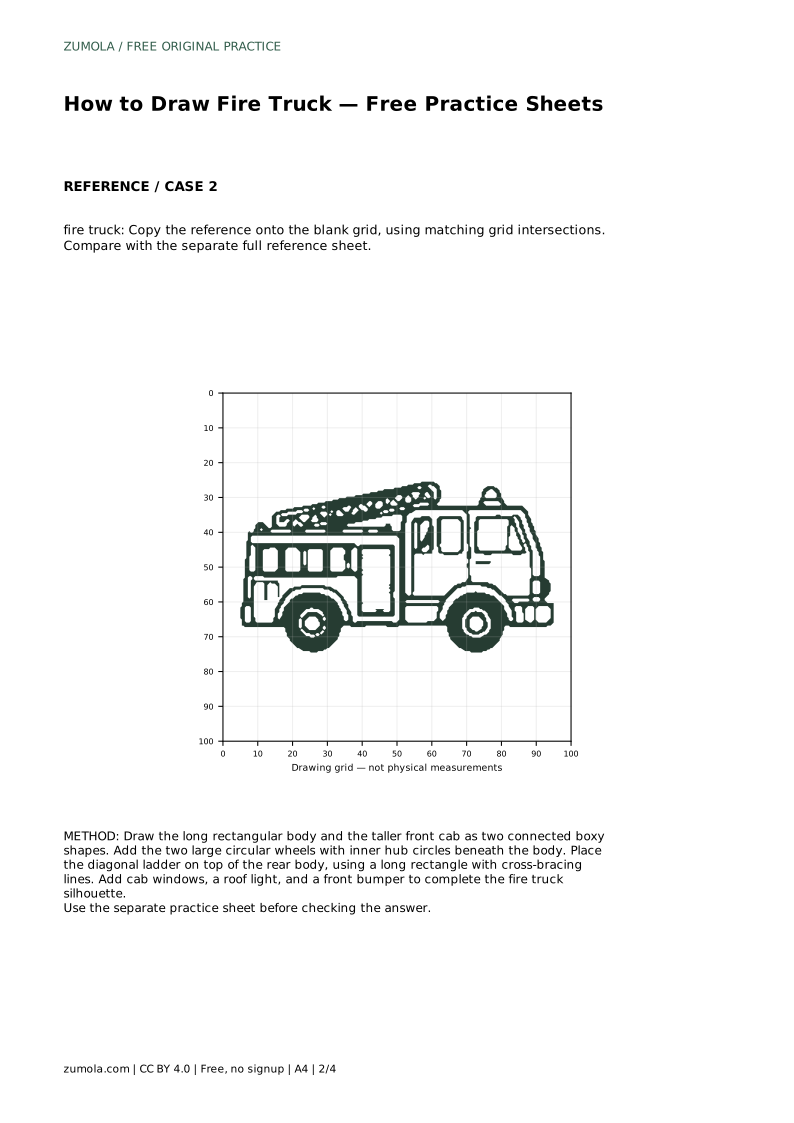
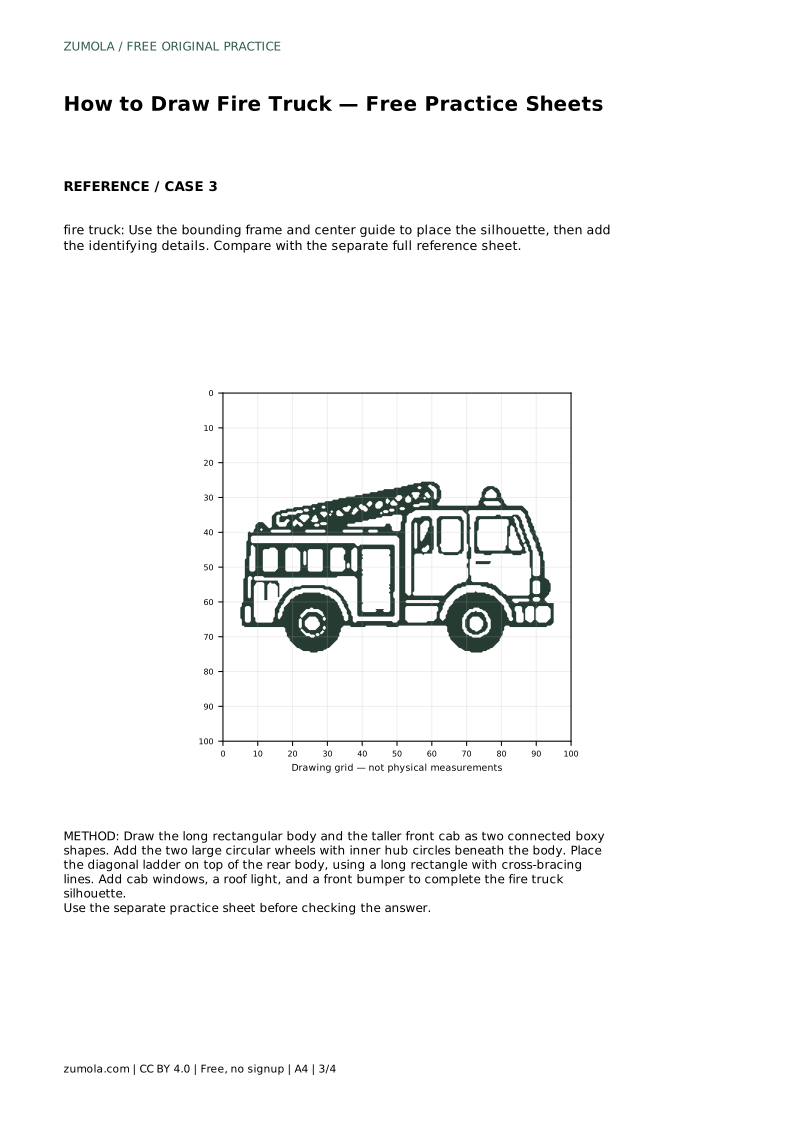
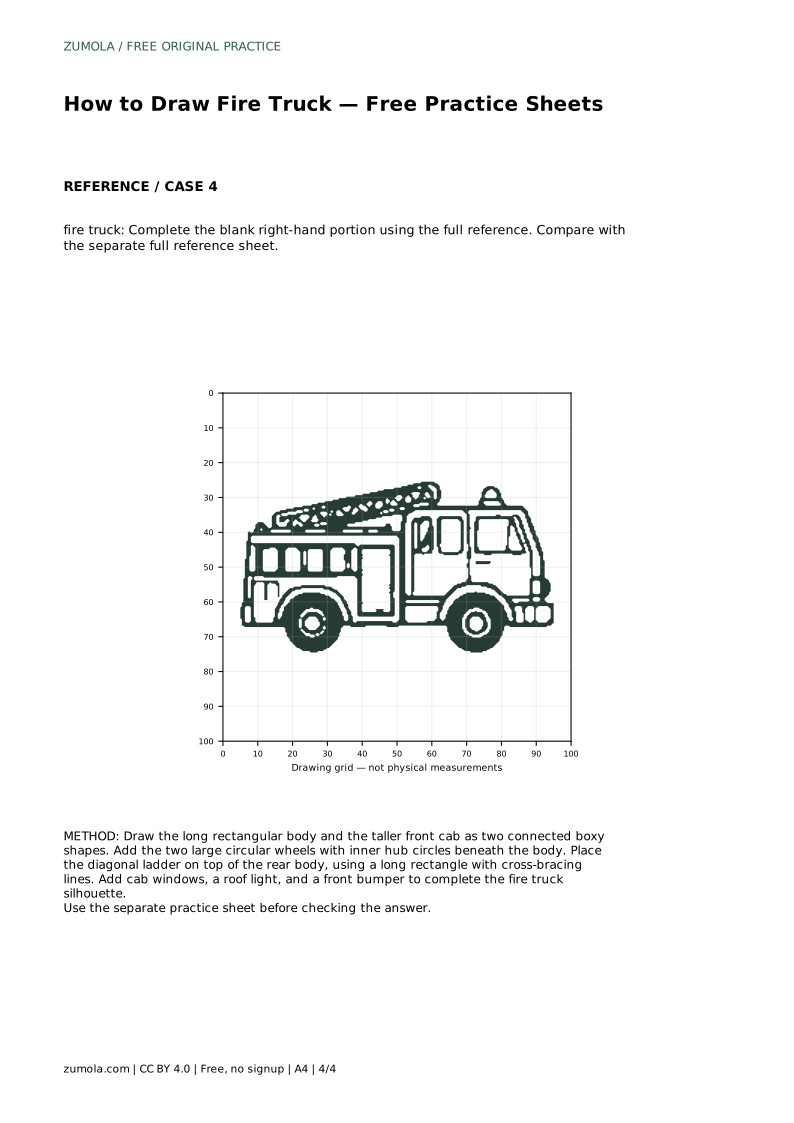
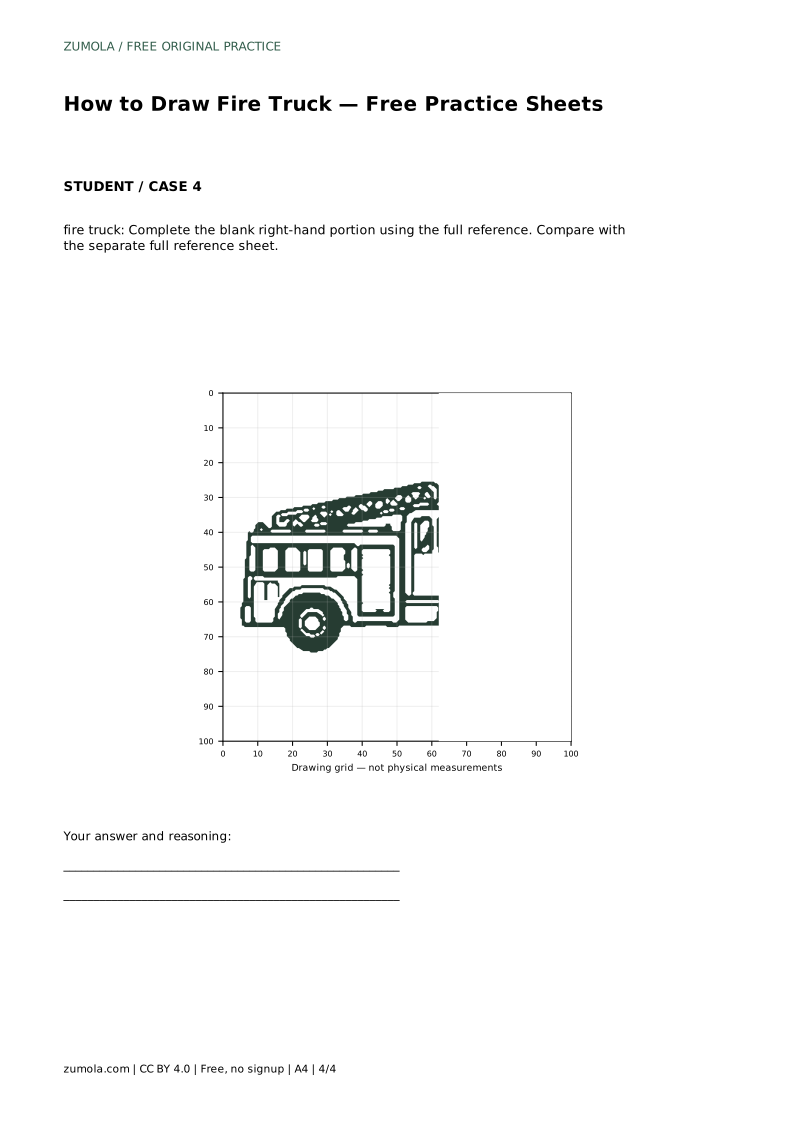
Example solution: preserve long boxy body with rear equipment section, ladder mounted diagonally on top, large wheels and front cab with windows. Other drawings can be correct; assess the visible features and proportions rather than pixel-perfect matching. Draw the long rectangular body and the taller front cab as two connected boxy shapes. Add the two large circular wheels with inner hub circles beneath the body. Place the diagonal ladder on top of the rear body, using a long rectangle with cross-bracing lines. Add cab windows, a roof light, and a front bumper to complete the fire truck silhouette.
No. Assess the visible features and proportions instead of pixel-perfect matching. A drawing with a long body, taller cab, two large wheels, a diagonal ladder, windows, roof light, and bumper can be correct even if lines differ.
Start with the long rear body and the taller front cab as two connected boxy shapes. Everything else, including wheels and ladder, is placed relative to those boxes.
The cab with windows, roof light, and front bumper marks the front. Keep those details grouped at one end of the truck.
All drawing practice · Free coordinate paper
Original resources · CC BY 4.0 · Free for personal and classroom use with attribution.