Reference diagrams
LETTER · Download PDF
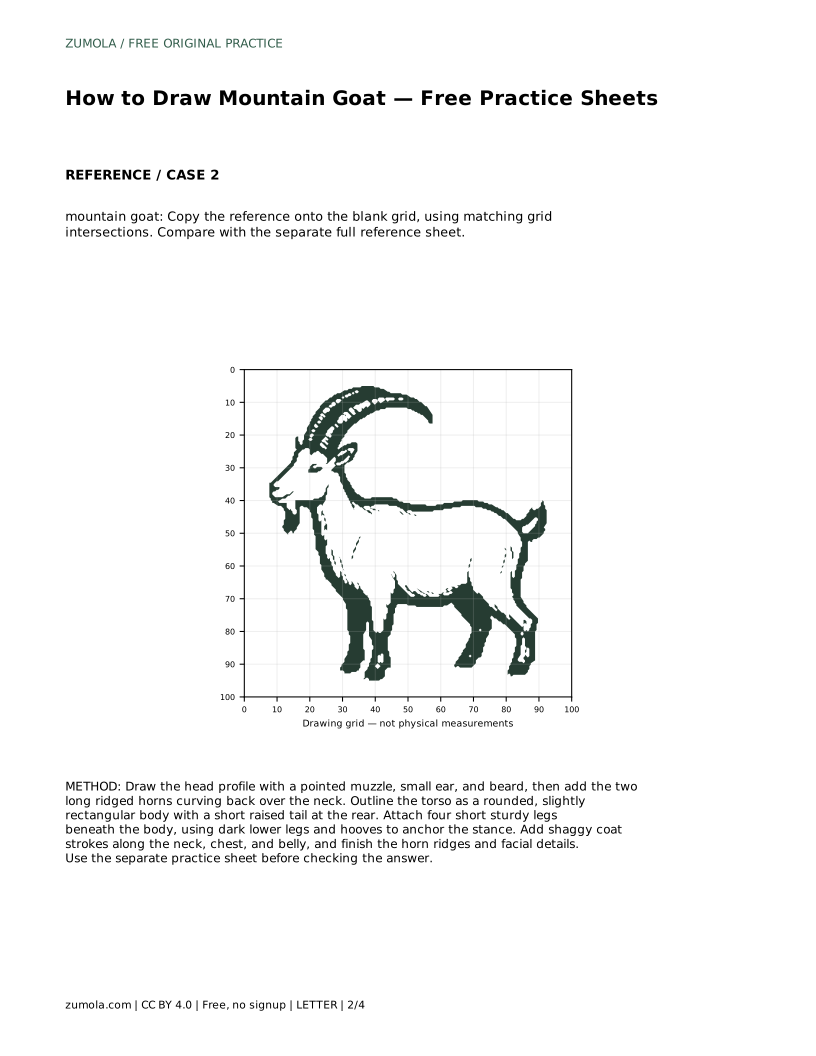
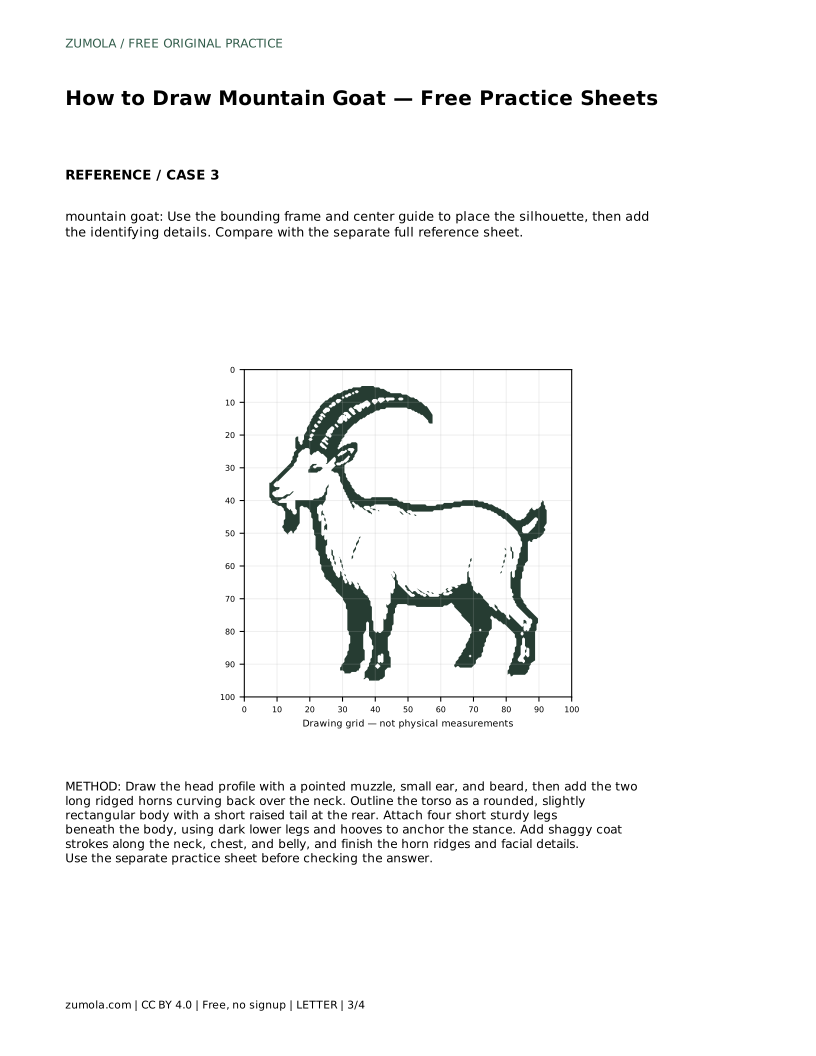
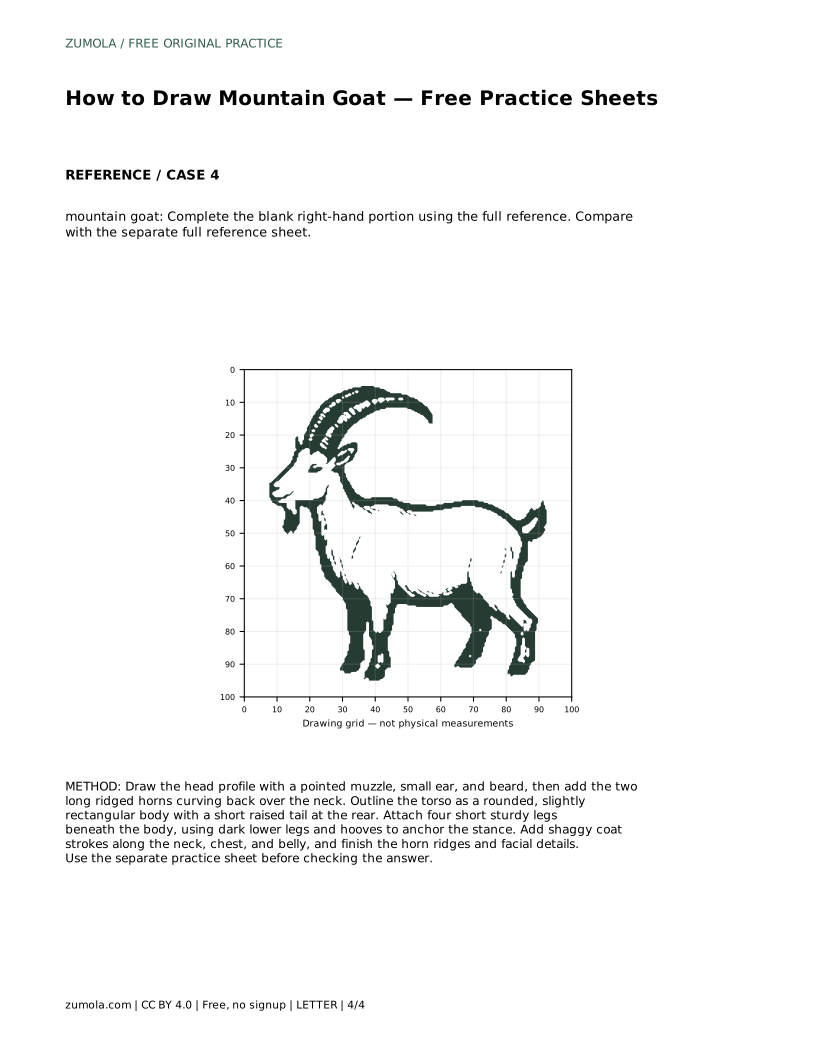
A4 · Download PDF
Free original resources
Learn to draw a mountain goat by building its head, horns, shaggy coat, and sturdy legs. Trace, grid, or complete a reference sheet, then check features with a rubric.
Four original cases, with reference diagrams, practice sheets and worked answers. Everything is free; no signup required.
LETTER · Download PDF
A4 · Download PDF
LETTER · Download PDF
A4 · Download PDF
LETTER · Download PDF
A4 · Download PDF
Use A4 or US Letter to match your printer. Use the stated values and conditions to solve each exercise; diagrams are not physical measuring rulers.
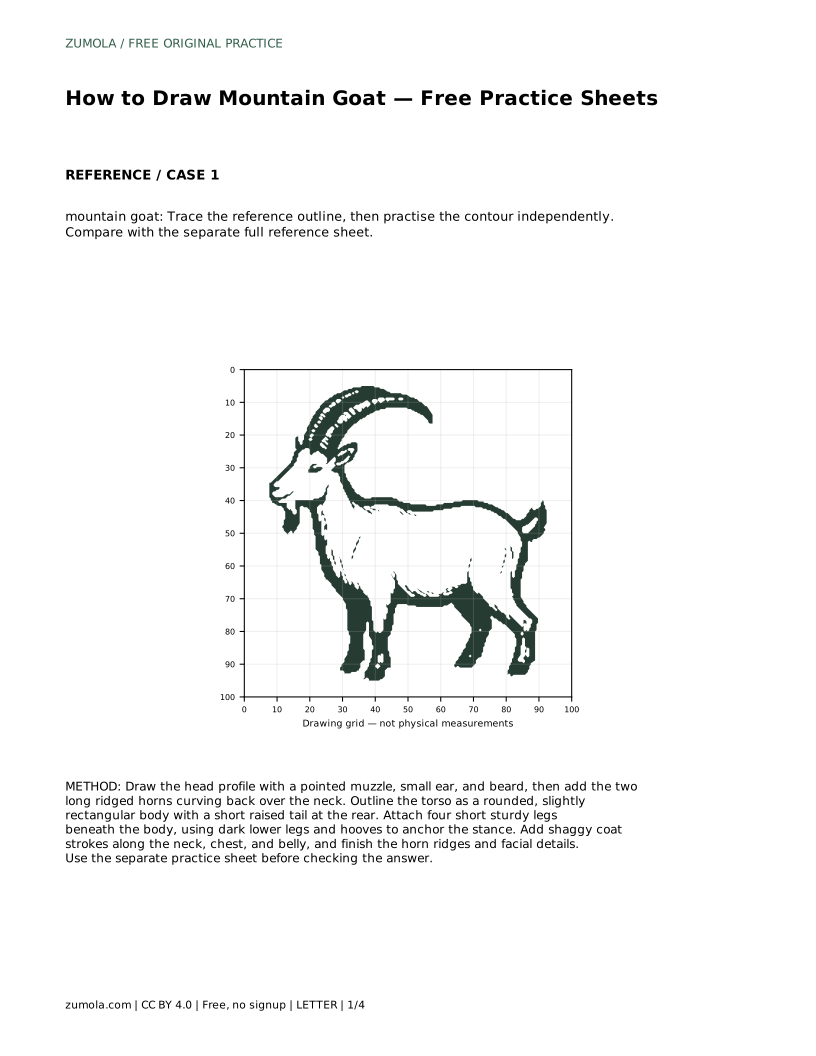
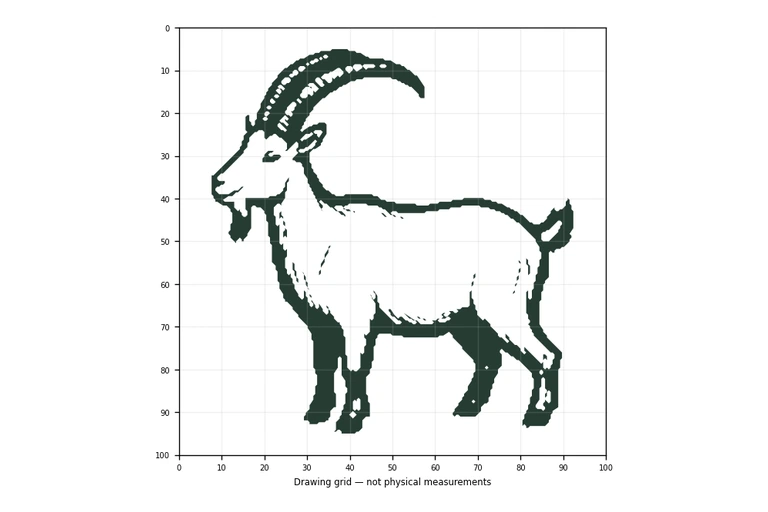
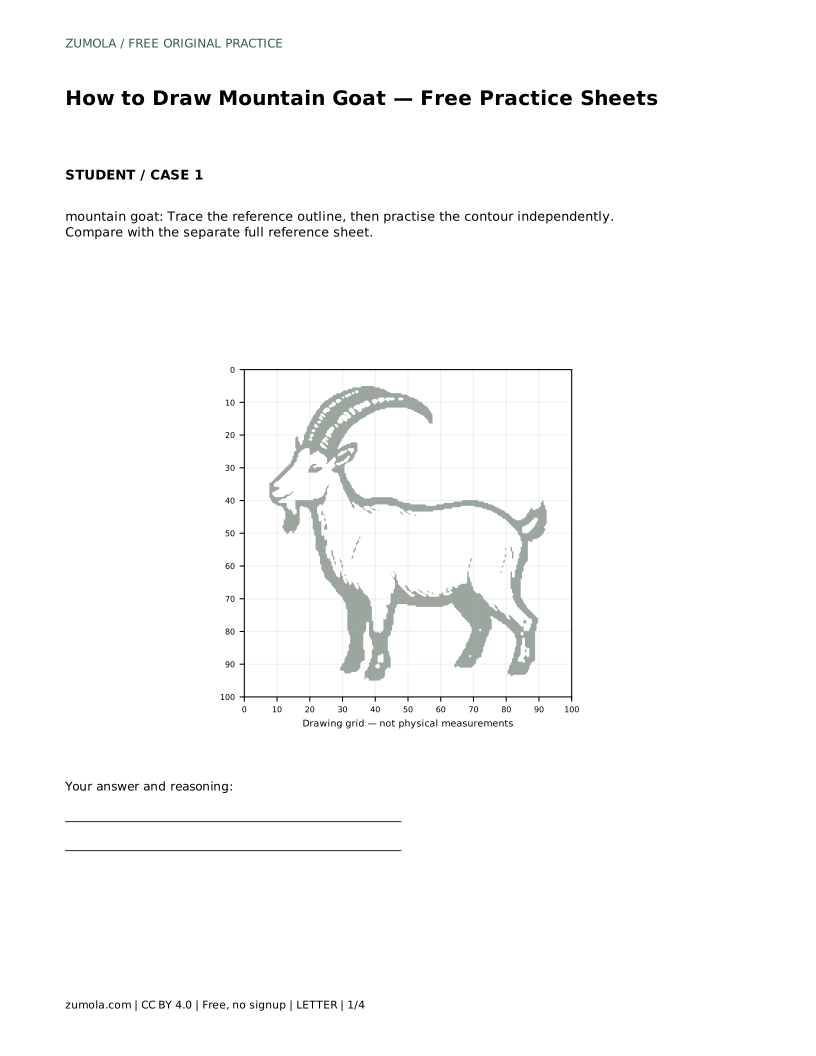
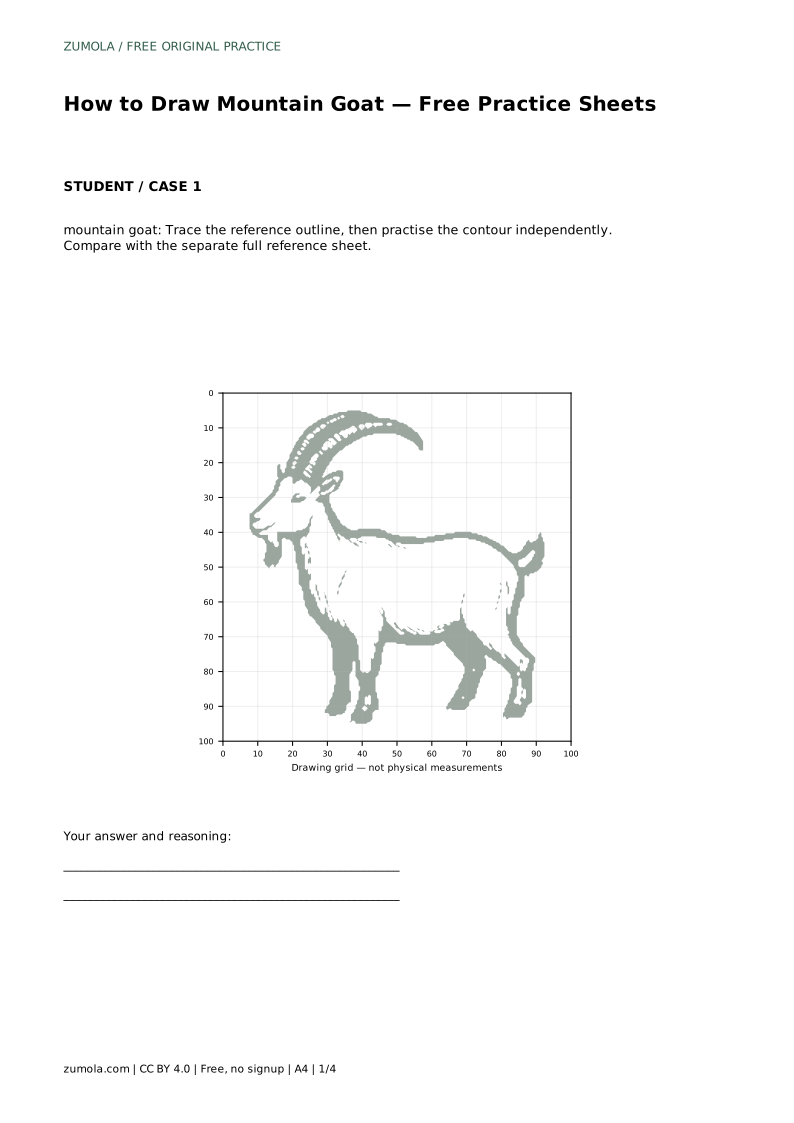
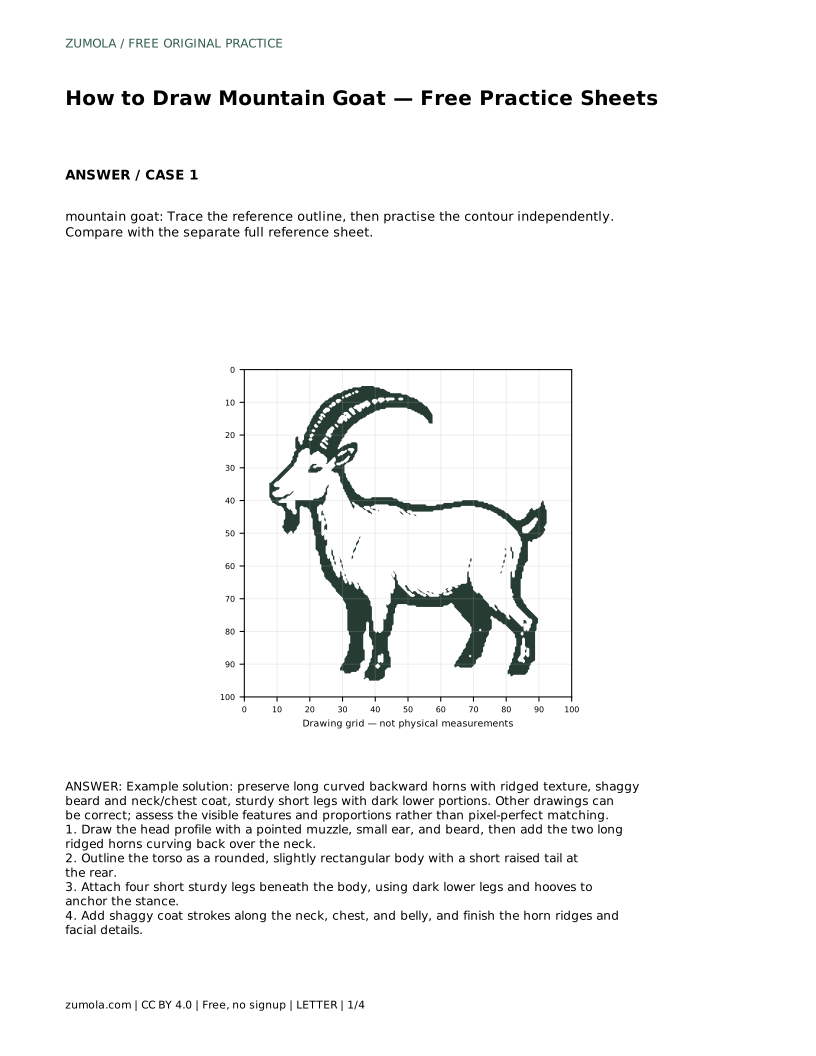
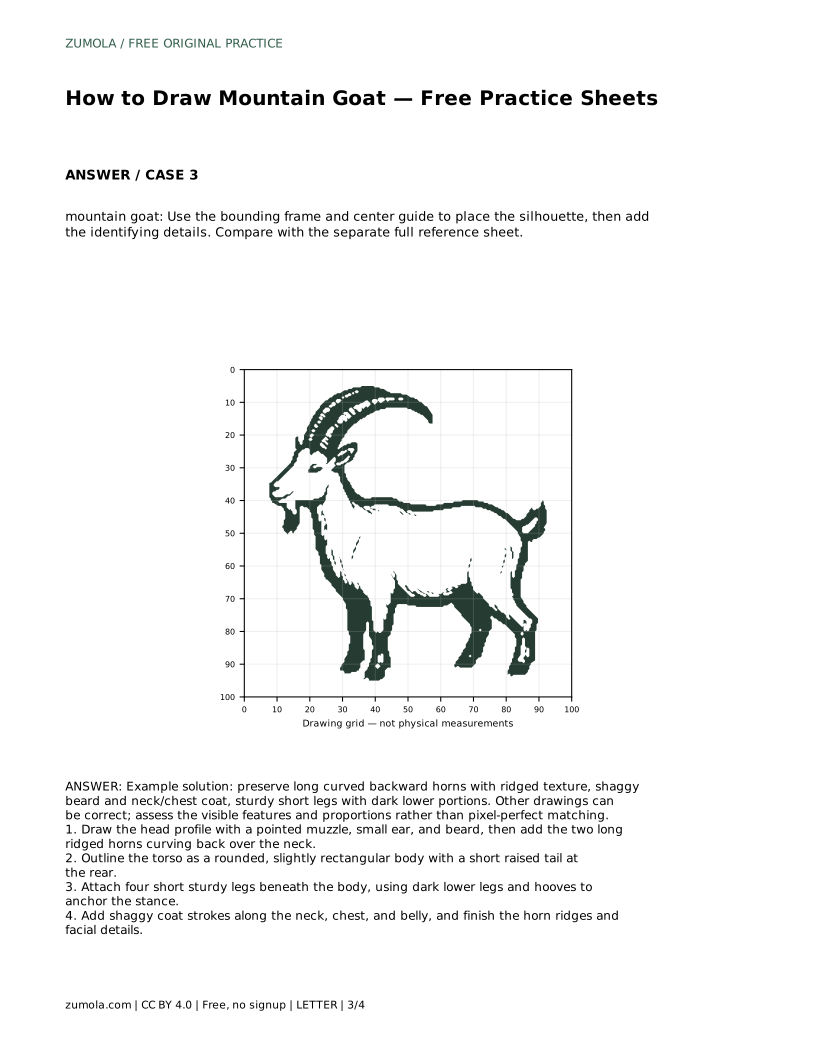
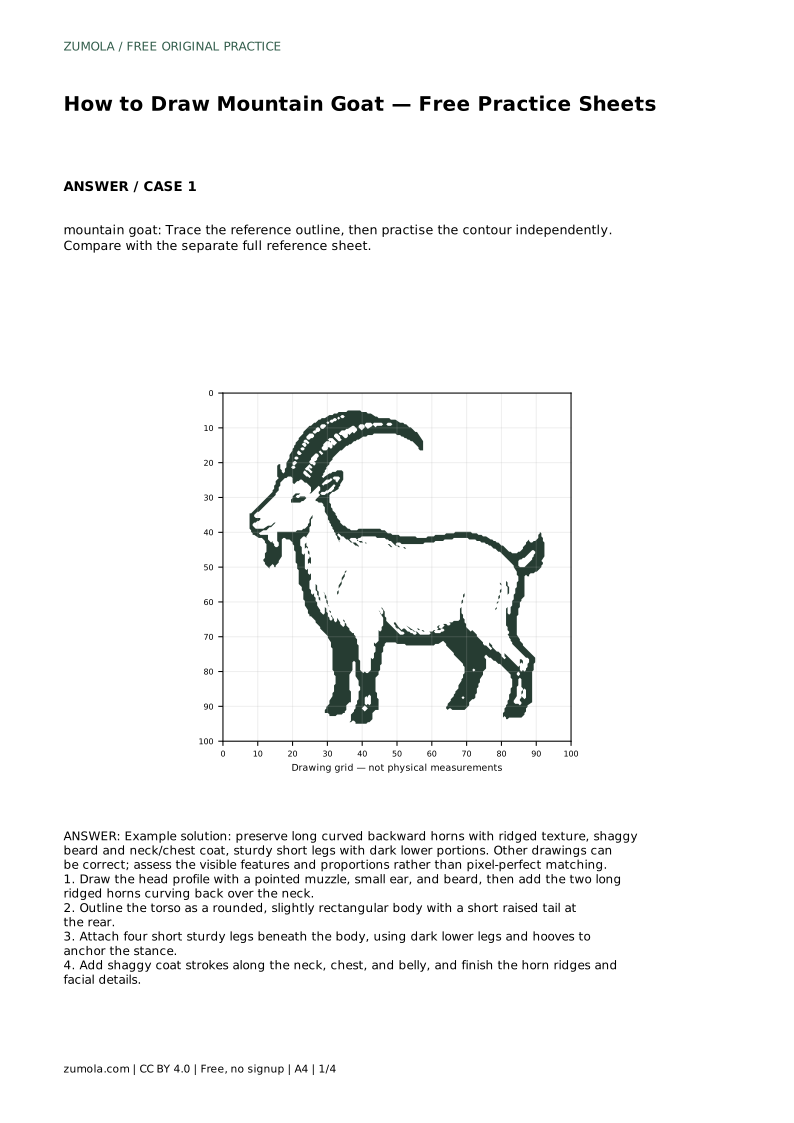
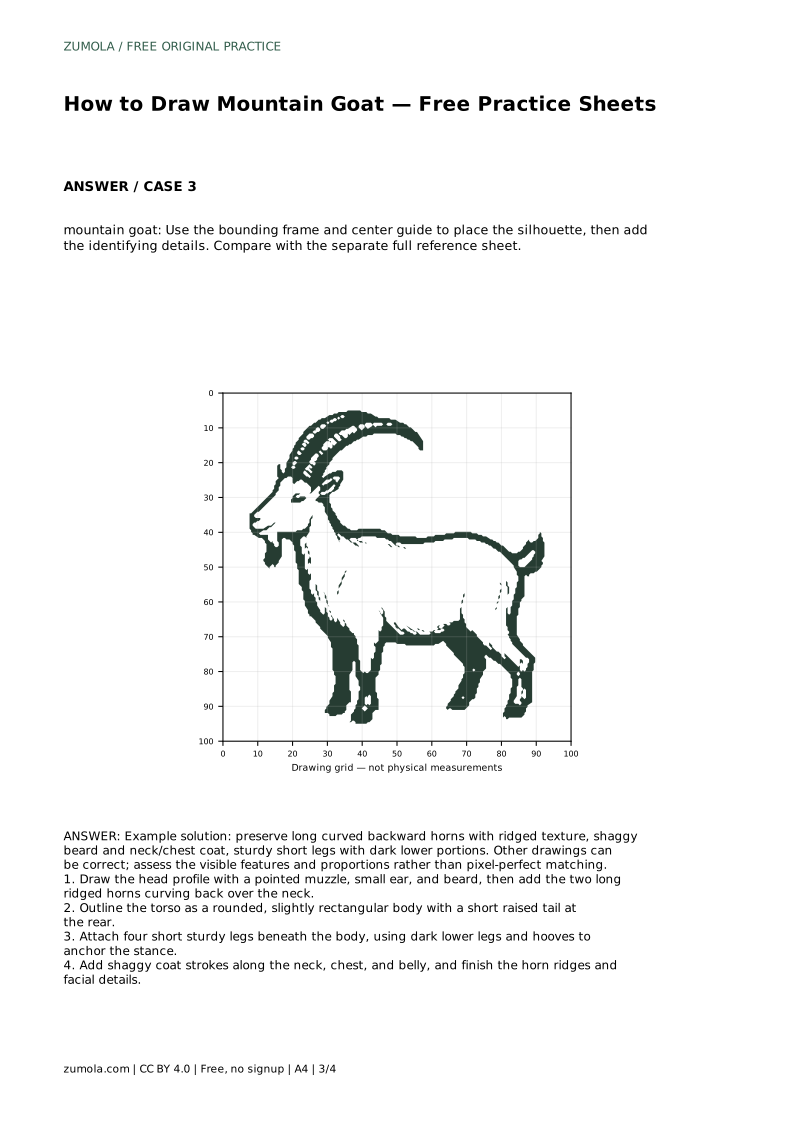
A mountain goat is recognizable before you finish the drawing: long horns sweep backward over a heavy neck, a beard hangs below the chin, and short legs sit under a compact body. This page teaches a reliable order for drawing those features. You can trace a reference outline first, then practise the contour independently. Because several drawings can be correct, compare visible features and proportions rather than expecting a pixel-perfect match.
Place the head profile first, because the horns and beard depend on it. Draw a pointed muzzle, a small ear, and a beard below the chin. Then add two long horns that curve backward over the neck. Give each horn a ridged texture with short crosswise marks rather than a smooth tube. Keep both horns similar in length and curvature so the head does not look lopsided.
The head should sit forward of the shoulders, not directly above the chest. Leave room behind the horns for the neck, since the backward sweep is part of the animal's silhouette.
Outline the torso as a rounded, slightly rectangular body. Add a short raised tail at the rear. Attach four short, sturdy legs beneath the body. The legs should look strong enough to support the compact torso, so avoid thin, spindly lines. Use dark lower legs and hooves to anchor the stance and make the animal look grounded.
Check that all four legs reach a believable ground line. Front and back legs can differ slightly in angle, but the body should not appear to float or sink into the ground.
Mountain goats look shaggy along the neck, chest, and belly. Add coat strokes in those areas, following the direction the hair would hang. Keep the strokes loose and varied; a uniform fringe looks like a costume rather than fur. Finish the horn ridges and facial details last, so the smaller marks sit on a settled outline.
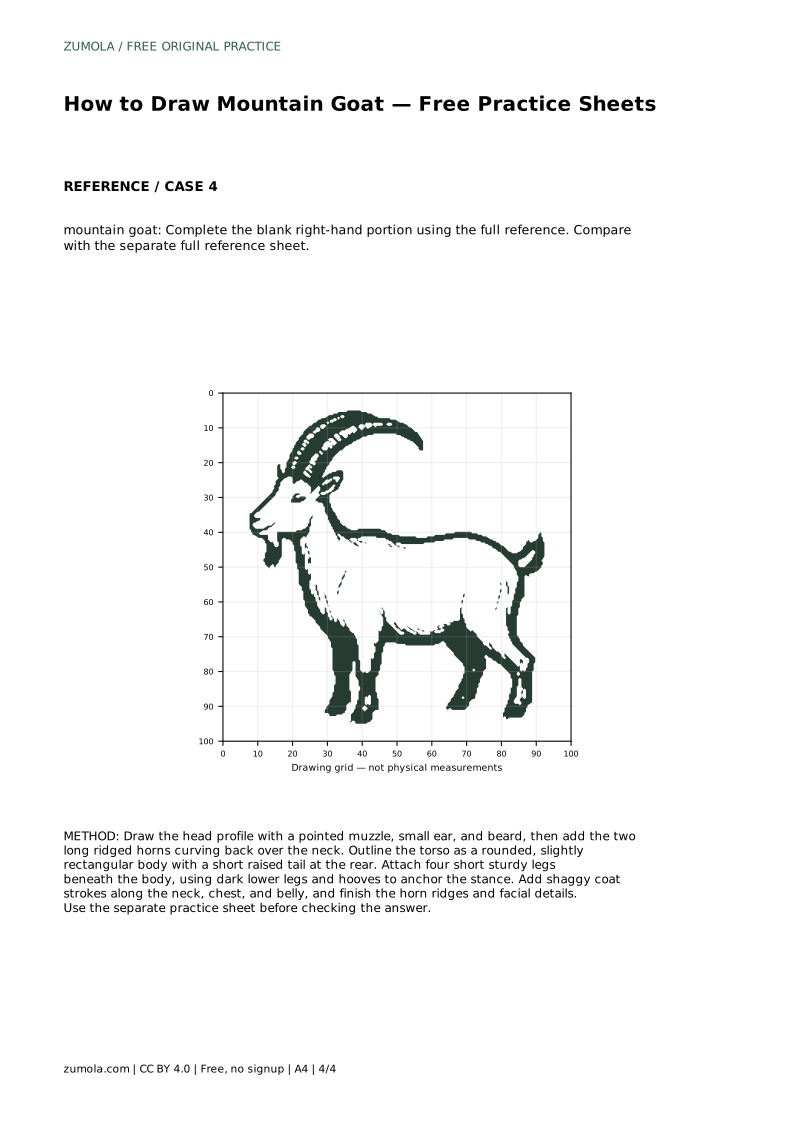
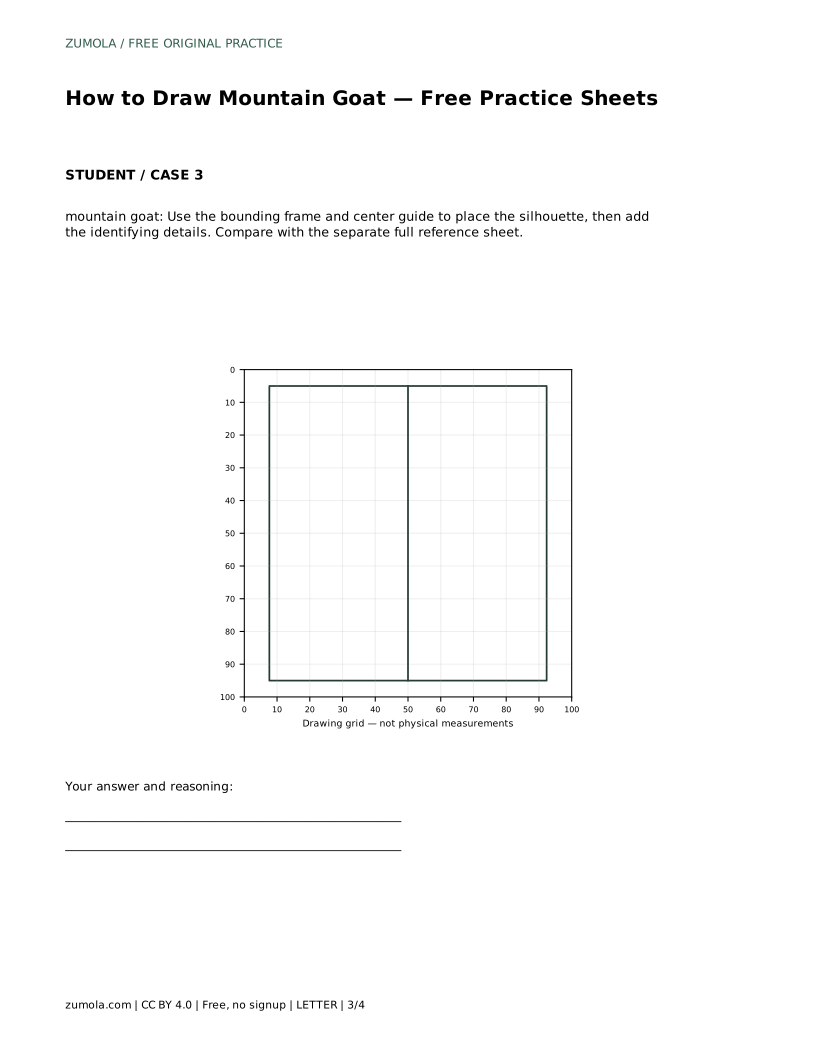
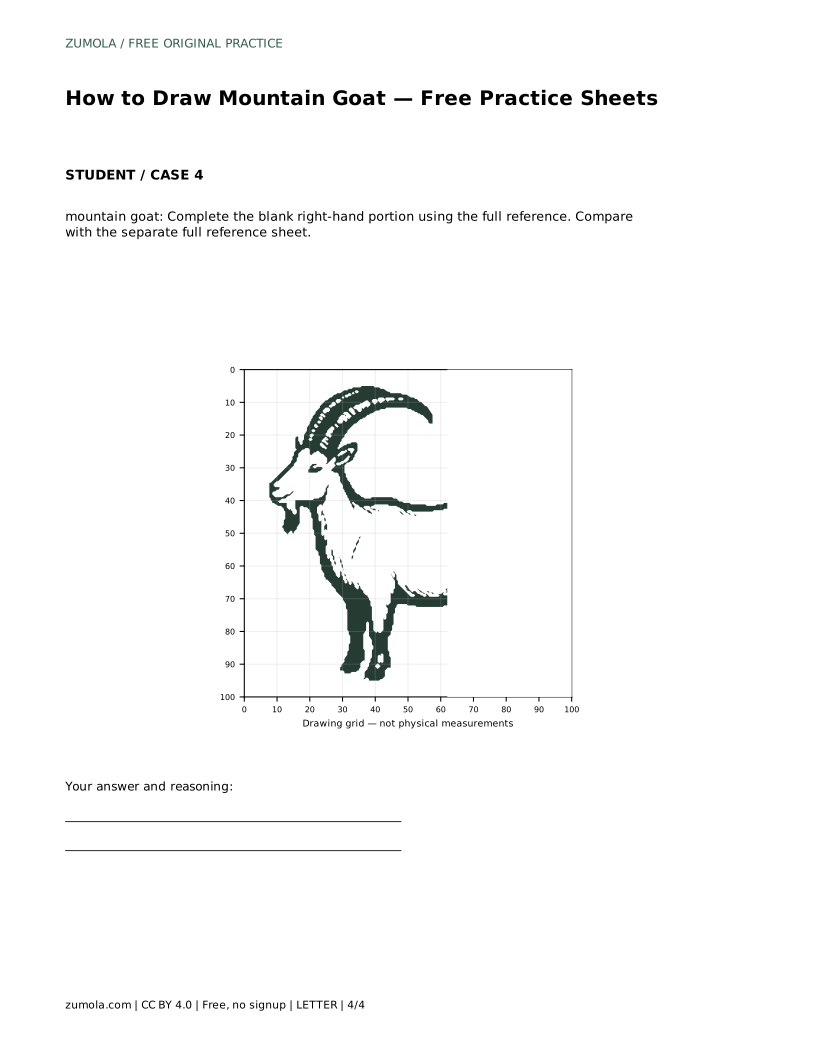
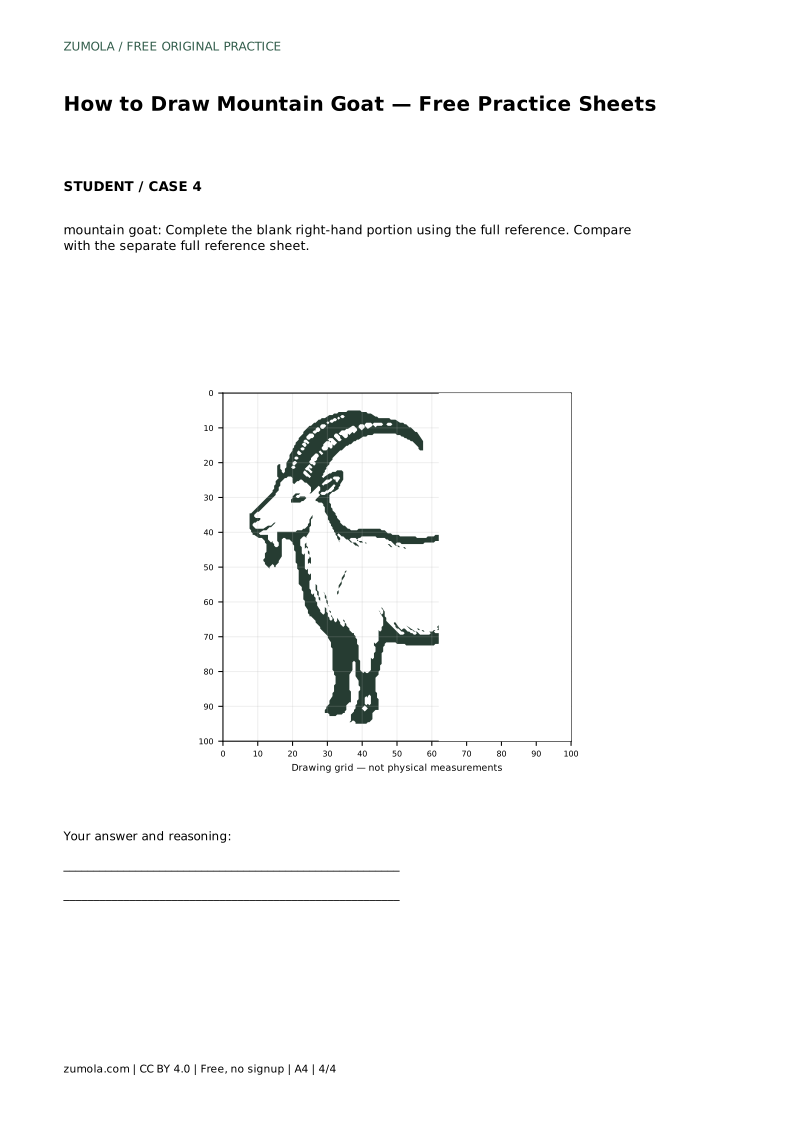
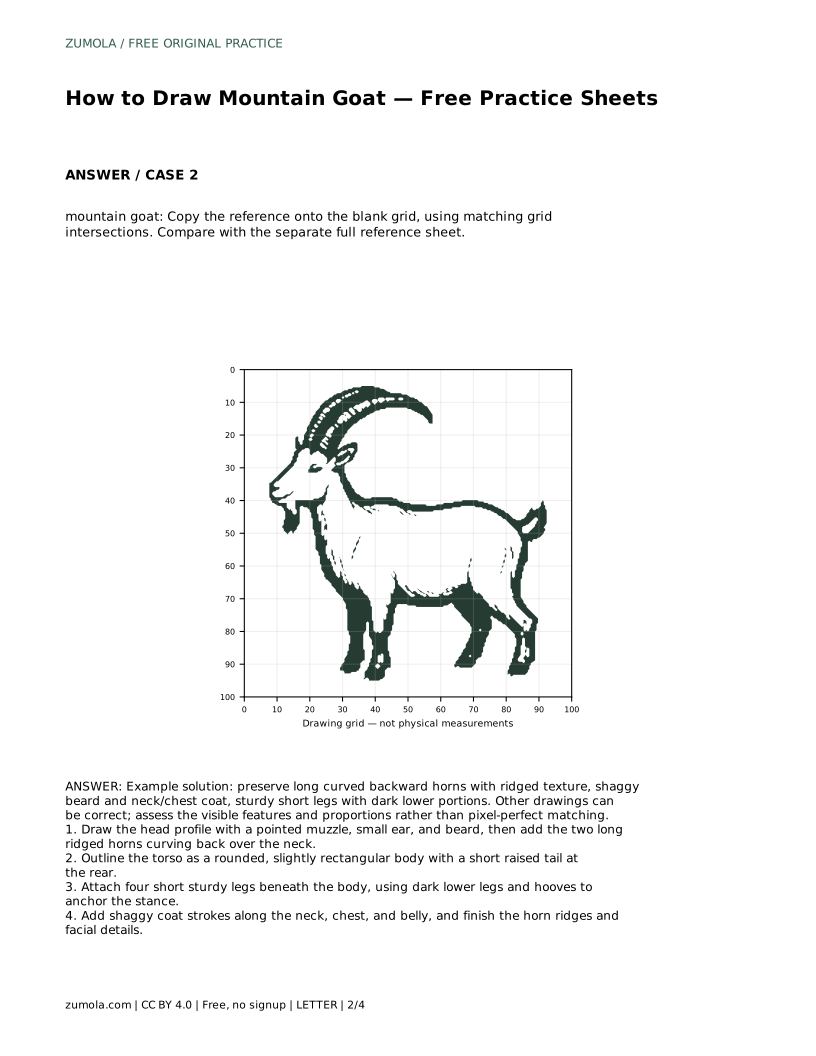
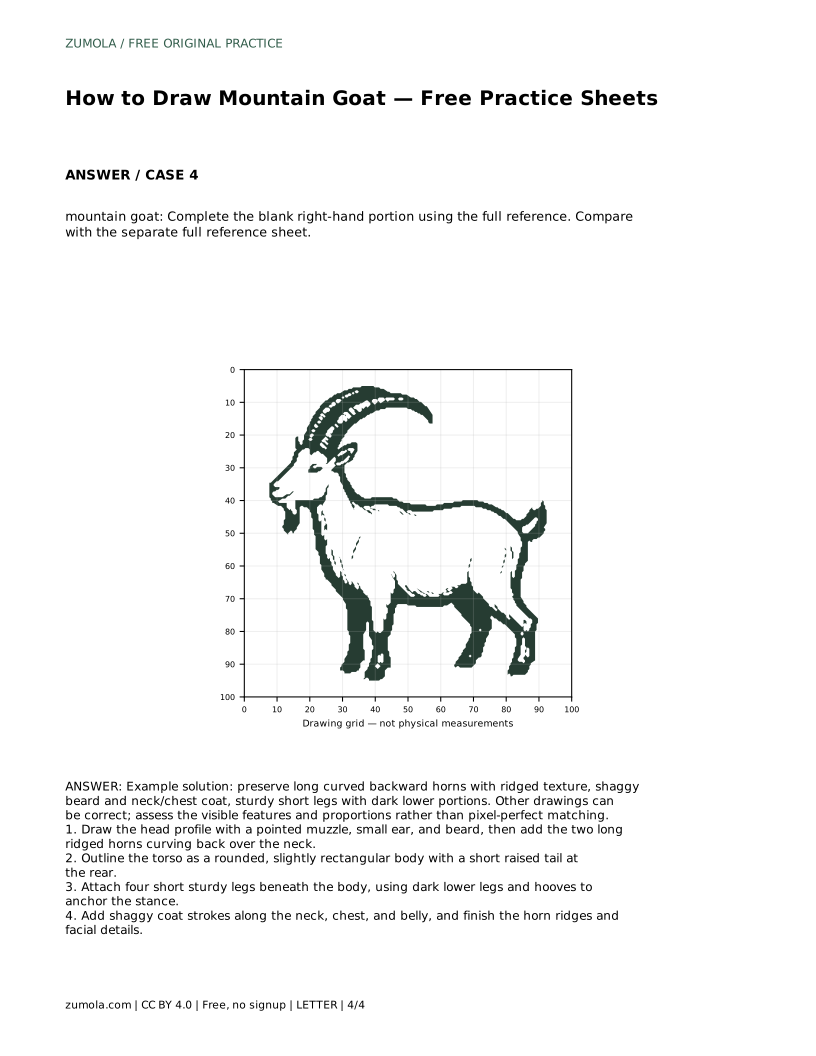
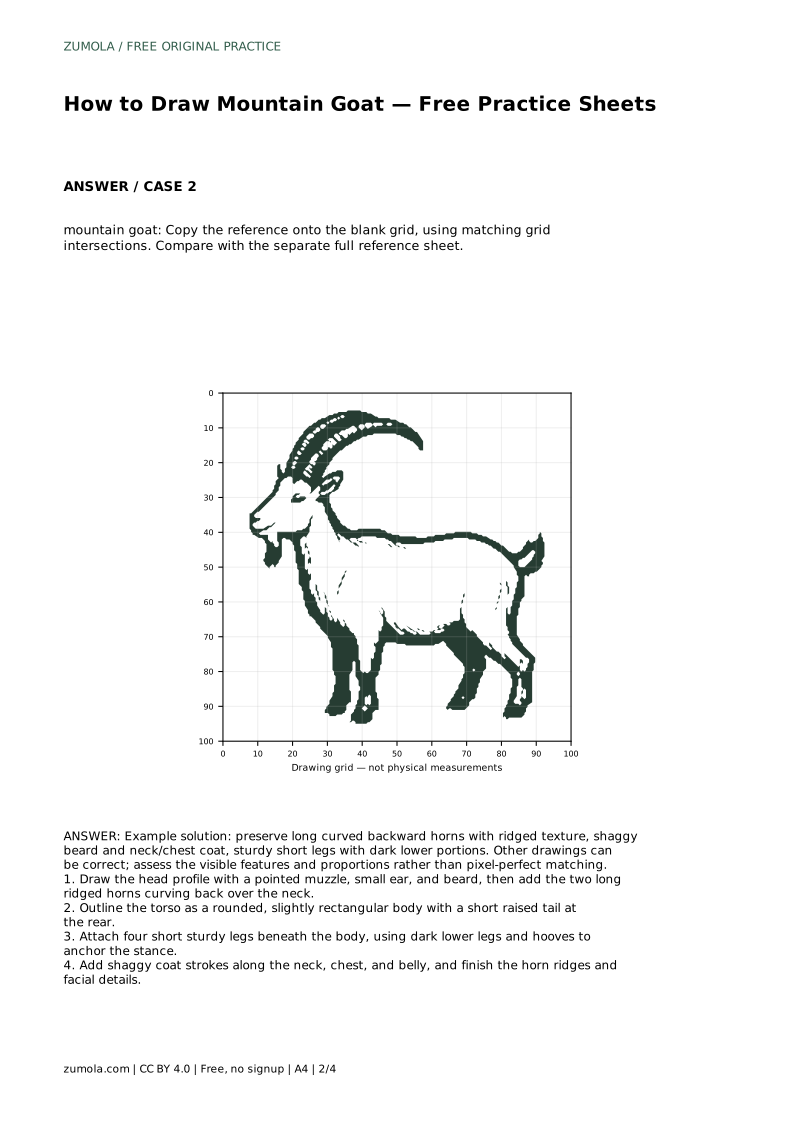
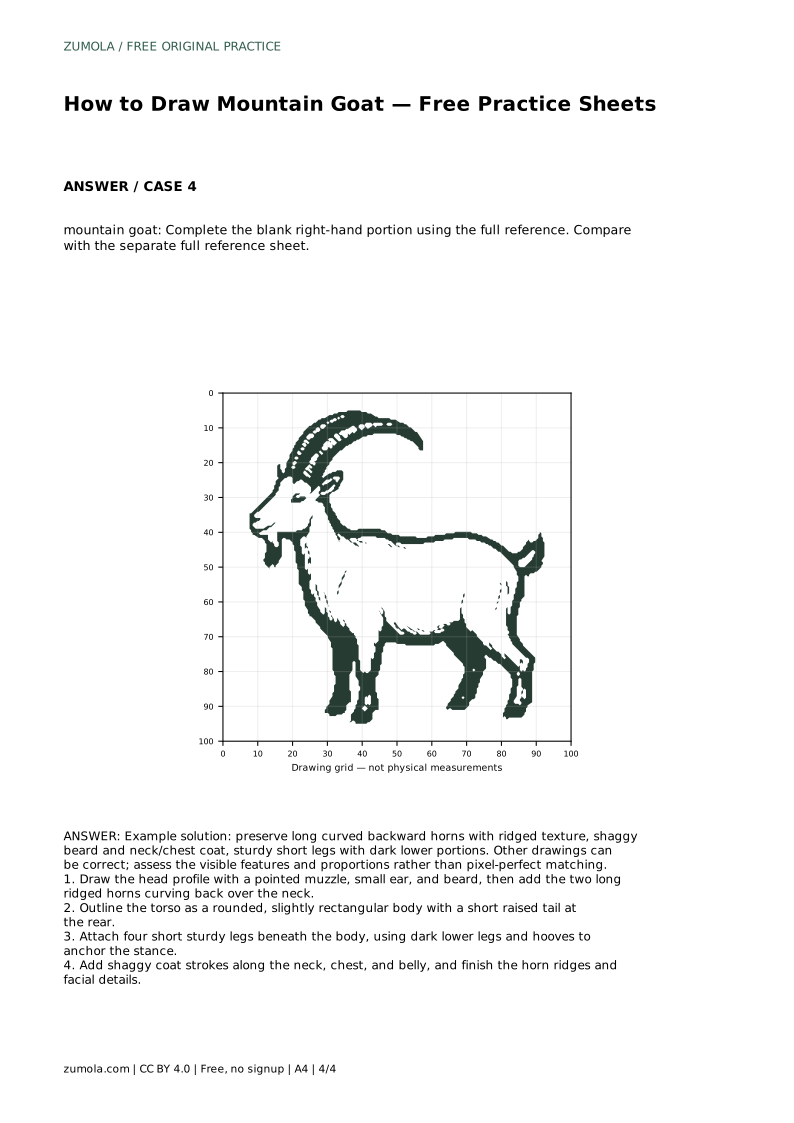
If you are using a grid sheet, match intersections rather than copying every small wobble. If you are completing a blank portion, use the full reference to judge where the missing features belong.
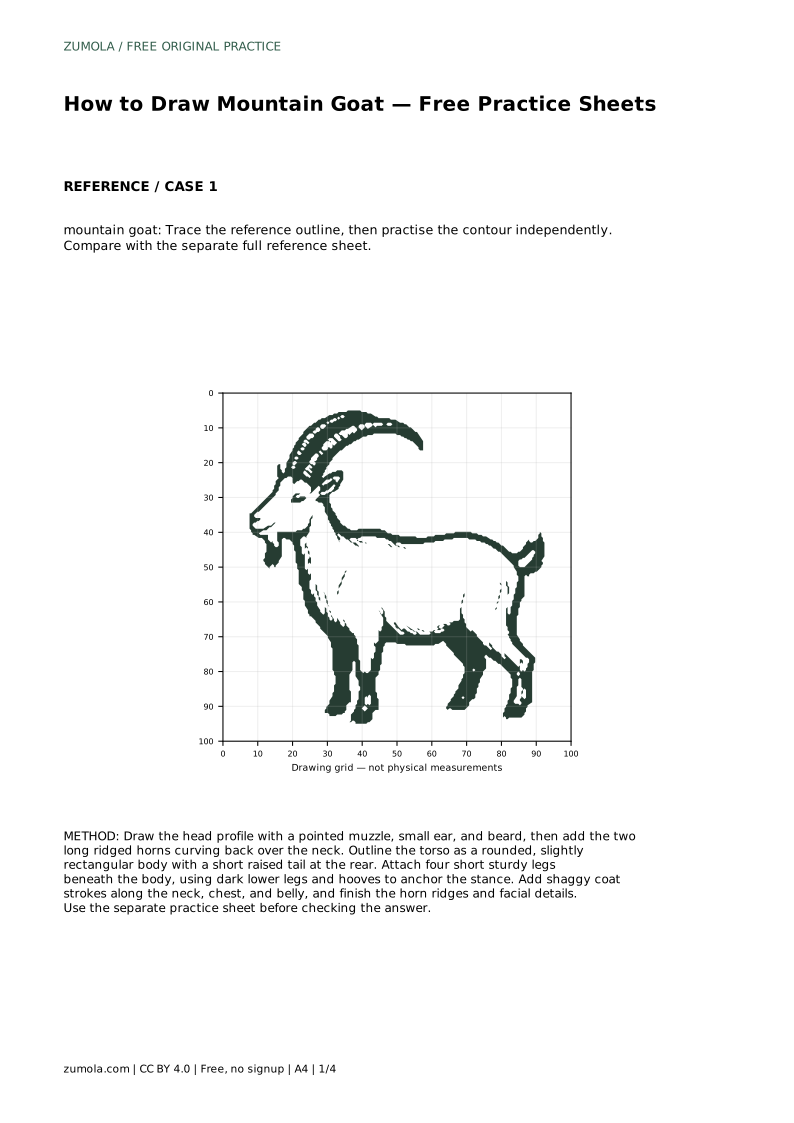
mountain goat: Trace the reference outline, then practise the contour independently. Compare with the separate full reference sheet.
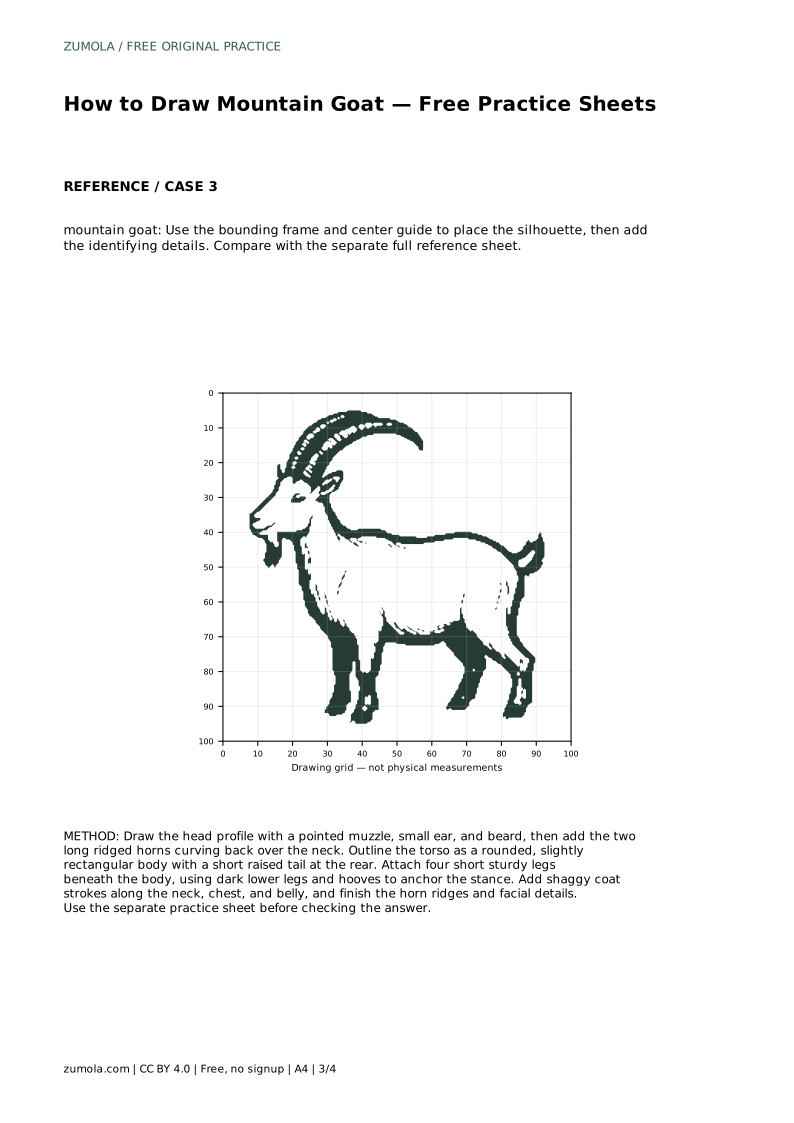
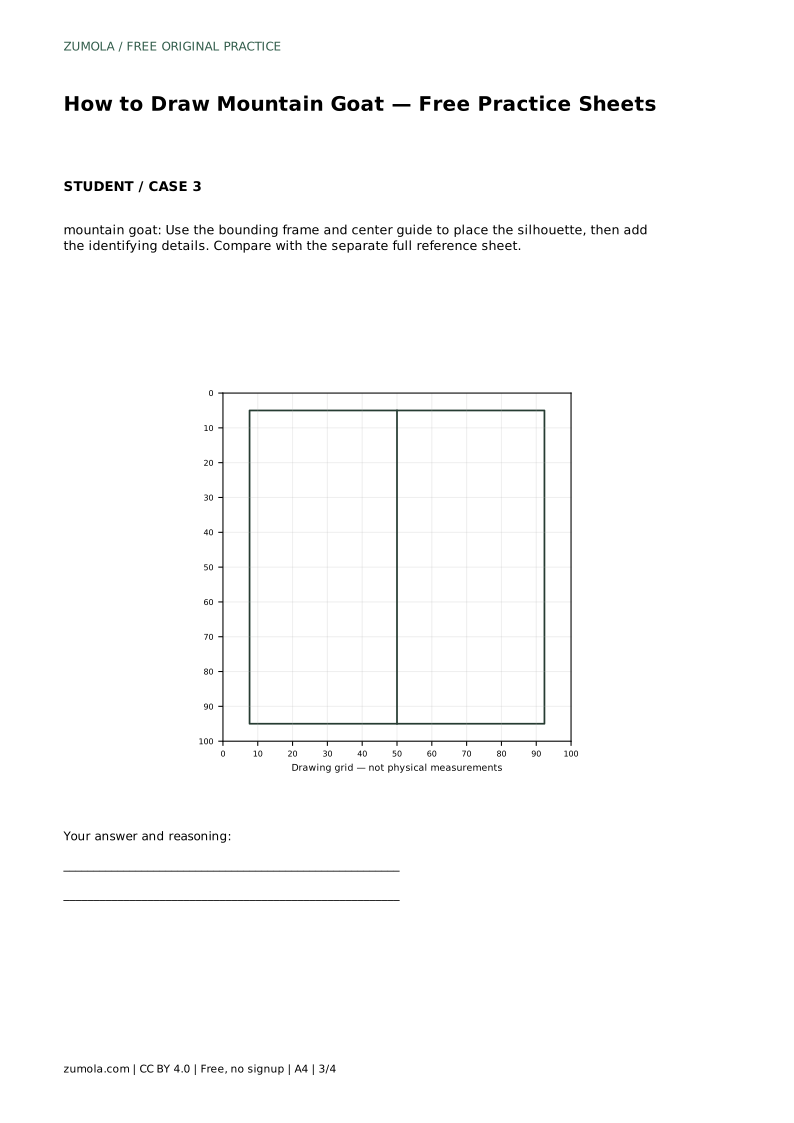
Example solution: preserve long curved backward horns with ridged texture, shaggy beard and neck/chest coat, sturdy short legs with dark lower portions. Other drawings can be correct; assess the visible features and proportions rather than pixel-perfect matching. Draw the head profile with a pointed muzzle, small ear, and beard, then add the two long ridged horns curving back over the neck. Outline the torso as a rounded, slightly rectangular body with a short raised tail at the rear. Attach four short sturdy legs beneath the body, using dark lower legs and hooves to anchor the stance. Add shaggy coat strokes along the neck, chest, and belly, and finish the horn ridges and facial details.
No. Several drawings can be correct. Check that the long backward horns, beard, shaggy neck and chest, and short sturdy legs are visible and in believable proportion.
Draw the head profile, beard, and horns first, then the torso, tail, and legs, and finish with the shaggy coat and small details.
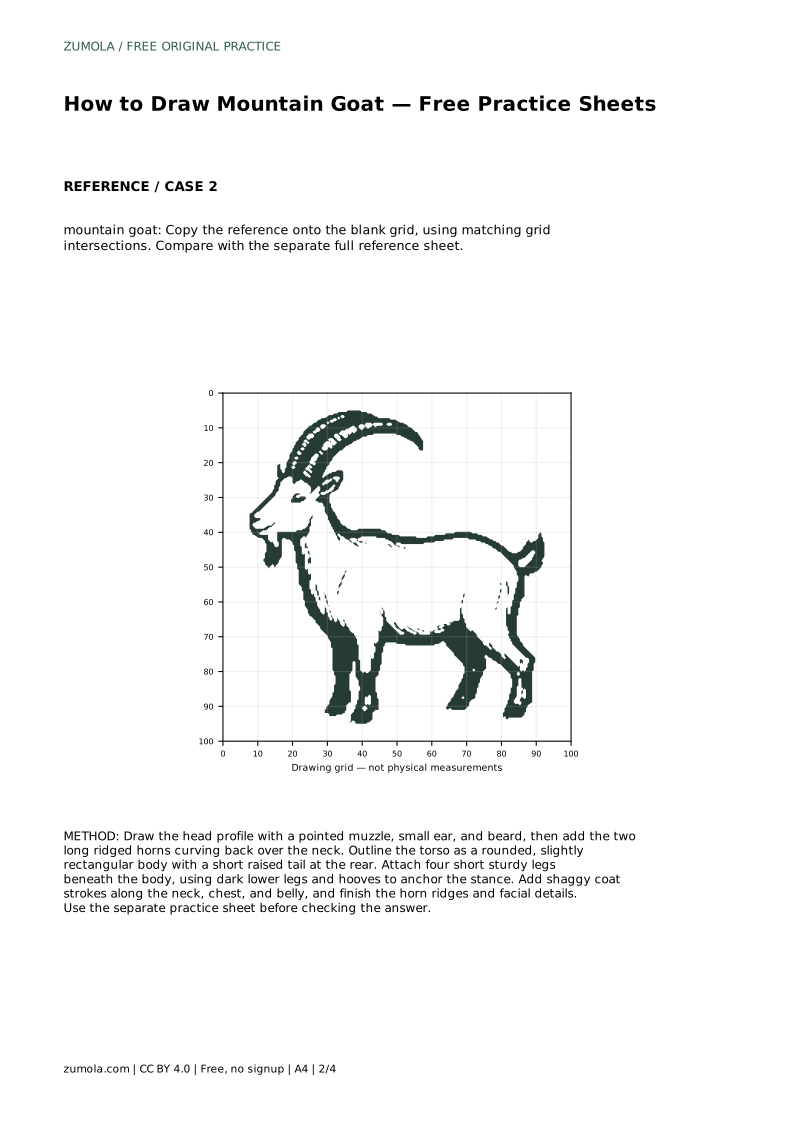
Copy the reference onto the blank grid by matching grid intersections. Use the intersections to place major features, then refine the outline by eye.
All drawing practice · Free coordinate paper
Original resources · CC BY 4.0 · Free for personal and classroom use with attribution.