Reference diagrams
LETTER · Download PDF
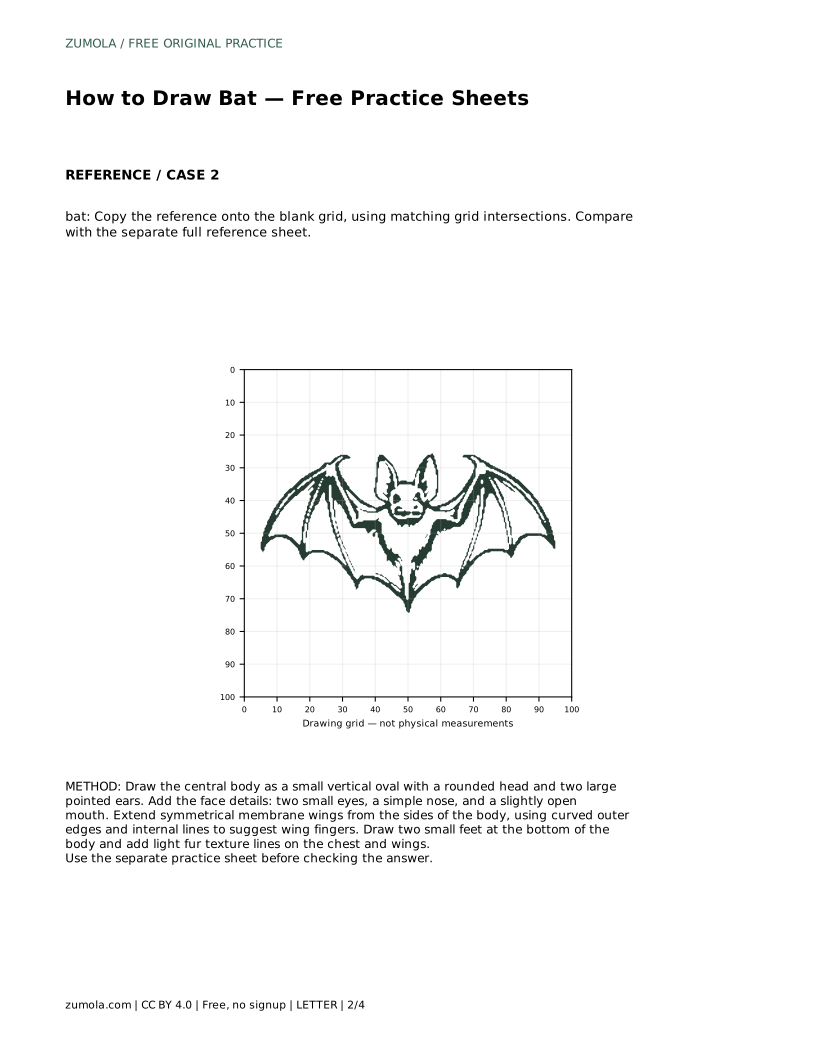
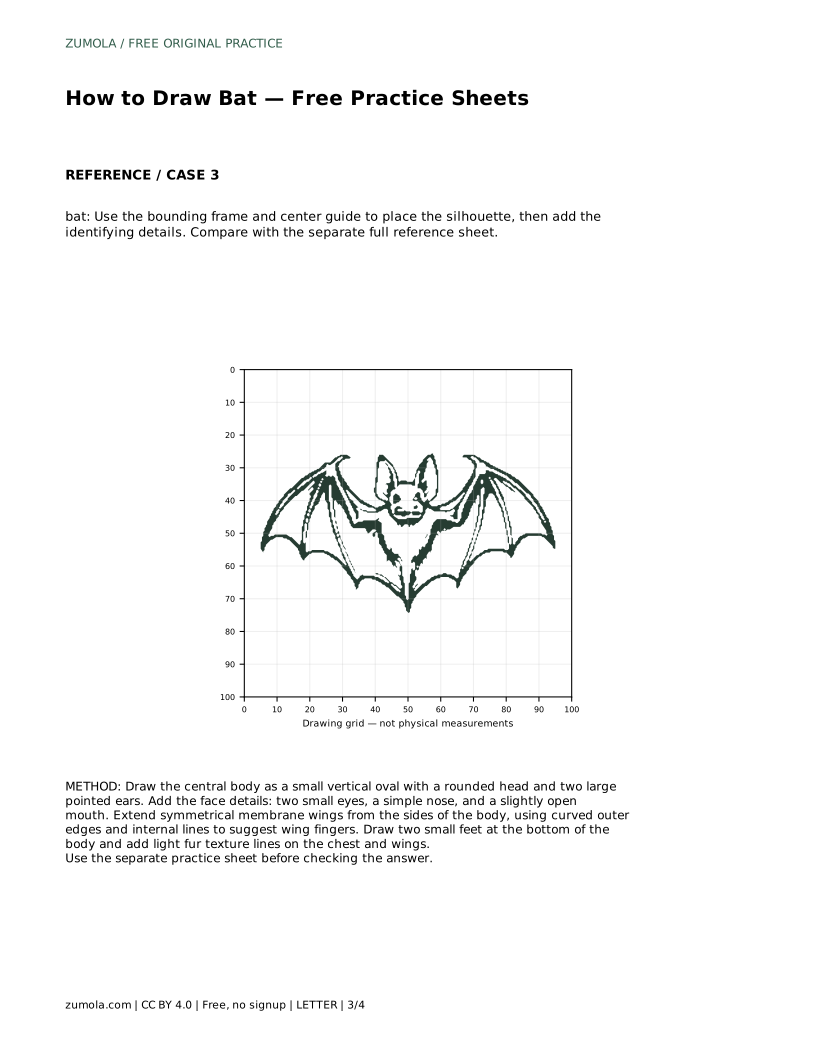
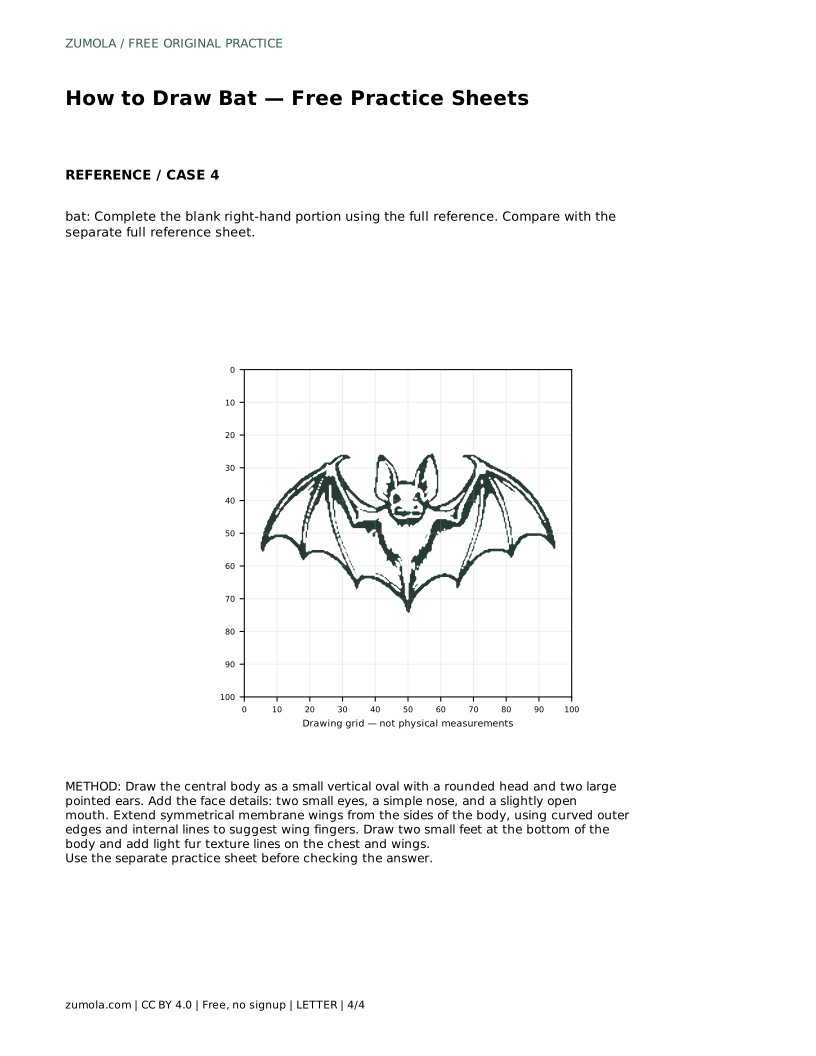
A4 · Download PDF
Free original resources
Learn realistic bat drawing with membrane wings, scalloped trailing edges, radiating finger lines, pointed ears and light fur texture. Free printable practice sheets.
Four original cases, with reference diagrams, practice sheets and worked answers. Everything is free; no signup required.
LETTER · Download PDF
A4 · Download PDF
LETTER · Download PDF
A4 · Download PDF
LETTER · Download PDF
A4 · Download PDF
Use A4 or US Letter to match your printer. Use the stated values and conditions to solve each exercise; diagrams are not physical measuring rulers.
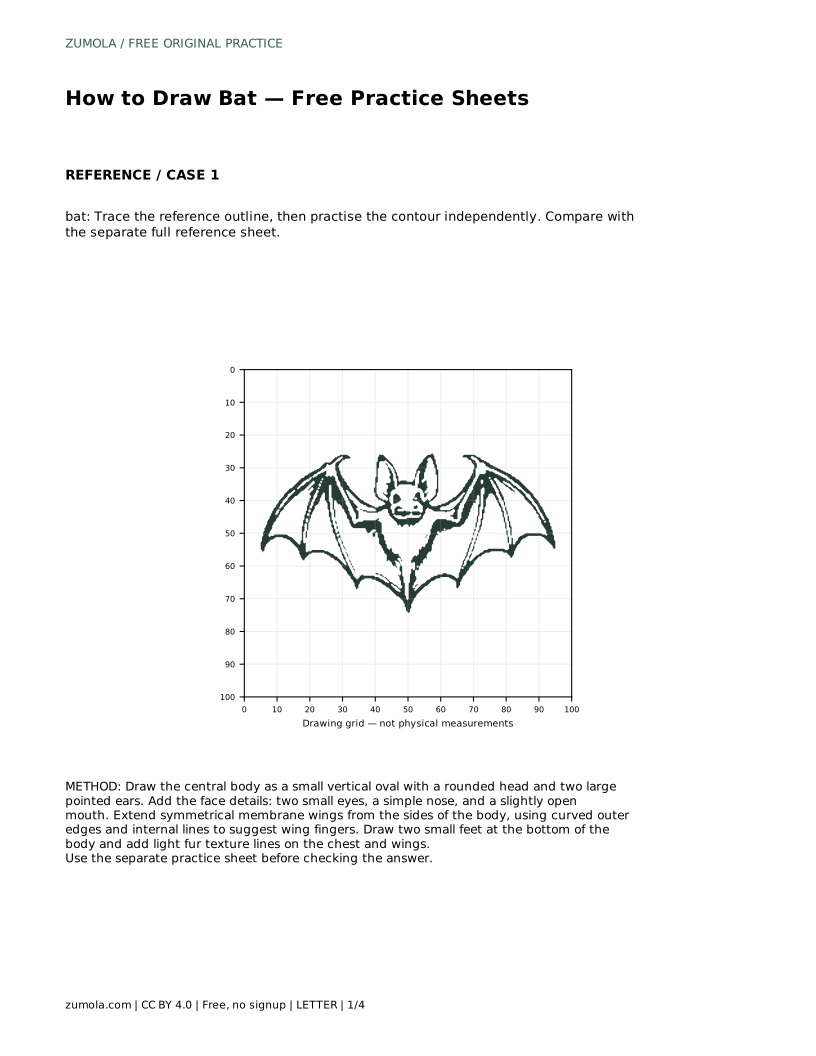
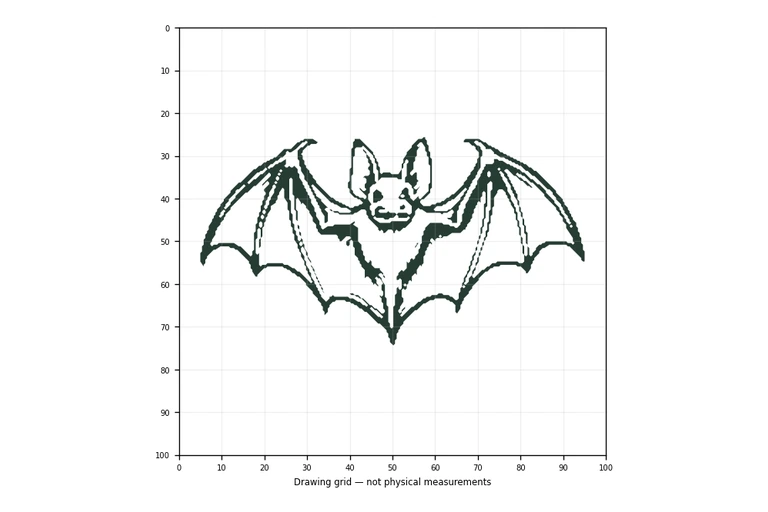
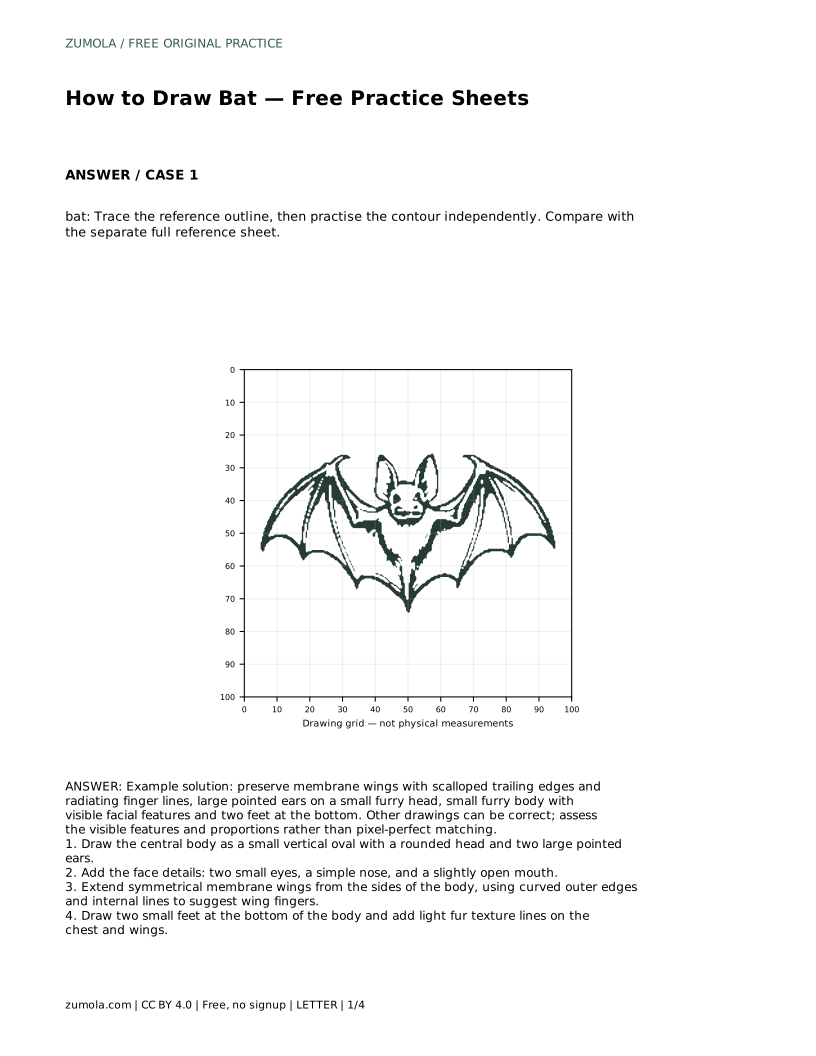
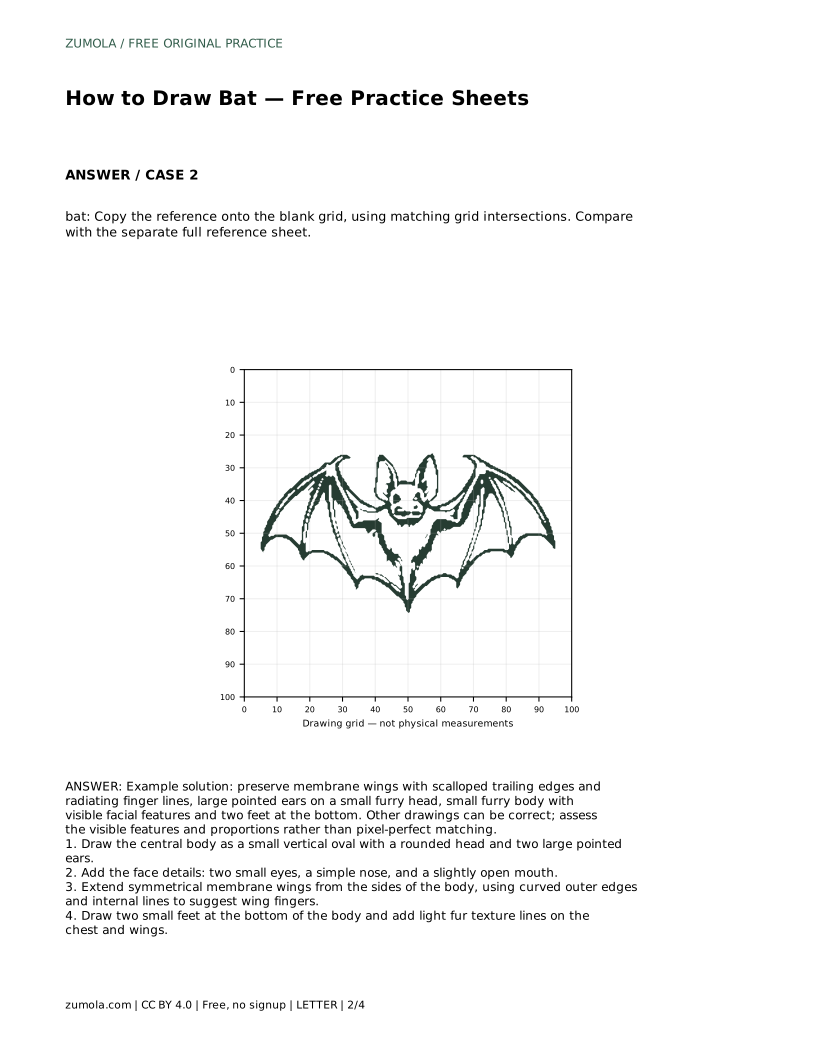
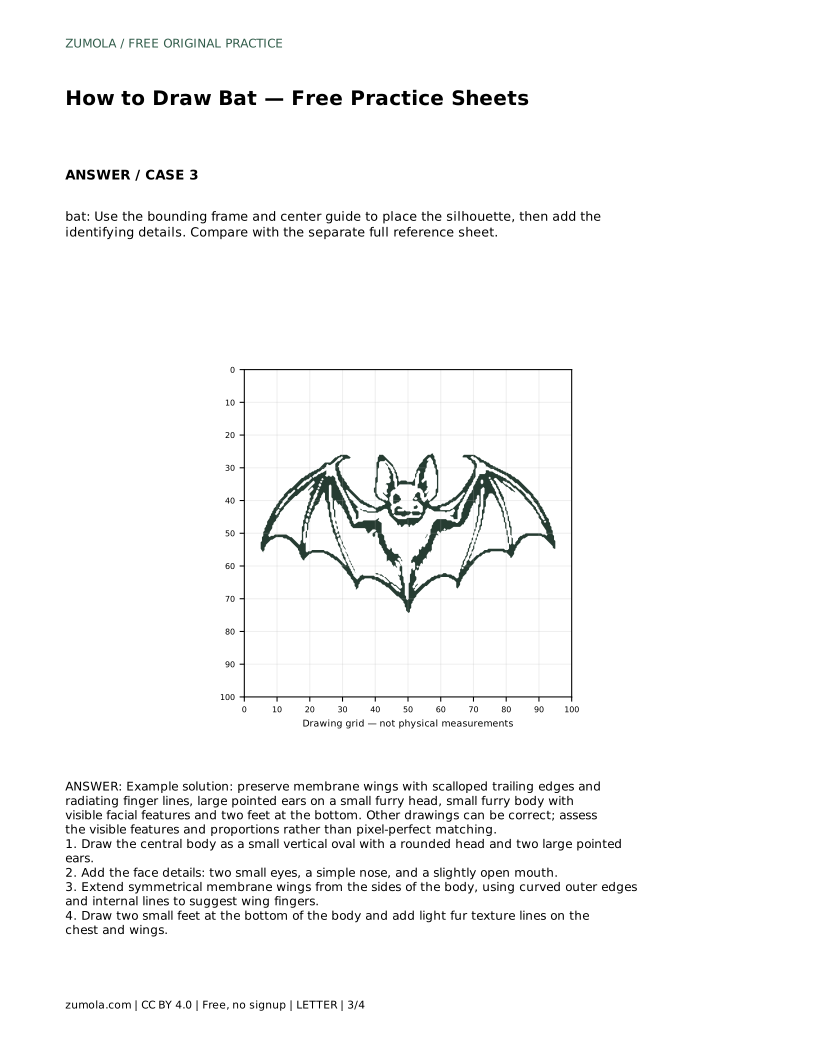
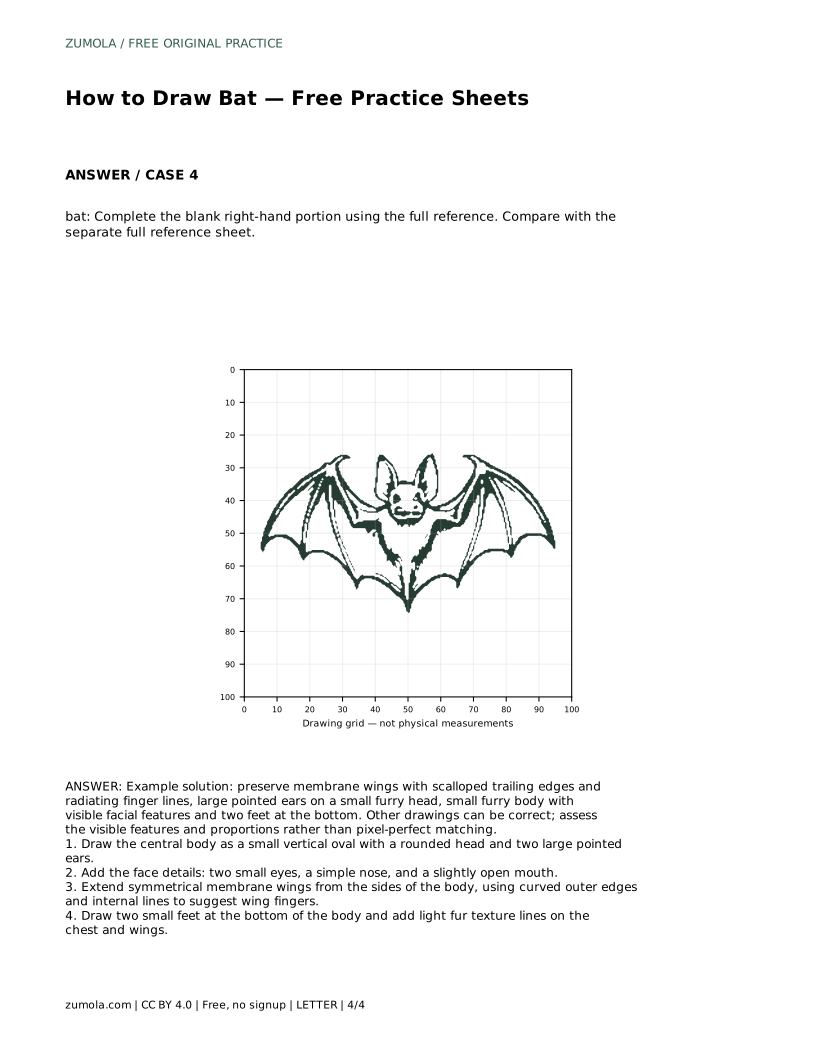
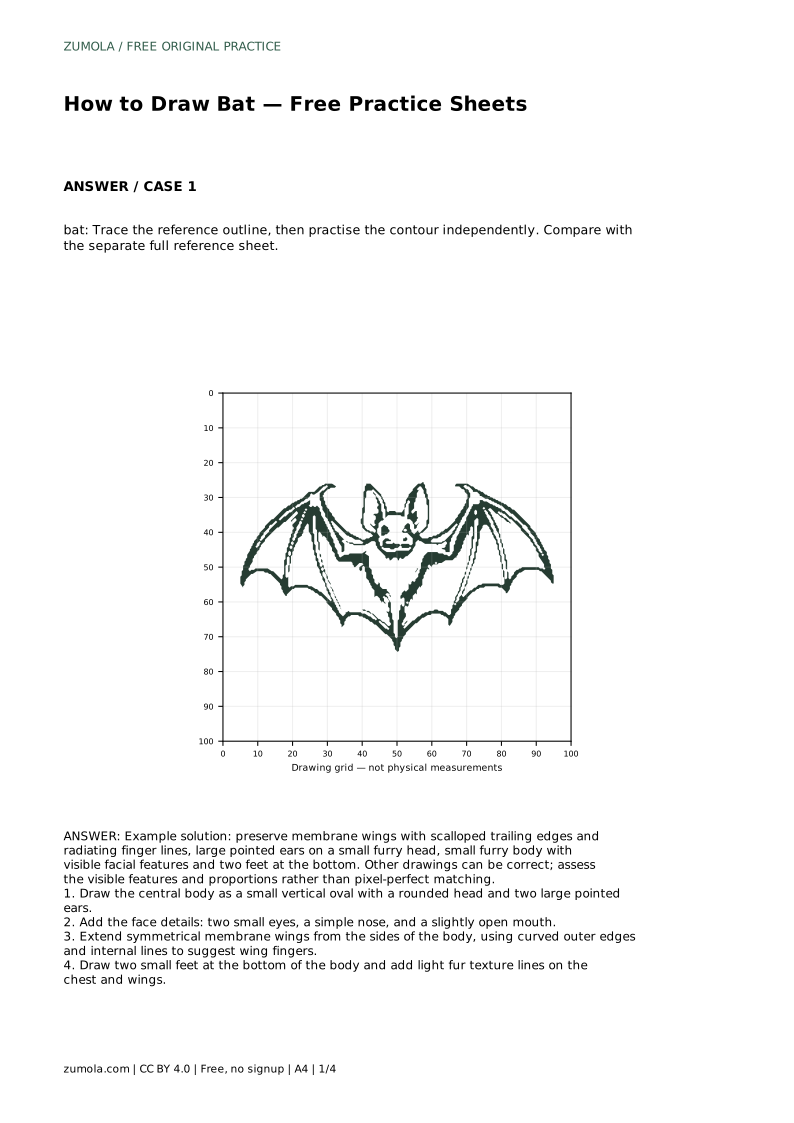
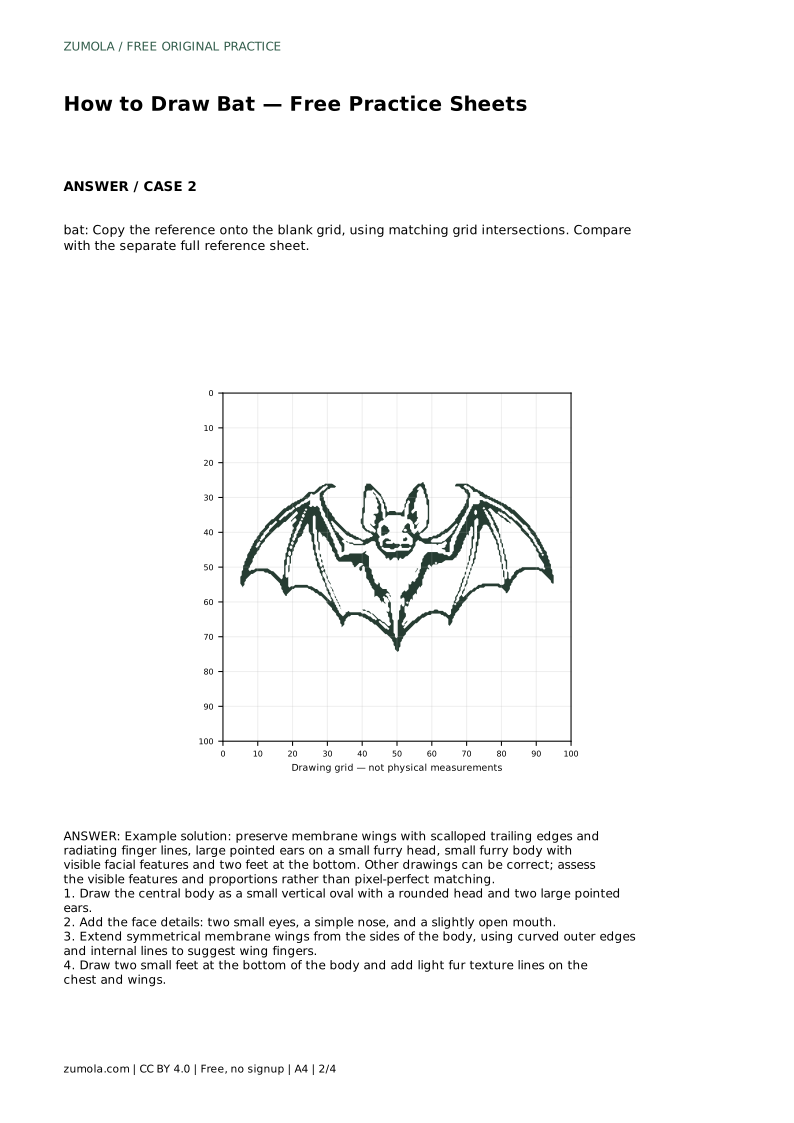
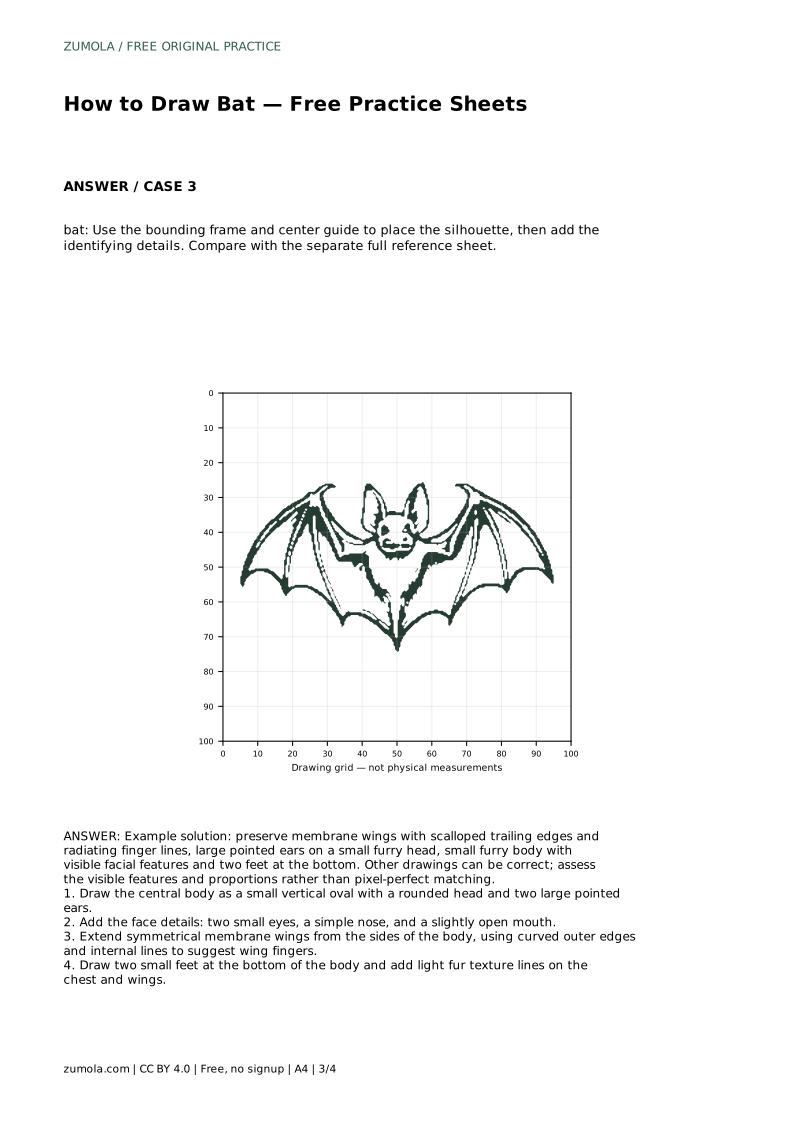
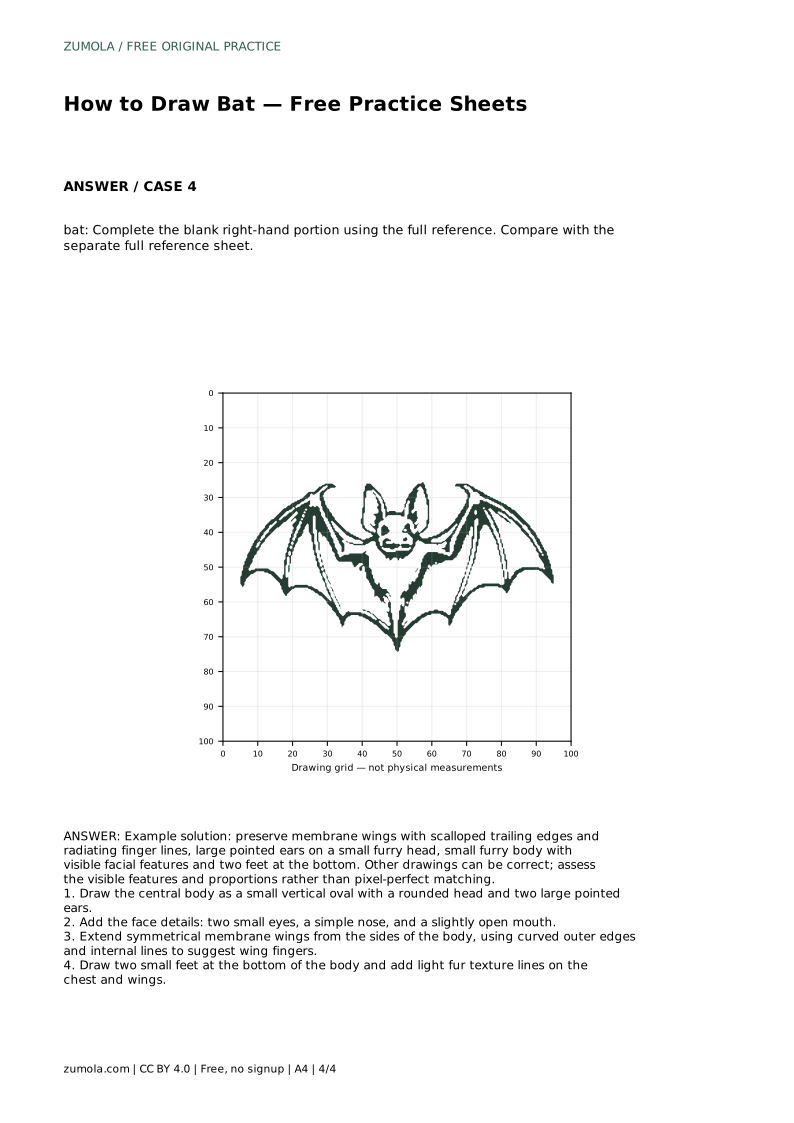
Realistic bat drawing depends on a few clear features: a small furry body, a rounded head with two large pointed ears, and wide membrane wings with scalloped trailing edges and radiating finger lines. This page explains how to build those parts in order, then how to check your work against a separate full reference sheet. The practice sheets support tracing, grid copying, guide placement and partial completion, so you can train the same features through different routes.
Begin with the central body as a small vertical oval. Keep it compact; a bat's body should not dominate the wings. Add a rounded head above the oval, then place two large pointed ears on top. The ears are a key identifying feature, so make them clearly pointed rather than rounded or tiny.
Add the face details next: two small eyes, a simple nose, and a slightly open mouth. Keep these marks small and centered on the head. Light fur texture lines can follow later on the chest, so leave the body outline clean for now.
Extend symmetrical membrane wings from the sides of the body. Use curved outer edges and give the trailing edge a scalloped shape rather than a straight line. Inside each wing, add lines that radiate outward to suggest wing fingers. These internal lines should follow the direction of the wing, not cross it randomly.
Check symmetry by comparing the left and right wing shapes. The wings should look wide and thin, like stretched membrane, not like feathered bird wings. Keep the outer curve smooth and the scallops shallow so the wing still reads as one continuous surface.
Draw two small feet at the bottom of the body. Keep them simple and close together. Then add light fur texture lines on the chest and along the wings where fur would show. These lines should be short and sparse; heavy shading can hide the wing structure you have already drawn.
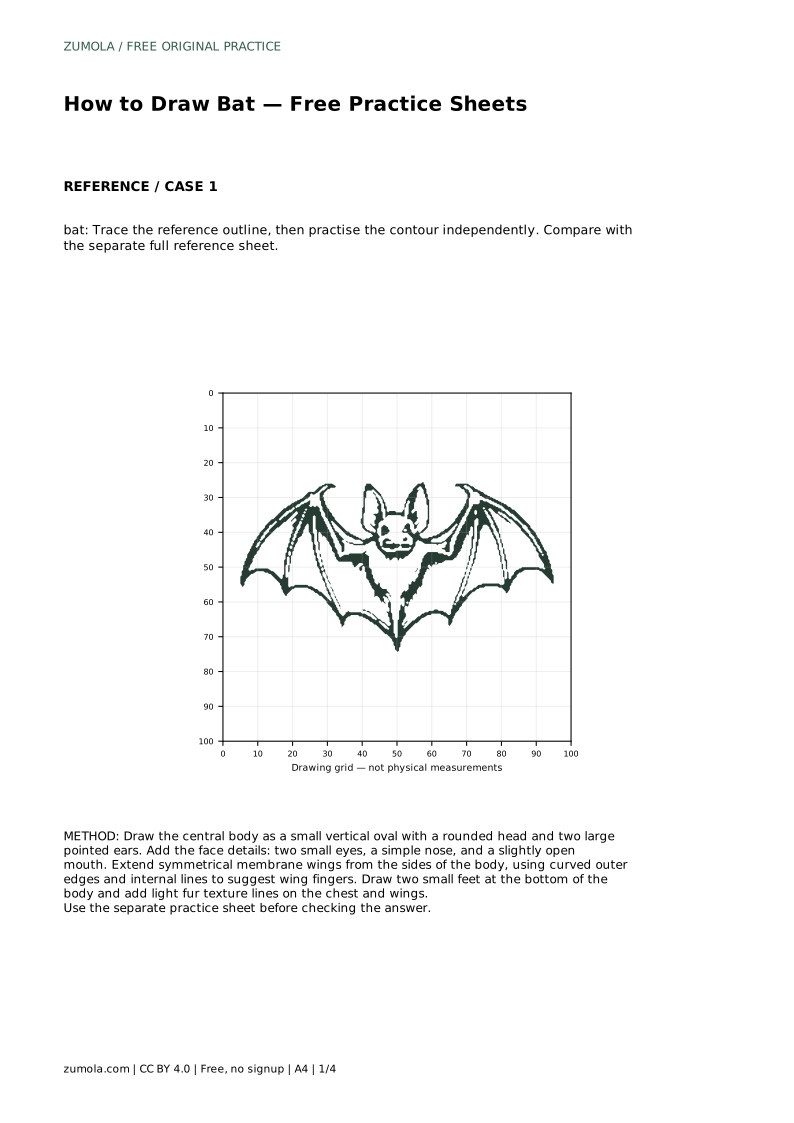
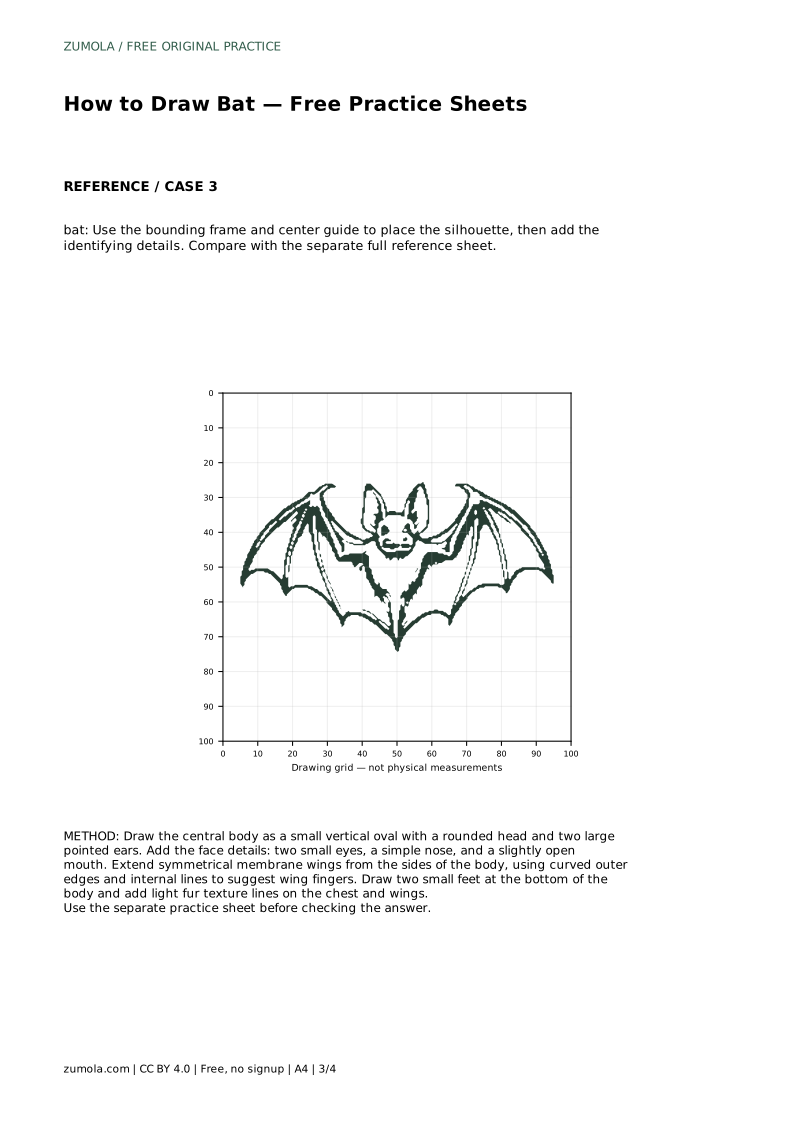
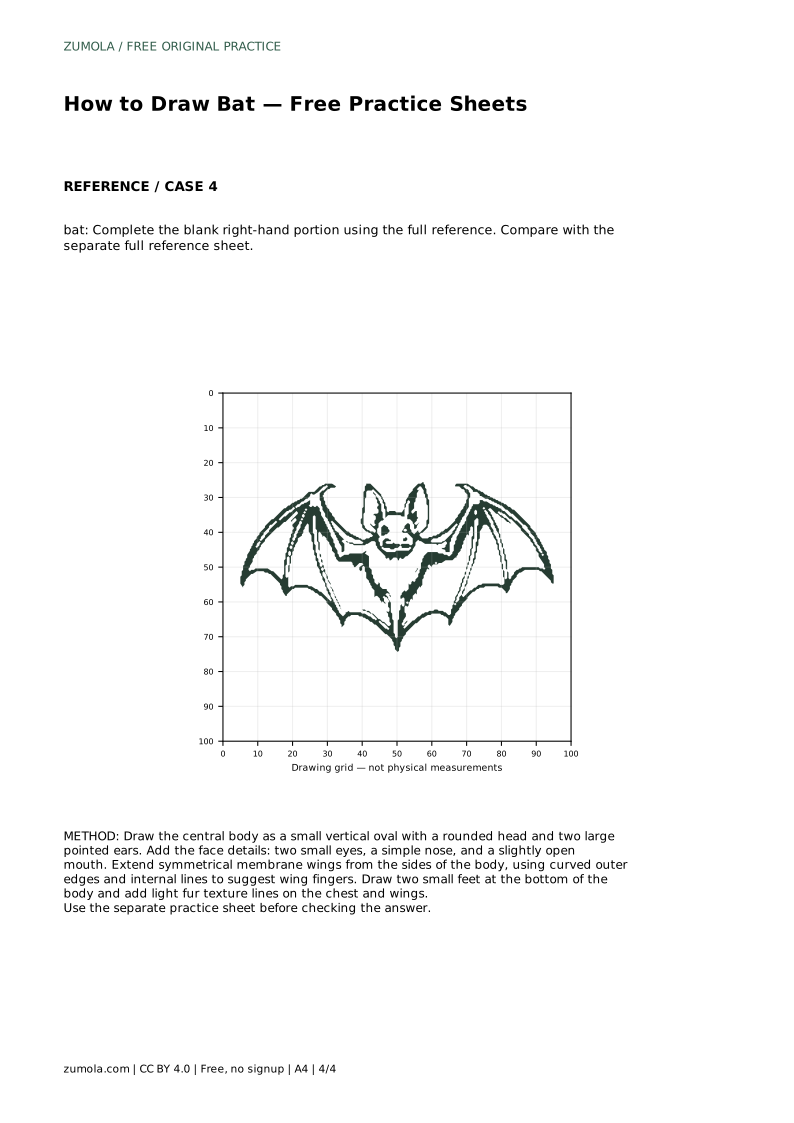
When the drawing is complete, compare it with the separate full reference sheet. Look for the membrane wings with scalloped trailing edges and radiating finger lines, the large pointed ears on a small furry head, the small furry body with visible facial features, and the two feet at the bottom. Other drawings can be correct, so assess the visible features and proportions rather than pixel-perfect matching.
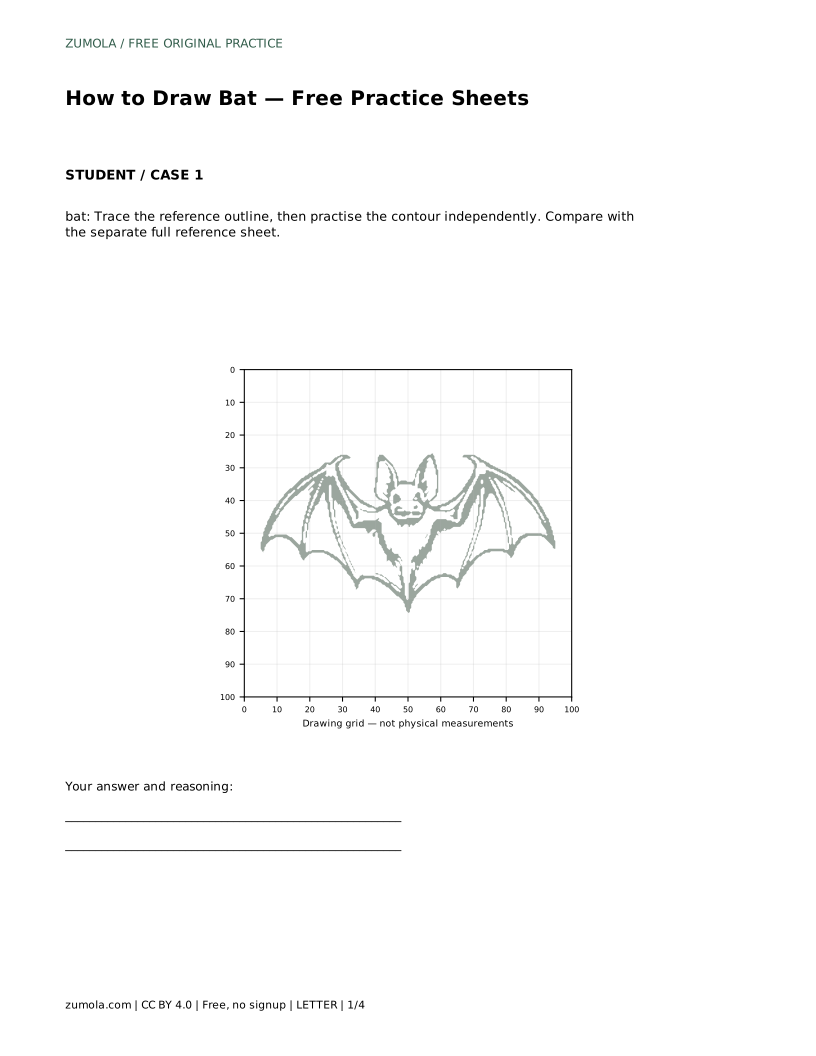
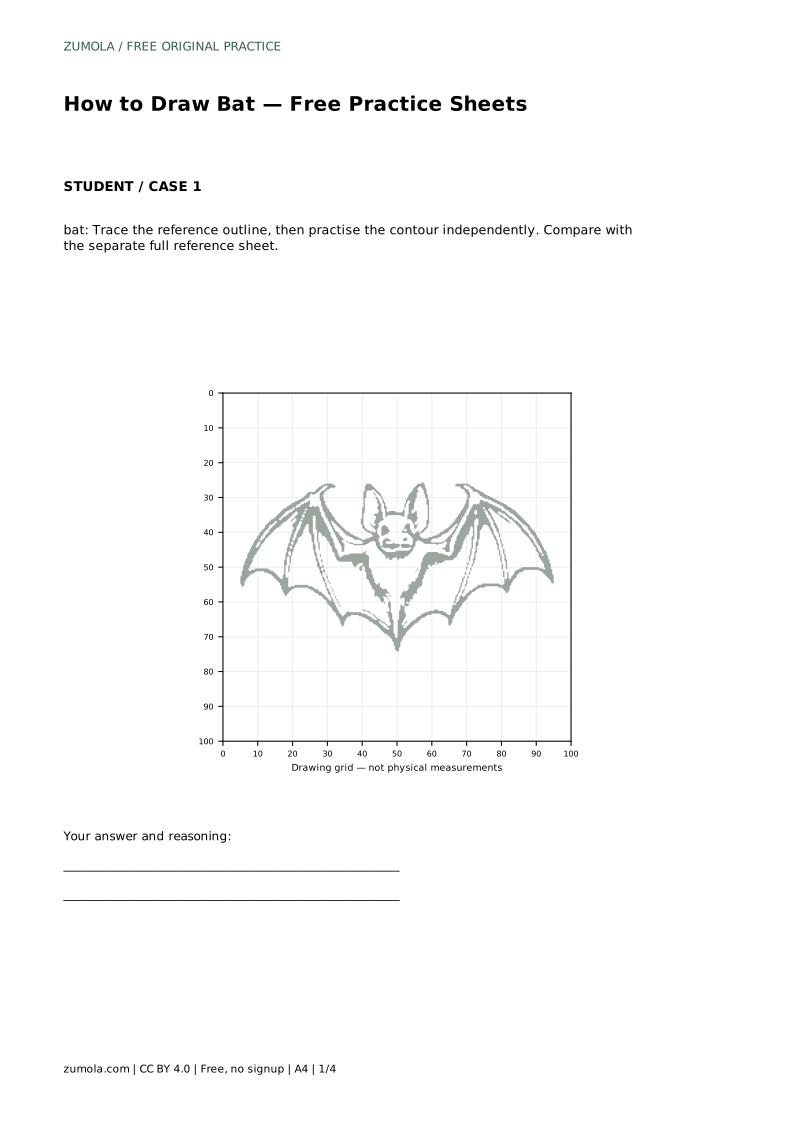
bat: Trace the reference outline, then practise the contour independently. Compare with the separate full reference sheet.
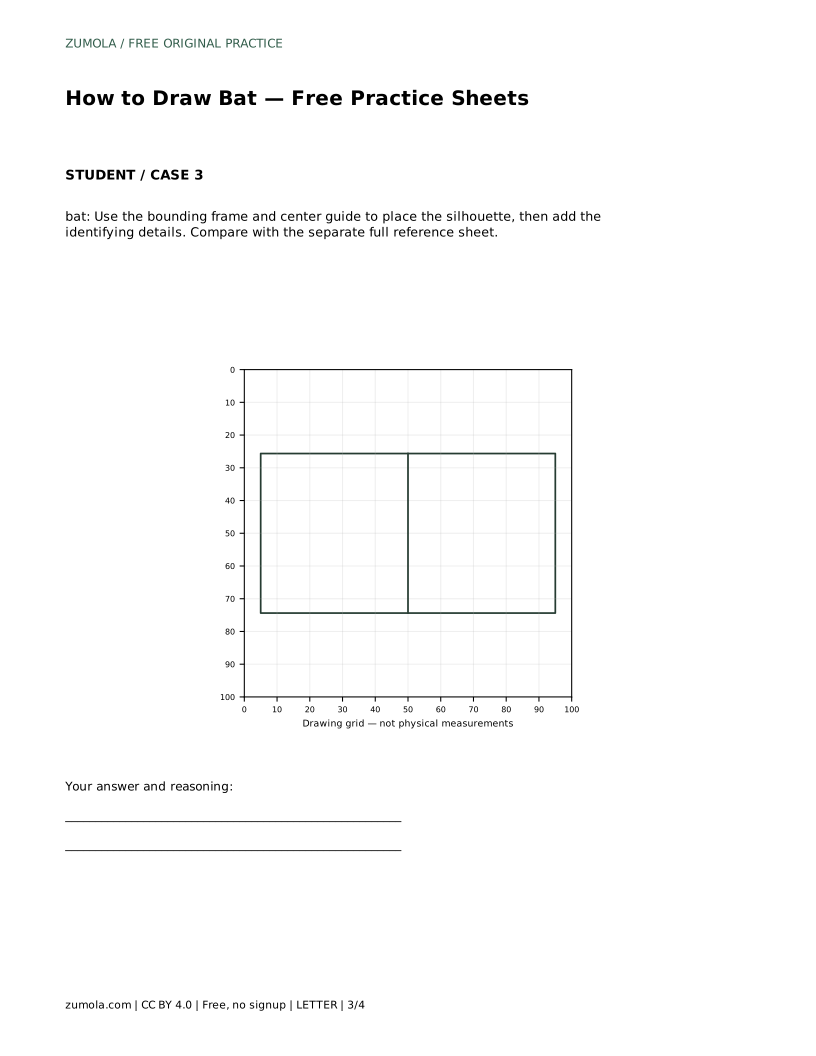
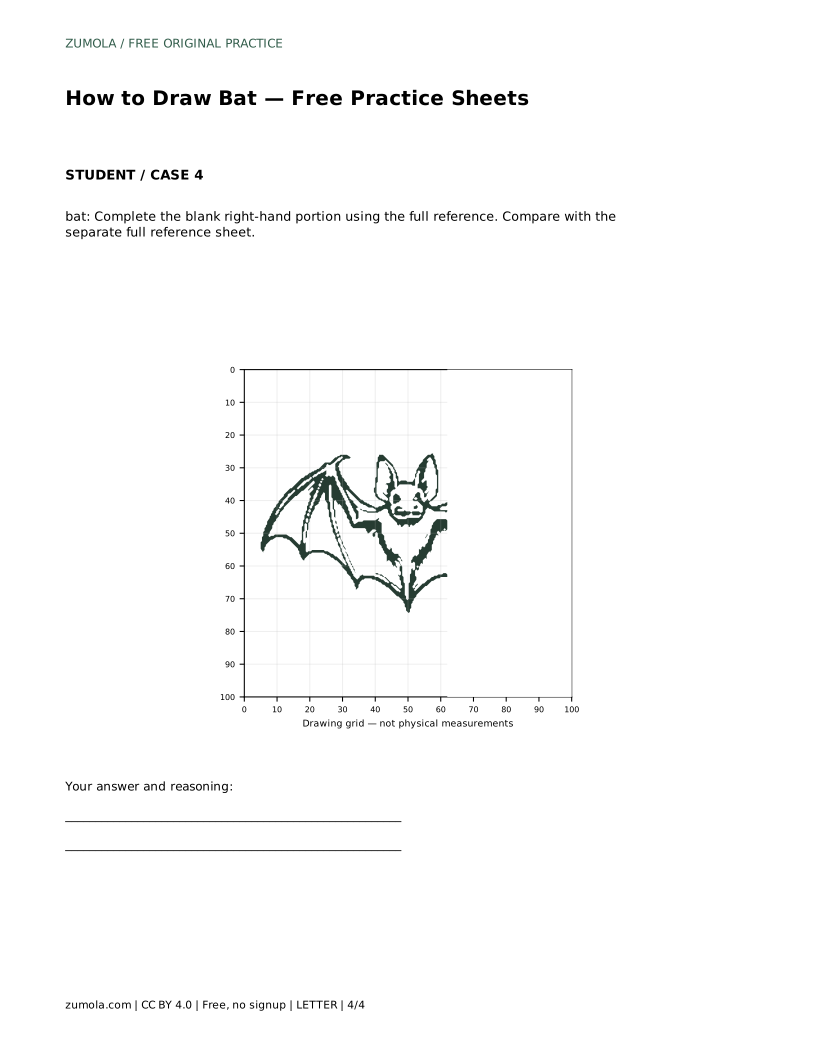
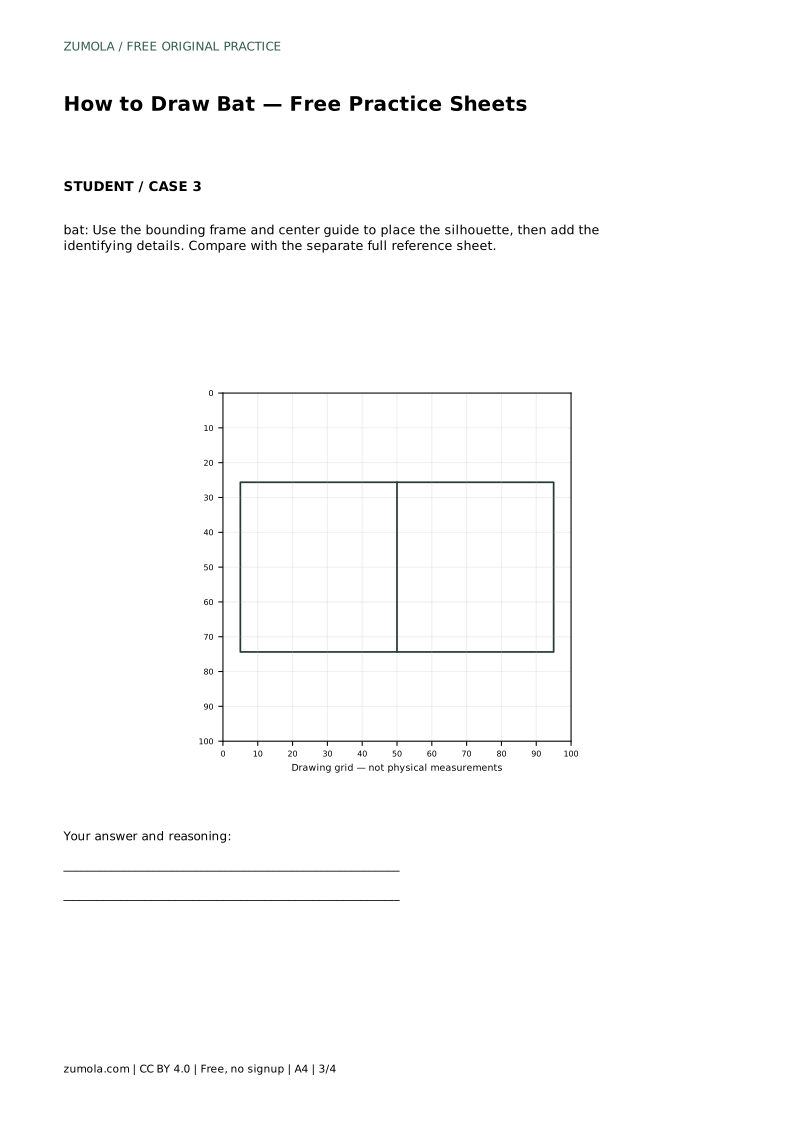
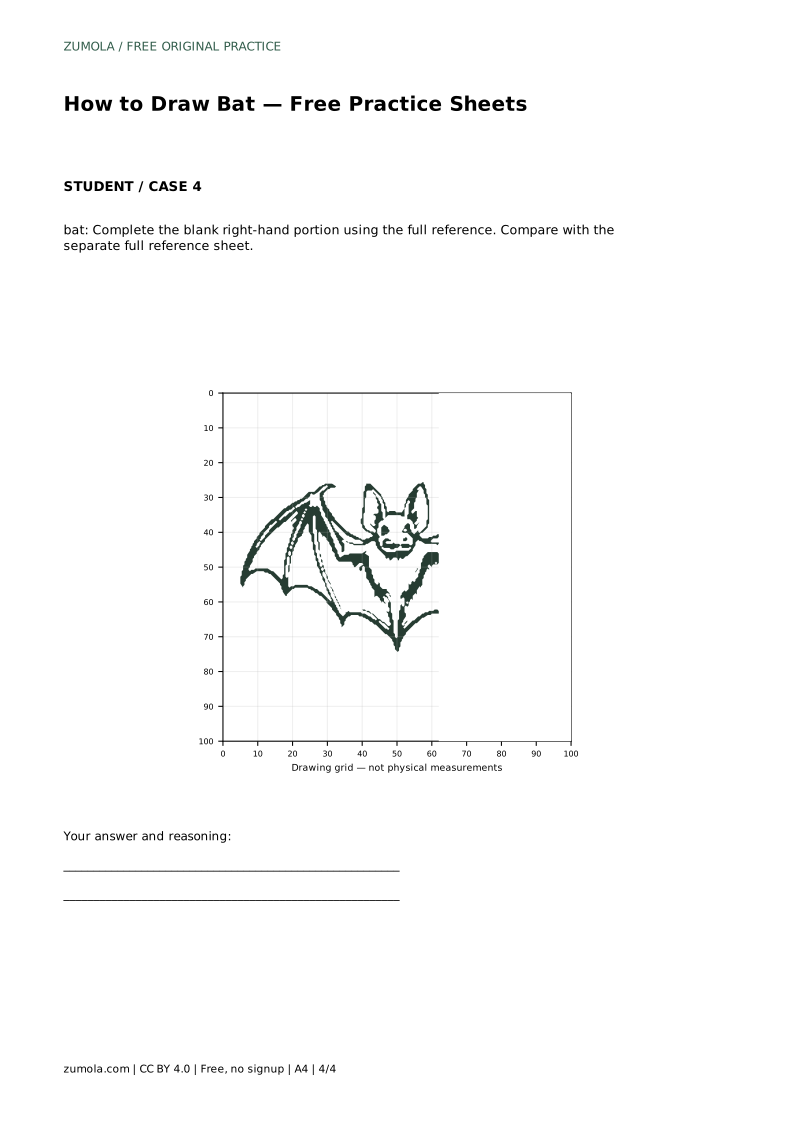
Example solution: preserve membrane wings with scalloped trailing edges and radiating finger lines, large pointed ears on a small furry head, small furry body with visible facial features and two feet at the bottom. Other drawings can be correct; assess the visible features and proportions rather than pixel-perfect matching. Draw the central body as a small vertical oval with a rounded head and two large pointed ears. Add the face details: two small eyes, a simple nose, and a slightly open mouth. Extend symmetrical membrane wings from the sides of the body, using curved outer edges and internal lines to suggest wing fingers. Draw two small feet at the bottom of the body and add light fur texture lines on the chest and wings.
No. Other drawings can be correct. Assess the visible features and proportions rather than pixel-perfect matching.
Check the membrane wings with scalloped trailing edges and radiating finger lines, the large pointed ears, the small furry body with facial features, and the two feet.
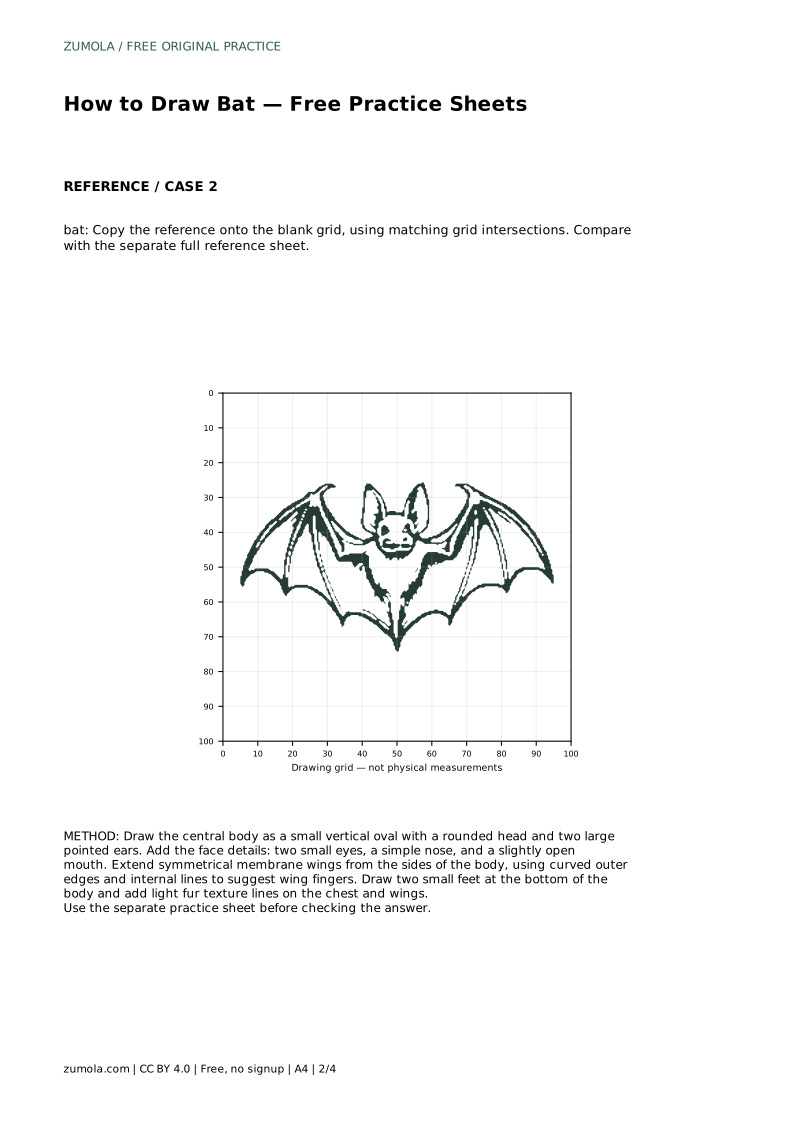
Yes. Copy the reference onto the blank grid using matching grid intersections, then compare with the separate full reference sheet.
All drawing practice · Free coordinate paper
Original resources · CC BY 4.0 · Free for personal and classroom use with attribution.