Reference diagrams
LETTER · Download PDF
A4 · Download PDF
Free original resources
Learn to draw a balance scale by building the central column, horizontal beam, triangular pan supports and bowl-shaped pans, then check proportions with a rubric.
Four original cases, with reference diagrams, practice sheets and worked answers. Everything is free; no signup required.
LETTER · Download PDF
A4 · Download PDF
LETTER · Download PDF
A4 · Download PDF
LETTER · Download PDF
A4 · Download PDF
Use A4 or US Letter to match your printer. Use the stated values and conditions to solve each exercise; diagrams are not physical measuring rulers.
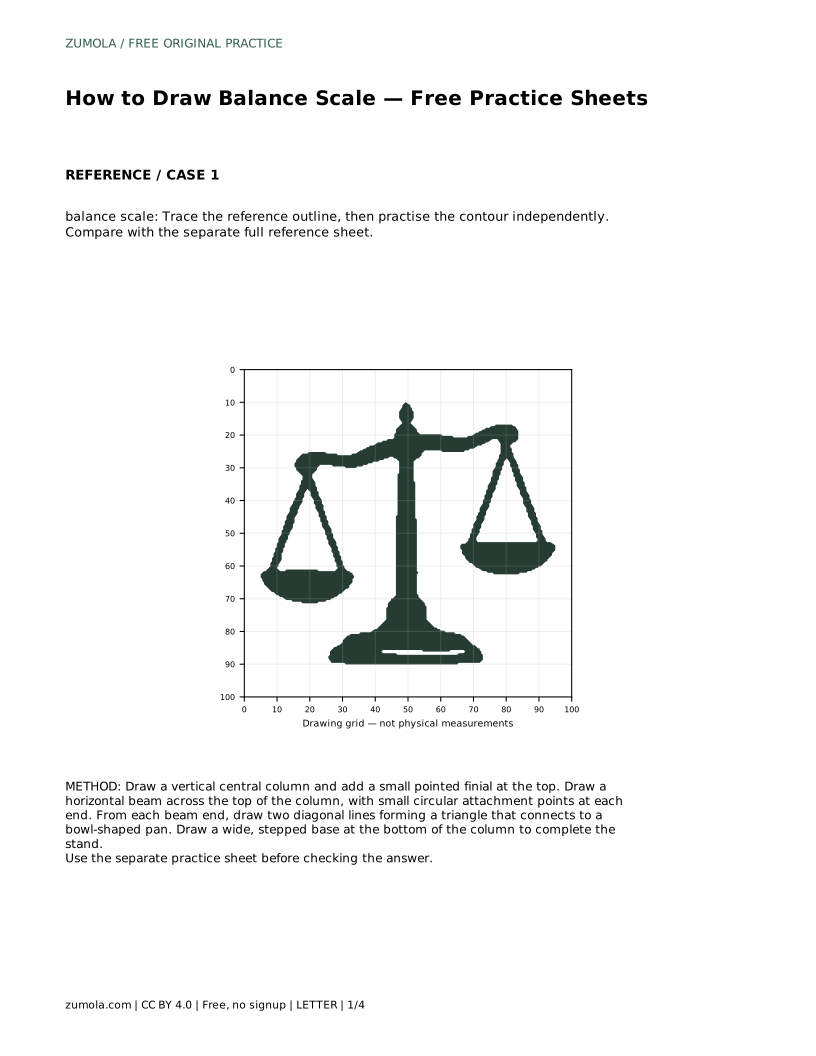
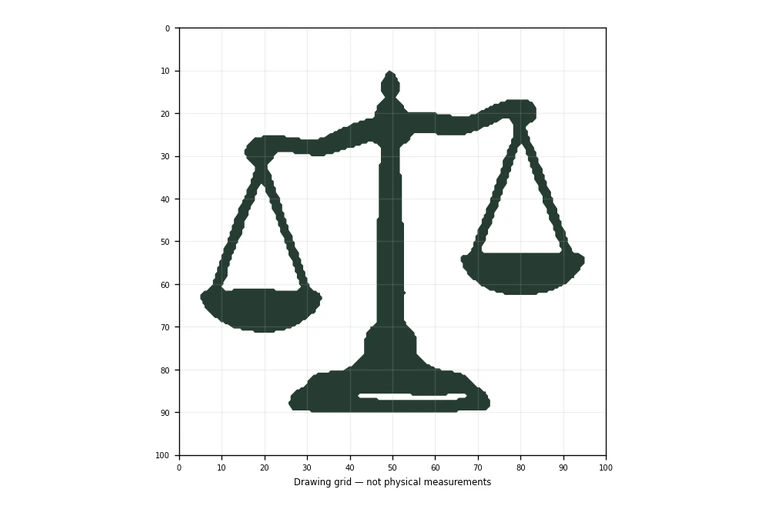
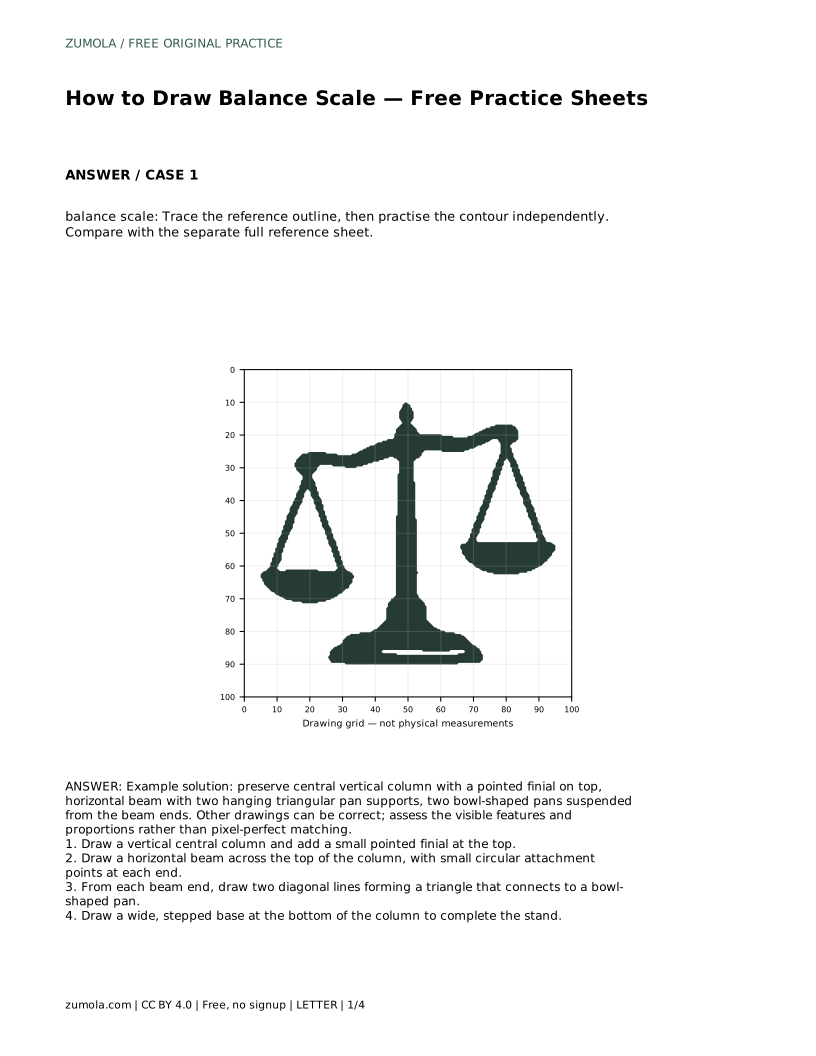
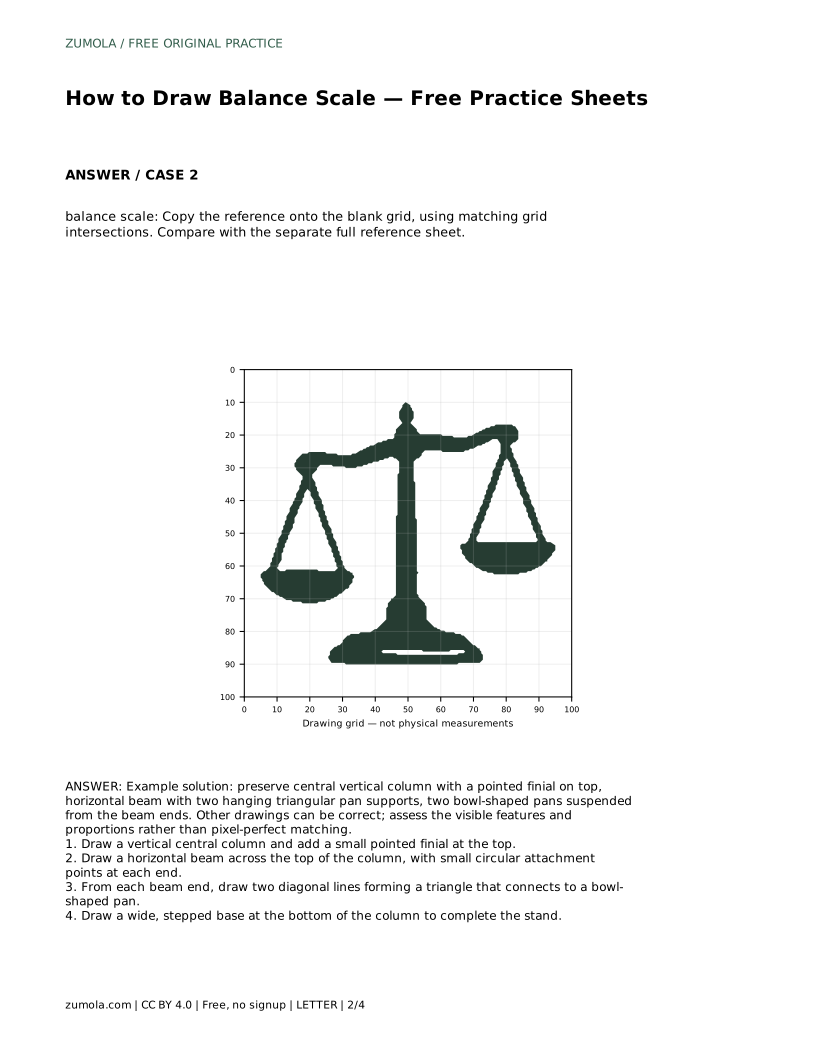
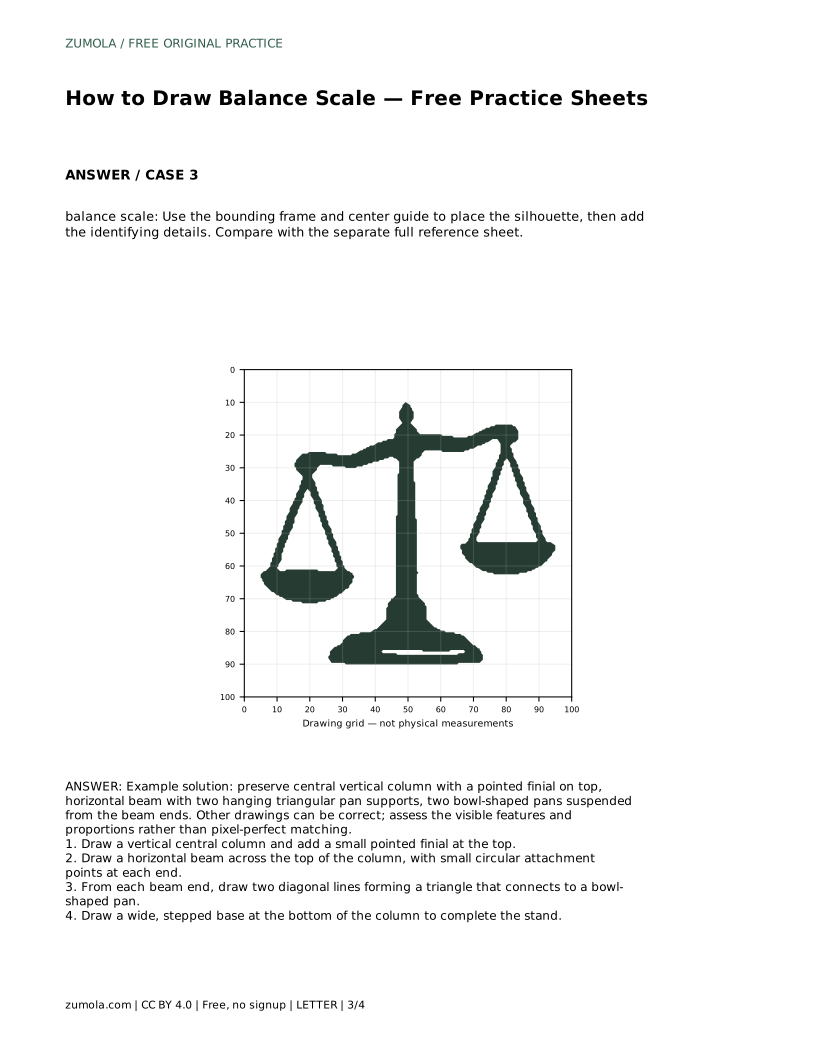
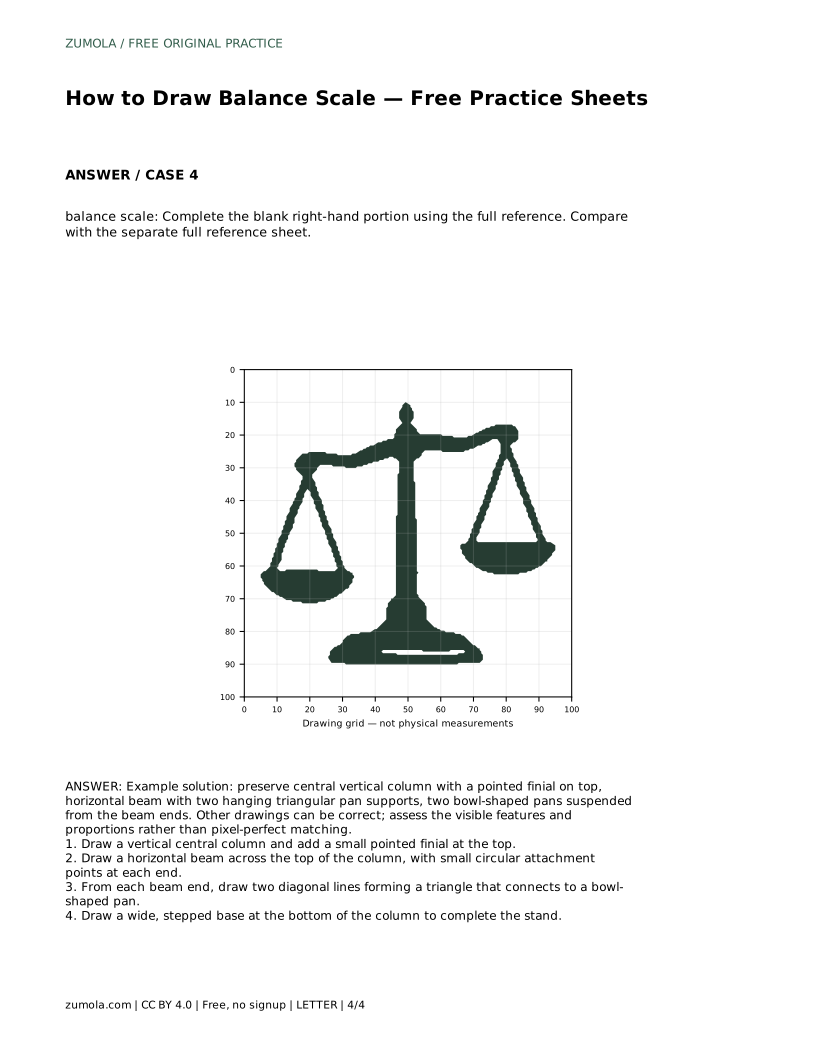
A balance scale is a satisfying drawing subject because its structure is easy to read: one upright column, one horizontal beam, and two hanging pans. This page explains how to build that structure in a sensible order, from the finial at the top down to the stepped base. You will also find guidance for tracing, grid copying, silhouette placement and completing a partially drawn version. Because drawings can be correct in different ways, use the rubric to judge visible features and proportions rather than expecting an exact match.
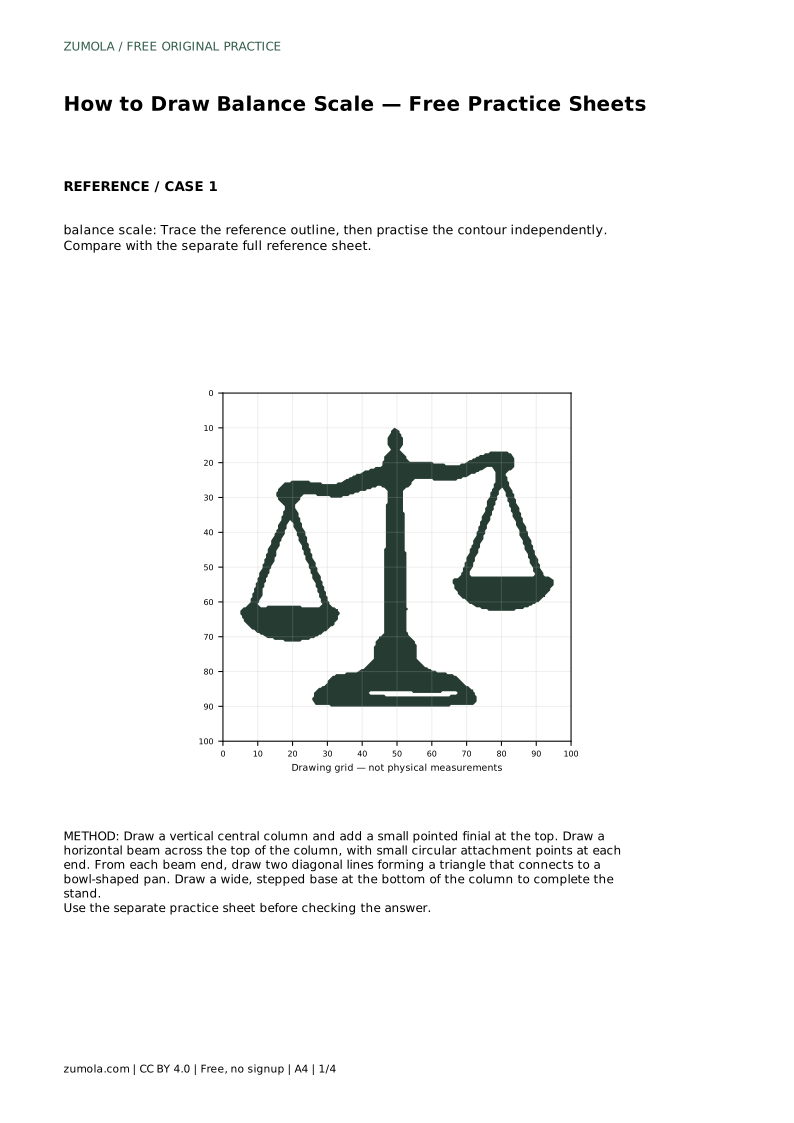
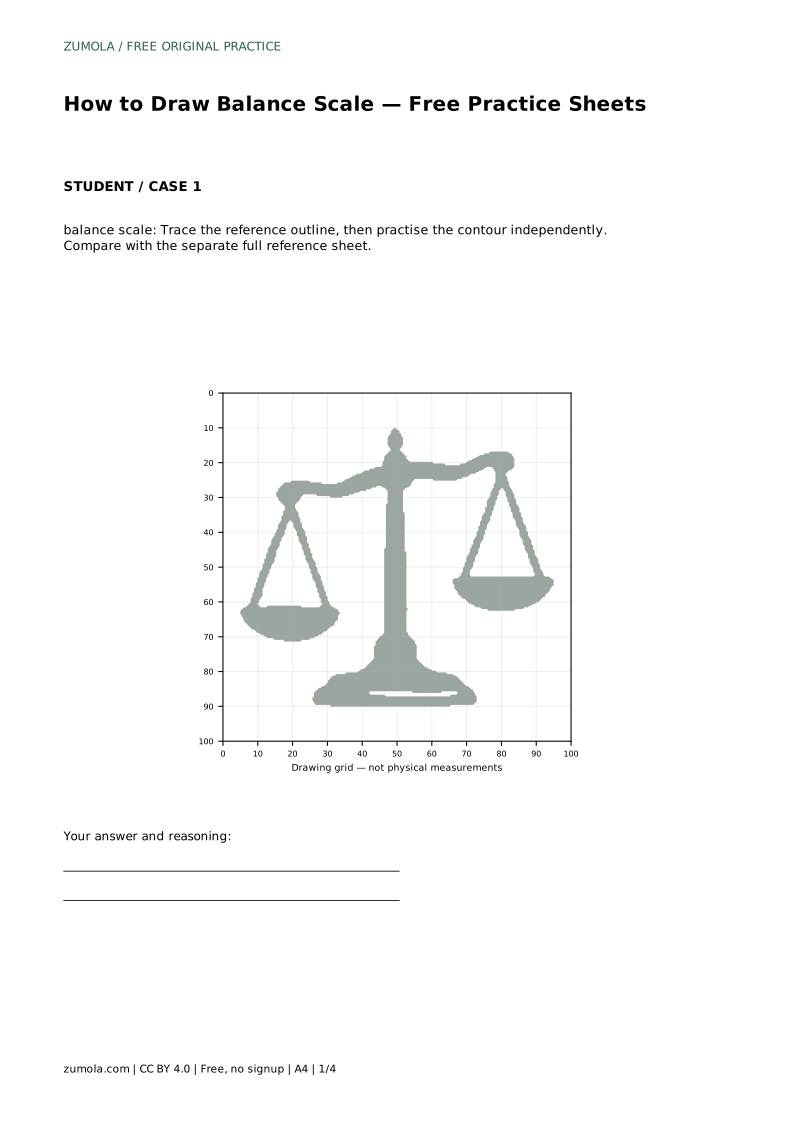
Start with the central vertical column. Keep it upright and place it near the middle of your page so the two pans have room on either side. Add a small pointed finial at the top; this gives the scale a clear crown and helps you judge whether the column looks too short or too tall. Next, draw a horizontal beam across the top of the column. The beam should look level in a neutral drawing, with small circular attachment points at each end where the pans will hang.
From each beam end, draw two diagonal lines that meet below the beam to form a triangle. These triangular supports connect the beam to a bowl-shaped pan. Keep the two triangles similar in size and angle so the scale reads as symmetrical. Finish with a wide, stepped base at the bottom of the column. The base should feel stable and broad enough to support the upright column visually.
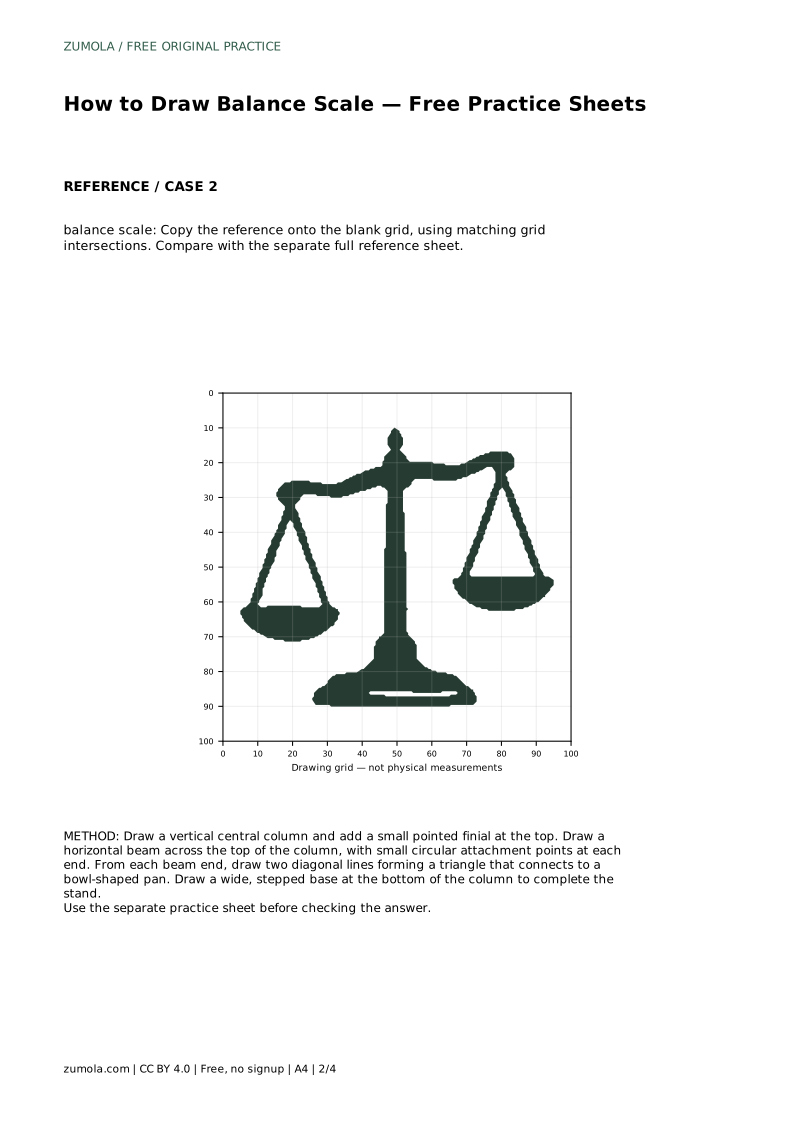
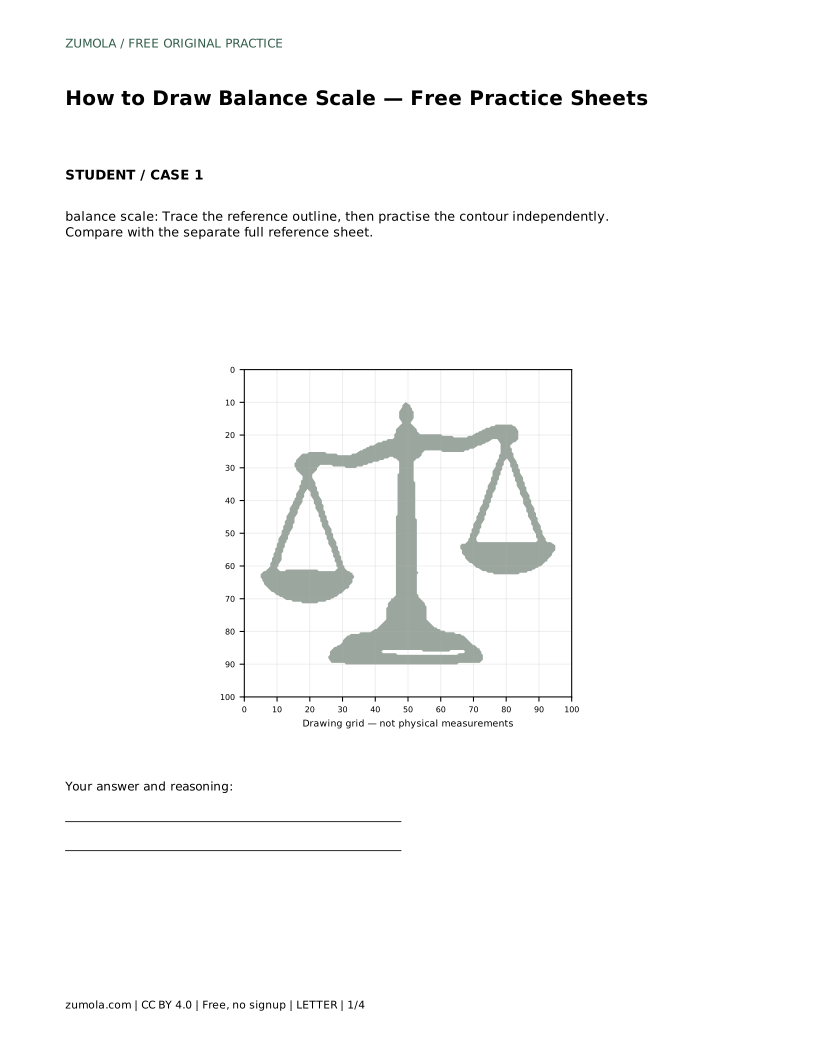
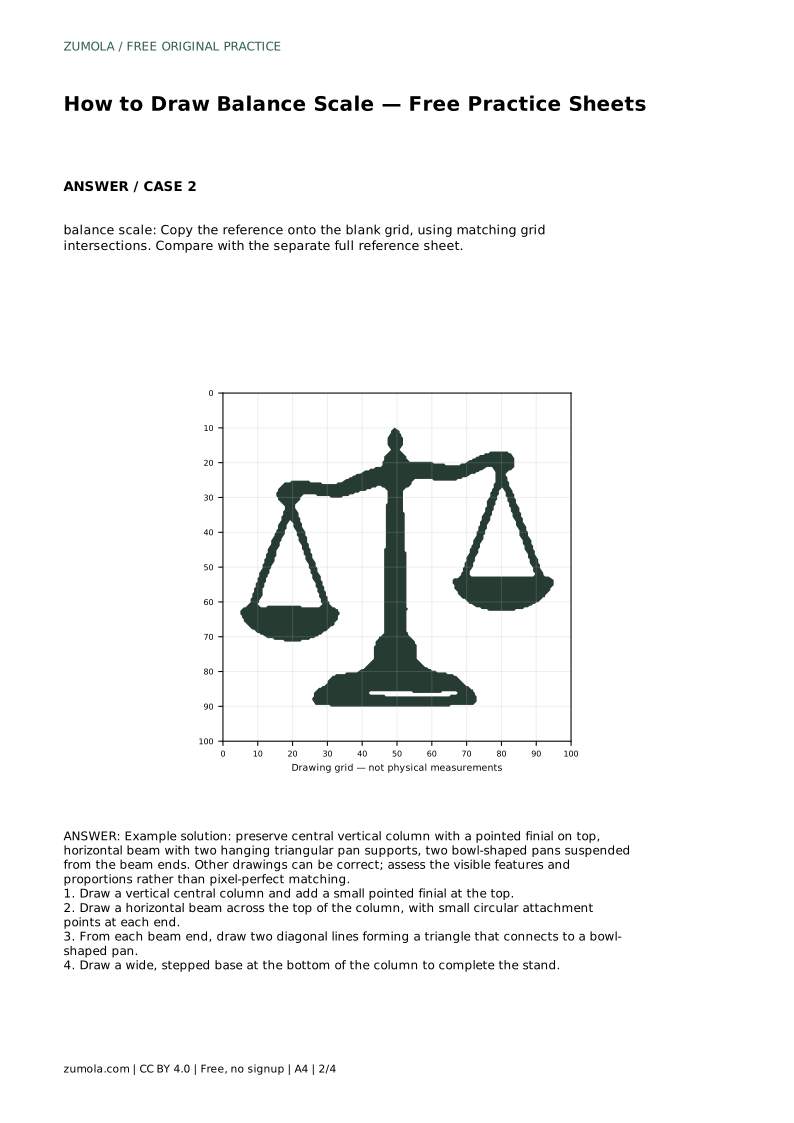
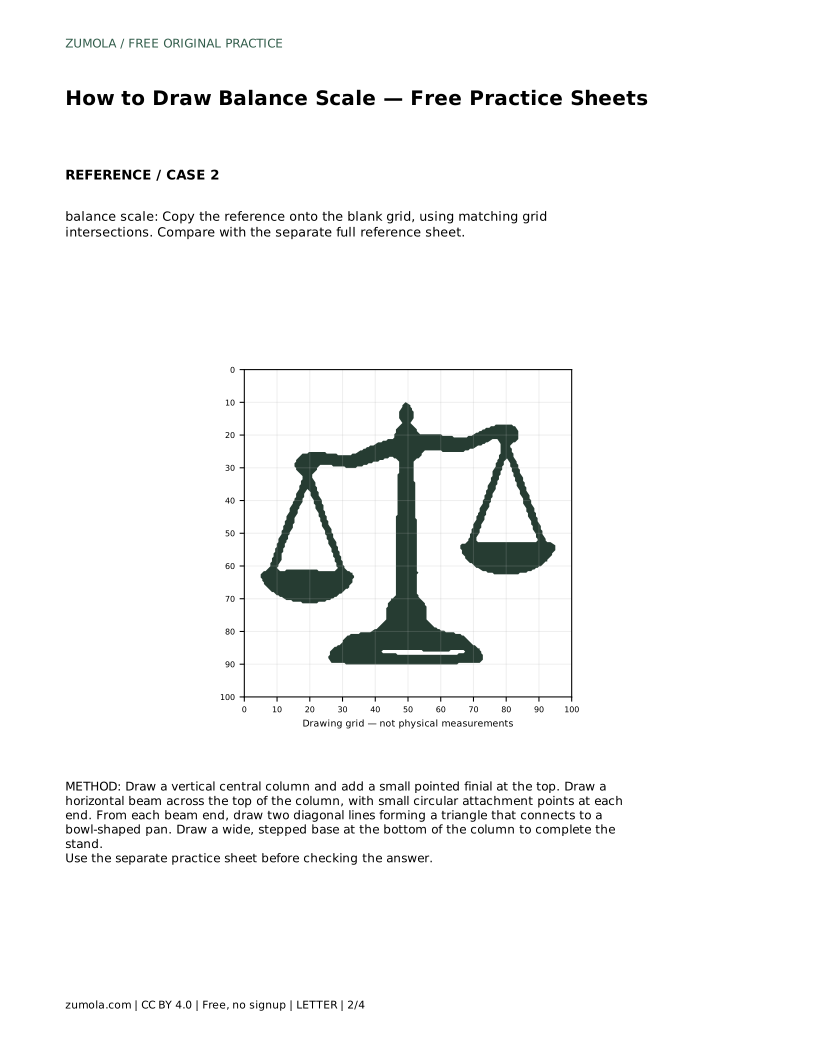
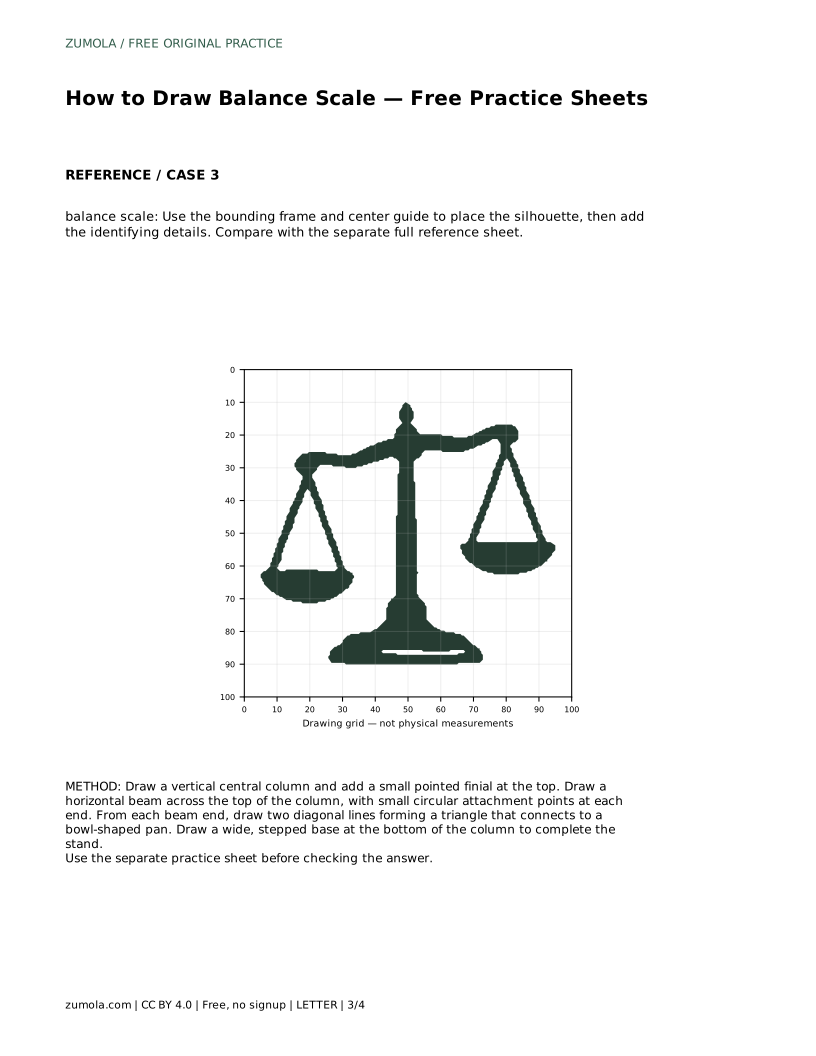
Tracing the reference outline helps you learn the order of the parts, but tracing alone can hide whether you understand the structure. After one traced pass, cover the reference and draw the contour independently, then compare your result with the separate full reference sheet. On a blank grid, copy the reference by matching grid intersections; this trains you to place the beam, column and pans at consistent relative positions rather than guessing.
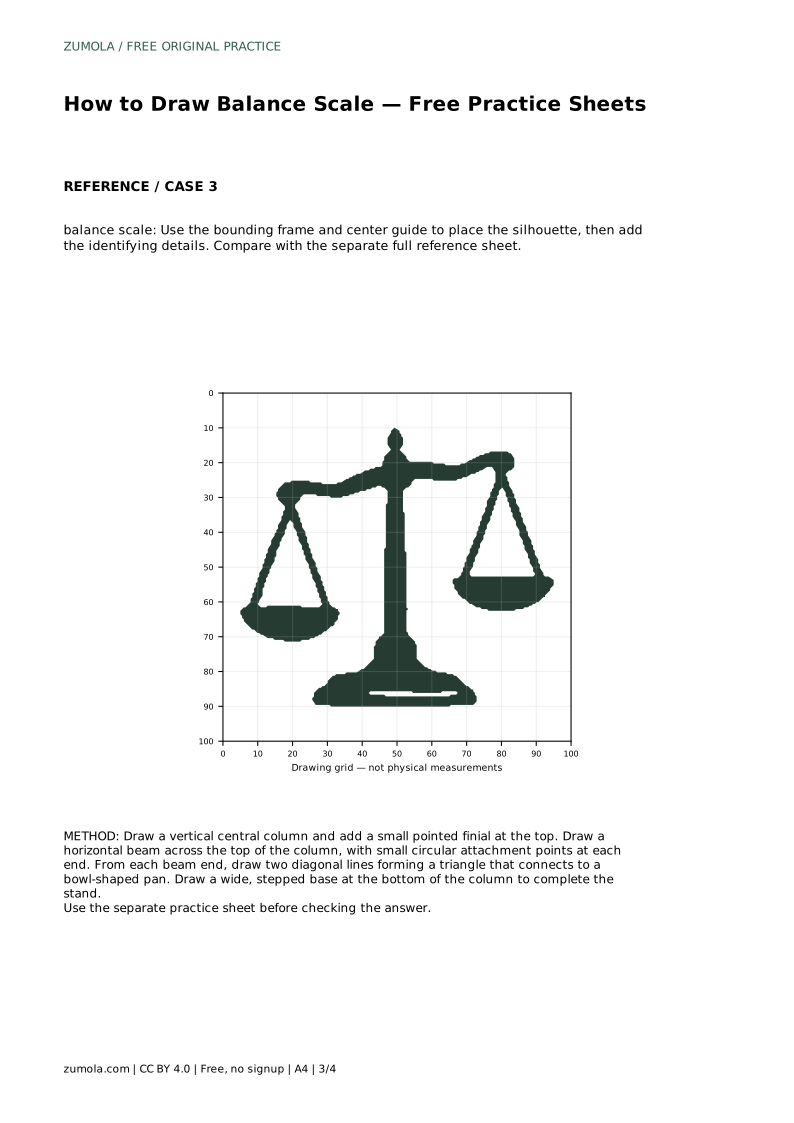
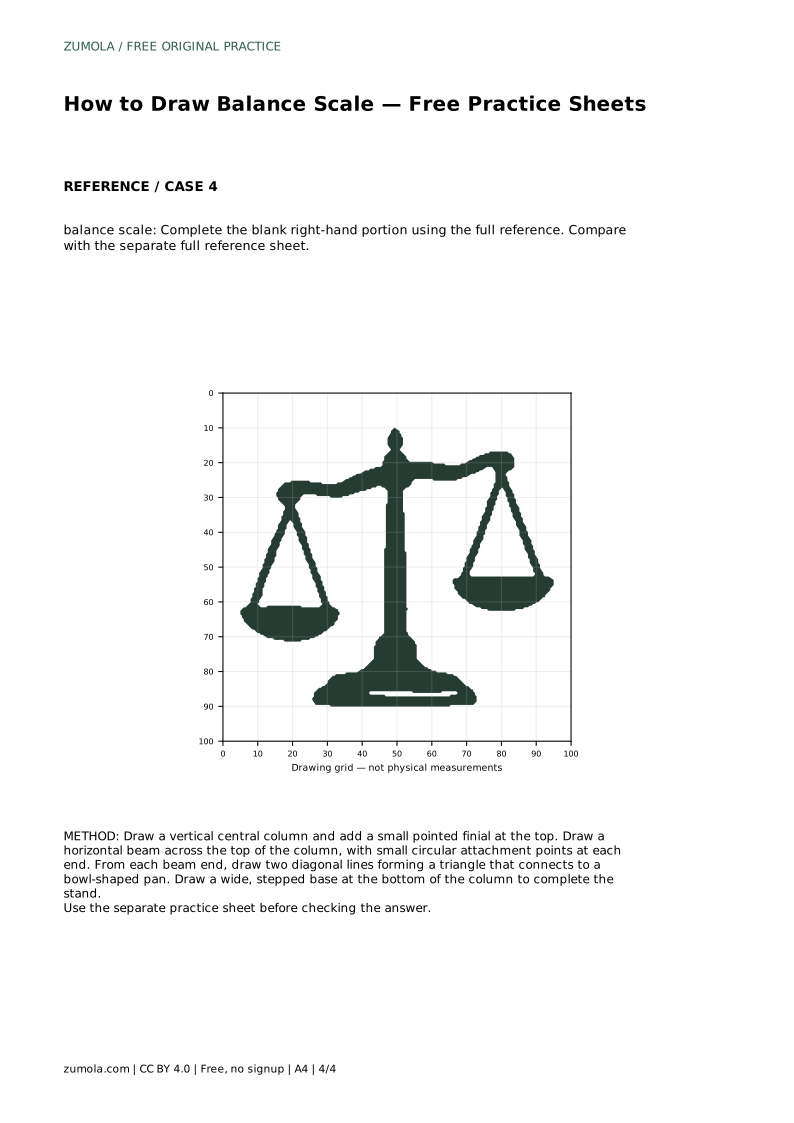
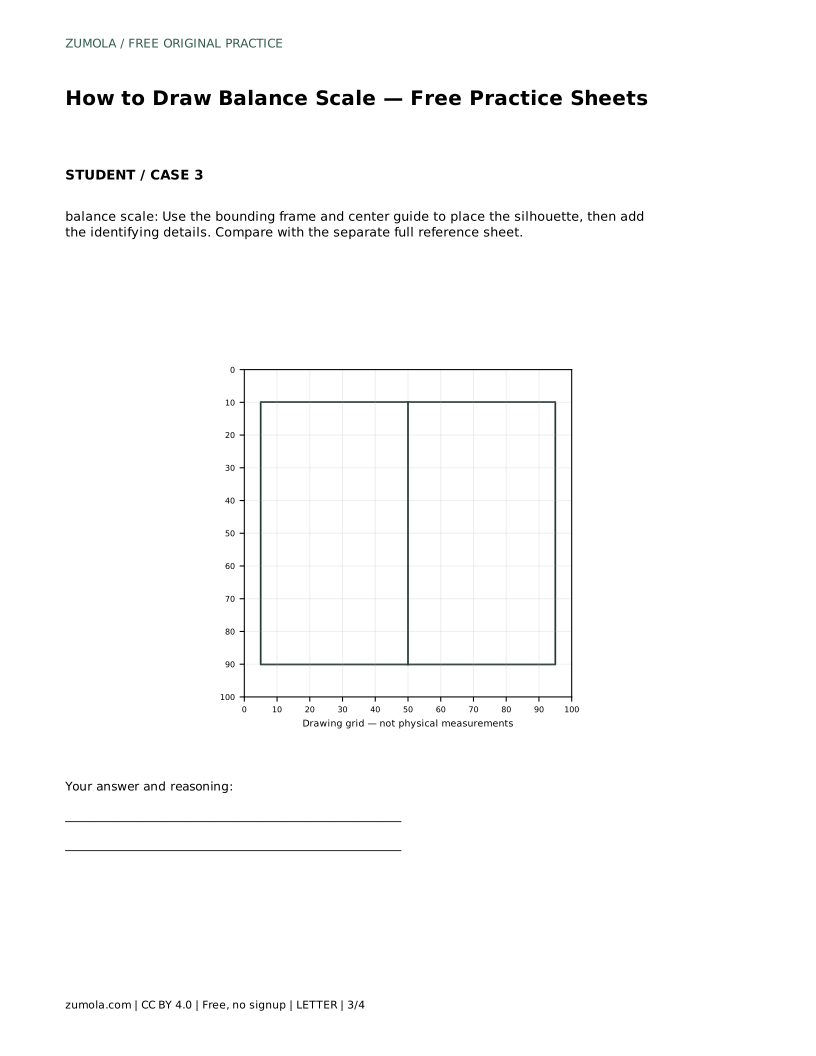
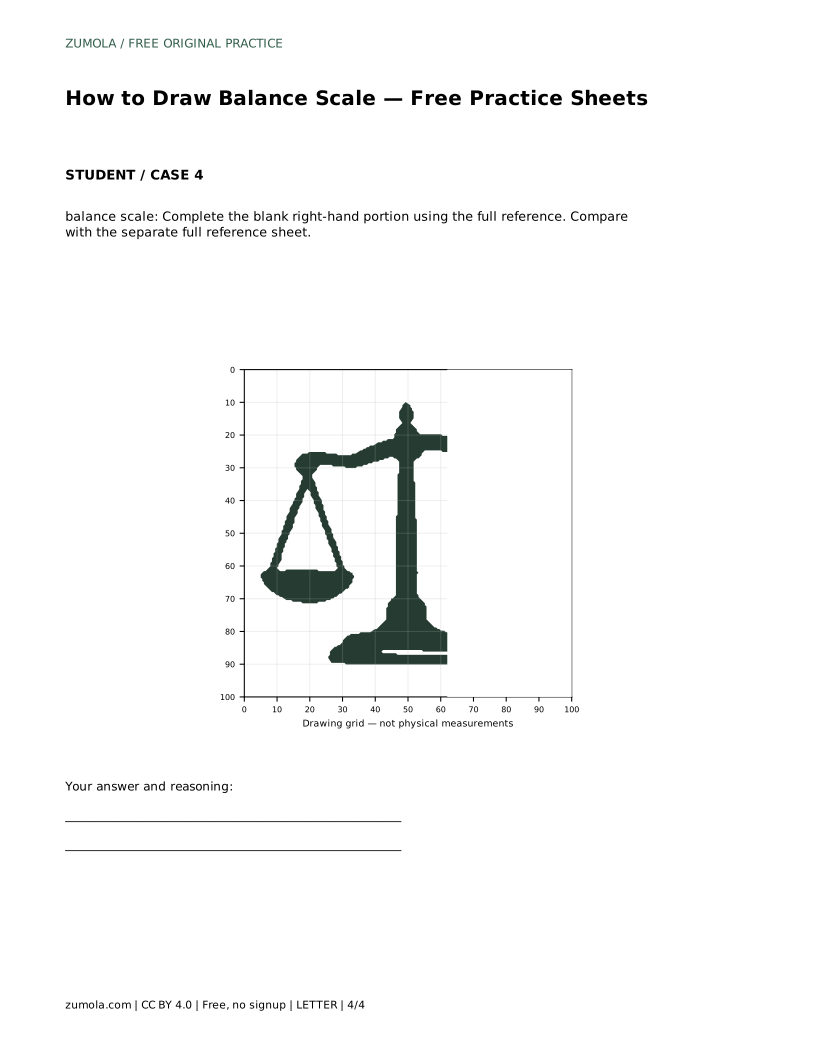
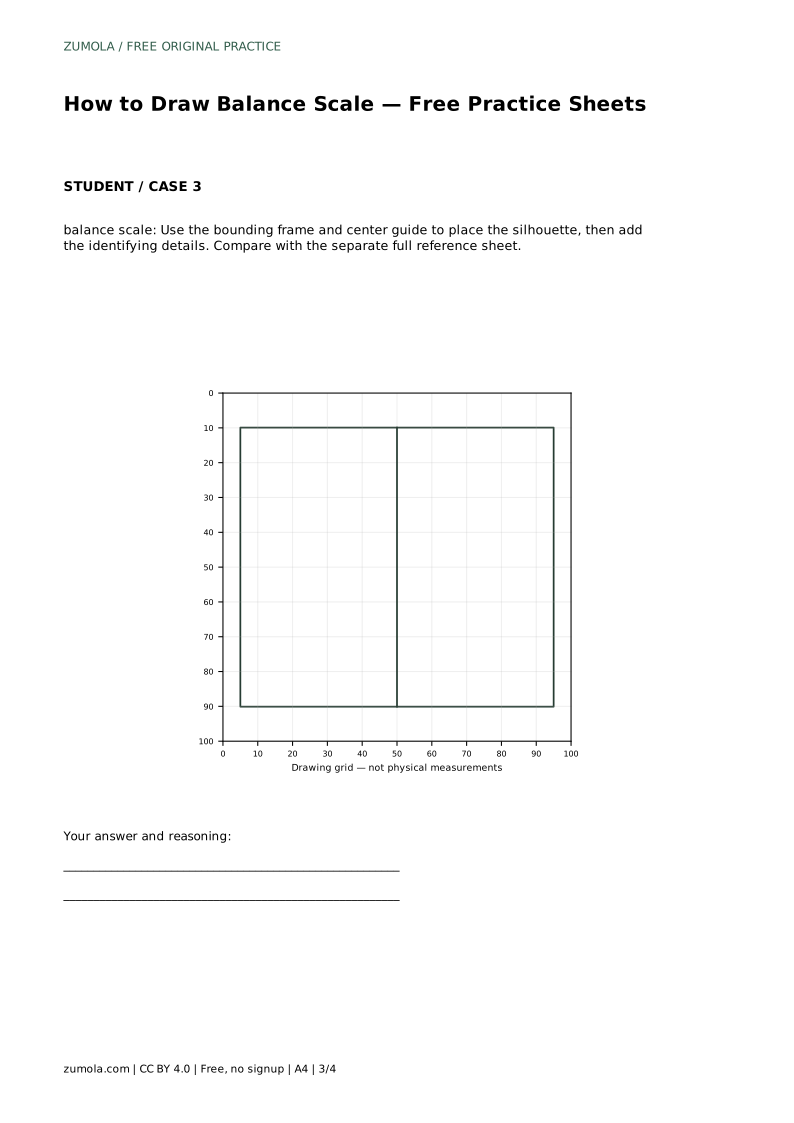
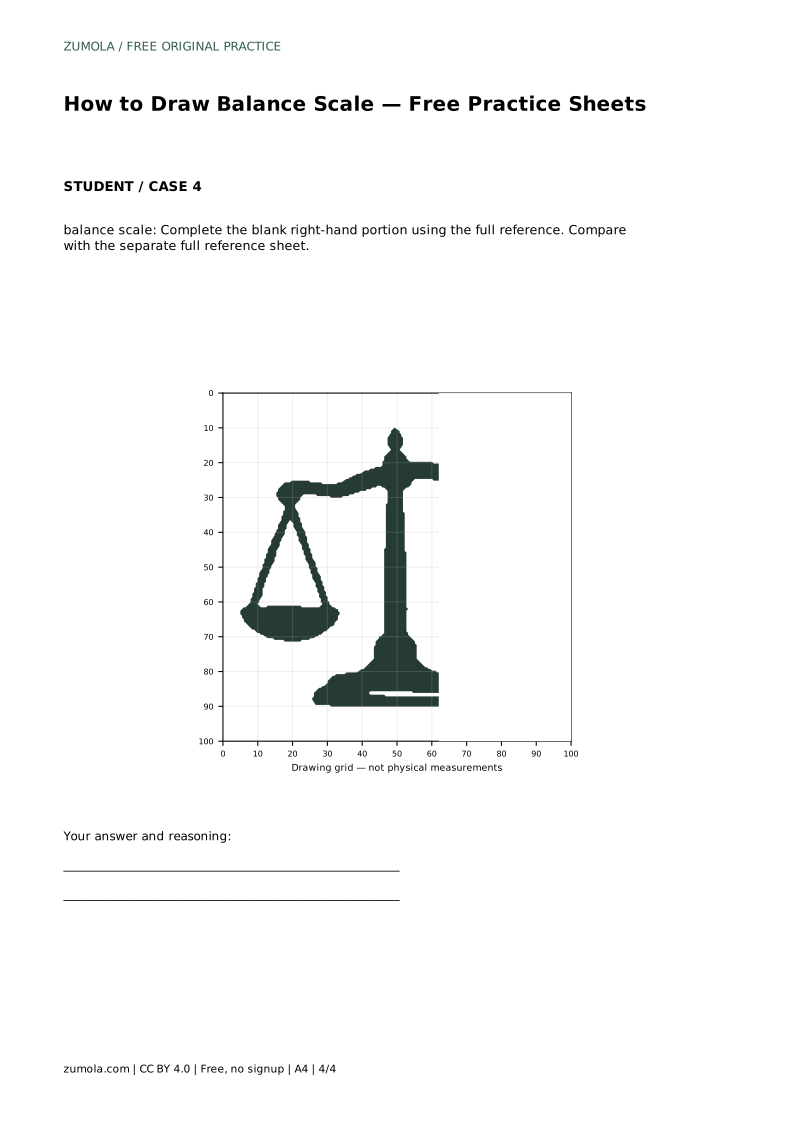
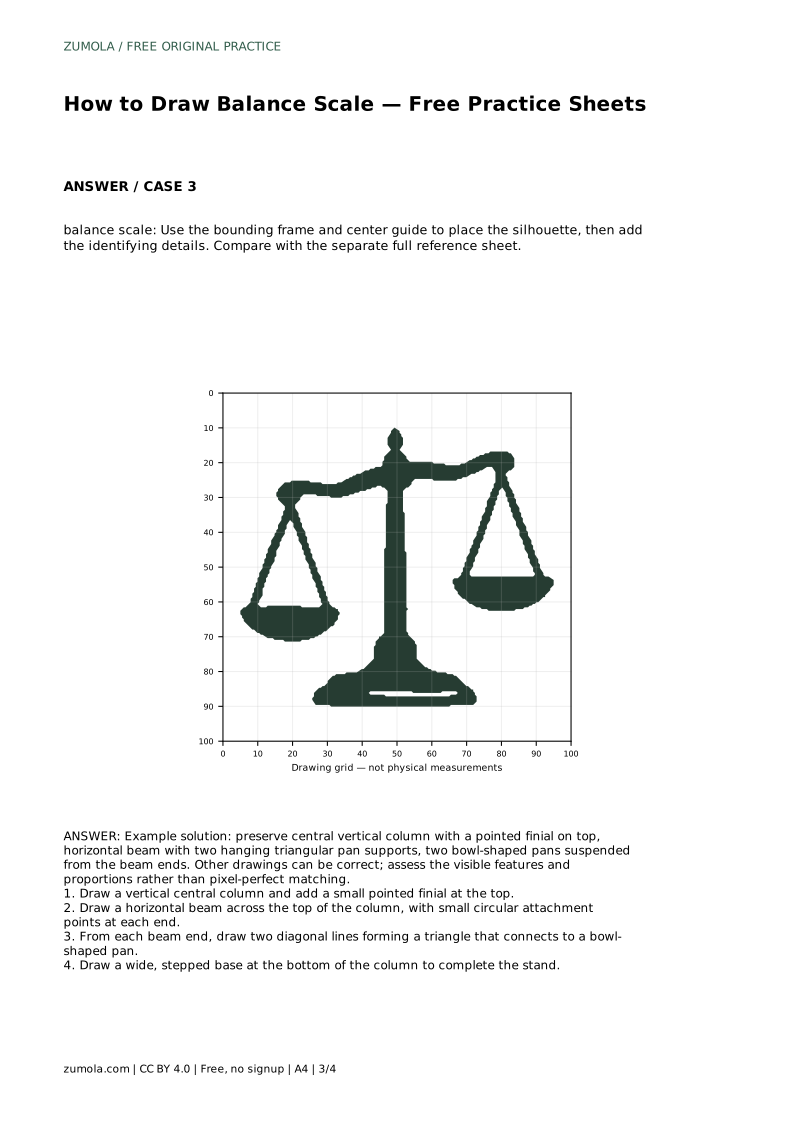
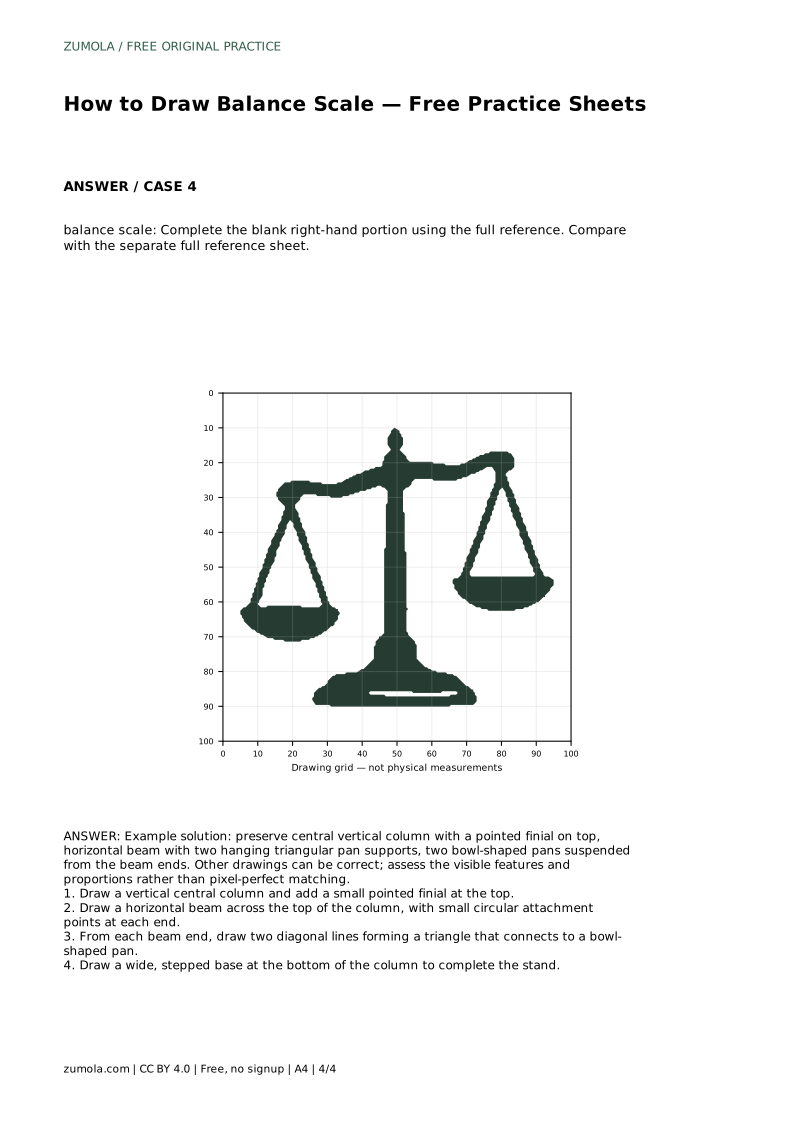
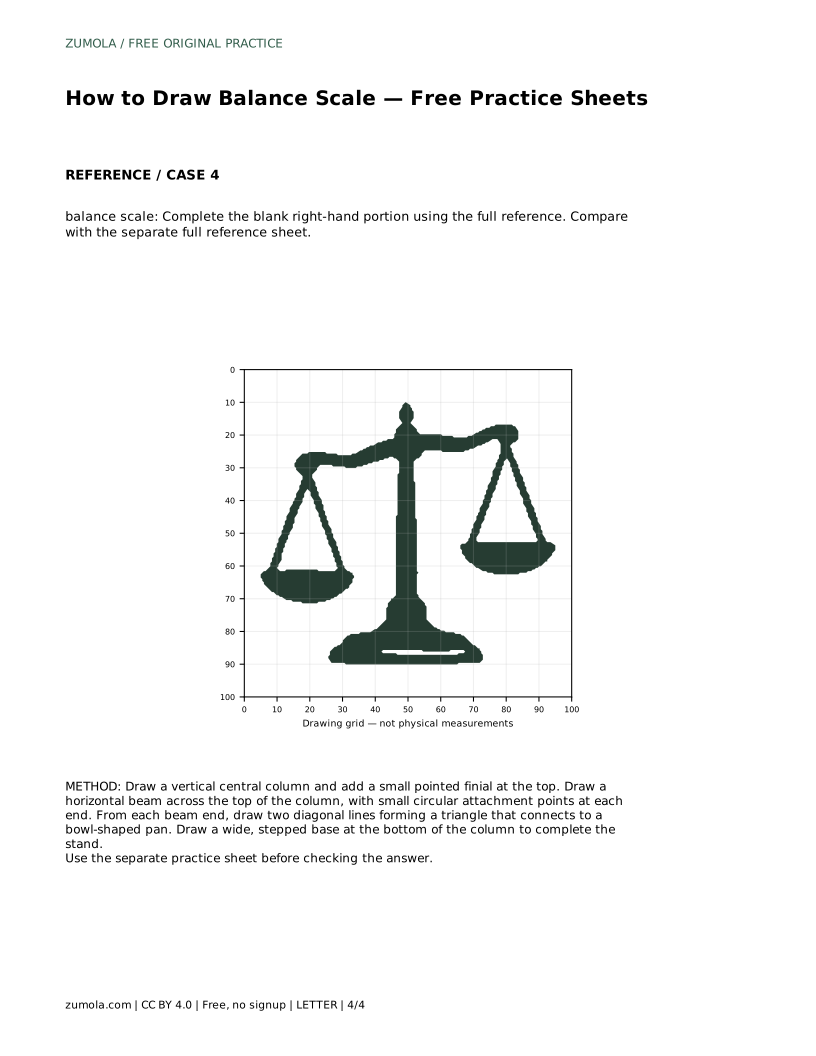
When using a bounding frame and center guide, place the overall silhouette first: the column height, beam width and pan positions. Add the identifying details afterward, such as the finial, attachment points and stepped base. For a partially completed sheet with a blank right-hand portion, use the full reference to infer the missing side. Check that the new pan support mirrors the existing one in angle and length, and that both pans sit at a similar height.
A balance scale drawing reads clearly when the beam is not much wider than the page allows, the column is tall enough to separate the beam from the base, and the pans hang at matching heights. Look at the negative space between the column and each pan support; those gaps should be roughly equal. If one triangle is steeper or longer, adjust it before adding shading or extra detail.
Remember that this is a drawing of a scale, not a claim about clinical anatomy or a measured instrument. The goal is a recognizable, well-proportioned object. Small differences in bowl curve or finial shape are acceptable. Judge the drawing by whether the central column, horizontal beam, triangular supports and bowl-shaped pans are all visible and sensibly related.
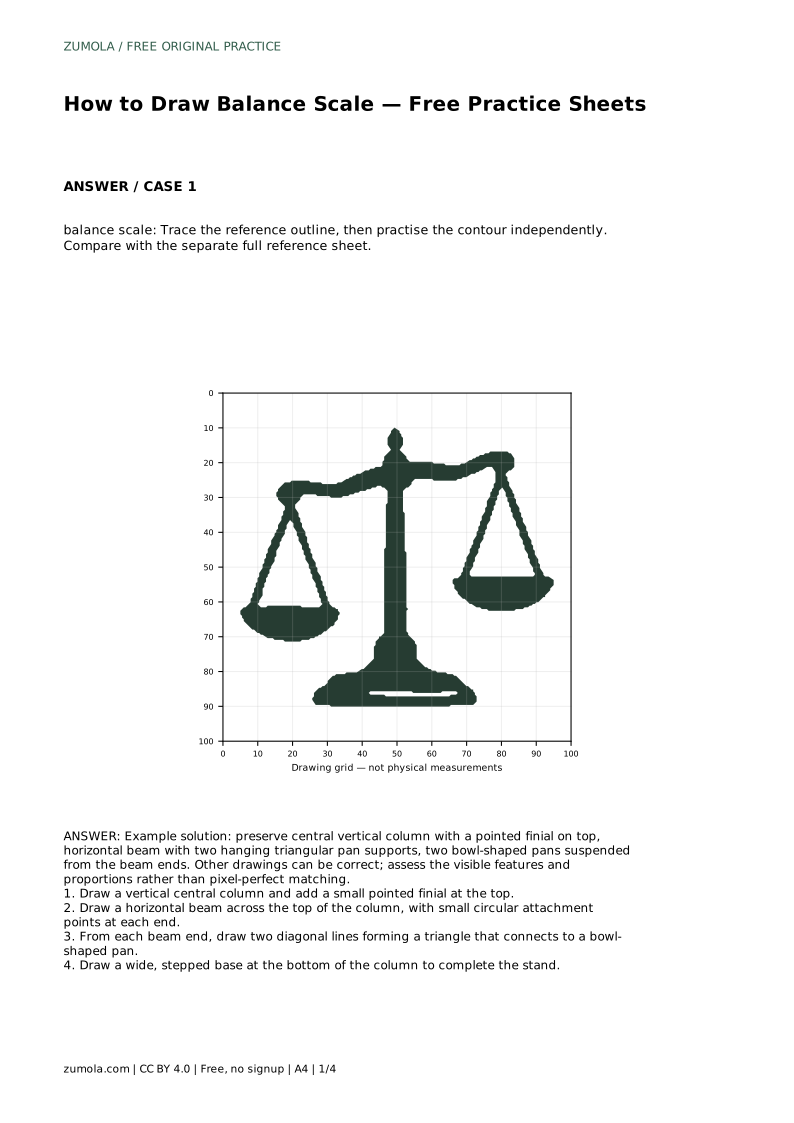
Prompt: balance scale: Trace the reference outline, then practise the contour independently. Compare with the separate full reference sheet. Example solution: preserve central vertical column with a pointed finial on top, horizontal beam with two hanging triangular pan supports, two bowl-shaped pans suspended from the beam ends. Other drawings can be correct; assess the visible features and proportions rather than pixel-perfect matching.
Use this example as a checklist, not a target for exact copying. If your finial is rounder or your pans are shallower, the drawing can still succeed provided the main structure is clear and balanced.
balance scale: Trace the reference outline, then practise the contour independently. Compare with the separate full reference sheet.
Example solution: preserve central vertical column with a pointed finial on top, horizontal beam with two hanging triangular pan supports, two bowl-shaped pans suspended from the beam ends. Other drawings can be correct; assess the visible features and proportions rather than pixel-perfect matching. Draw a vertical central column and add a small pointed finial at the top. Draw a horizontal beam across the top of the column, with small circular attachment points at each end. From each beam end, draw two diagonal lines forming a triangle that connects to a bowl-shaped pan. Draw a wide, stepped base at the bottom of the column to complete the stand.
In a neutral drawing, matching heights help the scale look balanced. Small differences are acceptable if the overall structure remains clear.
Yes. Use the center guide idea by marking a light vertical midline and a horizontal beam line, then build the pans on either side.
Check the column's uprightness, the beam's levelness and whether the two pan supports are similar in angle and length.
All drawing practice · Free coordinate paper
Original resources · CC BY 4.0 · Free for personal and classroom use with attribution.