Reference diagrams
LETTER · Download PDF
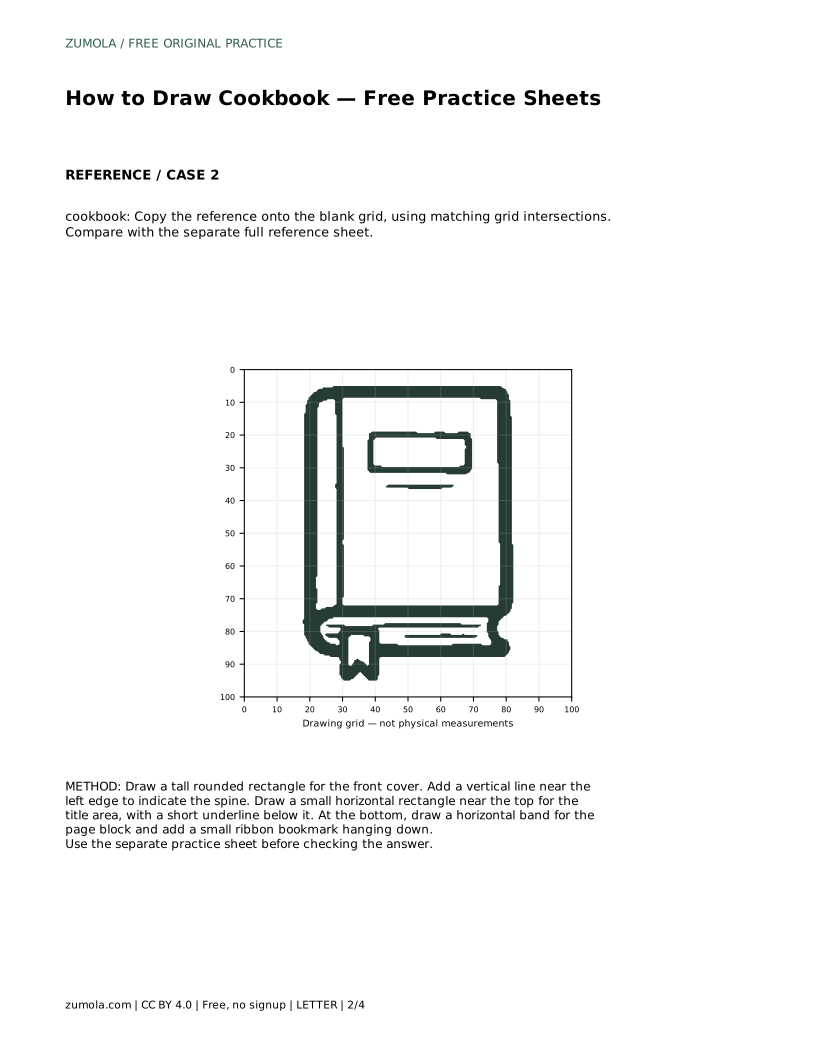
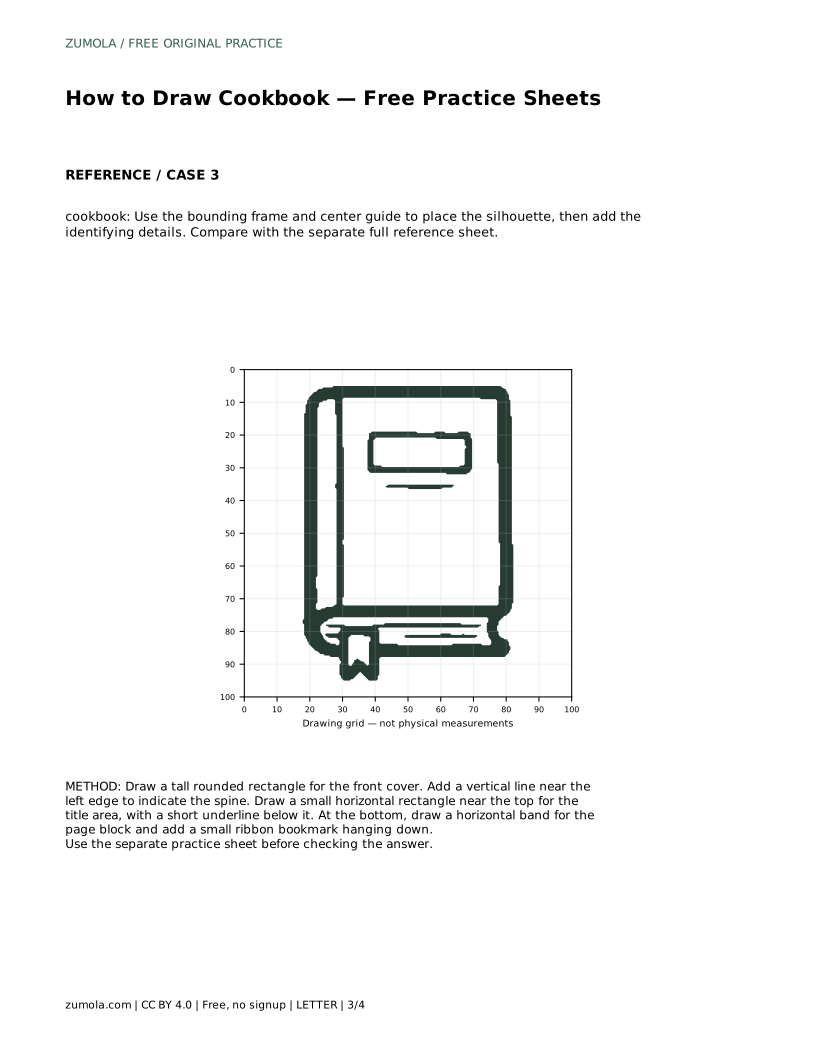
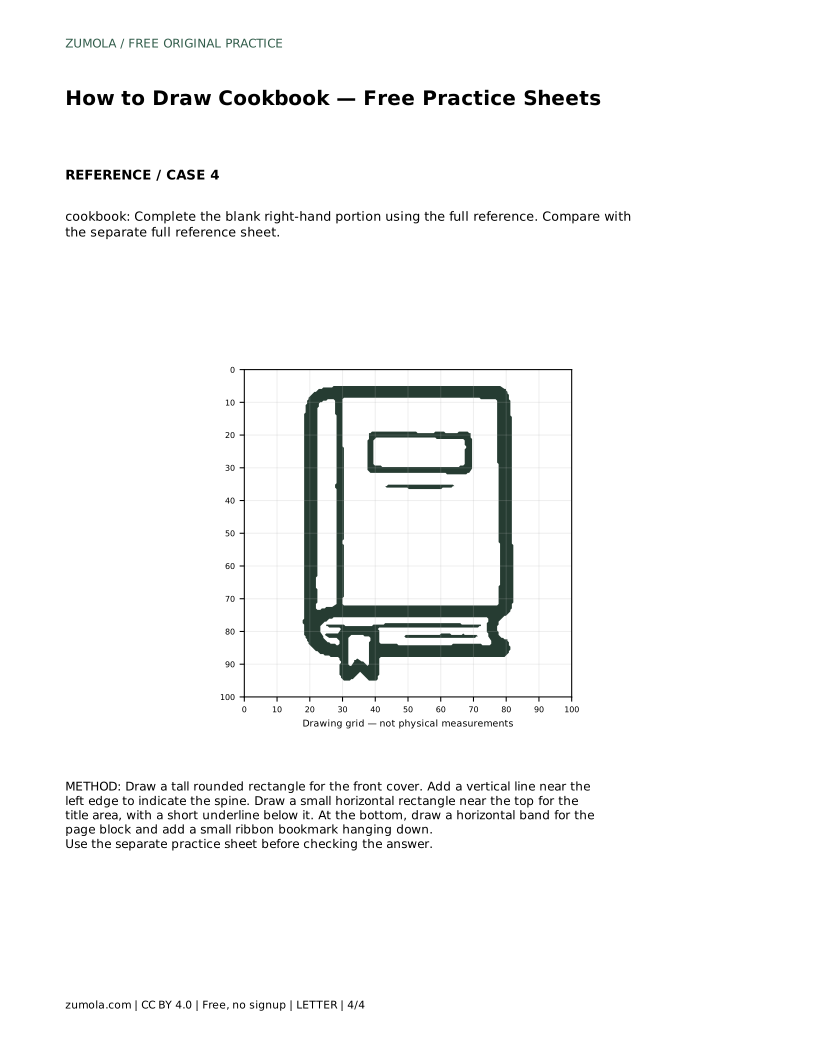
A4 · Download PDF
Free original resources
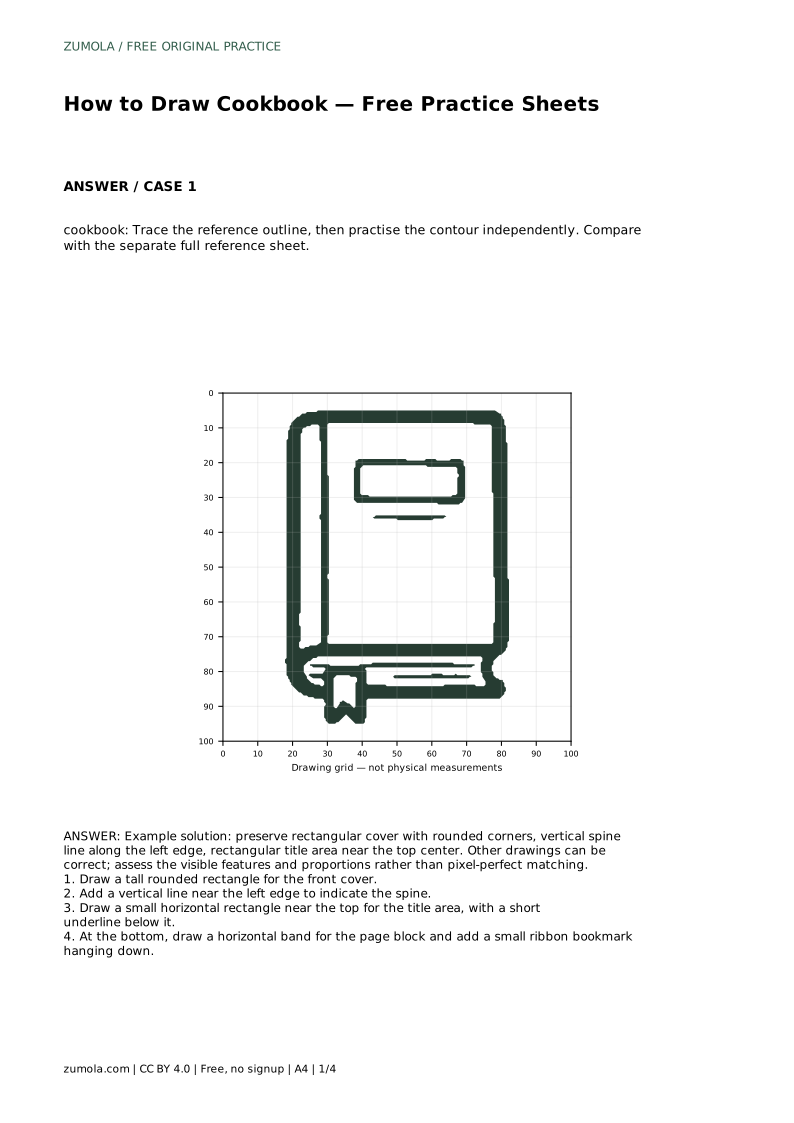
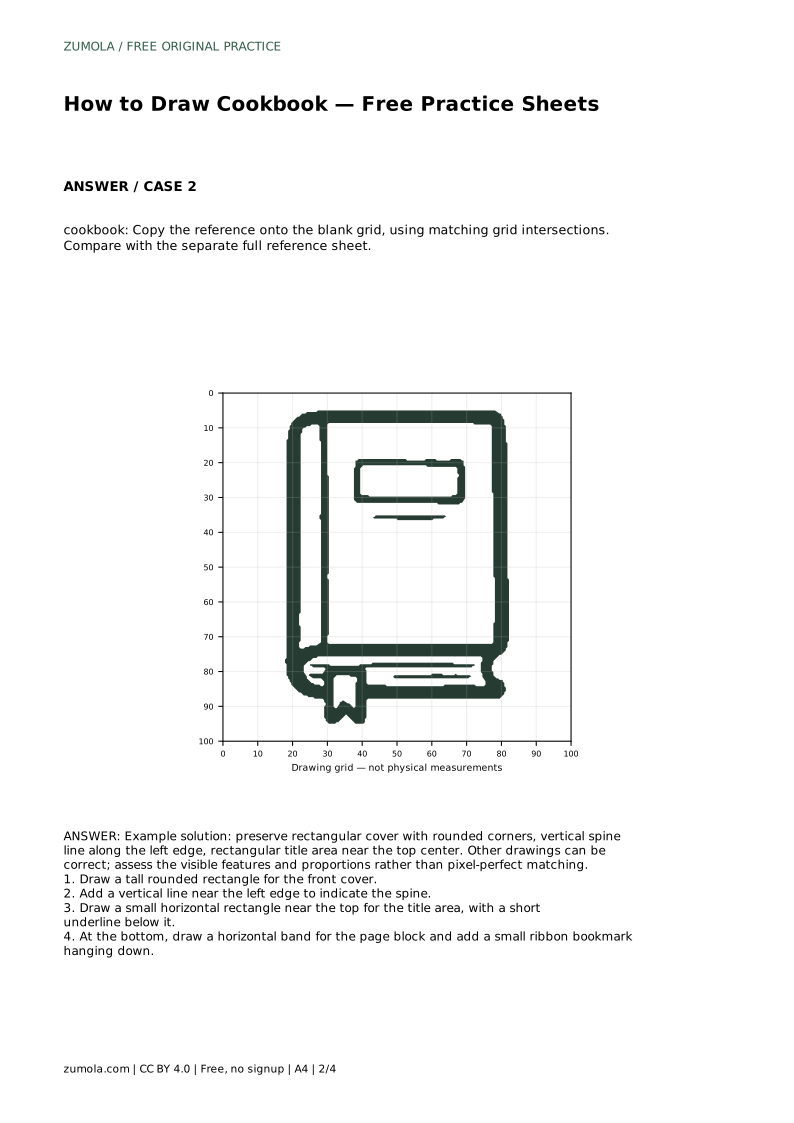
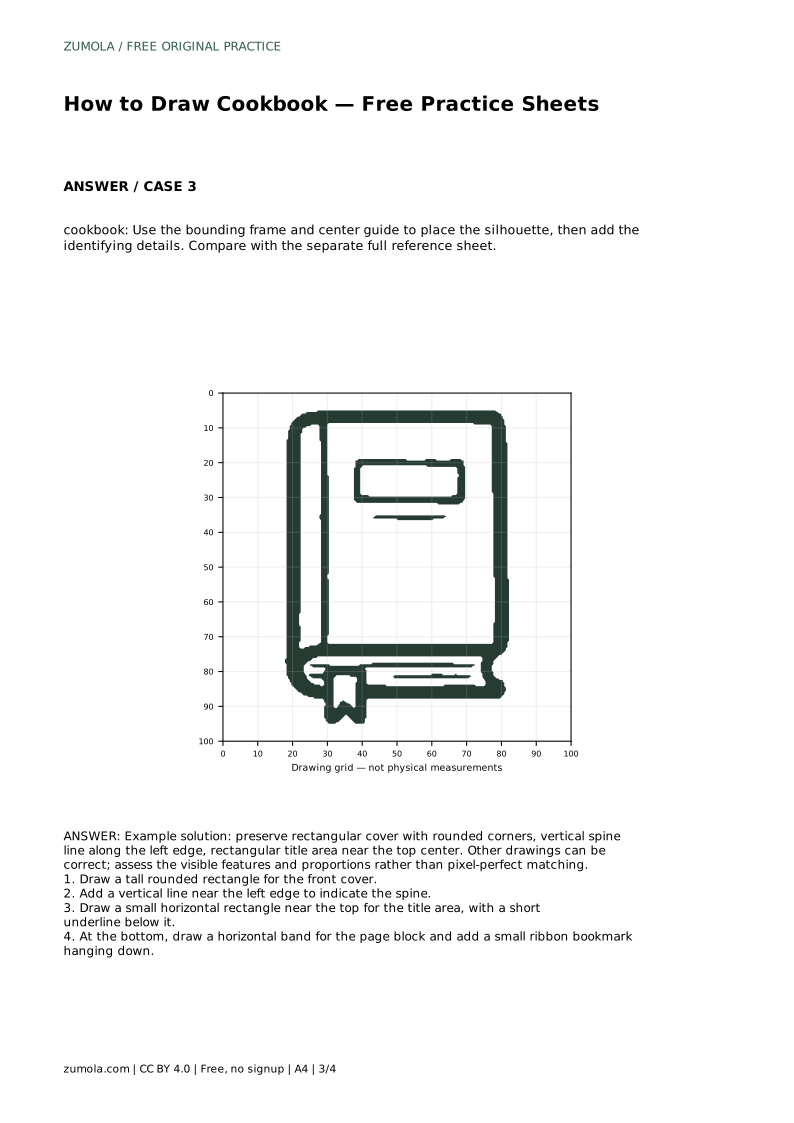
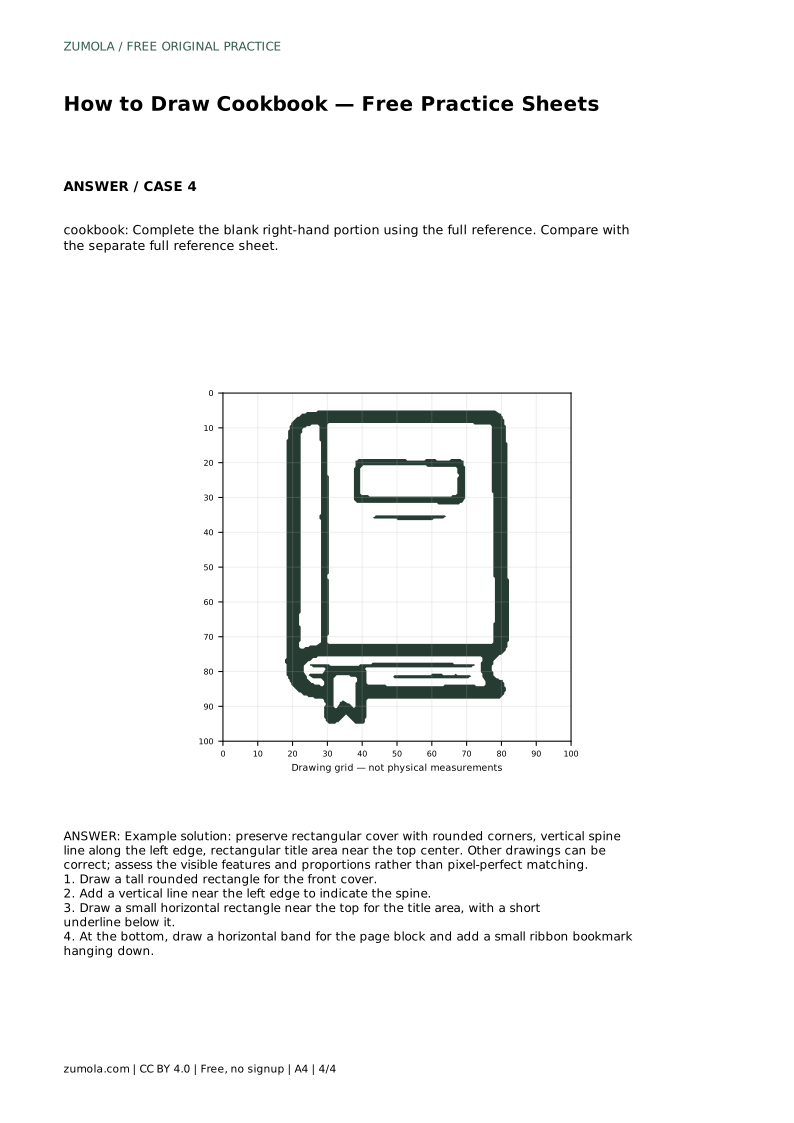
Learn to draw a cookbook by building a rounded cover, spine line, title area, page block, and ribbon bookmark. Free practice sheets support tracing, grids, and guided placement.
Four original cases, with reference diagrams, practice sheets and worked answers. Everything is free; no signup required.
LETTER · Download PDF
A4 · Download PDF
LETTER · Download PDF
A4 · Download PDF
LETTER · Download PDF
A4 · Download PDF
Use A4 or US Letter to match your printer. Use the stated values and conditions to solve each exercise; diagrams are not physical measuring rulers.
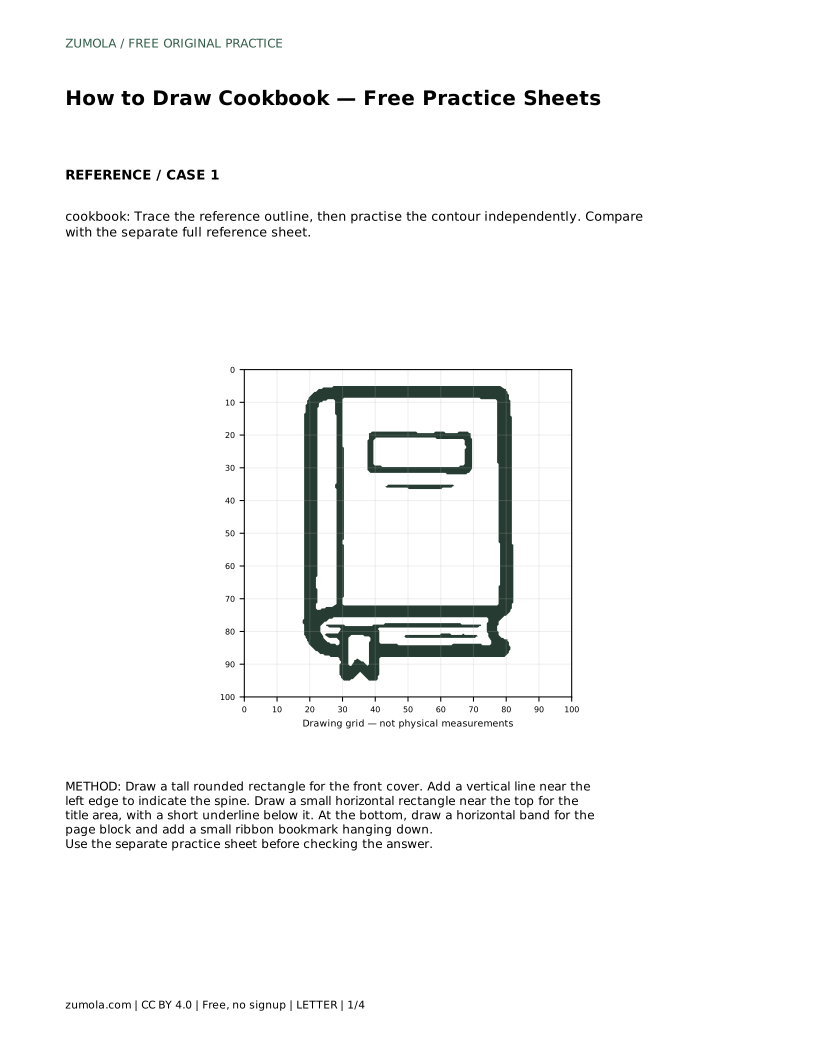
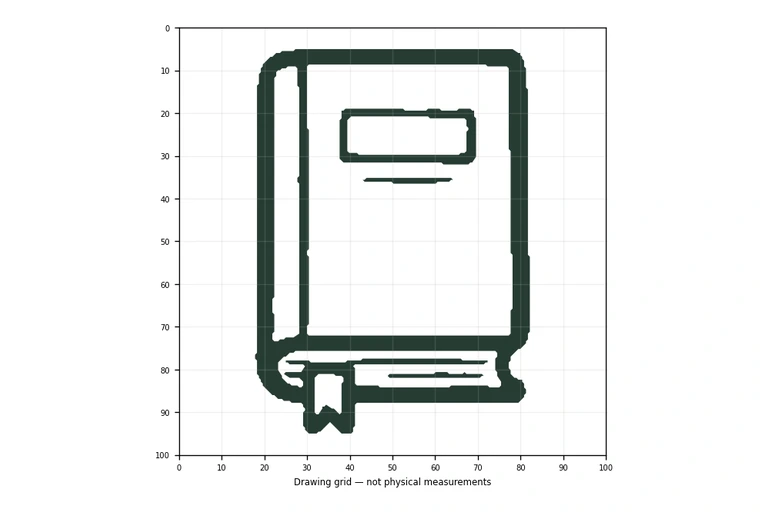
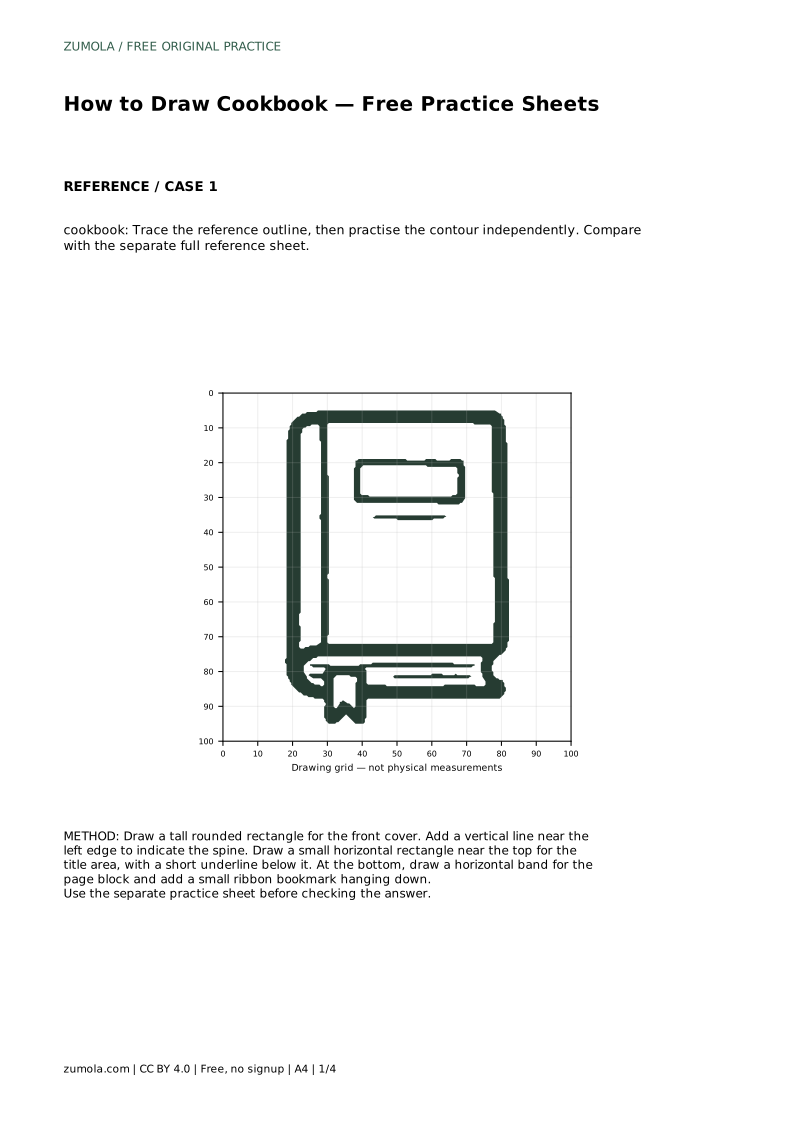
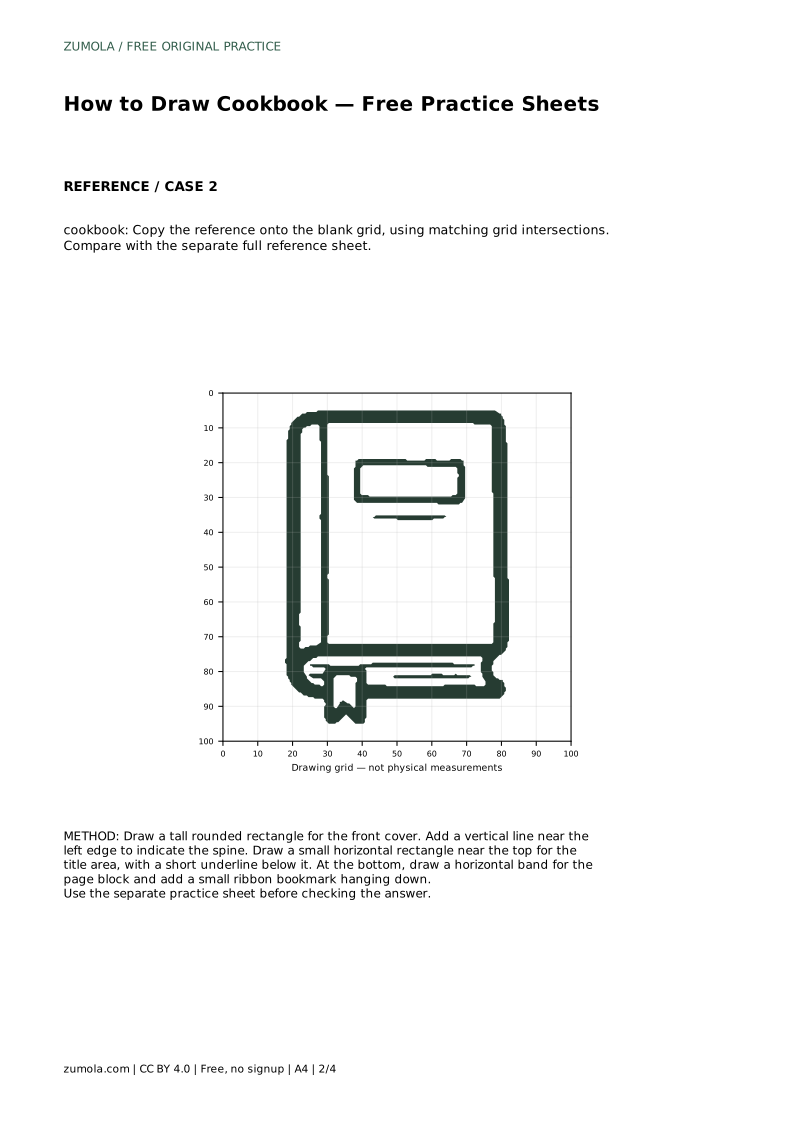
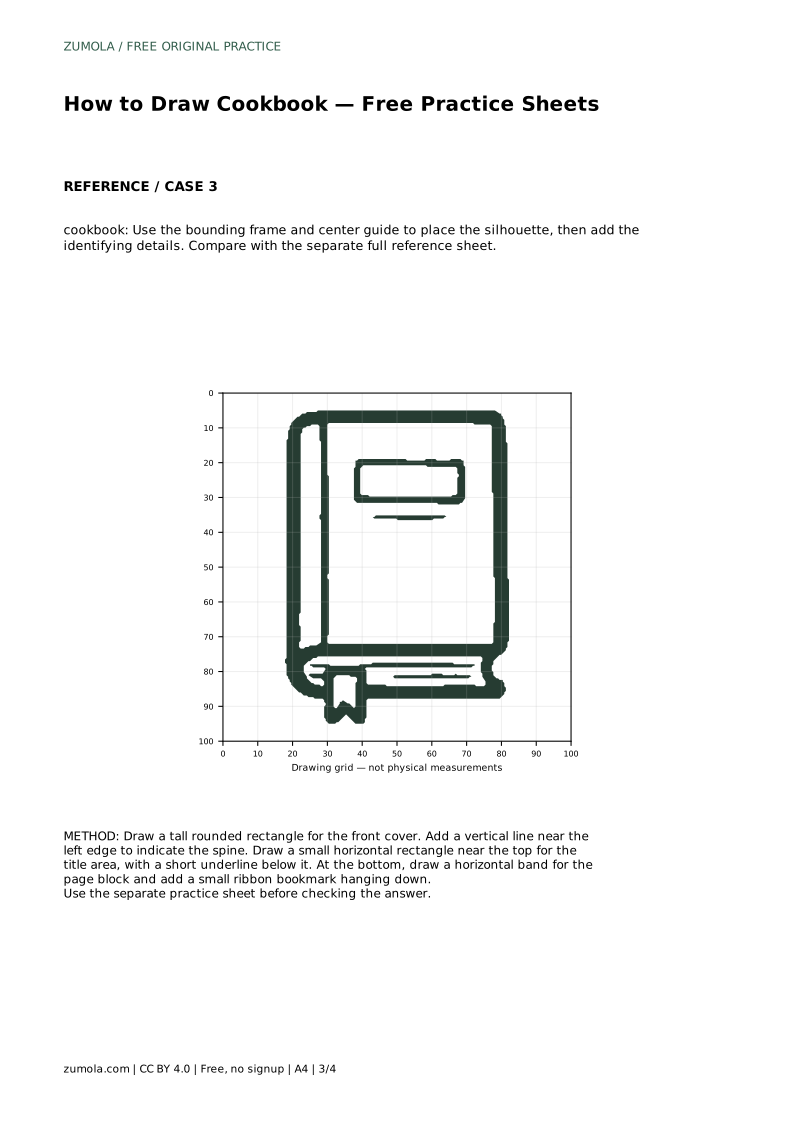
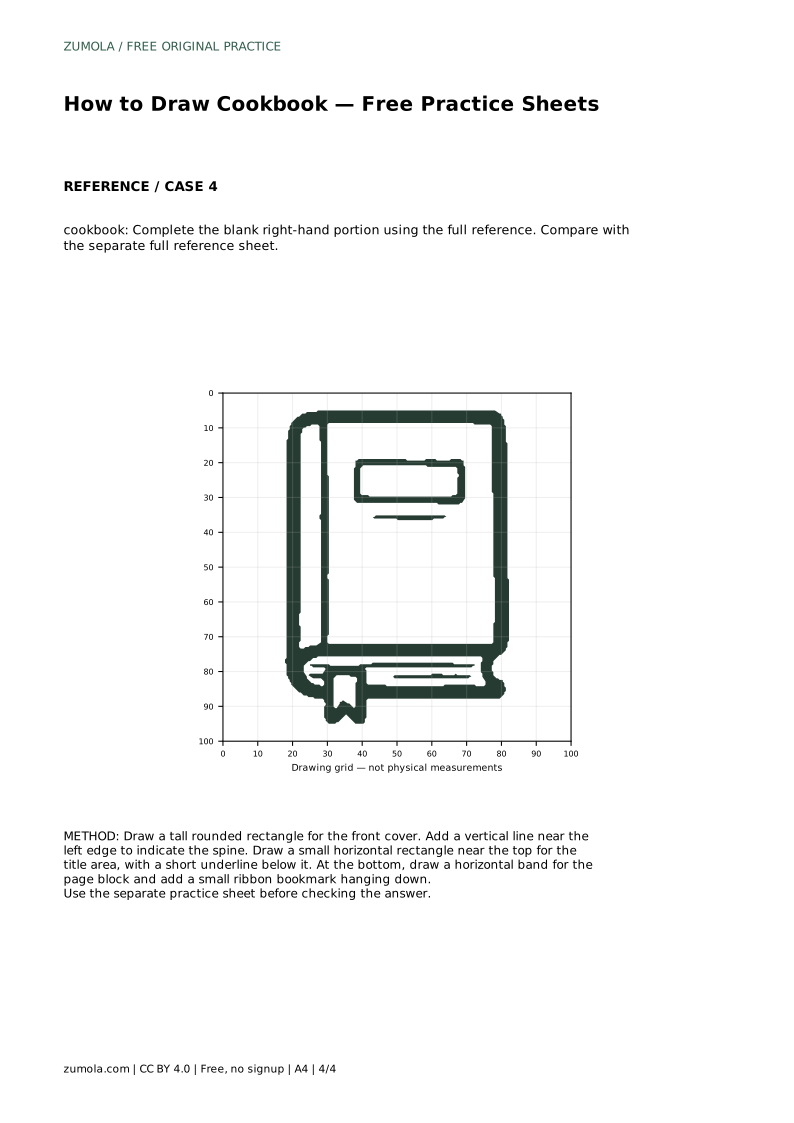
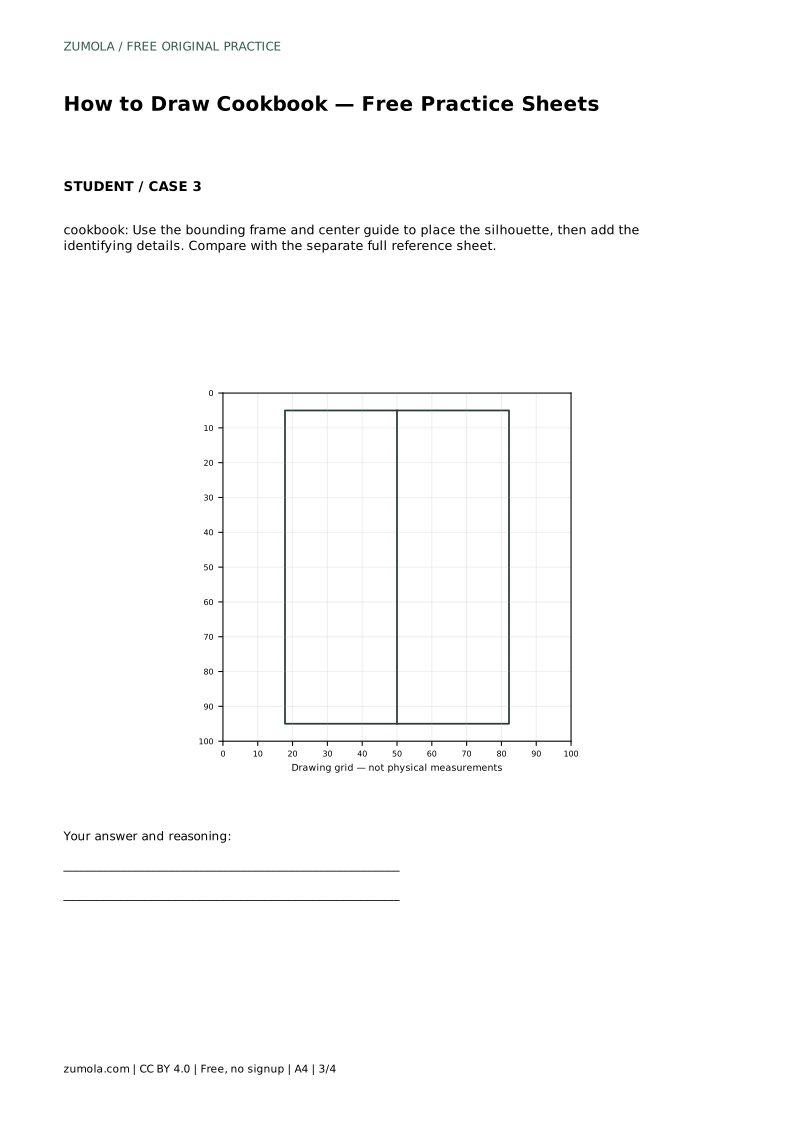
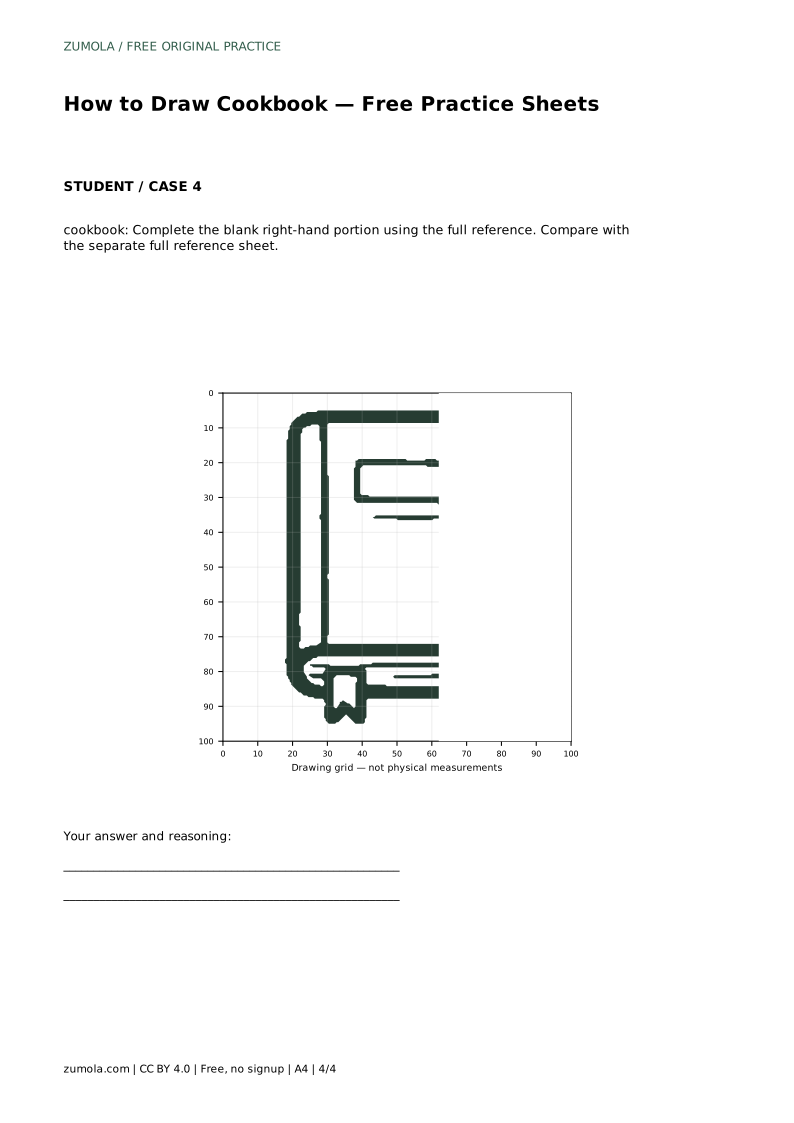
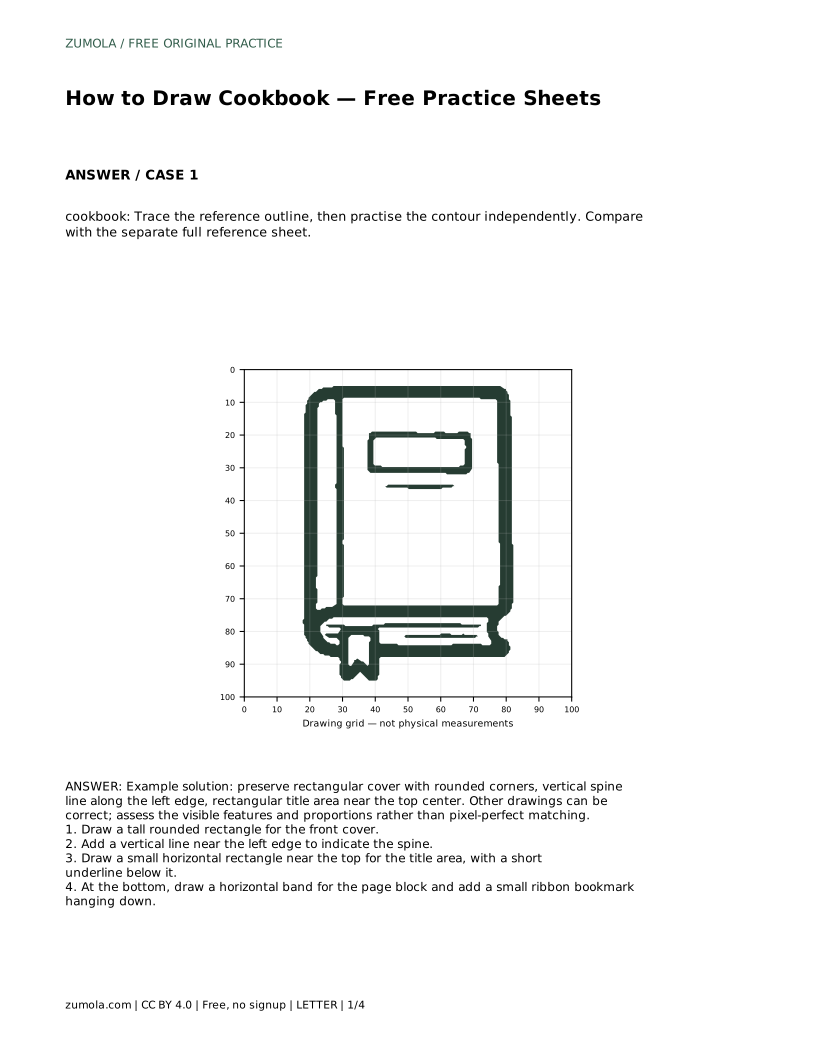
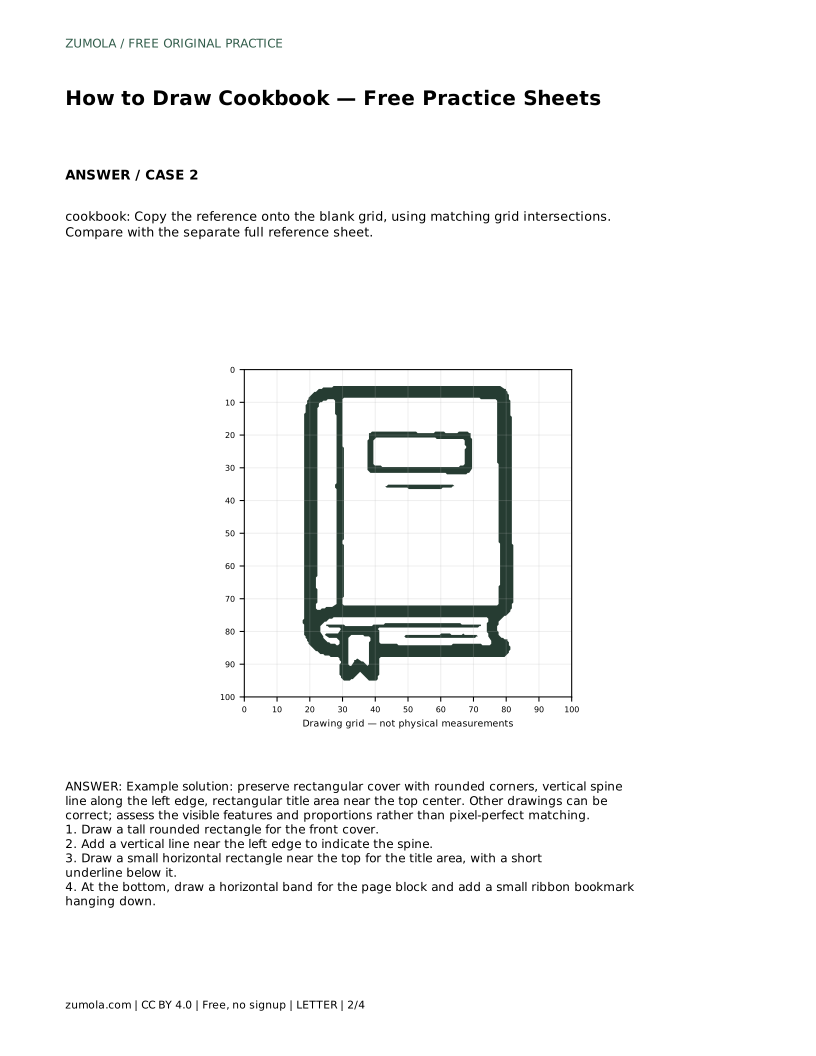
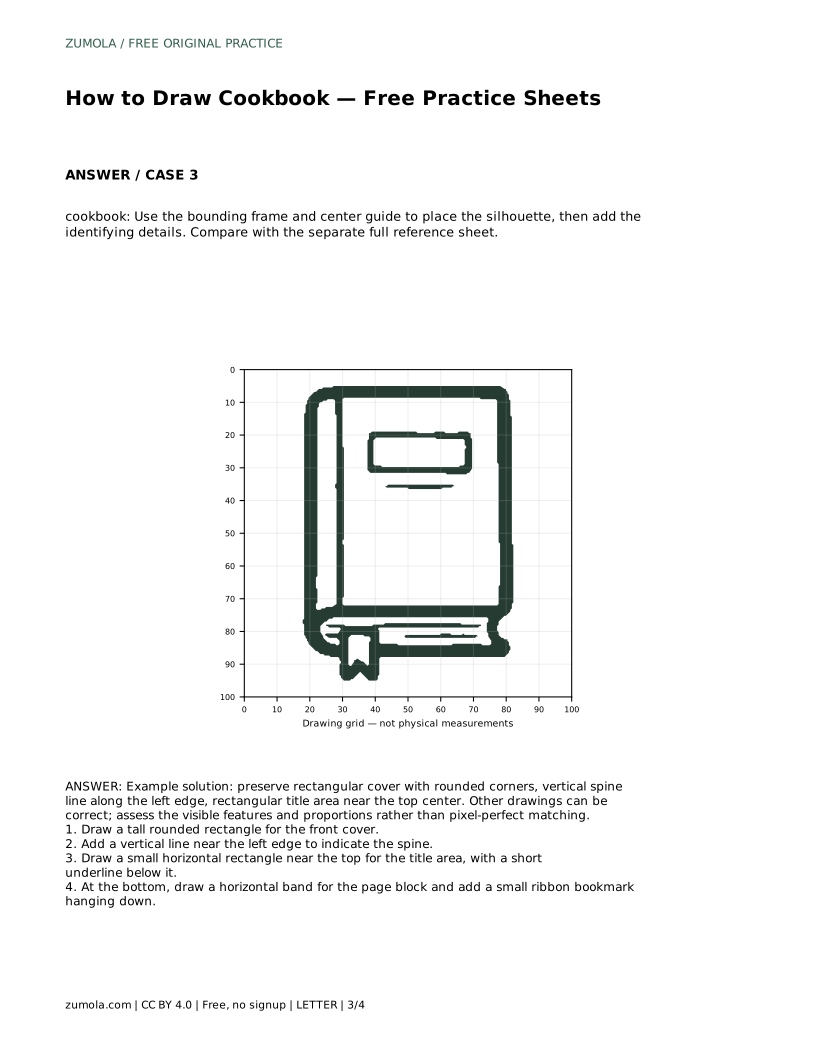
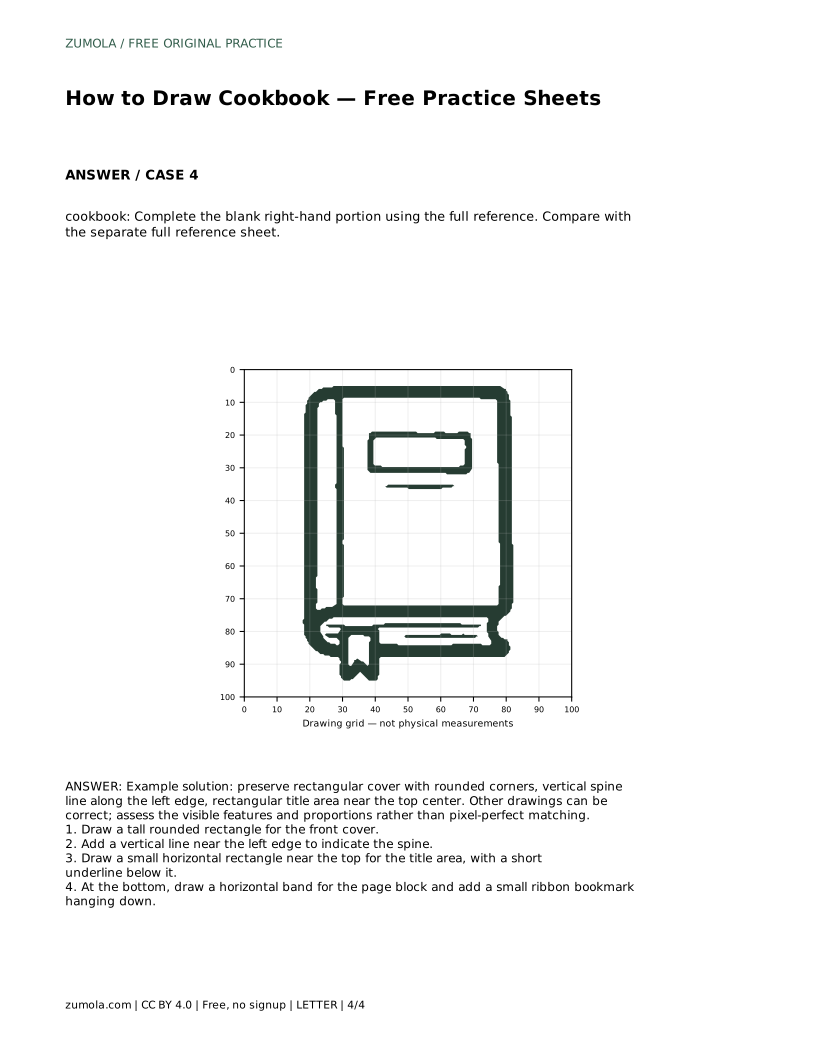
A cookbook drawing is mostly a study in rectangles and placement. The cover is tall and slightly rounded at the corners, the spine runs down the left edge, and the title area sits near the top center. Small details, such as a page block at the bottom and a ribbon bookmark, make the object read clearly as a book. The practice sheets let you trace, copy onto a grid, or complete a partial drawing, then compare your work with the full reference.
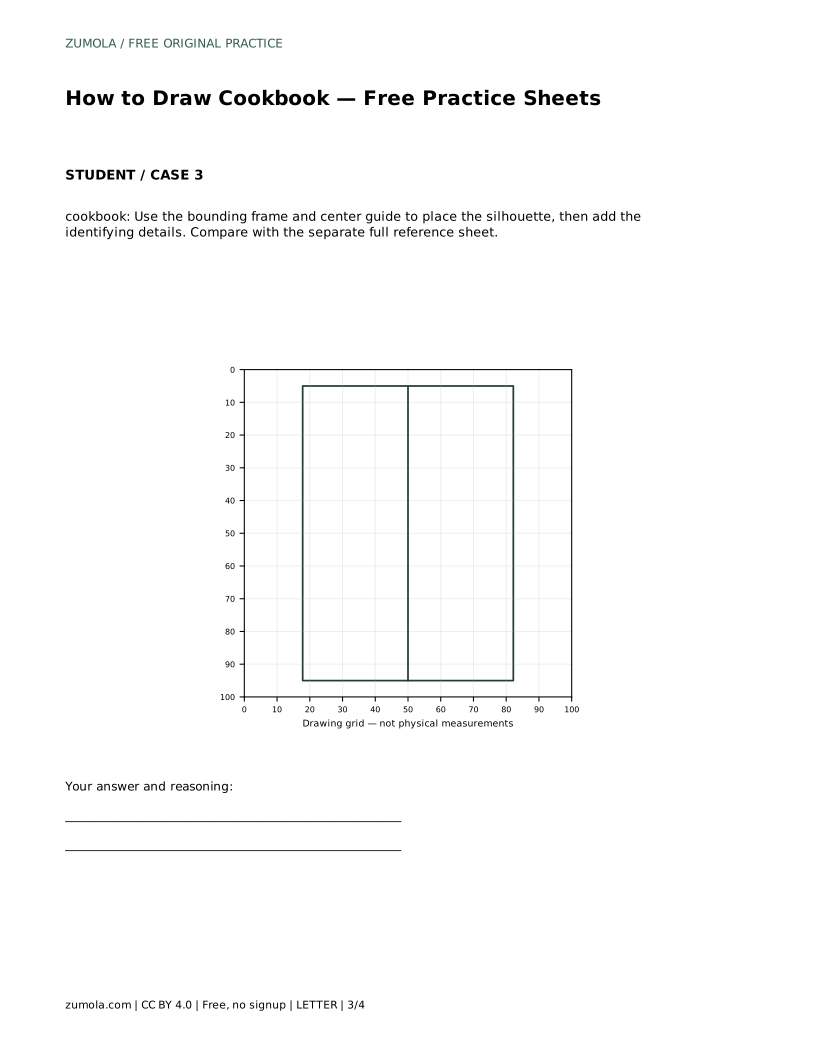
Begin with the largest shape: a tall rounded rectangle for the front cover. Keep the height clearly greater than the width so the object reads as a book rather than a card. Round the corners gently; sharp corners can make the cover look like a box. Next, add a vertical line near the left edge. This line marks the spine and separates it from the front cover. The spine should run from near the top edge to near the bottom edge, staying parallel to the left side. Check that the gap between the spine line and the left edge is narrow and consistent.
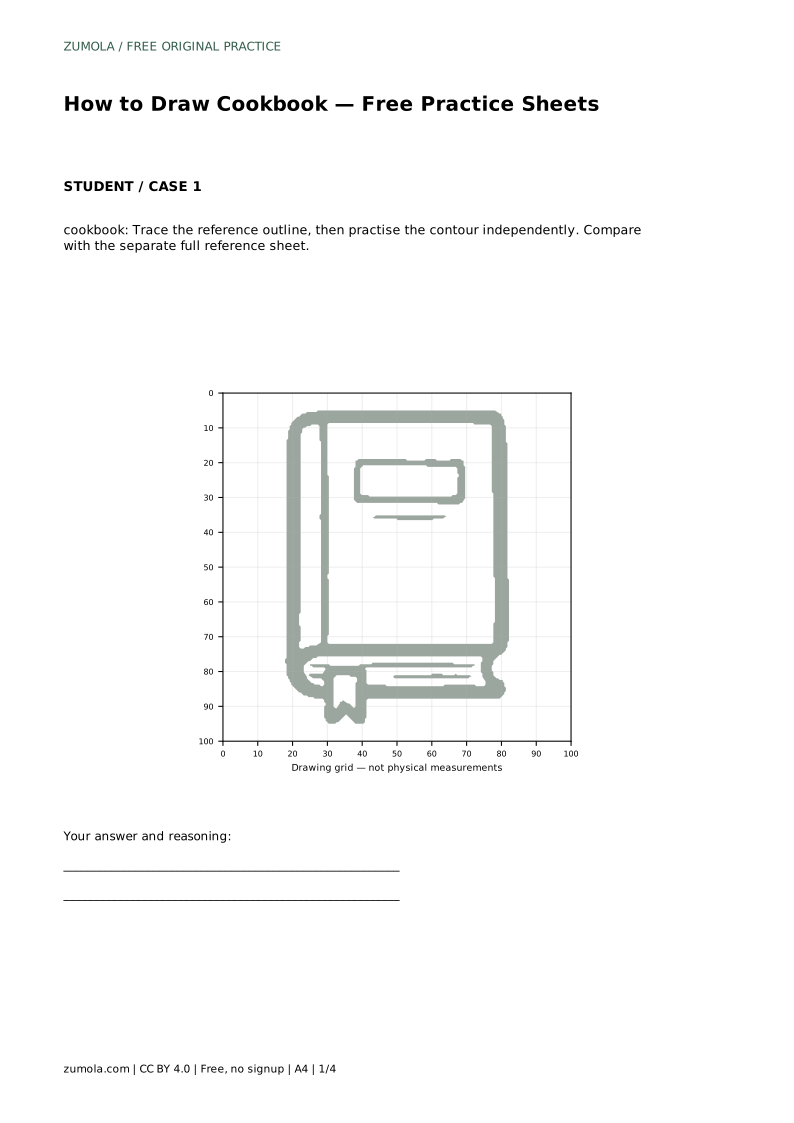
If you are tracing, follow the reference outline first, then try the same contour on a blank area without looking back at every stroke. If you are using the grid sheet, place the cover corners at matching grid intersections so the proportions stay stable.
Near the top center of the cover, draw a small horizontal rectangle for the title area. It should sit inside the cover with a clear margin on both sides. Add a short underline below it to suggest a subtitle or decorative rule. At the bottom, draw a horizontal band for the page block. This band should span most of the cover width and sit close to the bottom edge, leaving a small margin. The band represents the stacked pages seen from the front, so keep it thin and even.
These two features do most of the work in making the drawing recognizable. Compare their positions with the reference: the title area belongs high on the cover, and the page block belongs low. If either drifts toward the middle, the cover starts to look empty or crowded.
Finish with a small ribbon bookmark hanging down from the bottom edge. Draw it as a narrow strip that starts at the page block and extends below the cover, ending in a slight V or angled cut. Keep the ribbon narrow so it does not compete with the cover. Its position can vary, but placing it near the spine or toward one side usually looks natural.
Art has multiple valid outcomes. A cookbook drawing does not have one exact answer, so judge your work by whether the visible features are present and the proportions hold together. Use the rubric below rather than chasing a pixel-perfect match.
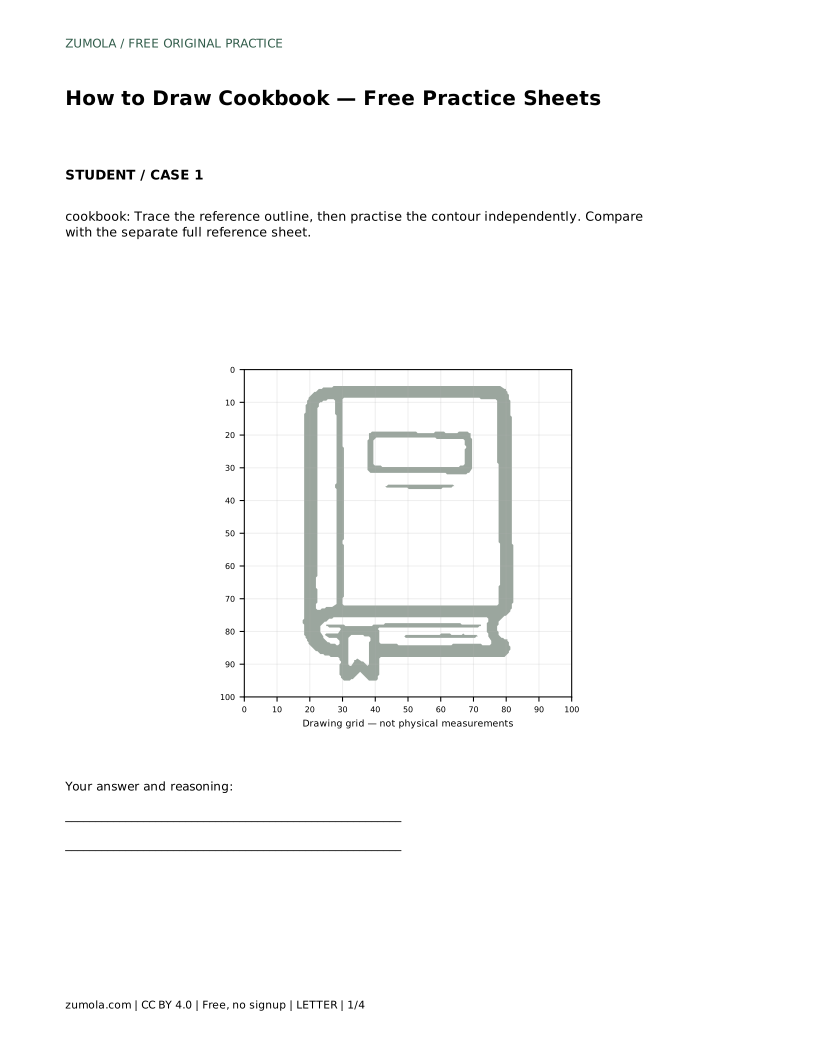
cookbook: Trace the reference outline, then practise the contour independently. Compare with the separate full reference sheet.
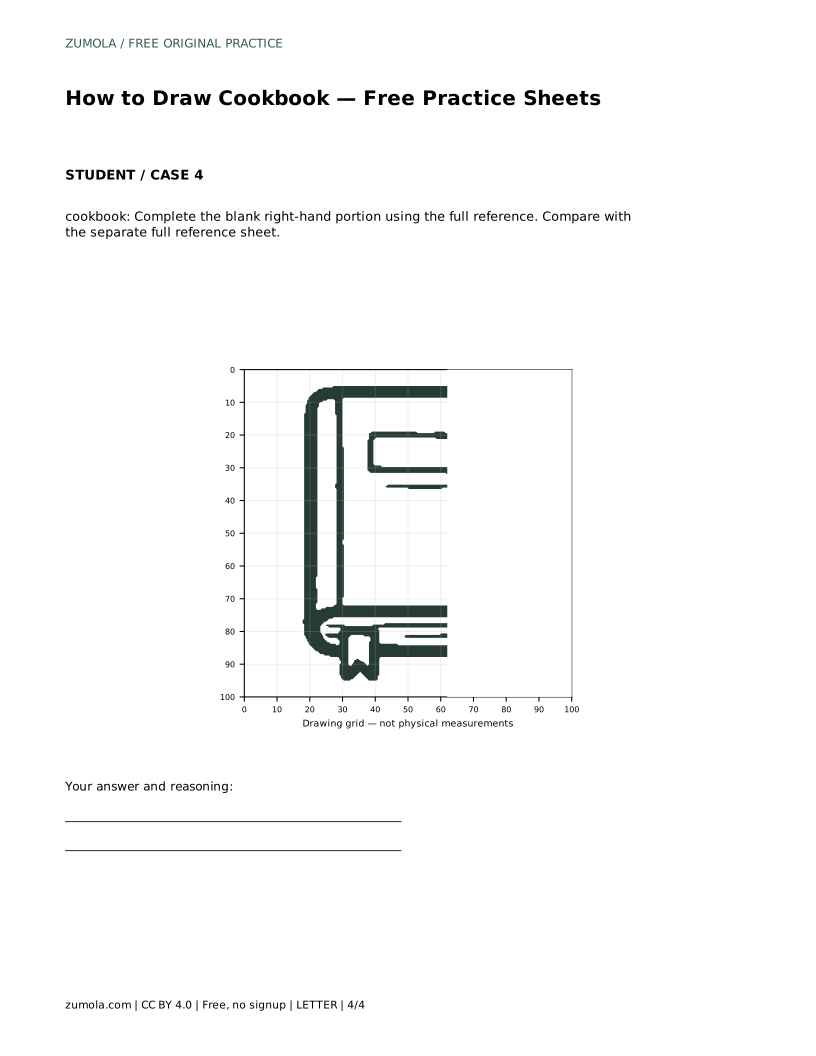
Example solution: preserve rectangular cover with rounded corners, vertical spine line along the left edge, rectangular title area near the top center. Other drawings can be correct; assess the visible features and proportions rather than pixel-perfect matching. Draw a tall rounded rectangle for the front cover. Add a vertical line near the left edge to indicate the spine. Draw a small horizontal rectangle near the top for the title area, with a short underline below it. At the bottom, draw a horizontal band for the page block and add a small ribbon bookmark hanging down.
No. Several drawings can be correct. Check that the rounded cover, spine line, title area, page block, and ribbon are present and proportioned sensibly.
Start with tracing if you are new to the shape. Move to the grid or guided placement sheet once the contour feels familiar, then try completing the partial drawing.
Yes. These details can vary. Keep the ribbon narrow and the title area high on the cover with clear margins.
All drawing practice · Free coordinate paper
Original resources · CC BY 4.0 · Free for personal and classroom use with attribution.