Reference diagrams
LETTER · Download PDF
A4 · Download PDF
Free original resources
Learn to draw a hippo by building a barrel-shaped body, wide flat snout, small round ears, and short thick legs. Includes tracing, grid, and frame practice.
Four original cases, with reference diagrams, practice sheets and worked answers. Everything is free; no signup required.
LETTER · Download PDF
A4 · Download PDF
LETTER · Download PDF
A4 · Download PDF
LETTER · Download PDF
A4 · Download PDF
Use A4 or US Letter to match your printer. Use the stated values and conditions to solve each exercise; diagrams are not physical measuring rulers.
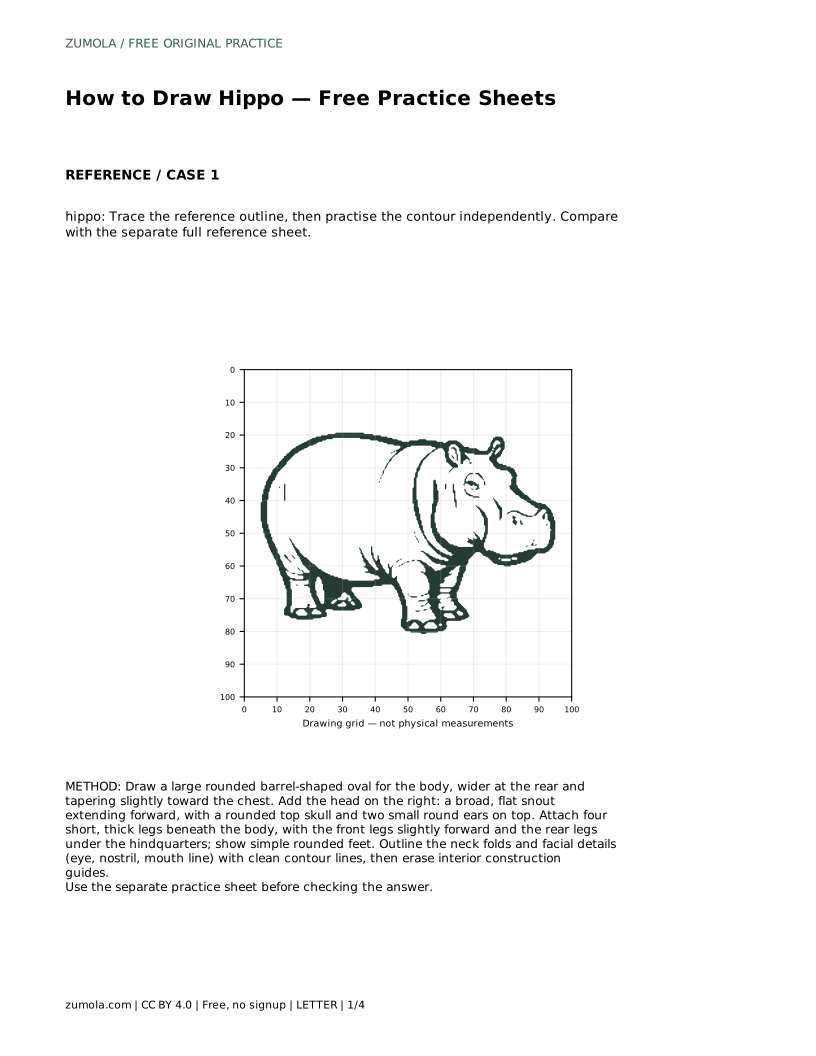
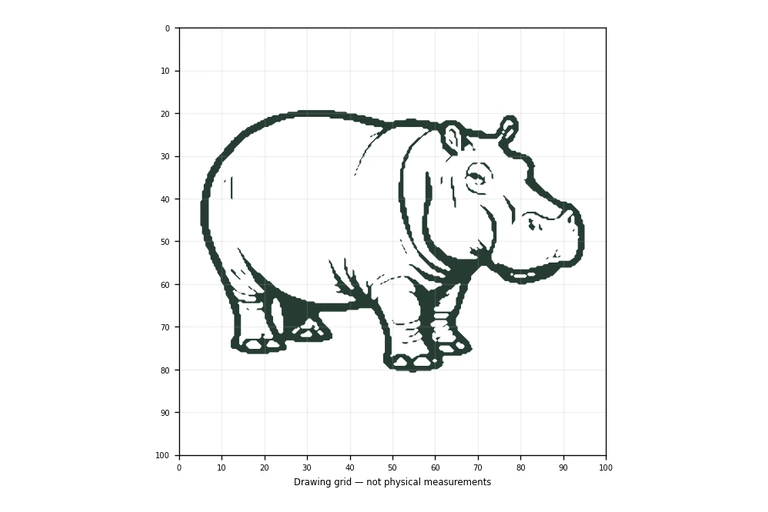
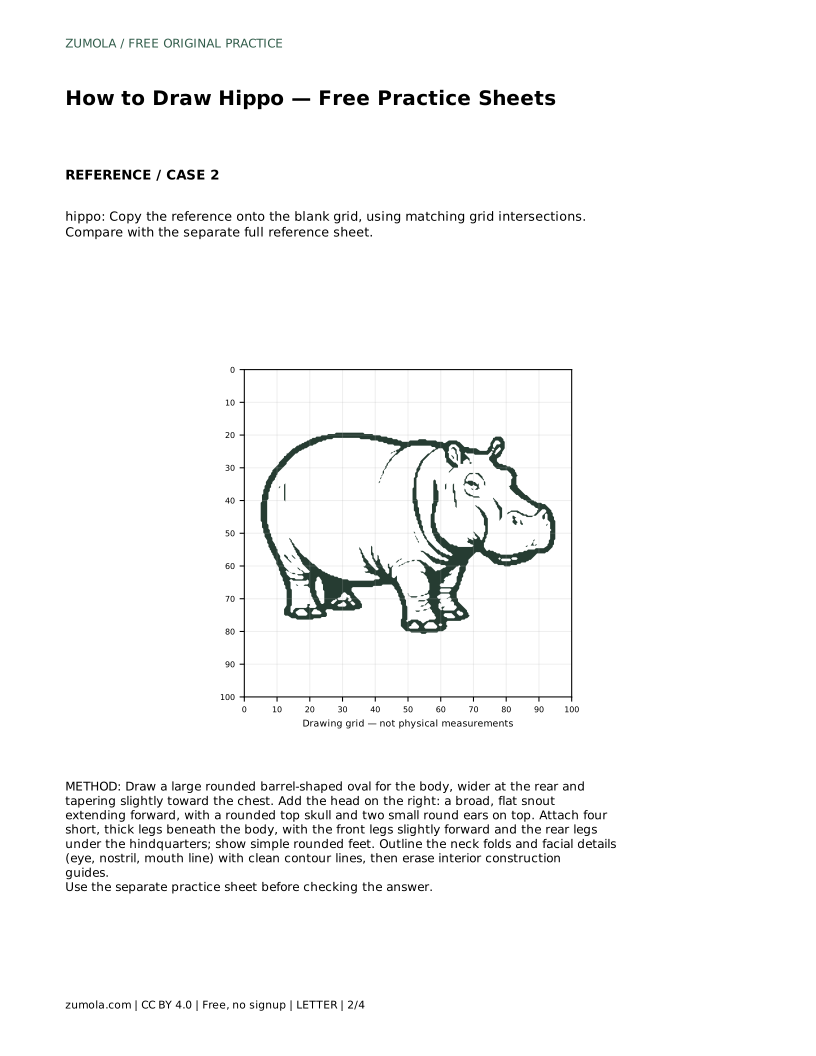
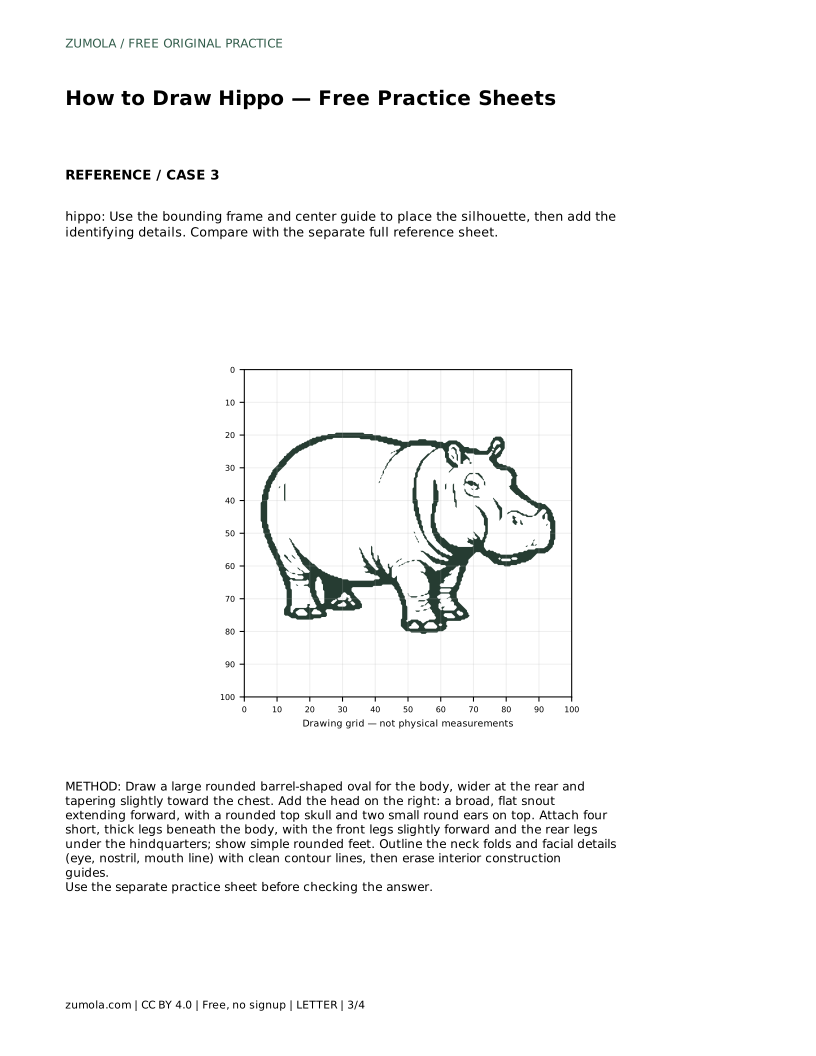
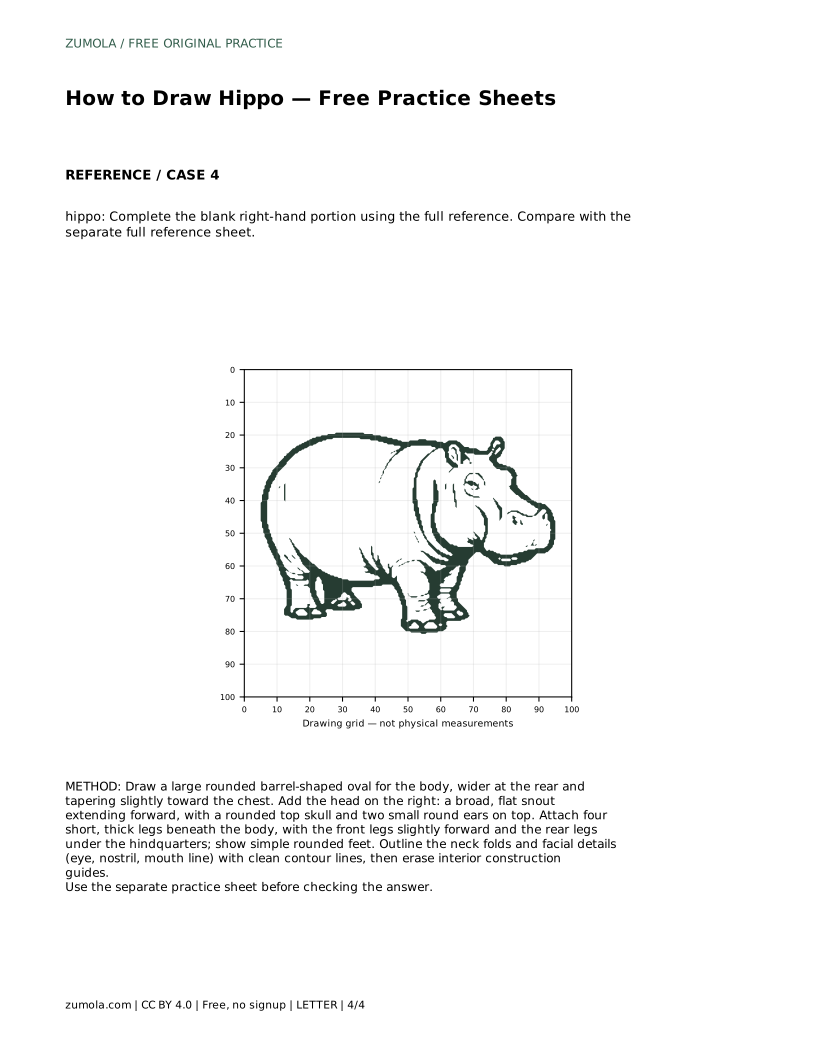
Drawing a hippo is mostly a matter of arranging a few large, heavy shapes in the right order. The body is a broad barrel, the head ends in a wide flat snout, and the legs are short and thick. This guide walks through that construction step by step, then explains how to use tracing, grid, and frame practice sheets to build confidence without losing the hippo's identifying features.
Begin with the body rather than the face. Draw a large rounded oval that is wider at the rear and narrows slightly toward the chest. This barrel shape carries most of the hippo's weight and character, so give it room on the page. Keep the outline light; it is a construction guide, not the final contour.
Next, place the head to the right of the body. The skull is rounded on top, and the snout extends forward as a broad, flat shape. Two small round ears sit on top of the head. Because the snout is wide and blunt rather than pointed, check that its front edge stays flat and horizontal.
Add four short, thick legs beneath the body. Set the front legs slightly forward and the rear legs under the hindquarters. Simple rounded feet are enough; hippo legs read as sturdy columns, not slender limbs.
Once the large shapes sit where you want them, go over the drawing with a cleaner line. Add a soft fold where the neck meets the body, an eye above the snout, a nostril near the front of the snout, and a simple mouth line. These details identify the animal, but they should follow the construction rather than replace it.
Erase the interior guides only after the final contour is in place. If a leg looks too thin or the snout too narrow, correct it now; small adjustments at this stage keep the hippo recognizable.
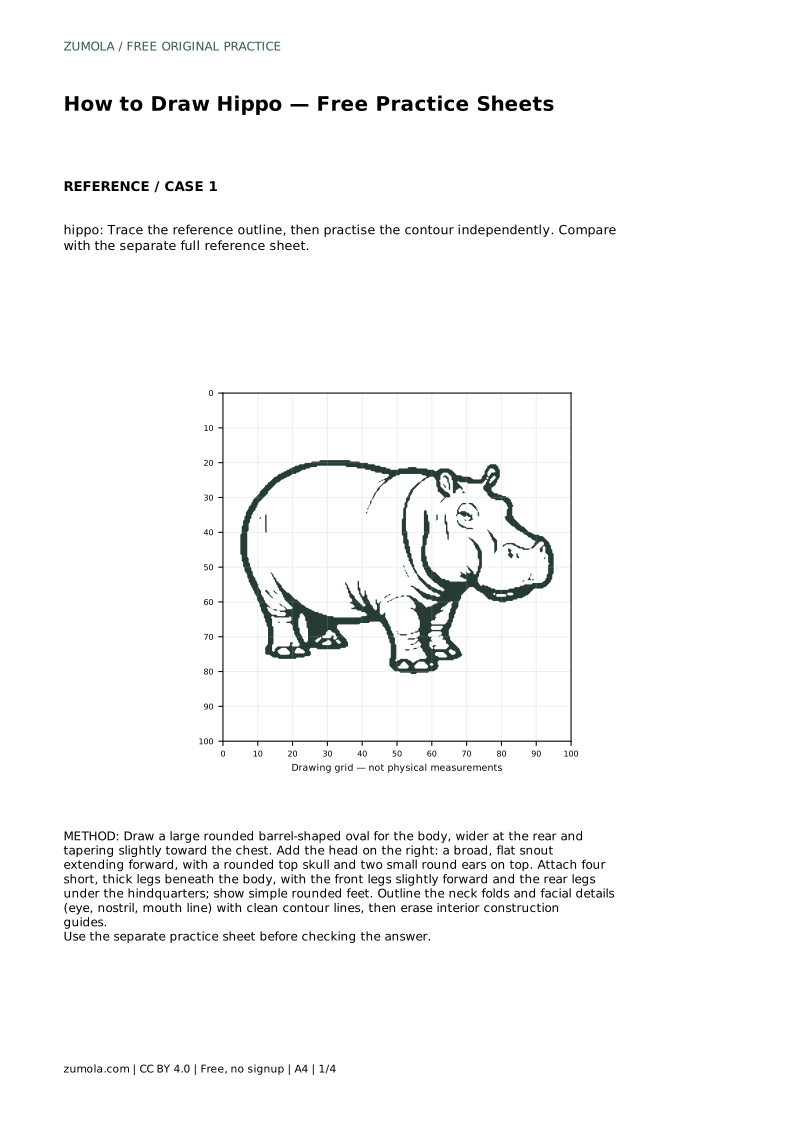
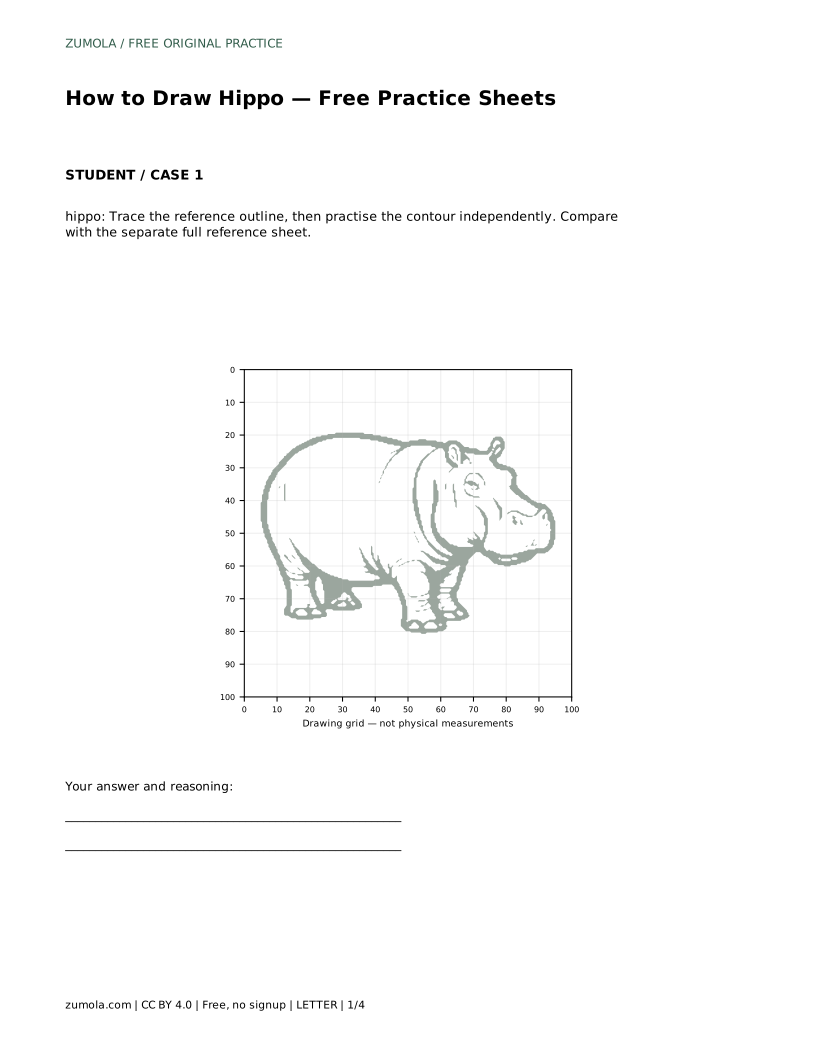
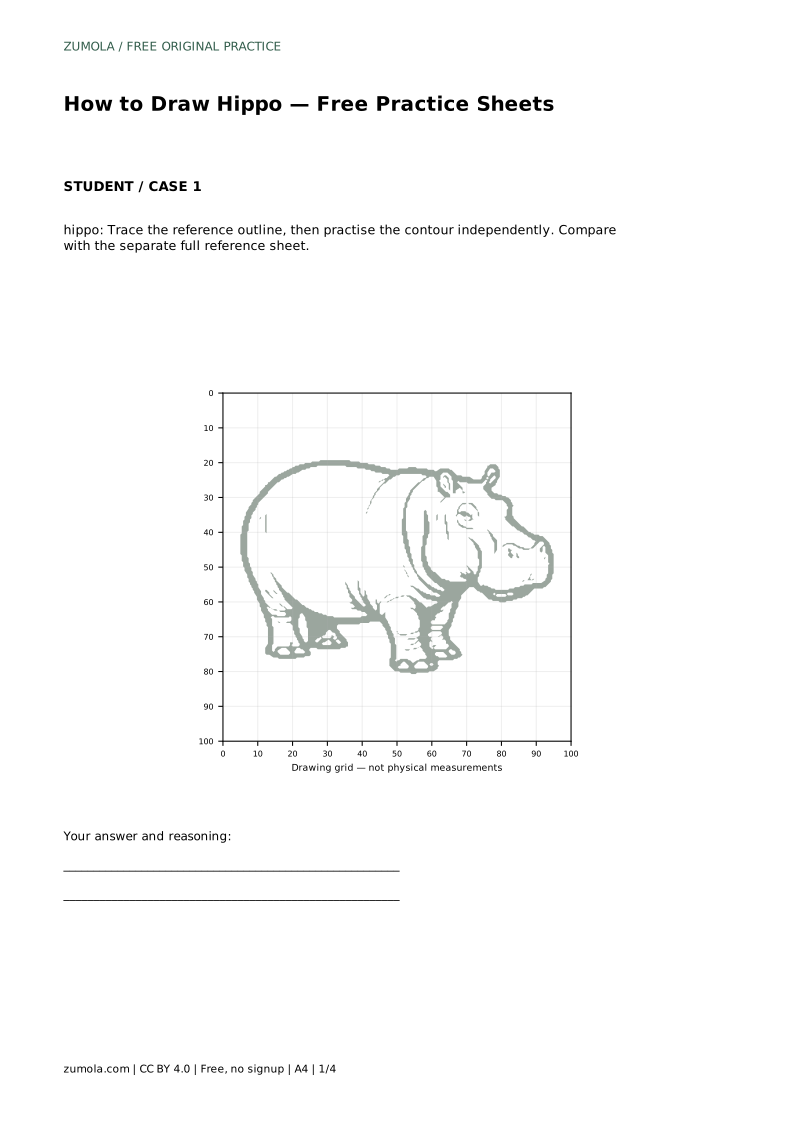
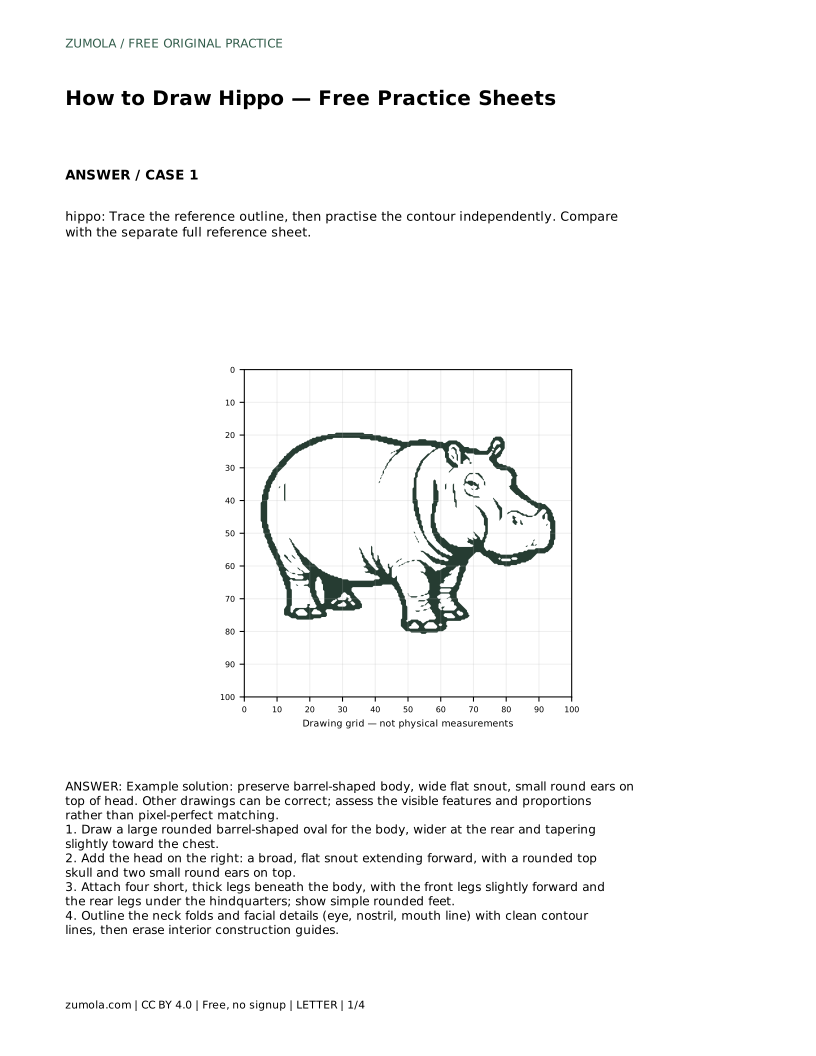
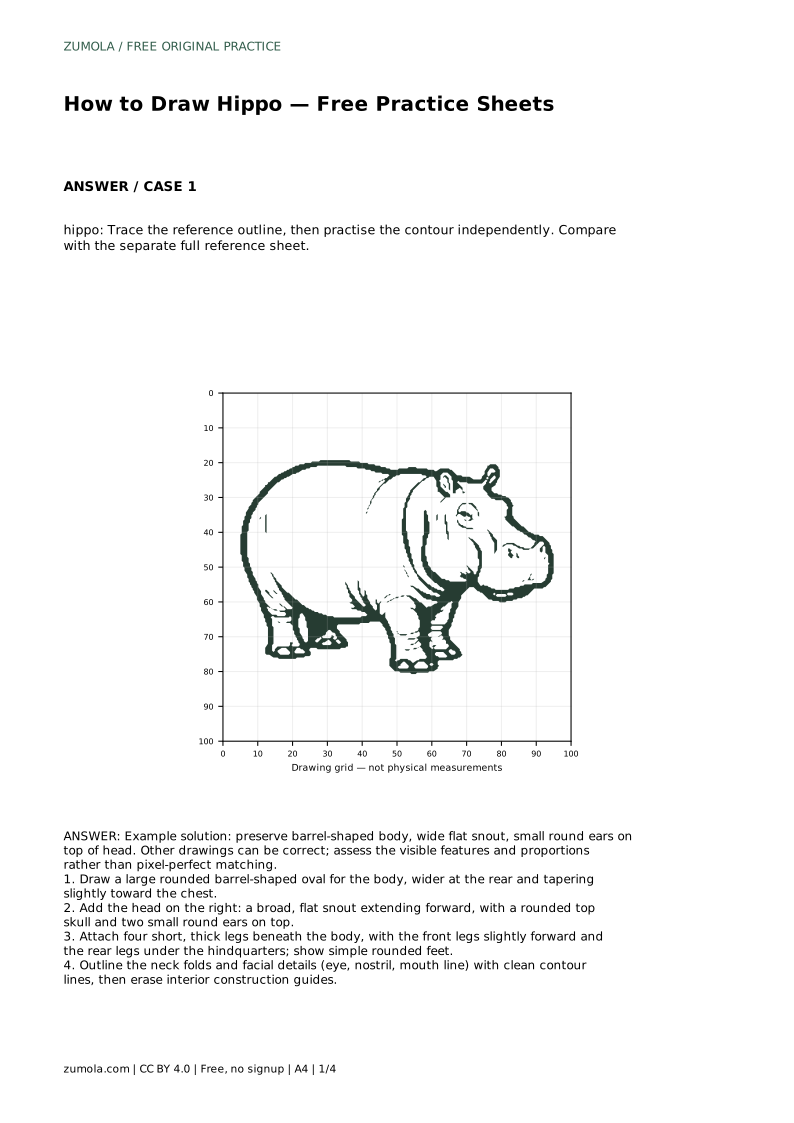
Tracing helps you feel the order of shapes before drawing freehand. Trace the reference outline first, then practise the same contour on blank paper and compare your result with the separate full reference sheet.
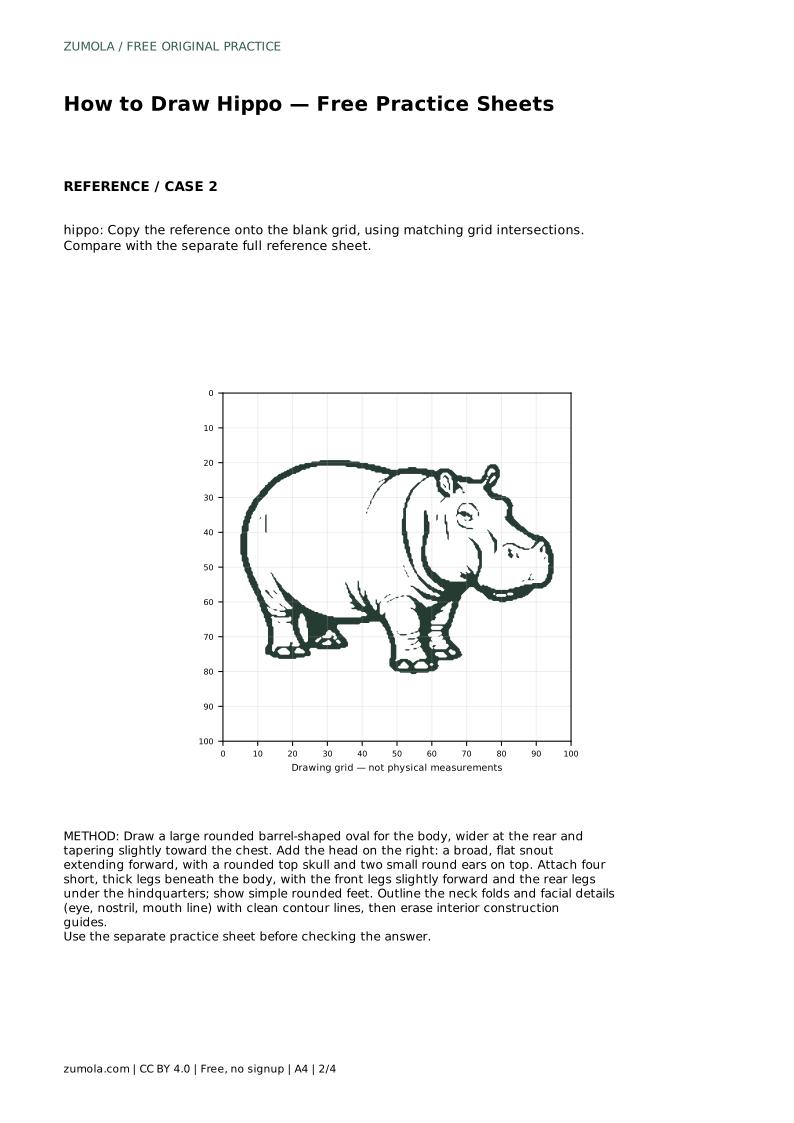
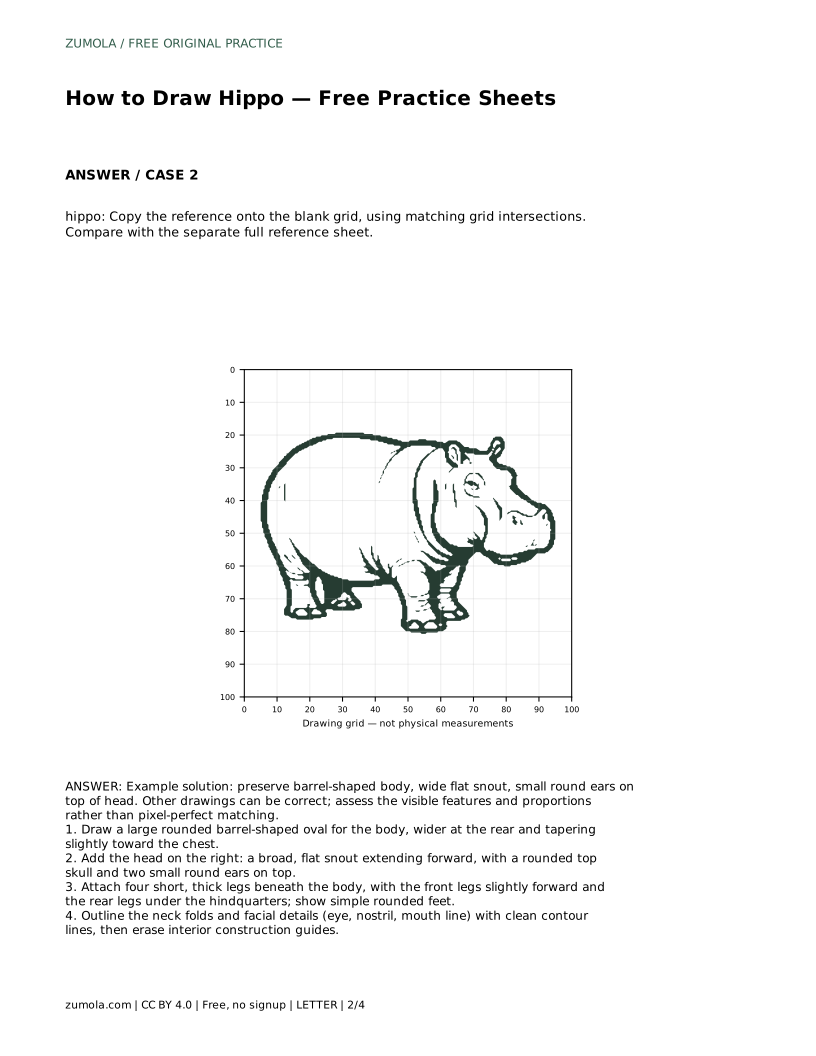
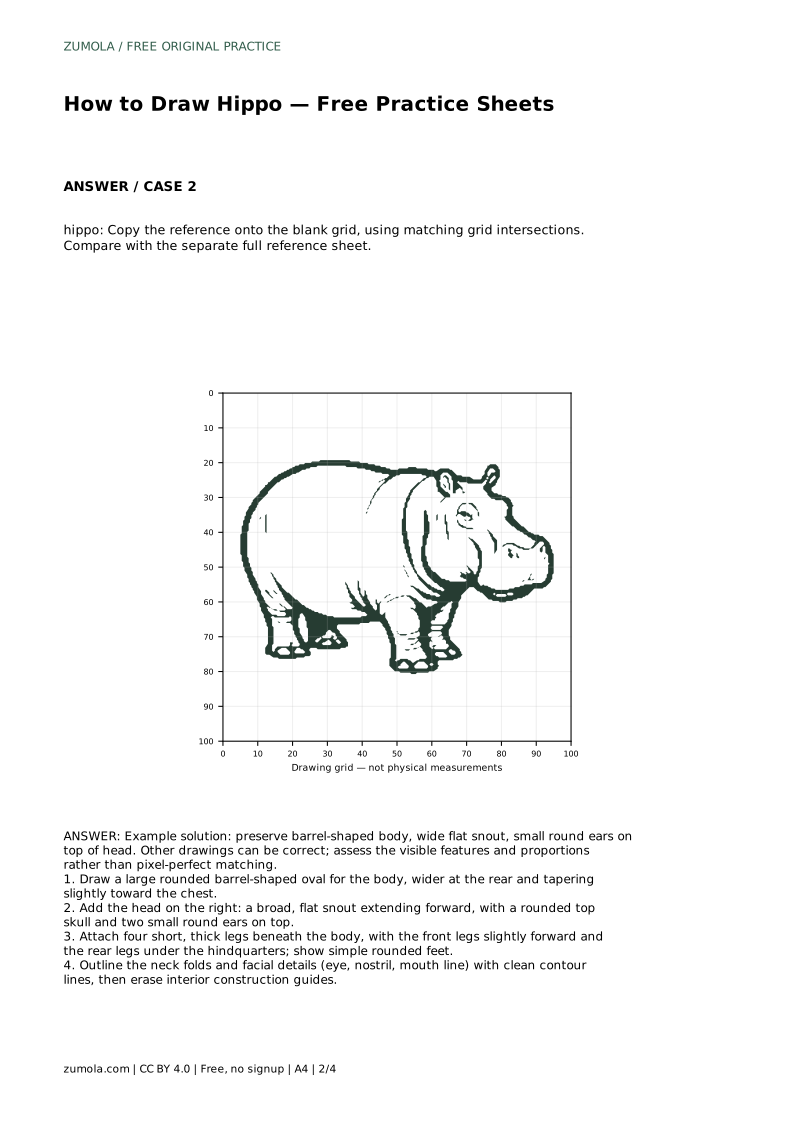
A grid sheet asks you to copy the reference onto a blank grid, matching each feature to the same intersections. This trains proportion: if the snout crosses a certain square in the reference, it should cross the matching square in your copy.
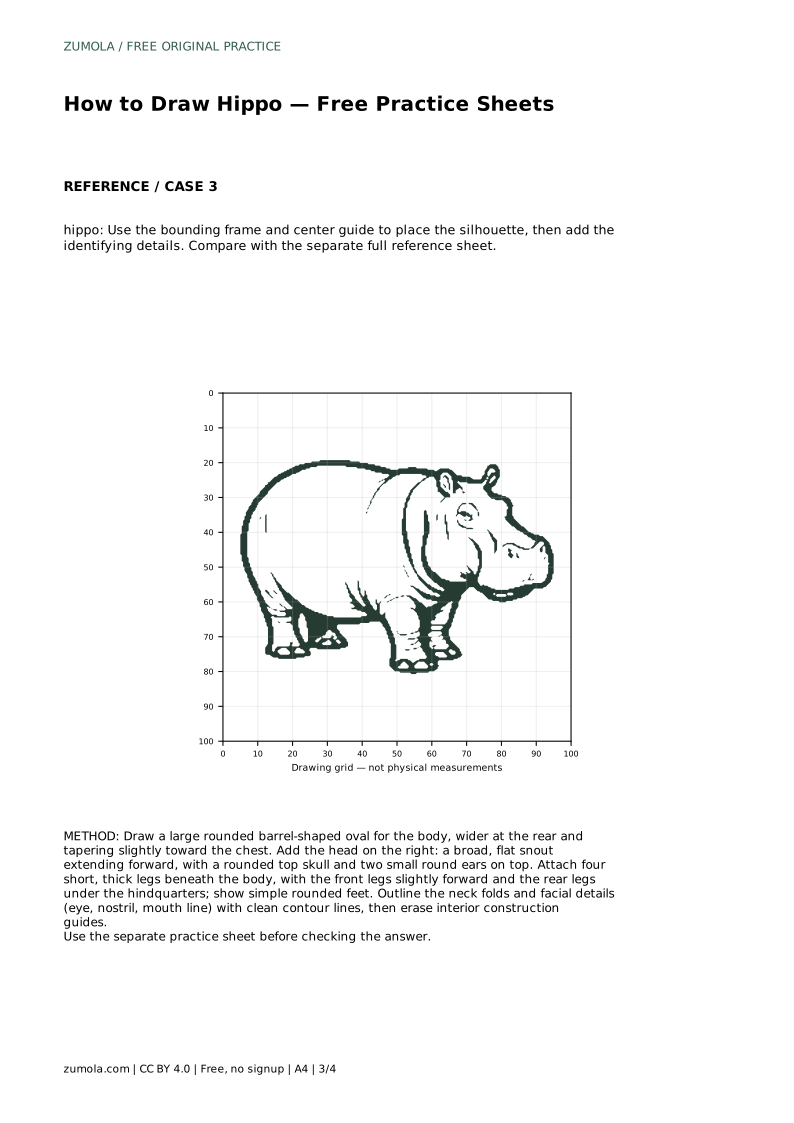
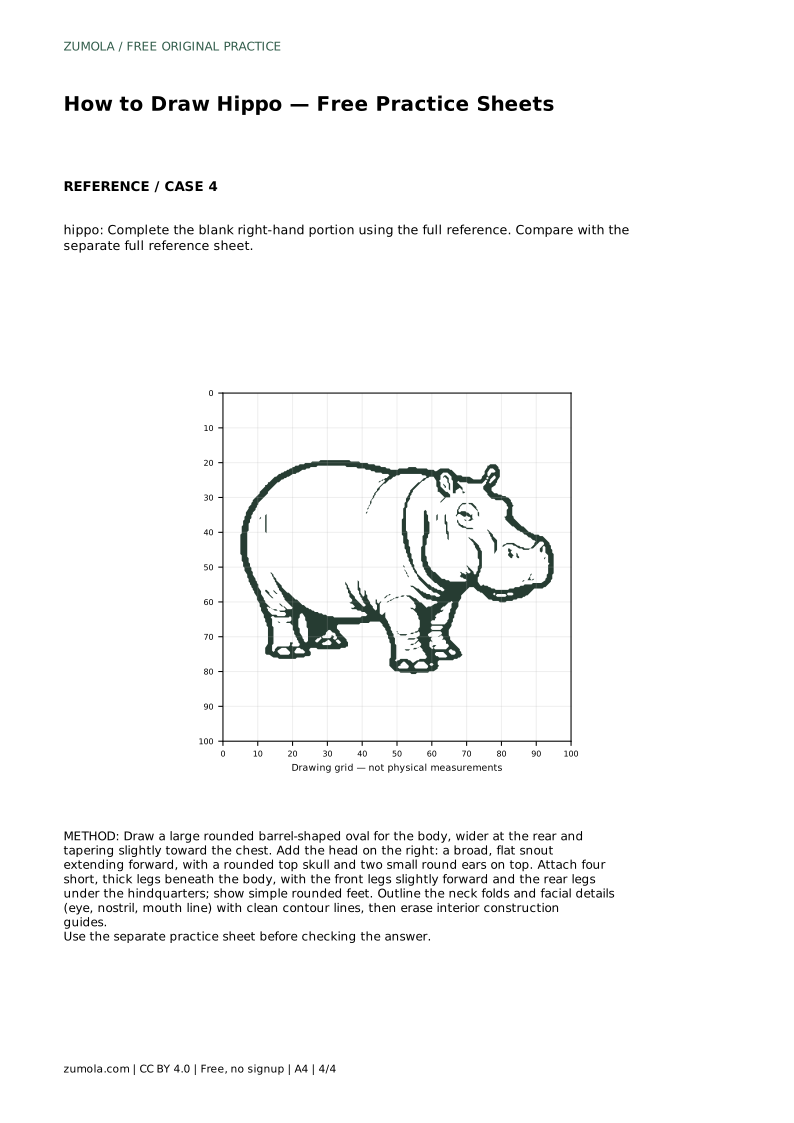
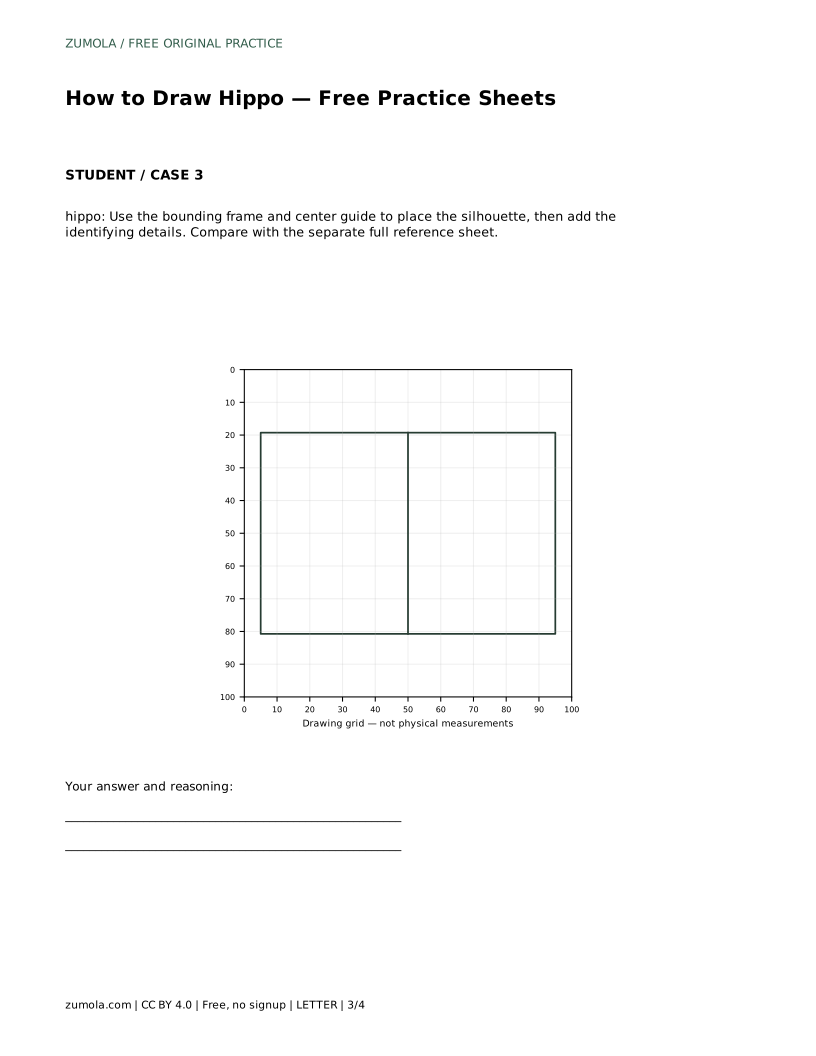
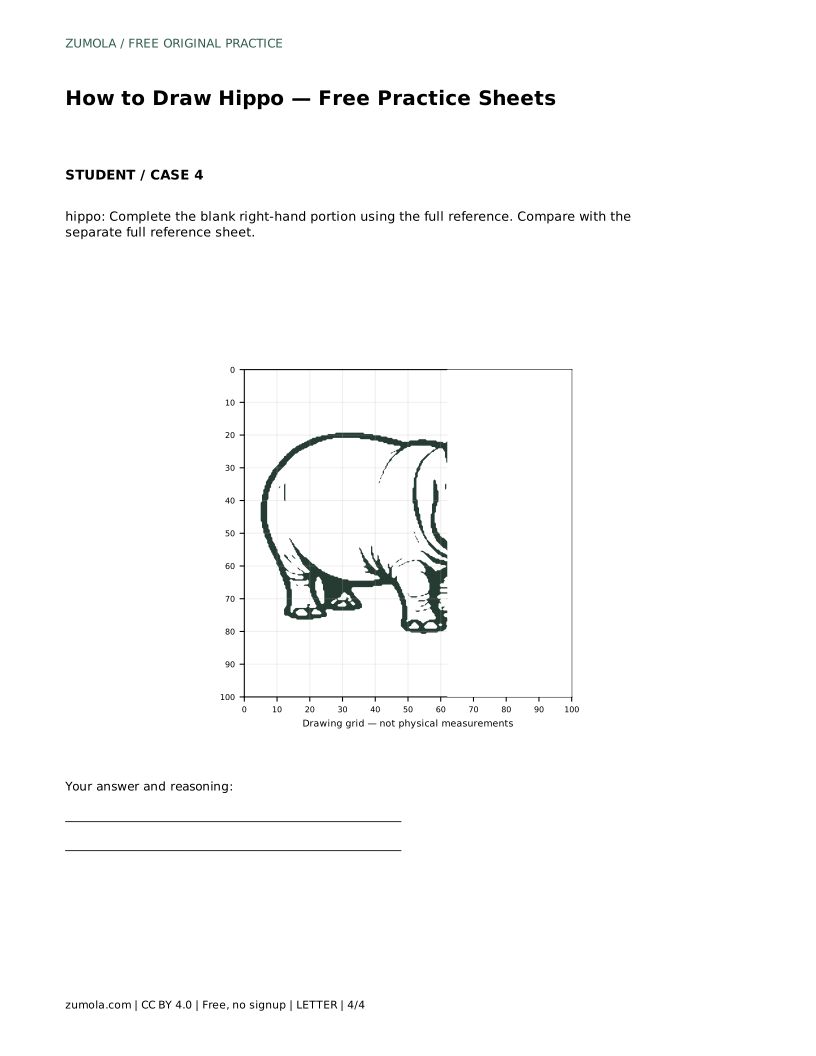
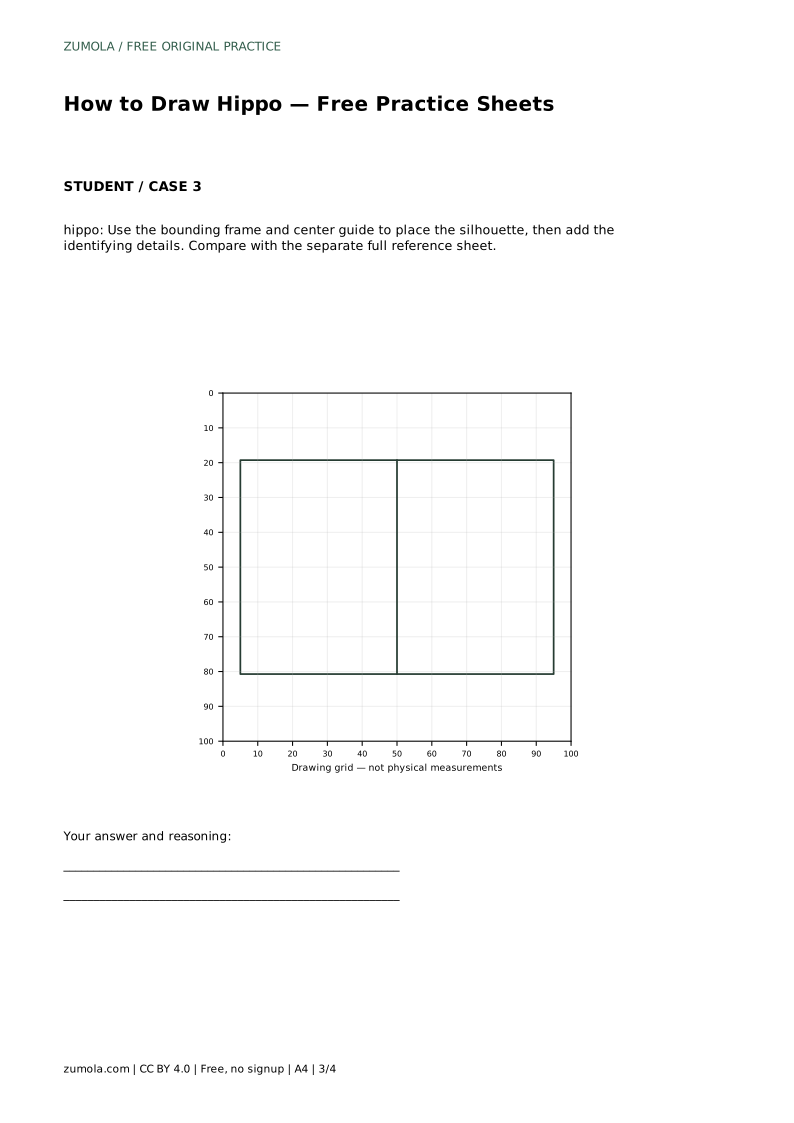
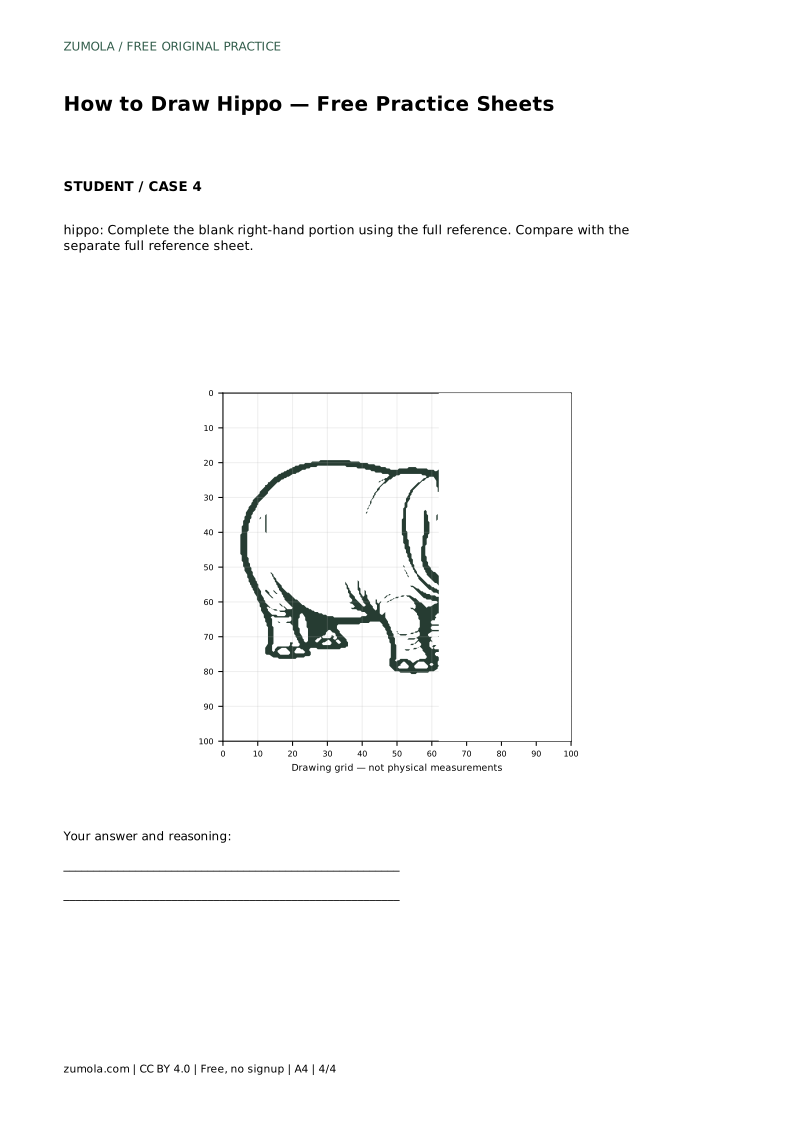
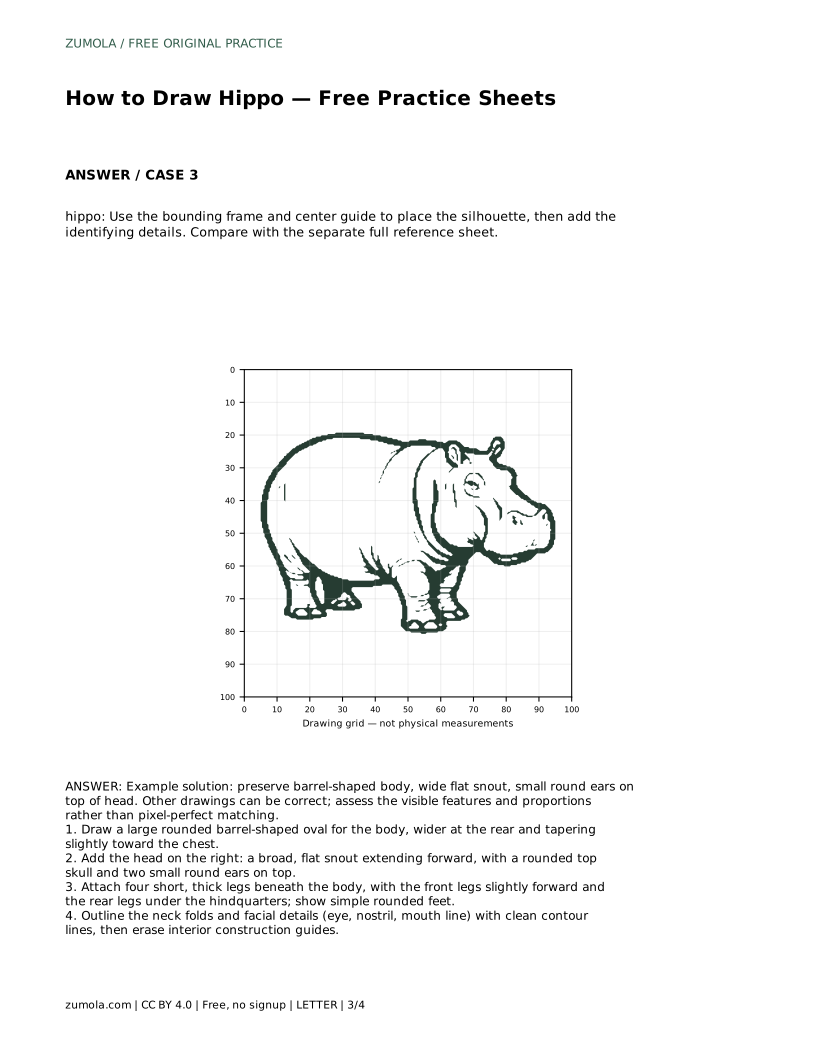
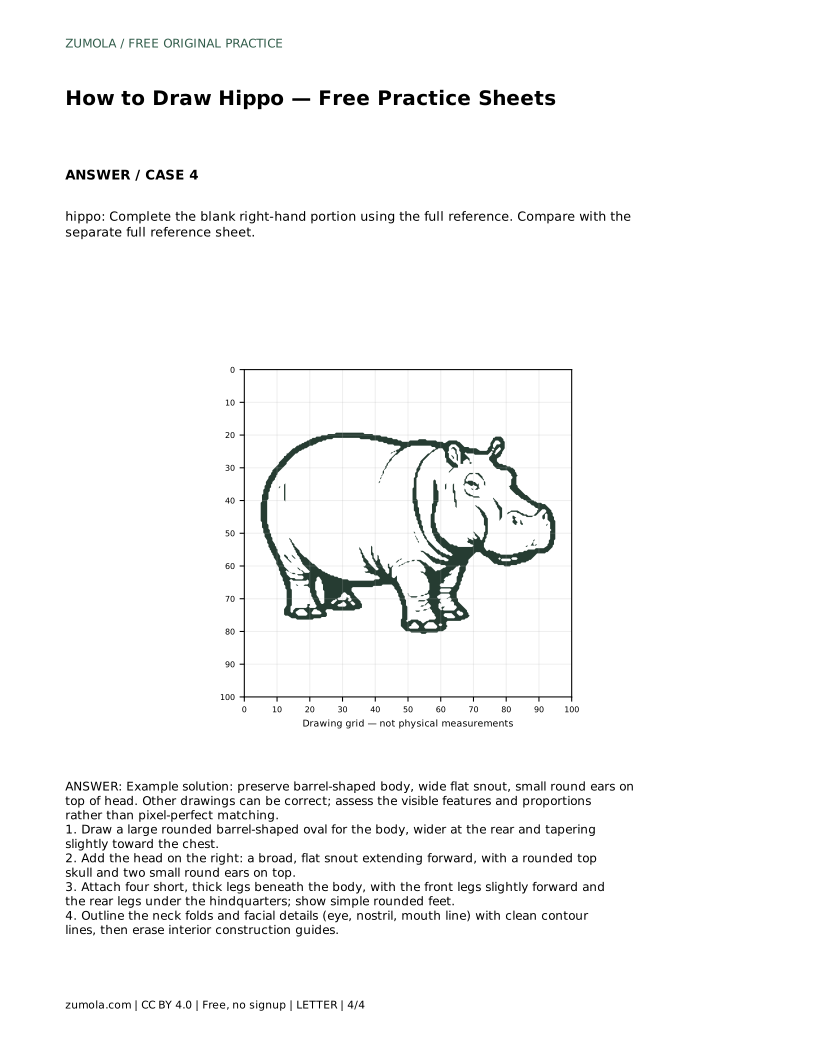
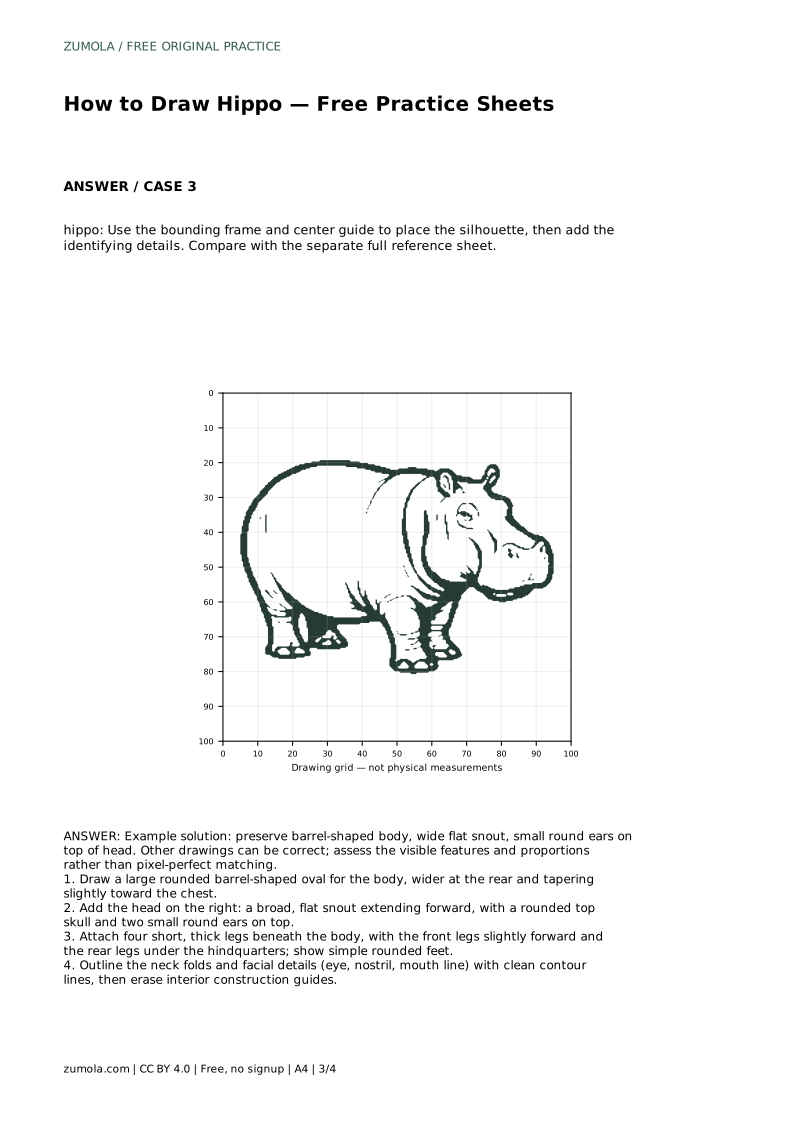
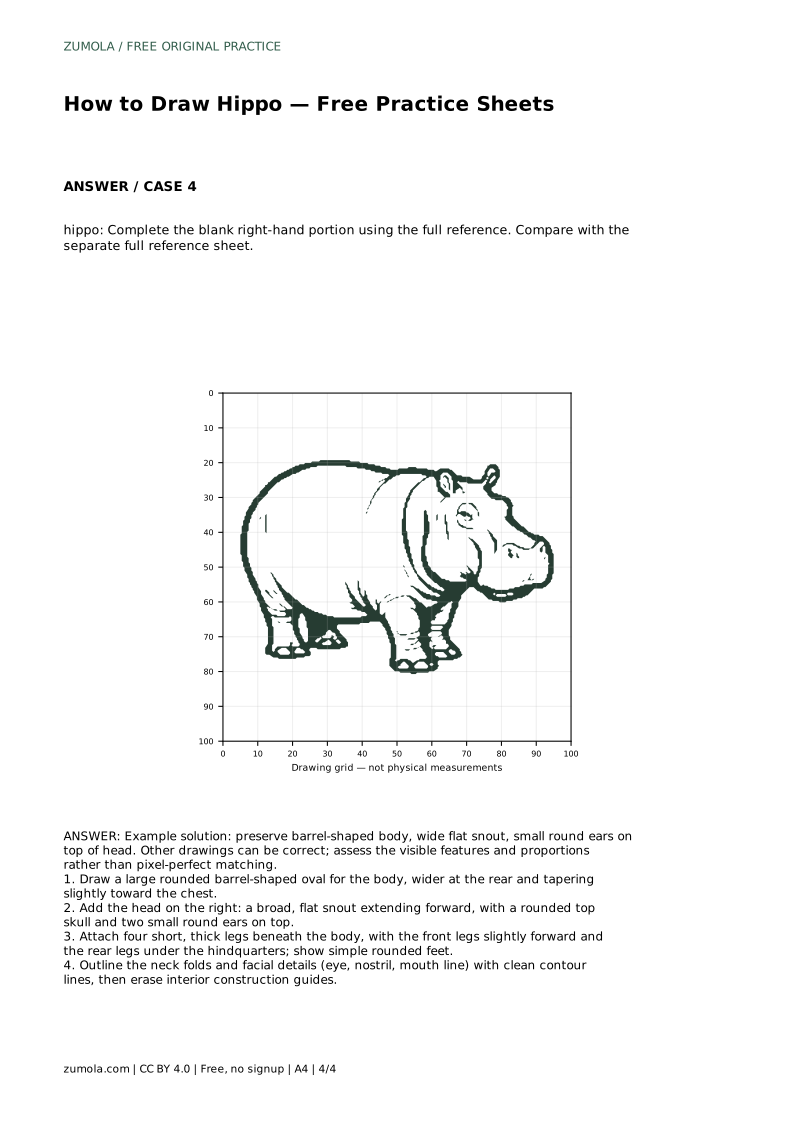
A bounding frame with a center guide helps you place the silhouette before adding details. Use the frame to judge how much of the page the body occupies, and the center guide to keep the head and body balanced. A partial sheet, where the right-hand portion is blank, asks you to complete the missing side using the full reference.
There is no single correct hippo drawing. Different proportions and line styles can all work. Judge the result by whether the visible features are present and believable: a barrel-shaped body, a wide flat snout, small round ears on top of the head, and four short thick legs. Use the rubric below as a checklist rather than a pass-or-fail score.
hippo: Trace the reference outline, then practise the contour independently. Compare with the separate full reference sheet.
Example solution: preserve barrel-shaped body, wide flat snout, small round ears on top of head. Other drawings can be correct; assess the visible features and proportions rather than pixel-perfect matching. Draw a large rounded barrel-shaped oval for the body, wider at the rear and tapering slightly toward the chest. Add the head on the right: a broad, flat snout extending forward, with a rounded top skull and two small round ears on top. Attach four short, thick legs beneath the body, with the front legs slightly forward and the rear legs under the hindquarters; show simple rounded feet. Outline the neck folds and facial details (eye, nostril, mouth line) with clean contour lines, then erase interior construction guides.
No. Several drawings can be correct. Assess the visible features and proportions rather than pixel-perfect matching.
Start with tracing to learn the shape order, then move to the grid or frame sheet for proportion practice.
The barrel-shaped body, wide flat snout, small round ears on top of the head, and four short thick legs.
All drawing practice · Free coordinate paper
Original resources · CC BY 4.0 · Free for personal and classroom use with attribution.