Reference diagrams
LETTER · Download PDF
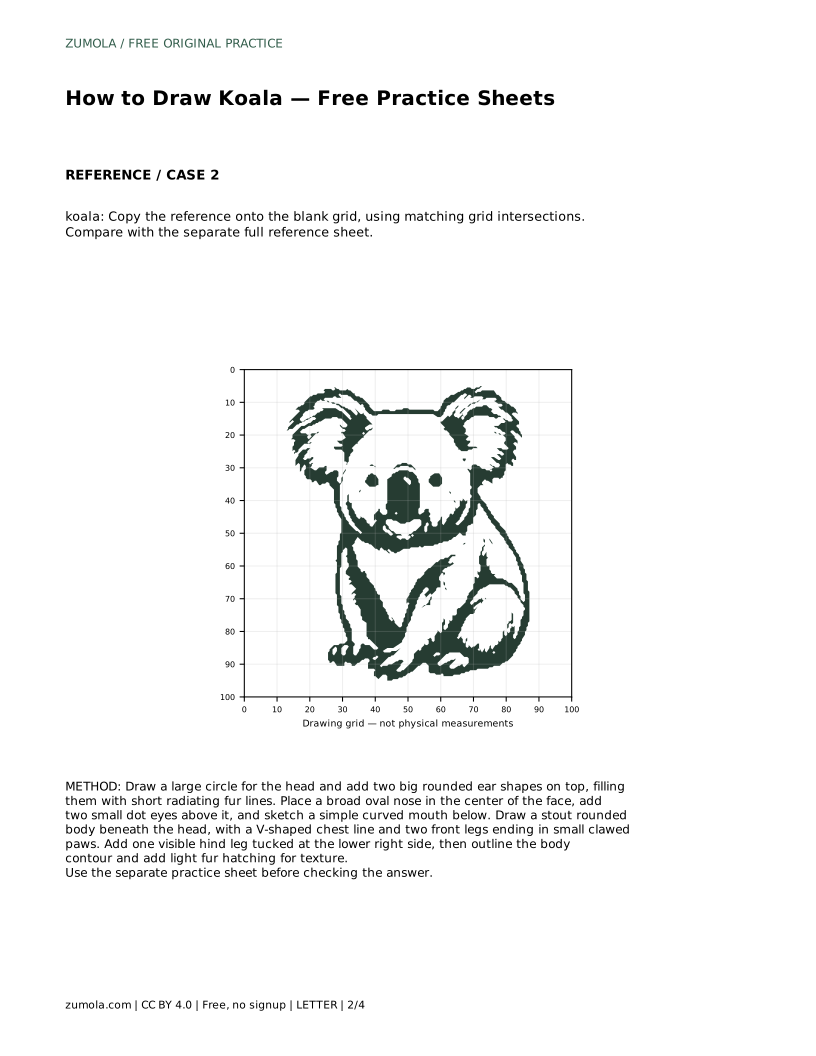
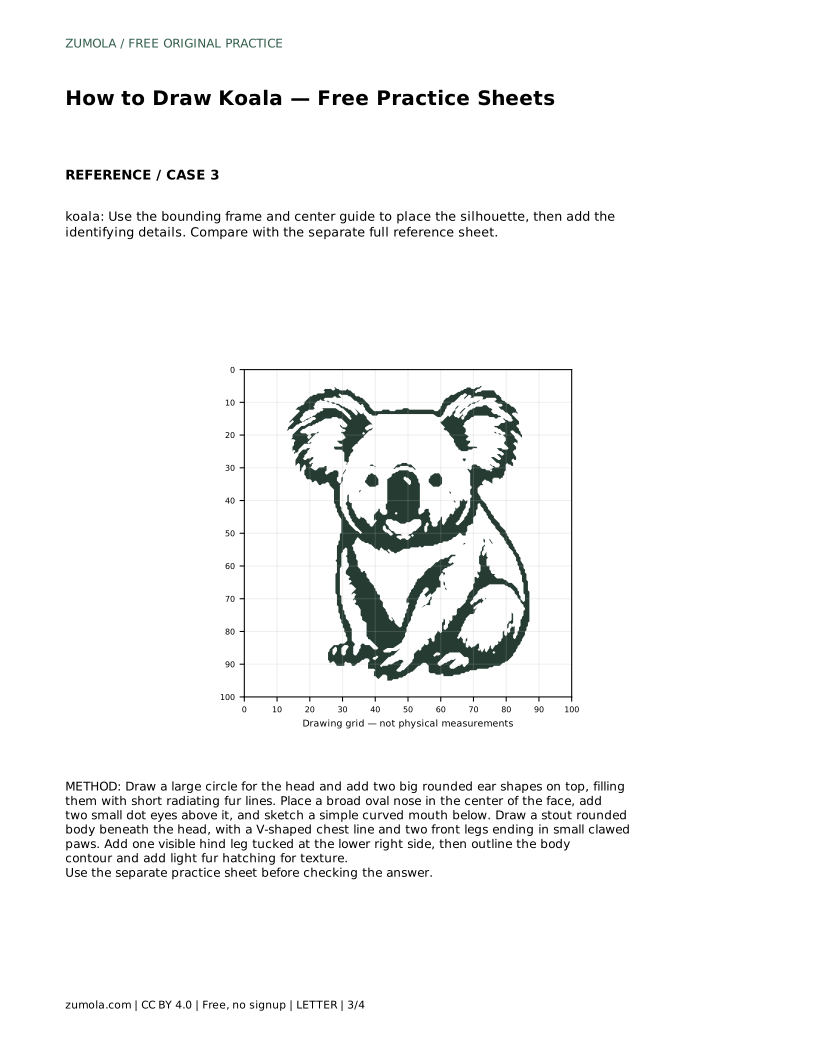
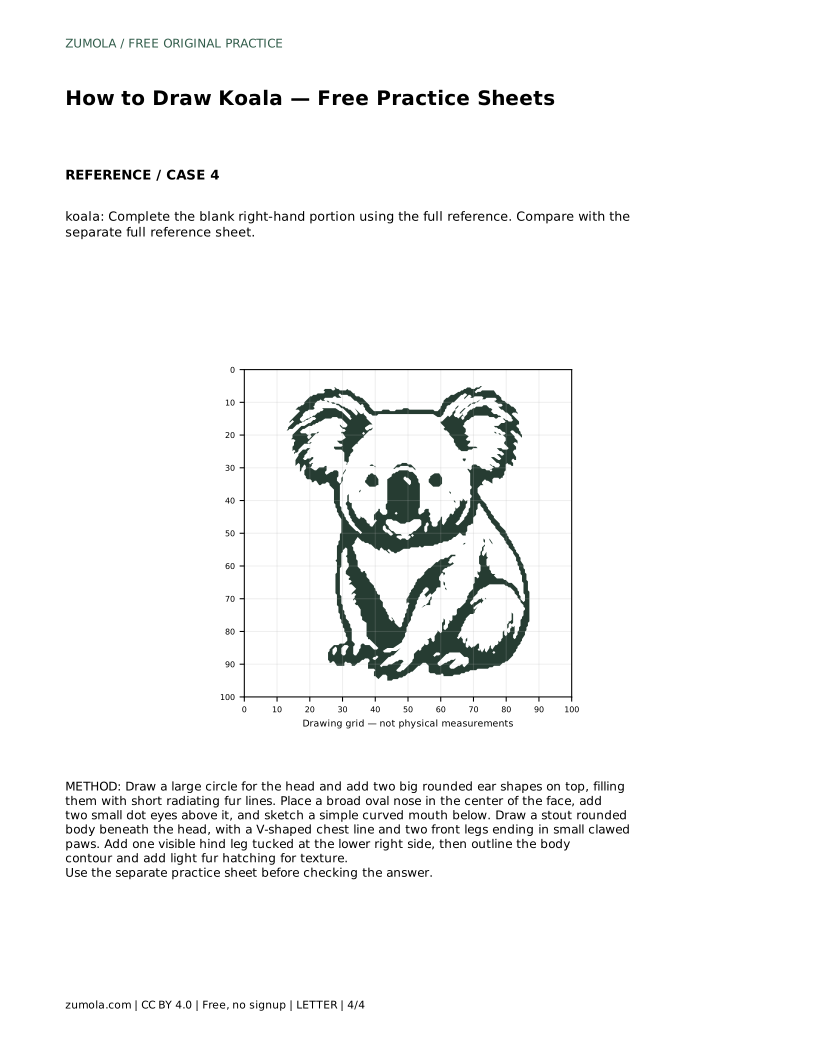
A4 · Download PDF
Free original resources
Learn to draw a koala by building a round head, broad nose, fluffy ears, and stout body. Practice with tracing, grid, and frame sheets.
Four original cases, with reference diagrams, practice sheets and worked answers. Everything is free; no signup required.
LETTER · Download PDF
A4 · Download PDF
LETTER · Download PDF
A4 · Download PDF
LETTER · Download PDF
A4 · Download PDF
Use A4 or US Letter to match your printer. Use the stated values and conditions to solve each exercise; diagrams are not physical measuring rulers.
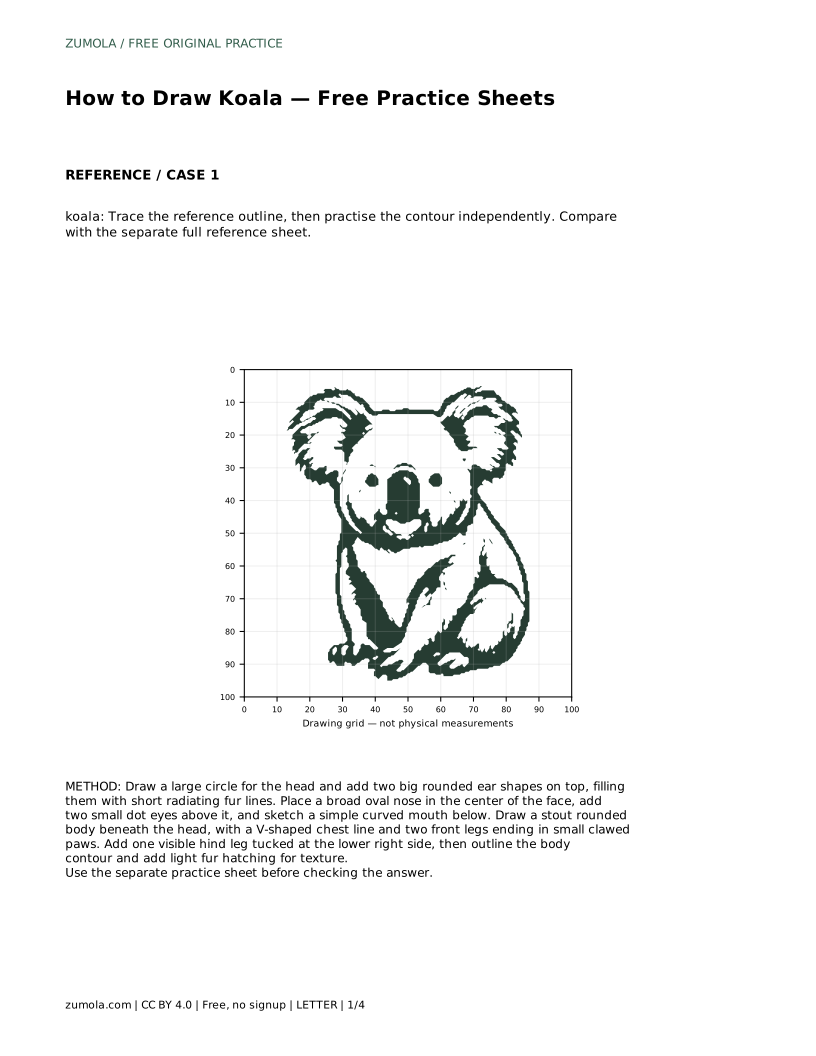
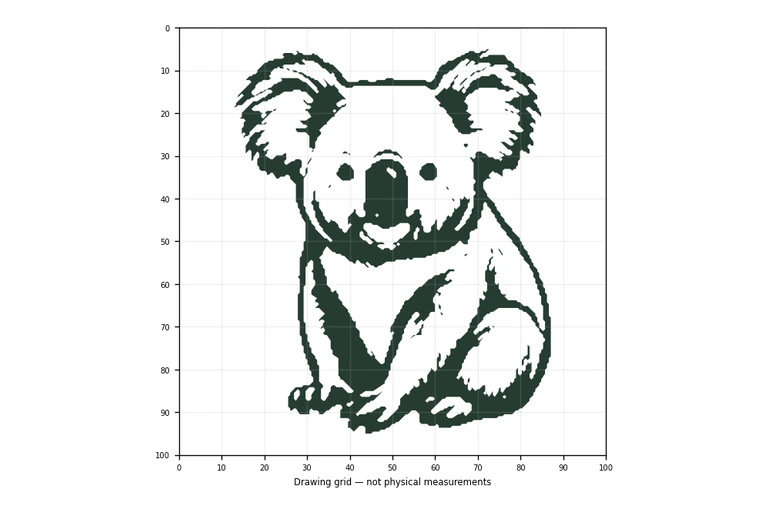
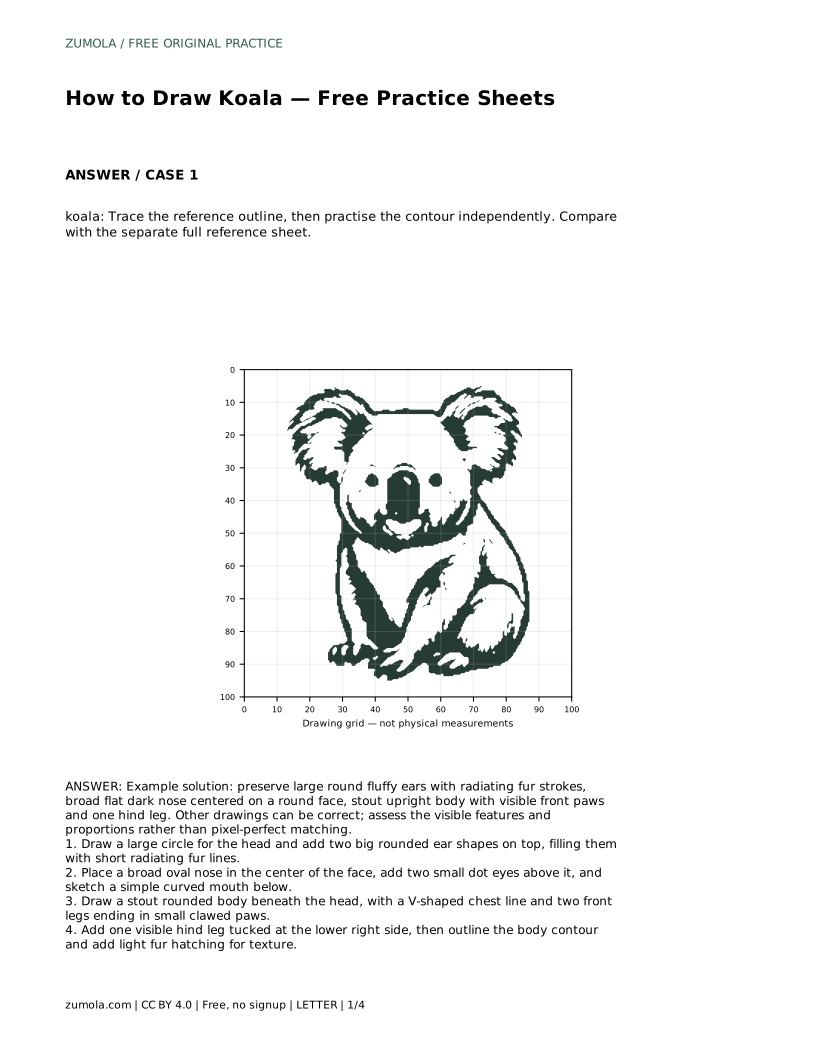
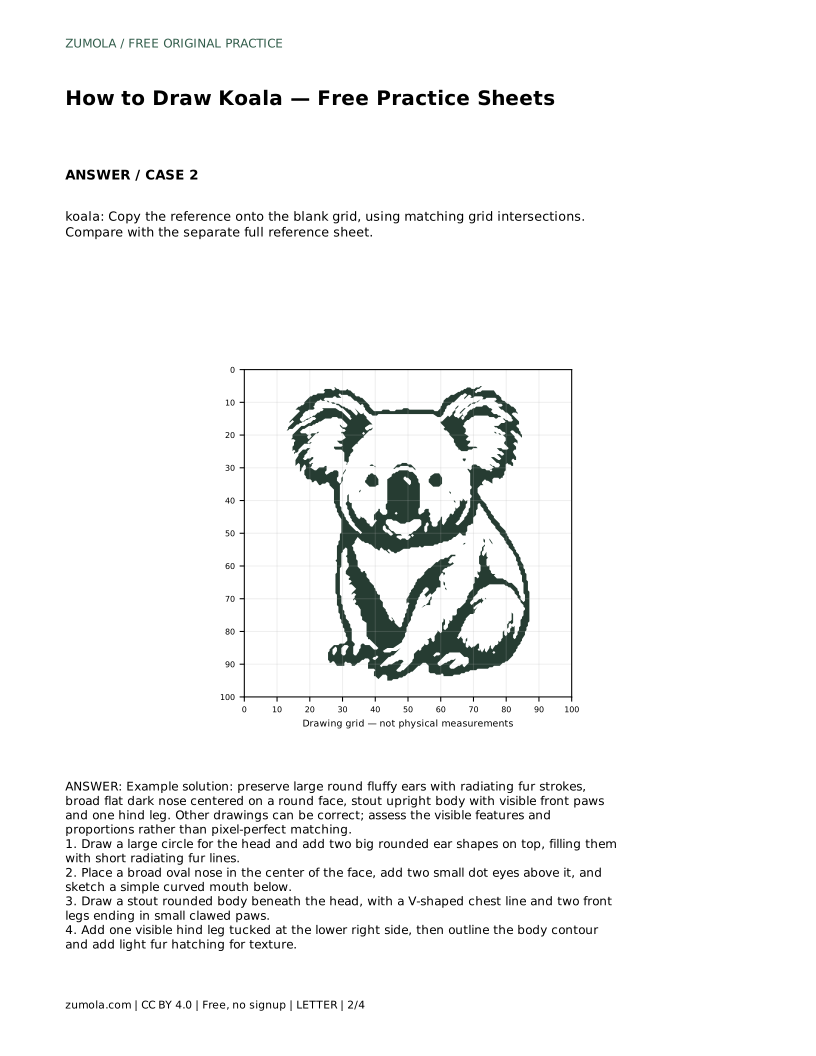
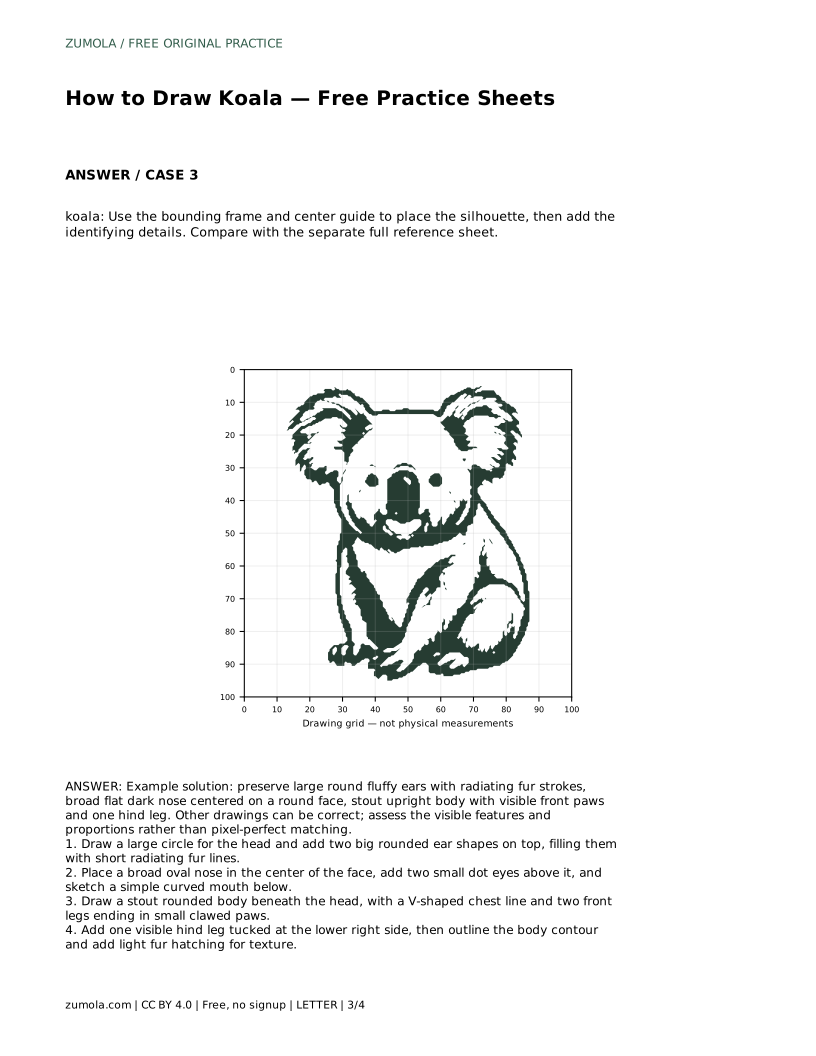
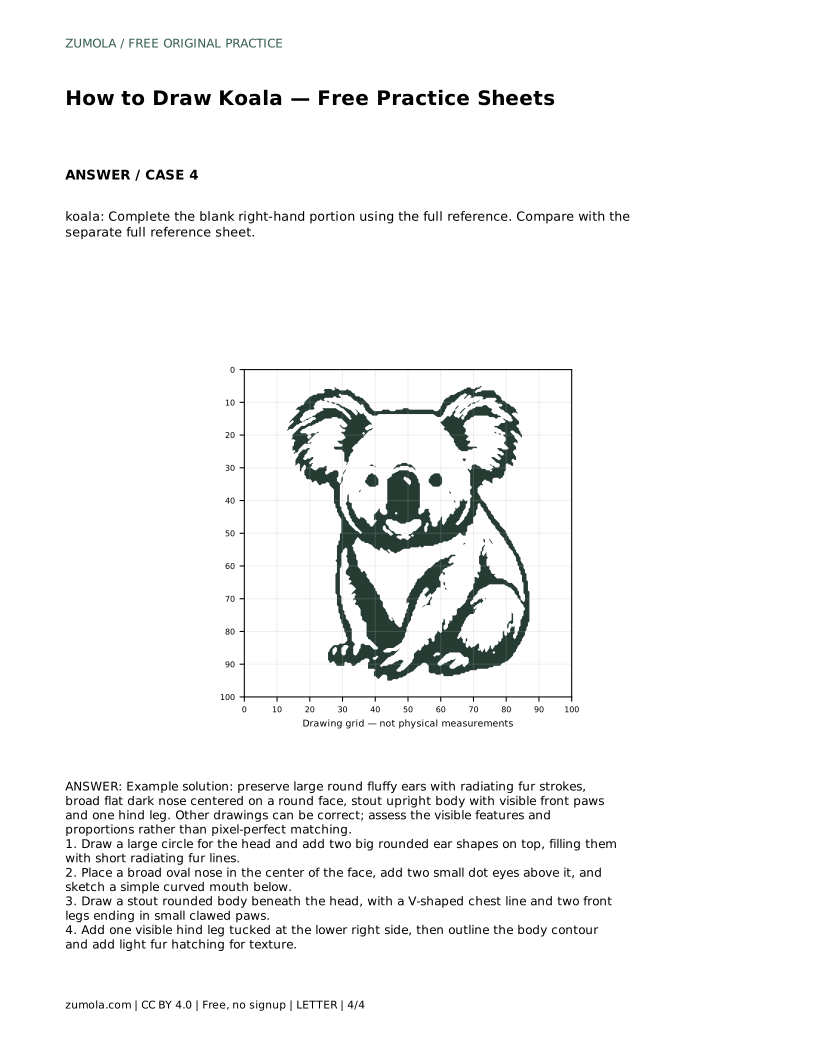
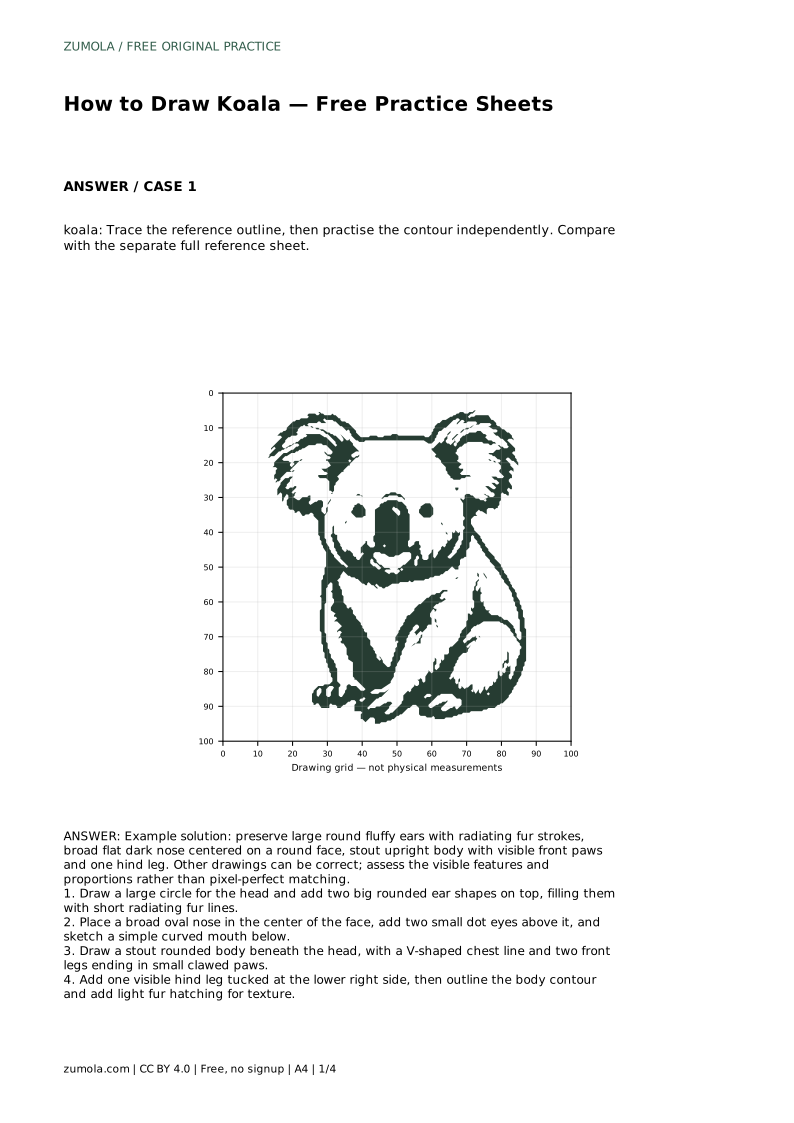
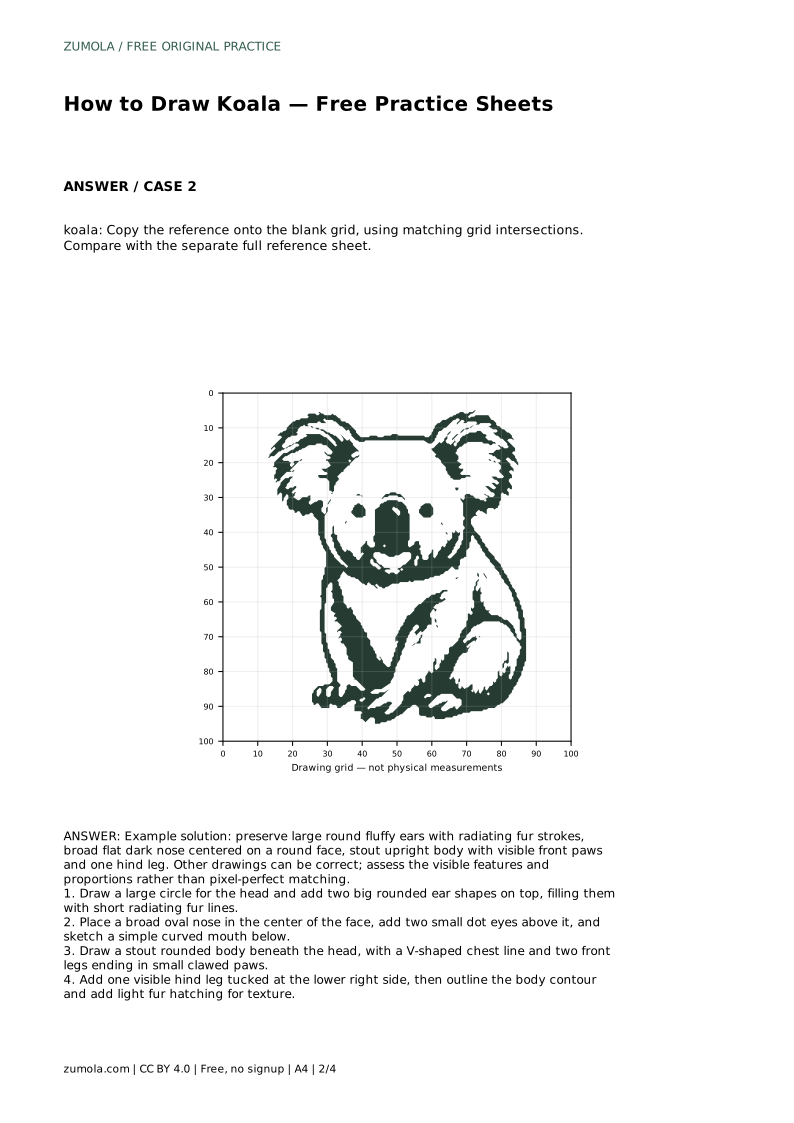
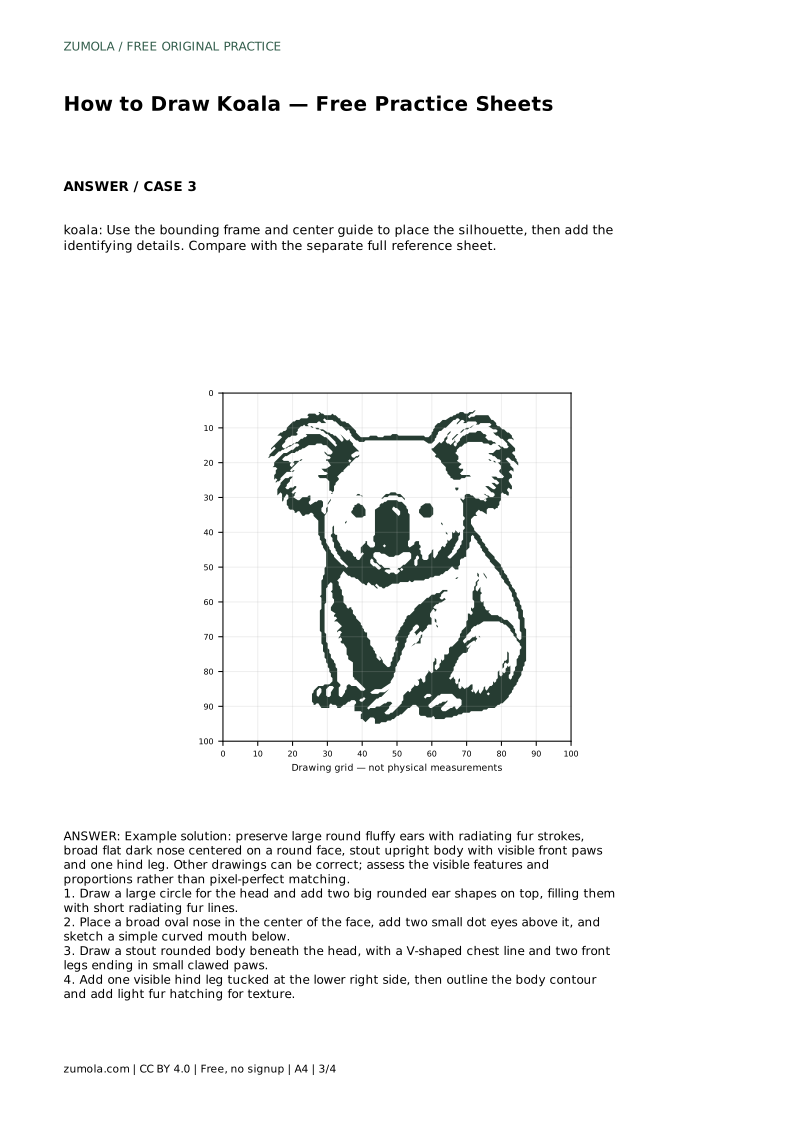
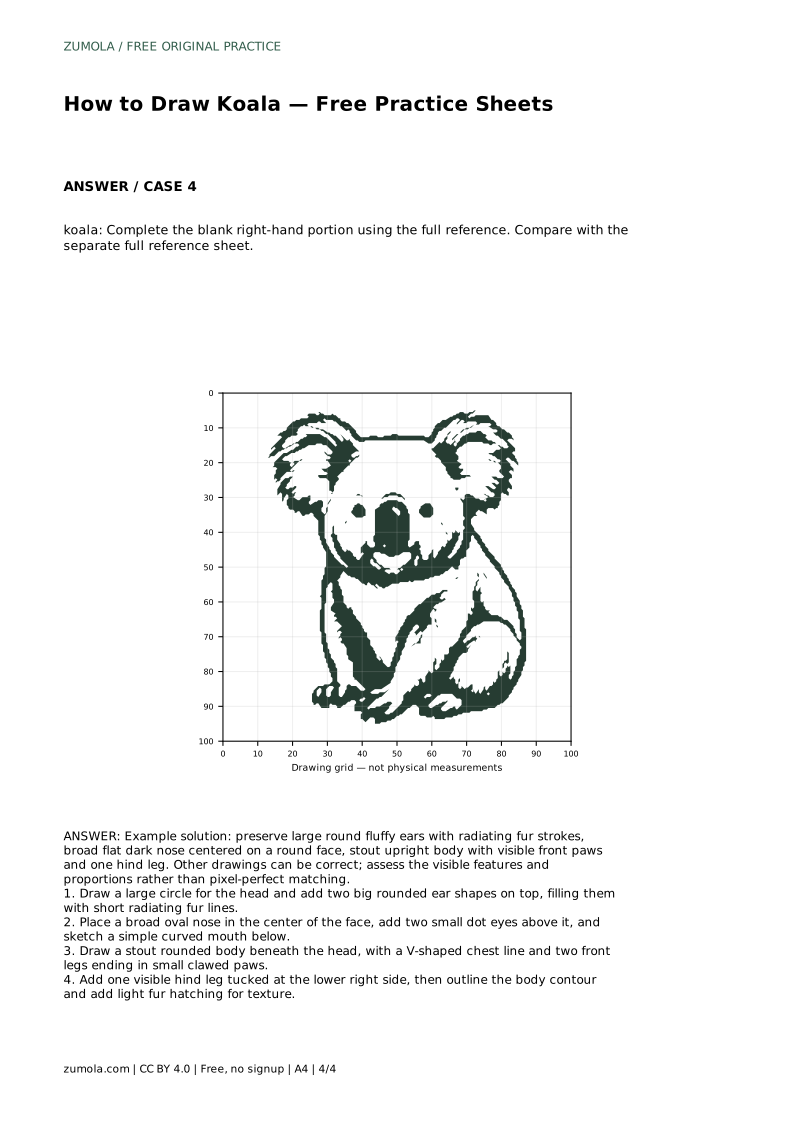
A koala drawing depends on a few clear shapes: a large round head, two oversized fluffy ears, a broad flat nose, and a stout upright body. This page explains how to build those parts in order, then how to use the practice sheets to strengthen your control. The goal is not a pixel-perfect copy. Different drawings can be correct when the identifying features and proportions hold together.
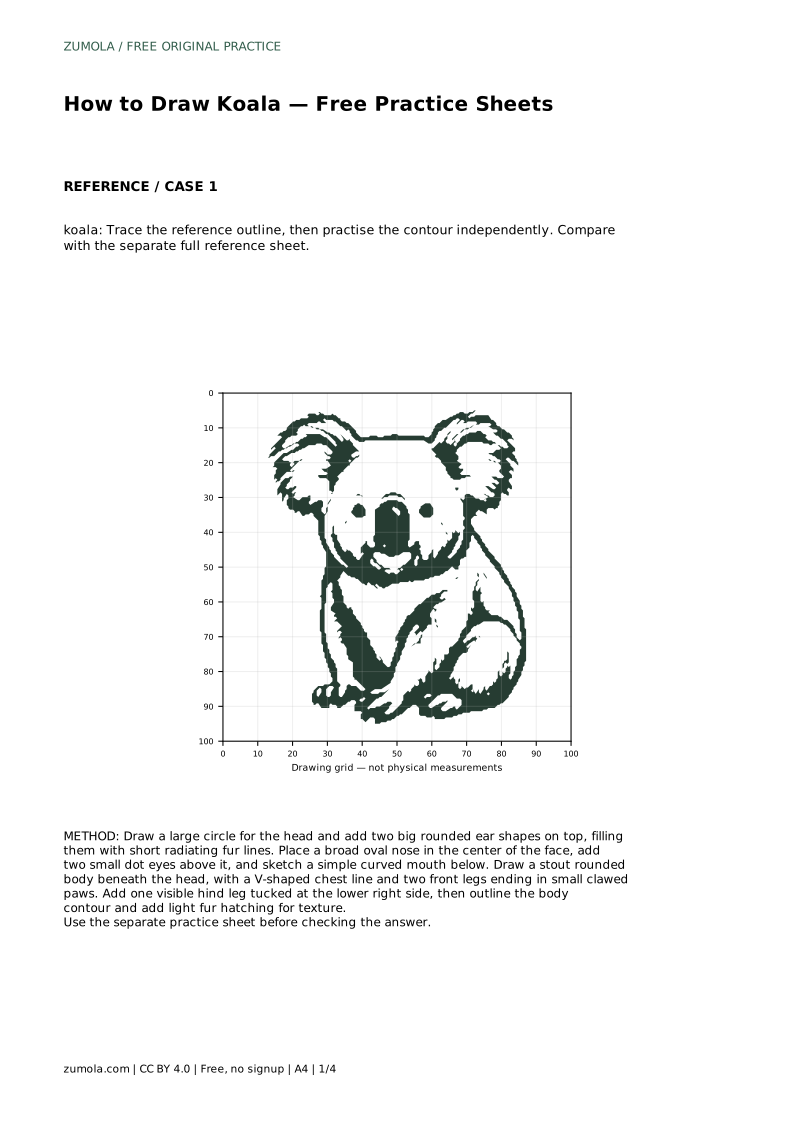
Start with the head because it carries most of the koala's identity. Draw a large circle, then add two big rounded ear shapes on top. Keep the ears wide and generous; small ears make the animal read as a bear rather than a koala. Fill each ear with short radiating fur lines so the edge looks soft rather than smooth.
Place a broad oval nose in the center of the face. The nose should be wide and flat, not a small triangle. Add two small dot eyes above it, spaced apart, and sketch a simple curved mouth below the nose. Check that the nose sits centered on the round face before moving on.
Draw a stout rounded body beneath the head. Koalas sit upright and compact, so keep the body wider than tall rather than stretched. Add a V-shaped chest line to suggest the chest fur parting, then draw two front legs ending in small clawed paws.
Add one visible hind leg tucked at the lower right side. This single hind leg is enough to suggest the seated posture without cluttering the drawing. Outline the body contour last so the limbs connect cleanly to the torso.
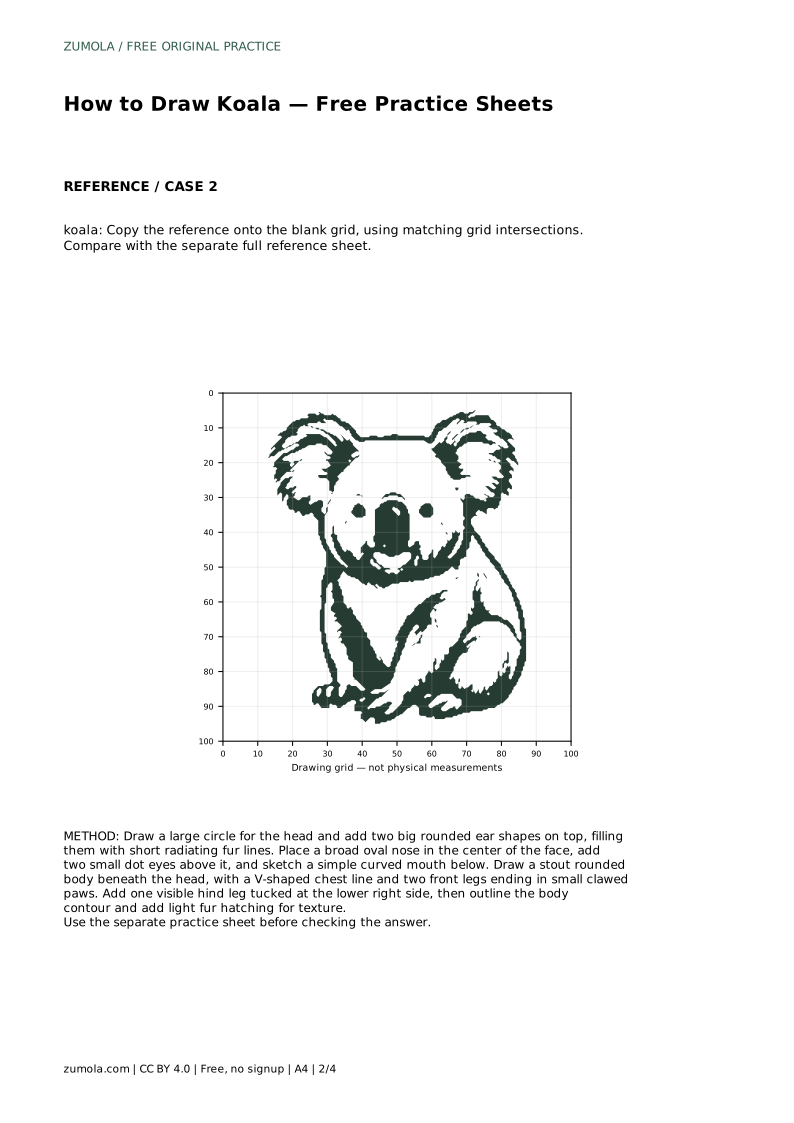
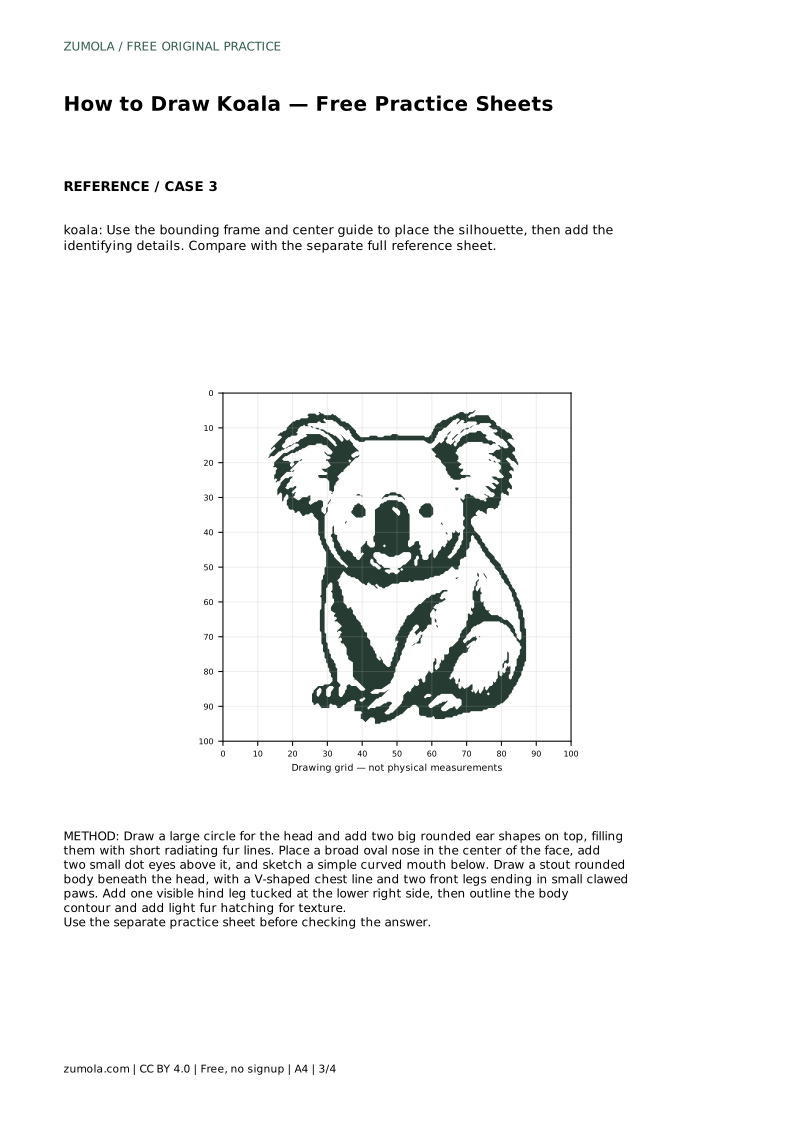
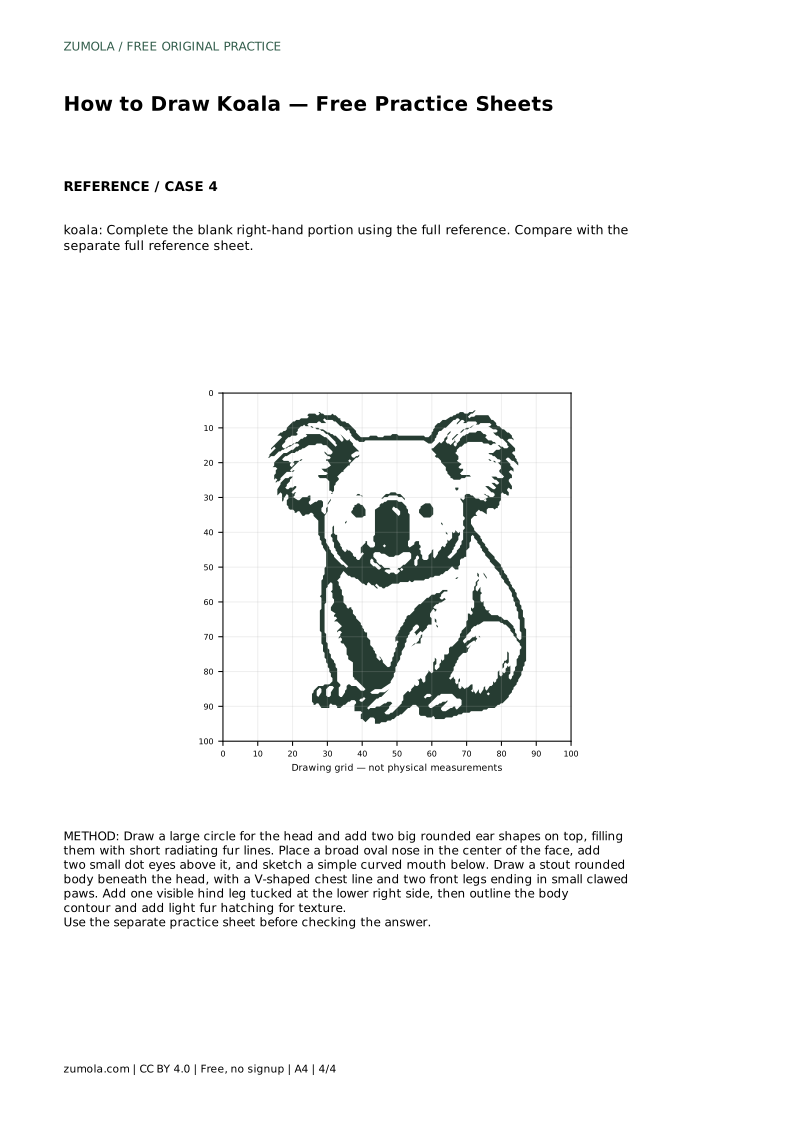
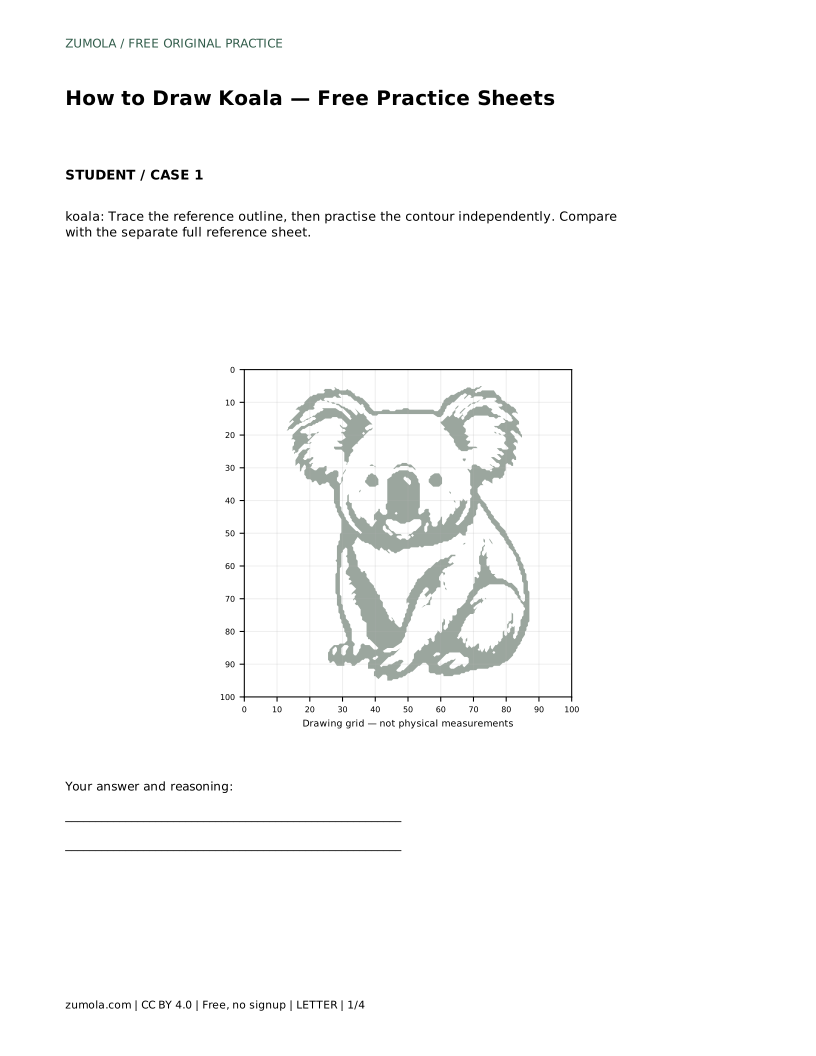
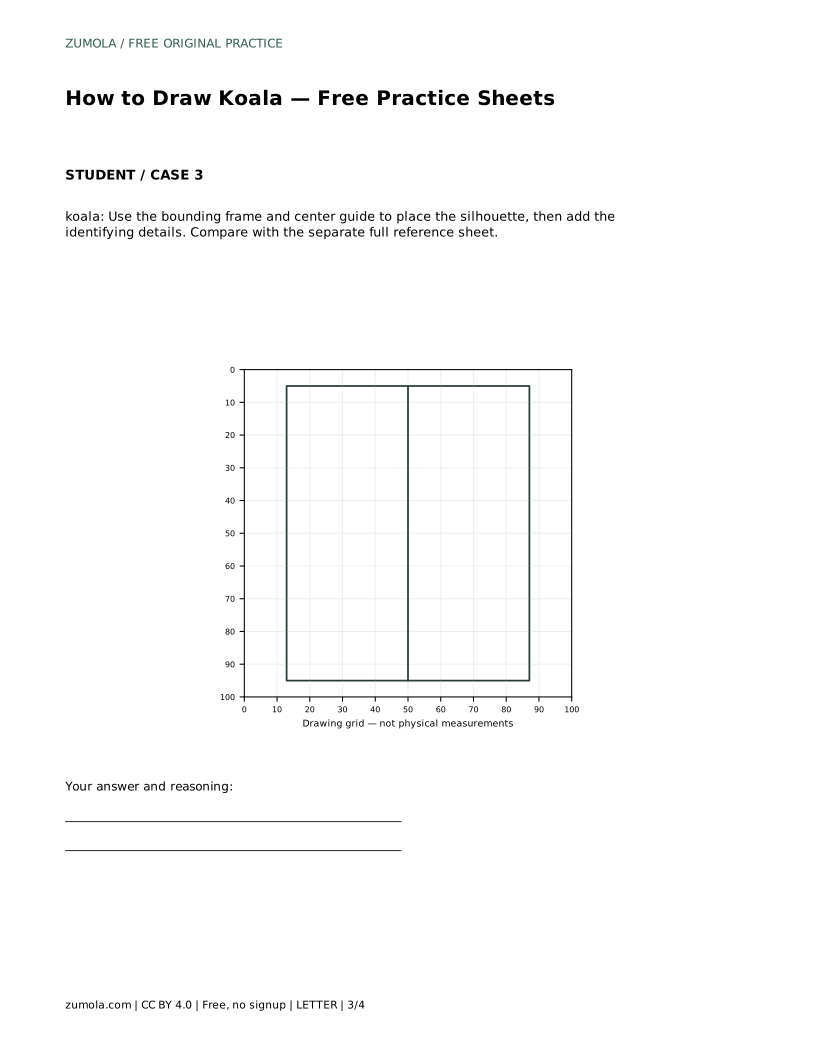
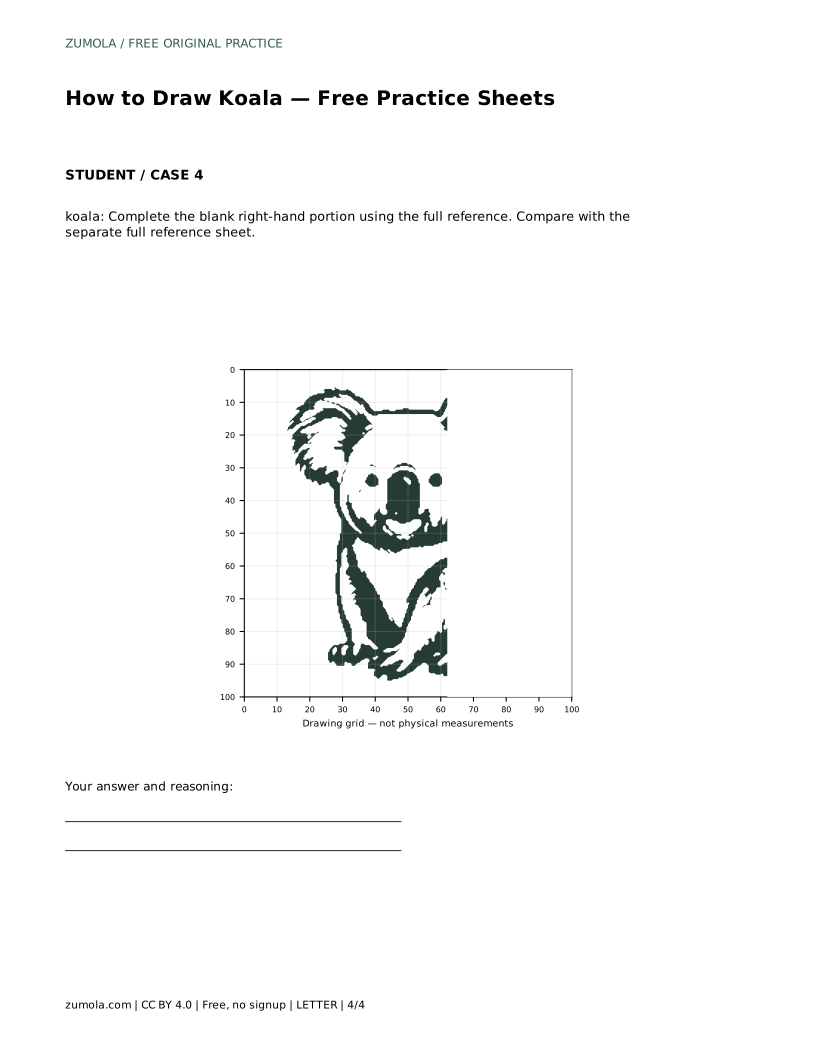
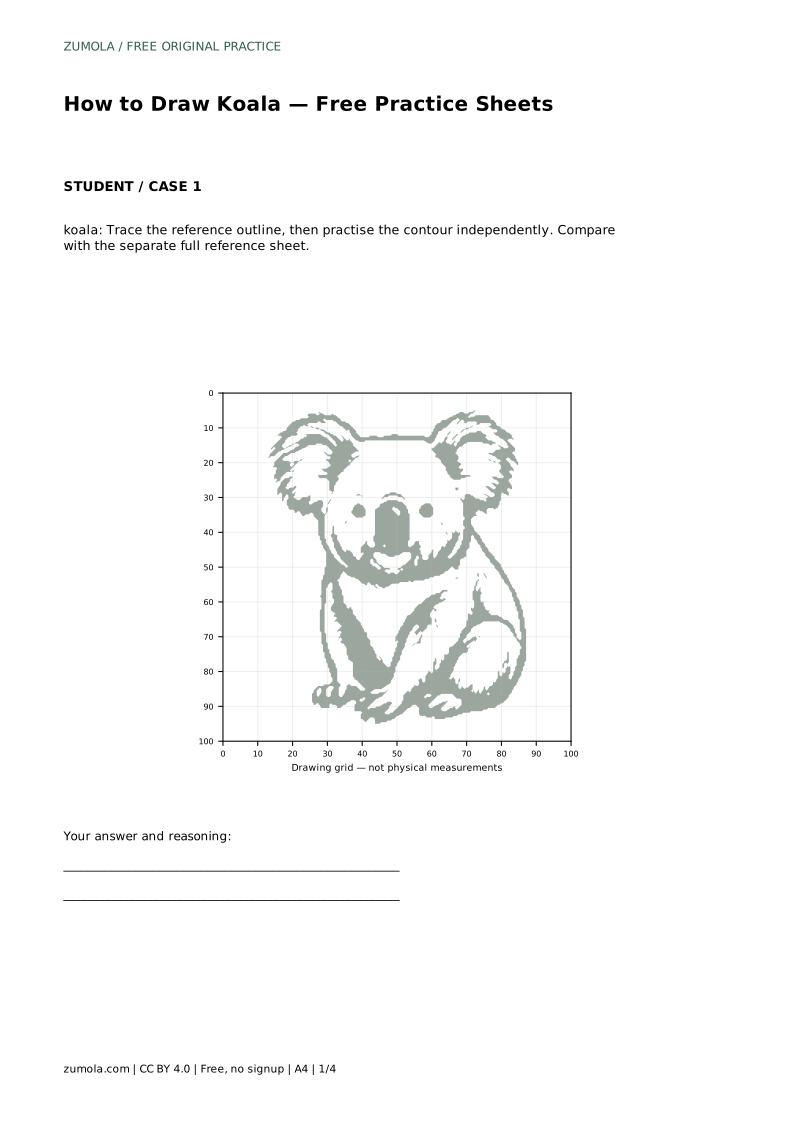
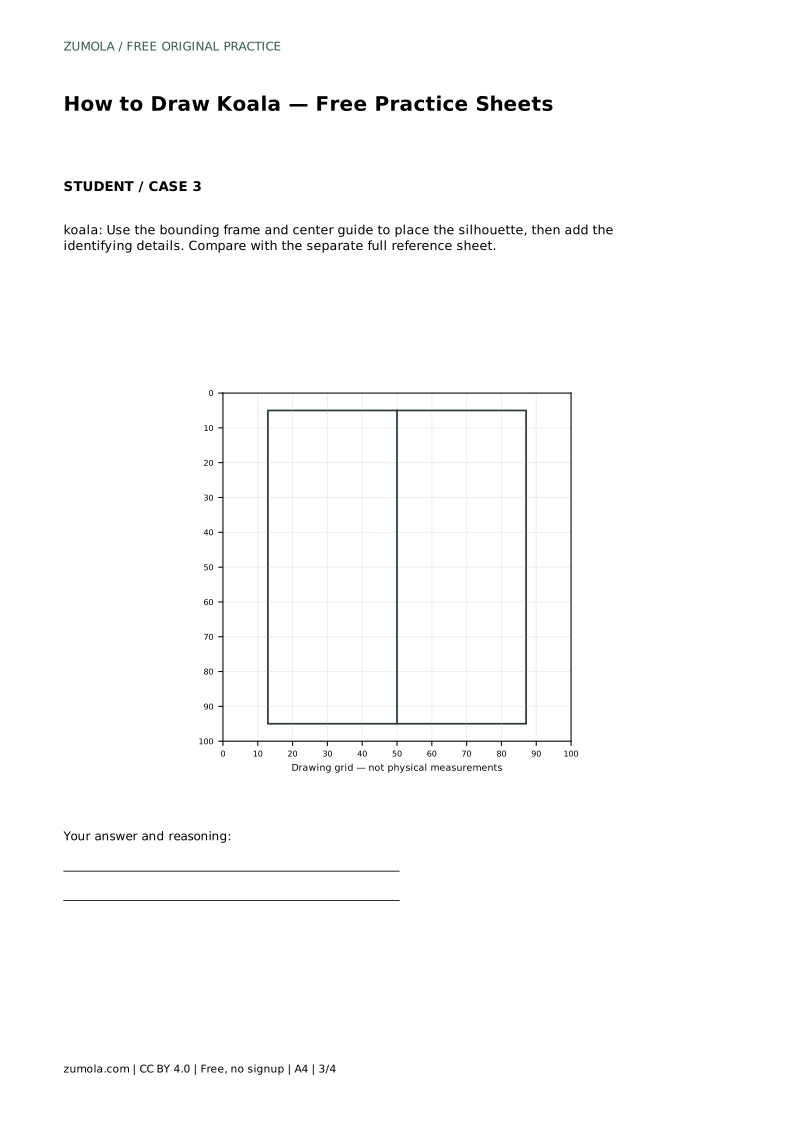
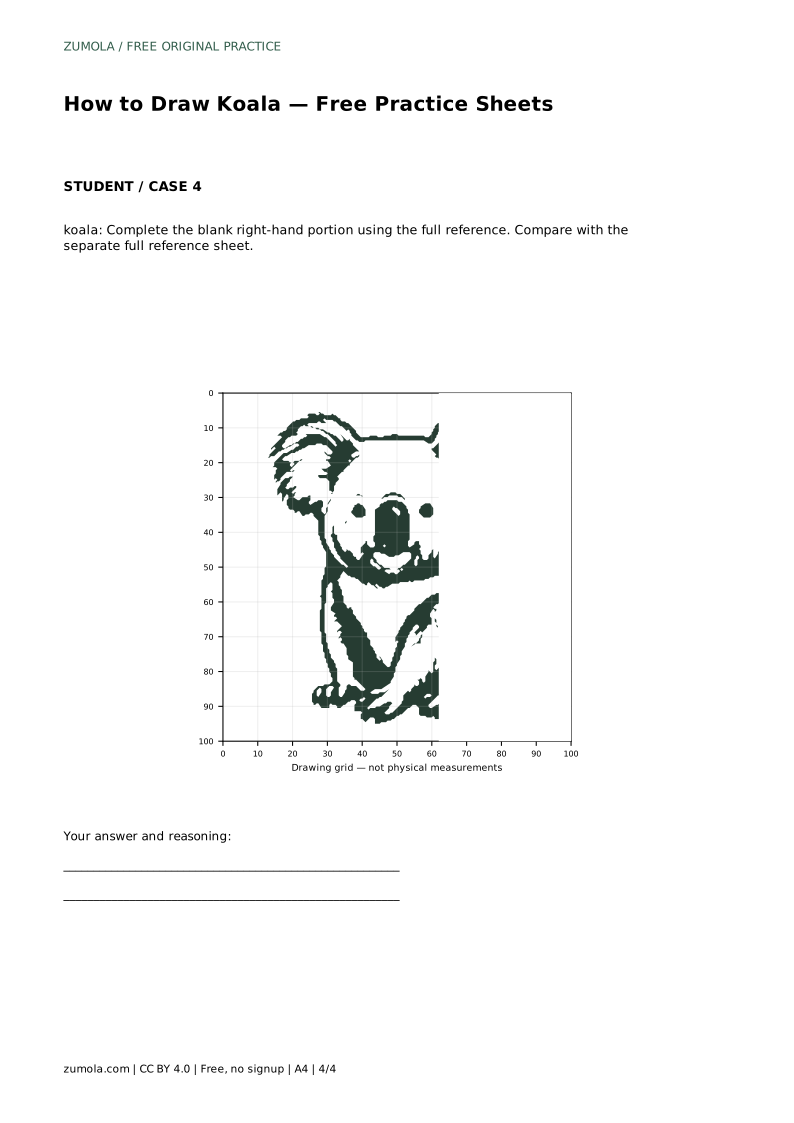
The sheets offer different kinds of support, and each builds a different skill. Tracing the reference outline helps you feel the proportions of the ears, nose, and body. Copying onto the blank grid trains you to judge position by matching grid intersections. The bounding frame and center guide help you place the silhouette before adding details. The partial sheet asks you to complete the blank right-hand portion using the full reference.
After any supported attempt, compare your drawing with the separate full reference sheet. Look for the large fluffy ears, the broad centered nose, and the stout body with visible front paws and one hind leg. Then practise the contour independently, without the guide, to test what you have learned.
A drawing of a koala can succeed in many styles. Assess whether the ears are large and fluffy, the nose is broad and centered, and the body is stout with the limbs readable. Line confidence and fur texture matter, but a wobbly line is not a failure if the shapes communicate.
Use the rubric below to review your own sheet. Score each criterion separately so you know what to practise next rather than treating the drawing as simply right or wrong.
koala: Trace the reference outline, then practise the contour independently. Compare with the separate full reference sheet.
Example solution: preserve large round fluffy ears with radiating fur strokes, broad flat dark nose centered on a round face, stout upright body with visible front paws and one hind leg. Other drawings can be correct; assess the visible features and proportions rather than pixel-perfect matching. Draw a large circle for the head and add two big rounded ear shapes on top, filling them with short radiating fur lines. Place a broad oval nose in the center of the face, add two small dot eyes above it, and sketch a simple curved mouth below. Draw a stout rounded body beneath the head, with a V-shaped chest line and two front legs ending in small clawed paws. Add one visible hind leg tucked at the lower right side, then outline the body contour and add light fur hatching for texture.
No. Other drawings can be correct. Assess the visible features and proportions rather than pixel-perfect matching.
Start by tracing the reference outline to learn the proportions, then move to the grid or frame sheet to practise placing shapes independently.
Large round fluffy ears with radiating fur strokes, a broad flat dark nose centered on a round face, and a stout upright body with visible front paws and one hind leg.
All drawing practice · Free coordinate paper
Original resources · CC BY 4.0 · Free for personal and classroom use with attribution.