Reference diagrams
LETTER · Download PDF
A4 · Download PDF
Free original resources
Learn to draw a submarine by tracing, gridding, and completing a reference. Build the hull, conning tower, masts, propeller, and tail fins with clear steps.
Four original cases, with reference diagrams, practice sheets and worked answers. Everything is free; no signup required.
LETTER · Download PDF
A4 · Download PDF
LETTER · Download PDF
A4 · Download PDF
LETTER · Download PDF
A4 · Download PDF
Use A4 or US Letter to match your printer. Use the stated values and conditions to solve each exercise; diagrams are not physical measuring rulers.
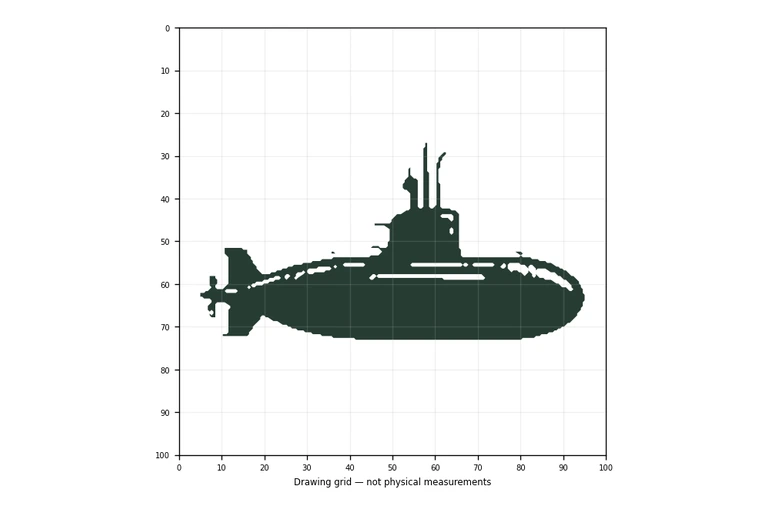
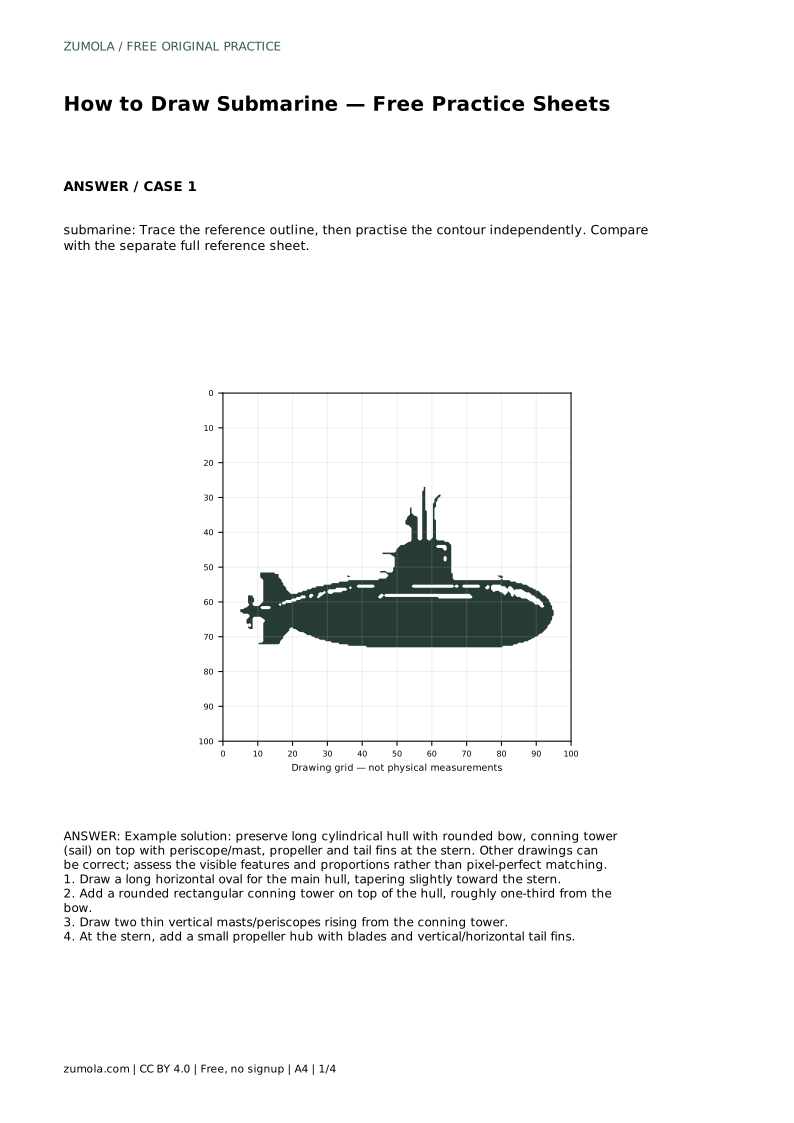
Drawing a submarine is mostly a problem of proportion: a long hull, a compact sail on top, and small stern details that must sit in the right places. These free practice sheets let you trace a reference outline, copy it onto a grid, place the silhouette inside a bounding frame, or complete a partly blank drawing. Each method trains the same core skill: keeping the hull long and level while the conning tower, masts, propeller, and fins stay proportionate.
Begin with the largest shape, because every smaller detail is positioned relative to it. Draw a long horizontal oval for the main hull, tapering slightly toward the stern. Keep the bow rounded and the overall form cylindrical rather than pointed at both ends. A submarine hull reads as a stretched tube with softened ends, not a fish shape.
Place the conning tower, often called the sail, on top of the hull roughly one-third of the way from the bow. Treat it as a rounded rectangle that sits firmly on the hull line. Its width should be a small fraction of the hull length, and its height should stay modest so the drawing does not look top-heavy. Check that the sail is upright and centered over the hull rather than tilted forward or back.
Two thin vertical masts or periscopes rise from the top of the sail. Keep them narrow and roughly parallel, with a small gap between them. Their height should be enough to be visible but not so tall that they dominate the drawing. If you are tracing, follow the reference spacing; if you are drawing freely, compare the mast height to the sail height before committing.
At the stern, add a small propeller hub with blades and vertical and horizontal tail fins. The propeller sits at the very back of the hull, centered on the hull's axis. Tail fins extend outward from the stern area, and their size should stay small relative to the hull. Keep the stern details clustered so the back of the submarine looks compact rather than cluttered.
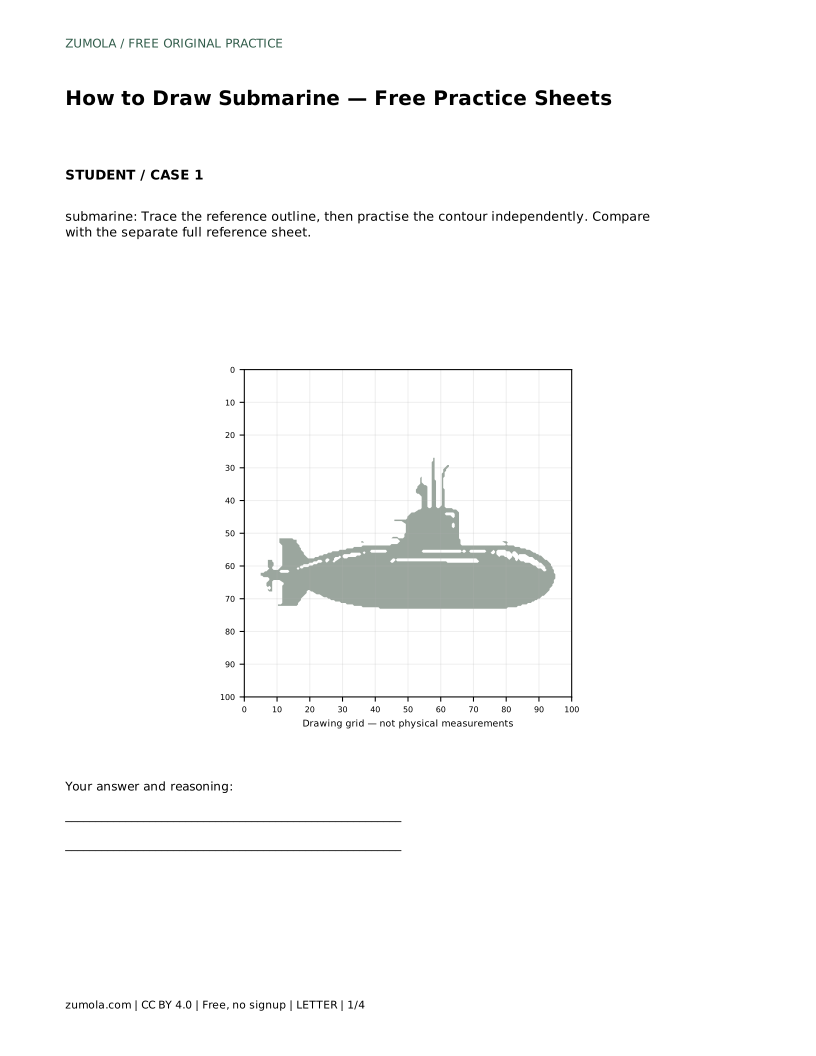
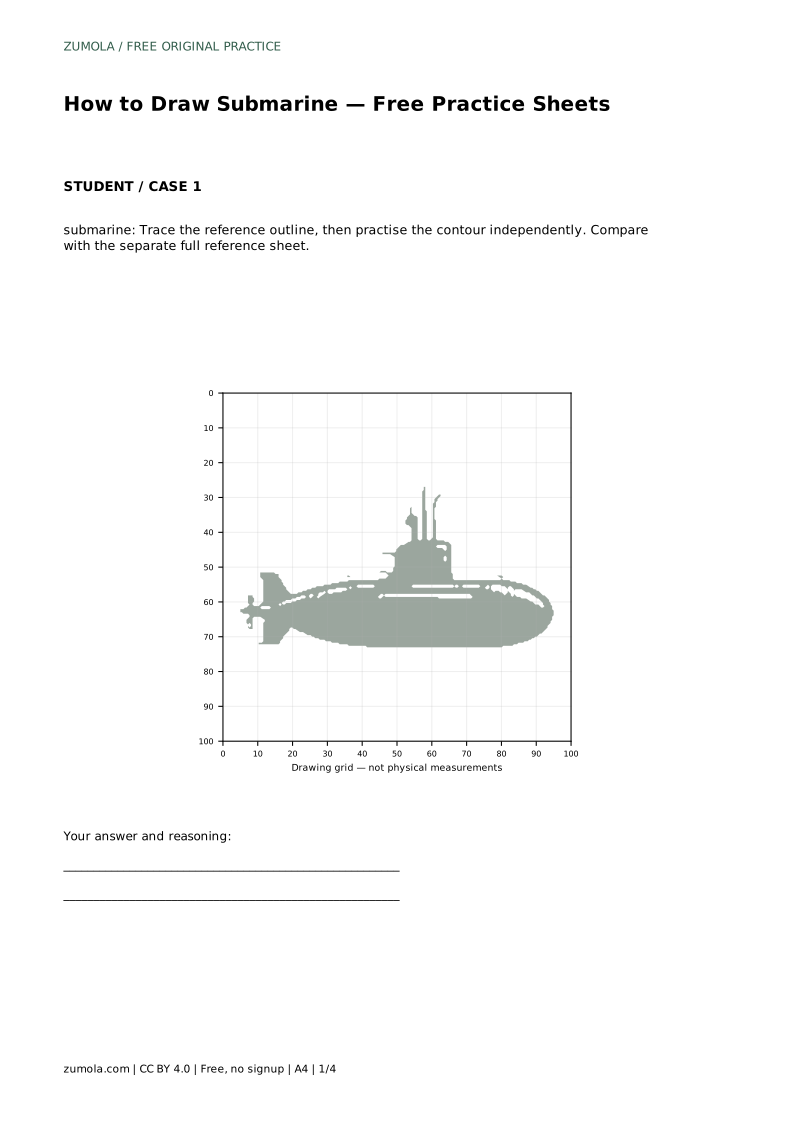
The trace format asks you to follow the reference outline first, then practise the contour independently. Compare your freehand attempt with the separate full reference sheet rather than with your traced line, so you can see where the proportions drifted.
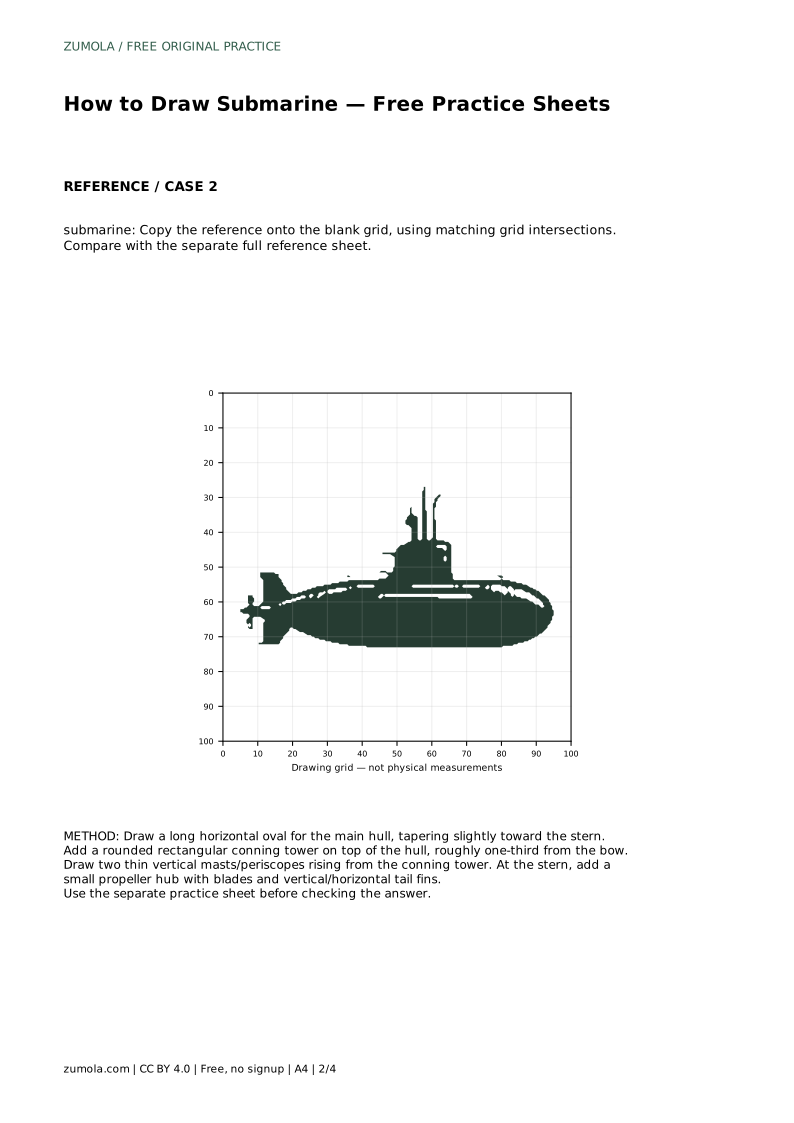
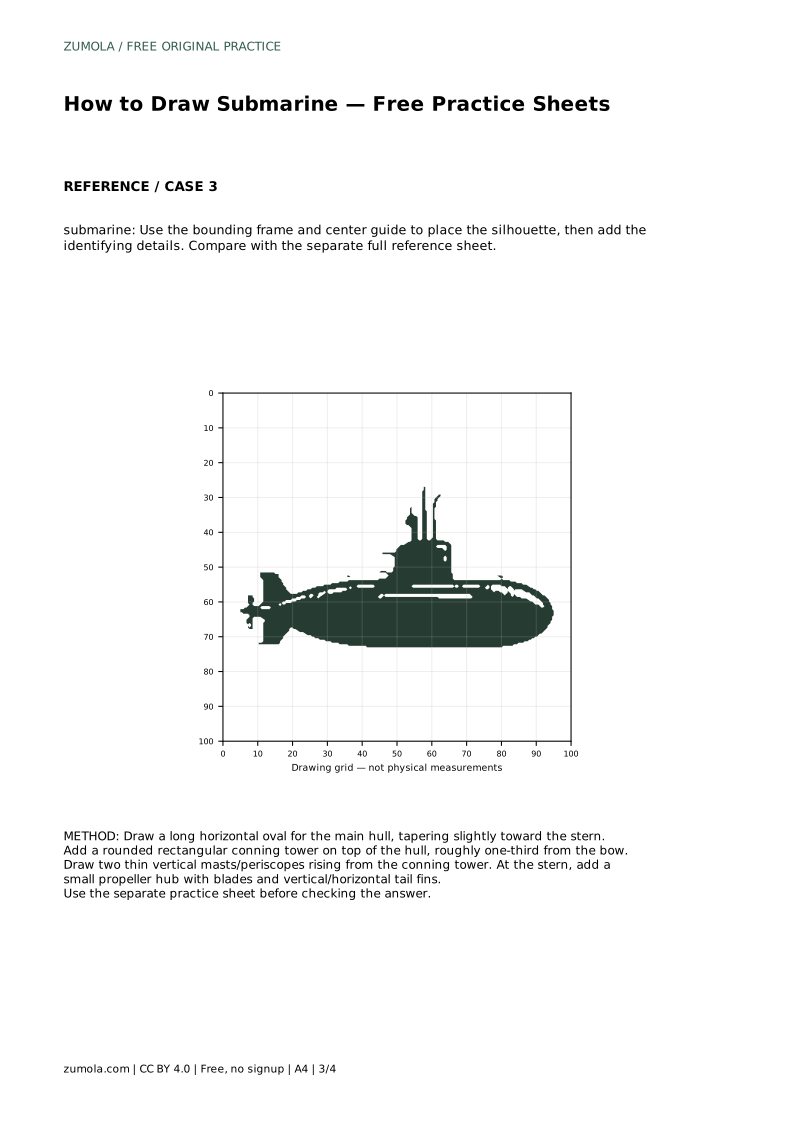
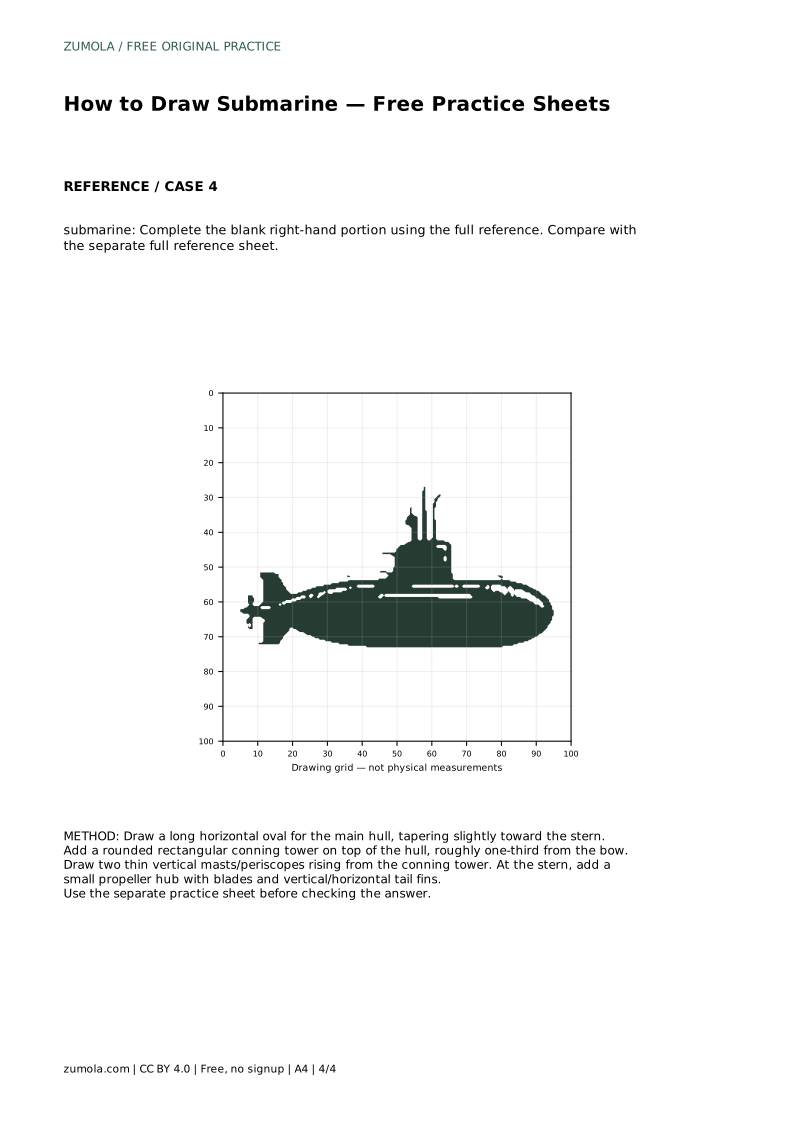
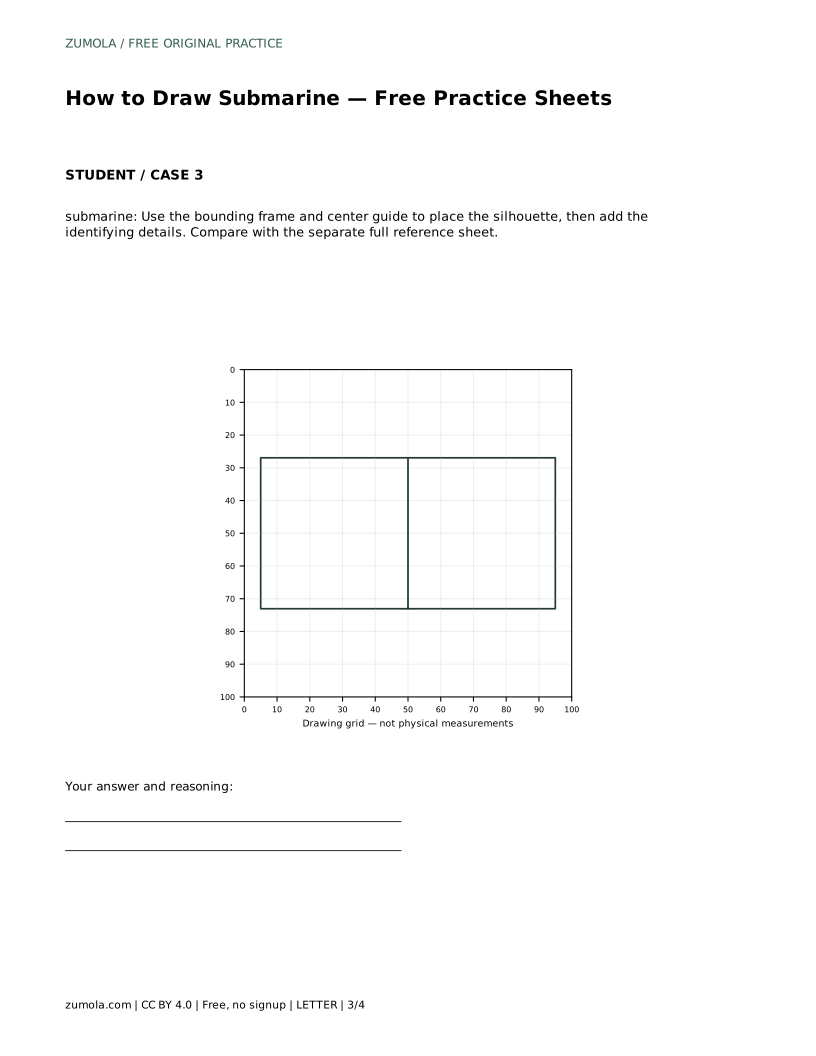
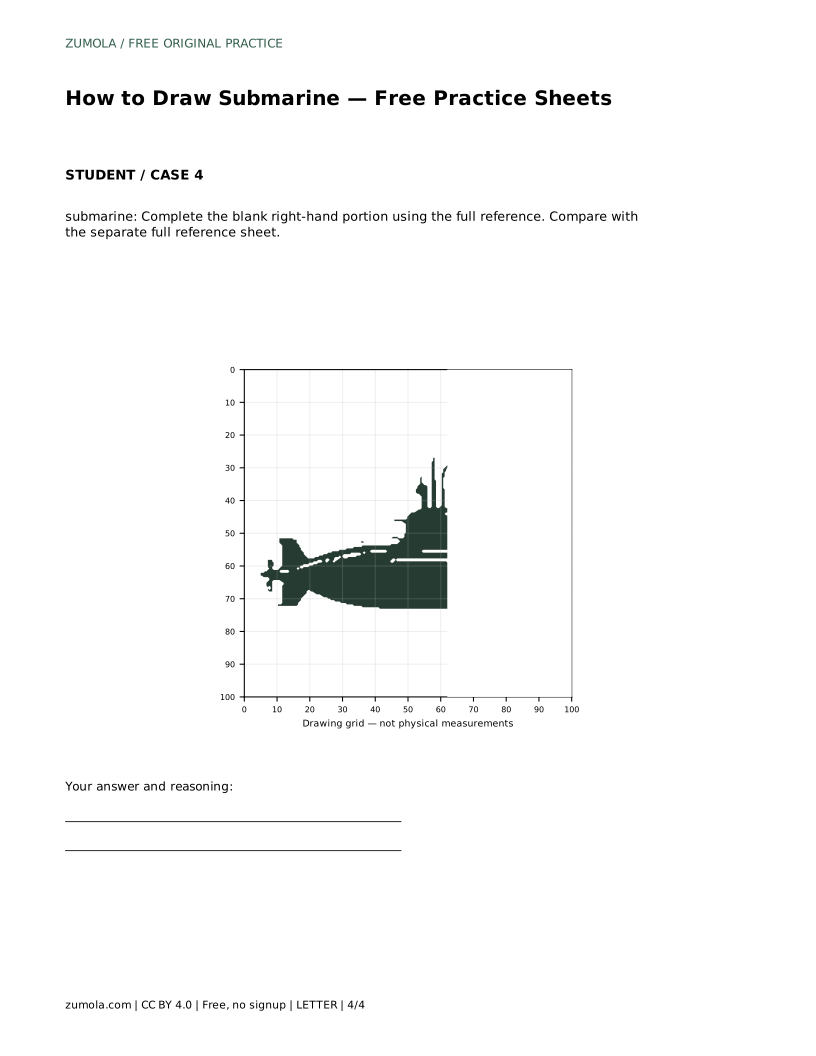
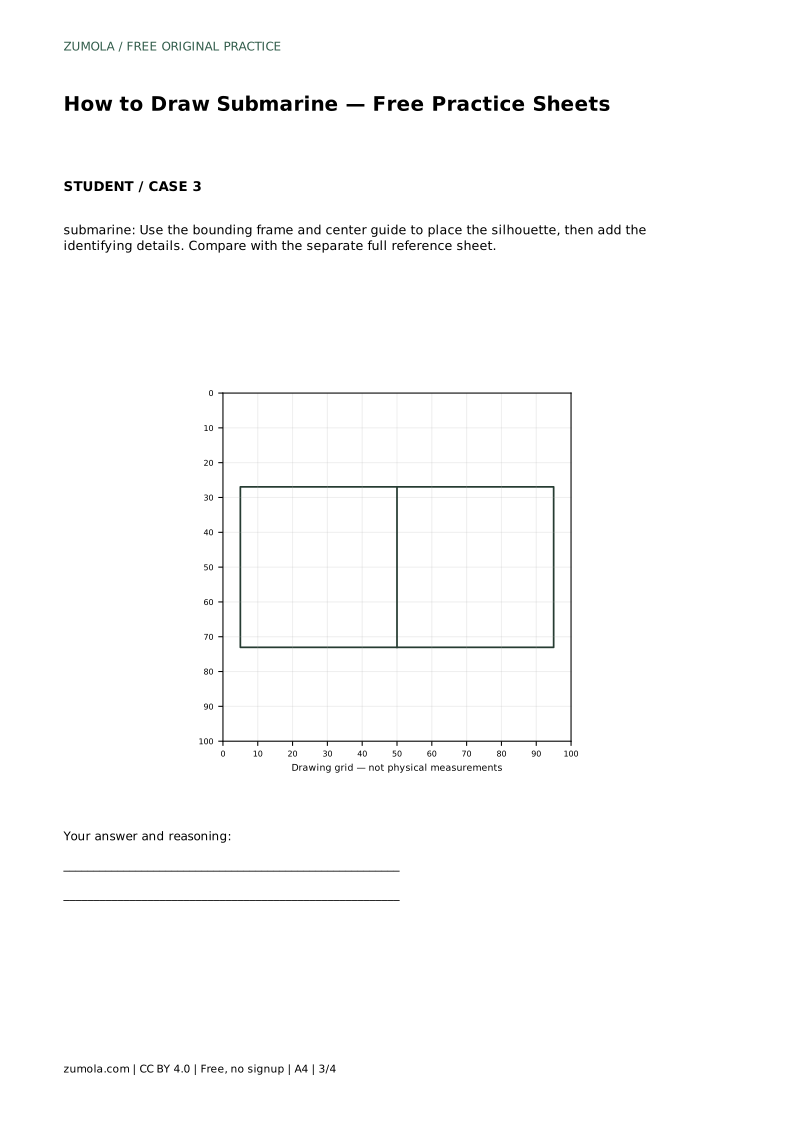
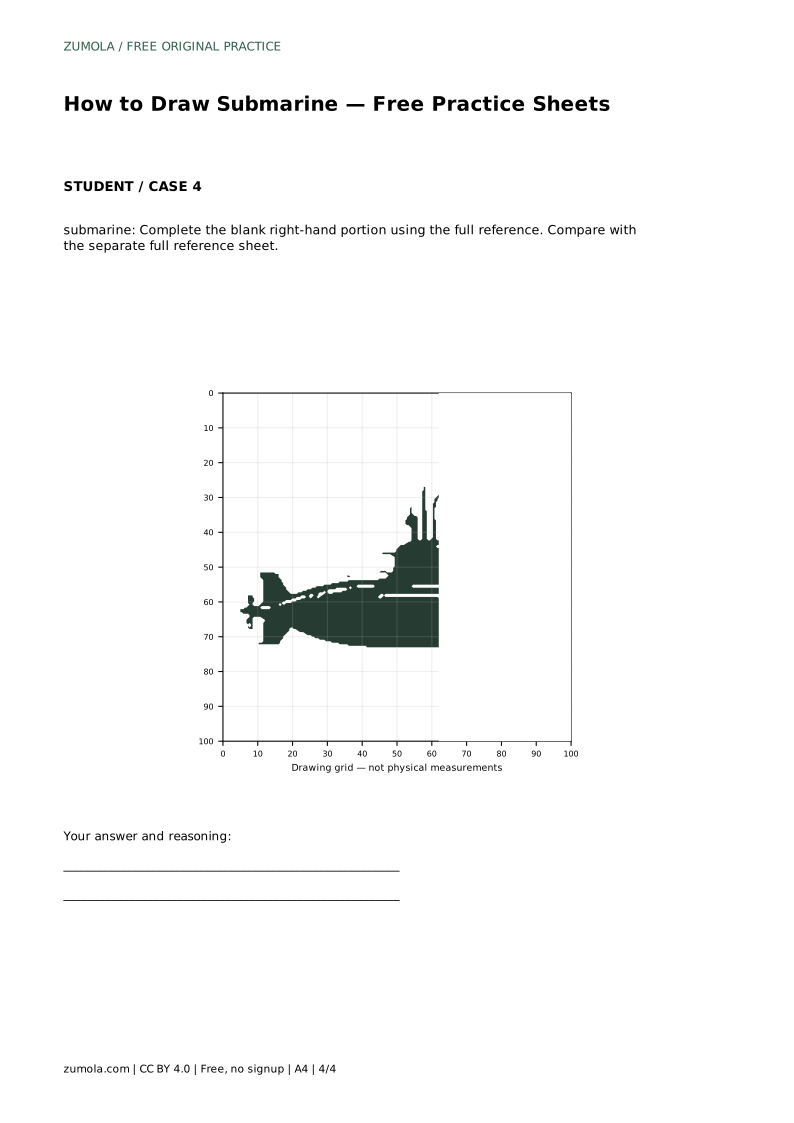
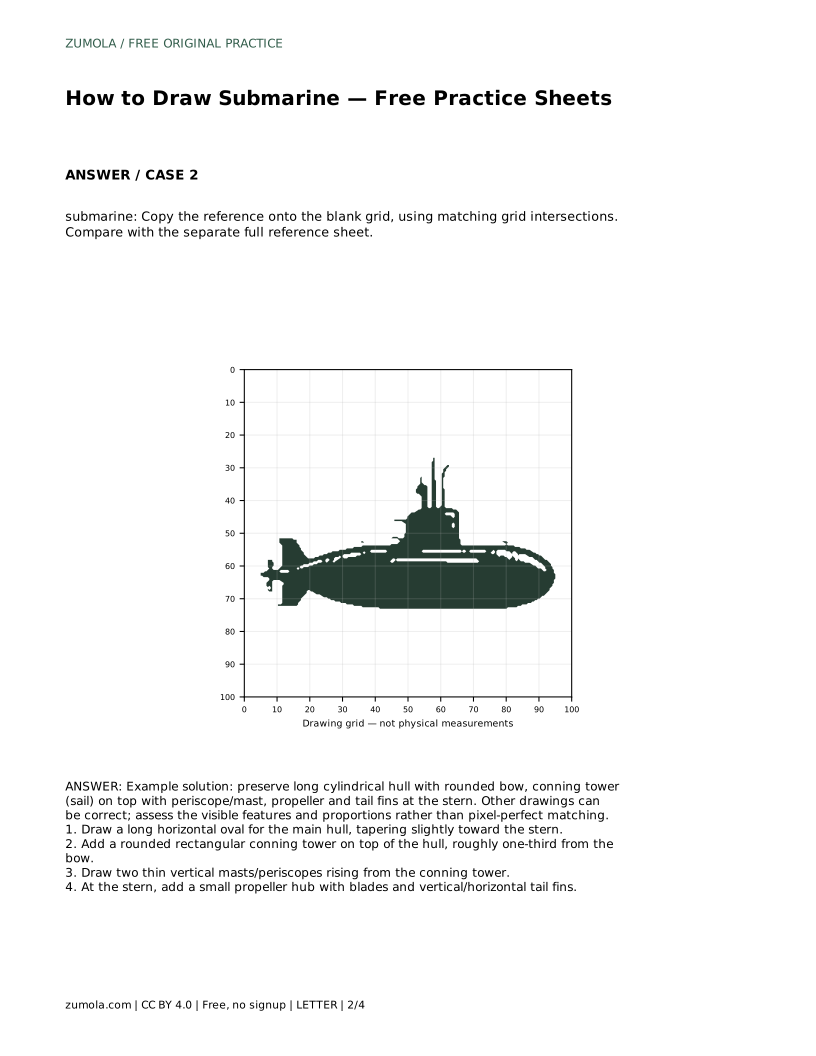
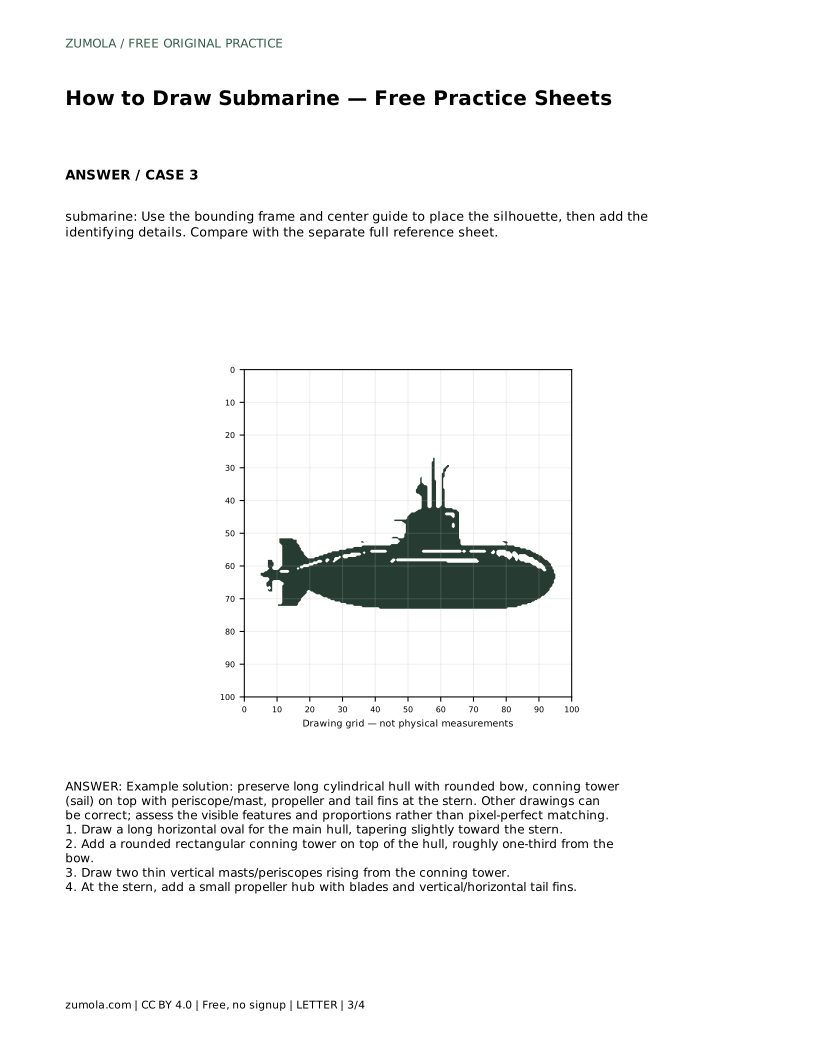
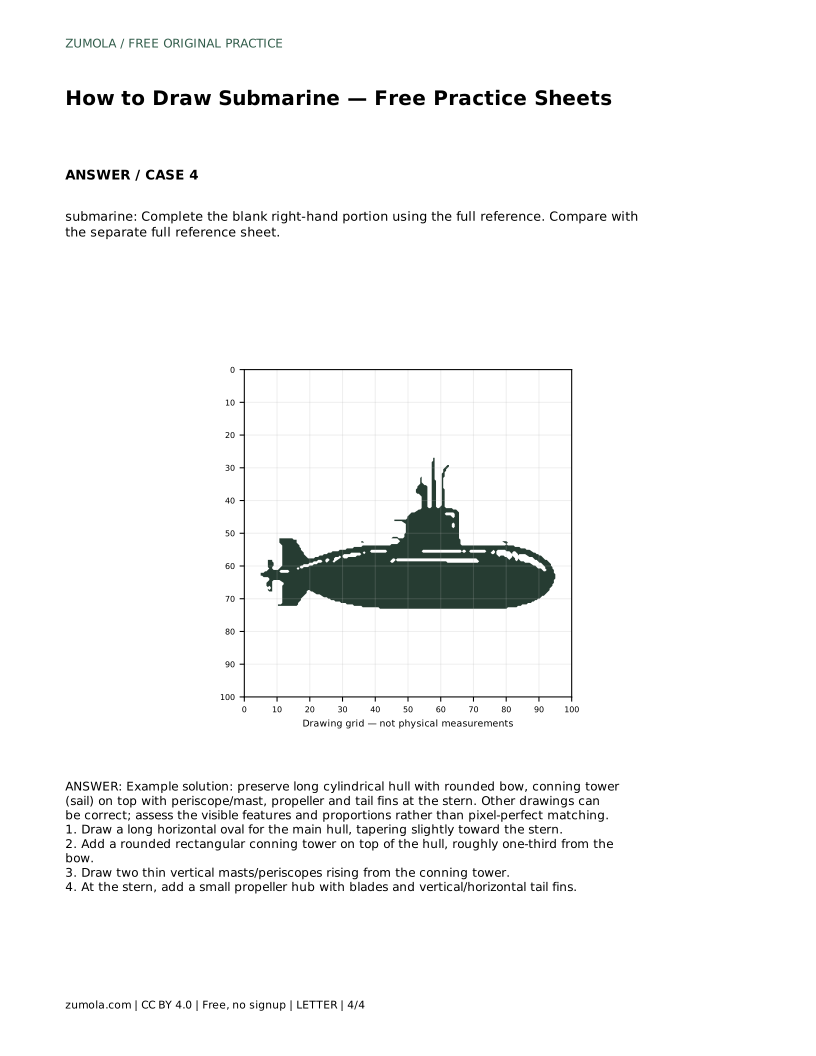
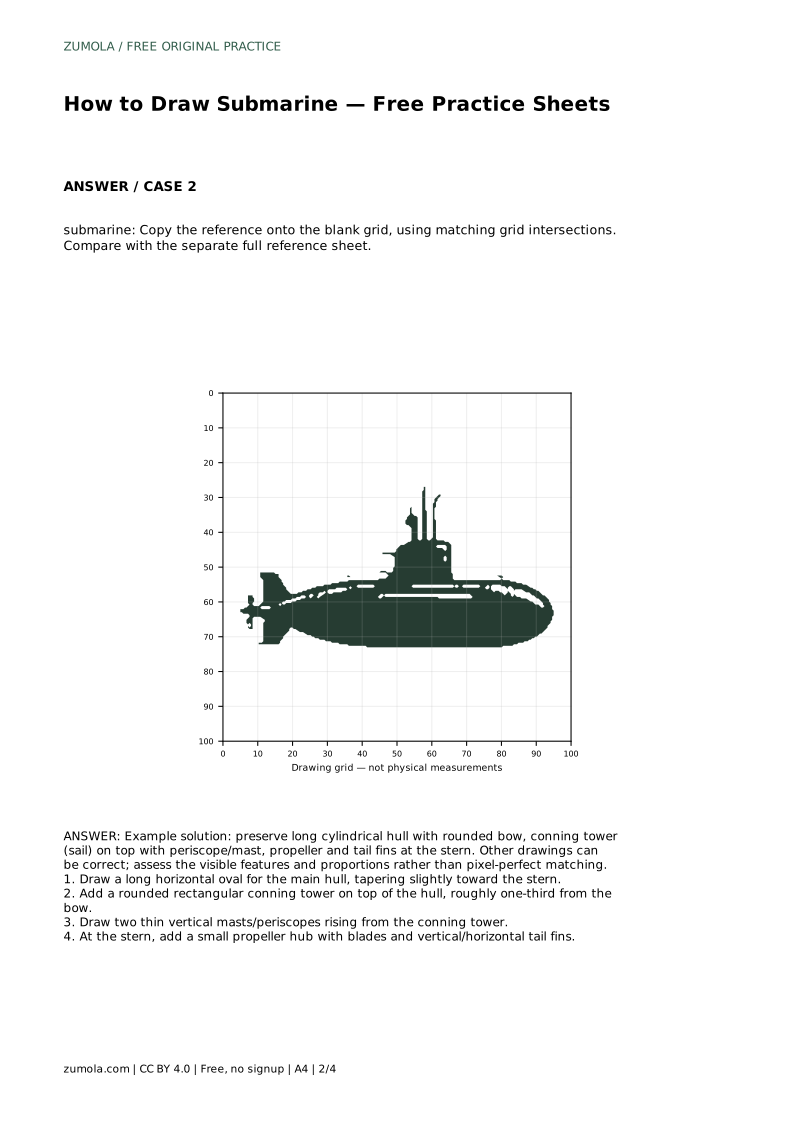
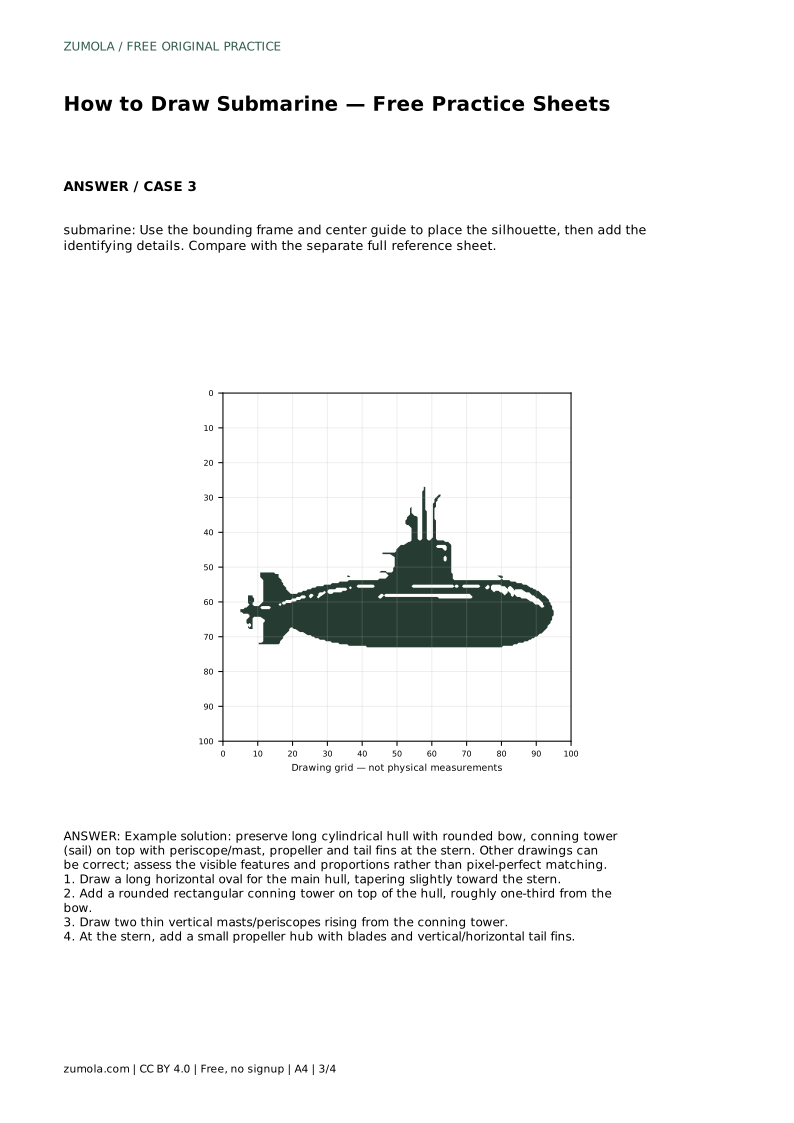
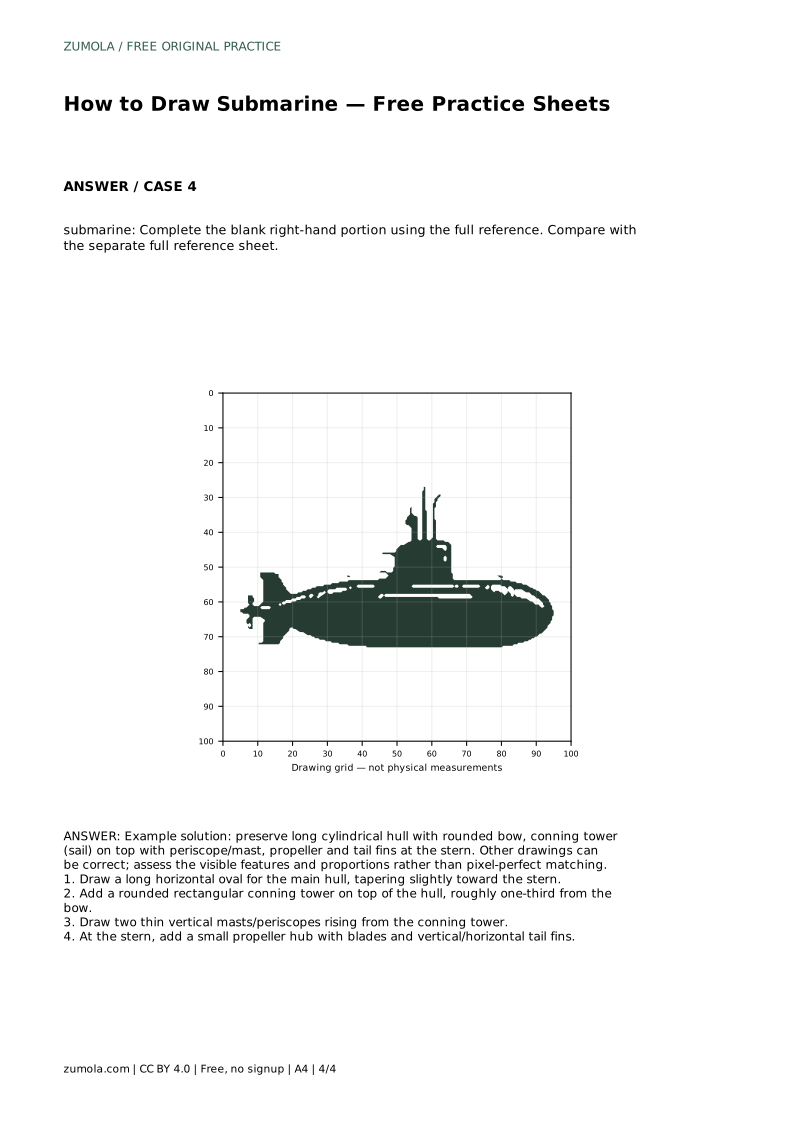
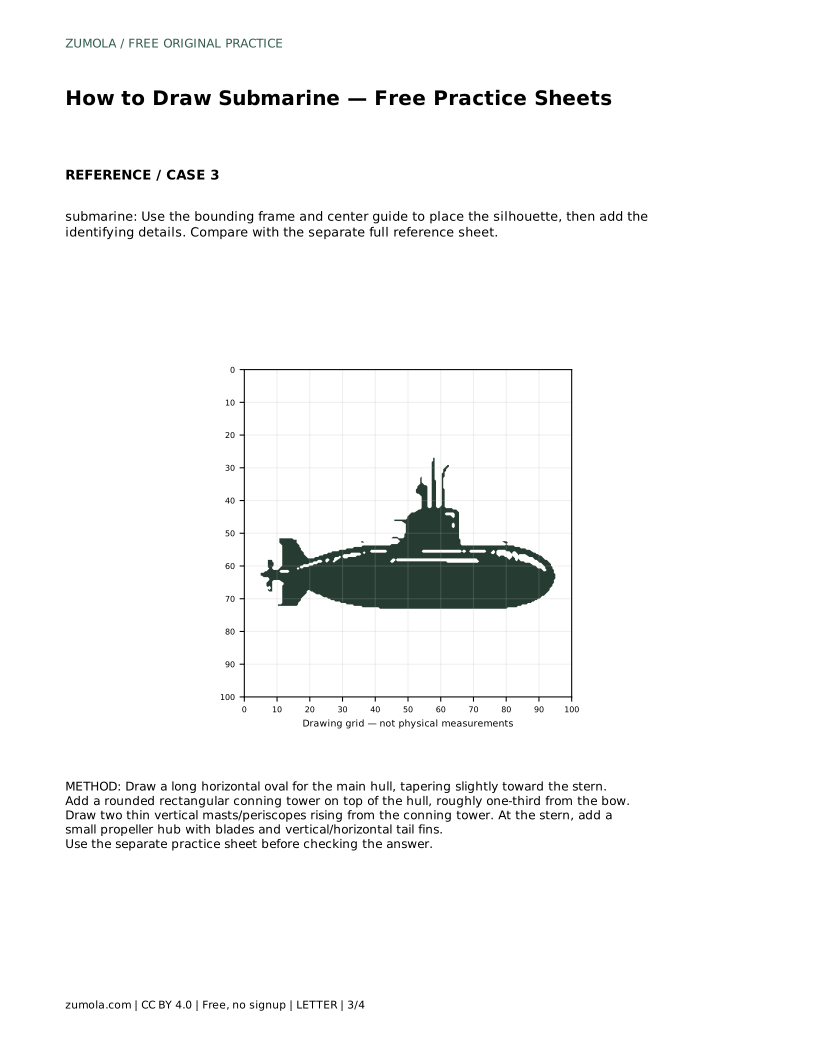
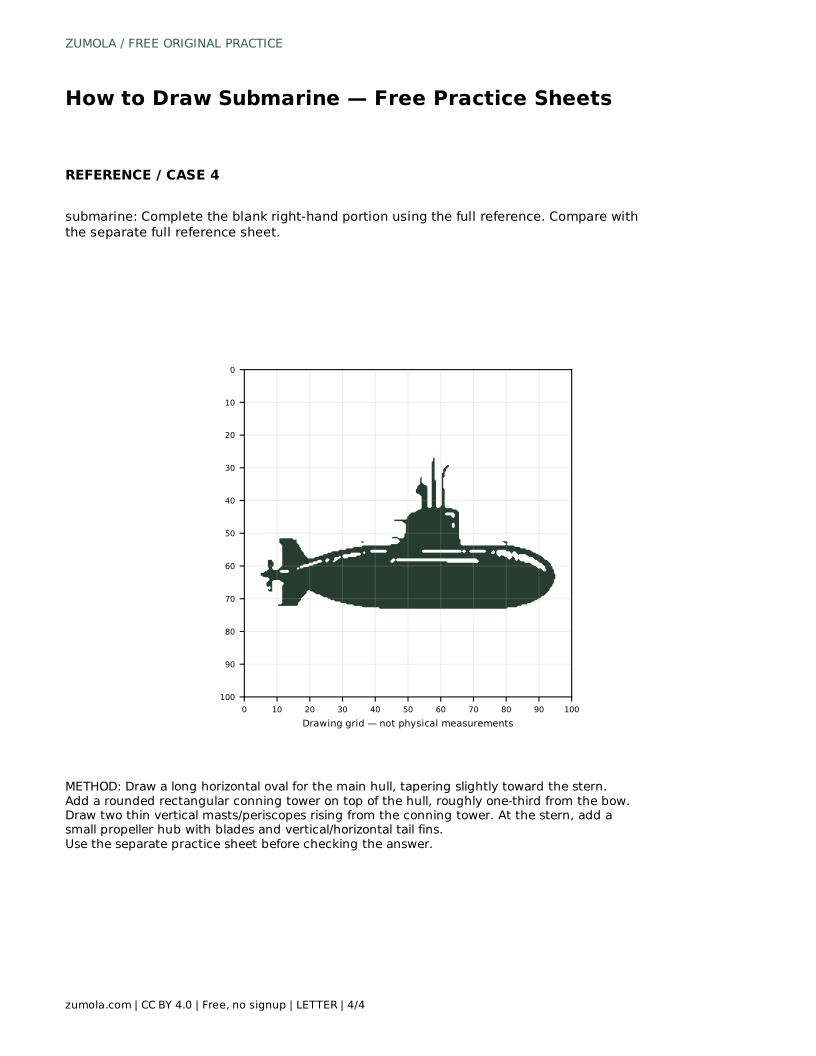
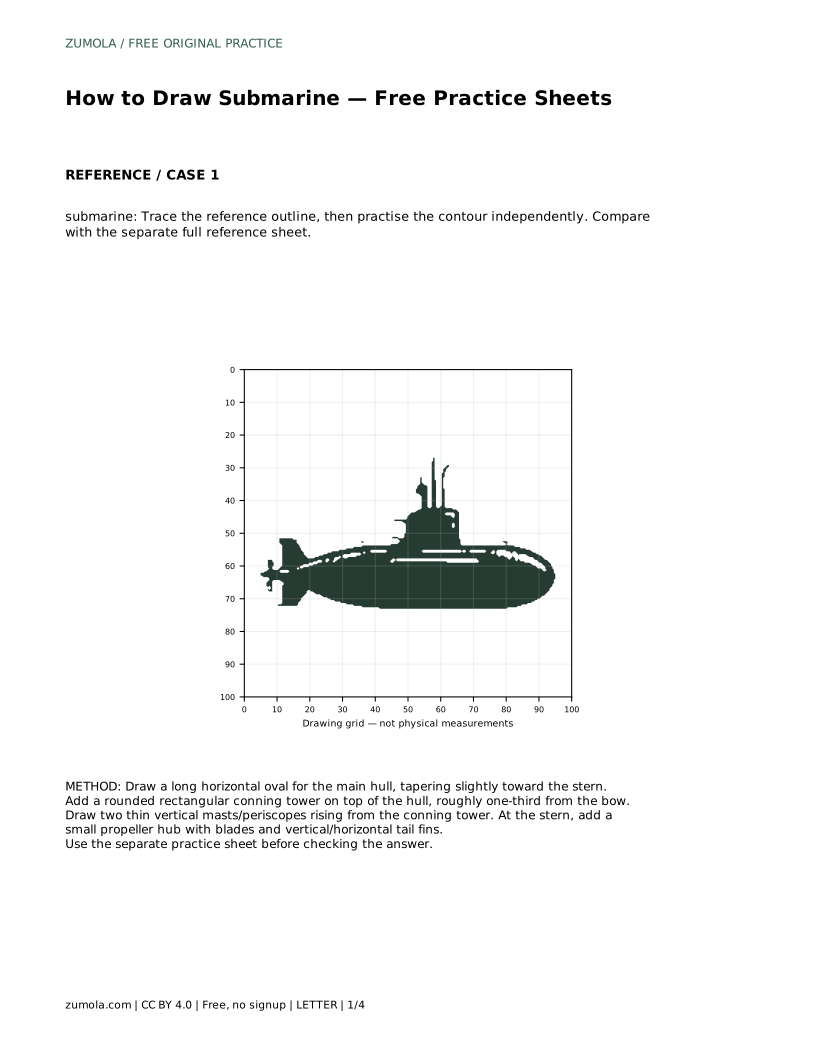
The grid format asks you to copy the reference onto the blank grid using matching grid intersections. Work one intersection at a time, especially around the bow curve, the sail corners, and the stern details. The bounding-frame format asks you to place the silhouette using the frame and center guide before adding identifying details. The partial format gives you the left portion and asks you to complete the blank right-hand portion from the full reference. In every format, the goal is the same set of visible features and sensible proportions, not a pixel-perfect match.
Submarine drawings have many valid outcomes, so judge the visible features and proportions rather than exact line placement. A correct drawing shows a long cylindrical hull with a rounded bow, a sail on top with masts, and a stern with a propeller and tail fins. Small stylistic differences in line weight or blade shape are acceptable.
Use the rubric below to review your work. If a criterion fails, redraw only that part rather than starting over, and compare again with the full reference sheet.
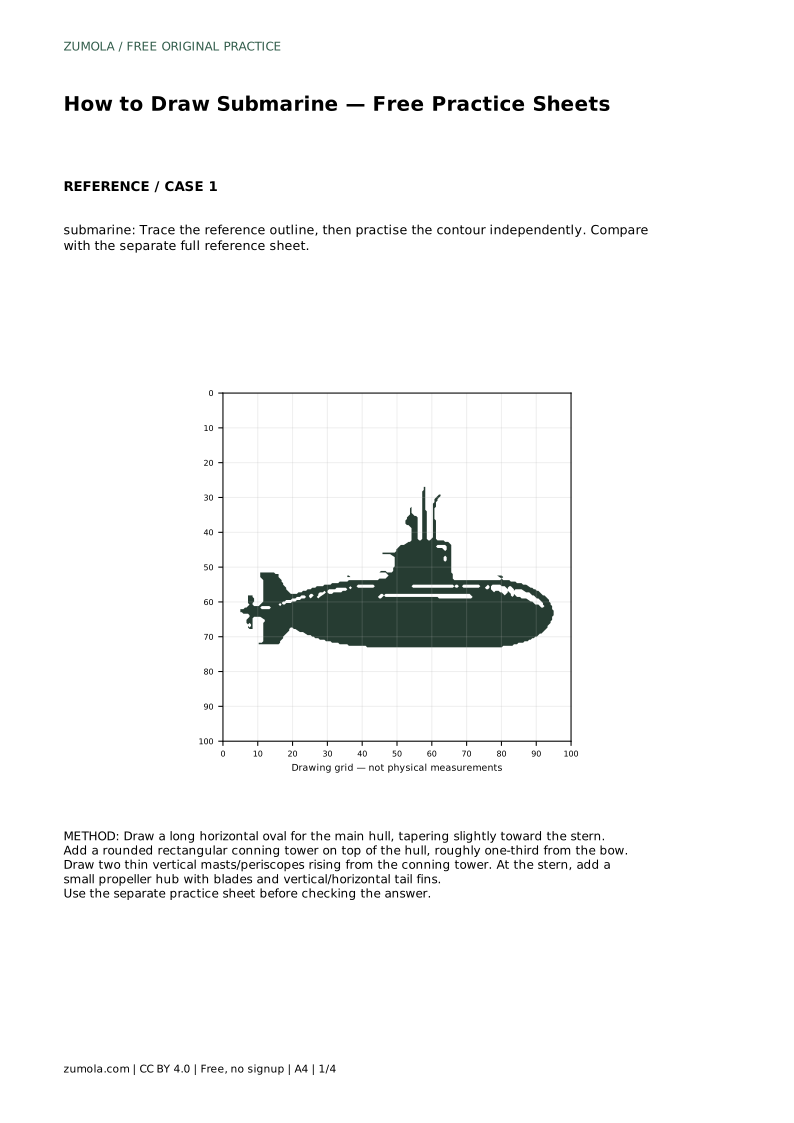
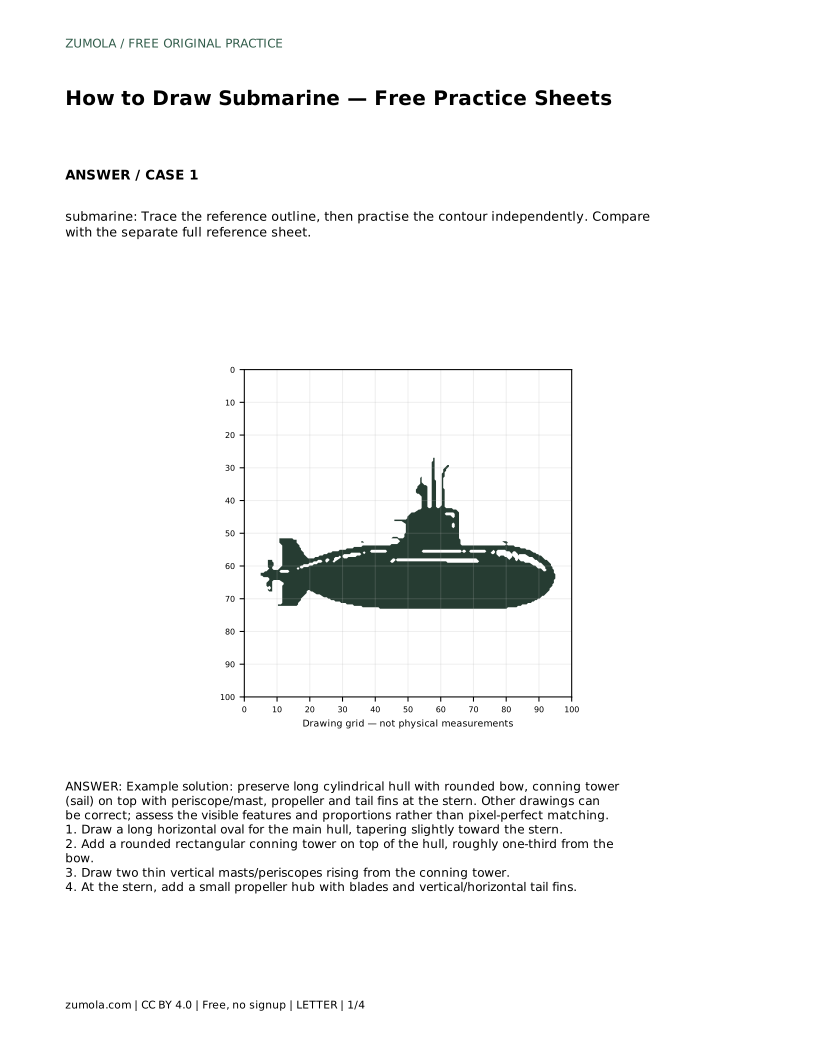
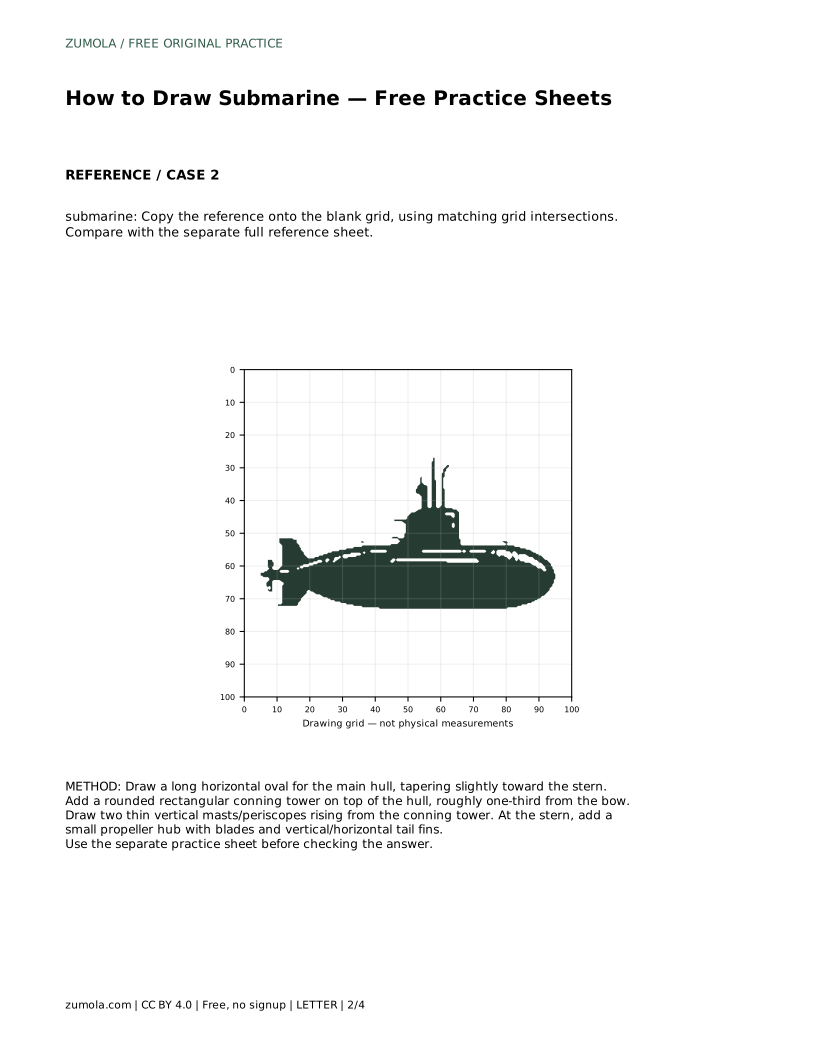
submarine: Trace the reference outline, then practise the contour independently. Compare with the separate full reference sheet.
Example solution: preserve long cylindrical hull with rounded bow, conning tower (sail) on top with periscope/mast, propeller and tail fins at the stern. Other drawings can be correct; assess the visible features and proportions rather than pixel-perfect matching. Draw a long horizontal oval for the main hull, tapering slightly toward the stern. Add a rounded rectangular conning tower on top of the hull, roughly one-third from the bow. Draw two thin vertical masts/periscopes rising from the conning tower. At the stern, add a small propeller hub with blades and vertical/horizontal tail fins.
No. Other drawings can be correct. Assess the visible features and proportions rather than pixel-perfect matching.
Place it on top of the hull, roughly one-third of the hull length from the bow, sitting upright and centered.
A long cylindrical hull with a rounded bow, a sail with masts or periscopes, and a stern with a propeller and tail fins.
All drawing practice · Free coordinate paper
Original resources · CC BY 4.0 · Free for personal and classroom use with attribution.