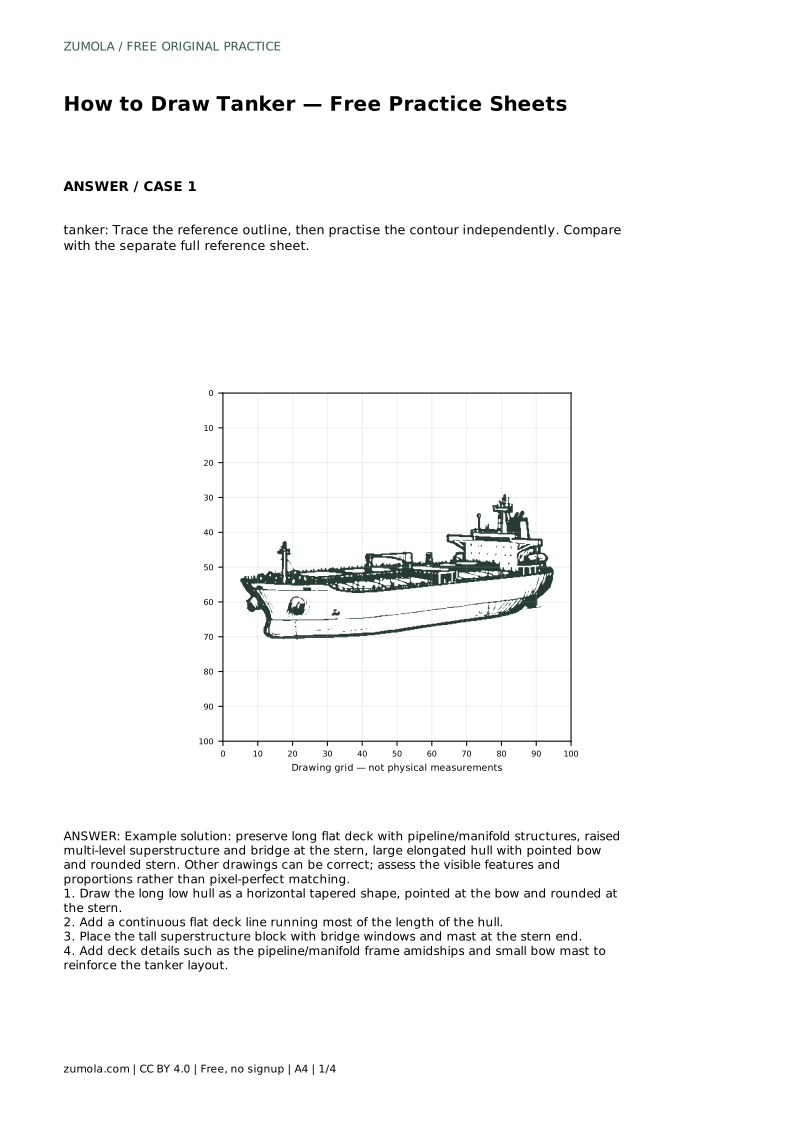
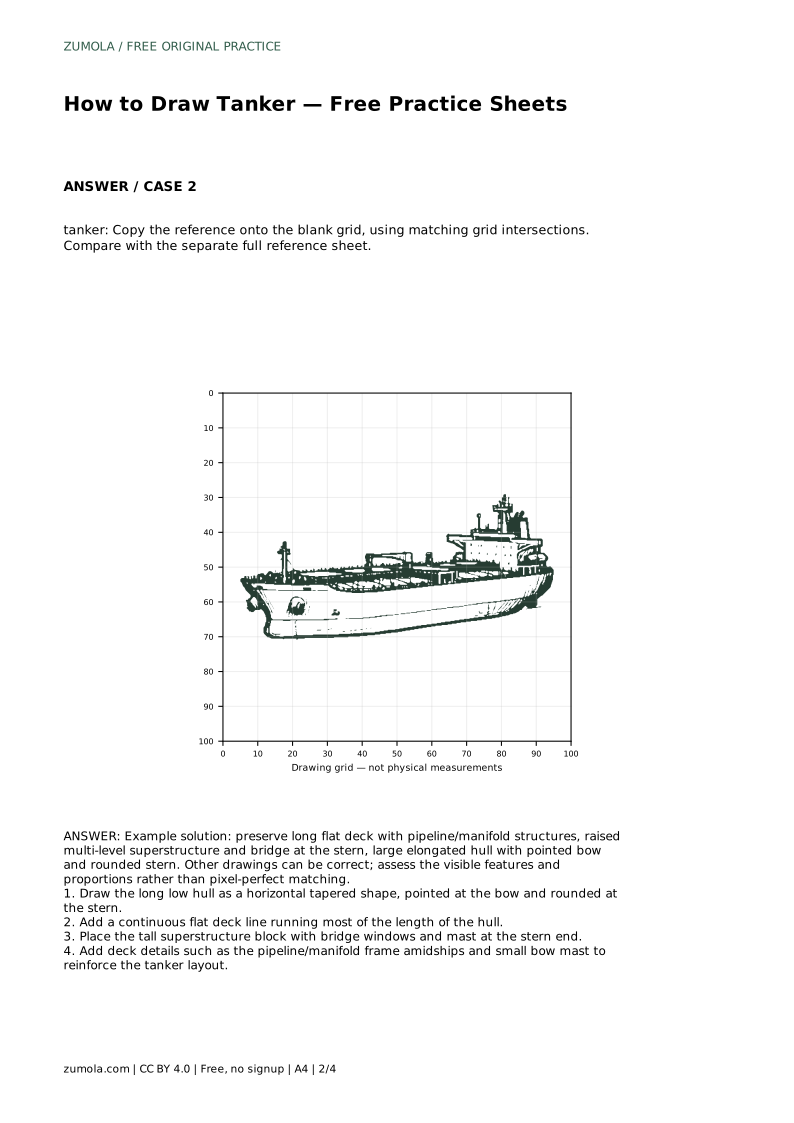
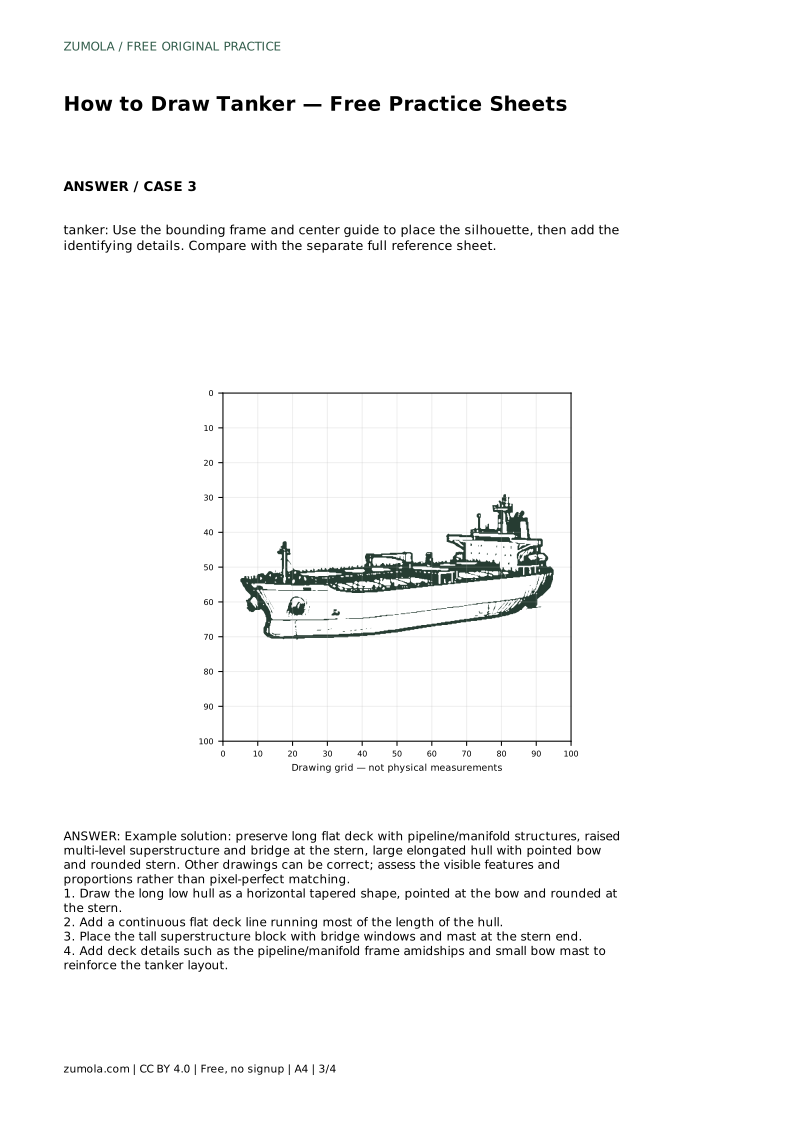
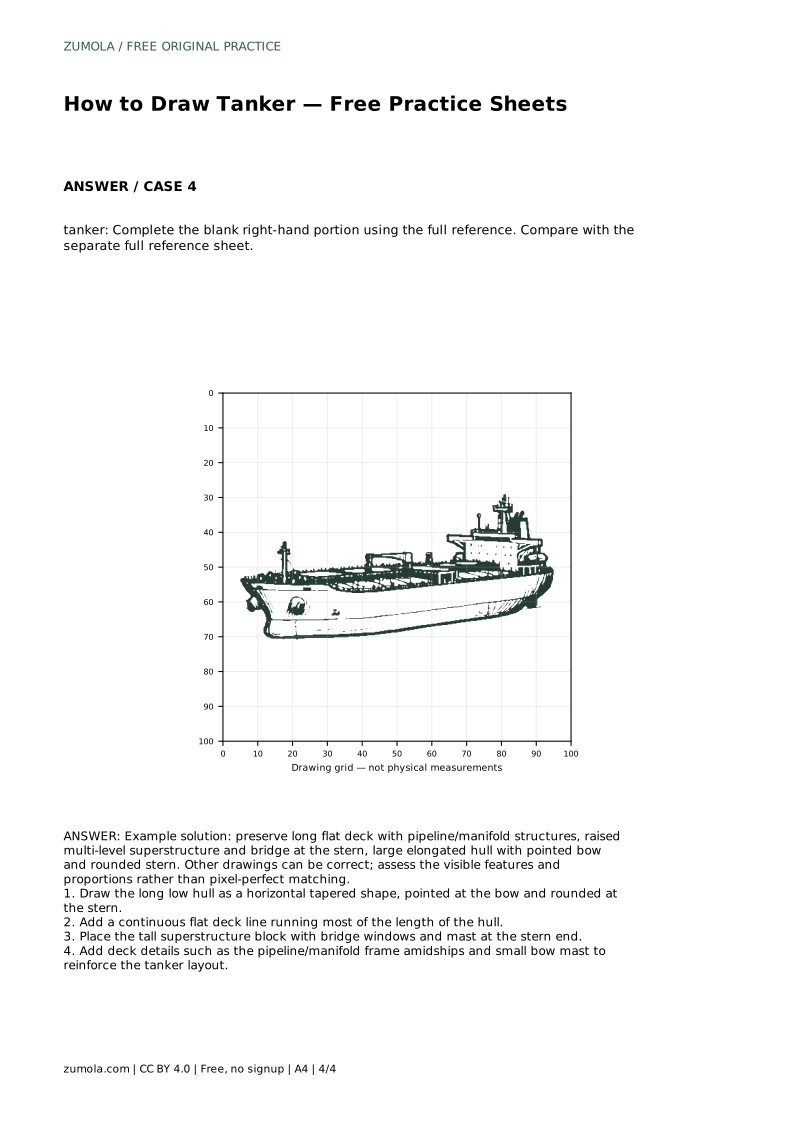
Reference diagrams
LETTER · Download PDF
A4 · Download PDF
Free original resources
Learn to draw a tanker by building its long hull, flat deck, stern superstructure and midship manifold. Free practice sheets support tracing, grids and guided outlines.
Four original cases, with reference diagrams, practice sheets and worked answers. Everything is free; no signup required.
LETTER · Download PDF
A4 · Download PDF
LETTER · Download PDF
A4 · Download PDF
LETTER · Download PDF
A4 · Download PDF
Use A4 or US Letter to match your printer. Use the stated values and conditions to solve each exercise; diagrams are not physical measuring rulers.
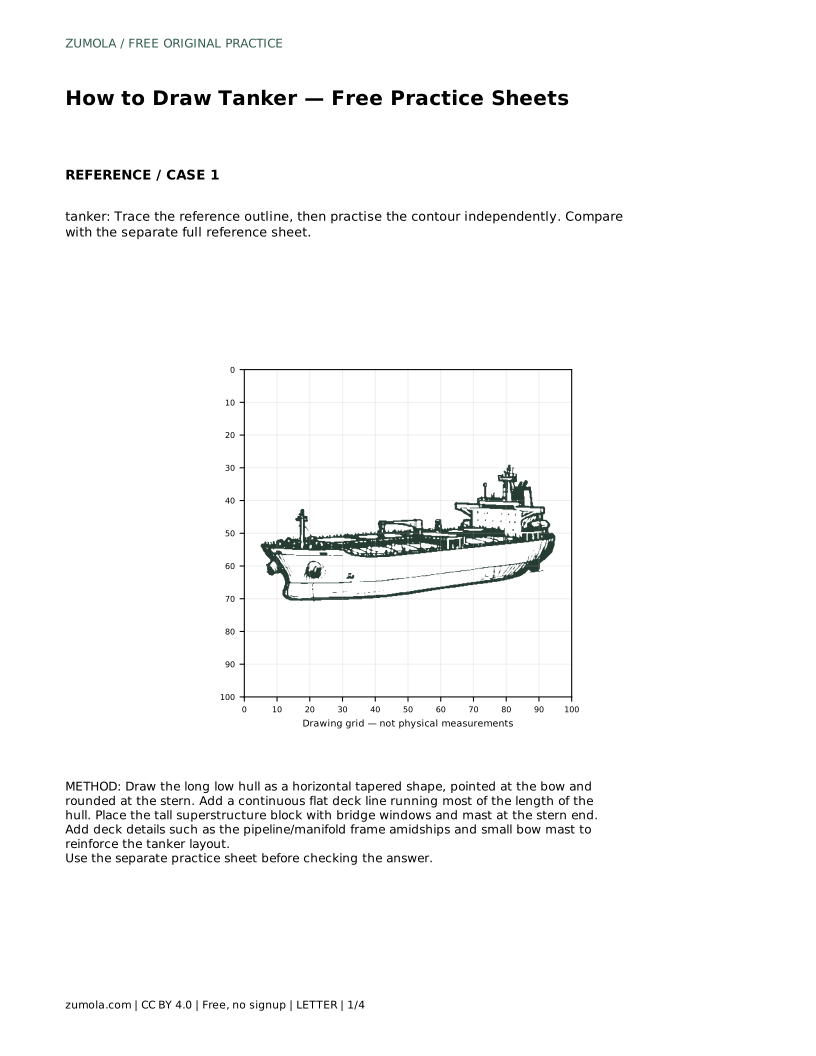
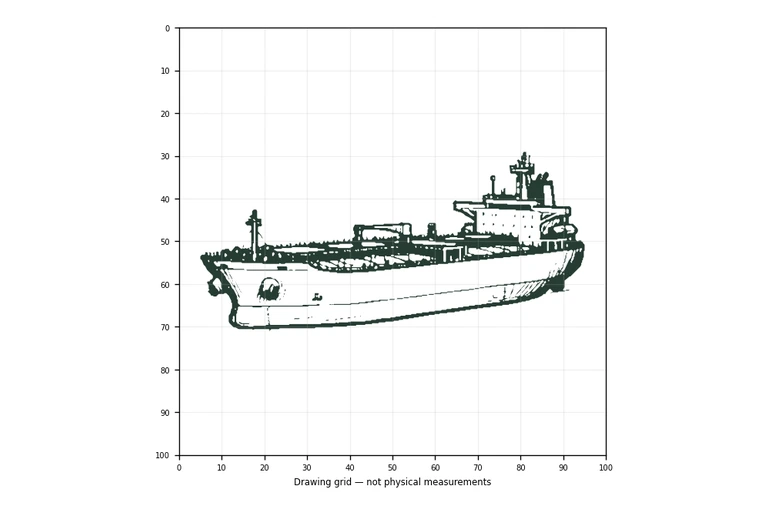
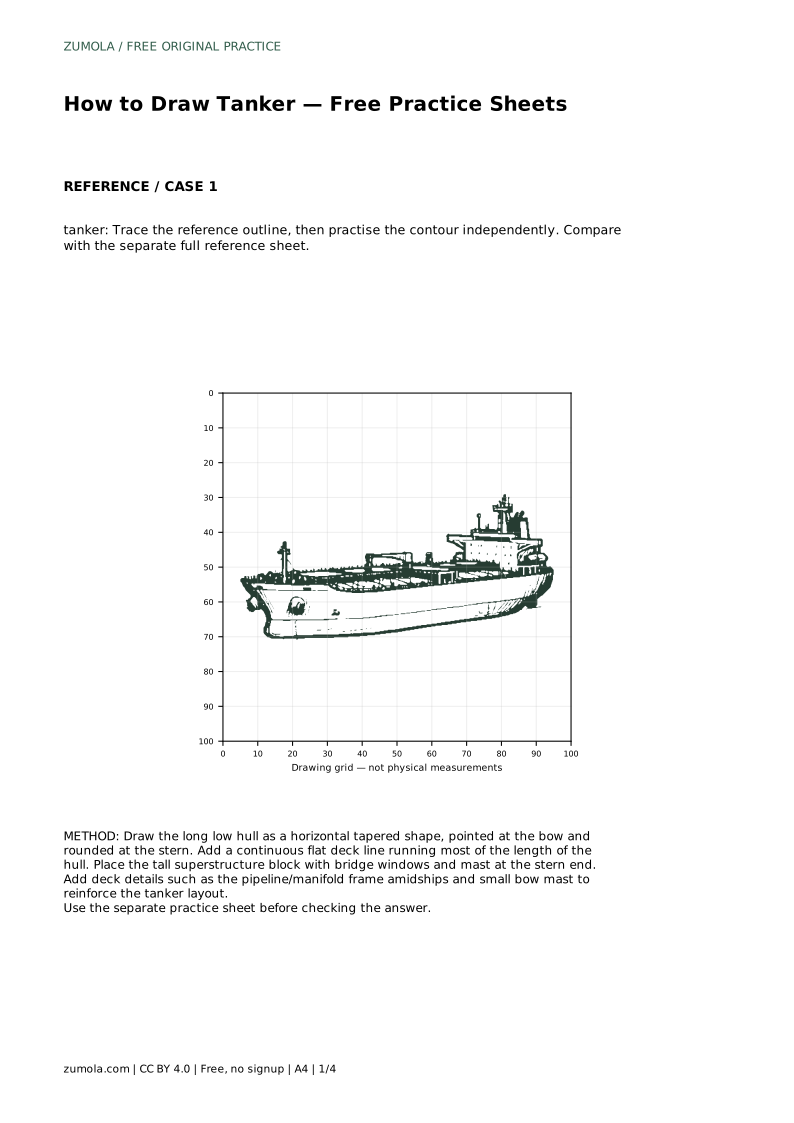
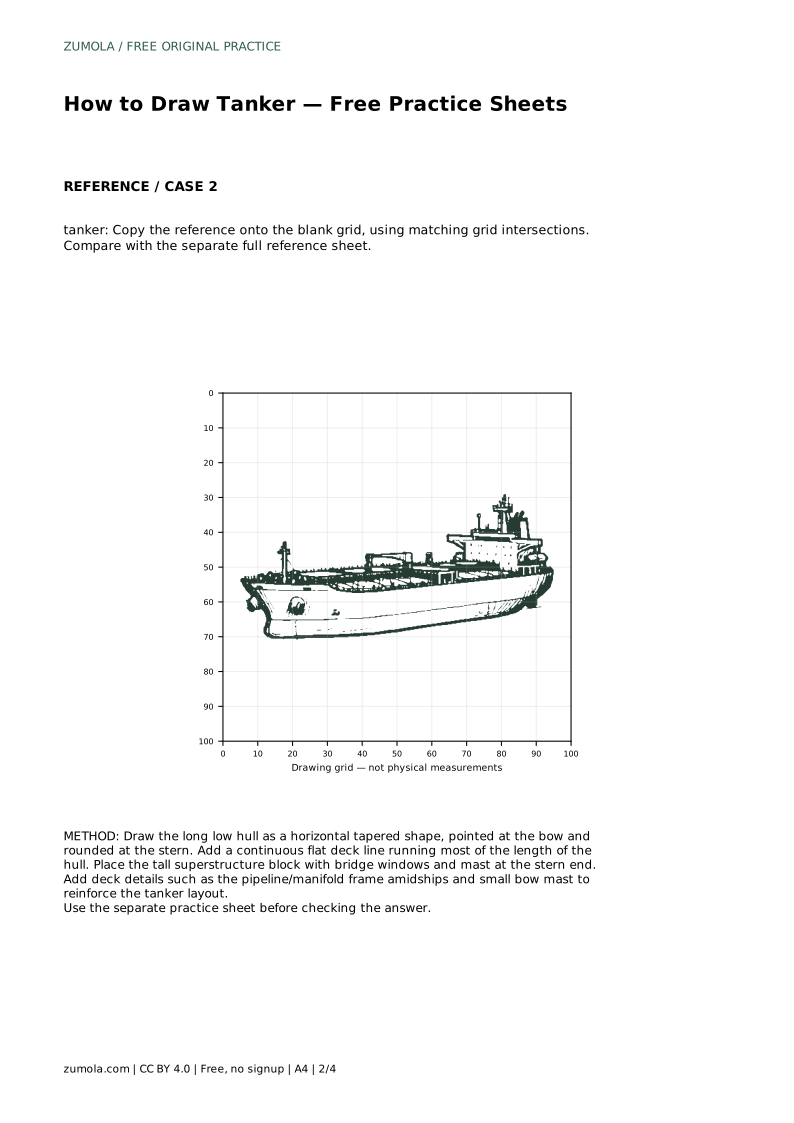
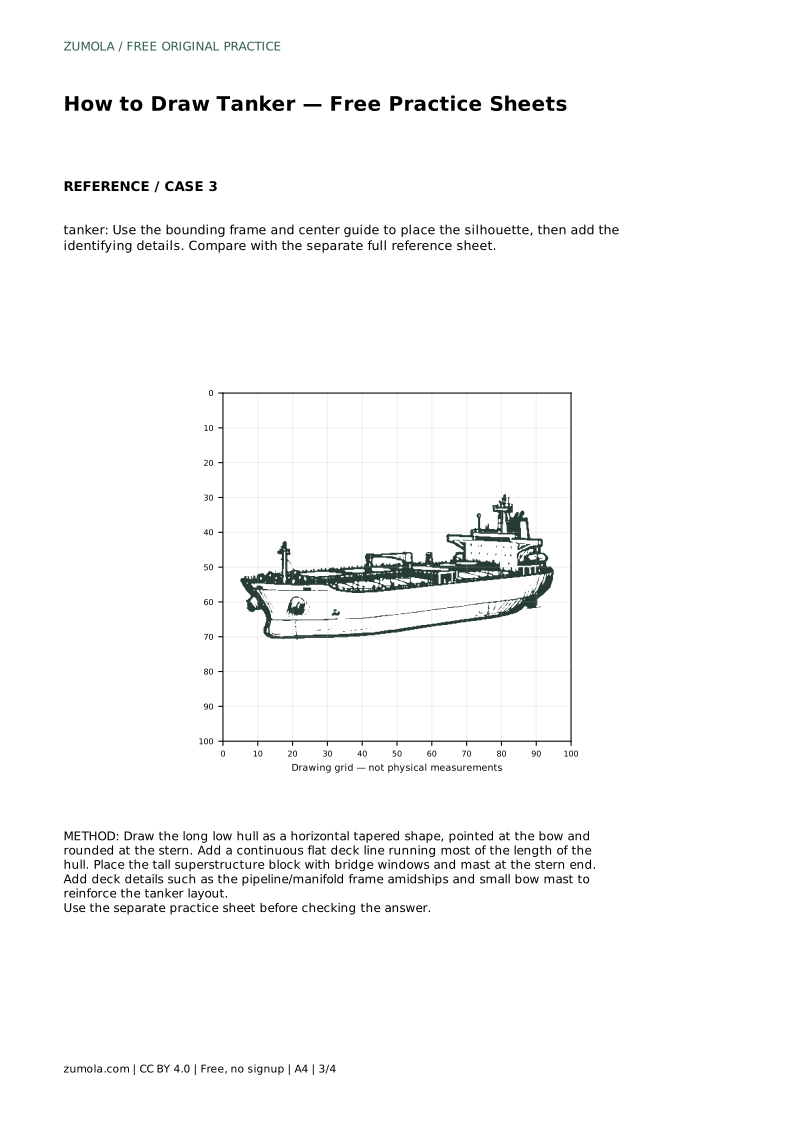
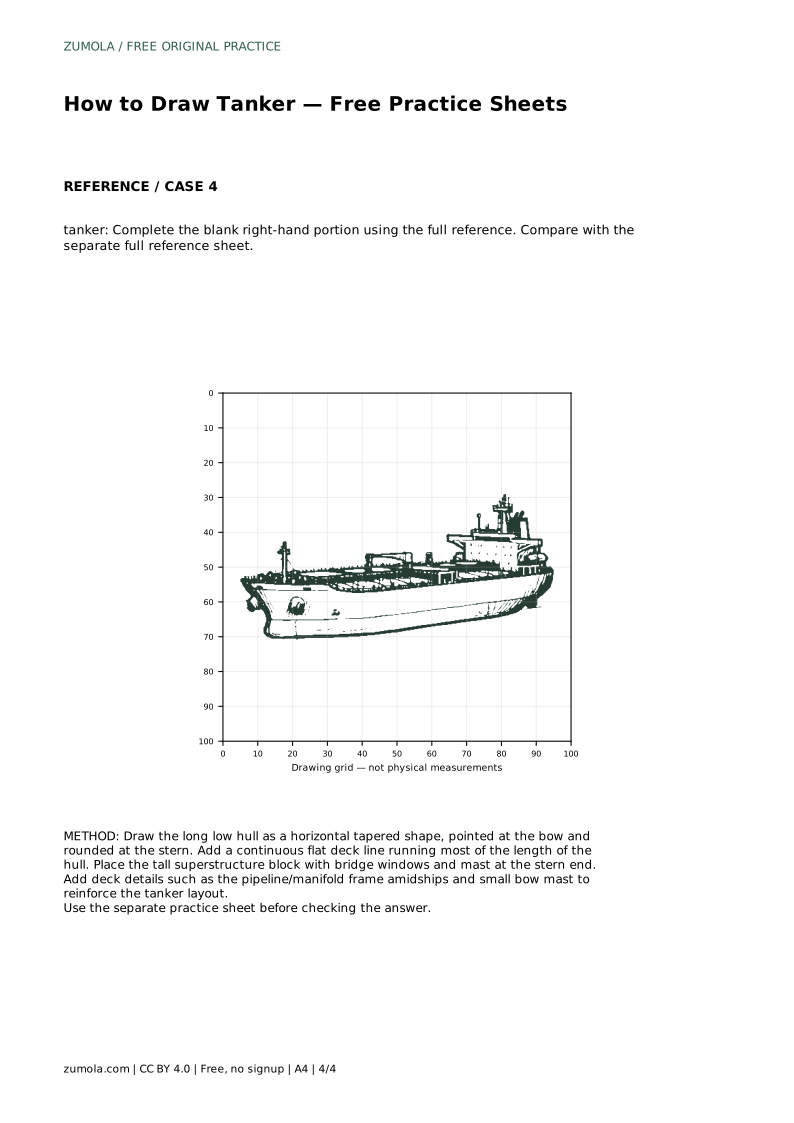
A tanker is recognisable less by small details than by its overall layout: a long, low hull, a broad flat deck, a raised bridge and accommodation block near the stern, and pipeline or manifold structures amidships. This page shows how to build that layout in a sensible order, then how to use tracing, grid and partial-outline practice sheets to strengthen your control. The aim is a clear, well-proportioned drawing, not a pixel-perfect copy.
Begin with the largest shape, because everything else is positioned relative to it. Draw a long horizontal hull that tapers to a point at the bow and rounds off at the stern. Keep the hull low compared with its length; a tanker reads as elongated rather than tall. Next, add a continuous flat deck line running along most of the hull. This line separates the hull side from the deck and gives you a stable reference for placing the superstructure and deck fittings.
Work lightly at first. If the hull looks too short or too deep, adjust it before adding details. A tanker's proportions do most of the visual work, so a little correction here saves effort later.
The raised multi-level superstructure sits toward the stern end of the deck. Draw it as a block rising above the deck line, then add bridge windows and a mast. Treat the block as stacked levels rather than one tall rectangle, so the bridge reads as a distinct viewing level. Keep its width within the hull's width so the ship still looks balanced.
Position matters more than fine detail. If the superstructure drifts toward the middle of the deck, the drawing starts to look like a different kind of ship. Check that the stern end still has deck visible behind the block.
Pipeline and manifold structures amidships are the clearest identifying feature. Draw a simple frame or set of parallel lines along the deck between the bow and the superstructure, keeping it low so the flat deck remains visible. Add a small bow mast to reinforce the layout. These details should sit on the deck line rather than float above it.
Keep detail economical. A few clear pipeline lines and one manifold frame communicate more than dense, crowded marks. If you are copying from a reference, match the position of these features at grid intersections rather than trying to reproduce every small fitting.
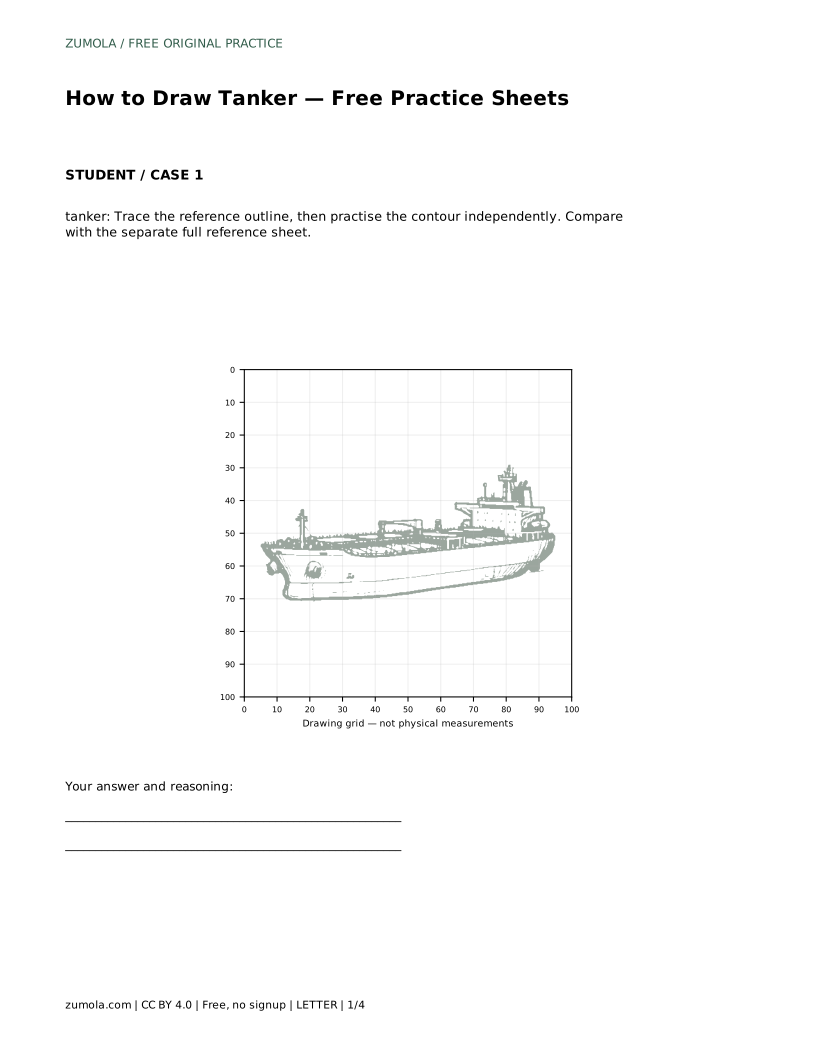
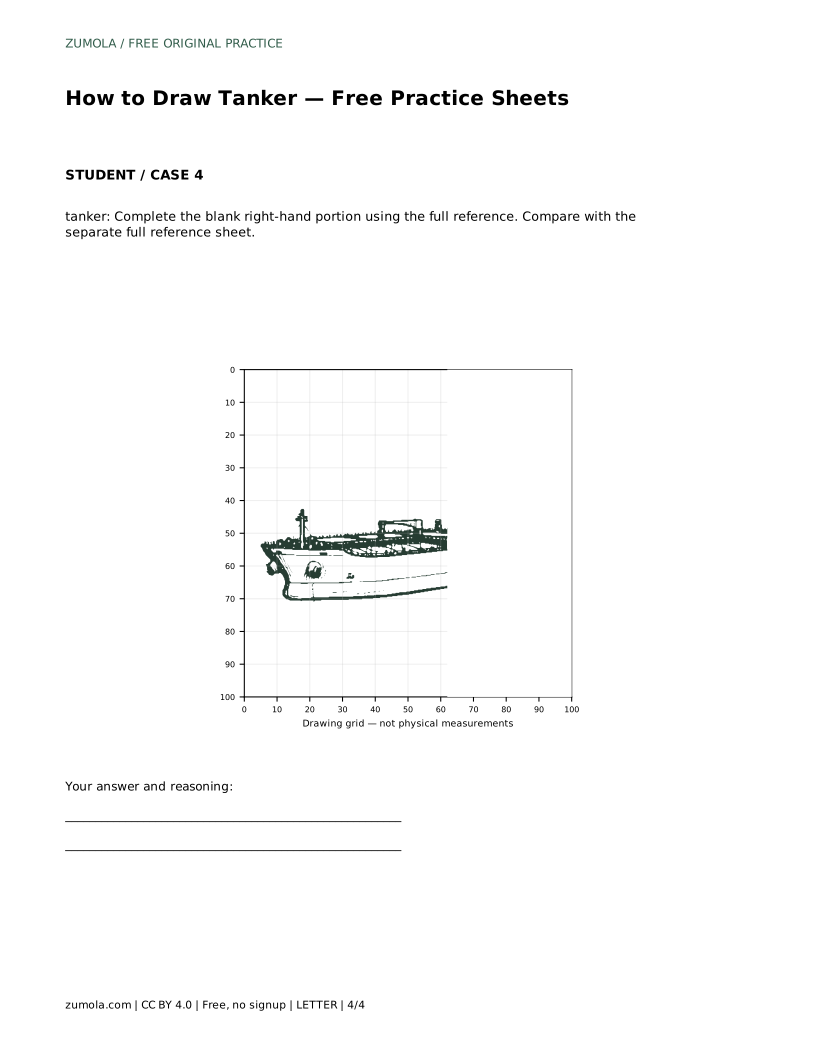
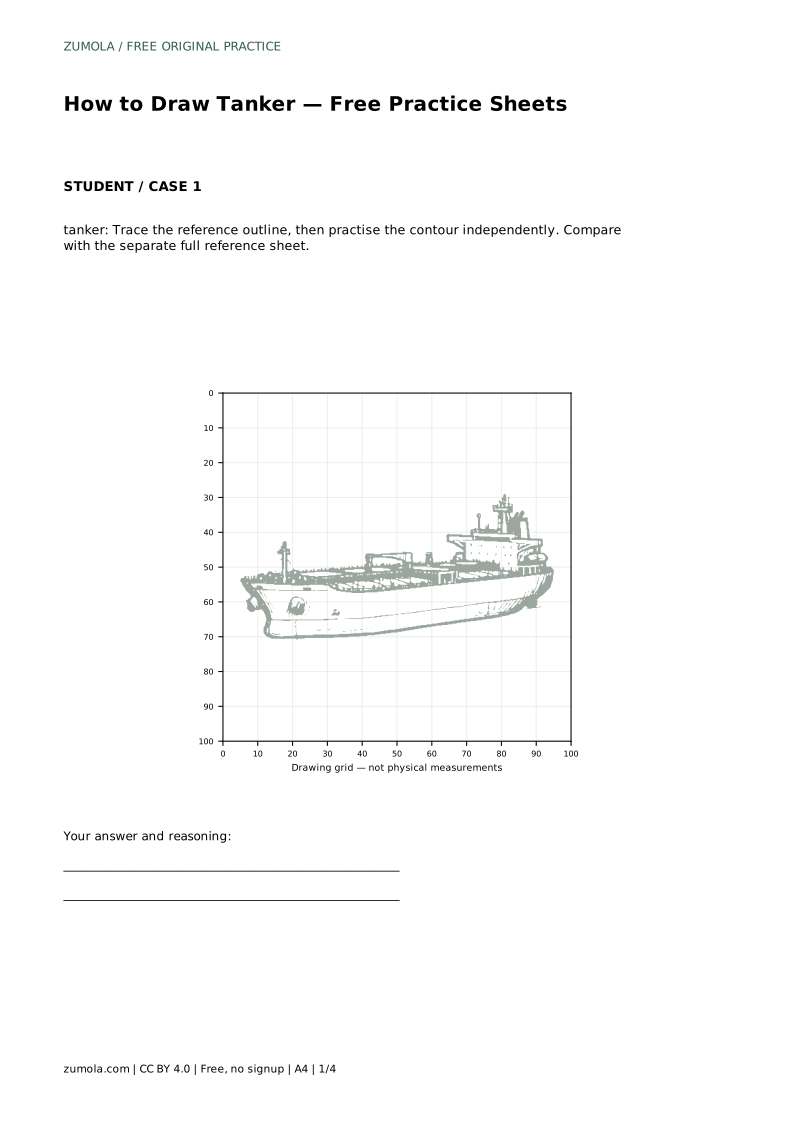
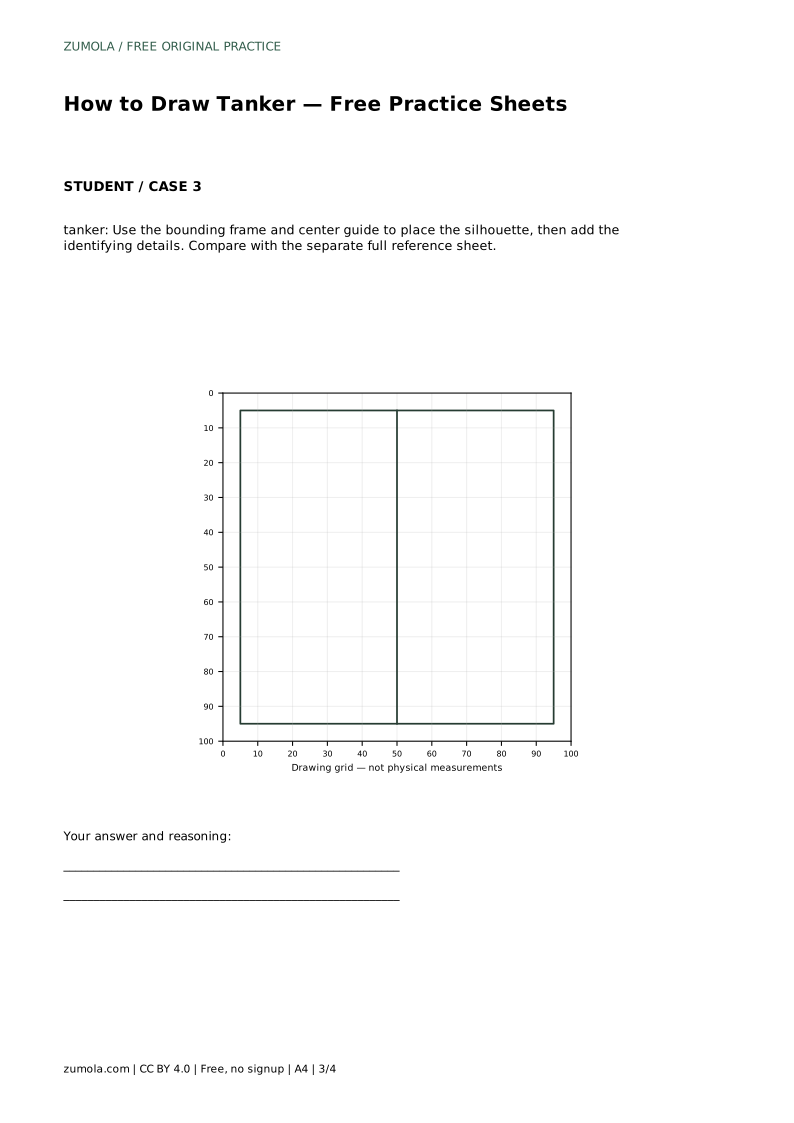
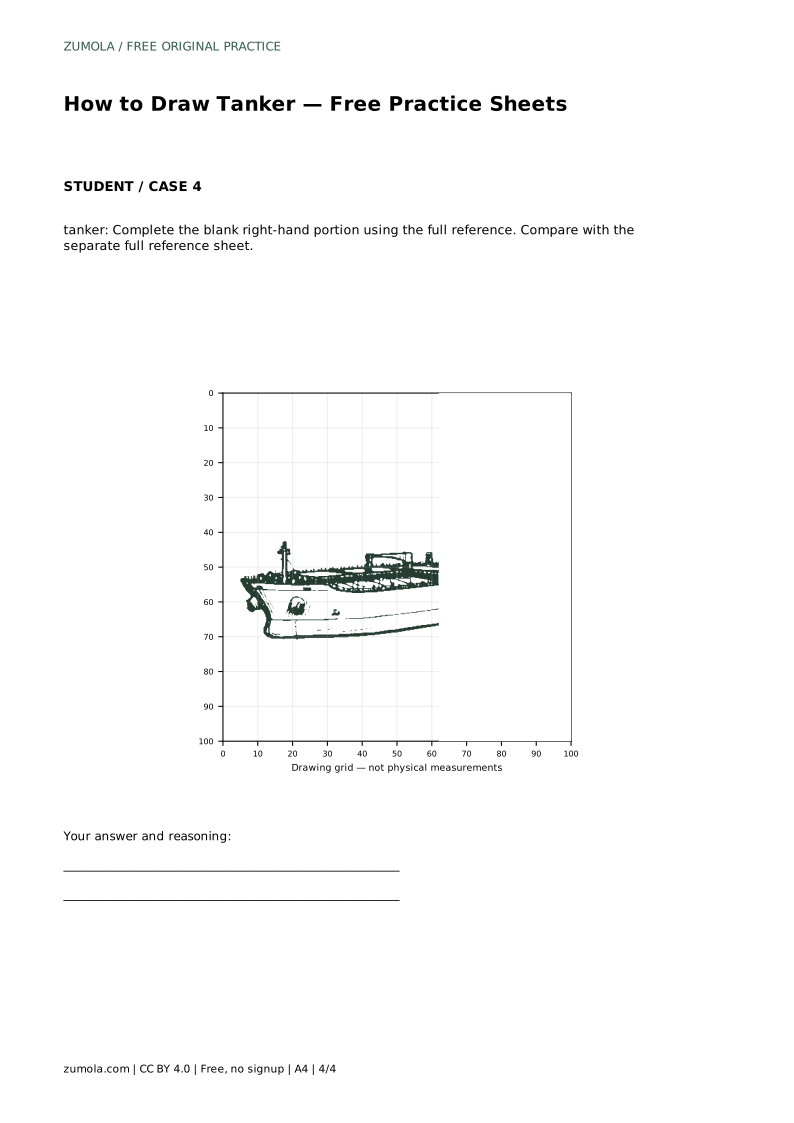
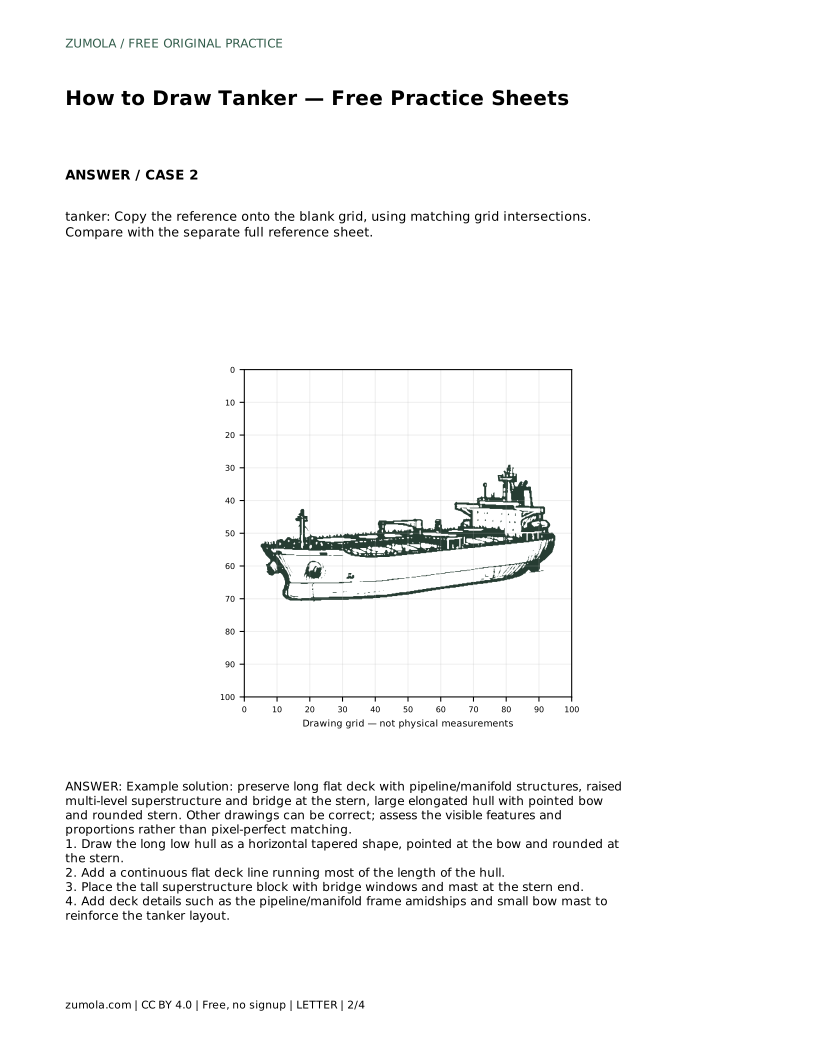
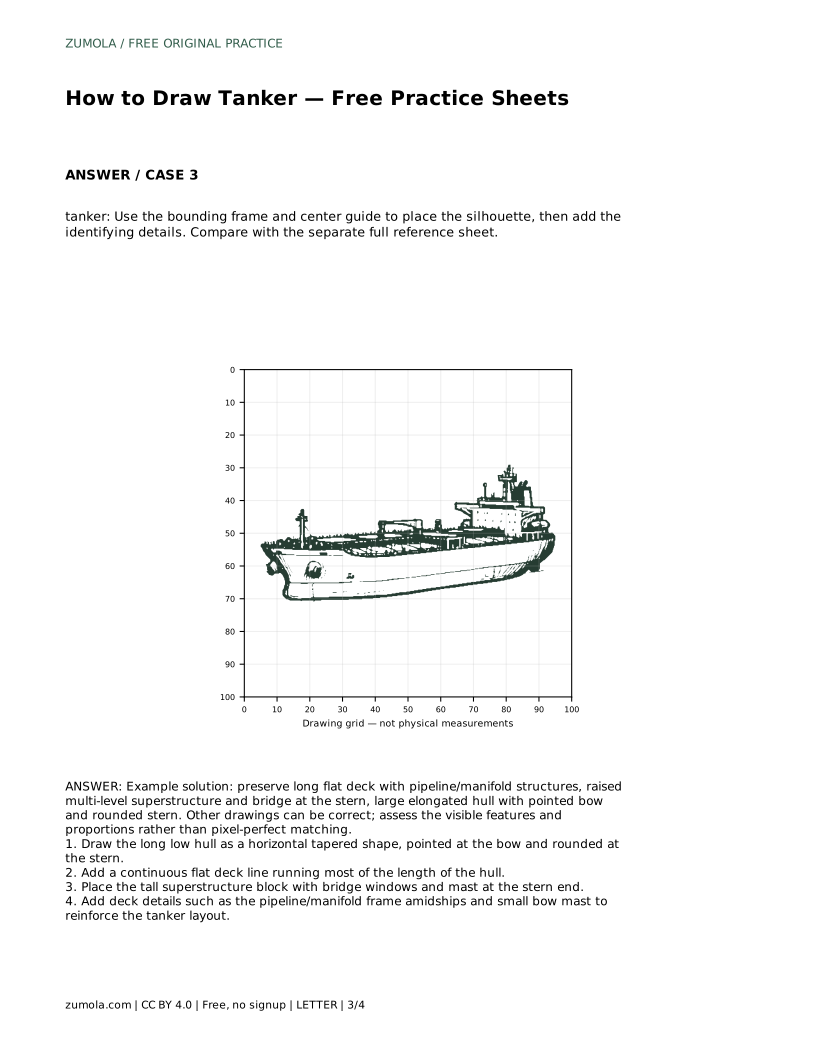
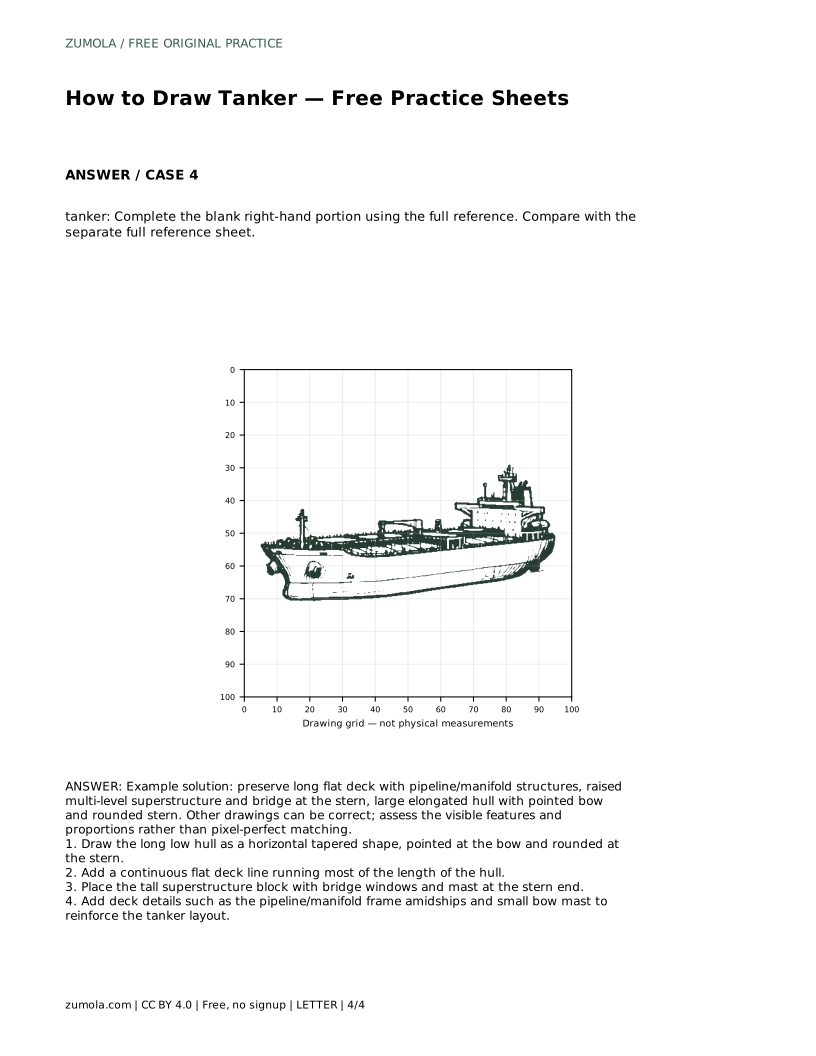
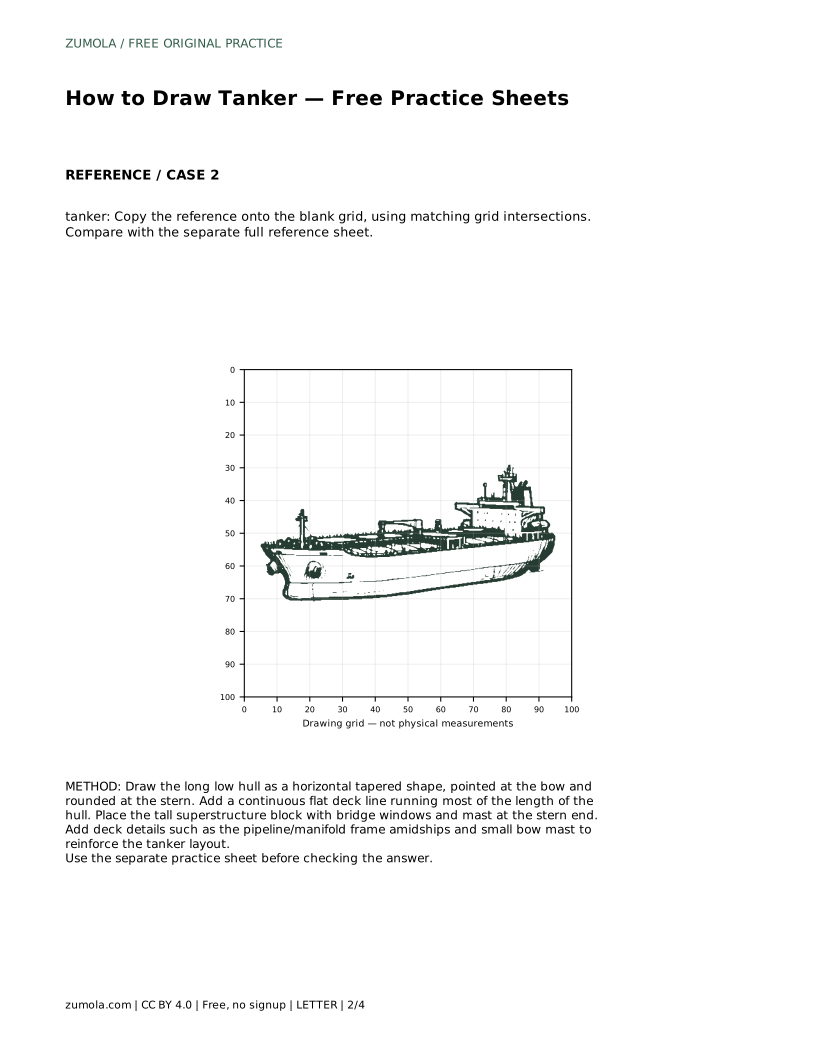
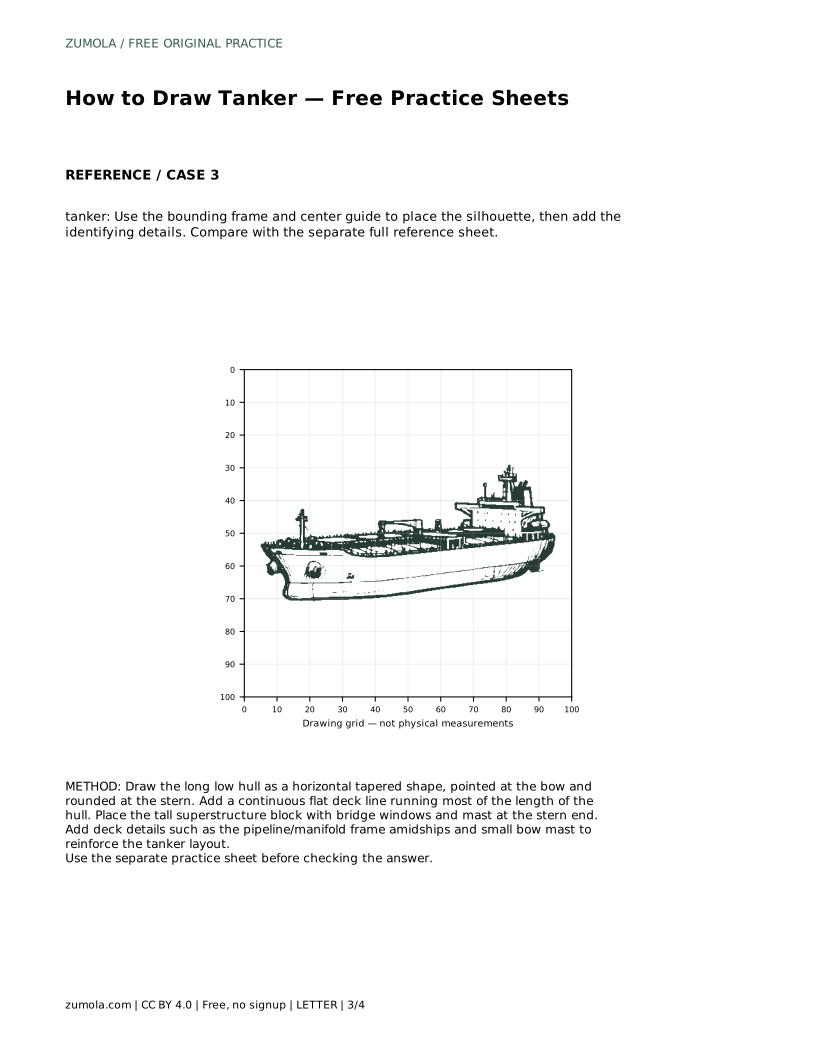
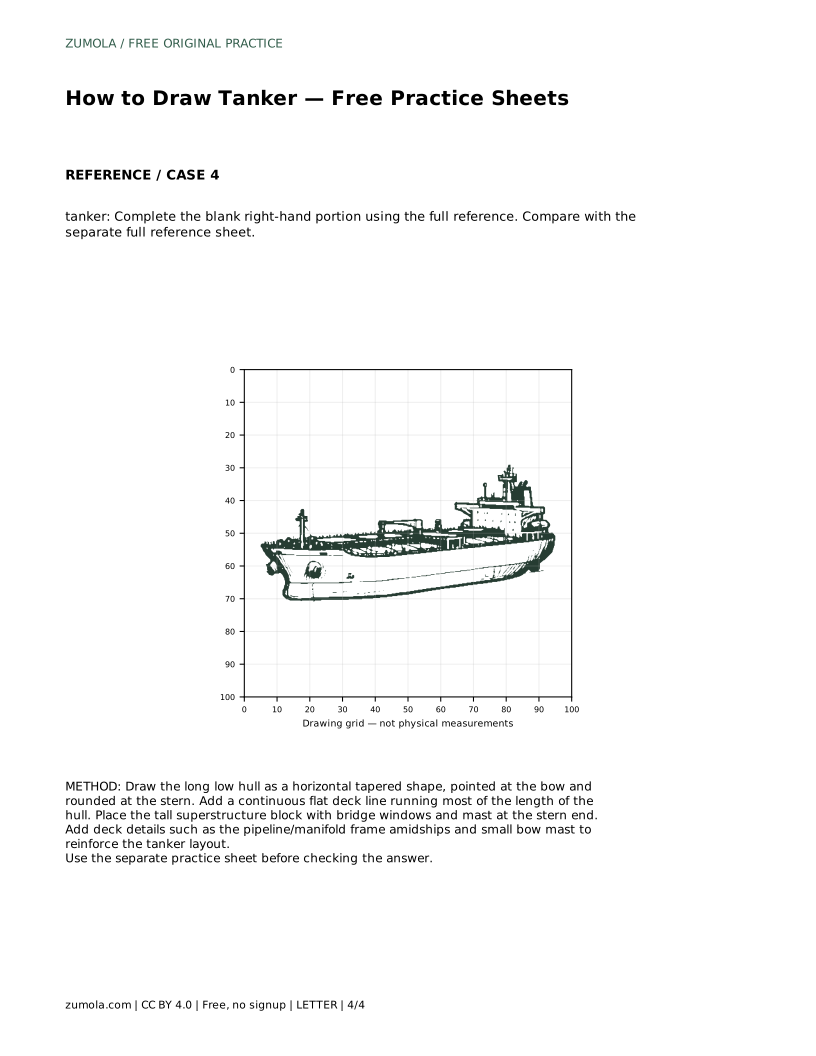
The tracing sheet asks you to follow the reference outline, then repeat the contour independently and compare with the separate full reference. The grid sheet asks you to copy the reference onto a blank grid using matching intersections. The bounding-frame sheet gives a centre guide for placing the silhouette before adding details. The partial-outline sheet leaves the right-hand portion blank for you to complete from the full reference.
In every case, compare your finished drawing with the reference and judge the visible features and proportions. Different drawings can be correct; assess whether the long flat deck, stern superstructure and midship manifold are present and sensibly placed.
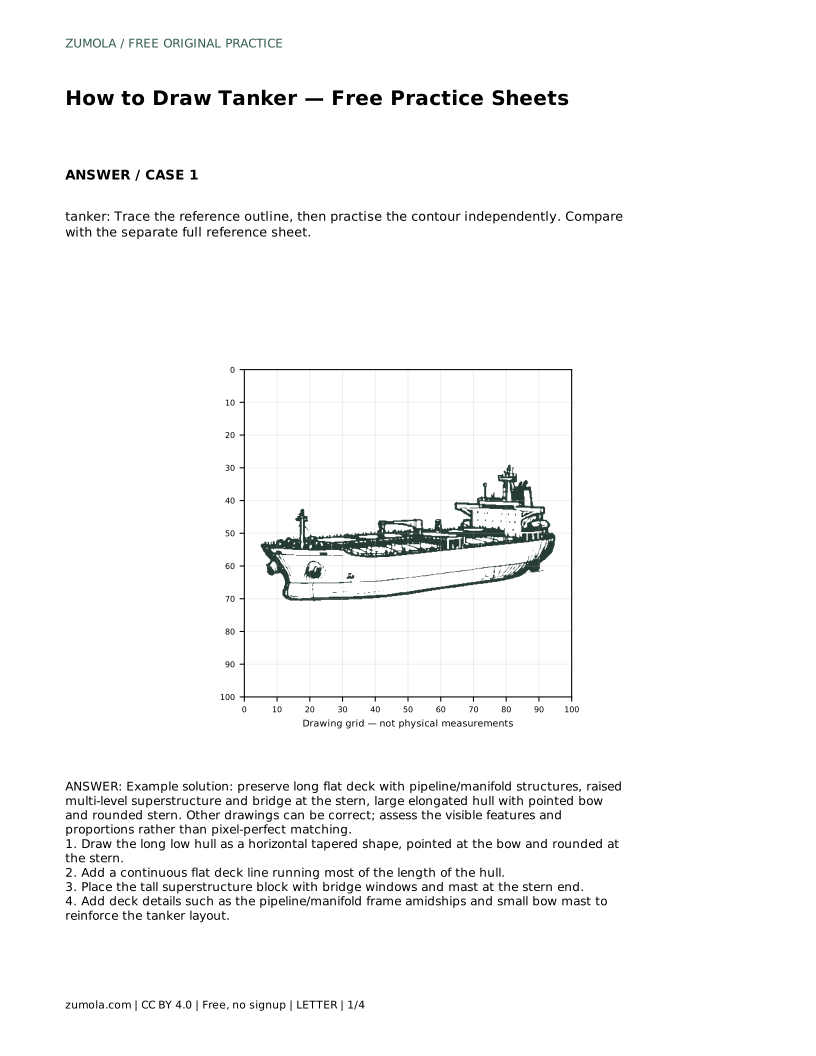
tanker: Trace the reference outline, then practise the contour independently. Compare with the separate full reference sheet.
Example solution: preserve long flat deck with pipeline/manifold structures, raised multi-level superstructure and bridge at the stern, large elongated hull with pointed bow and rounded stern. Other drawings can be correct; assess the visible features and proportions rather than pixel-perfect matching. Draw the long low hull as a horizontal tapered shape, pointed at the bow and rounded at the stern. Add a continuous flat deck line running most of the length of the hull. Place the tall superstructure block with bridge windows and mast at the stern end. Add deck details such as the pipeline/manifold frame amidships and small bow mast to reinforce the tanker layout.
No. Compare visible features and proportions instead. A drawing with a long flat deck, stern superstructure and midship manifold can be correct even if small details differ.
Start with tracing if you are new to the shape, then move to the grid or bounding-frame sheet to practise placing the silhouette without tracing.
The combination of a long low hull, a continuous flat deck, a raised multi-level superstructure and bridge at the stern, and low pipeline or manifold structures amidships.
All drawing practice · Free coordinate paper
Original resources · CC BY 4.0 · Free for personal and classroom use with attribution.