Reference diagrams
LETTER · Download PDF
A4 · Download PDF
Free original resources
Teach signed integer addition, subtraction, multiplication, and division with clear sign rules, number-line reasoning, and printable practice. Includes worked examples and a rubric.
Four original cases, with reference diagrams, practice sheets and worked answers. Everything is free; no signup required.
LETTER · Download PDF
A4 · Download PDF
LETTER · Download PDF
A4 · Download PDF
LETTER · Download PDF
A4 · Download PDF
Use A4 or US Letter to match your printer. Use the stated values and conditions to solve each exercise; diagrams are not physical measuring rulers.

Signed integers combine a magnitude with a direction: positive numbers sit to the right of zero, negative numbers to the left. Arithmetic with them is not about memorizing isolated facts but about tracking direction and size consistently. This page explains the core rules for adding, subtracting, multiplying, and dividing integers, shows how a number line makes addition and subtraction visible, and gives a worked example with exact reasoning. Use it alongside printable worksheets to build fluency without losing conceptual understanding.
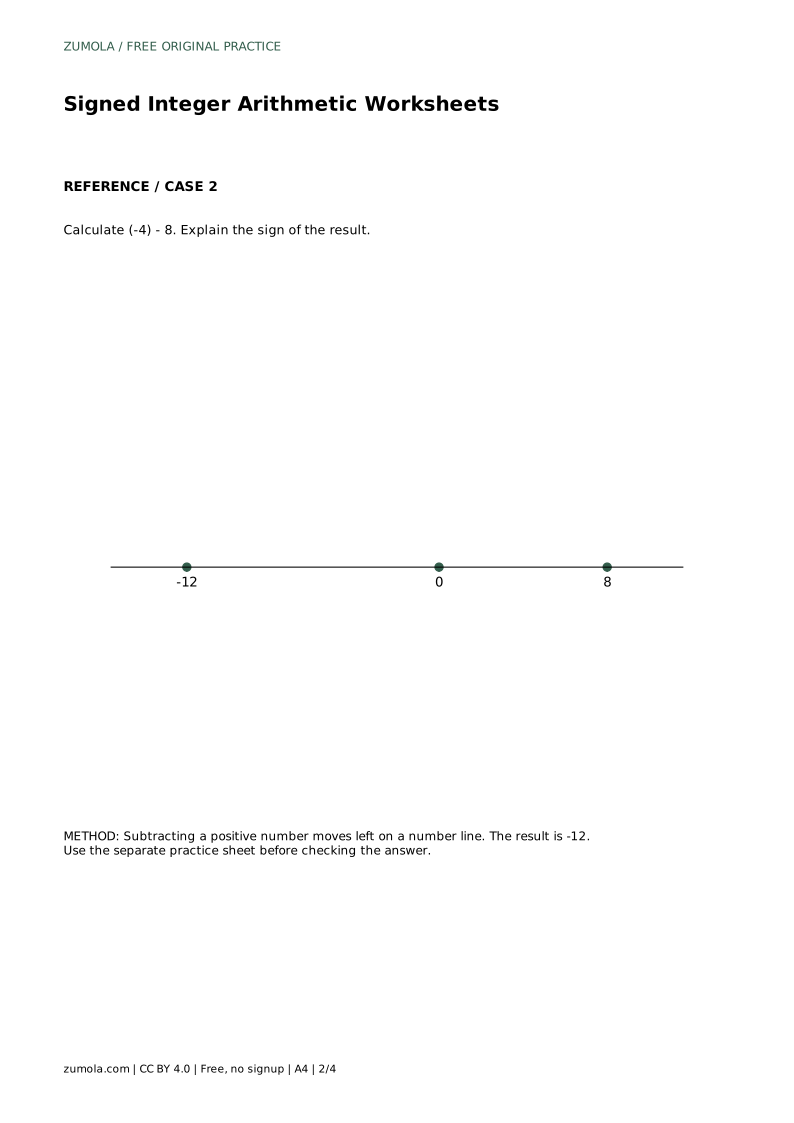
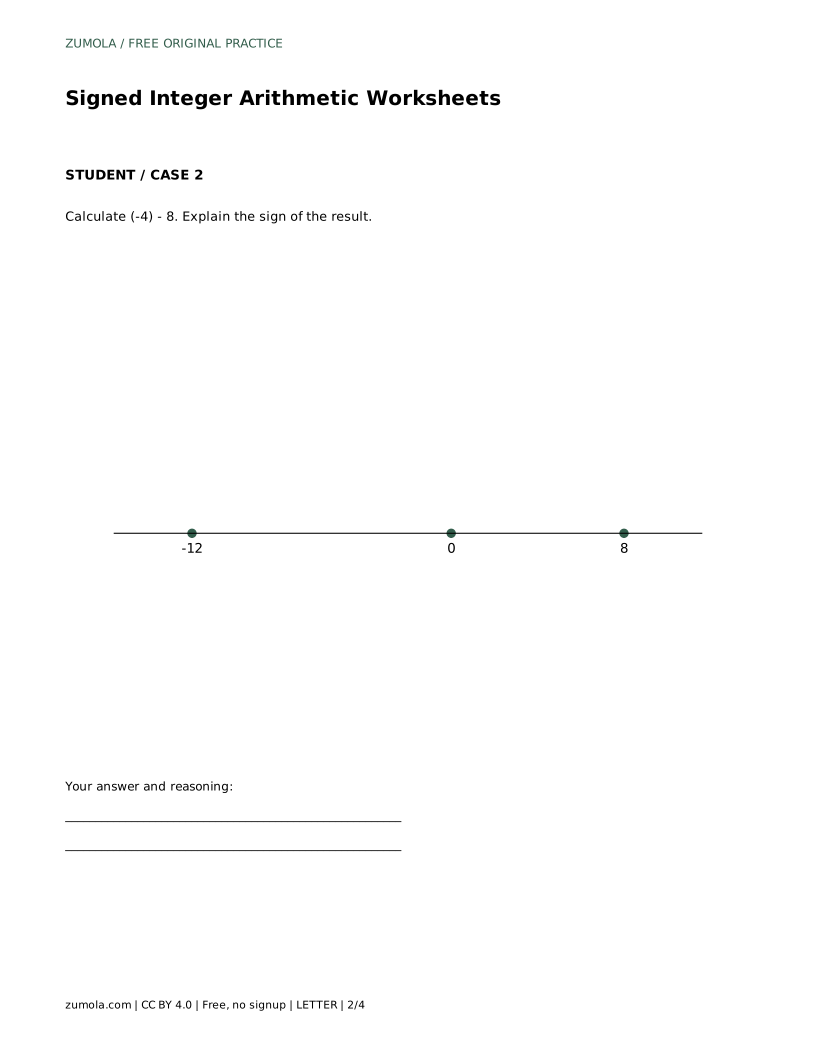
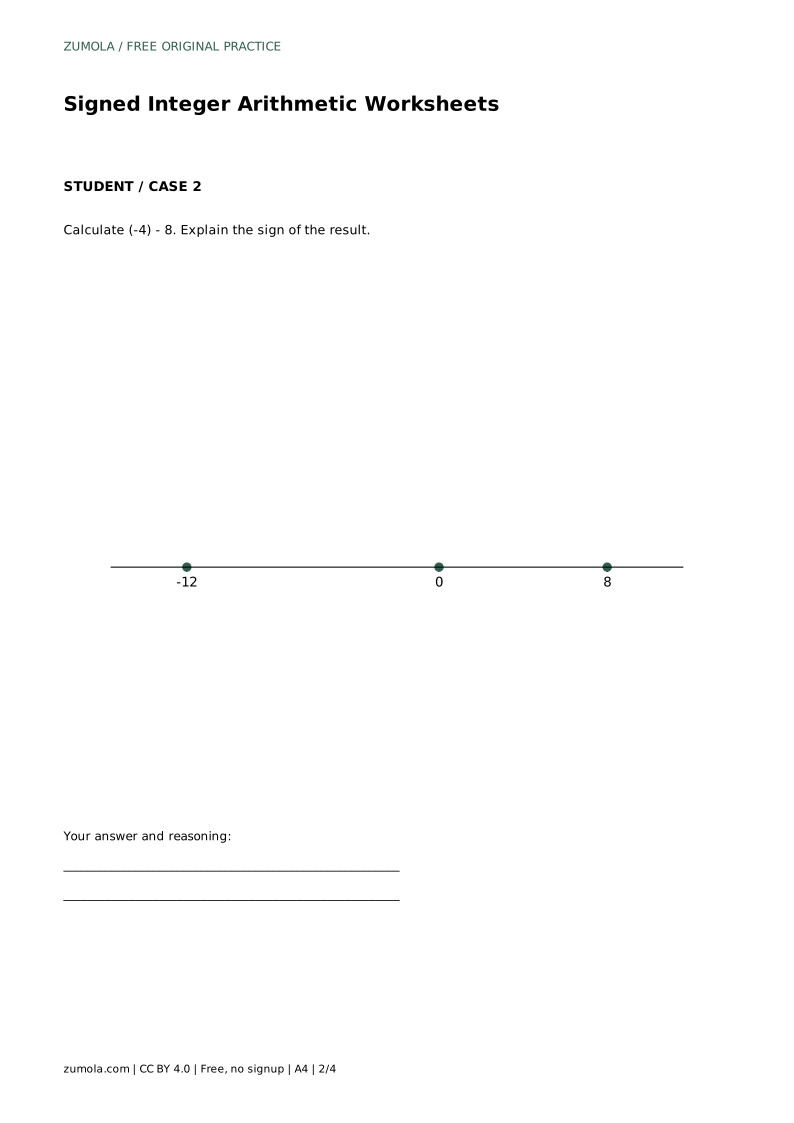
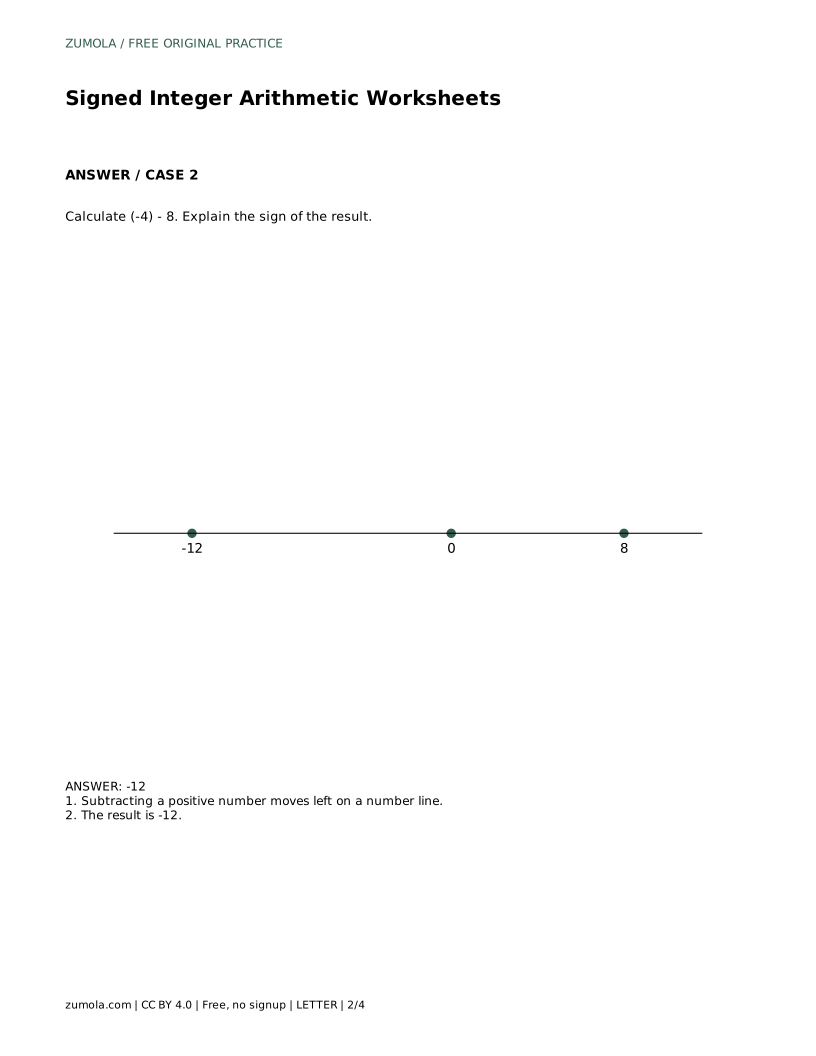
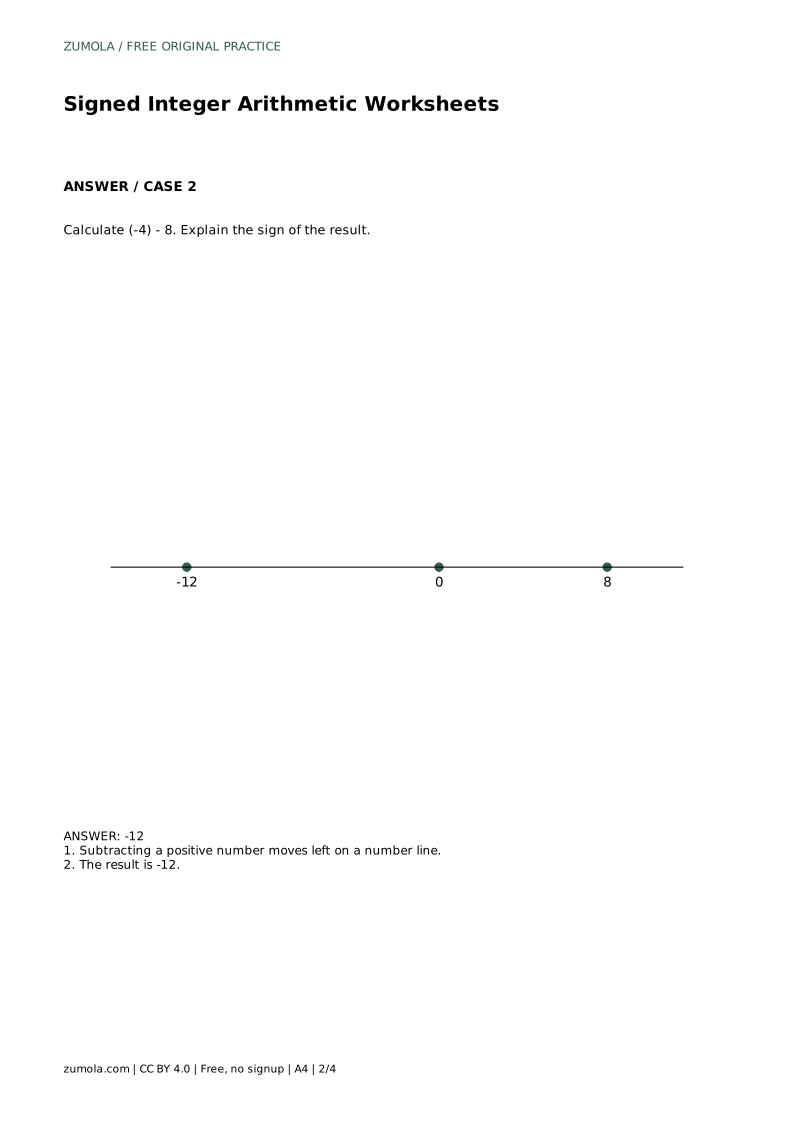
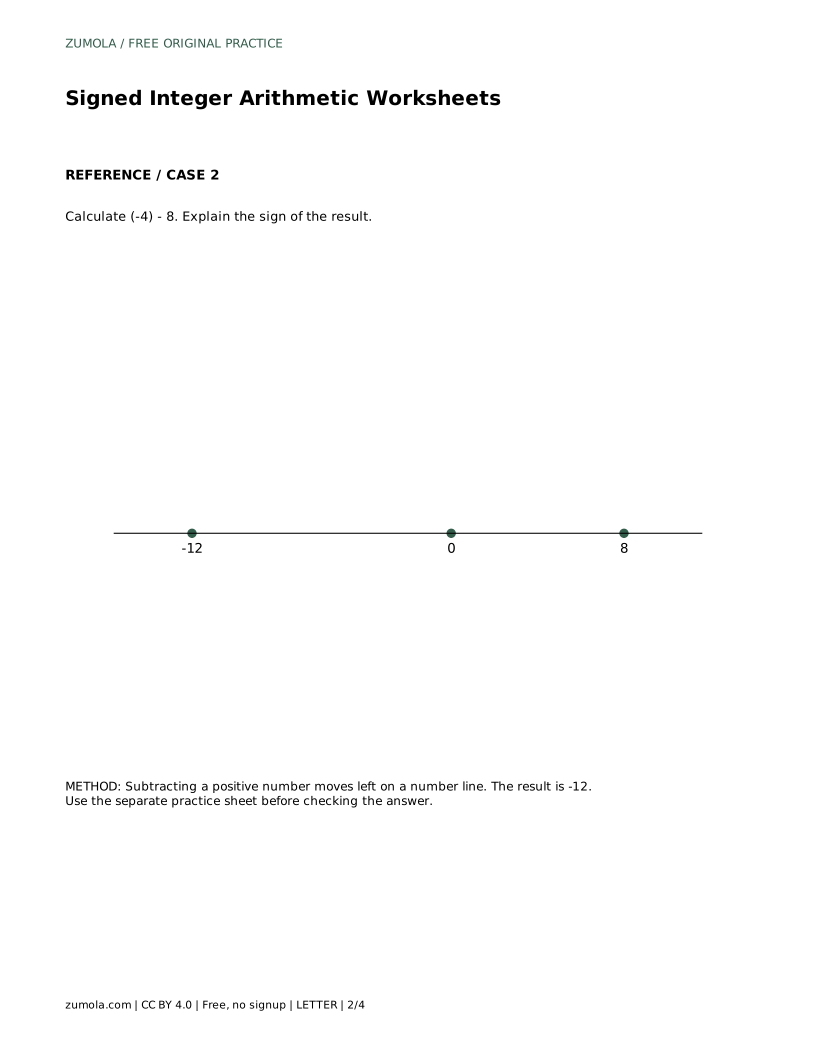
For addition, start at the first number and move right for a positive addend or left for a negative addend. The landing point is the sum. For subtraction, rewrite it as adding the opposite: a - b = a + (-b). Then move right for a positive opposite or left for a negative opposite. This keeps one consistent motion rule instead of separate memorized cases.
Sign reasoning follows from direction. Adding a positive number always moves right, so the result is greater than the starting value. Adding a negative number moves left, so the result is less. Subtracting a positive number also moves left, because you are adding a negative. Subtracting a negative number moves right, because you are adding a positive. The number line makes these outcomes visible before any symbolic shortcut is applied.
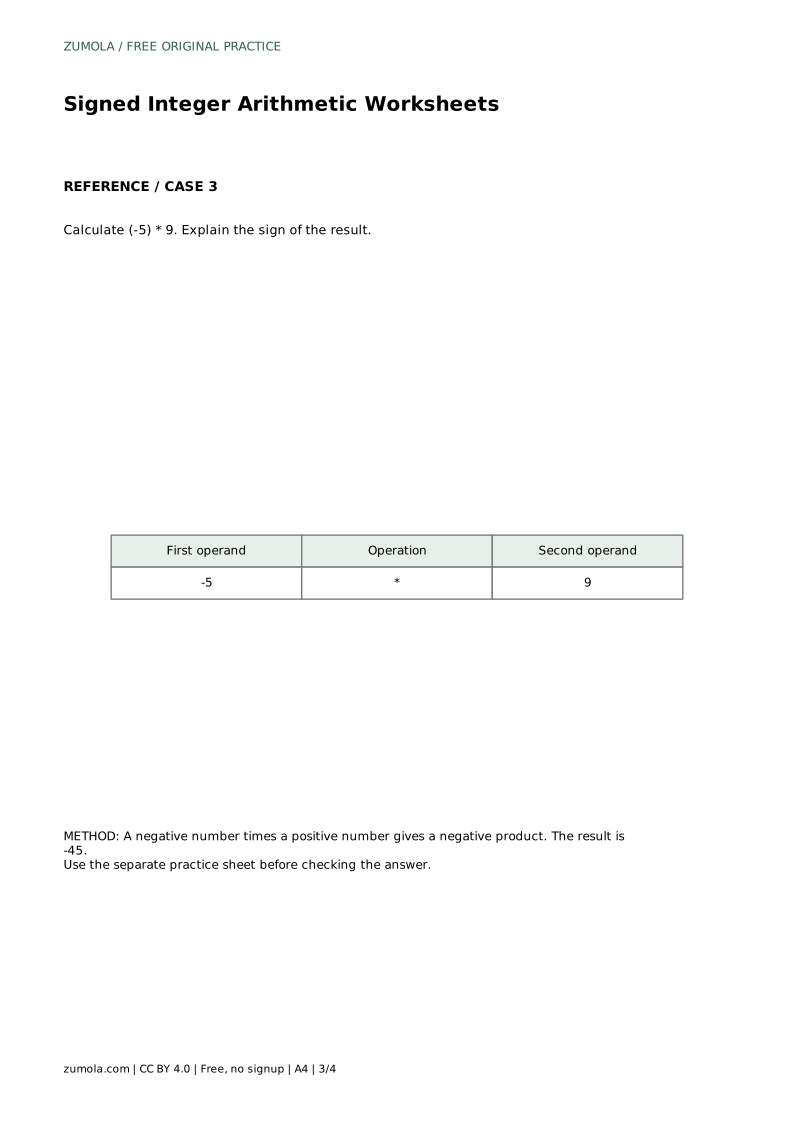
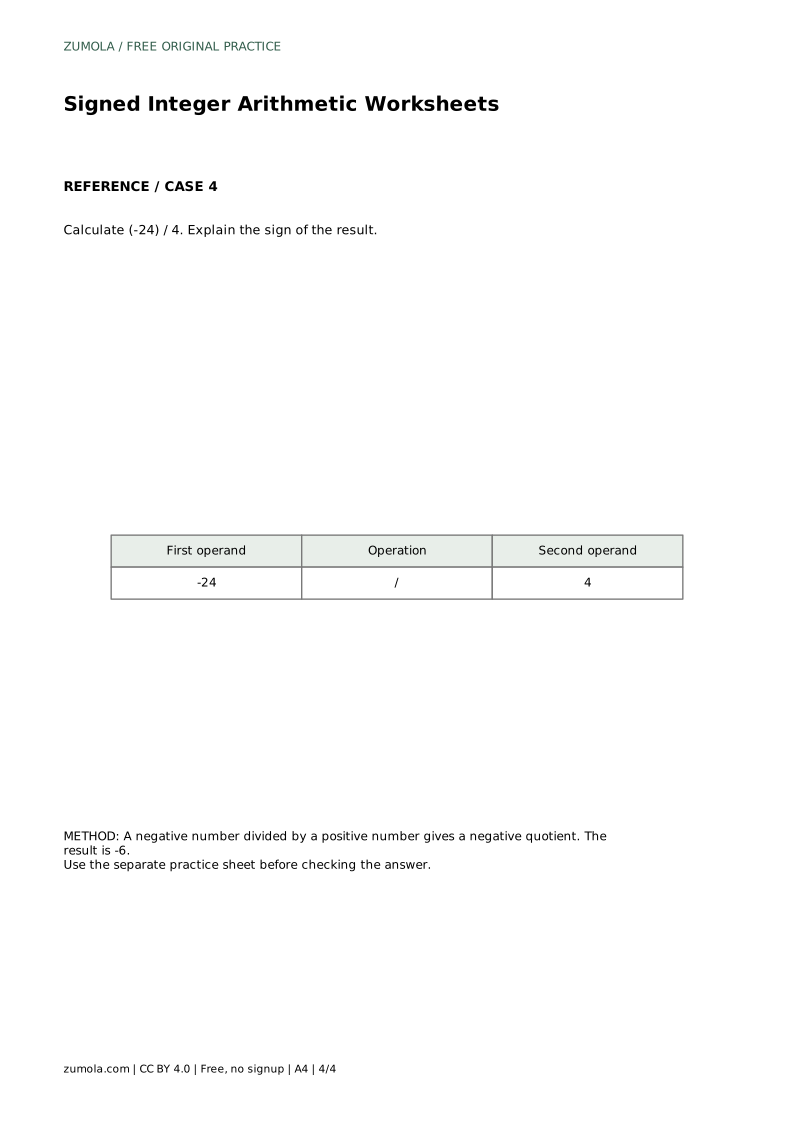
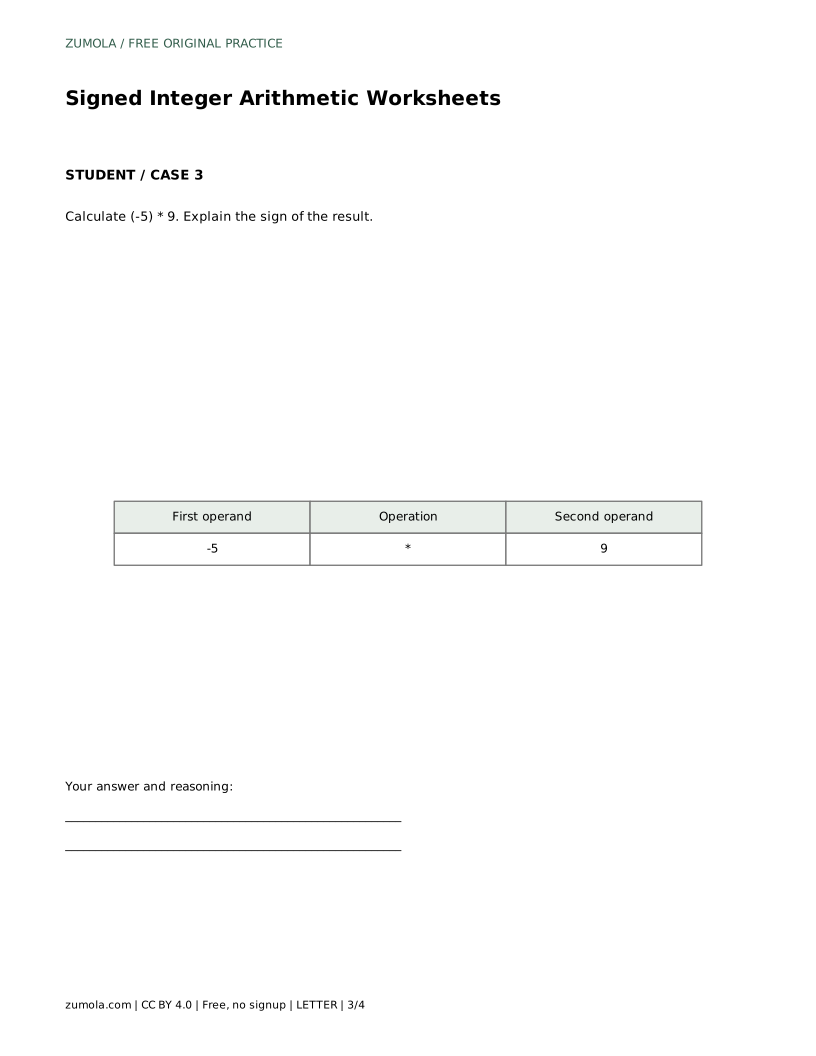
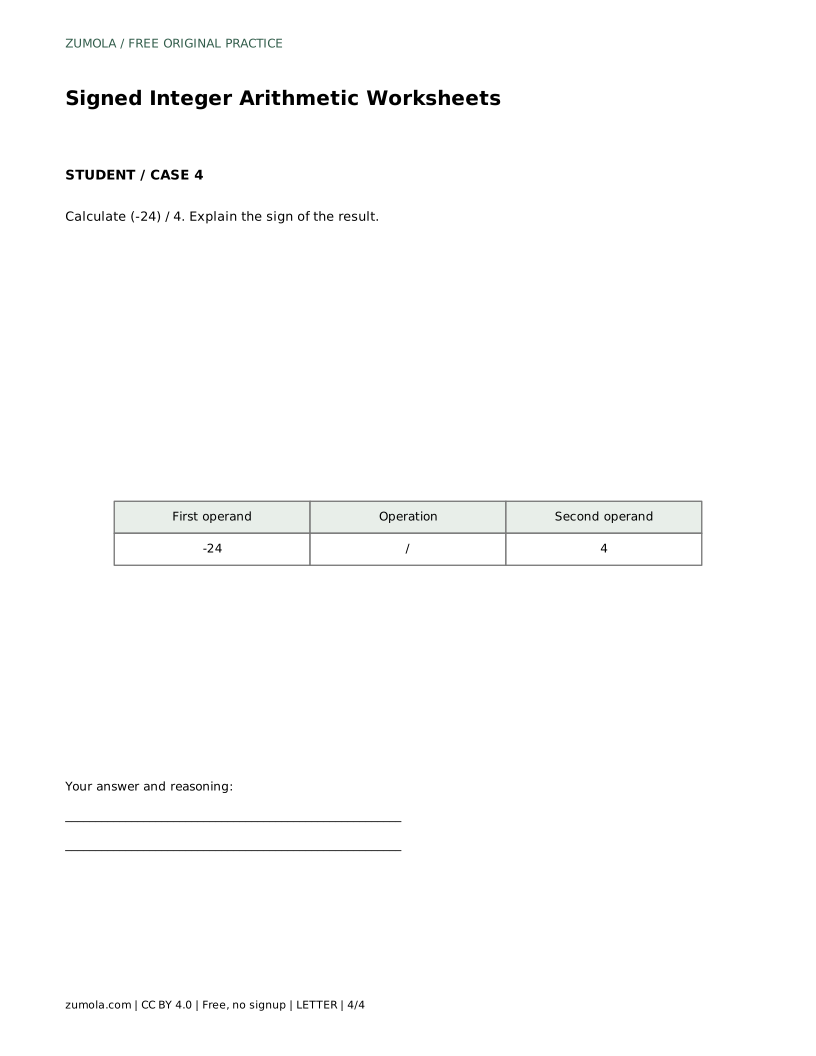
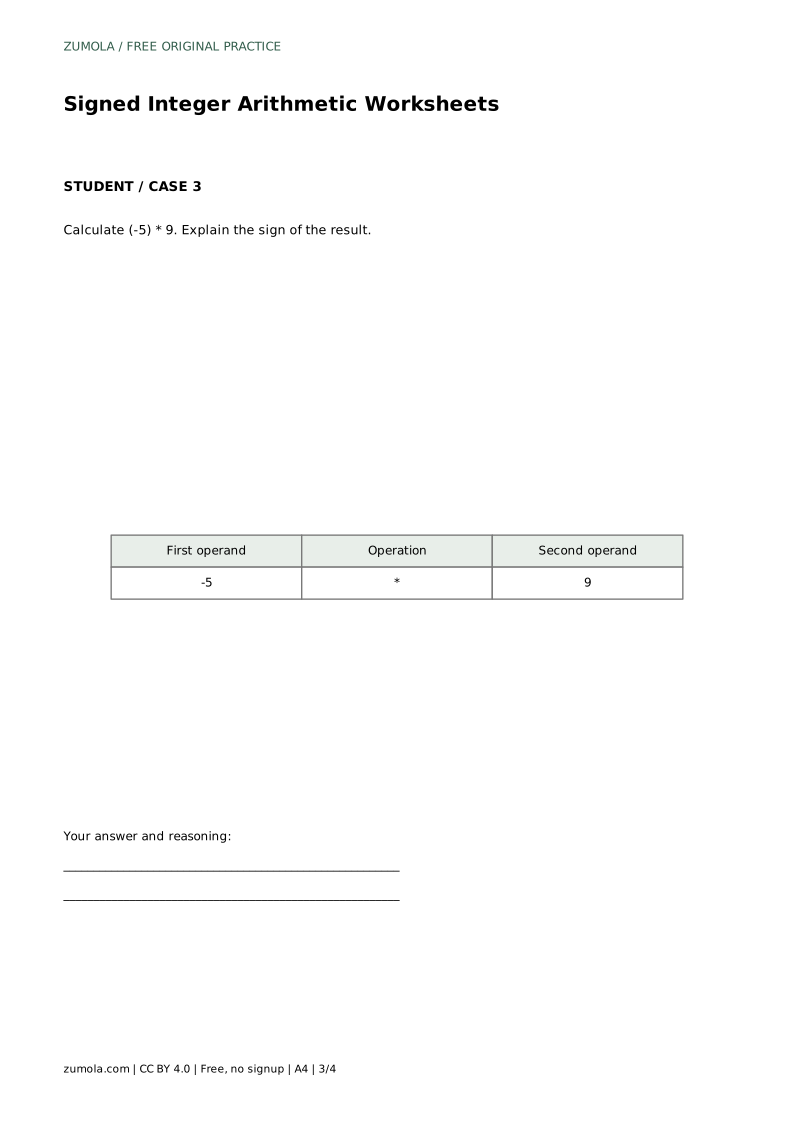
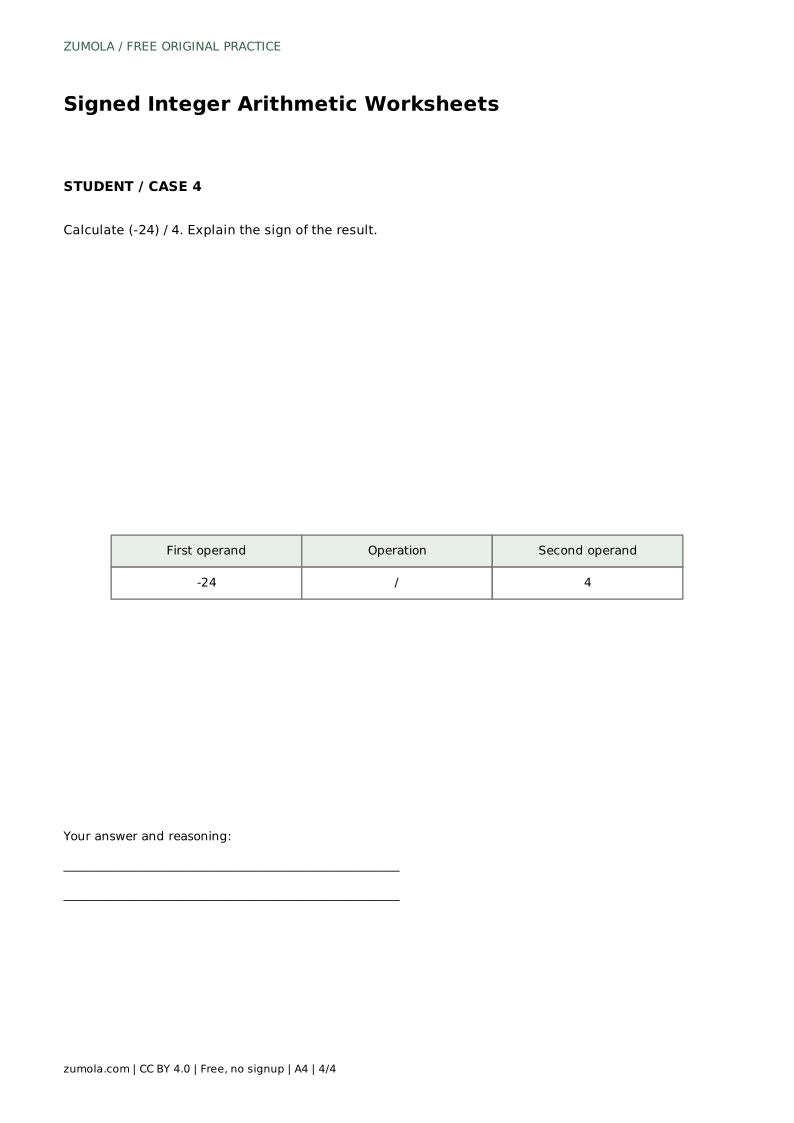
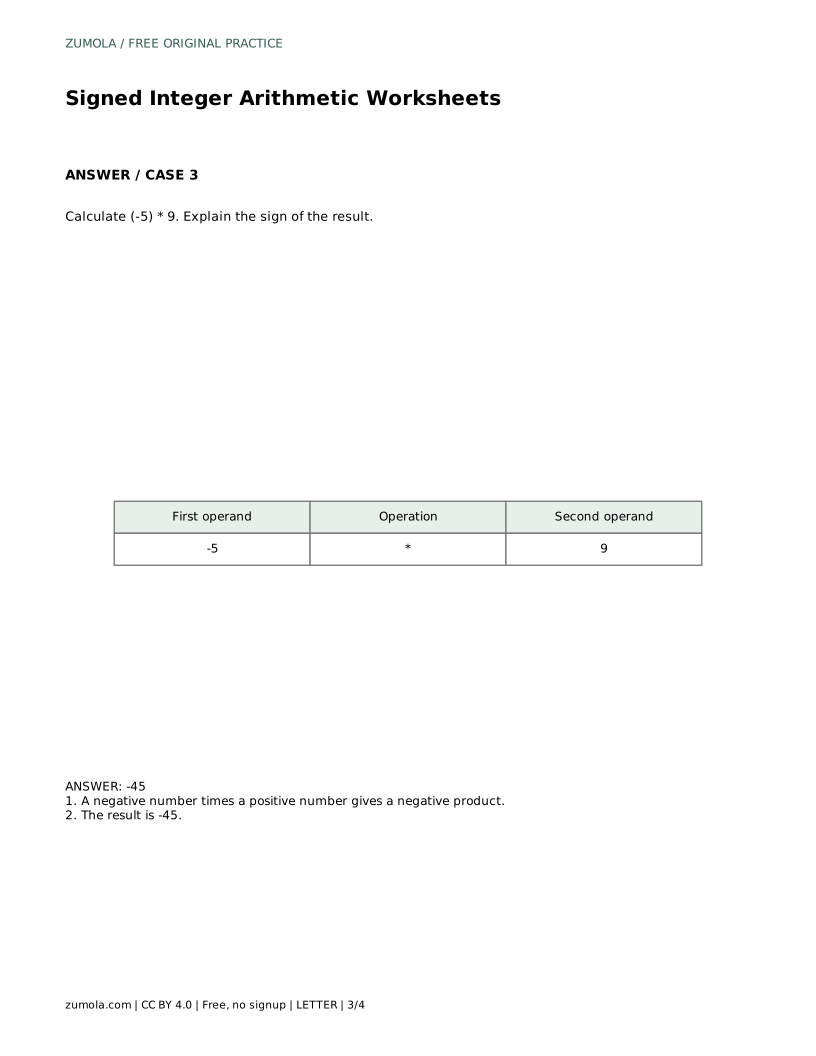
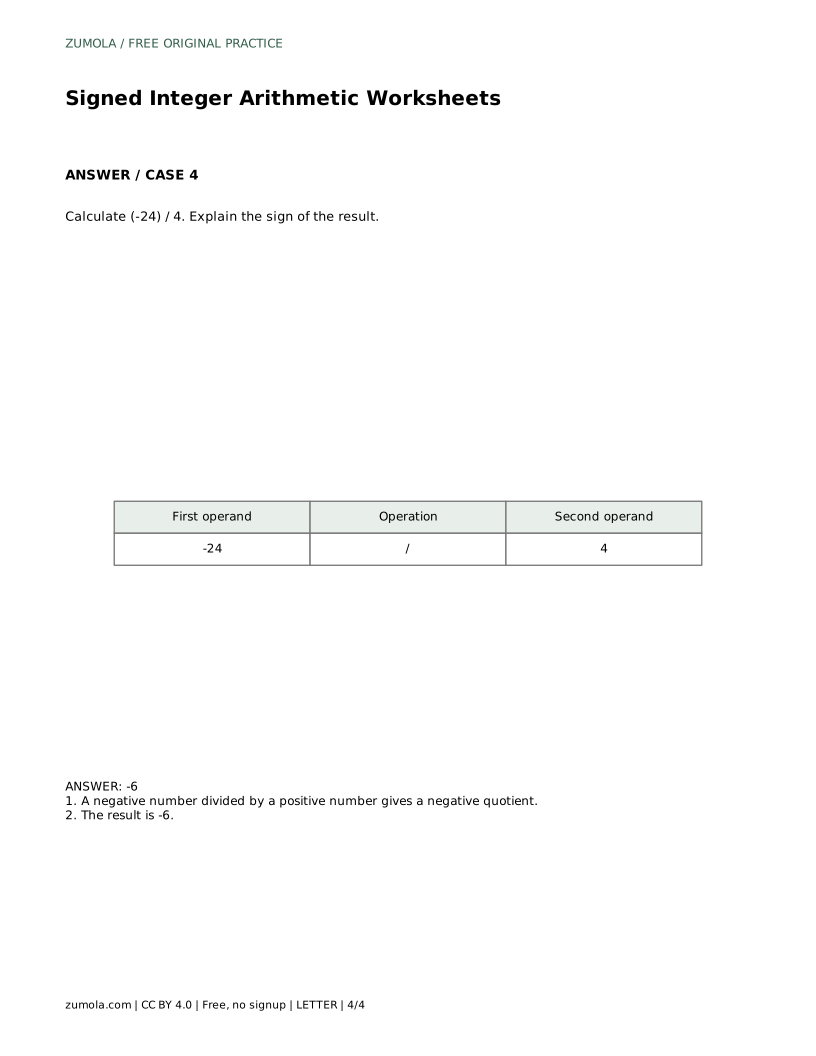
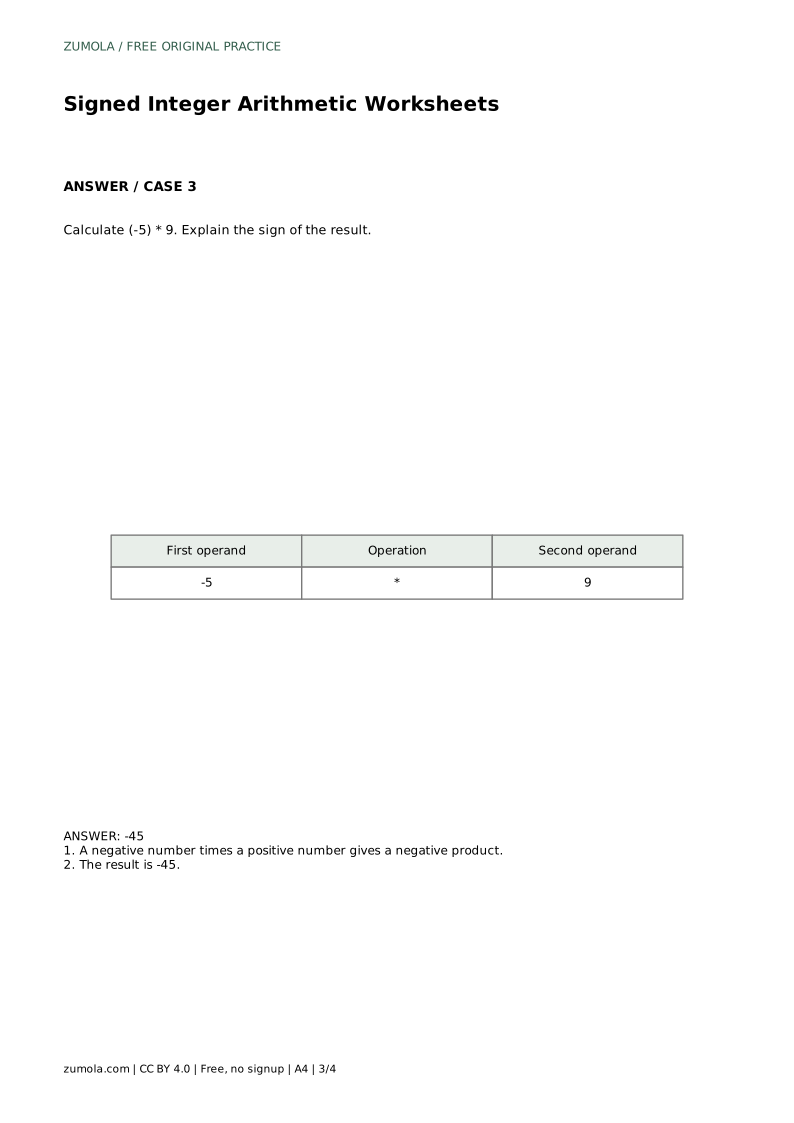
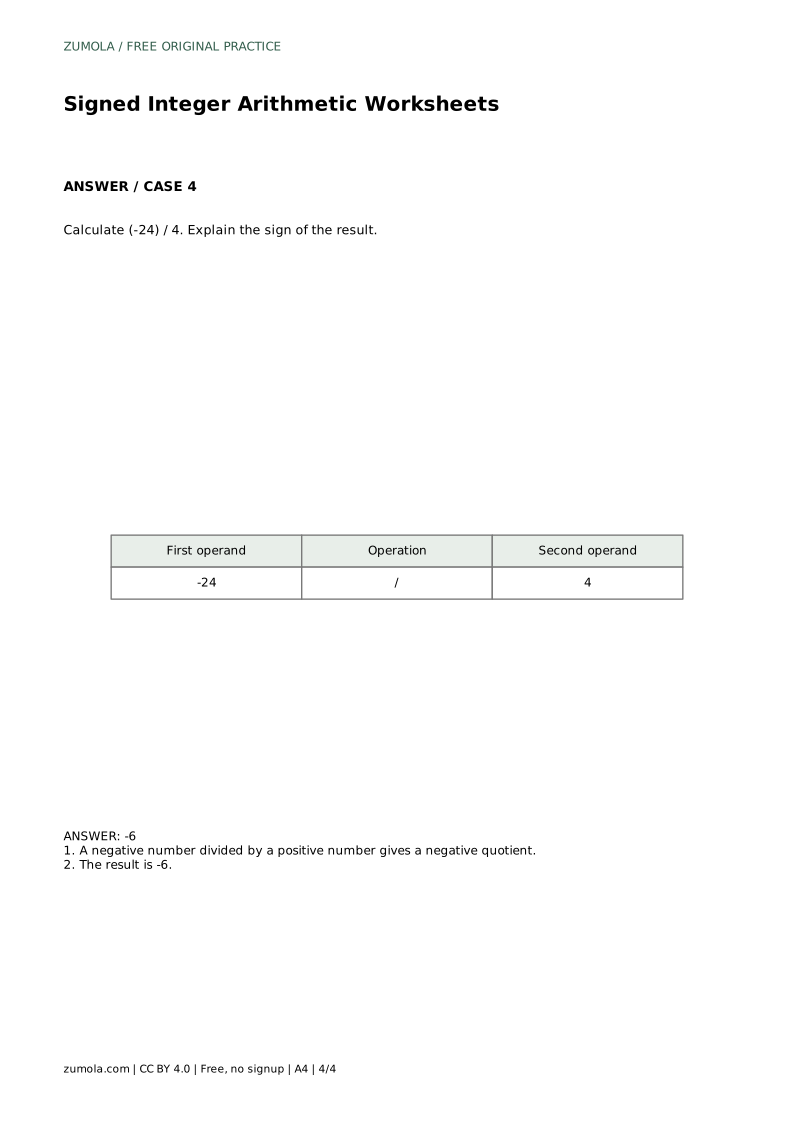
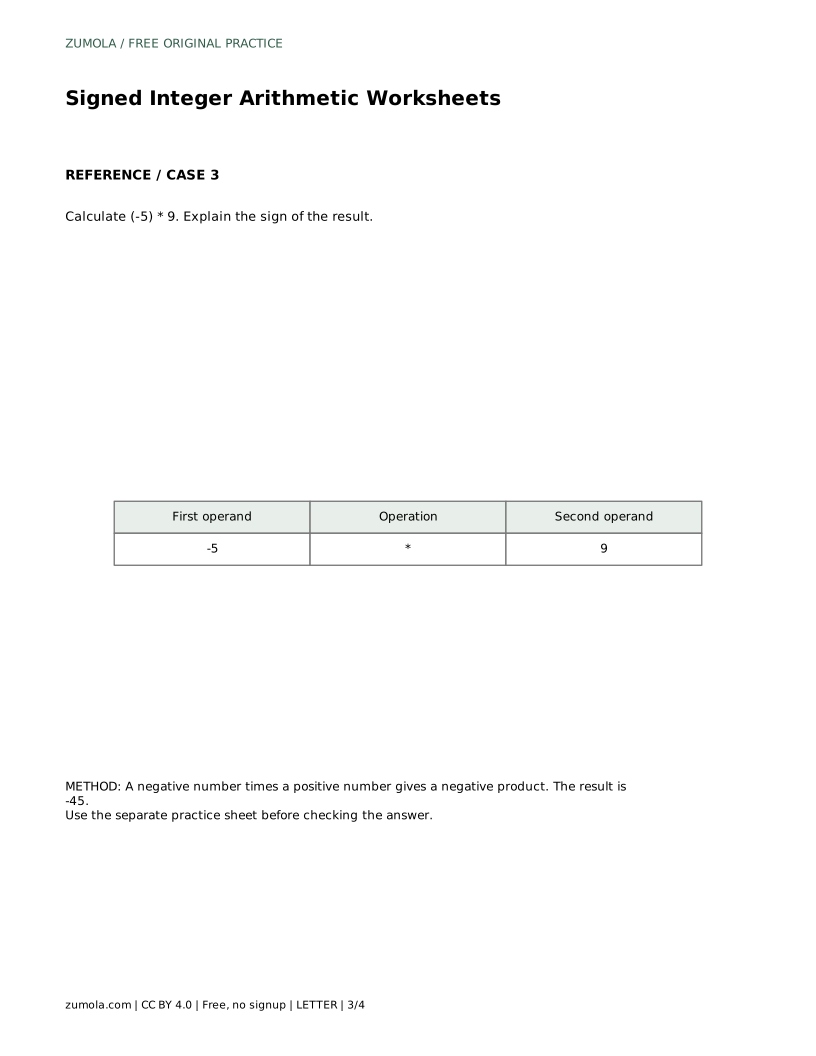
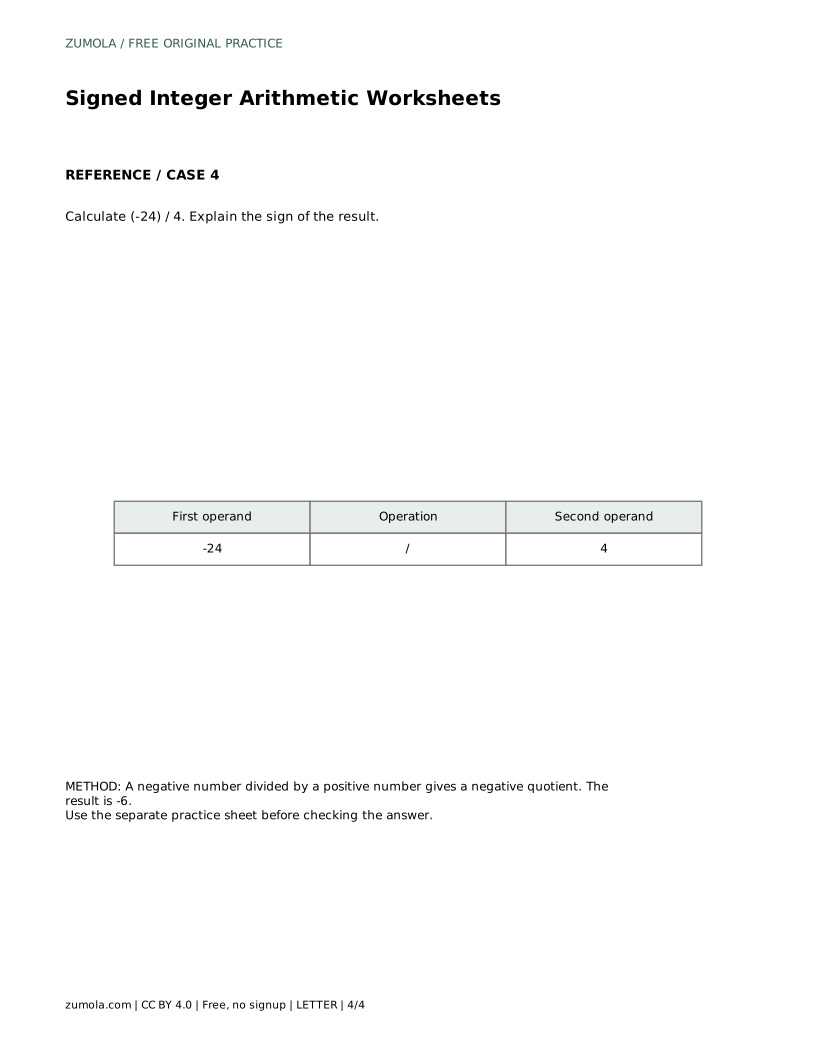
Multiplication and division use the same sign logic: same signs give a positive result; different signs give a negative result. Multiply or divide the absolute values first, then attach the sign. For example, (-5) * 9 has different signs, so the product is negative: -45. (-24) / 4 also has different signs, so the quotient is negative: -6.
Zero is neither positive nor negative, and division by zero is undefined. When a product or quotient is zero, the sign rule does not apply because the result is zero. Keep the absolute values separate from the sign decision so each step can be checked independently.
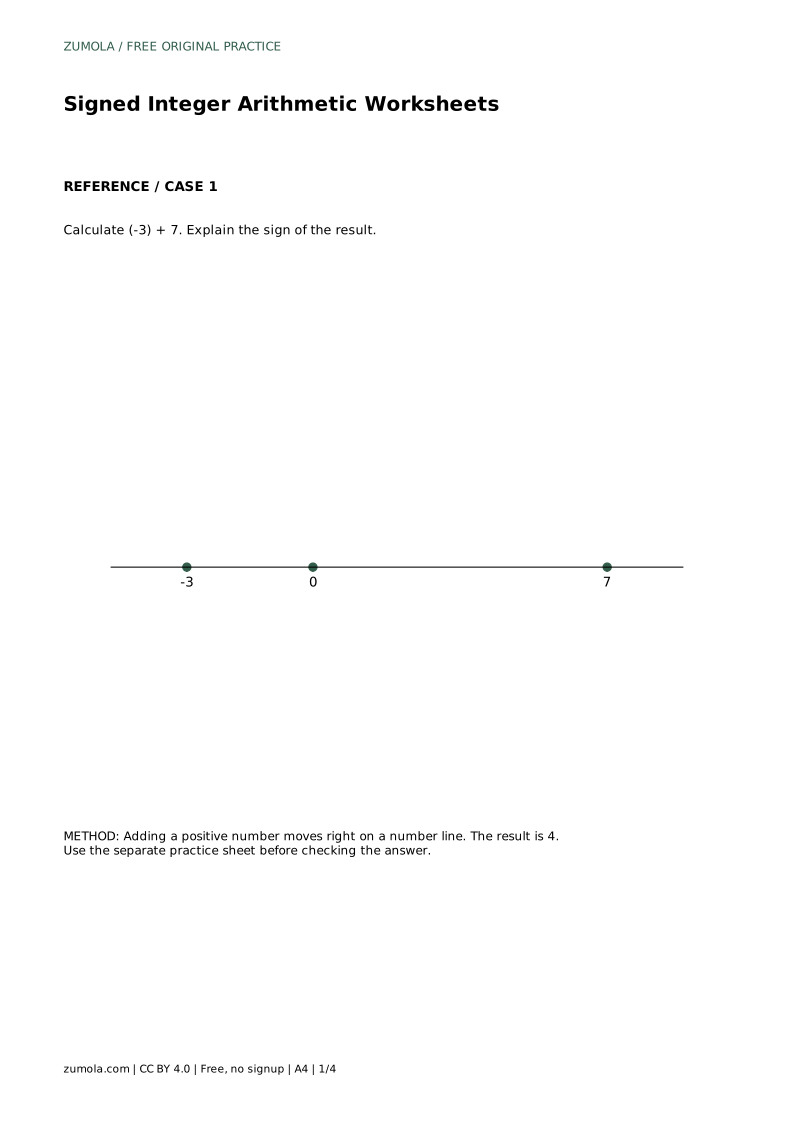
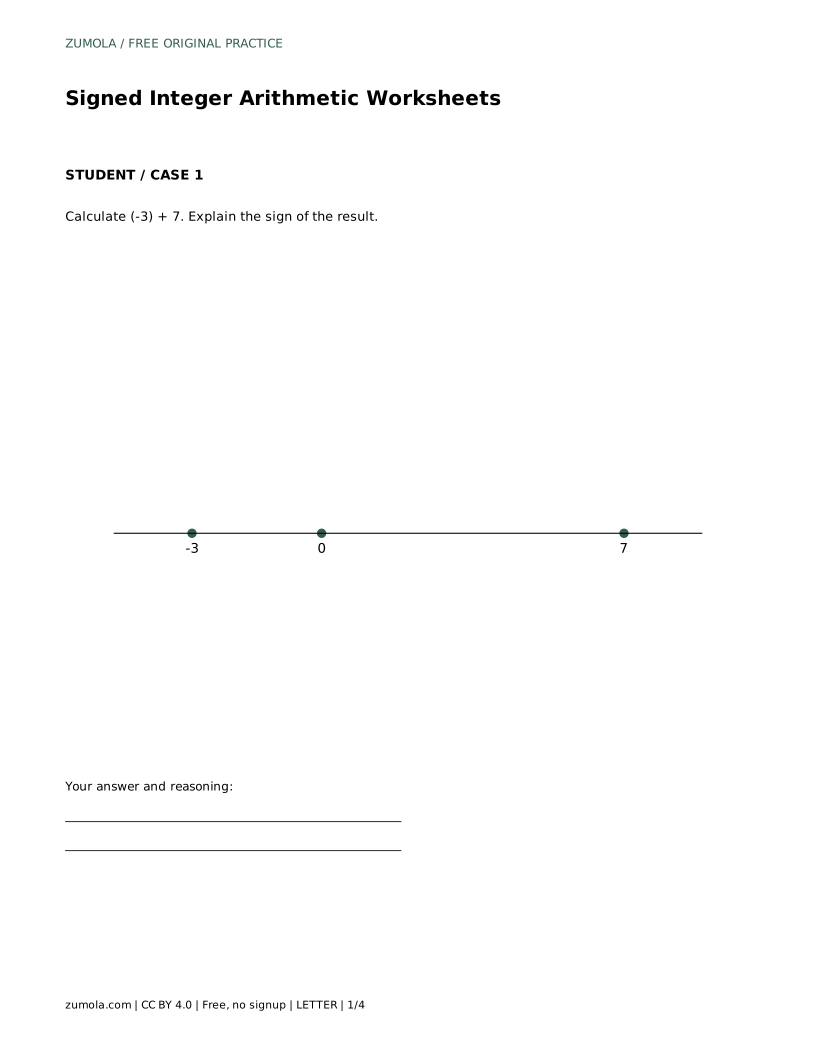
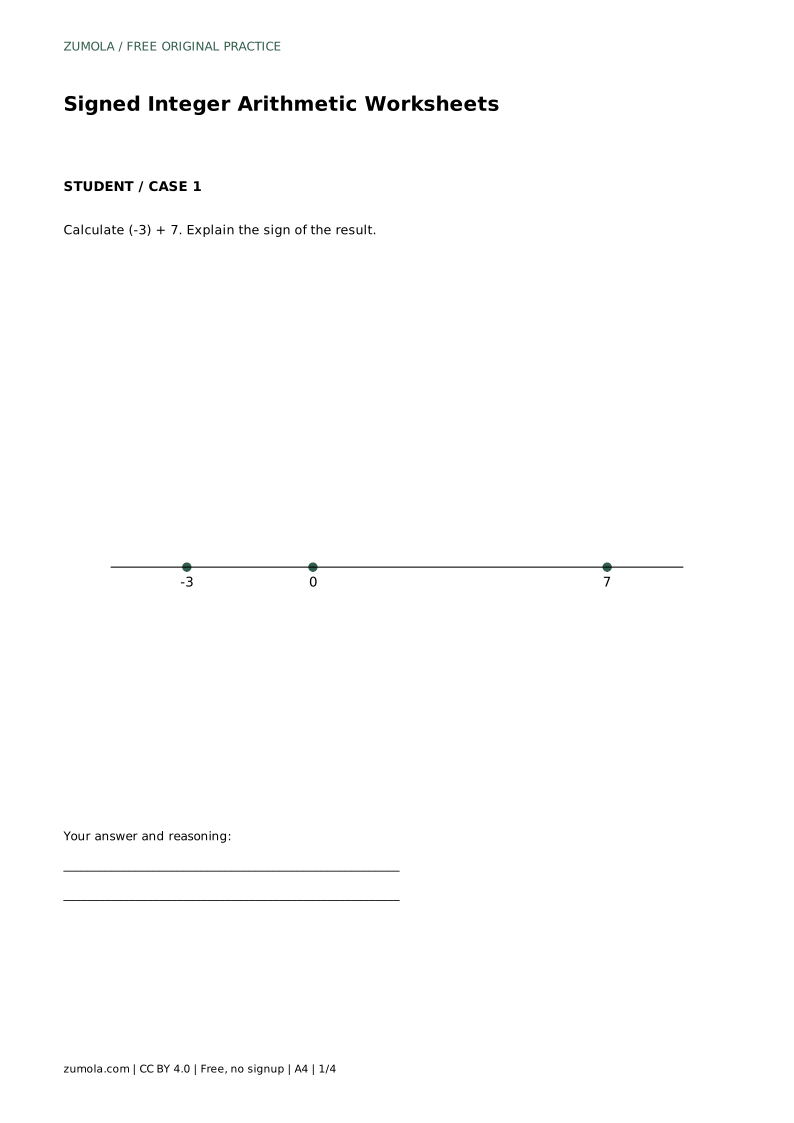
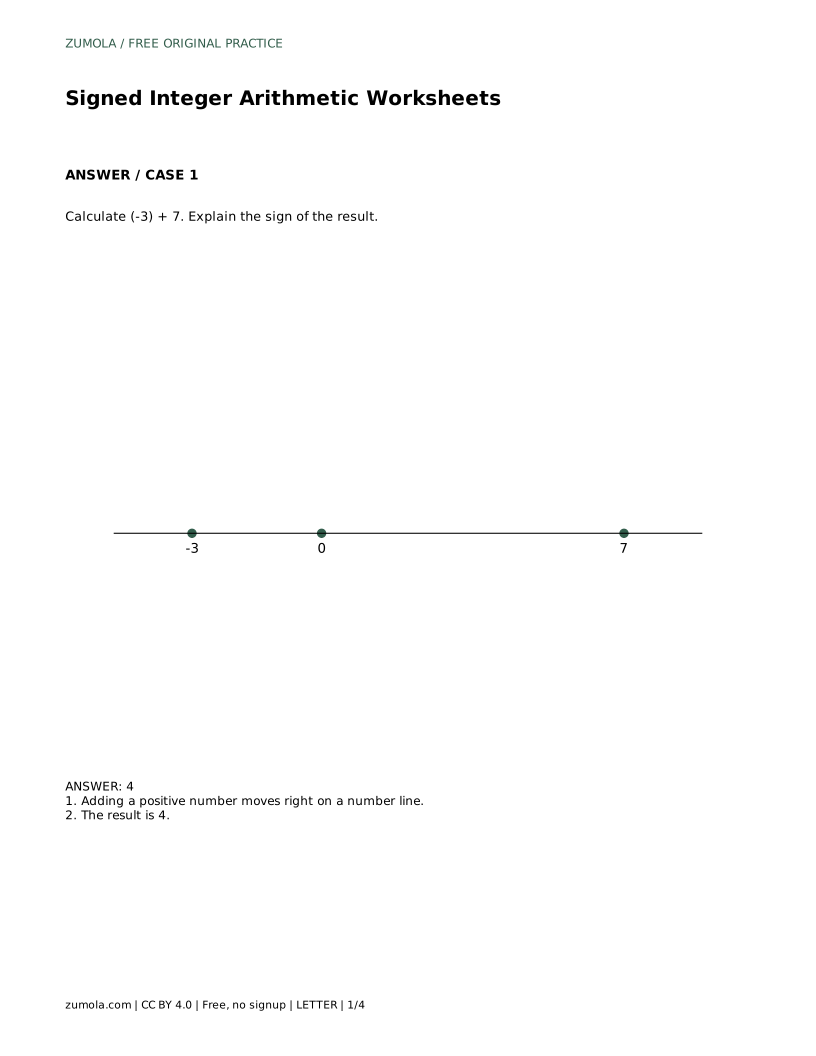
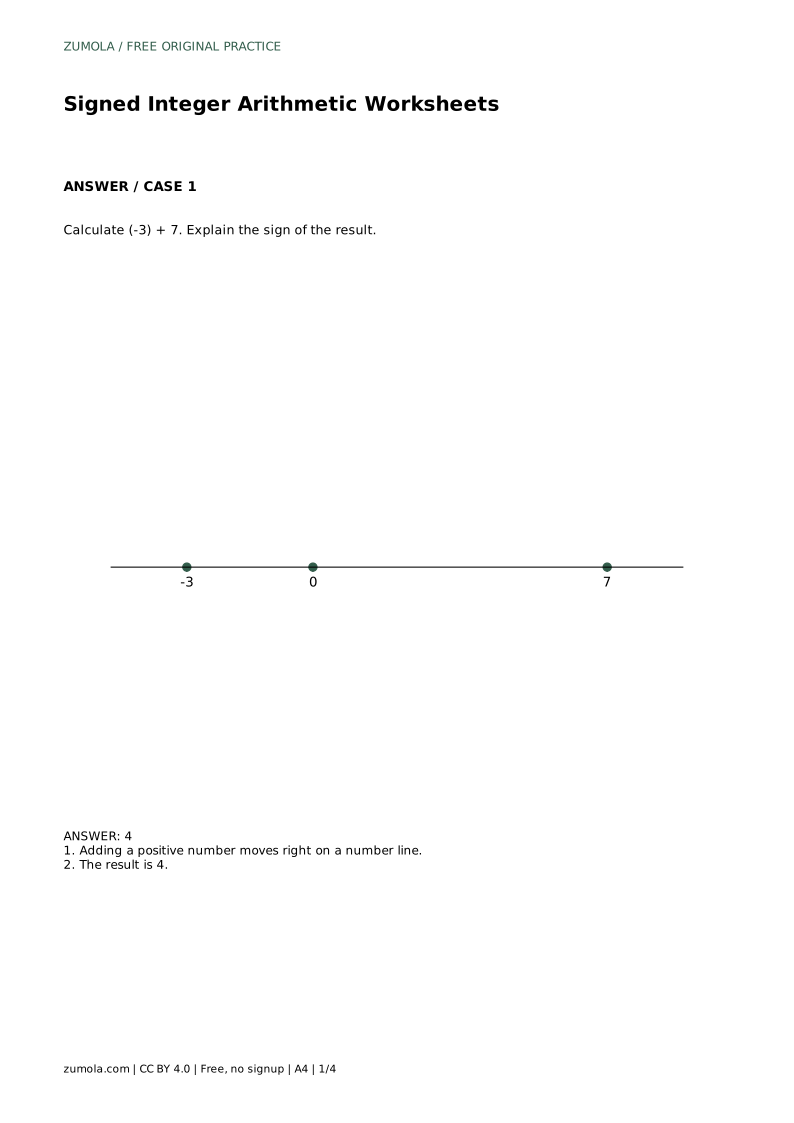
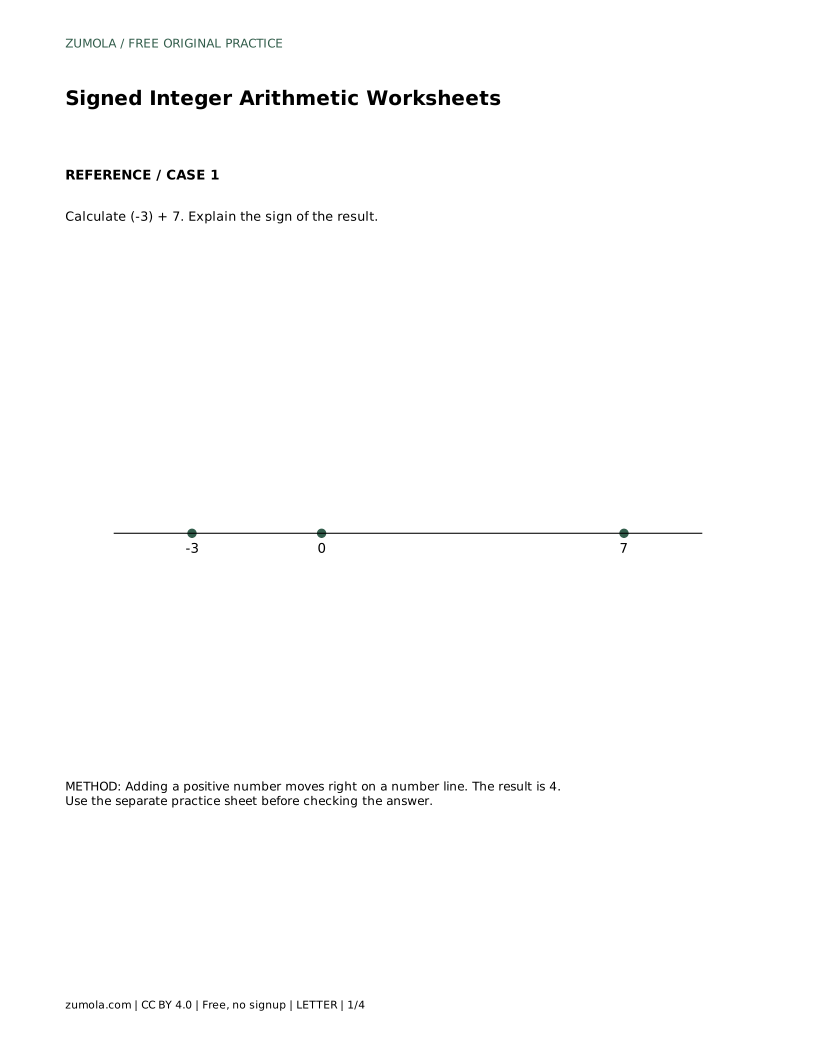
Start at -3 on the number line. The addend is +7, so move 7 units to the right. The landing point is 4. Because the move is rightward, the result is greater than -3 and is positive. The exact answer is 4.
This example uses addition with a positive addend. It does not by itself prove the subtraction or multiplication rules; those require their own direction or sign analysis. Treat each operation with its own reasoning rather than forcing one example to cover all cases.
Art and diagram work have multiple valid outcomes, so use a rubric rather than claiming one exact visual answer. A correct number-line diagram should show the starting point, the direction and size of the move, and the landing point. A correct sign-rule annotation should name whether the signs are same or different and state the resulting sign. These checks keep practice focused on reasoning, not just final answers.
Calculate (-3) + 7. Explain the sign of the result.
4 Adding a positive number moves right on a number line. The result is 4.
Subtracting a negative is the same as adding a positive: a - (-b) = a + b. Adding a positive moves right, so the result increases.
The product is negative. Different signs give a negative result after multiplying the absolute values.
Yes, a result can be zero, such as (-3) + 3 = 0. Zero is neither positive nor negative, so the sign rule does not assign a positive or negative sign to zero.
All math worksheets · Free coordinate paper
Original resources · CC BY 4.0 · Free for personal and classroom use with attribution.