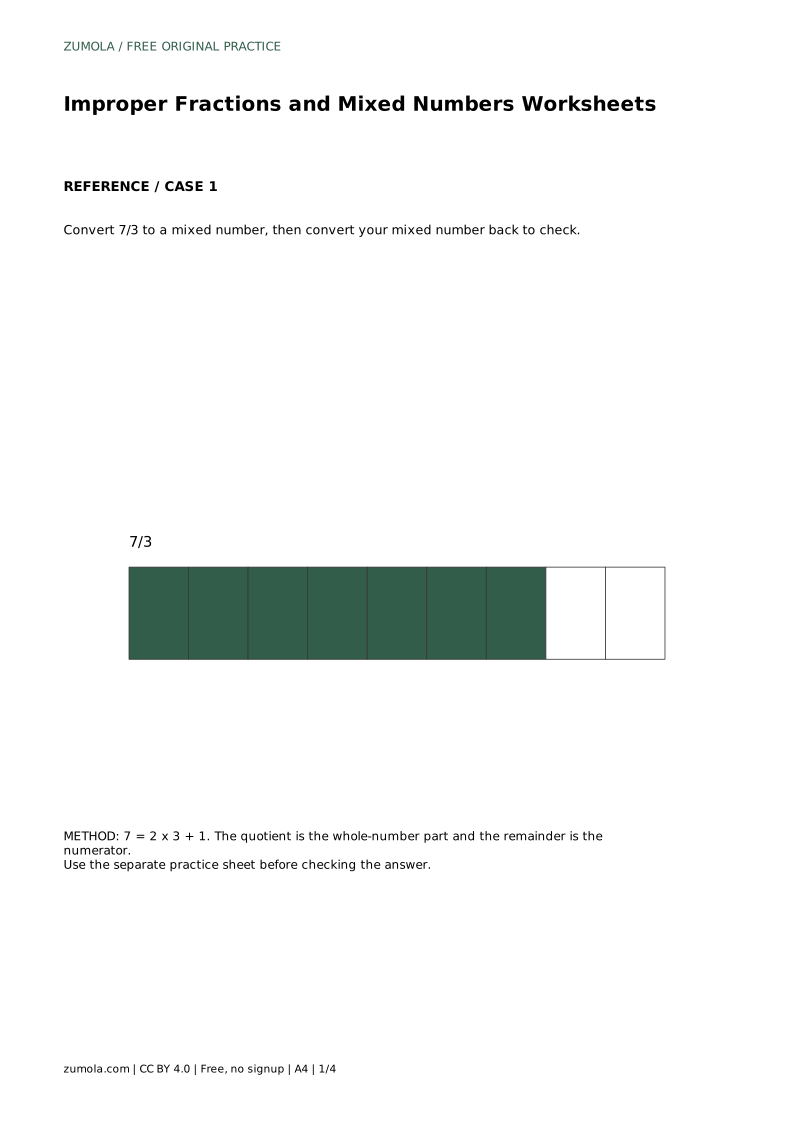
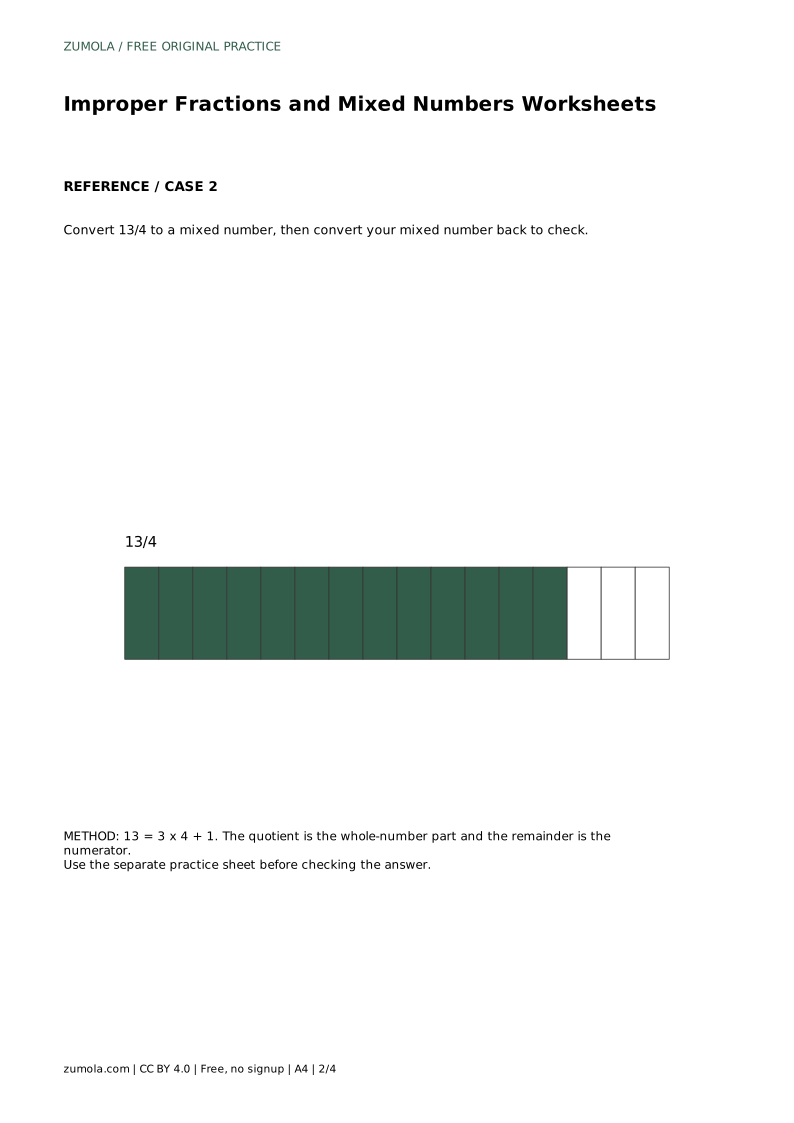
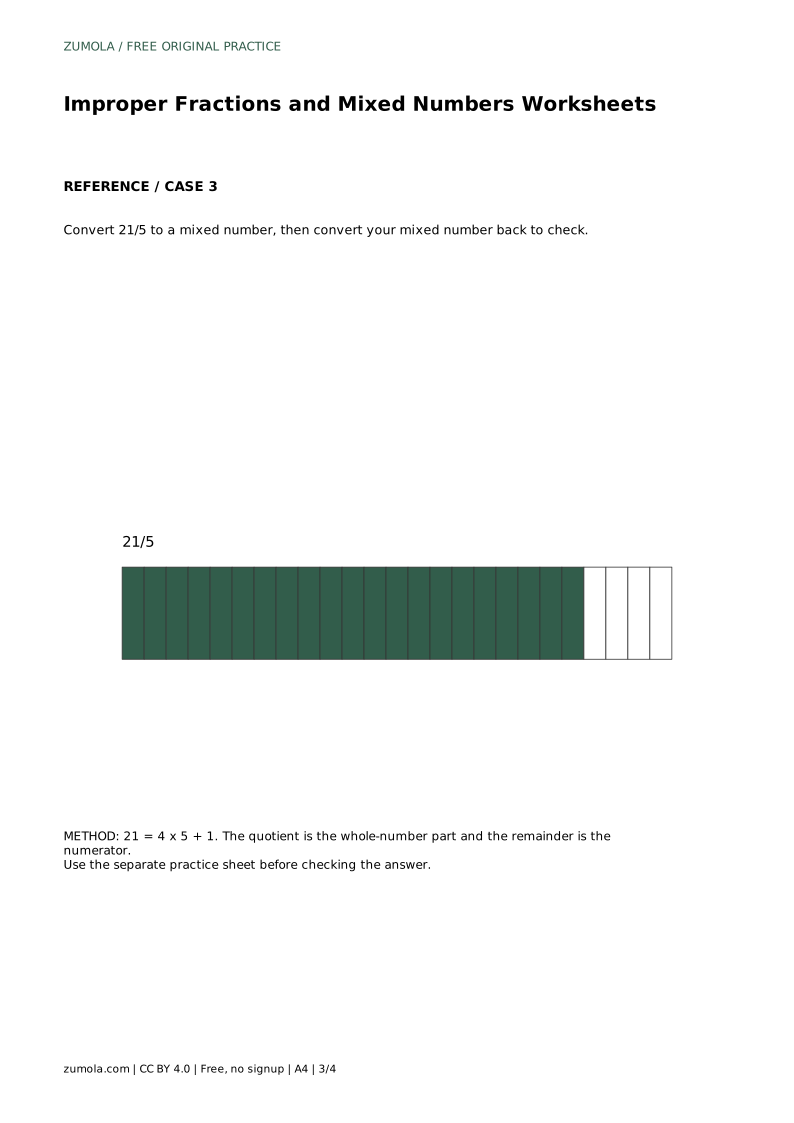
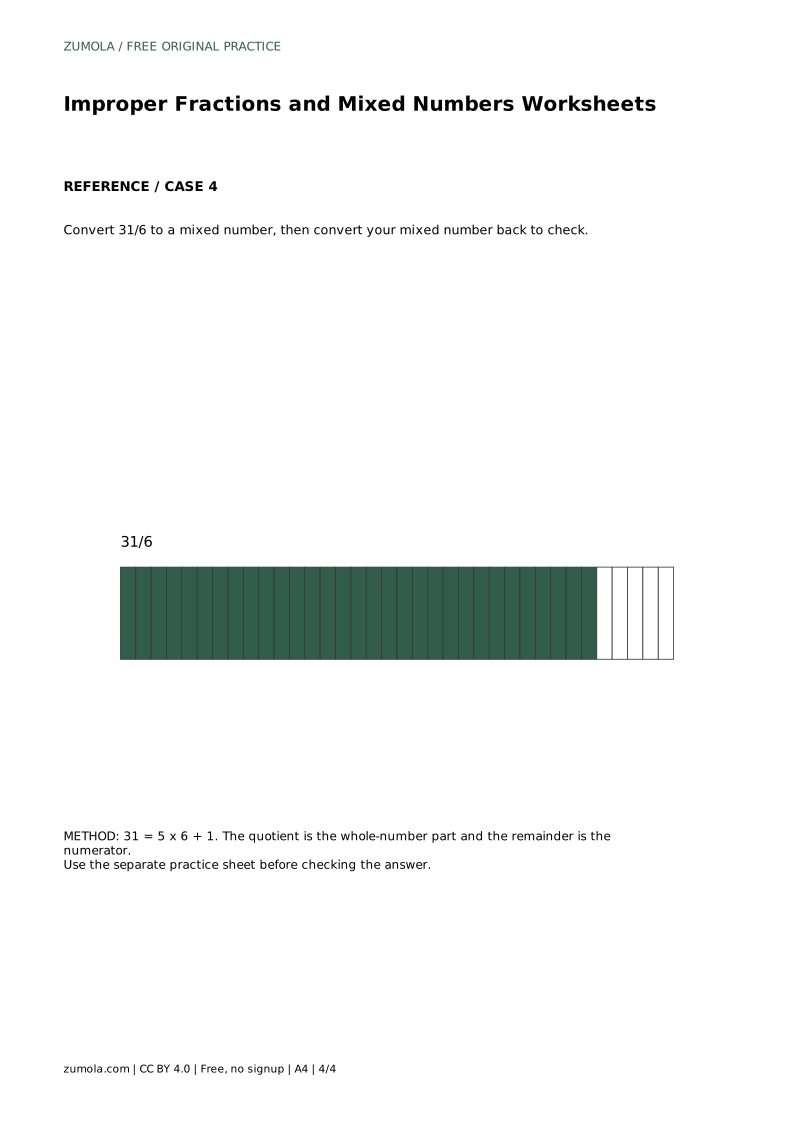
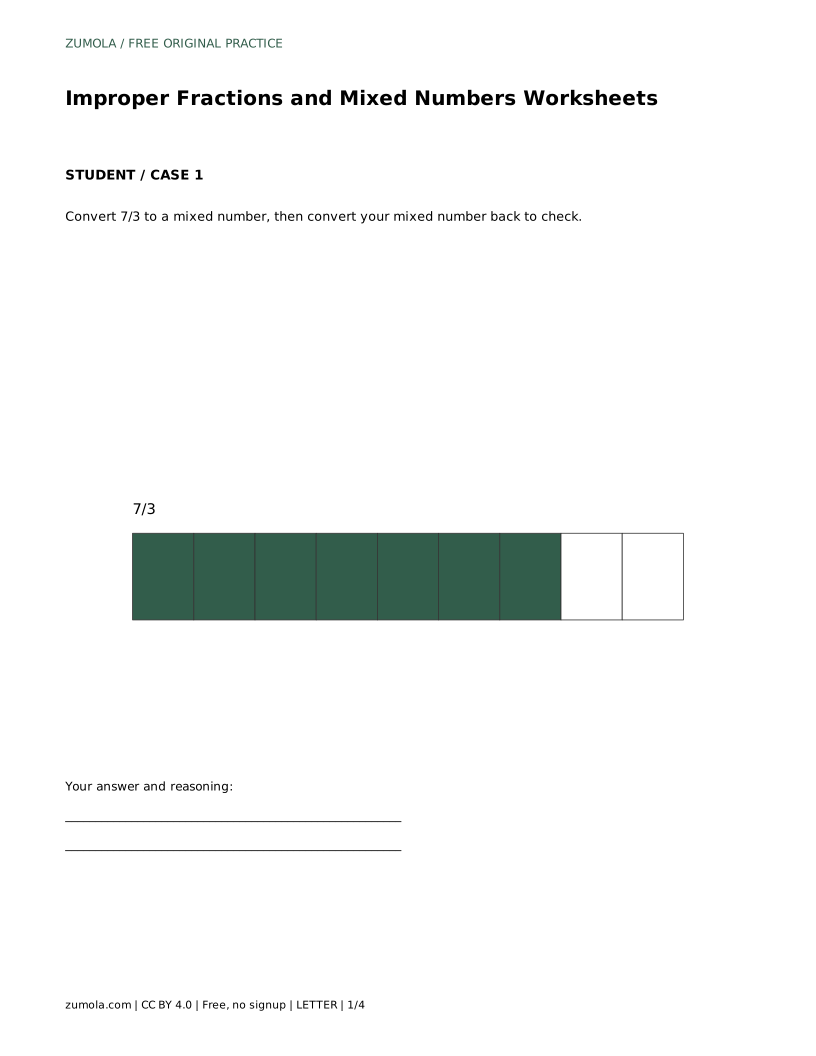
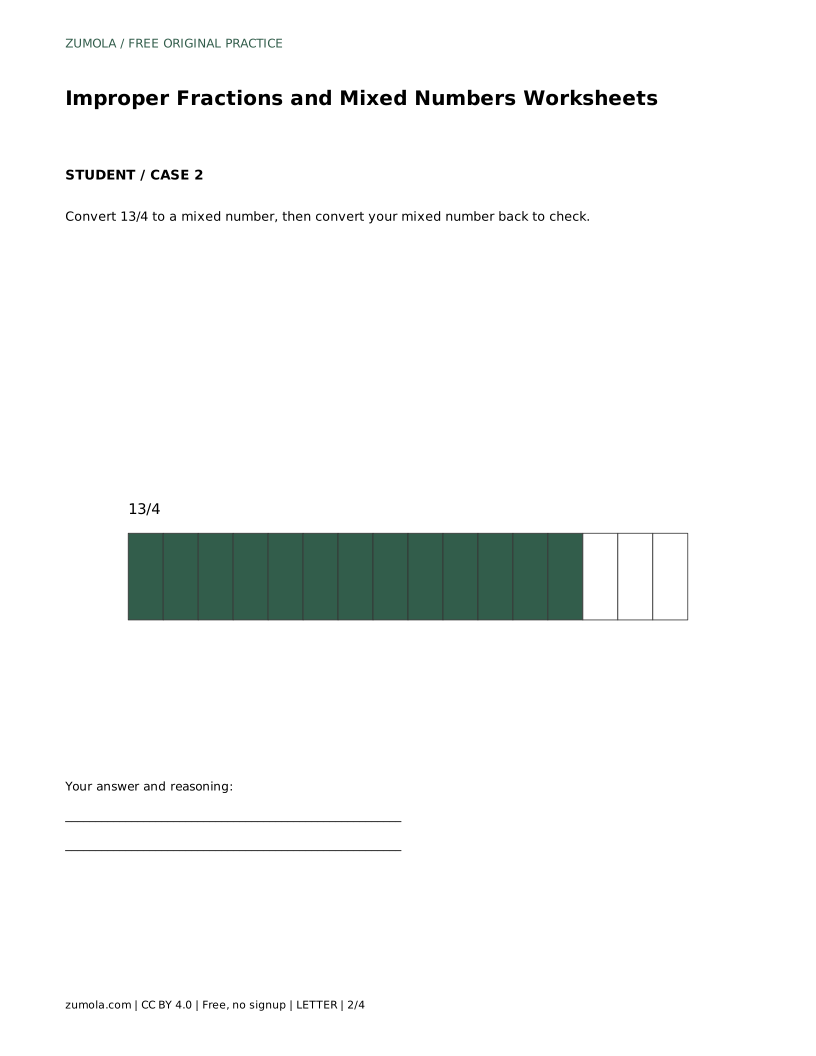
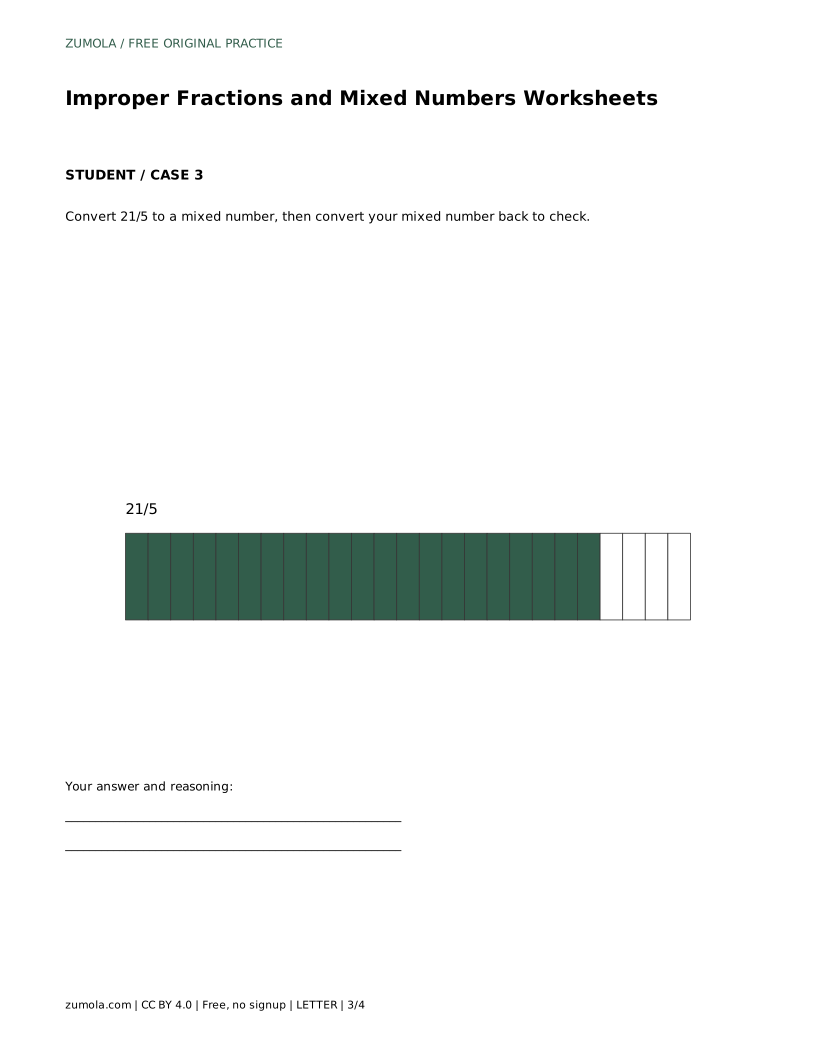
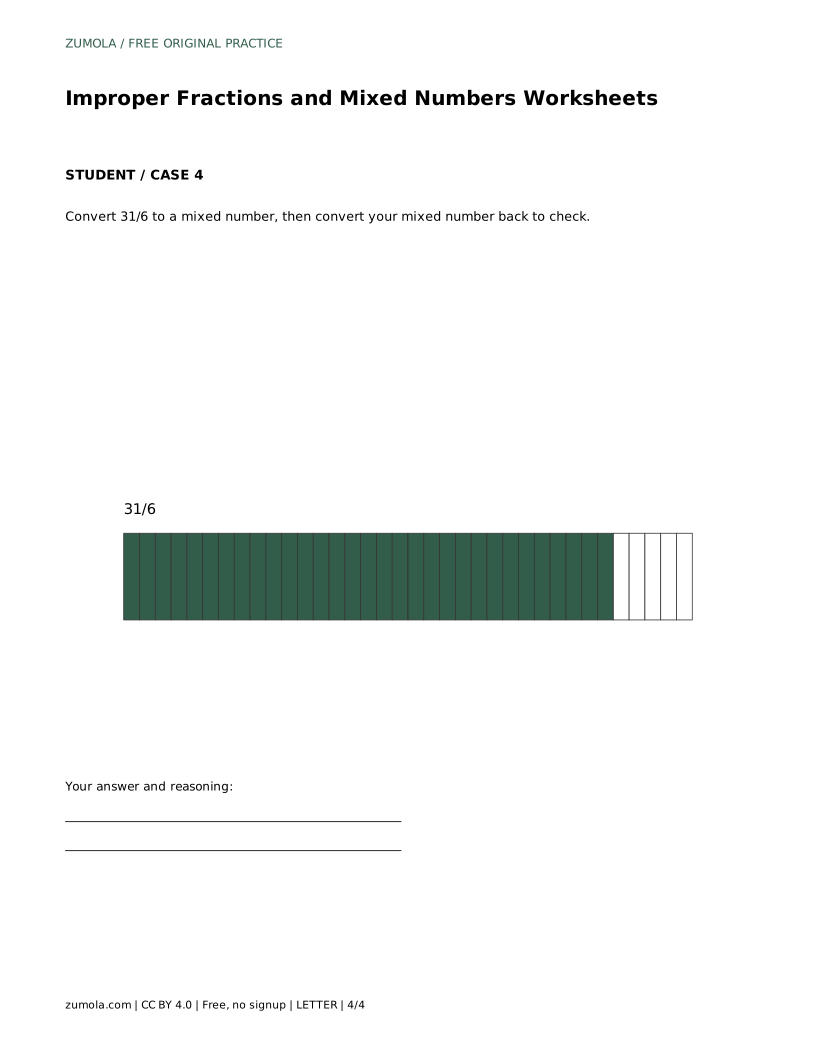
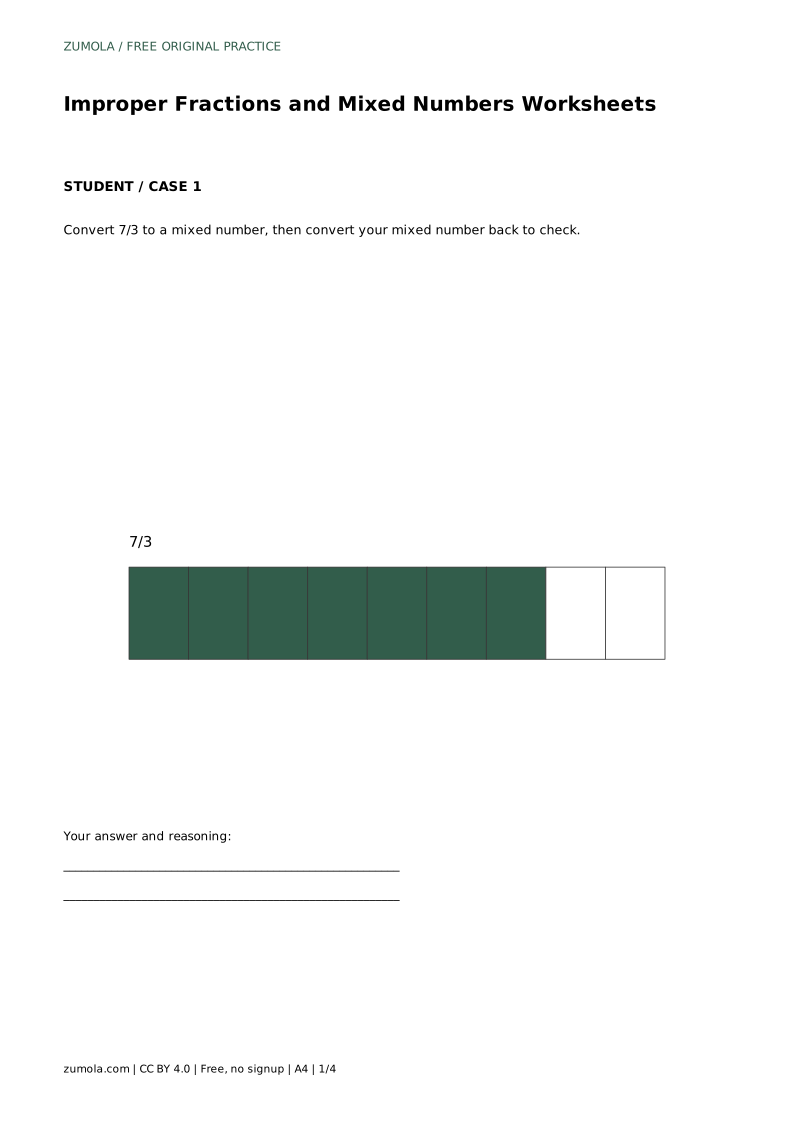
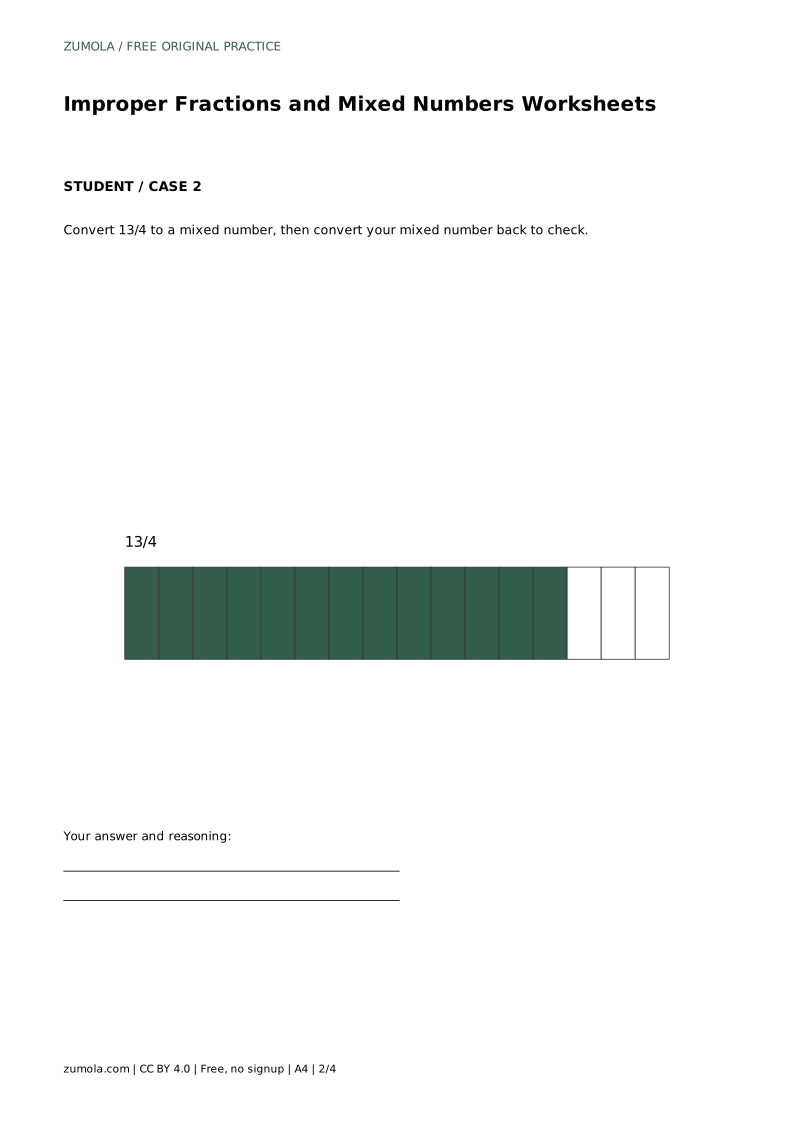
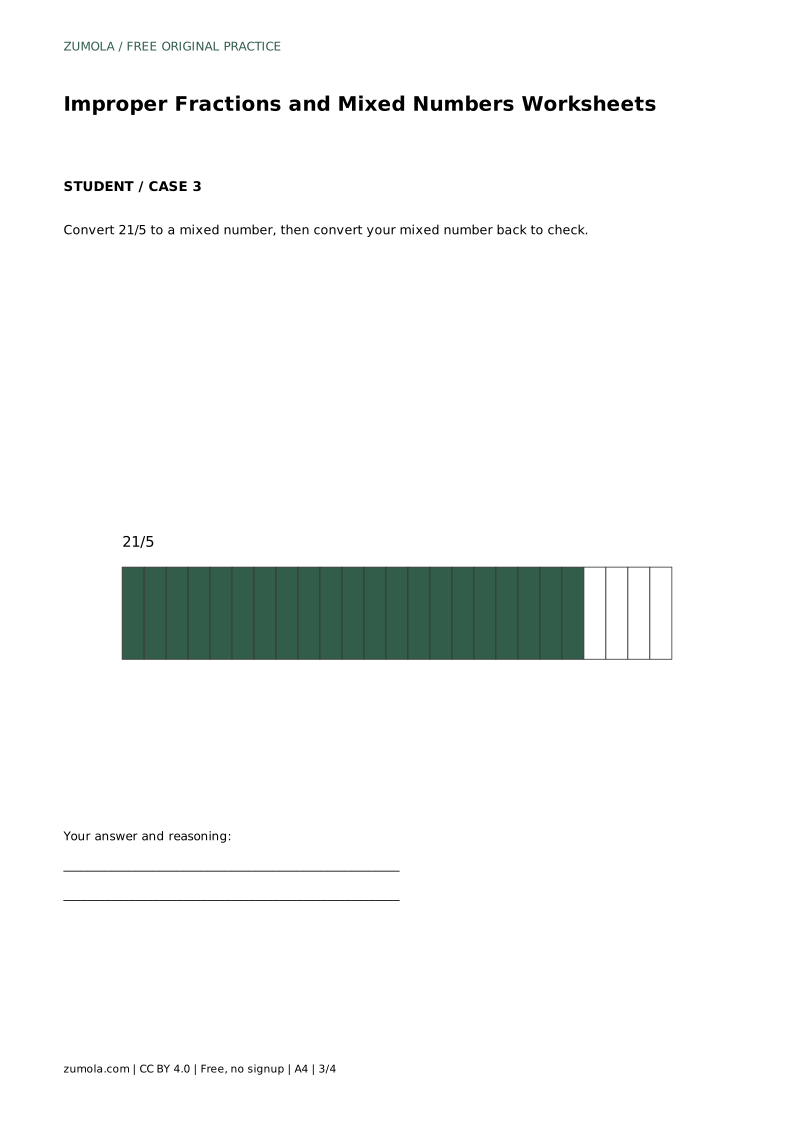
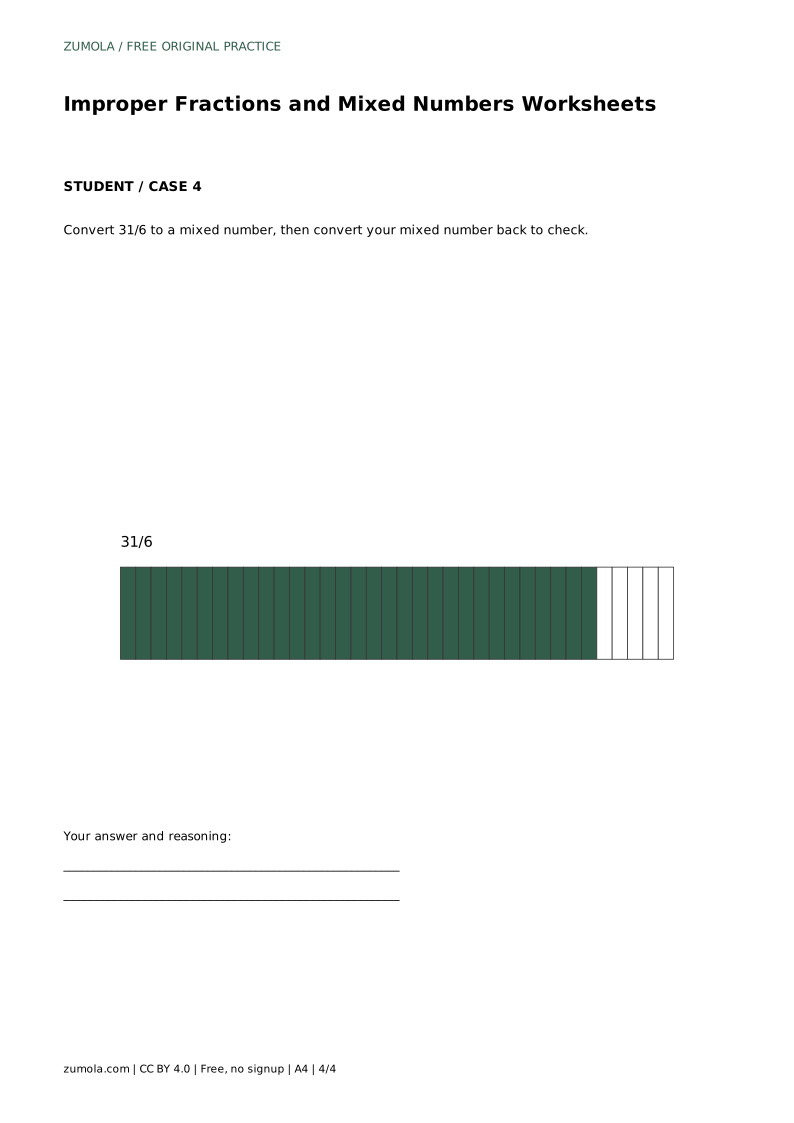
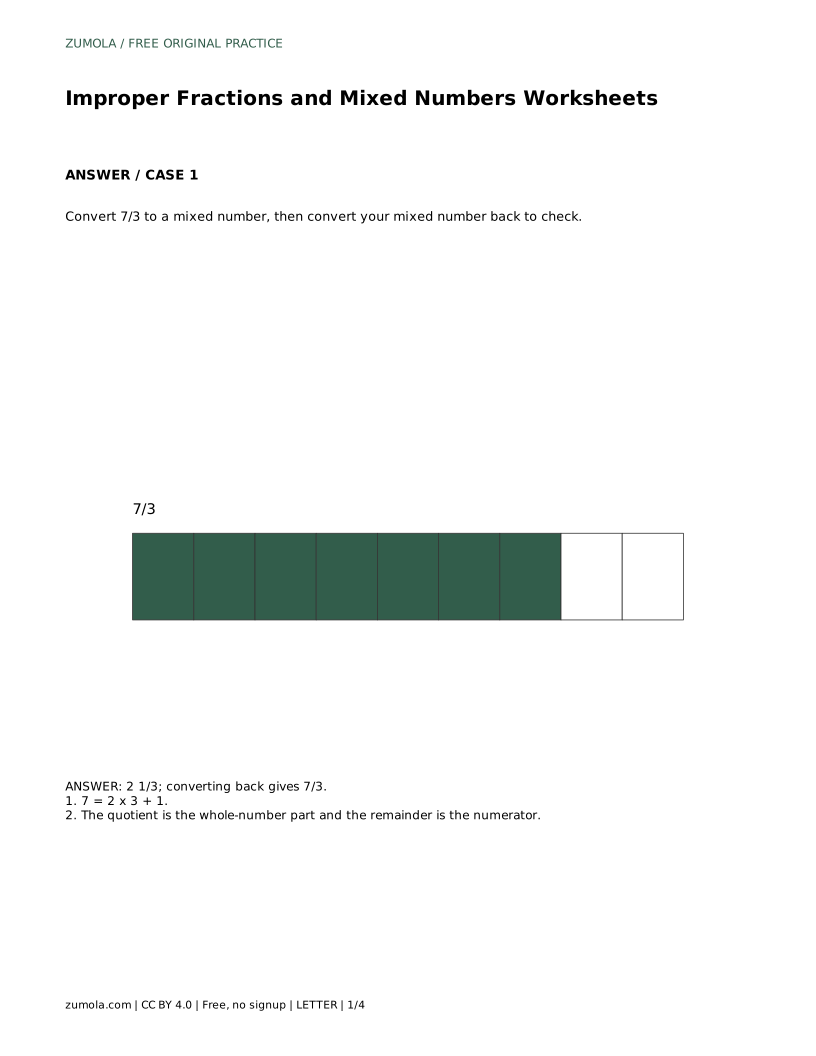
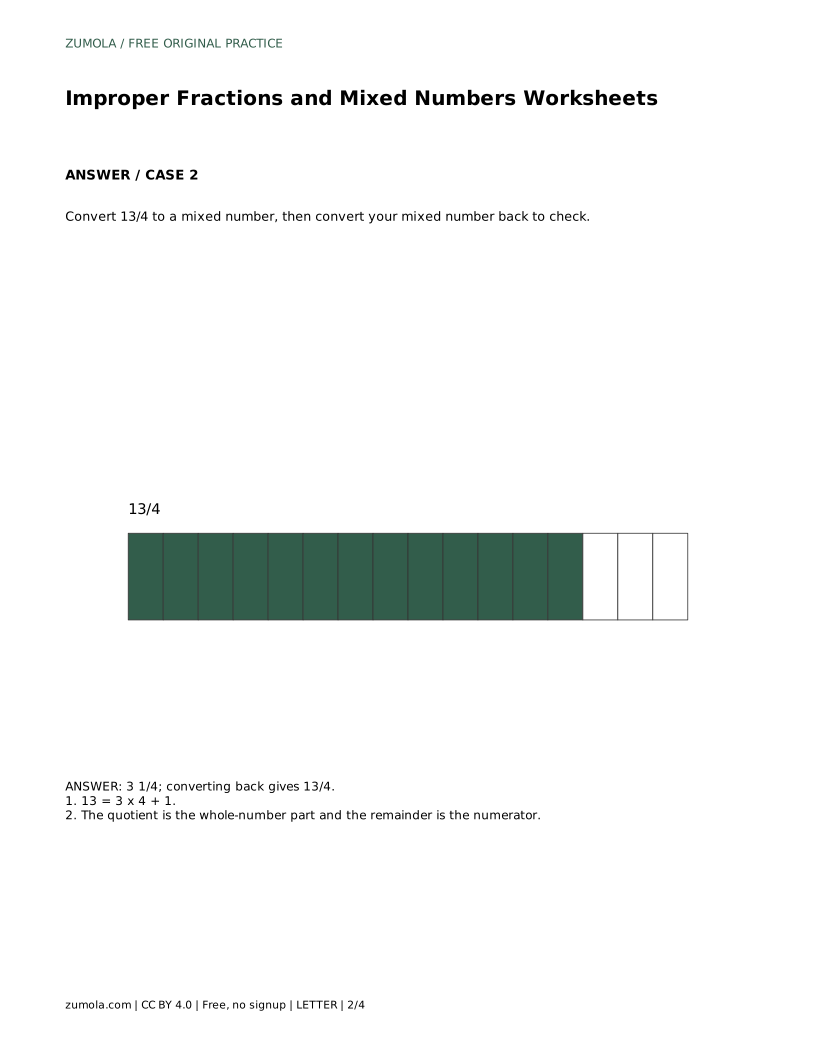
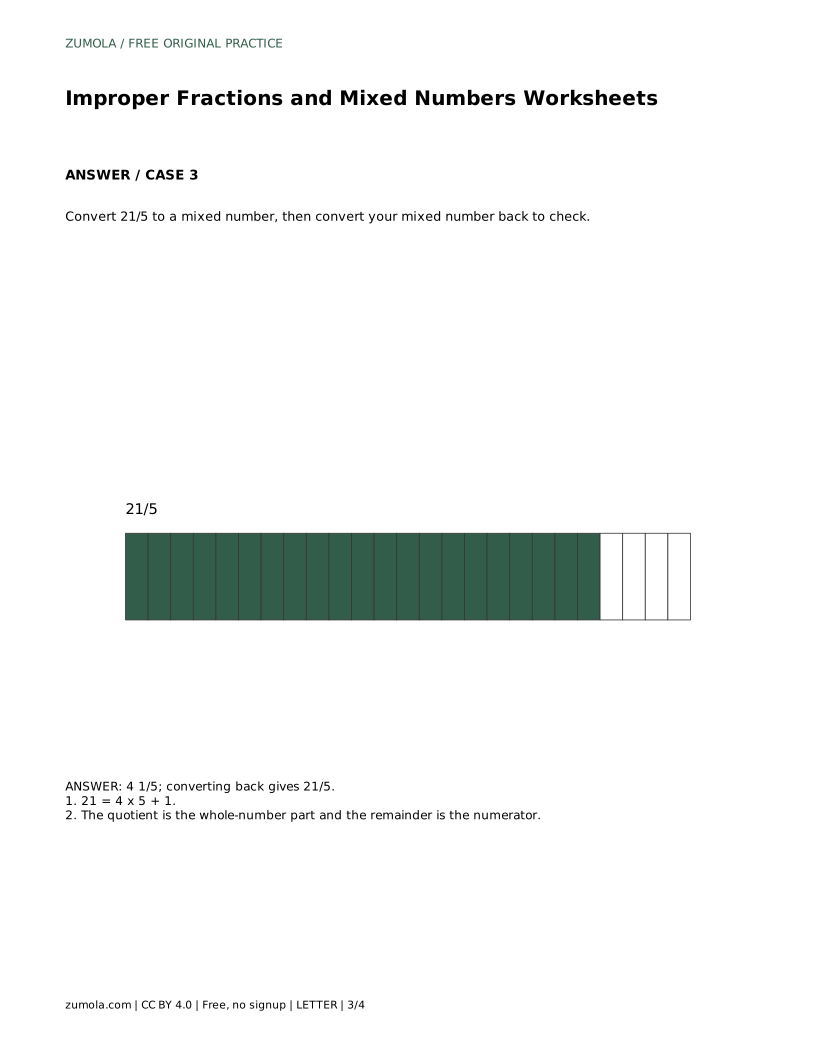
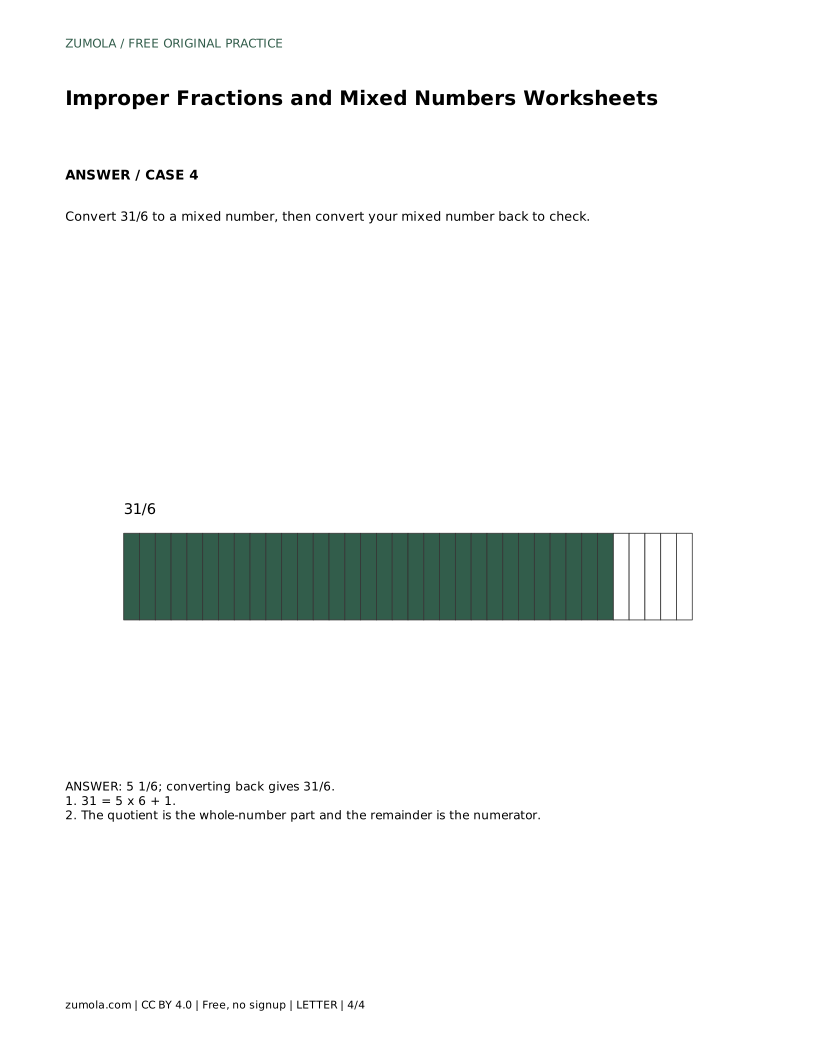
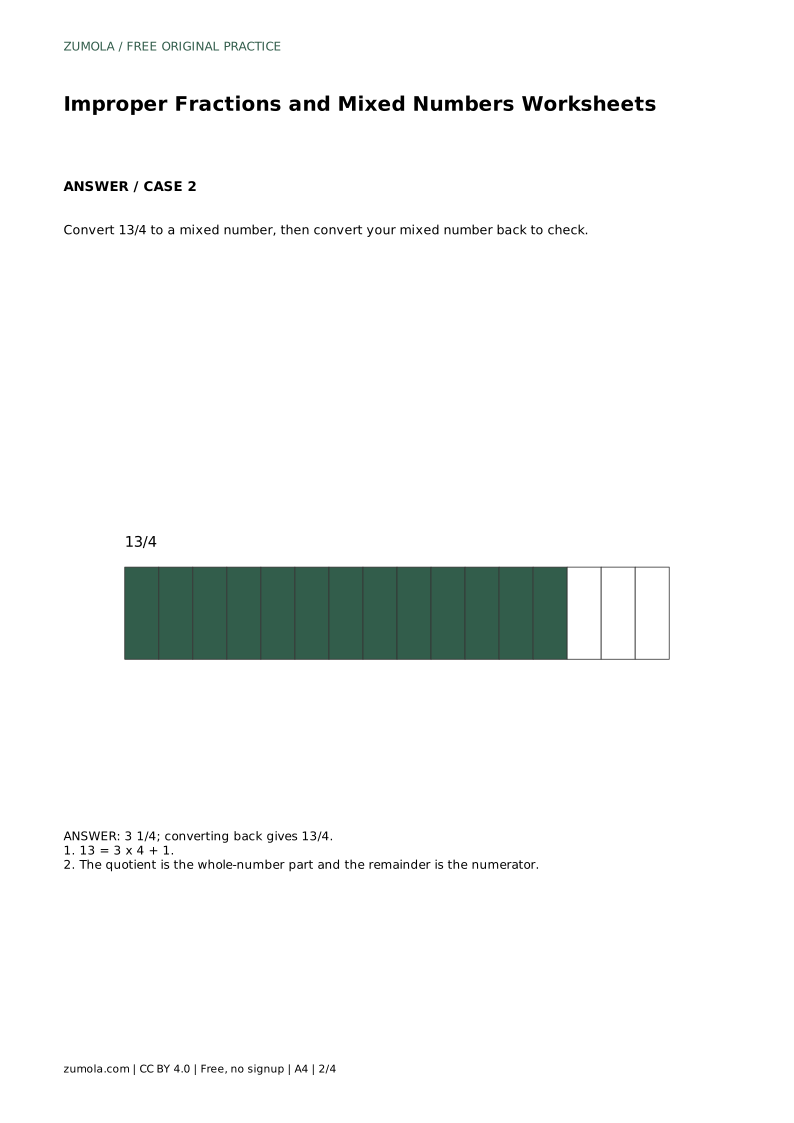
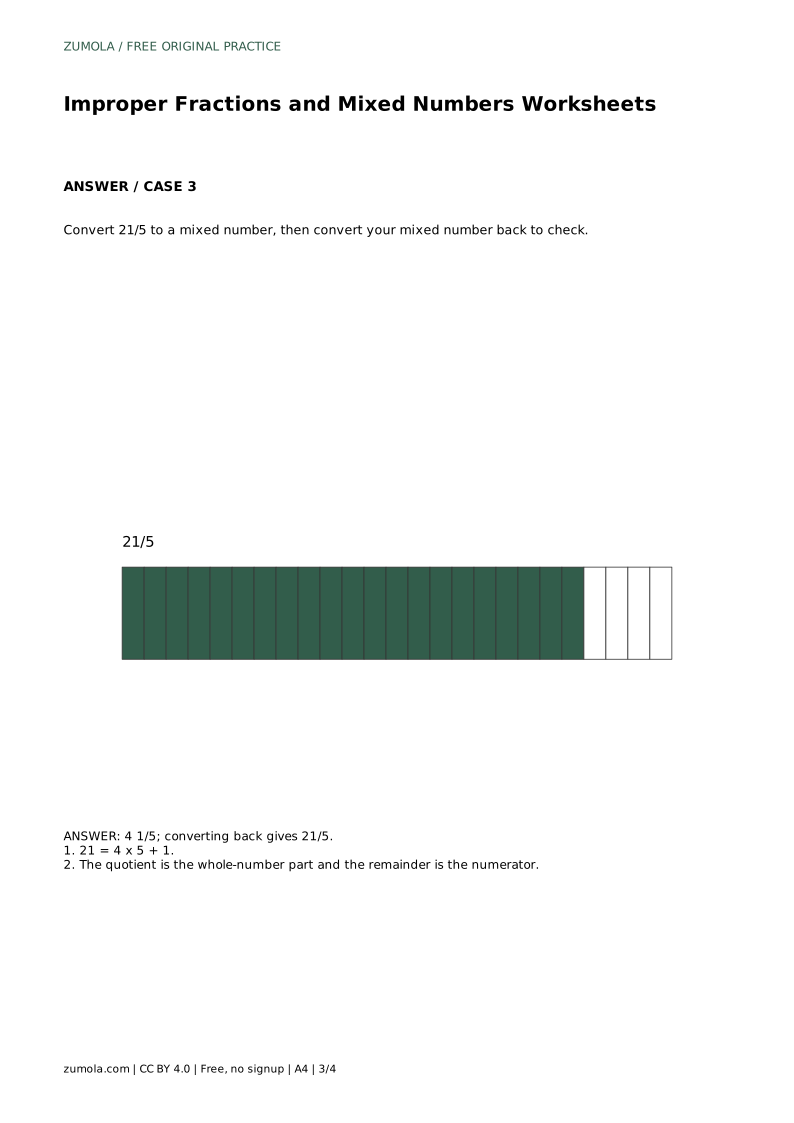
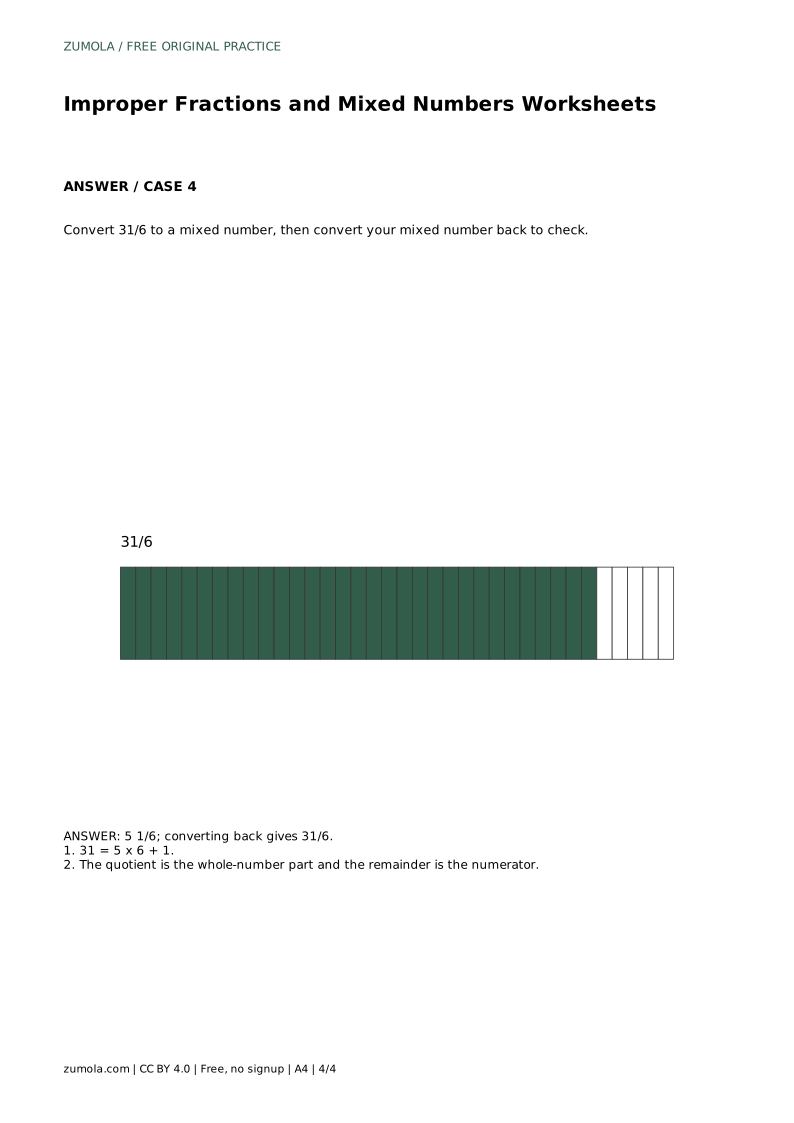
Reference diagrams
LETTER · Download PDF
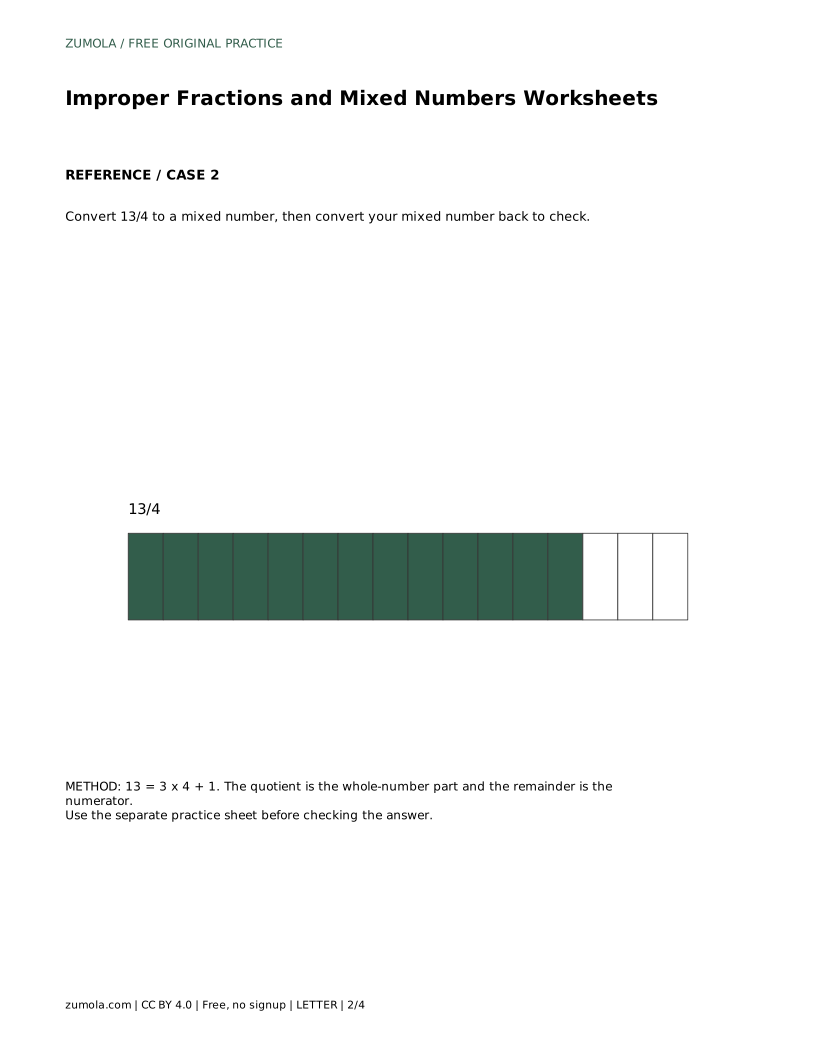
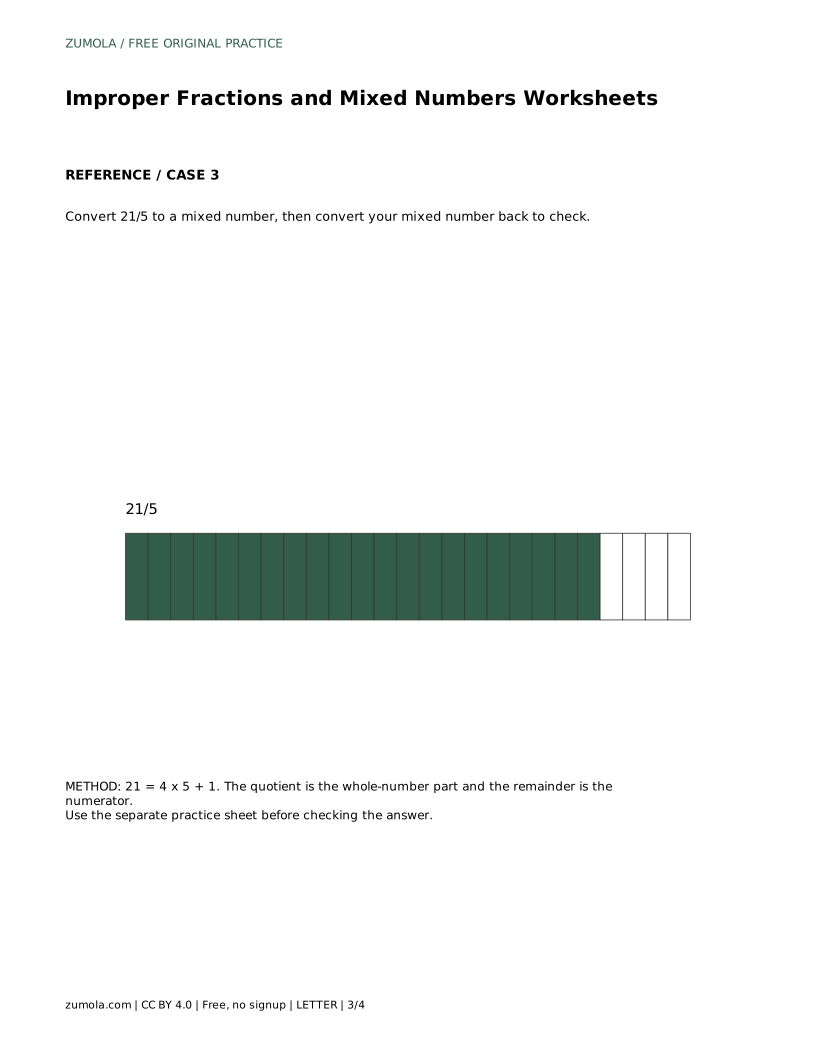
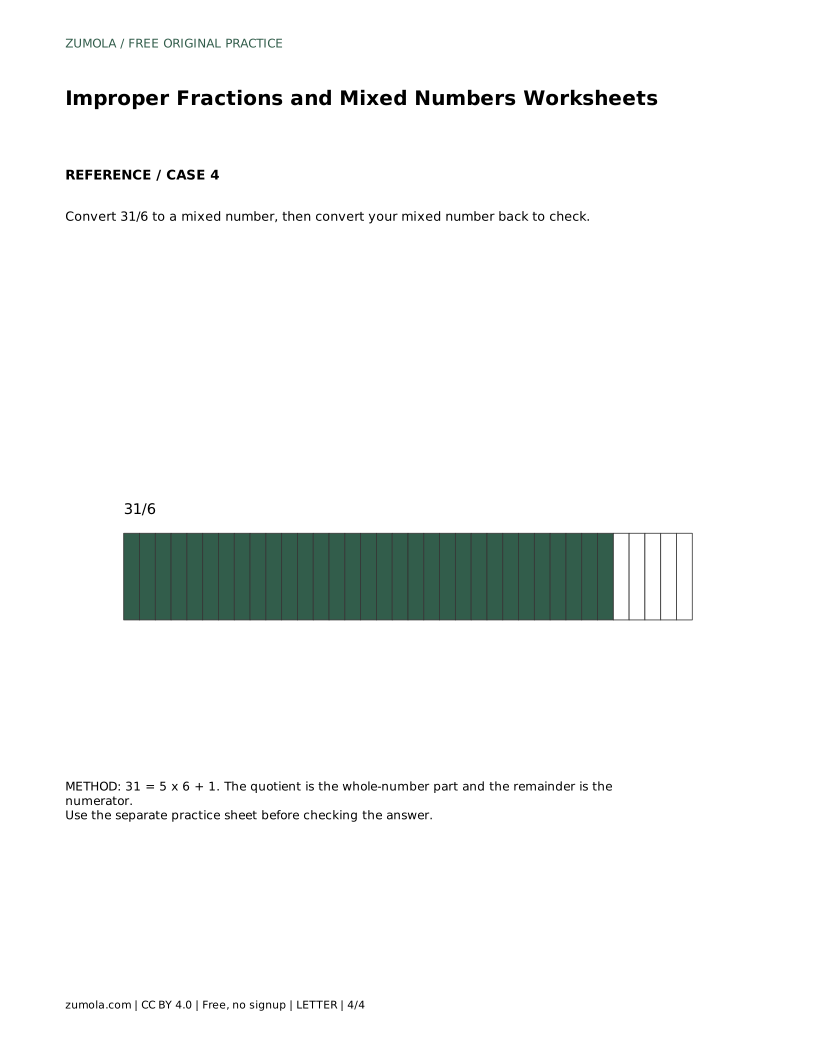
A4 · Download PDF
Free original resources
Teach converting improper fractions to mixed numbers and back. Includes a worked example, common mistakes, FAQs, and a rubric for checking student work.
Four original cases, with reference diagrams, practice sheets and worked answers. Everything is free; no signup required.
LETTER · Download PDF
A4 · Download PDF
LETTER · Download PDF
A4 · Download PDF
LETTER · Download PDF
A4 · Download PDF
Use A4 or US Letter to match your printer. Use the stated values and conditions to solve each exercise; diagrams are not physical measuring rulers.
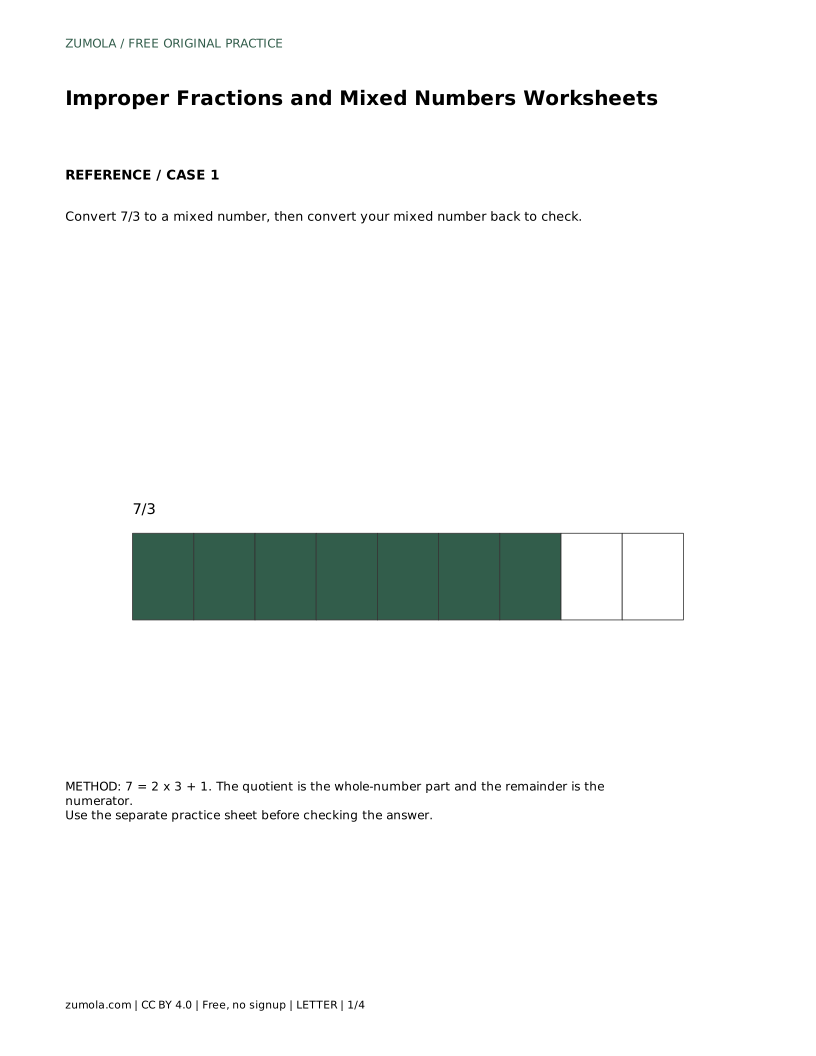
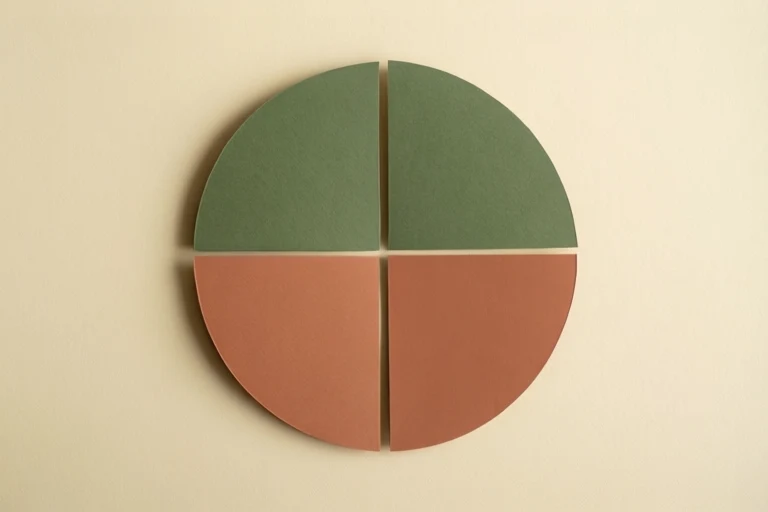
An improper fraction has a numerator at least as large as its denominator, such as 7/3. A mixed number pairs a whole number with a proper fraction, such as 2 1/3. These worksheets build the link between the two forms using division and multiplication, so students can convert in either direction and verify their own answers. The key idea is that the denominator never changes during conversion; only how the total is grouped changes.
Divide the numerator by the denominator. The quotient becomes the whole-number part, and the remainder becomes the numerator of the fraction. The denominator stays the same. If the remainder is zero, the result is a whole number with no fraction part.
This works because each full group of denominator-sized pieces makes one whole. Any pieces left over stay as a fraction of the next whole. Keep the remainder smaller than the denominator; if it is not, the division was done incorrectly.
Multiply the whole number by the denominator, then add the numerator. Place that total over the same denominator. This reverses the division step and confirms the original fraction.
Students should always convert back as a check. If the result does not match the starting fraction, either the division or the multiplication step has an error. This self-checking habit catches most mistakes before a teacher sees them.
Each sheet gives a set of improper fractions to convert and a set of mixed numbers to convert back. Work one direction first, then the other, so students see the two operations as reverses of each other. Leave space beside each problem for the division or multiplication working.
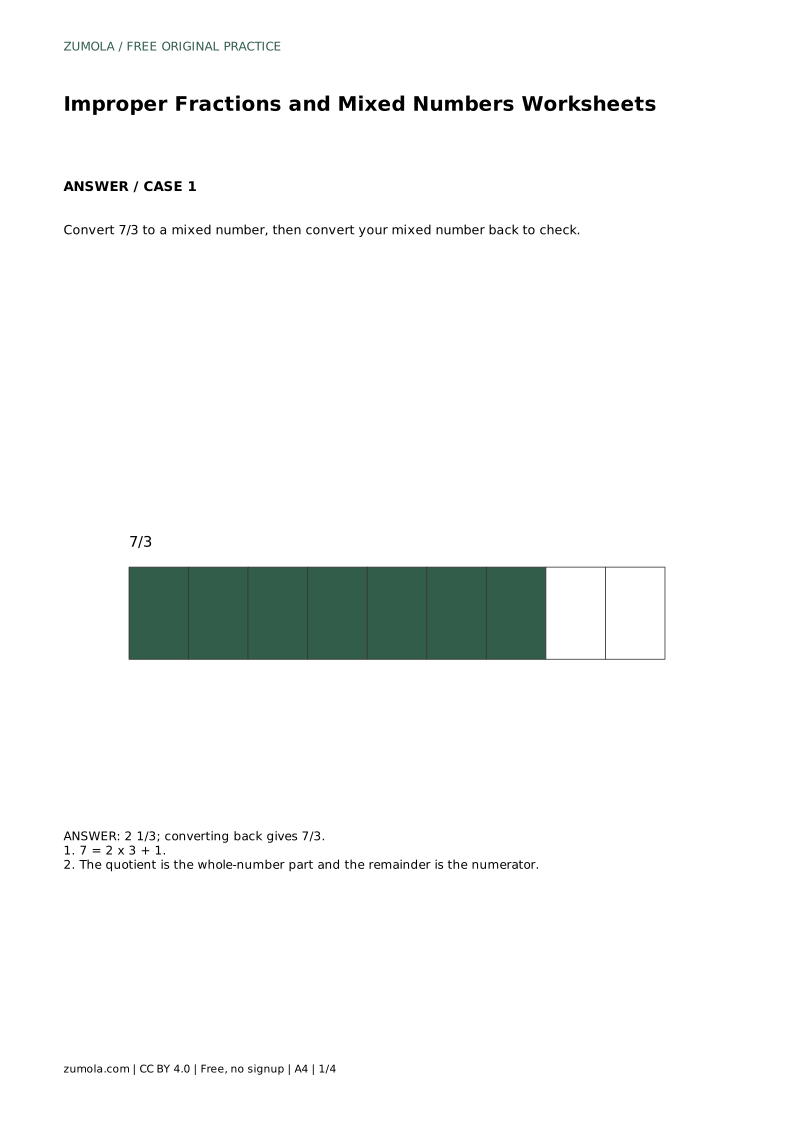
Convert 7/3 to a mixed number, then convert your mixed number back to check.
2 1/3; converting back gives 7/3. 7 = 2 x 3 + 1. The quotient is the whole-number part and the remainder is the numerator.
The numerator is greater than or equal to the denominator, so the value is one or more wholes.
No. The denominator stays the same in both directions; only the whole number and numerator change.
The improper fraction equals a whole number, so the mixed number has no fraction part.
All math worksheets · Free coordinate paper
Original resources · CC BY 4.0 · Free for personal and classroom use with attribution.