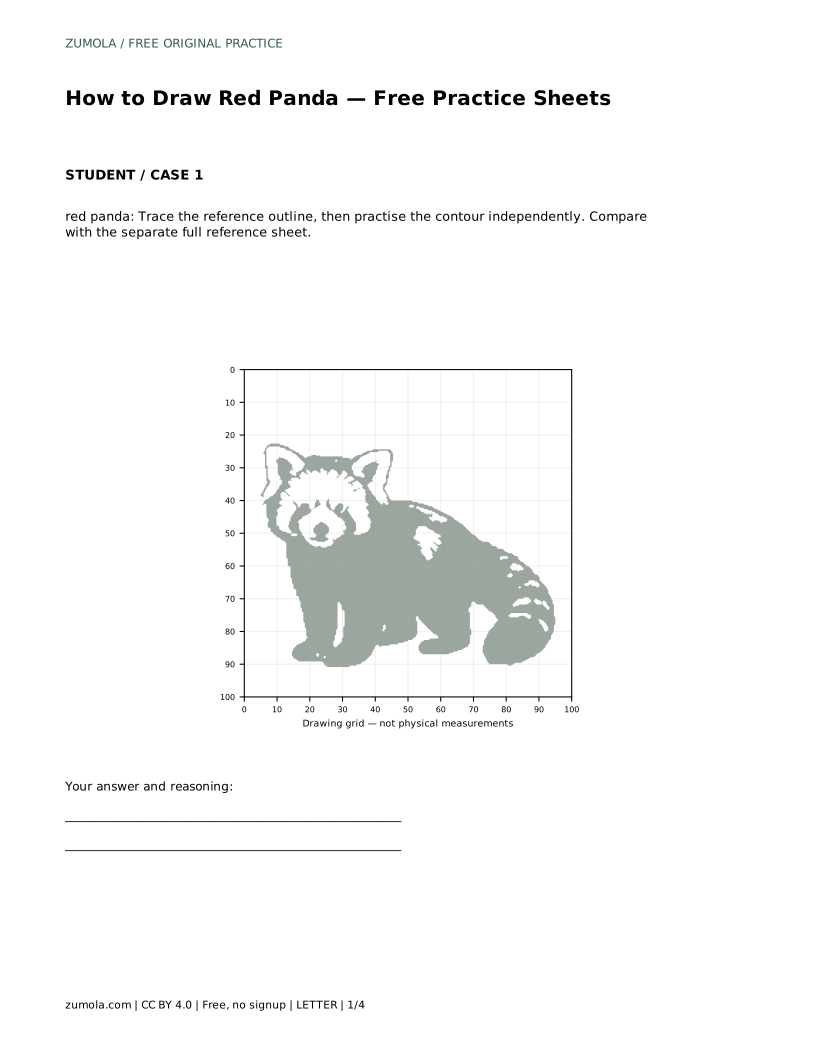
Reference diagrams
LETTER · Download PDF
A4 · Download PDF
Free original resources
Learn to draw a red panda by building body mass, head, facial mask, and banded tail. Trace, grid, or complete a partial drawing, then check features with a rubric.
Four original cases, with reference diagrams, practice sheets and worked answers. Everything is free; no signup required.
LETTER · Download PDF
A4 · Download PDF
LETTER · Download PDF
A4 · Download PDF
LETTER · Download PDF
A4 · Download PDF
Use A4 or US Letter to match your printer. Use the stated values and conditions to solve each exercise; diagrams are not physical measuring rulers.
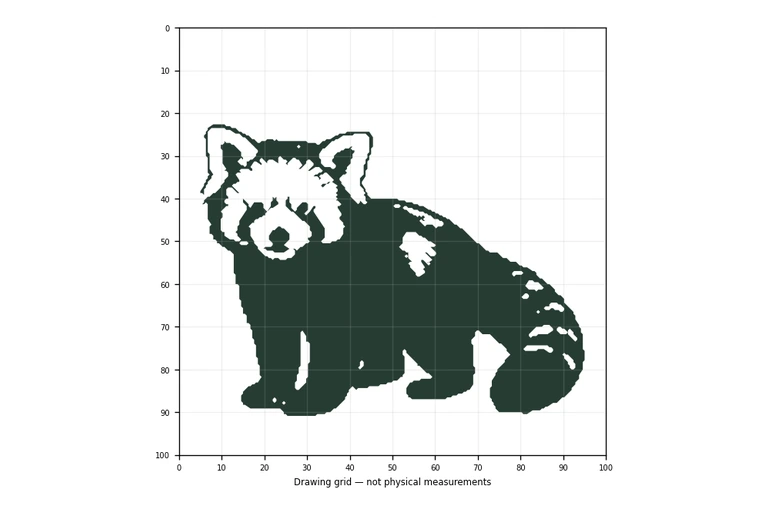
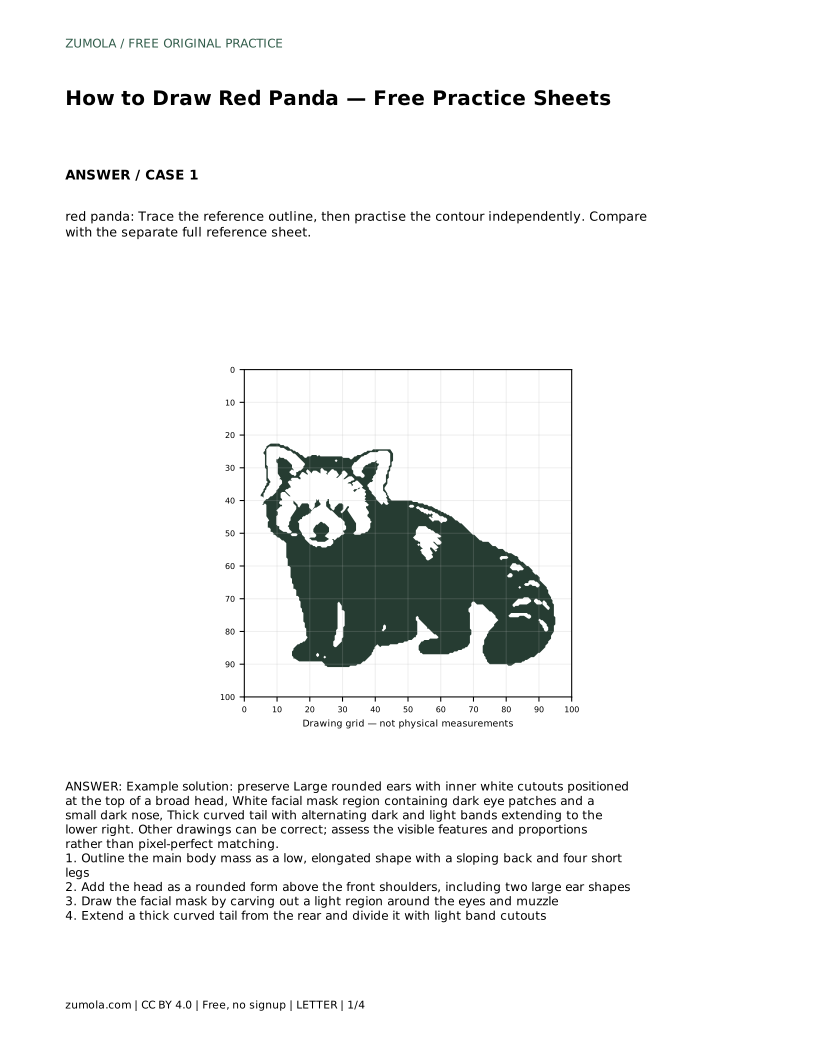
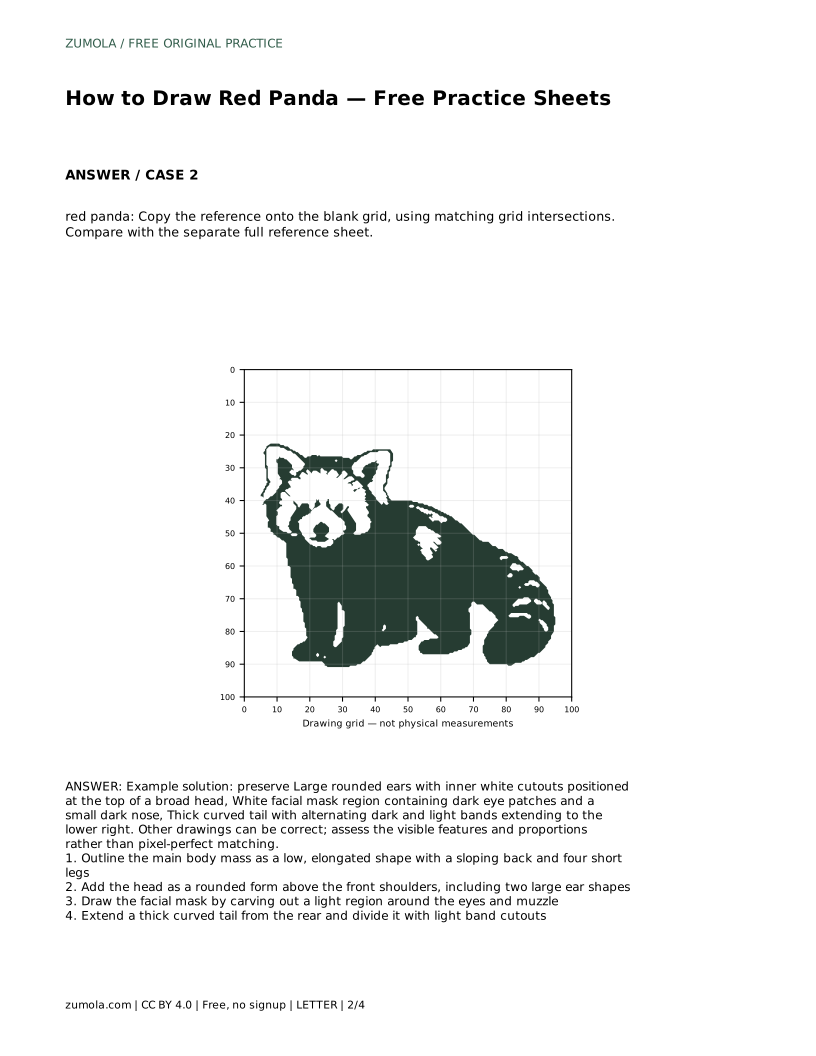
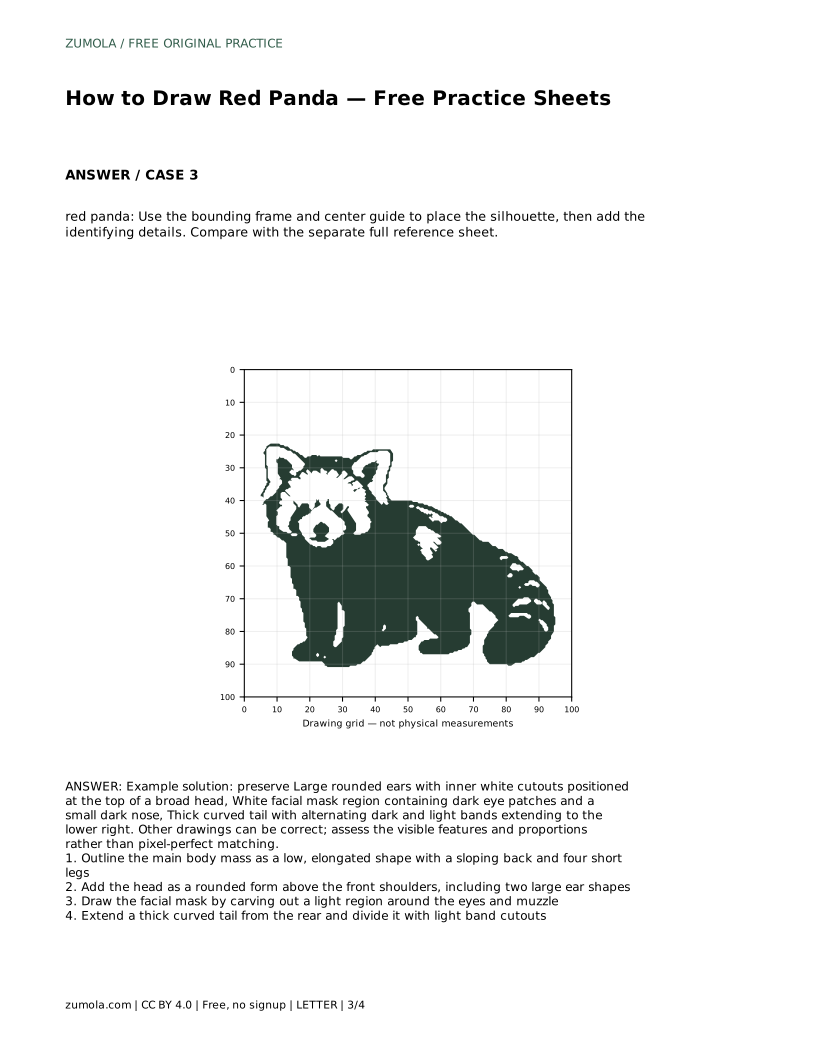
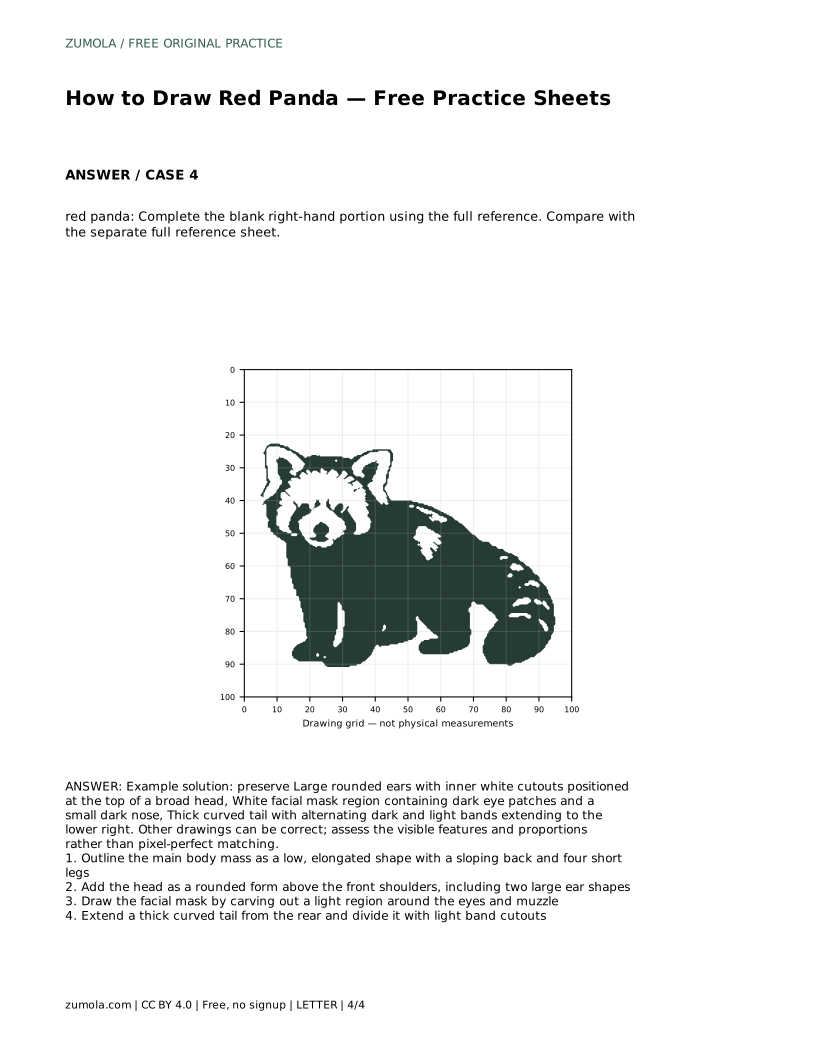
A red panda drawing works best when you build it in layers: first the low body and sloping back, then the broad head and large ears, then the light facial mask, and finally the thick banded tail. The practice sheets let you trace a reference outline, copy it onto a grid, place it with a frame and center guide, or finish a blank portion. Because drawings can vary, judge the visible features and proportions rather than exact matching.
Begin by treating the red panda as a few large shapes rather than a collection of small details. The body is low and elongated, with a back that slopes gently from the shoulders toward the rear. Four short legs support this mass; keep them simple at first so the body shape stays readable.
Place the head as a rounded form above the front shoulders. It should feel broad rather than pointed. Add two large rounded ears at the top of the head. These ears are a key identifying feature, so give them enough size and keep them clearly separated from the head outline.
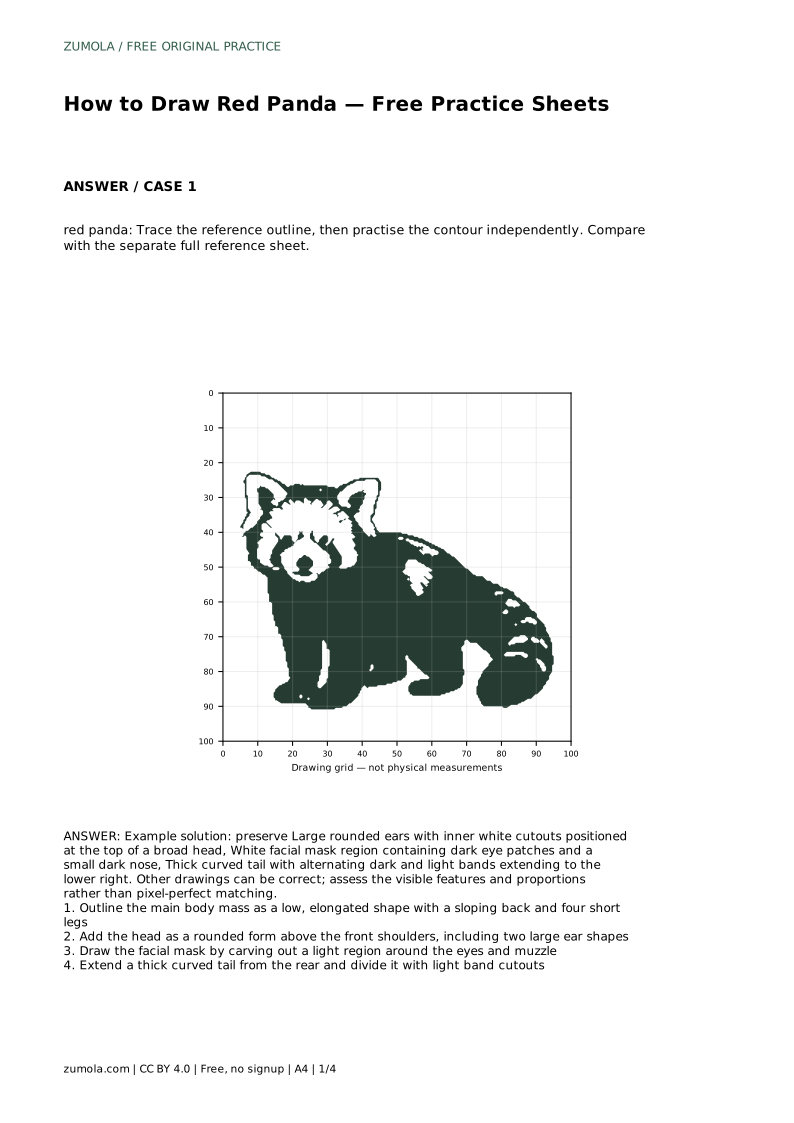
The face carries much of the red panda's character. Draw a light facial mask region around the eyes and muzzle, then place dark eye patches inside it and a small dark nose at the center of the muzzle. The mask should read as a continuous light area, not as separate spots.
Extend a thick curved tail from the rear of the body. Divide it with light band cutouts so the tail shows alternating dark and light bands. The tail should curve outward and downward toward the lower right, giving the drawing balance against the head at the front.
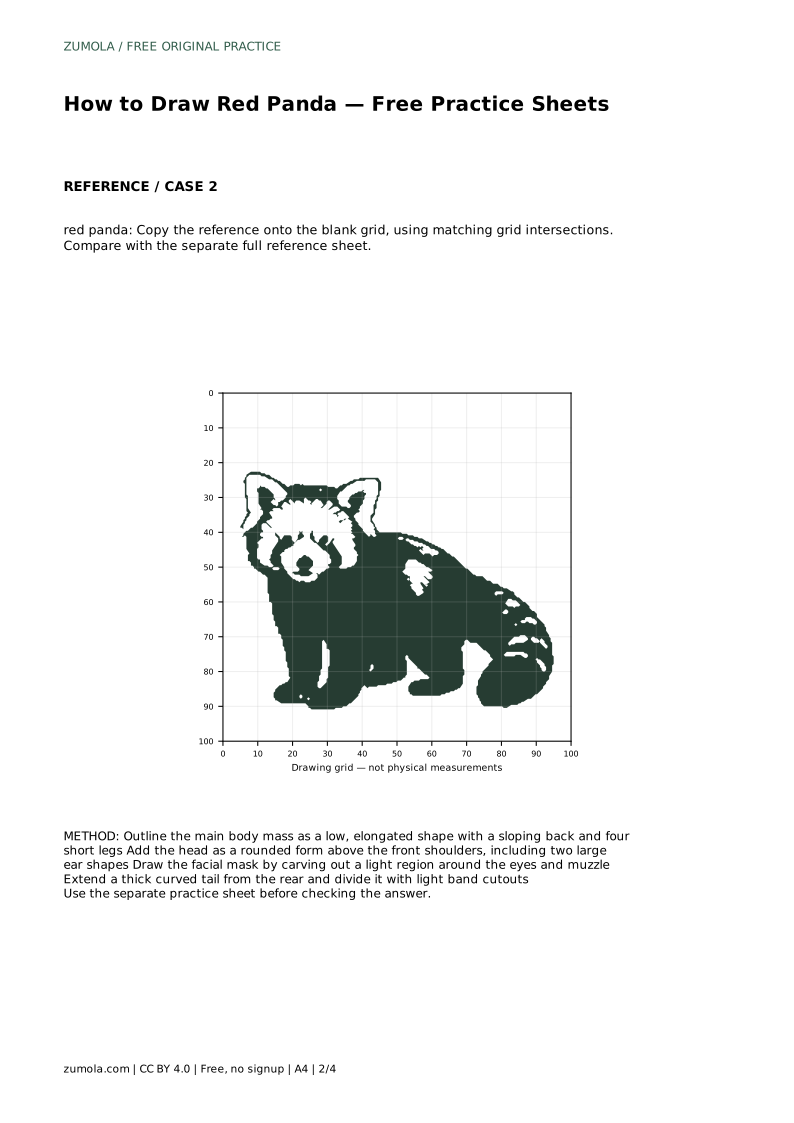
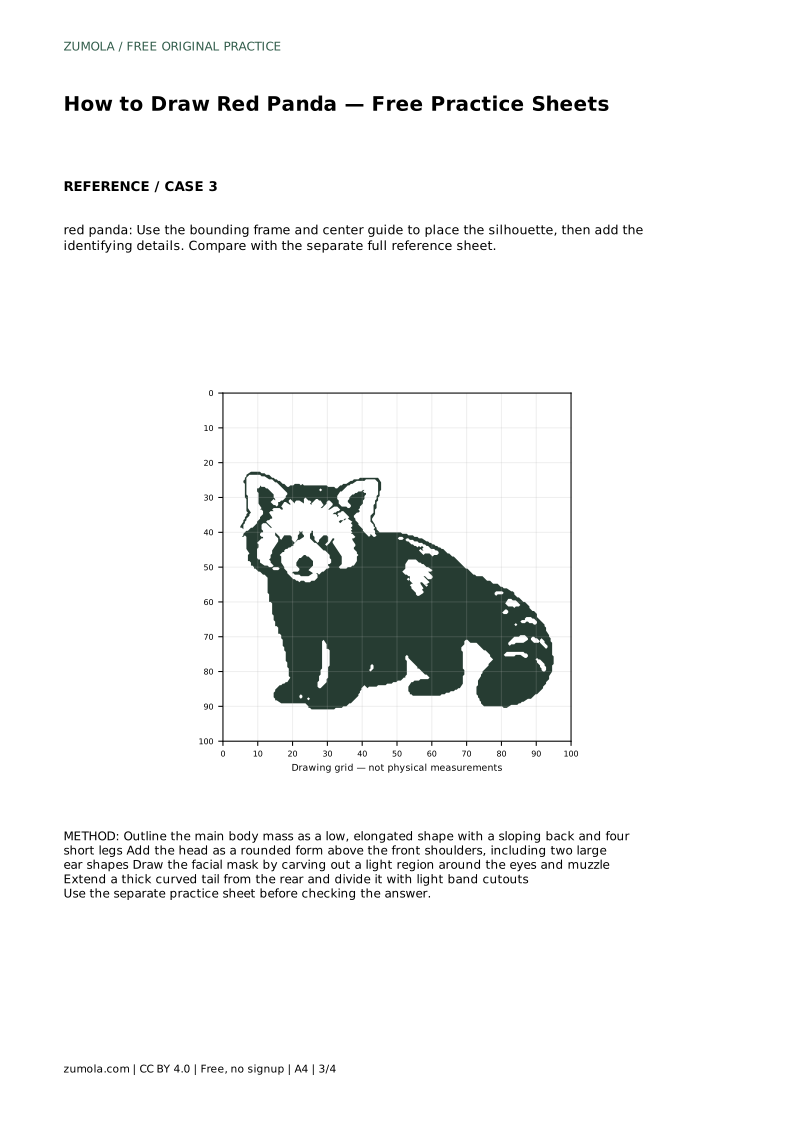
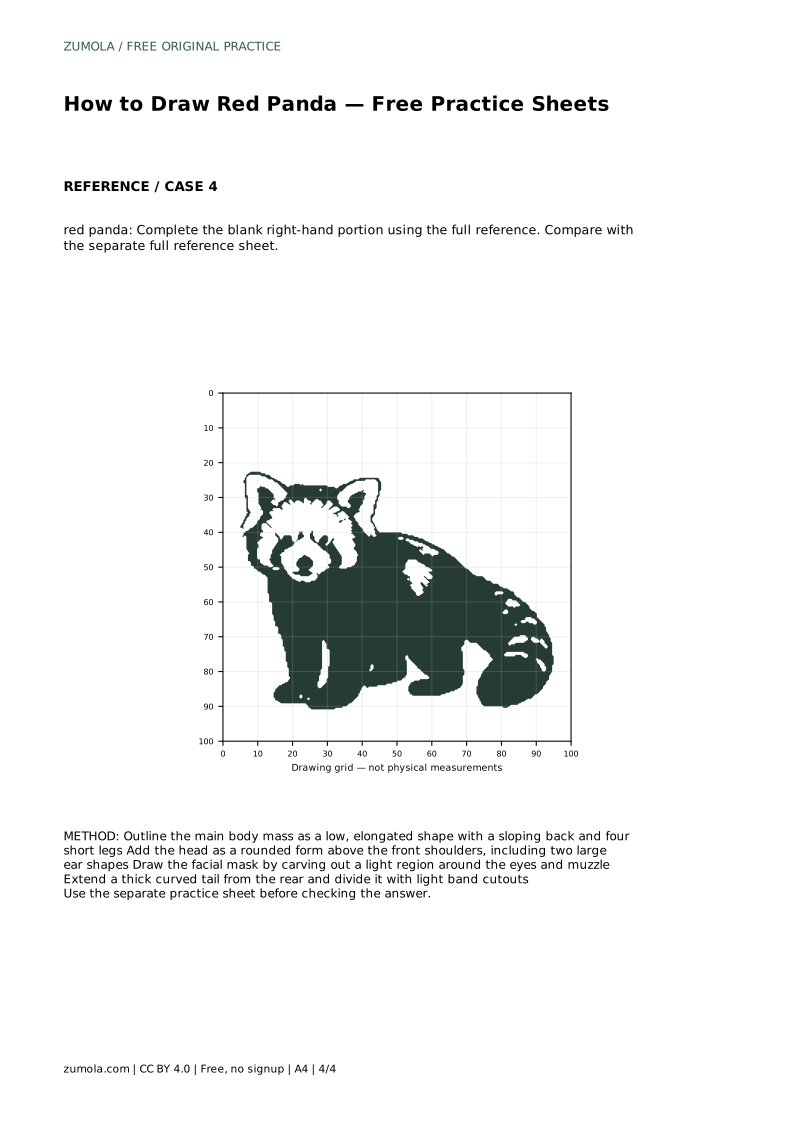
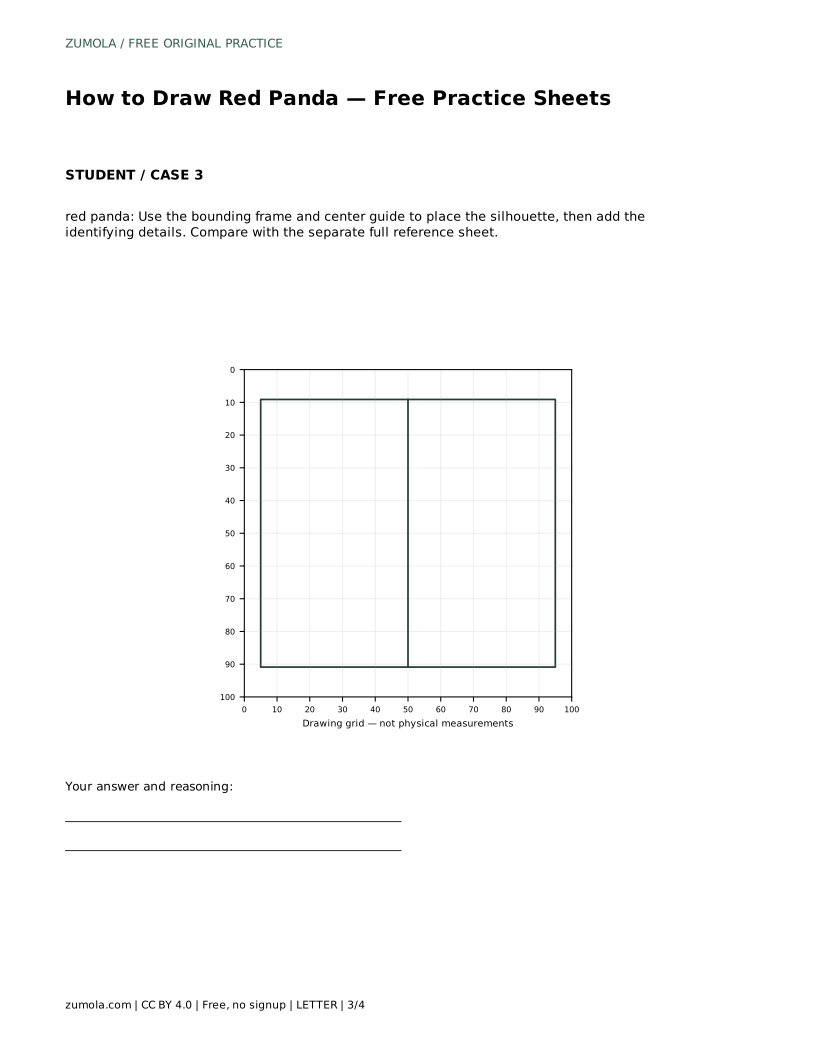
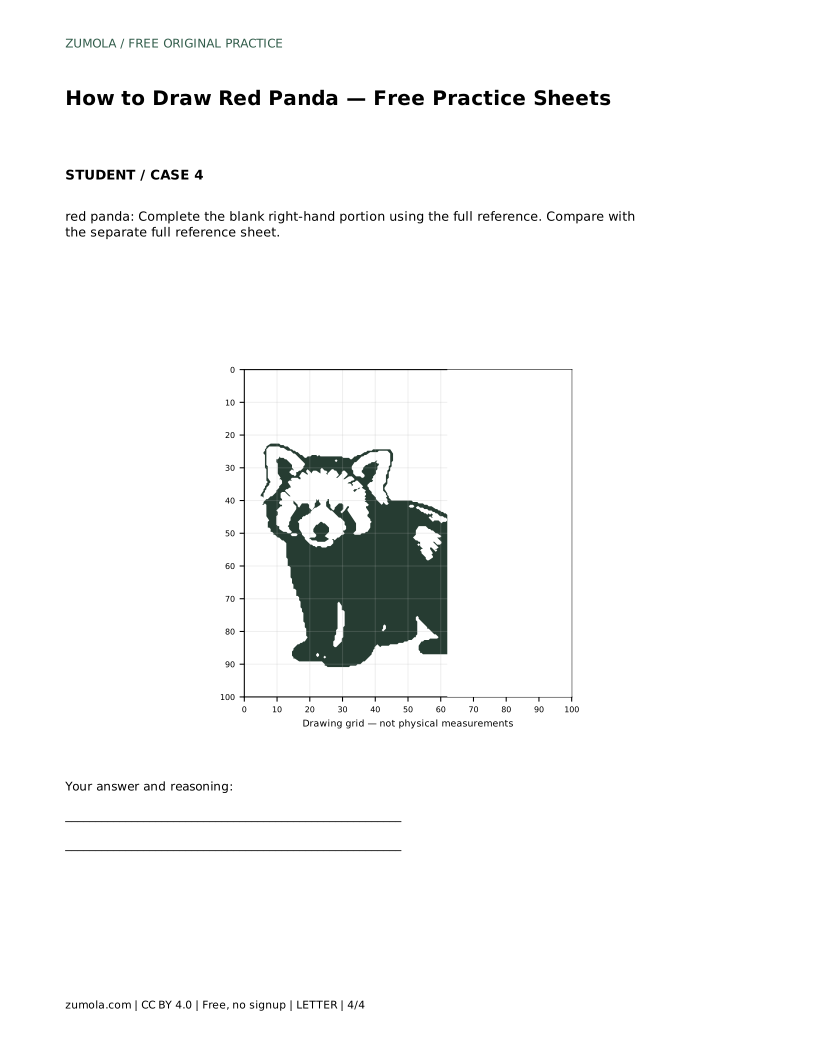
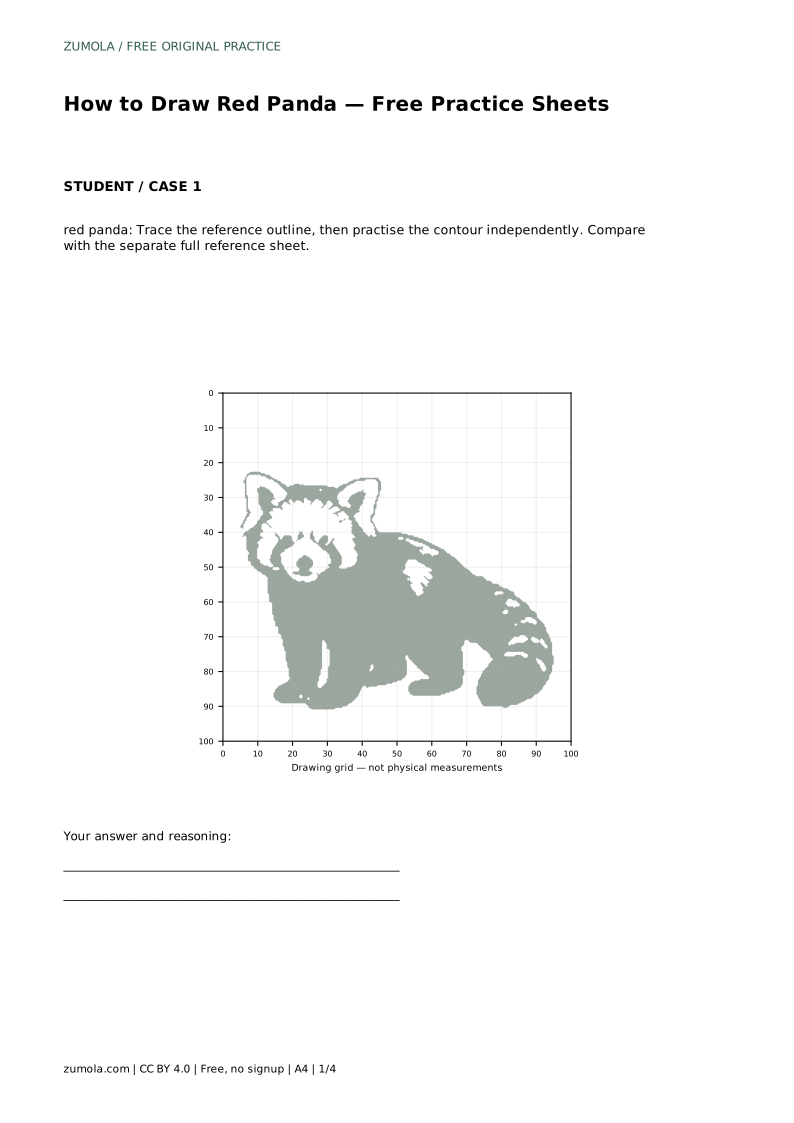
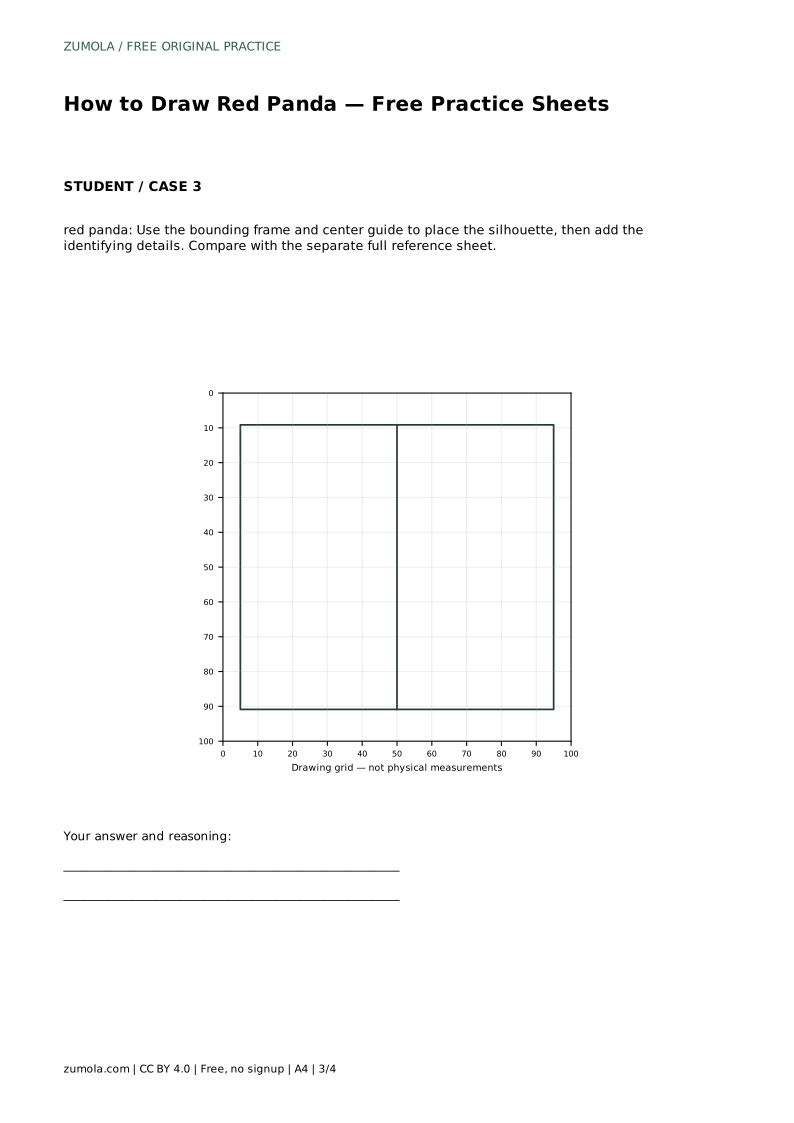
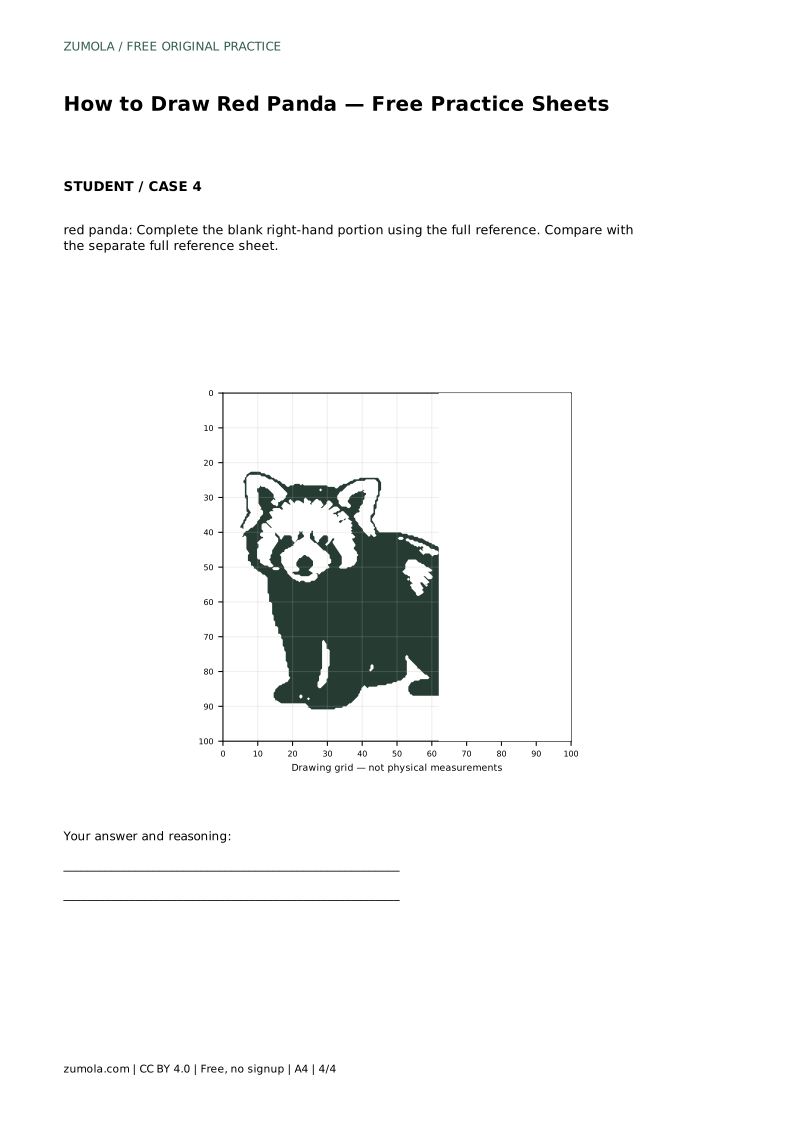
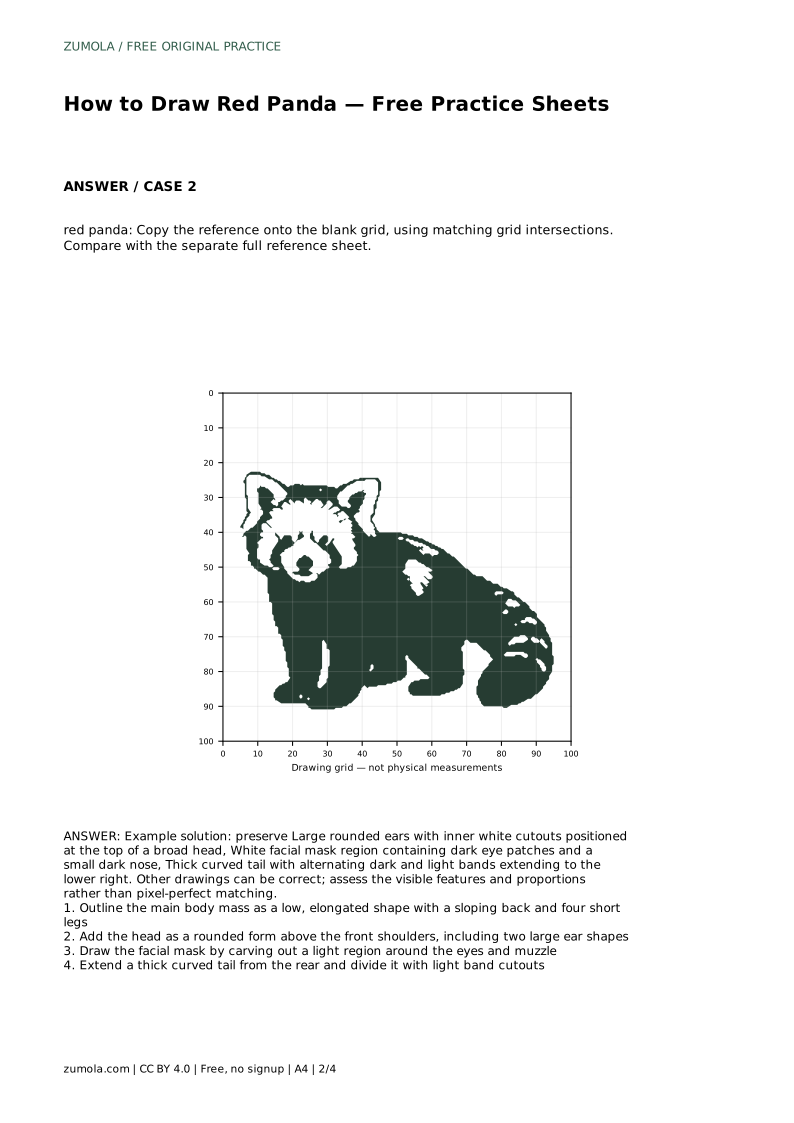
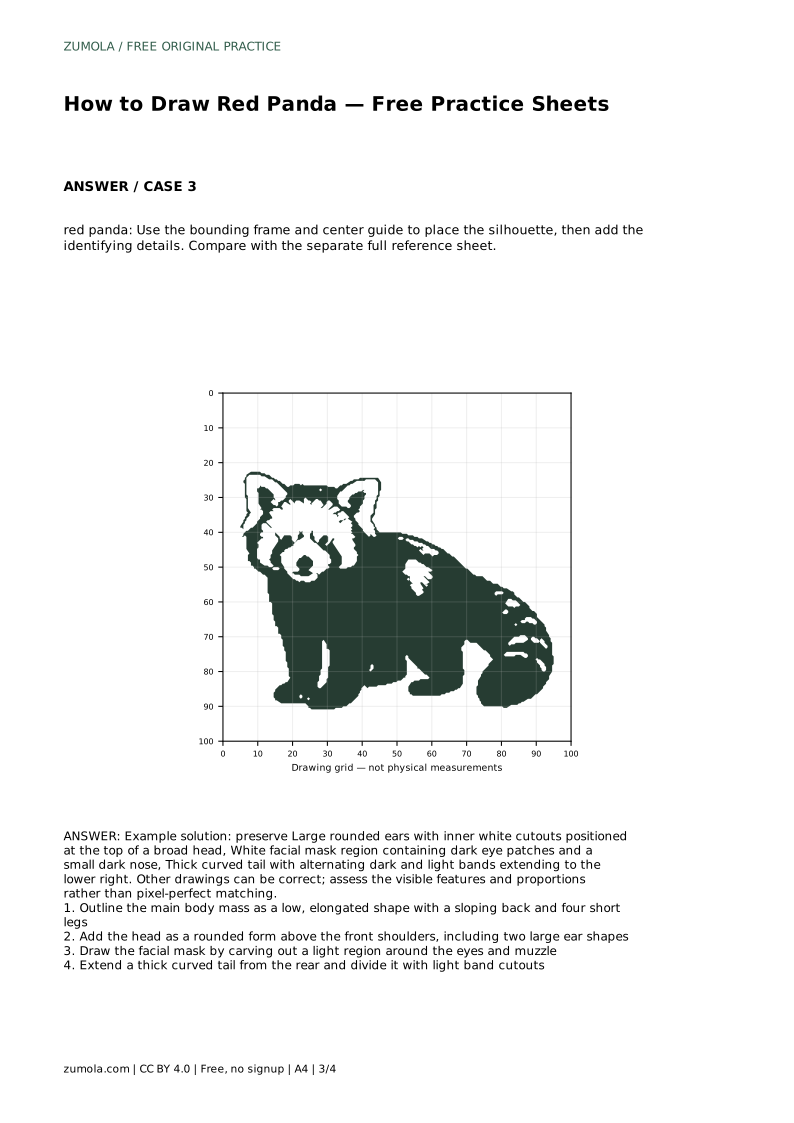
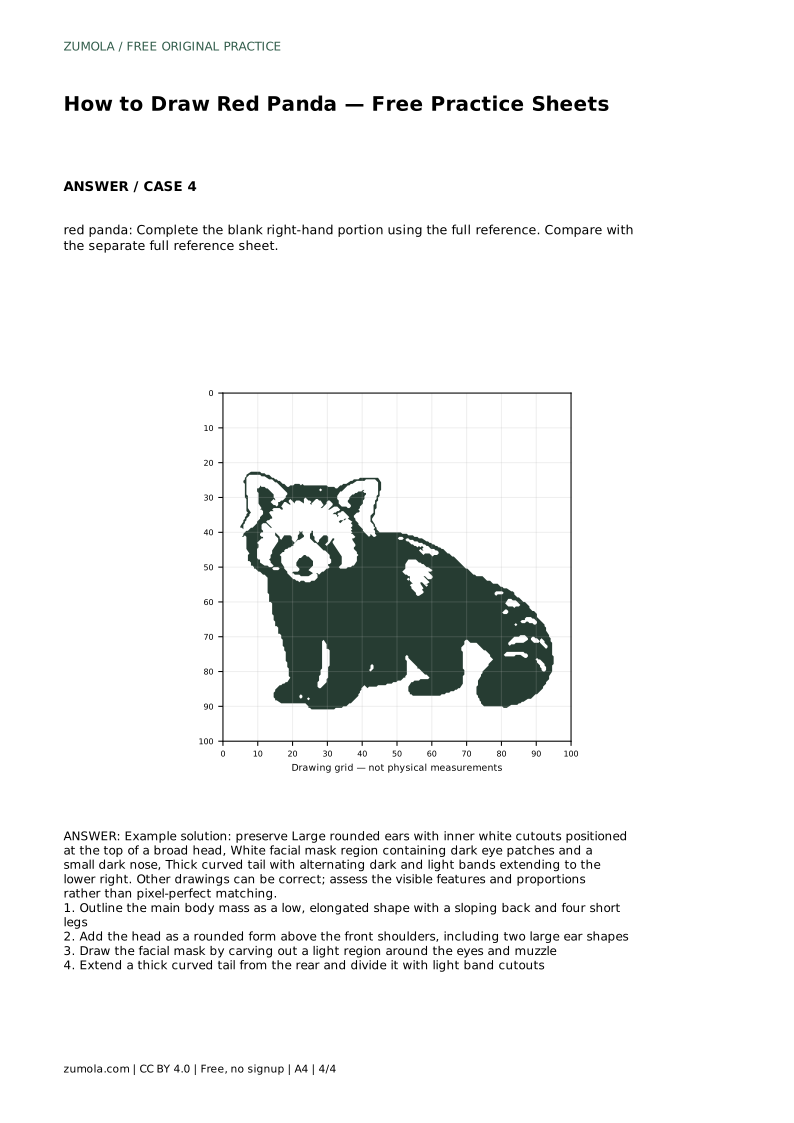
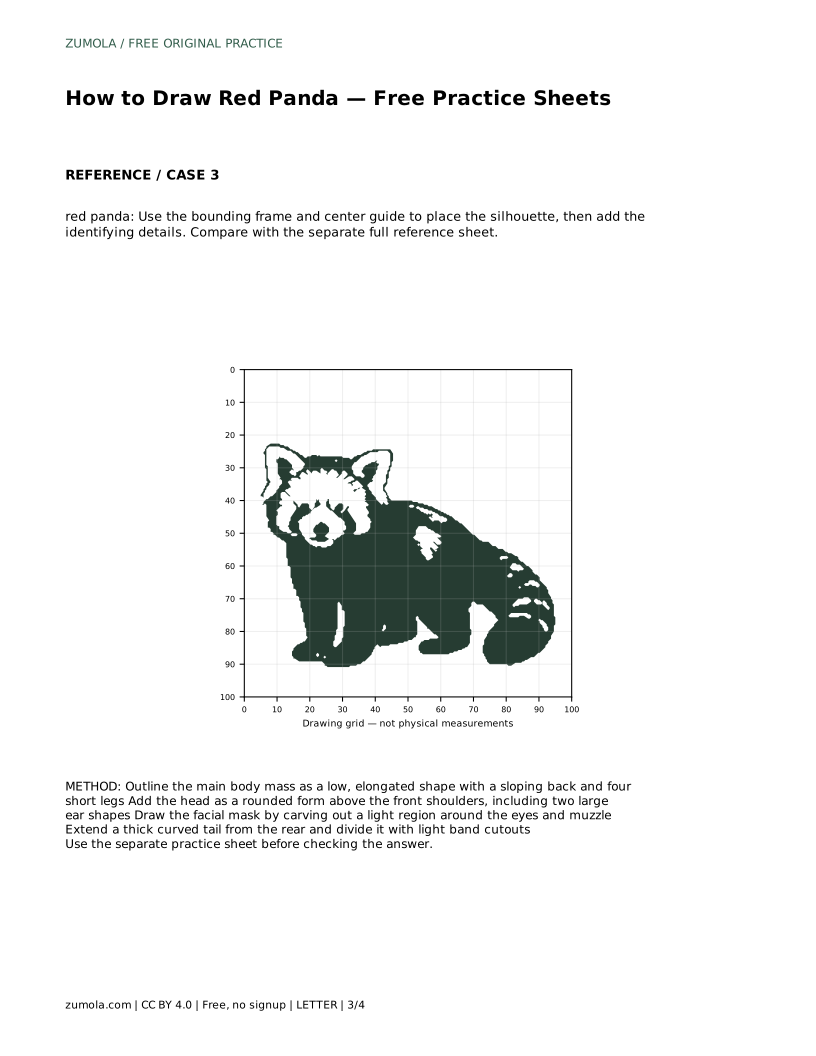
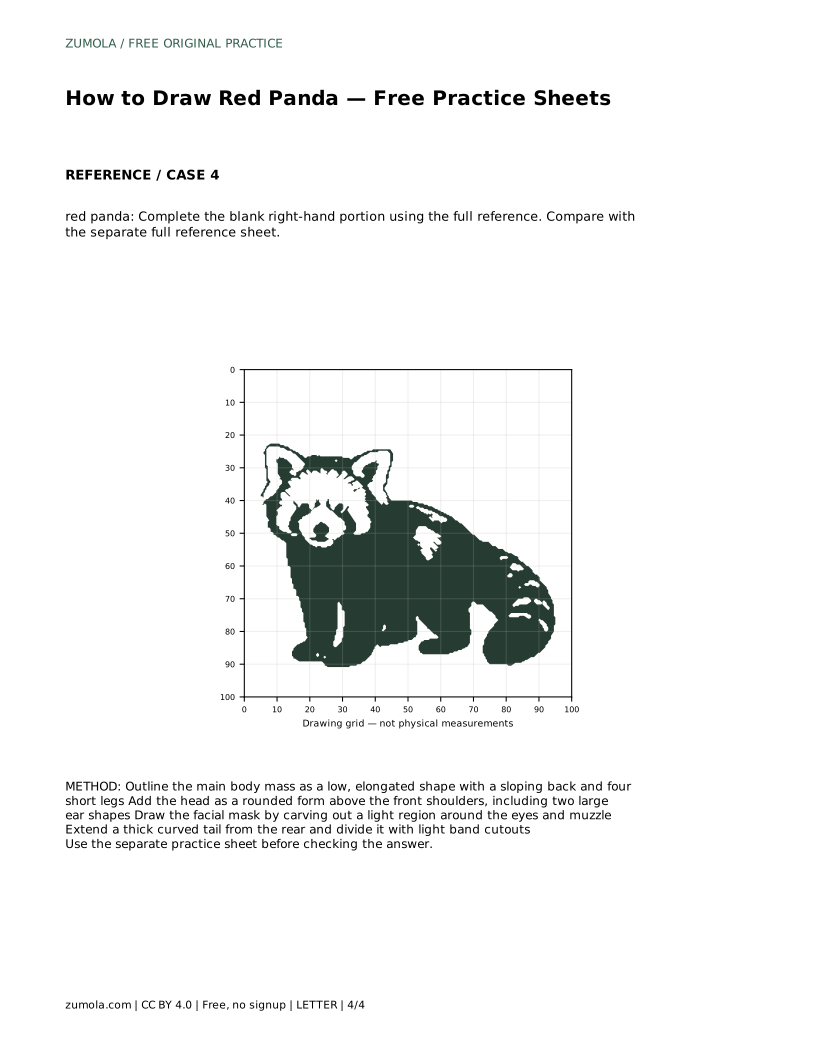
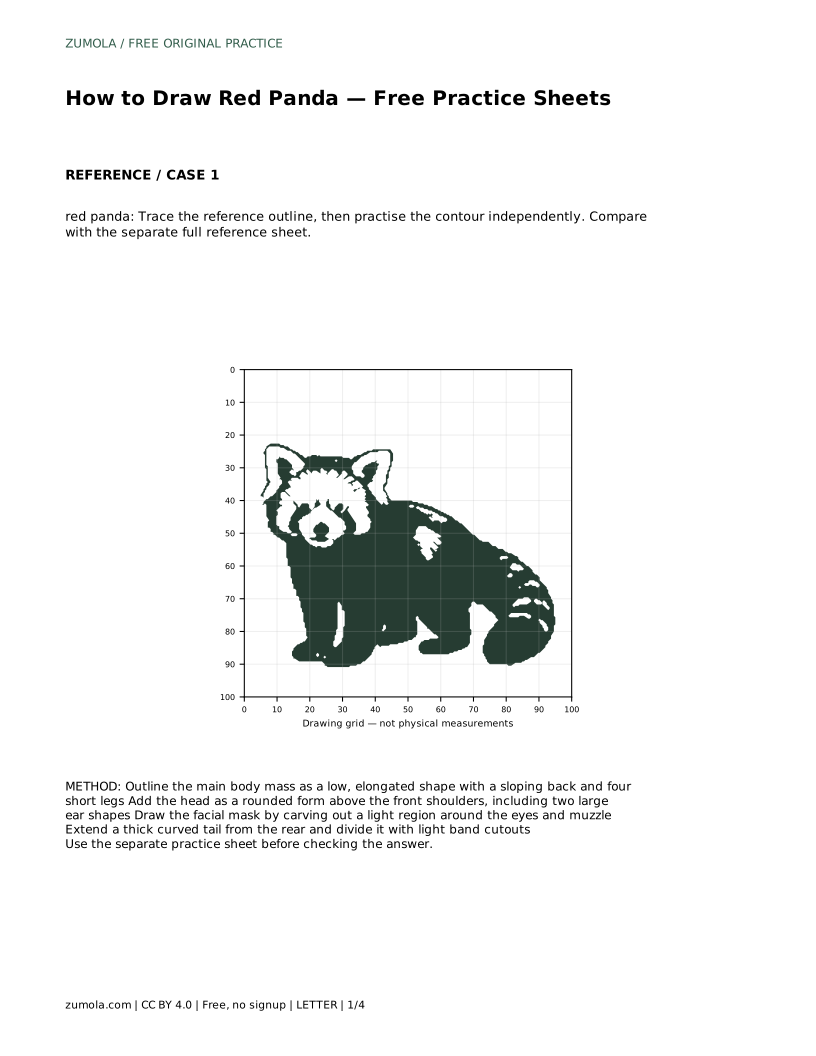
Each sheet supports a different way of learning the same drawing. Tracing the reference outline helps you feel the contour before practising it independently. Copying onto a blank grid asks you to match grid intersections, which trains placement and proportion. A bounding frame with a center guide helps you position the silhouette before adding details. Completing a blank right-hand portion asks you to continue the drawing from the full reference.
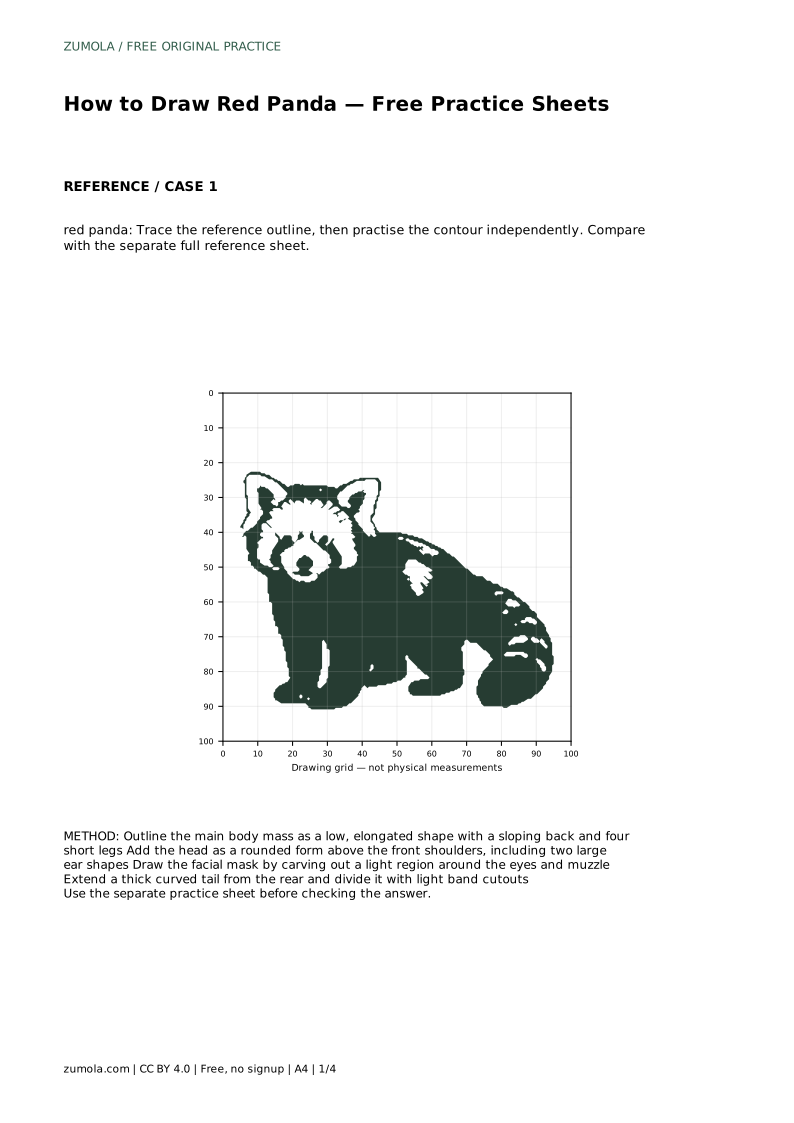
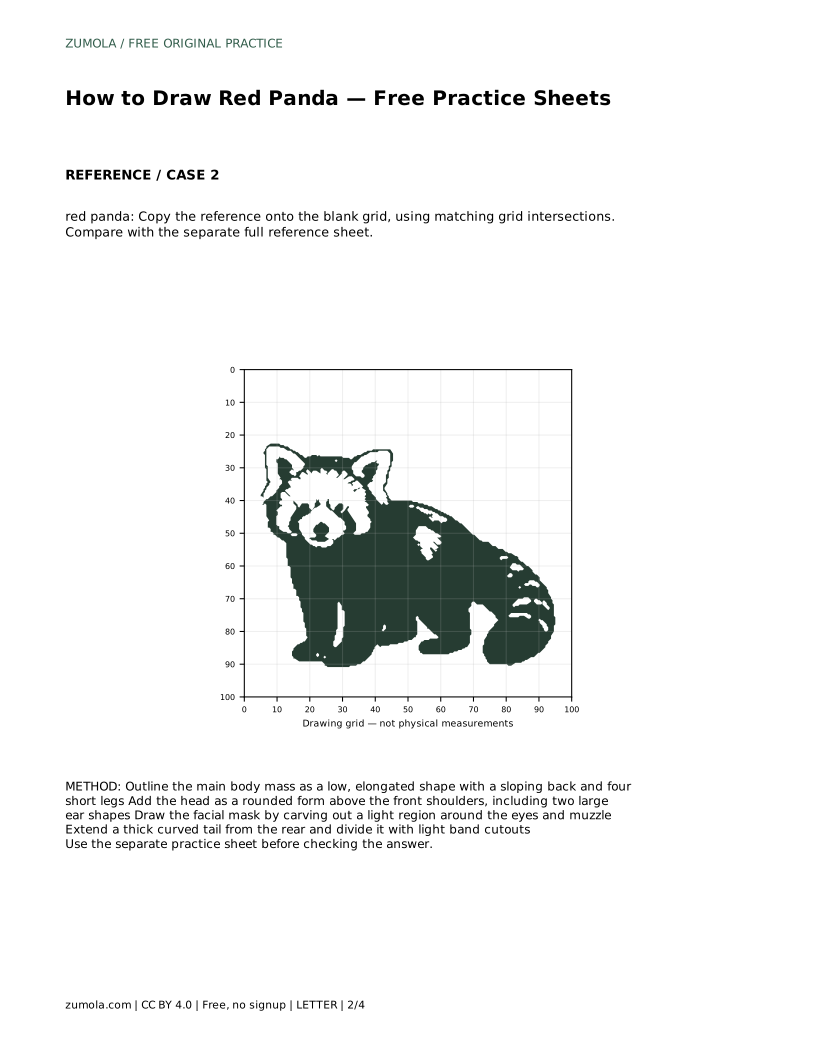
After any format, compare your work with the separate full reference sheet. Look for the large rounded ears with inner white cutouts, the white facial mask containing dark eye patches and a small dark nose, and the thick curved tail with alternating bands extending to the lower right. Other drawings can be correct, so assess the visible features and proportions rather than pixel-perfect matching.
red panda: Trace the reference outline, then practise the contour independently. Compare with the separate full reference sheet.
Example solution: preserve Large rounded ears with inner white cutouts positioned at the top of a broad head, White facial mask region containing dark eye patches and a small dark nose, Thick curved tail with alternating dark and light bands extending to the lower right. Other drawings can be correct; assess the visible features and proportions rather than pixel-perfect matching. Outline the main body mass as a low, elongated shape with a sloping back and four short legs Add the head as a rounded form above the front shoulders, including two large ear shapes Draw the facial mask by carving out a light region around the eyes and muzzle Extend a thick curved tail from the rear and divide it with light band cutouts
No. Several drawings can be correct. Check that the large rounded ears, white facial mask with dark eye patches and small nose, and thick banded tail are present and reasonably proportioned.
Start by tracing the reference outline to learn the contour, then move to the grid, frame, or partial-completion sheet for independent practice.
Check the overall body mass and head placement first, then the facial mask, ears, and tail bands.
All drawing practice · Free coordinate paper
Original resources · CC BY 4.0 · Free for personal and classroom use with attribution.