Reference diagrams
LETTER · Download PDF
A4 · Download PDF
Free original resources
Learn to draw a fence with pointed pickets, two horizontal rails and taller end posts. Trace, grid-copy or complete the outline, then check proportions with a rubric.
Four original cases, with reference diagrams, practice sheets and worked answers. Everything is free; no signup required.
LETTER · Download PDF
A4 · Download PDF
LETTER · Download PDF
A4 · Download PDF
LETTER · Download PDF
A4 · Download PDF
Use A4 or US Letter to match your printer. Use the stated values and conditions to solve each exercise; diagrams are not physical measuring rulers.
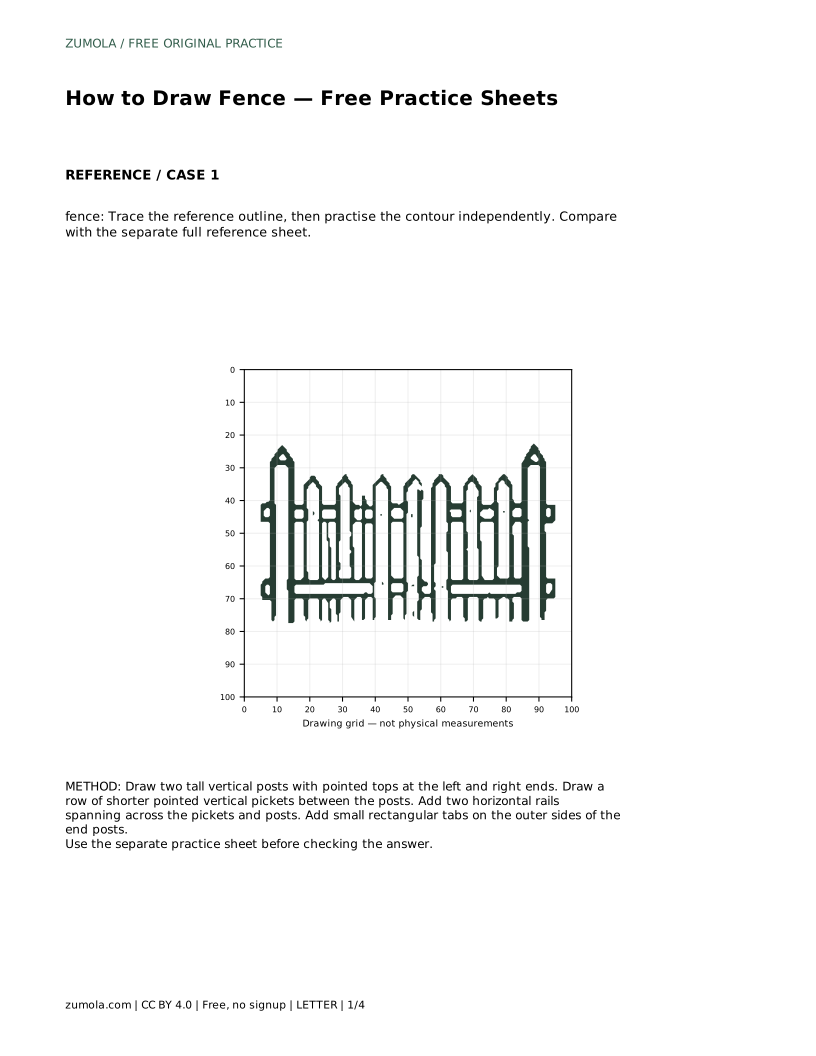
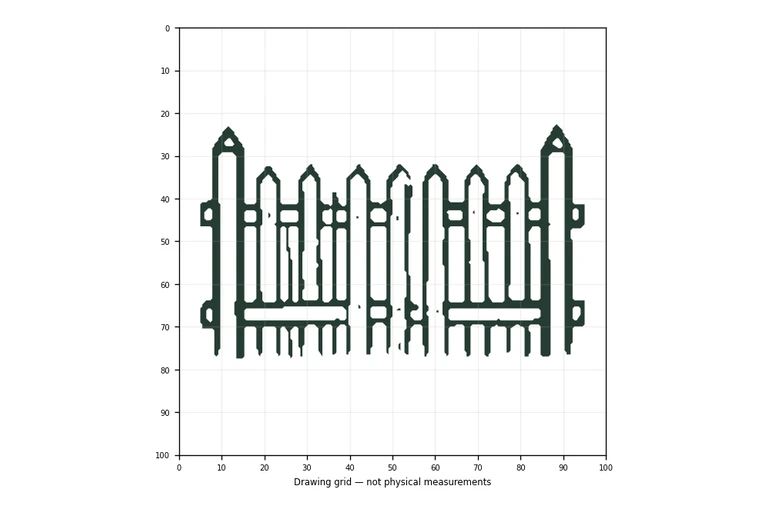
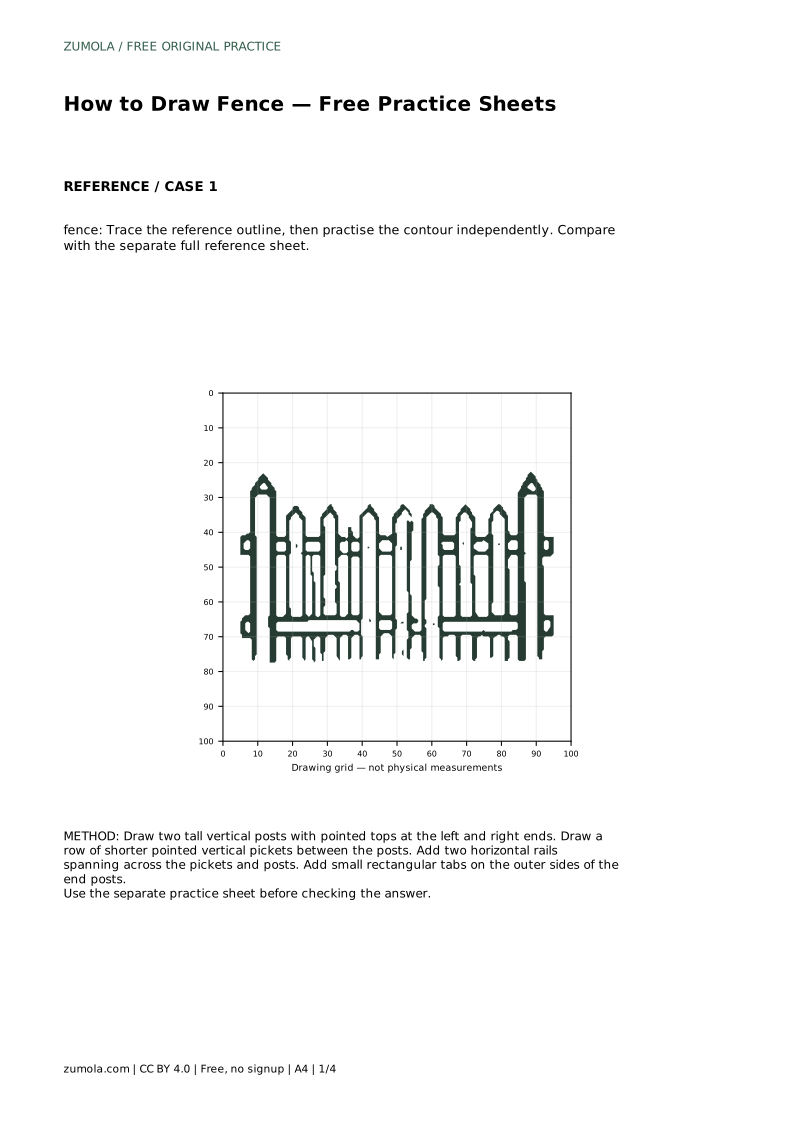
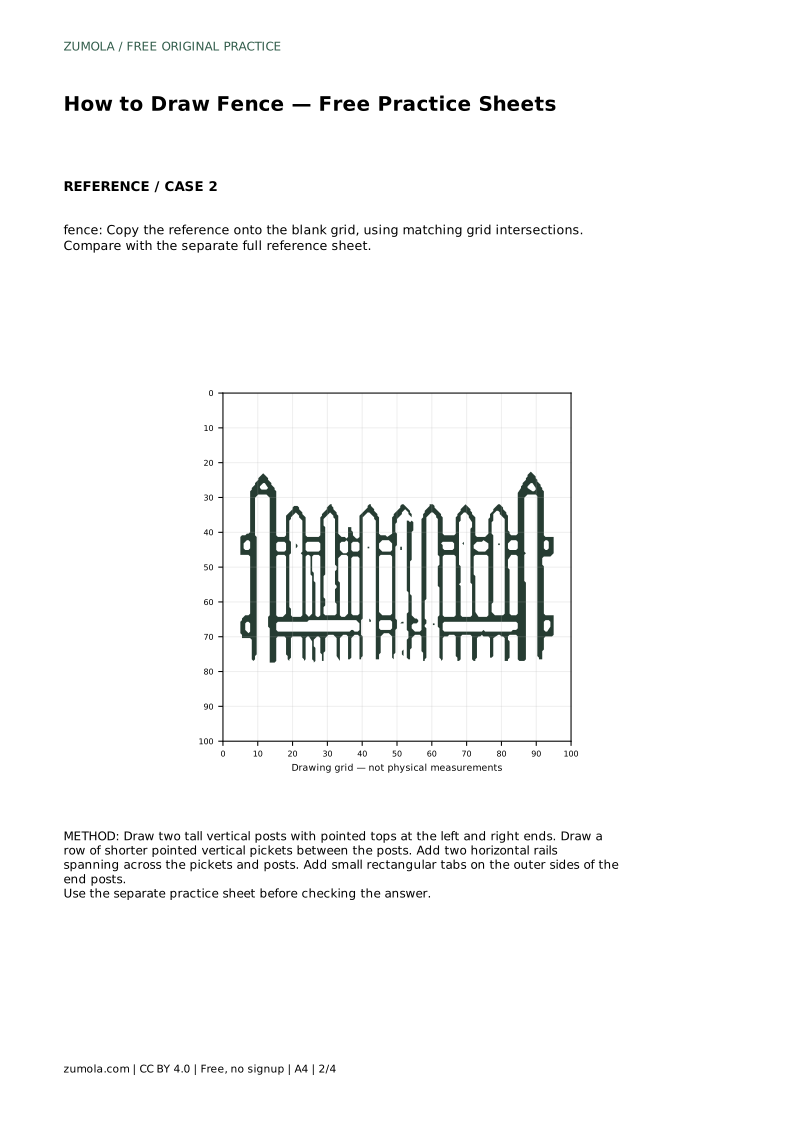
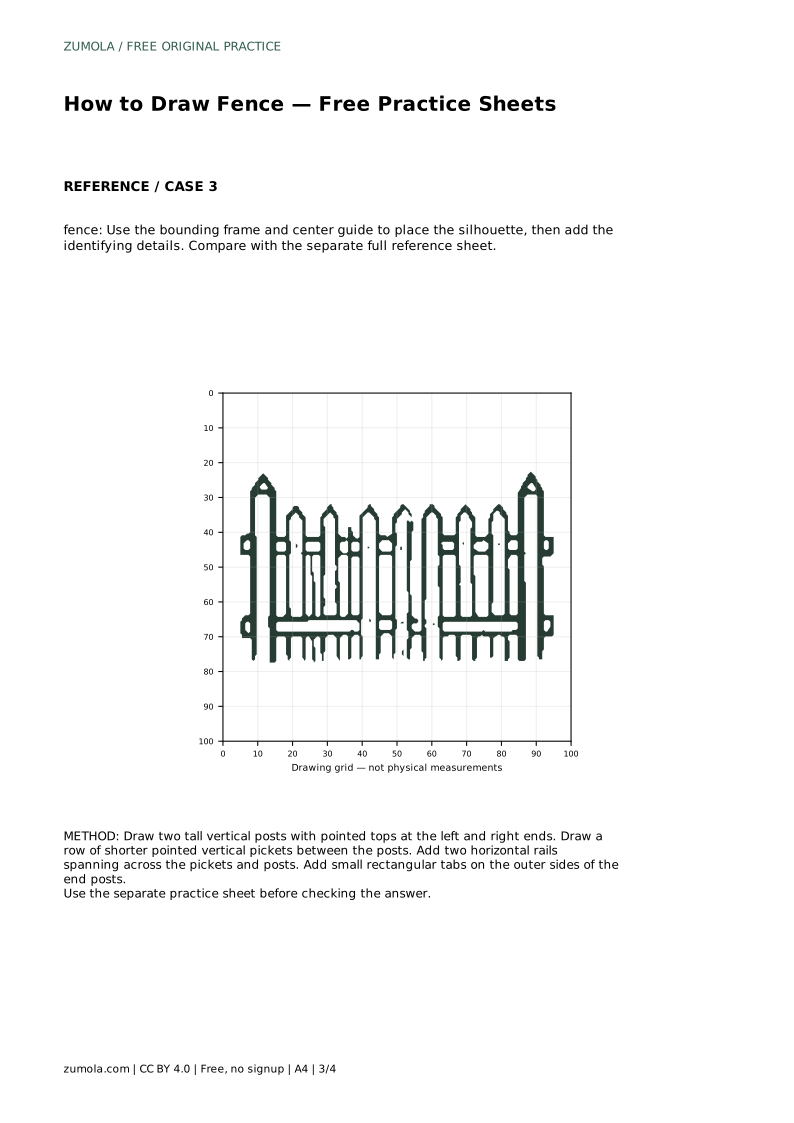
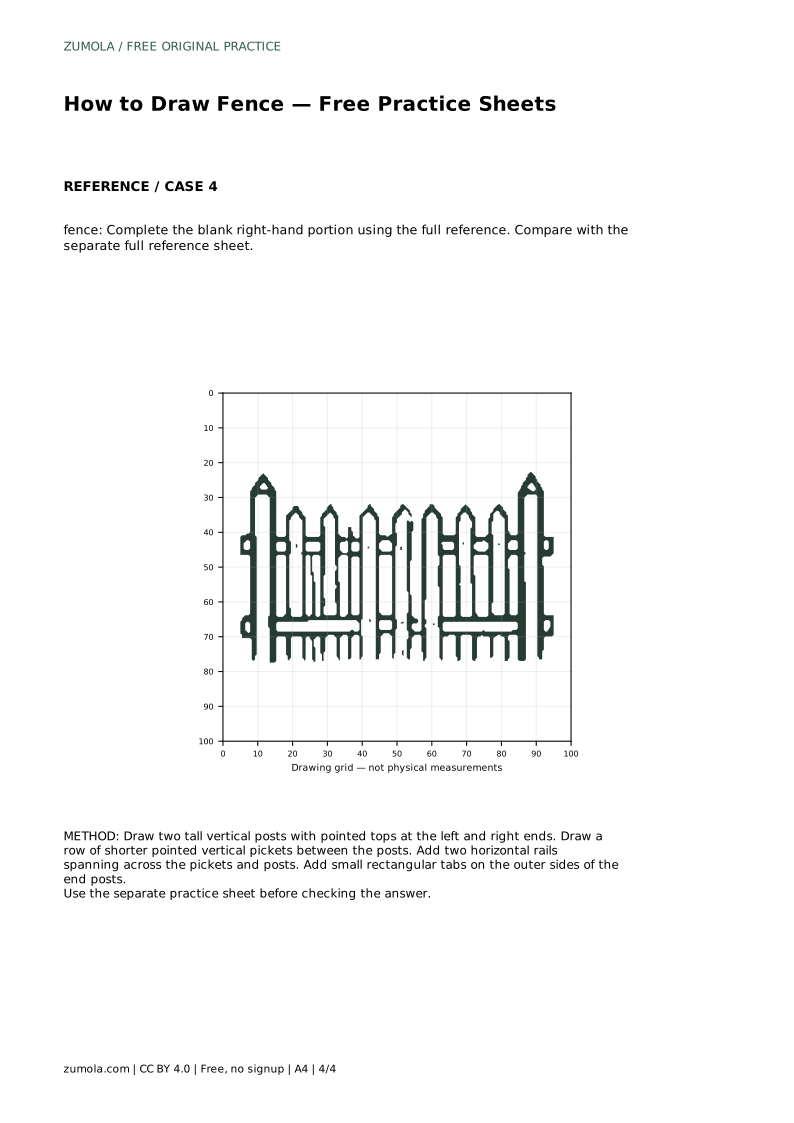
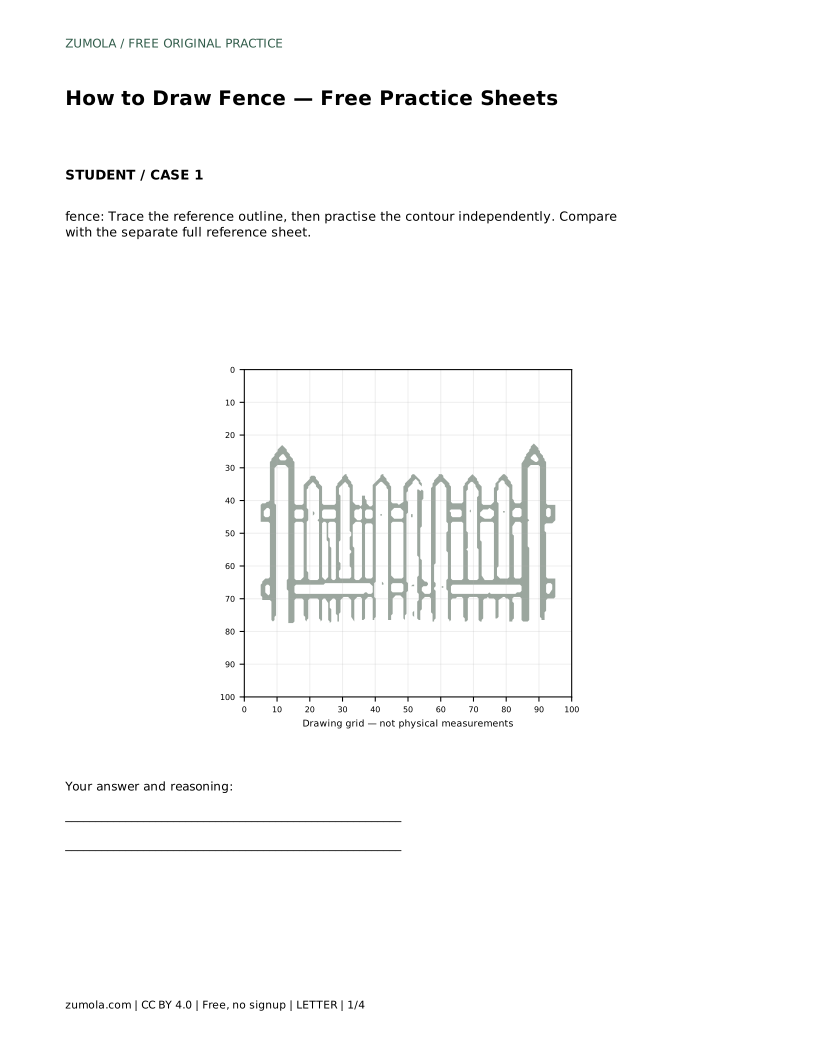
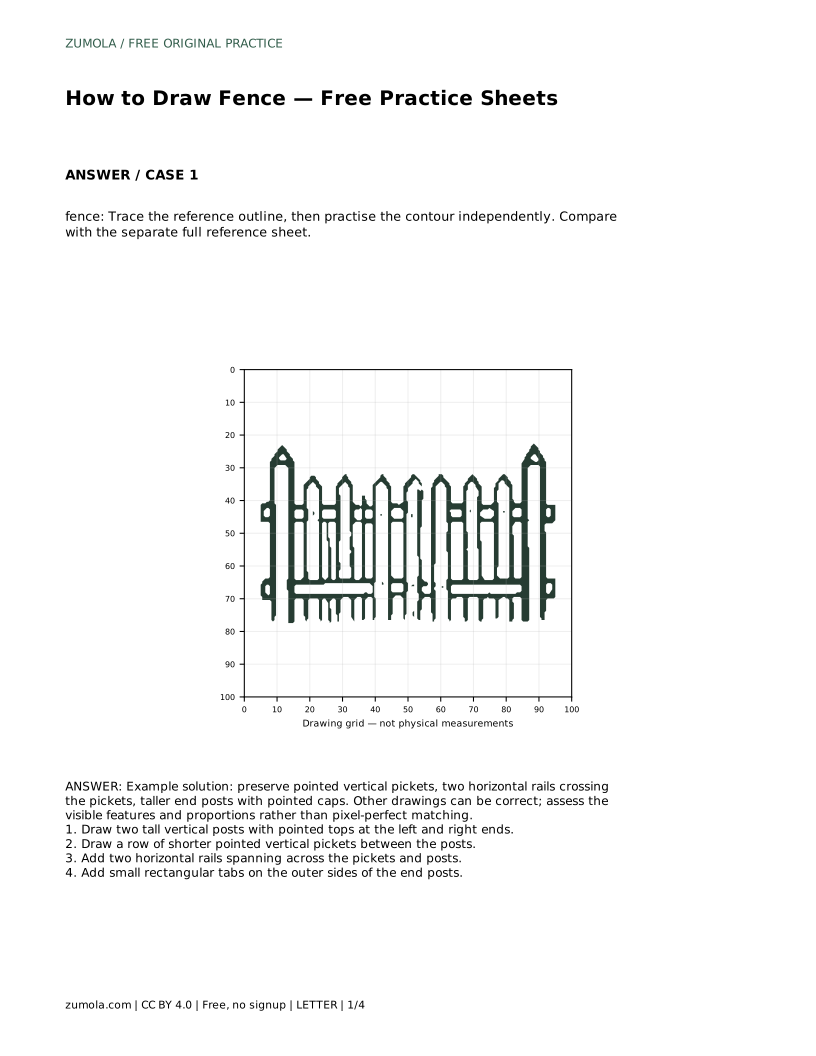
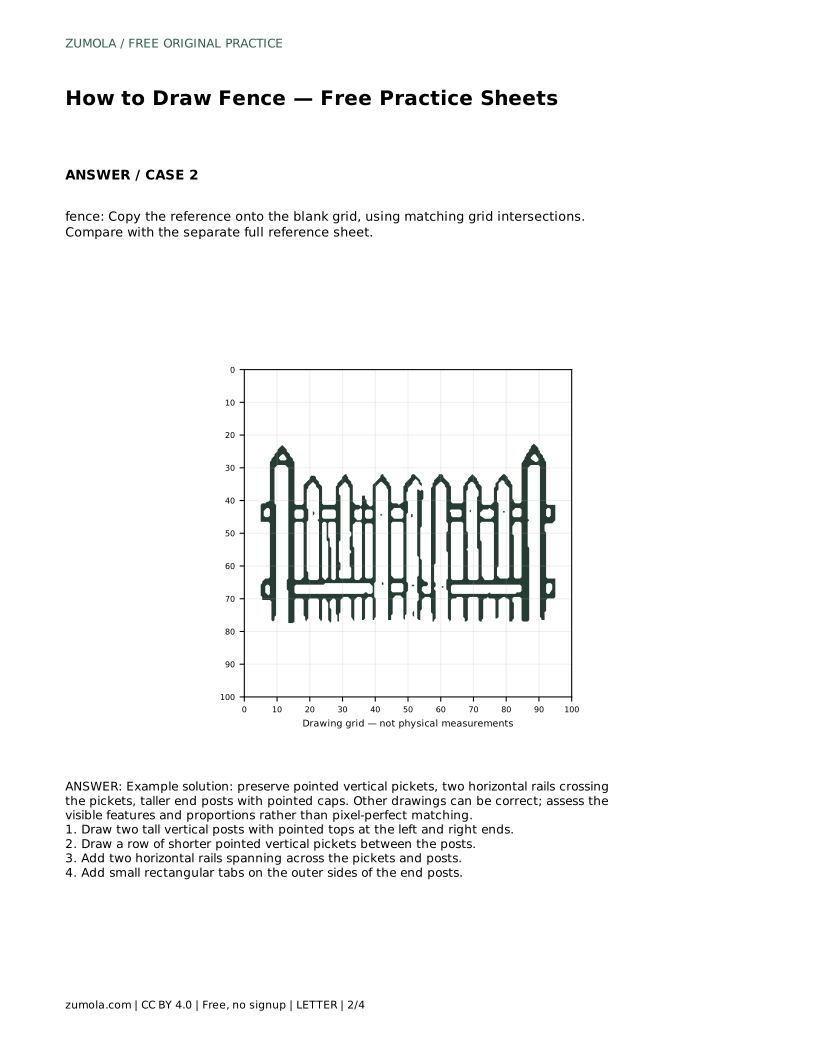
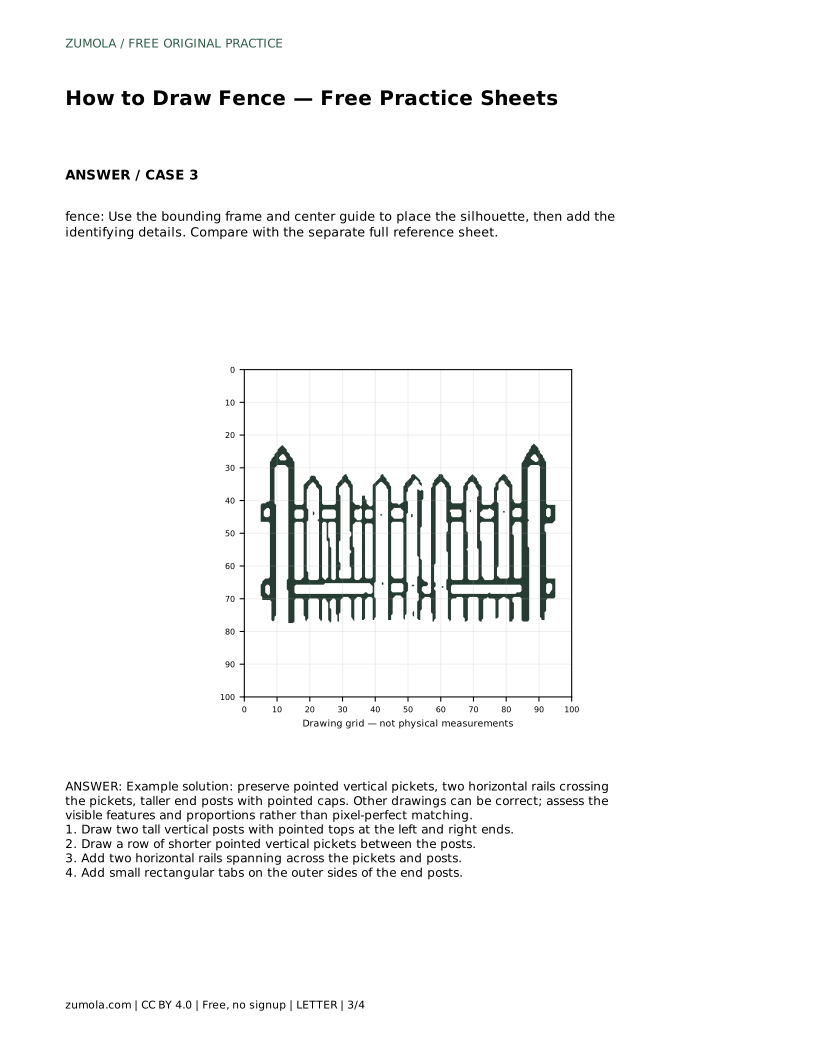
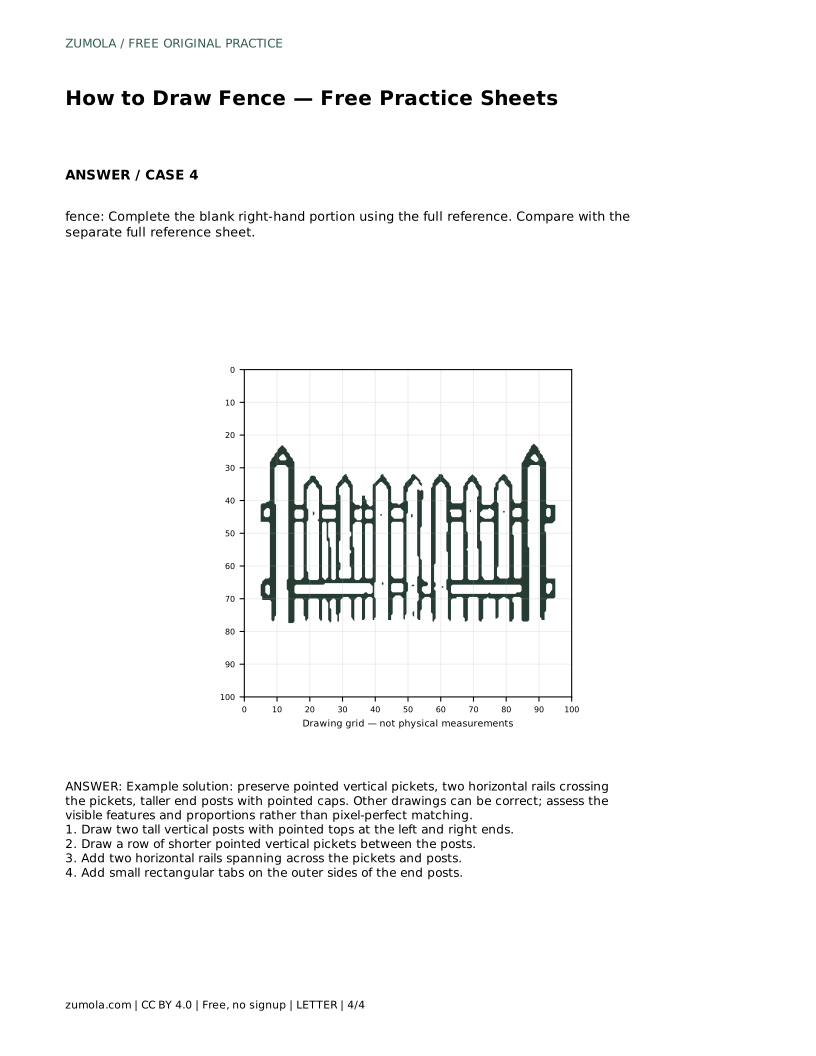
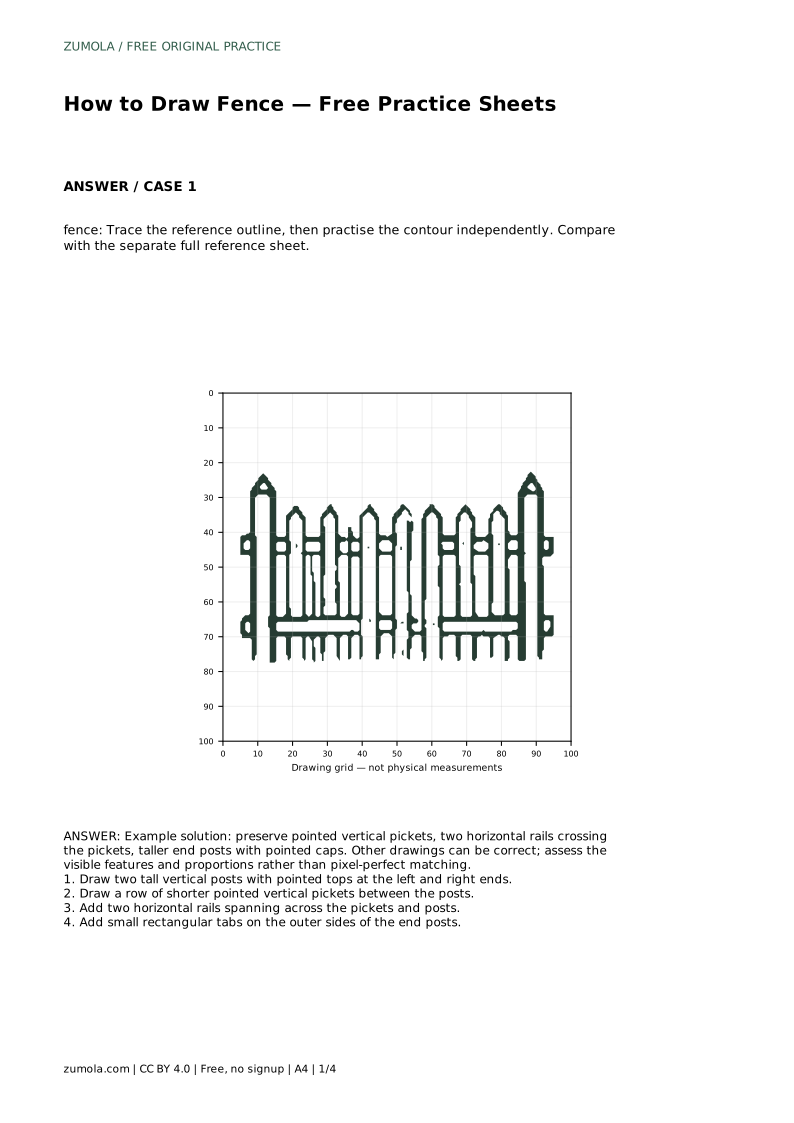
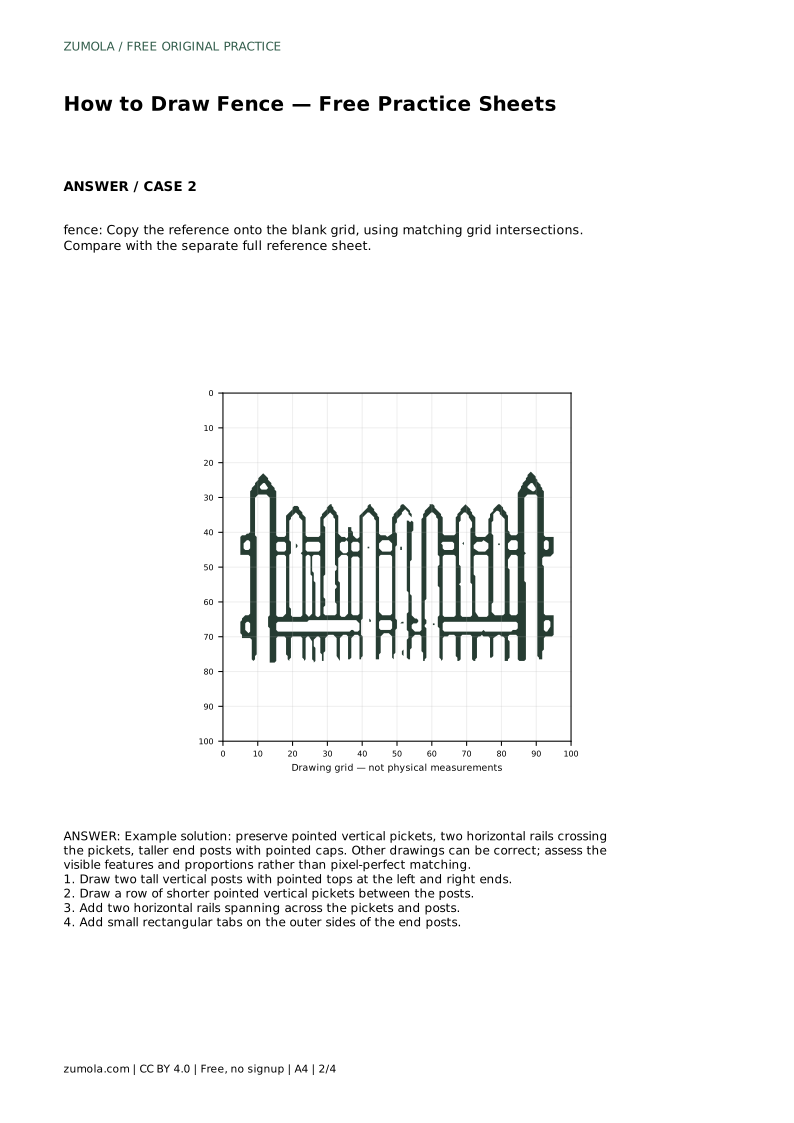
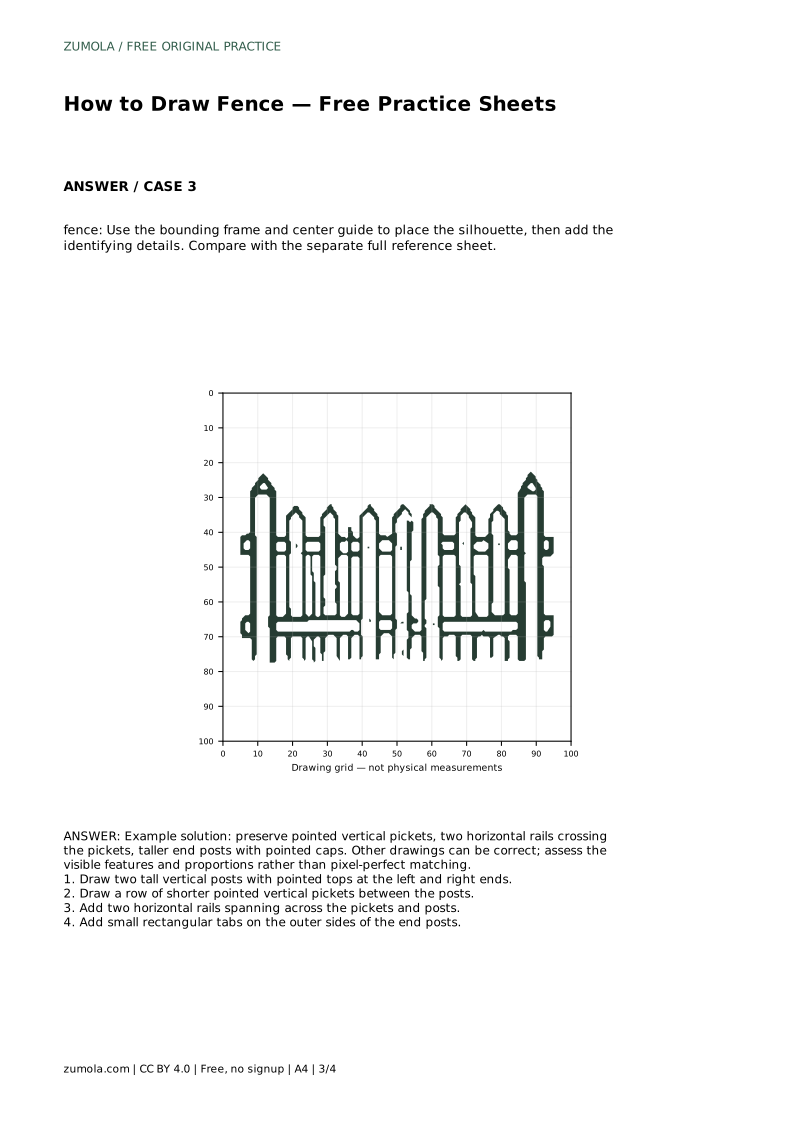
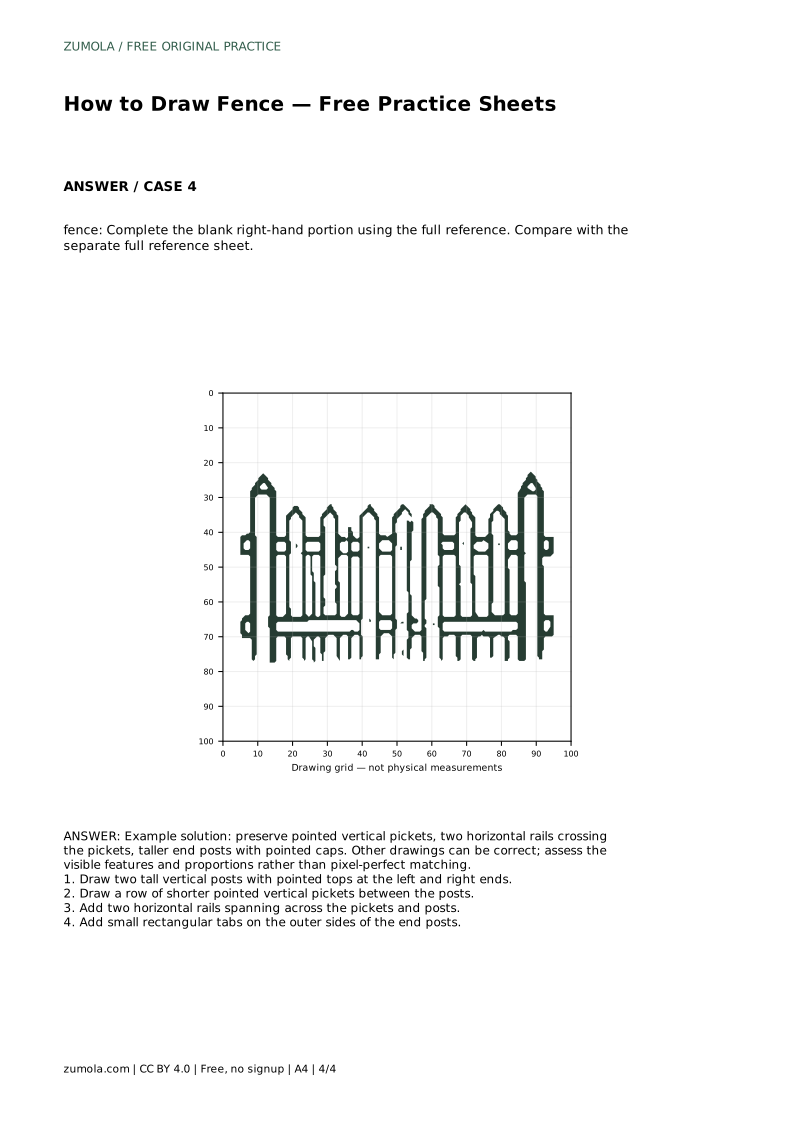
Drawing a fence is mostly a lesson in vertical rhythm and horizontal alignment. The task is to place two taller end posts, a row of shorter pointed pickets between them, and two rails that cross every upright. The practice sheets let you trace the outline, copy it onto a grid, use a bounding frame and center guide, or complete a blank right-hand portion. Because drawings can vary, compare visible features and proportions rather than expecting a pixel-perfect match.
Start with the two end posts. They are the tallest verticals and sit at the left and right edges of the fence. Give each post a pointed top, then add a small rectangular tab on its outer side. These tabs are part of the reference outline, so keep them visible rather than treating them as optional decoration.
Next, draw the row of shorter pointed pickets between the posts. Keep the pickets vertical and evenly spaced. Their pointed tops should sit below the pointed caps of the end posts. The exact number of pickets can vary, but the row should read as a repeated vertical rhythm rather than a random cluster.
Finally, add two horizontal rails. Each rail spans across the pickets and meets both end posts. The rails should cross the pickets rather than stop between them. Check that the two rails are roughly parallel and that neither rail hides the pointed tops of the pickets.
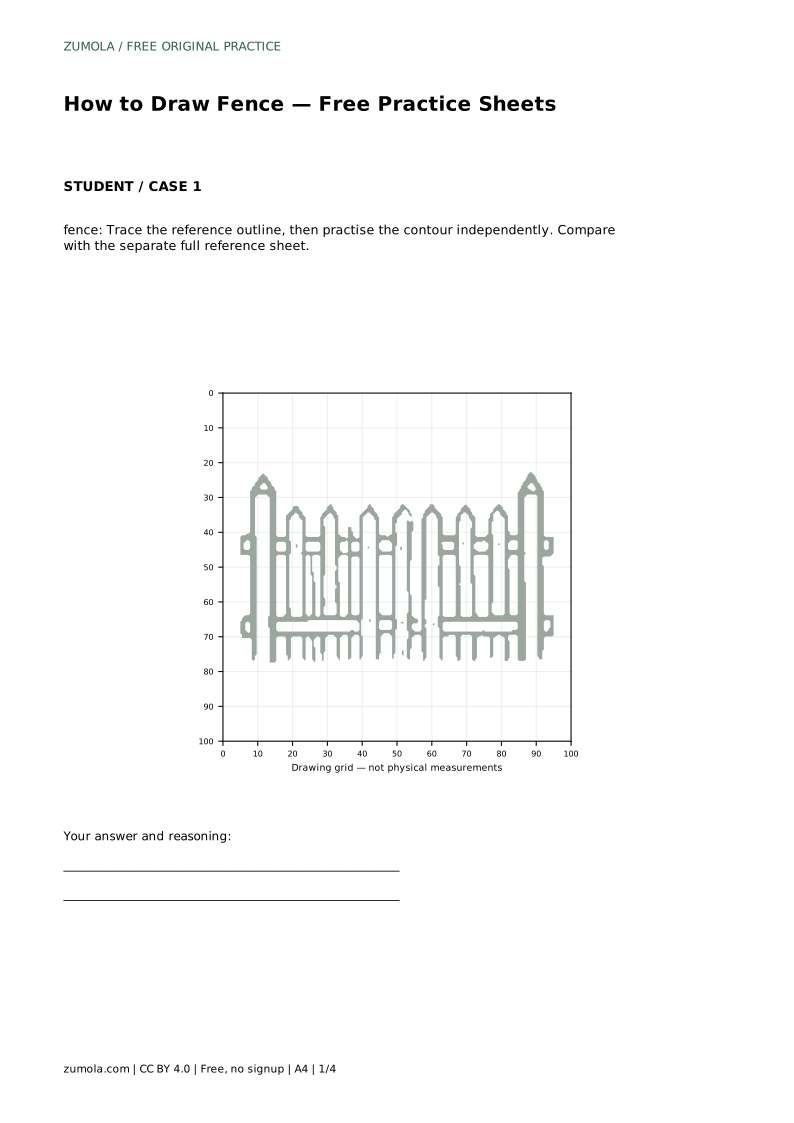
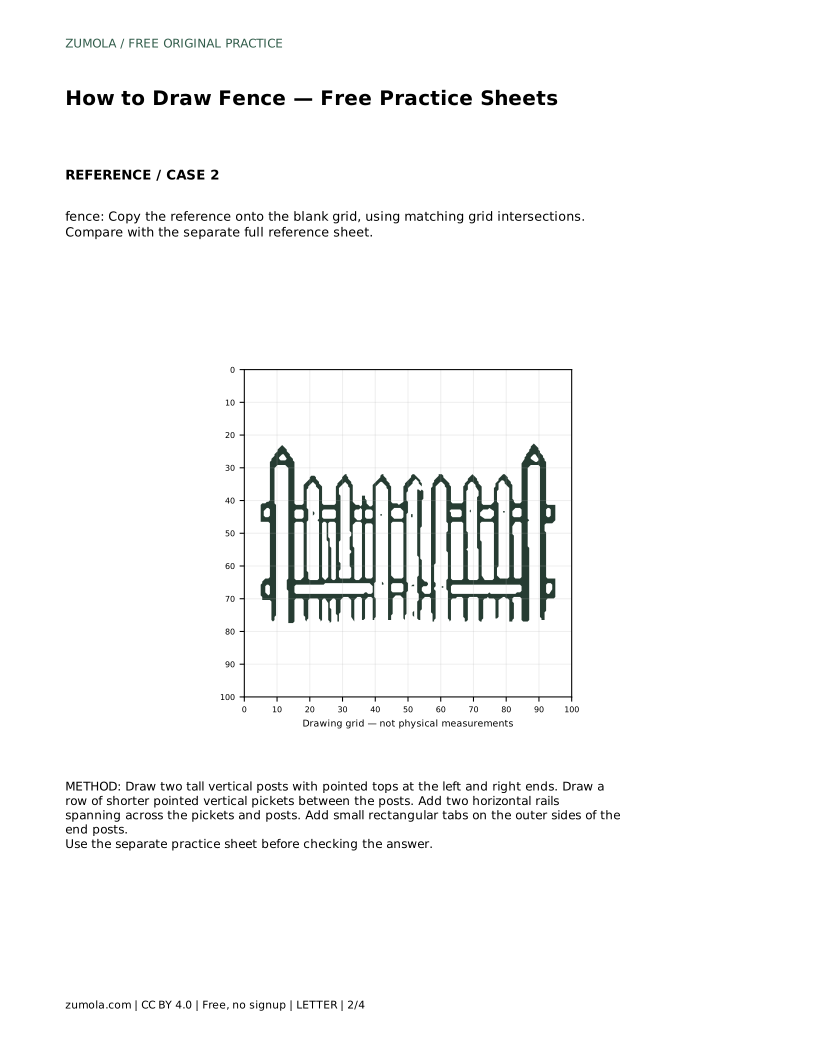
The trace sheet asks you to follow the reference outline first, then practise the contour independently. Tracing helps you feel the order of the parts, but the independent pass is where you test whether you can place the posts, pickets and rails without the outline underneath.
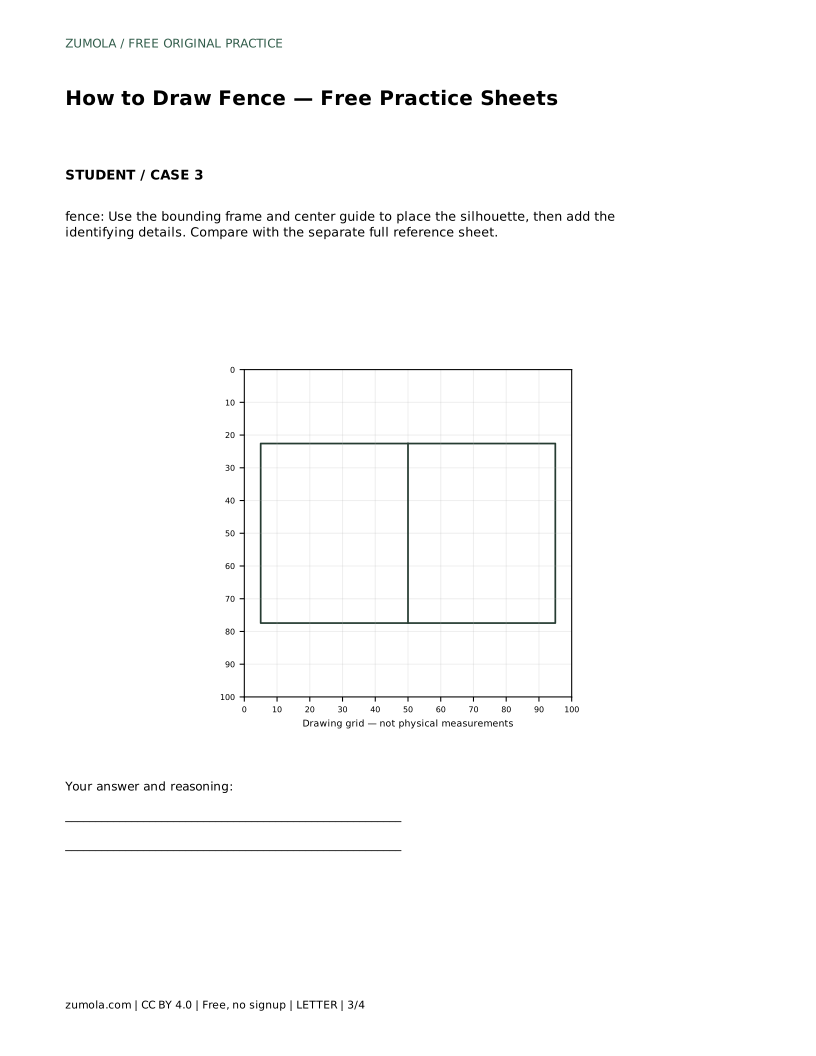
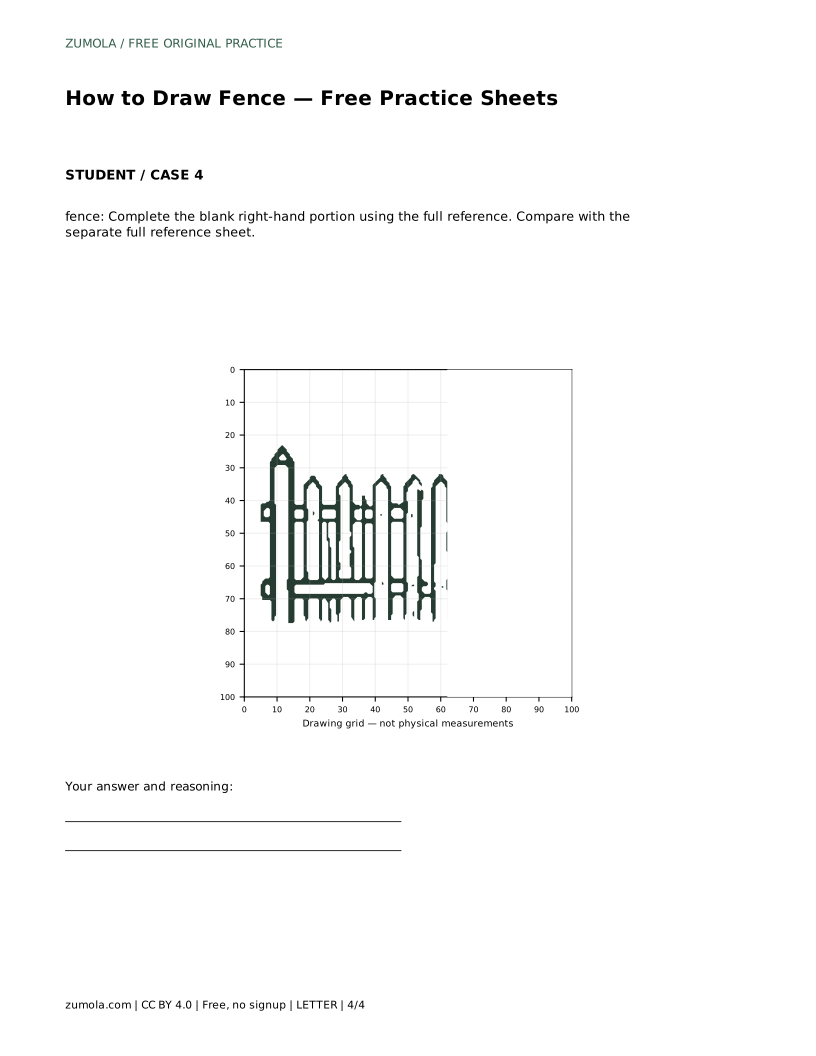
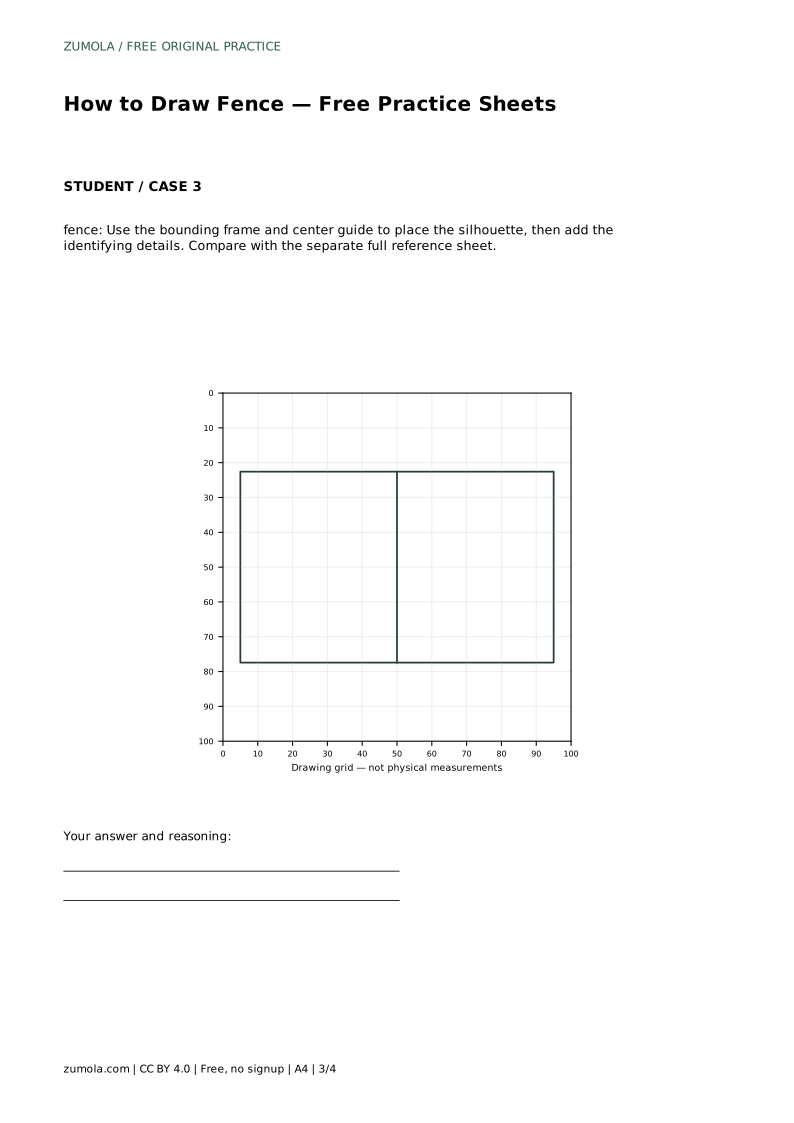
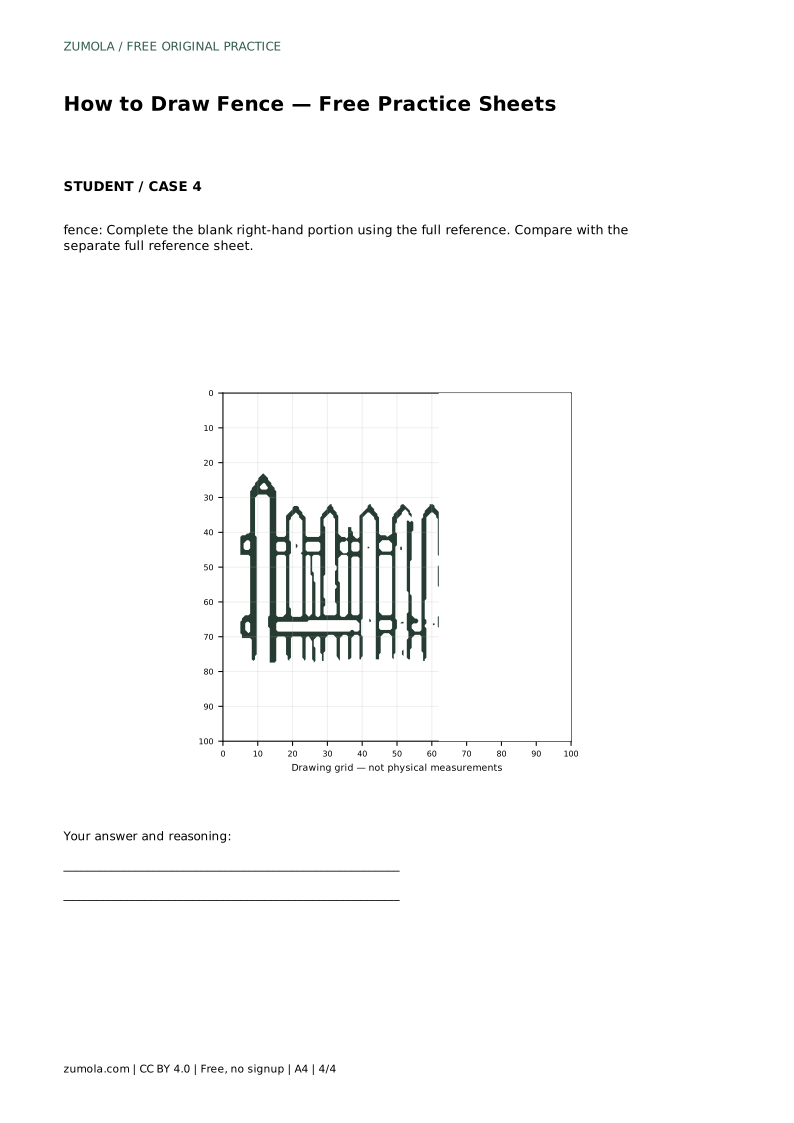
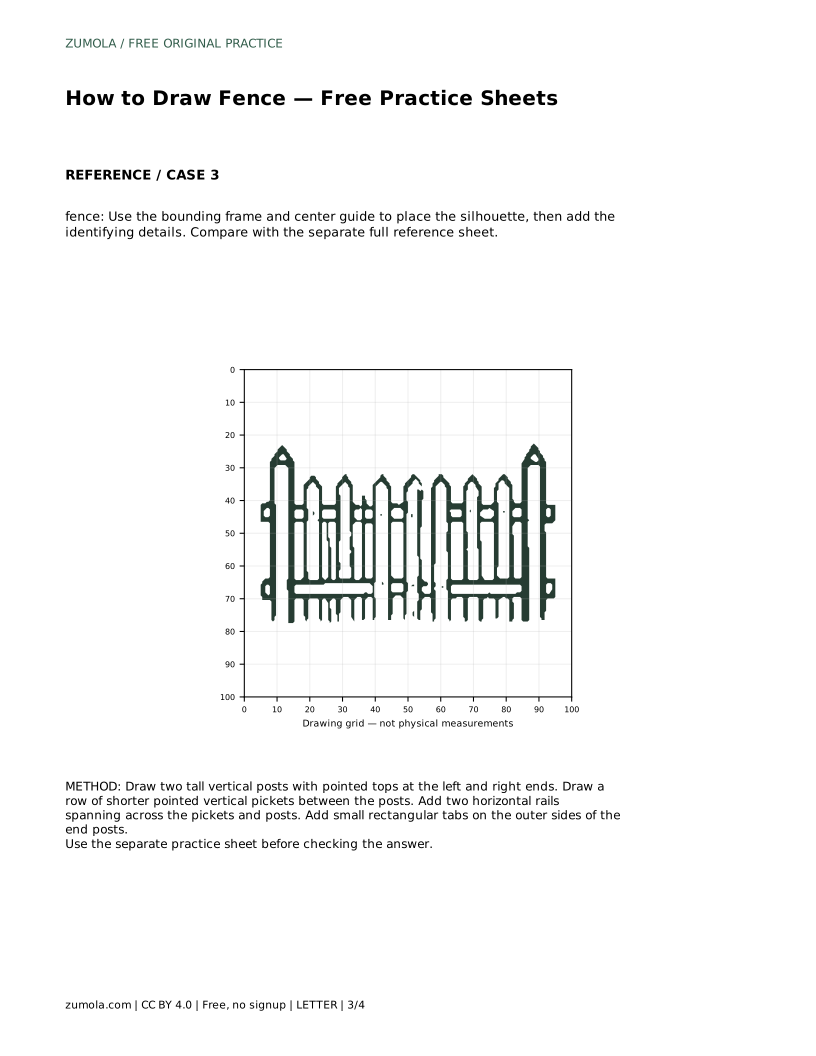
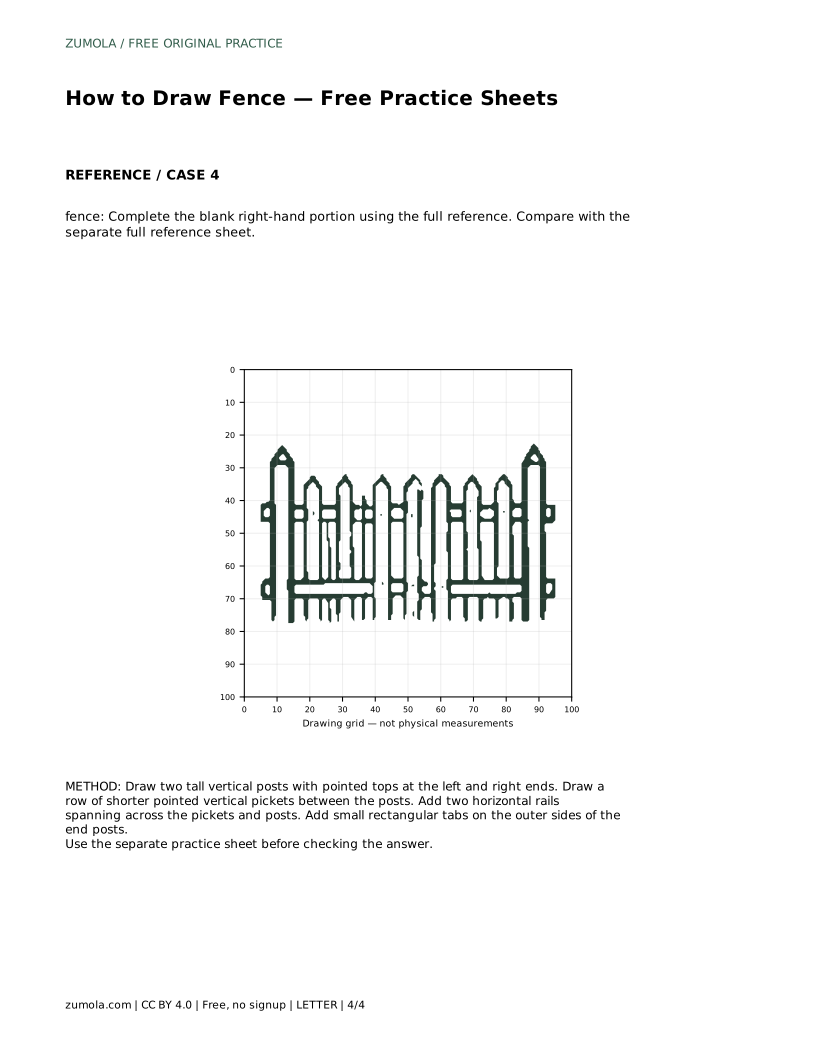
The grid sheet asks you to copy the reference onto a blank grid using matching grid intersections. Use the grid to compare where each upright begins and ends, and where the rails cross. The bounding-frame sheet gives you an outer frame and a center guide so you can place the silhouette before adding the identifying details. The partial sheet gives you the left side and asks you to complete the blank right-hand portion using the full reference.
In every case, compare your drawing with the separate full reference sheet after you finish. The reference is a guide for features and proportions, not a demand for an identical line.
A fence drawing can be correct without matching every line. Check that the end posts are taller than the pickets, that the pickets are pointed and vertical, that two horizontal rails cross the uprights, and that the end posts have pointed caps and small outer tabs. Also check spacing: the pickets should not crowd into one another or leave a gap that breaks the row.
Use the rubric below to assess the visible features and proportions. If a feature is missing, redraw that part rather than starting over. If the spacing is uneven, mark the picket positions lightly before drawing the final lines.
fence: Trace the reference outline, then practise the contour independently. Compare with the separate full reference sheet.
Example solution: preserve pointed vertical pickets, two horizontal rails crossing the pickets, taller end posts with pointed caps. Other drawings can be correct; assess the visible features and proportions rather than pixel-perfect matching. Draw two tall vertical posts with pointed tops at the left and right ends. Draw a row of shorter pointed vertical pickets between the posts. Add two horizontal rails spanning across the pickets and posts. Add small rectangular tabs on the outer sides of the end posts.
No. Other drawings can be correct. Assess the visible features and proportions rather than pixel-perfect matching.
The reference shows a row of shorter pointed pickets, but the exact number can vary. Keep the pickets vertical, pointed and evenly spaced between the two taller end posts.
Check the four identifying features: two taller end posts with pointed caps, a row of shorter pointed pickets, two horizontal rails crossing the uprights, and small rectangular tabs on the outer sides of the end posts.
All drawing practice · Free coordinate paper
Original resources · CC BY 4.0 · Free for personal and classroom use with attribution.