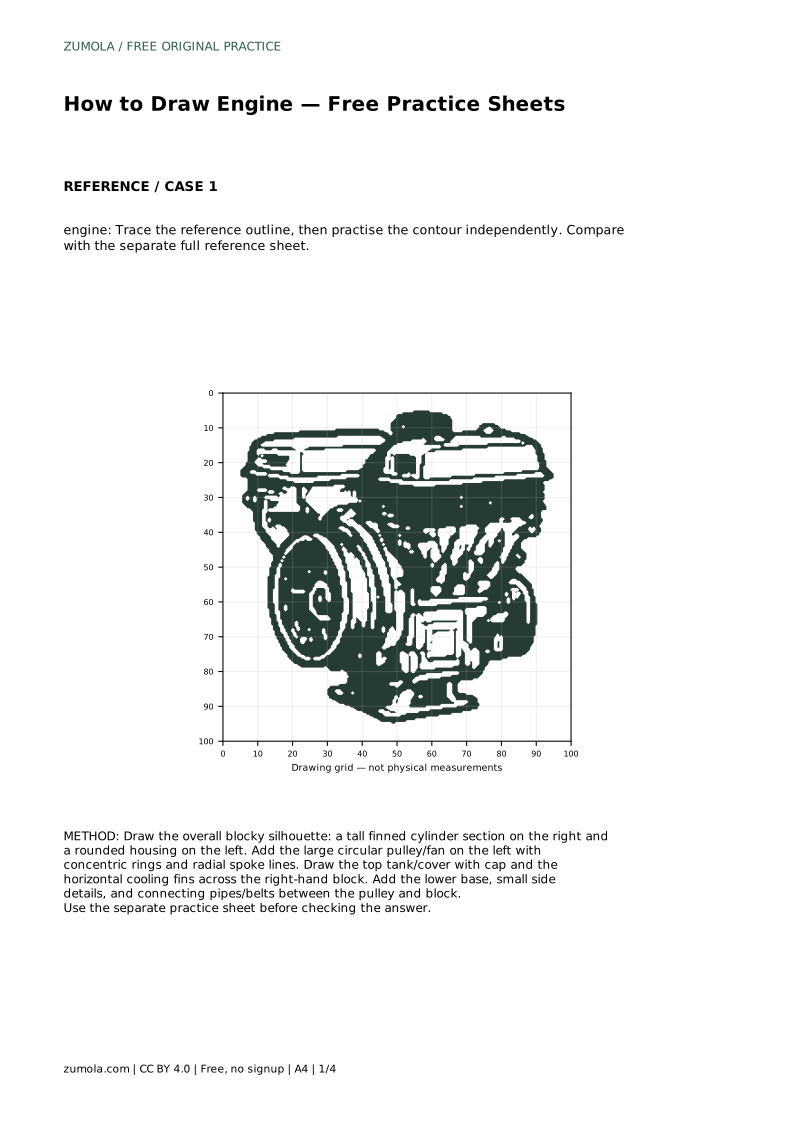
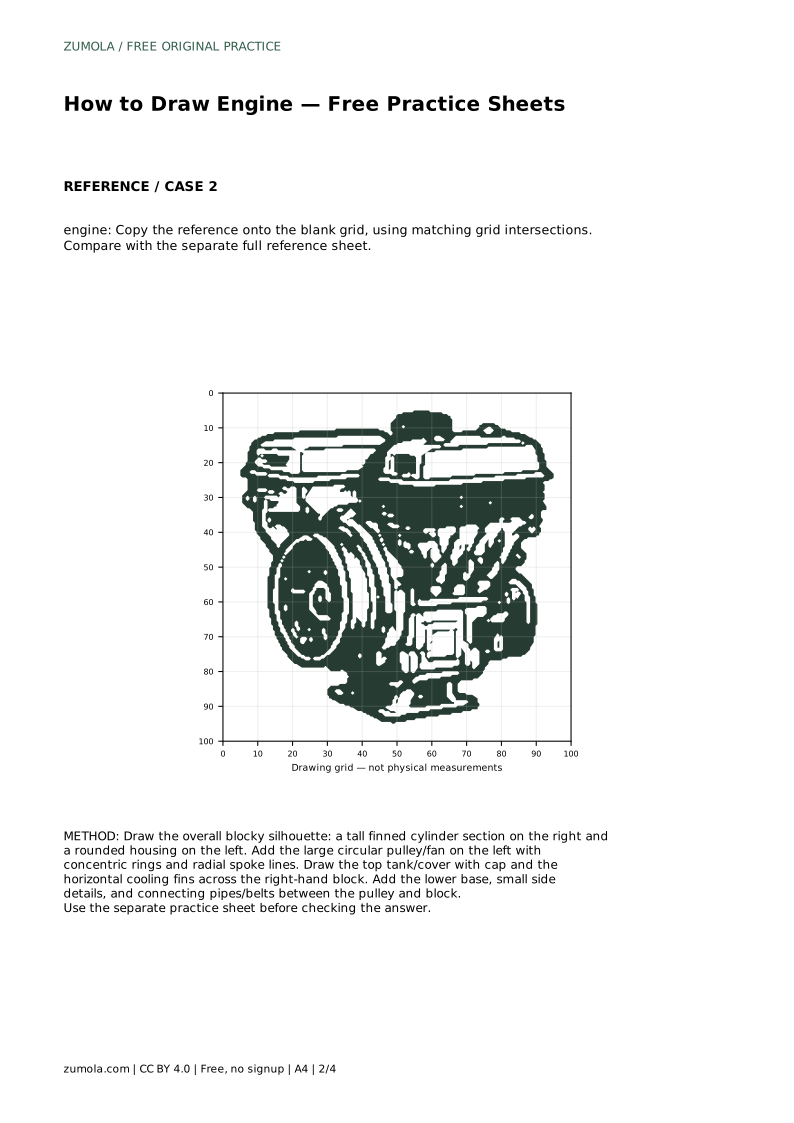
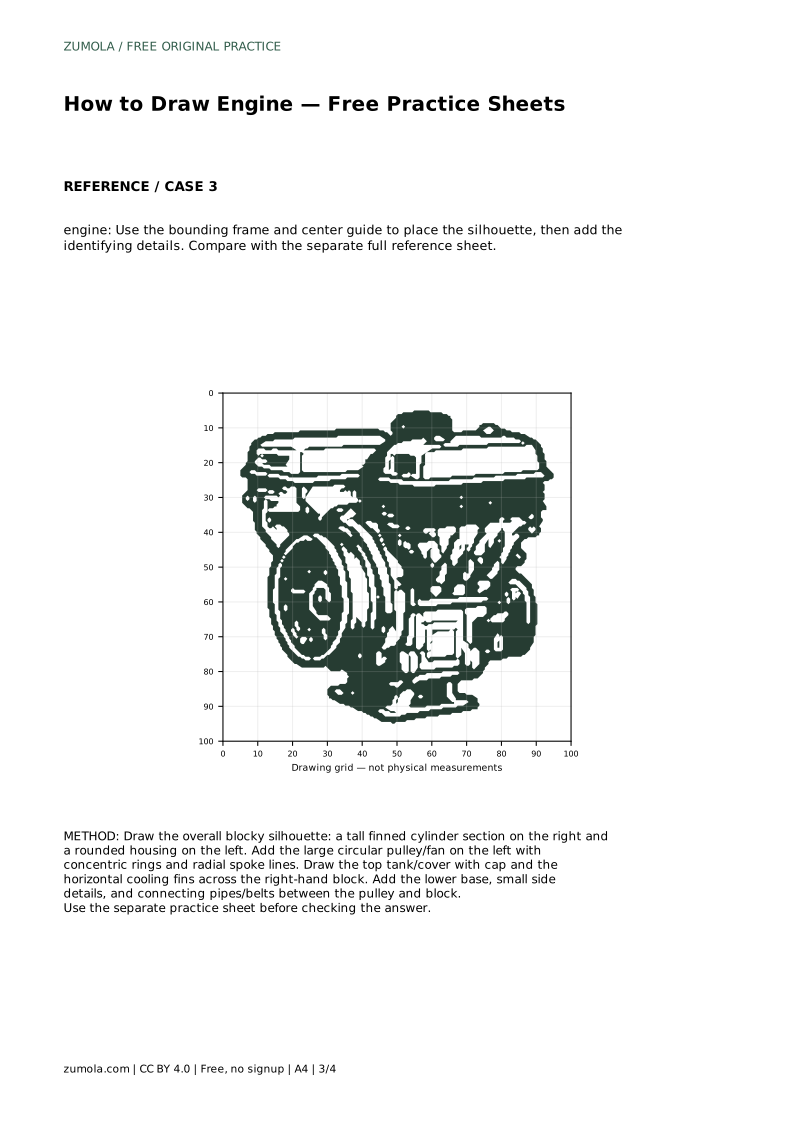
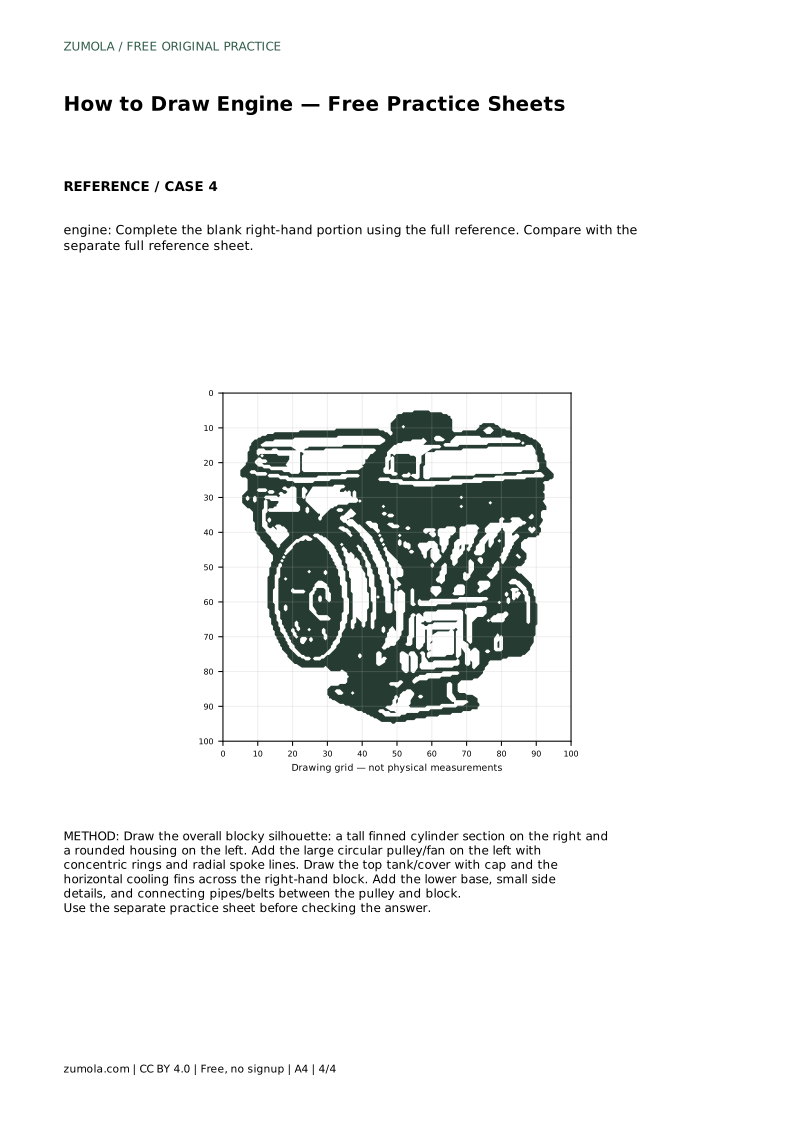
Reference diagrams
LETTER · Download PDF
A4 · Download PDF
Free original resources
Learn to draw a simple engine by building its silhouette, pulley, cooling fins, tank, and base. Free printable practice sheets support tracing, grids, and independent drawing.
Four original cases, with reference diagrams, practice sheets and worked answers. Everything is free; no signup required.
LETTER · Download PDF
A4 · Download PDF
LETTER · Download PDF
A4 · Download PDF
LETTER · Download PDF
A4 · Download PDF
Use A4 or US Letter to match your printer. Use the stated values and conditions to solve each exercise; diagrams are not physical measuring rulers.
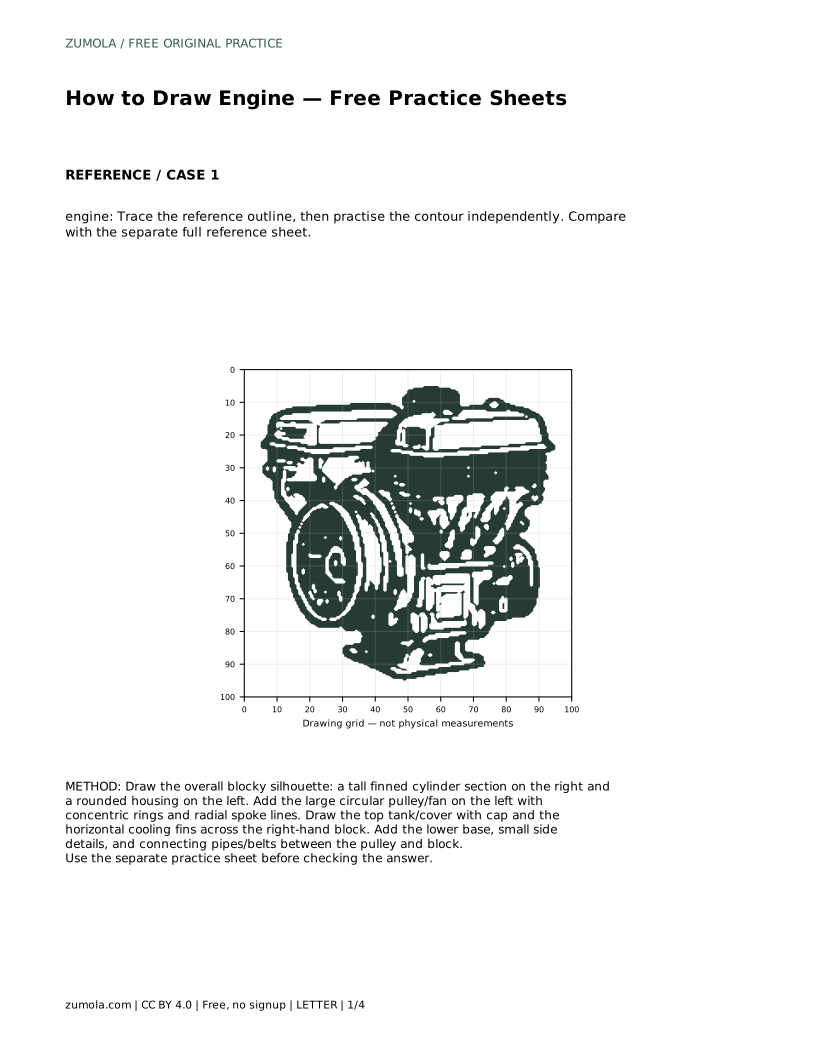
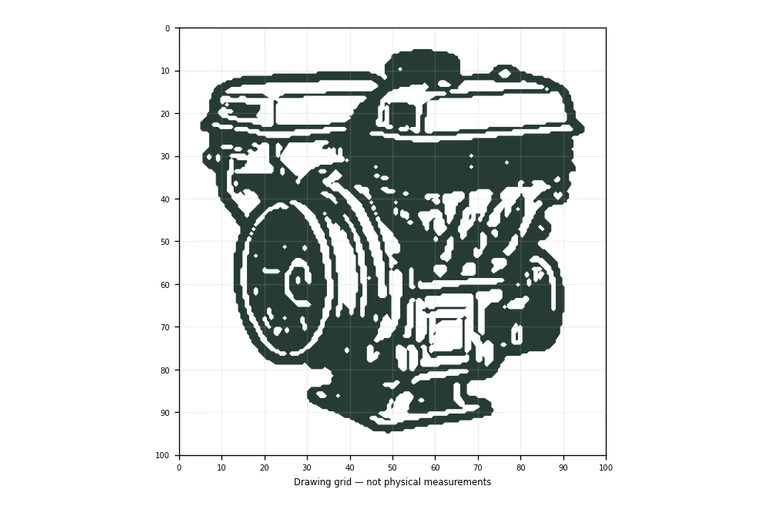
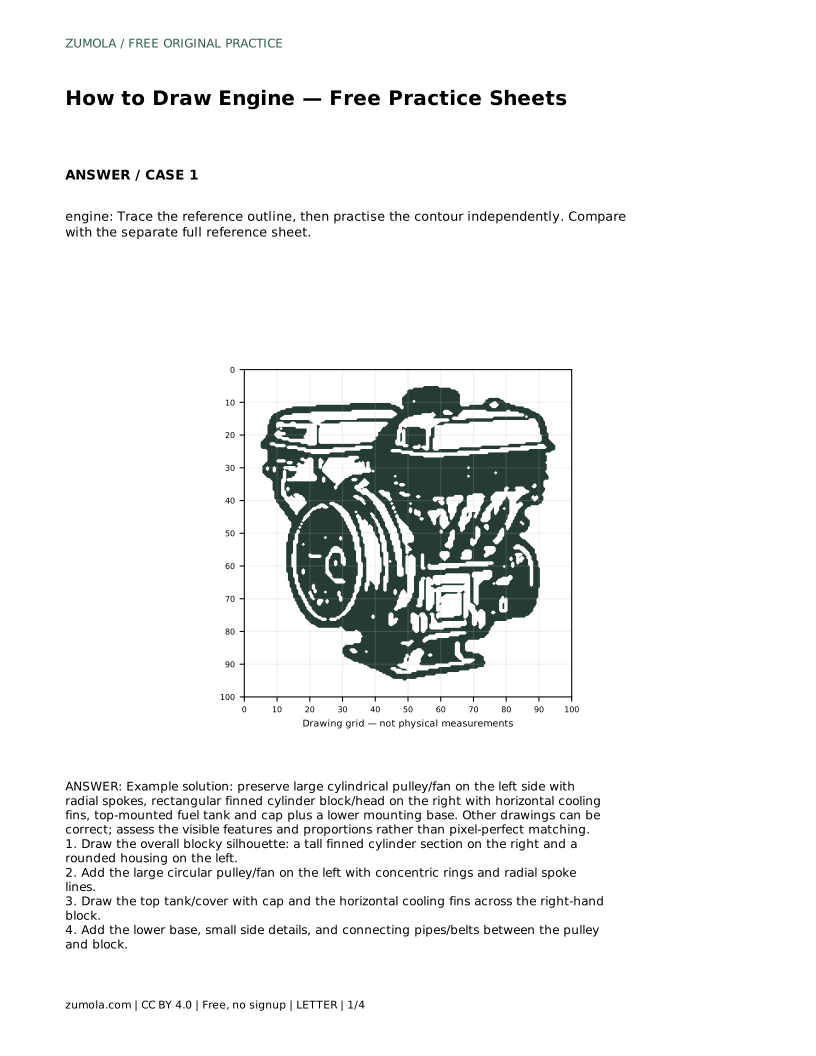
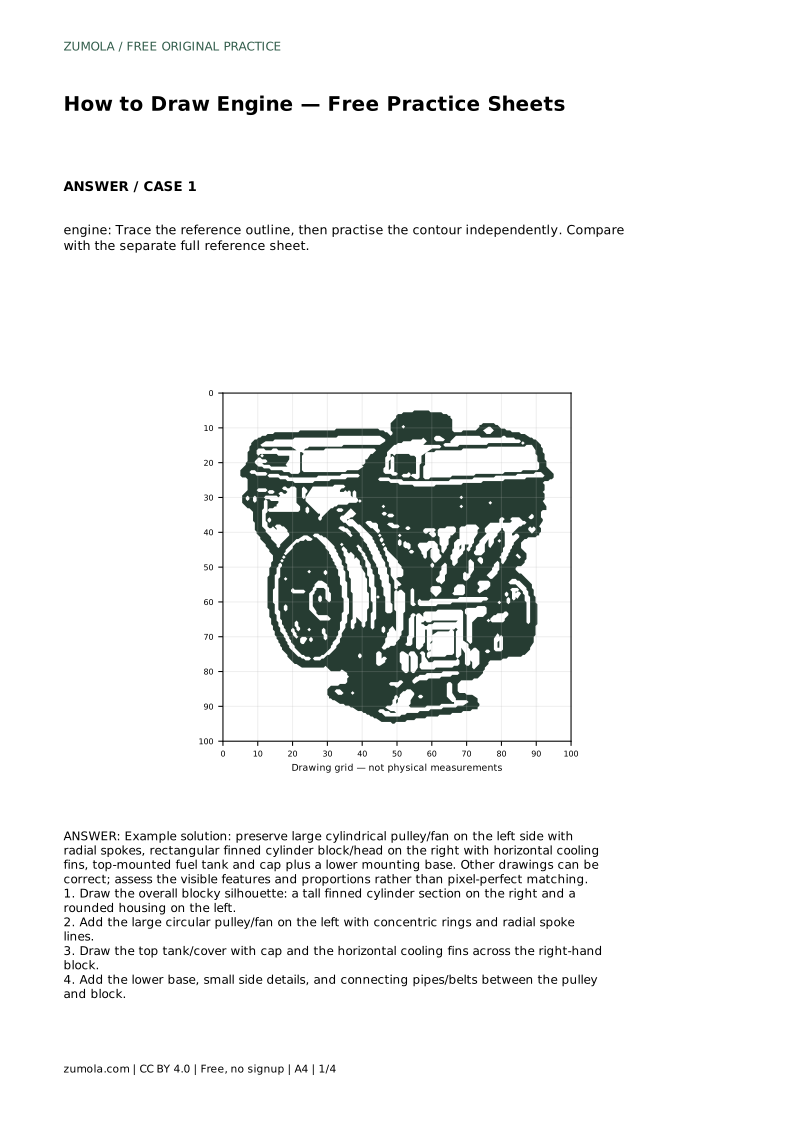
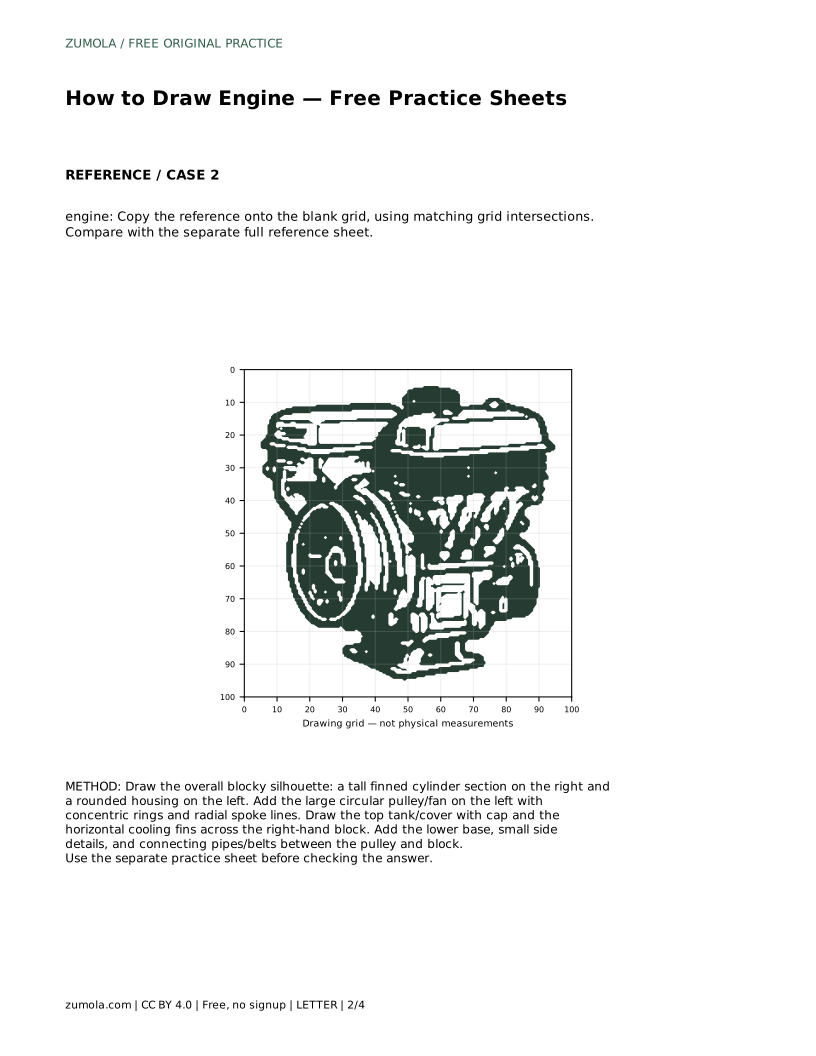
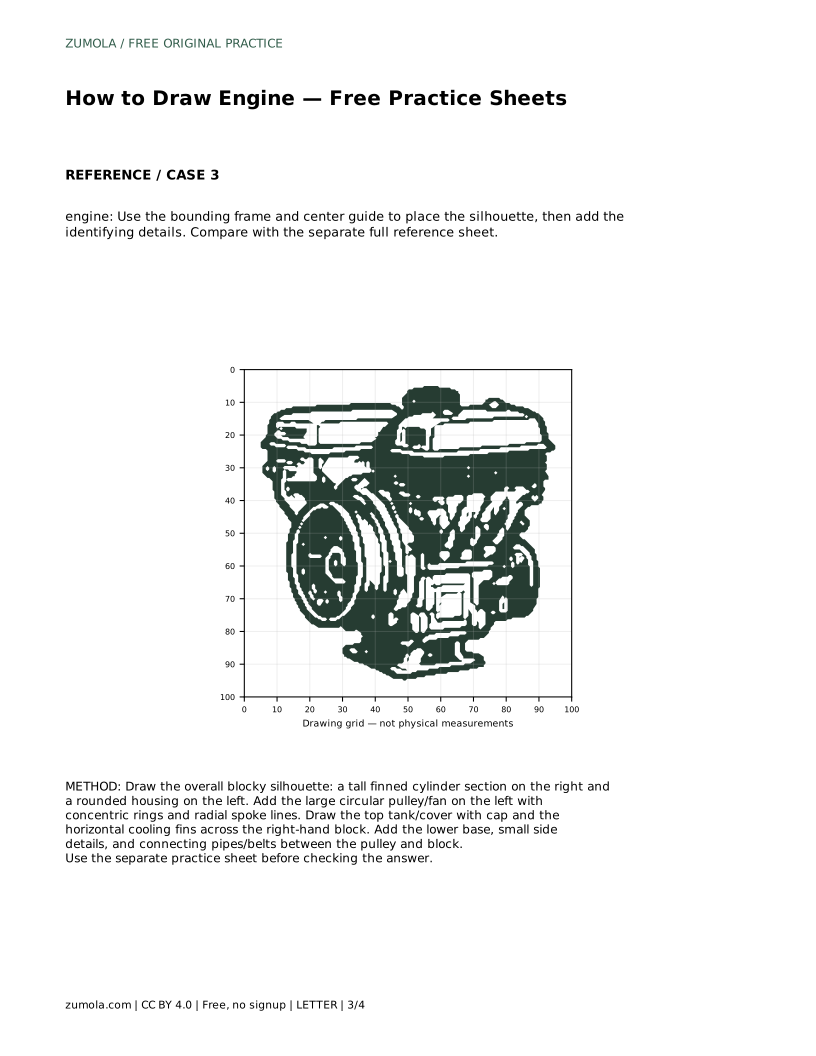
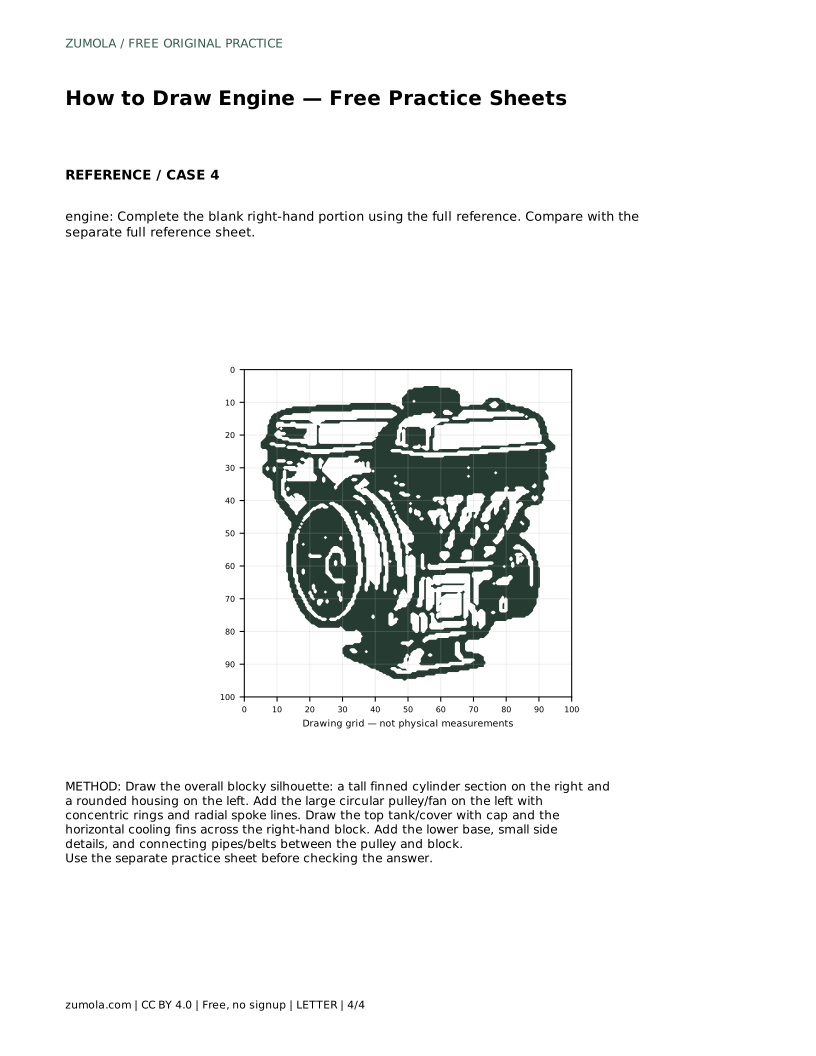
Drawing an engine is easier when you treat it as a set of connected shapes rather than a tangle of mechanical parts. This page shows how to build a recognizable engine from a blocky silhouette, then add the features that make it read clearly: a large circular pulley or fan on one side, a finned cylinder block on the other, a top tank with a cap, and a lower mounting base. The practice sheets let you trace first, then work independently and compare your result with the full reference.
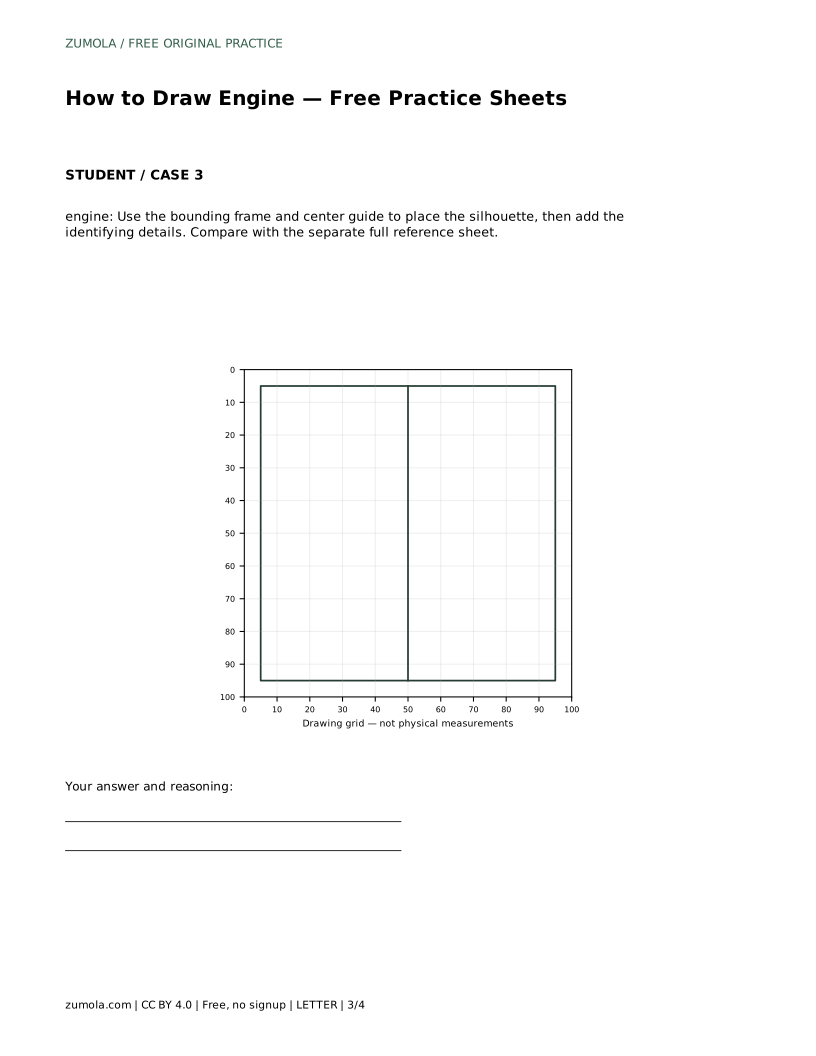
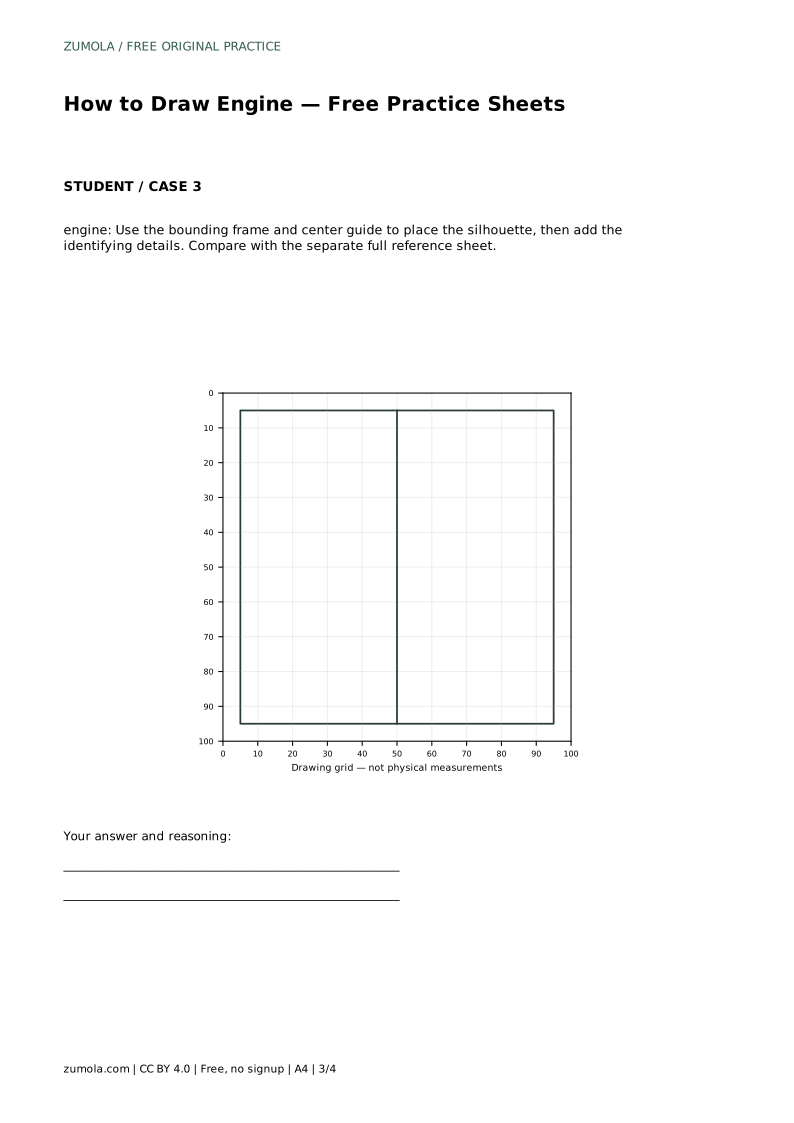
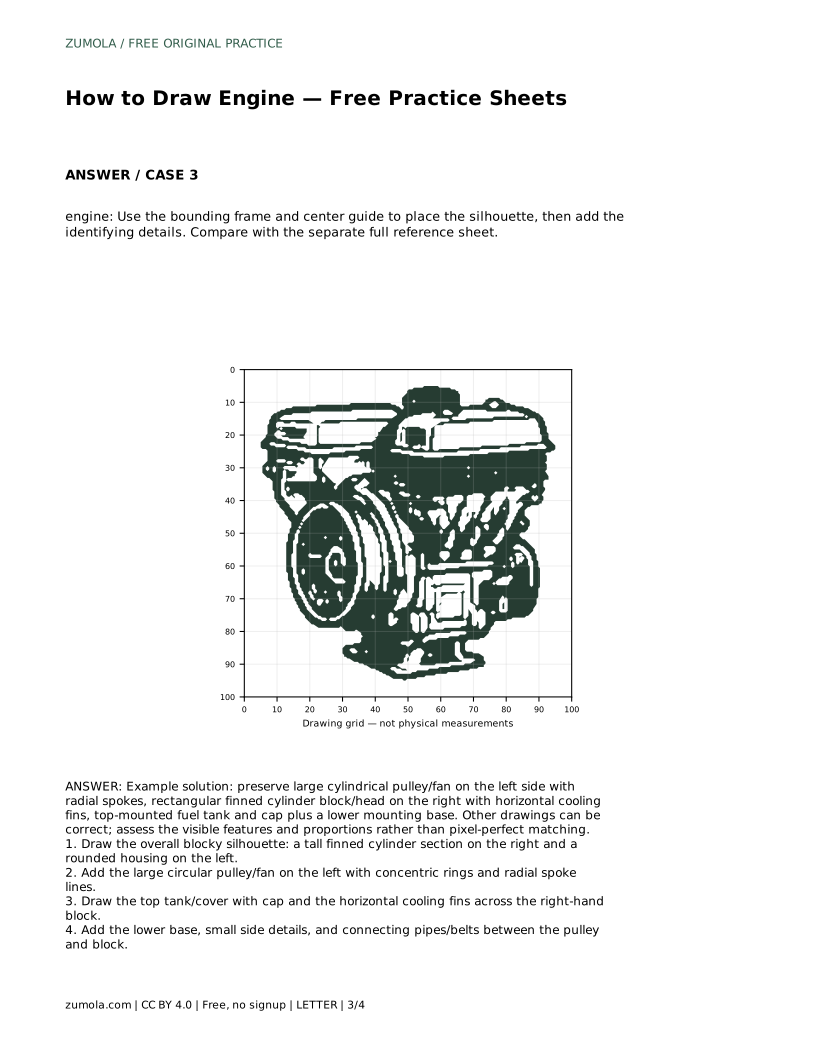
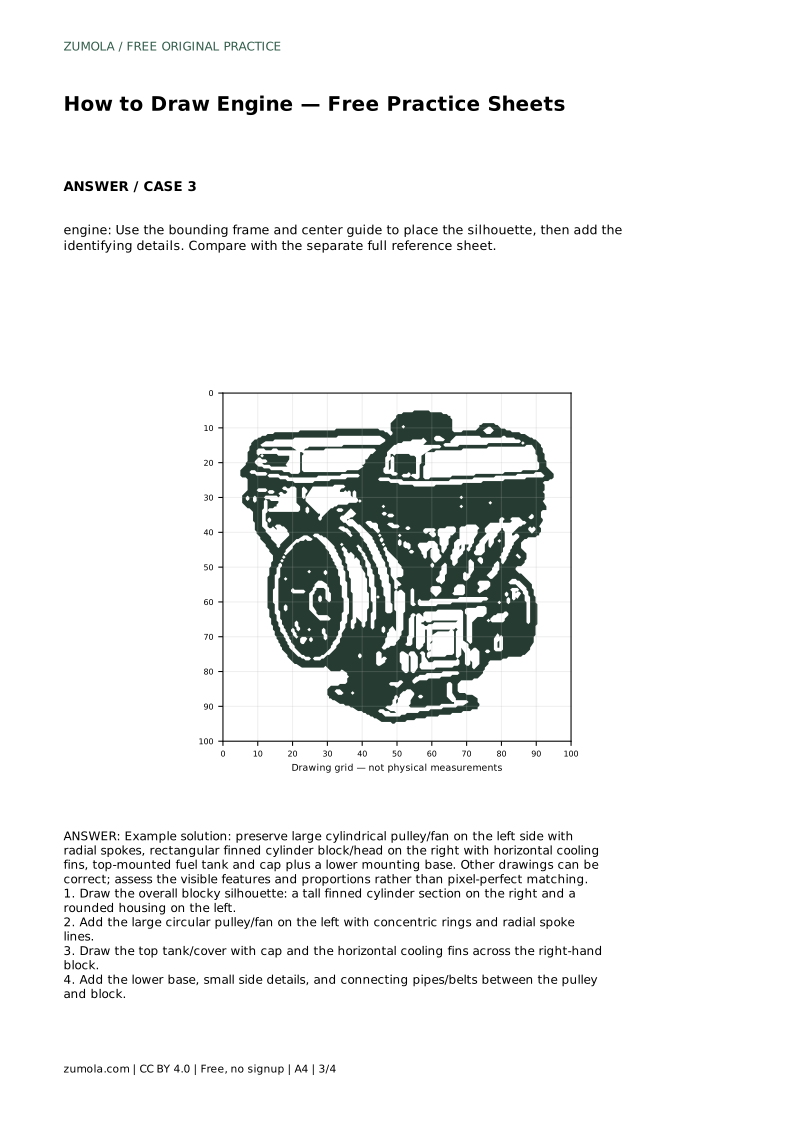
Before drawing any small detail, decide where the main masses sit. In the reference used here, the engine is wider than it is tall, with a tall finned cylinder section on the right and a rounded housing on the left. Lightly sketch a bounding shape that contains both masses, then divide it so the right-hand block is clearly rectangular and the left-hand housing is rounded. Keep the proportions consistent: if the pulley is roughly one-third of the total width, hold that relationship as you draw. A faint center guide helps you place the silhouette symmetrically and keeps the top tank from drifting off-axis.
The large circular pulley or fan is the strongest identifying feature on the left. Draw it as a circle with concentric rings inside, then add radial spoke lines that meet near the center. On the right, the cylinder block reads as an engine mainly through its horizontal cooling fins: draw evenly spaced parallel lines across the rectangular block, keeping them level with each other. Place the top-mounted tank above the block with a small cap, and finish with a lower mounting base that grounds the drawing. Connecting pipes or belts between the pulley and block tie the two halves together.
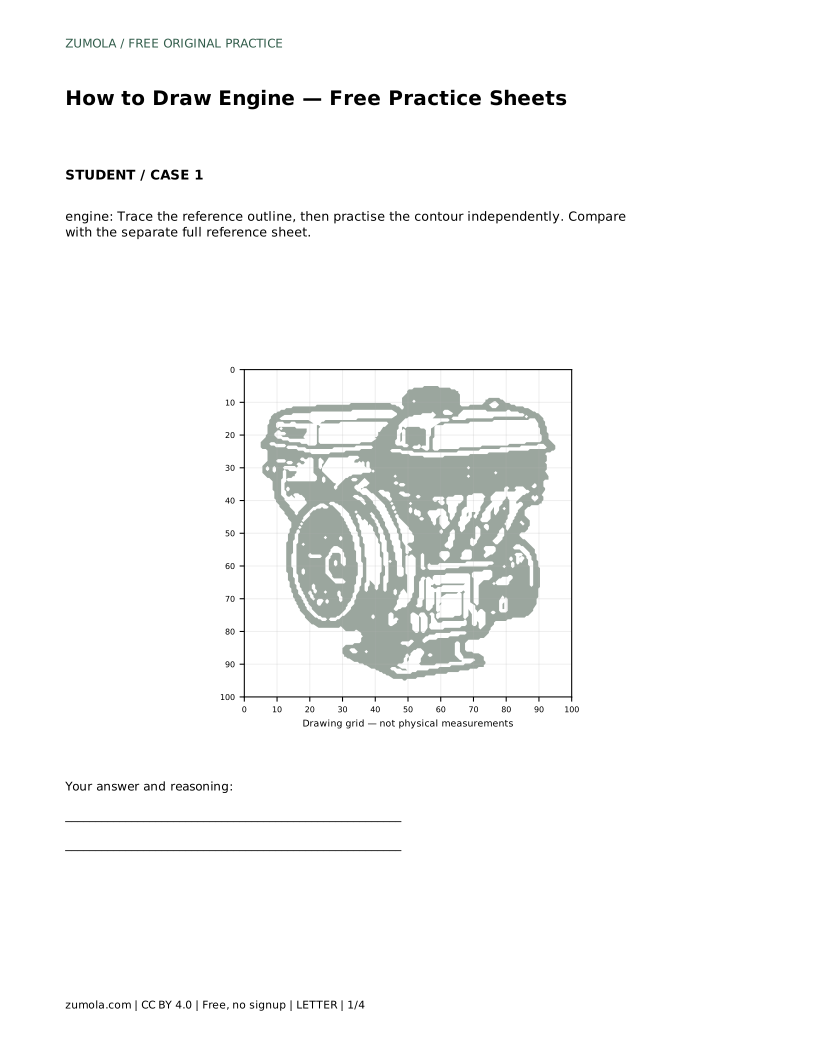
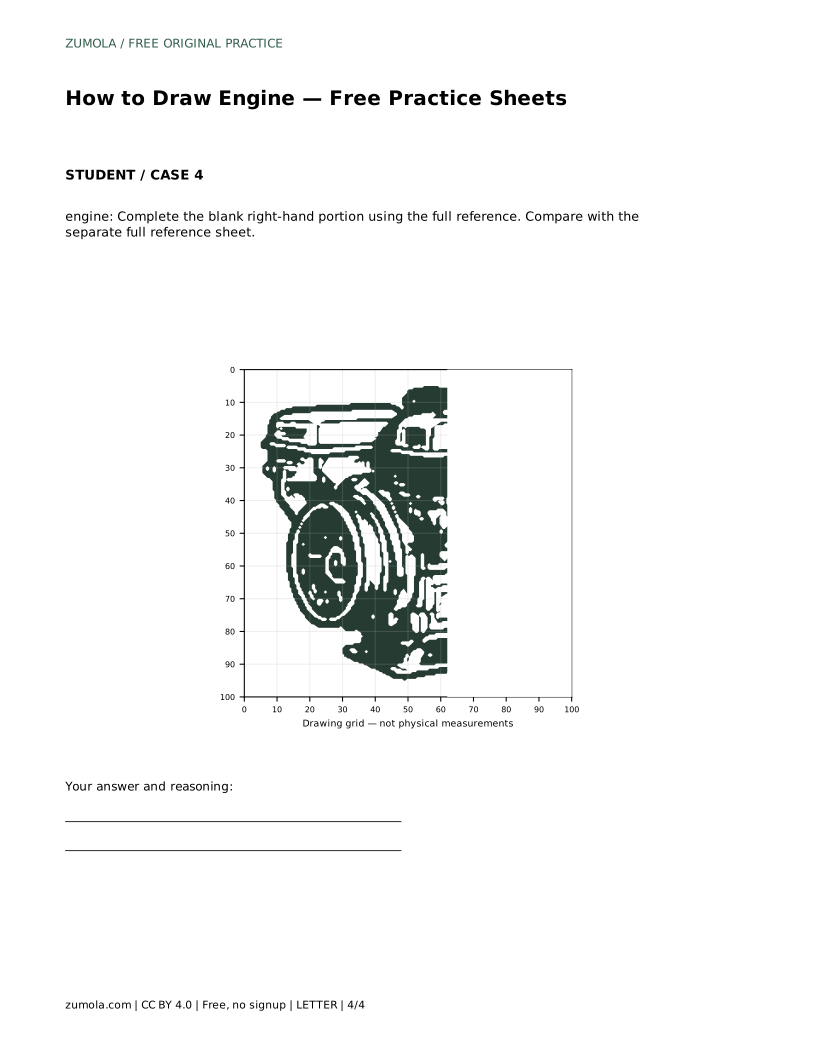
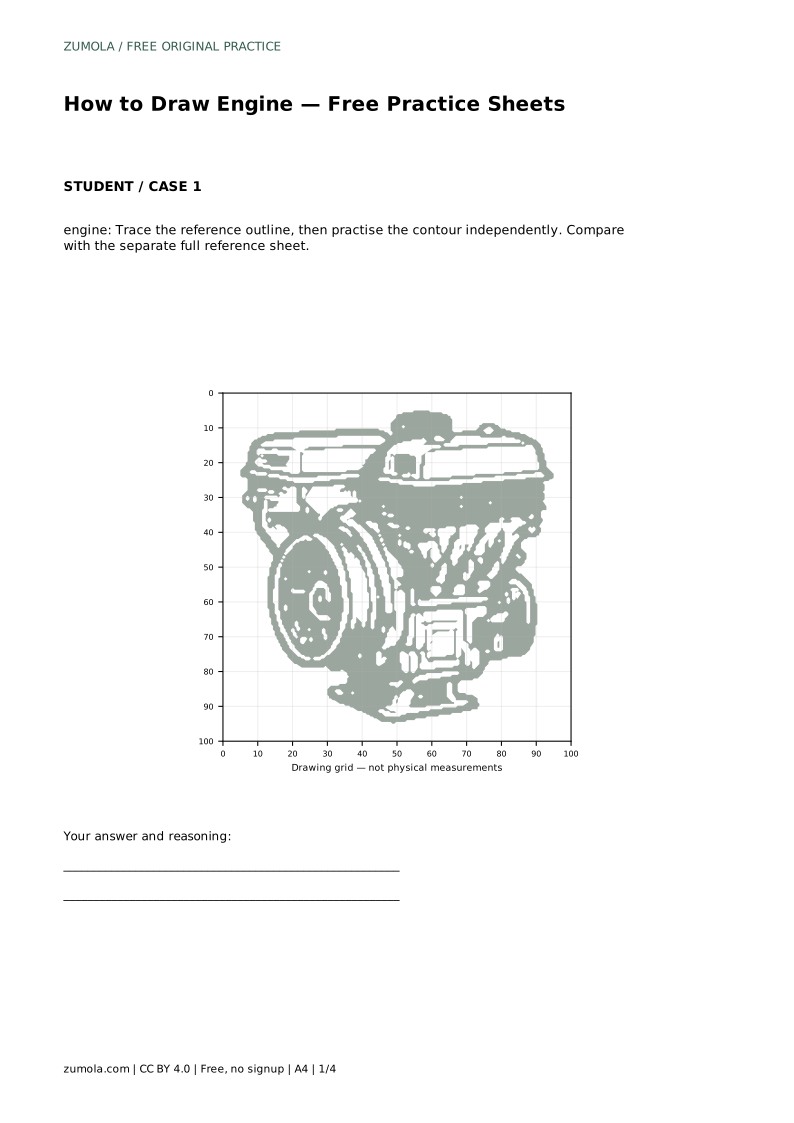
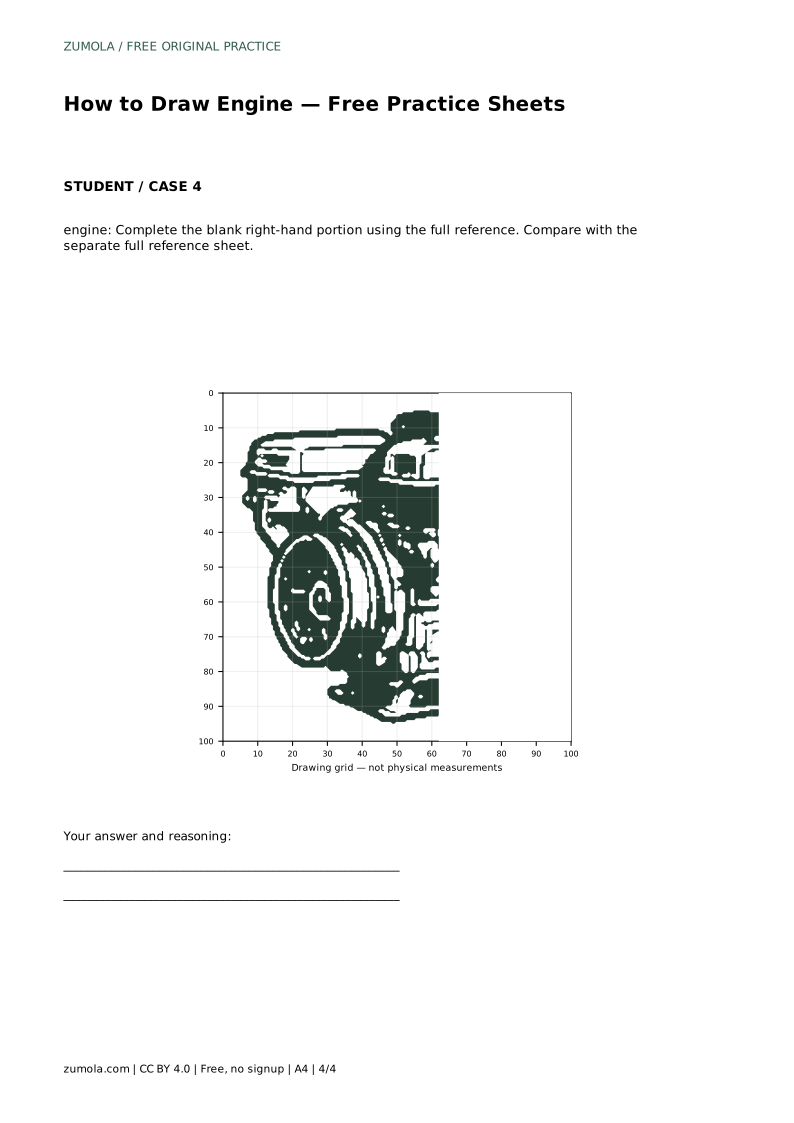
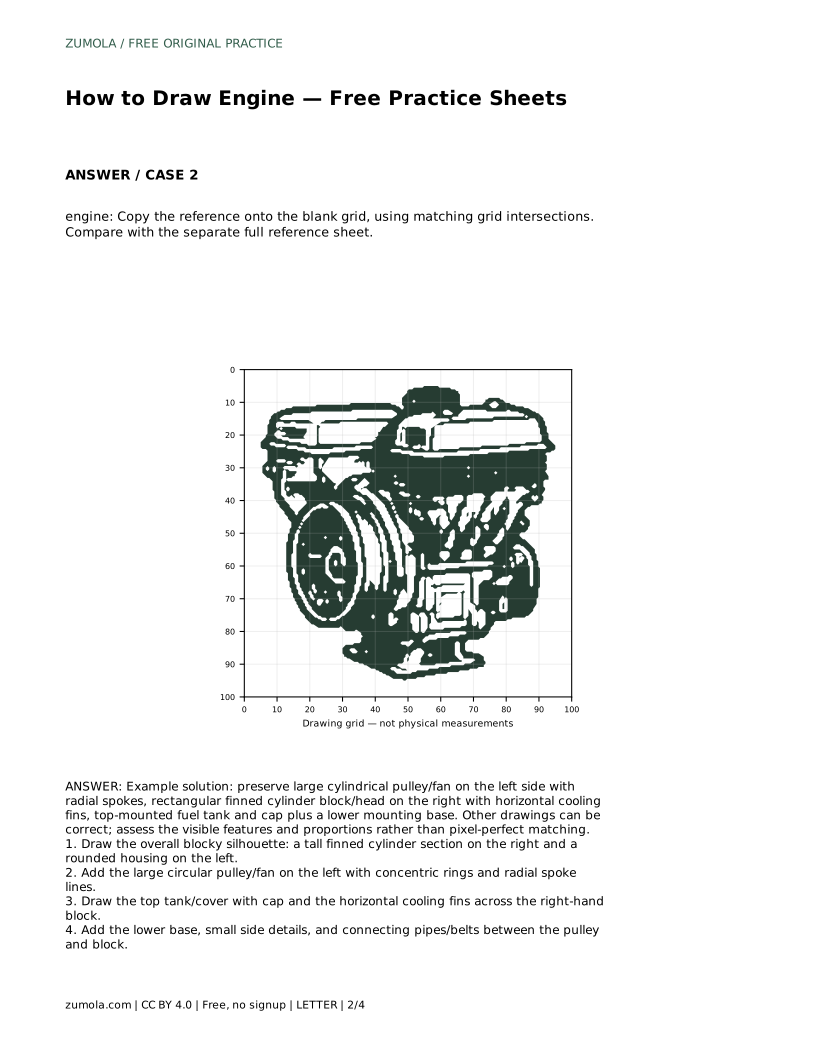
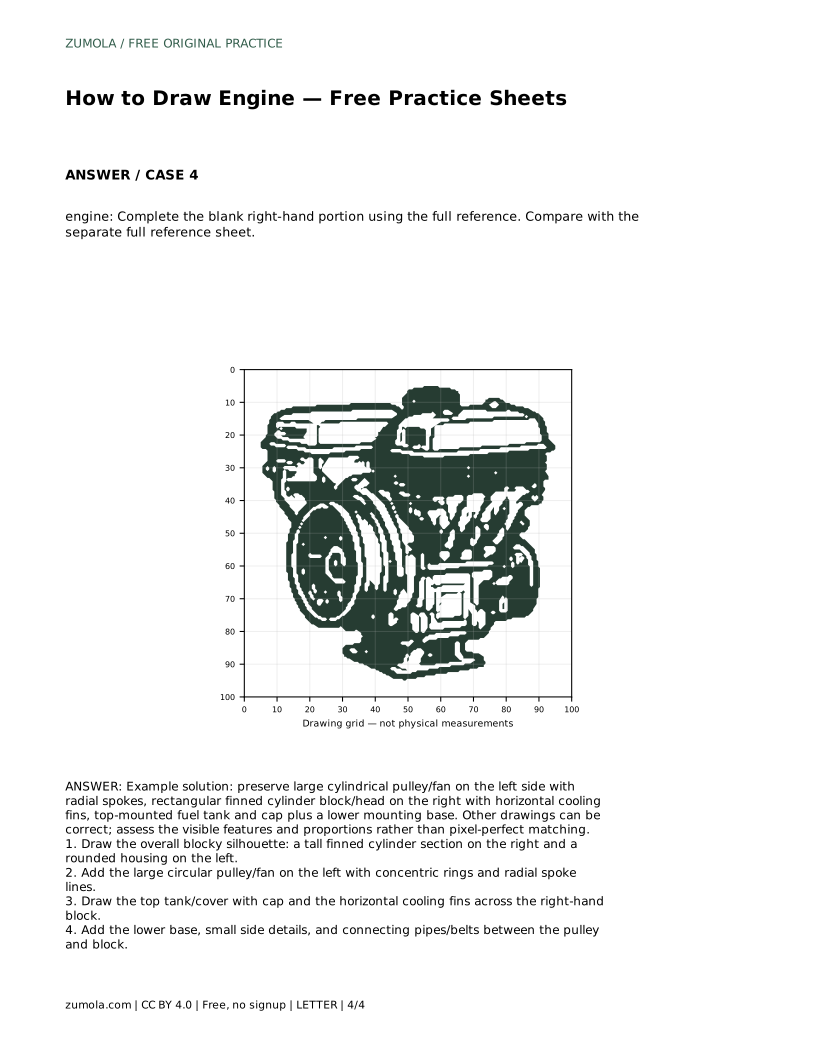
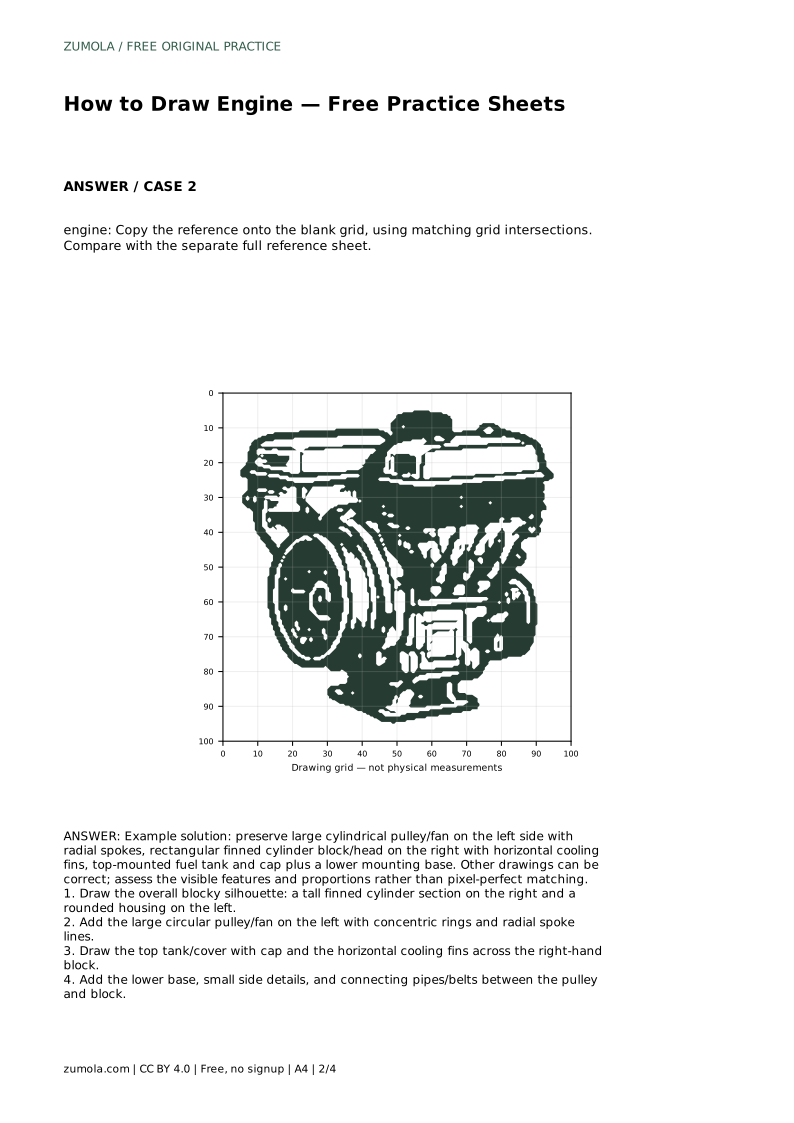
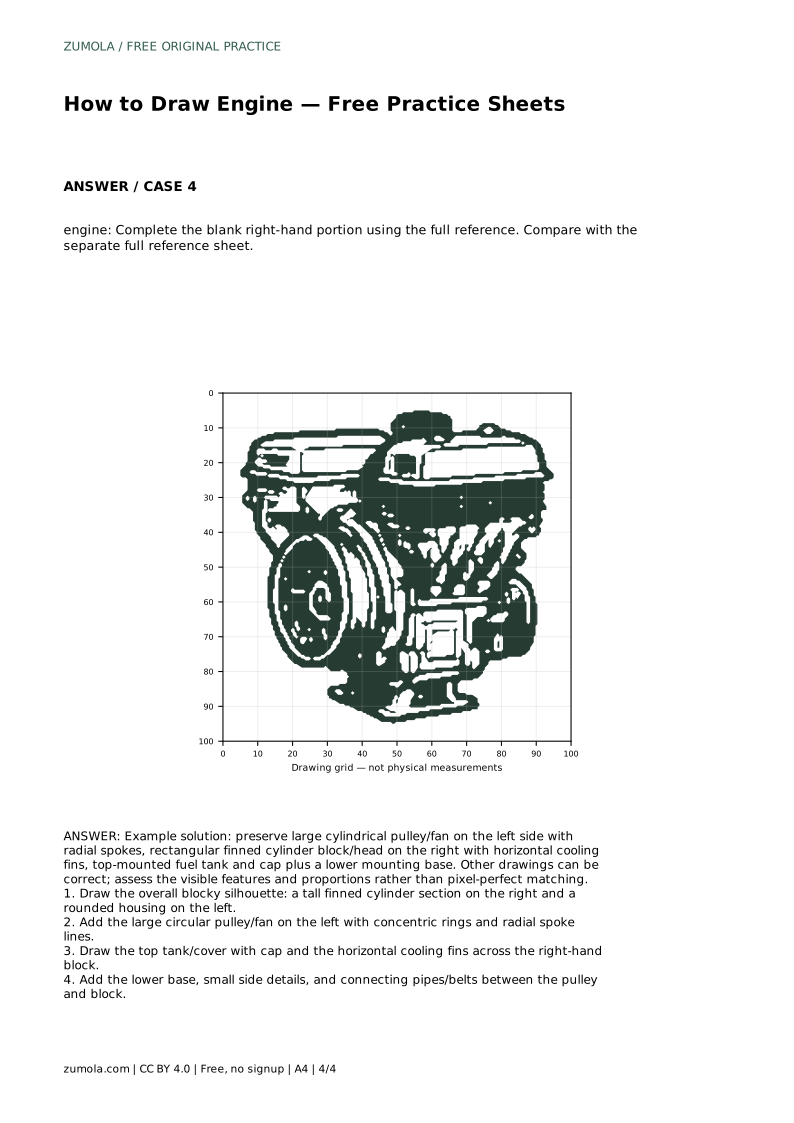
Use the tracing sheet first to learn where each feature belongs. Trace the reference outline, then practise the contour independently on blank paper. Compare your drawing with the separate full reference sheet rather than judging it from memory. The grid sheet helps you place features at matching intersections, and the bounding-frame sheet helps you position the silhouette before adding details. The partial sheet asks you to complete the blank right-hand portion using the full reference, which tests whether you can carry proportions across the page.
Engine drawings have many valid outcomes, so assess visible features and proportions rather than pixel-perfect matching. A correct drawing keeps the large pulley on the left with radial spokes, the finned block on the right with horizontal fins, the top tank and cap, and the lower base. Small side details and pipe routes can vary. Use the rubric below to check your work and decide what to practise next.
engine: Trace the reference outline, then practise the contour independently. Compare with the separate full reference sheet.
Example solution: preserve large cylindrical pulley/fan on the left side with radial spokes, rectangular finned cylinder block/head on the right with horizontal cooling fins, top-mounted fuel tank and cap plus a lower mounting base. Other drawings can be correct; assess the visible features and proportions rather than pixel-perfect matching. Draw the overall blocky silhouette: a tall finned cylinder section on the right and a rounded housing on the left. Add the large circular pulley/fan on the left with concentric rings and radial spoke lines. Draw the top tank/cover with cap and the horizontal cooling fins across the right-hand block. Add the lower base, small side details, and connecting pipes/belts between the pulley and block.
No. Other drawings can be correct. Assess the visible features and proportions rather than pixel-perfect matching.
Start with the overall blocky silhouette, then add the pulley, cooling fins, tank, and base in that order.
Compare your drawing with the separate full reference sheet and check the width of the pulley against the width of the finned block.
All drawing practice · Free coordinate paper
Original resources · CC BY 4.0 · Free for personal and classroom use with attribution.