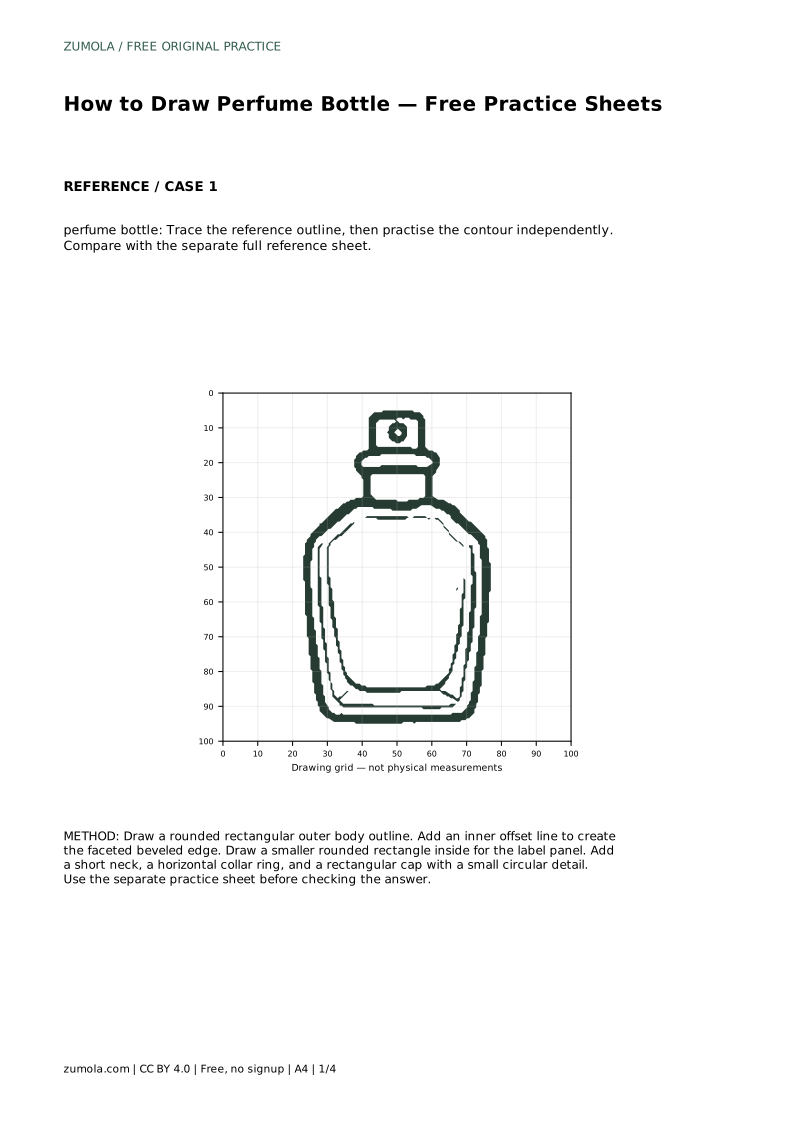
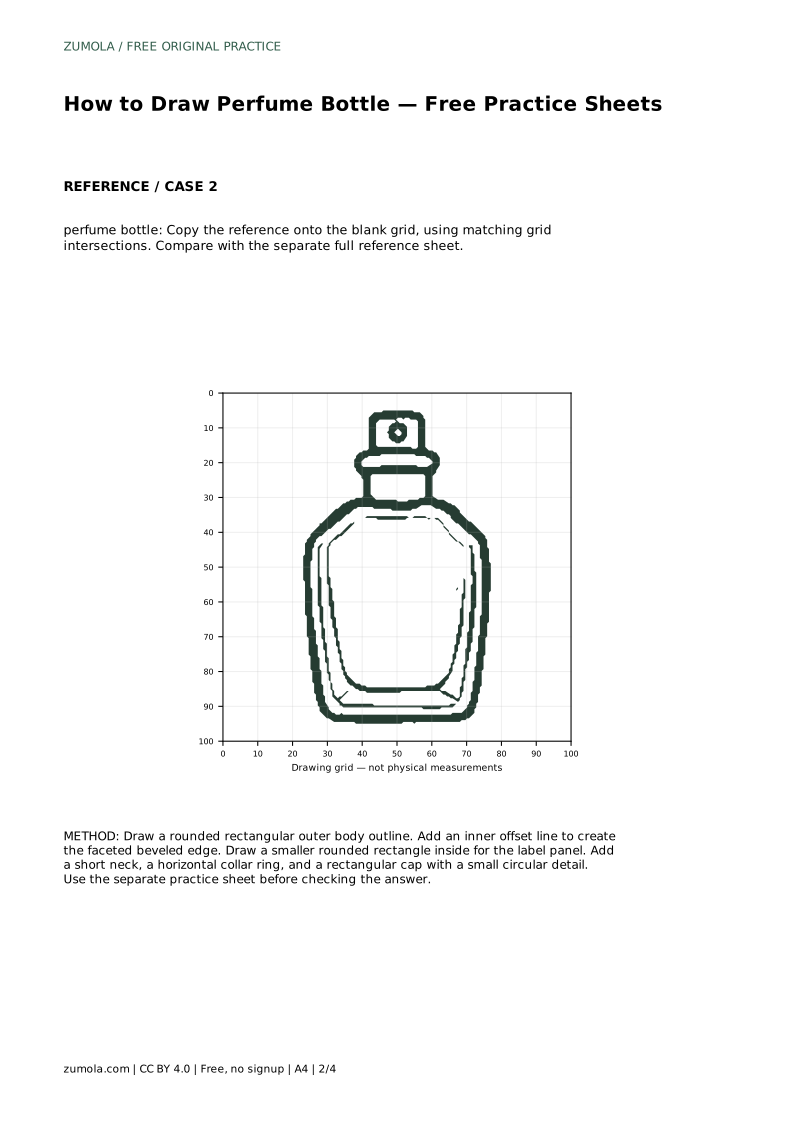
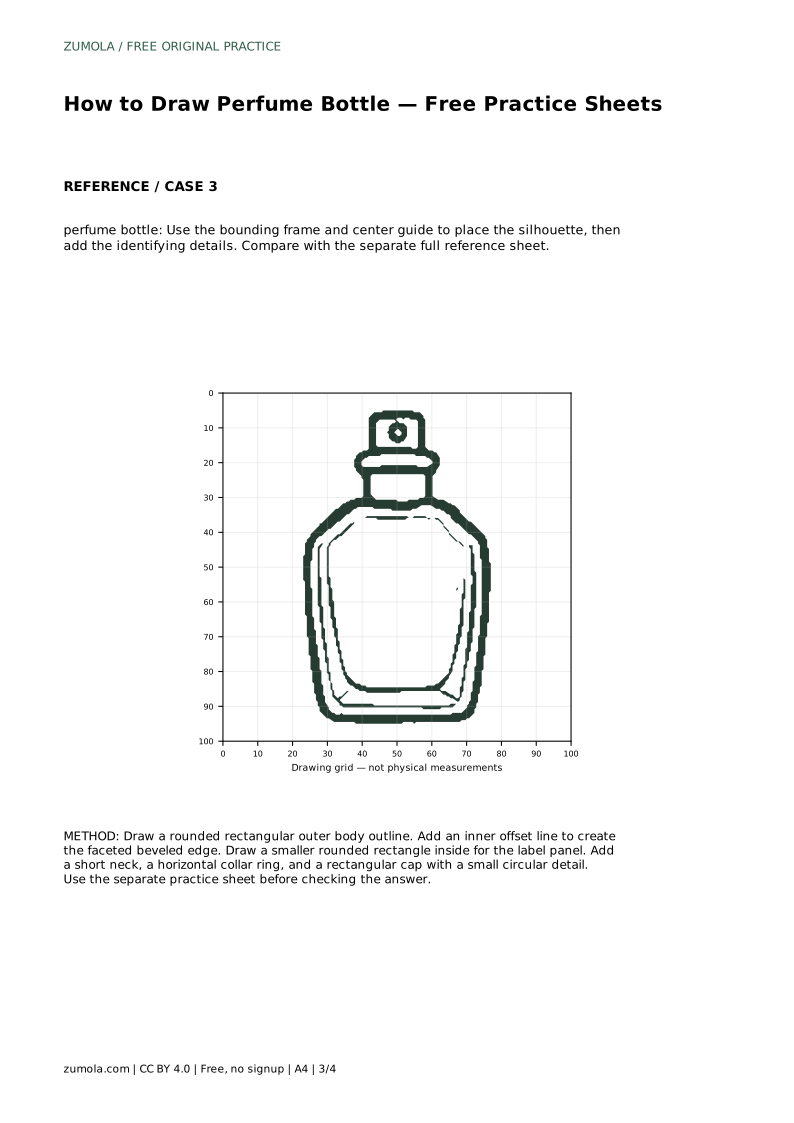
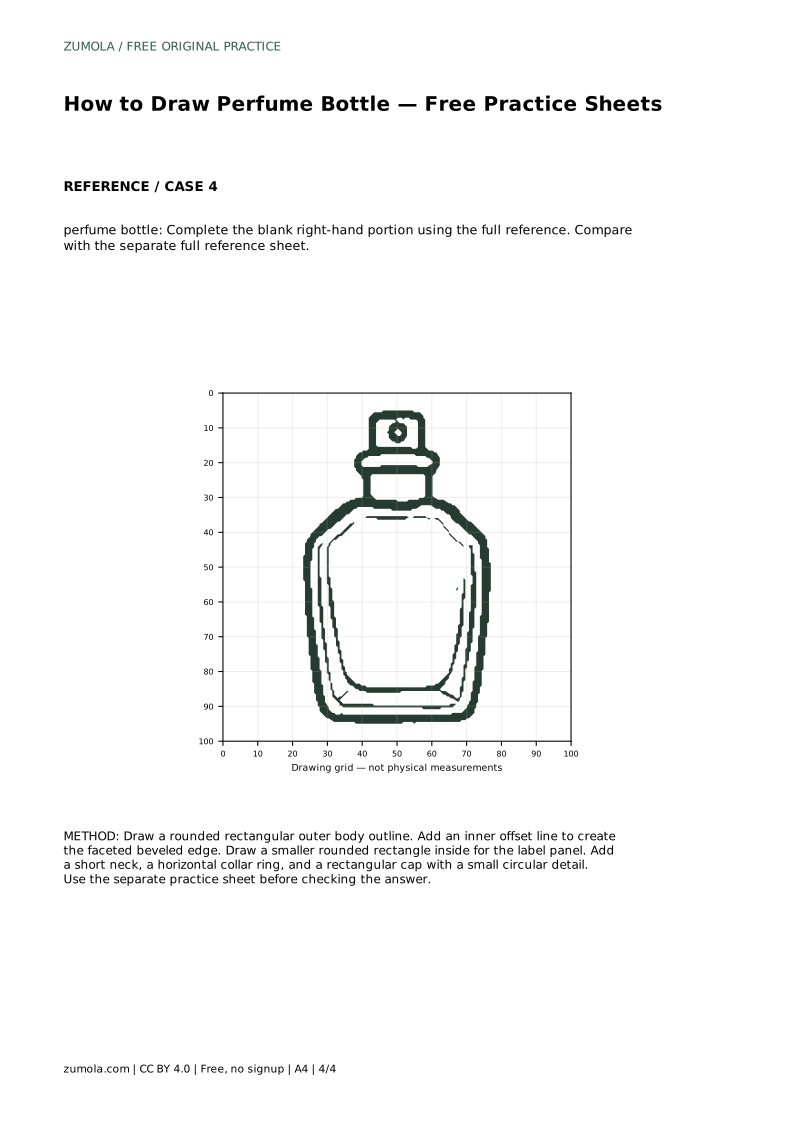
Reference diagrams
LETTER · Download PDF
A4 · Download PDF
Free original resources
Learn to draw a perfume bottle with a narrow neck, rectangular cap, faceted glass body, and label panel. Use trace, grid, and frame practice sheets.
Four original cases, with reference diagrams, practice sheets and worked answers. Everything is free; no signup required.
LETTER · Download PDF
A4 · Download PDF
LETTER · Download PDF
A4 · Download PDF
LETTER · Download PDF
A4 · Download PDF
Use A4 or US Letter to match your printer. Use the stated values and conditions to solve each exercise; diagrams are not physical measuring rulers.
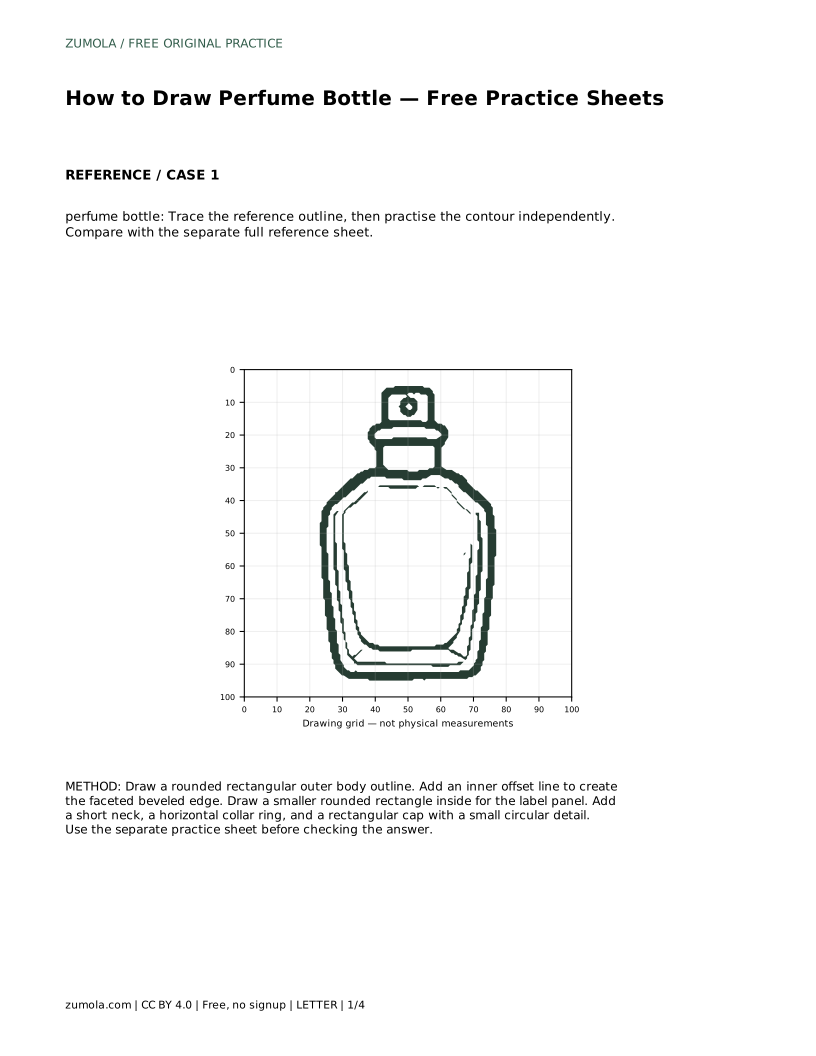
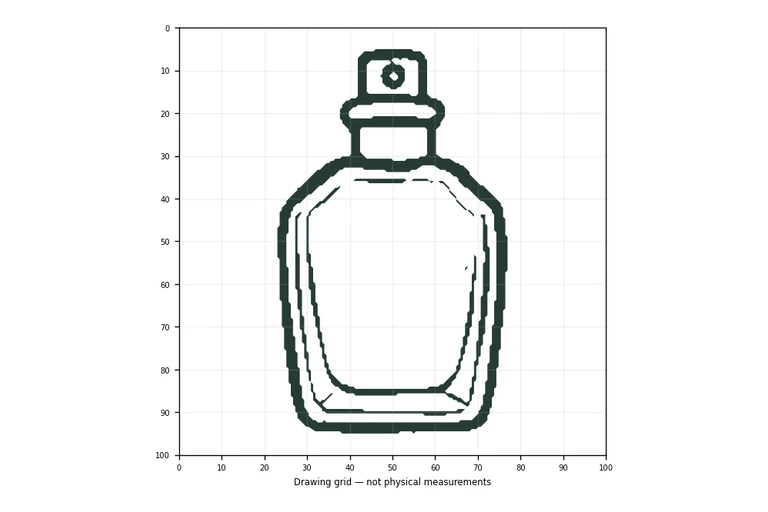
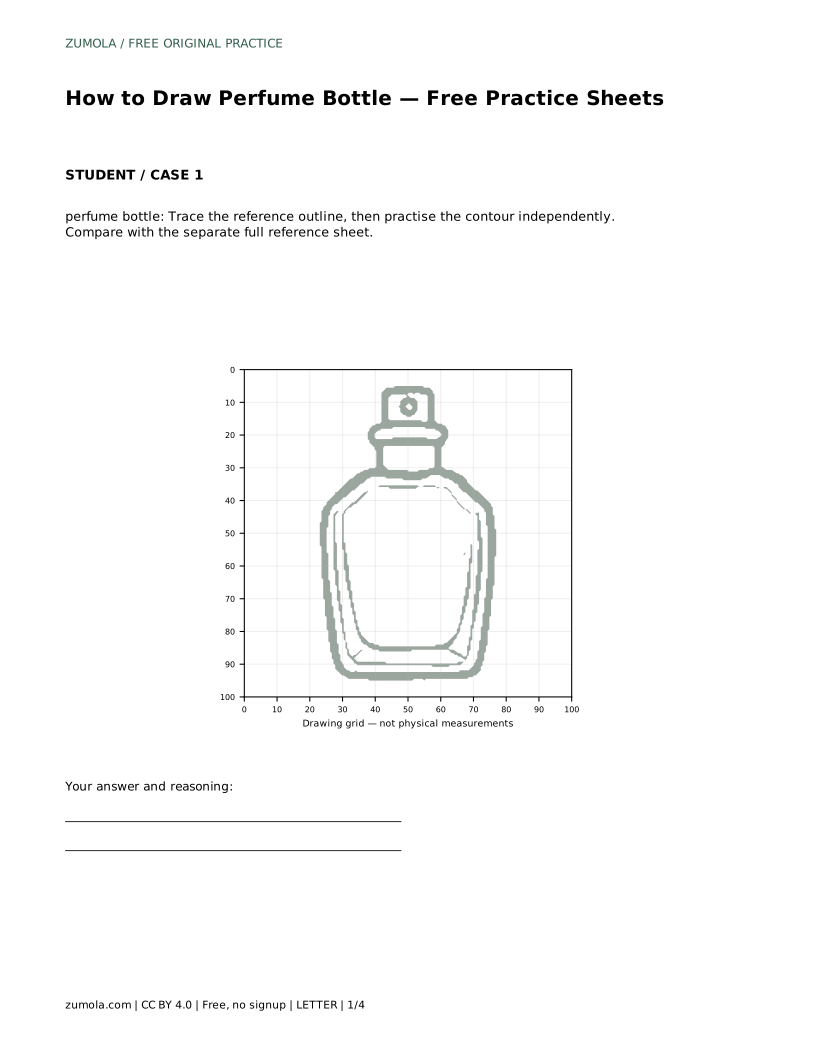
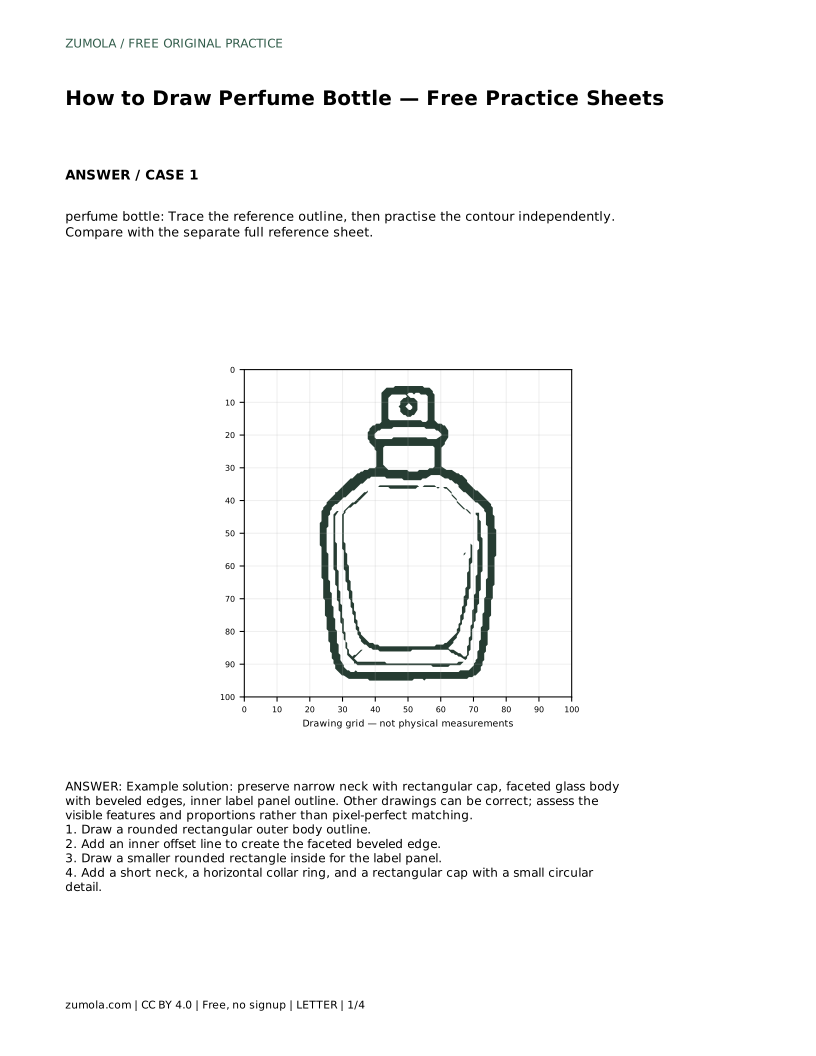
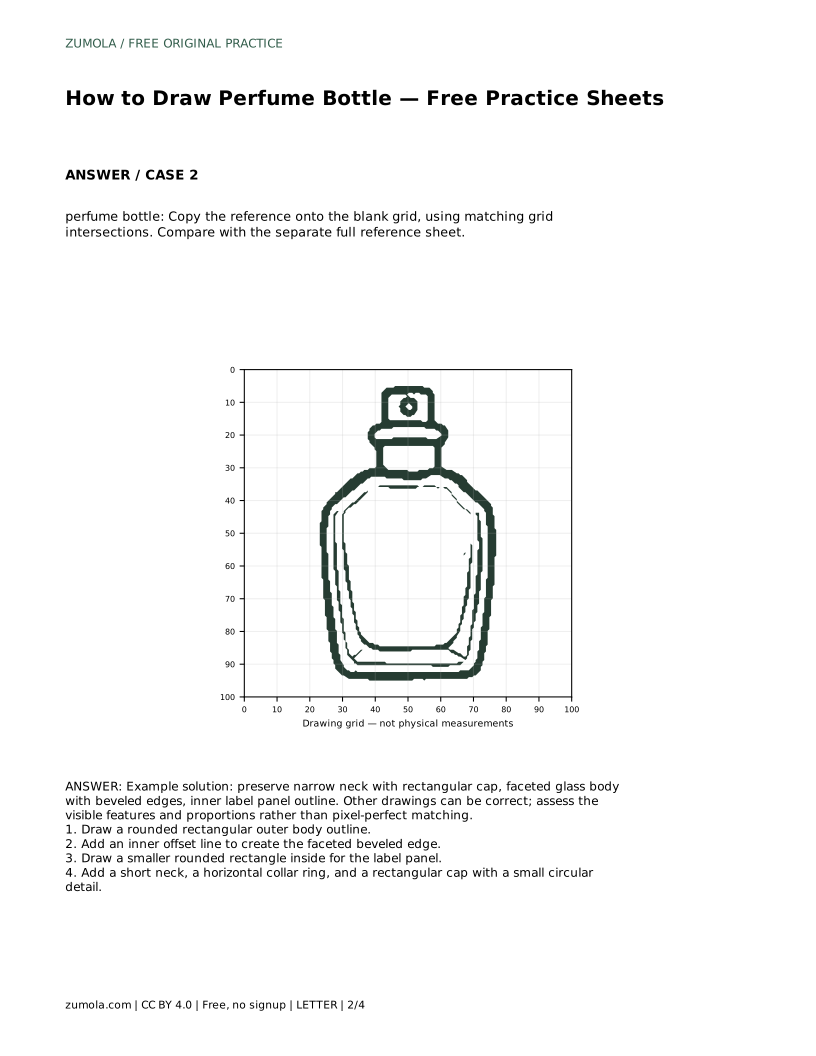
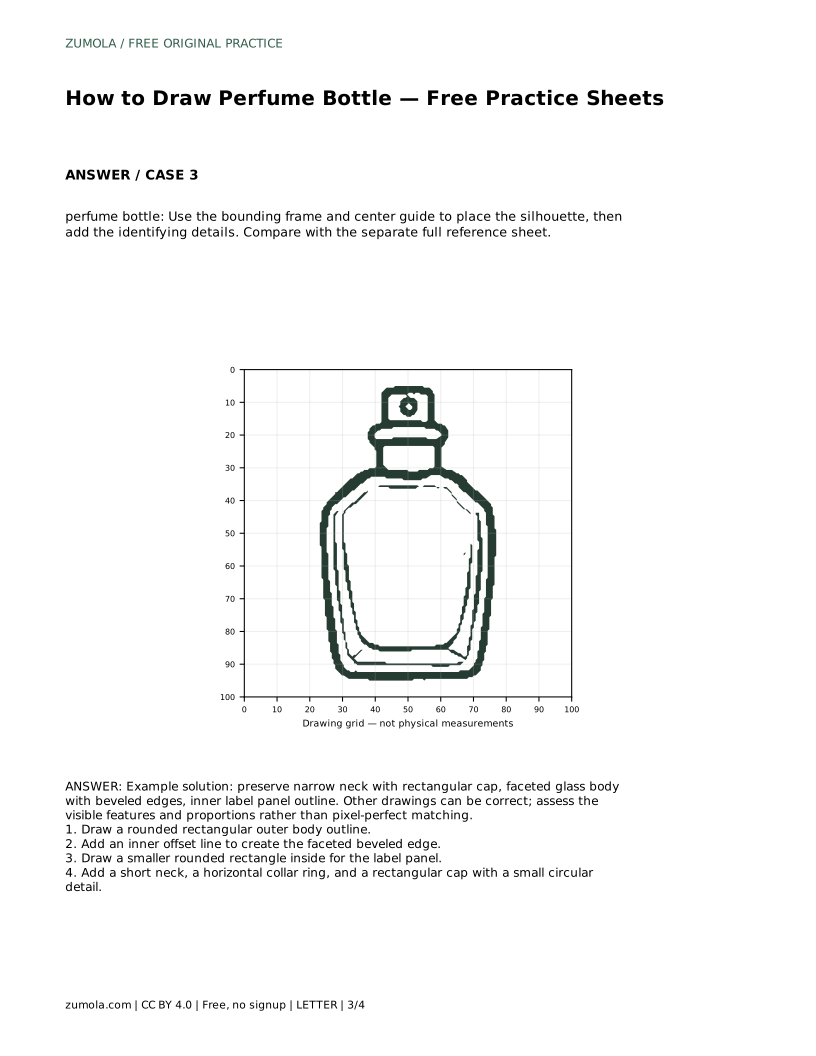
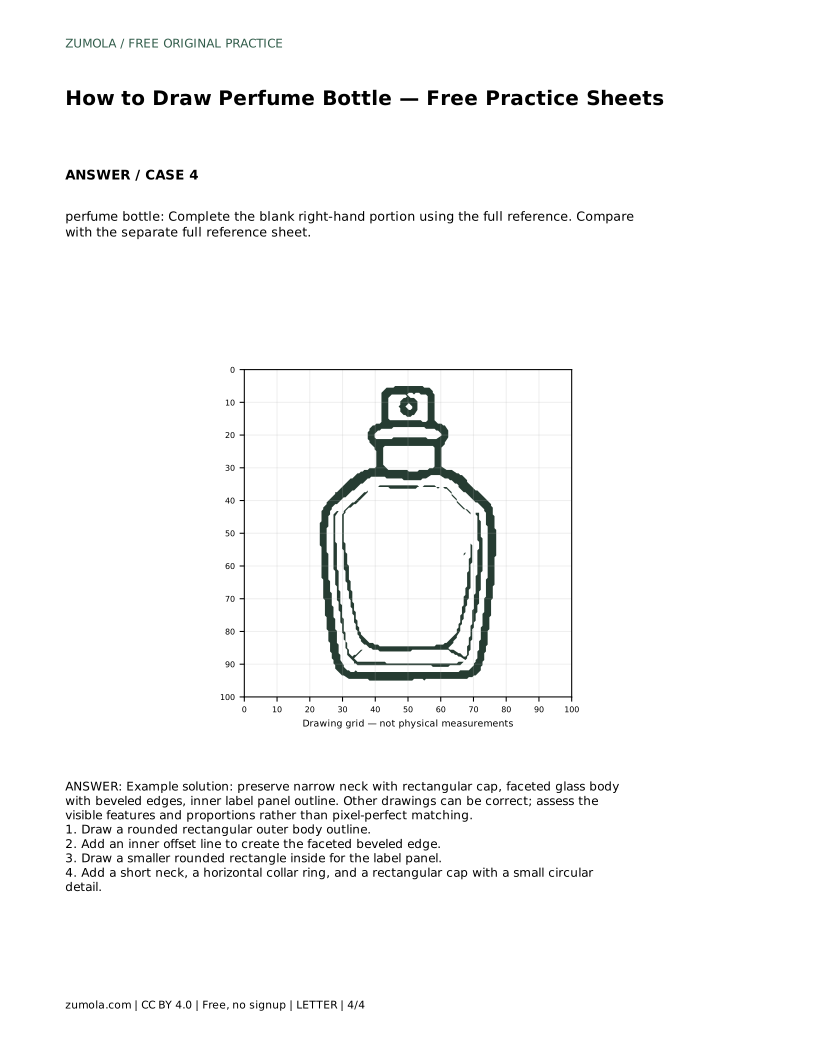
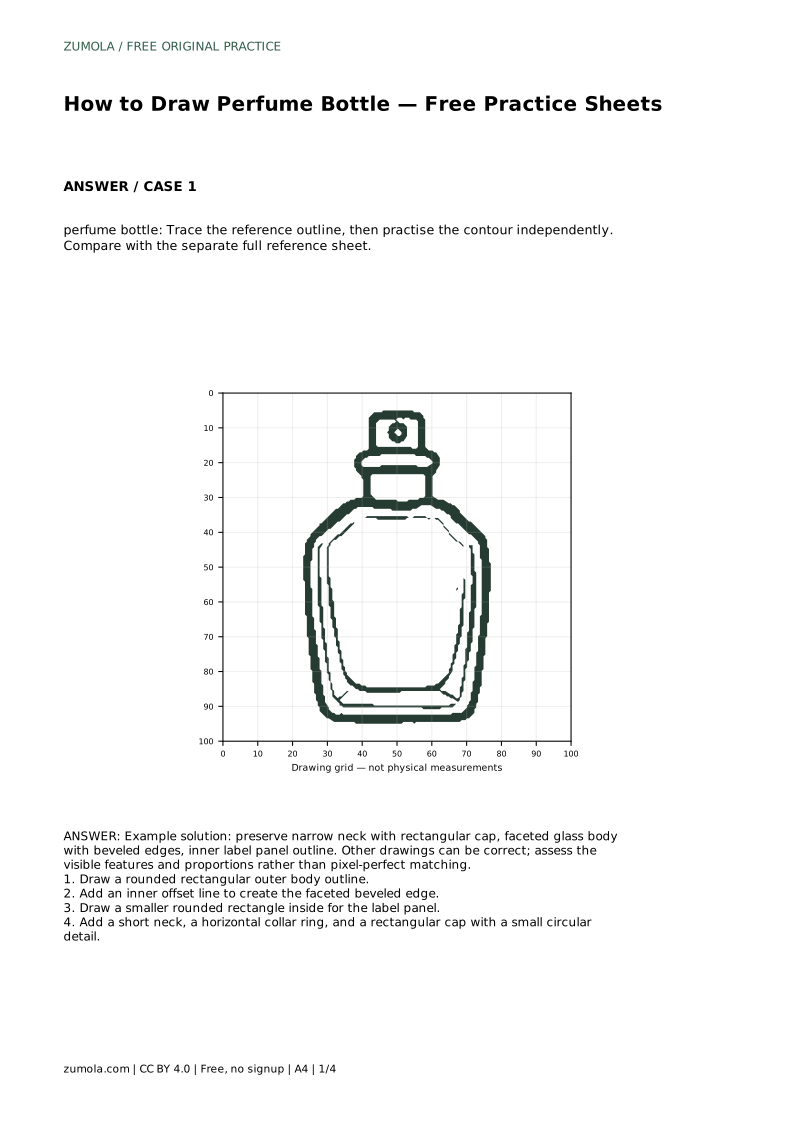
Drawing a perfume bottle is a study in proportion and layered shapes. The narrow neck, rectangular cap, faceted glass body, and inner label panel must relate clearly to one another. This page explains a reliable contour method you can practise on the free sheets. You will trace a reference outline, then draw the same features independently. The goal is not a pixel-perfect copy but a drawing that preserves the bottle's visible structure and proportions.
Start with the largest shape: a rounded rectangular outer body outline. Keep the sides nearly vertical and the corners gently curved. This outer contour sets the bottle's width and height. Next, add an inner offset line that follows the outer body at a consistent distance. This creates the faceted beveled edge, suggesting thickness in the glass. The offset should stay parallel to the outer line, not drift toward the center.
Inside the body, draw a smaller rounded rectangle for the label panel. Center it horizontally and leave a margin between the panel and the beveled edge. The label panel is an outline only; it does not need text or decoration. Above the body, add a short neck, a horizontal collar ring, and a rectangular cap. The cap should sit squarely on the collar ring, and a small circular detail can mark its top or front face.
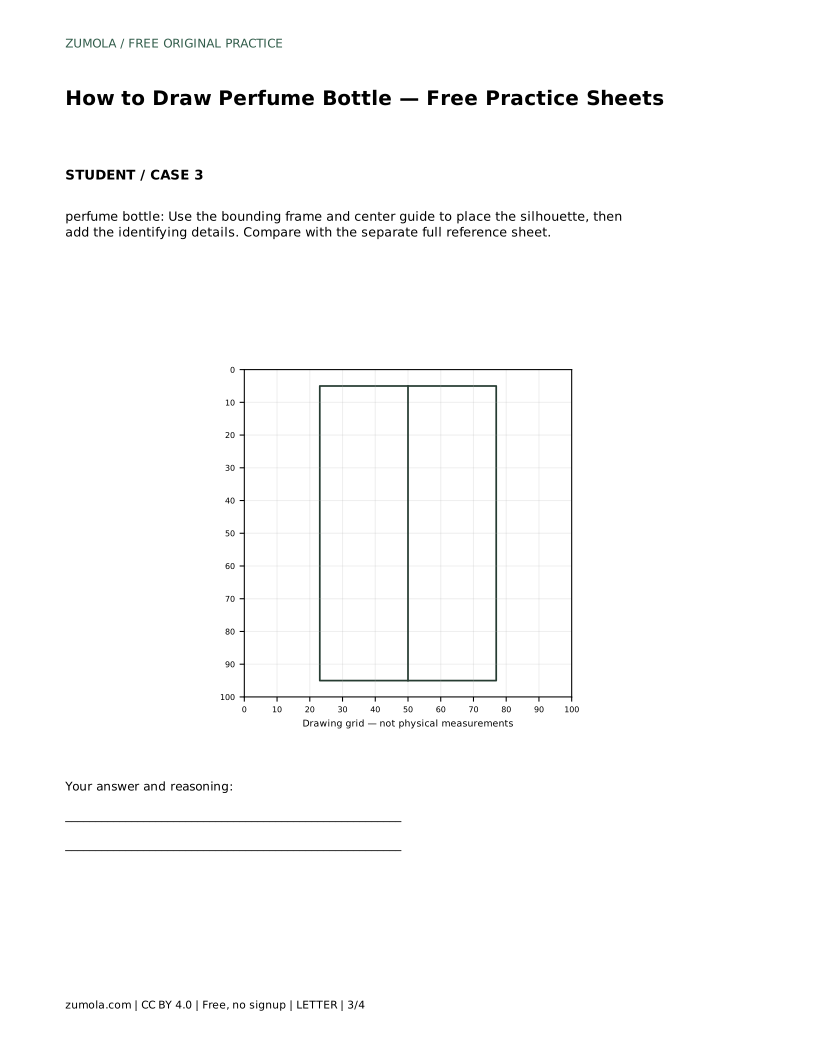
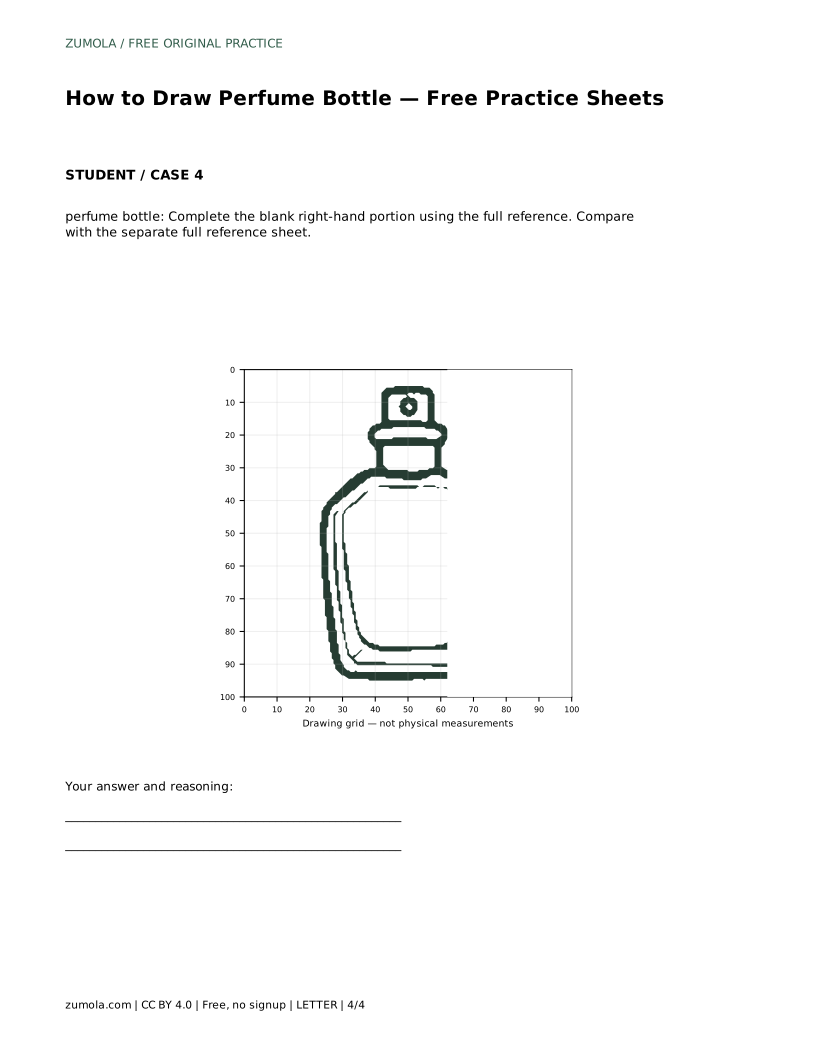
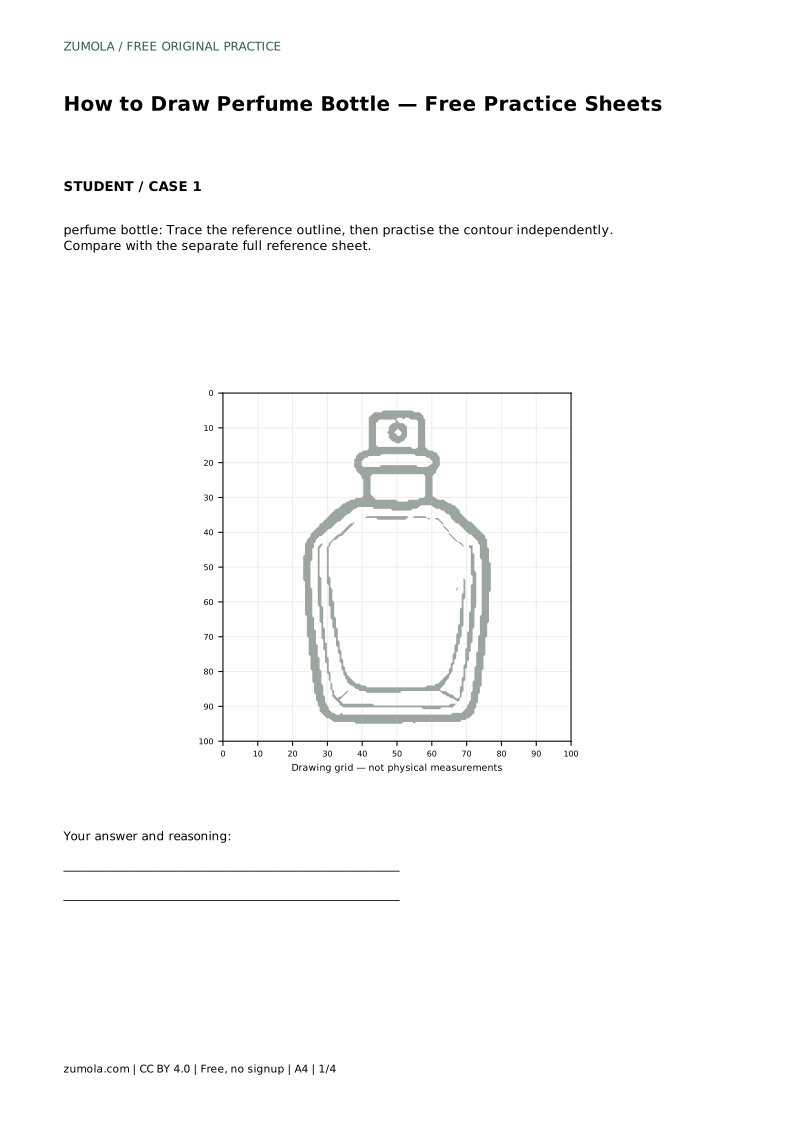
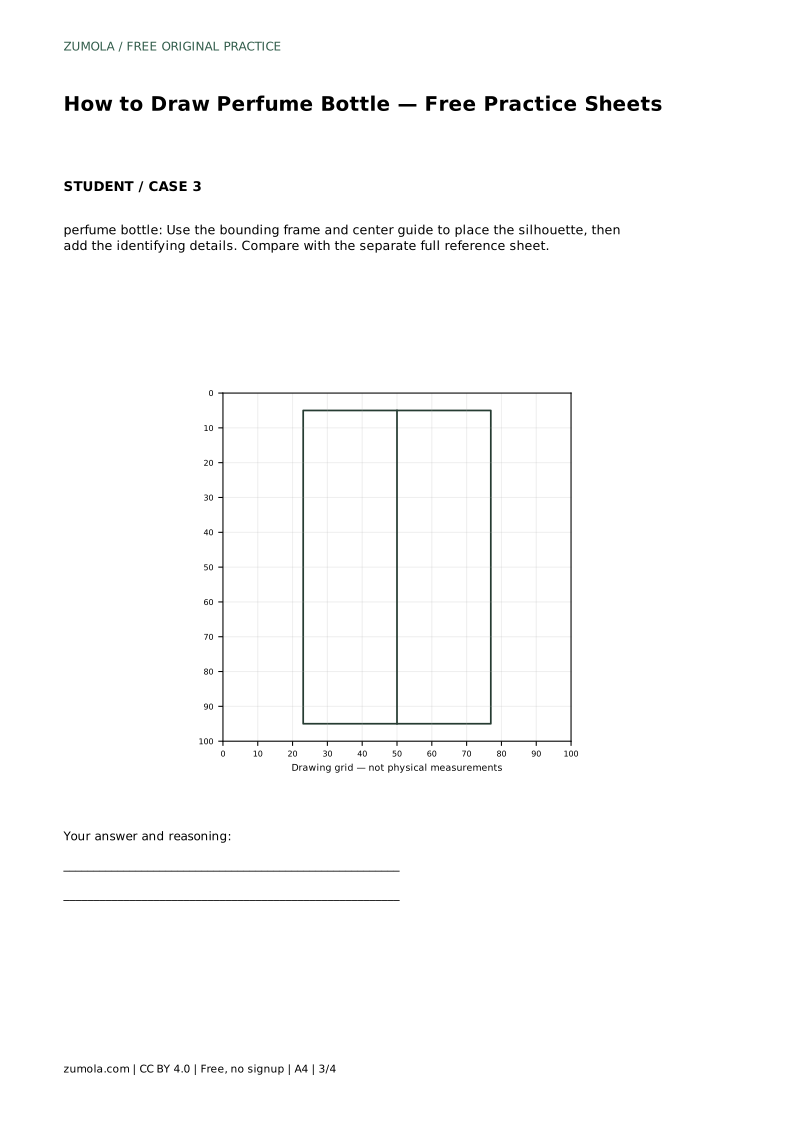
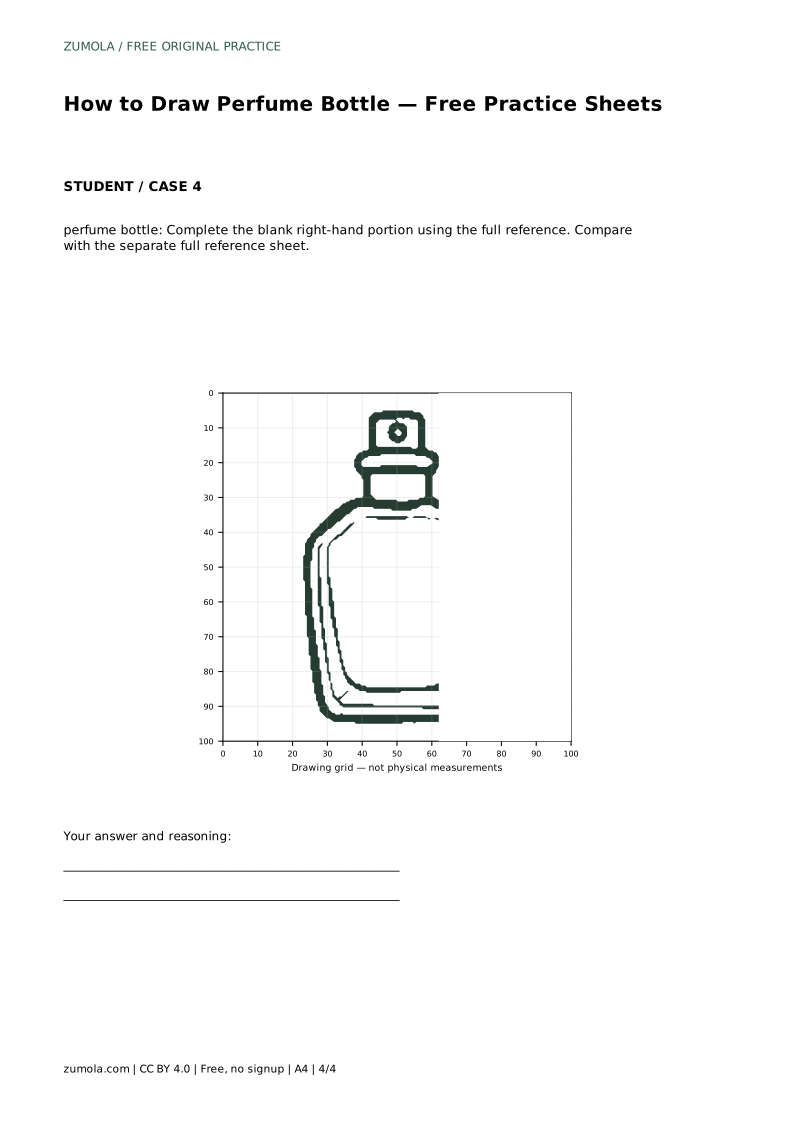
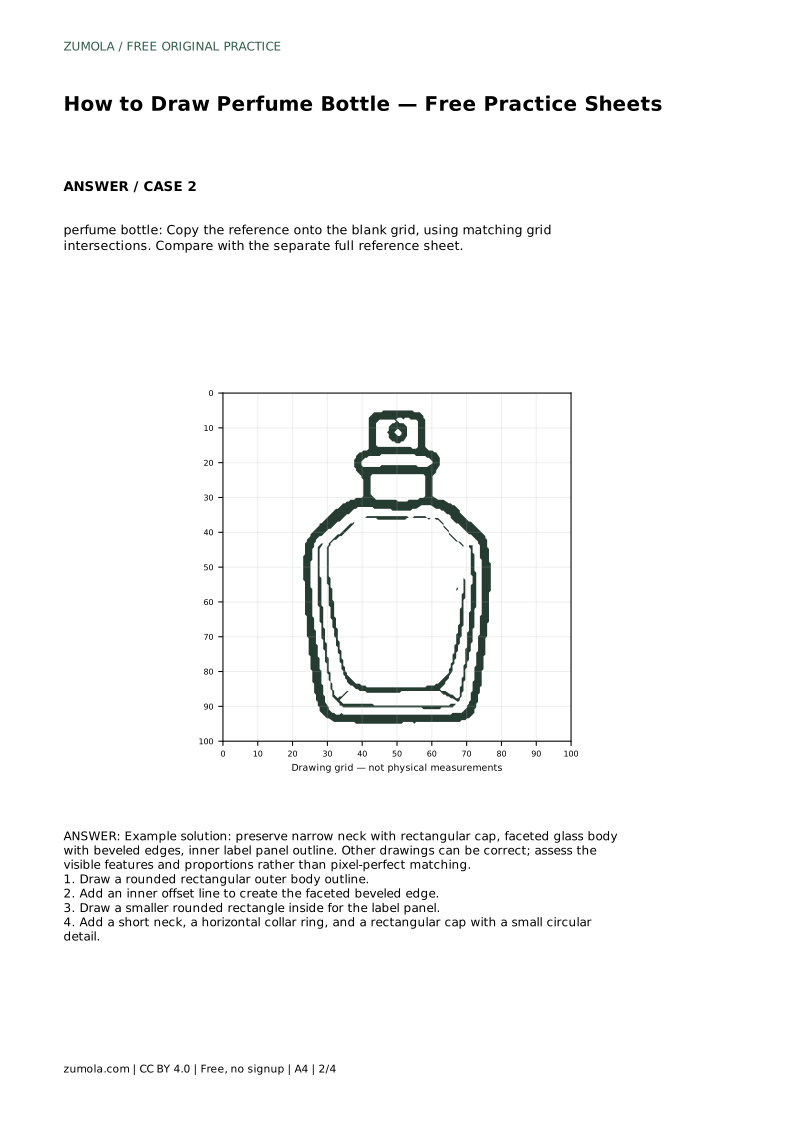
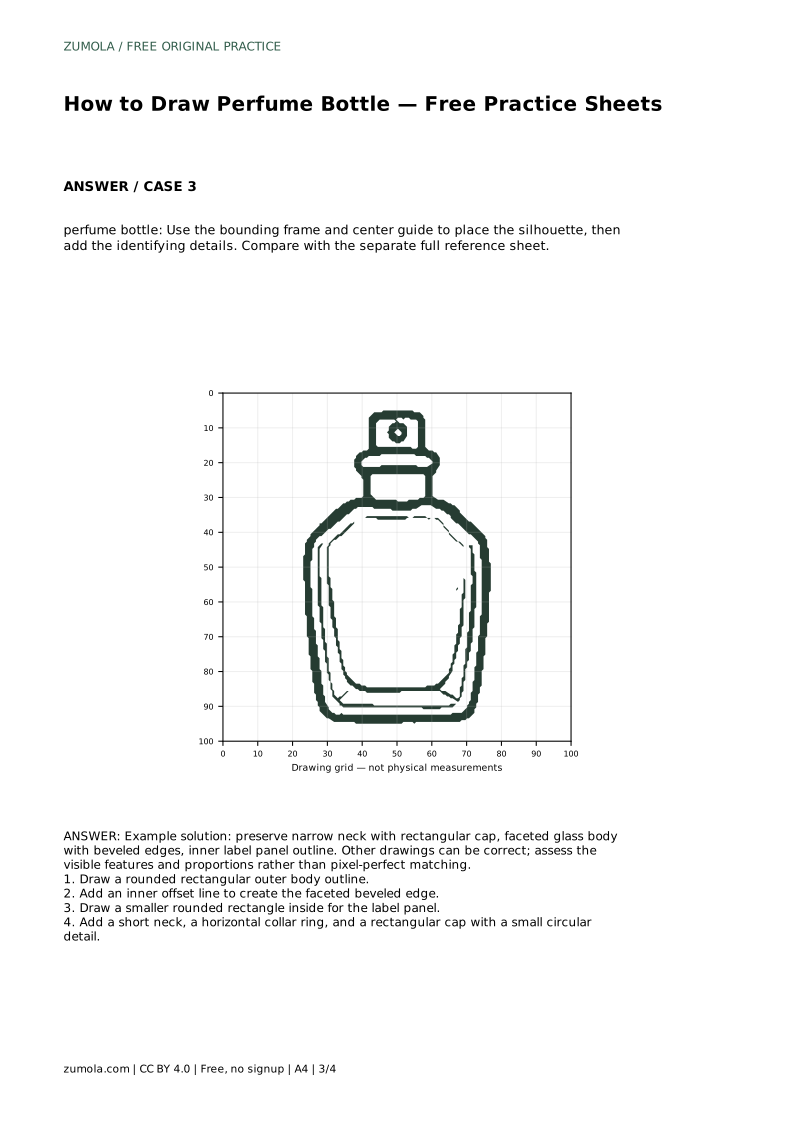
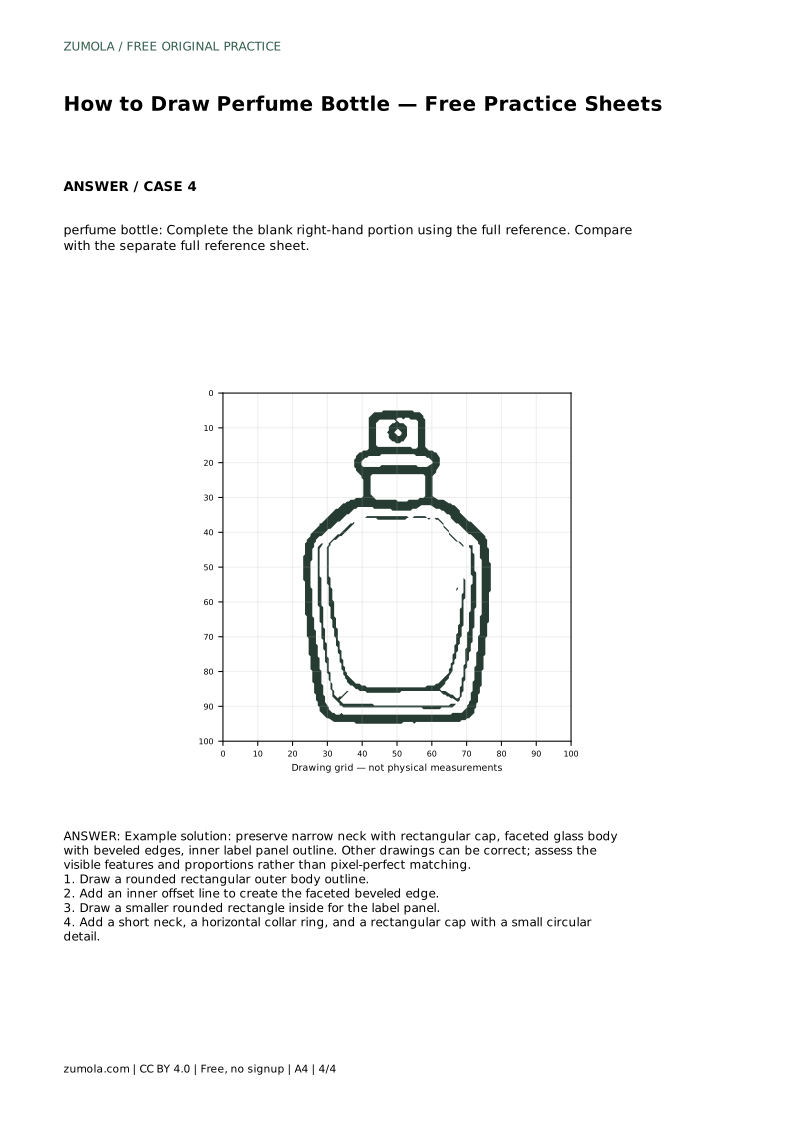
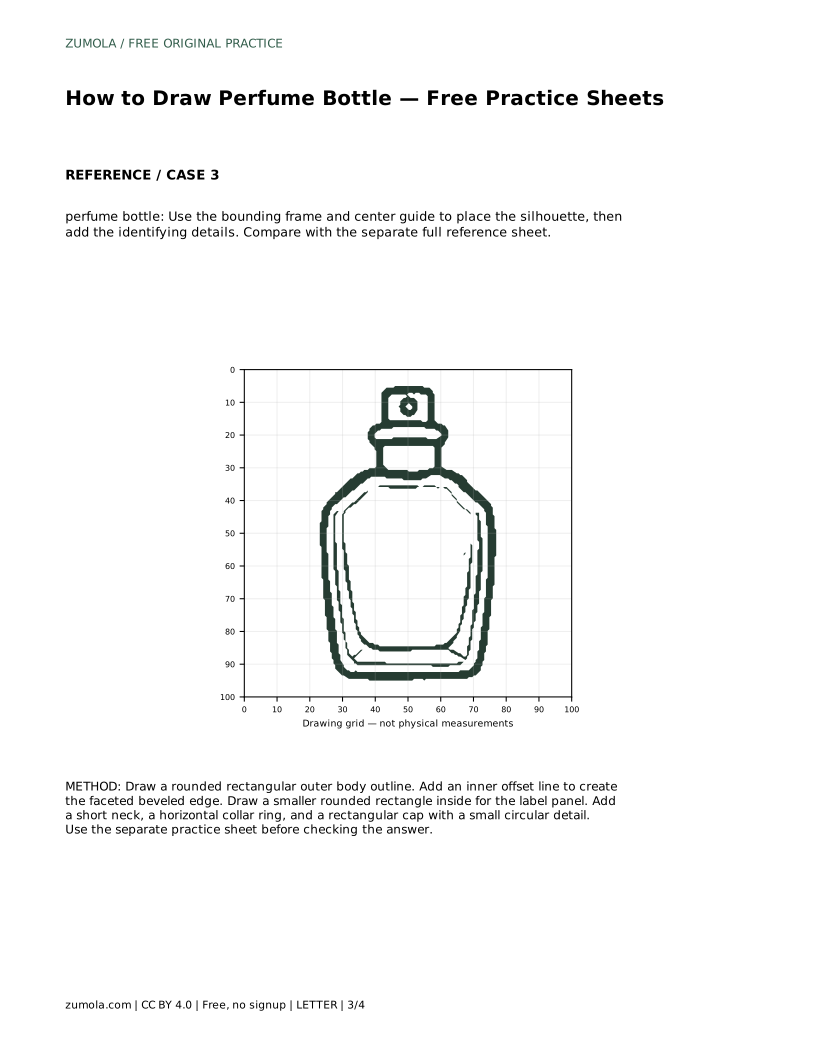
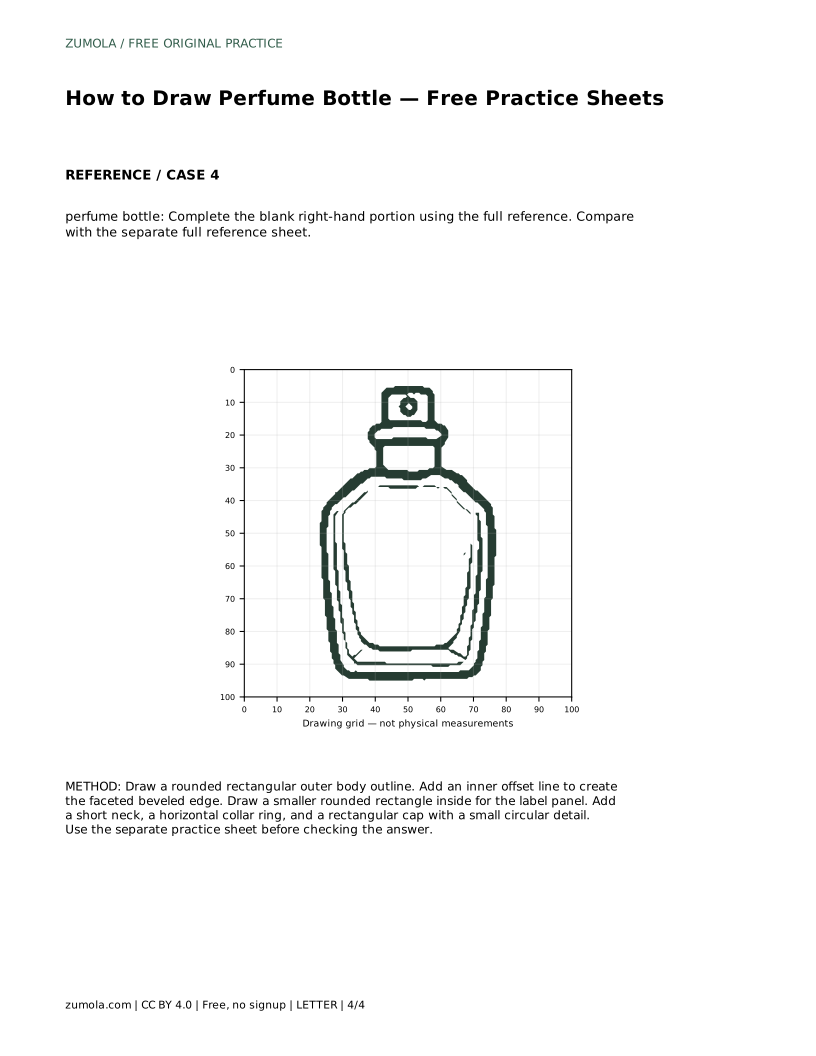
The trace sheet asks you to follow the reference outline first, then repeat the contour independently on the blank area. The grid sheet asks you to copy the reference onto a blank grid by matching grid intersections. The frame sheet gives you a bounding frame and center guide so you can place the silhouette before adding details. The partial sheet gives you the left half of the drawing and asks you to complete the right-hand portion using the full reference.
Each sheet has a separate full reference sheet for comparison. Compare feature by feature: neck width, cap shape, body proportions, bevel offset, and label panel placement. A drawing can be correct even if it is not identical, as long as the visible features and proportions are preserved.
The neck should be noticeably narrower than the body. The cap is rectangular and should not be wider than the body. The collar ring is a horizontal band between neck and cap. The beveled edge should appear as a second contour inside the outer body, not as a random line. The label panel should sit within the beveled area and remain centered.
Use the center guide on the frame sheet to check symmetry. If the bottle leans, compare the distance from the center guide to the left and right outer edges. If the cap looks too large, measure its width against the neck width. Small adjustments to one feature are easier to judge than redrawing everything at once.
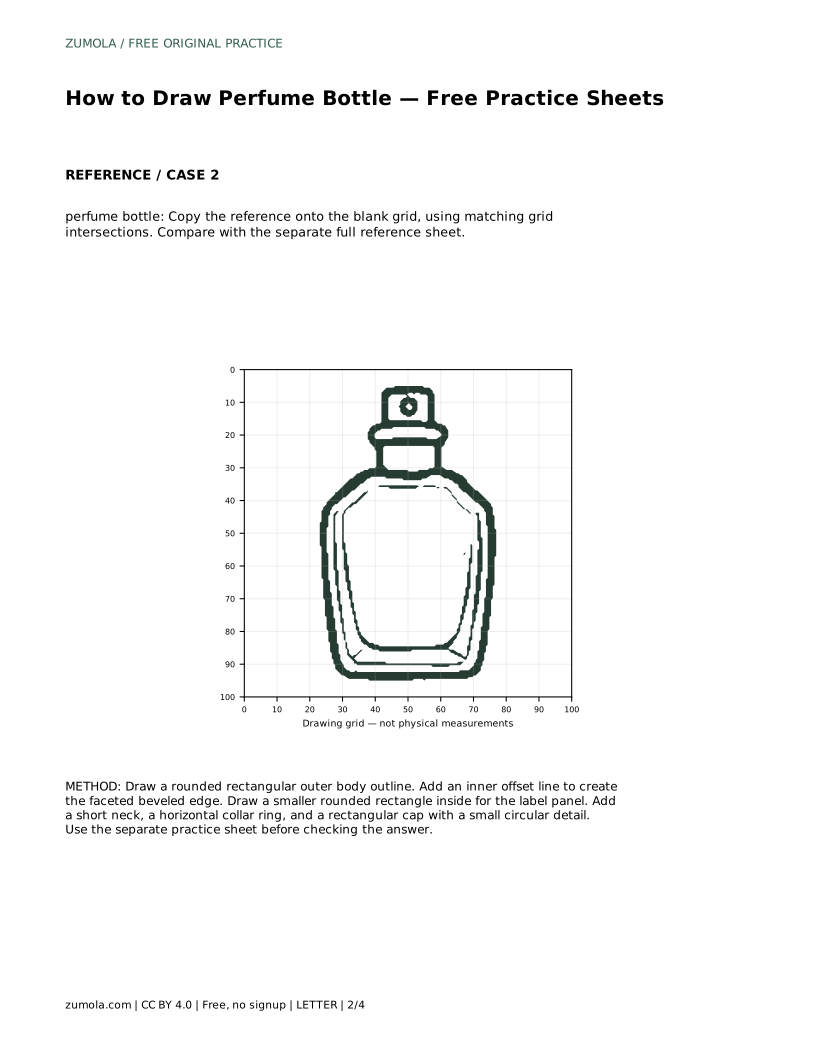
perfume bottle: Trace the reference outline, then practise the contour independently. Compare with the separate full reference sheet.
Example solution: preserve narrow neck with rectangular cap, faceted glass body with beveled edges, inner label panel outline. Other drawings can be correct; assess the visible features and proportions rather than pixel-perfect matching. Draw a rounded rectangular outer body outline. Add an inner offset line to create the faceted beveled edge. Draw a smaller rounded rectangle inside for the label panel. Add a short neck, a horizontal collar ring, and a rectangular cap with a small circular detail.
No. Other drawings can be correct. Assess the visible features and proportions rather than pixel-perfect matching.
Draw the rounded rectangular outer body outline first, then add the inner offset line for the beveled edge, then the label panel, neck, collar ring, and cap.
Compare relative widths and alignments: the neck should be narrower than the body, the cap should not be wider than the body, and the label panel should be centered within the beveled area.
All drawing practice · Free coordinate paper
Original resources · CC BY 4.0 · Free for personal and classroom use with attribution.