Reference diagrams
LETTER · Download PDF
A4 · Download PDF
Free original resources
Learn to draw a tow truck by building the cab, flat bed, boom arm, hook, cable and wheels in order. Free practice sheets support tracing, grids and guided placement.
Four original cases, with reference diagrams, practice sheets and worked answers. Everything is free; no signup required.
LETTER · Download PDF
A4 · Download PDF
LETTER · Download PDF
A4 · Download PDF
LETTER · Download PDF
A4 · Download PDF
Use A4 or US Letter to match your printer. Use the stated values and conditions to solve each exercise; diagrams are not physical measuring rulers.
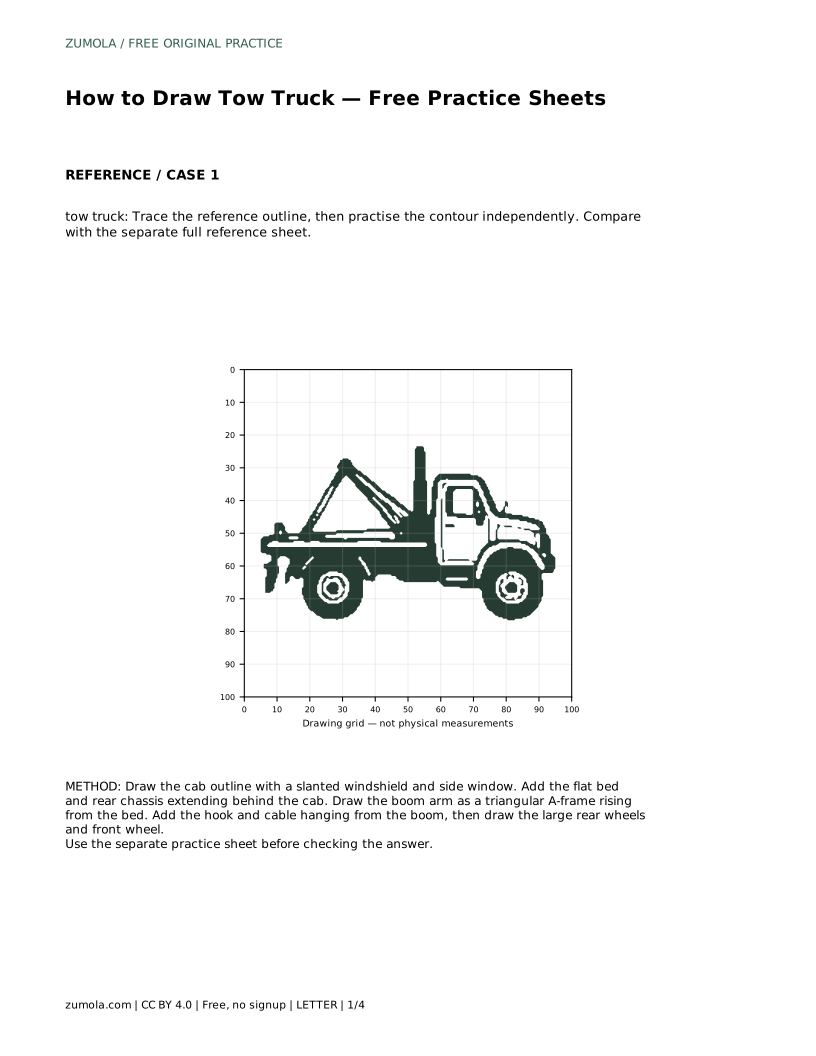
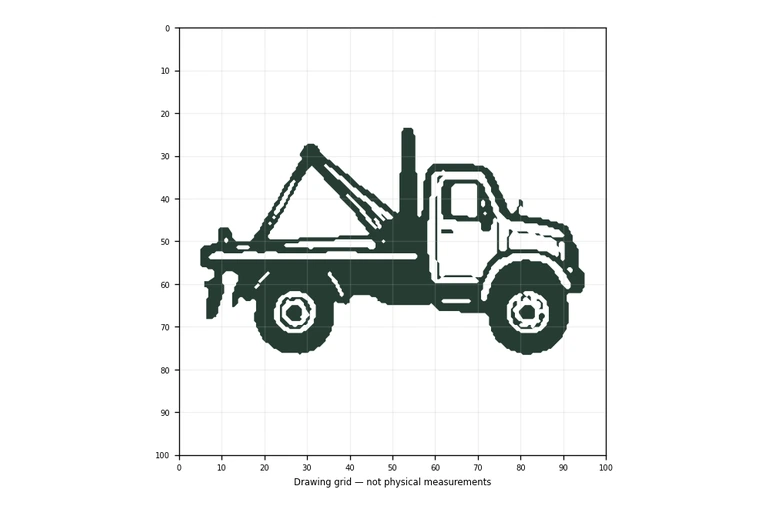
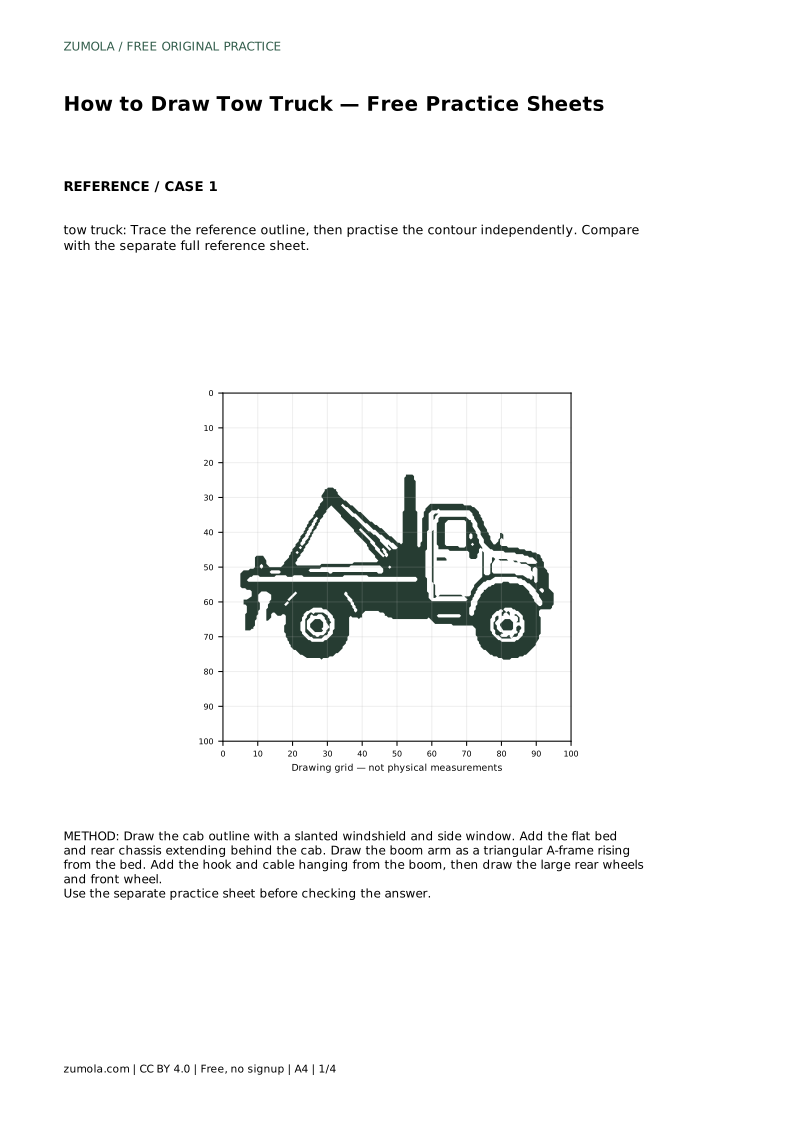
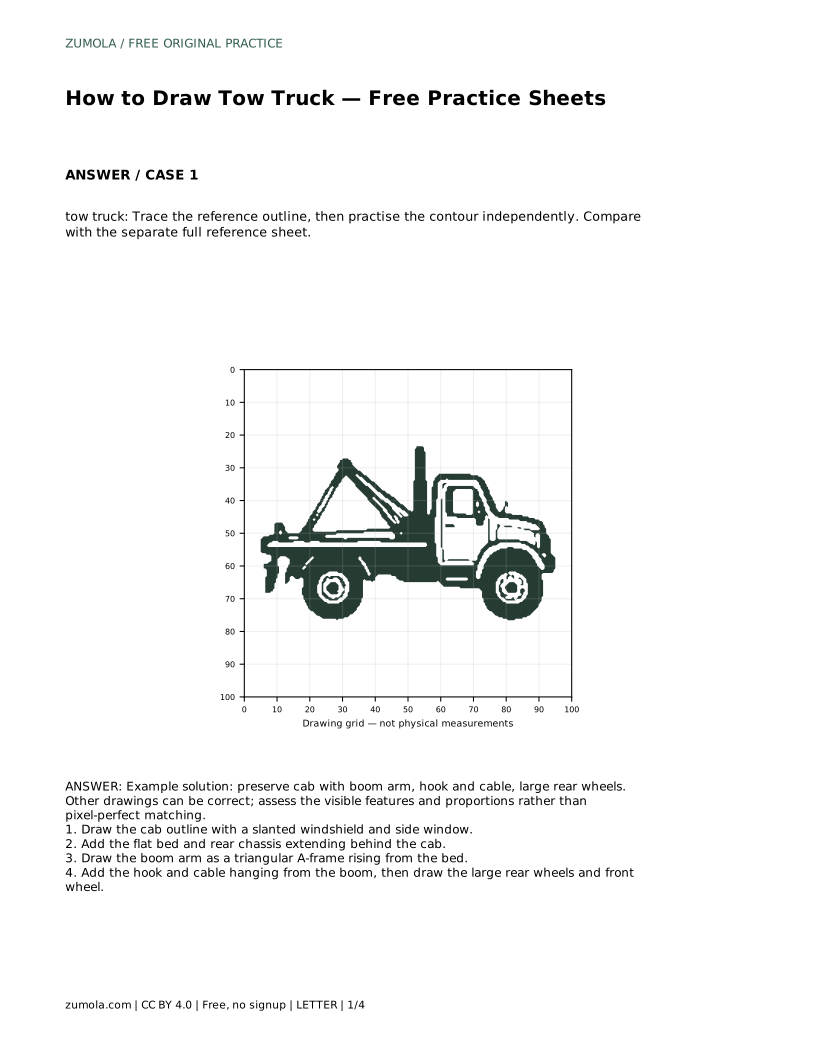
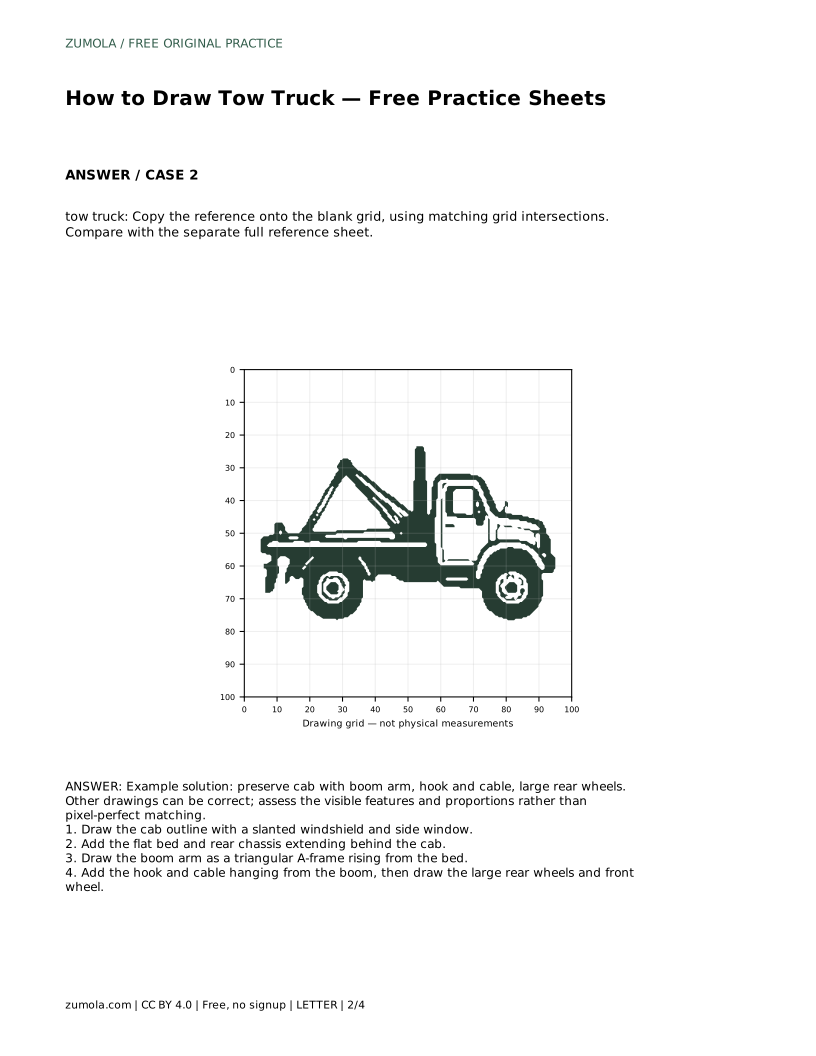
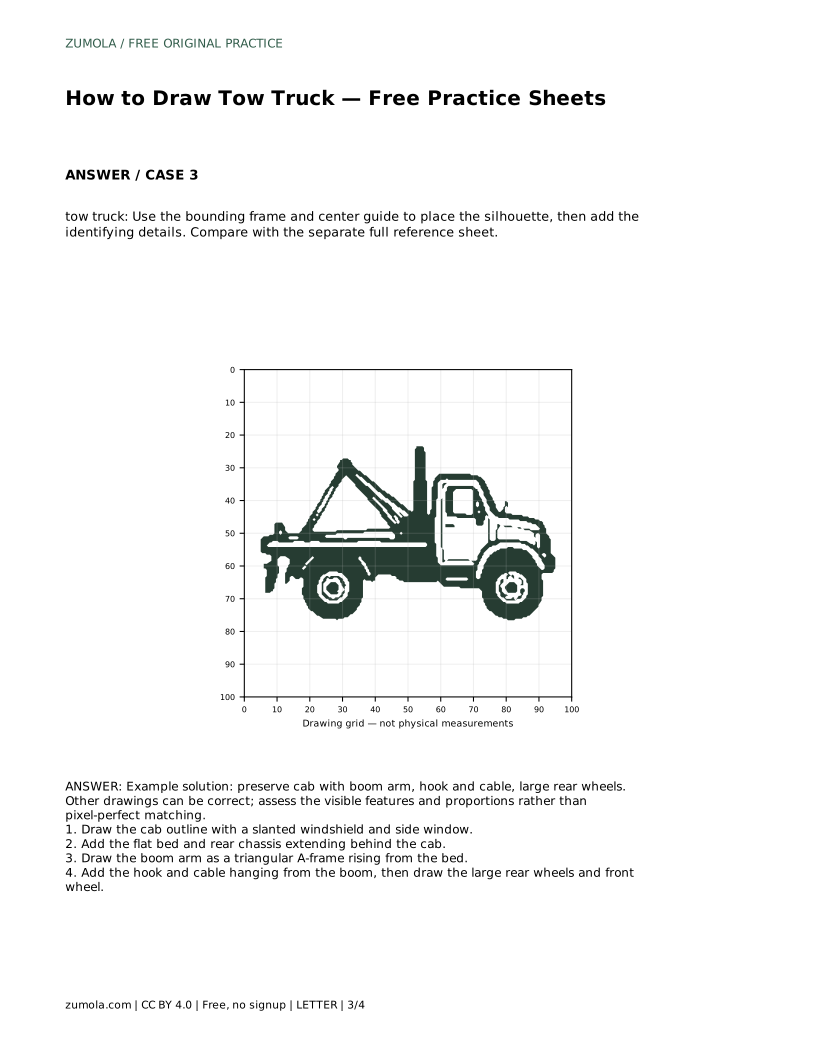
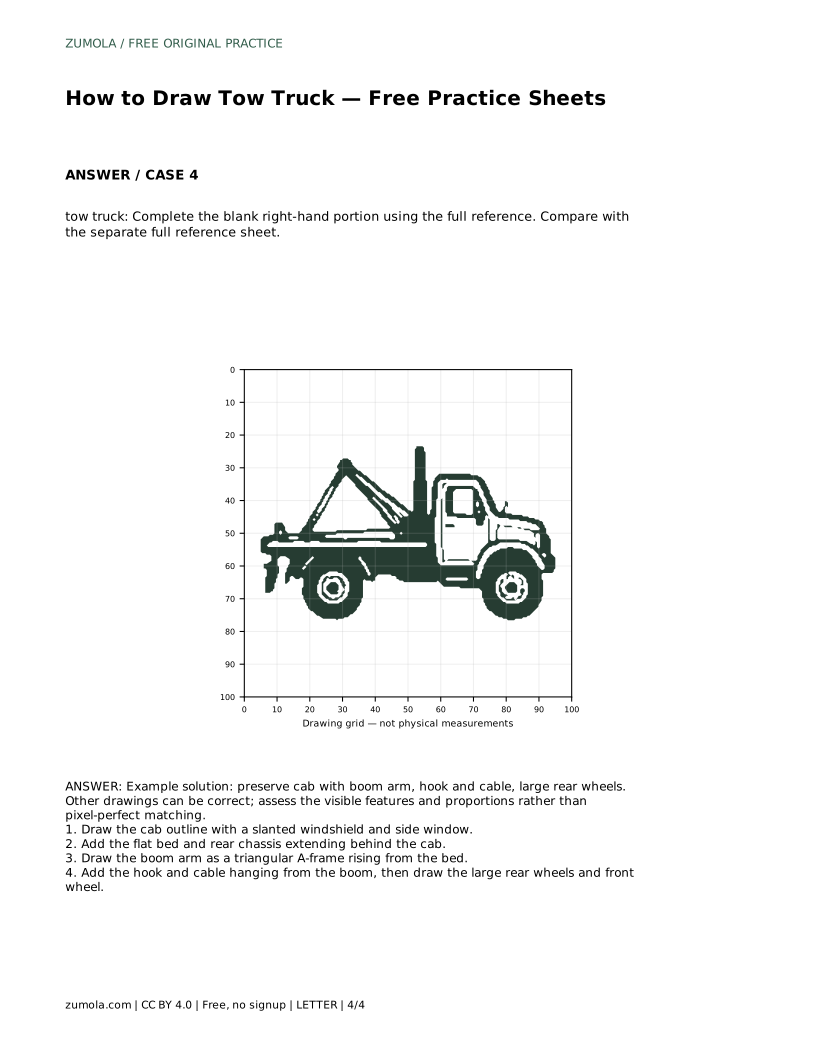
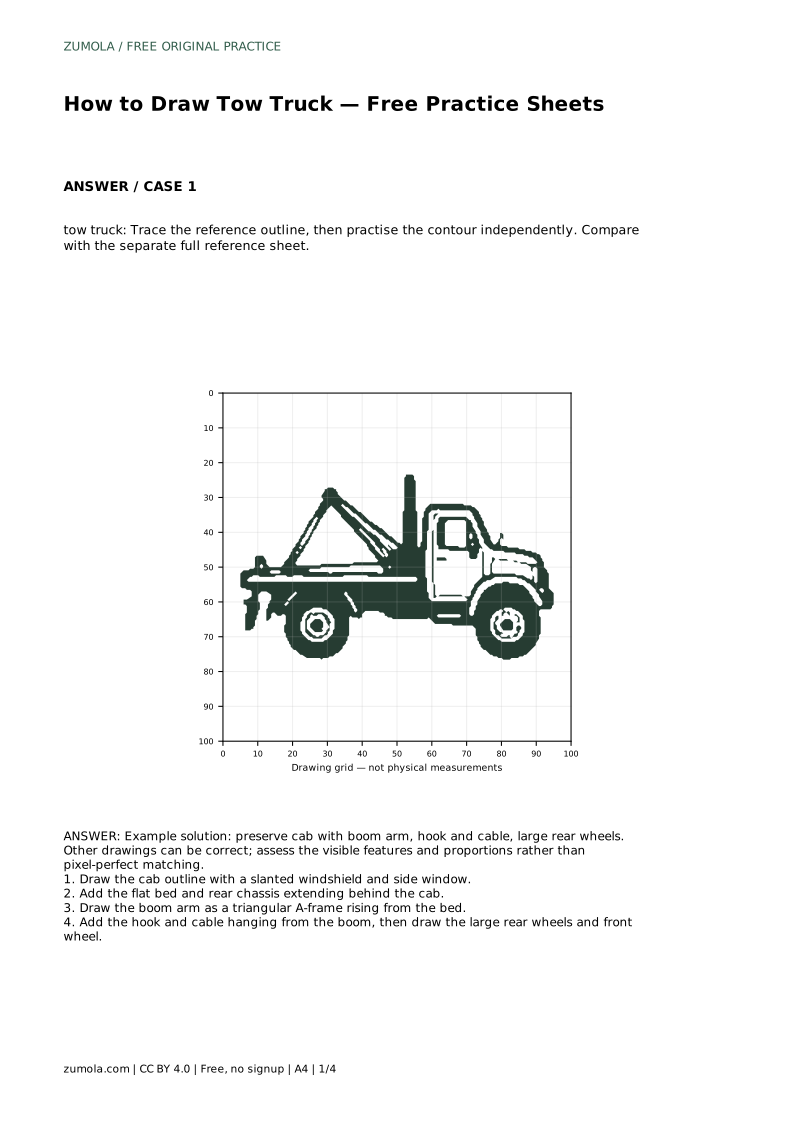
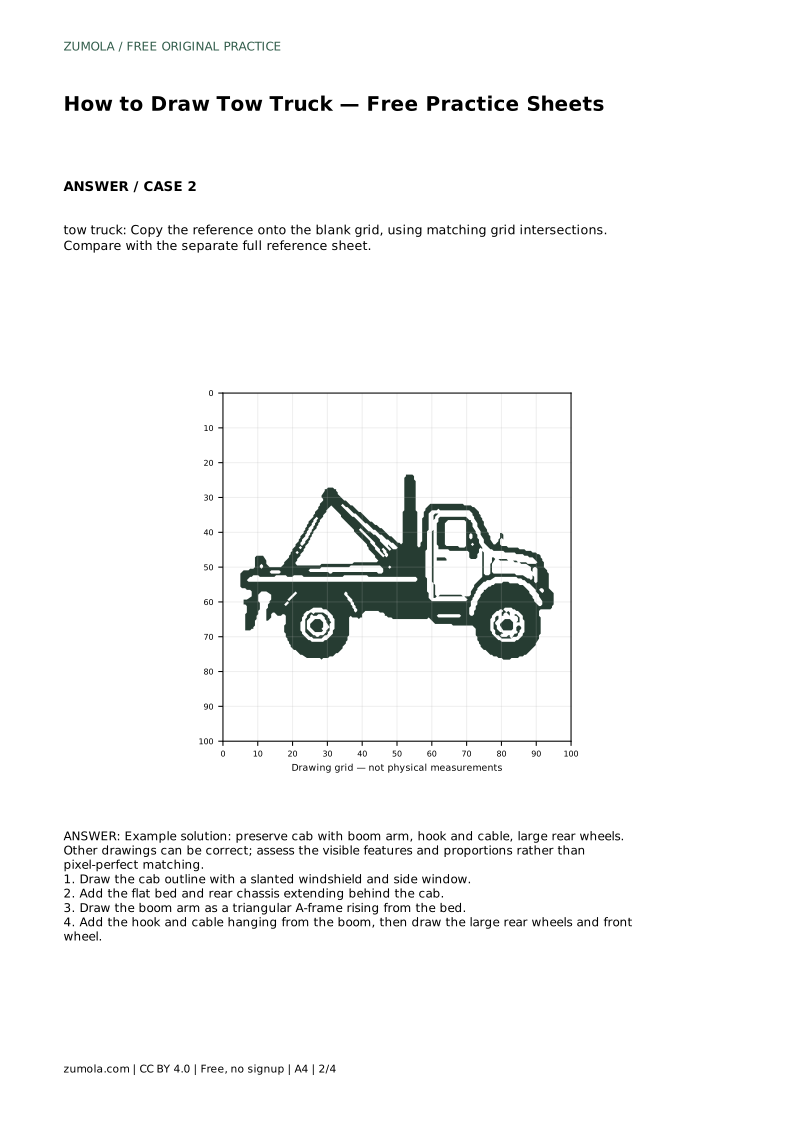
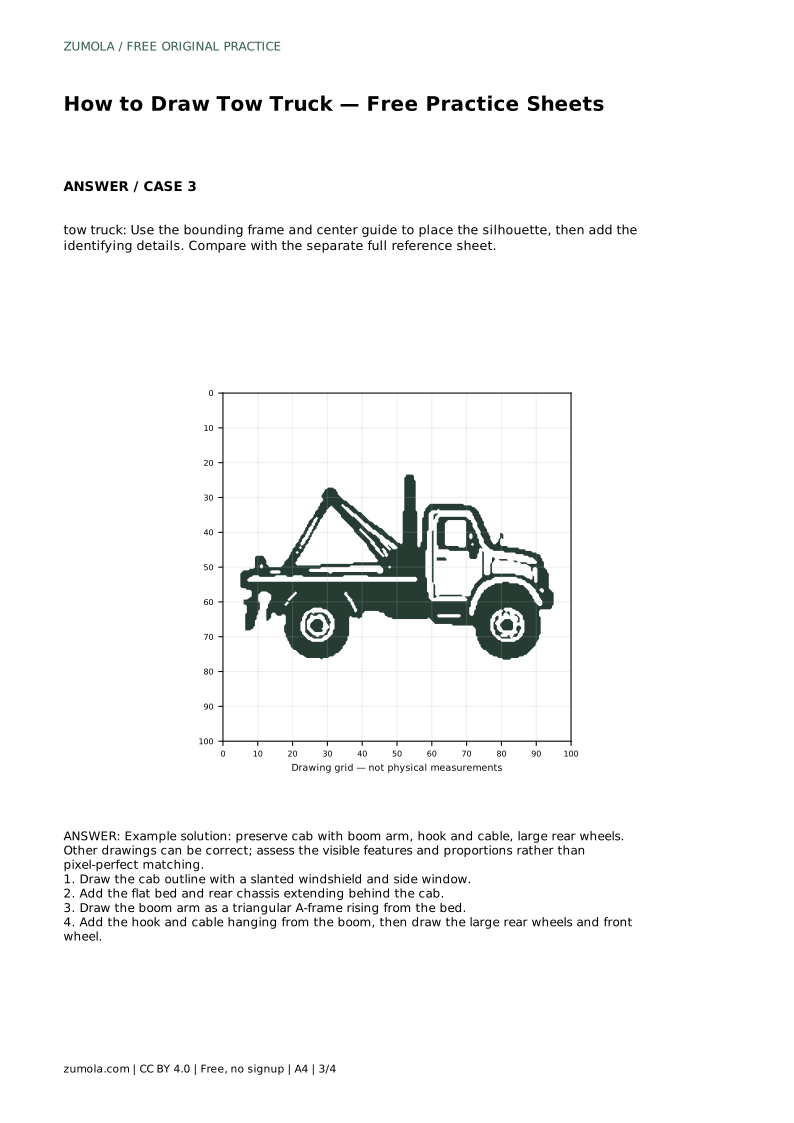
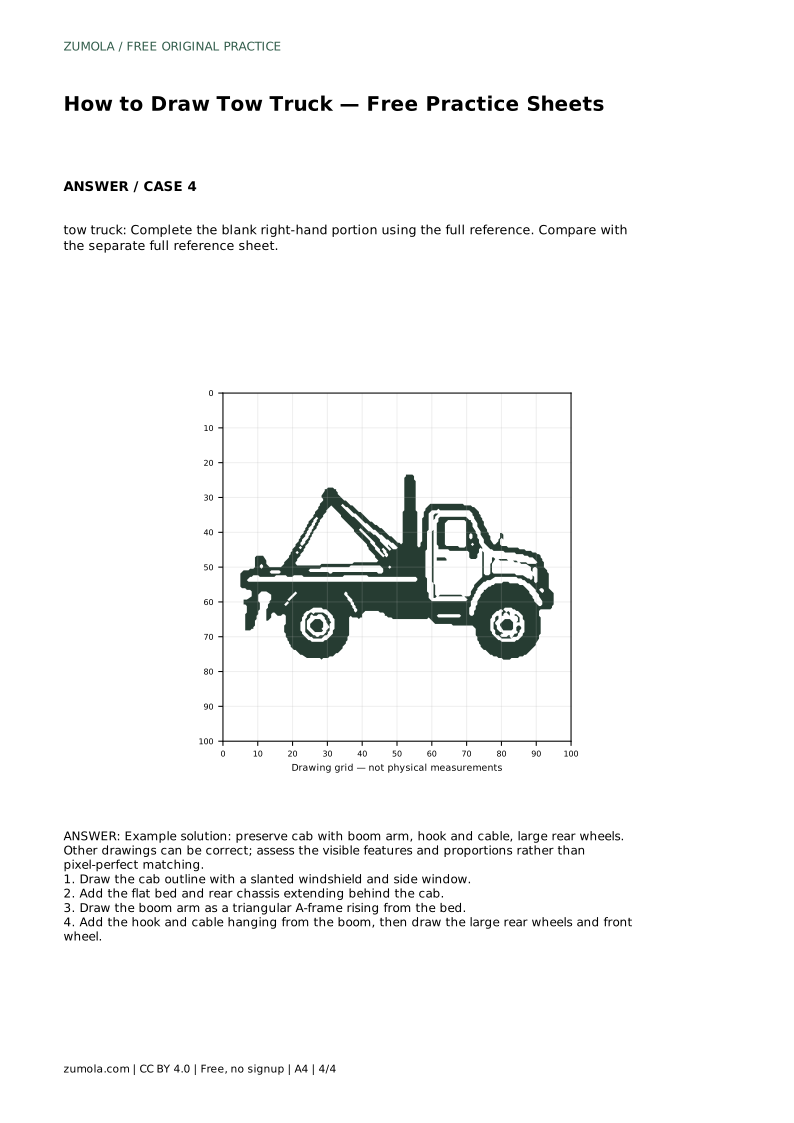
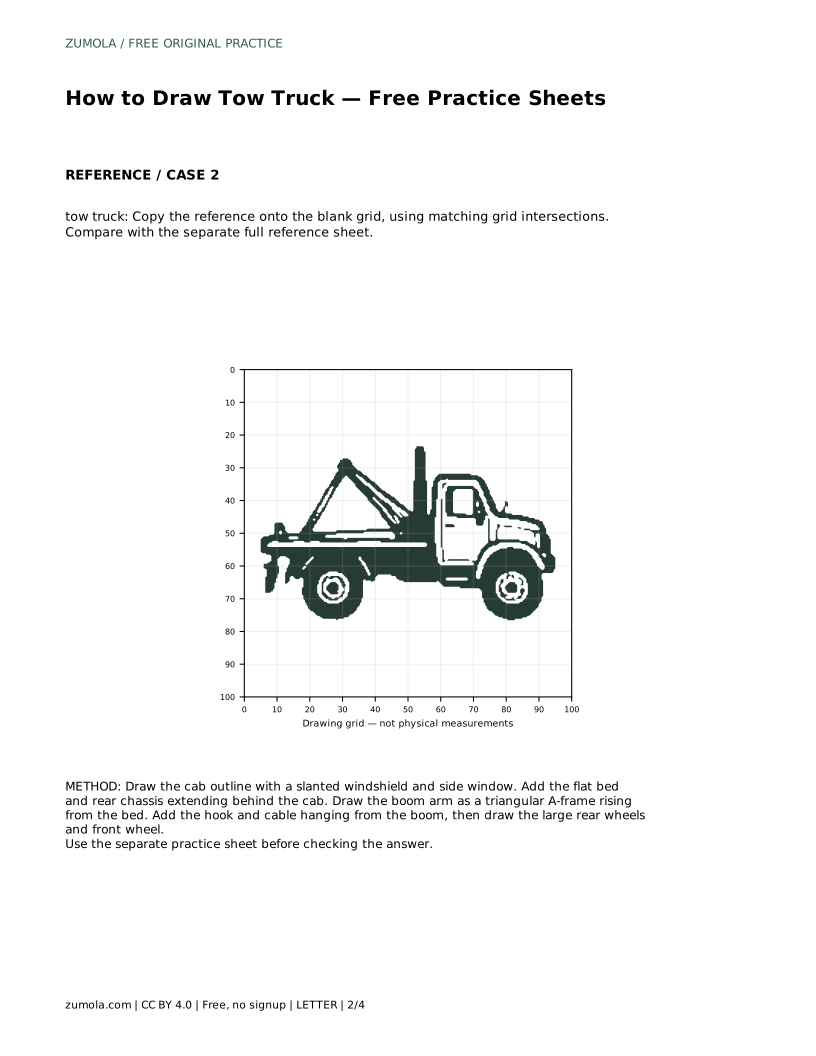
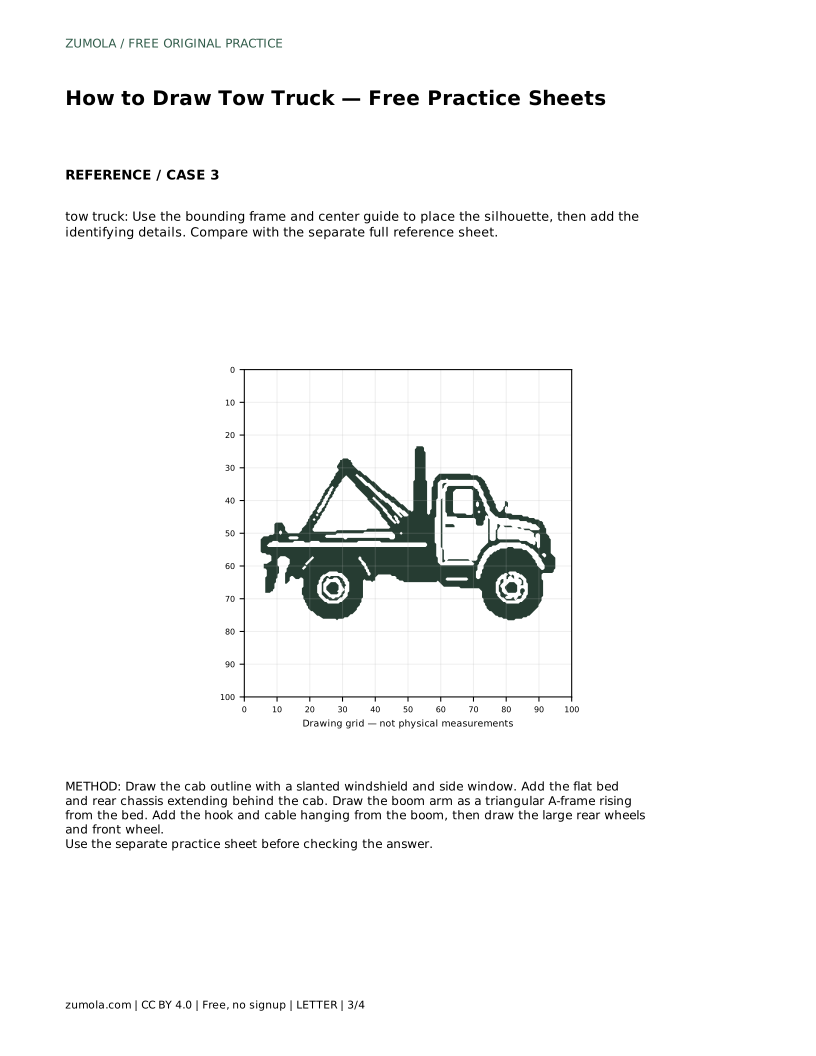
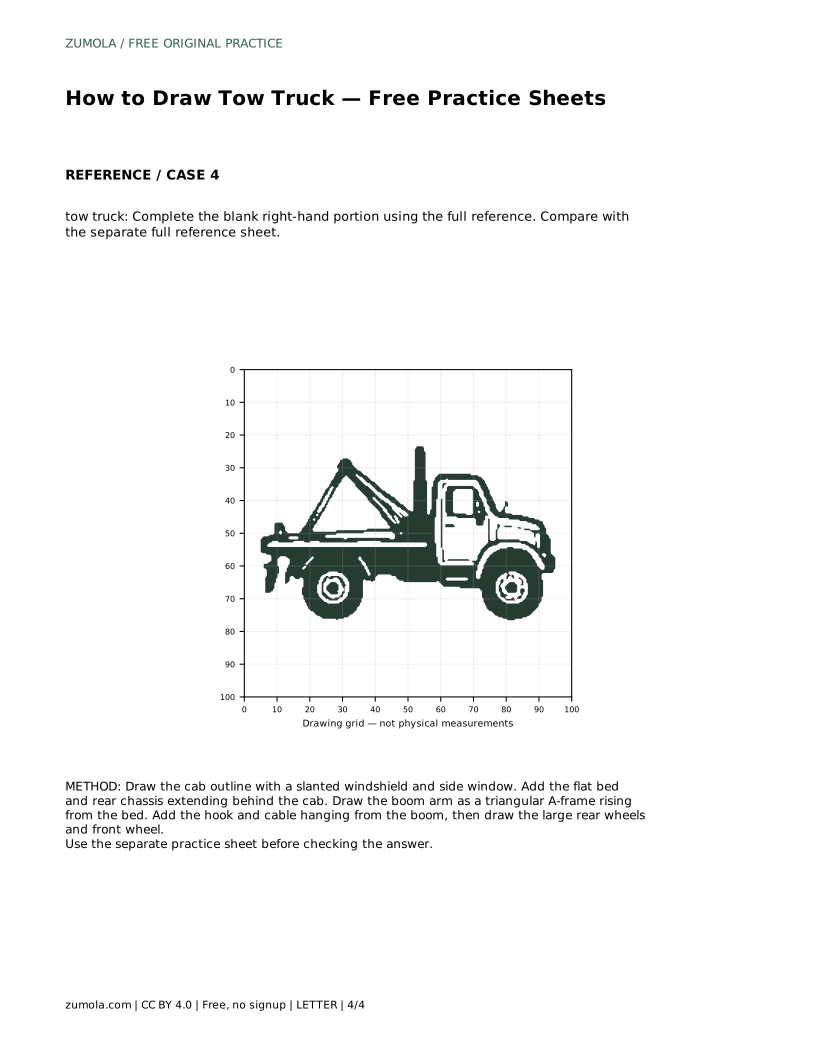
A tow truck is easy to recognise because of a few strong shapes: a cab with a slanted windshield, a flat rear bed, a triangular boom arm, a hanging hook and cable, and noticeably large rear wheels. This page shows a practical order for drawing those parts so the truck reads clearly. The free practice sheets let you trace a reference outline, copy it onto a grid, place the silhouette with a bounding frame and centre guide, or complete a partly blank drawing. Each method trains the same core skill: keeping the identifying features and their proportions consistent.
Begin with the cab, because it sets the truck's direction and scale. Draw a boxy body with a slanted windshield and a side window, keeping the roofline fairly flat. The windshield slant is a key cue: a vertical front edge makes the vehicle look like a van rather than a tow truck.
Next, extend a flat bed and rear chassis behind the cab. Keep the bed low and horizontal so the boom arm has a clear base to rise from. Check that the cab and bed sit on the same ground line; if one floats above the other, the whole truck looks unstable.
The boom arm is the tow truck's most distinctive feature. Draw it as a triangular A-frame rising from the bed, with two visible sides meeting near the top. Keep the triangle's base wide enough to look supported rather than perched on the bed.
From the top of the boom, add a cable hanging downward and finish it with a hook. The hook should hang clear of the bed and wheels so it stays readable. A short, thick hook looks sturdier than a long thin one, and the cable should be a single clean line rather than a tangle.
Tow trucks often have larger rear wheels than front wheels, and that difference helps the drawing look like a working vehicle. Place the rear wheels under the bed and the front wheel under the cab, all touching the same ground line. Leave a small gap between the tyres and the body so the wheels do not merge into the chassis.
Before finishing, step back and check the silhouette. The cab, bed, boom and hook should each be visible without overlapping confusingly. Compare your drawing with the separate full reference sheet and adjust the largest shapes first; small detail corrections matter less than getting the overall proportions right.
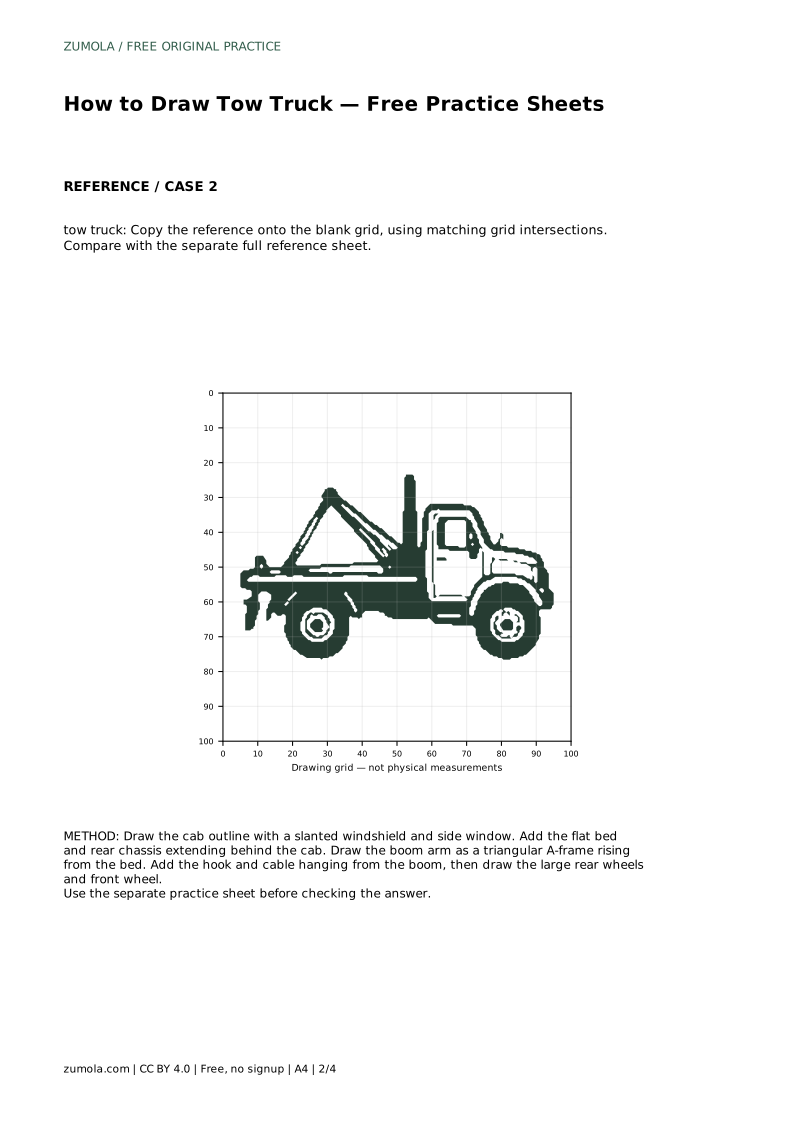
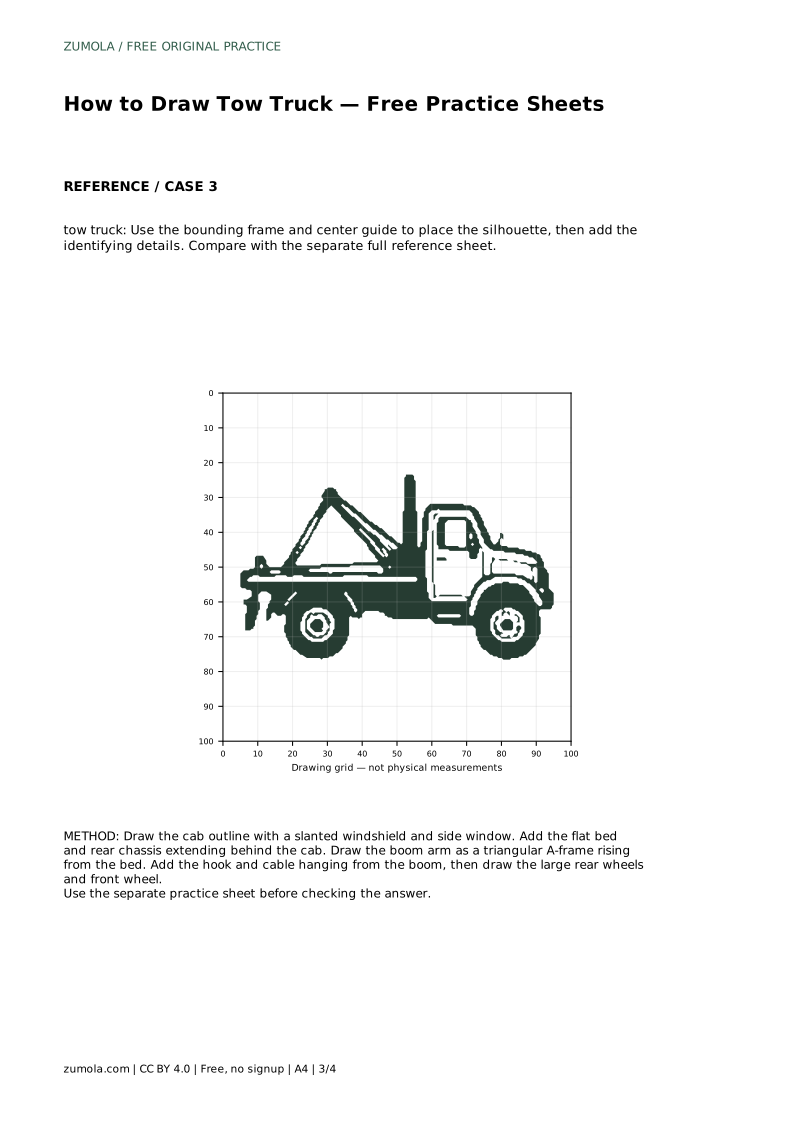
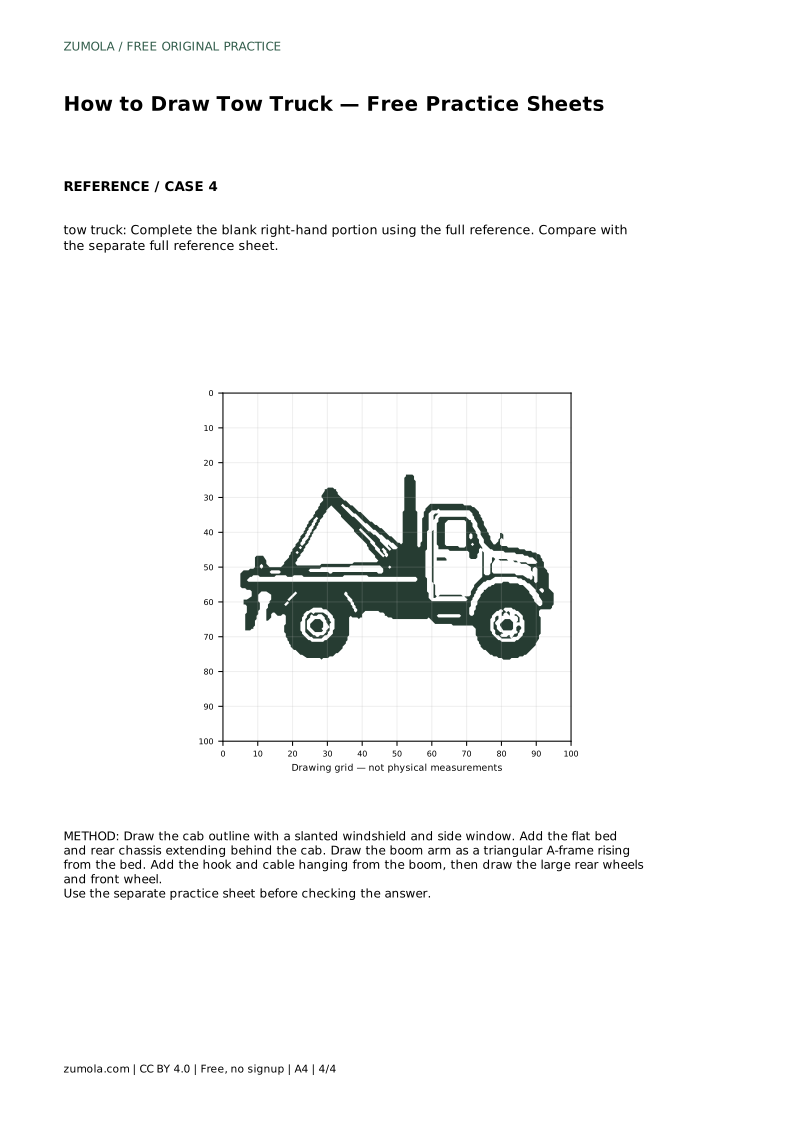
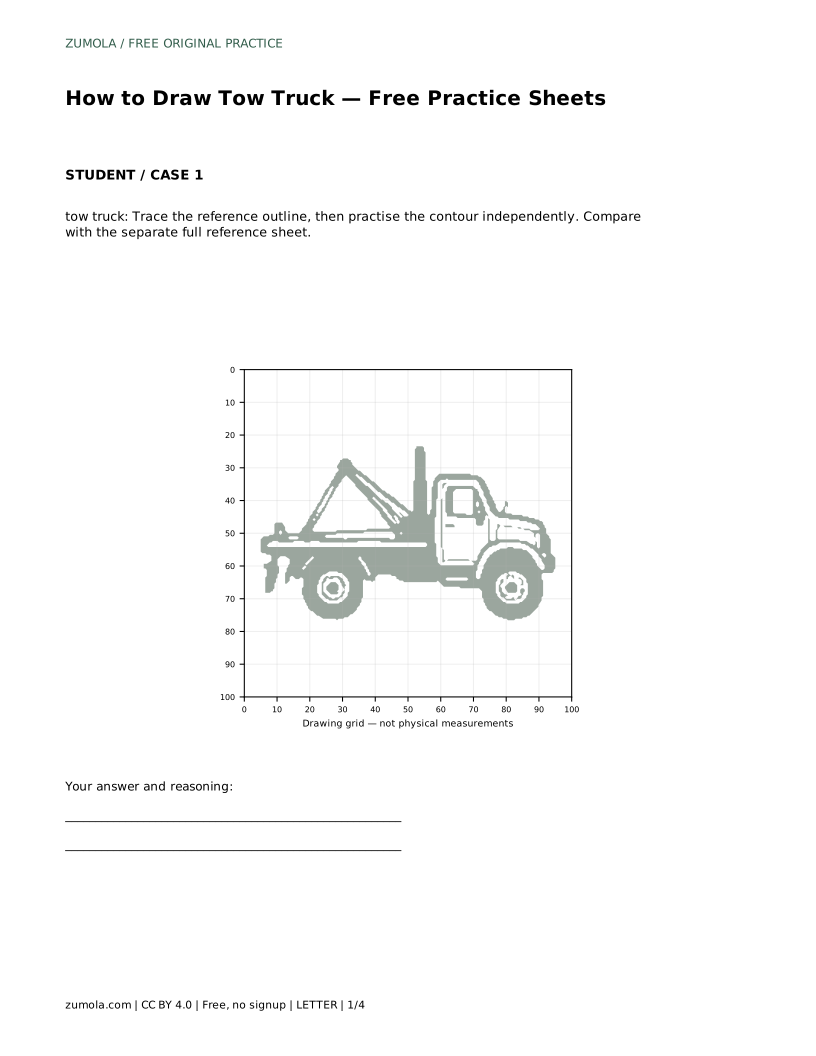
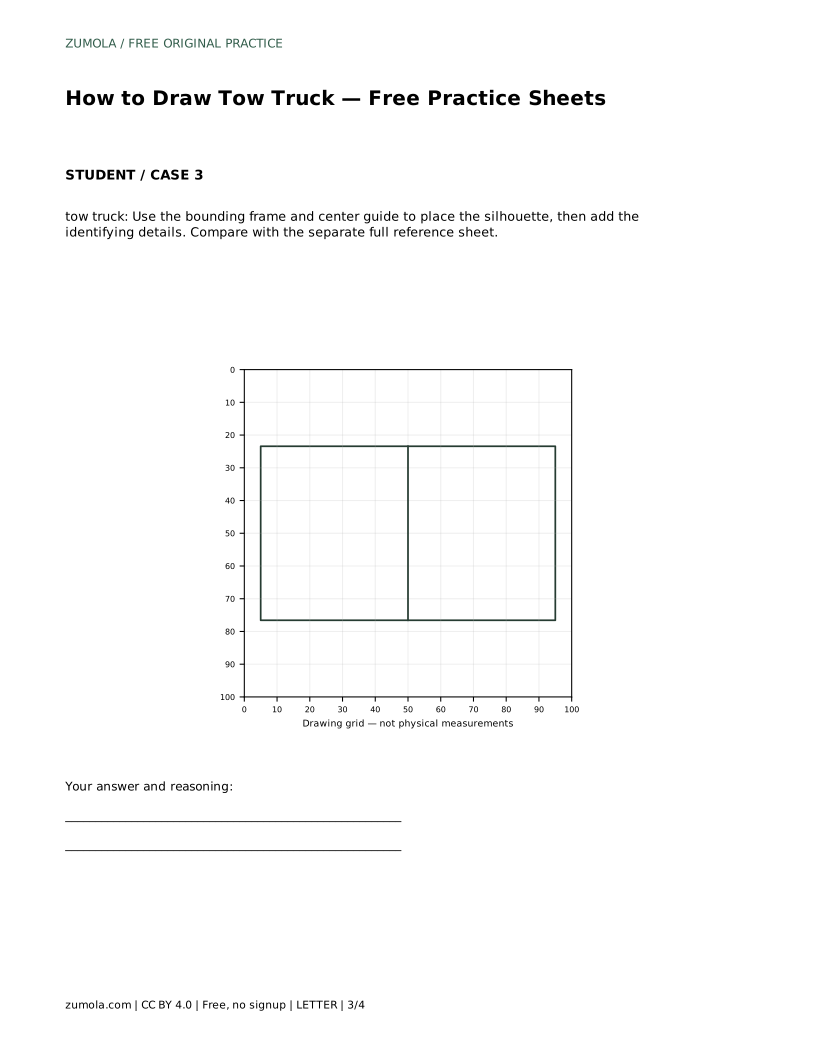
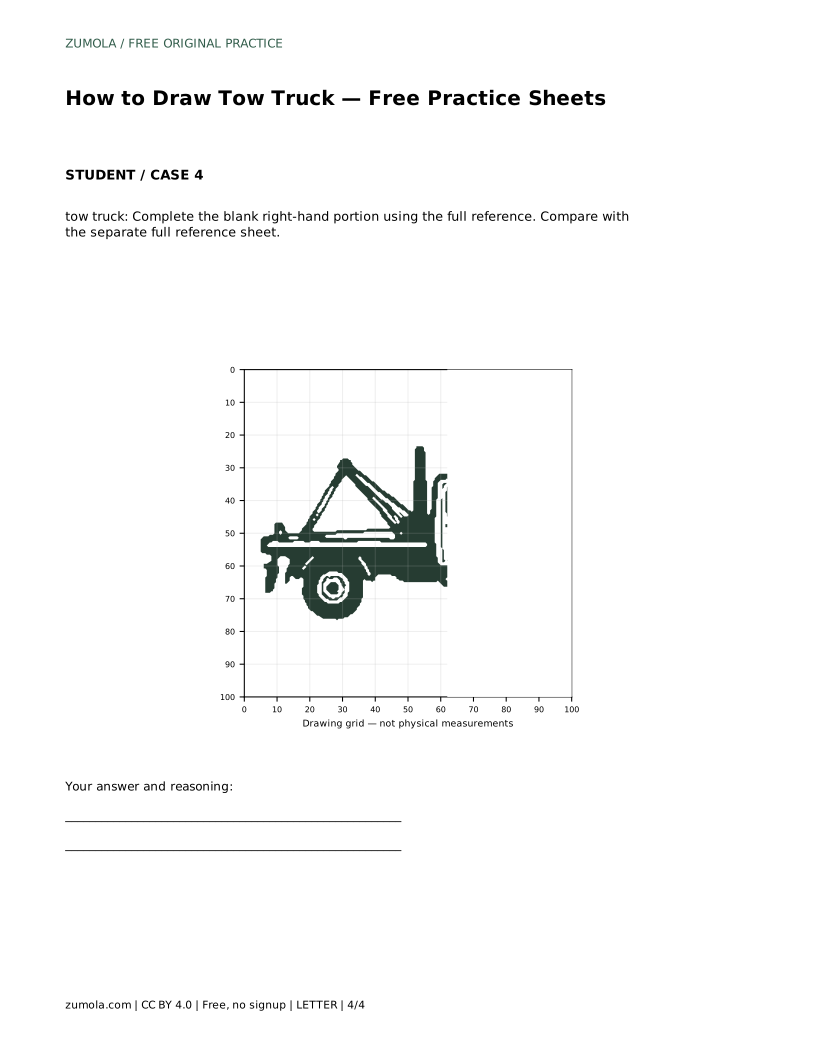
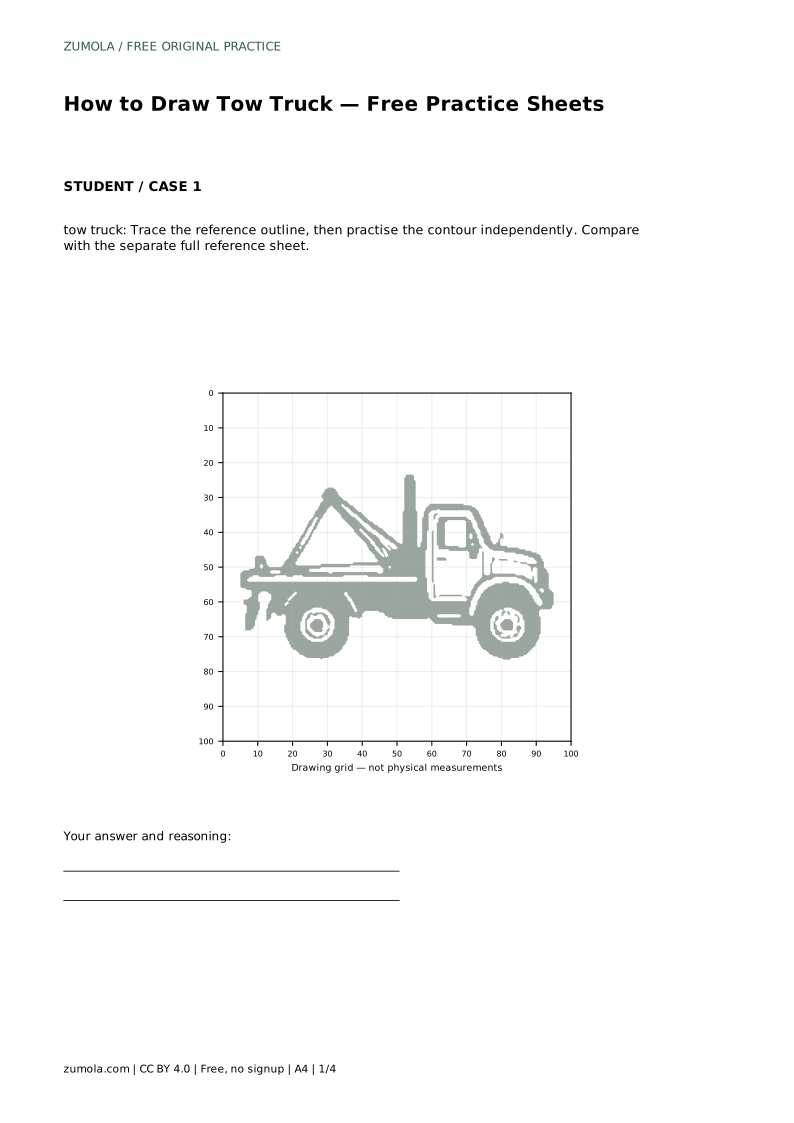
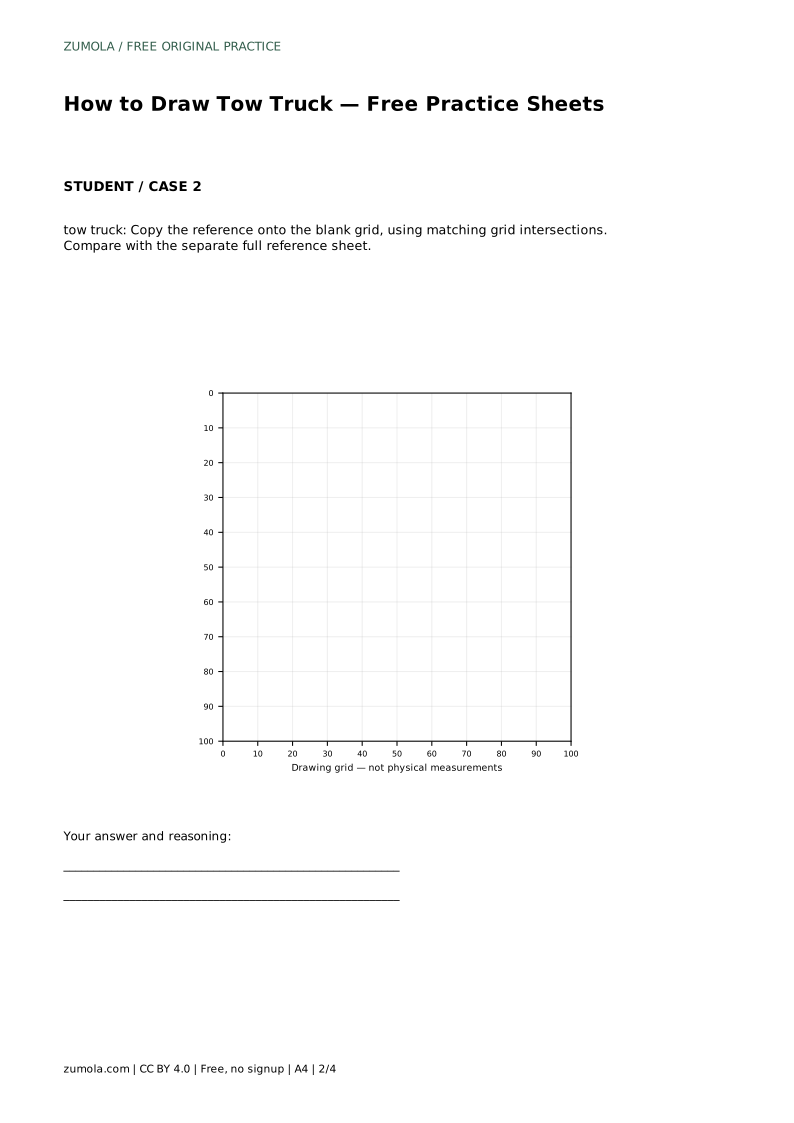
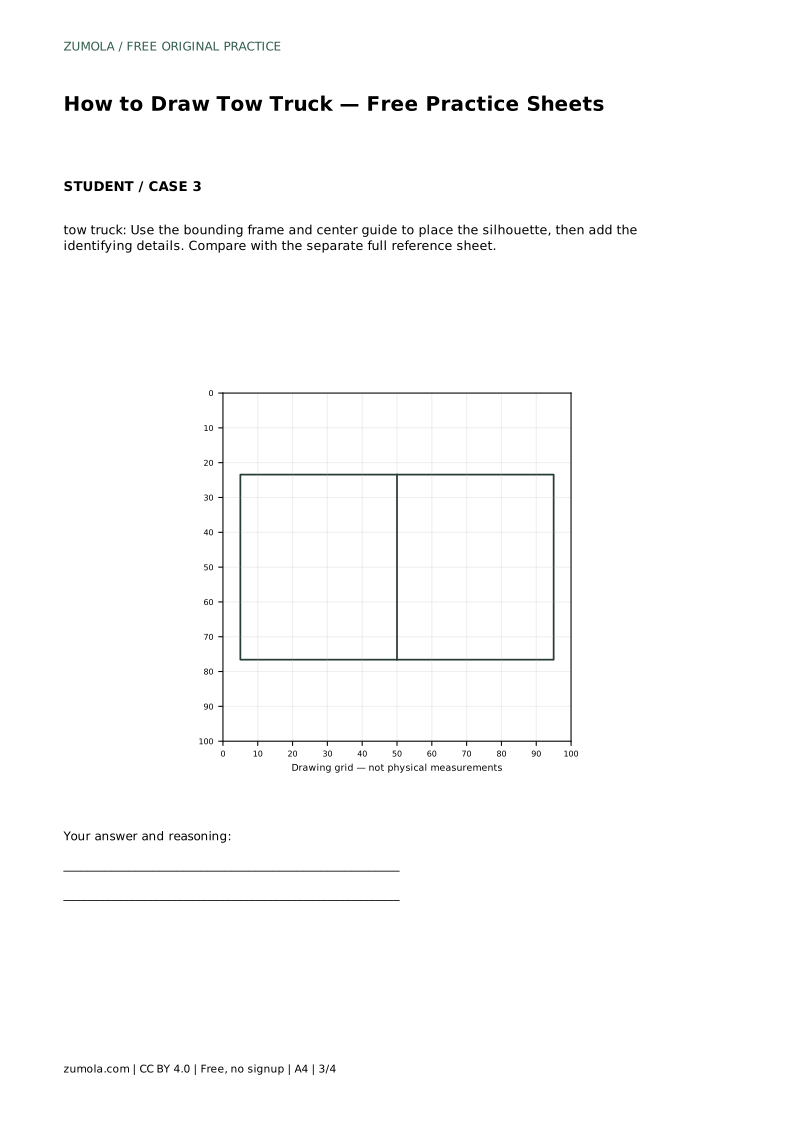
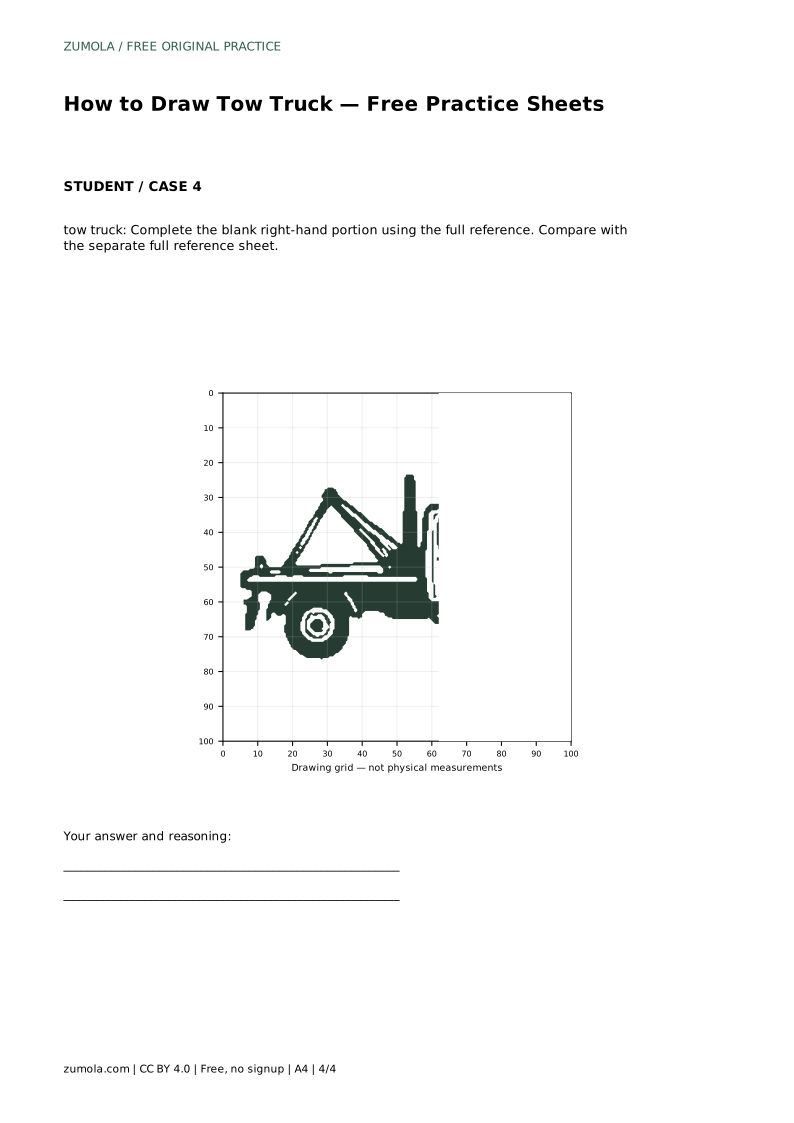
The tracing sheet asks you to follow the reference outline, then practise the contour independently. The grid sheet asks you to copy the reference onto a blank grid using matching intersections, which trains placement and scale. The bounding-frame sheet gives a centre guide for positioning the silhouette before adding details. The partial sheet asks you to complete the blank right-hand portion using the full reference.
Each variant targets a slightly different skill, so choose the one that matches what you find difficult. Tracing builds familiarity with the contour; grids build proportional judgement; the bounding frame builds placement; the partial sheet builds completion from context. In every case, compare with the separate full reference sheet rather than treating any single line as the only correct answer.
tow truck: Trace the reference outline, then practise the contour independently. Compare with the separate full reference sheet.
Example solution: preserve cab with boom arm, hook and cable, large rear wheels. Other drawings can be correct; assess the visible features and proportions rather than pixel-perfect matching. Draw the cab outline with a slanted windshield and side window. Add the flat bed and rear chassis extending behind the cab. Draw the boom arm as a triangular A-frame rising from the bed. Add the hook and cable hanging from the boom, then draw the large rear wheels and front wheel.
No. Tow truck drawings can be correct in different ways. Assess whether the cab with boom arm, hook and cable, and large rear wheels are visible and proportioned sensibly rather than whether every line matches.
Start with tracing if you are new to the shape, then move to the grid or bounding-frame version to practise placement without following an outline directly.
Larger rear wheels are a common tow truck feature and help the drawing read as a working vehicle. Keep them under the bed and on the same ground line as the front wheel.
All drawing practice · Free coordinate paper
Original resources · CC BY 4.0 · Free for personal and classroom use with attribution.