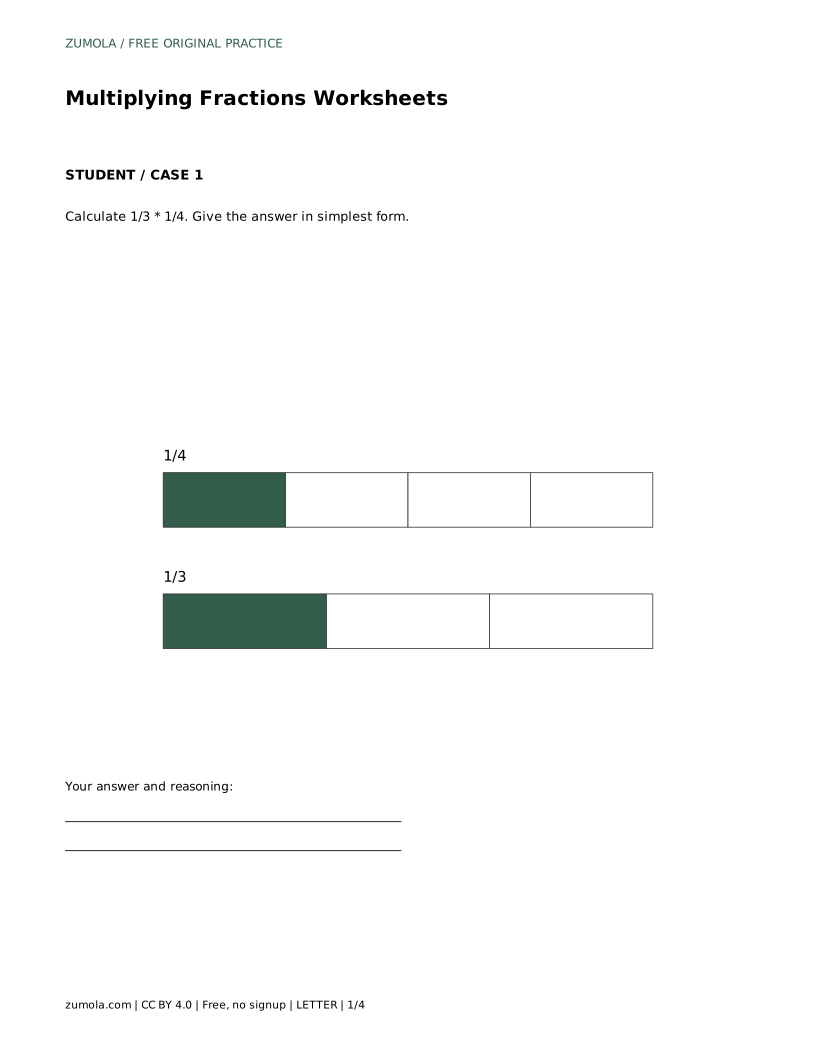
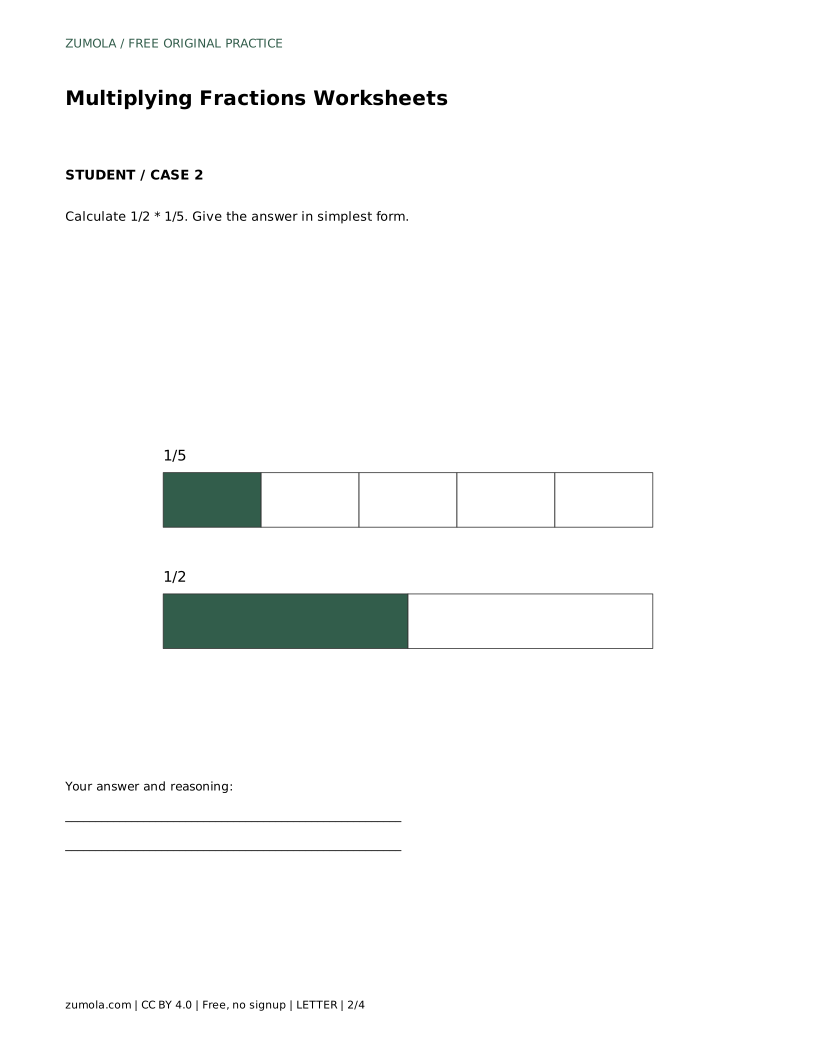
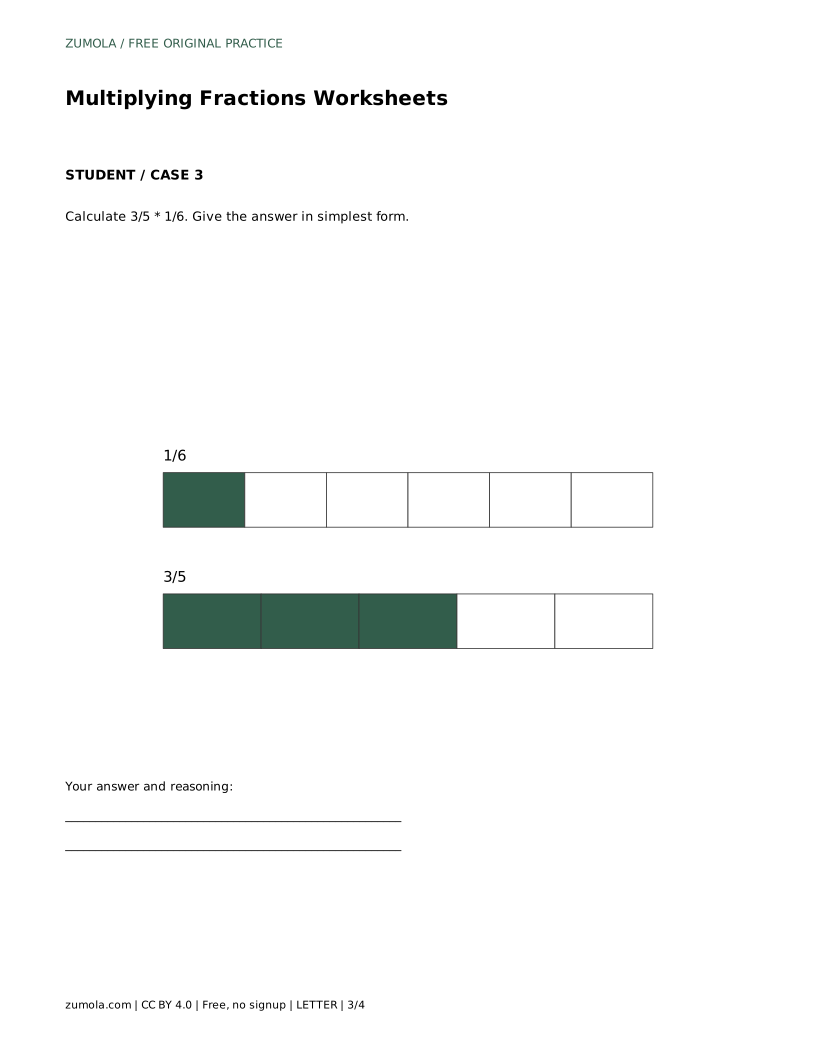
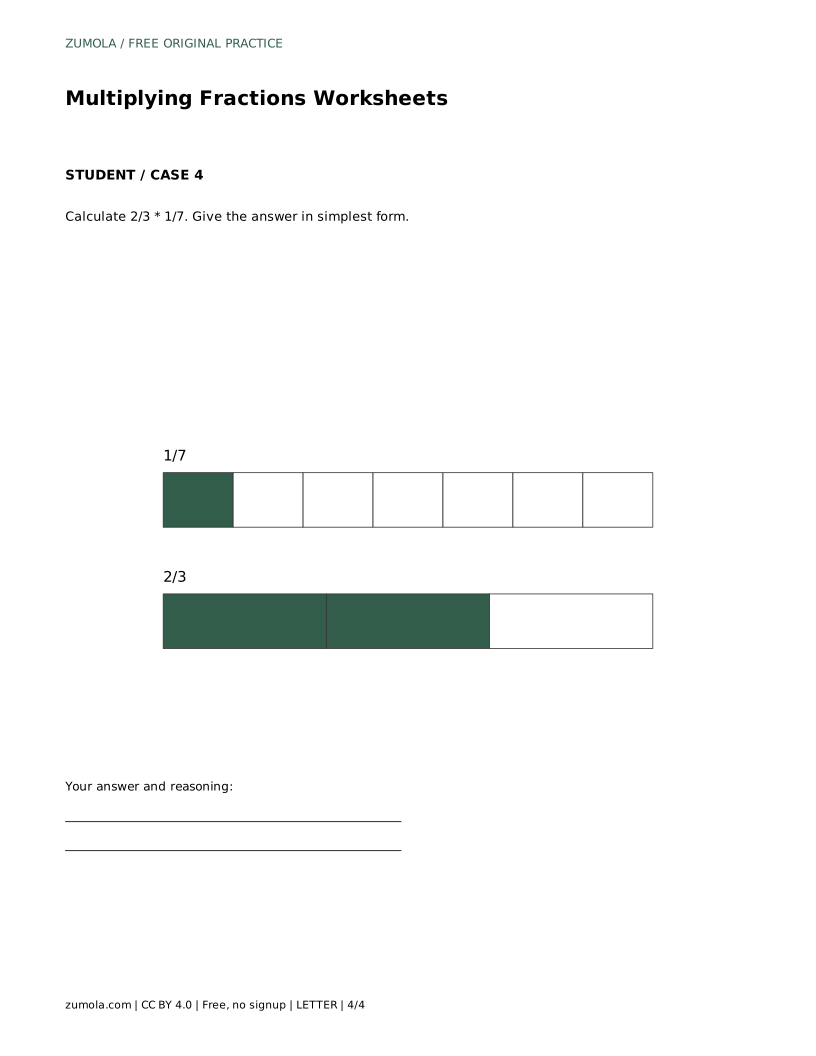
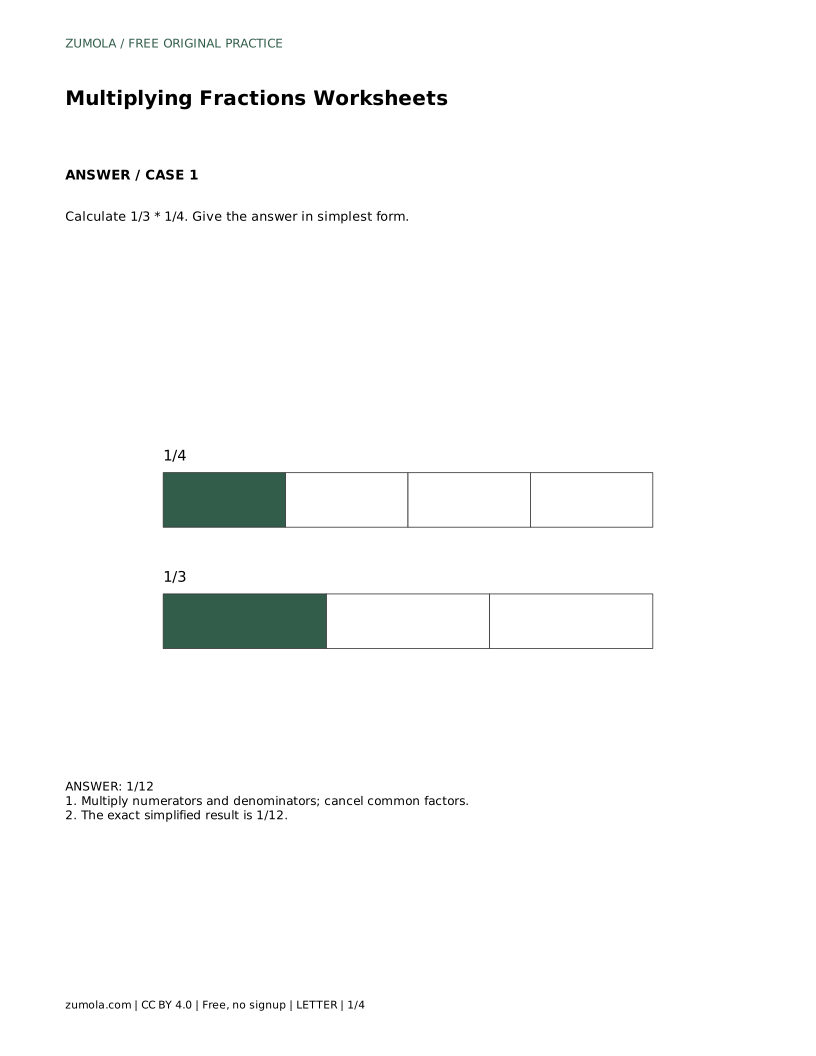
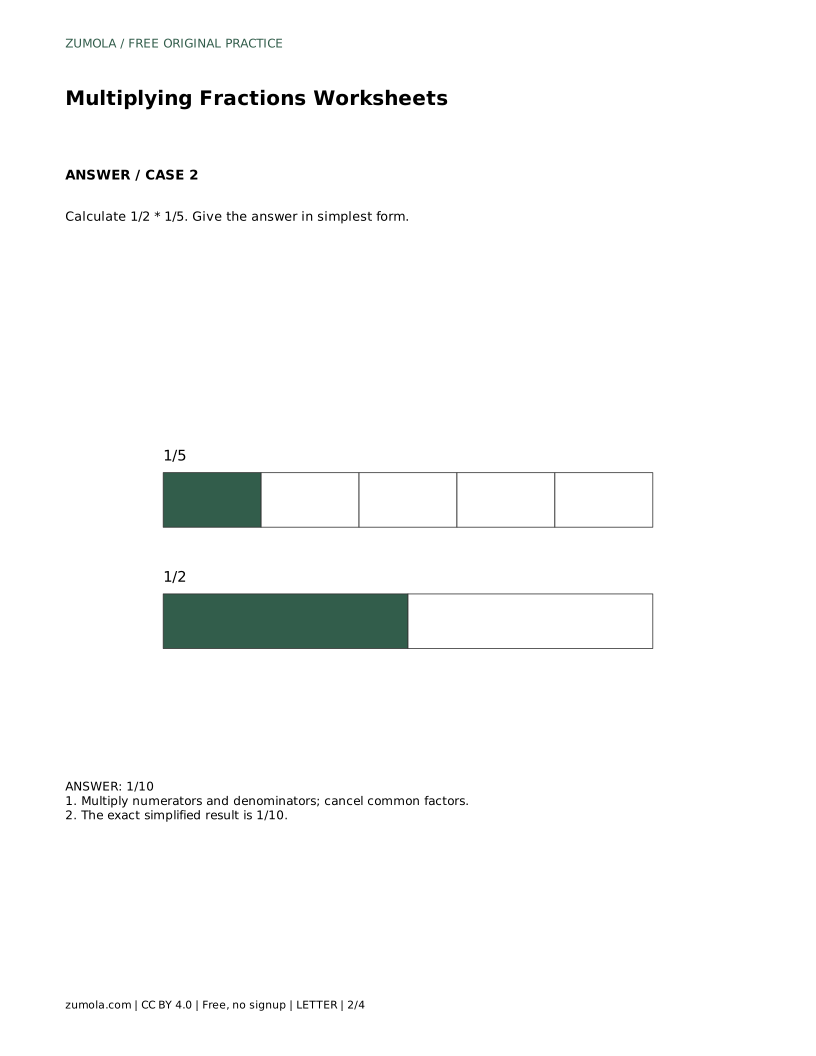
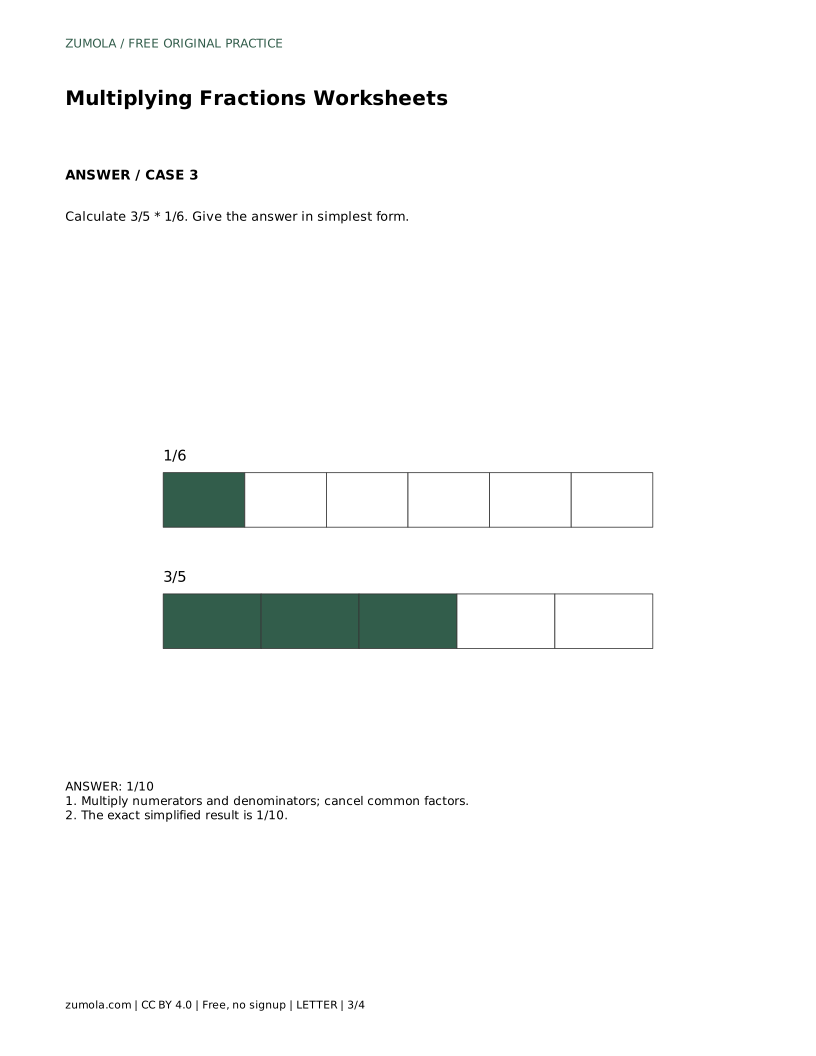
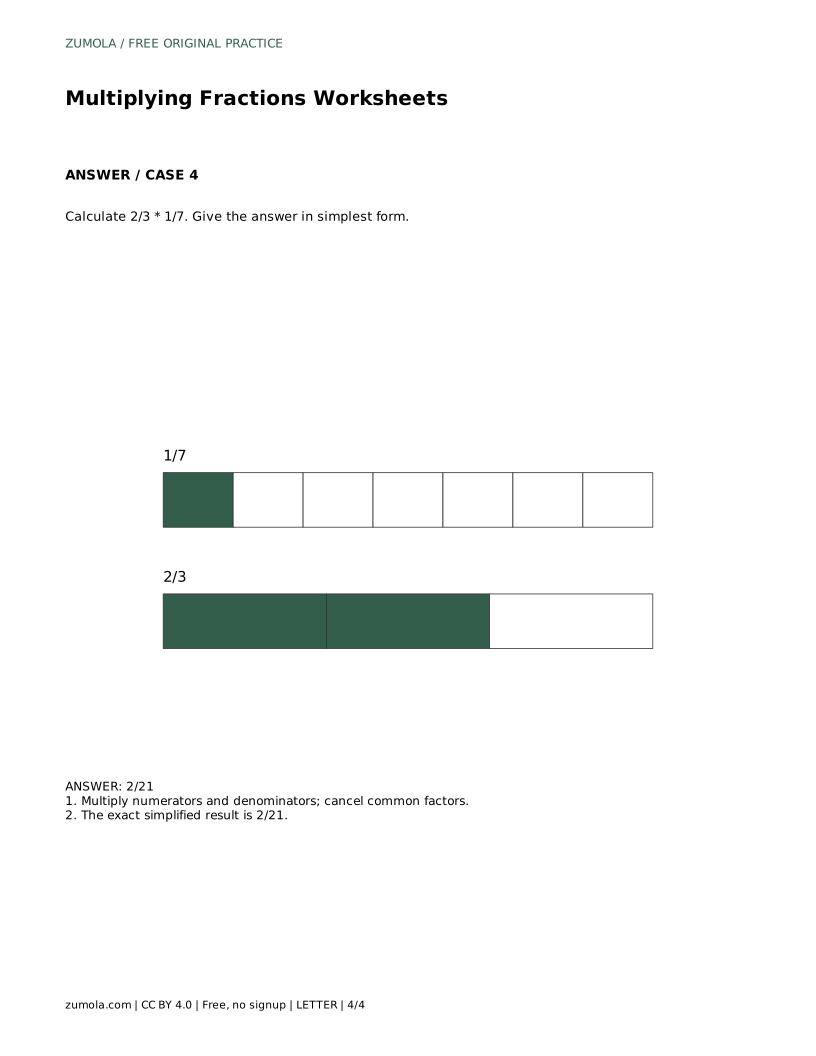
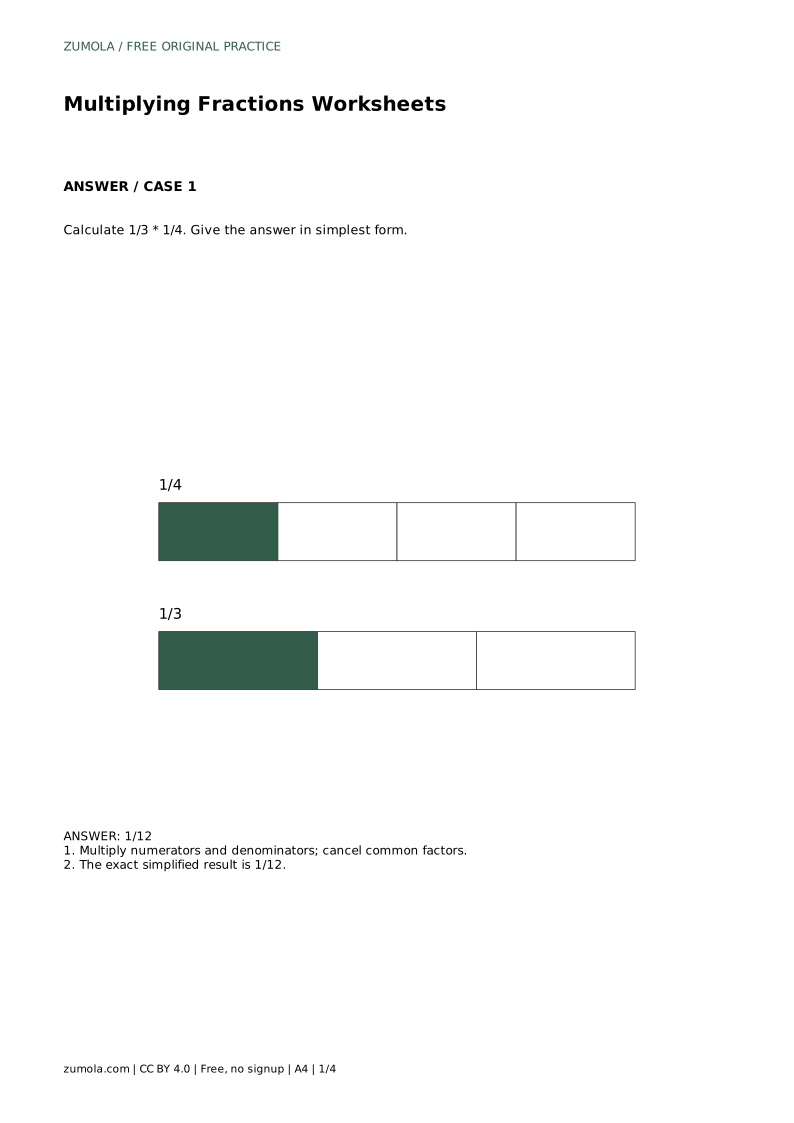
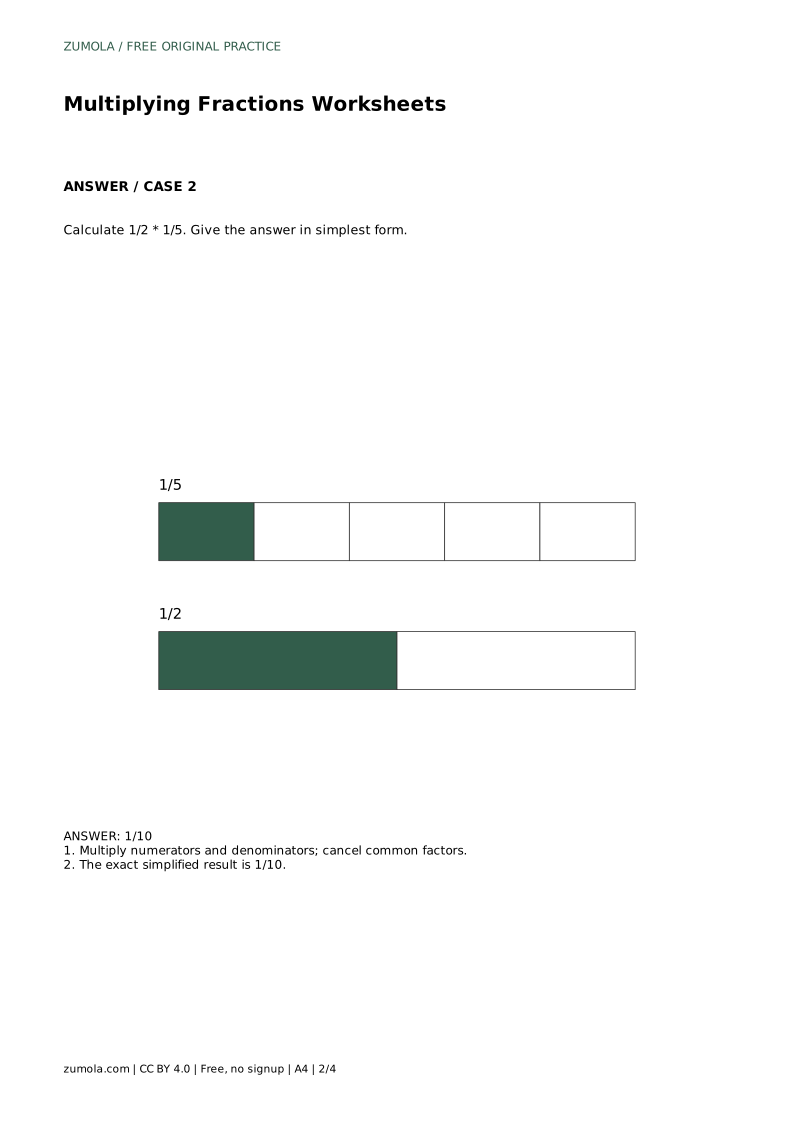
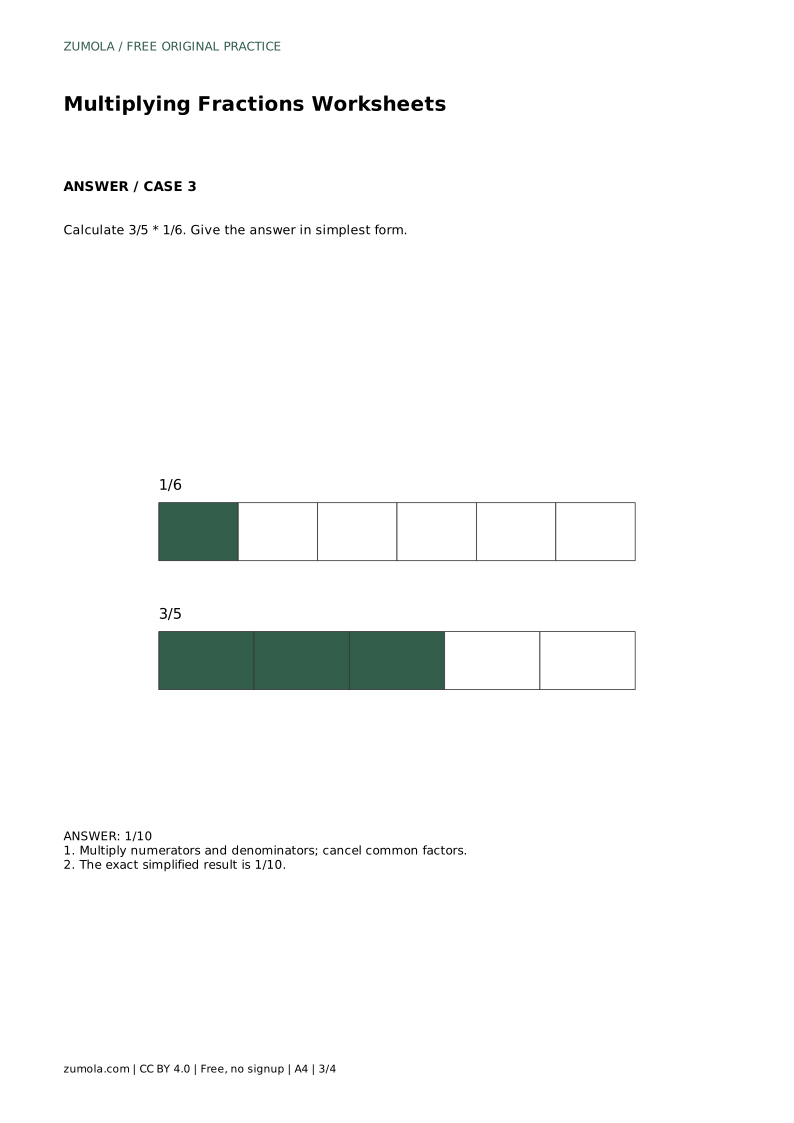
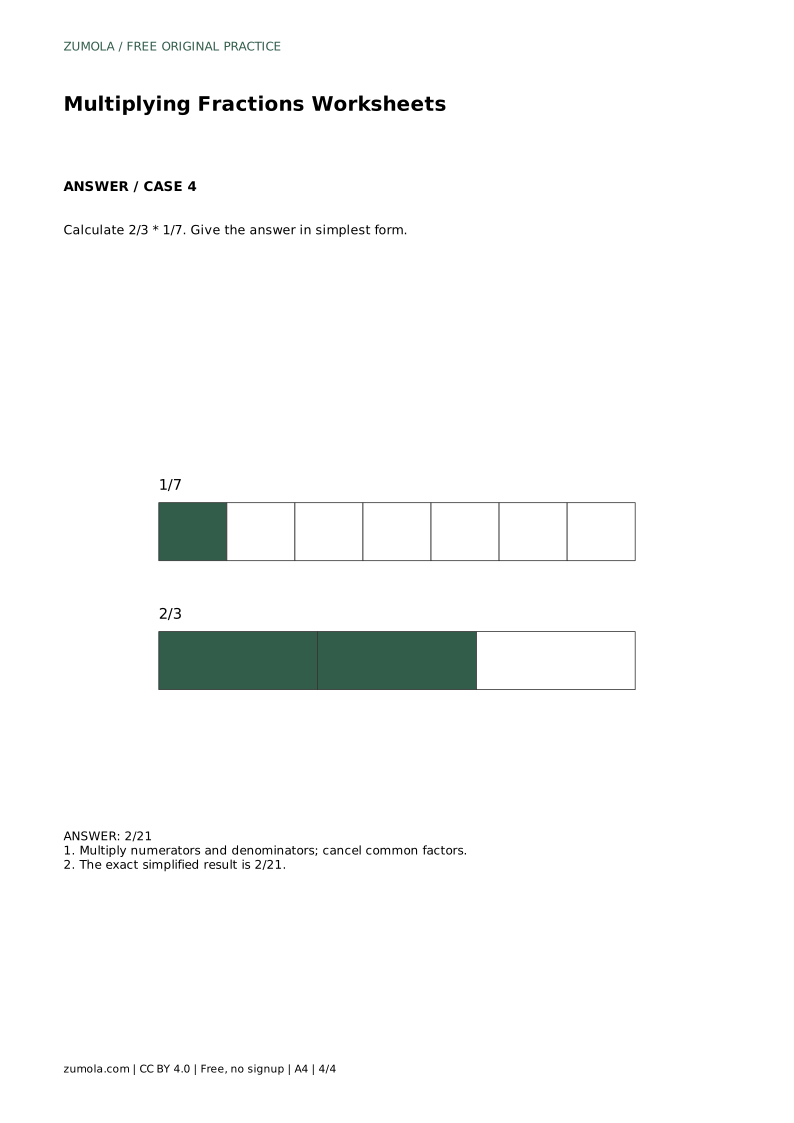
Reference diagrams
LETTER · Download PDF
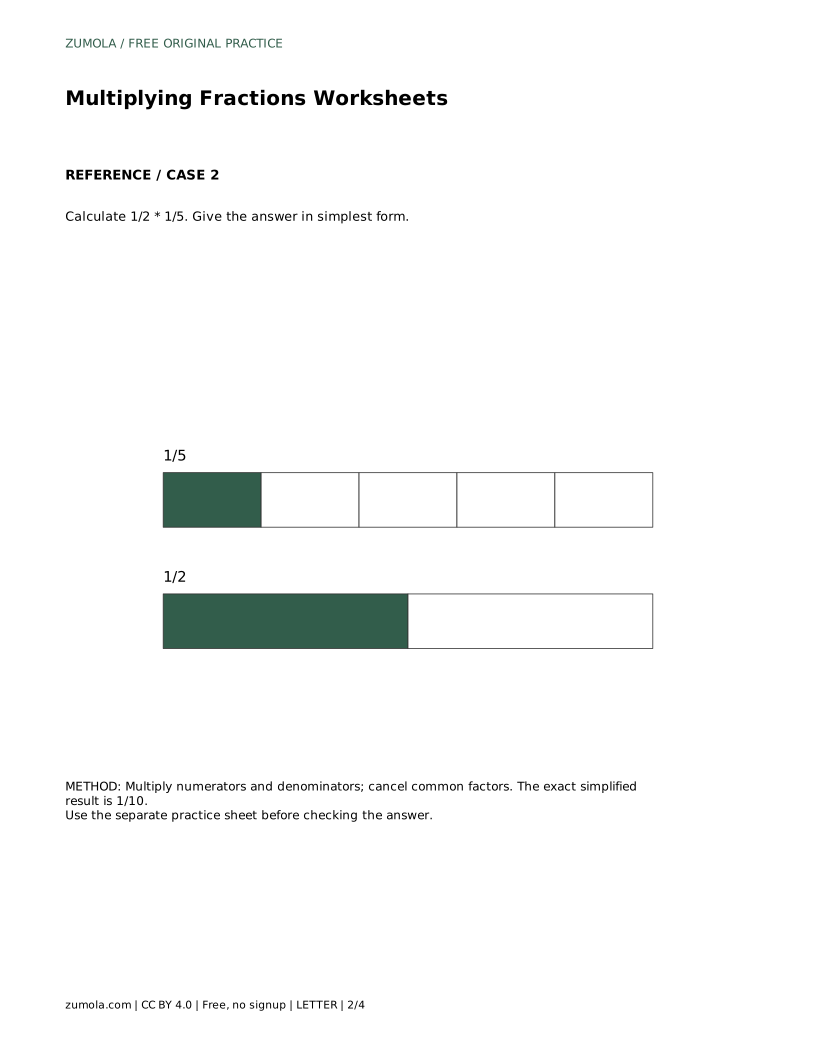
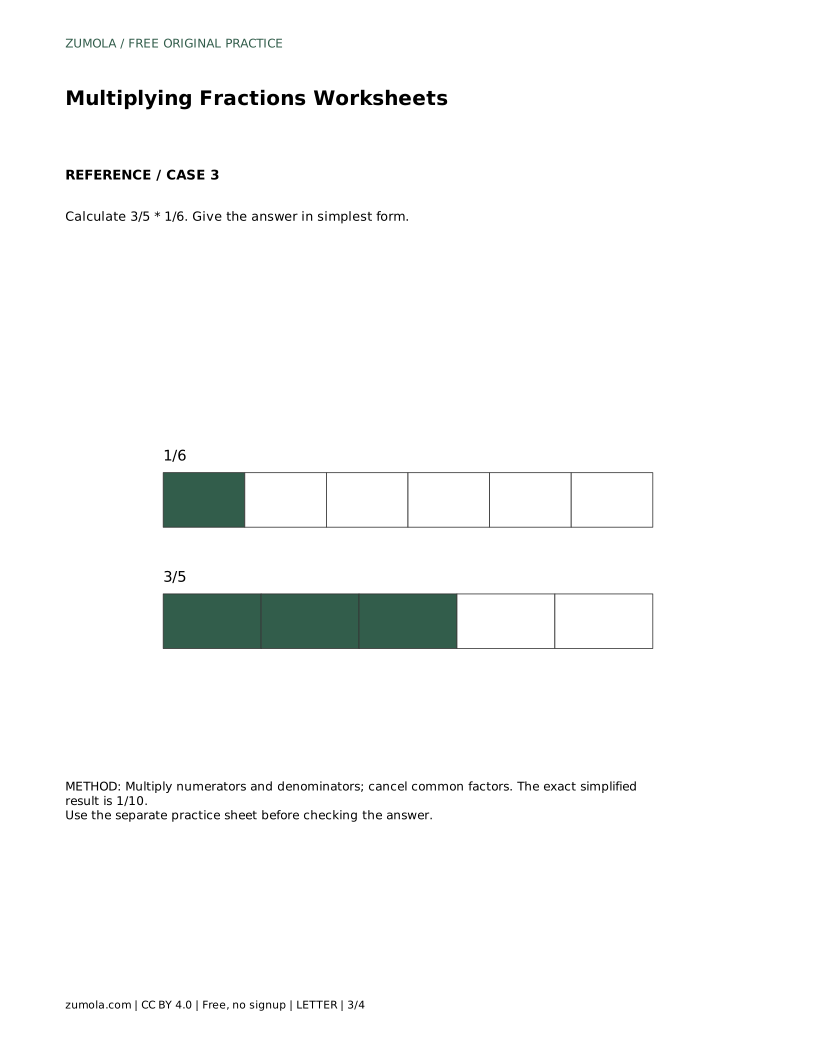
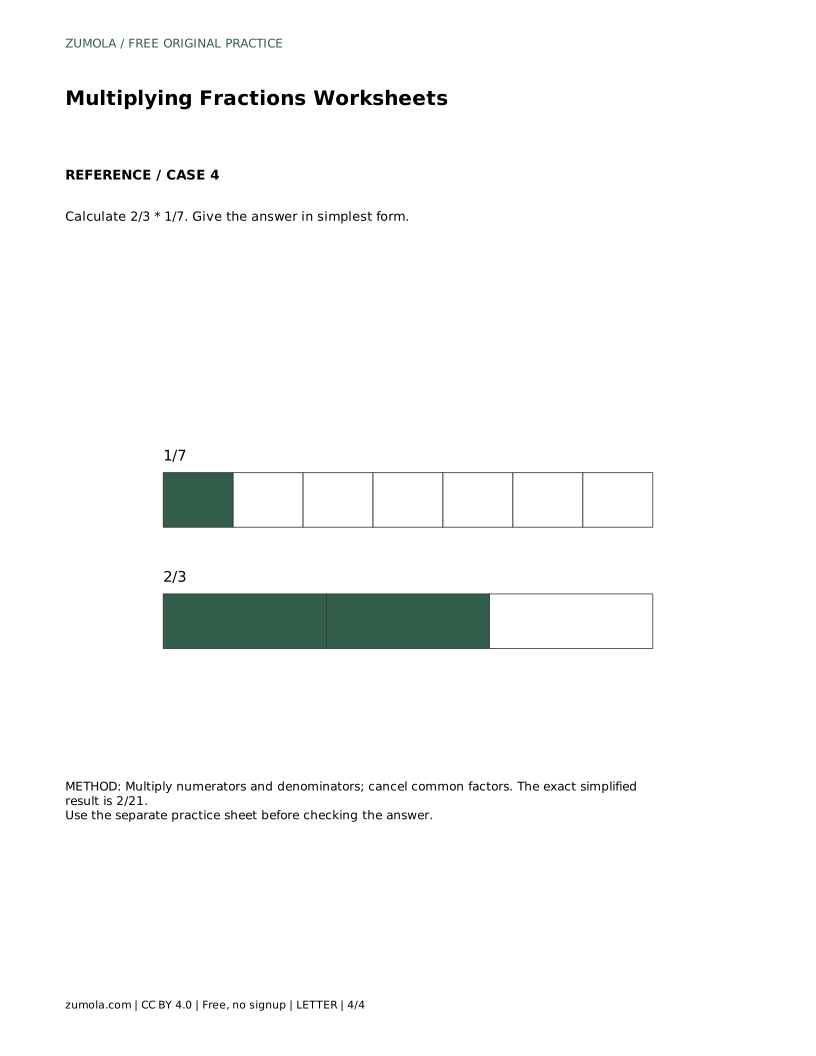
A4 · Download PDF
Free original resources
Learn to multiply proper fractions by multiplying numerators and denominators, then simplifying. Includes a worked example, common mistakes, and a marking rubric.
Four original cases, with reference diagrams, practice sheets and worked answers. Everything is free; no signup required.
LETTER · Download PDF
A4 · Download PDF
LETTER · Download PDF
A4 · Download PDF
LETTER · Download PDF
A4 · Download PDF
Use A4 or US Letter to match your printer. Use the stated values and conditions to solve each exercise; diagrams are not physical measuring rulers.
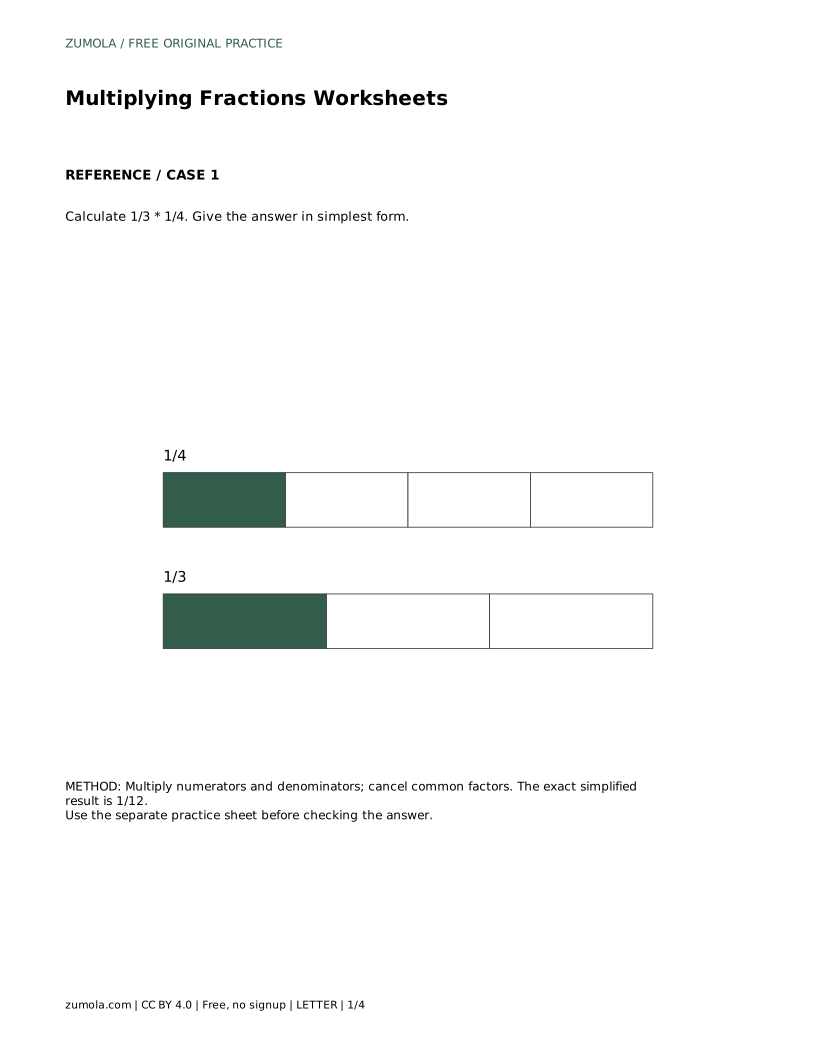
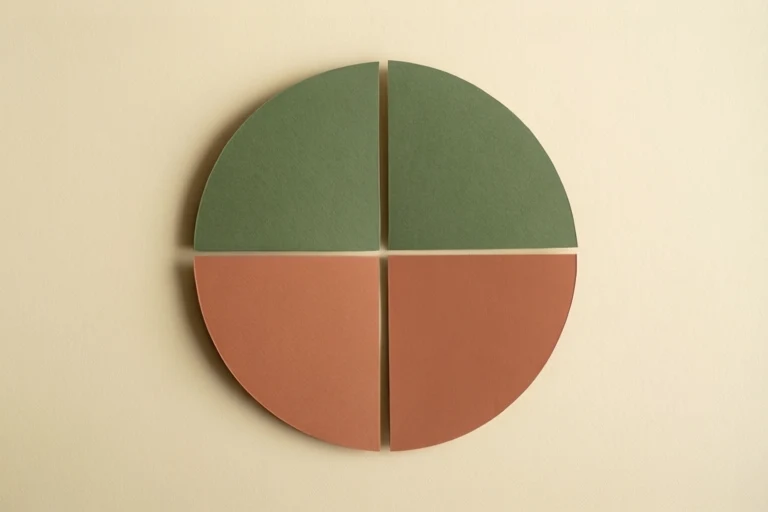
Multiplying proper fractions combines two parts of a whole into one smaller part. The method is direct: multiply the numerators to get the new numerator, multiply the denominators to get the new denominator, then simplify by cancelling common factors. This page explains that process step by step, shows a fully worked example, and highlights the errors learners most often make so you can check your own work with confidence.
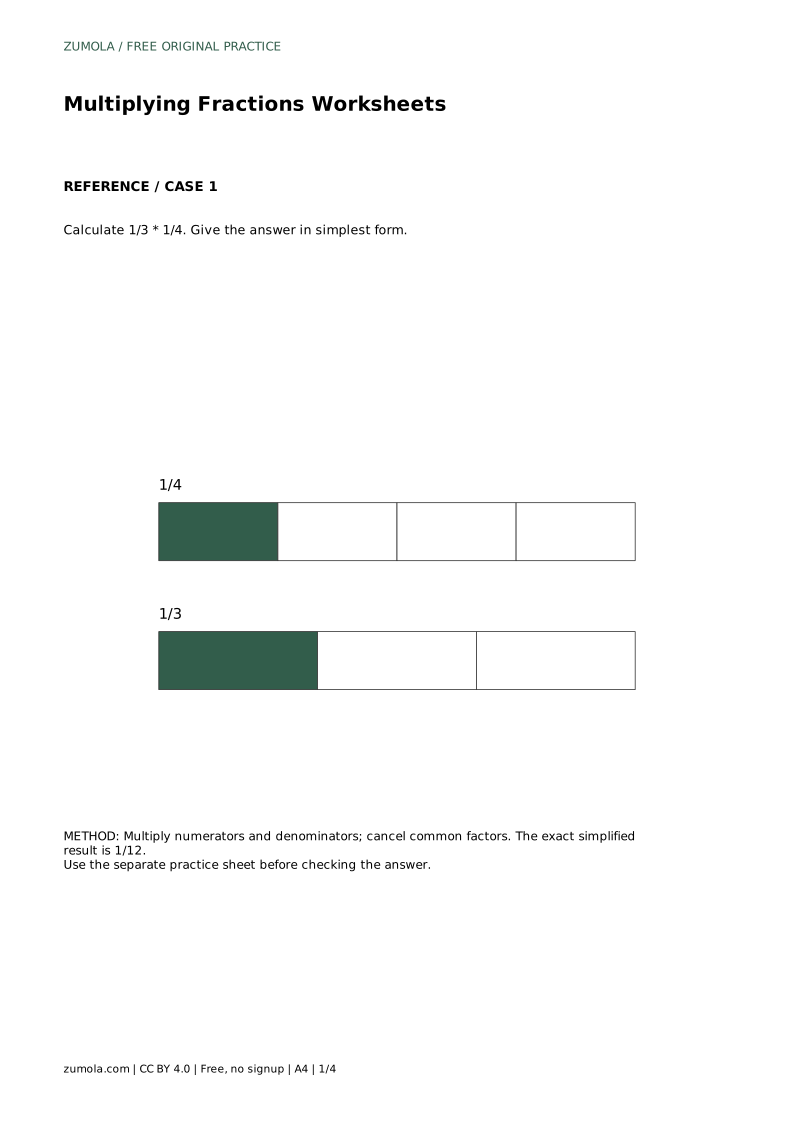
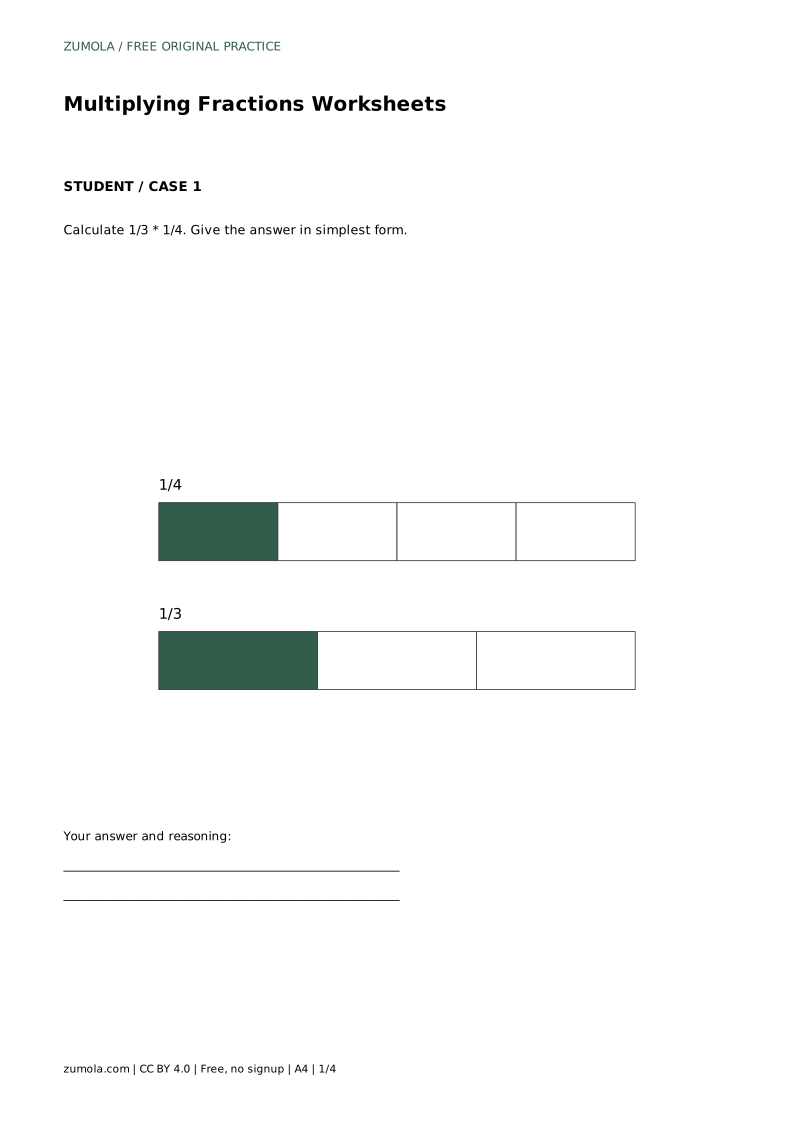
A proper fraction has a numerator smaller than its denominator, so each value lies between 0 and 1. When you multiply two proper fractions, you are taking a fraction of a fraction. For example, one third of one quarter means splitting a quarter into three equal parts and keeping one, which gives one twelfth. The arithmetic mirrors this idea: the numerators multiply together and the denominators multiply together.
Simplification is part of the answer, not an optional extra. After multiplying, look for common factors shared by the new numerator and denominator and divide both by the greatest common factor. You can also cancel before multiplying: if a numerator and a denominator share a factor, divide them first. Both routes give the same simplified result, so choose whichever you find clearer.
Take the task: calculate 1/3 * 1/4 and give the answer in simplest form. Multiply the numerators: 1 times 1 equals 1. Multiply the denominators: 3 times 4 equals 12. The unsimplified product is 1/12. The numerator 1 and denominator 12 share no common factor other than 1, so the fraction is already in simplest form. The exact simplified result is 1/12.
Notice that the answer is smaller than either starting fraction. That is expected whenever both factors are proper fractions strictly between 0 and 1: multiplying by a value less than 1 shrinks the result. Use this as a quick sanity check. If your product is larger than one of the factors, recheck your multiplication.
A reliable check is to compare the size of the product with the factors. Since 1/3 and 1/4 are both less than 1, the product must be less than both. You can also reverse the multiplication, because fraction multiplication is commutative: 1/4 * 1/3 gives the same 1/12.
Keep the fraction notation consistent throughout your working. Write the multiplication clearly, carry the unsimplified product forward, and only then reduce. Showing the intermediate fraction makes it easy to spot a cancelled factor that was applied twice or missed entirely.
This page focuses on multiplying two proper fractions and simplifying. The same numerator-times-numerator, denominator-times-denominator rule extends to other fraction products, but the simplification step and the size check behave differently when factors are not both proper fractions. Treat the proper-fraction case as its own skill and confirm the conditions before applying the shortcut reasoning about shrinking results.
Calculate 1/3 * 1/4. Give the answer in simplest form.
1/12 Multiply numerators and denominators; cancel common factors. The exact simplified result is 1/12.
Yes. A fraction answer should be given in simplest form, so divide the numerator and denominator by their greatest common factor.
Yes. If a numerator and a denominator share a factor, divide both by it first. The simplified result is the same as cancelling afterwards.
Each proper fraction is less than 1, so multiplying by it takes only part of the other fraction, producing a smaller value.
All math worksheets · Free coordinate paper
Original resources · CC BY 4.0 · Free for personal and classroom use with attribution.