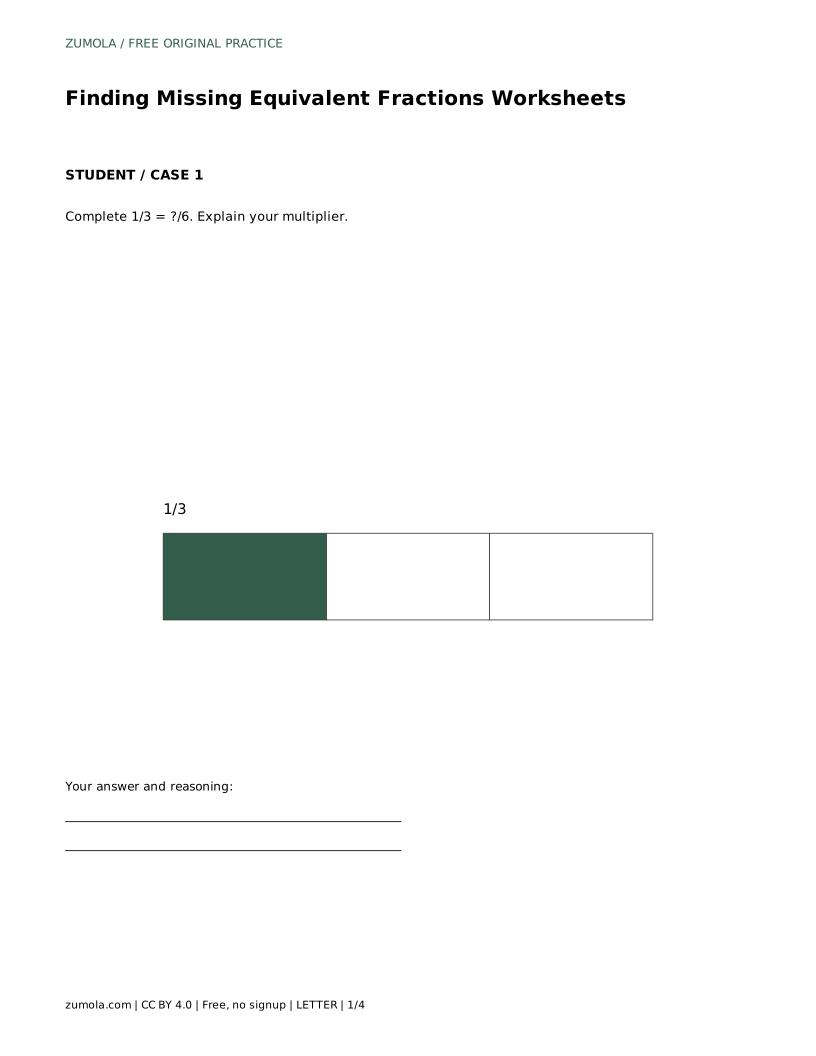
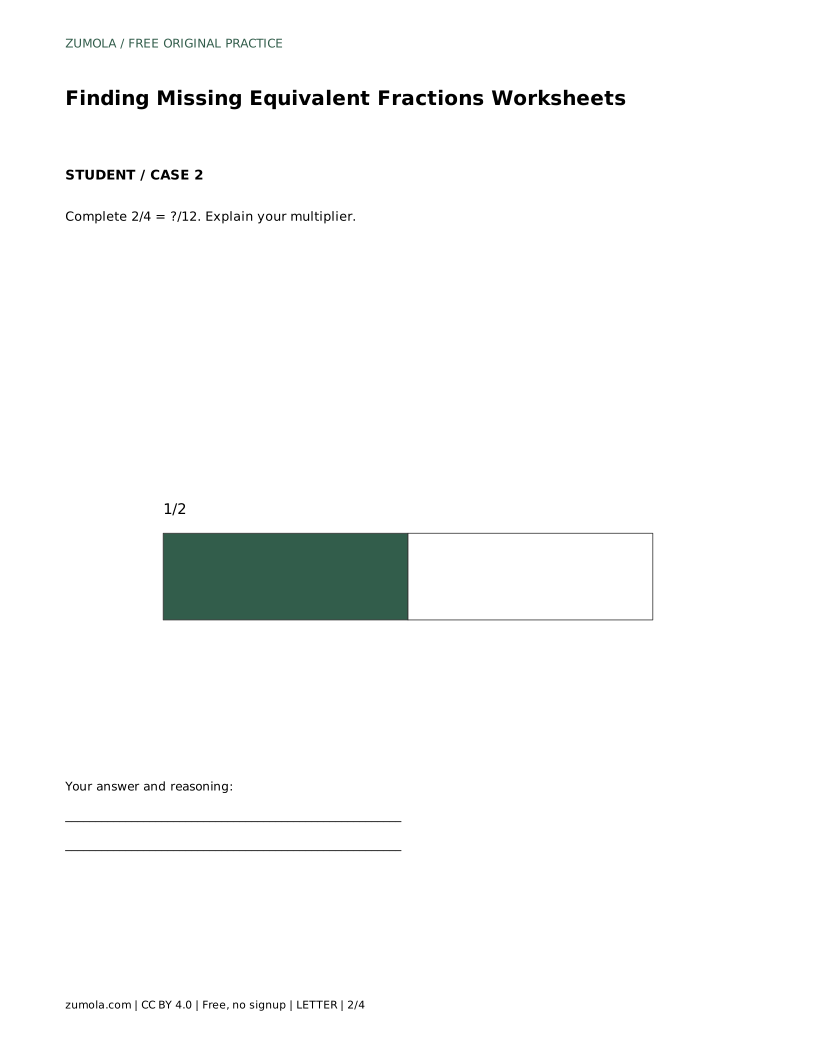
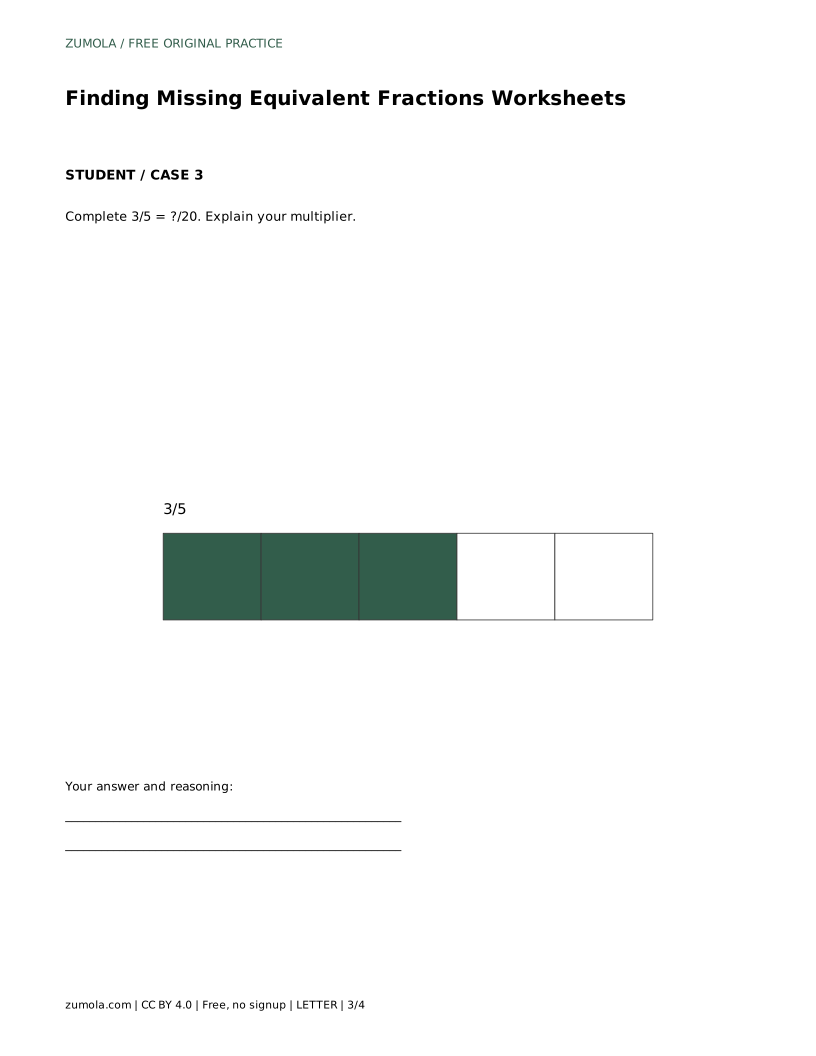
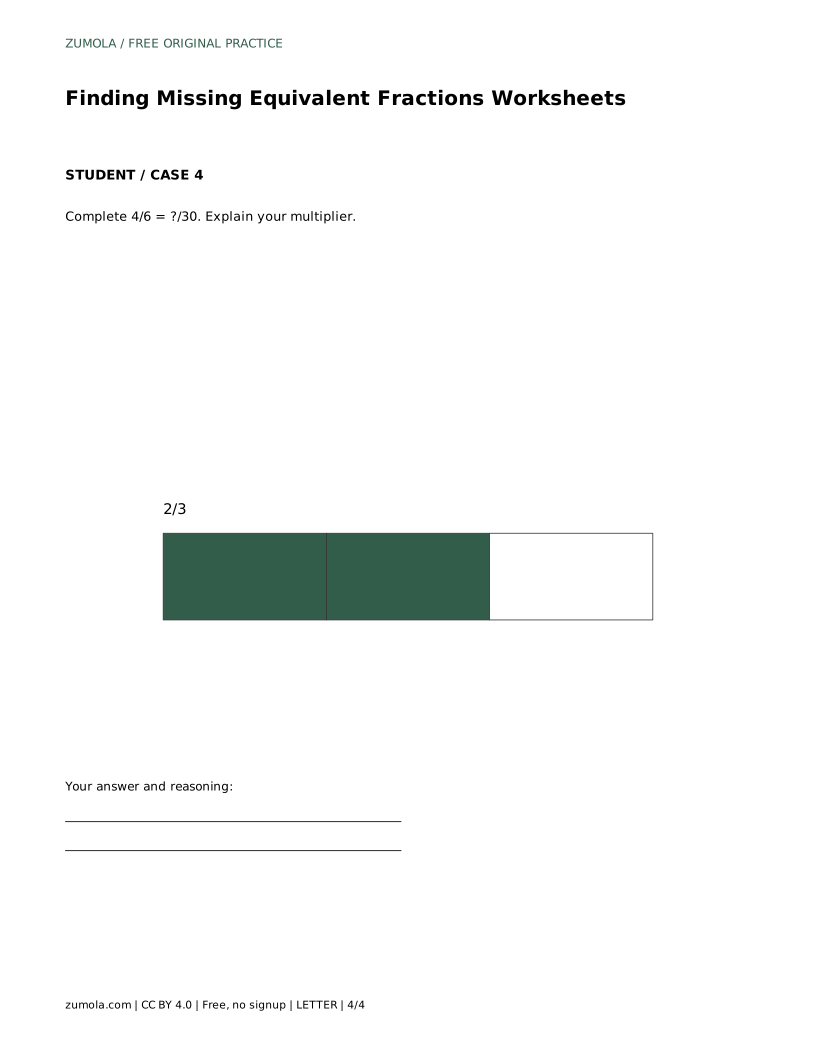
Reference diagrams
LETTER · Download PDF
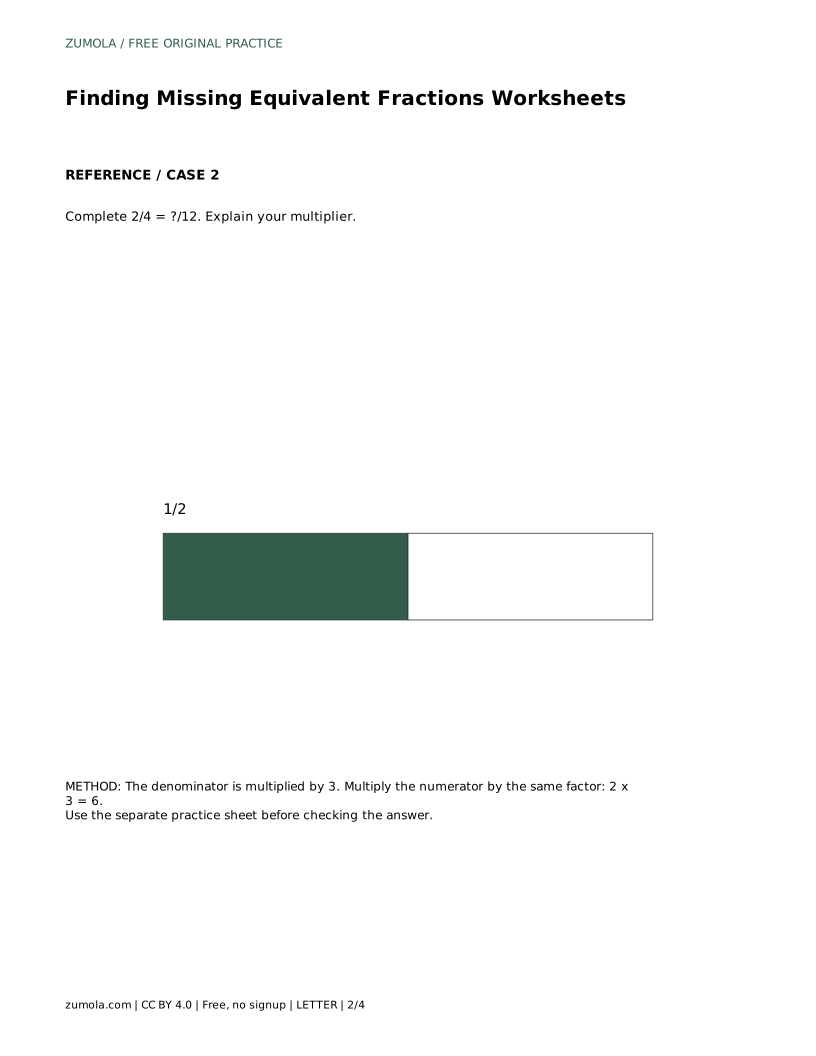
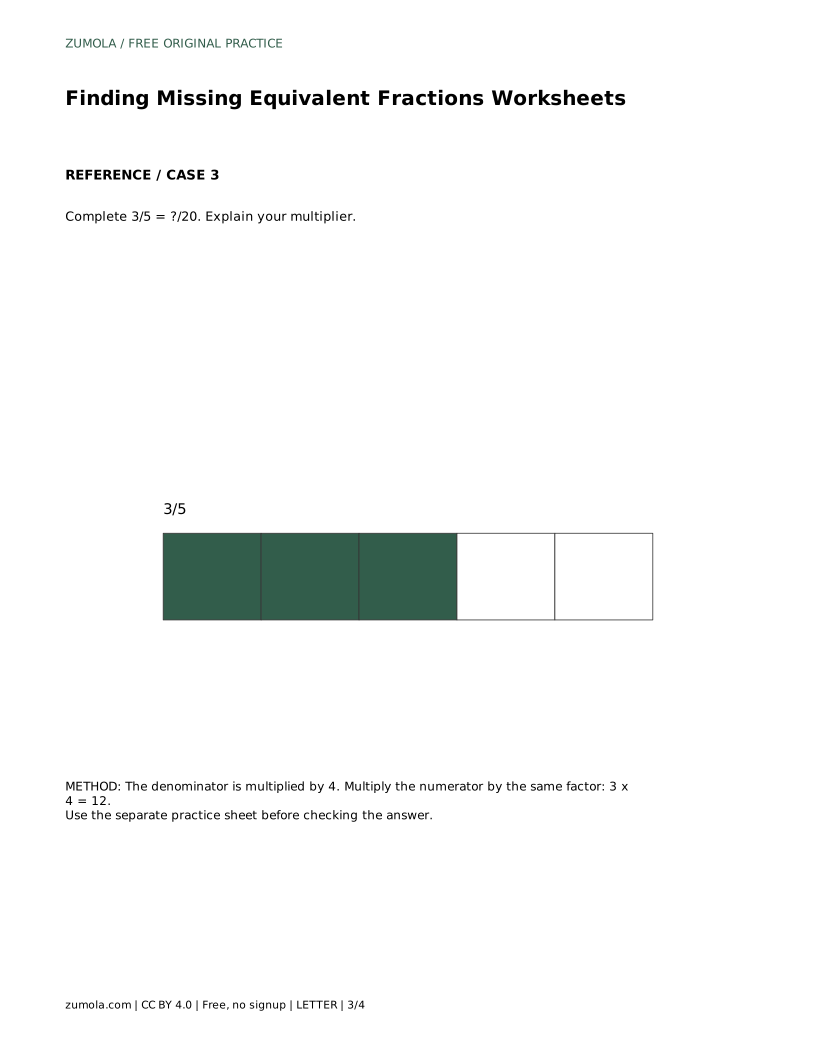
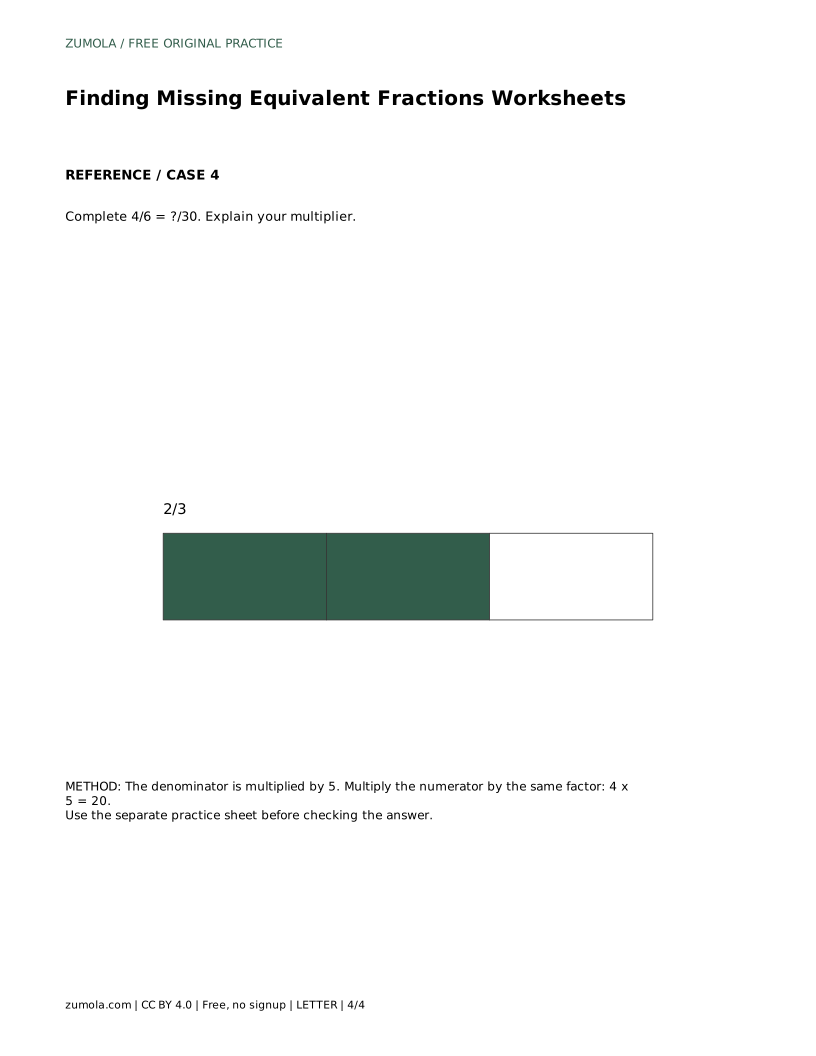
A4 · Download PDF
Free original resources
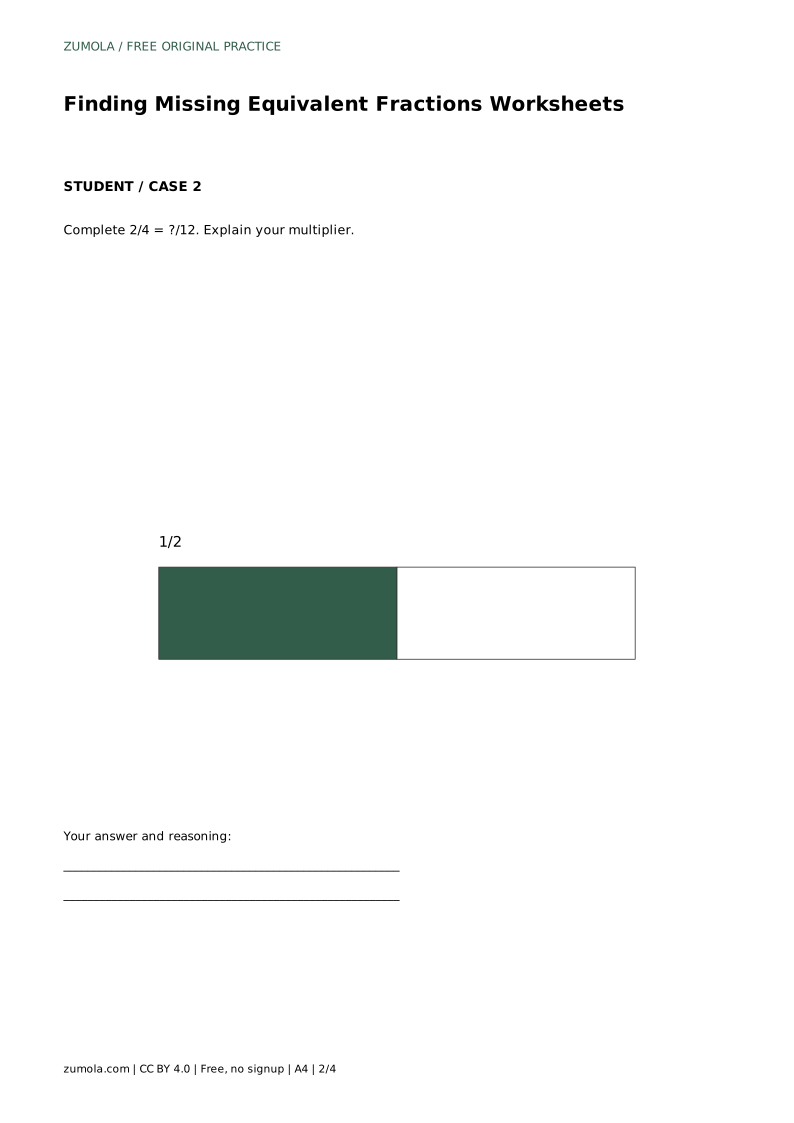
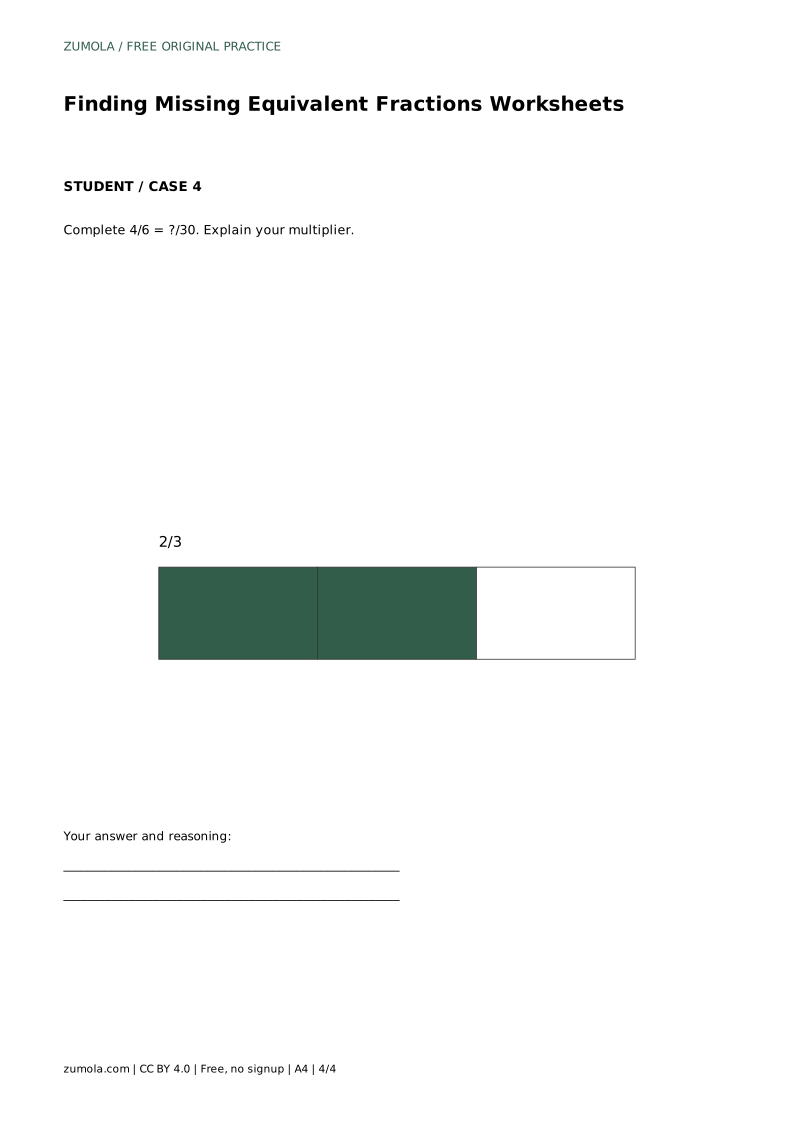
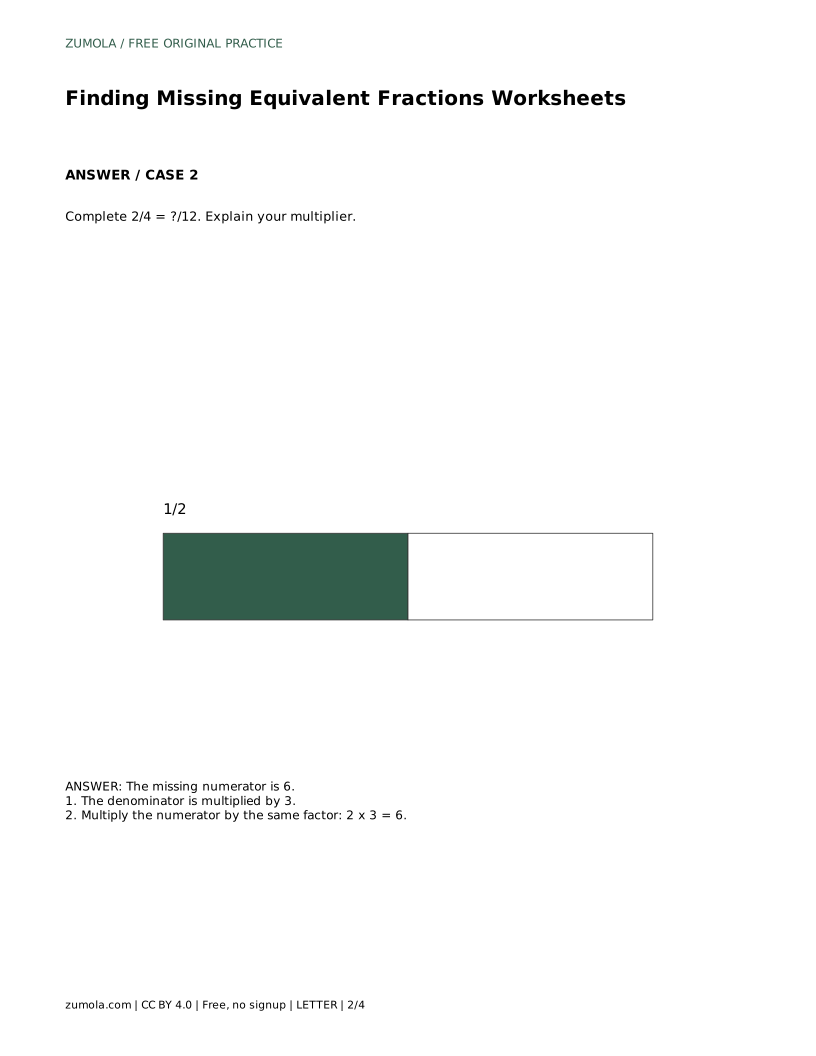
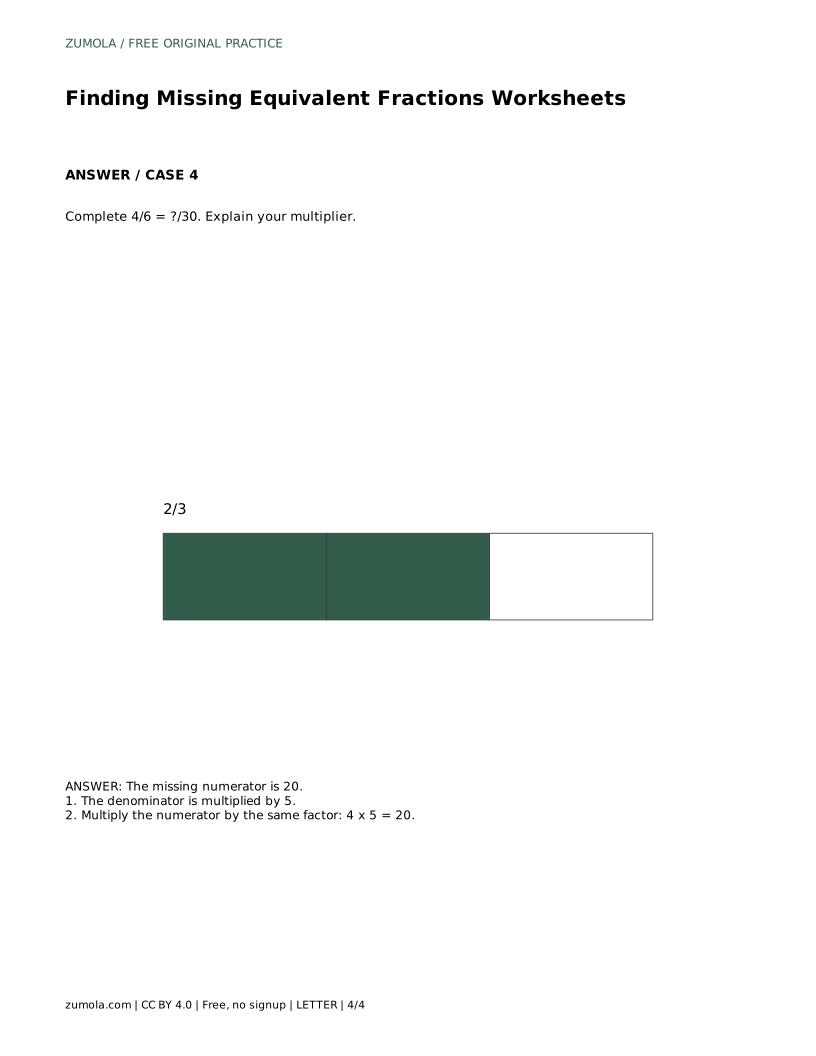
Practice completing equivalent fractions such as 1/3 = ?/6 by finding the multiplier that changes the denominator, then applying it to the numerator.
Four original cases, with reference diagrams, practice sheets and worked answers. Everything is free; no signup required.
LETTER · Download PDF
A4 · Download PDF
LETTER · Download PDF
A4 · Download PDF
LETTER · Download PDF
A4 · Download PDF
Use A4 or US Letter to match your printer. Use the stated values and conditions to solve each exercise; diagrams are not physical measuring rulers.
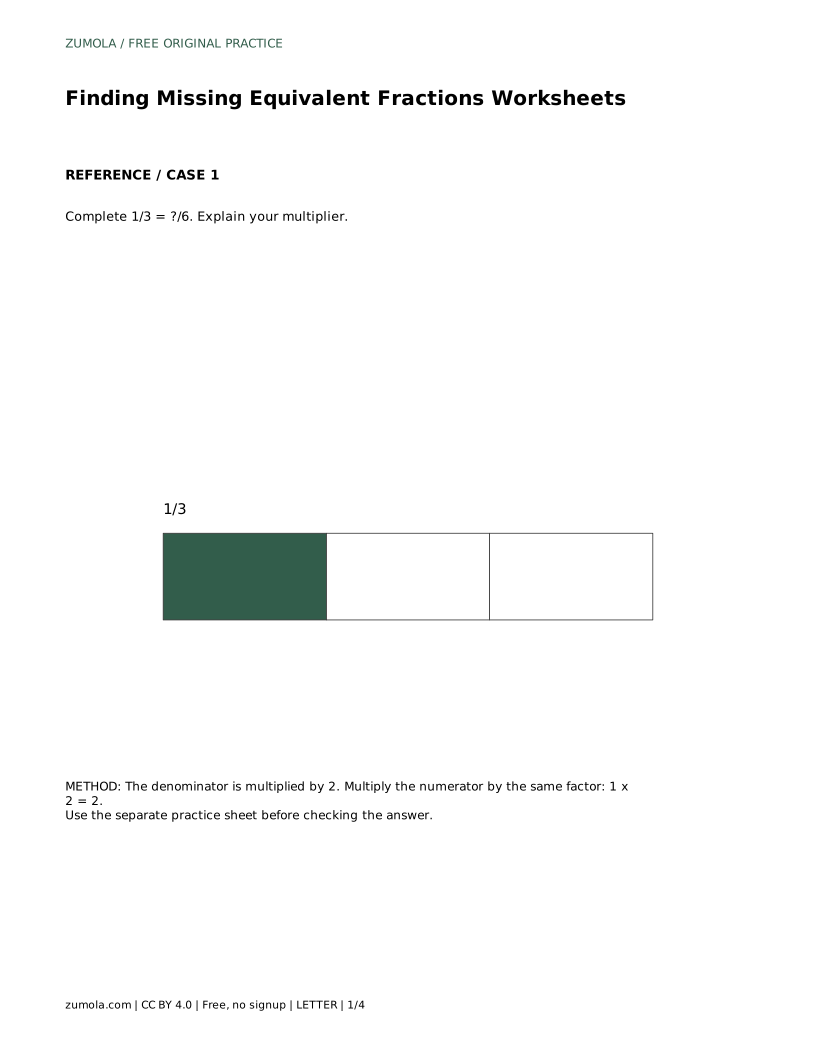
An equivalent fraction names the same amount with different numbers. When one numerator is missing, compare the two denominators first. Ask what number multiplies the known denominator to make the new one, then multiply the numerator by that same number. This page focuses on blanks in the numerator, where the denominator change is visible and the multiplier can be stated clearly.
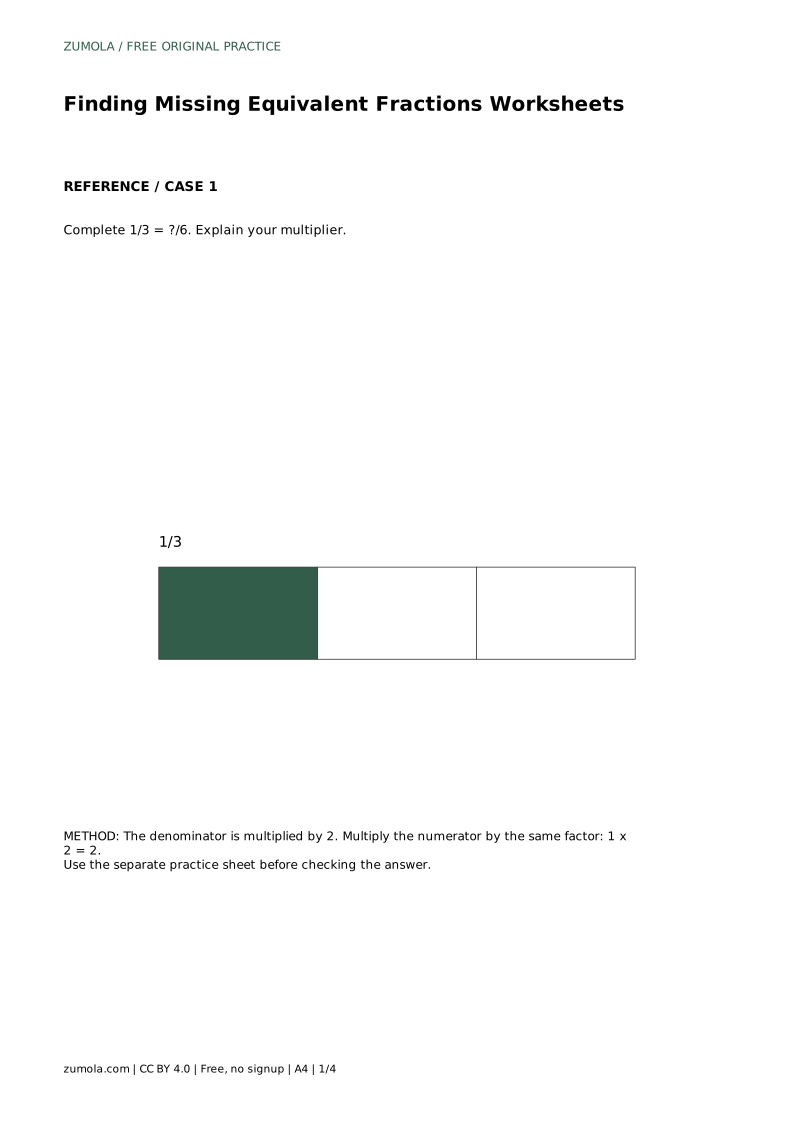
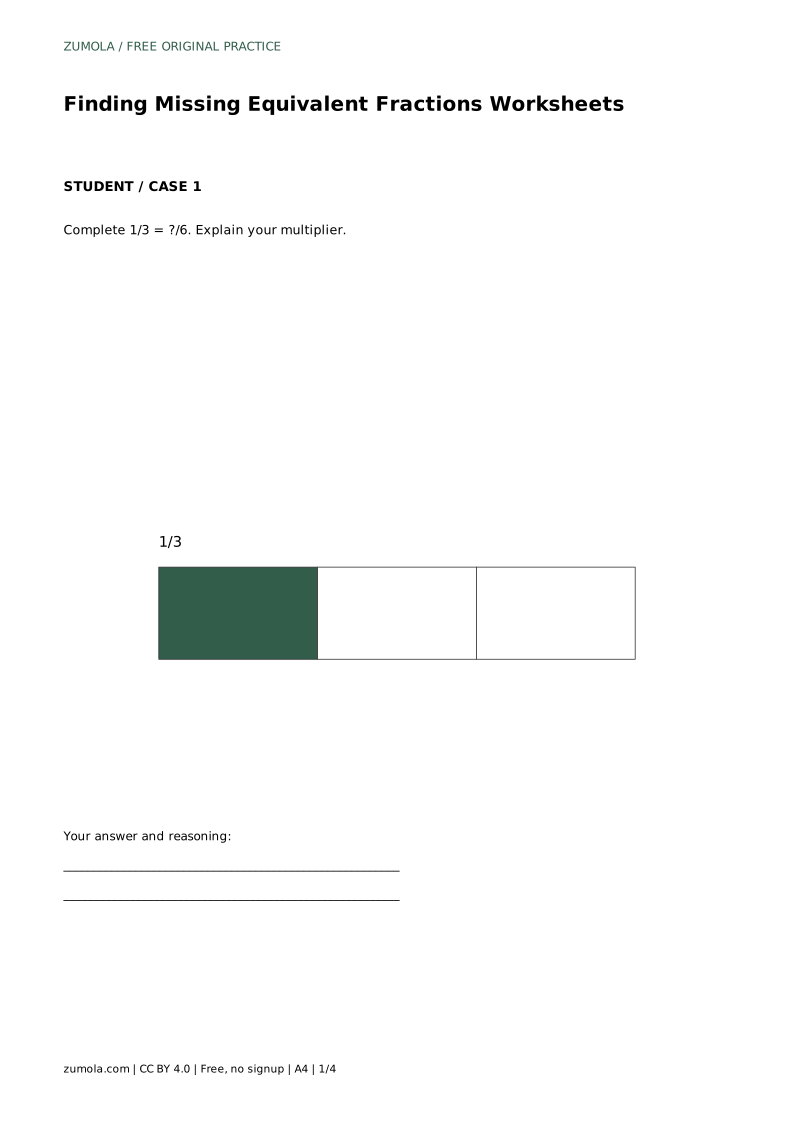
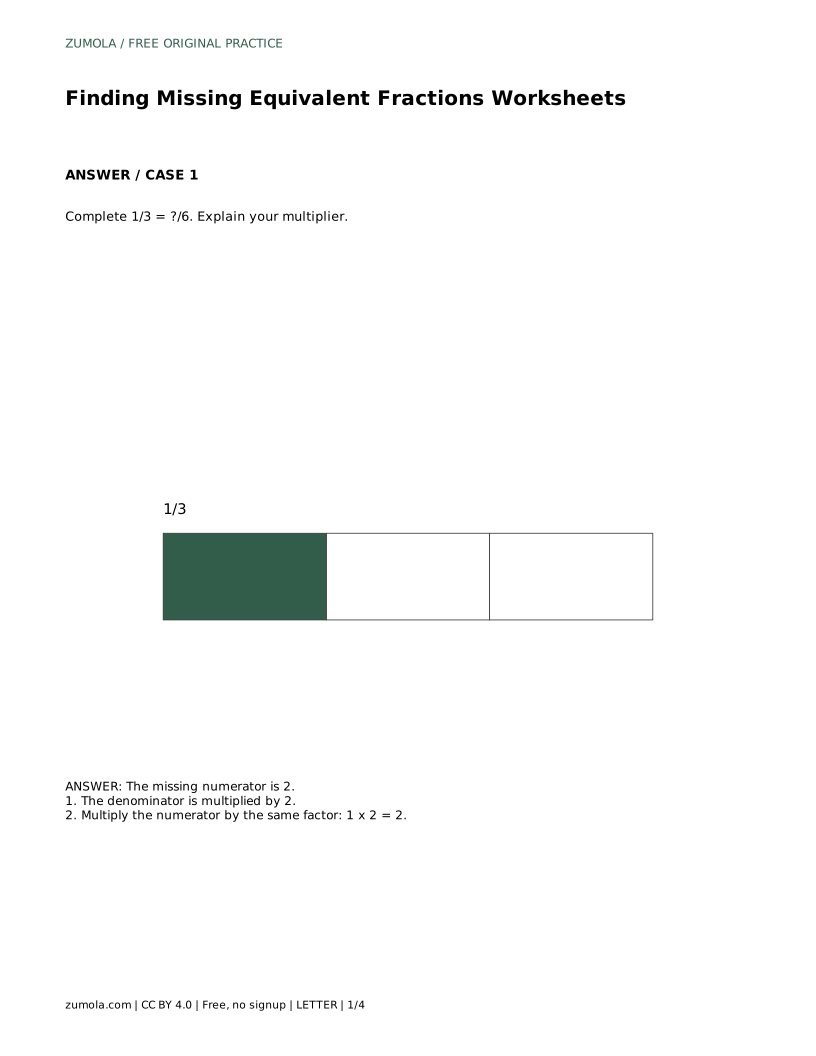
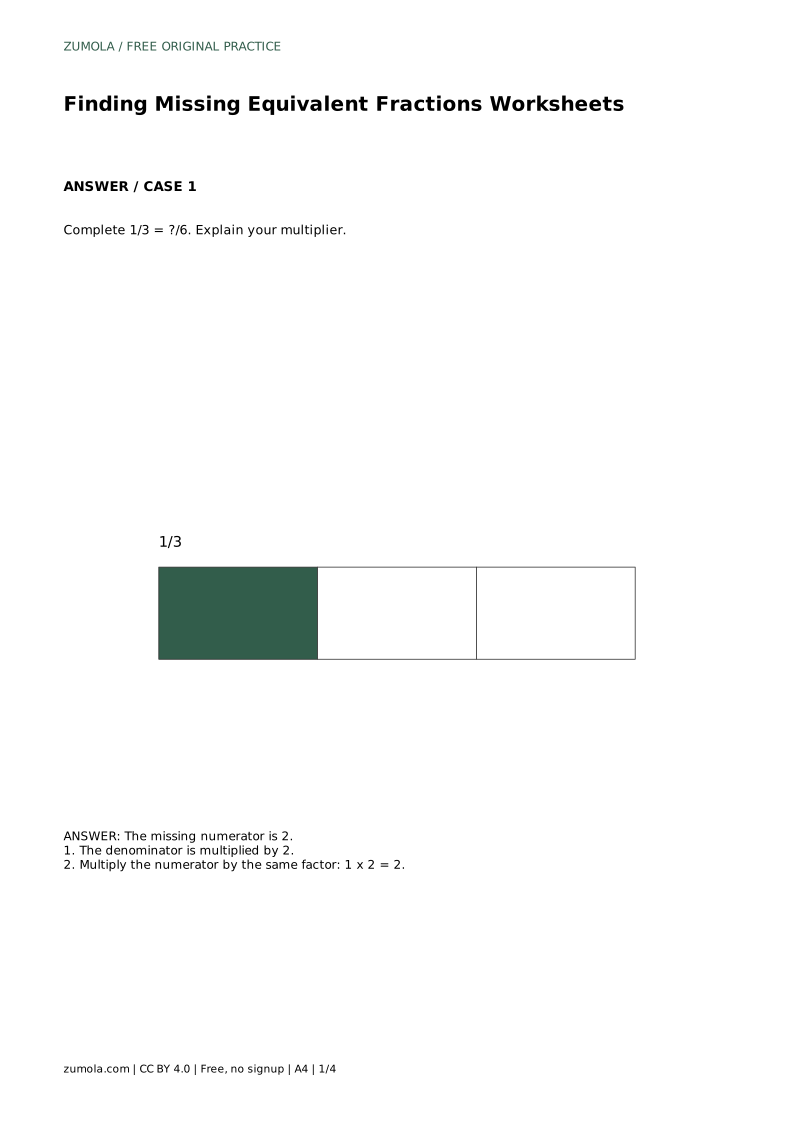
A fraction is a comparison of a part to a whole. Multiplying the numerator and denominator by the same nonzero whole number cuts every part into smaller pieces without changing how much of the whole is covered. For example, 1/3 becomes 2/6 when each third is split into two equal pieces: there are twice as many pieces, and twice as many are shaded.
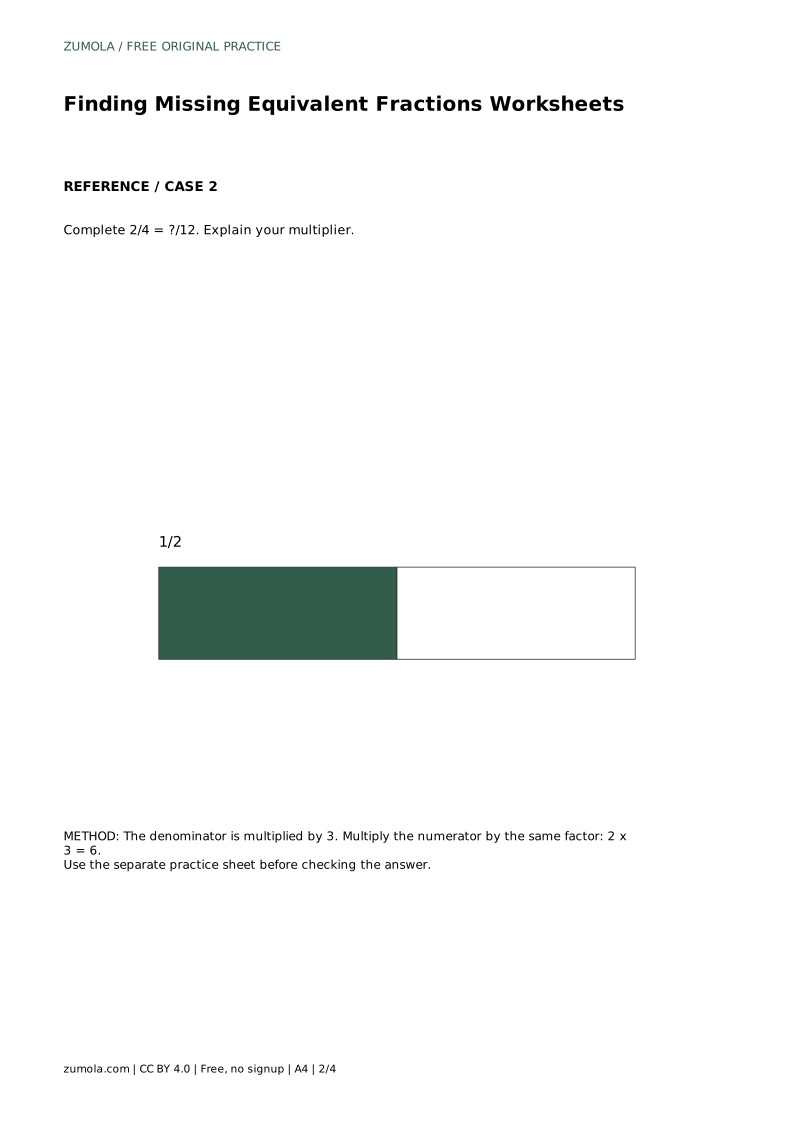
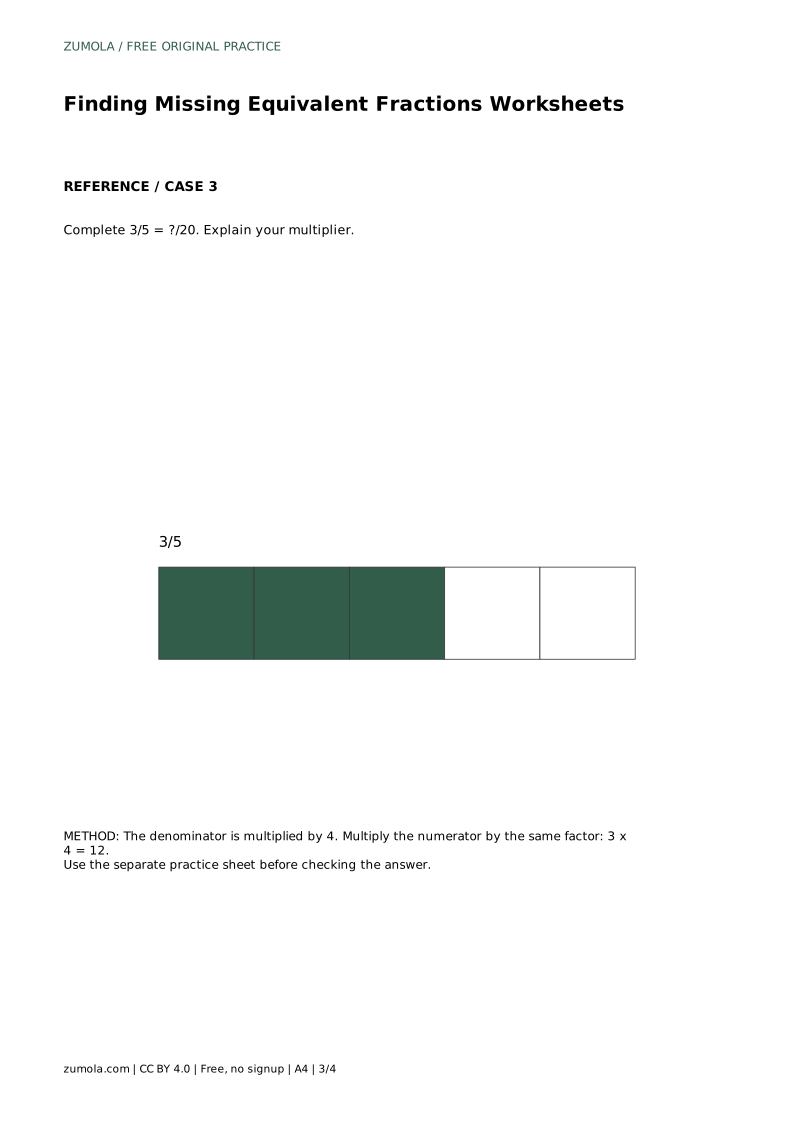
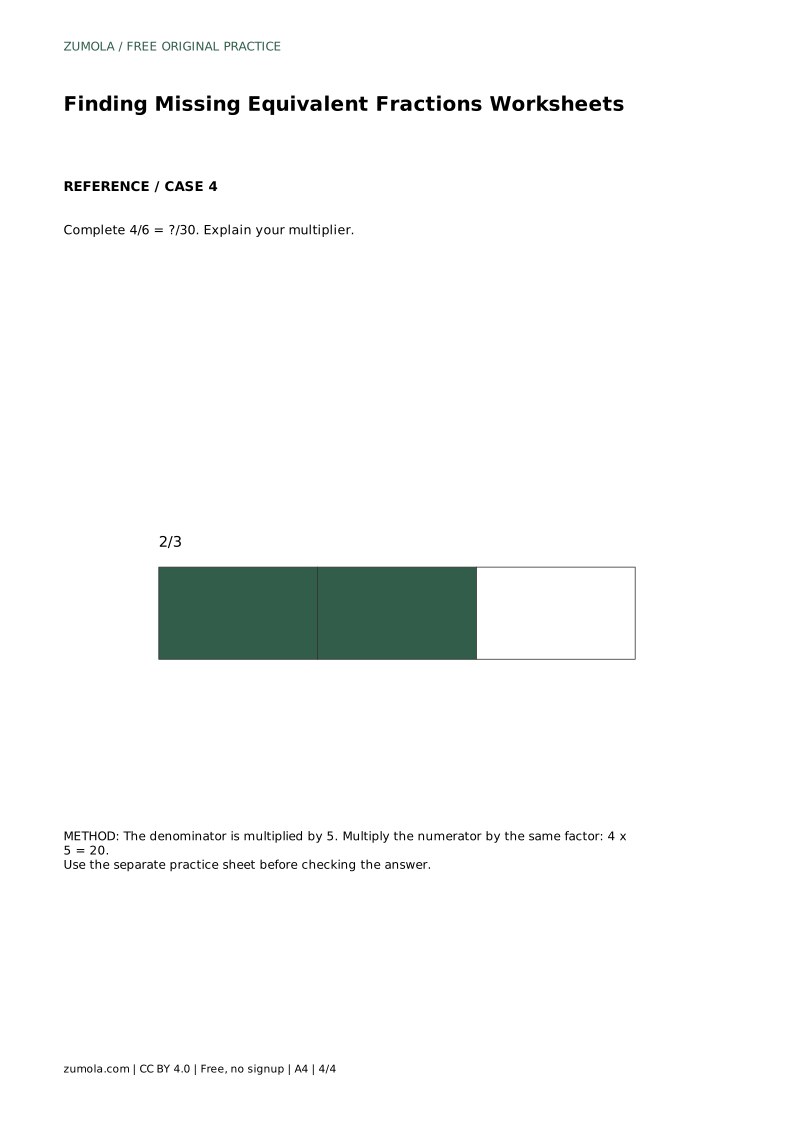
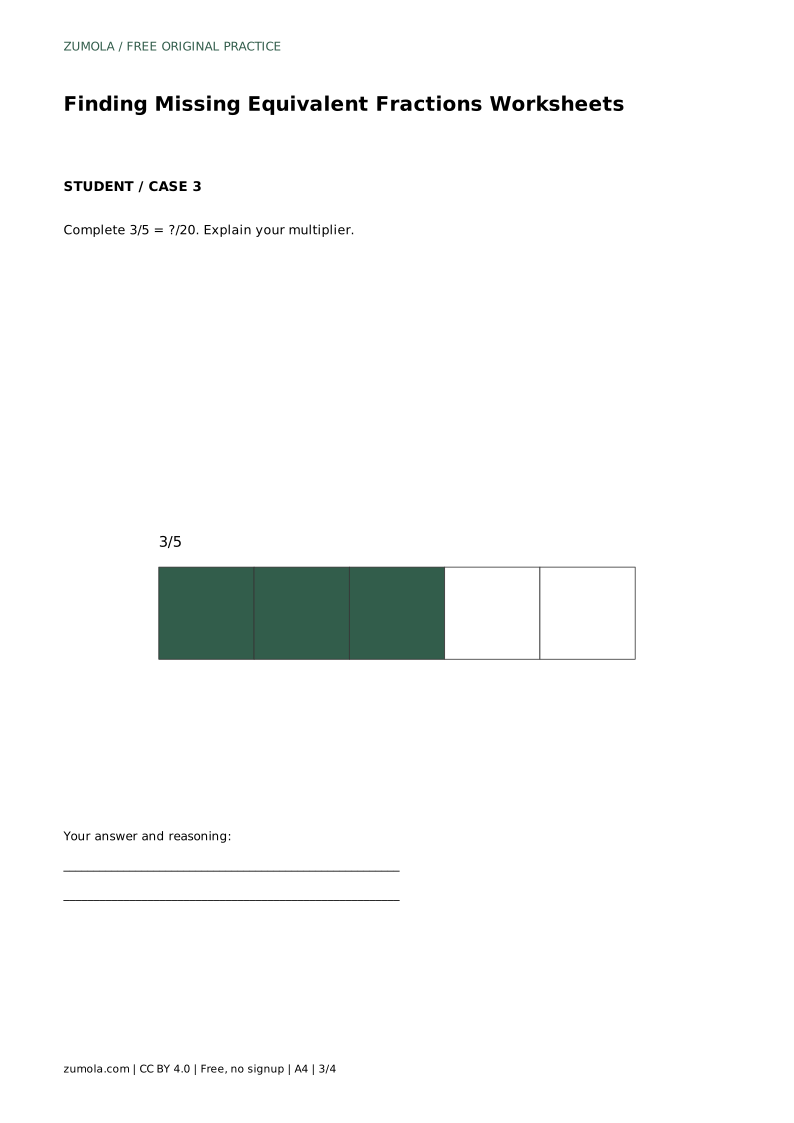
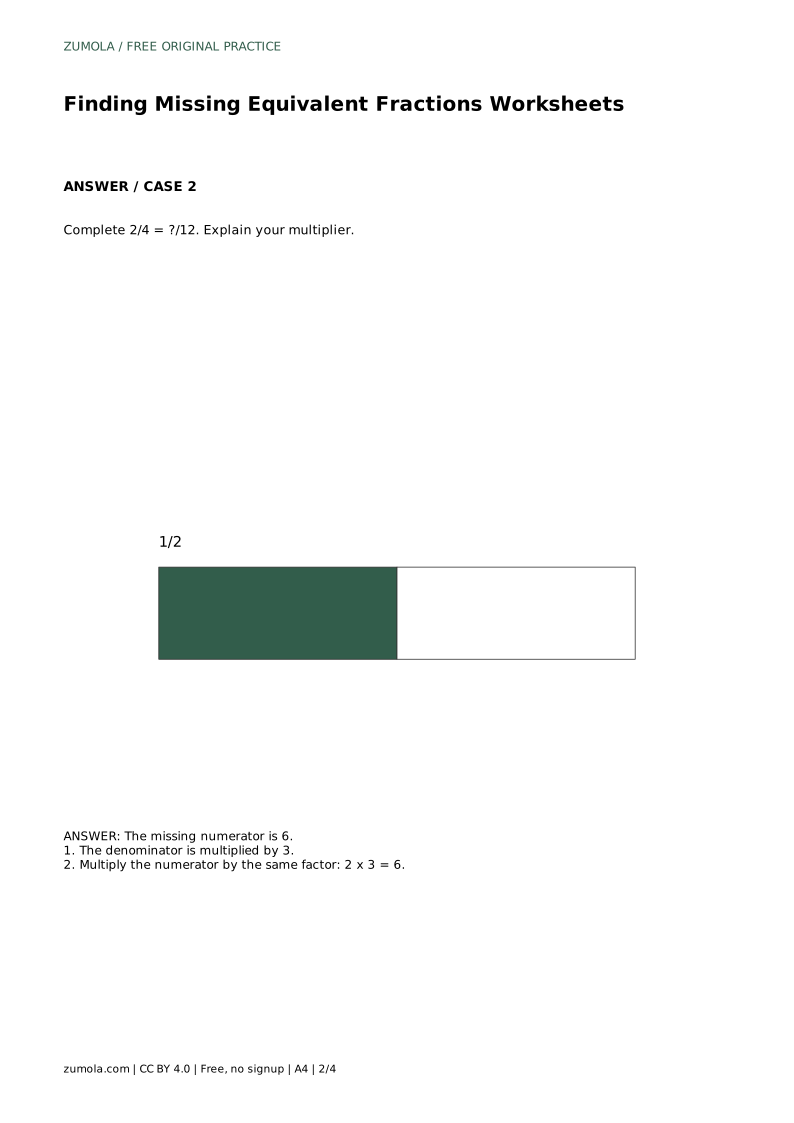
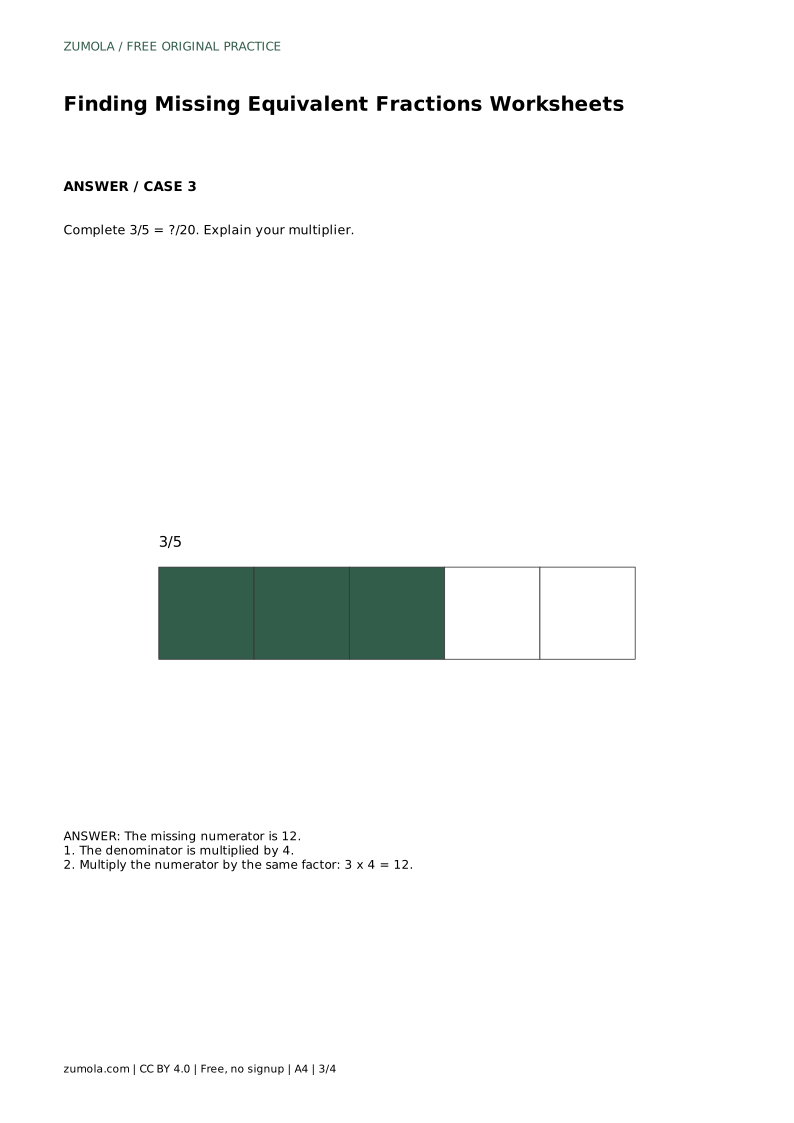
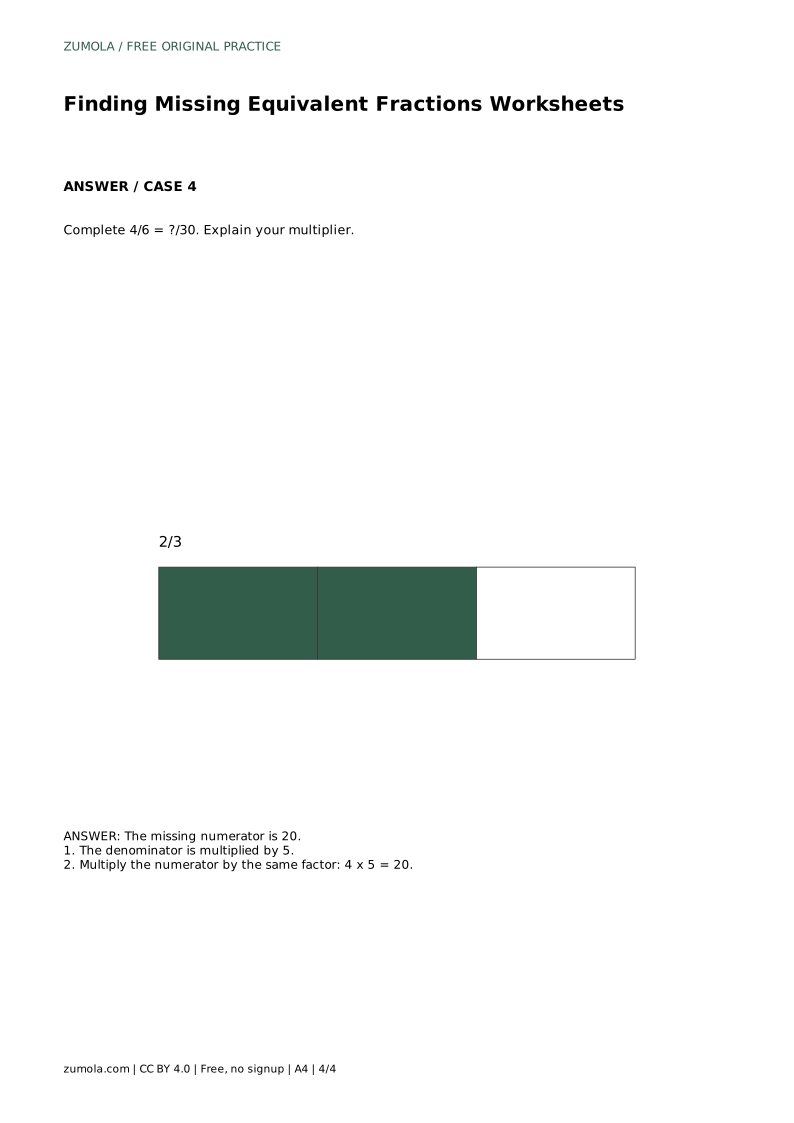
The multiplier is not chosen freely. It is fixed by the relationship between the two denominators. If the denominators are 3 and 6, the multiplier is 2 because 3 x 2 = 6. If they are 5 and 20, the multiplier is 4 because 5 x 4 = 20. State the multiplier before doing anything to the numerator.
The denominators are 3 and 6. Since 3 x 2 = 6, the multiplier is 2. Apply the same multiplier to the numerator: 1 x 2 = 2. The completed statement is 1/3 = 2/6, and the missing numerator is 2.
Check by simplifying: 2/6 divides by 2 to give 1/3, so the two fractions are equivalent. The explanation should name the multiplier, not just give the answer.
Some sheets place the blank in the numerator and some in the denominator. Read which position is empty before choosing a method. If the numerator is missing and both denominators are given, the denominator comparison supplies the multiplier directly. If the denominator is missing, the reasoning runs the other way and needs a different check.
Keep the multiplier a whole number greater than zero. A multiplier of 1 leaves the fraction unchanged, which is true but usually not the intended puzzle. Fractional multipliers belong to a different kind of problem and should not be mixed into this exercise.
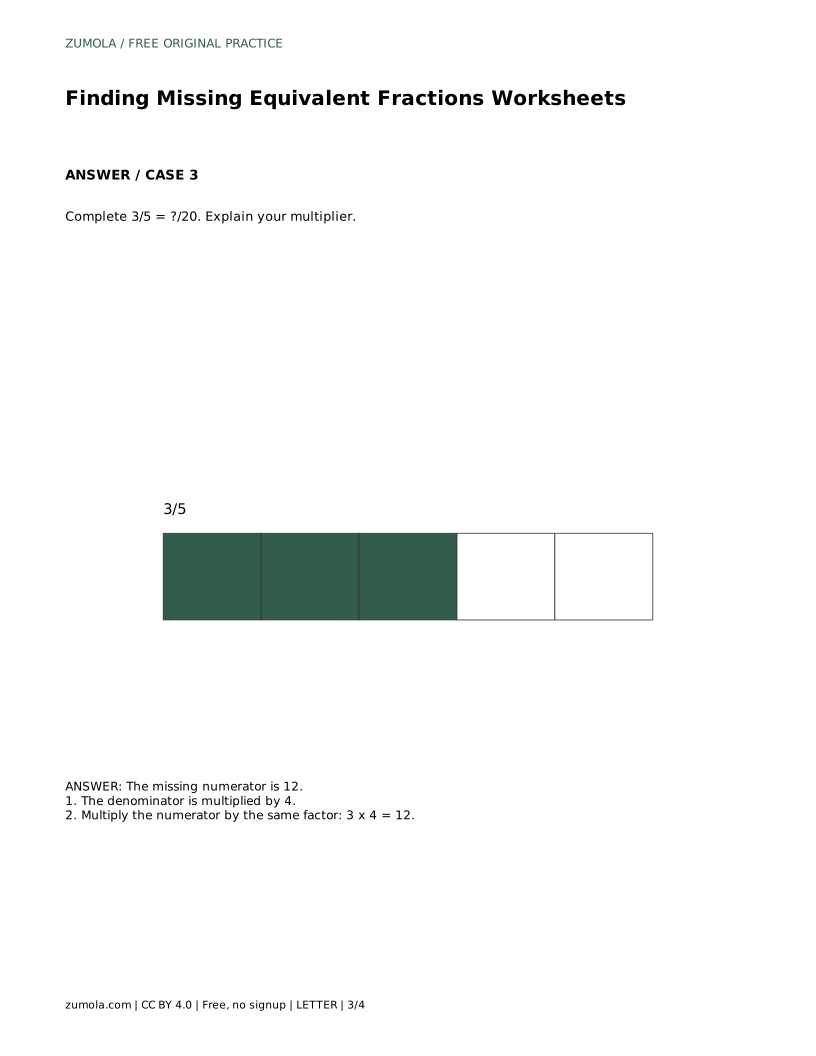
A completed pair should simplify to the same fraction. Reduce both sides by their common factors, or cross-multiply: the numerator of one fraction times the denominator of the other should match in both directions. For 3/5 = 12/20, 3 x 20 = 60 and 5 x 12 = 60, so the pair is consistent.
If the check fails, the error is usually in the multiplier rather than the multiplication itself. Recompute the denominator relationship before changing the numerator.
Complete 1/3 = ?/6. Explain your multiplier.
The missing numerator is 2. The denominator is multiplied by 2. Multiply the numerator by the same factor: 1 x 2 = 2.
Then no whole-number multiplier exists, so the pair cannot be made equivalent by multiplying both parts. Check that the problem was copied correctly.
Yes, but it leaves the fraction unchanged. Most worksheets intend a multiplier greater than 1, so look for a larger denominator.
No. Equivalence is symmetric, so 1/3 = 2/6 and 2/6 = 1/3 describe the same relationship.
All math worksheets · Free coordinate paper
Original resources · CC BY 4.0 · Free for personal and classroom use with attribution.